

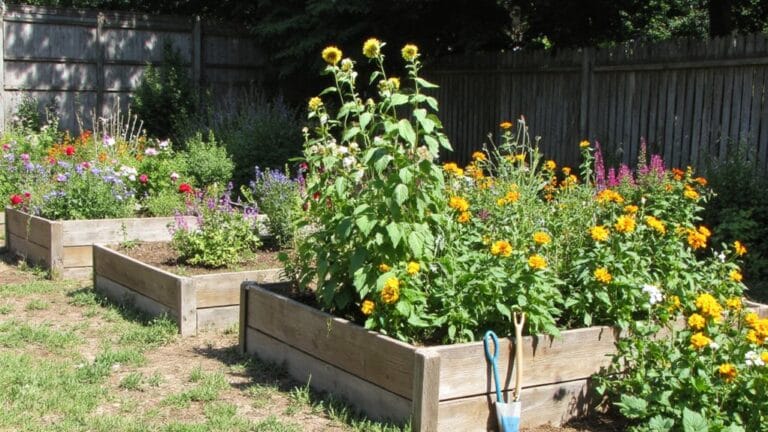
When I first started experimenting with raised bed flower gardens, I was amazed at how they transformed my outdoor space. With just the right mix of plants and materials, I was able to create a beautiful and vibrant garden that changes with the seasons. If you’re looking to add a touch of color and life to your yard, I’ve gathered some inspiring ideas that might help you get started. Let’s explore these concepts that can truly elevate your garden. Get ready to be inspired!
How to Choose the Right Location for Your Raised Bed
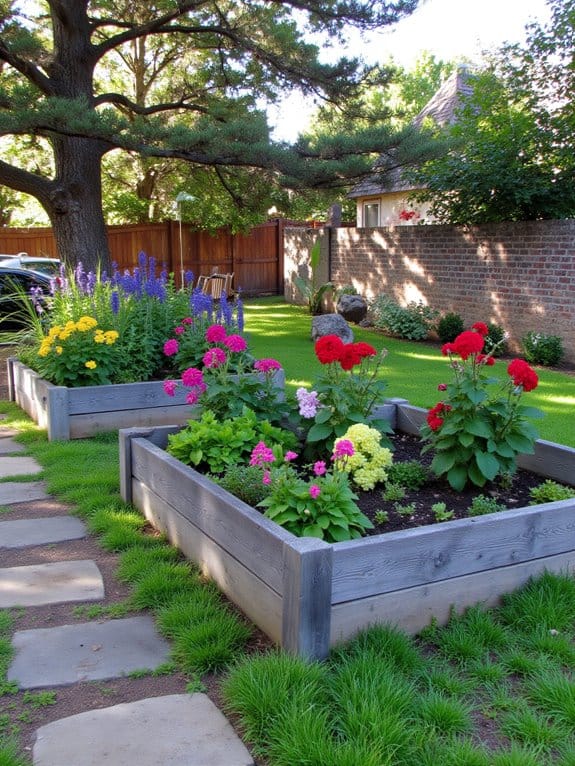
Where do you envision your raised bed flower garden flourishing? I find that choosing the right location is essential.
Look for a spot with at least six hours of sunlight daily and good drainage. Avoid shaded areas, as they’ll hinder your flowers’ growth.
Also, consider proximity to a water source for easy maintenance. The right location sets the stage for vibrant blooms!
Selecting the Best Materials for Your Flower Garden
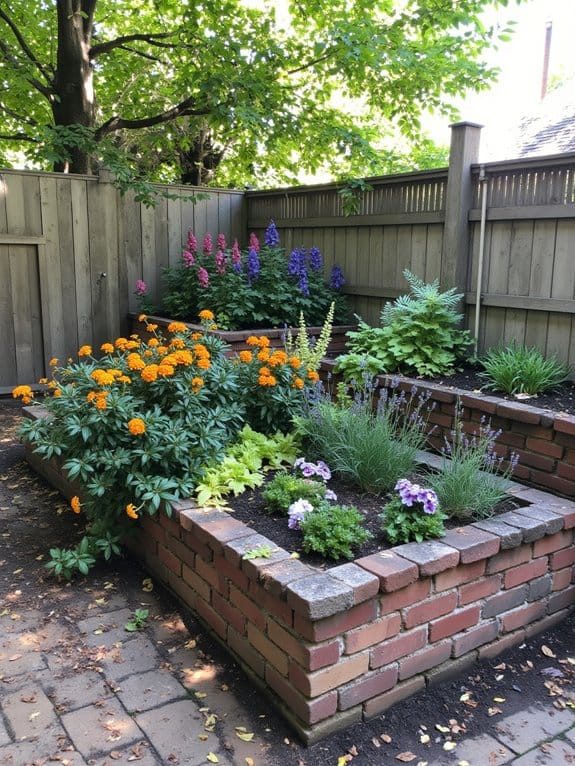
After picking the perfect spot for your raised bed, it’s time to think about the materials you’ll use.
I prefer untreated wood, like cedar or redwood, for its durability and natural resistance to rot. If you’re looking for something low-maintenance, metal beds are a great option too.
Just remember to avoid pressure-treated wood, as it can leach harmful chemicals into the soil.
Designing Your Raised Bed for Maximum Aesthetic Appeal
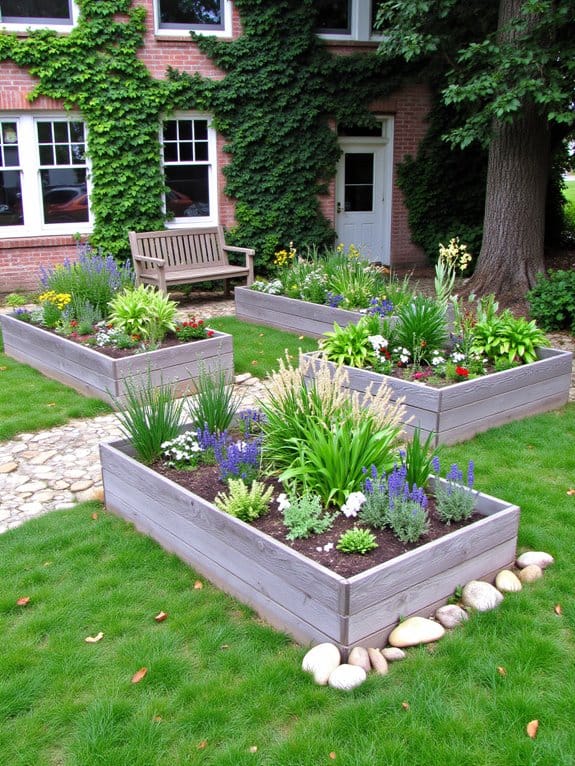
When I design my raised bed, I focus on creating a visually appealing space that complements my garden’s overall aesthetic.
I choose shapes that enhance the landscape, like rectangular or curved beds.
Additionally, I consider height variations to create depth and interest.
Incorporating decorative elements, like lattice or edging, adds charm, making my raised bed a stunning focal point in my yard.
Creating a Color Palette for Your Flower Selections
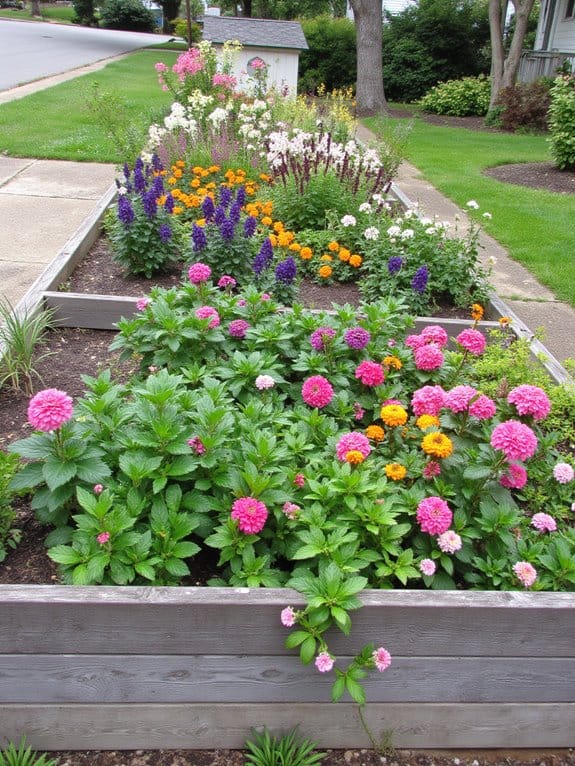
The visual appeal of my raised bed garden doesn’t stop with its design; it extends to the flower selections I choose as well.
I love creating a vibrant color palette that complements my outdoor space. By mixing bold hues with soft pastels, I achieve a harmonious look.
I focus on seasonal blooms to maintain interest throughout the year, ensuring my garden always feels alive.
Best Companion Flowers for Raised Bed Gardens
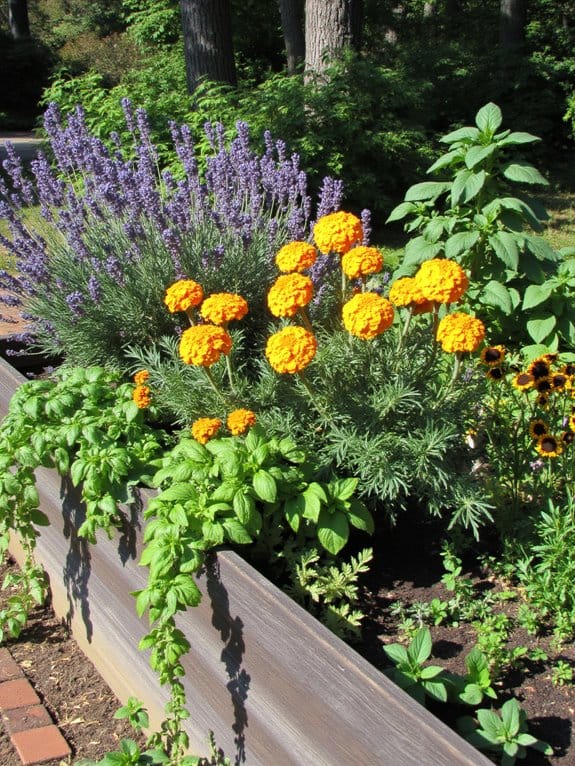
While I’m selecting flowers for my raised bed garden, I always consider companion planting to enhance both beauty and plant health.
For example, pairing marigolds with zinnias not only adds vibrant color but also deters pests.
I also love combining nasturtiums with sunflowers; their contrasting shapes and colors create visual interest.
These combinations truly make my garden thrive while looking stunning!
Incorporating Vertical Elements for Height and Interest
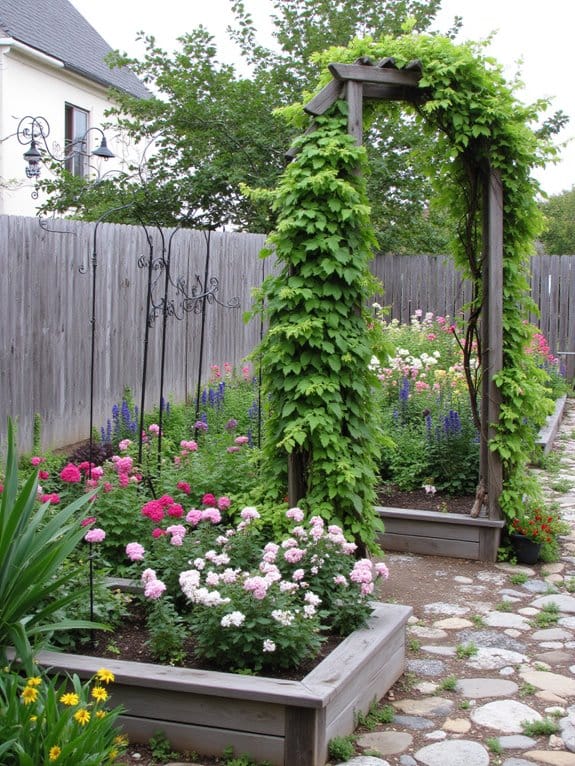
After selecting beautiful companion flowers, I like to think about adding vertical elements to my raised bed garden.
Trellises, arbors, and garden stakes not only draw the eye upward but also create a stunning backdrop for my blooms.
Climbing plants like sweet peas or morning glories thrive on these structures, adding depth and interest while maximizing my garden’s potential.
Annuals vs. Perennials: What to Choose for Continuous Blooms
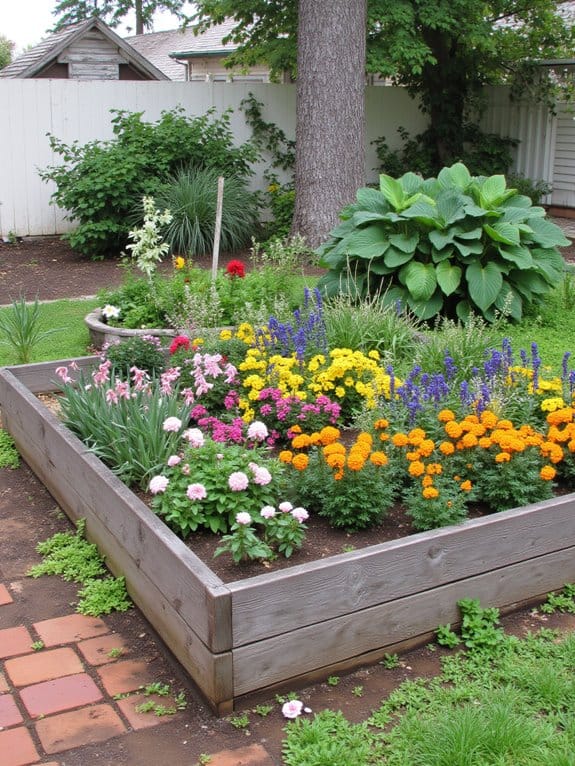
When it comes to choosing between annuals and perennials, I often weigh my options carefully to guarantee my garden stays vibrant throughout the seasons.
Annuals provide a burst of color and can be swapped out yearly, while perennials return each spring, offering lasting beauty.
I love mixing both for continuous blooms, ensuring my raised bed remains alive and enchanting all year long.
How to Define Your Flower Bed With Edging
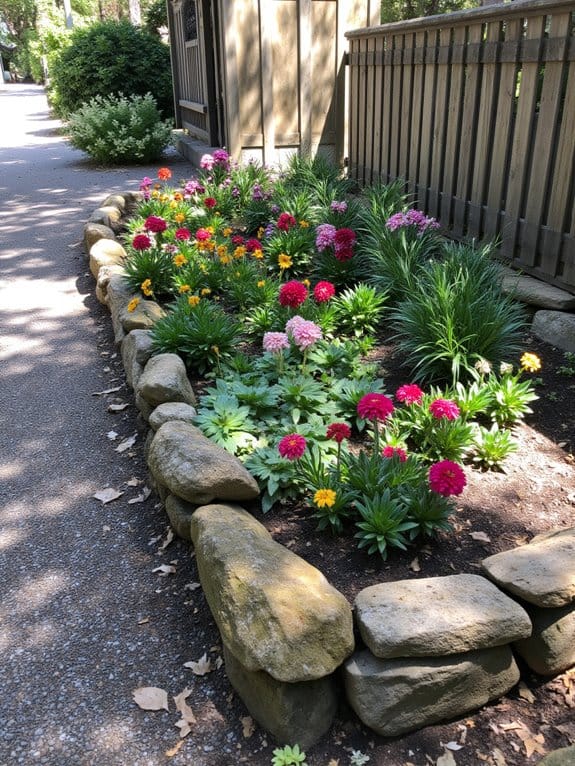
One of the best ways to define your flower bed is by using edging to create a clear boundary that enhances the overall design.
I love using natural materials like stone or wood, as they blend beautifully with the garden. You can also opt for decorative metal or plastic edging for a modern touch.
Whichever you choose, it’ll give your flowers a polished look!
Tips for Maintaining Soil Health in Your Raised Bed
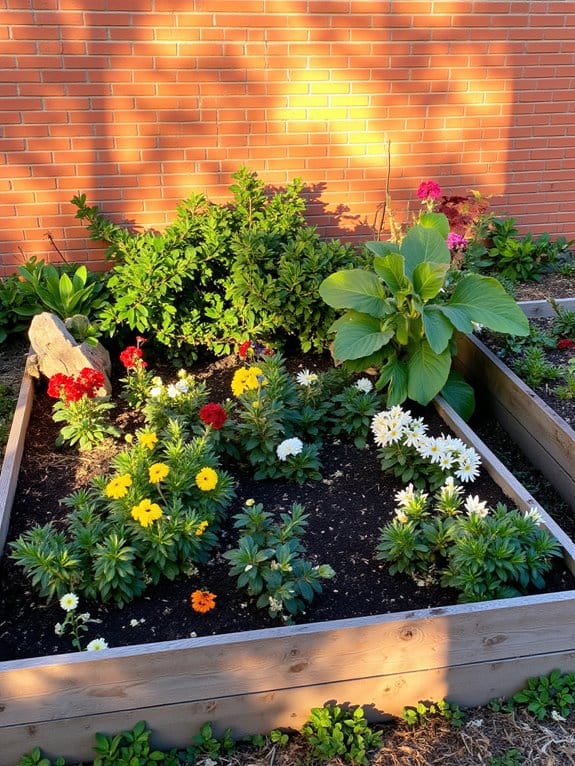
To keep your raised bed thriving, maintaining soil health is essential.
I focus on adding organic matter like compost to enrich the soil. Regularly checking pH levels helps me understand nutrient needs. Adding organic matter and monitoring pH levels are key to enriching soil and meeting nutrient needs.
I also rotate my crops to prevent soil depletion and pests.
Finally, mulching retains moisture and suppresses weeds, creating a balanced environment for my flowers to flourish.
Utilizing Native Plants for Eco-Friendly Gardening
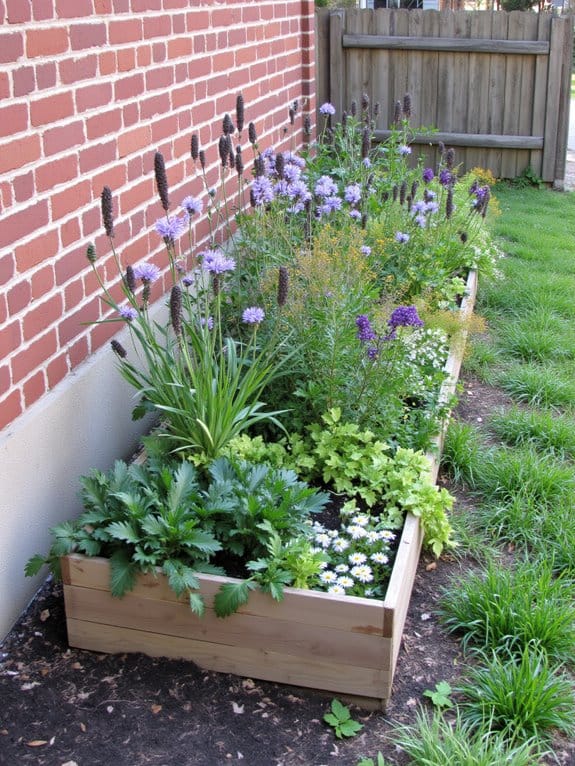
By choosing native plants for my raised bed flower garden, I not only enhance its beauty but also promote a healthier ecosystem.
Native plants attract local pollinators, like bees and butterflies, ensuring my garden thrives. They’re adapted to the local climate, requiring less water and maintenance.
Plus, they support biodiversity, creating a balanced environment. It feels great to contribute positively to nature!
Incorporating Herbs for Fragrance and Utility
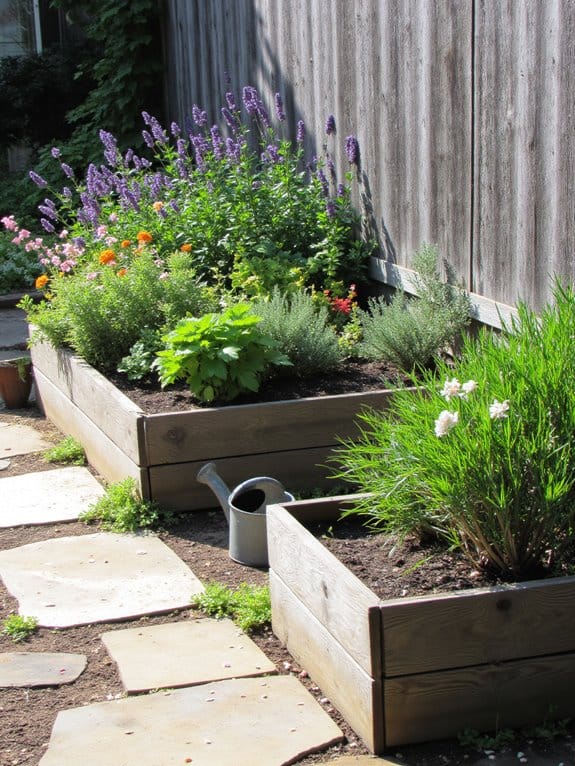
Adding herbs to my raised bed flower garden not only enhances its aesthetic appeal but also brings a wealth of benefits.
I love the way their fragrant leaves complement the blooms, creating a sensory delight. Plus, having fresh herbs like basil and rosemary at my fingertips for cooking is incredibly convenient.
They attract beneficial insects too, making my garden thrive even more.
Designing a Pollinator-Friendly Raised Bed Flower Garden
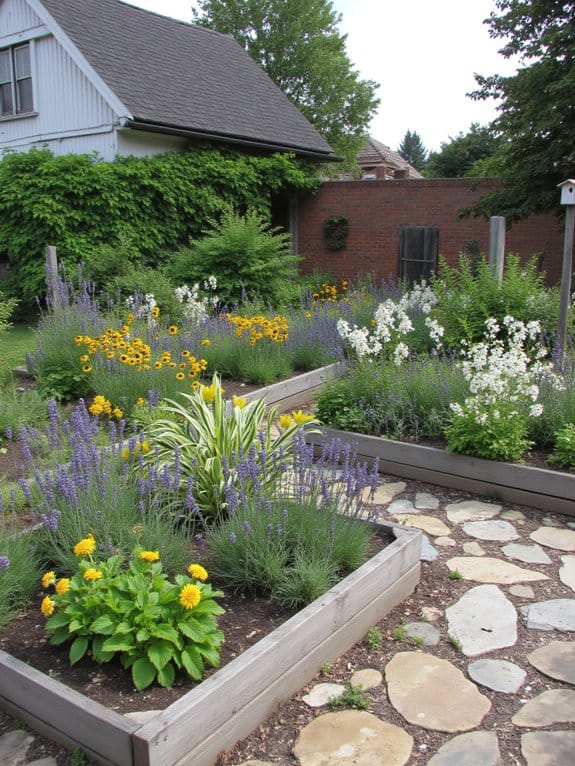
While creating a vibrant raised bed flower garden, I always focus on attracting pollinators like bees and butterflies.
To do this, I choose a mix of native flowers, such as coneflowers and milkweed, which thrive in my area. I also plant in clusters to create a bold visual impact and provide ample nectar sources.
Keeping my garden chemical-free guarantees a safe haven for these essential pollinators.
Creating a Seasonal Rotation Plan for Your Flowers
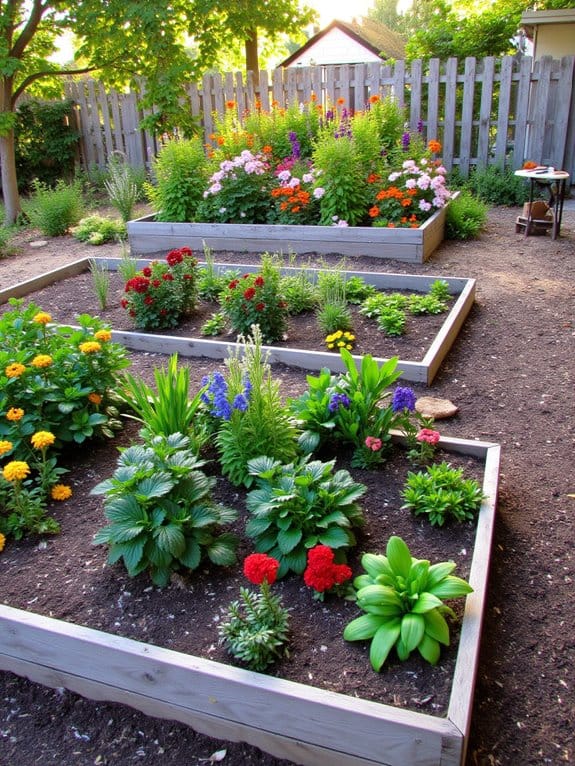
As I plan my raised bed flower garden, I consider creating a seasonal rotation plan to keep my blooms vibrant and healthy throughout the year. As I design my raised bed flower garden, I aim for a seasonal rotation plan to maintain vibrant blooms year-round.
I’ll choose flowers that thrive in different seasons, ensuring continuous color.
By rotating my plants, I can manage pests and diseases better while enriching the soil.
This thoughtful approach enhances my garden’s beauty and resilience.
Adding Decorative Elements Like Trellises and Arbors
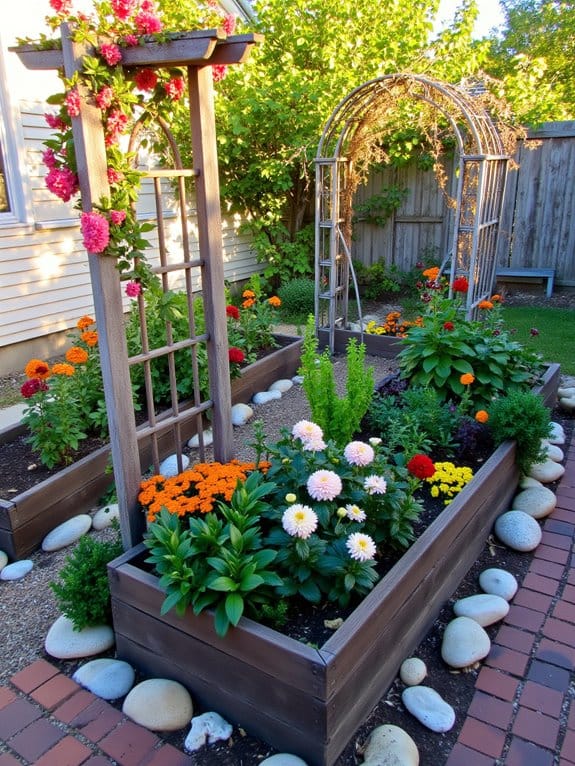
How can I elevate my raised bed flower garden’s charm?
Adding decorative elements like trellises and arbors is a fantastic option.
I love incorporating these structures to create vertical interest and support climbing plants.
They not only enhance the garden’s aesthetic but also provide a backdrop for blooming flowers.
With the right design, my garden feels more inviting and lush.
Using Containers for an Elevated Flower Display
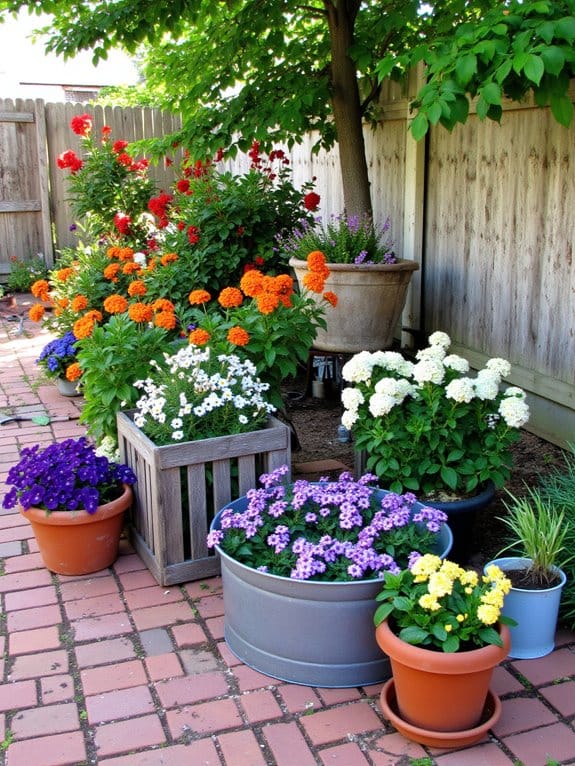
To boost the charm of my raised bed flower garden, I often turn to containers for an elevated flower display.
These pots add depth and visual interest, allowing me to mix colors and textures effortlessly. I love using varying heights to create a dynamic look.
Plus, I can easily move them around to find the perfect spot for sun and shade.
Should You Use Drip Irrigation or Hand Watering?
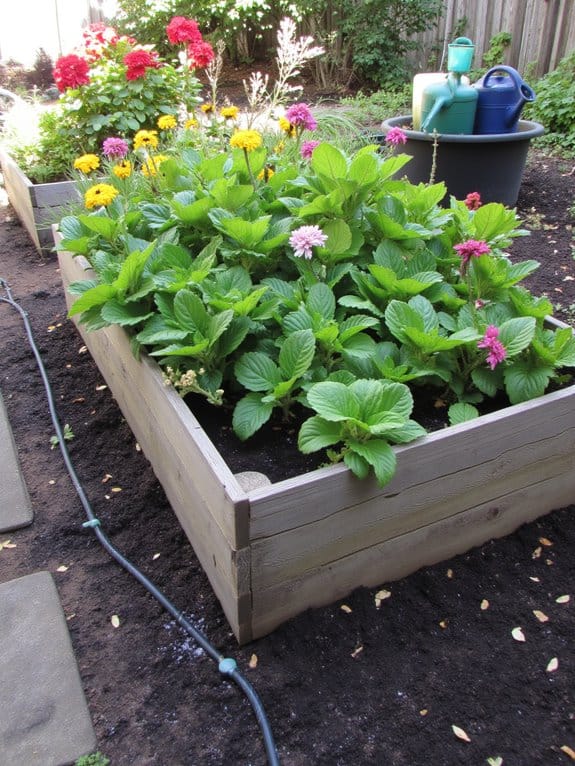
Adding containers to my raised bed flower garden not only enhances its beauty but also raises the question of how best to keep those flowers thriving.
I’ve found that drip irrigation offers consistent moisture, which is great for busy days. However, hand watering lets me connect with my plants more personally.
Ultimately, it depends on your gardening style and how much time you can dedicate.
Making Your Raised Bed Accessible for Everyone
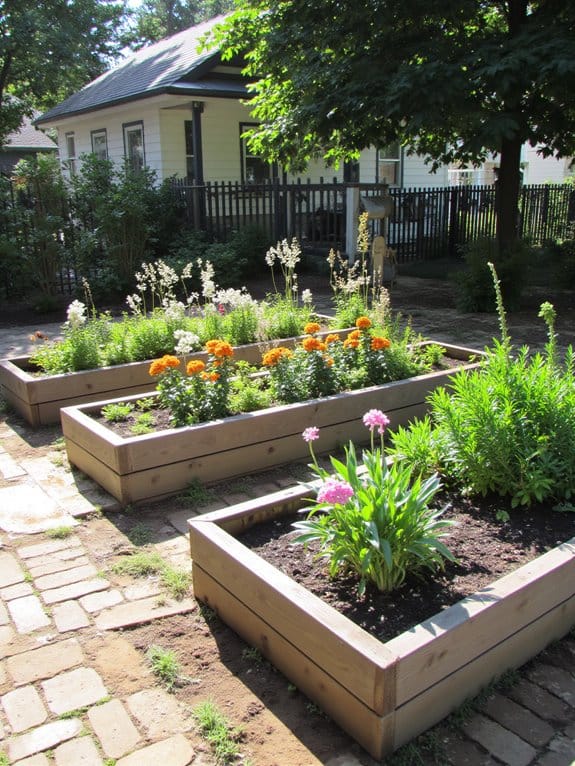
While designing my raised bed flower garden, I realized that making it accessible for everyone is essential.
I opted for raised beds at a height that’s easy for both kids and adults to reach. I also added wide pathways, ensuring a wheelchair can fit through.
Adding Mulch for Weed Control and Moisture Retention
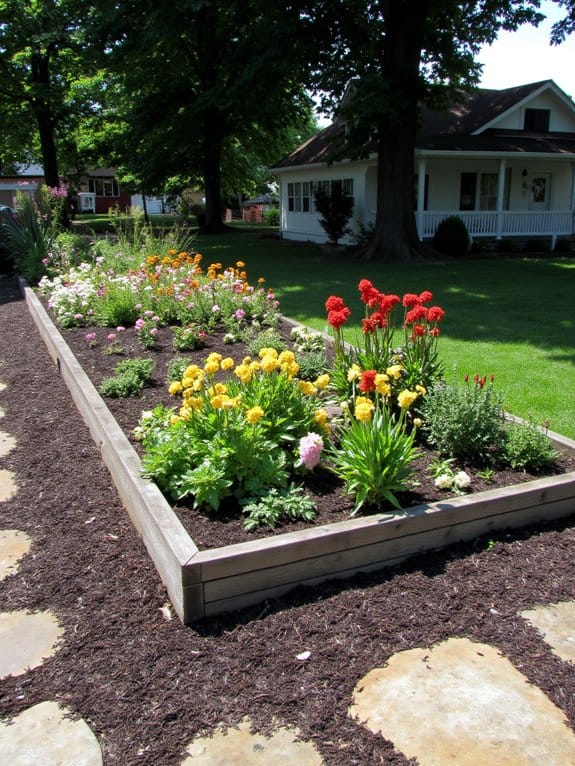
Since I’ve started using mulch in my raised bed flower garden, I’ve noticed a significant reduction in weeds and improved moisture retention. Using mulch in my raised bed flower garden has dramatically cut down weeds and enhanced moisture retention.
It acts as a protective barrier, keeping the soil temperature stable and preventing evaporation.
I love how it suppresses those pesky weeds, letting my flowers thrive.
Plus, it gives my garden a neat, finished look.
Mulching’s truly been a game-changer!
Seasonal Themes for Year-Round Interest in Your Garden
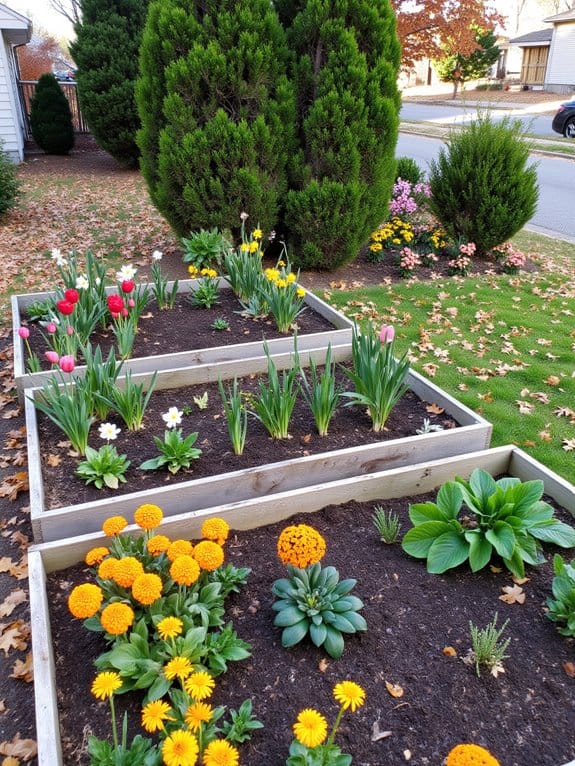
Creating a flower garden that captivates year-round is easier than you might think, especially when you embrace seasonal themes.
I love choosing blooms that reflect each season—daffodils in spring, sunflowers in summer, asters in fall, and evergreens in winter.
By mixing these plants, my garden remains vibrant and inviting, allowing me to enjoy nature’s beauty throughout the year.
Give it a try!
