

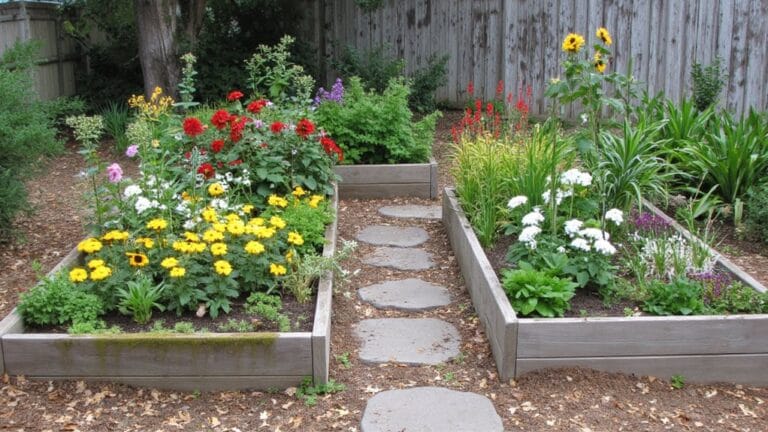
I’ve been exploring the world of raised bed cut flower gardens, and I’m excited to share some amazing ideas with you. These gardens can truly transform any outdoor space, offering styles that range from a lush cottage garden to a sleek modern minimalist look. Whether you’re a seasoned gardener or just starting out, there’s something here to inspire your creativity. I’ve gathered some tips and benefits that might just spark your own gardening journey. Let’s discover what makes these gardens so appealing.
Discover the Benefits of Raised Bed Cut Flower Gardens
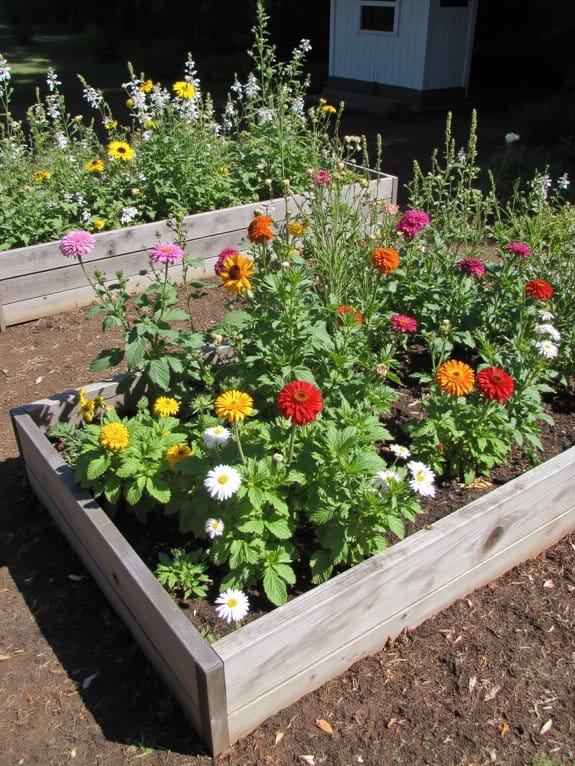
When I discovered the benefits of raised bed cut flower gardens, I realized how they could transform any gardening experience.
These gardens offer excellent drainage, making it easier to control moisture levels. Plus, they’re accessible, reducing strain on my back and knees.
With better soil quality and fewer weeds, I can focus on creating stunning floral arrangements that brighten my home.
Understanding the Importance of Location for Your Flower Bed
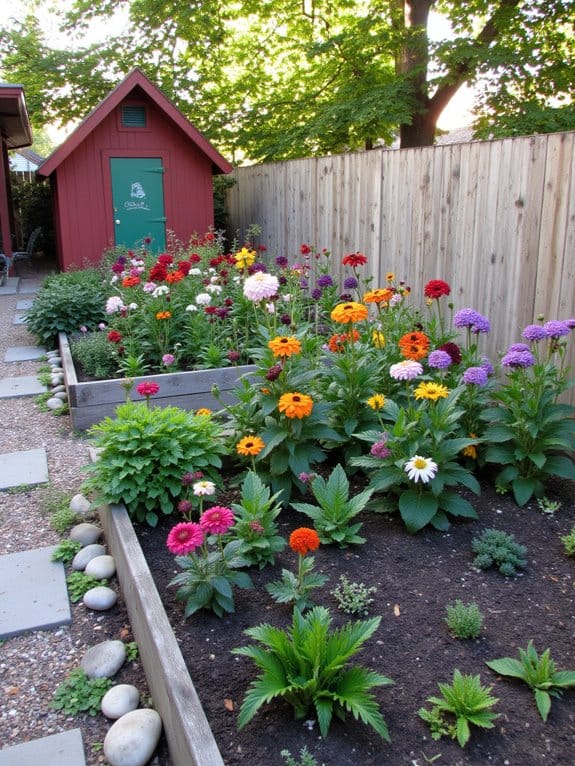
Choosing the right location for your flower bed is essential if you want your cut flowers to thrive.
I’ve learned that a spot with at least six hours of sunlight daily makes a big difference. Additionally, good drainage and protection from strong winds can prevent damage.
Take the time to observe your yard, and you’ll find the perfect spot for vibrant blooms.
Selecting the Best Flowers for Cutting
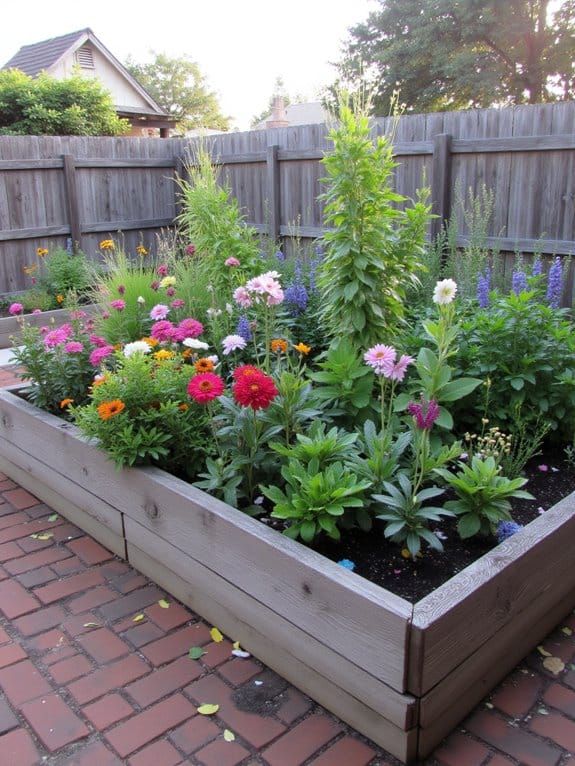
After finding the perfect spot for your flower bed, the next step is picking the right flowers for cutting.
I love choosing a mix of annuals and perennials, like sunflowers, zinnias, and dahlias. They not only bloom beautifully but also last long in vases.
Don’t forget to contemplate fragrance and color—these elements make arrangements truly special and personal!
How to Arrange Your Flowers for Maximum Impact
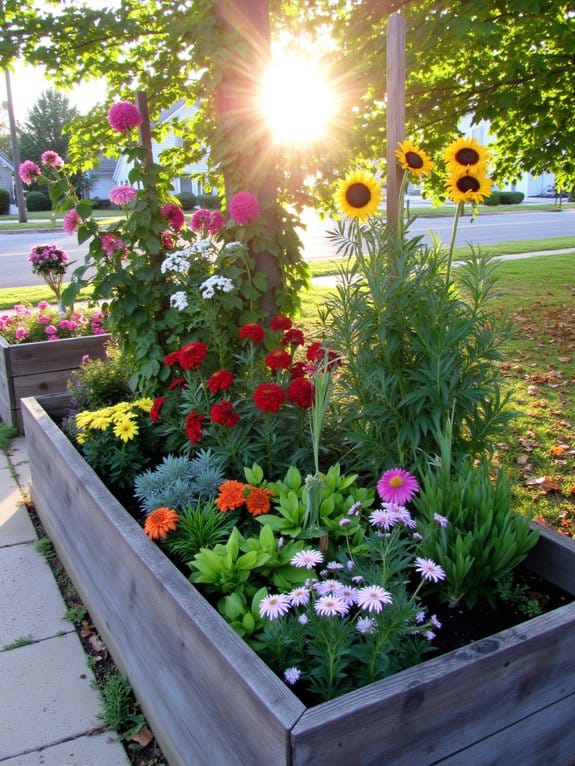
Arranging your flowers for maximum impact can transform a simple bouquet into a stunning centerpiece.
I like to start with a focal point, usually a larger bloom, then add varying heights and textures around it. Mixing colors and shapes creates visual interest.
Don’t forget to trim the stems at different lengths for a more dynamic look.
Finally, step back and adjust as needed!
Designing a Colorful Cottage Garden Aesthetic

Creating a vibrant cottage garden aesthetic brings a whimsical charm that can enhance any outdoor space.
I love mixing various flower types, like daisies, delphiniums, and snapdragons, to create a tapestry of colors. Mixing flowers like daisies, delphiniums, and snapdragons weaves a colorful tapestry that brings a garden to life.
Incorporating elements like rustic wooden fences and winding pathways adds to the charm.
With a little creativity, you can transform your garden into a picturesque retreat that feels enchanting and inviting.
Crafting a Modern Minimalist Raised Bed
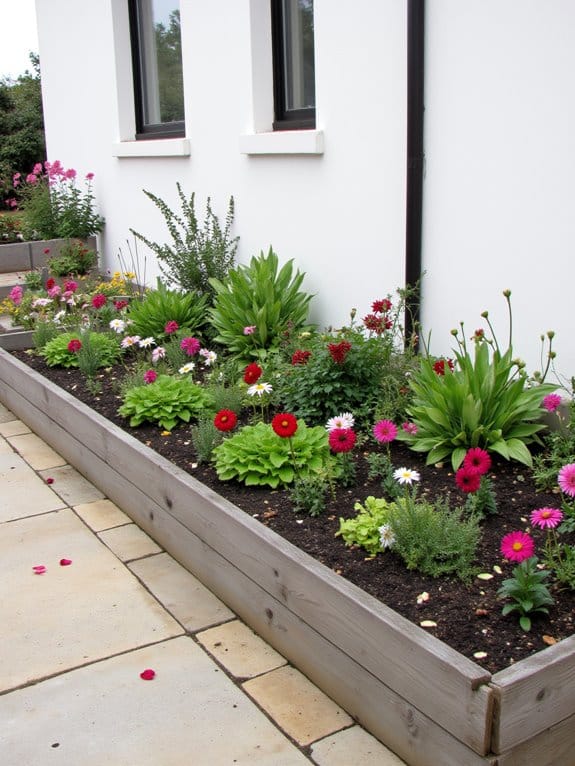
While simplicity often reigns supreme in modern design, crafting a minimalist raised bed can still provide an inviting space for your cut flowers.
I love using clean lines and neutral colors, which allow the blooms to shine. Selecting a few key flower varieties enhances the overall aesthetic.
This approach not only looks stunning but also makes maintenance a breeze—perfect for any gardener seeking elegance!
Incorporating Vertical Elements in Your Flower Garden
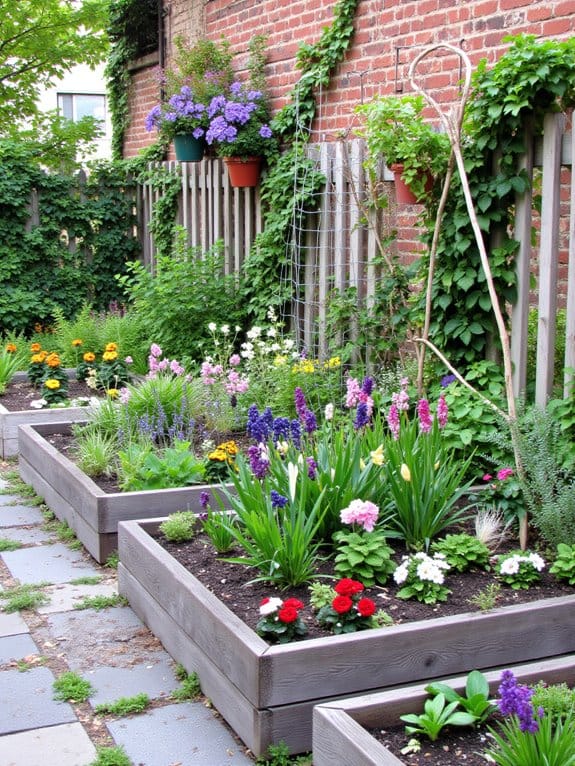
To elevate your cut flower garden, incorporating vertical elements can make a significant impact on both aesthetics and space efficiency.
I love using trellises or obelisks to support climbing flowers, adding height and drama. You can also hang planters or install vertical garden structures.
These features not only save ground space but also create a stunning visual display that draws the eye upward.
Create a Pollinator-Friendly Flower Bed
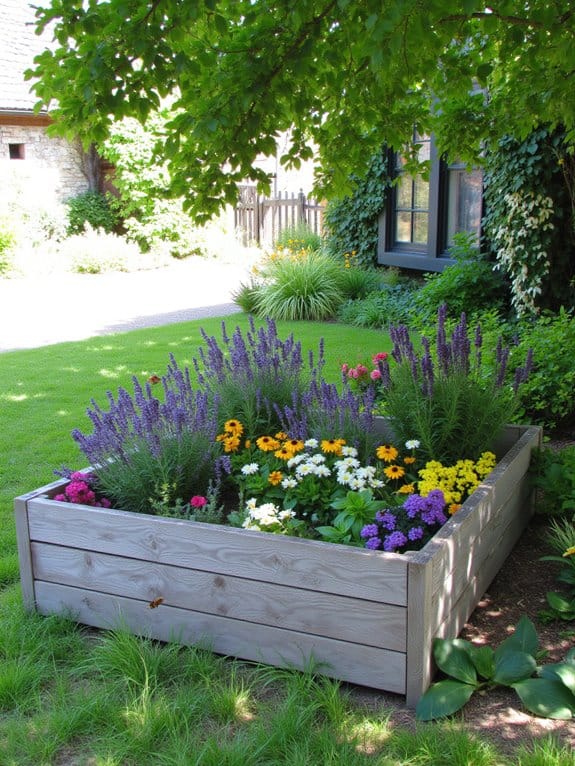
When I design a pollinator-friendly flower bed, I prioritize a diverse selection of blooms that attract bees, butterflies, and other beneficial insects.
I love incorporating native plants, as they’re adapted to the local ecosystem. Colorful flowers like coneflowers, sunflowers, and zinnias not only bring beauty but also provide crucial nectar.
Mix Annuals and Perennials for Continuous Blooms
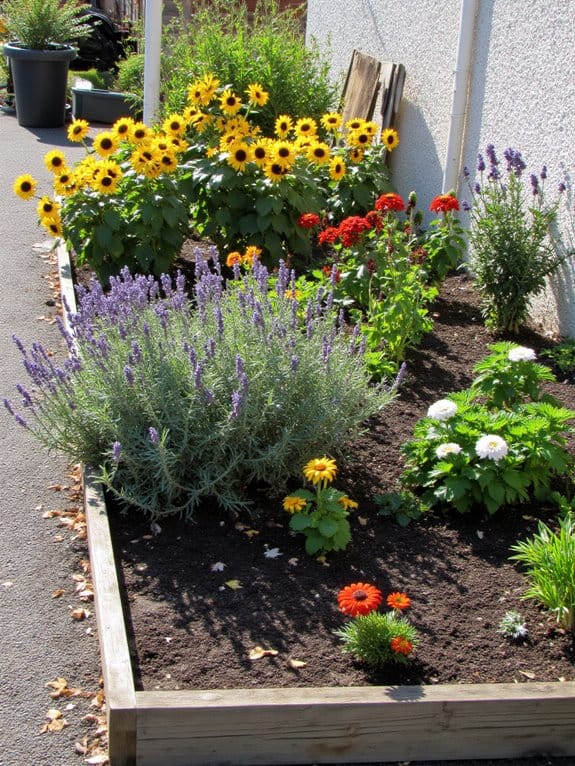
In creating a vibrant flower bed that attracts pollinators, I’ve found that mixing annuals and perennials is a game changer for ensuring continuous blooms throughout the growing season.
Annuals like zinnias and cosmos provide immediate color, while perennials such as coneflowers and daylilies offer lasting beauty year after year.
This combination keeps my garden lively and full of interest, attracting bees and butterflies all summer long.
How Companion Planting Can Enhance Flower Growth
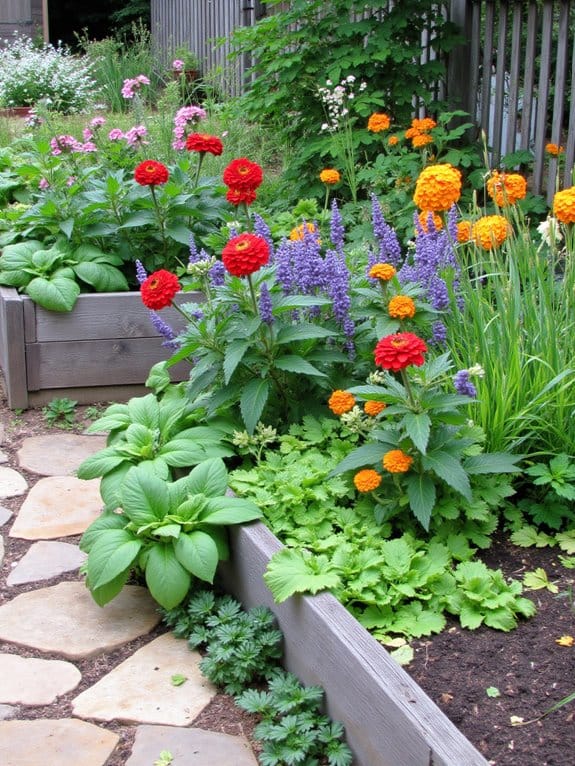
Companion planting has transformed my flower garden, as it not only boosts growth but also enhances overall health.
By pairing flowers with compatible plants, I’ve noticed fewer pests and improved soil quality.
For example, marigolds deter harmful insects while attracting beneficial ones.
This natural synergy makes my garden thrive, creating vibrant blooms and a flourishing ecosystem that I can’t help but admire.
Build Your Raised Bed With Recycled Materials
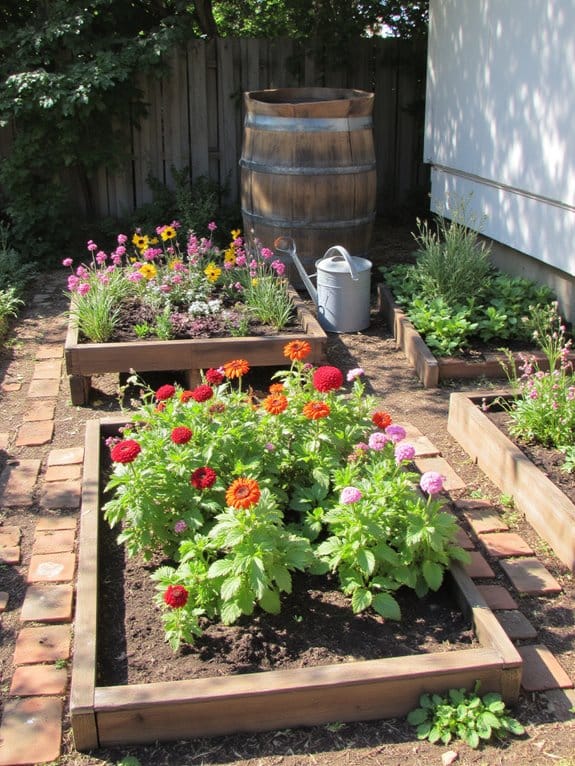
Building a raised bed with recycled materials not only helps the environment but also saves money while adding character to your garden.
I’ve used old pallets, bricks, and even discarded wine barrels to create unique beds. These materials give my garden a rustic charm and reduce waste.
Plus, I love the satisfaction of repurposing items while nurturing my cut flowers.
Maximize Your Raised Bed With Compact Flower Varieties
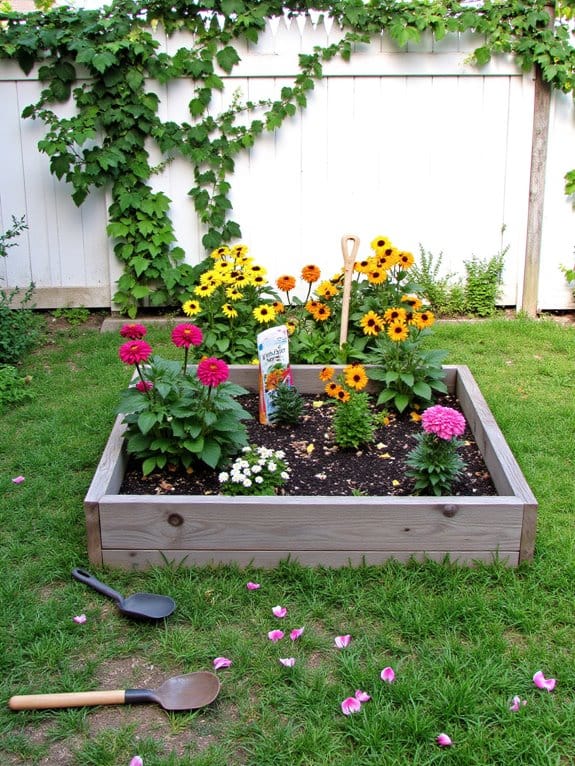
Choosing compact flower varieties can dramatically enhance the productivity of your raised bed garden.
I’ve found that plants like dwarf sunflowers, zinnias, and mini snapdragons not only save space but also provide stunning blooms.
These compact options allow me to maximize my planting area while ensuring a vibrant display all season long.
You’ll love the abundance they bring without overcrowding!
Incorporating Aromatic Herbs Into Your Flower Garden
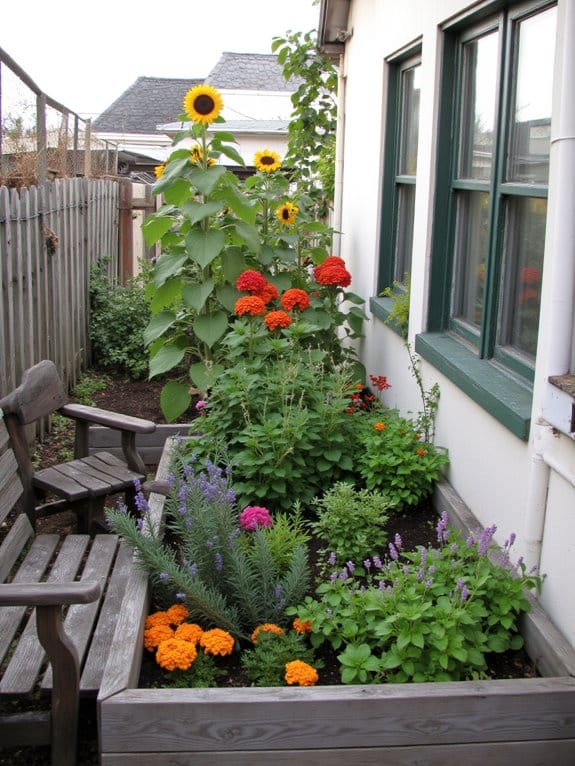
While creating a raised bed flower garden, I’ve discovered that incorporating aromatic herbs can elevate both the beauty and functionality of the space.
Herbs like lavender, basil, and rosemary not only add delightful scents but also attract beneficial pollinators.
Plus, they’re great for culinary use! Mixing them in with your flowers creates a vibrant, sensory experience that’s truly enchanting.
Designing a Seasonal Theme for Your Raised Bed
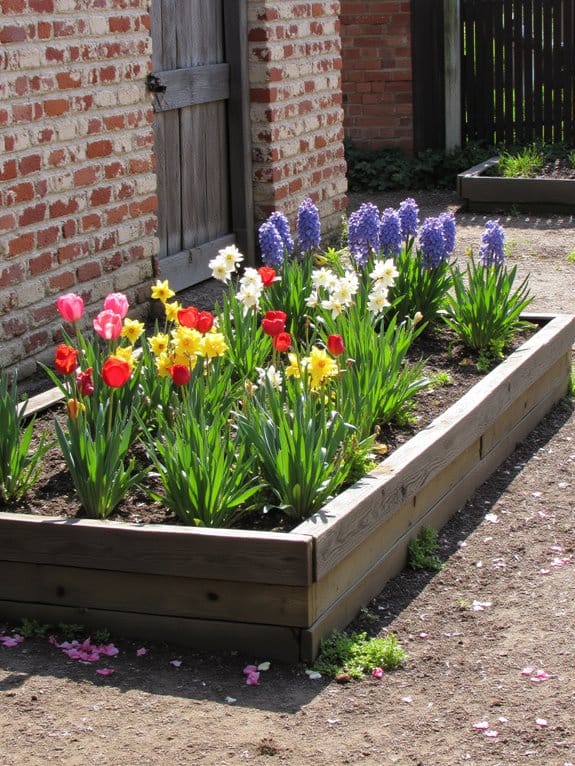
Incorporating aromatic herbs into your flower garden not only enhances the sensory experience but also sets the stage for a seasonal theme.
I love choosing flowers that bloom in harmony with the seasons, like cheerful daisies in spring or vibrant sunflowers in summer.
Mixing in seasonal colors and textures keeps my raised bed dynamic and visually appealing, creating a beautiful backdrop for my floral arrangements.
Create a Wildflower Meadow
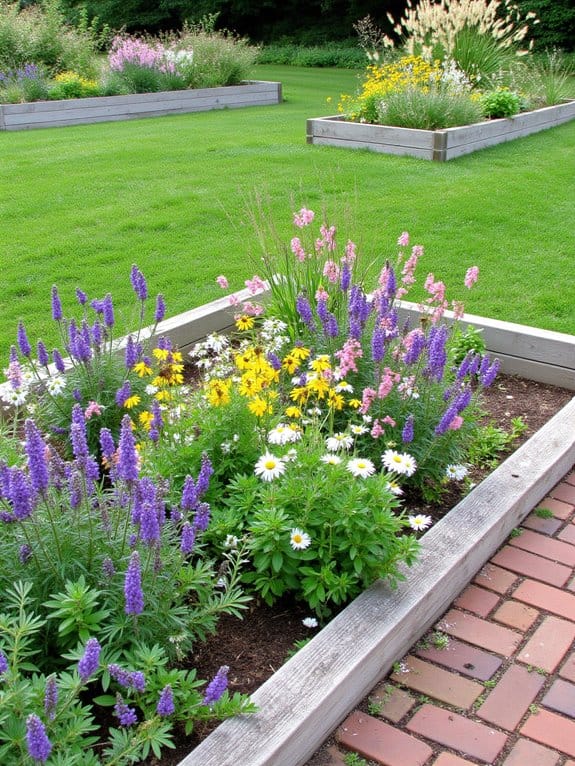
Creating a wildflower meadow in your raised bed can be a delightful way to attract pollinators and bring a touch of natural beauty to your garden.
I love selecting a mix of native seeds, ensuring vibrant colors and varied heights. Just scatter them and watch the magic unfold.
It’s low-maintenance, and the blooms will provide stunning cut flowers for arrangements all summer long!
Using Edging and Borders to Define Your Space
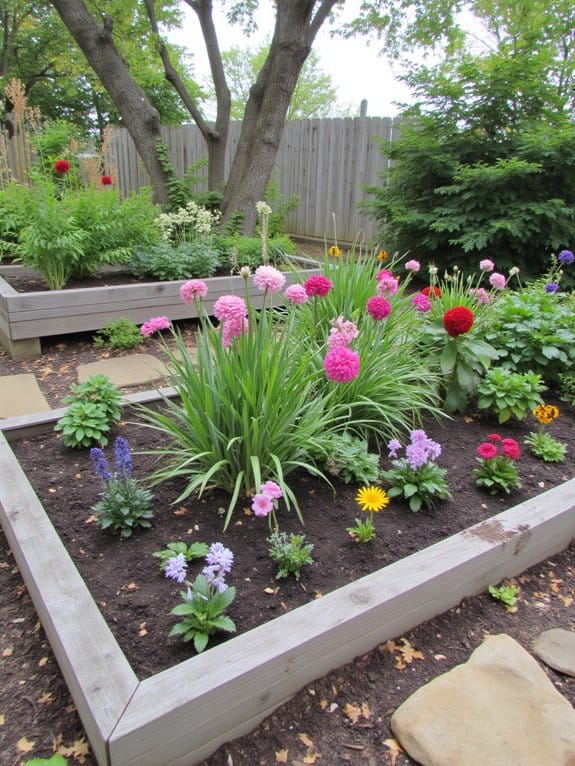
To enhance the beauty and functionality of your raised bed cut flower garden, I often find that using edging and borders is essential.
They not only define your space but also keep soil from spilling over. I love using natural materials like stone or wood, as they blend seamlessly with the garden.
Plus, they help deter weeds and make maintenance a breeze.
Adding Decorative Features for Visual Interest
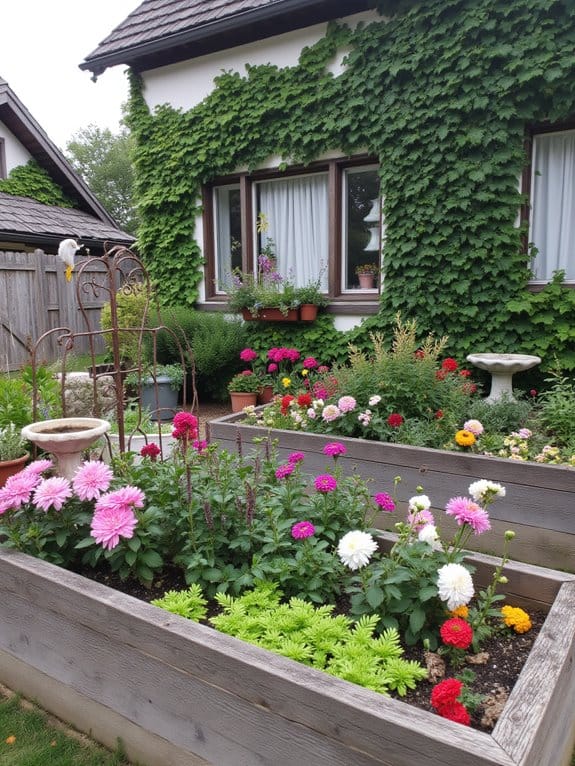
While adding decorative features might seem like an afterthought, I believe they can truly transform your raised bed cut flower garden into a stunning focal point.
Consider incorporating colorful garden stakes, whimsical sculptures, or even charming birdhouses.
These elements not only enhance visual interest but also reflect your personality and creativity, making your garden a unique and inviting space for all to admire.
Grow Flowers for Specific Occasions
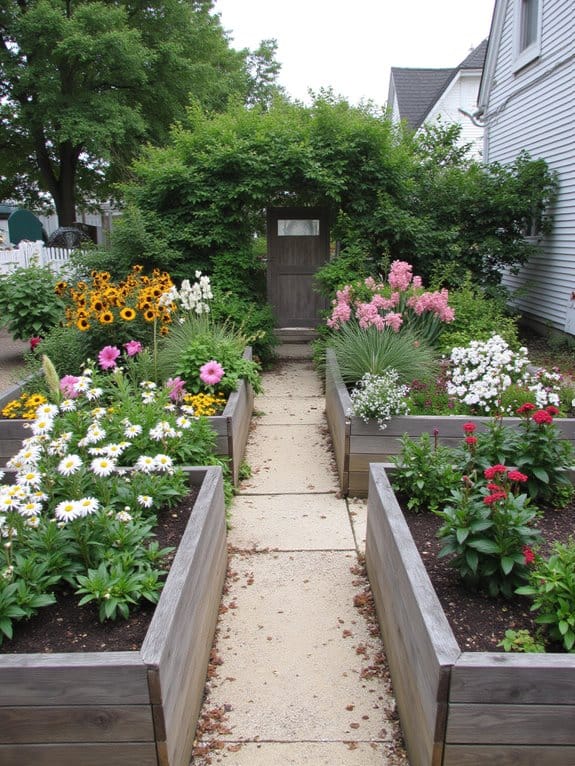
When planning your cut flower garden, I often think about how certain blooms can perfectly capture the essence of a special occasion. Planning a cut flower garden invites the joy of choosing blooms that embody the spirit of each special occasion.
For birthdays, I love vibrant zinnias and cheerful sunflowers.
Weddings call for elegant roses and delicate peonies.
For anniversaries, I choose romantic lilies and fragrant freesias.
Tips for Maintaining Your Raised Bed Flower Garden
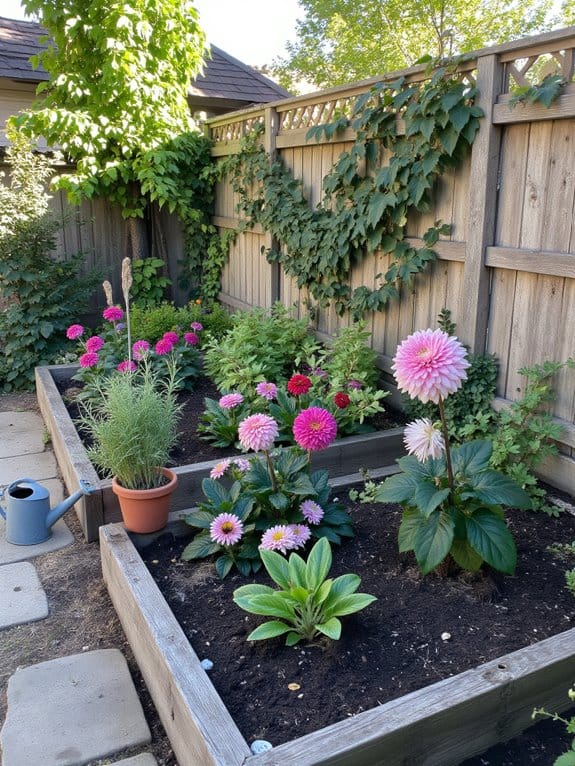
As I tend to my raised bed flower garden, I find that regular maintenance is essential for ensuring vibrant blooms throughout the season.
I make it a habit to check for pests, deadhead spent flowers, and water consistently. Adding mulch helps retain moisture and suppress weeds.
I also rotate my crops each year, keeping the soil healthy and nutrient-rich for my flowers.
Harvesting Techniques for Long-Lasting Bouquets
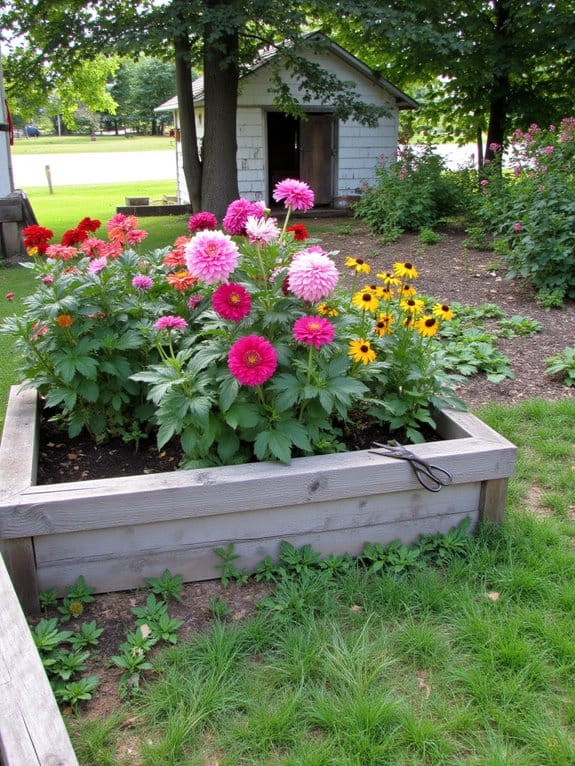
To guarantee your bouquets last as long as possible, I’ve found that timing and technique are key when harvesting your flowers.
I usually pick them early in the morning when they’re cool and hydrated.
Cutting at an angle and removing lower leaves helps too. Cutting stems at an angle and stripping lower leaves enhances water absorption for longer-lasting blooms.
Finally, immediately placing them in fresh water prevents air bubbles, ensuring your blooms stay vibrant longer.
