

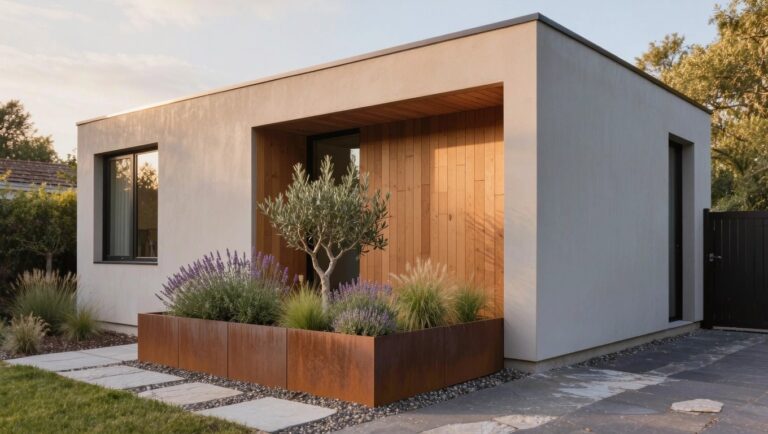
I’ve noticed how those forgotten corners in a yard can make the whole space feel off-balance. One by my back path used to collect tools and clutter until I planted a low-key flower bed that pulled everything together. The setups that succeed mix heights of perennials with trailing vines to create depth without crowding the edges. They often fall flat when bold colors fight the house siding or when maintenance turns into a chore. Mine’s holding up well now.
Driveway Corner Flower Beds
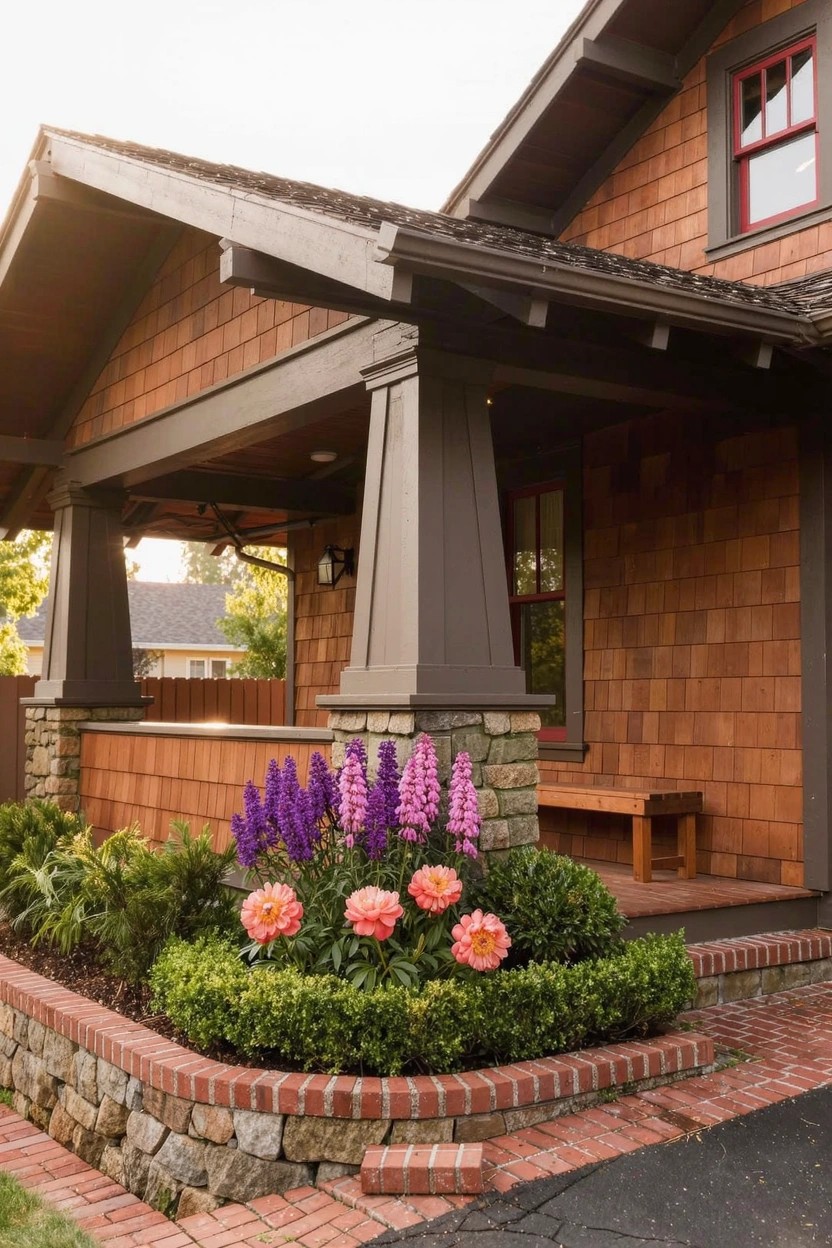
One simple way to handle that awkward spot where the driveway meets the house is a raised flower bed. This one curves gently around the corner, packed with tall lavender spikes and lower boxwood shrubs. It fills the space without spilling over, and the blooms add color right where you walk by.
These beds work best on smaller lots or next to a porch. Pick tough perennials that come back each year, and edge with brick to match the walkway. Watch the scale. Too much plant variety can look busy… keep it to three or four kinds.
Rounded Corner Flower Beds
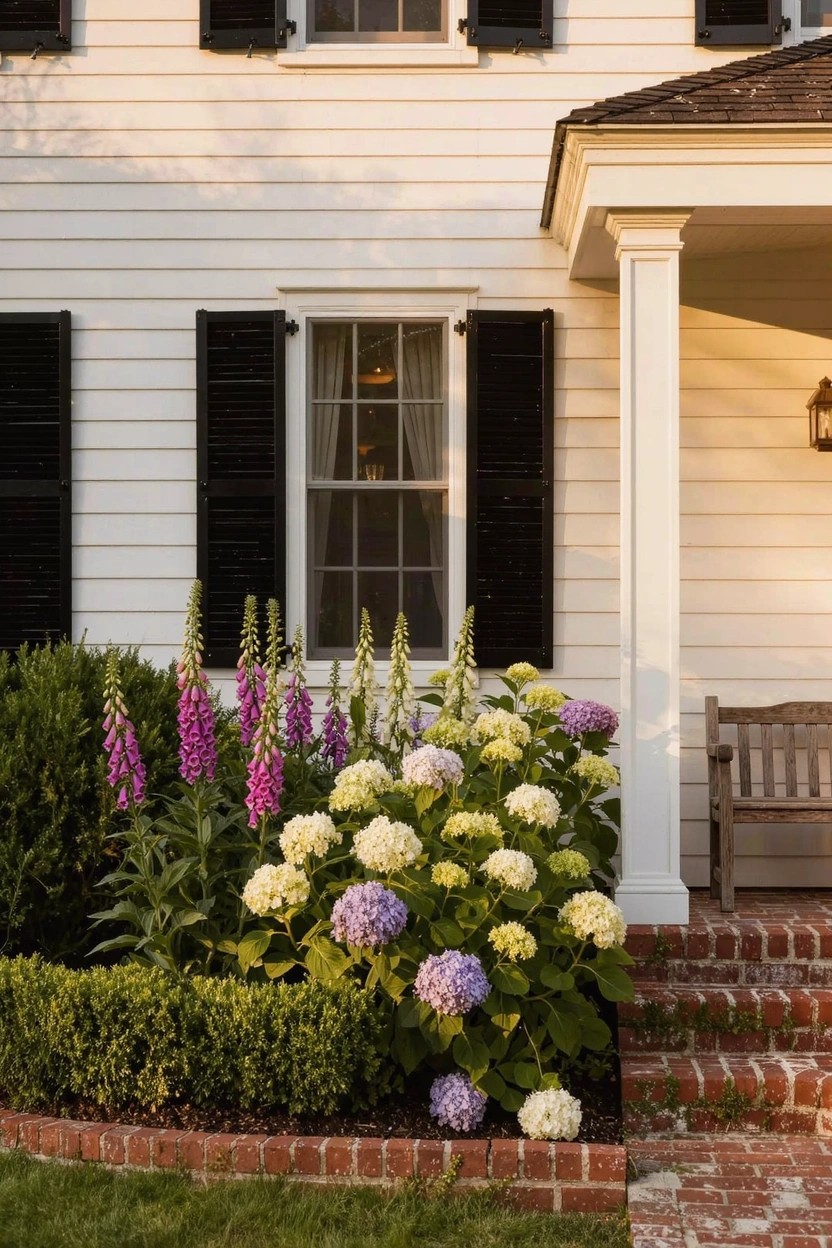
Those awkward spots where the house meets the walkway or steps often end up bare or messy. A rounded flower bed like this one fills it right in. Big hydrangea bushes take center stage, with tall foxgloves behind them for height. Boxwood edges keep it neat against the foundation. It softens the straight lines of the porch and brick steps without taking up walkway space.
This setup works best on older homes with simple porches. Plant the tallest stuff in back, then layer down to low edging plants. Hydrangeas bloom big in partial shade, which many corners get. Just make sure the soil drains well, or the roots might rot. Easy to copy in most yards.
Raised Stone Flower Beds for Corners
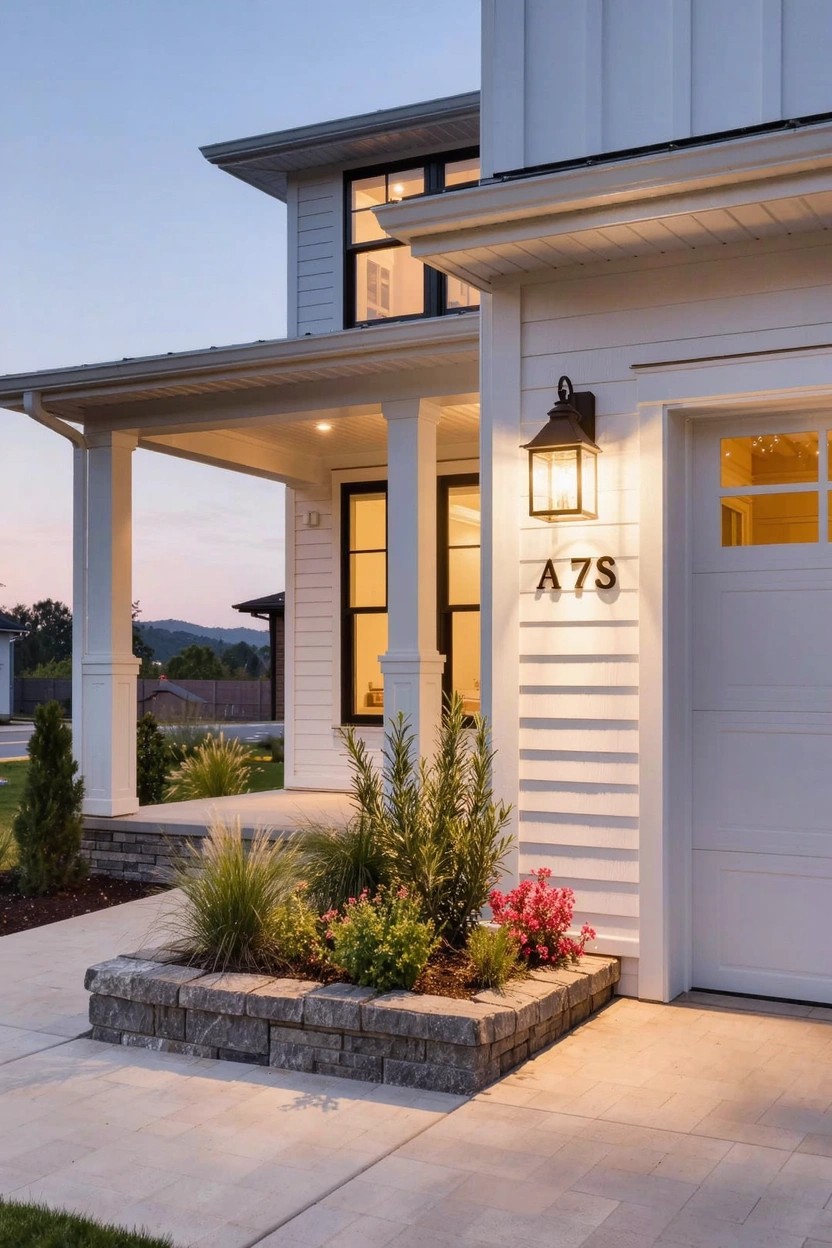
One straightforward way to handle that empty corner between your house and garage is a raised stone flower bed. It fills the spot neatly, like in this setup with low stone walls holding back grasses and colorful blooms. The stone gives a solid base that matches many home styles, and it keeps plants off the driveway edge.
These beds work best on homes with clean lines, like farmhouses or craftsman types. Build them low enough for easy planting, maybe two feet high, and pick tough perennials that don’t flop over the path. Watch the drainage so water doesn’t pool. Simple. And it adds curb appeal without much fuss.
Corner Flower Beds with White Picket Fences
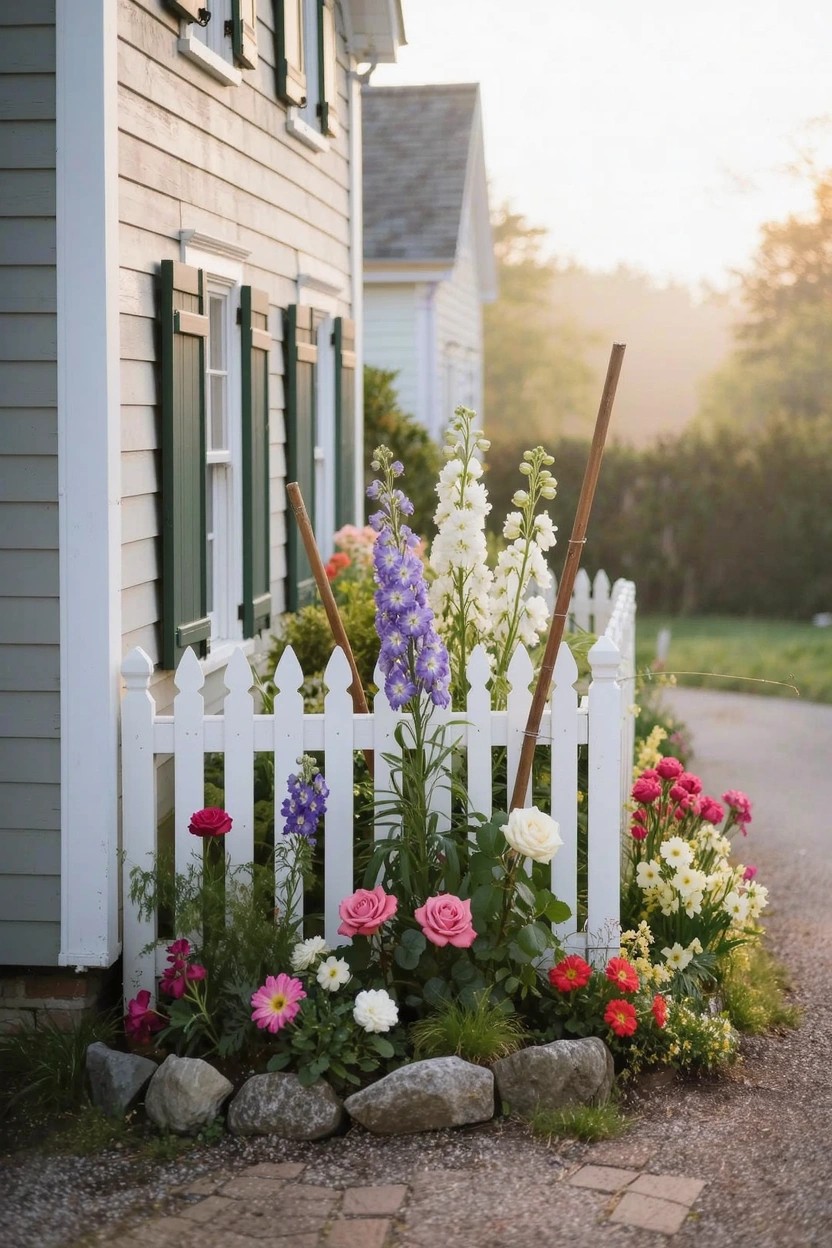
A white picket fence around a corner flower bed fills those tight spots next to the house and path without taking up much room. Tall flowers like foxgloves reach up and spill over the fence, giving height and color right where you need it. It’s a simple way to make an odd corner look finished and welcoming.
This works best in small front yards or cottage homes with gravel paths. Plant perennials that come back each year, and add rocks at the base for good drainage. Keep the fence low so the plants show off… just watch that it doesn’t block foot traffic.
Corner Pots Lit by Wall Lantern
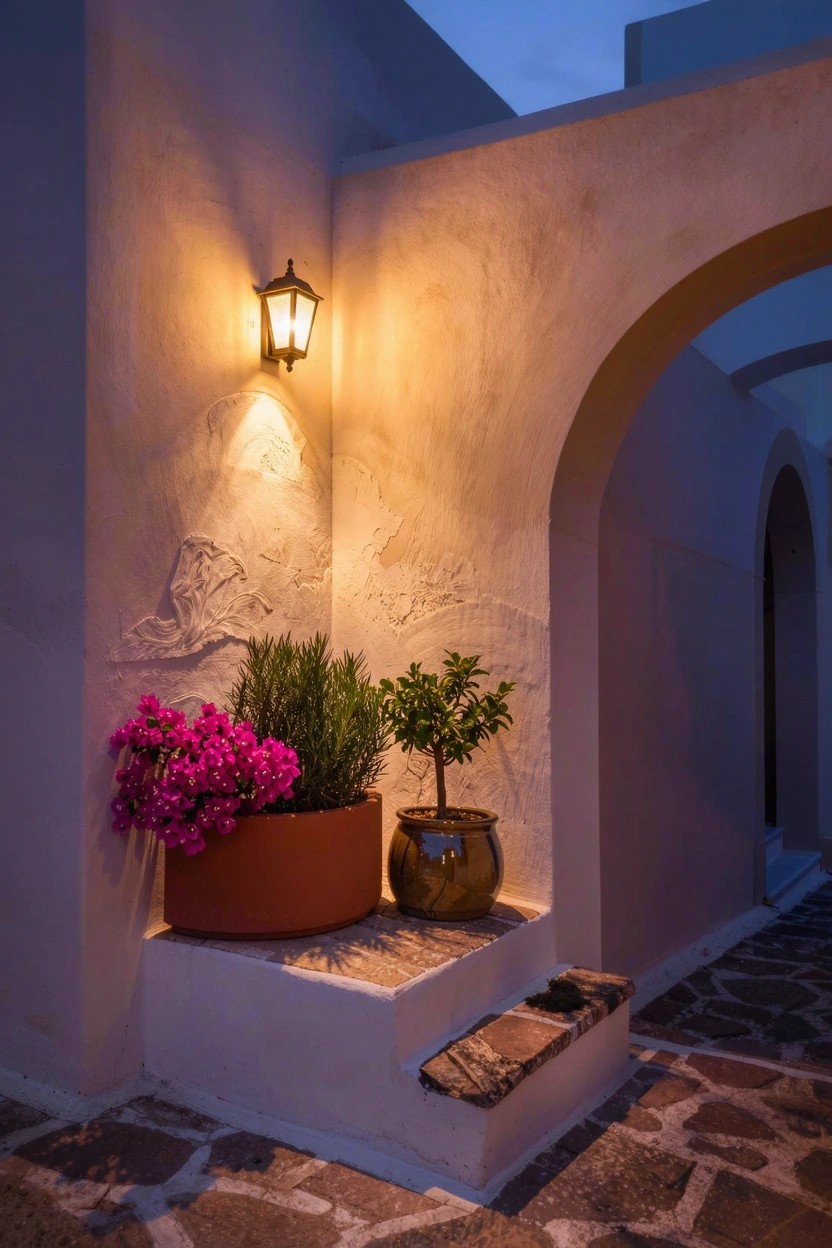
A wall lantern casting a warm glow over potted plants is a straightforward way to turn an empty corner into something noticeable. Here, pink flowers in a big terracotta pot sit next to rosemary and a small tree, all tucked against white stucco walls. The light picks out the plants without much effort, making the spot feel lived-in right at dusk.
This works best on small patios or entry paths where space is tight. Pick sturdy pots that hold up outdoors, and group three or so for balance. It suits older homes with arches or steps. Just make sure good drainage… wet roots won’t last.
Astilbe and Ferns in Corner Beds
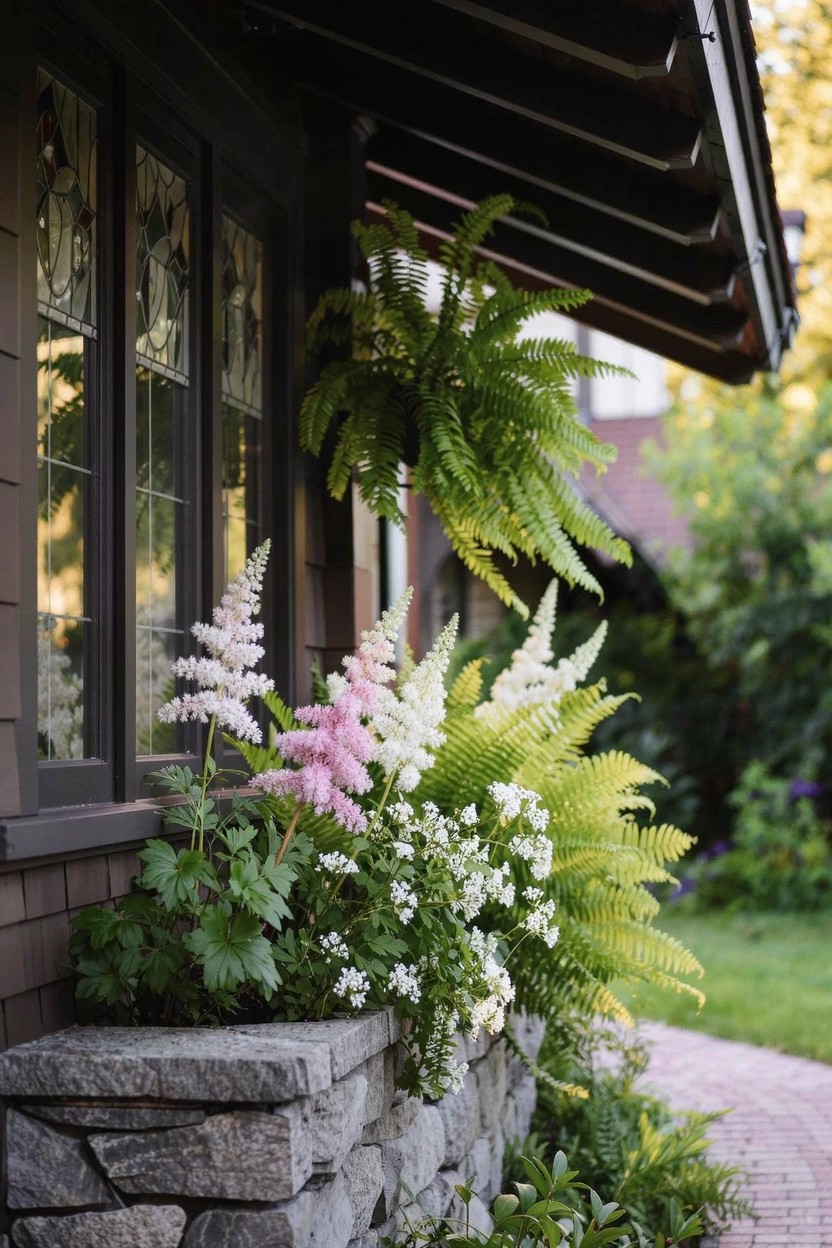
One straightforward way to fill those tricky spots right up against the house is with astilbe and ferns. The astilbe pops with tall foamy spikes in soft pink and white, while ferns add layers of green that spill over a low stone wall. Together they cover the base without much fuss and make the corner feel full instead of empty.
These plants handle shade well and like soil that stays a little damp, so they suit narrow spots near downspouts or under eaves. Build up a simple stone ledge to hold the dirt if your yard slopes. It works on older homes with wood siding, just keep the bed mulched to cut down on weeding.
Succulents in Corner Beds
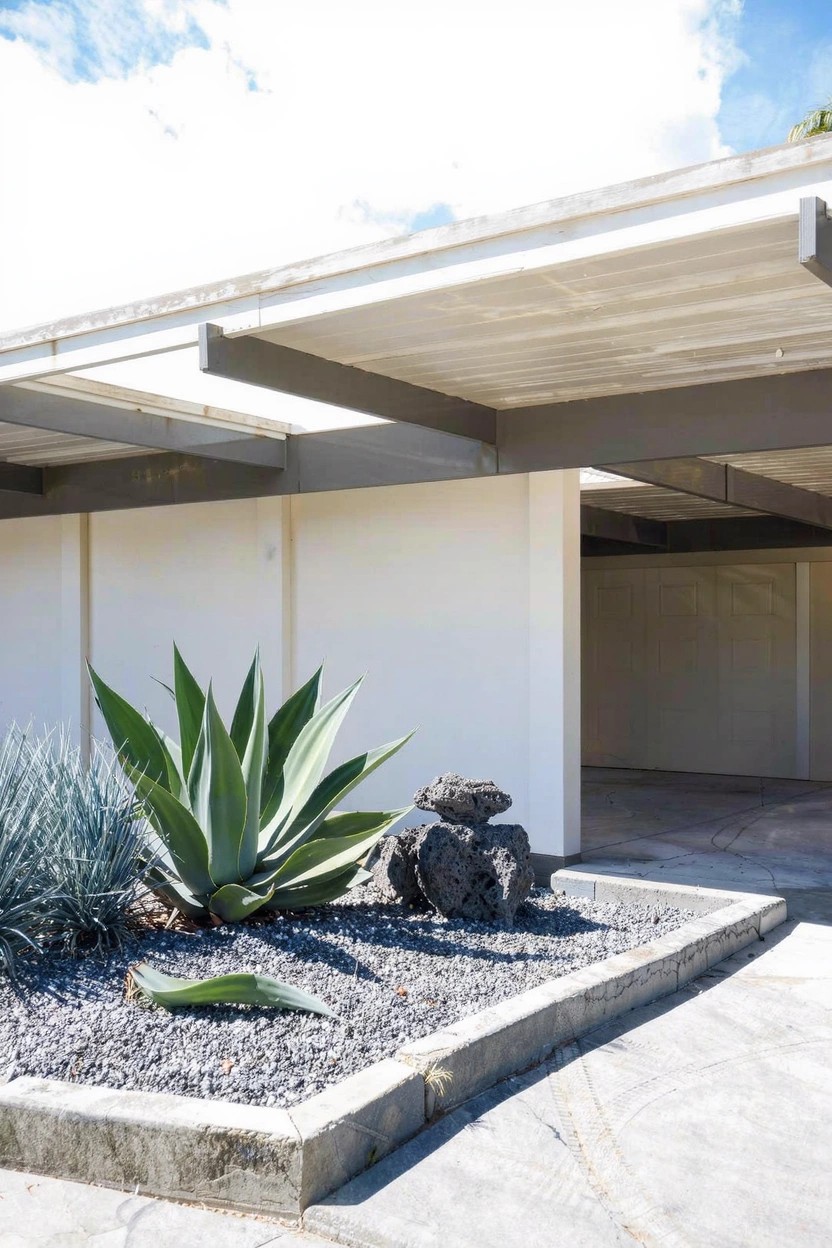
Those tight corners next to a driveway or garage often sit empty. Planting a few big succulents like agave changes that quick. The spiky leaves fill the space and stand up to sun and dry soil. They look clean against white stucco walls too.
Put them in a raised bed with gravel mulch and some rocks for good drainage. This setup fits sunny yards and modern homes best. Skip it in shady areas. Just water now and then and let them grow.
Corner Trough Planter
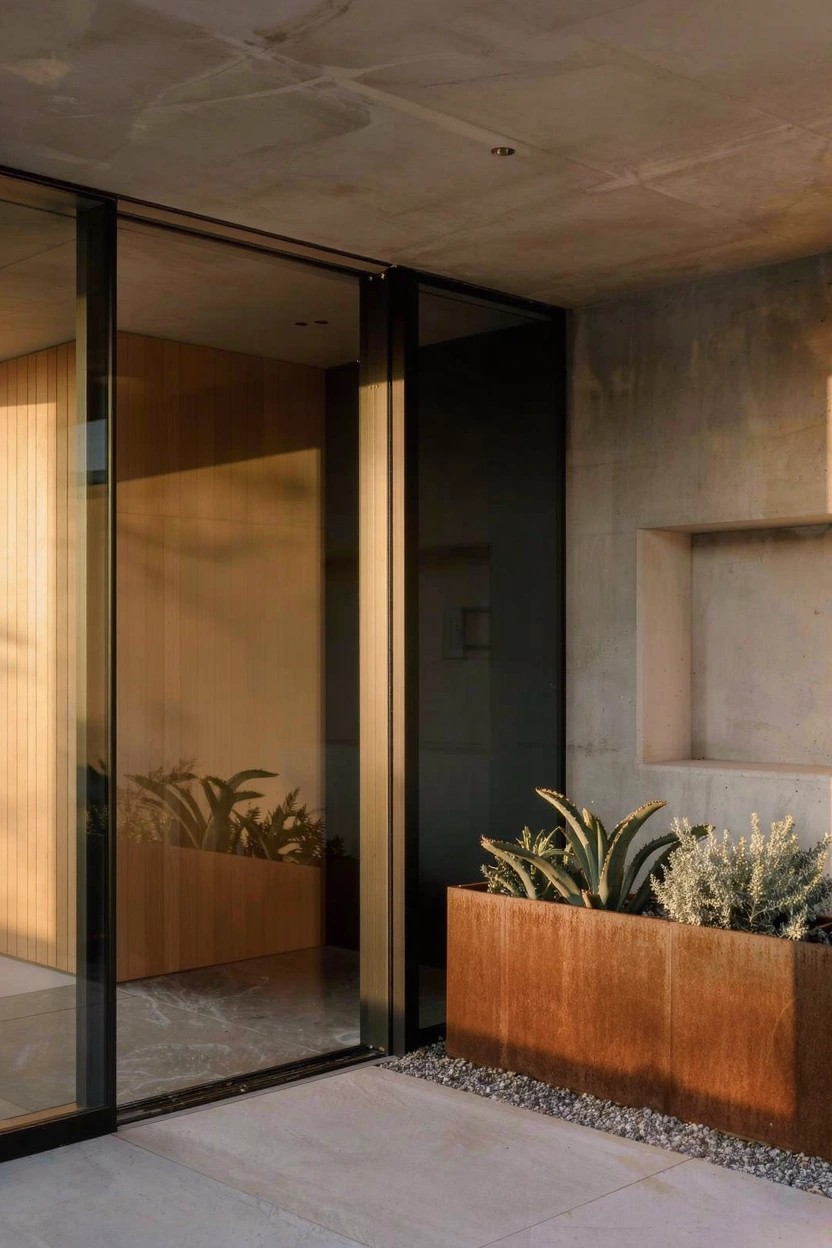
A recessed spot in the wall makes a natural home for a simple trough planter like this one. Filled with agave and a few silvery plants, it fills that awkward corner without crowding the walkway. The wood trough picks up on other exterior tones, keeping things tied together.
This works best next to doors or patios on modern or minimalist homes. Build or buy a corten steel or wood box to fit the recess snugly. Stick to drought-tolerant plants…they hold up better outdoors. Drainage holes are a must, or you’ll end up with soggy roots.
Terracotta Planters for House Corners
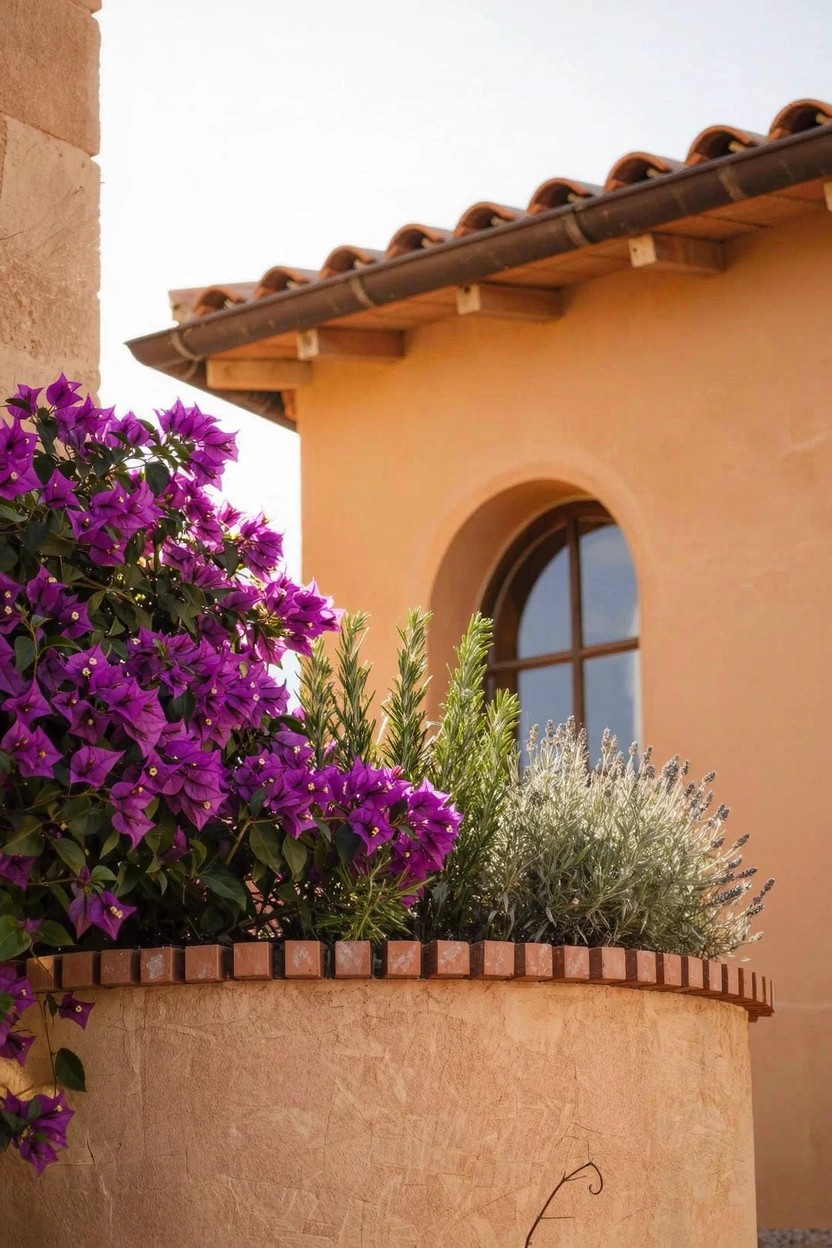
A large terracotta planter works well tucked into a corner by the house. It holds a good amount of plants like bougainvillea that trail over the edge. The planter’s warm clay color picks up the tones in the stucco wall and roof tiles.
Try this in spots where the yard meets the house and feels bare. It suits older homes with earth tones or sunny spots. Keep the soil right for your flowers… and pick a planter heavy enough not to tip.
Wheelbarrow Corner Flower Bed
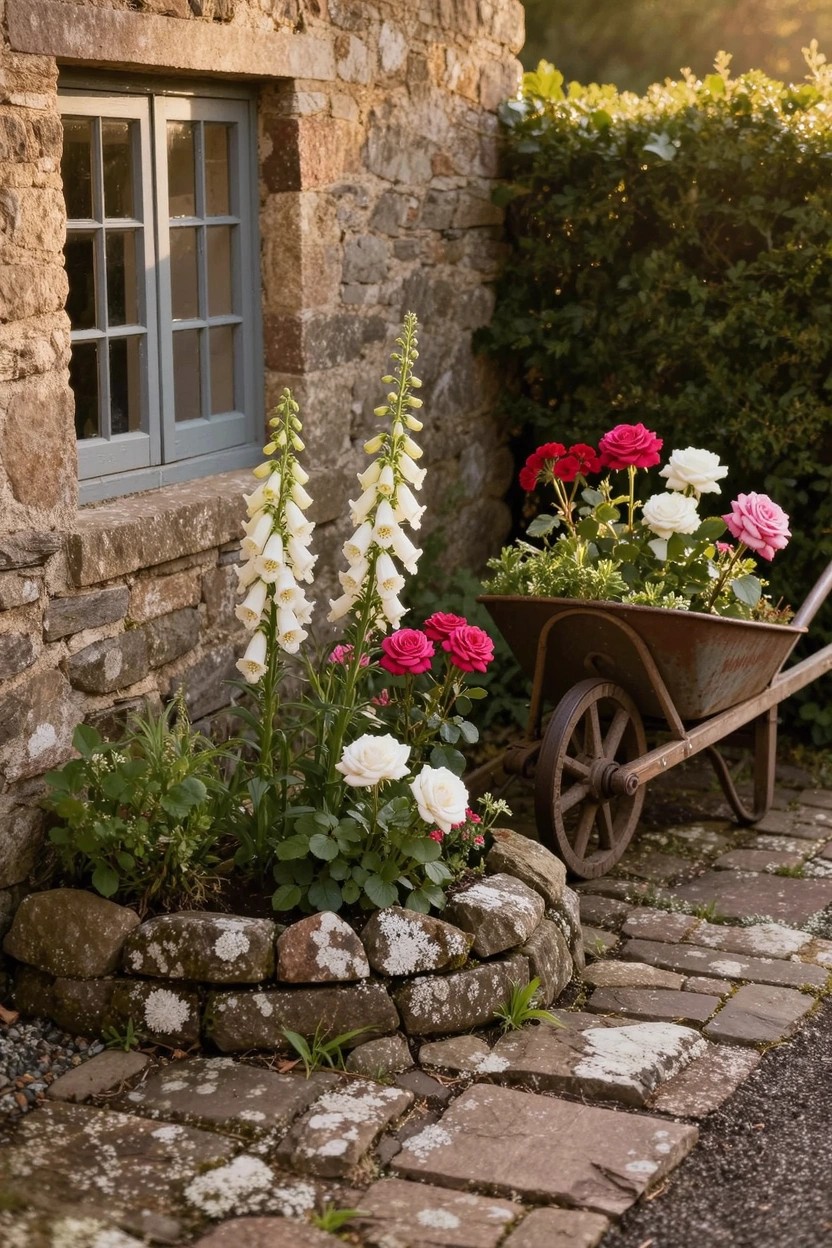
An old wheelbarrow planted with flowers turns a tight spot by the house into something useful and pretty. It fits right against a stone wall, with tall foxgloves adding height nearby. Folks like it because it’s low effort and gives that lived-in garden look.
Hunt for a beat-up wheelbarrow at a flea market or garage sale. Pile in geraniums or petunias that spill over the edges, then set it in your corner. This setup suits cottage homes or small yards with gravel paths. Keep soil loose for good drainage.
Corner Rock and Tree Bed
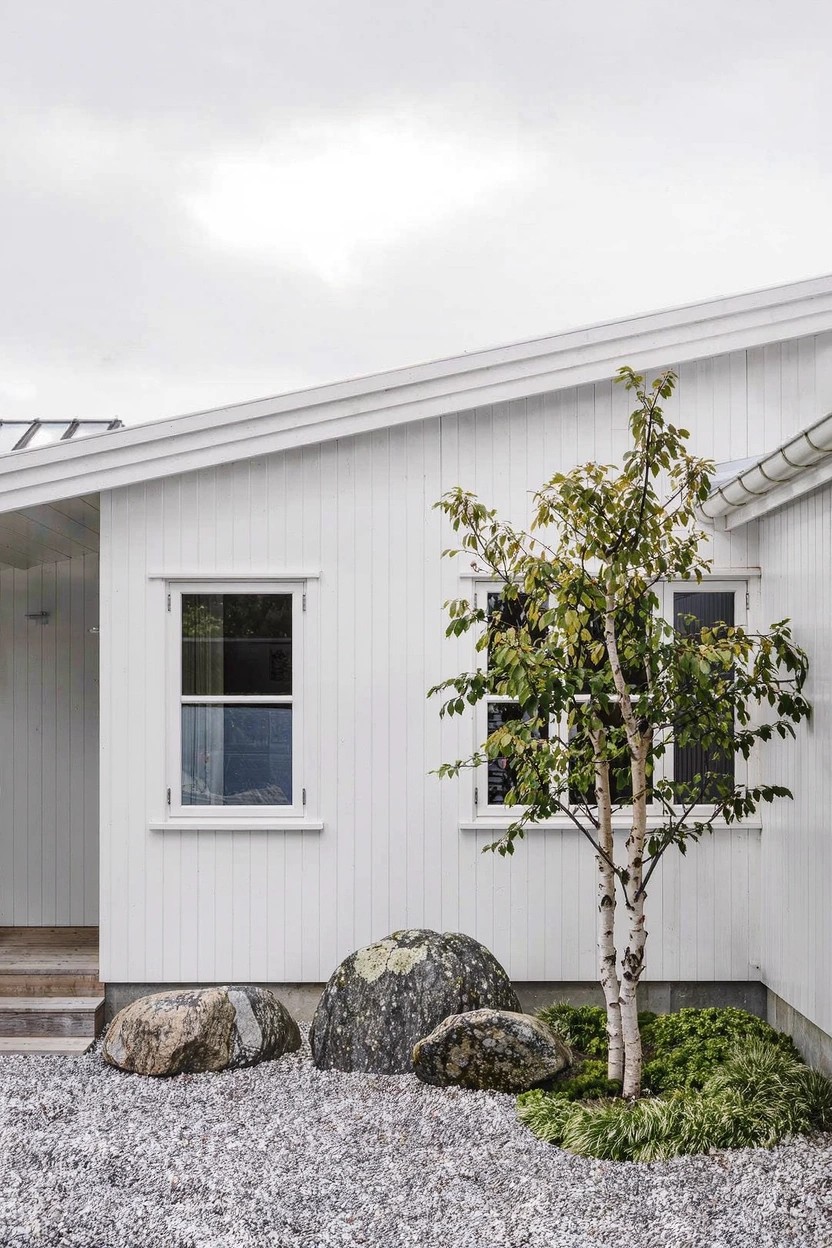
One easy way to handle an awkward corner next to your house is to drop in a few big rocks and plant a slender tree right there. This keeps things simple and neat. The white bark on a young birch picks up the house color without much fuss. Gravel fills in around it all. Folks like how it stays low upkeep once set up.
Try this in small yards or modern homes where you want clean lines. Pick rocks that look natural with moss on them. A birch or similar upright tree works best so it does not spread wide. Just make sure the spot gets enough sun. It fits tight spots by the foundation.
Vertical Planters on Corner Fences
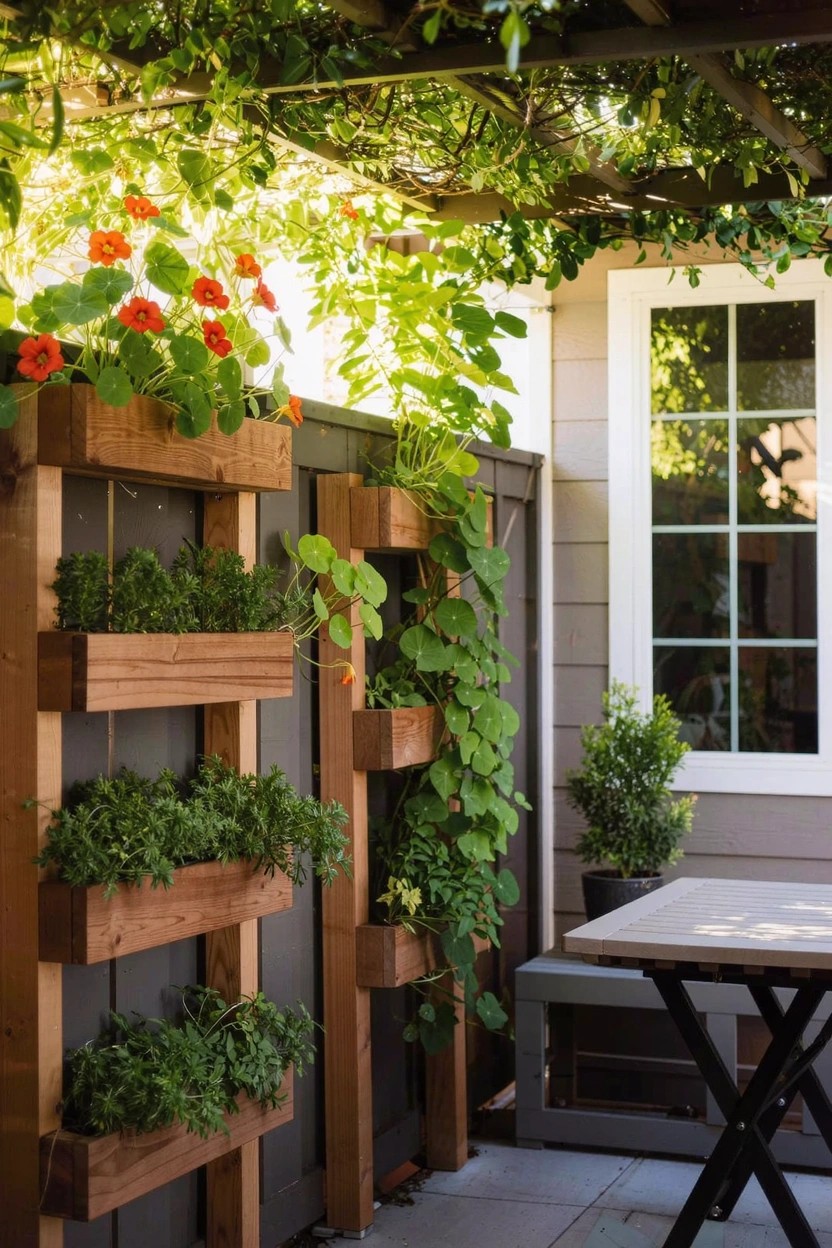
A good way to handle an awkward corner is stacking vertical planters right on the fence. These wooden boxes hold herbs and let vines climb up the frame. It fills empty space fast and gives you fresh greens close by without crowding the ground.
This setup fits small patios or side yards best. Bolt the frame secure to wood or siding. Pick shallow boxes for herbs like basil or mint. Keep soil light so it does not sag. Add it near a table for easy picking.
Boxwood and Hydrangea Corner Beds
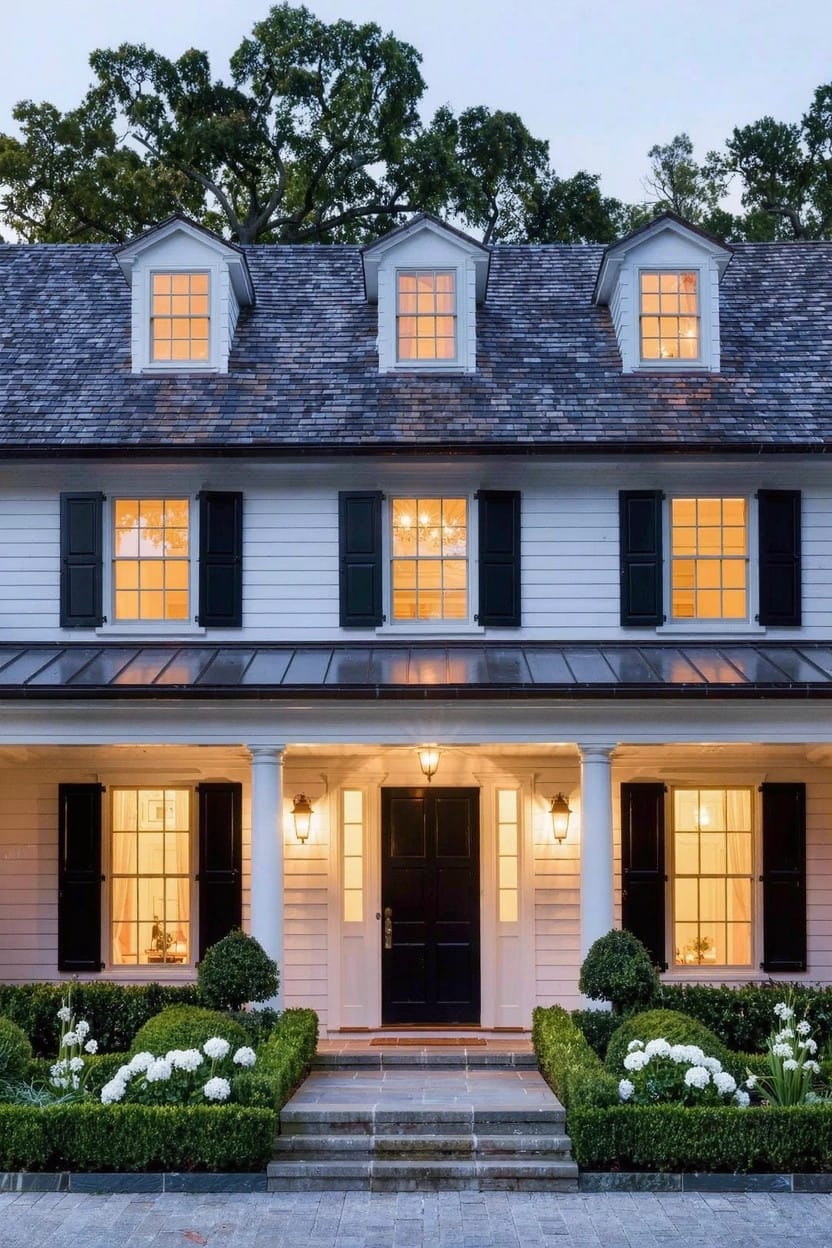
Corner flower beds like these work well to fill those awkward spots right where the driveway meets the front walk. Tight boxwood hedges form the backbone, with big white hydrangea blooms spilling over just enough to soften things up. It’s a clean look that frames the house entry without taking over.
Plant this setup in front of traditional homes, especially ones with steps or a path coming in at an angle. Keep the boxwoods sheared neat, and let hydrangeas do their thing in summer… easy to maintain year round. Works best in full sun spots, but watch for too much shade on the blooms.
Rose Trellis on a Brick Wall
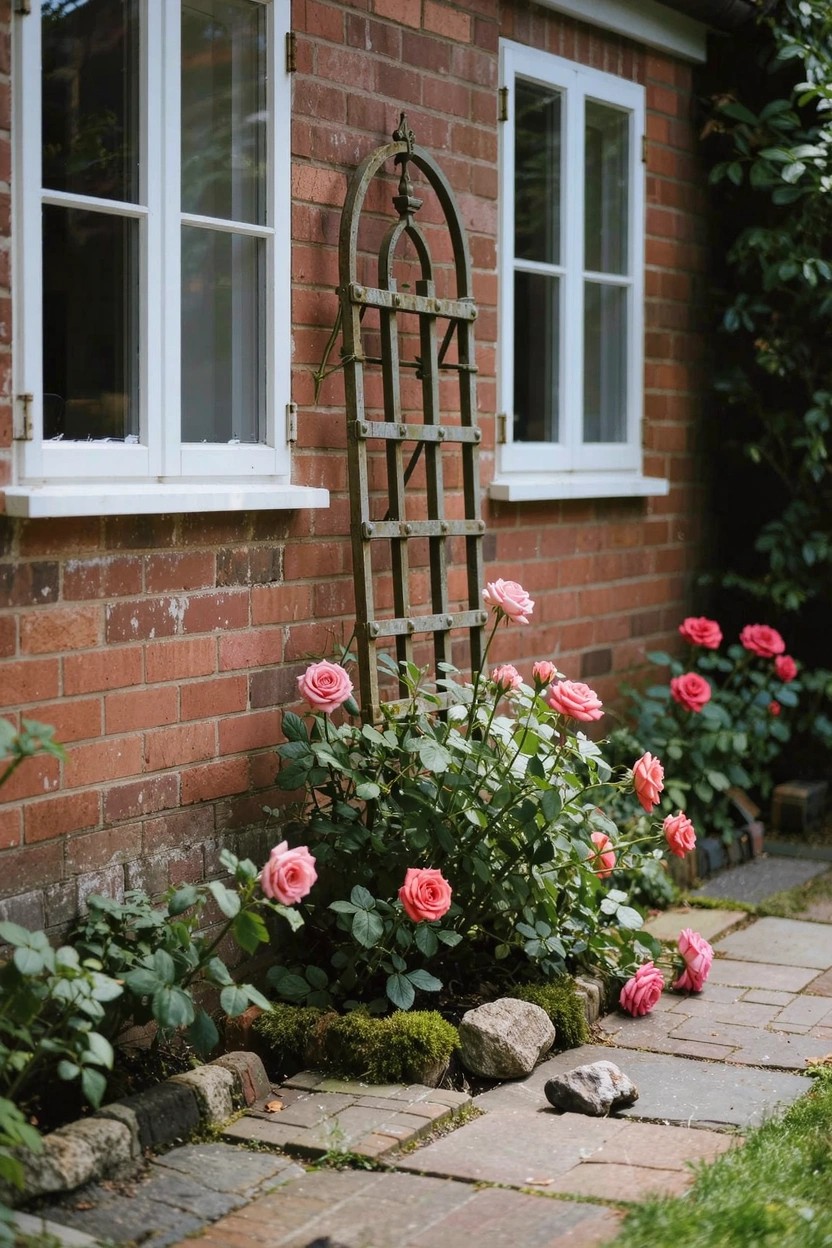
A simple wooden trellis leaning against a brick wall lets climbing roses grow up and fill an empty corner spot. It stands out because the roses soften that plain brick without taking much yard room. Pink blooms like these add color right next to the house, making the whole side look lived in and pretty.
This idea fits older brick homes best, especially where space is tight by a path or foundation. Set up a tall arched trellis, plant rambling roses at the bottom, and tie the canes as they grow. Just trim them back each year so they don’t crowd the windows.
Hanging Planters on Blank Walls
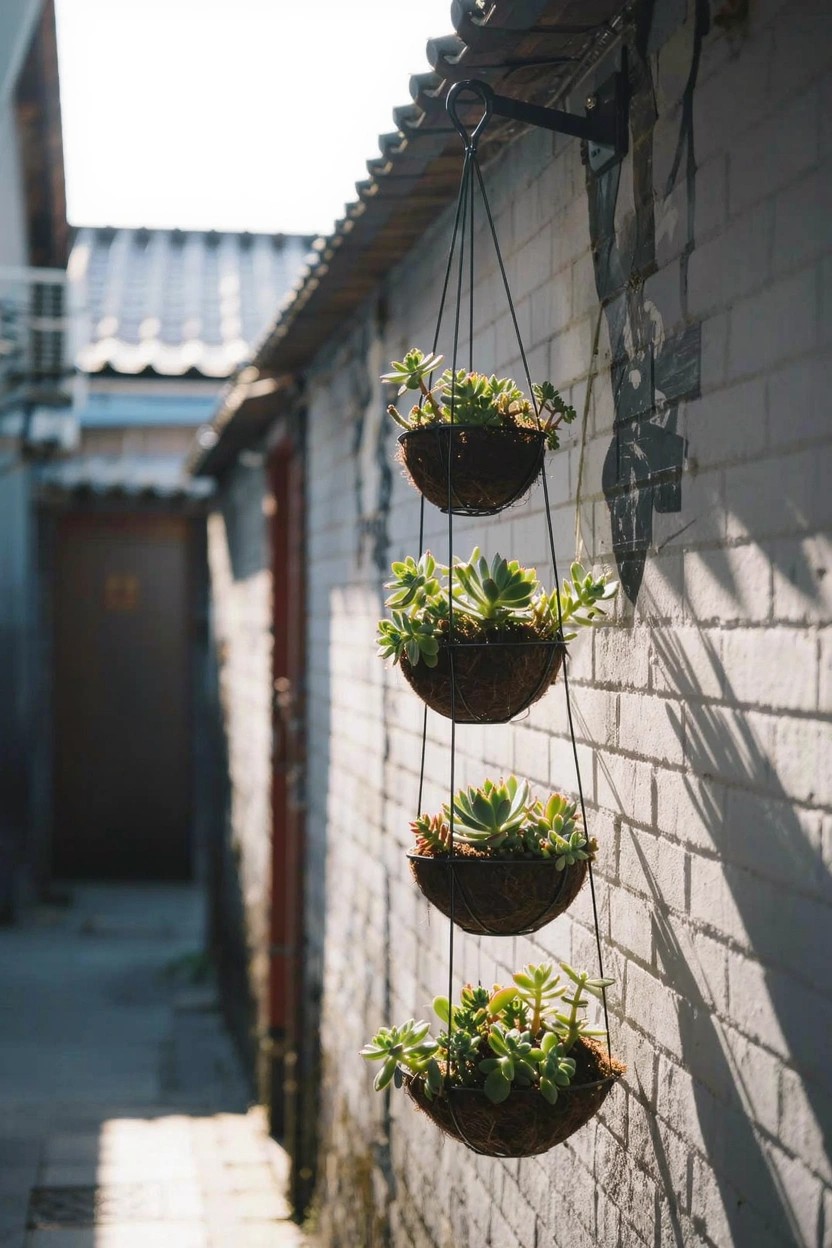
Hanging planters like these turn a plain wall into something alive. They fit right into narrow spots where ground space is tight. Succulents do well hanging up high. No fuss, and they catch the light just right.
Put them along a side path or alley entrance. They suit older homes with simple brick or stucco walls. Use strong brackets to hold the weight. Water from below so soil stays put. Easy fix for boring vertical spots.
Corner Beds with Tall Grasses
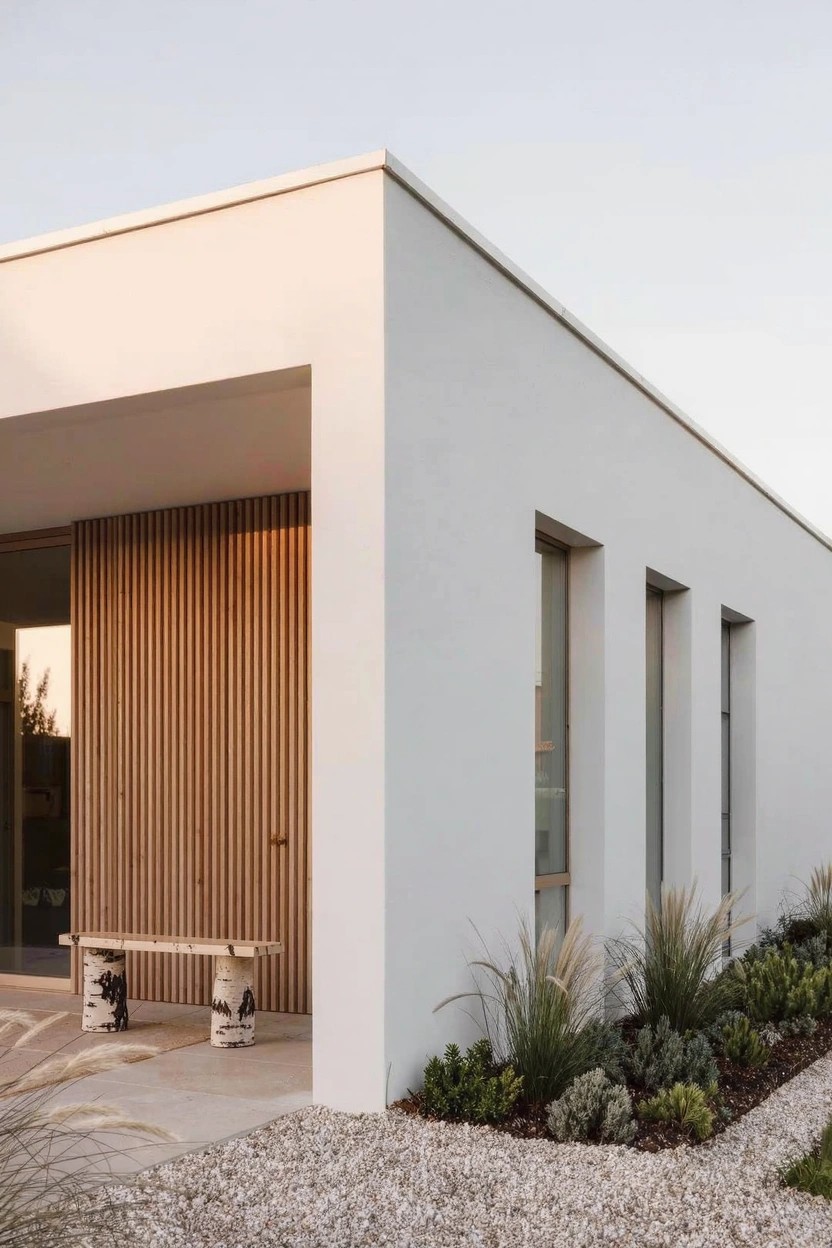
Tall grasses make a simple corner bed that fills empty spots next to the house. You see it here against a white wall, where bunches of feathery grass stand up and sway a bit. It keeps things from looking bare in those odd angles, and the gravel base makes it easy to handle.
Try this on modern homes or anywhere with plain walls. Plant in a gravel or mulch bed, space the grasses so they grow full but not crowded. Add a bench nearby if you want a spot to sit. It suits yards that need low-care planting, just watch that the grasses don’t flop over walkways.
Stacked Stone Corner Gardens
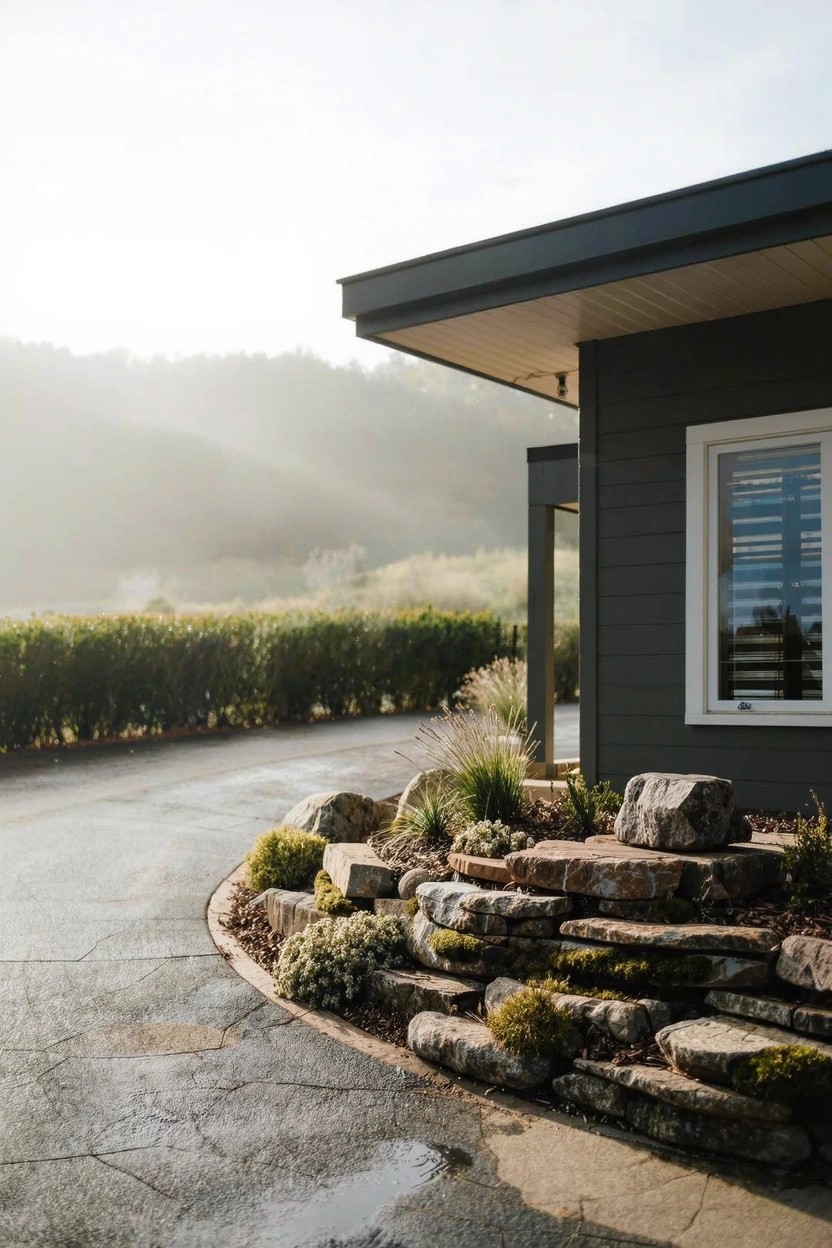
Those spots where the driveway bends around the house corner can be tricky to fill. A stacked stone garden does the job nicely. You pile up boulders and flat rocks, then tuck in low plants between them. It gives a natural look that blends with the yard and holds up year after year.
This setup suits modern homes or any place with a slope. Go for drought-tough plants like grasses and succulents. Stack the stones so they lean in a bit for stability. Skip fancy edging. It keeps things simple.
Tall Flowers in Corner Beds
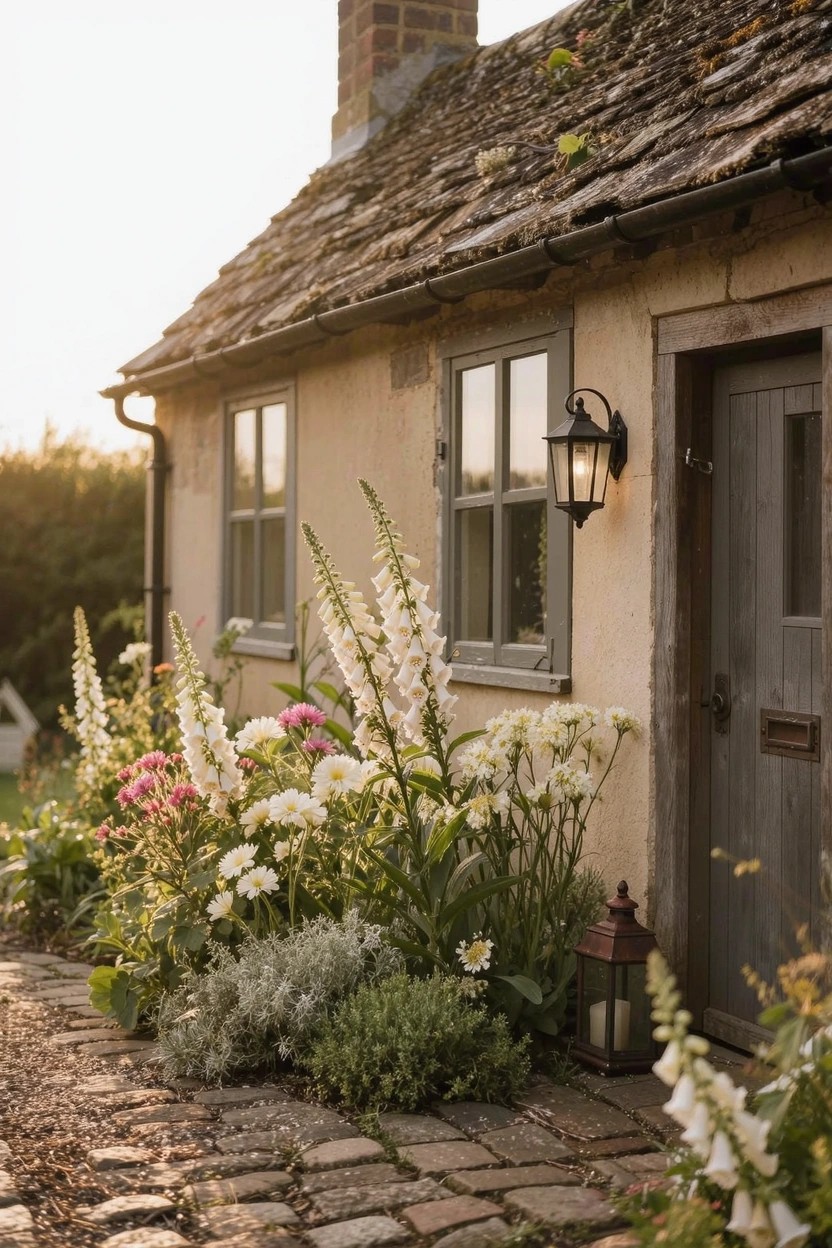
Tall flowers like foxgloves work well to fill those narrow spots right up against the house. In this setup, the spiky white blooms rise up by the door, adding height without taking much room. They soften the corner nicely and draw the eye along the path.
Try this in any awkward entry corner or side yard edge. It suits older homes with stone paths best. Plant the tallest ones at the back, shorter fillers in front. Keep soil moist, since foxgloves like it that way.
Corner Planter with Tall Grasses
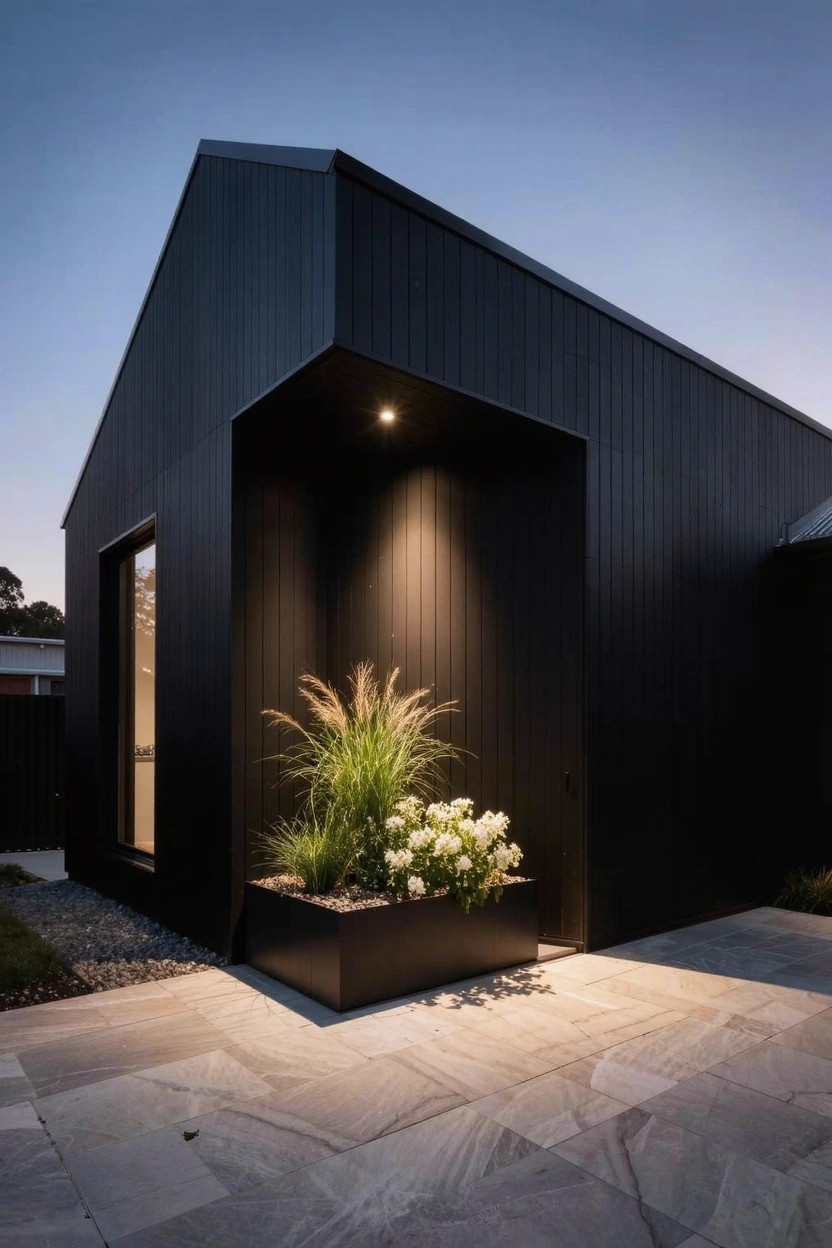
Tucked into a recessed house corner, a simple black planter box holds tall grasses swaying over clusters of white flowers. This setup turns an otherwise plain spot into something alive and interesting. The dark planter blends right into the siding. And that soft lighting at dusk? Makes the plants pop without trying too hard.
Try this on modern homes or anywhere you’ve got a sharp corner by the entry. Go for grasses that don’t need much water, like pampas or fountain grass. Keep the planter low and wide so it doesn’t block the path. Skip it if your spot gets too much shade. Plants will stay fuller in decent sun.
Porch Corner Raised Beds

One straightforward way to handle awkward porch corners is raised flower beds built right up against the railing. They fill the space nicely without crowding the steps. Packed with mixed flowers like pinks and whites, these beds hide the base of porch posts and make the whole entry feel fuller and more lived-in.
Try them on older homes with simple porches, especially where the yard meets the house at odd angles. Use stacked stone or concrete blocks for easy building, then layer in low-growing plants that spill over the edges. A tall birdbath in the center adds height without taking up bed space. Just don’t let plants grow too wild or they’ll snag on traffic.
Steel Edging for Corner Succulent Beds
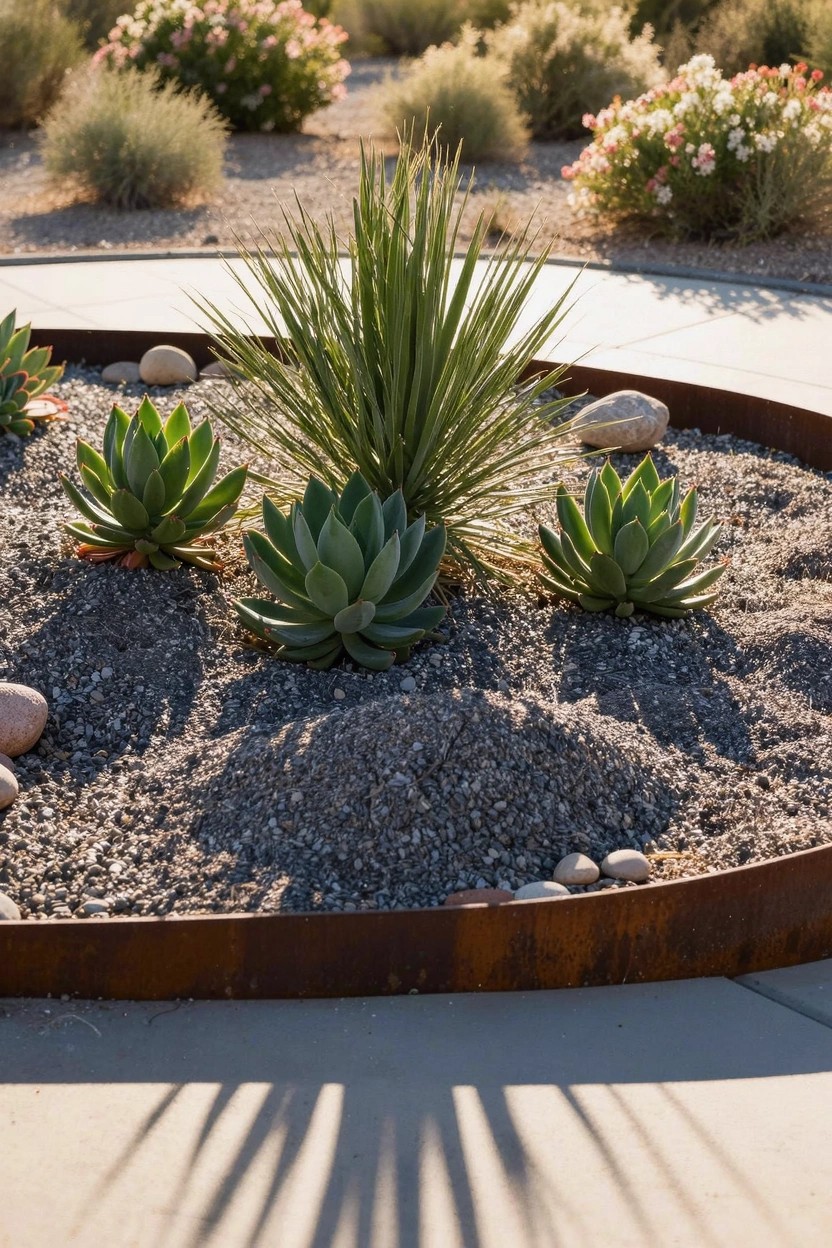
That rusted steel edging makes a clean curved bed right in an awkward corner. Gravel fills the bottom with a few tough plants like agaves and a yucca poking up tall. It keeps things neat and dry-looking, no fuss with watering or weeding much.
Put one near a walkway or driveway where grass won’t grow anyway. Fits sunny yards in warm spots best, maybe a modern house or just plain dirt lot. Skip it if you want green all year… steel holds shape well over time though.
Tiled Planters for Corner Gardens
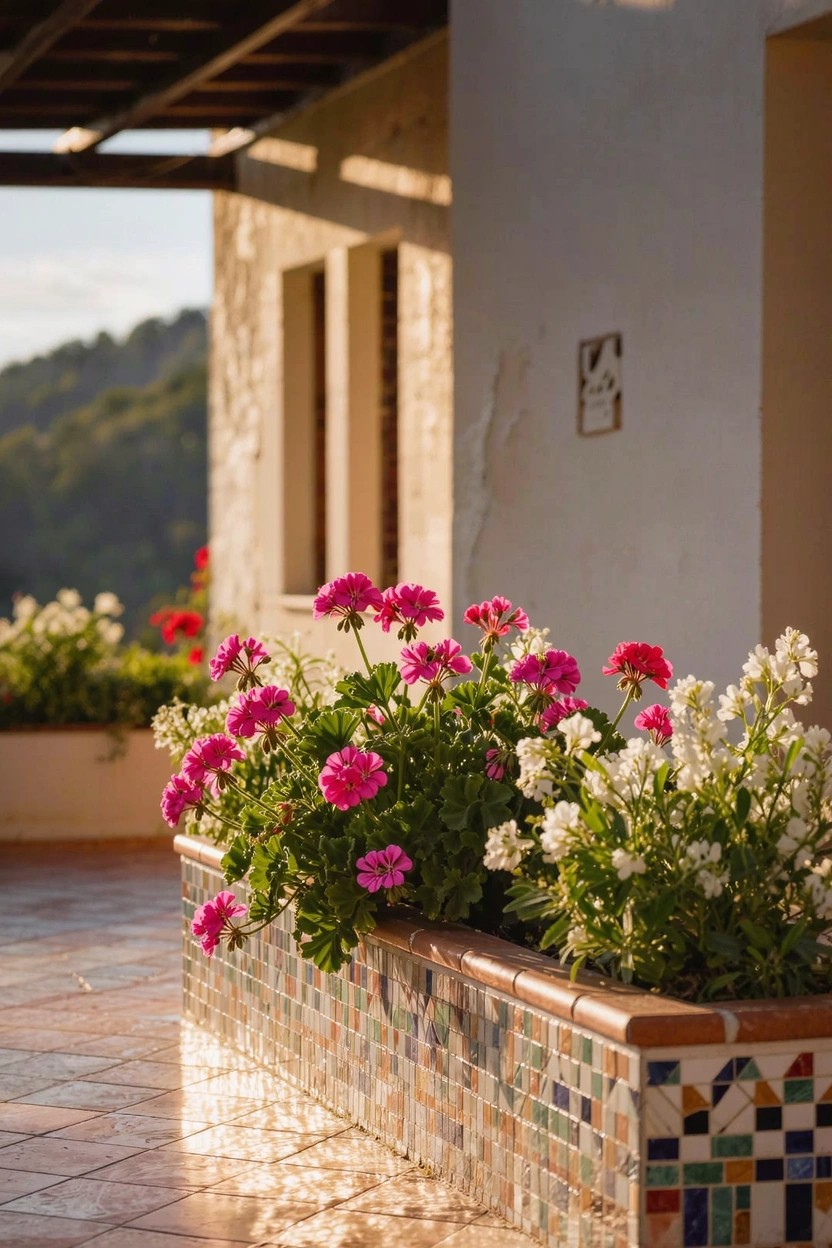
These corner planters built right into the patio edge work well because they turn an empty spot into something full of color. The tiles give a handmade feel that matches older homes, and packing them with geraniums keeps the look lively all season. It’s a simple fix that doesn’t take up walkway space.
You can use this idea on any patio or walkway corner near a wall. It suits stucco houses or places with a bit of Spanish style best. Just pick tiles that blend with your floor, and plant tough flowers that handle sun. Watch the drainage so roots don’t rot.
Corner Flower Beds with Uplighting
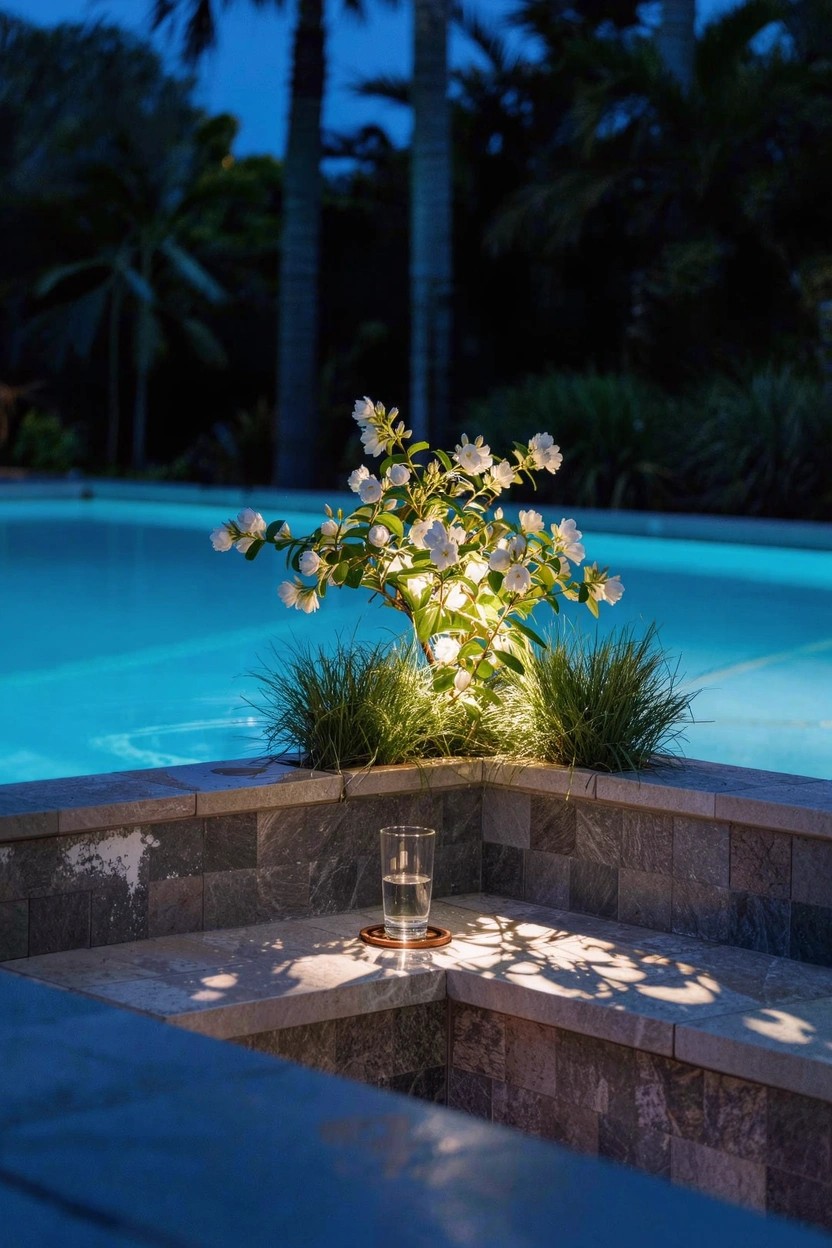
Tuck white blooming shrubs into those awkward corners next to a pool or patio, and run lights from below. The soft glow picks up the flowers at night without overpowering the space. It fills the spot clean and quiet, especially nice around water where you want some evening light.
This works best in yards with hard edges like tile or stone. Go for jasmines or gardenias that stay compact. Use low-voltage strings tucked in the soil base, safe from splashes. Suits modern or tropical homes, but skip it if the corner stays wet all the time.
Rhododendrons in Rocky Beds
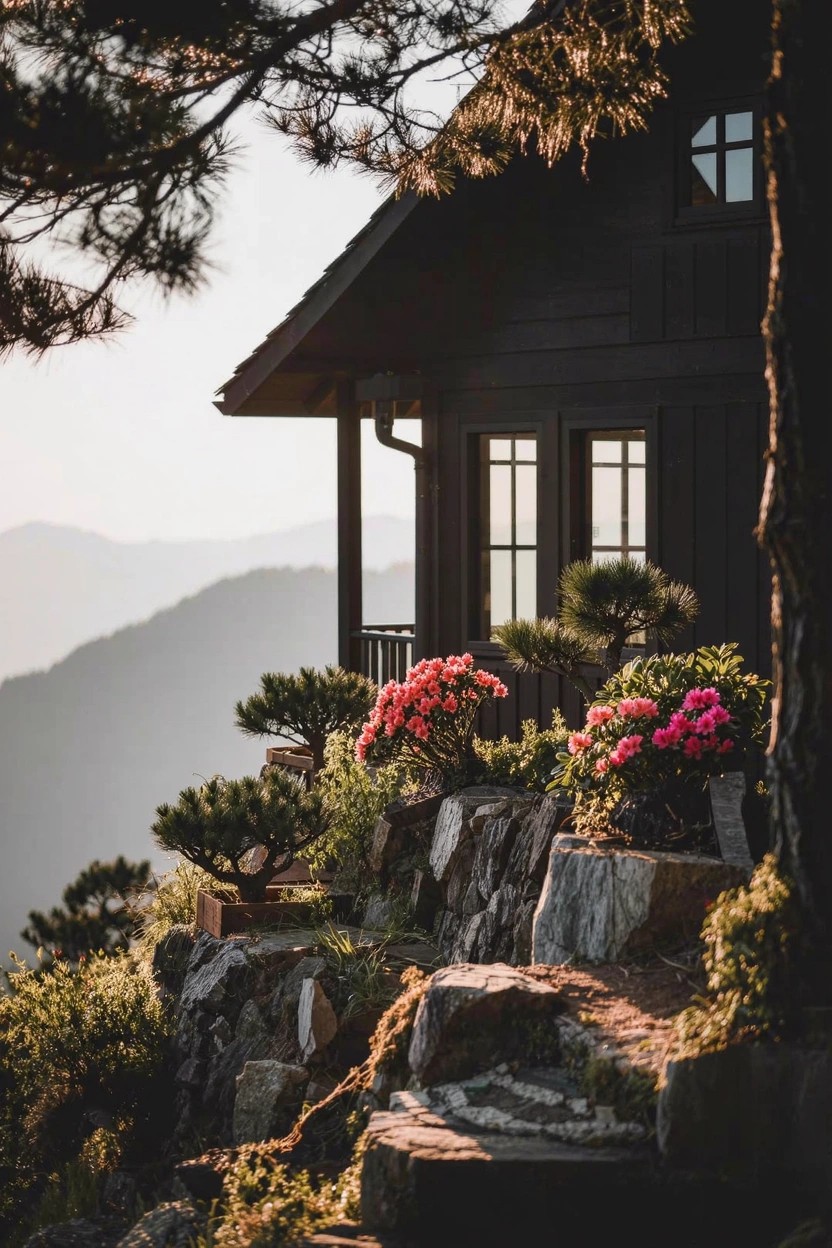
Got a steep rocky spot by the house? Planting rhododendrons right into the natural rocks fills it nicely. The pink blooms stand out against the stone and dark siding. They soften that rough edge without needing flat ground or extra dirt.
This idea suits sloped yards… especially near a balcony or entry. Go for bigger bushes on bigger rocks. They handle poor soil well. Watch drainage though. Wet roots spell trouble.
Garden Arch in Corner Beds
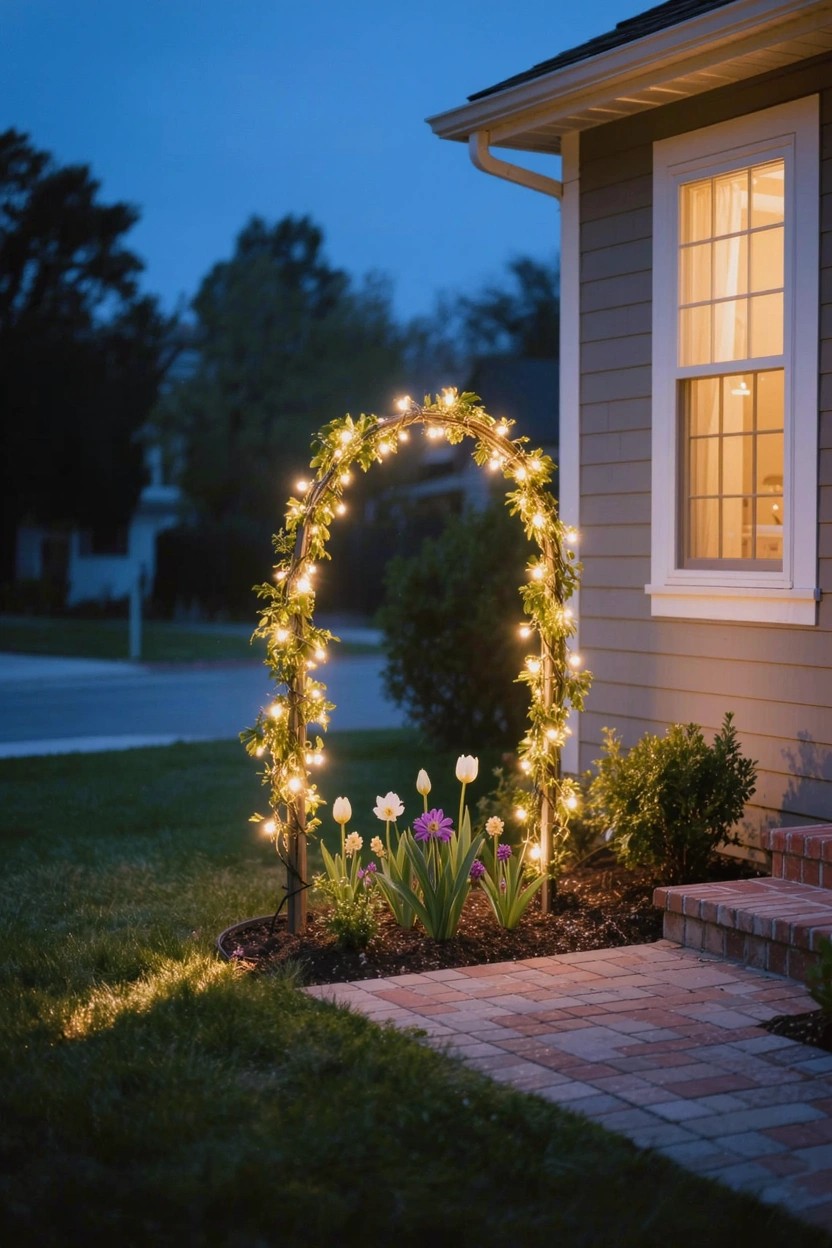
A simple garden arch turns an empty corner bed into something special. Placed right against the house near the steps, it gives height and structure without taking much room. String lights wrapped around make it glow nicely in the evening, and a few spring tulips at the base keep it colorful.
This setup fits awkward spots by sidewalks or entries, especially on smaller lots. Pick a metal or wood arch that matches your house siding. Plant bulbs or perennials below, let climbers grow up over time. Watch the scale though… too big and it crowds the path.
Frequently Asked Questions
Q: My corner spot gets mostly shade. What plants work best there?
A: Pick hostas, astilbes, or bleeding hearts. They love the low light and add texture without demanding sun. Tuck in some colorful heuchera for contrast.
Q: How do I keep weeds out once I plant?
A: Spread a layer of cardboard or landscape fabric at the base. Pile on 2-3 inches of mulch right after. Weeds hate fighting through that combo.
Q: What’s a simple way to edge the bed so it looks sharp?
A: Grab some flat stones or bricks and sink them halfway into the soil along the curve. This holds everything in place and gives a clean line. And it lasts years with zero upkeep.
Q: Can I pull this off on a tight budget?
A: Start with plants from your yard or neighbors. Reuse old bricks for borders. Boom, stylish spot for under 50 bucks.
