


A plain fence can leave a yard feeling exposed, even when the rest of the space is cared for.
I like how climbing vines and trellises add privacy while bringing height, texture, and a softer edge to the boundary.
The best setups also suit the space, since a narrow side yard calls for different planting and support than a sunny patio fence.
With a little structure and time for plants to fill in, a bare stretch can become a more comfortable backdrop for everyday outdoor use.
I’d save the ideas that fit your fence, light, and upkeep routine, then adapt them one section at a time.
Add Climbing Vines To Give A Privacy Fence More Character

A plain privacy fence can feel like a large, blank wall. Adding trellises gives climbing vines a place to grow and breaks up the fence without losing the privacy it provides. Here, the trellises and purple flowers bring a simple focal point to the yard.
This works well along a long fence that needs a little more interest. Choose a trellis that suits the fence and a vine suited to your climate, then leave room for the plant to spread. A few repeated trellis sections can look tidier than covering every inch.
Add Privacy With A Climbing Vine Screen

An overgrown fence line can become a useful privacy feature when vines are trained across a sturdy trellis. Here, the loose chain-link boundary is replaced by a black metal screen covered in flowering greenery, giving the yard a neater edge while blocking more of the view.
This idea works well along a side yard or walkway where a solid fence might feel too closed in. Choose a trellis that can support mature vines, and leave enough room to trim them so the path stays clear.
Add A Trellis To A Plain Privacy Fence
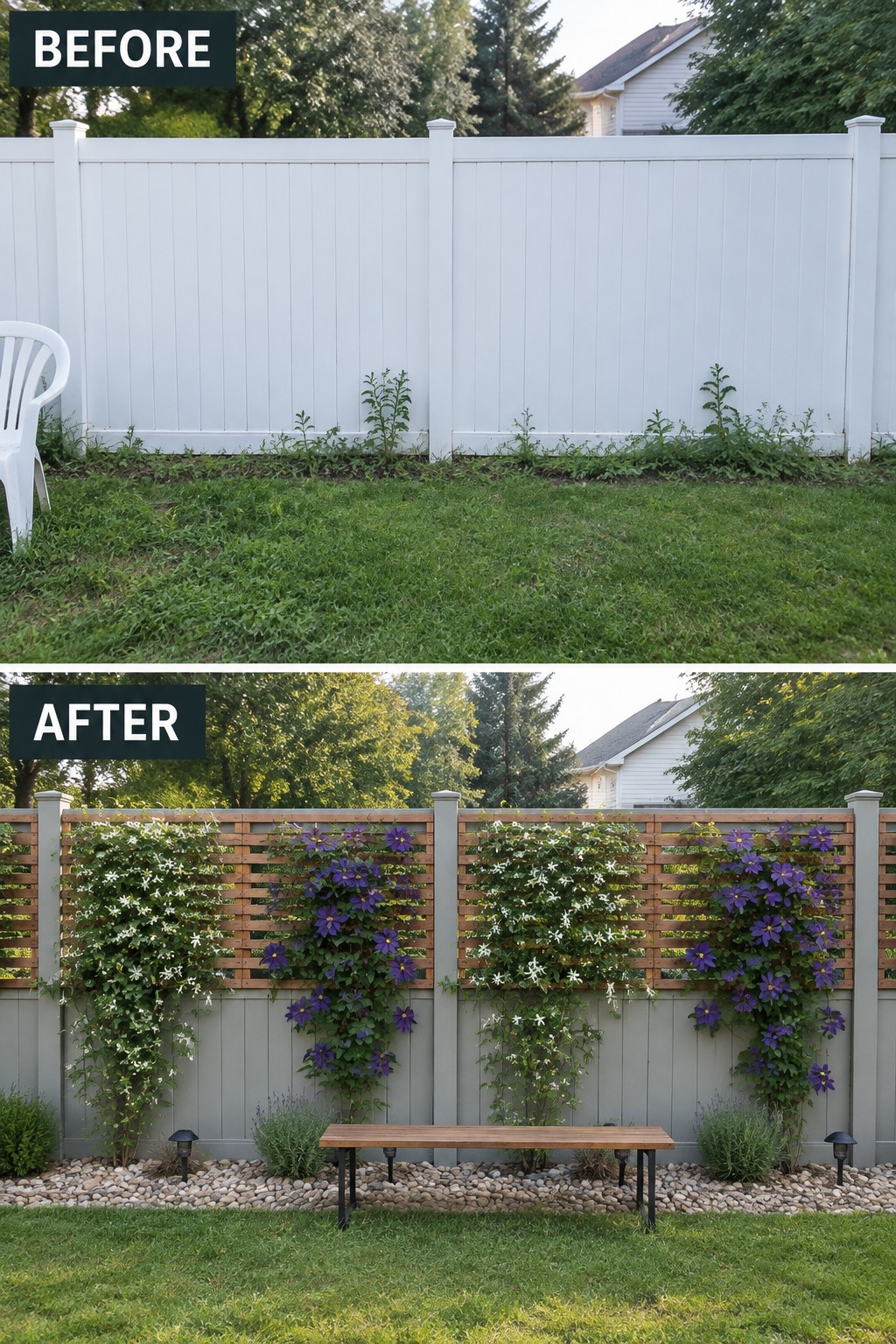
A plain privacy fence can feel more useful when part of it supports climbing plants. Here, a wood trellis above the solid panels gives vines room to grow while keeping the fence in place as a backdrop.
This idea works well when you want more greenery without replacing an existing fence. Attach sturdy trellis panels securely, then choose vines suited to your climate and sunlight. Leave enough space for the plants to grow without blocking access along the fence.
Add Structure To An Overgrown Fence Line

A simple fence can become the backbone of a garden when you clear away the weeds and give climbing plants a place to grow. Here, the untidy grass gives way to a neat border, and a trellis-style fence with a rose-covered arch makes the boundary feel planned.
For a similar look, start with a defined planting bed along the fence and choose vines that suit your climate and the amount of sun the area gets. Leave enough room to walk and maintain the plants, especially around a gate.
Grow Fruit Trees Along A Plain Fence

A bare fence can become a productive garden feature when you train fruit trees along it. Here, the plain wall becomes a growing space, with trained trees adding greenery and fruit while keeping the narrow bed tidy.
This approach works well in a sunny yard where space is limited. Choose a fruit variety suited to your climate, add sturdy horizontal wires for support, and leave enough room to prune and pick the fruit.
Turn A Plain Fence Into A Green Privacy Screen

A bare fence can feel stark, especially when weeds have taken over the narrow strip beside it. Adding trellis panels for climbing vines turns that boundary into a planted screen, while a gravel border keeps the fence line tidier.
This idea works well along a driveway or in a small side yard where there isn’t much room for a deep garden bed. Choose vines suited to your climate, and leave enough space to reach the fence for upkeep.
Turn A Narrow Side Yard Into A Vertical Garden
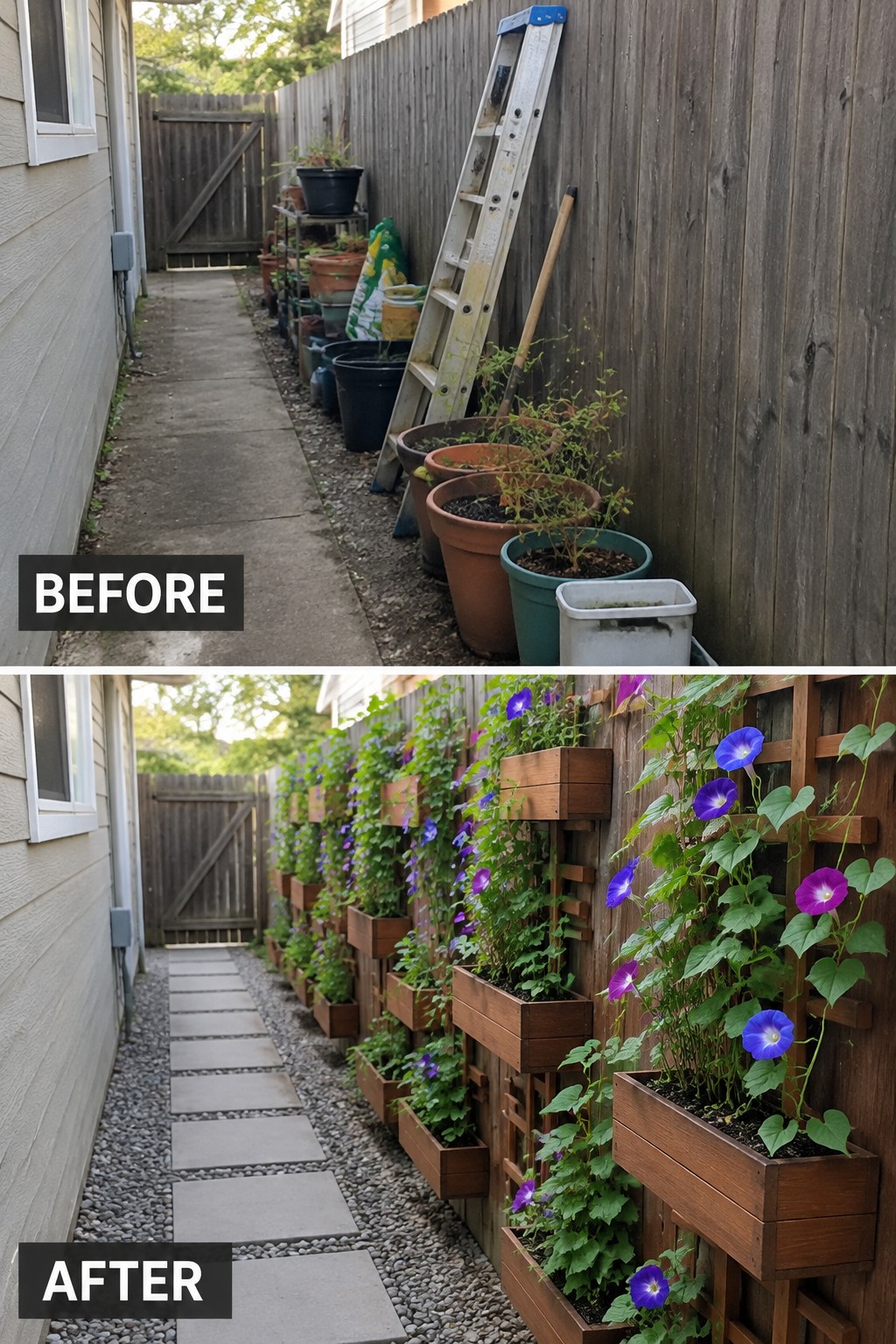
A narrow side yard can feel cluttered when pots and tools take up the walkway. Wall-mounted planter boxes move the planting up the fence, turning a plain boundary into a garden while leaving more room to walk.
This idea works well in small side yards where ground space is limited. Use sturdy boxes attached to a trellis or fence, and choose climbing plants suited to the amount of sun the area gets. Keep the path clear and leave enough space to reach the plants for watering and pruning.
Turn A Bare Patio Into A Comfortable Seating Area

An empty concrete patio can feel like space you pass through rather than use. Adding a small table and two chairs gives it a clear purpose, while a vine-covered trellis above the fence helps make the seating area feel more private.
This works well in a small backyard where there isn’t room for a full dining set. Keep the furniture compact and leave enough space to walk around it. Choose a sturdy trellis and climbing vines suited to your climate, and check that the structure is securely supported.
Replace A Worn Fence With A More Private Garden Border
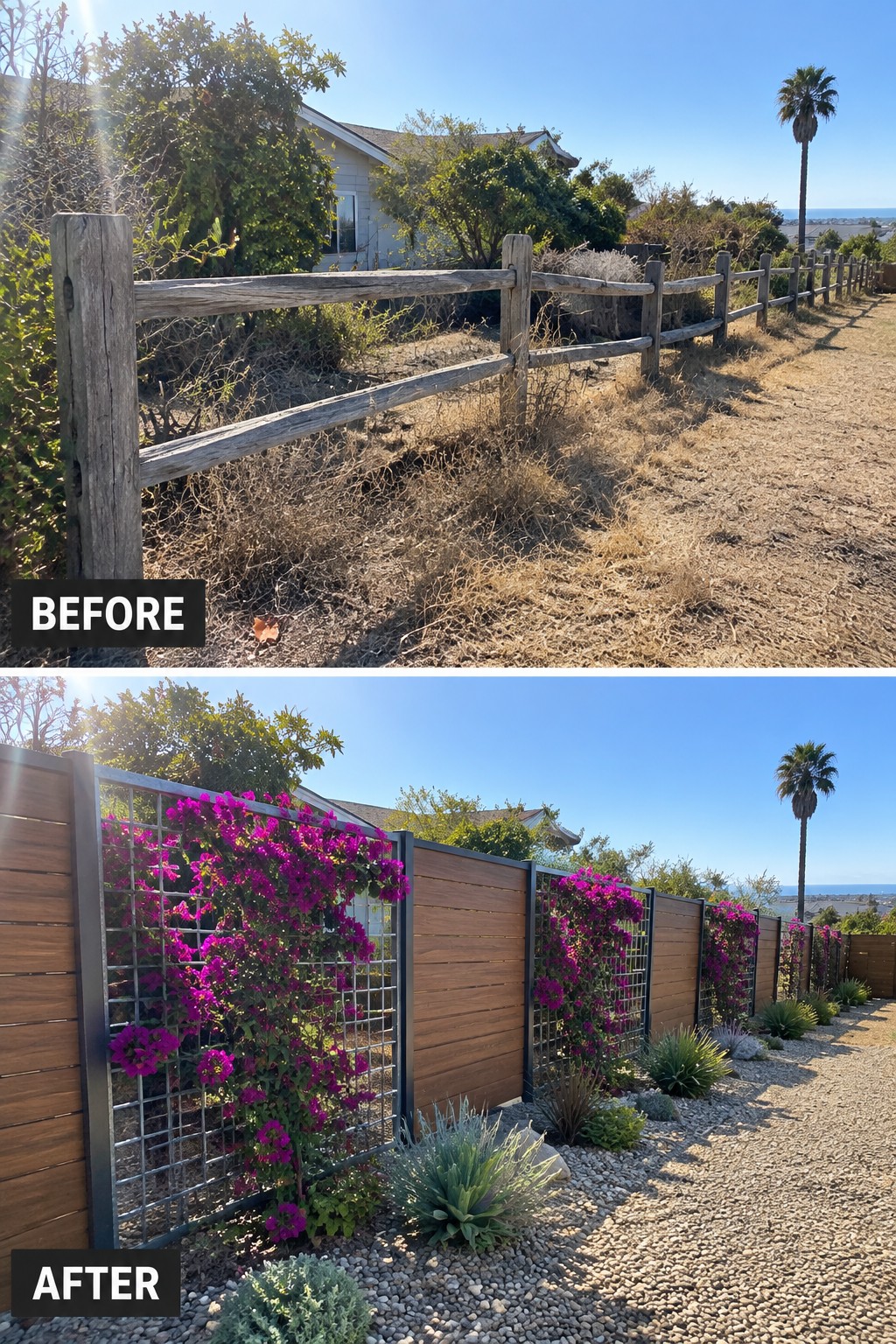
The old rail fence left the yard open and untidy. A taller fence with trellis sections gives the boundary more privacy, while climbing flowers bring color without taking up much ground space.
This idea works well along a narrow side yard or property line. Choose a sturdy trellis and a vine suited to your climate, and leave enough room to reach the fence for pruning and repairs.
Add A Trellis To Make A Bare Fence Line More Private
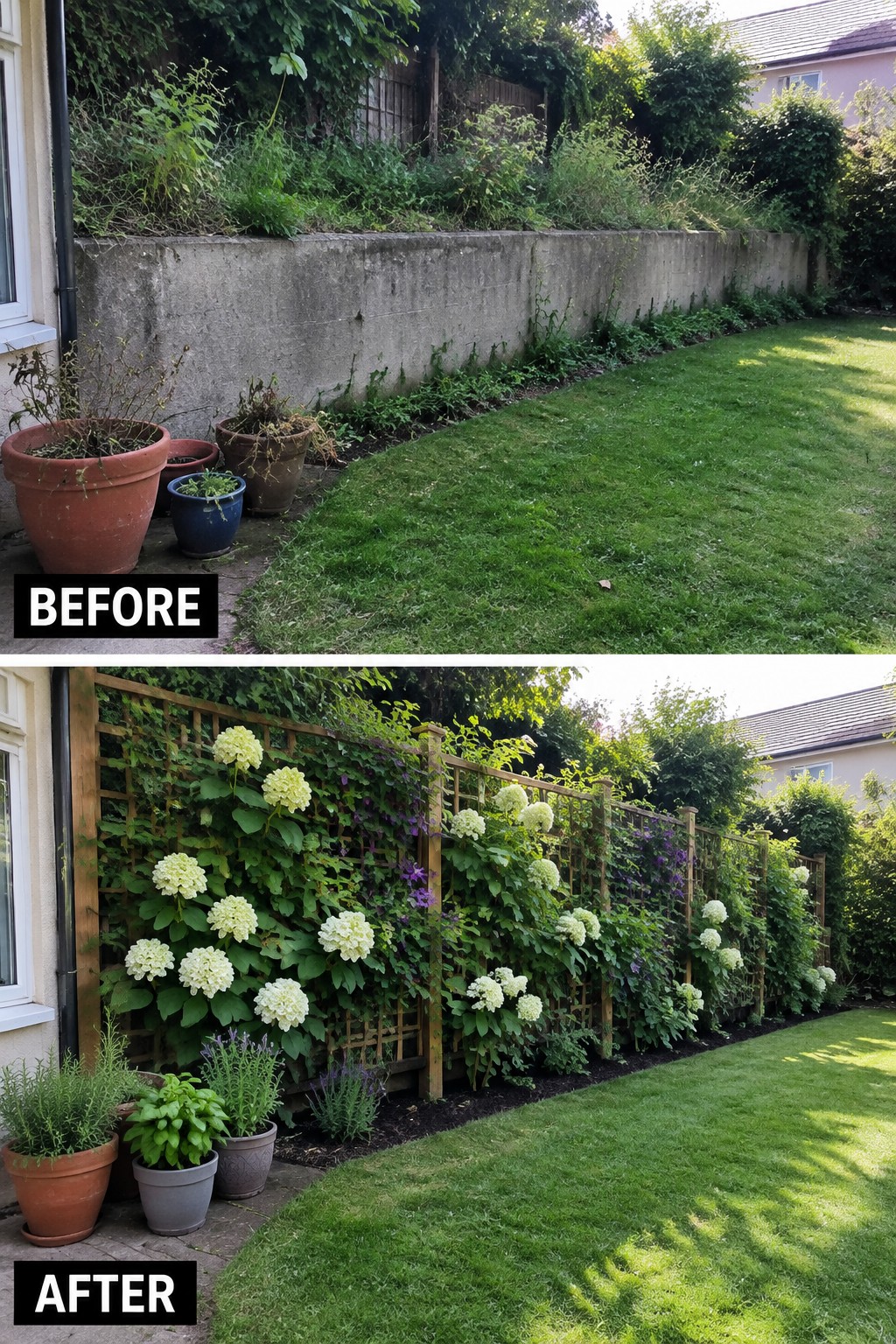
A plain retaining wall and an overgrown strip can make a yard feel unfinished. Adding a wooden trellis with climbing plants gives that boundary a clear shape and creates a greener screen without replacing the existing wall.
This approach works well when you want more privacy but have limited room for a wide hedge. Choose sturdy trellis panels and vines suited to your climate, and leave enough space for pruning so the plants do not become unruly.
Build A Bench Into A Private Garden Corner

A plain fence line can become a useful outdoor seating spot when a built-in bench and trellis give it a clear purpose. Here, the lattice and climbing vines screen the fence, while the bench makes the space somewhere to sit rather than just an empty strip of yard.
This idea suits a small backyard where there isn’t room for a separate patio setup. Keep the bench sized to the space, and leave enough room in front to move comfortably. Choose vines that suit your climate and won’t need more upkeep than you can manage.
Turn A Small Balcony Into A Private Seating Area

A narrow balcony can feel like a storage spot when it has no clear purpose. Here, a trellis covered in climbing vines replaces a solid wood screen, making the space more private while leaving room for a small table and chairs.
This idea works well on apartment balconies where floor space is limited. Secure the trellis properly and choose vines that suit your light and climate. Keep the seating compact so there is still a clear path along the balcony.
Add A Flowering Arbor To A Plain Fence

A simple gate can feel like a hard stop in an otherwise plain fence. Adding a wooden arbor with climbing roses turns that opening into a clear garden entrance and gives the fence line a focal point.
This idea works well where a gate opens onto a path or another part of the yard. Choose a sturdy arbor and a climbing variety suited to your climate, and leave enough room around the gate for easy access and plant growth.
Add Climbing Vines To Create A Living Privacy Screen
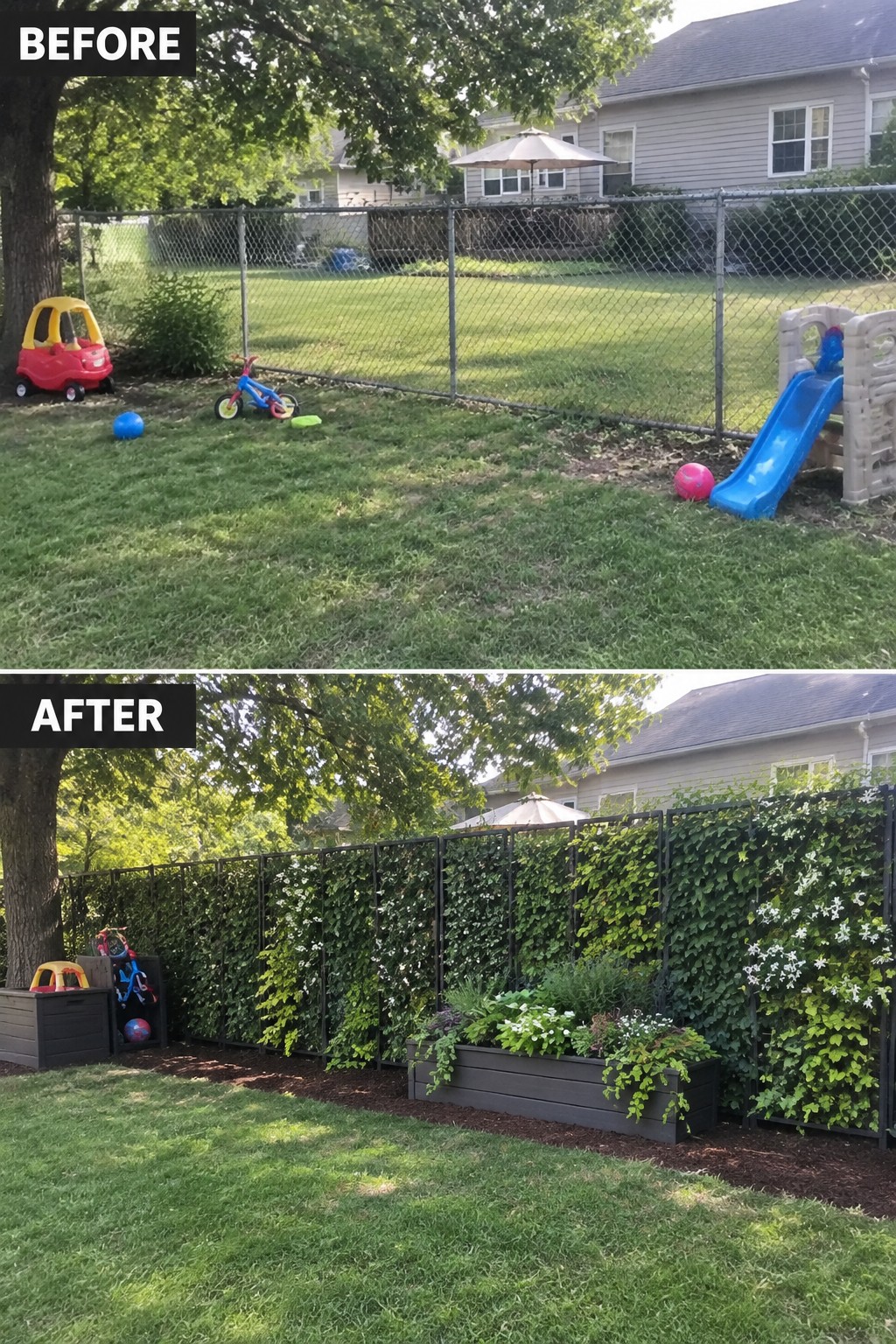
A plain chain-link fence can feel exposed, especially in a family yard. Adding a sturdy trellis and climbing vines turns it into a greener screen, while a narrow planting bed helps keep the fence line looking planned. The fence stays useful, but it no longer has to be the main thing you notice.
This idea works well in backyards where you want more privacy without building a solid fence. Choose vines suited to your climate and the amount of sun the fence gets, and leave enough room for them to grow without crowding play space or paths.
Add Trellises To Break Up A Plain Fence
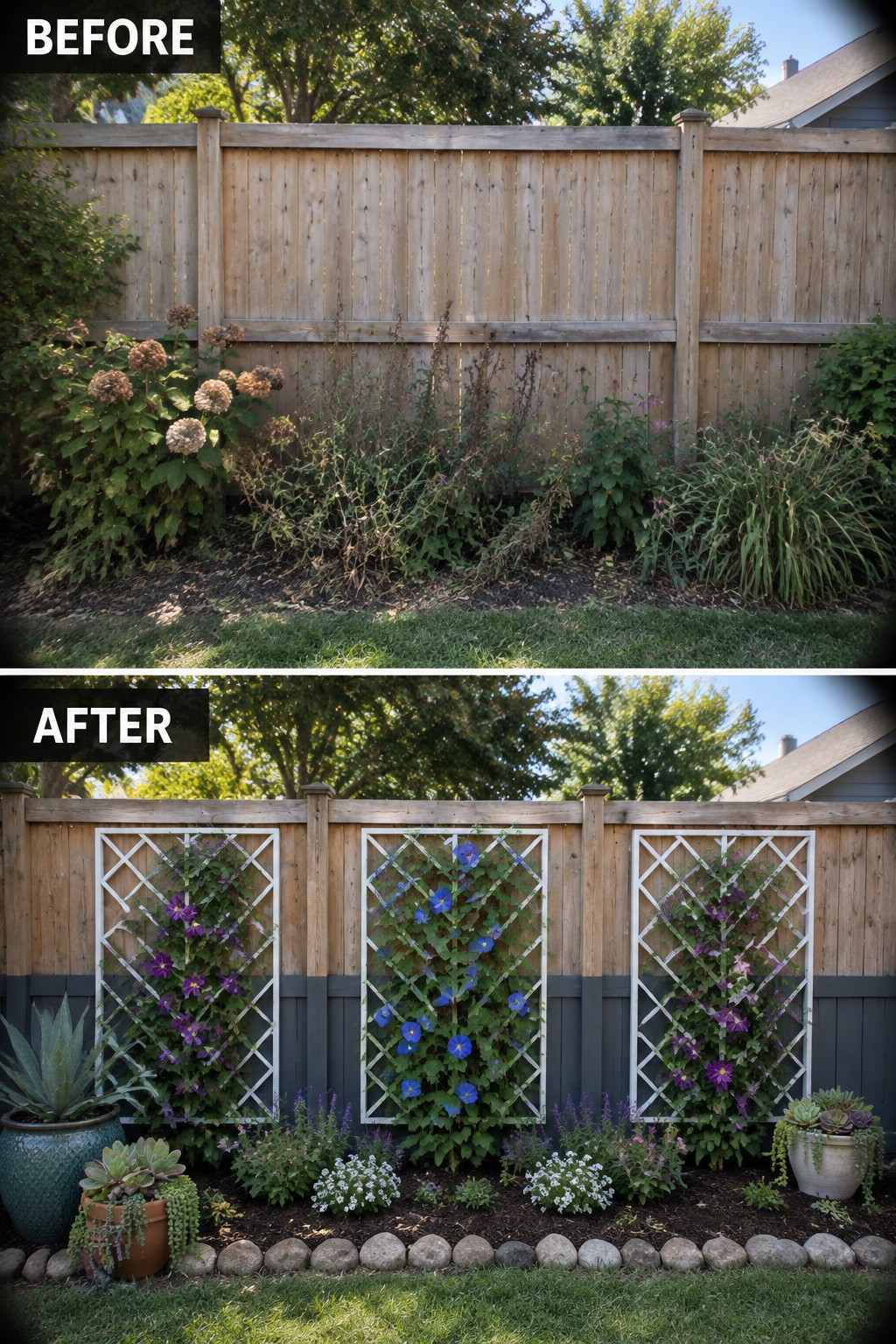
A long, bare fence can make a garden feel unfinished. Adding a few trellis panels gives climbing vines a place to grow and turns the fence into a more interesting backdrop. Here, the panels also help create separate vertical sections without replacing the existing fence.
This idea works well along a backyard boundary where you want more greenery without giving up floor space. Set trellises securely against the fence, then choose vines suited to your climate and the amount of sun the area gets. Leave room around each panel so the plants can grow without crowding the rest of the garden.
Turn A Narrow Side Yard Into A Shaded Seating Area

A narrow strip beside the patio can become useful outdoor space instead of staying bare ground. Here, a wooden pergola supports climbing vines along the fence, creating shade and a more private spot to sit.
This idea works well in a side yard where there isn’t room for a large patio. Keep the seating compact and leave a clear path along the concrete. Choose a vine suited to your climate, and check that the pergola has sturdy supports as it grows.
Add A Woven Trellis To Dress Up A Plain Fence

A plain wooden fence can provide privacy but still leave the yard looking bare. Woven trellis panels give climbing vines a place to spread, turning the fence line into a greener garden feature without replacing the fence.
Use panels that fit securely against the fence, then plant vines suited to your sun and climate. Leave enough room for the plants to grow, and check that the trellis can support their weight as they fill in.
Add A Lattice Trellis To Support Climbing Vines

A solid privacy fence can feel plain, and its lower panels may collect dirt and moisture. Adding a lattice section gives vines a place to climb and breaks up the broad fence surface. Here, flowering vines turn the fence into a greener backdrop without replacing it.
Use the lattice along the top of an existing fence, and choose a vine suited to your climate and the amount of sun the area gets. Leave room for the plants to spread, and keep them trimmed away from fence joints so the wood or vinyl stays accessible for cleaning and repairs.
Cover A Bare Fence With Climbing Vines

The bare fence line becomes a leafy privacy screen once climbing vines are given support to spread across it. This is a useful way to make a plain or weathered fence feel more like part of the garden without replacing it.
Attach sturdy horizontal wires or trellis panels to the fence, then choose vines suited to your climate and the amount of sun the area gets. Leave enough space for airflow and trim the growth as needed so it does not overwhelm the fence.
Frequently Asked Questions
Q: How do I keep climbing vines from damaging a privacy fence?
A: Give the vines their own support instead of letting them cling directly to the fence. A trellis set a few inches in front makes pruning easier and keeps stems from trapping moisture against the boards.
Q: Which vines work well if I don’t want to wait years for privacy?
A: Annual vines like morning glory can fill in quickly during the growing season, while perennial vines take longer to cover a fence but return year after year. Check your local climate and sunlight before choosing, since a fast-growing vine can struggle in the wrong spot.
Q: Can I grow vines on a fence that’s already in place?
A: Yes. Attach a trellis or sturdy wire grid to the fence posts, and leave enough space to reach behind it for maintenance. Before adding the weight of mature vines, make sure the fence is in good shape.
Q: What should I plant if part of my fence stays shady?
A: Look for shade-tolerant vines such as climbing hydrangea, which can take time to establish but adds leafy coverage. If the area gets only a little light, choose a plant suited to those conditions rather than expecting a sun-loving vine to thrive.
