

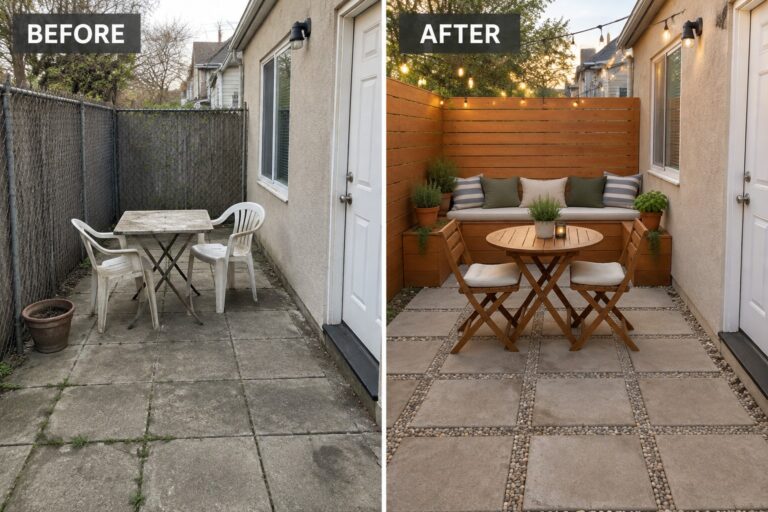
An outdoor dining area can feel exposed and hard to settle into when the seating sits in full view of neighbors or a busy yard.
I find that adding privacy works best when it also gives the space some shape without making it feel boxed in.
A fence, screen, or row of plants can make meals outside feel more comfortable while helping define the dining area.
The right choice depends on the patio layout, the amount of shade you want, and how much upkeep fits your routine.
I’d start with an option that suits the home and leaves enough room to move around the table.
Some of these ideas may be worth adapting to make your own outdoor dining space feel more usable and cared for.
Create Privacy With a Patio Dining Nook

An open patio can be hard to use when it feels exposed. A tall slatted fence turns this small concrete area into a more private dining spot, while a built-in bench makes good use of the space along the fence.
For a similar setup, keep the seating compact and leave enough room to move around the table. Choose weather-resistant materials, and check that a privacy fence won’t block access or violate local rules.
Create A Private Outdoor Dining Area
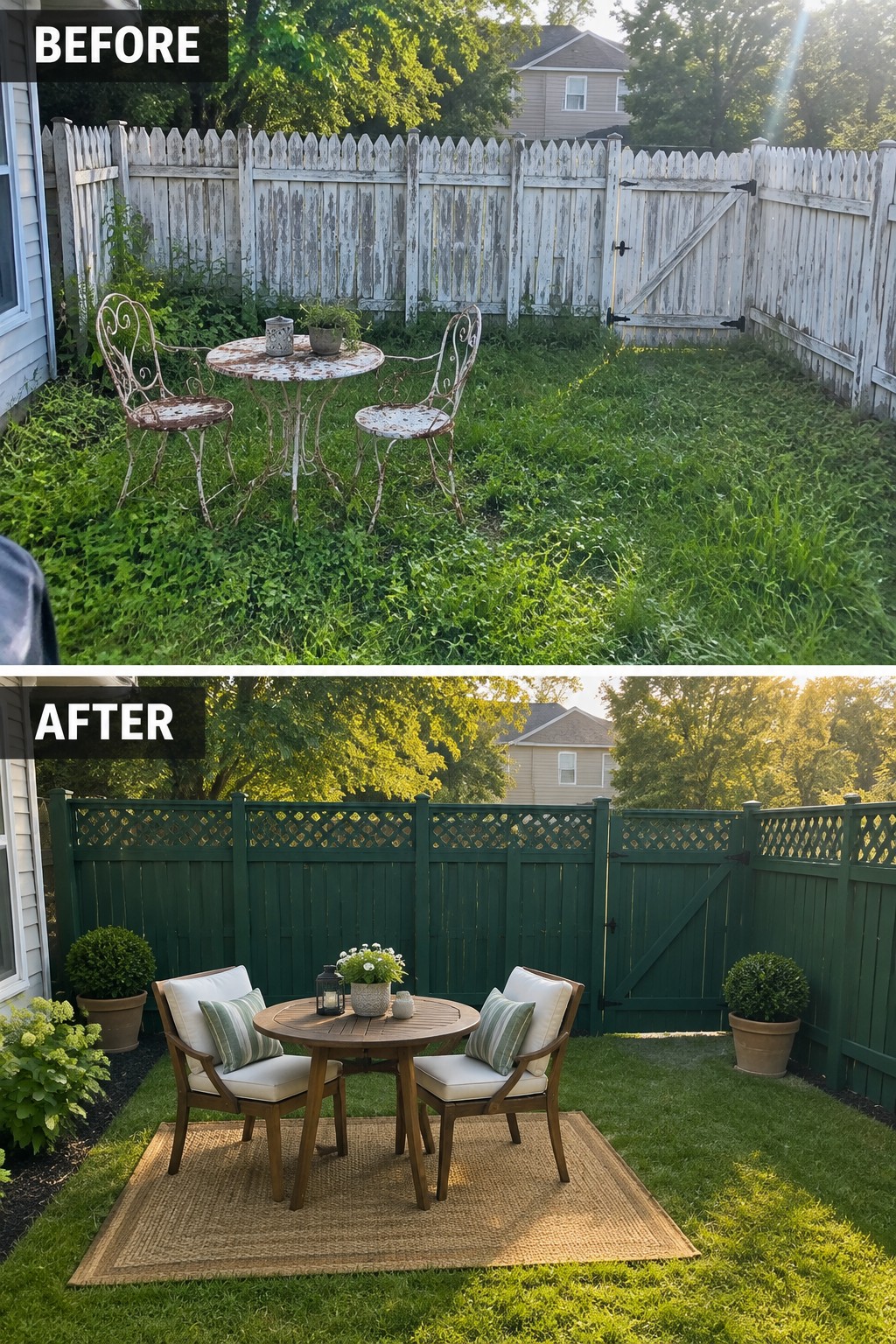
A solid privacy fence can make a small yard feel more like a place to dine, not just a patch of lawn. Here, the old weathered fence is replaced with a taller green one, giving the seating area a clearer boundary.
For a similar setup, place a compact table where there’s room to pull out chairs and move around it. Choose weather-resistant furniture, and leave enough open lawn or path space so the yard still feels easy to use.
Add Privacy To An Outdoor Dining Area

A simple privacy screen can make a deck feel more like a place to sit and eat. Here, reed fencing covers the open railing, turning the dining area into a more sheltered spot without changing the deck itself.
For a similar look, attach a natural screen to an existing railing and keep it low enough to preserve airflow. It works well on exposed decks where neighbors or nearby paths are in view. A few lights along the fence can help the area stay usable after sunset.
Turn An Unused Patio Into A Dining Area

A picnic table can take up a lot of room without making a patio feel like a place to linger. Replacing it with a smaller round table and chairs gives the space a clear dining area and leaves room to move around it.
For more privacy, use the fence behind the seating as a place for planters or climbing greenery. Keep the table sized to the patio, so chairs can be pulled out without blocking the way.
Use A Privacy Screen To Make A Balcony Dining Area
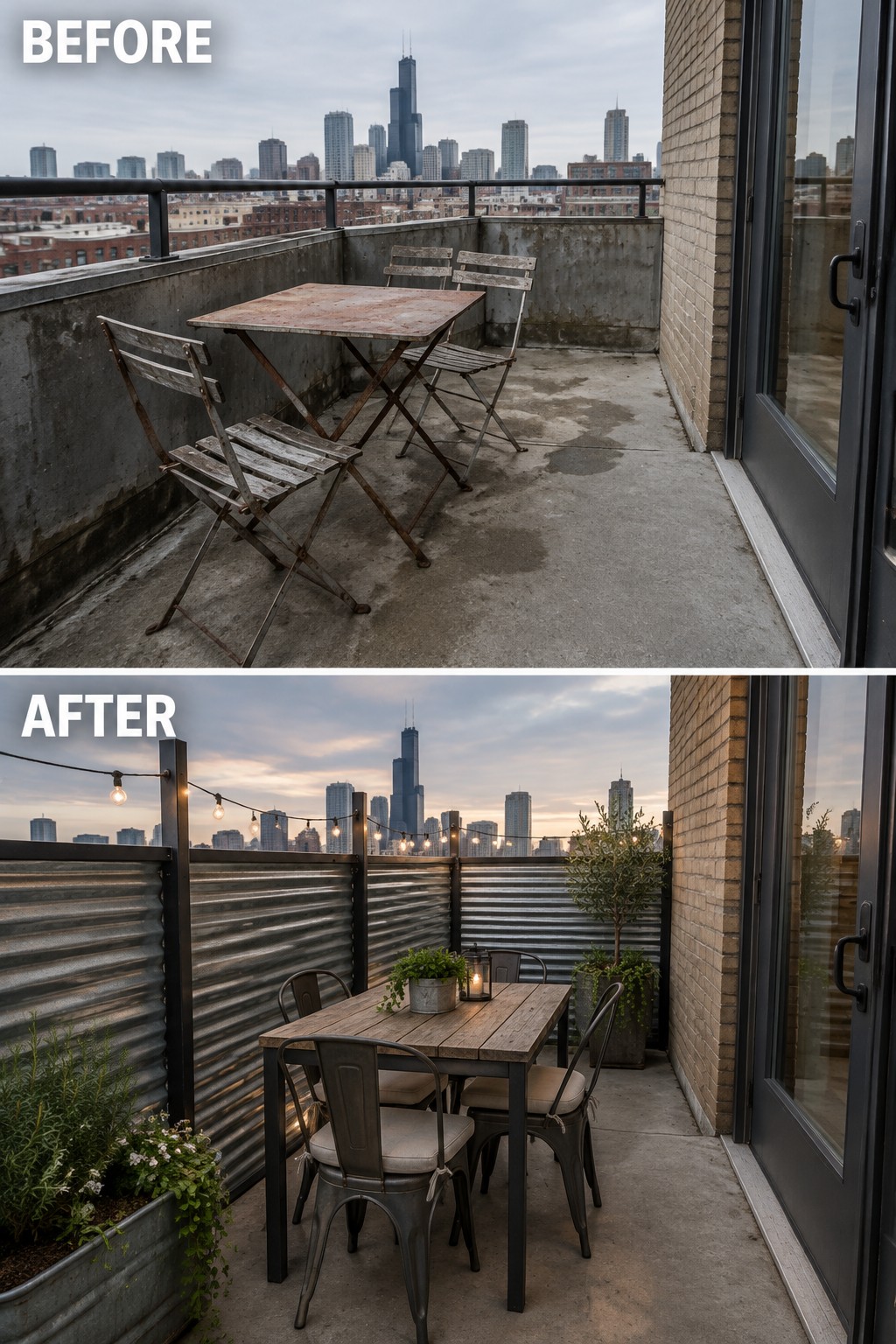
The bare balcony becomes a more usable dining spot once the open railing is covered with corrugated metal panels. They block nearby views while still letting the space feel like an outdoor room.
For a similar setup, attach a sturdy screen to the railing and leave enough room for chairs to move comfortably. This works well on narrow balconies where a little privacy can make outdoor meals feel more practical.
Use a Trellis To Make Patio Dining More Private

A trellis along the fence turns an exposed patio into a more sheltered place to eat. In the makeover, flowering vines cover the lattice and help screen the seating area without closing it off completely.
For a similar setup, attach sturdy trellis panels to a fence and choose climbers suited to your light and climate. Keep the dining table easy to reach, and leave enough room around the chairs to move comfortably.
Use A Privacy Fence To Define A Patio Dining Area
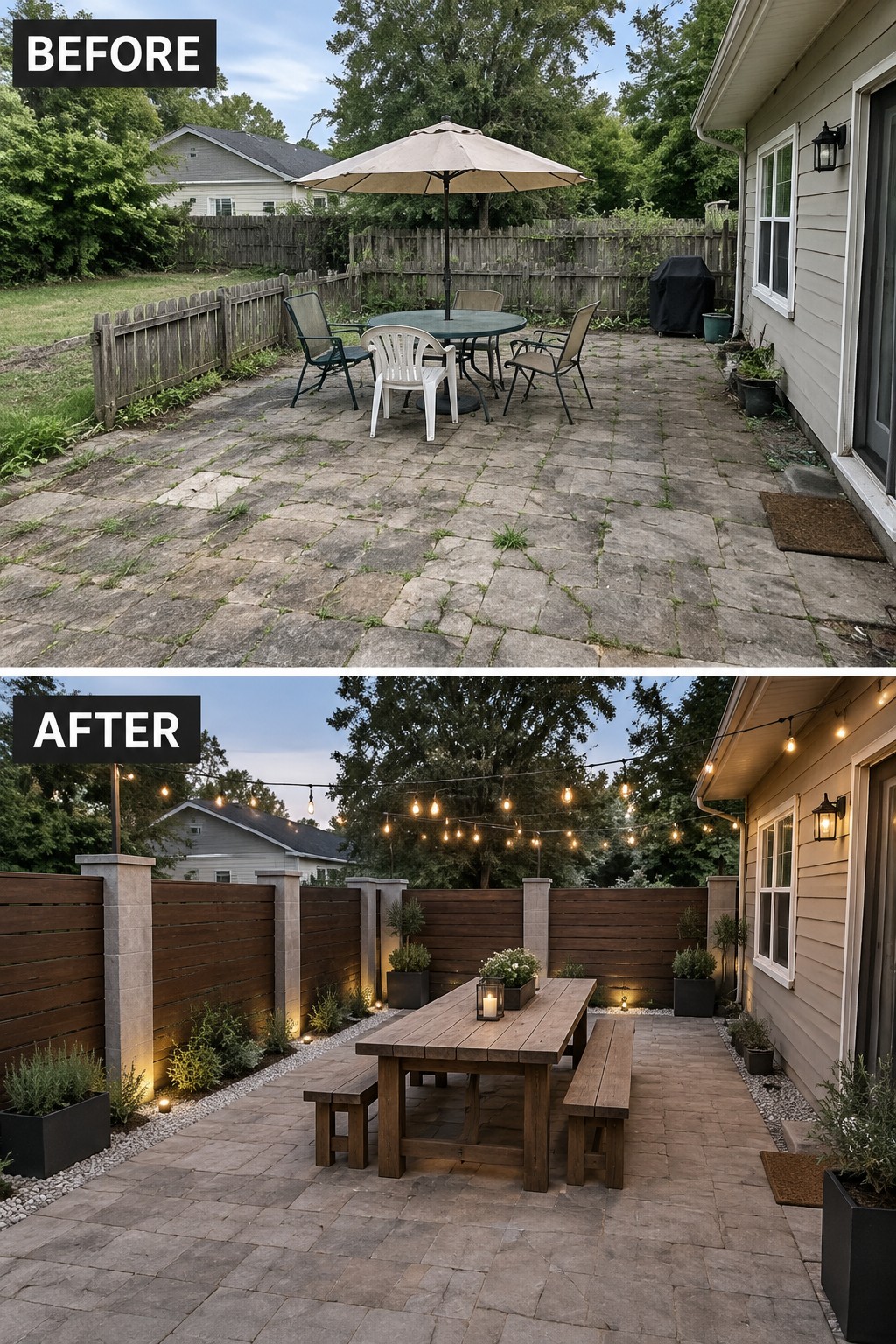
The old patio had room for a table, but the open, weathered fence left the dining spot feeling exposed. Replacing it with a taller fence made the space feel more like an outdoor room, while the long table gives the enclosed patio a clear purpose.
This idea works well in a narrow backyard where a fence can create privacy without taking up patio space. Choose a fence style that suits the house, and leave enough room around the table for people to pull out chairs and walk through comfortably.
Turn A Small Patio Into A Private Dining Area

A privacy screen can make an exposed patio feel more like an outdoor room. Here, the old solid fence is replaced with frosted panels that block nearby views while still letting in light, and the bare concrete becomes a dining spot with a table and chairs.
For a similar setup, choose a screen height that gives privacy where people sit without blocking more light than you want. Keep the table size modest so there’s room to pull out chairs and move around.
Use a Privacy Fence To Make Patio Dining More Comfortable

A simple patio dining area can feel exposed when the yard is open to neighbors. Here, a tall gabion fence replaces the low boundary, giving the table a more sheltered setting and helping the patio feel like its own outdoor room.
For a similar setup, choose a fence that suits your space and local rules, then leave enough room around the table for chairs to slide out. Even a shorter screen along the most exposed side can make outdoor meals feel more private without enclosing the whole yard.
Add Roll-Down Screens To A Covered Dining Porch

The open porch becomes a more private dining spot with roll-down shades along the sides. They block nearby views without closing the space in completely, and the dining table gives the porch a clear purpose.
This idea works well on a covered deck or porch where you want a little separation from neighbors. Choose outdoor-rated shades and leave enough room around the table for people to move comfortably.
Build A Private Dining Spot Along The Fence
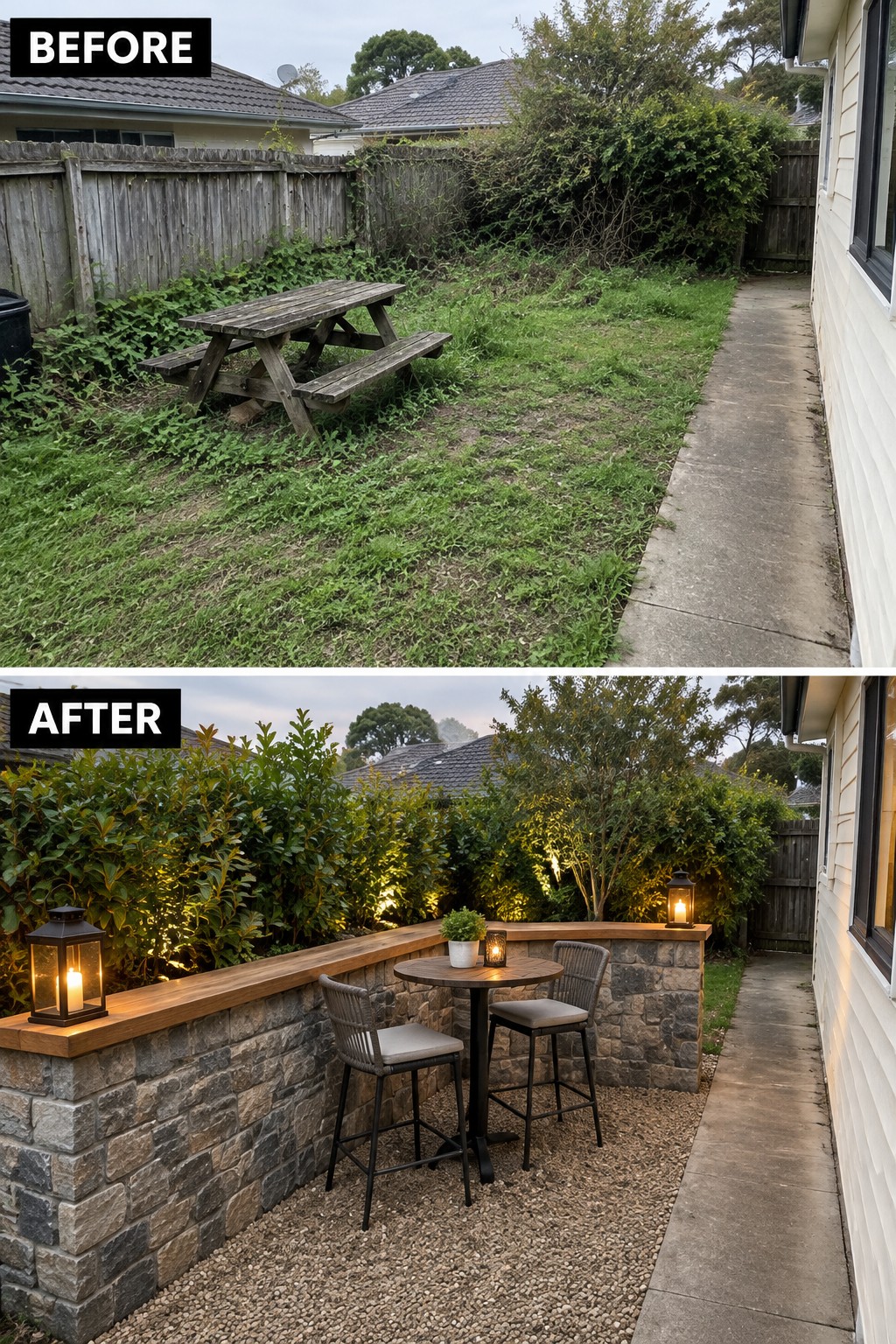
A low wall can make an unused strip of yard feel like a proper place to eat. Here, the stone wall and tall planting create a more private nook, while the narrow footprint still leaves room to move along the house.
This idea works well in a small side yard where a full patio would feel cramped. Use a sturdy wall or fence to screen the seating, and keep the table and chairs compact so the dining area stays comfortable rather than crowded.
Add A Wood Fence Around The Dining Area

Replacing the chain-link boundary with a solid wood fence makes this small patio feel more private and gives the dining area a clear edge. The fence does more than block views; it helps a simple concrete space feel like a place to sit and eat.
This idea works well in a compact backyard where there is room for a table but not much space to spread out. Choose a fence height that suits your privacy needs, and leave enough space around the table for chairs to move comfortably.
Use Tall Planting To Make Patio Dining More Private

A row of evergreen shrubs turns an exposed patio into a more secluded dining spot. The planting creates a natural privacy screen, so the table feels less open to neighboring yards without adding a solid fence.
Use upright evergreens along the edge of a patio where you want year-round screening, and leave enough space between plants for them to grow. Keep the dining area easy to reach, and avoid planting so densely that it blocks paths or crowds the seating.
Add Slatted Privacy To A Covered Dining Patio

The open pergola already provides a place to eat, but the patio feels exposed. Adding a slatted screen along one side gives diners more privacy without closing off the whole space, and the sturdy table and benches make the area useful for everyday meals.
This works well when you want some separation from a neighboring yard but still want airflow and light. Keep the screen to one side so the patio stays open, and choose outdoor furniture that leaves enough room to pull out the benches.
Paint A Plain Fence To Create Privacy
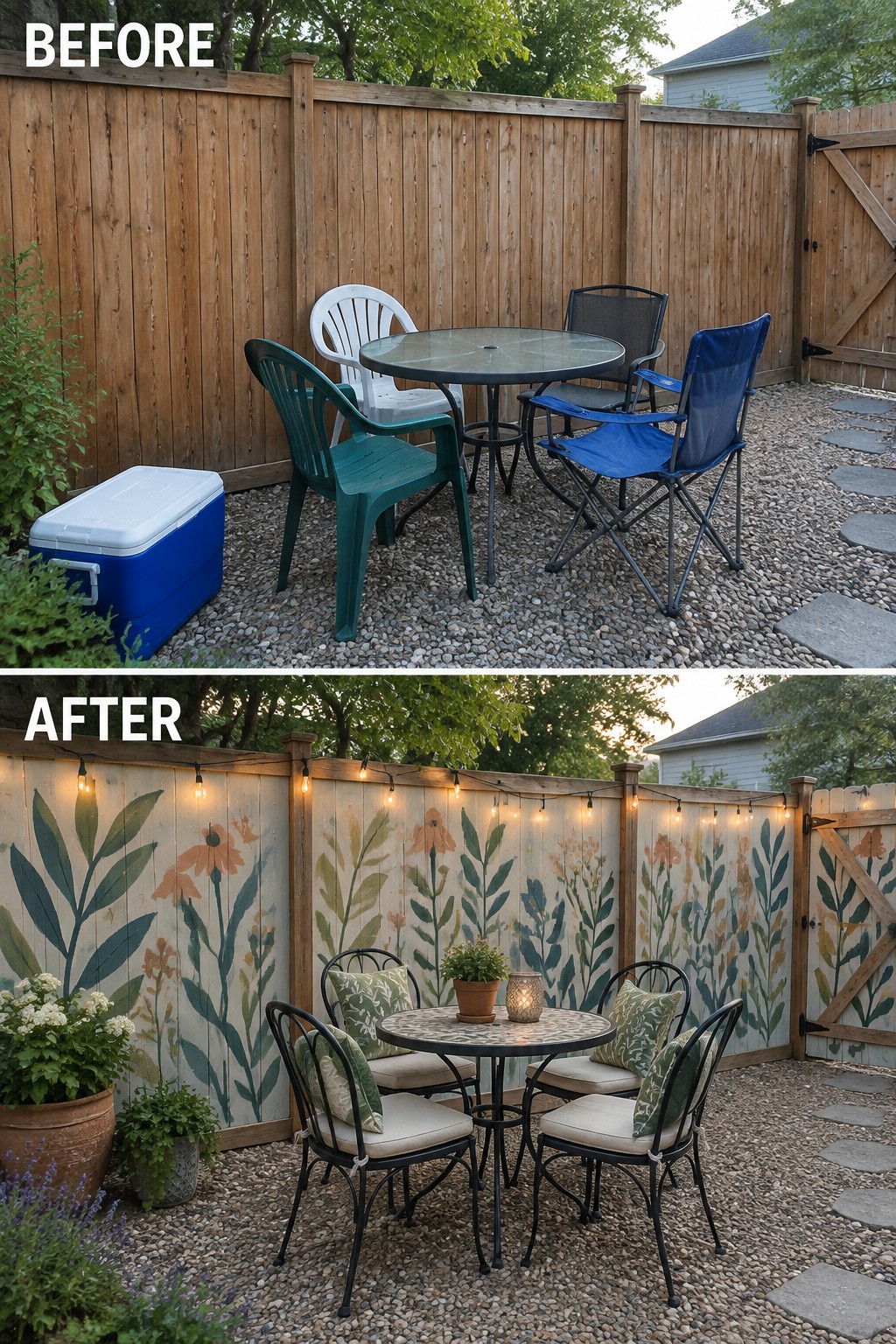
A plain fence can do more than block views. Painting a leafy mural across the boards turns it into a backdrop for outdoor dining, making the seating area feel more private without building a taller fence. Here, the mural is the main change, while simple string lights help mark the dining spot.
This idea suits a small patio where there isn’t room for a separate screen or hedge. Use exterior paint made for wood, and keep the pattern large enough to read from the table. Check local rules before changing a shared or boundary fence.
Use A Privacy Screen To Make Patio Dining More Comfortable
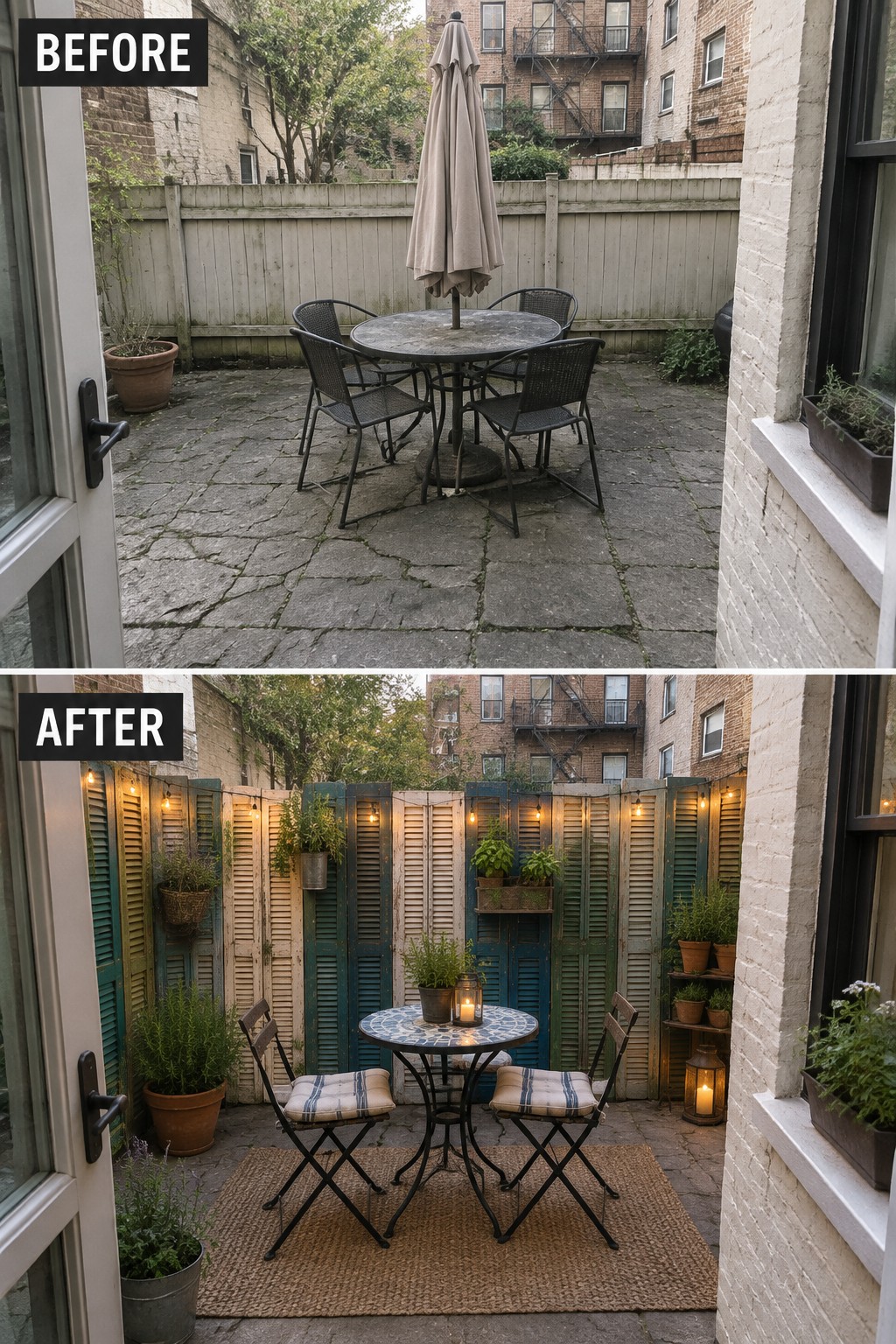
A bare patio can be hard to use when nearby windows and buildings look straight into it. Here, a plain fence becomes a more private dining backdrop with mismatched shutter panels, while the table and chairs give the small space a clear purpose.
For a similar setup, attach weather-safe panels to an existing fence or use freestanding screens where you need coverage. Keep them tall enough to block direct views, but leave enough open space to move chairs around comfortably.
Use A Privacy Fence To Make Poolside Dining More Comfortable

A plain metal fence can leave a poolside dining spot feeling exposed. Replacing it with a taller wood privacy fence gives the table a more sheltered place to sit, while the patio stays open for walking and lounging.
This idea works well when a dining area sits close to a property line or neighboring yard. Choose a fence height and style that suit local rules, and leave enough room around the table for chairs to move comfortably.
Add A Privacy Fence Behind Patio Dining

A solid fence can turn a long, exposed patio into a more comfortable place to eat. Here, the plain boundary becomes a taller wood-and-stone screen, giving the dining area a clear edge and blocking views from neighboring yards.
For a similar setup, run the fence along the side where privacy is most needed, and keep enough open patio space for chairs to pull out easily. A built-in dining table makes good use of a narrow layout without crowding the walkway.
Add A Privacy Screen To A Rooftop Dining Area

A solid screen can make an open rooftop deck feel more like a dining room. Here, a perforated panel replaces the exposed railing as the main backdrop, giving the table more privacy without closing off the whole space.
This idea works well on balconies and decks where nearby windows look directly onto the seating area. Choose a screen that fits the existing structure, and leave enough room around the table to move chairs comfortably.
Add a Wooden Privacy Fence Behind Patio Seating
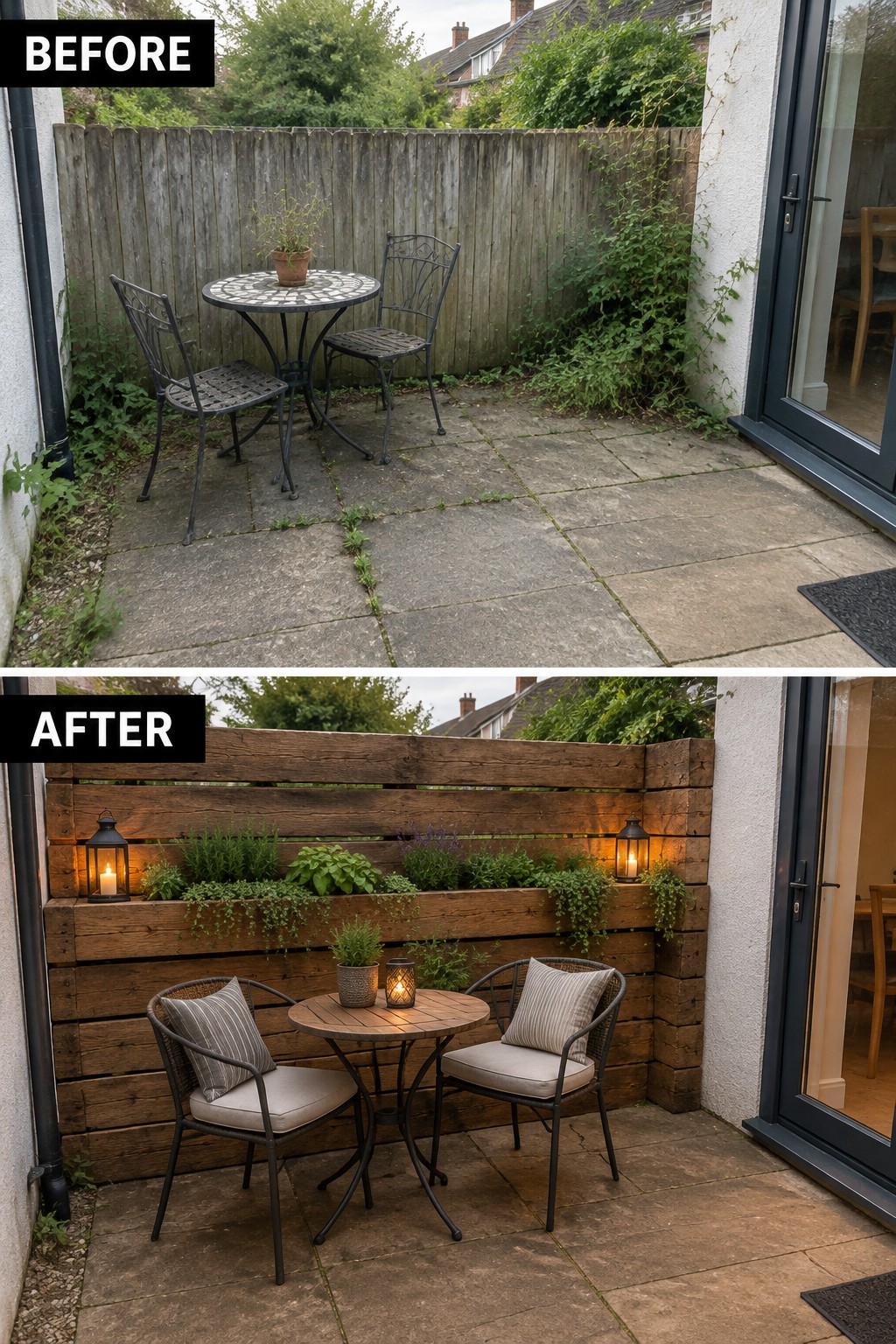
Replacing the worn fence with a taller wooden screen gives this small patio a more private place to sit and eat. The solid backdrop makes the dining nook feel separate from the rest of the garden without taking up floor space.
This works well in a narrow patio where there isn’t room for freestanding screens. Choose weather-resistant boards and leave enough space between the table and fence for chairs to move comfortably.
Replace A Weathered Fence To Define Patio Dining

A solid wood fence can make an open patio feel like a more private place to eat. Here, the old fence is replaced with taller horizontal boards, turning the dining area into a clear outdoor room.
This idea works well in a small backyard where neighboring homes are close by. Keep the fence high enough for privacy, but leave the walkway clear so people can move around easily.
Add Lighting To Make Patio Dining More Usable
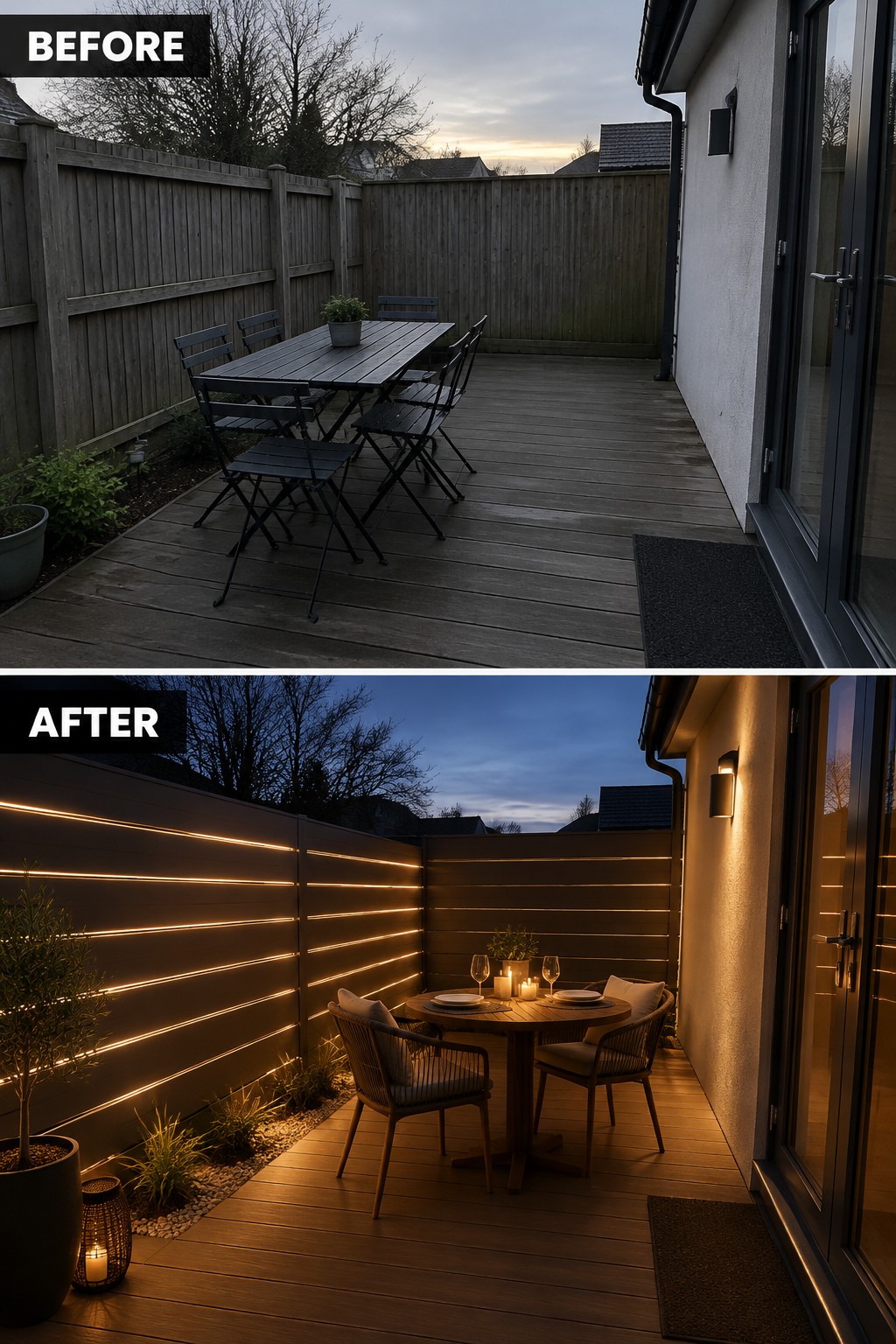
A privacy fence can do more than block views. In this small patio, the new slatted fence has built-in lights that make the dining area usable after dark, while the table sits close enough to the house to keep the layout practical.
For a similar setup, choose warm, outdoor-rated lighting and place it where it will light the table without shining into guests’ eyes. It works especially well in a narrow patio where the fence is already the main backdrop.
Enclose The Dining Area For More Privacy

A simple privacy fence can make an open patio feel like a proper place to eat. Here, tall wood panels replace the exposed edge of the dining space, giving the table a more sheltered setting without changing the patio itself.
For a similar setup, place the screen around the seating area rather than fencing the whole yard. Leave enough room to pull chairs out and walk around the table, and choose outdoor-rated materials that can handle the weather.
Frequently Asked Questions
Q: How tall should a privacy fence be around an outdoor dining area?
A: A 6-foot fence usually blocks views from nearby yards while still letting the space feel open. If your main concern is seated diners, a lower screen or tall planter may be enough.
Q: How can I add privacy without making the dining area feel boxed in?
A: Use a mix of solid panels and open sections, such as slats or lattice, so light and breezes can still come through. Leave one side more open if you have a nice view.
Q: Can plants make a fence more private?
A: Yes. Climbing vines or tall shrubs can soften gaps and add greenery, though they may take time to fill in. Pair them with a fence if you want privacy right away.
Q: What should I check before building a fence?
A: Check local height rules and property lines first, and make sure the fence won’t block a gate or walkway. A quick conversation with your neighbor can also prevent surprises later.
