

A privacy fence can feel like a flat, heavy wall when every board reaches the same height, especially in a yard that already feels boxed in.
I like how staggered sections break up that solid line while still giving seating areas and neighboring windows a little more privacy.
The shifts in height can also follow the shape of a patio, garden bed, or sloping yard, so the fence looks considered rather than like a barrier dropped into place.
That small change makes the space feel more open and settled without giving up its sense of enclosure.
Some of these designs are easy to adapt with a few varied panels, and they’re worth saving if your own fence needs a more thoughtful look.
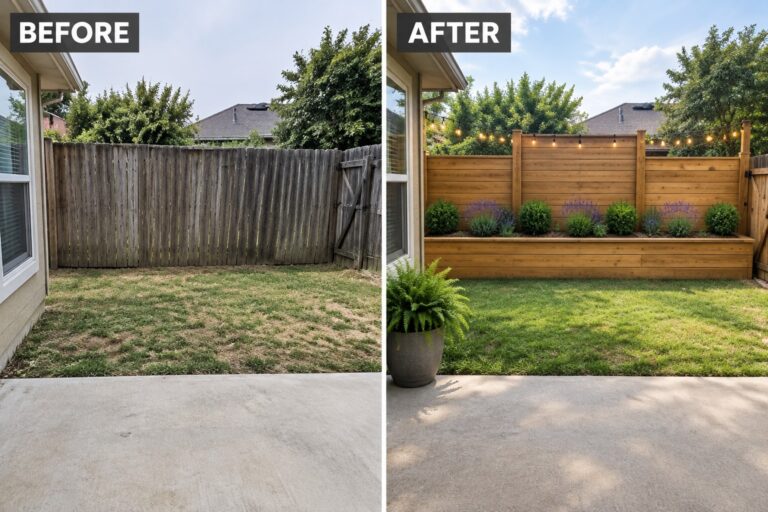
Make A Small Yard Feel More Private

A taller center section gives this backyard a more useful sense of privacy without making the whole fence one solid height. The raised planter along the fence also turns an empty strip of grass into a neat border.
This approach works well in a compact yard where a neighboring view feels exposed. Keep the taller section where privacy matters most, and check local fence rules before changing heights.
Replace an Overgrown Fence With Staggered Privacy Panels

The old fence was tangled with vines and looked worn. Replacing it with clean horizontal panels at staggered heights gives the yard privacy while making the fence line feel more planned.
This approach works well when a yard needs screening but one long, uniform fence would feel too imposing. Keep the height changes intentional, and clear away overgrowth before installing the new panels so their shape stays visible.
Add Privacy With Staggered Fence Heights

A plain fence can leave a yard feeling exposed, but raising the whole fence may not be the only answer. Here, taller lattice sections break up the fence line while the shorter panels still provide a solid boundary.
This approach works well when you want more privacy in key areas without making a small yard feel boxed in. Keep the taller sections where neighbors have the clearest view, and check local fence-height rules before building.
Add Privacy Around The Pool

A solid fence turns an exposed pool deck into a more private outdoor living area. In the after photo, dark horizontal panels replace the open view beyond the pool, making the space feel more enclosed without changing the pool itself.
For a similar setup, use fence sections to block the sightlines that matter most, and vary their heights if the yard needs a less uniform look. Check local pool-safety rules before choosing a design, since privacy fencing still needs to meet the required height and gate standards.
Add A Layered Border Along A Sloped Yard

Replacing a weathered fence with staggered-height sections makes better use of a sloped yard and gives the boundary a cleaner, more finished look. The new fence steps down with the grade, while a low stone border helps define the planting bed.
This approach works well when a yard drops along a fence line and one long, level fence would look awkward. Follow the slope in manageable sections, and keep the bed narrow enough that it is easy to maintain.
Turn A Plain Fence Into A Garden Focal Point
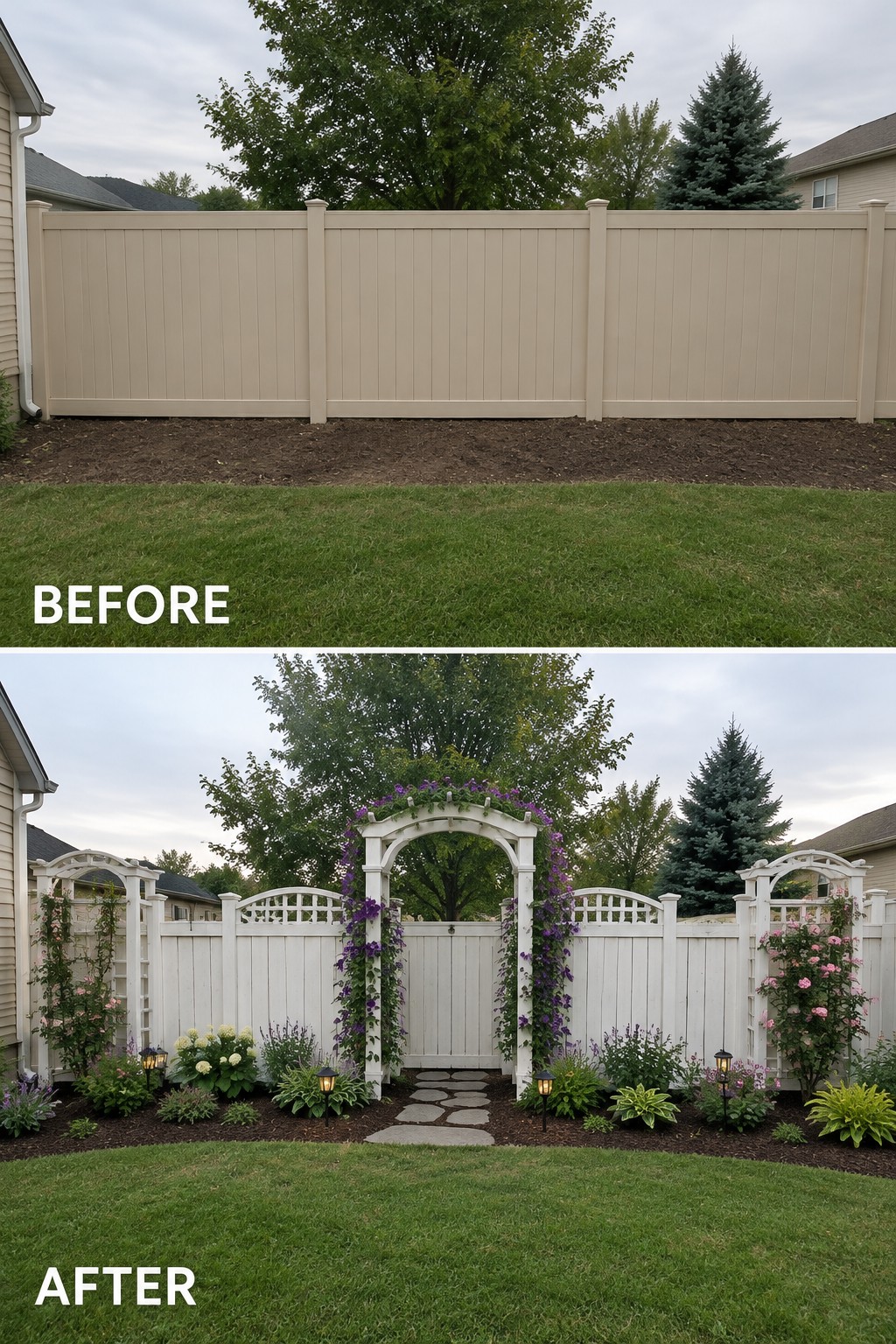
A blank fence can make a backyard feel unfinished. Adding an arched gate and a few sections of varied fence height gives the yard a clear focal point, while the planting beds make the fence feel like part of the garden.
For a similar look, keep the center feature in line with a simple path and repeat a few plants along the base. This works well when you want more character from a privacy fence without changing the whole yard.
Use Staggered Fence Heights To Add Privacy

A plain, worn fence can make a narrow side yard feel exposed and unfinished. Replacing it with horizontal wood panels at staggered heights gives the yard more privacy while breaking up the long, flat boundary. Built-in lighting along the panels helps make the change useful after dark, too.
This approach works well in a small yard where a single tall fence might feel imposing. Keep the tallest section where privacy matters most, then lower the adjoining panels to create a more open, varied outline. Check local fence-height rules before building.
Turn A Narrow Side Yard Into A Private Sitting Area
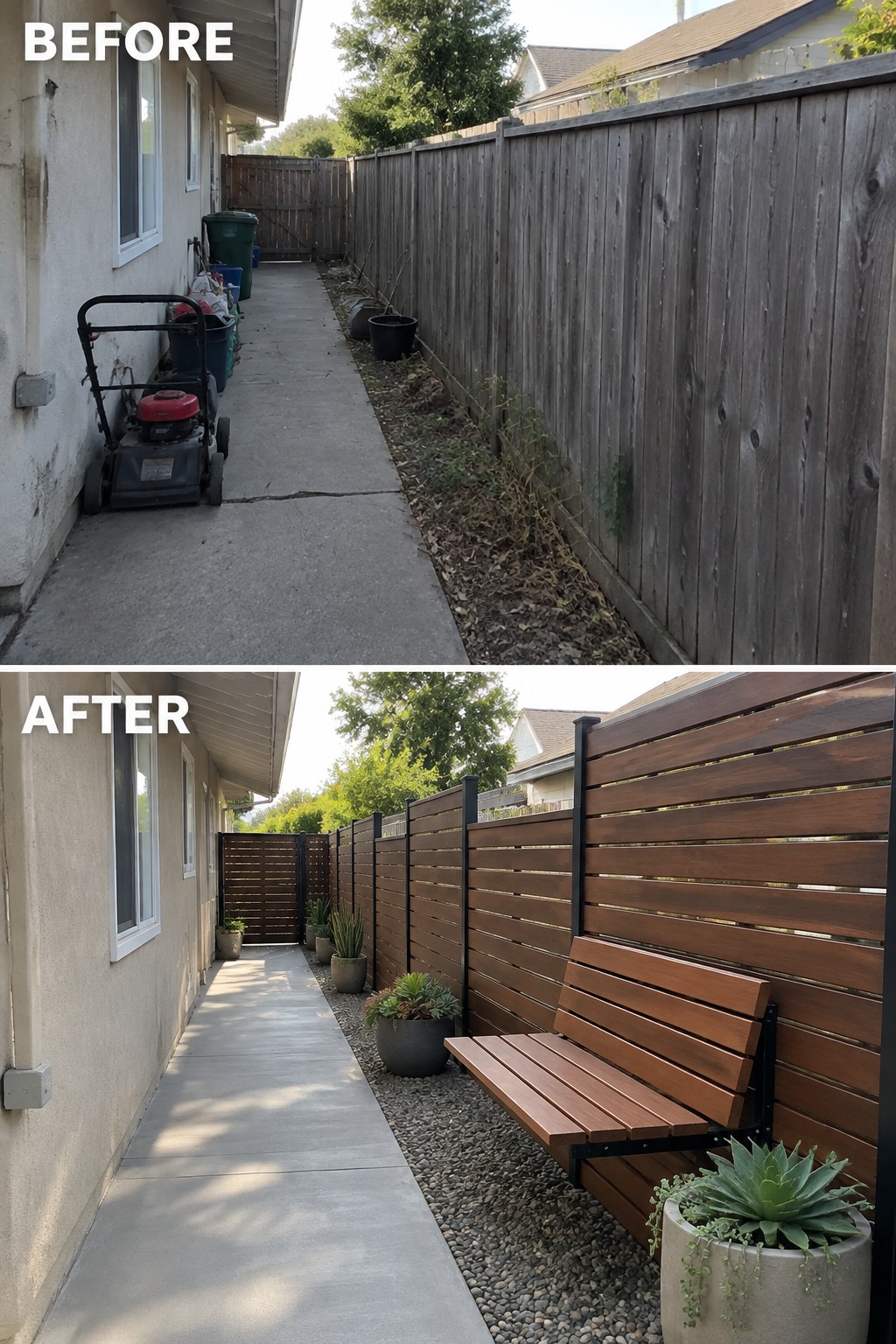
A new slatted fence makes this narrow side yard feel more private and gives it a clear place to sit. The old fence and cluttered path felt neglected, while the bench and gravel strip make the area more useful without taking up much room.
This idea works well beside a house where there is little space for a full patio. Keep the walkway clear, choose a compact bench, and use a few sturdy planters rather than filling the narrow area with too many things.
Make A Small Patio Feel Private
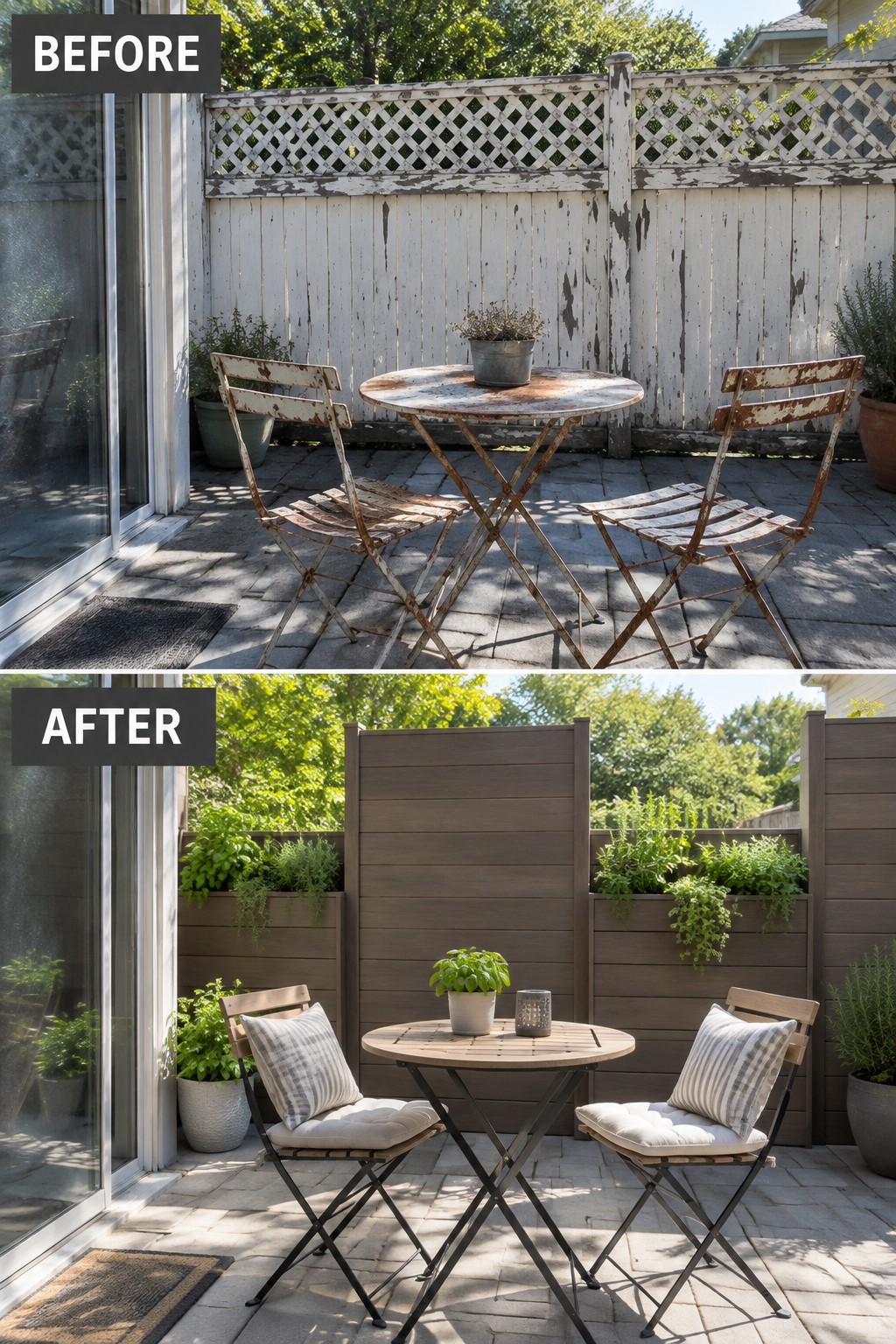
The peeling fence made this patio feel neglected and exposed. Replacing it with staggered-height privacy panels gives the seating area a cleaner backdrop while keeping the taller sections from making the whole space feel boxed in.
This approach works well in small patios where a solid, uniformly tall fence might feel too imposing. Use taller panels behind the main seating area and lower sections where you want room for planters or a bit more openness.
Create A Private Backyard Seating Area

A plain lawn can feel exposed and offer little reason to spend time outside. This makeover adds a wood seating nook along the fence, giving the yard a clear place to sit while the taller panels provide more privacy.
This idea works well in a backyard where the fence is the main boundary. Keep the seating tucked close to it, and leave enough open lawn for easy movement. If you’re adding a pergola or overhead lights, make sure the structure fits the space rather than crowding it.
Add Staggered Fence Heights For Backyard Privacy

A plain concrete wall can feel exposed and unfinished. Adding wood panels at staggered heights makes the barrier more private while giving the yard a clearer, more finished edge. Here, a taller section screens the sides, while the lower middle section keeps the fence line from feeling like one solid wall.
This approach works well when you want privacy without making a small yard feel boxed in. Keep the panels securely attached and choose a finish that suits the weather in your area. A few narrow planter sections can break up the wood, but leave enough open space for the design to stay simple.
Break Up A Solid Fence With A Lower Garden Section

The solid fence made the yard feel closed off. Replacing a short middle section with a lower, open design keeps the boundary while letting the garden show through. Planting along the fence helps the change feel connected to the rest of the yard.
This approach works well when you want privacy without one uninterrupted wall of boards. Keep the taller sections where you need more screening, and use a lower section where a little visibility will make the yard feel less boxed in.
Replace A Solid Fence With Staggered Privacy Panels
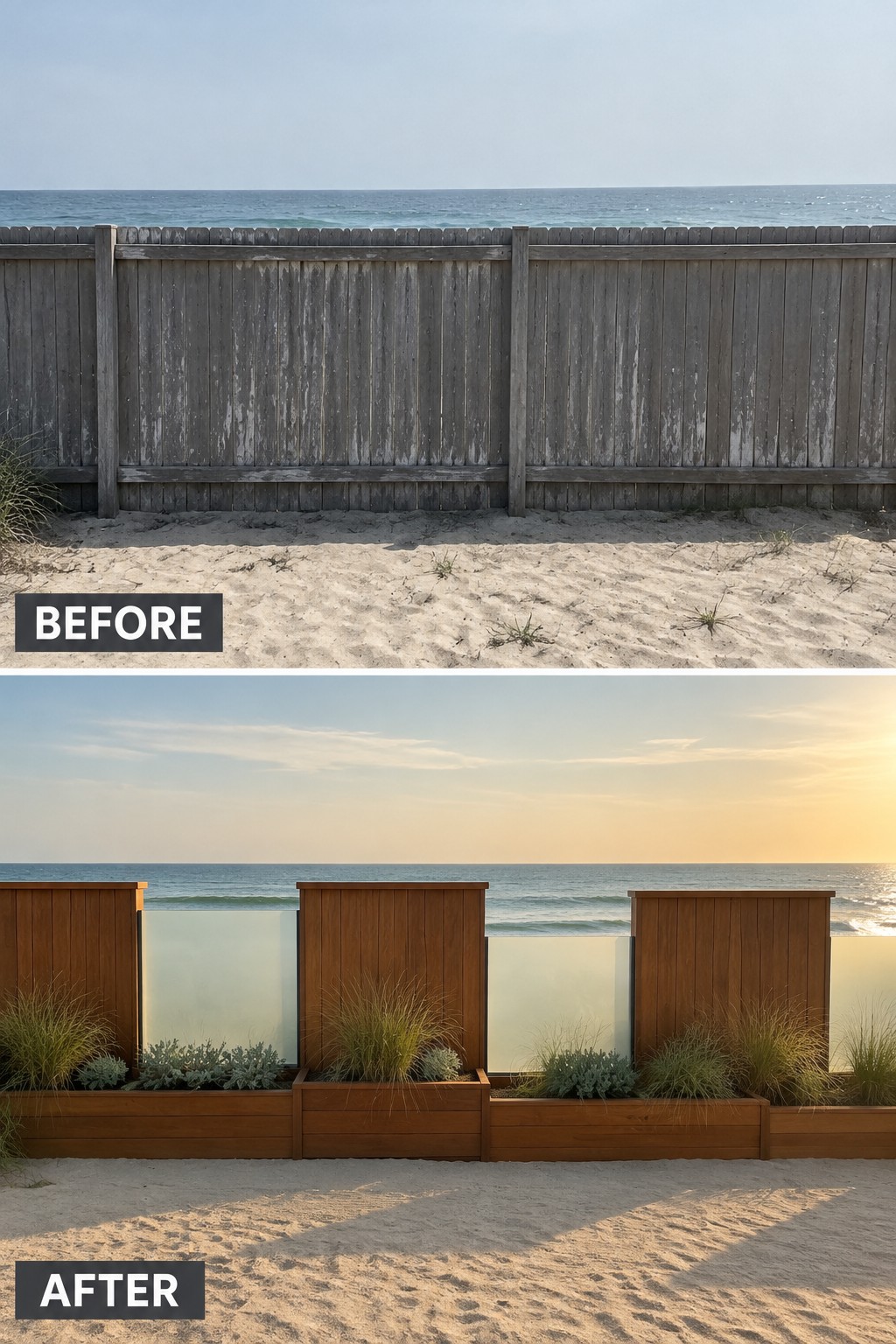
The old fence blocked the ocean view completely. Replacing it with staggered wood panels and frosted sections keeps some privacy while letting the scenery show through, so the boundary feels less like a wall.
This idea works well in a beachside yard where a full-height fence would hide the view. Use solid panels where you need more screening, and check local rules before changing fence height or materials.
Turn A Plain Fence Into A Useful Play Space

A staggered fence can make a backyard feel more considered while still providing privacy. Here, the varied board heights give the fence more character, and a built-in bench with toy storage turns an unused edge of the yard into a practical spot for play.
This idea works well in a family yard where toys need a place to go and children still need open lawn space. Keep the bench low and sturdy, and leave enough room in front for play rather than filling the whole yard with furniture.
Make A Patio More Private With Varied Fence Heights
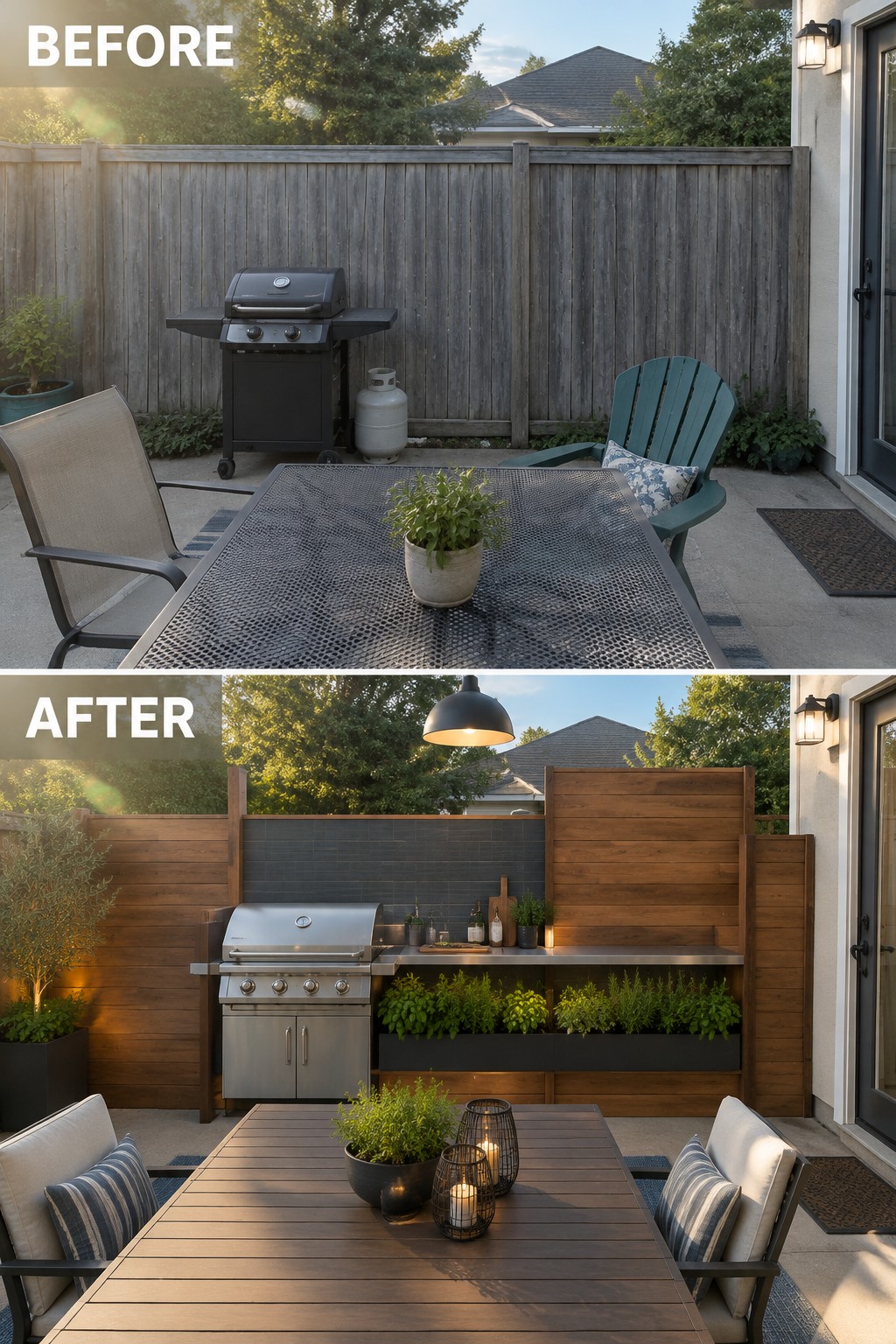
A plain, full-height fence can make a patio feel closed in without giving it much character. Here, taller wood panels screen the sides while a lower section behind the grill keeps the center from feeling walled off. The different heights create privacy where it matters and leave the space more open above.
For a similar effect, use higher panels beside seating or along a neighbor-facing edge, then step down where you want more light or an open view. Check local fence rules before building, and keep the layout simple so the patio still feels easy to move around.
Use Staggered Fence Heights To Break Up A Plain Yard

Replacing one long, weathered fence with sections at different heights gives the yard more shape while still screening neighboring homes. The taller panels create privacy, and the lower sections keep the fence from feeling like one solid wall.
This approach works well in a small backyard where a full-height fence might feel imposing. Keep the height changes simple, and use a few narrow planting areas along the base to help the new fence sit naturally in the yard.
Turn A Bare Patio Into A Private Seating Area

A short patio fence can leave an outdoor space feeling exposed and unfinished. Staggered privacy panels make this small yard feel more enclosed while leaving some height variation, and the built-in bench turns the concrete into a place to sit.
For a similar setup, use taller panels where you need the most screening and keep the seating area sized for the patio. Leave a clear path to the door, and choose weather-safe cushions and furniture so the space stays practical.
Add Staggered Privacy Fence Heights
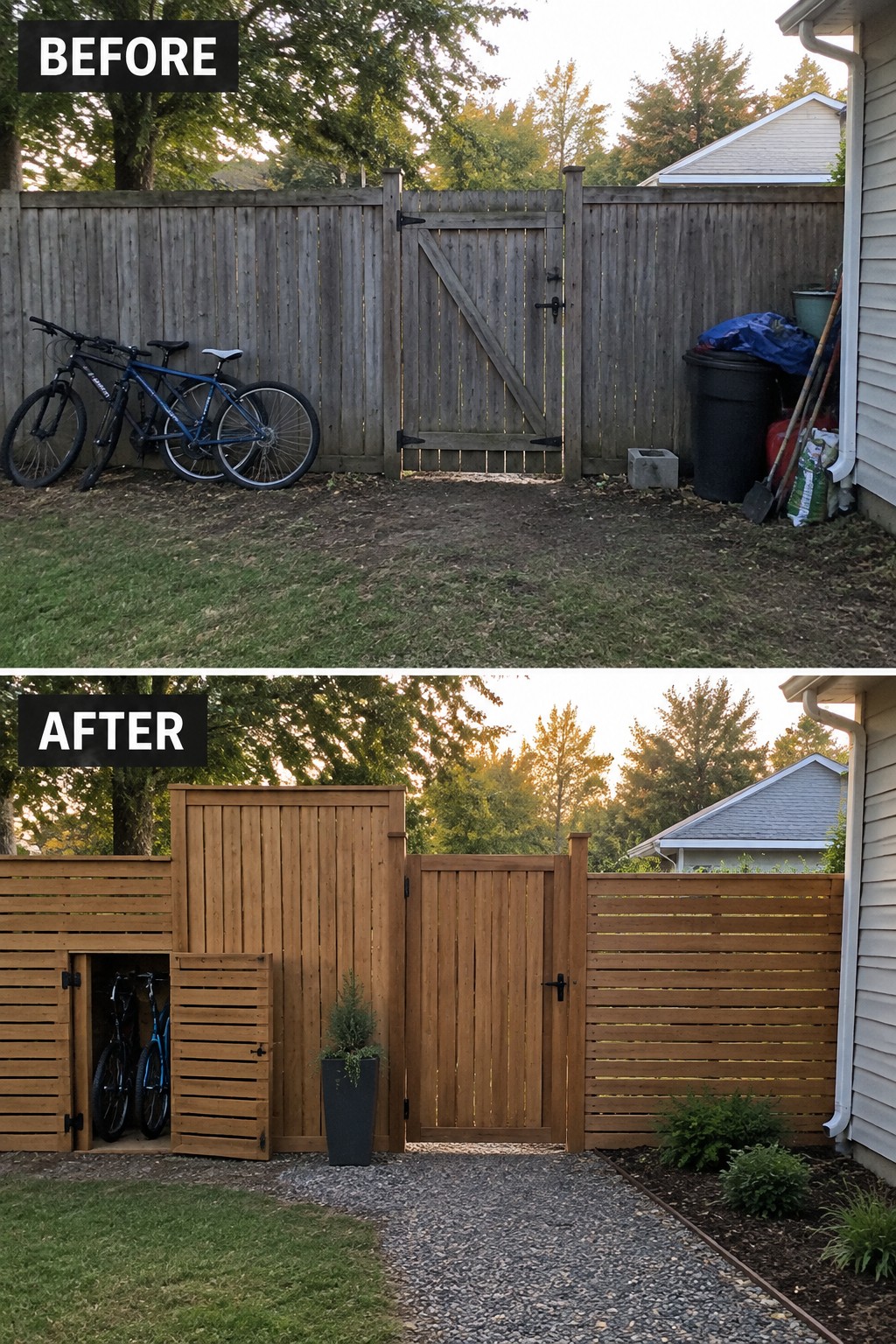
The new fence uses different heights to give the yard privacy without making every section feel like one long wall. A taller gate section provides coverage where it is most useful, while the lower horizontal panels break up the fence and make room for bike storage.
This approach works well in a small backyard where privacy and practical storage both matter. Plan the taller sections around sightlines and access, and keep the heights and materials consistent enough to make the fence feel like one design.
Add Privacy With a Layered Fence

The old fence felt like one long, worn wall beside the driveway. Replacing it with dark horizontal panels at staggered heights makes the boundary feel more considered while still screening the yard from view.
This approach works well on sloped or rising driveways, where one fence height can look awkward. Vary the sections to follow the grade, and keep the planting strip simple so shrubs do not block the path or crowd the fence.
Use Staggered Fence Heights To Create A Garden Feature
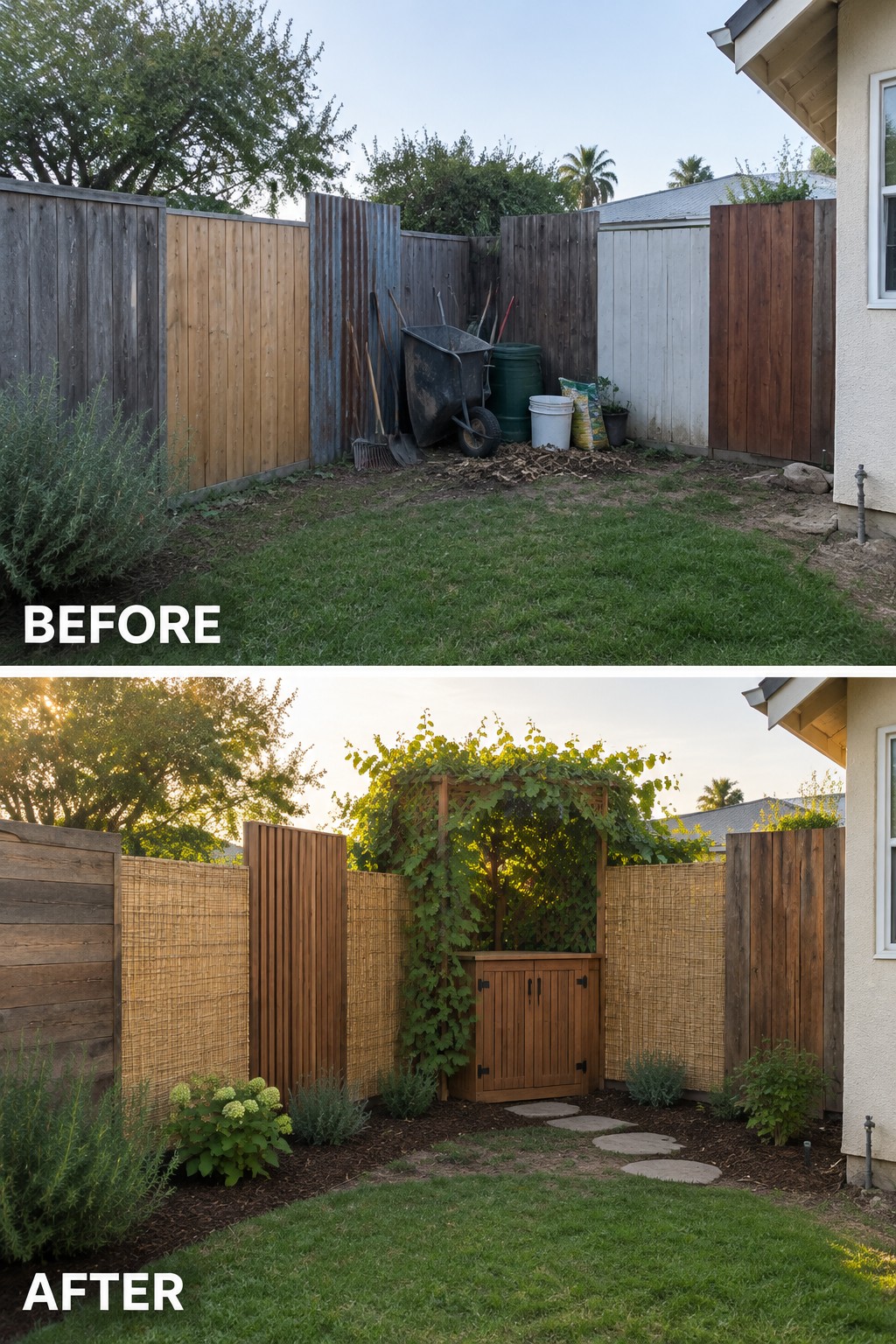
A neglected corner can feel more private without building one tall, solid fence all the way around it. Here, varied fence heights and woven screening give the yard a more planned look, while a vine-covered storage unit makes the corner useful as well as sheltered.
For a similar effect, use taller panels where you need the most privacy and lower sections where you want the yard to feel open. Keep the materials consistent, and leave room for plants and a clear path so the small space does not feel crowded.
Frequently Asked Questions
Q: Do staggered fence heights still give enough privacy?
A: They can, as long as the taller sections block sightlines from nearby windows or patios. Keep the lower sections where you want more light or an open feel, and check the view from your neighbors’ side too.
Q: How do I keep a stepped fence from looking awkward on a slope?
A: Follow the ground in gradual steps rather than making one sudden jump in height. A few smaller changes usually look more natural and help the fence sit neatly along the yard.
Q: Can I mix different fence materials or colors?
A: Yes, but repeat each material or color in more than one spot so the changes feel intentional. For example, use the same darker boards on two taller sections rather than just one.
Q: Do I need permission to change my fence height?
A: Check local fence rules before building, since height limits can vary by location and by where the fence sits on your property. It’s also worth talking with your neighbor if the taller sections will face their yard.
