

A sloped yard can make privacy fencing harder to plan, especially when a straight fence leaves awkward gaps or looks uneven from the house.
I find that following the grade in thoughtful steps or adjusting each panel to the slope can make the fence feel more intentional while keeping the yard screened.
The best solution depends on the terrain, the style of the home, and how much privacy you need near patios, paths, or neighboring windows.
A well-planned fence can also give a sloping property a clearer shape without making the yard feel boxed in.
Seeing how small changes in height, spacing, and layout work on real properties makes it easier to choose an approach worth adapting to your own yard.
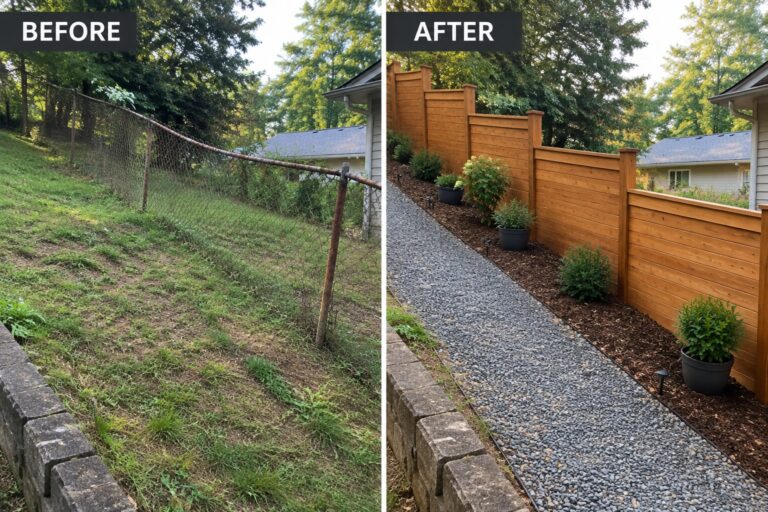
Add A Gravel Path Beside A Privacy Fence

A solid wood fence replaces the worn chain-link boundary, while a gravel path gives the sloped side yard a clear route through. The path makes the narrow space easier to use, and the fence provides a more private edge.
For a similar yard, follow the slope rather than trying to force a level walkway. Use gravel with a stable, well-defined border, and check that water can drain without washing it downhill. Keep the path wide enough to walk comfortably and leave room for fence maintenance.
Add Structure To An Overgrown Side Yard
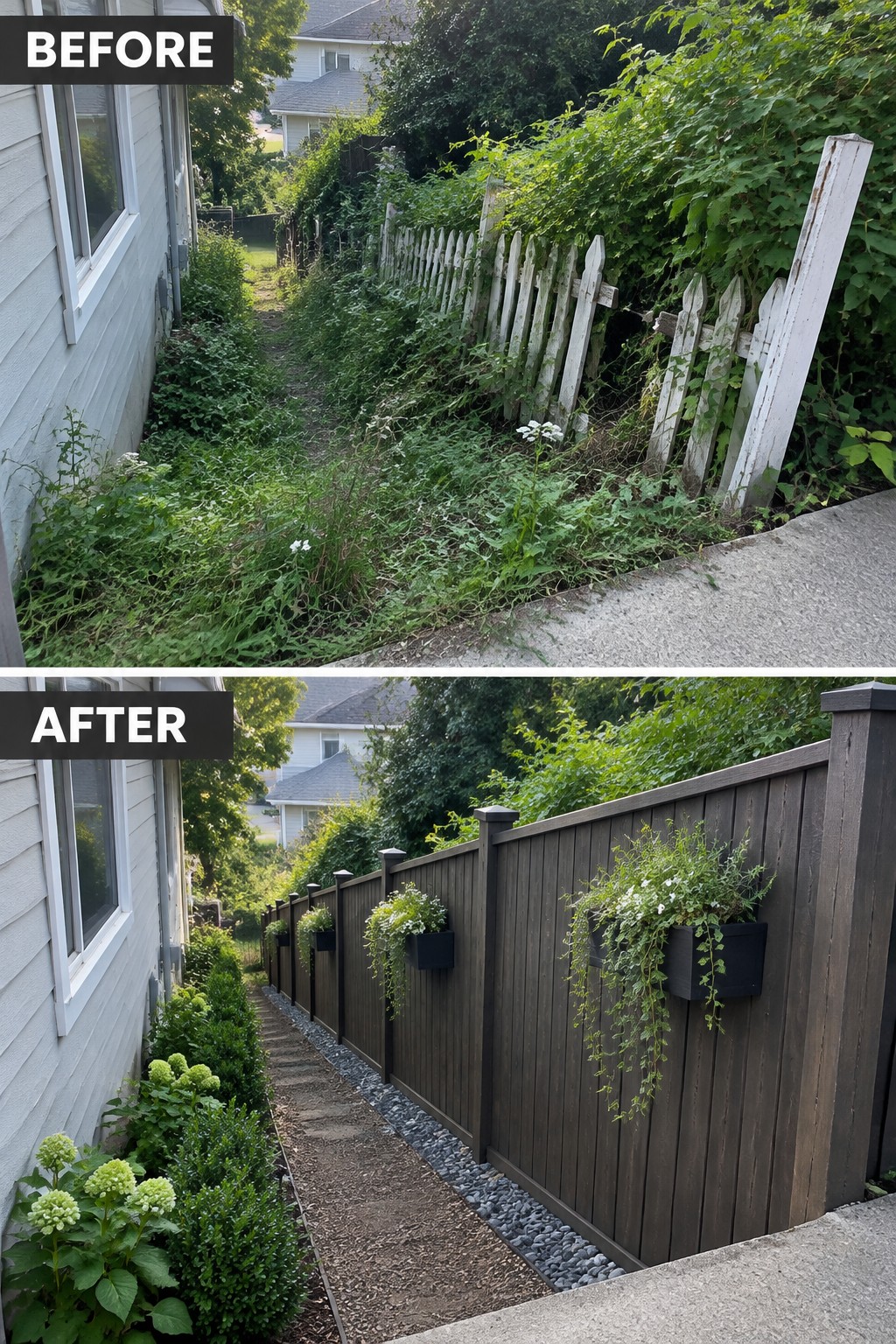
A sturdy privacy fence can make a narrow, neglected side yard feel more orderly. Here, a dark fence replaces a broken one and gives the path a clear edge, so the space feels maintained instead of overgrown.
For a sloped property, follow the grade with stepped fence sections rather than forcing the panels level. Clear the path first, then use gravel along the fence to help define the edge and keep the walkway practical.
Add Retaining Walls To Shape A Sloped Yard

A steep, patchy slope can be hard to maintain and leaves little room for planting. In this yard, tiered stone retaining walls turn the incline into defined garden beds, making the space look more orderly and giving plants a stable place to grow.
For a similar slope, use a retaining-wall design suited to the grade and local drainage conditions. Keep each tier practical to reach for planting and upkeep, and check whether the height or site requires a permit or professional installation.
Turn A Bare Patio Into A Seating Area
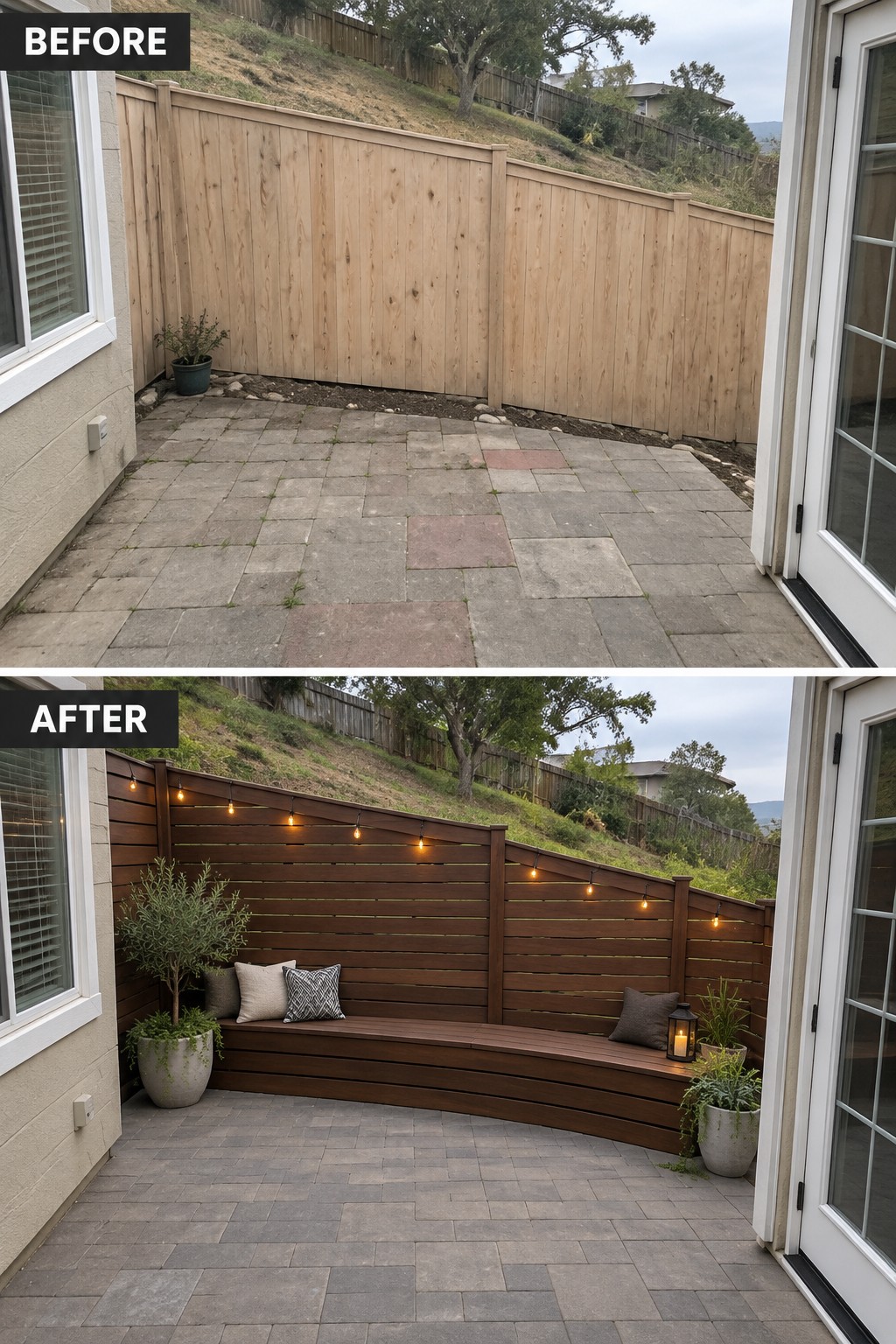
A sloped privacy fence can make a small patio feel exposed and unfinished. Here, the horizontal wood fence and built-in bench give the space a clear place to sit, while the angled fence line follows the slope instead of fighting it.
For a similar setup, plan the bench to fit the patio without blocking the route to the door. A few outdoor cushions can make it comfortable, but keep the seating simple so there’s still room to move.
Build A Terraced Garden Along A Sloped Fence
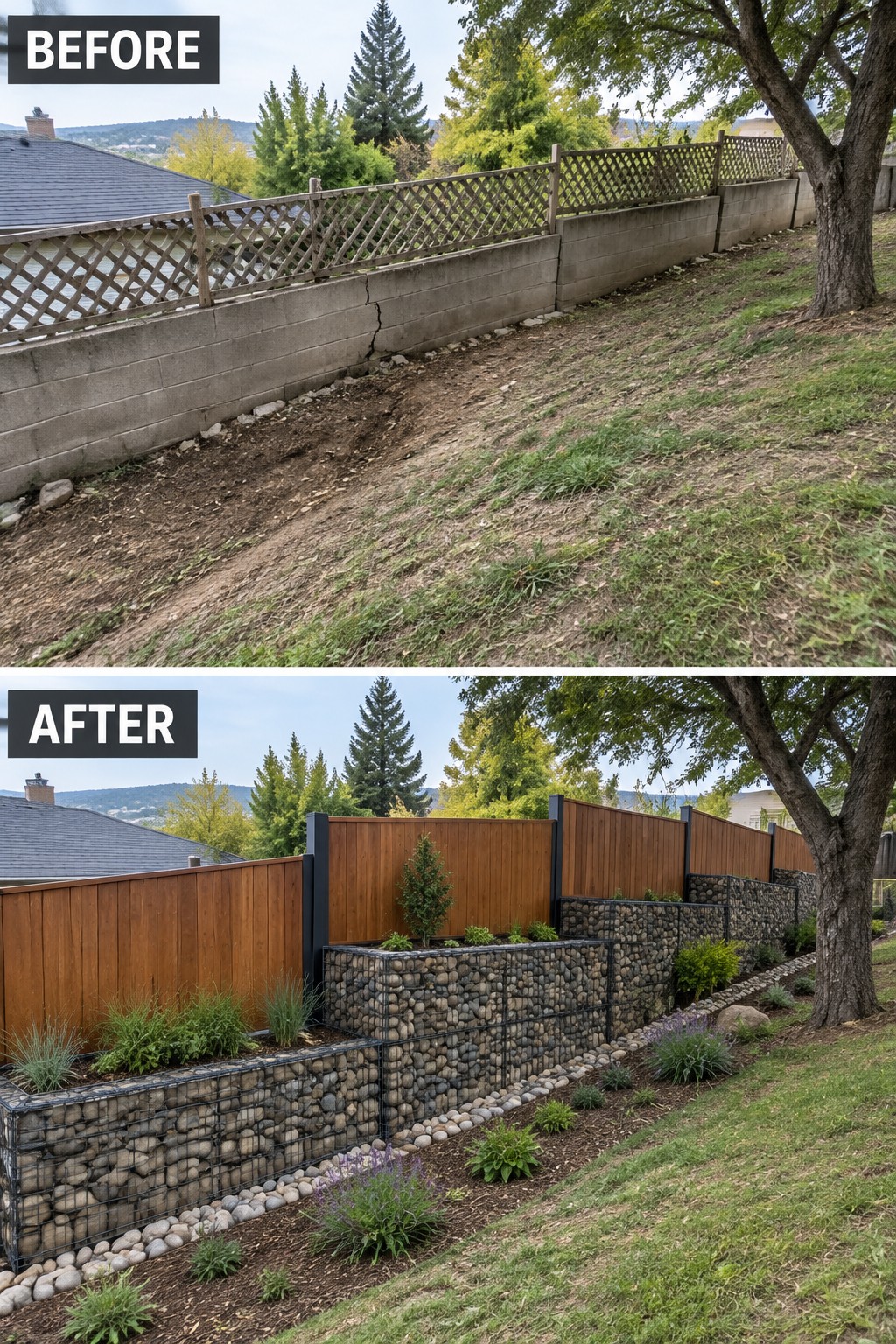
Replacing a cracked retaining wall with stepped stone-filled gabion beds makes the slope look more organized and gives the fence a cleaner backdrop. The planting areas also break up the long run of fencing without taking away its privacy.
This approach works well on a sloped side yard where a flat garden bed would be hard to maintain. Keep each terrace sized for the space, and check that the retaining structure is suitable for the slope and soil before planting.
Add Planting To Make A Sloped Fence Feel Finished

A steep, bare bank can leave a privacy fence looking exposed and the yard feeling unfinished. Here, climbing plants cover a trellis along the fence, turning it into a green screen while helping the slope feel more like a planned garden.
For a similar yard, choose climbers suited to your climate and give them sturdy support, then use mulch to help keep the soil in place. Leave enough room to maintain the fence and make sure any path up the slope stays easy to use.
Refresh A Sloped Fence With Simple Garden Beds

A sloped fence can make a side yard feel like a long, unfinished strip. Painting the fence a muted green and adding a narrow mulched bed gives the slope a cleaner, more planned look without changing its basic layout.
For a similar yard, keep the planting low and spaced along the fence so it doesn’t crowd the lawn or block access. A few repeat plants are easier to maintain than a busy mix, and flower boxes can add color where the ground is too steep for much planting.
Add Privacy To A Narrow Sloped Side Yard
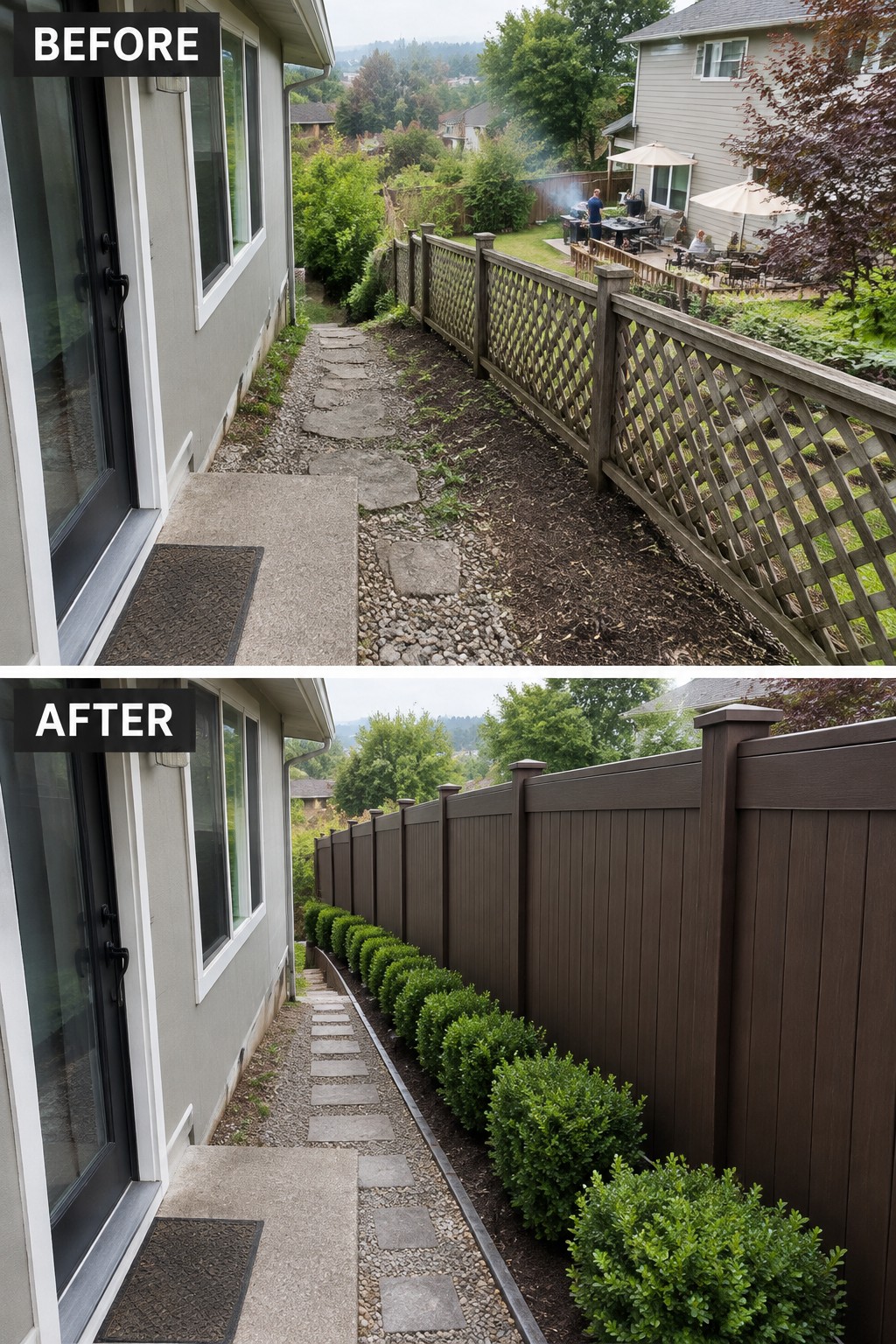
A solid fence makes this sloped side yard feel more private and orderly than the old open lattice fence. The simple stepping-stone path and clipped shrubs keep the narrow space usable without competing with the fence.
This idea works well when a side yard looks onto a neighbor’s patio or windows. Choose a fence style suited to the slope, and keep the path wide enough to walk comfortably.
Build Steps Into A Sloped Garden

The rough hillside becomes easier to use when the stairs are built into a series of timber retaining beds. Instead of leaving the slope bare beside a worn fence, this approach gives the yard clear levels and a stable route up the hill.
For a similar yard, plan the steps and retaining walls together so the path feels natural and the soil stays supported. Add simple, low-maintenance plants to the beds, and check that the stair treads are wide and secure enough for everyday use.
Add A Solid Fence For Poolside Privacy
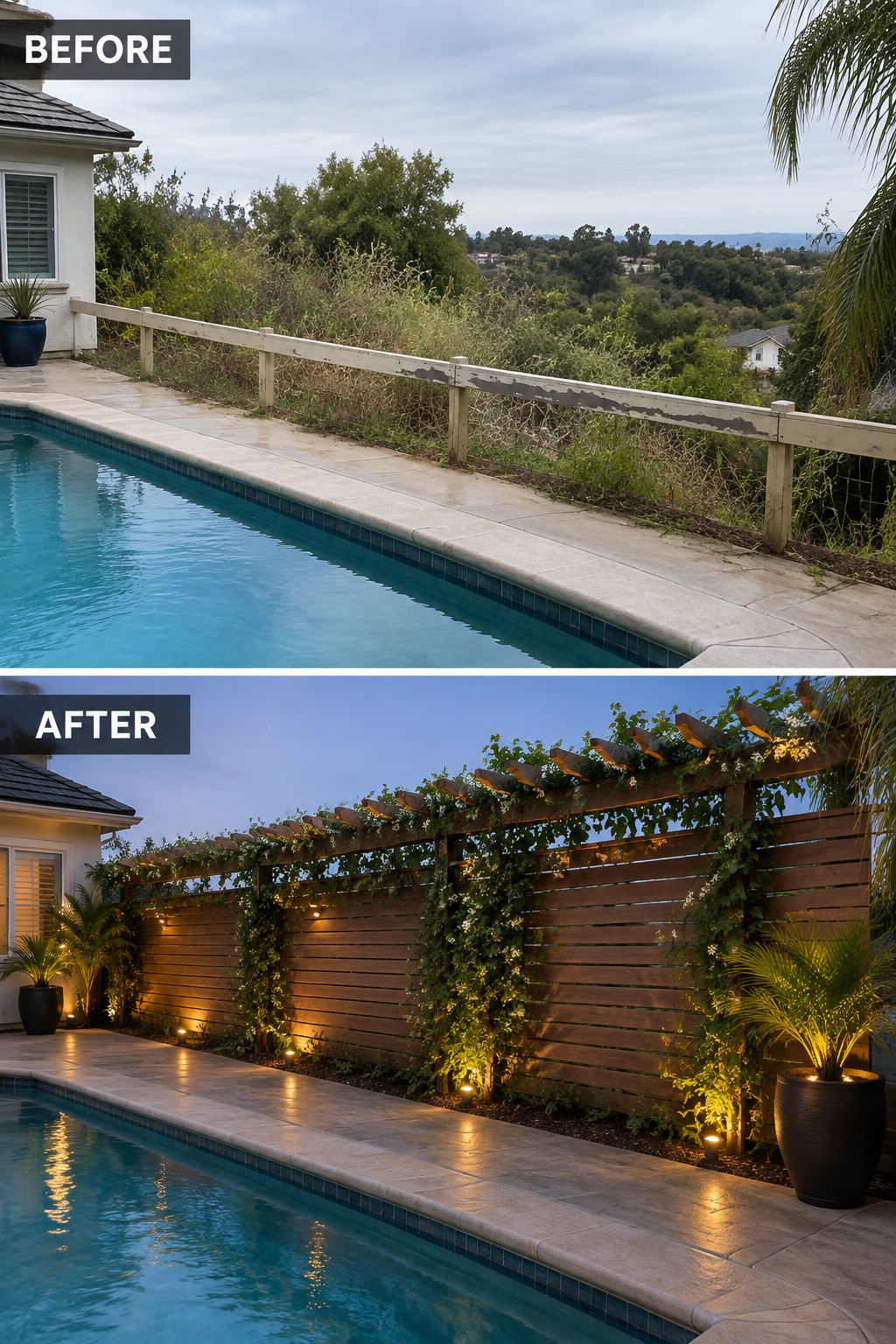
A simple rail fence leaves a pool area open to the neighboring slope and offers little privacy. Replacing it with a taller wood fence makes the patio feel more sheltered and gives the pool a clearer boundary.
On a sloped property, follow the grade with stepped fence sections so the bottom stays close to the ground. Add climbing plants if you want greenery, but leave enough room to maintain the fence and keep the pool area clear.
Build Raised Garden Beds Along A Sloped Fence

On a sloped yard, raised beds can turn uneven ground into a more orderly garden. Here, the beds step down the slope and the taller fence panels provide privacy, so the planting area feels more defined.
Use sturdy, well-braced beds and follow the slope in manageable levels rather than trying to make one long, level bed. Leave enough room between them to tend the plants, and choose materials that can stand up to soil pressure and wet weather.
Use A Privacy Fence To Define A Sloped Yard
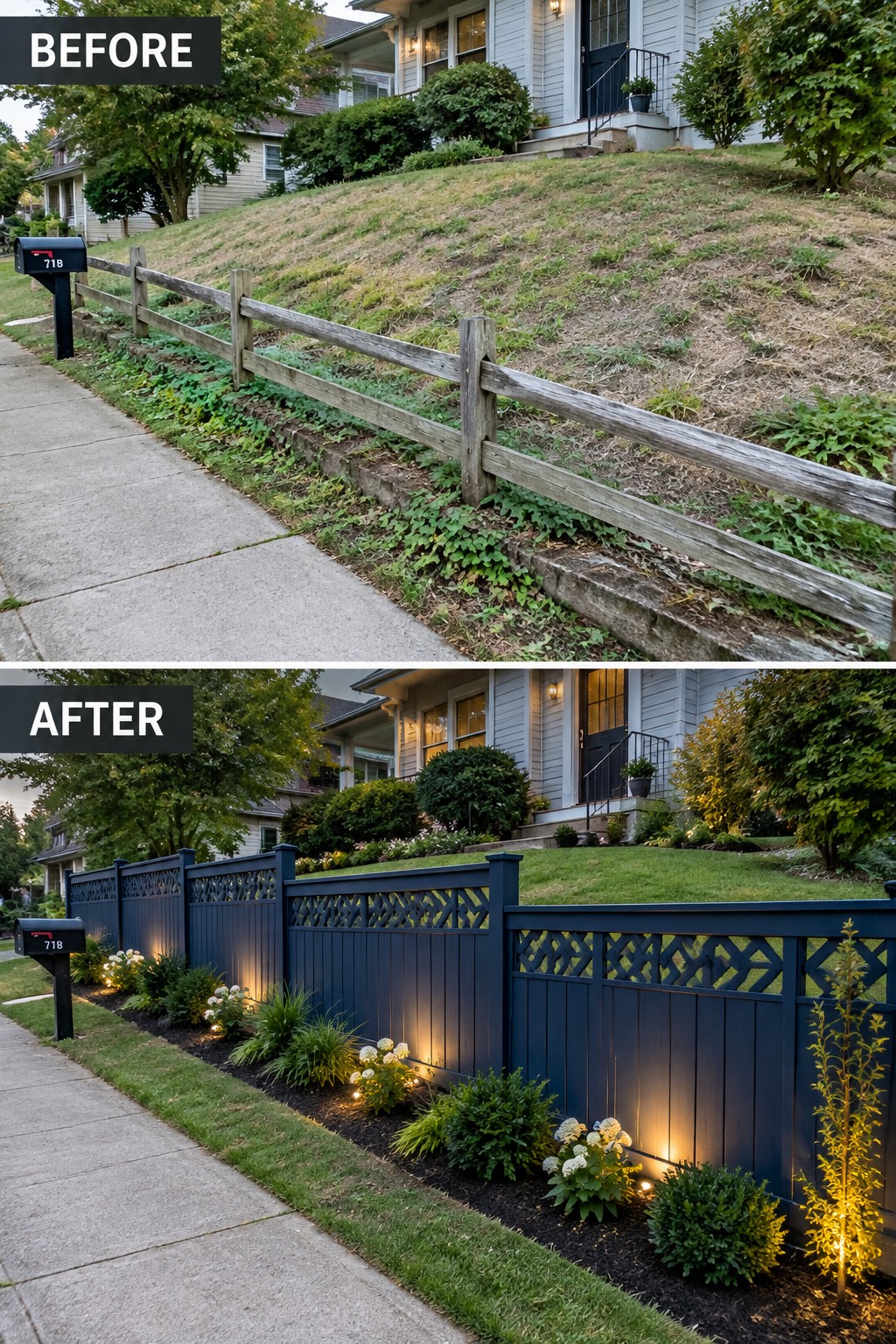
A tall fence can make a steep front yard feel more contained and private. Here, the uneven slope is still visible above the fence, but replacing the low, weathered rail with a solid fence gives the street side a clear edge.
For a similar yard, follow the slope in manageable sections and check local rules for fence height and placement before building. A narrow planting bed at the base helps finish the edge without taking up much space.
Add A Privacy Fence With A Garden Shelf
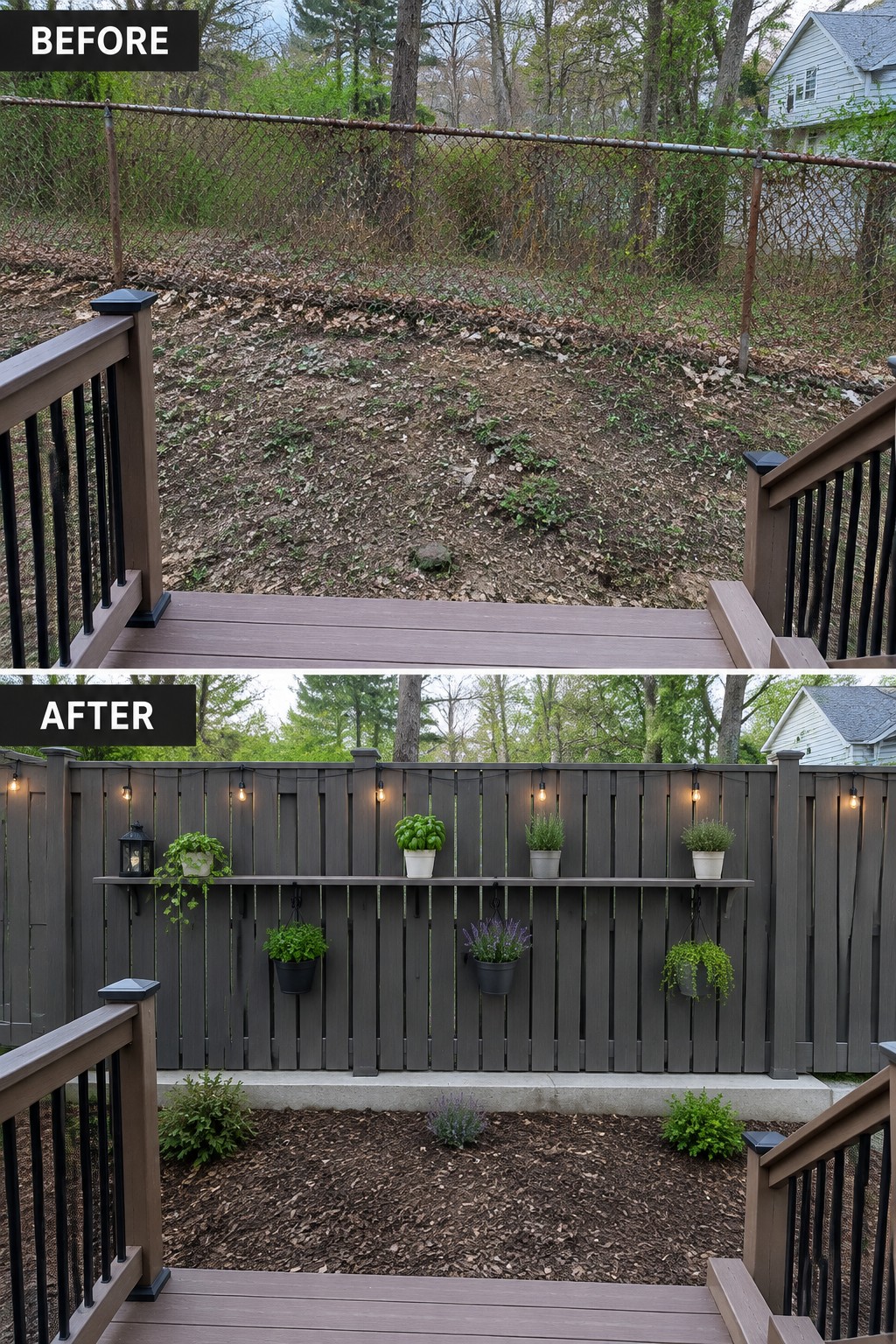
Replacing a see-through chain-link fence with a solid fence makes a sloped backyard feel more private and defined. A narrow shelf adds a useful place for potted plants without taking up much yard space.
This idea works well when a slope makes the fence line feel exposed or unfinished. Follow the change in grade carefully so the fence stays secure, and keep the shelf sturdy and low enough to reach comfortably.
Add A Privacy Fence Along A Sloped Yard

Replacing a short picket fence with a taller, solid fence makes this sloped front yard feel more private and orderly. The stone retaining wall below it helps the fence follow the grade without leaving the exposed soil and roots as the main feature.
On a slope, plan the fence and retaining wall together so the wall supports the change in elevation and the fence stays at a practical height. A narrow planting bed along the sidewalk can finish the edge, but leave enough room to keep the path clear.
Add A Raised Planting Bed Along A Sloped Fence

A long raised bed can make a sloped fence line look more orderly and give the yard a clear edge. Here, the weathered fence is stained a darker brown, while a built-in planter filled with clipped shrubs replaces the scattered growth at its base.
This idea works well when a slope is awkward to mow or has bare patches, but keep the bed low enough that it does not block the fence or crowd the path. Use sturdy materials suited to outdoor conditions, and leave room for water to drain away.
Replace A Plain Fence With A Warm Wood Design

A sloped side yard can feel bare when the fence is the only feature, especially if the ground beside it is patchy and unfinished. Here, a wood fence and a strip of rounded gravel make the narrow space look more considered while keeping the boundary private.
For a similar yard, choose a fence style that follows the slope in manageable sections, then use gravel or another simple ground cover to tidy the edge. Leave enough room for a clear path and any plants you add, so the space stays easy to maintain.
Build Terraced Beds To Manage A Sloped Yard

A steep, bare side yard can be hard to use and prone to erosion. Here, tiered retaining walls turn the slope into level planting areas, while a sturdier privacy fence gives the yard a cleaner edge.
This approach works well where a narrow yard rises between a house and fence. Keep each terrace sized for easy planting and maintenance, and make sure the retaining walls are properly built for the slope and drainage.
Use A Stepped Privacy Fence Along A Sloped Yard

A solid fence that follows the slope in sections can give a hillside more consistent privacy than an old fence with open lattice. Here, dark horizontal panels replace weathered boards, while the level changes between posts let the fence track the incline without making the whole run look uneven.
For a similar yard, plan the fence height and steps around the slope before choosing materials. Keep the planting simple so it does not hide the fence or make the narrow hillside harder to maintain.
Create Terraced Beds Along A Sloped Fence

A steep, bare bank can be difficult to plant and prone to washing out. Dividing it into level planting tiers with timber edging gives the slope clearer structure and creates more manageable areas for shrubs.
This approach works well along a boundary where a tall fence provides privacy but the ground falls away. Keep each tier stable and wide enough for the plants, and leave a clear route for maintenance.
Make A Sloped Fence More Decorative

A plain fence can feel stark beside a sloped yard. Breaking up the panels with horizontal wood sections and corrugated metal gives the fence more visual interest while still providing privacy.
For a similar effect, repeat the same materials across each section so the fence feels consistent as it follows the grade. Keep the design suited to the slope, and make sure each panel is securely supported.
Add A Privacy Fence And Planting To A Sloped Yard

A solid fence can make a sloped side yard feel more private and much easier to use. Here, the old, damaged fence is replaced with a clean, continuous barrier, while a neat lawn and planted border make the space feel cared for.
For a similar yard, choose a fence design that can follow the slope securely, and plan for how the fence steps or angles with the ground. Keep the planting bed simple so it adds greenery without taking up too much room.
Turn A Sloped Patio Into A Usable Outdoor Room

A steep, bare yard can be hard to use, but a stepped privacy fence can help make the space feel more settled. Here, the new fence follows the slope and built-in steps connect the upper seating area to the deck.
For a similar yard, plan the fence and steps around how people will move through the space. Built-in planters or a small bench can make use of the levels, but leave enough clear room for walking and sitting.
Frequently Asked Questions
Q: How do I keep a privacy fence from looking uneven on a slope?
A: Follow the ground with stepped fence sections, keeping each panel level and dropping it in small increments. This gives the fence a tidy outline without leaving large gaps underneath.
Q: Should I choose a stepped fence or one that follows the slope?
A: A fence that follows the slope can look smoother, especially with horizontal boards, but it may leave a wedge-shaped gap below each panel. Stepped sections usually offer more consistent privacy, so choose based on the look you prefer and how much clearance you need.
Q: How can I close the gaps under a stepped fence?
A: Add a short bottom board or a narrow section of matching fencing beneath each panel. Leave enough room for drainage and routine yard work.
Q: Do fence posts need extra support on a sloped yard?
A: They may, especially where the ground drops sharply or the soil shifts easily. Set posts securely and check that the fence line stays straight before attaching the panels.
