


When it comes to adding a touch of softness to your garden, Astilbe is a perennial favorite. These lovely plants flourish in shaded areas, making them perfect for creating peaceful outdoor spaces. I’ve gathered some delightful ways to incorporate Astilbe, from colorful borders to serene woodland settings. If you’re looking to elevate your garden’s beauty, let’s explore these inspiring ideas together.
Choosing the Right Astilbe Variety for Your Garden

When I choose the right Astilbe variety for my garden, I consider both the color and the growing conditions.
I love how the rich hues can brighten up shaded spots, so I always look for varieties that complement my existing plants.
I also check the soil moisture and light requirements to guarantee they thrive, creating a stunning, cohesive landscape.
Planting Astilbe in Shady Areas

Although many plants struggle in low-light conditions, Astilbe thrives in shady areas, making it a perfect choice for my garden.
Astilbe flourishes in shaded spots, proving to be a delightful addition to any low-light garden.
I love how its feathery plumes add softness and texture to my landscape.
When planting, I guarantee the soil is well-drained and rich in organic matter.
With a little care, these beauties flourish, bringing life to my dimmer garden spots.
Creating a Colorful Astilbe Border

After successfully planting Astilbe in those shadier spots, I realized their potential for creating a stunning border.
I love mixing different colors like pink, white, and red to create a vibrant display. Planting them in a staggered pattern adds depth and interest.
With their lush foliage and feathery blooms, they really transform any garden edge into a colorful, inviting space.
Pairing Astilbe With Ferns for a Lush Look
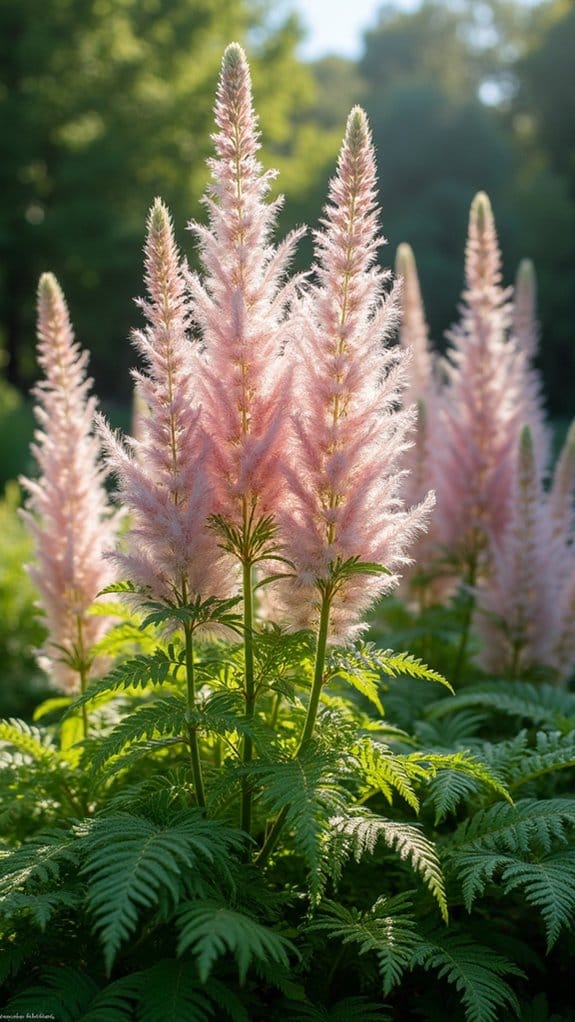
To create a truly lush look in my garden, I love pairing Astilbe with ferns.
Creating a lush garden is effortless when pairing Astilbe with ferns for a stunning visual impact.
The delicate fronds of ferns beautifully complement the feathery blooms of Astilbe, adding depth and texture.
I often choose different fern varieties to enhance the visual interest, creating a soft, layered effect.
This combination not only thrives in shaded areas but also provides a serene retreat in my outdoor space.
Incorporating Astilbe in a Woodland Garden

Building on the lush look I achieve with ferns and Astilbe, incorporating Astilbe into a woodland garden creates a magical atmosphere.
I love how its feathery plumes dance in the breeze, adding softness to the shaded spaces. Positioning them near paths or under tall trees enhances their beauty while providing a delightful contrast to the surrounding greenery.
It truly transforms the landscape!
Astilbe as a Focal Point in Containers

Astilbe makes a stunning focal point in containers, instantly drawing the eye with its vibrant colors and unique texture.
I love placing them in decorative pots on my patio or front steps. Their feathery plumes add a touch of elegance, especially during summer.
Plus, they thrive in partial shade, making them perfect for brightening up darker corners of my garden.
Mixing Astilbe With Other Perennials
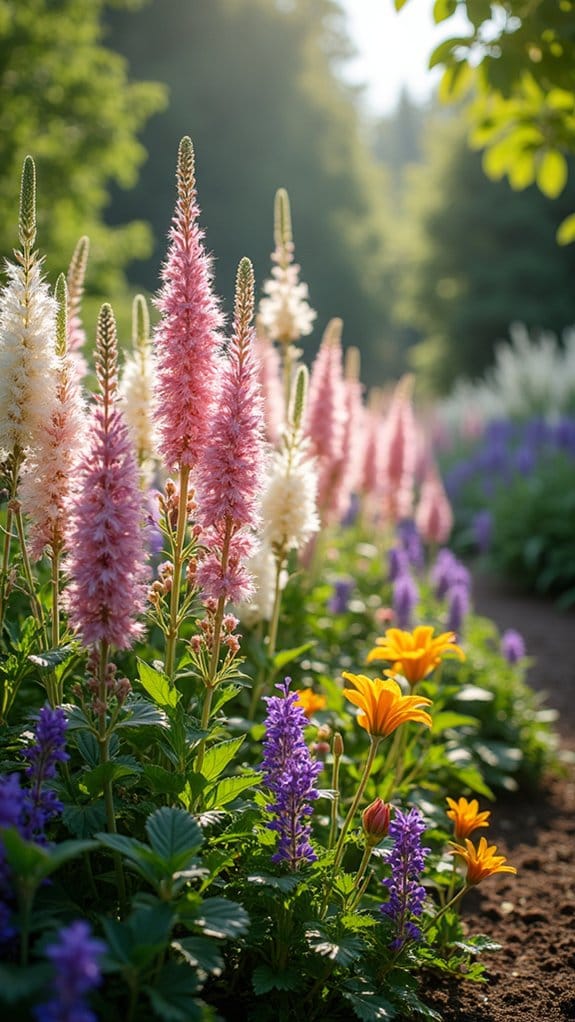
While exploring ways to enhance my garden’s appeal, I’ve found that mixing Astilbe with other perennials creates a beautiful and dynamic landscape.
Pairing Astilbe with plants like hostas or ferns adds depth and contrasts in texture. I love how the feathery blooms complement the bold leaves, creating a stunning visual effect.
This combination truly brings my garden to life!
Designing a Tranquil Water Feature With Astilbe

Creating a serene atmosphere in your garden can be greatly enhanced by incorporating a water feature alongside Astilbe.
I love placing a small pond or fountain near these delicate plants; the gentle sound of water complements their soft textures perfectly.
Surrounding the feature with Astilbe not only adds color but also creates a peaceful retreat, inviting relaxation and contemplation in my outdoor space.
Astilbe in a Cottage Garden Setting

In a cottage garden setting, the vibrant blooms of Astilbe bring a touch of whimsy and charm that perfectly complements the overall aesthetic.
I love how their feathery plumes add softness to the landscape, creating a dreamy atmosphere.
Placing them among rustic elements like wooden benches or stone pathways enhances their appeal, inviting visitors to linger and enjoy the tranquil beauty.
Using Astilbe to Soften Hardscapes
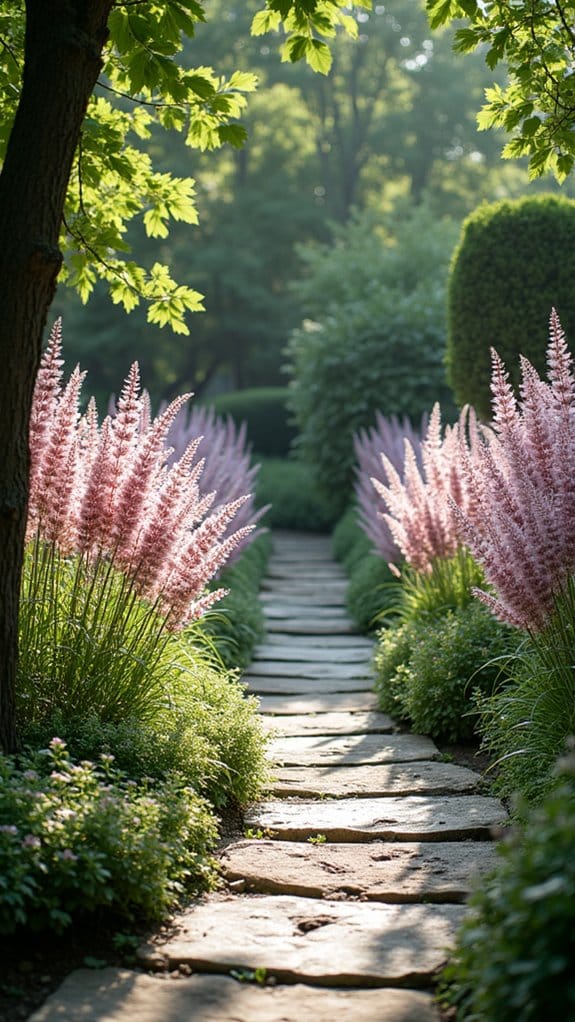
Astilbe’s lush foliage and vibrant flowers make them perfect for softening hardscapes in any garden.
I love combining them with stone pathways or brick patios to create a gentle shift. Their feathery plumes add a touch of whimsy, while the rich greens contrast beautifully against hard surfaces.
Placing them near retaining walls or fences can truly enhance your outdoor space’s visual appeal.
Creating a Monochromatic Astilbe Display

While planning a garden display, I find that a monochromatic arrangement of Astilbe can provide a striking visual impact.
Choosing varying shades of a single color, like soft pinks or deep reds, creates depth and harmony. By planting them in clusters, I can enhance their texture and movement, making the garden feel cohesive and serene.
This approach truly elevates my outdoor space!
Astilbe in a Rock Garden

Combining Astilbe with a rock garden can create a stunning contrast between soft blooms and rugged stones.
I love how the feathery plumes of Astilbe soften the harshness of the rocks. Placing them among boulders or gravel creates a natural look that draws the eye.
Plus, their vibrant colors add life and interest, making my rock garden truly enchanting throughout the growing season.
Layering Astilbe With Taller Plants
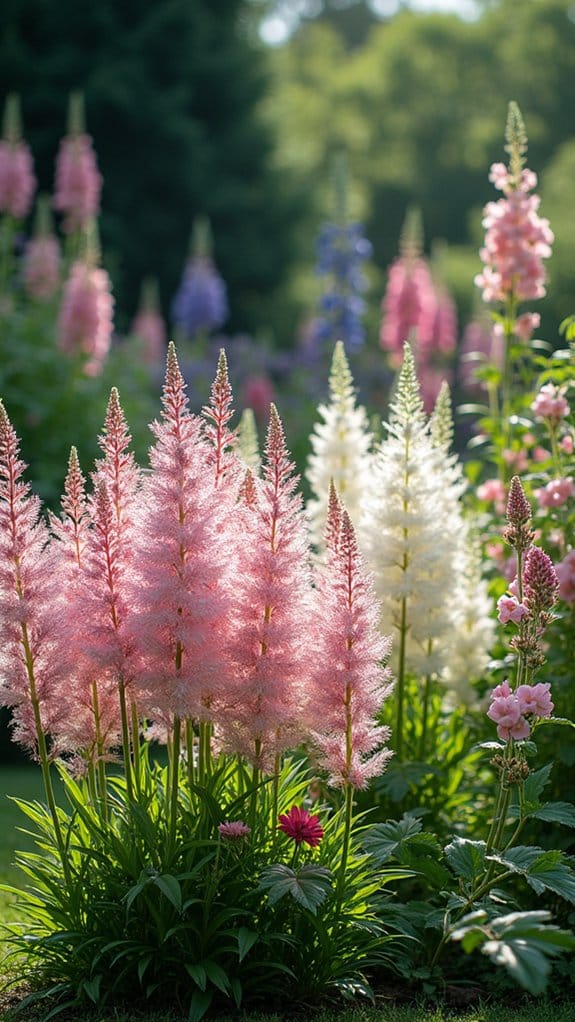
When I layer Astilbe with taller plants, it creates a beautiful visual dynamic in the garden.
The feathery blooms of Astilbe soften the backdrop of statuesque perennials or shrubs, adding depth and interest.
Astilbe’s feathery blooms beautifully soften the backdrop, enriching the garden with depth and captivating interest.
I love combining them with plants like delphiniums or hollyhocks, which stand tall and proud, allowing the Astilbe to shine beneath their height.
It’s a stunning contrast that never fails to impress.
Crafting a Pollinator-Friendly Garden With Astilbe
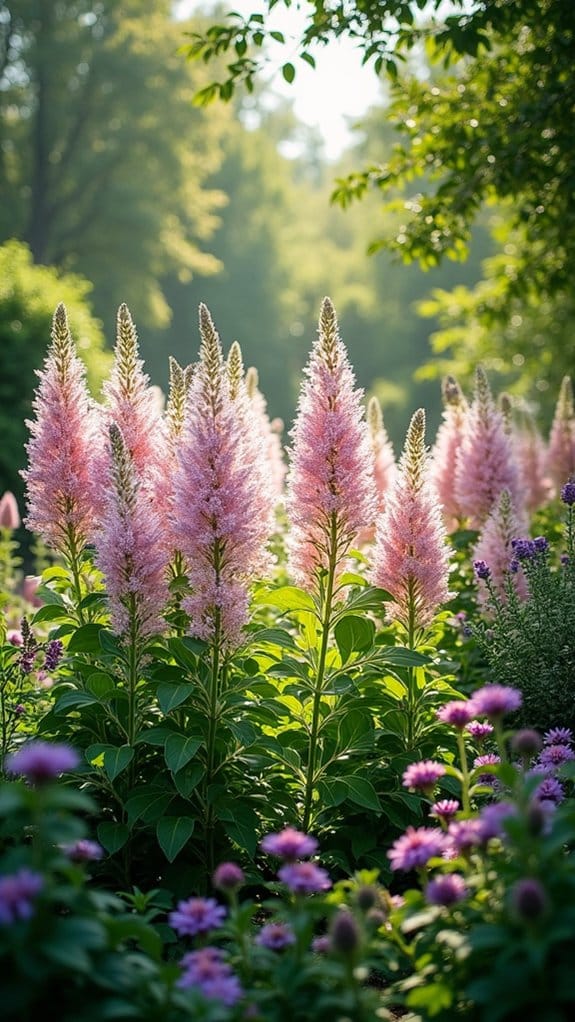
Creating a pollinator-friendly garden with Astilbe not only boosts the beauty of your landscape but also supports essential wildlife.
I love incorporating Astilbe’s vibrant blooms, as they attract bees, butterflies, and other pollinators. By planting in clusters, I provide a reliable food source.
Pairing Astilbe with other native plants can create a diverse habitat, fostering a thriving ecosystem right in my backyard.
Enhancing Pathways With Astilbe
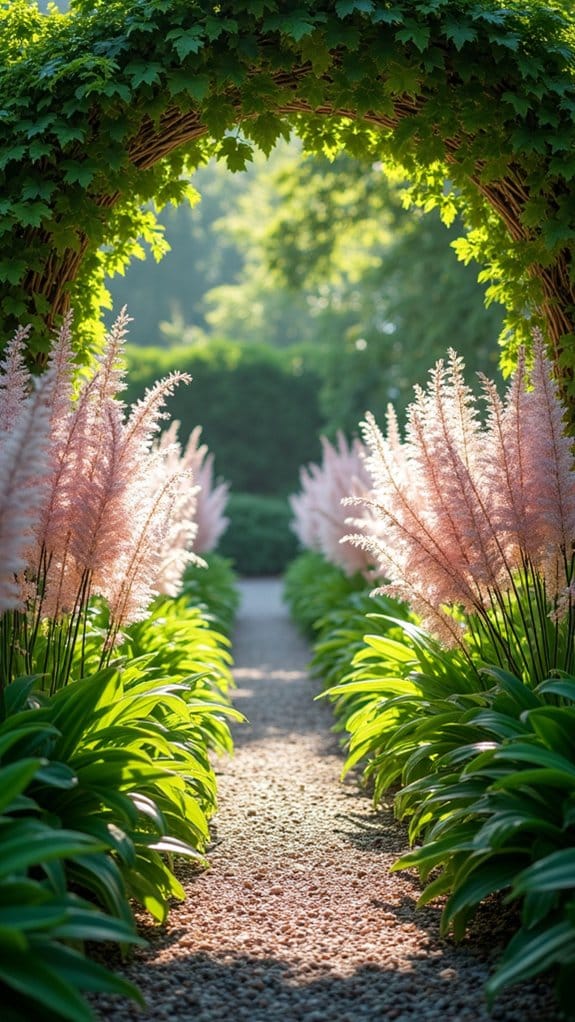
As I design pathways in my garden, I find that incorporating Astilbe not only adds color but also enhances the overall ambiance.
The soft, feathery plumes create a gentle touch, inviting visitors to explore. I love lining the edges with Astilbe, as their lush foliage contrasts beautifully with gravel or stone, making the pathway feel magical and inviting.
It’s a perfect touch for any garden space!
Astilbe in a Shade-Loving Plant Combination

Incorporating Astilbe into a shade-loving plant combination can transform a dim corner of your garden into a vibrant oasis.
I love pairing Astilbe with ferns and hostas for a lush, layered effect. The feathery blooms bring a soft texture while the greens create a striking backdrop.
This combination not only thrives in shade but also adds depth to my garden’s design.
Using Astilbe for Seasonal Color
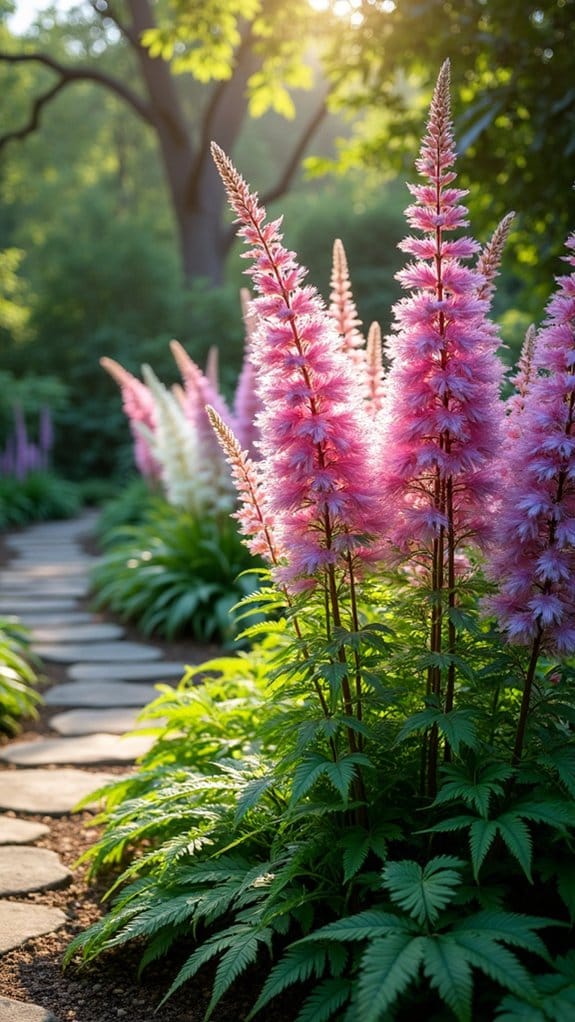
While I love the lush greenery of my garden year-round, using Astilbe for seasonal color truly enhances its beauty.
The vibrant pinks, whites, and reds of Astilbe blooms create a stunning contrast against the foliage. I enjoy mixing different varieties to extend the blooming season, ensuring my garden remains lively and inviting throughout summer.
It’s a simple way to add charm and vibrancy!
Creating a Naturalistic Garden With Astilbe

To create a naturalistic garden with Astilbe, I focus on mimicking the beauty of wild landscapes.
I plant Astilbe in drifts, allowing their soft, feathery blooms to blend seamlessly with native plants.
I also consider varying their heights and colors to mimic a natural setting.
Adding layers of texture and using organic shapes in pathways enhances the overall wildflower feel of my garden.
Astilbe in a Zen Garden

Astilbe can beautifully complement a Zen garden, as its delicate blooms provide a soft contrast to the structured elements typically found in these serene spaces.
I love placing Astilbe near smooth stones or a tranquil water feature, creating a harmonious balance. Its feathery foliage also adds a gentle movement, enhancing the peaceful ambiance and inviting mindfulness as I stroll through the garden.
Designing a Garden for Evening Serenity
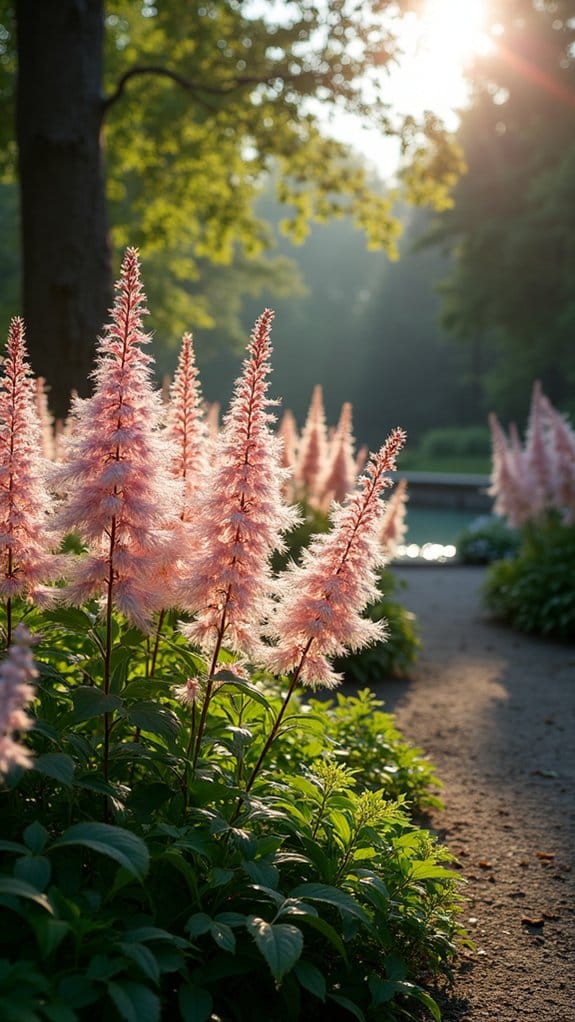
Creating a garden that radiates serenity in the evening hours requires thoughtful planning and a few key elements.
I focus on soft lighting, like solar lanterns, to create a calming glow. Incorporating fragrant plants, such as lavender and night-blooming jasmine, enhances the atmosphere.
Finally, I arrange cozy seating areas where I can unwind and enjoy the peaceful ambiance after a long day.
Astilbe as a Backdrop for Annuals
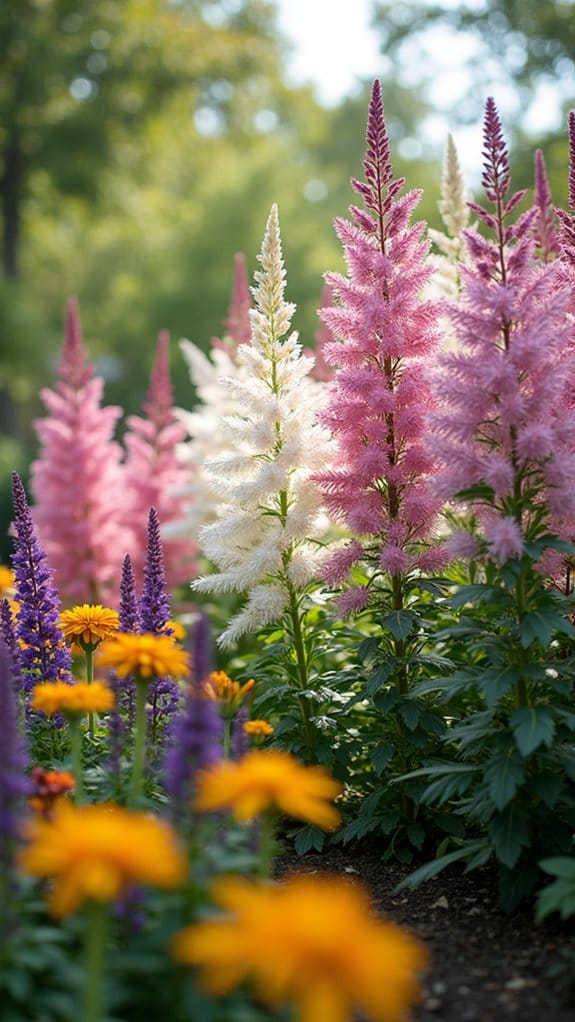
While planning my garden layout, I’ve found that using astilbe as a backdrop for annuals can truly elevate the overall look.
The soft, feathery plumes of astilbe create a stunning contrast against vibrant annuals like petunias or marigolds.
This combination not only adds depth but also enhances the color palette, making each bloom pop beautifully throughout the growing season.
