

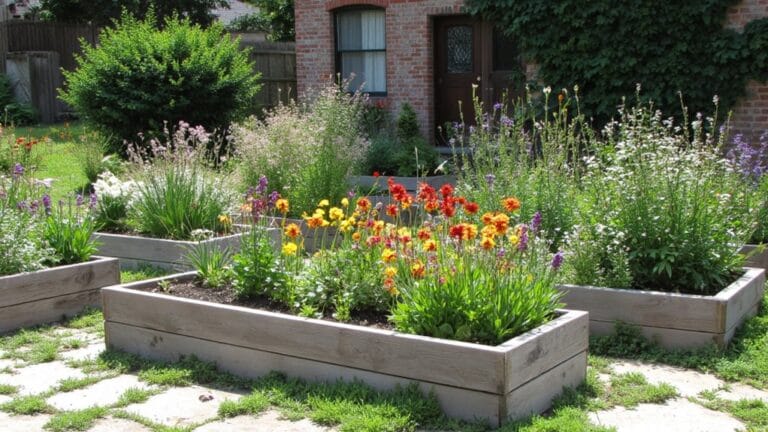
If you’re dreaming of adding a touch of natural charm to your outdoor space, bold wildflower raised garden beds might be just what you need. They bring vibrant colors that can truly transform your garden. Choosing the right location and materials is key to making them stand out. Don’t forget to consider incorporating edible varieties and attracting beneficial wildlife. Let’s explore some unique ideas to turn your garden into a beautiful oasis.
Choosing the Right Location for Your Raised Garden Bed
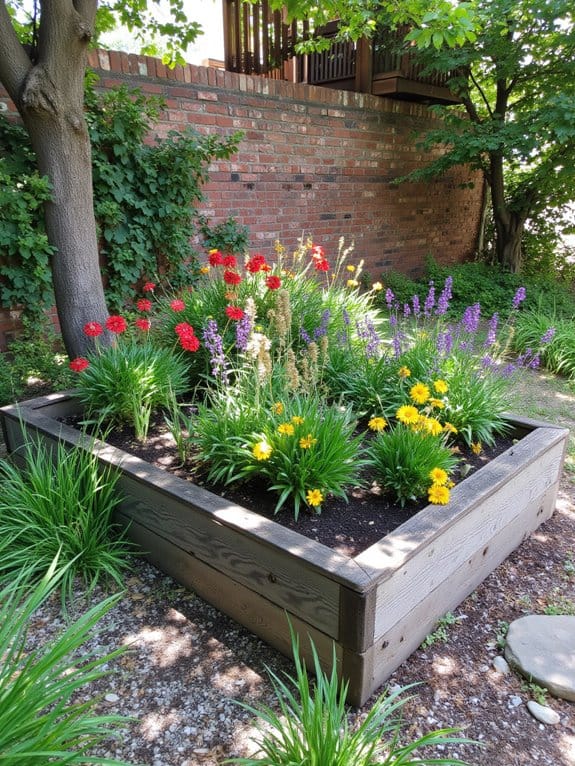
When I choose a location for my raised garden bed, I always consider sunlight first.
I look for a spot that gets at least six hours of direct sunlight daily. This guarantees my wildflowers thrive and bloom beautifully.
I also avoid low-lying areas where water might collect, as that can harm the roots.
A well-drained, sunny spot is essential for success!
Selecting the Perfect Materials for Construction
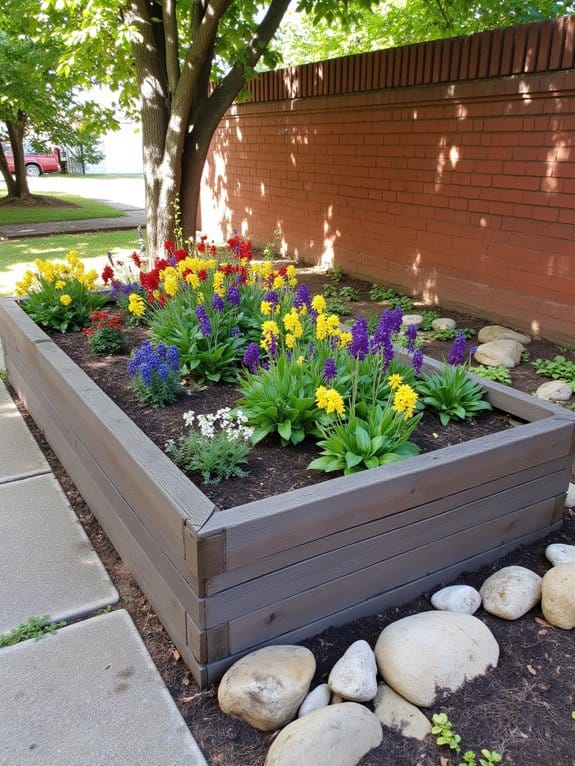
While I consider various materials for my raised garden bed, I prioritize durability and safety for my wildflowers. Prioritizing durability and safety is essential when selecting materials for my wildflower garden bed.
I’ve found that cedar and redwood are excellent choices due to their natural resistance to rot and insects.
For a more modern look, composite materials offer longevity without the environmental impact.
Ultimately, I choose materials that enhance my garden’s beauty while ensuring its health.
How to Use Trellises and Arbors in Your Raised Garden Bed
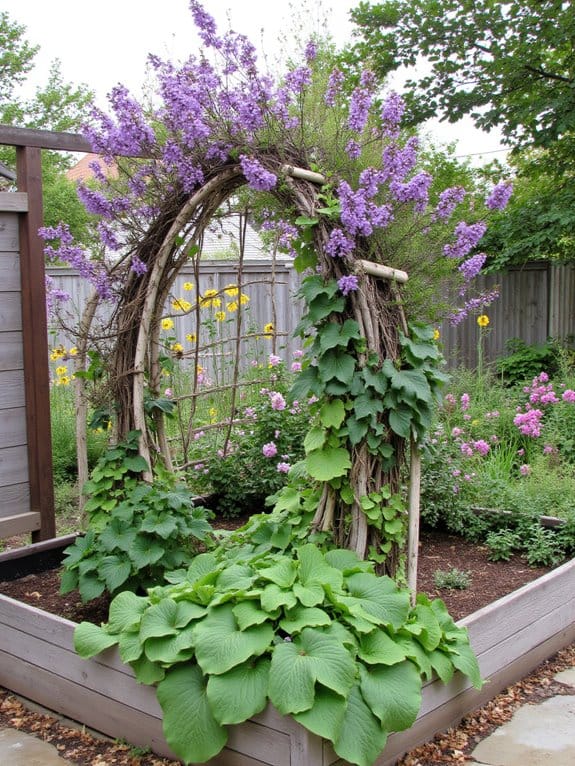
Adding trellises and arbors to my raised garden bed not only maximizes space but also creates a stunning vertical element for my wildflowers.
I love training climbing plants like morning glories and sweet peas to grow up these structures. They not only look beautiful but also attract pollinators, enhancing the overall health of my garden while adding a delightful charm.
Integrate Edible Wildflowers Into Your Raised Garden Bed
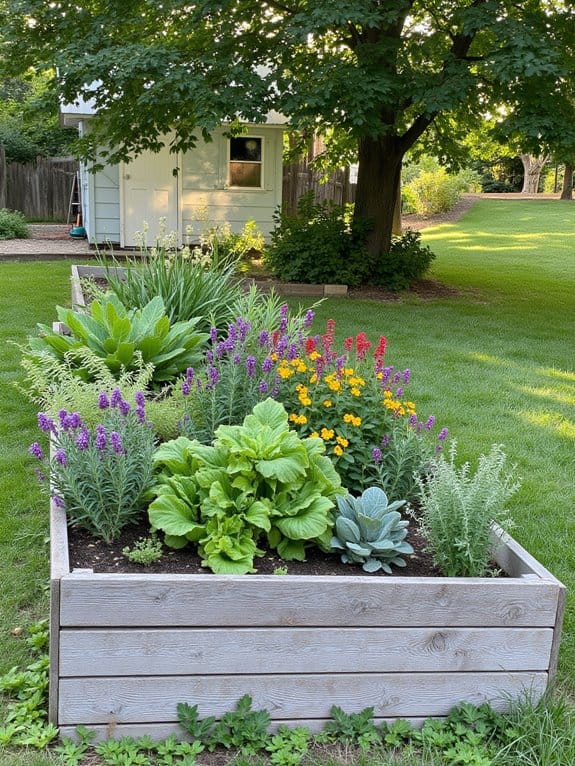
Integrating edible wildflowers into my raised garden bed brings a delightful blend of beauty and flavor.
I love planting nasturtiums and violets, which not only attract pollinators but also add vibrant colors and peppery tastes to my salads.
Plus, their unique appearance makes my garden visually appealing. Their striking beauty enhances my garden, creating a feast for the eyes as well as the palate.
With just a little planning, I can enjoy nature’s edible treasures right at my fingertips.
Mixing Colors: Creating a Bold Wildflower Palette in Your Raised Garden Bed
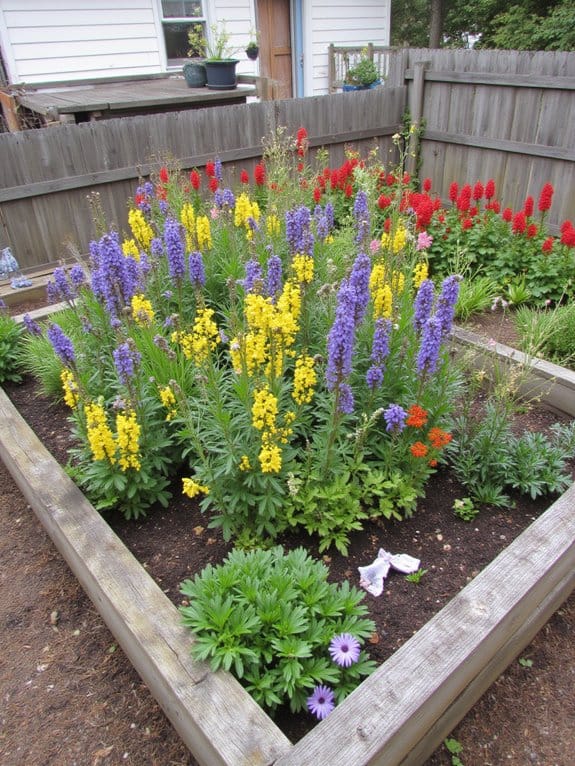
A vibrant wildflower palette transforms my raised garden bed into a stunning visual feast.
I love mixing bold colors like deep purples, fiery reds, and sunny yellows. Each flower brings its unique charm, creating a lively tapestry that draws the eye.
I often experiment with contrasting shades, allowing the blooms to dance together, celebrating nature’s artistry right in my backyard.
Add Scented Wildflowers for a Fragrant Touch
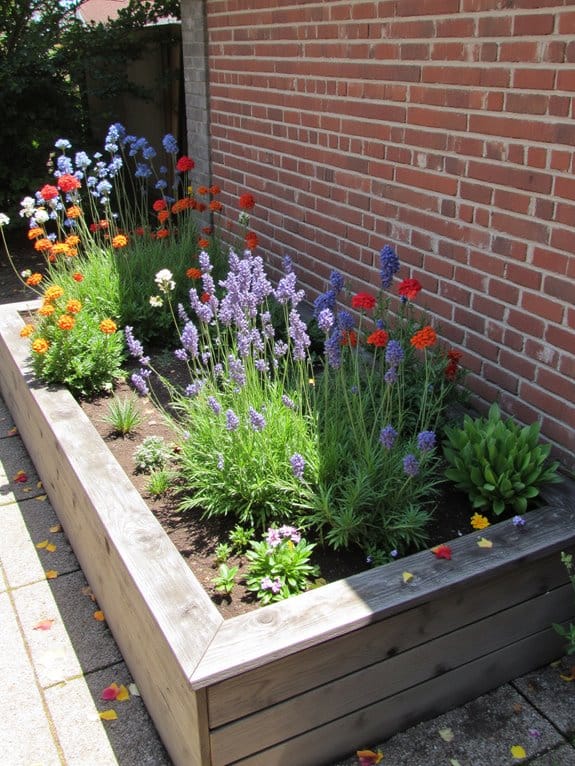
Mixing vibrant colors in my raised garden bed is just the beginning; incorporating scented wildflowers elevates the experience even further.
I love adding blooms like lavender and sweet alyssum, which not only look stunning but also fill the air with delightful fragrances.
When I tend to my garden, the soothing scents transport me to a peaceful, aromatic oasis that’s simply irresistible.
Building a Rustic Wooden Raised Garden Bed
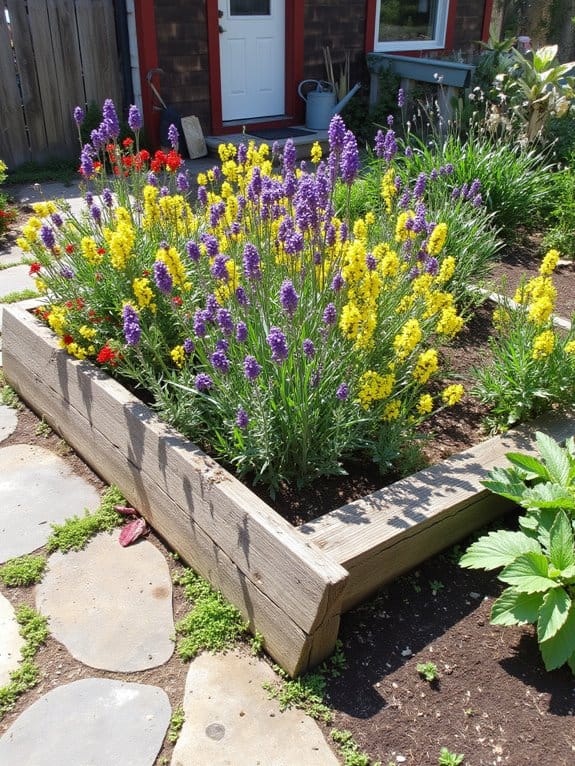
While I enjoy the beauty of my wildflower garden, building a rustic wooden raised garden bed adds character and charm to my outdoor space.
I love using reclaimed wood, giving the bed a weathered look that blends seamlessly with nature. It’s easy to construct, and I can customize the size.
Plus, it provides excellent drainage for my blooming wildflowers!
Designing a Modern Metal Raised Garden Bed
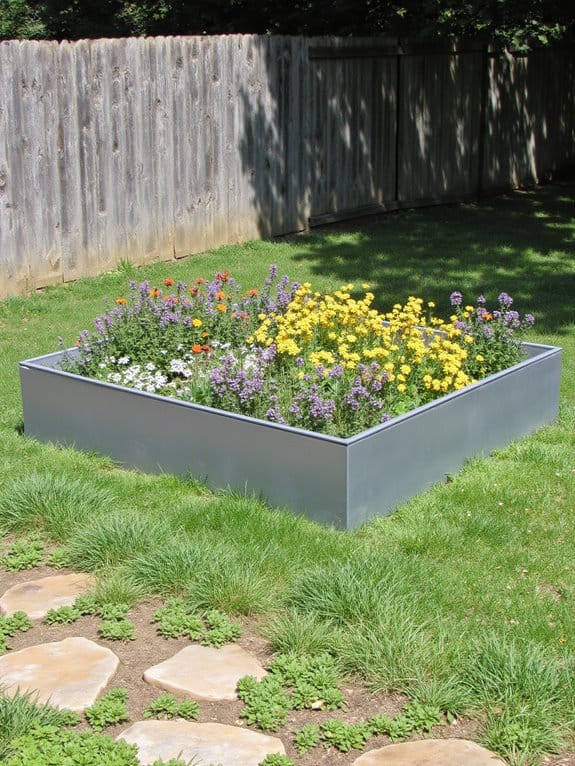
When I decided to incorporate a modern metal raised garden bed into my yard, I was excited about the sleek and contemporary look it would bring.
The clean lines and shiny surface create a stunning contrast against vibrant blooms. The sleek design and reflective finish beautifully highlight the colors of flourishing flowers.
Plus, metal’s durability means it’s built to last.
I can’t wait to see how it elevates my garden’s overall aesthetic!
Using Recycled Materials for Eco-Friendly Garden Beds
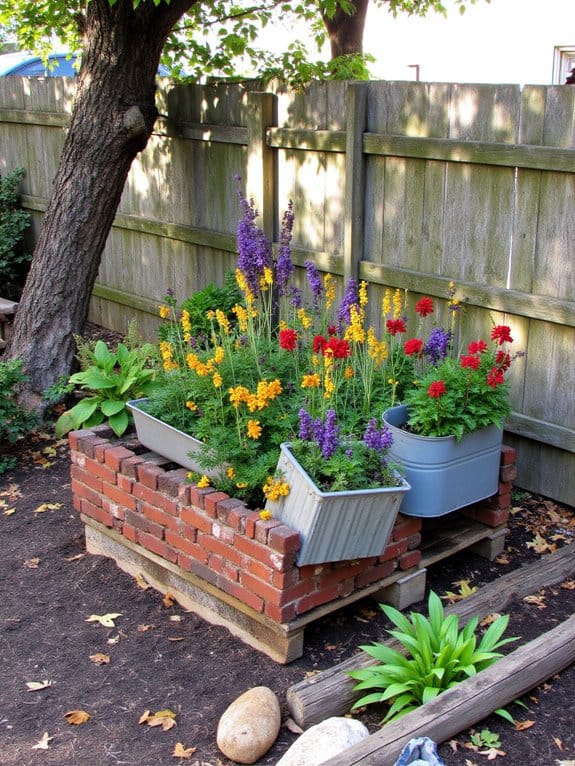
Since gardening is all about nurturing the earth, I love the idea of using recycled materials for eco-friendly garden beds.
Old wooden pallets, bricks, and even tires can transform into charming planters. Not only do they reduce waste, but they also add character to my garden.
Plus, I find it incredibly rewarding to create something beautiful while being kind to the planet.
Choose a Theme for Your Wildflower Garden Bed
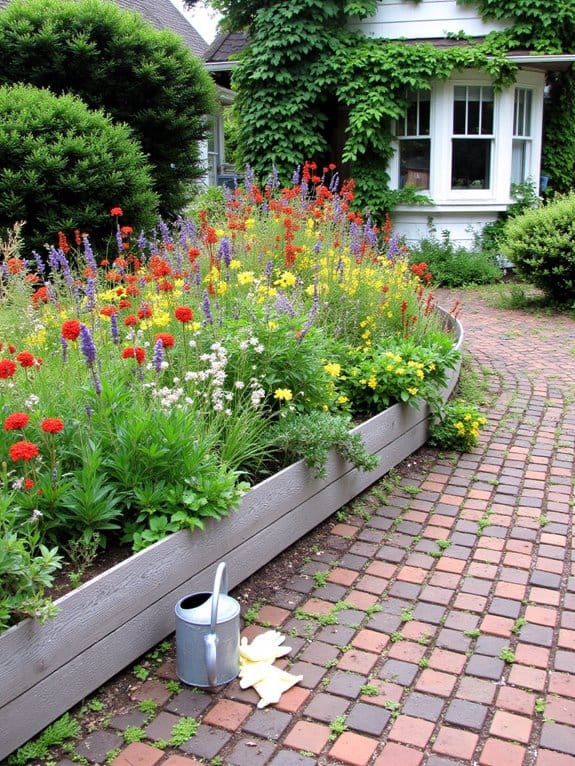
Creating a wildflower garden bed offers a fantastic opportunity to express your personality and aesthetic preferences.
I love choosing a theme that resonates with me, whether it’s a cottage garden vibe or a vibrant color palette.
Think about your favorite colors, scents, or even local wildlife. Consider incorporating your favorite colors, delightful scents, and local wildlife to make your garden truly personal and meaningful.
This way, your garden becomes a reflection of who you’re and what you cherish.
Incorporating Pathways for Easy Access and Maintenance
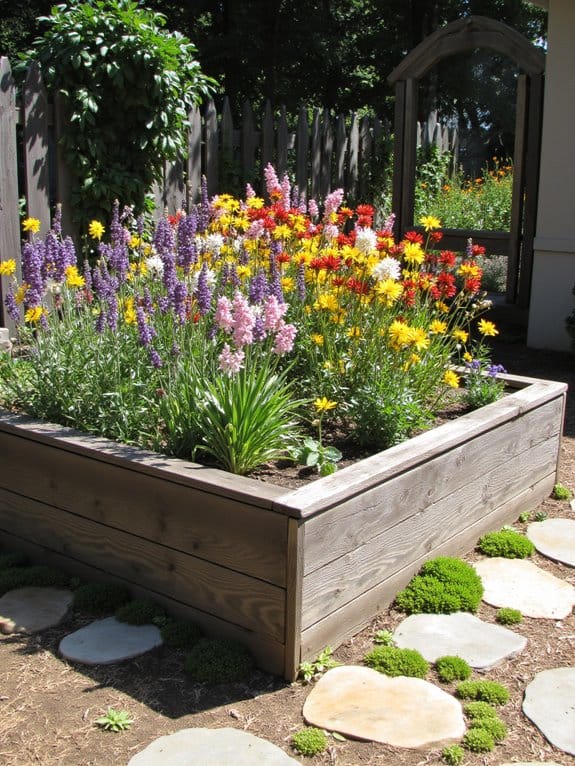
To guarantee I can easily navigate and maintain my wildflower garden bed, I always incorporate pathways that provide clear access.
I prefer using gravel or stepping stones, as they blend nicely with the natural surroundings.
These paths not only help me reach every flower but also prevent soil compaction.
Plus, they create a charming layout that enhances the garden’s overall appeal.
Adding a Seating Area to Enjoy Your Flower Garden
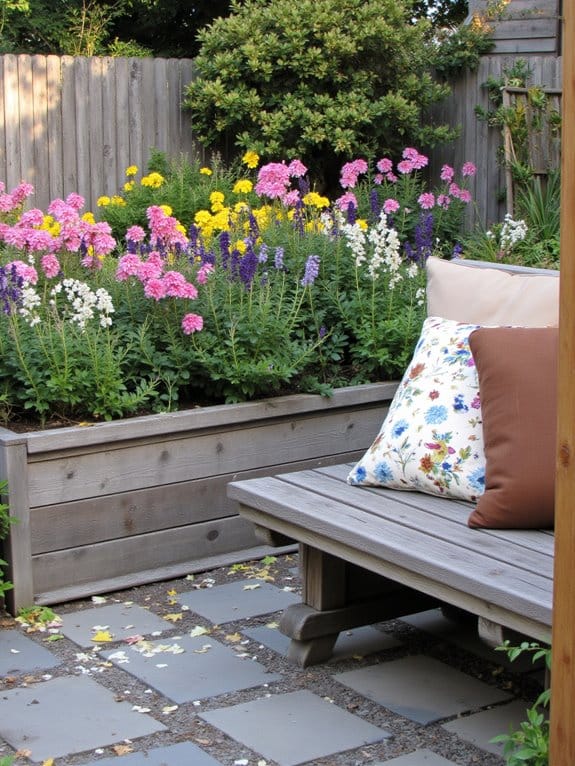
After establishing paths for easy access, it’s time to think about how to truly enjoy your wildflower garden.
I love adding a cozy seating area, where I can relax and soak in the colors and scents. A simple bench or a couple of chairs surrounded by vibrant blooms creates the perfect spot for morning coffee or evening sunsets, making every moment spent in my garden special.
Choosing Native Wildflowers for Low-Maintenance Beauty
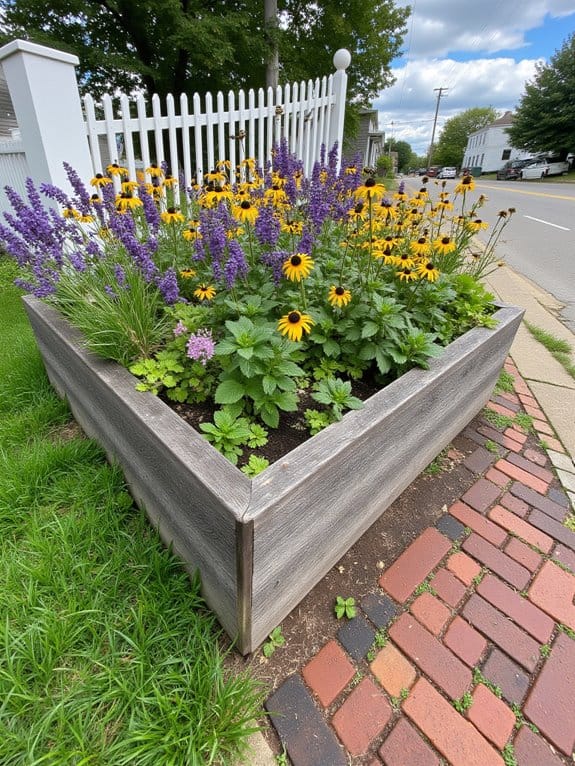
When I decide to plant wildflowers, I always prioritize native species because they thrive effortlessly in my garden’s local conditions.
By choosing these plants, I reduce maintenance and foster a beautiful, sustainable landscape. Native wildflowers attract local wildlife and require less water, making them perfect for my busy lifestyle.
Embracing these natural beauties brings charm and ease to my outdoor space.
Planting Wildflowers for Pollinator Attraction
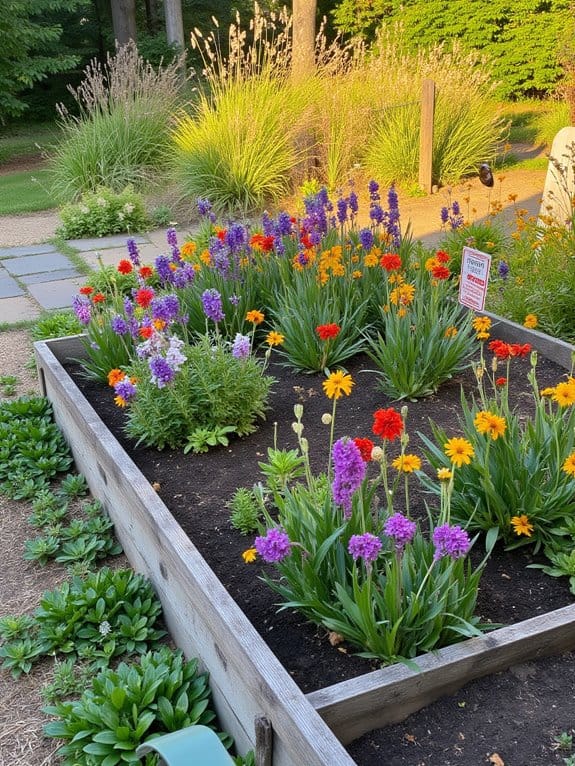
Planting native wildflowers not only brightens my garden but also plays an important role in attracting pollinators.
I’ve noticed a significant increase in bees, butterflies, and other beneficial insects since I started incorporating these plants.
Creating a Seasonal Blooming Schedule With Wildflowers
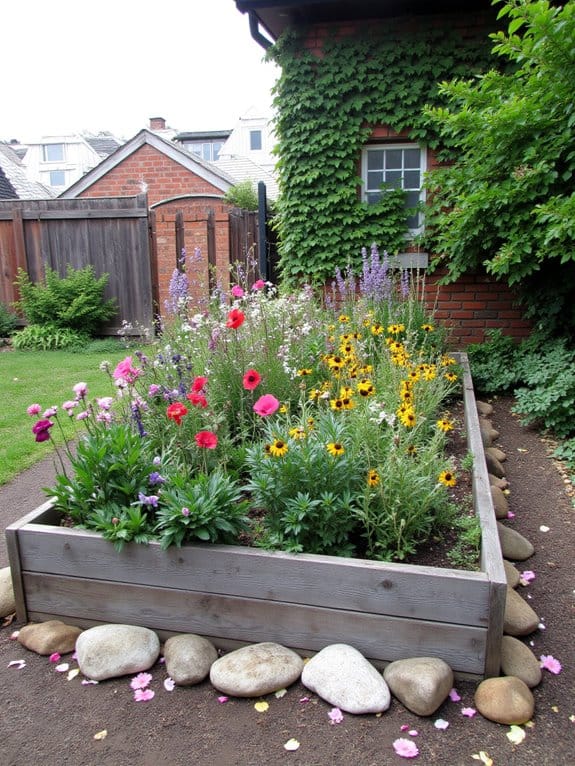
To guarantee my garden bursts with color throughout the growing season, I’ve learned the importance of creating a seasonal blooming schedule with wildflowers.
I start by selecting a mix of early, mid, and late bloomers. This way, I enjoy vibrant displays from spring to fall.
Keeping track of bloom times helps me plan my planting, ensuring continuous beauty in my raised beds.
Adding Decorative Stones and Gravel for Ground Cover
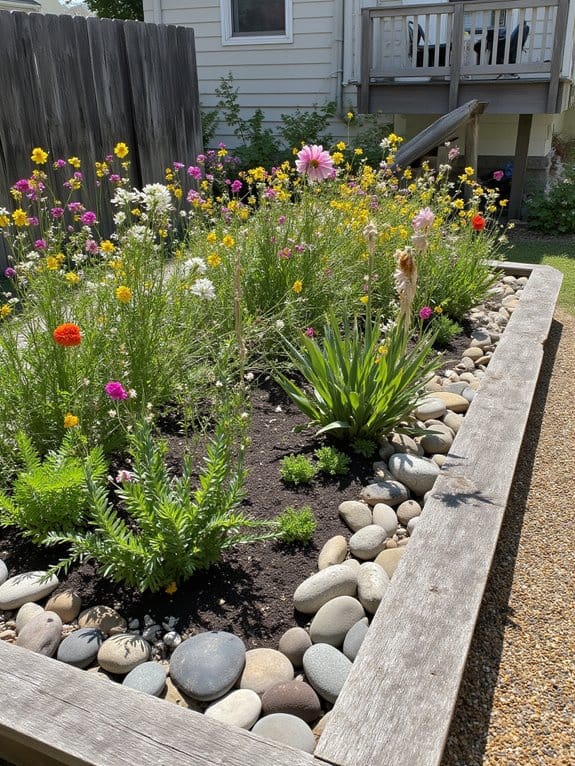
While I love the vibrant colors of wildflowers, I also appreciate the elegance that decorative stones and gravel can add to my raised garden beds.
They not only create a clean, polished look but also help with drainage and weed control.
I often choose a mix of sizes and colors, allowing me to customize the aesthetic while enhancing the garden’s natural charm.
Incorporating Water Features to Enhance the Garden Atmosphere
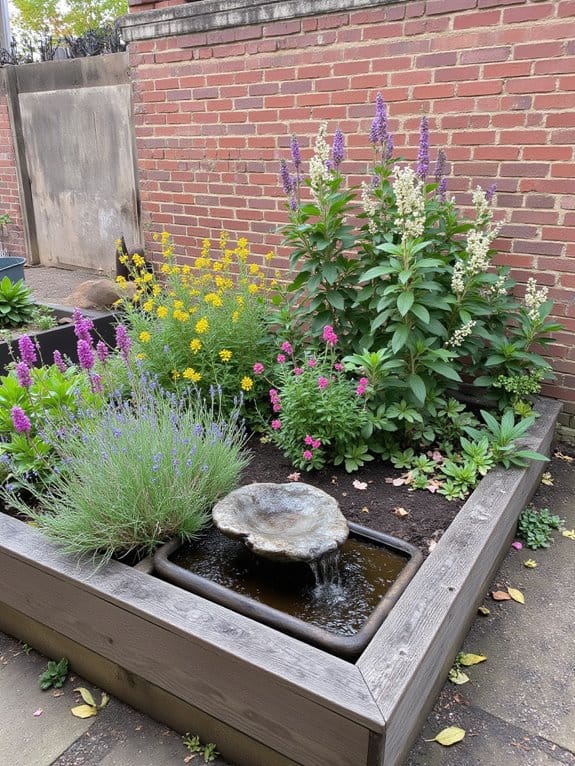
After enhancing my raised garden beds with decorative stones and gravel, I’ve found that incorporating water features can truly elevate the overall atmosphere.
A small fountain or a birdbath adds a soothing sound and attracts wildlife. I love watching birds splash about and listen to the gentle trickle of water while I tend to my flowers.
It transforms my garden into a peaceful oasis.
Design a Raised Garden Bed With Integrated Lighting
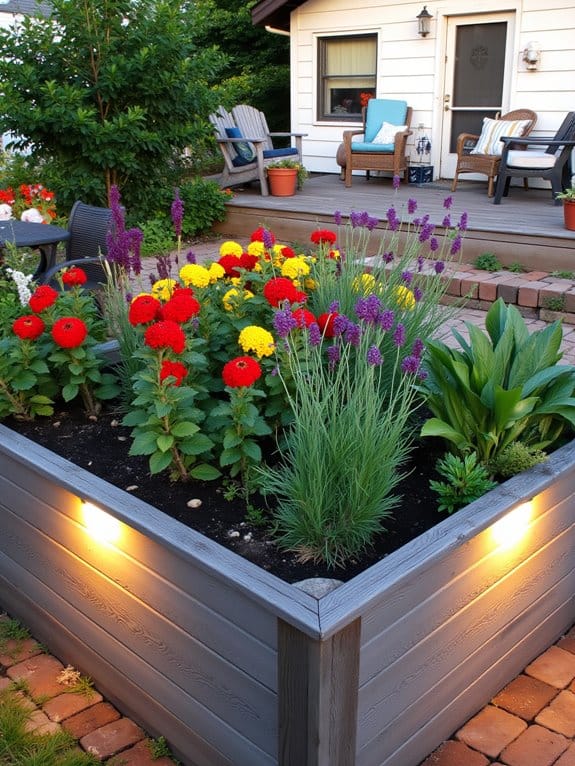
Integrating lighting into my raised garden bed design has transformed my evenings spent outdoors.
I’ve installed LED strips along the edges, creating a warm glow that highlights my flowers beautifully. Solar-powered lanterns add charm while being energy-efficient.
The gentle illumination not only showcases my plants but also creates a cozy atmosphere for gatherings.
I love relaxing among my blooms, even after sunset.
Using Companion Planting Strategies for Healthier Blooms
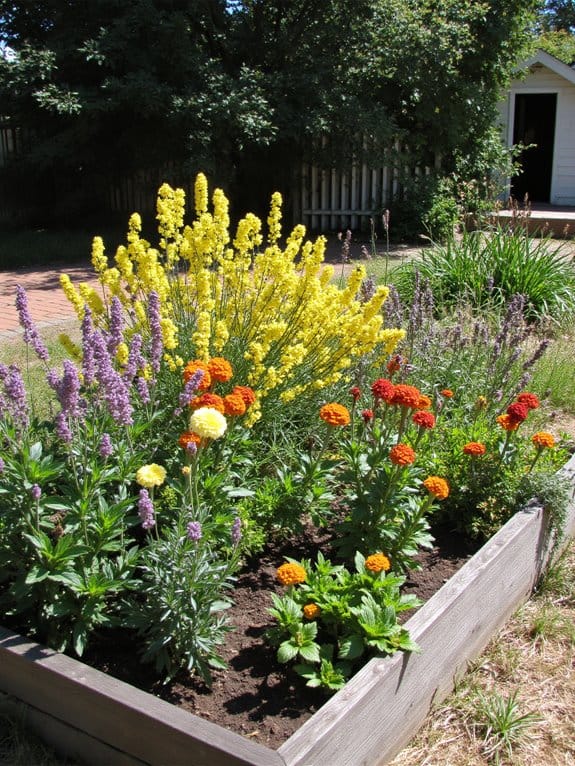
Companion planting has become one of my favorite strategies for ensuring healthier blooms in my raised garden bed.
By pairing flowers with compatible plants, I boost growth and deter pests naturally. For instance, I love mixing marigolds with my wildflowers; they attract beneficial insects and repel harmful ones.
This simple tactic not only enhances my garden’s health but also creates a vibrant, thriving space.
Create a Butterfly Garden With Specific Wildflower Selections
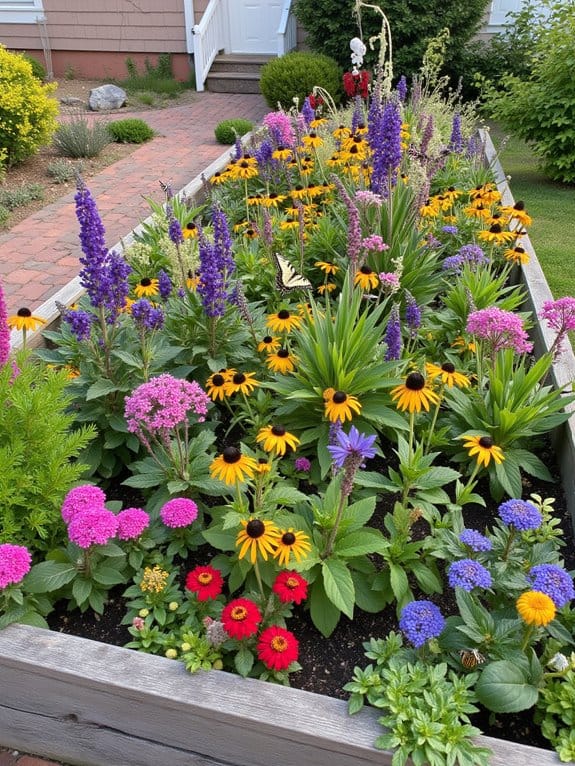
Creating a butterfly garden can be a delightful addition to your raised bed, especially when you choose the right wildflower selections.
I love incorporating plants like coneflowers, black-eyed Susans, and milkweed, as they attract various butterfly species.
Embrace Wildlife: Designing for Birds and Bees
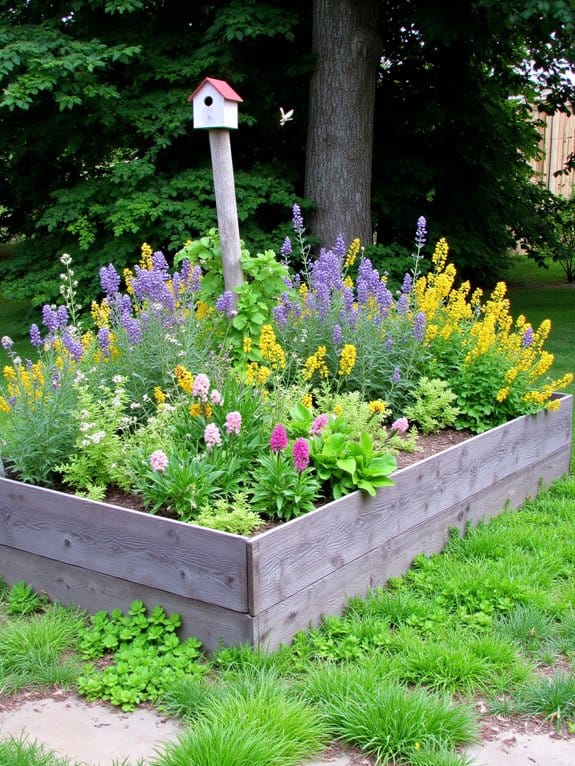
While designing your raised garden bed, consider how you can invite birds and bees into your outdoor space.
I’ve found that incorporating native wildflowers, like echinacea and sunflowers, attracts these essential pollinators.
Adding a small water source, like a shallow dish, provides hydration for birds and bees alike.
Creating habitats, such as small brush piles, offers shelter and encourages wildlife to thrive in your garden.
Protecting Your Wildflower Garden From Pests Naturally
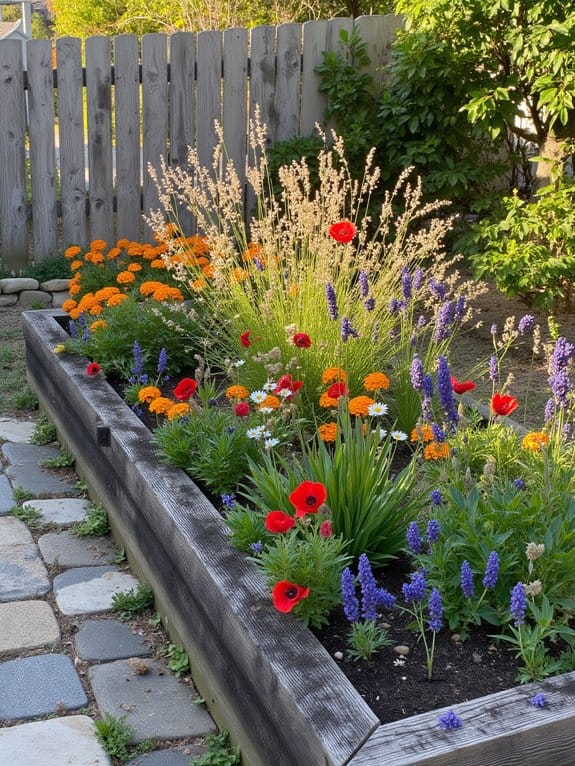
After inviting birds and bees into your garden, it’s time to think about keeping your wildflowers safe from pests.
I use natural methods like introducing beneficial insects, such as ladybugs, and planting pest-repelling herbs like basil and mint.
Regularly checking for any signs of trouble lets me catch issues early.
With these steps, I keep my garden thriving and vibrant without harsh chemicals.
Seasonal Care Tips for Your Wildflower Raised Garden Bed
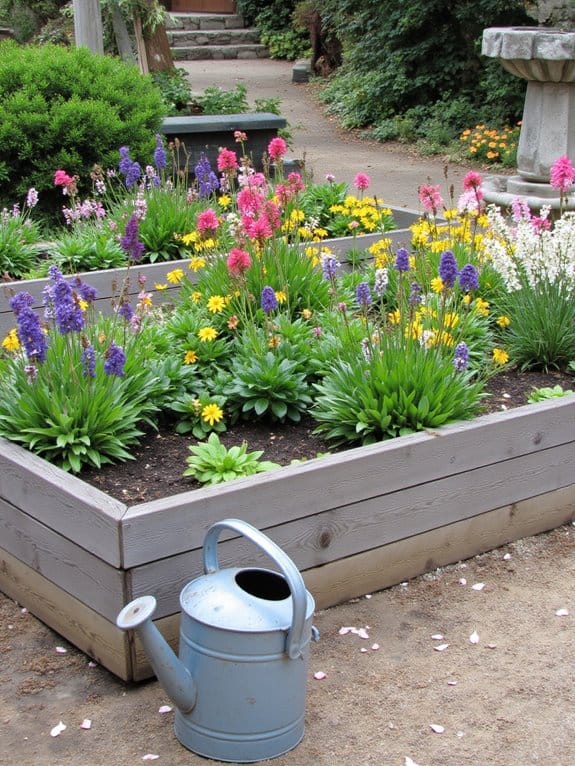
Five essential seasonal care tips can help your wildflower raised garden bed flourish throughout the year.
First, prepare the soil in spring by adding compost.
Second, water regularly but avoid overwatering.
Third, deadhead spent flowers for continuous blooms.
Fourth, apply mulch in summer to retain moisture.
Finally, clean up debris in fall to prevent diseases.
Following these will keep your garden vibrant and healthy!
Showcasing Your Wildflower Garden Through Seasonal Displays
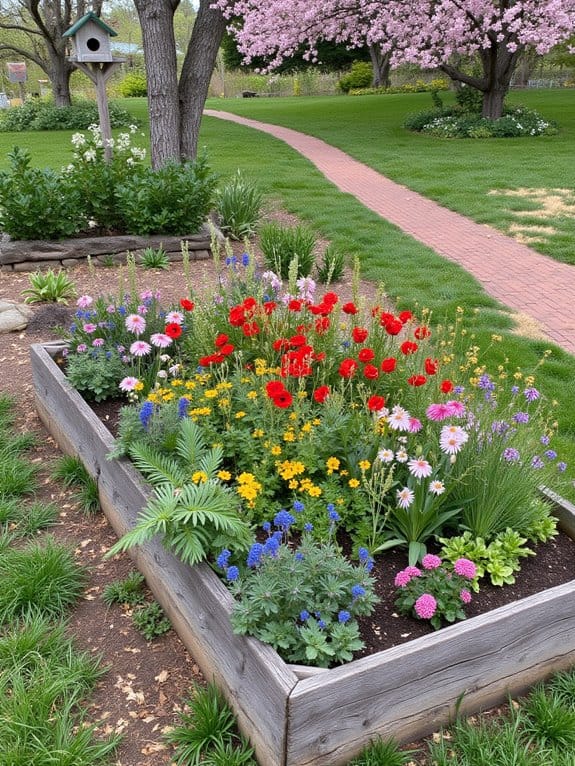
How can I transform my wildflower garden into a stunning seasonal display?
I love incorporating seasonal elements like colorful pots, decorative trellises, and whimsical signs.
In spring, I add vibrant blooms; summer calls for inviting seating areas.
As autumn approaches, I introduce pumpkins and gourds.
Winter is perfect for adding evergreen accents and twinkling lights.
Each season showcases the garden’s charm beautifully!
