

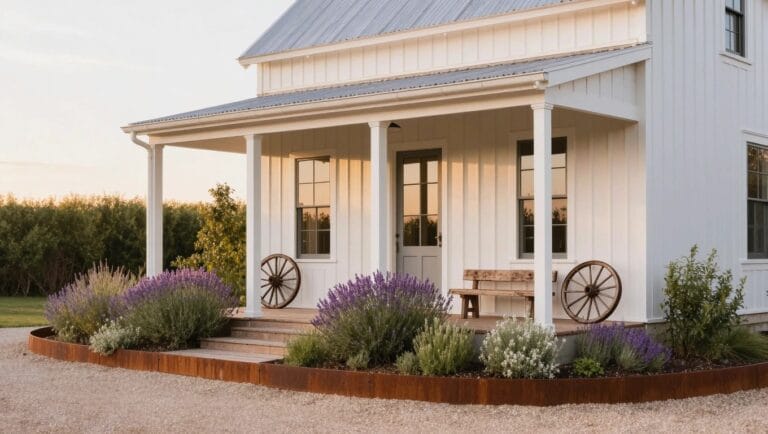
I’ve spent a few summers reshaping my flower beds, and good edging turns a scruffy patch into something that actually holds its own. I usually skip those ornate plastic borders because they warp and fade too fast under the sun. What pulls everything together best is using materials that echo the garden’s colors, like weathered wood or smooth river rock that lets the plants shine. Clean lines matter most. Several of these approaches feel solid enough that I’ll borrow one or two for my front bed this spring.
Brick Edging for Flower Beds
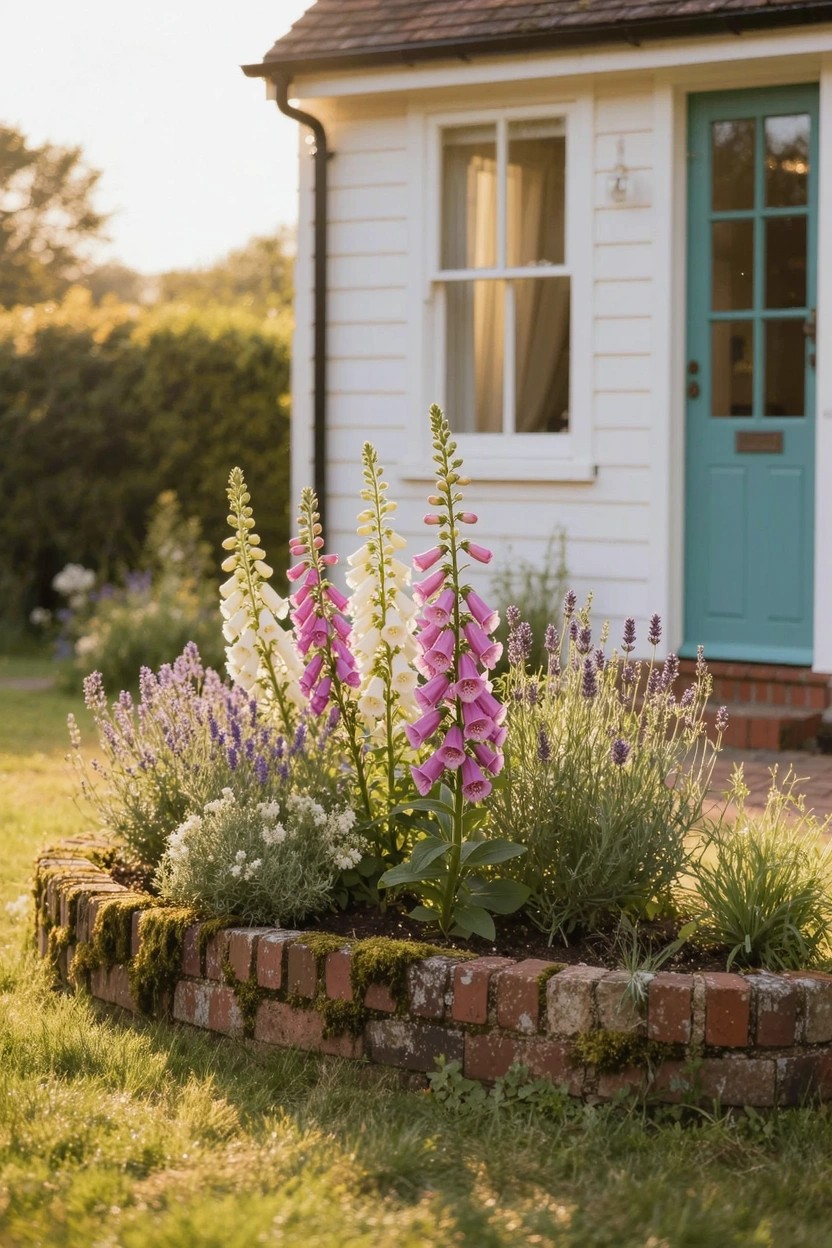
A simple low brick wall makes a perfect edge for flower beds next to your house. It holds back the soil and plants without looking too fussy. Moss on the bricks adds that aged, natural feel over time, and it ties right into a white exterior like this one.
You can use it around the front entry or side gardens where you want definition. Suits older homes or cottages best, but any yard with perennials works. Stack reclaimed bricks for a low curb, two or three courses high. Plant lavender or foxgloves along the edge… they grow tall and fill it out quick.
Raised Metal Beds for Entry Edging
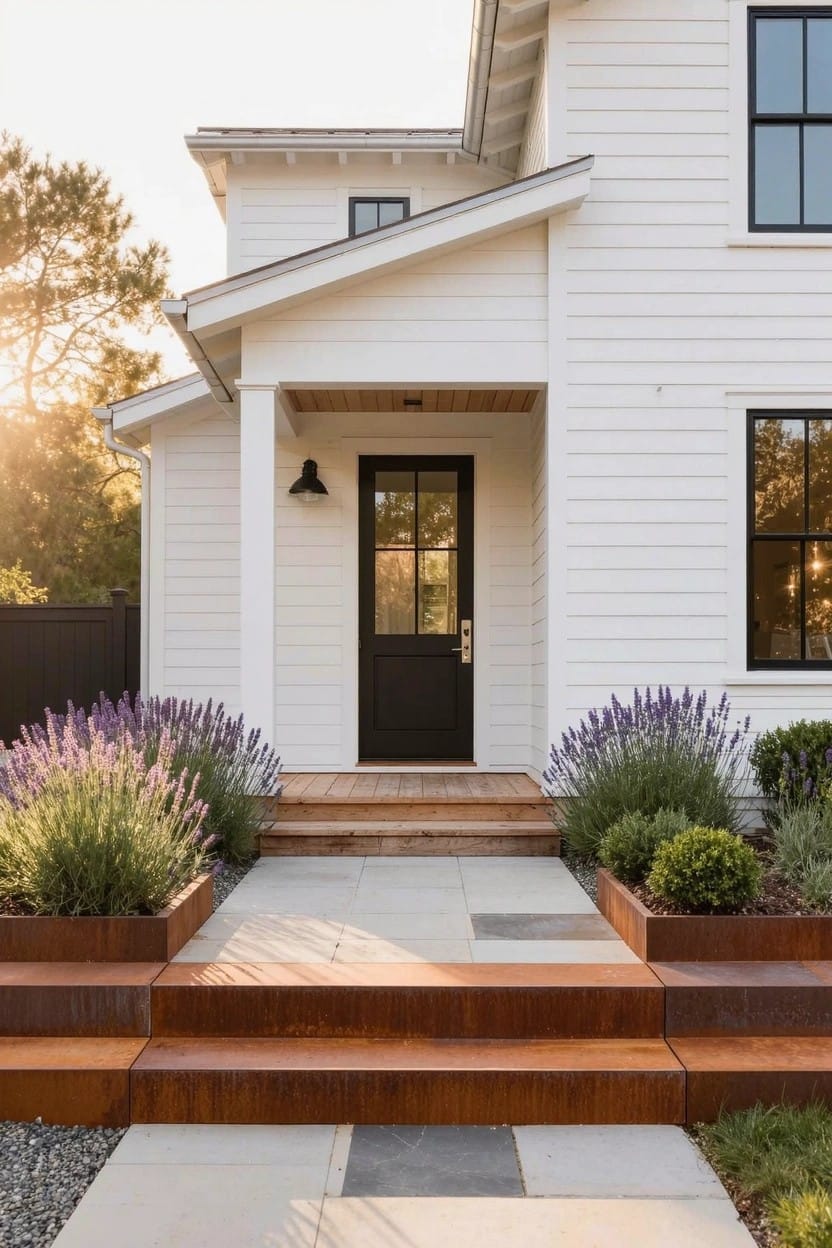
Raised metal beds like these work great as edging for flower beds along your walkway. The corten steel planters sit right on either side of the path, filled with lavender that softens the look without spilling over. They pull the garden in close to the house entry, making the whole front yard feel neat and put together.
You can use this idea on any home with a straight path to the door, especially if you want low upkeep planting. Go symmetric like here, and pick tough plants that match your climate. Just make sure the metal finish won’t clash if your house has a lot of bright paint.
Edging Flower Beds with Low Stone Walls
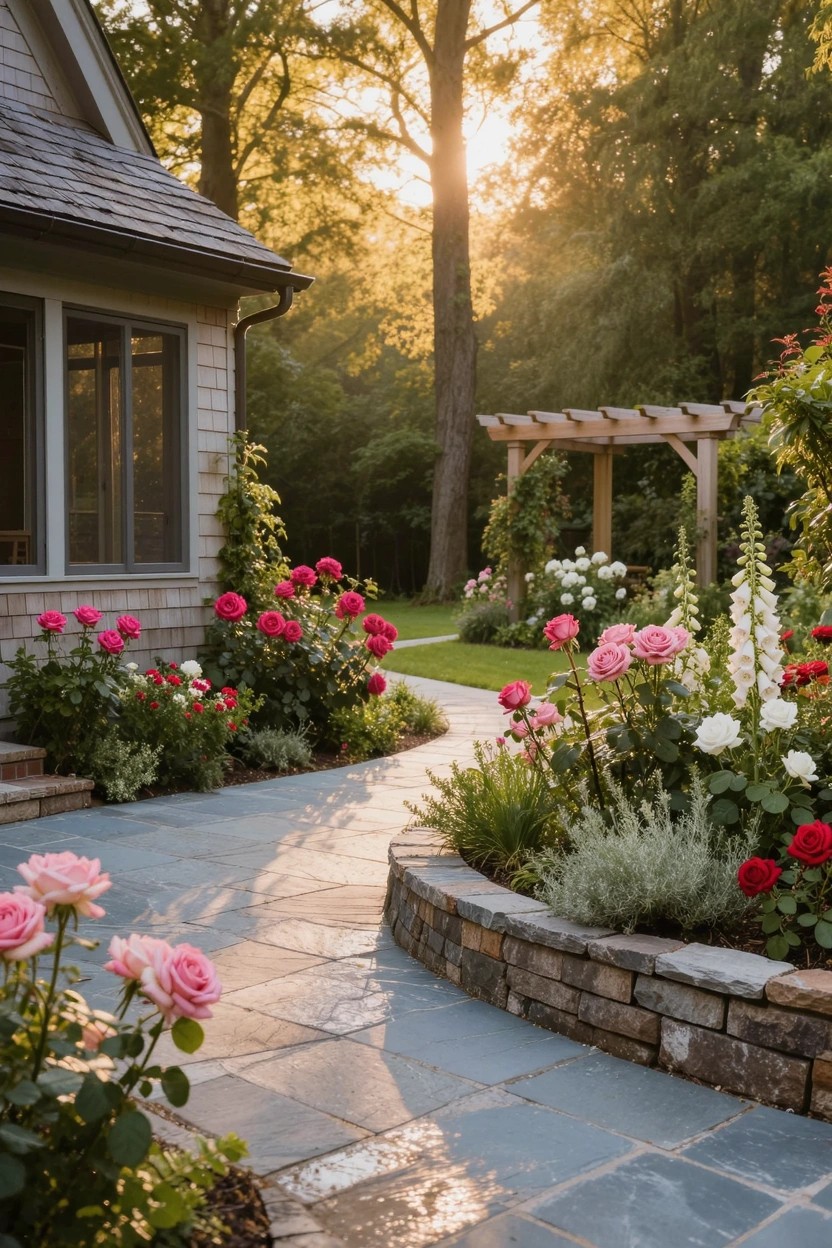
One simple way to define your garden beds is with low stone walls. They hold back the soil neat and tidy, while letting plants like those pink roses tumble over the edge just right. This edging stands out because it feels natural, not fussy. It works especially well around curves, giving the path a gentle flow.
Try this in a side yard or leading to your back door, where you want some structure without a lot of upkeep. It suits homes with a casual vibe, like cottages or older bungalows. Pick stones from nearby if you can. Stack them dry for that easygoing look… and watch how it shapes up your whole garden.
Boxwood Hedges Define Flower Beds
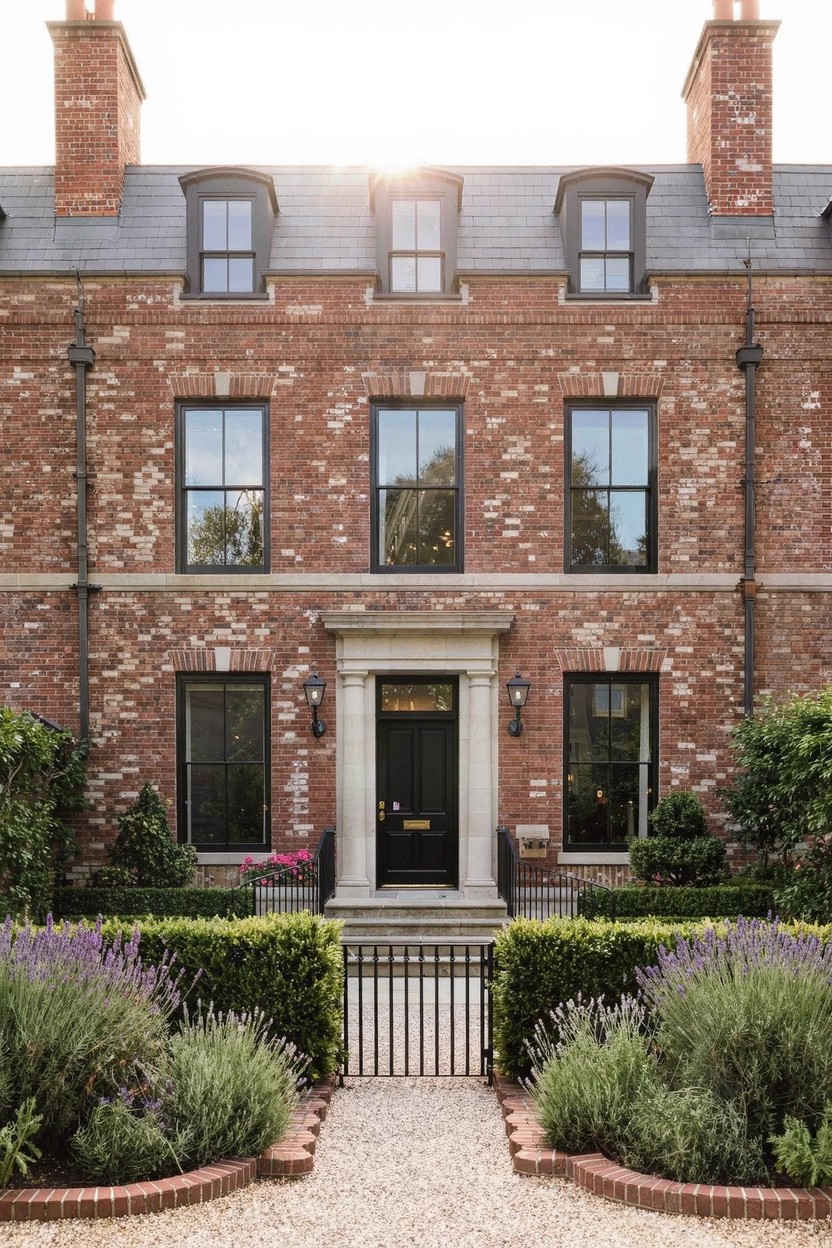
Low boxwood hedges make a simple edge for flower beds. You see it here around lavender plantings along the path to the house door. The green keeps its shape year round. And that crisp line sets off the flowers without much fuss.
Try this in a front yard where you want tidy borders. It suits older brick homes or any formal garden setup. Plant the boxwoods close together then trim them to about knee height. They hold up in most spots but need some sun. Just keep an eye on watering the first year.
Raised Concrete Flower Bed Edging
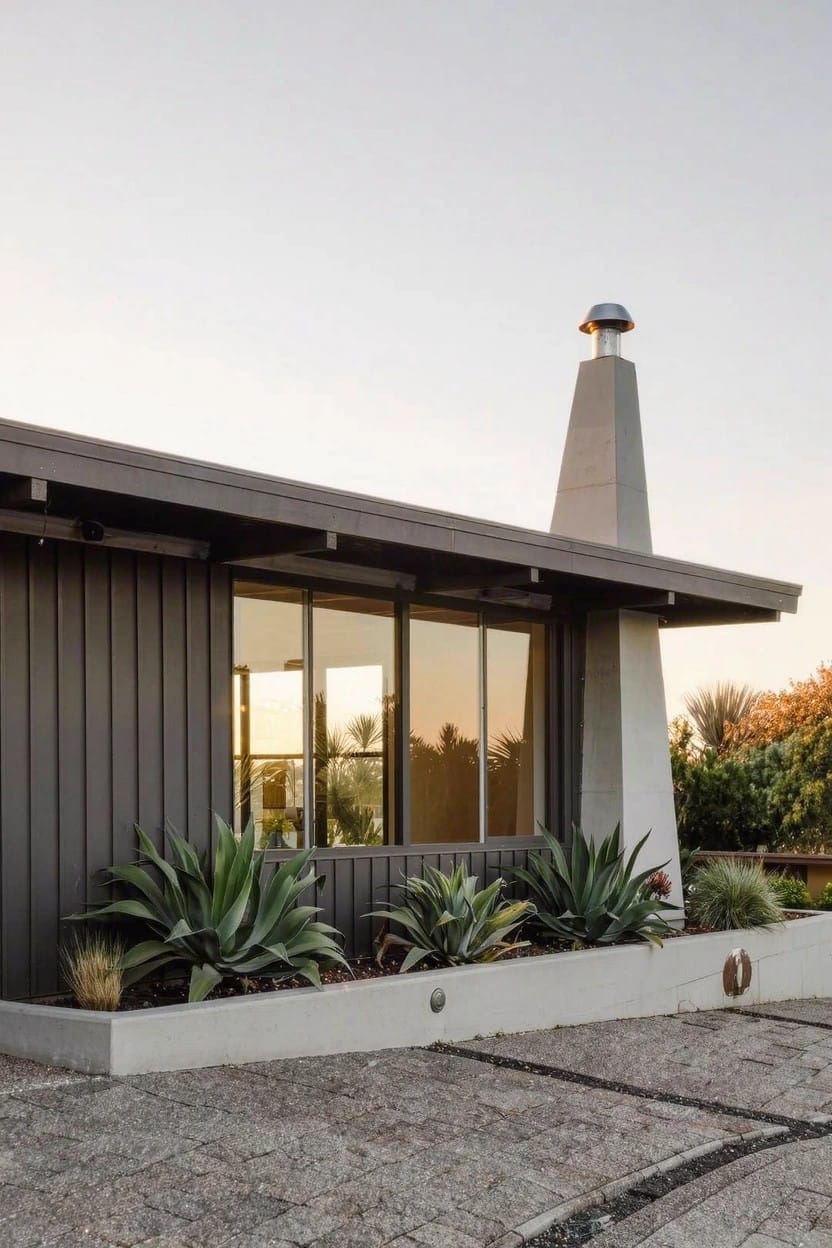
Raised concrete edges make a clean border for flower beds. They give a solid line that sets plants apart from the yard without much fuss. In this setup, white concrete planters hold big agaves right along the house front. The plain block shape keeps things simple and lets the plants stand out. It works because concrete lasts and doesn’t need trimming like softer edges.
You can use this for low-water yards or modern homes. Pour concrete into forms for straight beds or curve them a bit if you want. Stick to drought plants like agaves or grasses so it stays neat. It fits best where you want a sharp look… not too fussy places.
Brick Edging for Flower Beds
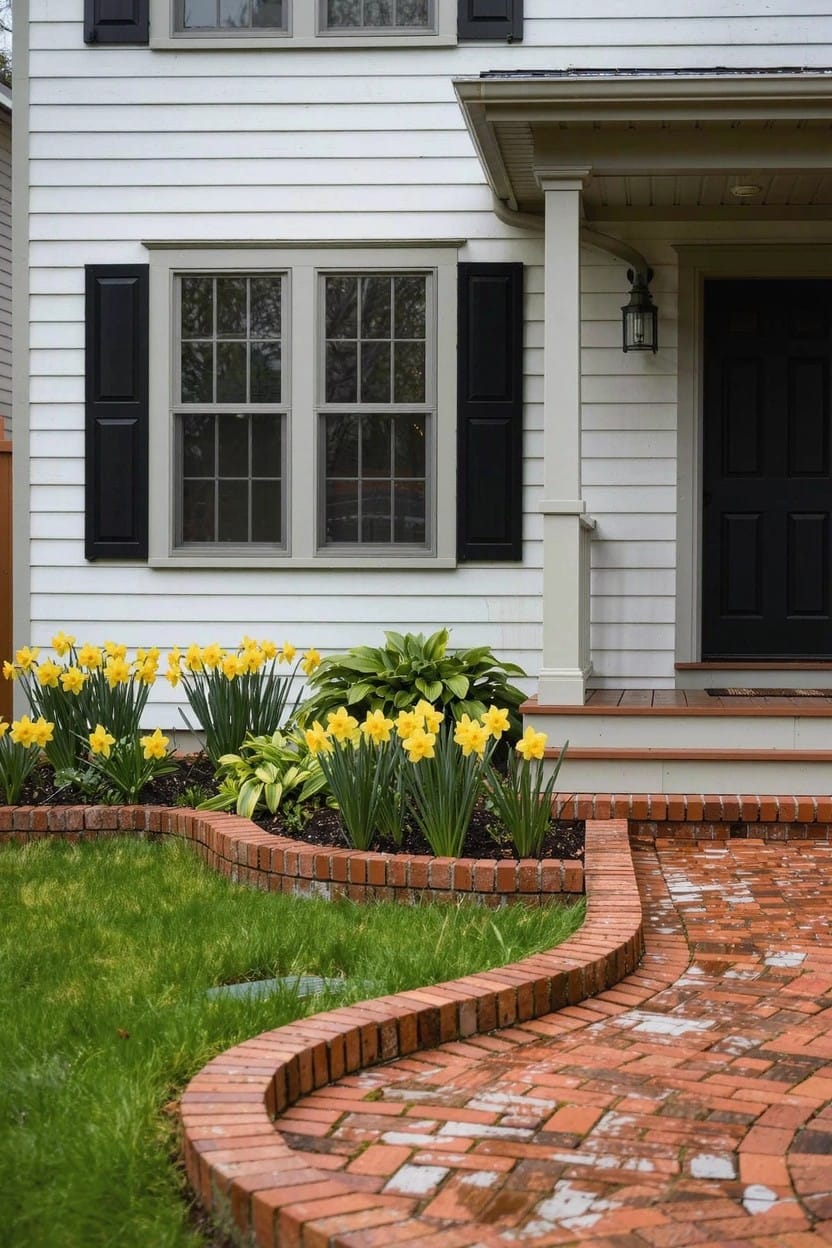
Brick edging keeps flower beds tidy and gives them a clean border. In this front yard spot, red bricks curve around yellow daffodils and broad hosta leaves, right up against the house foundation. It stands out because the bricks echo the walkway nearby, pulling the whole entry area together. No fancy stuff. Just solid lines that make the planting pop.
You can do this along any house side or walkway. Set the bricks flat or on edge in a shallow trench, backfill with soil. It suits older homes with porches or simple lawns, holds up year after year. Pick bricks that match your path if you have one… keeps things from looking patched together. Just level them well at the start.
Log Edging for Flower Beds
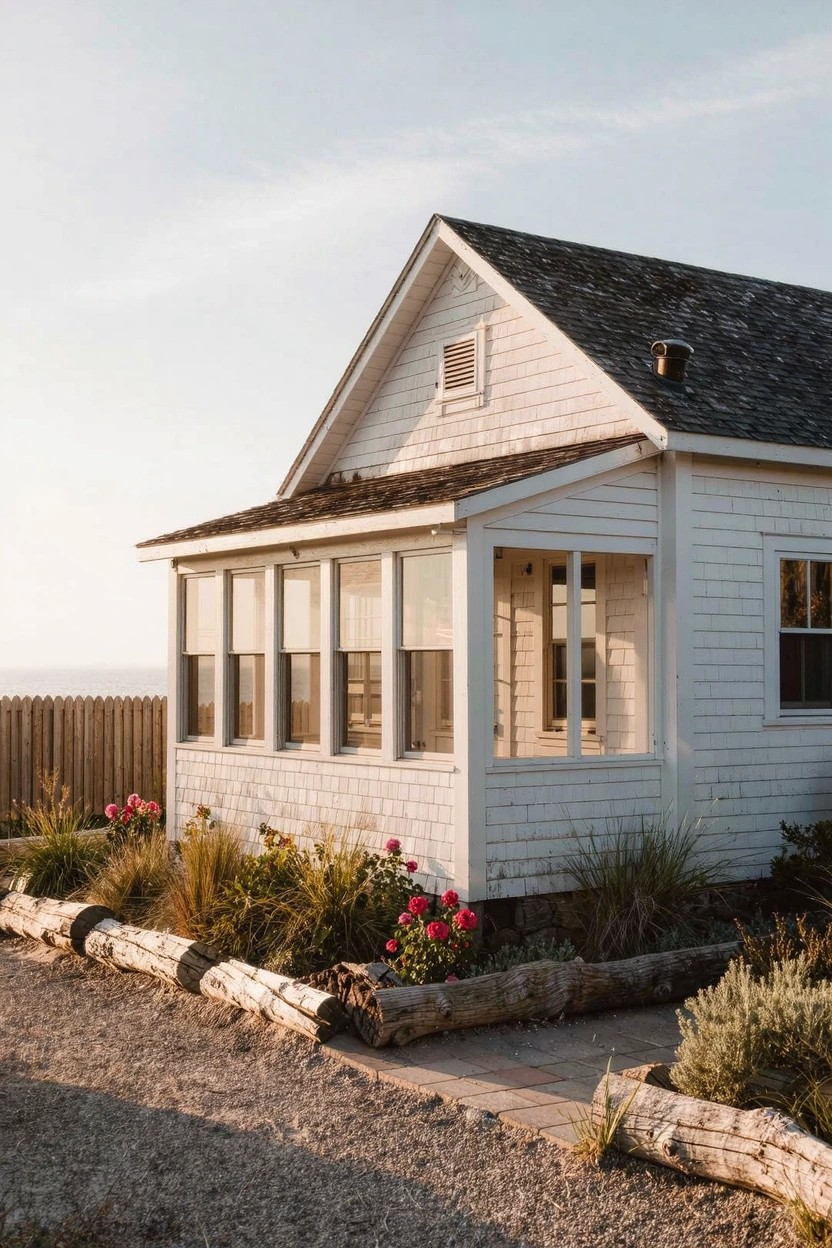
One straightforward way to set off your flower beds is with split logs laid along the edge. You see it here around a simple white house, where the rough wood chunks hold back the soil and frame pink blooms nicely. It keeps things looking natural and settled, without much upkeep.
This edging suits casual yards near cottages or beach houses best. Grab some local logs or scraps, cut them to size, and bury them halfway in the ground. Watch for rot over time in wet spots, but overall it’s low fuss and repeats well along paths or house bases too.
Concrete Planter Benches for Succulents
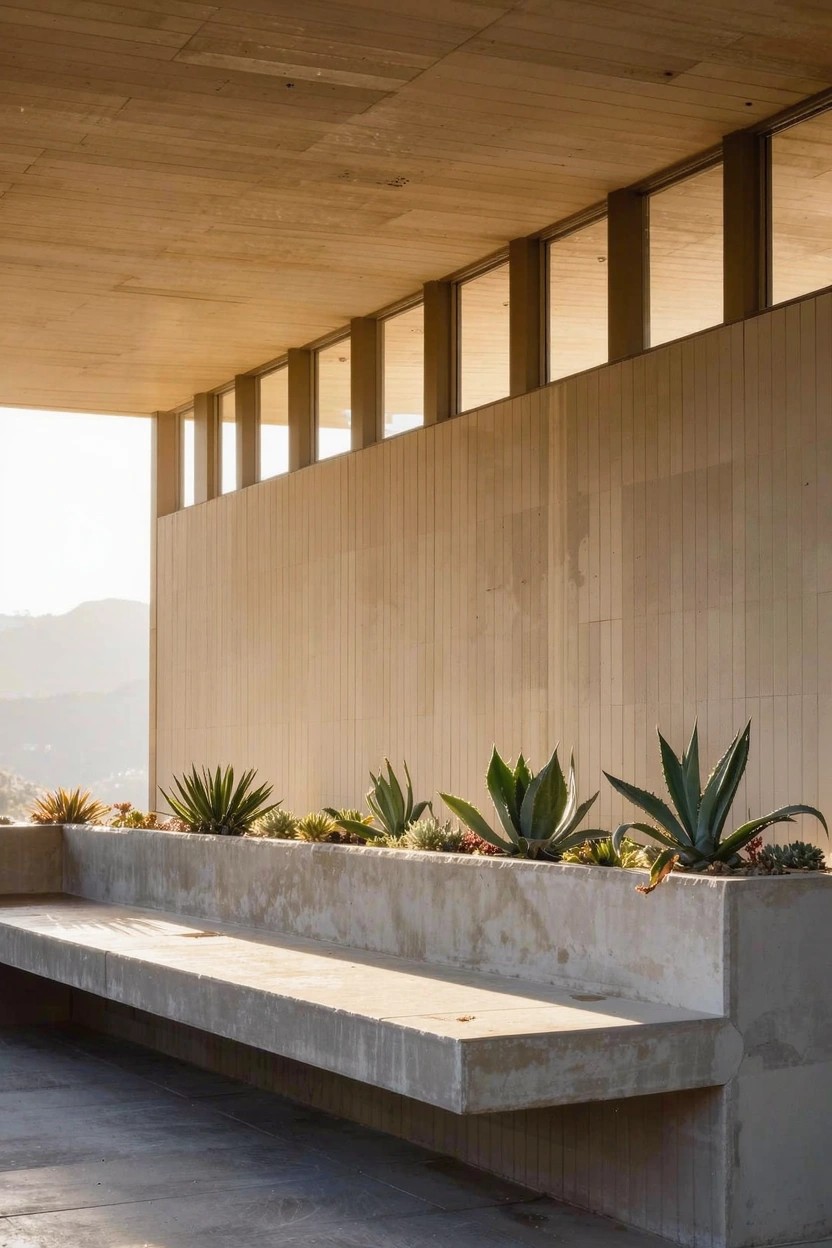
One simple way to edge a garden bed is to build the border right into a bench. Here a long concrete planter runs the length of the seating, filled with tough succulents that spill over just a bit. It keeps the plants contained while giving you a spot to sit and enjoy them up close. No loose mulch to rake, and it fits right into the hard lines of the space.
This works best in sunny spots around patios or modern homes where you want low upkeep. Use concrete or stone for the bench base so it lasts, and pick drought-tolerant plants like agave or aloe. Just make sure there’s good drainage at the bottom, or the roots will rot after rain. Suits smaller yards too, since it saves space.
Circular Stone Edging for Flower Beds
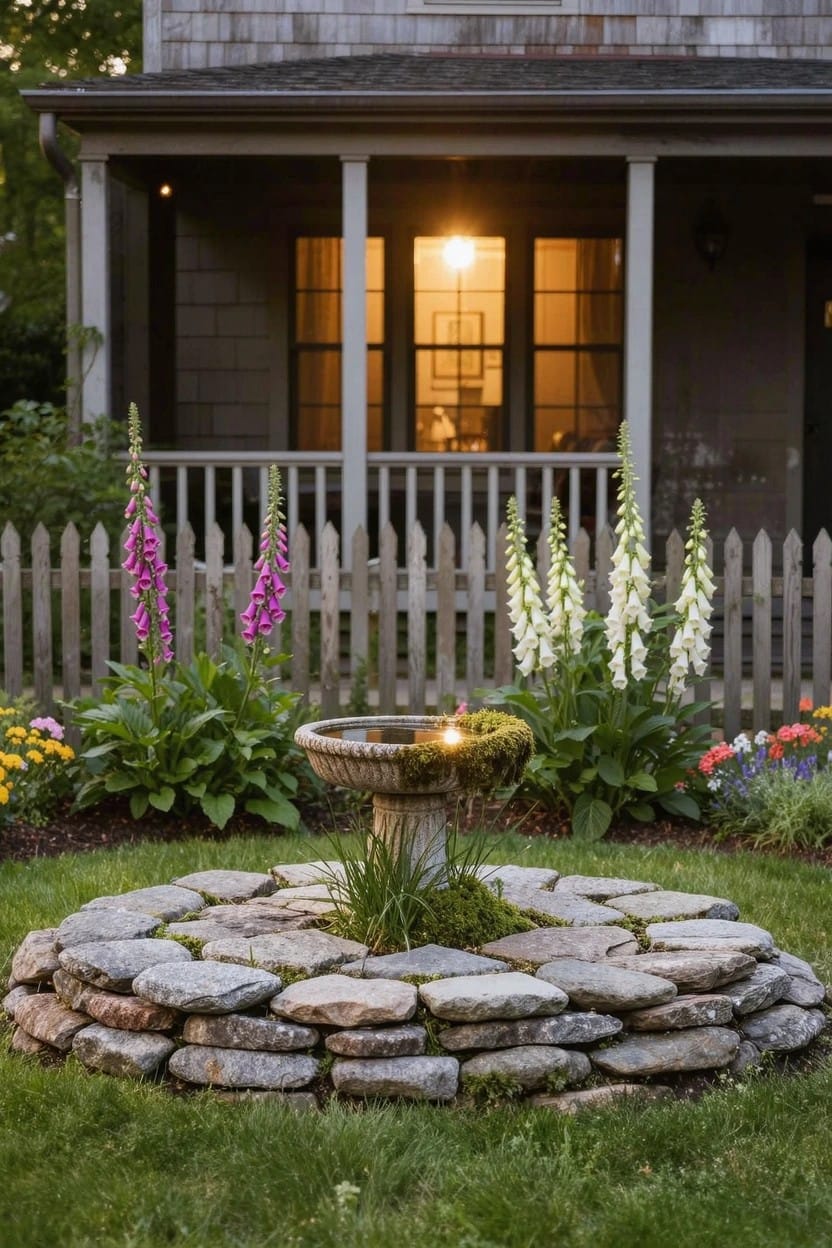
A simple circle of dry-stacked stones makes a clean edge for a flower bed planted right in the lawn. In this yard, it surrounds a birdbath with greenery and flowers tucked inside. The look stays low-key and natural. It pulls the planting together without much work.
This edging works best in open front yards or along walks where you want some definition. Fieldstones or whatever’s local fit right in on cottage-style homes or plain lots. Stack them loose, just one or two layers high. Mow around the outside easy that way. Skip mortar. It holds up fine.
Edging Flower Beds with Pebbles
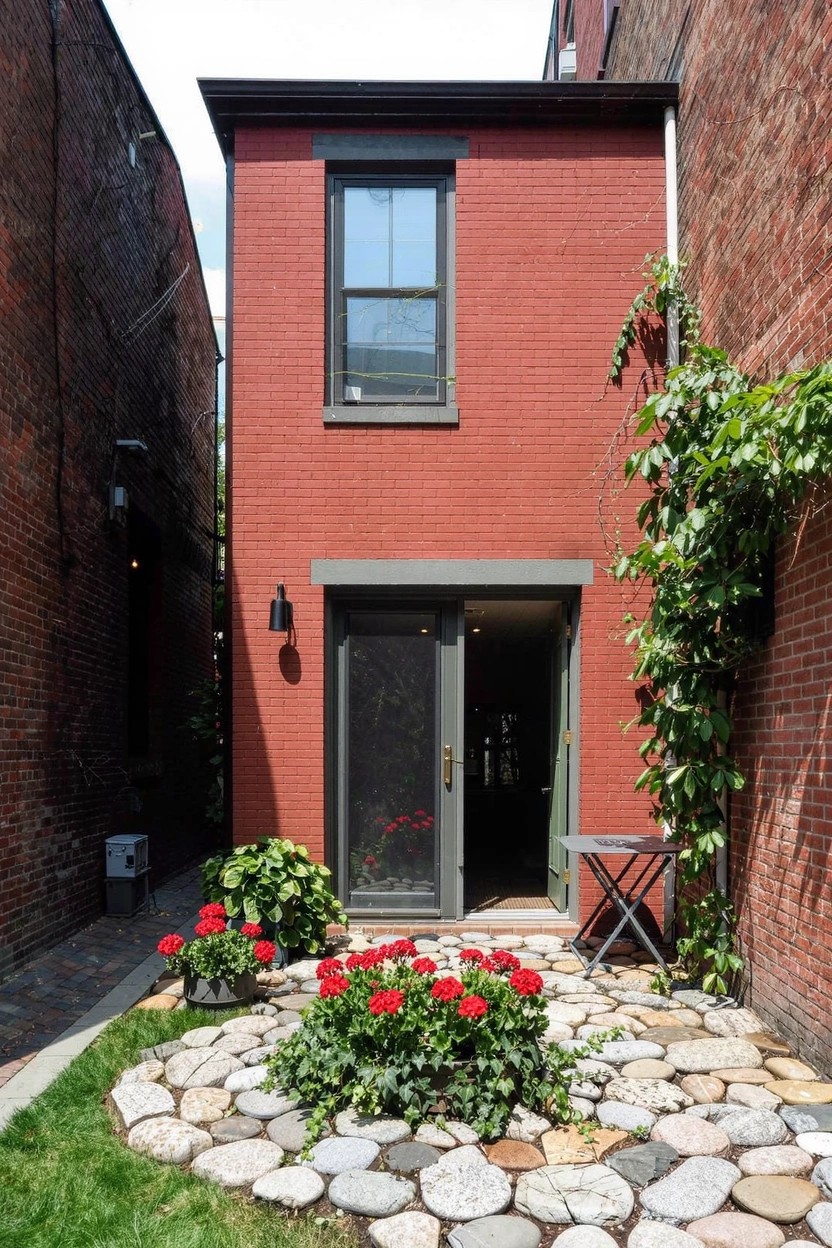
A circle of smooth pebbles sets off a flower bed right at the entry door. It turns a plain patch of dirt into something neat and garden-like. Those red geraniums pop against the stones, and the whole thing fits a narrow space without taking up room.
This works best on small urban lots or beside row houses. Lay the pebbles in a loose ring around low plants, one layer thick. Add a pot or two for extra color. Just make sure the ground drains well so the bed stays healthy.
Circular Stone-Edged Flower Beds
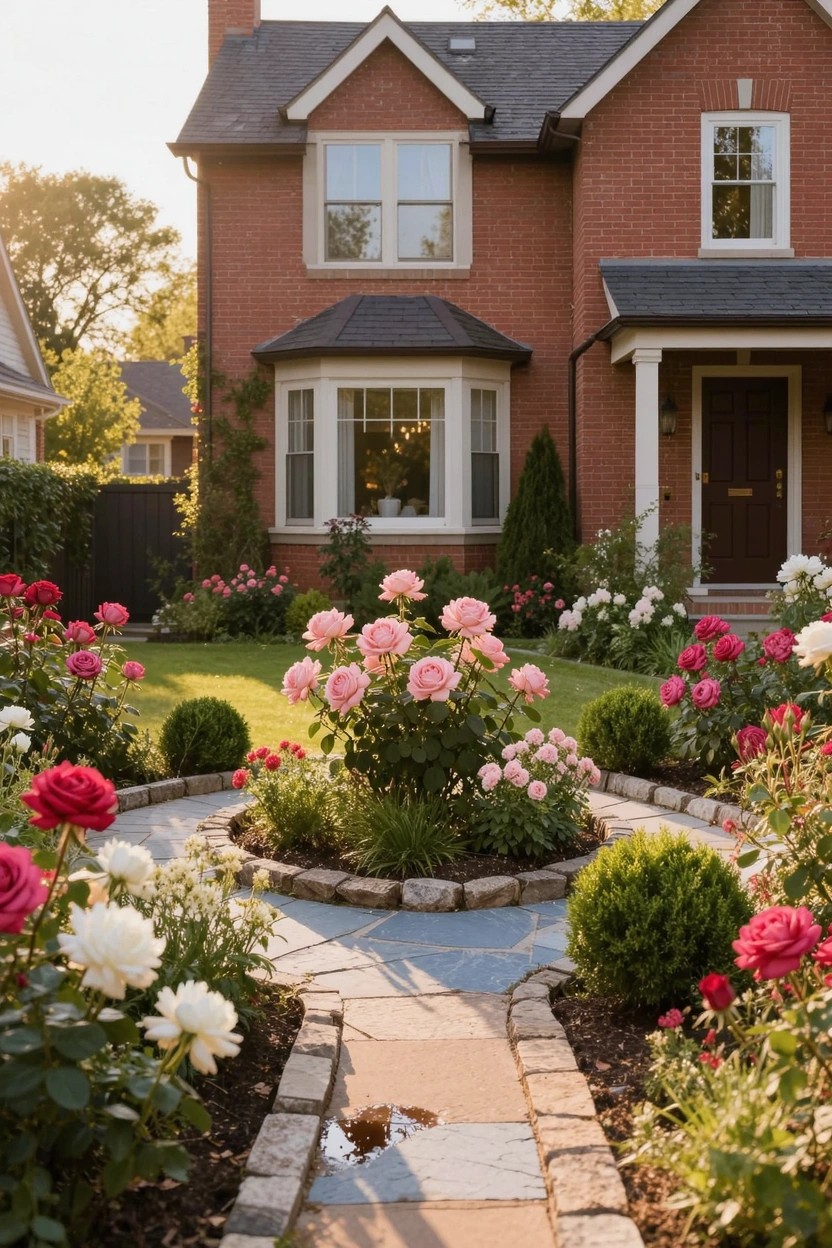
A simple circle of flowers edged in flat stones makes a strong garden focal point. Here, masses of pink and white roses fill the bed, with low boxwoods around the outside. That edging keeps everything neat and draws the eye right to the center. It works because the curve softens straight paths and house lines.
Try this in front yards where you want a welcoming garden spot. It suits older brick homes or cottages best. Use rough fieldstone or cut pieces for the border, about six inches high. Keep plants one type for impact, and mulch inside to cut down on weeding.
Gravel Beds with Concrete Edging
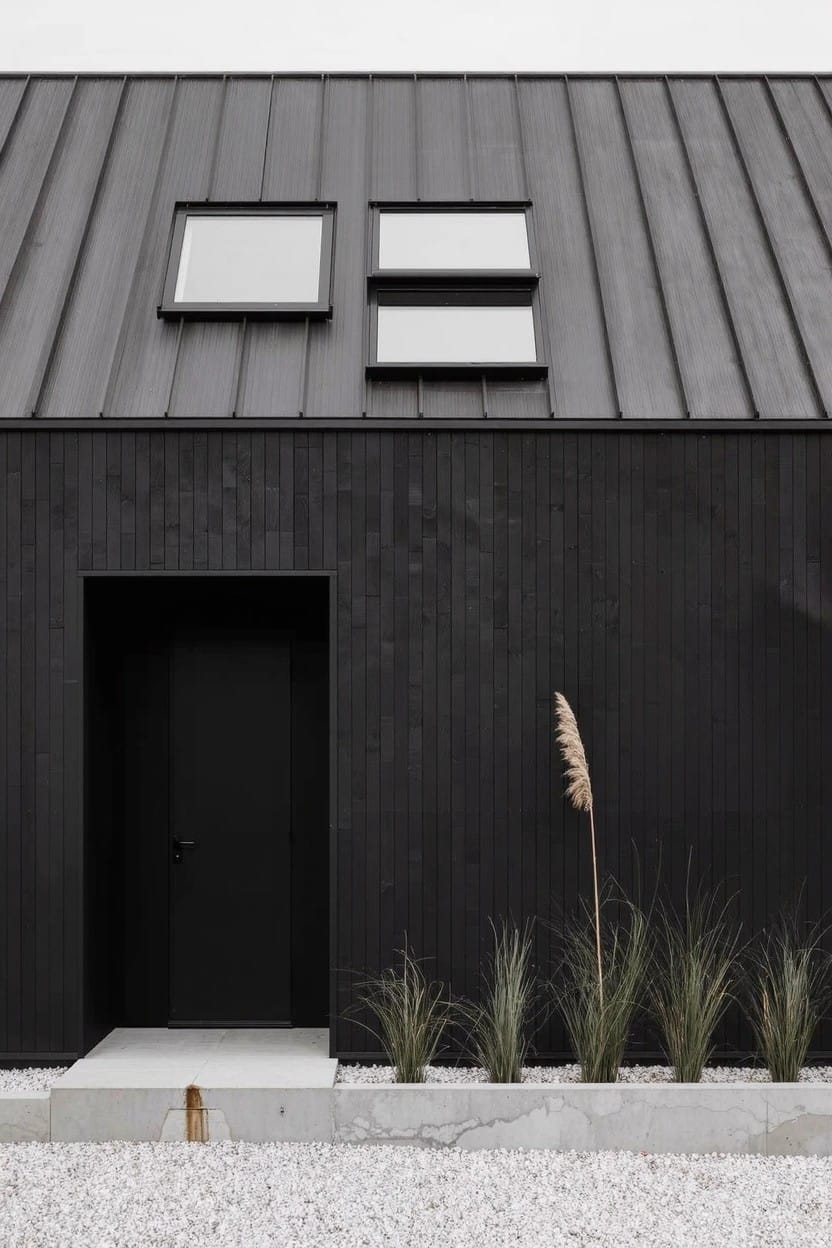
One clean way to edge a flower bed is with a simple concrete border filled with gravel and tall grasses. You see it here along the house foundation, where the dark siding meets a row of pampas grass. It keeps things neat without much upkeep, and the gravel lets water drain right through.
This works best on modern homes or any spot where you want low fuss. Plant drought-tolerant grasses like miscanthus or pampas in the gravel mix. Skip it if your yard floods often… gravel won’t hold soil well. Fits narrow side yards too.
Scalloped Edging for Flower Beds
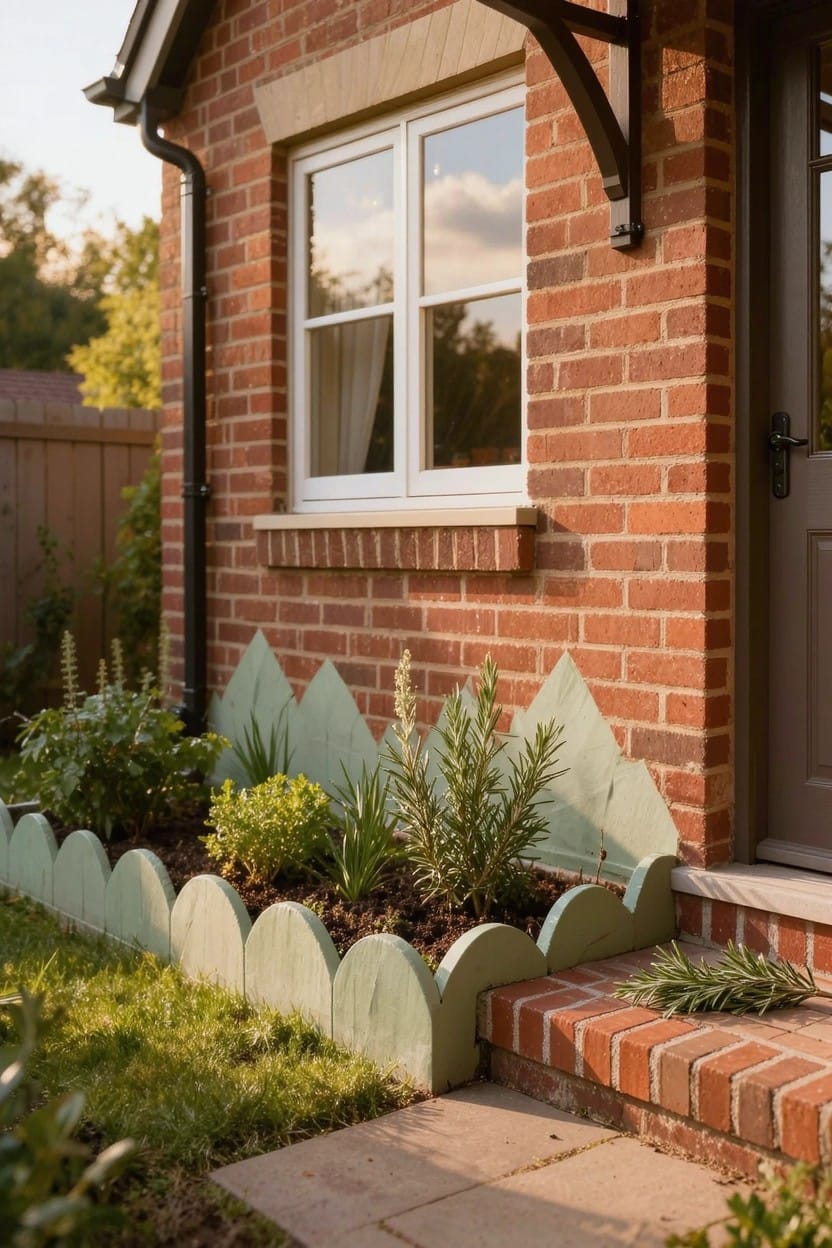
A simple scalloped edging like this one keeps flower beds tidy right up against the house. The soft green paint on the wood pieces blends with nearby plants and softens the straight brick lines. It makes the entry area look put together without much fuss.
You can make these from scrap wood or buy pre-cut shapes. Paint them to match your garden colors. They work best in smaller front yards where you want to define beds near paths or doors. Traditional brick homes take to them well. Just keep the scallops low so they don’t block plant growth.
Raised Beds Along the Wall
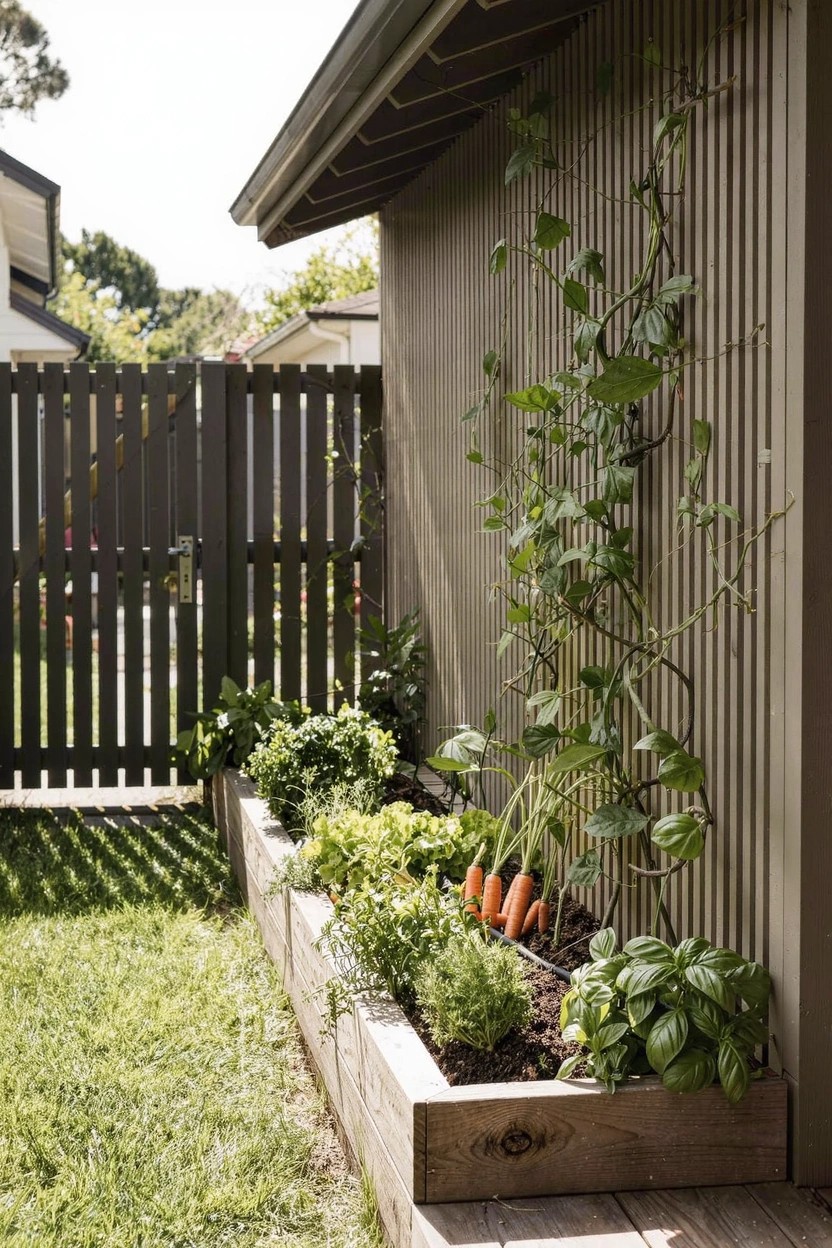
Raised beds like these, built from simple timber, hug right up against the house wall and keep everything neat. You get carrots poking out, herbs filling in, and climbers grabbing hold on a trellis. The edge stays crisp. No mud spilling over into the grass.
Put them in side yards or tight spots where ground planting gets messy. They suit most homes, especially if you want fresh veggies without digging up the lawn. Treat the wood first… or replace boards every few years.
Pebble Edging for Flower Beds
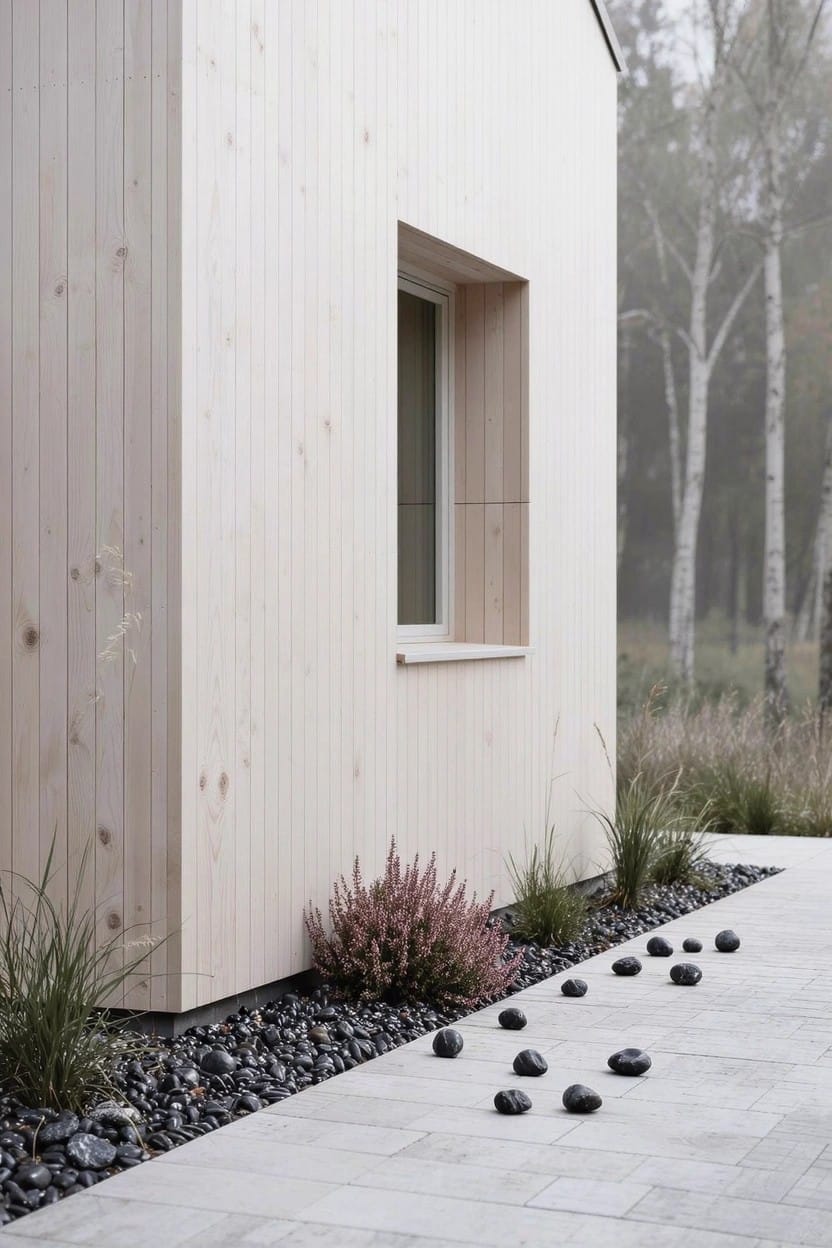
One clean way to set off a flower bed is with pebbles laid right along the edge. In this setup, dark round pebbles form a simple border around low plants and grasses next to a stone patio. It keeps everything neat without much fuss, and the contrast with light gravel mulch makes the bed pop against hard surfaces.
You can do this along any walkway or patio where you want beds to stay contained. It works well in yards with modern or simple houses, like one with light wood siding. Just pick smooth pebbles in one size, lay them in a loose curve or line, and top the bed with matching gravel. Watch that the pebbles don’t shift too much in heavy rain.
Pebble Edging for Flower Beds

Pebble edging works well to separate flower beds from the lawn and path. Those small stones create a clean line that lets plants hang over without getting messy. It has a simple rustic feel, especially around a cottage like this one with its stone walls and green door.
Lay pebbles along the bed edges after putting down some fabric to block weeds. It suits front yards or side paths on older homes. Keeps things tidy year round, though you might need to top up stones after rain.
Stone Pathways Edge Flower Beds
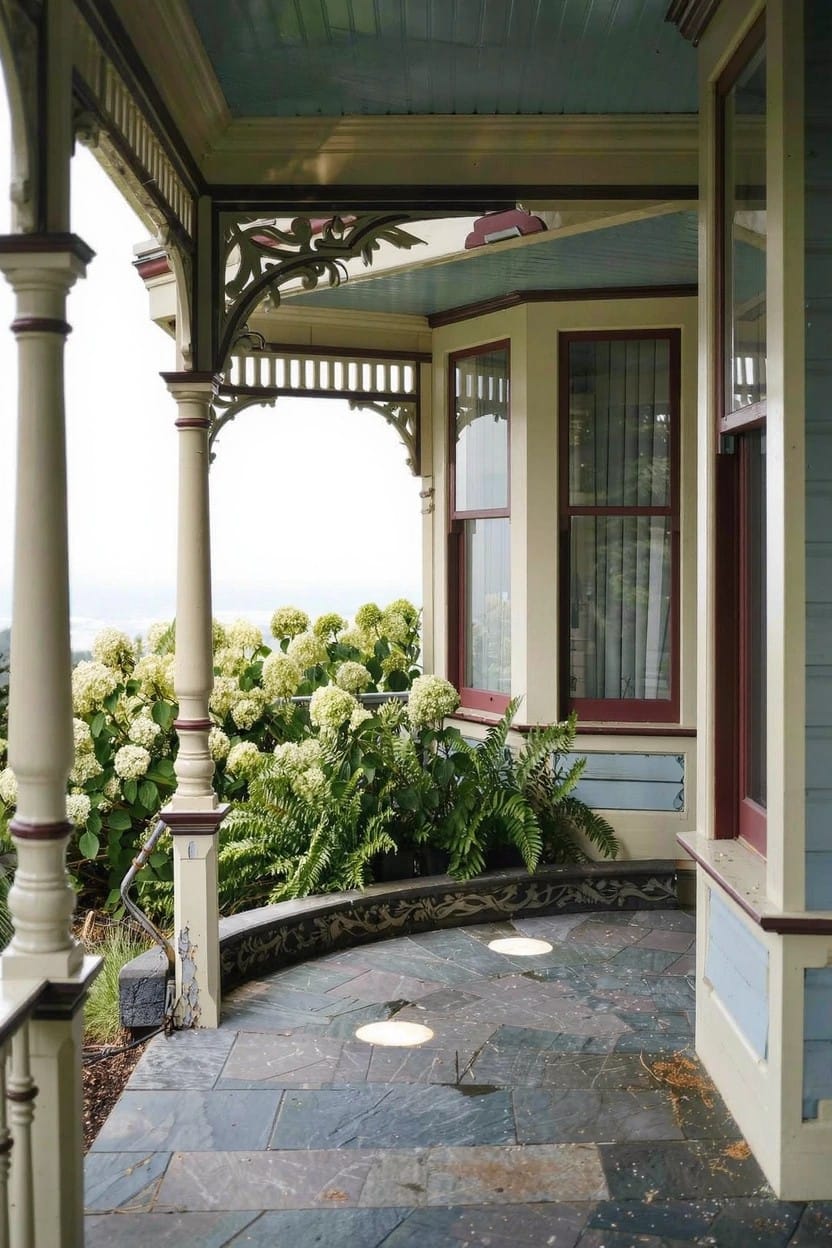
A curved path made from flat slate stones runs right along the edge of a flower bed packed with big hydrangea bushes. It sets off the planting from the porch area without much fuss. That clean line makes the bed look full and contained, especially against an older house like this one.
You can do this in front of porches or along house foundations. Pick wide, rough stones that fit together easy. Plant tall shrubs behind it for bulk. It holds up in shade… just keep the path clear of weeds. Fits cottage yards or bigger lots fine.
Rock Edging Around Garden Ponds
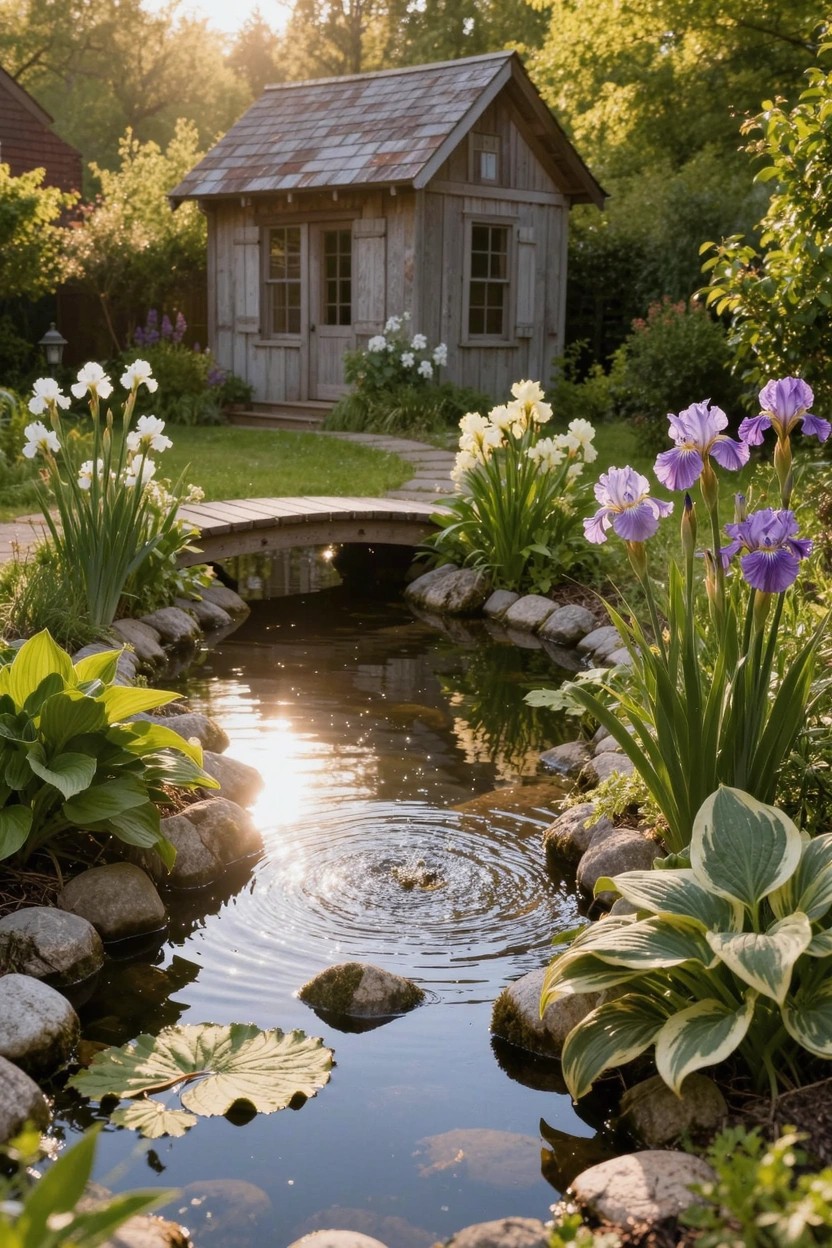
One nice way to edge flower beds is lining them with rocks around a pond. It gives a clean border that follows the curve of the water just right. Plants like hostas and irises spill over the edges a bit, so the look stays soft and full instead of too rigid. Folks like this because it handles wet spots well and keeps mulch or soil from washing away.
You can pull this off in most backyard gardens, especially ones with a little shade from trees. Use flat stones or river rocks for the main edge, then drop in low plants to fill gaps. It suits older cottages or simple ranch homes. Just make sure the rocks are set firm so they don’t shift over time.
Brick Flower Bed Edging
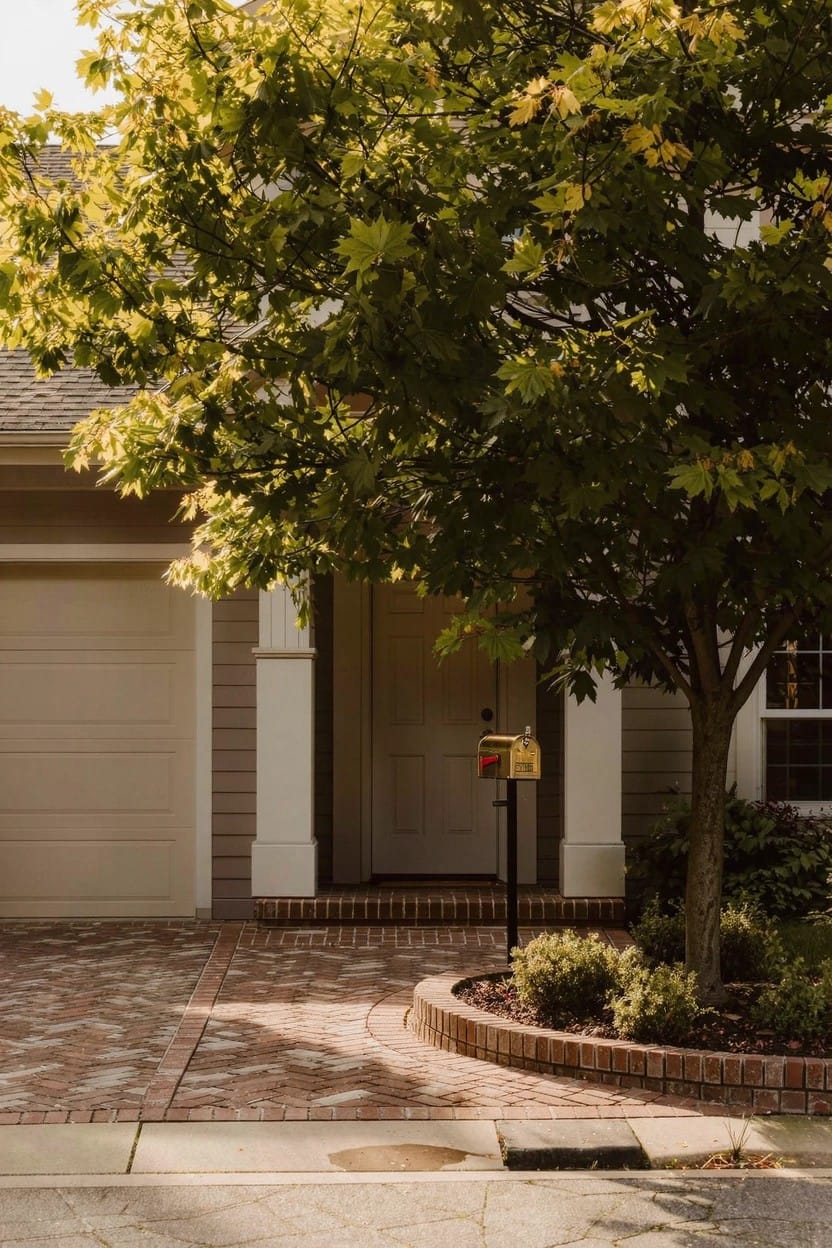
Brick makes a solid choice for edging flower beds. You see it here curving neatly around shrubs at the base of a tree right by the driveway. The bricks match the path material, so the whole front yard stays clean and connected. No fancy work needed. It holds back soil and plants without falling apart over time.
Try this on homes with brick walks or drives. Lay flat bricks end to end along the bed line, cut them to fit curves if you have to. It suits most suburbs, keeps beds tidy year round. Just level the ground first or bricks might shift.
Dark Edging for Gravel Beds
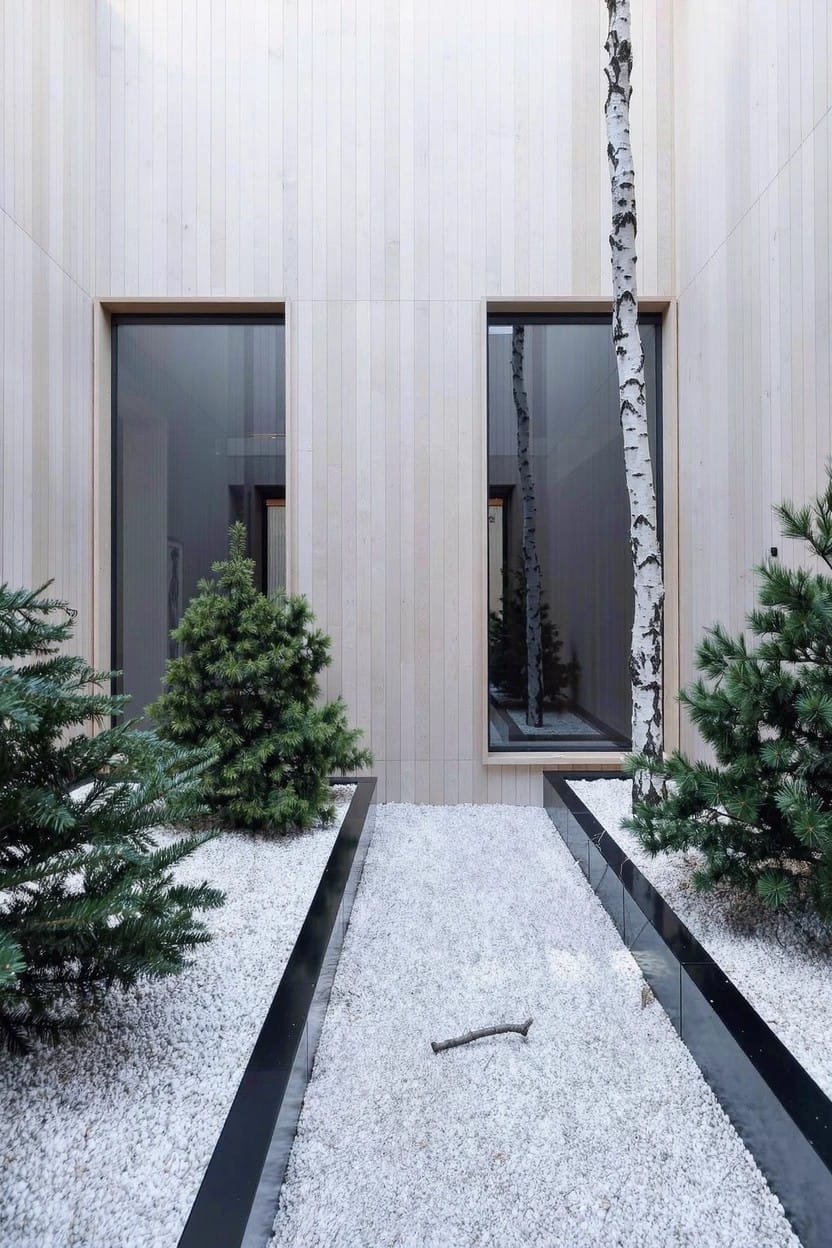
One clean way to define your garden beds is with dark edging strips along gravel paths. In this setup, black borders run right next to white pebbles, keeping everything in place and looking sharp. Small pines sit just outside the edges, so the beds feel structured without much fuss. It works because the contrast pops against light gravel and pale house walls.
You can pull this off in front yards or side paths where you want low upkeep. Line metal or plastic strips along the gravel, maybe 4 inches high. Suits modern homes best, or any spot with clean lines. Just make sure the edging goes deep enough to block grass from sneaking through.
Brick Edging for Flower Beds
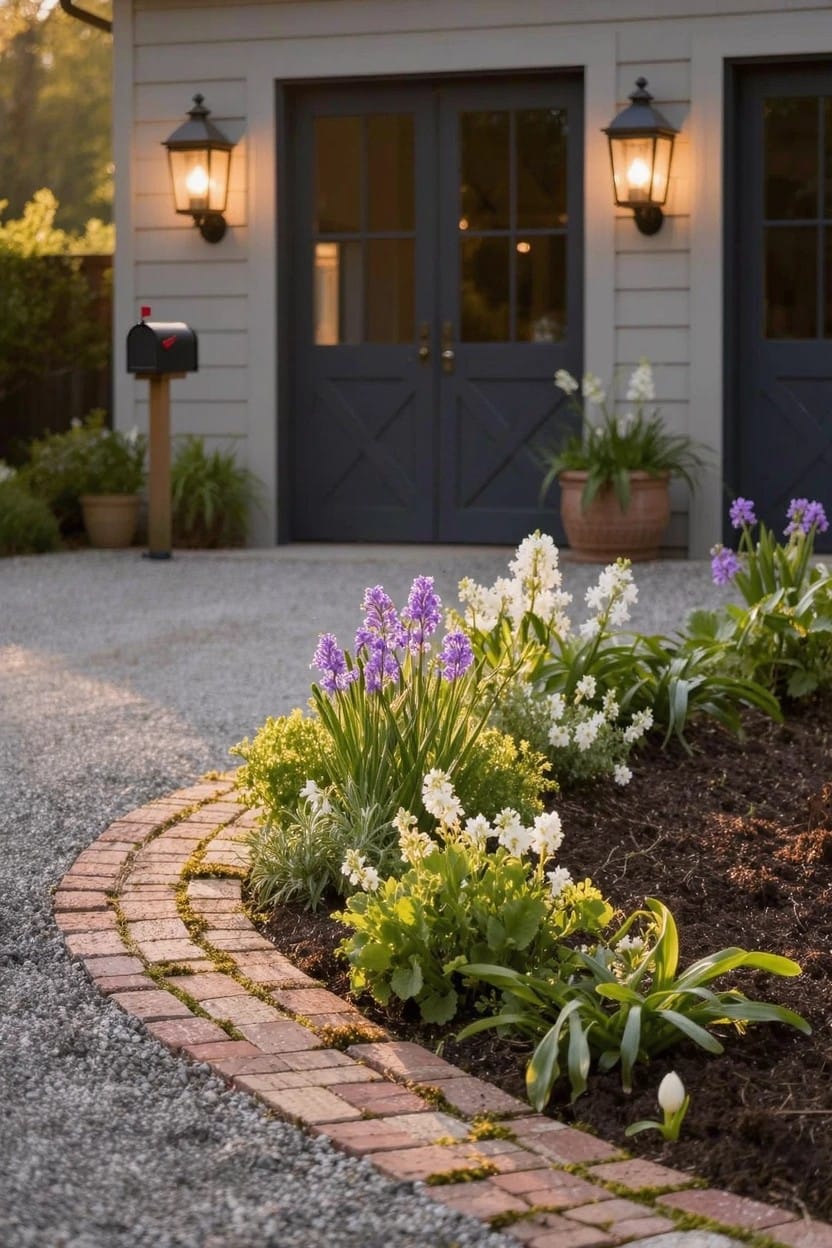
One clean way to set off your flower beds is with simple brick edging. It keeps the plants tucked in neat and stops gravel or mulch from spilling over. In this setup, the low brick curve runs right along the driveway and holds back a mix of purple flowers and greenery. That sharp line makes the whole bed pop without much fuss.
You can lay these bricks along any driveway or walkway edge where you want beds close by. They suit ranch houses or garages like this one with light siding. Just set them in a shallow trench, backfill with soil, and they stay put year after year. Skip fancy patterns. Straight or gently curved works fine… and weeds have a harder time creeping in.
Brick Edging for Flower Beds
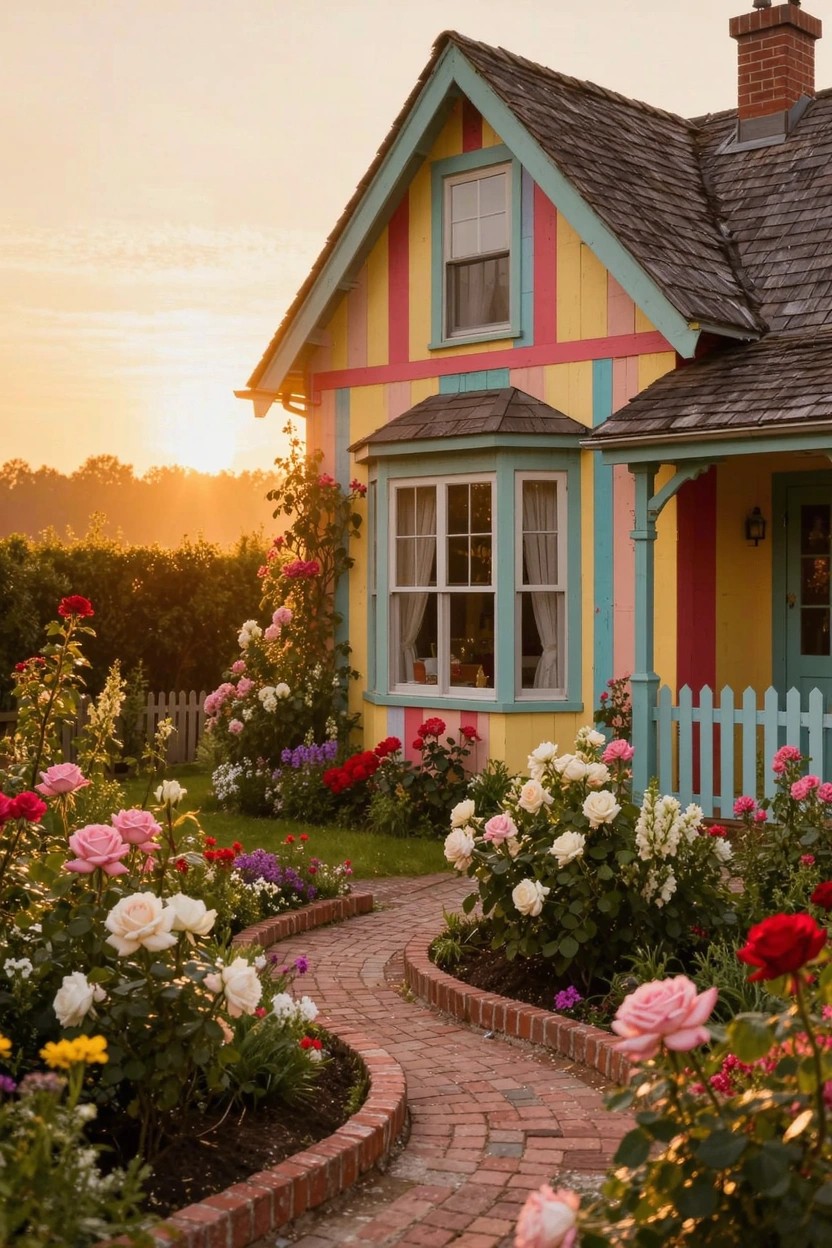
Brick edging works well to keep flower beds tidy around a garden path. You see it here outlining dense plantings of roses and other blooms. The bricks match the path itself, so everything feels connected. It stops plants from wandering onto the walkway and gives the yard a clean shape without much fuss.
This kind of edging suits cottage-style homes or any spot with informal gardens. Lay bricks end to end along the bed edges, set them just below soil level. It holds up in most yards, but check for shifting ground first. Go with reclaimed bricks if you want a worn-in look right away.
Frequently Asked Questions
Q: How do I pick edging that matches my garden style without overthinking it? A: Look at your plants and hardscape first. Wood fits cottage vibes. Brick suits formal setups. Stone gives a natural edge anywhere.
Q: Will edging stop weeds from creeping into my beds? A: It blocks most grass but not all weeds. Pair it with mulch on top for real control. Check edges yearly and pull strays early.
Q: What’s the quickest way to edge a bed on a budget? A: Grab plastic or metal strips from any garden store. Pound them in with a rubber mallet along your line. Done in an afternoon no digging needed.
Q: Can I use recycled stuff for edging? A: Old bricks or bricks work great. Lay them flat or stack for height. Just bury the bottoms deep so they stay put.
