

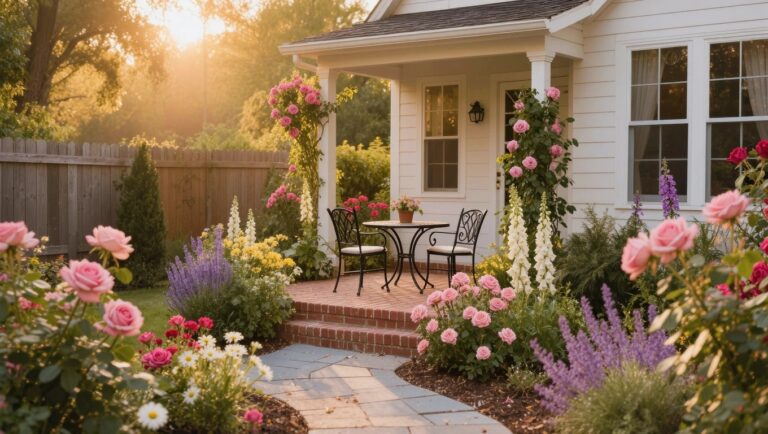
I’ve noticed how a well-planned flower bed turns a plain backyard into something that feels lived-in and calm. I lean toward beds that mix heights, with low edging plants framing taller blooms in back. That kind of layering builds natural depth and keeps weeds from taking over easily. Clashing colors or too many short-lived flowers usually end up looking ragged by late summer. Borrow the simple curves.
Stone Path Through Flower Beds
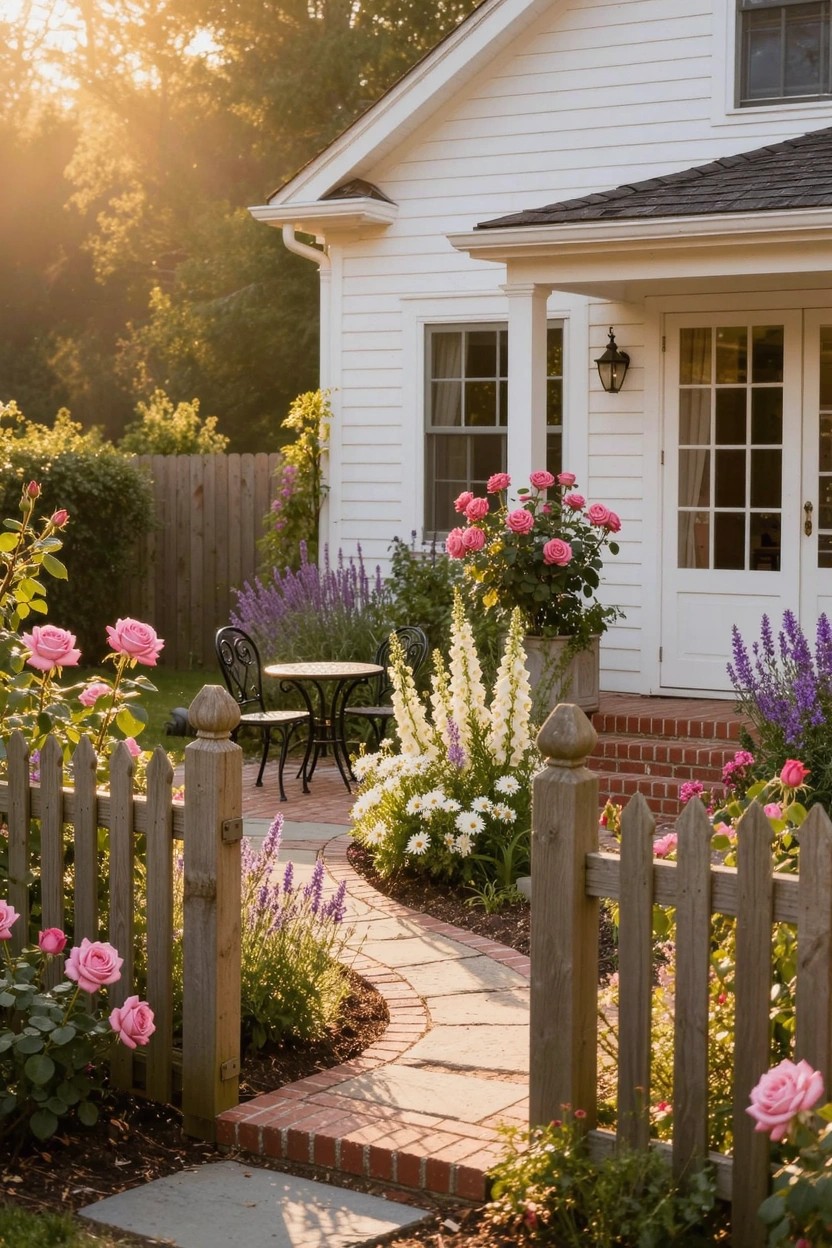
A stone path like this cuts right through thick flower beds and leads straight to the porch door. It gives the whole backyard entry a cozy, lived-in feel that pulls everything together. Folks notice how the path keeps the flowers from spilling over while letting them shine.
You can set one up in smaller backyards too, especially where you want to connect the yard to a porch or patio. Line both sides with easy bloomers like roses or lavender, then add a simple picket fence to hold it all in place. Keeps mud off the path… and works on most any house style.
Raised Beds Line the House Edge
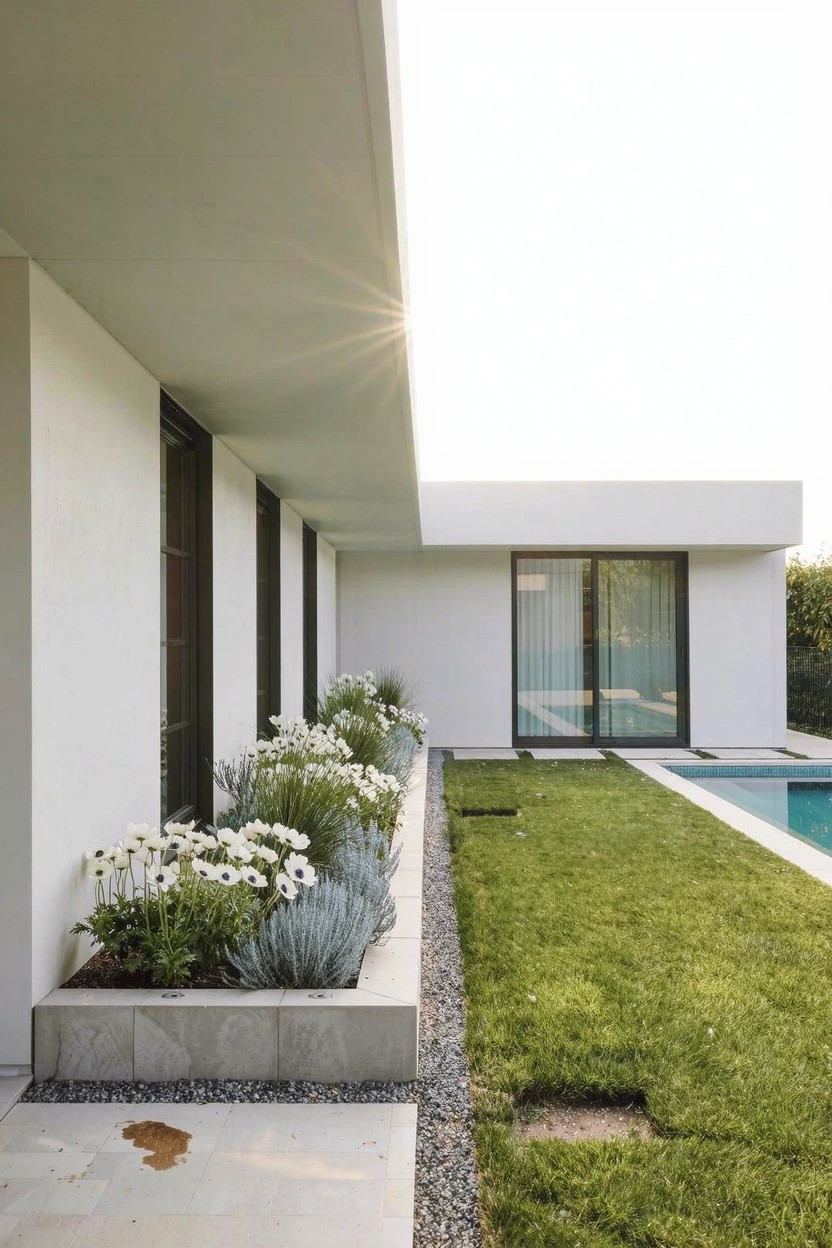
A raised concrete bed runs right along the house wall here, packed with white daisies and silvery shrubs. It sets off the plain white stucco without much fuss. Folks notice how it echoes the building’s sharp lines but adds a bit of backyard life. Keeps everything looking tidy too.
Try this where you’ve got a straight lawn edge next to the house or a pool. Suits modern homes best, the kind with flat roofs and big glass. Stick to white or light flowers so they don’t fight the architecture. Just watch the height. Too tall and it blocks the view.
Flower Beds Bordering Porch Steps
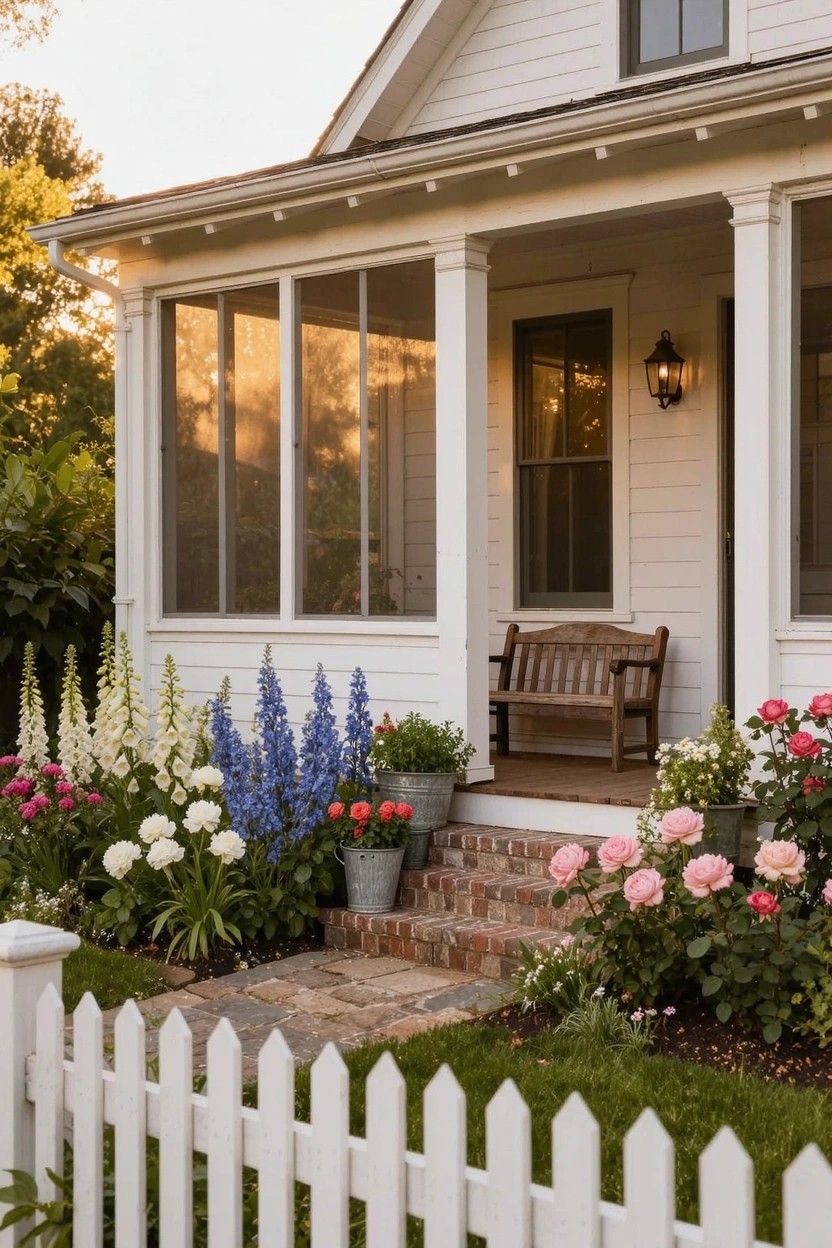
Flower beds planted tight against porch steps give your entry a cozy, lived-in feel. Tall spiky blooms like delphiniums and foxgloves tower over lower roses and other perennials here, filling out the space without spilling onto the path. It’s a simple way to draw the eye up to the door and make the whole front yard look tended.
This works best on older homes with brick or stone steps, or any spot where you want color right at the door. Plant in layers, tallest at the back, and choose tough growers for your area. Watch that the beds don’t get too wide, or folks might brush against the plants going in and out.
Patio Borders with Raised Beds
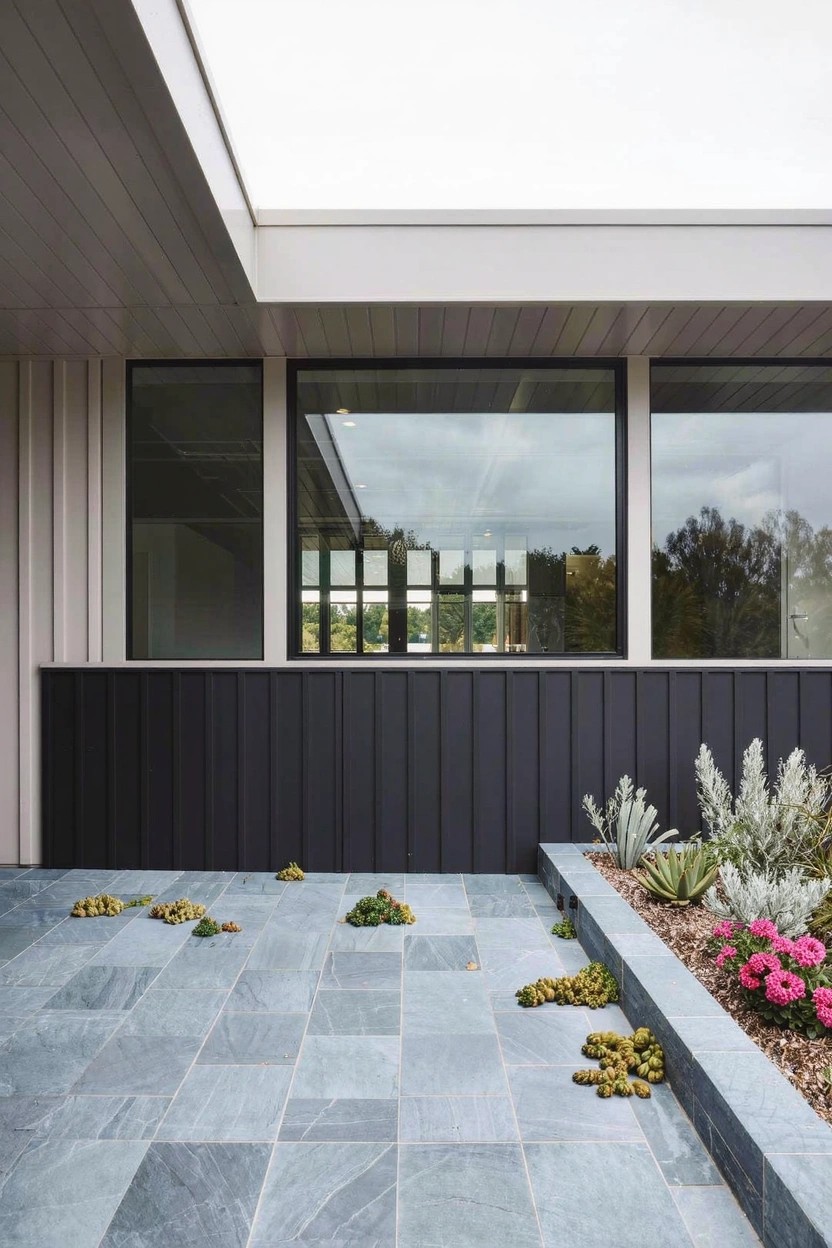
Raised beds tucked right along the patio edge make a clean border that mixes hard surfaces with plants. They keep the look sharp, like the simple box here filled with tough succulents next to slate tiles. No mess spilling over. Just enough green to break up the stone.
Try this where your patio bumps into a wall or lawn. It suits modern houses or any backyard short on space. Pick low-water plants such as agave or sedum. Make sure the bed drains well… wet roots rot fast.
Poolside Tropical Flower Beds
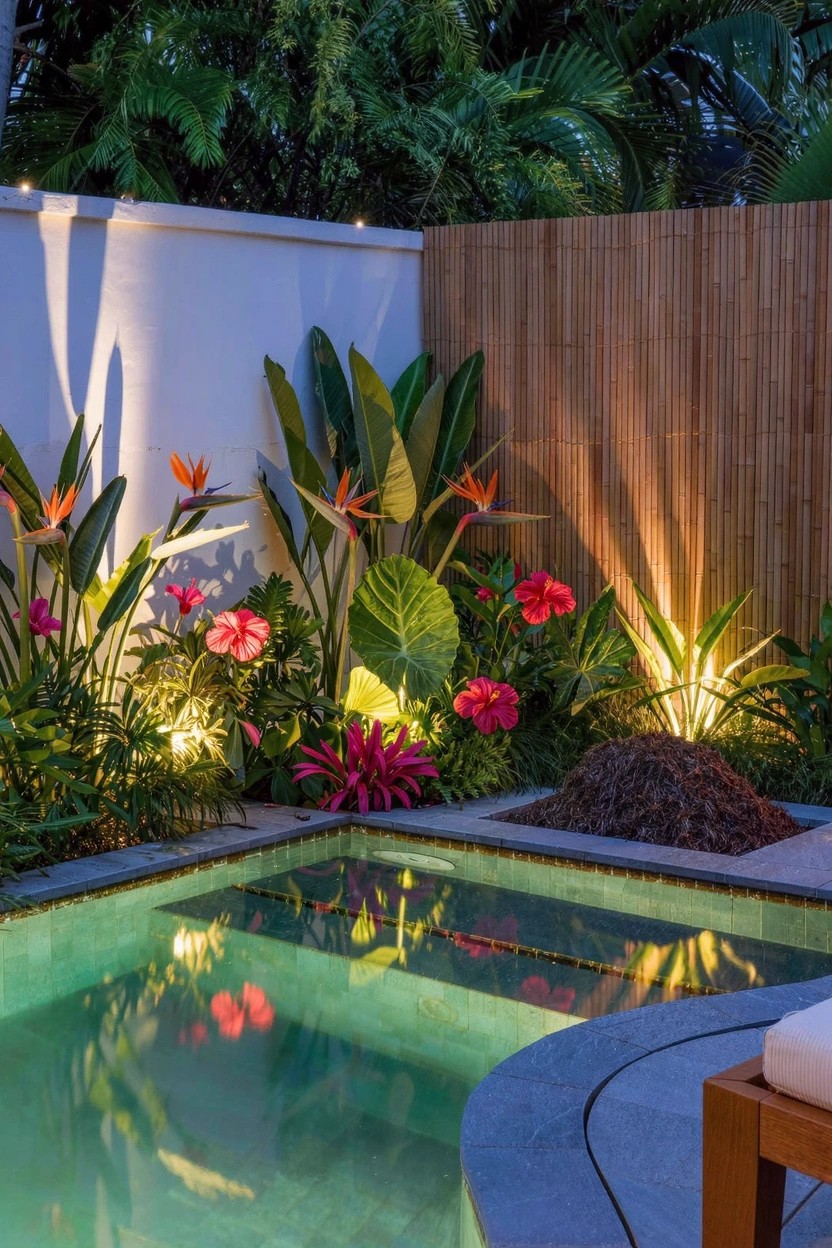
Tropical flower beds work well tucked right up against a small pool like this. The tall plants fill the space with color and height. Uplights hit them from below at night. It gives the whole corner a resort feel without much room needed.
Try this in a sunny backyard spot. Go for bold growers like bird of paradise along the back. Mix in lower flowers out front. It suits warmer yards best. Watch the roots near pool edges though.
Tulips Along a Backyard Path
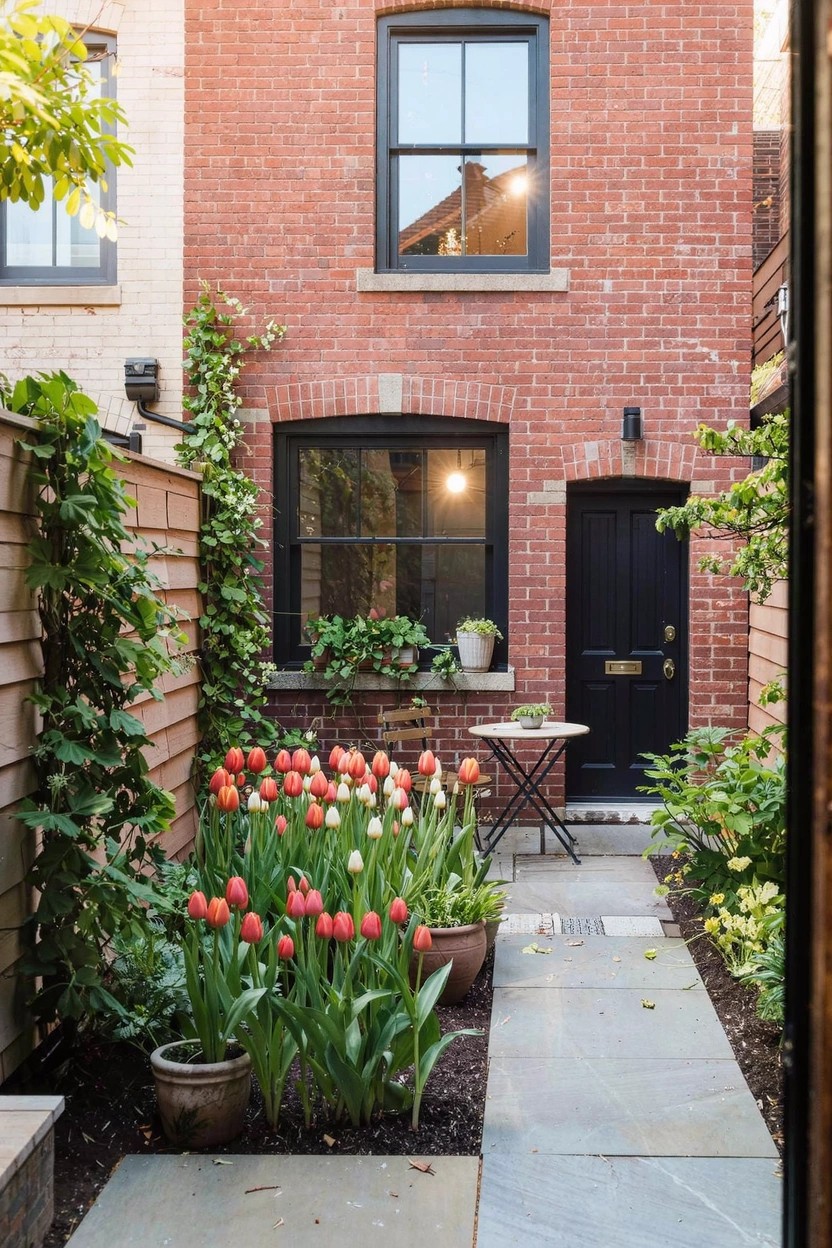
A row of tulips in pots and beds makes a plain stone path feel special right away. The bright red and pink flowers pop against brick walls without taking up much room. It’s a straightforward way to add color to a small yard and draw the eye to the door.
This idea fits narrow backyards behind townhouses or city homes. Plant the bulbs in fall so they come up strong in spring. Keep pots on gravel or edging to avoid mud on the path. It keeps things neat… and cheerful all season.
Railroad Tie Raised Beds
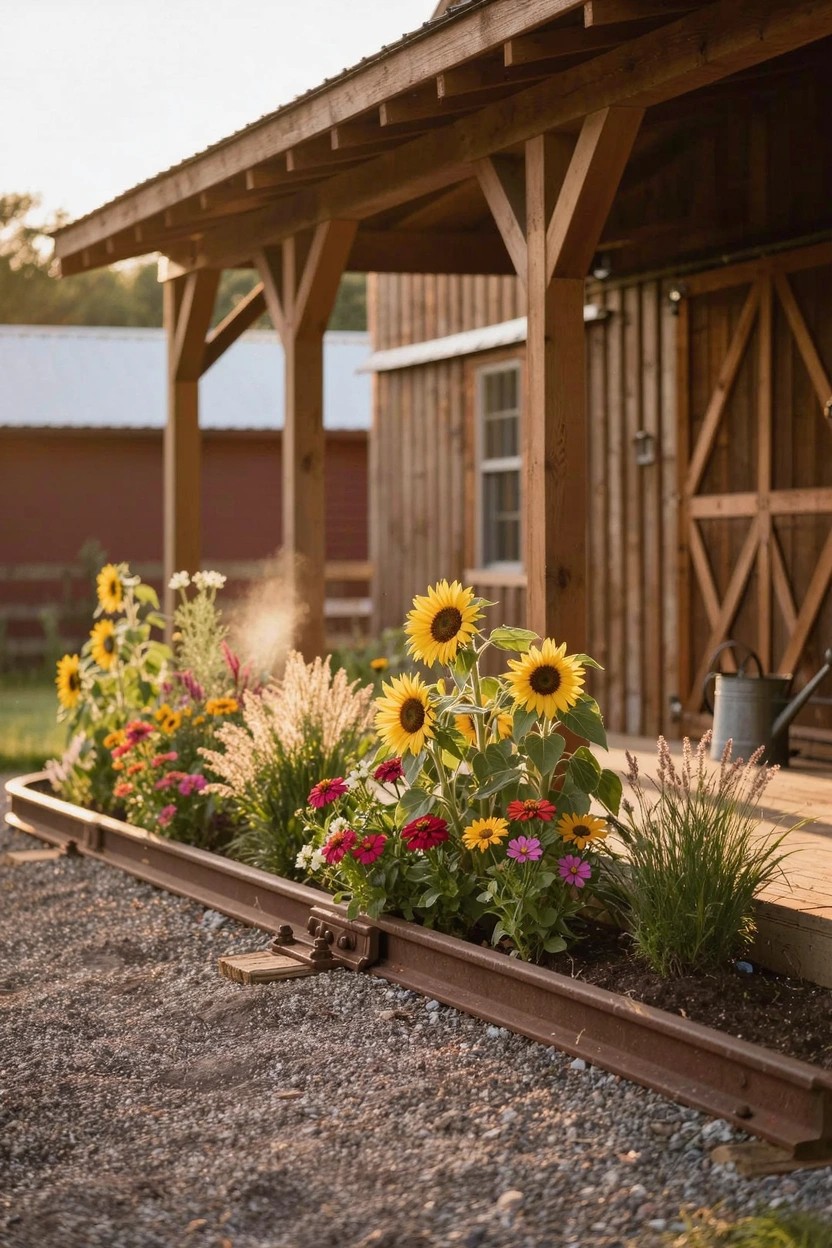
Old railroad ties make sturdy raised beds that hug right up against a barn or shed wall. Folks use them because they’re tough, hold soil well, and bring in that weathered farm look. Bright sunflowers and zinnias spilling over the edge add color where there was none.
Set these up along any plain exterior wall in a rural yard or cottage garden. Hunt for untreated ties to keep plants safe. Pack in soil, toss in perennials or annuals… easy color all season.
Gravel Paths with Border Plants
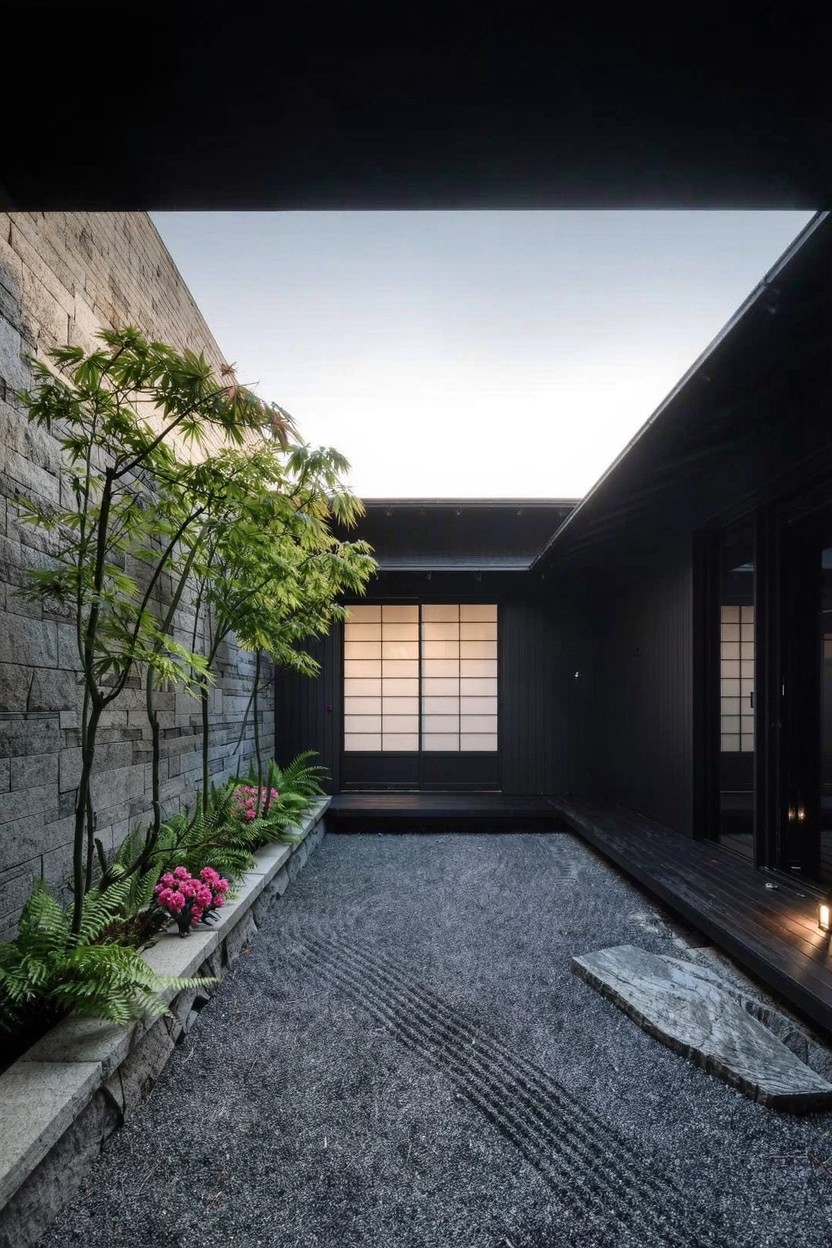
One straightforward backyard idea is a gravel path edged by plants tucked against stone walls. It keeps the look clean and open. The gravel rakes easy for that zen feel, while ferns and pink flowers add color right where the wall meets ground. Folks like it because it’s low fuss. No mowing, just a calm spot to walk through.
Try this in narrow yards or side courtyards. It suits modern houses or any place short on space. Go with drought-tough plants… ferns, small perennials. Watch drainage so roots stay happy. Simple upgrade.
Flank Steps with Large Flower Urns
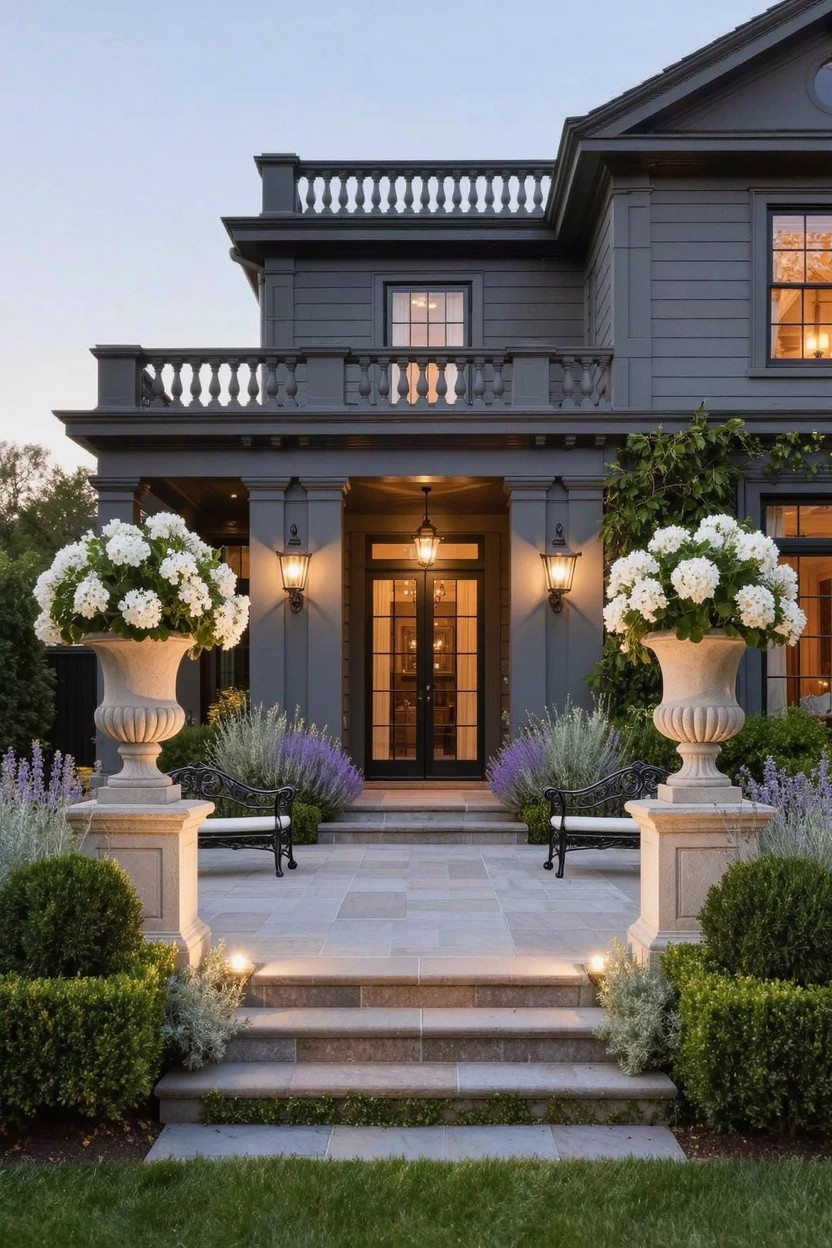
A pair of big urns packed with white blooms sits right on either side of the steps here. They pull your eye up the path and give the entry a finished look without much fuss. The hydrangeas spilling over make it feel full and alive, especially against a plain stone landing.
Put these where steps meet a patio or back door in your yard. They suit most homes, from older ones with character to simpler builds. Go for tough stone pots that won’t tip, and pick flowers that hold up through summer. Keep the plants the same on both sides for that clean match.
Raised Garden Beds by the Patio
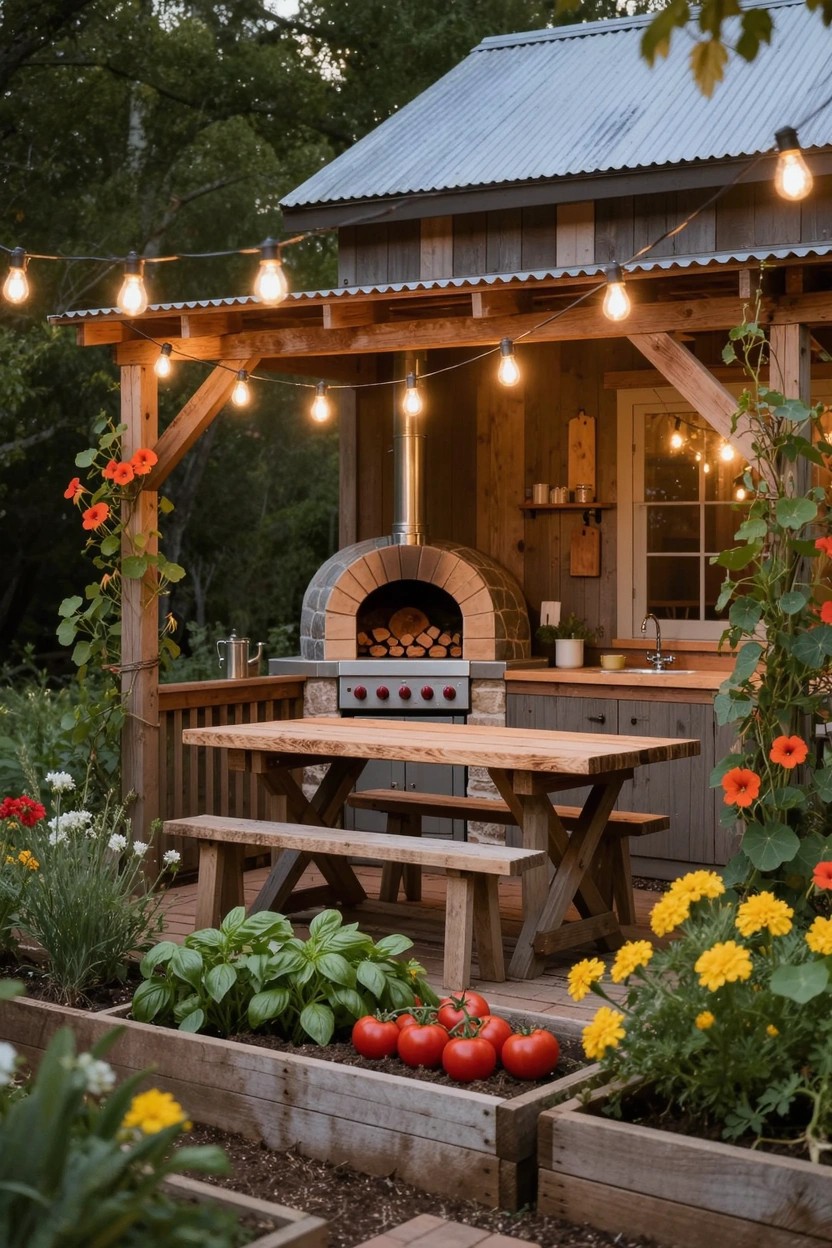
Raised garden beds like these work real well tucked right up against a patio or deck. They hold flowers, tomatoes, and herbs that spill over a bit, giving the eating area a fresh, lived-in look without taking up much room. That simple wooden frame keeps everything neat and close to where folks gather.
Put them in any backyard with a table or outdoor kitchen setup. Use rot-resistant wood, keep them about knee-high for easy reaching, and plant a mix of color and edibles. They suit older homes or cottages best. Just make sure the soil drains good so roots don’t rot.
Flower Beds Around the Fire Pit
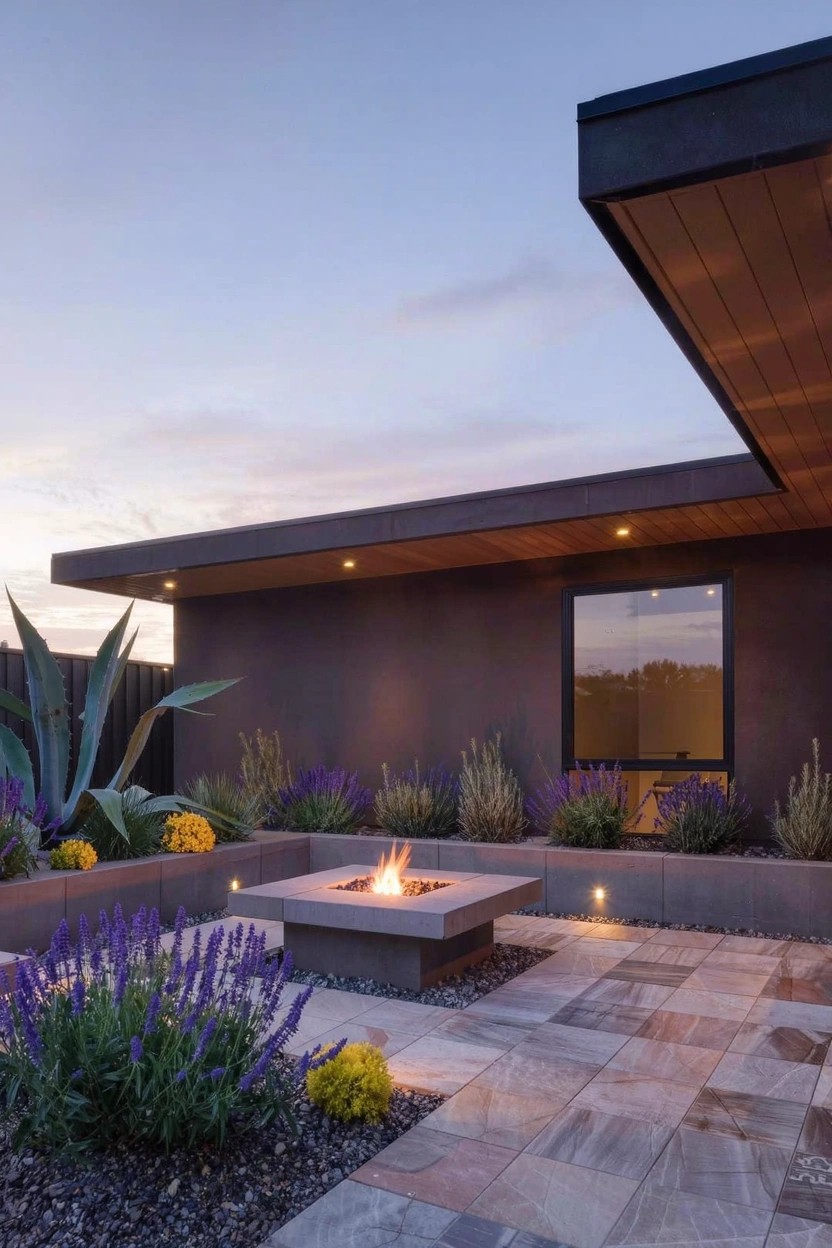
One easy way to make a backyard patio feel more like home is to edge it with simple flower beds. Here the beds run right up to the concrete pavers, filled with tough plants like lavender and big agave that hold their own against the hard edges. It pulls the seating area together without much fuss, and that central fire pit turns into a real spot for evenings outside.
These beds work best on flat yards next to a modern house or anywhere you want low-water color near a patio. Plant in gravel mulch to keep weeds down, stick to perennials that match your climate, and keep the beds just one or two feet wide so they don’t crowd the walking space. Watch the fire pit clearance though. A little planning and it fits most any setup.
Climbing Roses on a Backyard Shed
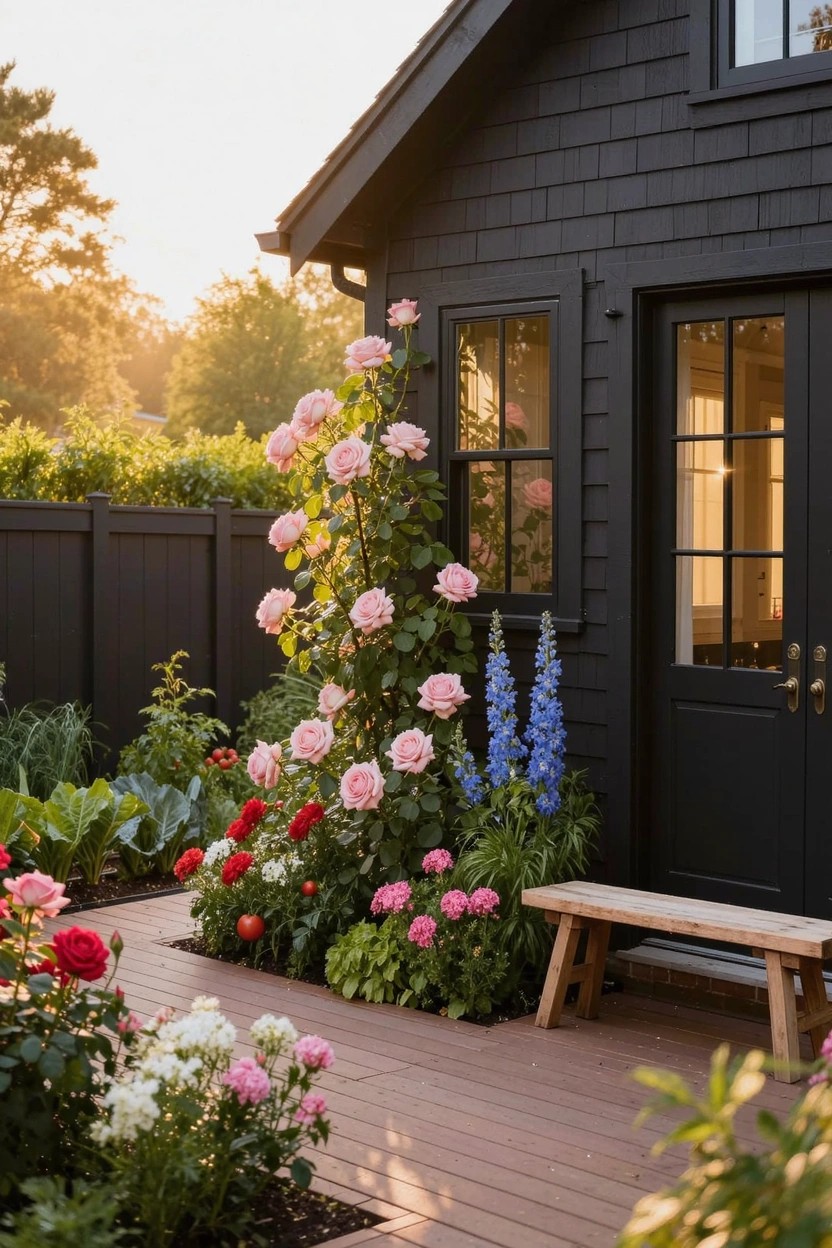
A plain backyard shed gets a lot from climbing roses grown right up its side. The pink flowers here soften the dark siding and pull the eye to the door without much fuss. It gives that cozy cottage look folks like in small gardens.
Train the vines on wires or a cheap trellis by the entry. They suit most yards, especially if the shed is dark to make the blooms pop. Keep them pruned so they don’t block the windows. Easy to do on any outbuilding.
Gravel Flower Beds with Stepping Stones
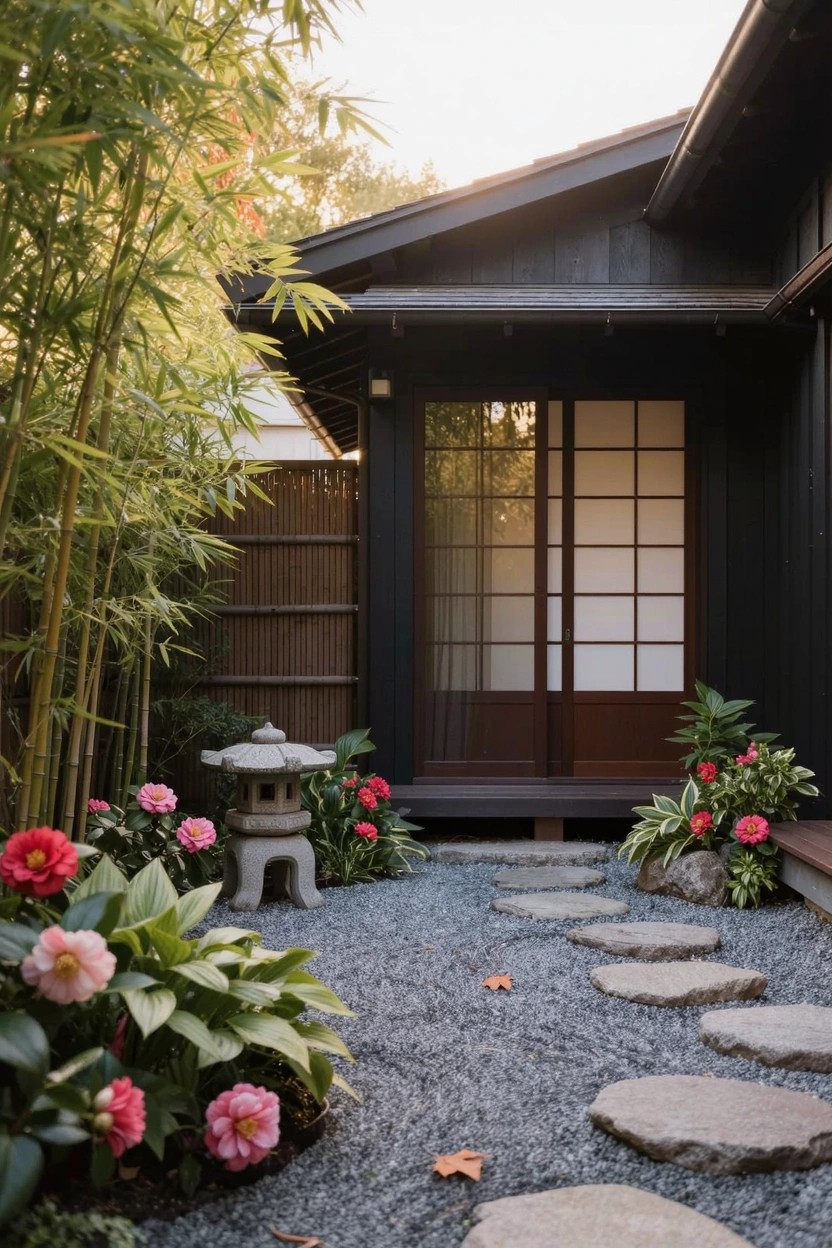
Gravel flower beds like this one keep things neat and simple. They mix in pink blooms and green plants around flat stones that lead right to the door. The gray gravel fills most of the space. It cuts down on weeding and looks clean year round. A stone lantern sits off to the side. That adds a nice touch without much fuss.
Put these beds in smaller backyards or along a patio edge. They work on any home. Even a plain ranch house. Just make sure the gravel drains well so water does not pool. Scatter a few colorful flowers. Keep the rest low growing. Walk the path yourself to check the spacing.
Poolside Flower Beds
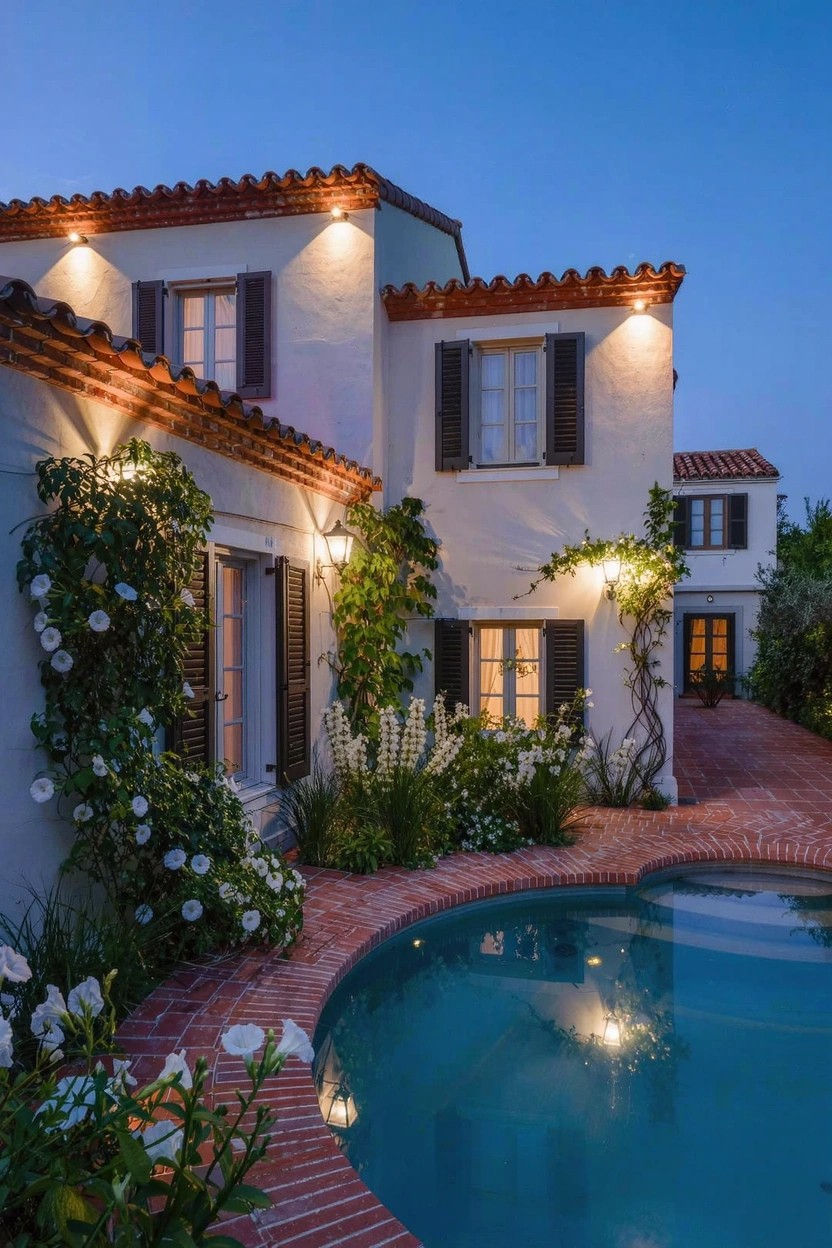
Tuck flower beds right up against the pool edge, and you get a backyard that feels more like a cozy garden spot. White blooms and climbing vines hug the brick coping here, blending the water right into the planting without any harsh lines. It keeps things looking full and lived-in, especially when those uplights kick on at dusk.
This setup works best in sunny yards with room for low-water plants like roses or jasmine. Suits ranch or stucco homes pretty well. Just make sure the beds drain good so roots don’t mess with the pool base. Easy to start small and let it grow over time.
Curved Raised Flower Beds
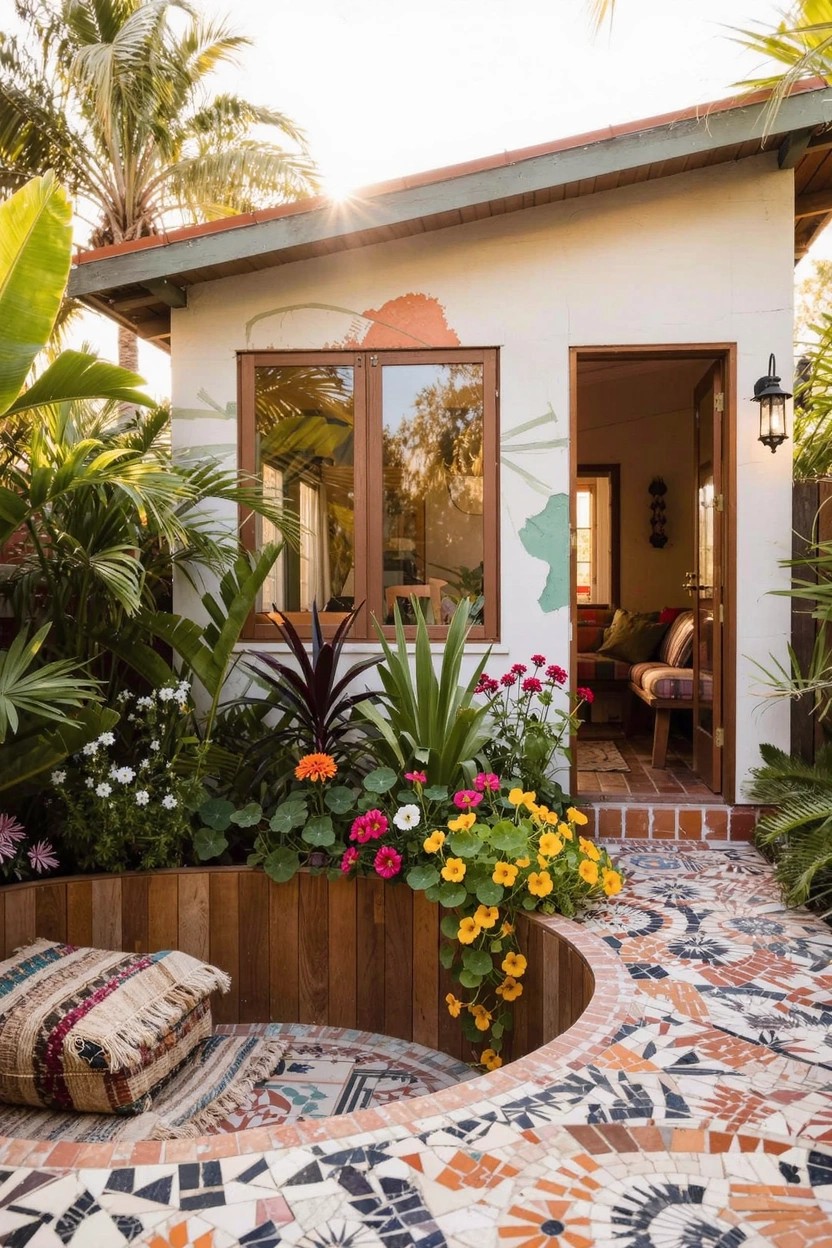
Raised flower beds like this one curve right along the path. They hold a mix of bright flowers such as marigolds and petunias. The wood keeps everything neat and contained. It stands out because it guides your eye to the house door without feeling stiff. Plus it makes the yard feel full and lived-in.
Put these beds where you walk most. They work great by patios or side entries. Use rot-resistant wood like cedar. Fill with easy bloomers that come back each year. Watch the height so you don’t bump plants when passing. Good for small yards… adds punch without taking space.
Poolside White Flower Beds
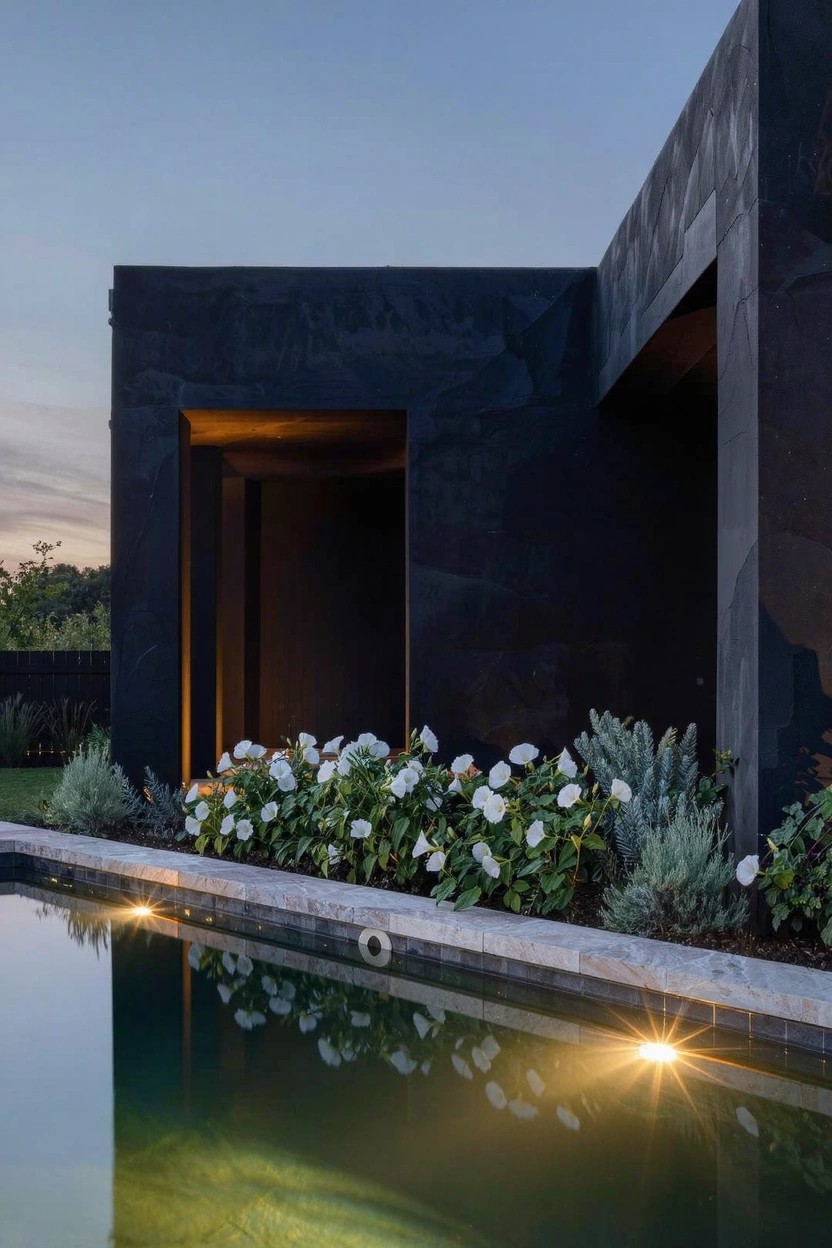
One good spot for flower beds is right along the edge of a backyard pool. White blooming plants tucked into a narrow strip next to dark stone coping catch the eye. They stand out against the black house walls and deep water. And at night, with those low edge lights, the flowers seem to glow.
This setup fits modern homes or any yard with clean lines. Pick tough white bloomers like mandevilla or dipladenia that take some reflected heat. Plant them dense for impact, but keep heights low. Watch out for dropping petals messing up the pool. Simple idea. Works every evening.
Large Planters by the Pool
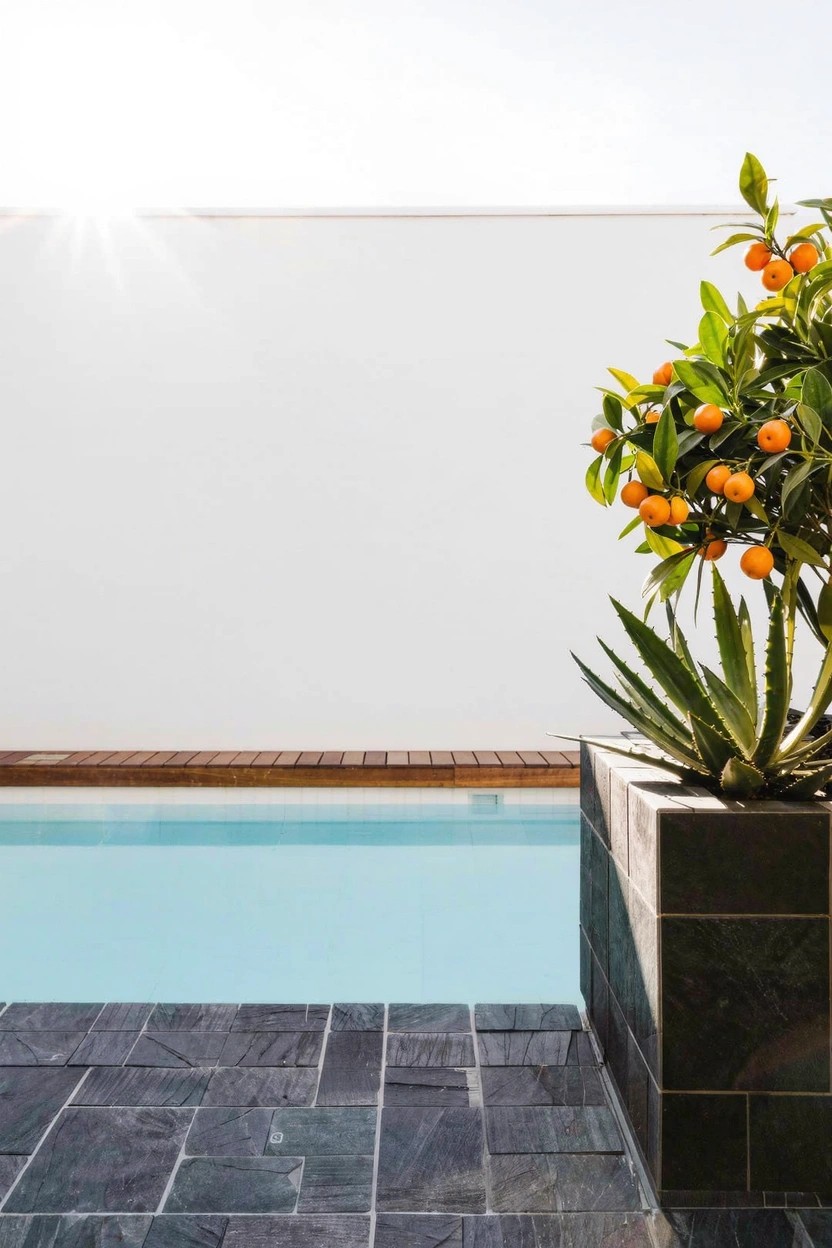
One simple way to make a pool area feel finished is with big planters right along the edge. They hold plants like orange trees or aloe that stand out without taking up much ground space. This setup works because the plants add height and color against plain hardscape and walls. It keeps things clean but alive.
Put these where the pool meets the patio. They suit modern backyards or any spot with full sun. Go for stone or concrete pots to match slate or tile floors. Watch the roots though. Citrus needs good drainage, and succulents hate wet feet.
Backyard Raised Garden Beds
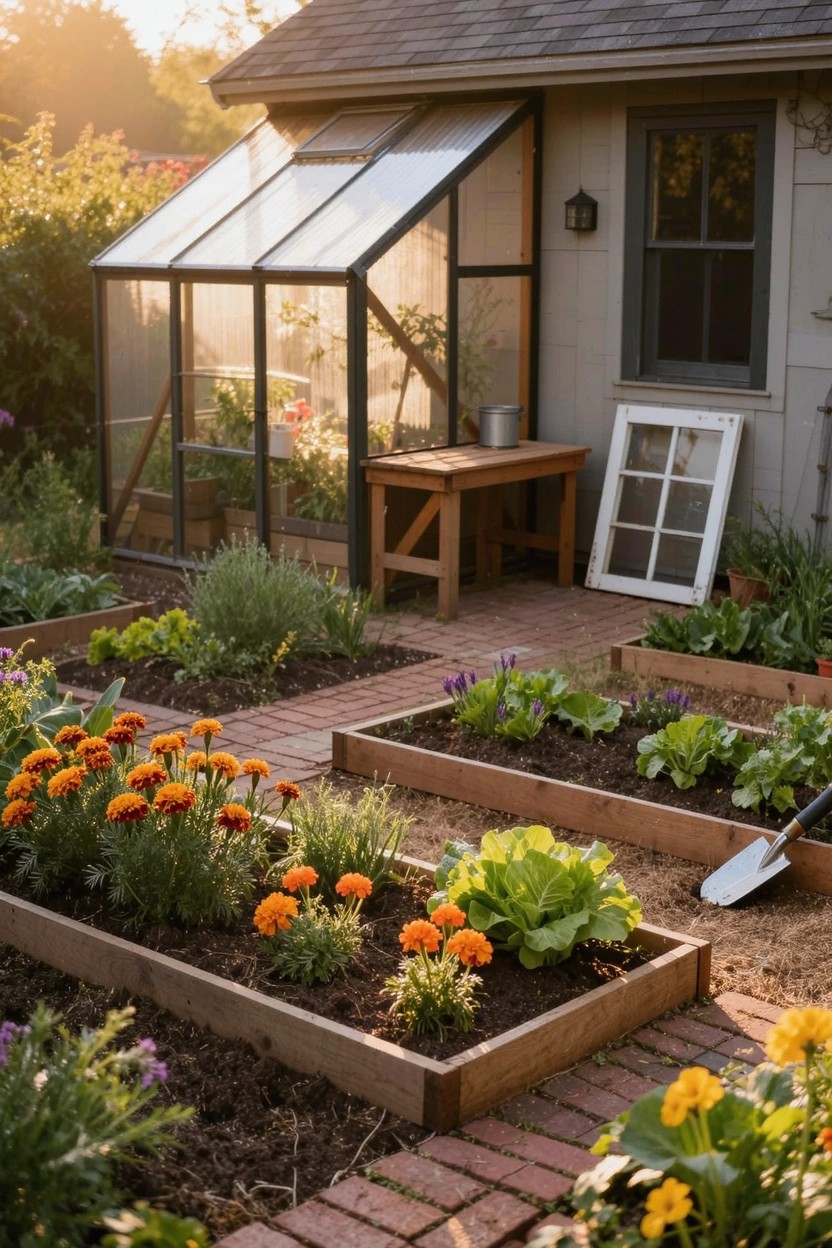
Raised garden beds like these keep your backyard planting neat and easy to manage. They lift everything up off the ground so plants get better drainage and warmth. You end up with tidy rows of flowers and greens, like the bright marigolds mixed in with lettuce here.
They’re handy for most any yard size, even if your soil is poor. Stack a few boards for frames, fill with fresh dirt, and set them along a path. Good spots get morning sun. Watch the wood doesn’t rot too fast… use cedar if you can.
Vertical Planters on Backyard Walls
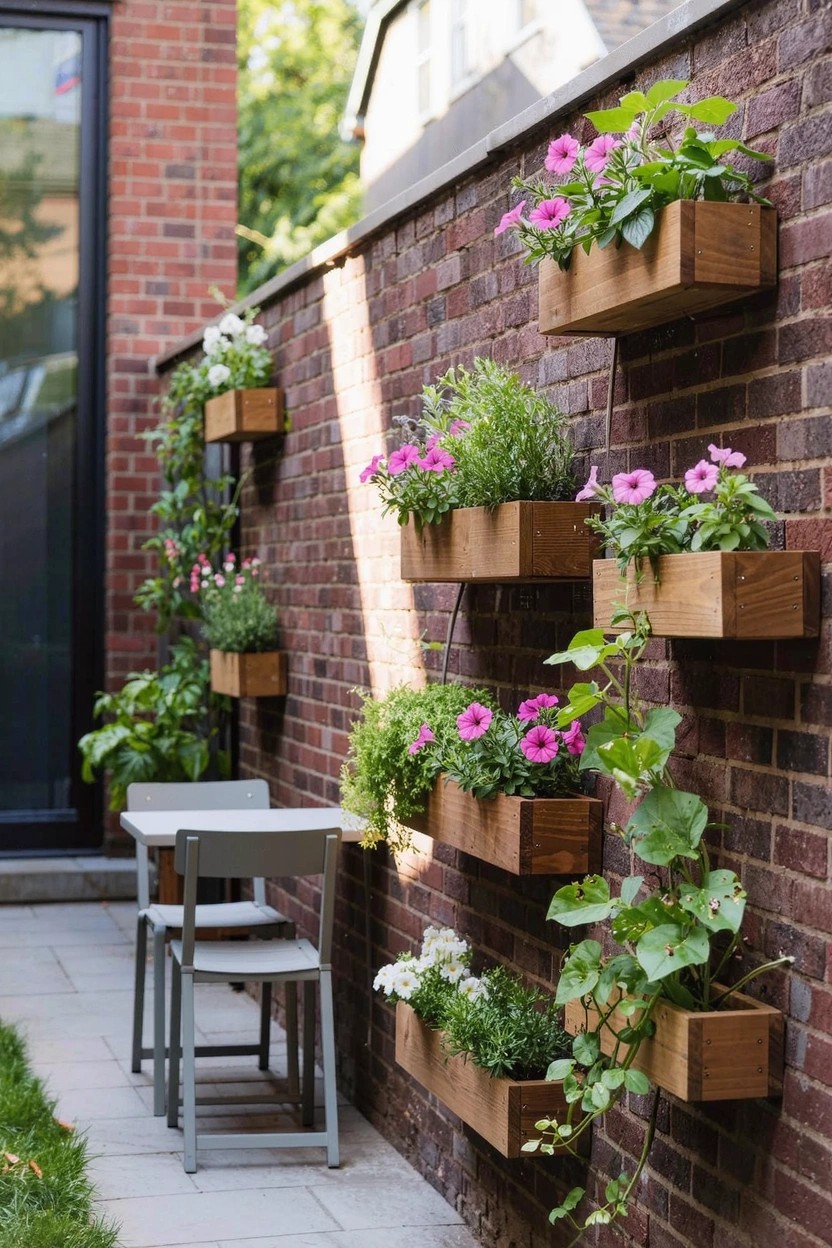
One easy way to bring more flowers into a backyard is to mount planters directly on the wall. These wooden boxes packed with pink petals and green herbs climb up a plain brick surface. It turns empty space into a real garden without crowding the ground.
This setup fits tight patios or side yards best. Bolt the boxes securely at different heights for flow. Mix in trailing plants… they soften the look. Works on most walls, just check for weight and drainage first.
Raised Flower Beds Along Stone Steps
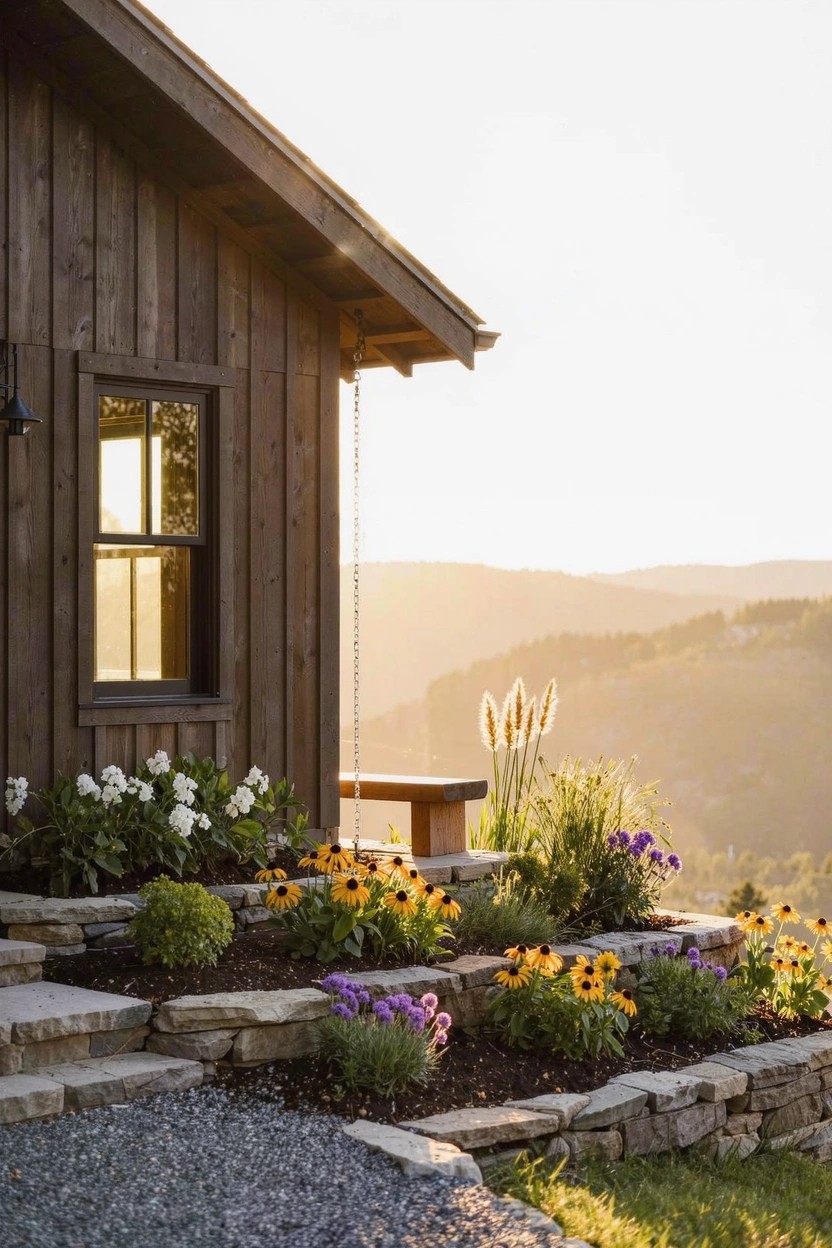
One simple way to upgrade your backyard entry is with raised flower beds built right into stone steps. These beds use low retaining walls to hold back soil and plants, creating tidy pockets of color that guide you up to the door. The stone keeps everything neat, and a mix of flowers like whites, yellows, and purples adds life without much fuss.
This works best on sloped spots where flat ground is short. Stack local stone for walls about a foot high, fill with good soil, and plant tough perennials that handle sun. Suits cabin-style homes or any yard with steps. Just watch drainage so roots don’t rot.
Frequently Asked Questions
Q: How do I get started if I’ve never built a flower bed before?
A: Pick a sunny spot about four feet wide and mark it out with a hose or string.
Dig up the grass and loosen the soil a foot deep. Add compost right away to give your plants a strong start.
Q: What plants work best in shady backyard spots?
A: Hostas and impatiens thrive there and add pops of color without much fuss.
Plant them close together for a lush look. Water them weekly to keep the soil moist.
Q: How can I keep weeds out of my new flower bed?
A: Spread a two-inch layer of mulch over the soil after planting.
It blocks light to weeds and holds in moisture. Refresh it once a year.
Q: Can I make one of these ideas on a tight budget?
A: Hunt for perennials at local sales or divide plants from friends.
Reuse bricks or stones you already have for edging. You’ll save big and get flowers that come back every year.
