

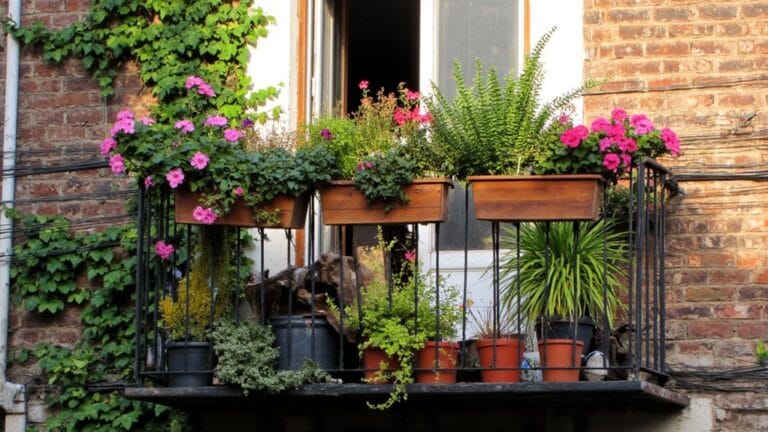
When it comes to sprucing up outdoor spaces, hanging flower baskets are a go-to favorite. They offer a delightful burst of color and add vertical charm to any setting. Mixing various plants can lead to breathtaking combinations. There’s an art to crafting these captivating displays, starting with careful plant selection and thoughtful arrangement. Let’s explore the essentials that make a hanging flower basket truly special.
How to Create Beautiful Hanging Flower Baskets
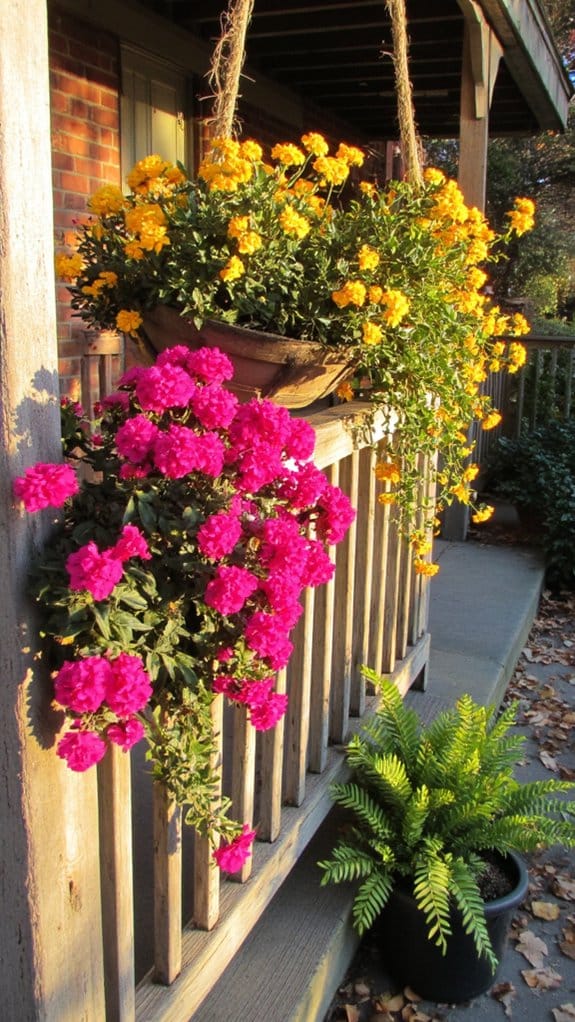
Creating beautiful hanging flower baskets can transform any space, especially if you choose the right plants and design.
I love starting with a sturdy basket and quality potting soil. Then, I select a mix of trailing and upright flowers to create depth.
When I water them regularly and guarantee they get enough sunlight, my baskets truly thrive, adding charm to my home.
Create a Colorful Flower Basket Display
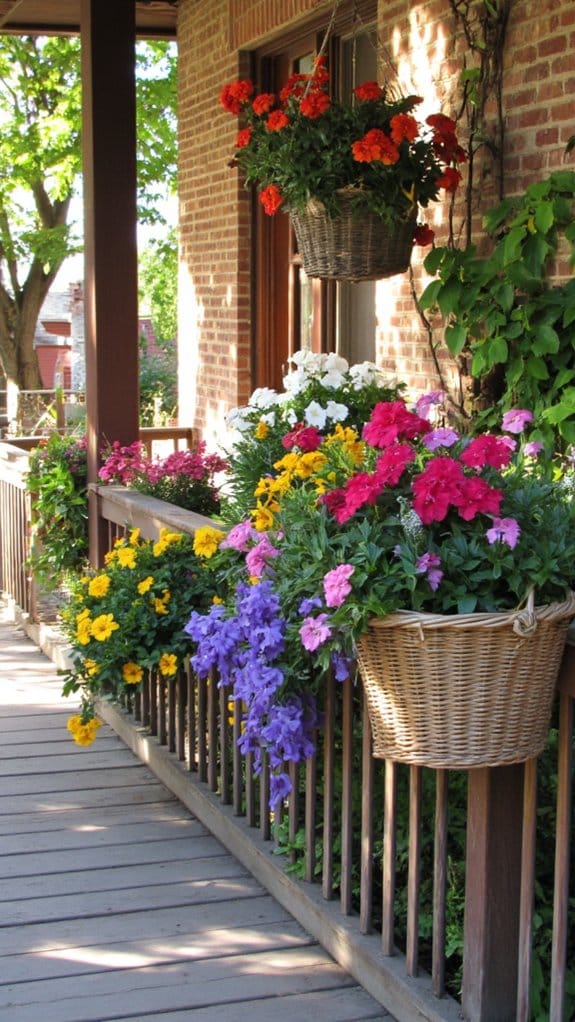
While I love the classic look of traditional flower baskets, adding a splash of color can really elevate your display.
I like to mix vibrant hues—think deep purples, bright pinks, and sunny yellows.
Layering flowers with varying bloom sizes creates depth, while trailing vines add movement.
Layering flowers of different sizes adds visual interest, while trailing vines bring a delightful sense of motion to your arrangements.
This lively combination not only catches the eye but also brings joy to any outdoor space.
Choose the Right Plants for Your Hanging Flower Baskets
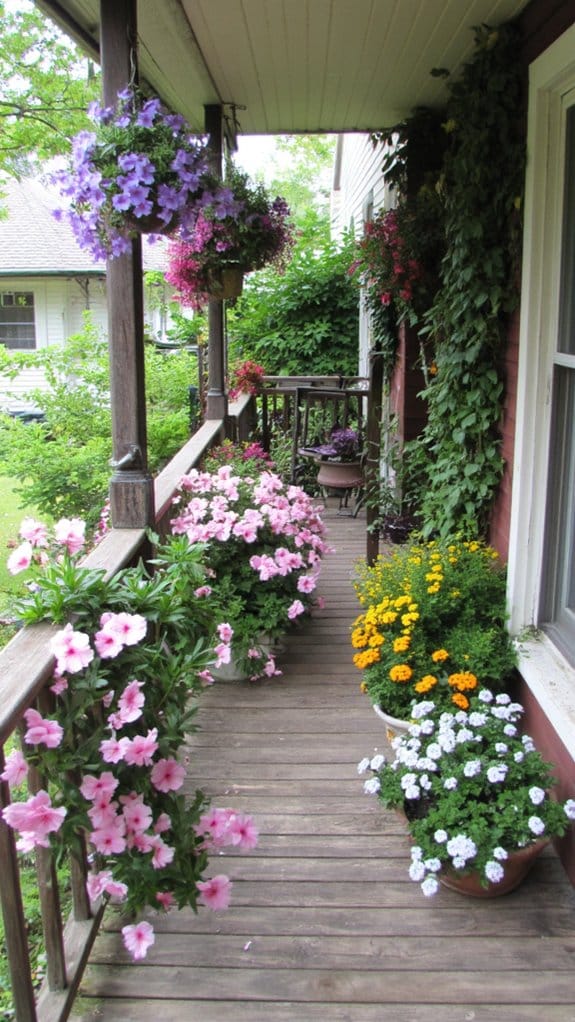
Choosing the right plants for your hanging flower baskets can make all the difference in achieving a stunning display.
I love combining trailing plants like ivy or petunias with upright varieties such as geraniums or fuchsias. This mix creates depth and interest.
Don’t forget to take into account sunlight and water needs, ensuring your chosen plants thrive together for a beautiful, cohesive look.
Select a Themed Arrangement: Tropical, Rustic, or Modern
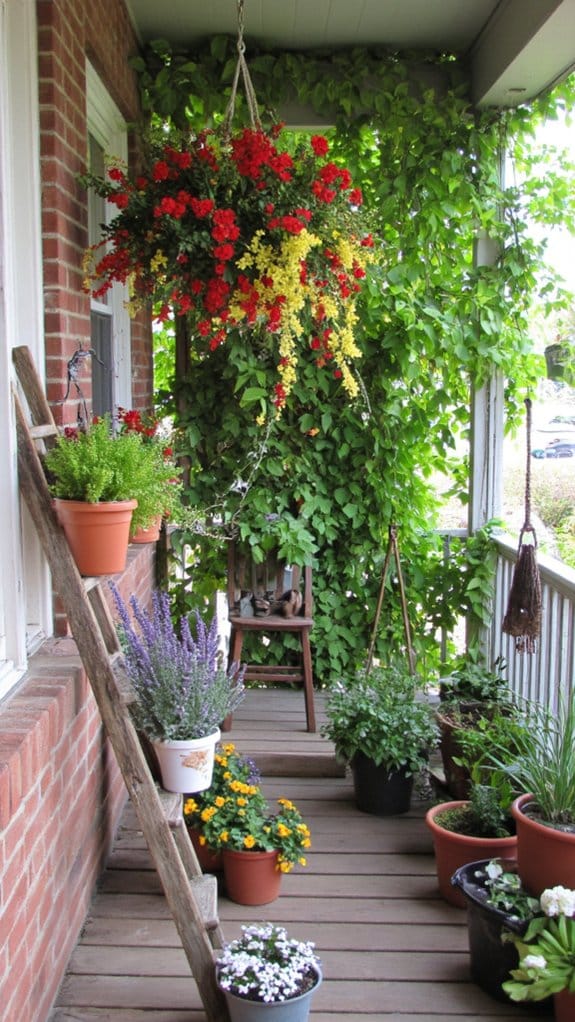
After selecting the right plants for your hanging flower baskets, it’s time to think about a cohesive theme that can elevate your arrangement.
I love exploring different styles like tropical, rustic, or modern. A tropical theme brings vibrant colors and exotic leaves, while rustic emphasizes natural materials.
Modern designs offer sleek lines and minimalism. Choose a theme that resonates with your personal style!
Layer Plants for Depth and Interest in Your Baskets
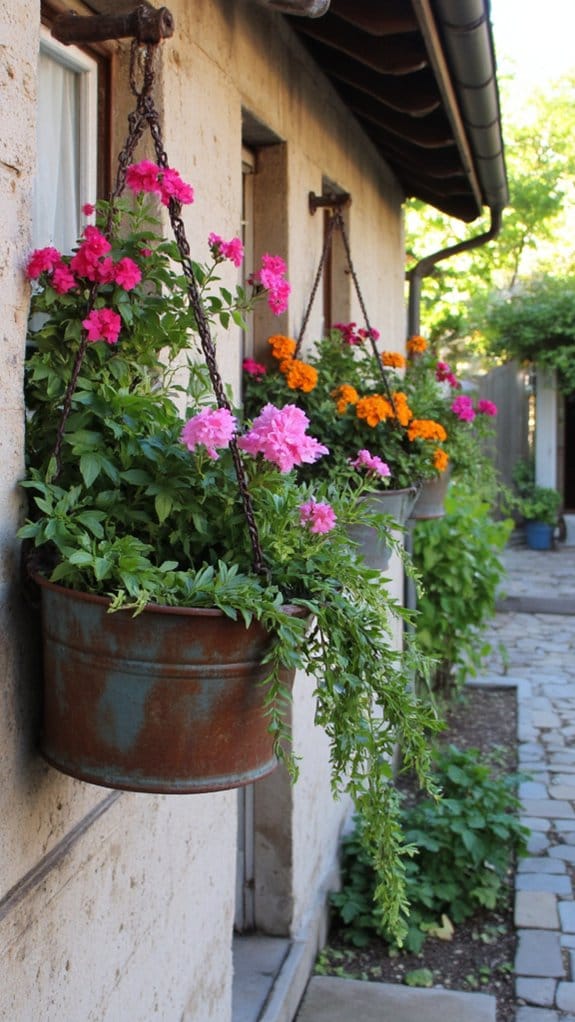
To create truly enchanting hanging flower baskets, I recommend layering plants of varying heights and textures.
Start with taller plants in the center for a focal point, then surround them with medium-height varieties.
Finally, add trailing plants around the edges to create a cascading effect.
This layering technique not only adds depth but also enhances visual interest, making your baskets truly engaging.
Mix Trailing and Upright Flowers in Hanging Flower Baskets
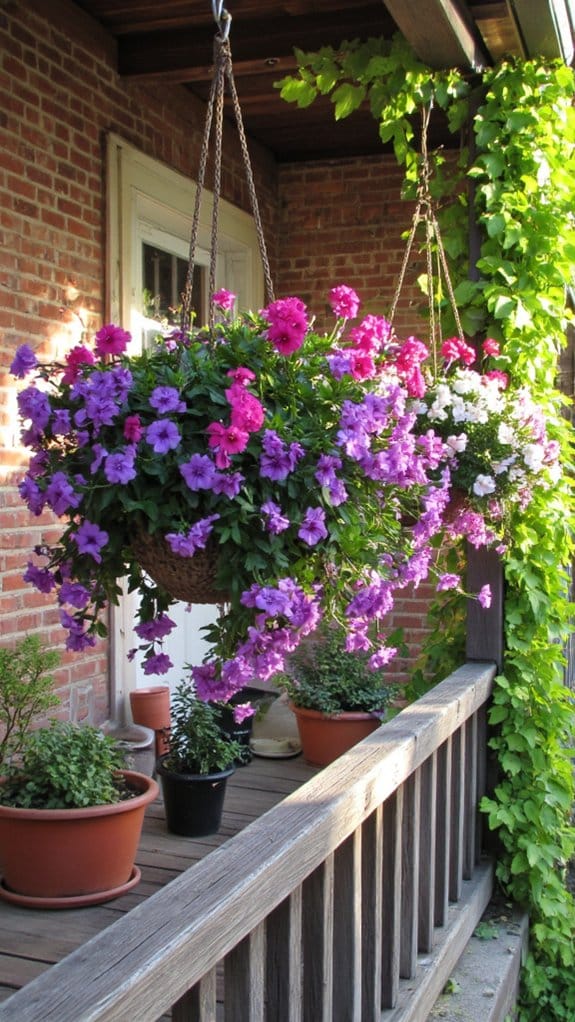
While I love the visual appeal of hanging flower baskets, mixing trailing and upright flowers elevates their charm even further.
The contrast between the cascading blooms and the taller, more structured flowers creates a stunning display. I enjoy combining vibrant petunias with elegant snapdragons or zinnias.
This mix not only adds depth but also draws the eye, making my baskets truly enchanting.
Incorporate Herbs Into Your Hanging Flower Baskets
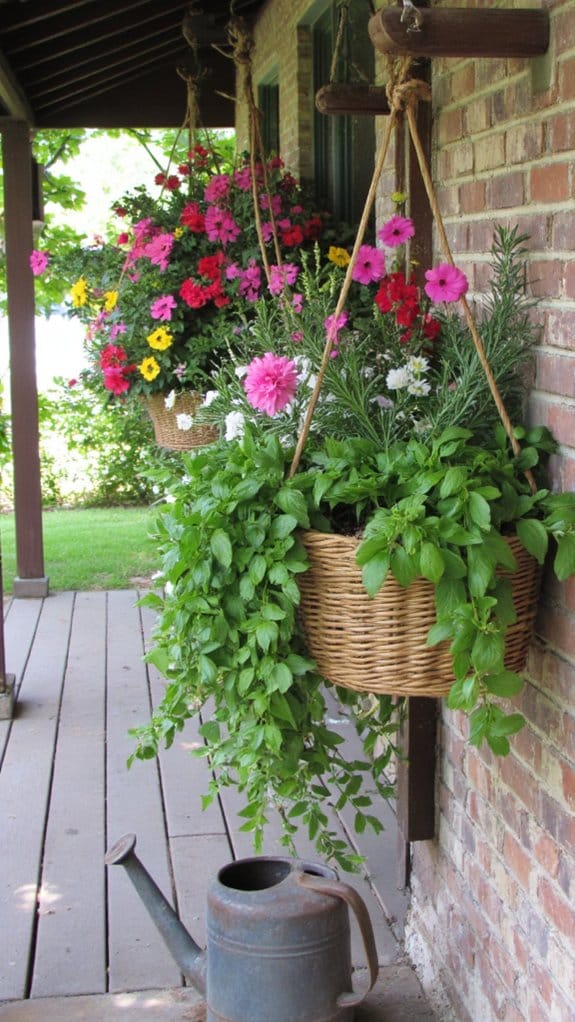
Incorporating herbs into my hanging flower baskets really brings a fresh twist to my gardening style.
I love adding fragrant varieties like basil, mint, and thyme. Not only do they look beautiful, but they also provide fresh ingredients for my cooking.
Plus, the aroma wafts through the air, enhancing my outdoor space. It’s a delightful way to combine beauty and utility!
Use Seasonal Flowers for Year-Round Hanging Displays
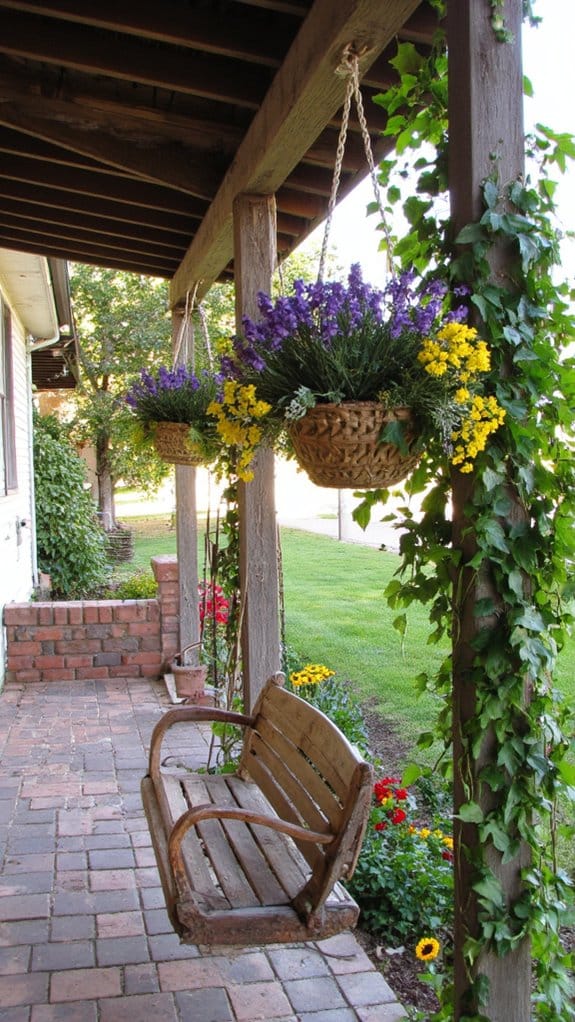
Using seasonal flowers in my hanging displays not only adds vibrant color but also guarantees my garden looks stunning all year round.
I love swapping out blooms as the seasons change, from cheerful spring pansies to fiery autumn marigolds. This keeps my outdoor space fresh and inviting.
Plus, it’s a fun way to experiment with different combinations and create eye-catching arrangements!
Select the Right Basket Material: Wicker, Metal, or Plastic
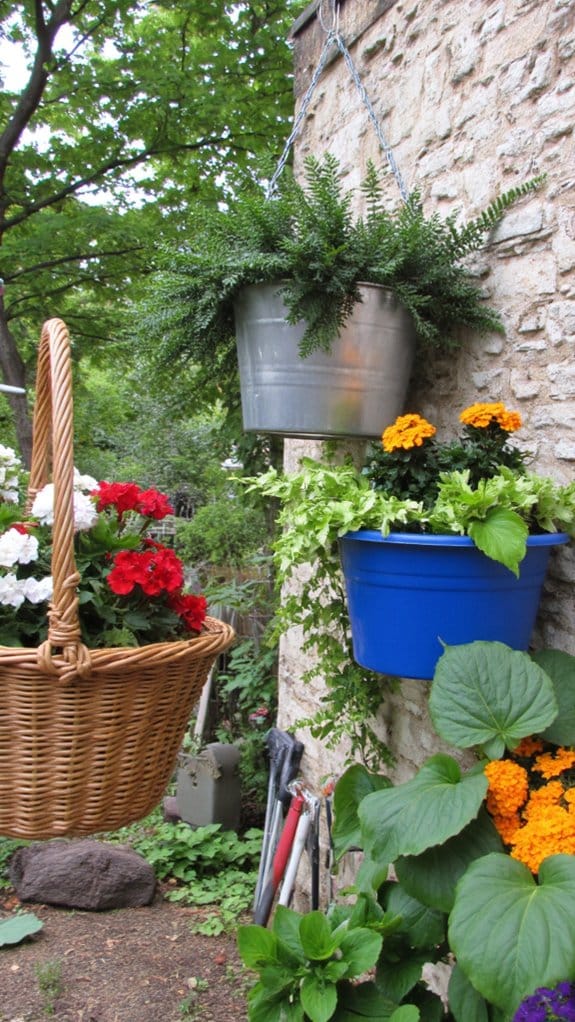
Choosing the right basket material for your hanging flower displays can make all the difference in both aesthetics and functionality.
I’ve found that wicker adds a charming, rustic touch, while metal offers a sleek, modern vibe.
On the other hand, plastic is lightweight and durable, making it perfect for outdoor use.
Each material has its unique advantages, so choose one that fits your style and needs.
Make Your Own Macramé Hanging Baskets
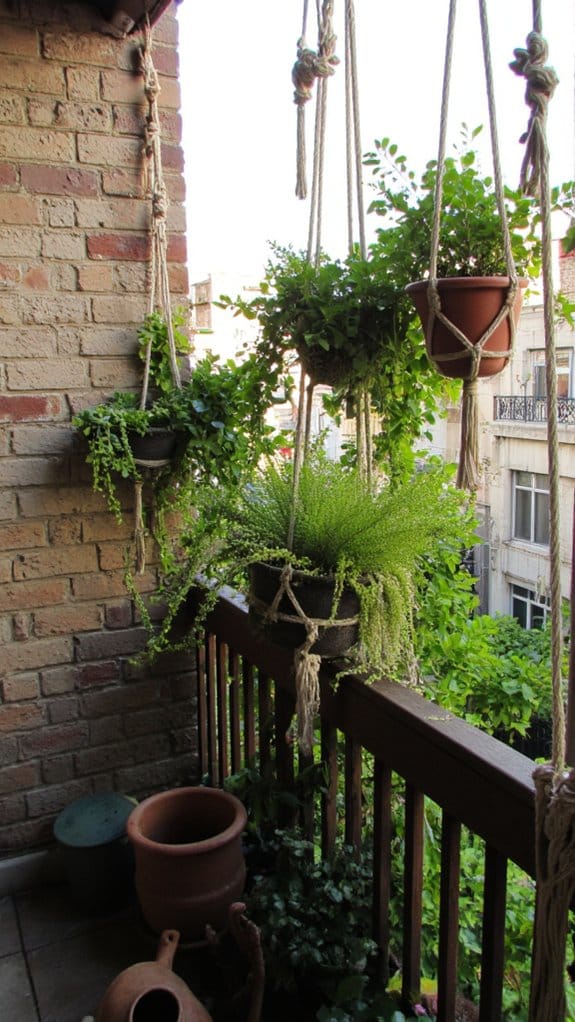
Creating your own macramé hanging baskets is a fun and rewarding project that adds a personal touch to your floral displays.
I love choosing colorful cords and experimenting with different knotting techniques. It’s satisfying to see my creations come to life, holding vibrant plants that brighten any space.
Plus, these unique designs can complement various home décor styles beautifully.
Upcycle Household Items Into Unique Hanging Planters
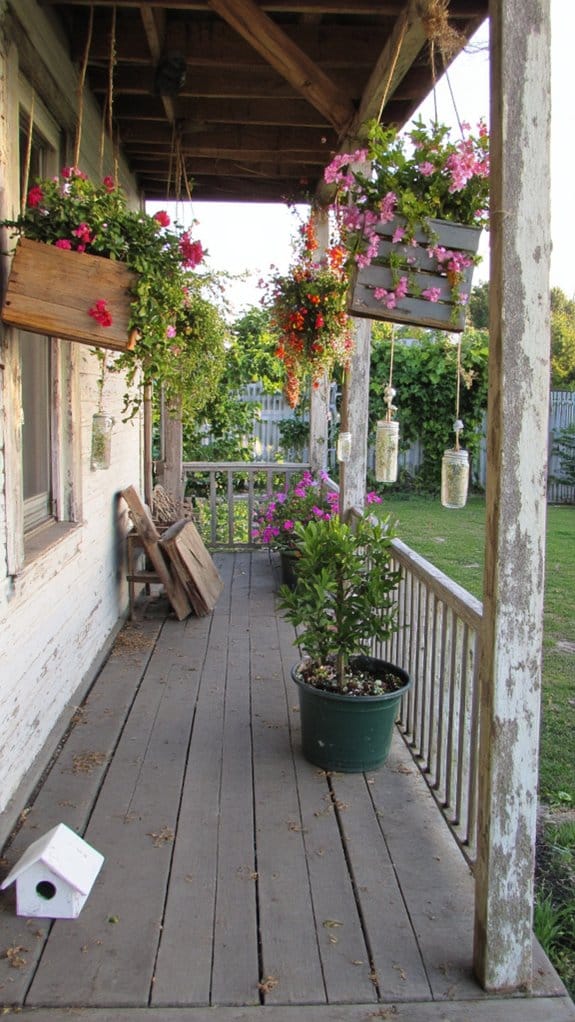
While many people think they need to buy new planters, I’ve discovered that upcycling household items can lead to some truly unique hanging planters.
Old teacups, mason jars, or even worn-out baskets can be transformed into charming displays. Just add some soil and your favorite plants, then hang them up.
It’s a fun way to recycle and personalize your space!
Add Decorative Touches to Your Hanging Baskets
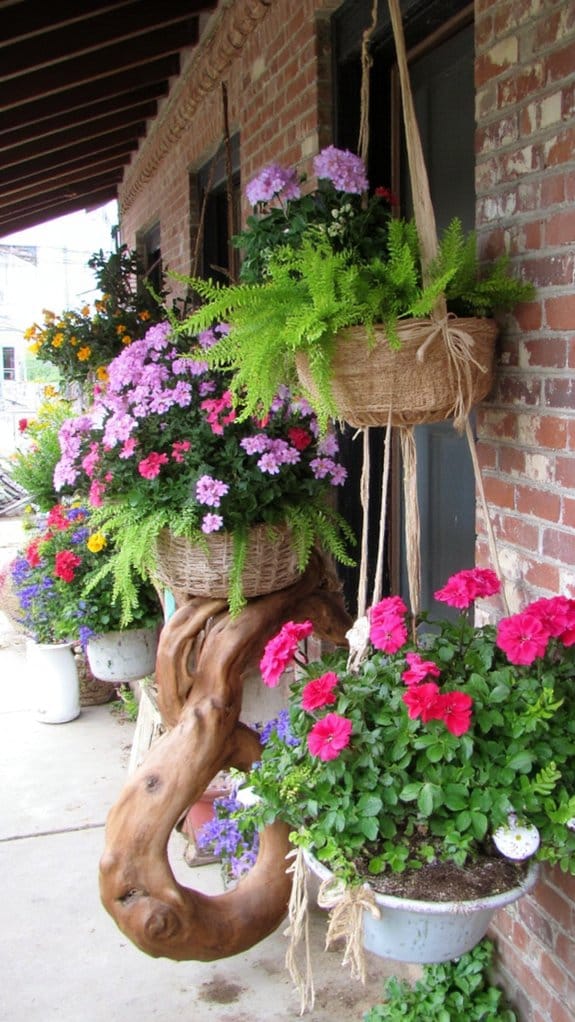
To enhance the beauty of your hanging baskets, consider adding decorative touches that reflect your personal style.
I love incorporating colorful ribbons, charming wind chimes, or even small figurines. These accents not only add character but also make your baskets uniquely yours.
Experiment with different textures and colors, and you’ll create a stunning display that draws the eye and sparks joy.
Incorporate LED Lights for Nighttime Charm in Your Baskets
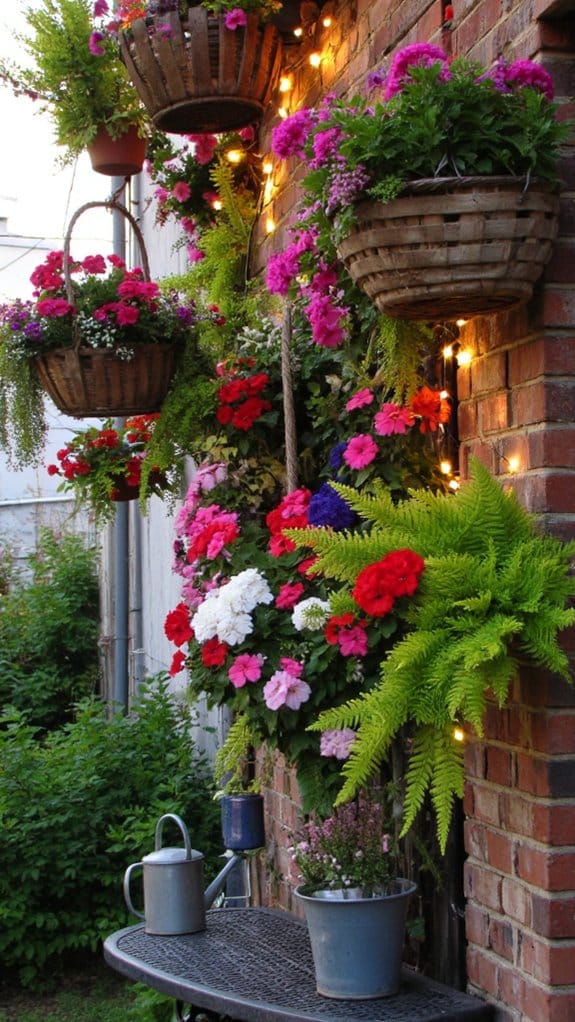
Adding LED lights to your hanging baskets can transform them into a magical nighttime display.
I love wrapping string lights around the edges or weaving them through the plants. The soft glow not only highlights the flowers but creates a cozy ambiance in my garden.
It’s an easy way to enjoy a charming evening atmosphere and impress my guests!
Plant Succulents for Low-Maintenance Hanging Baskets
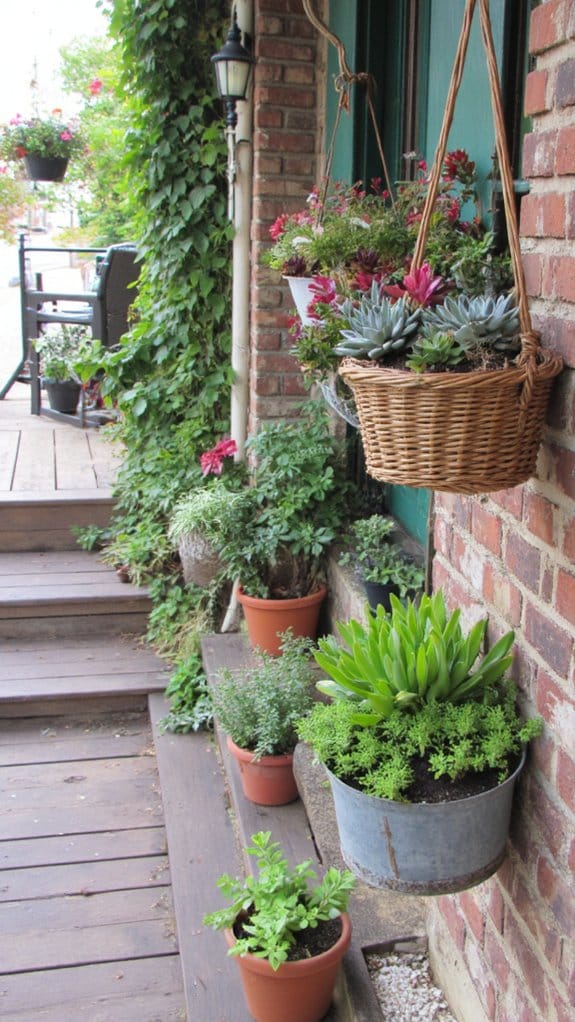
Succulents are perfect for low-maintenance hanging baskets, and I often choose them for their resilience and unique beauty.
These drought-tolerant plants thrive in various conditions, requiring minimal watering. I love mixing different varieties for texture and color, creating a stunning display.
Whether it’s trailing or upright succulents, they bring charm, and I hardly ever worry about upkeep!
Create a Vertical Garden With Multiple Hanging Baskets
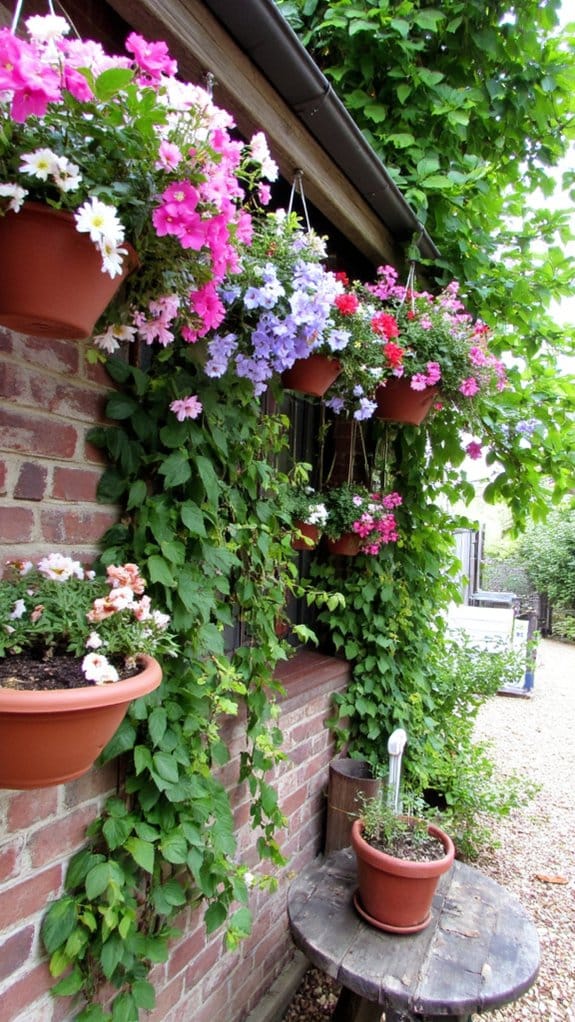
While I love the charm of individual hanging baskets, creating a vertical garden with multiple ones can transform a small space into a stunning focal point.
I hang various baskets at different heights, mixing colors and textures for visual interest. This layered look draws the eye upward and adds depth to my garden.
Plus, it’s a great way to showcase my favorite plants!
Hanging Baskets for Small Spaces: Balcony and Porch Ideas
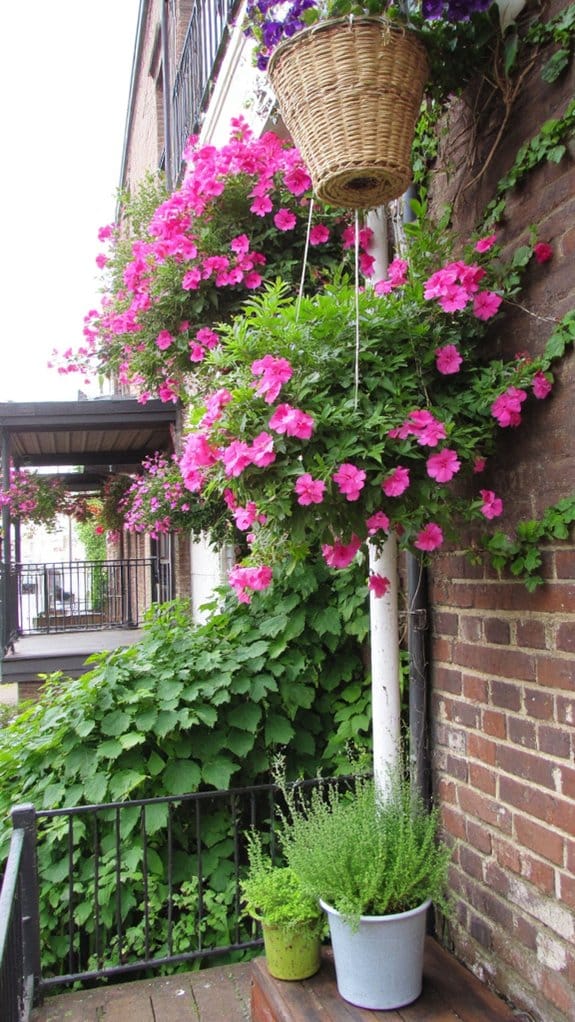
Creating a vertical garden with multiple hanging baskets is a fantastic way to maximize space, but when it comes to balconies and porches, I’ve found that smaller, well-placed baskets can make just as big of an impact.
I love using lightweight materials and mixing different flower varieties for color. Hanging them at varying heights adds depth, turning any small area into a lush retreat.
Use Self-Watering Systems for Easy Maintenance
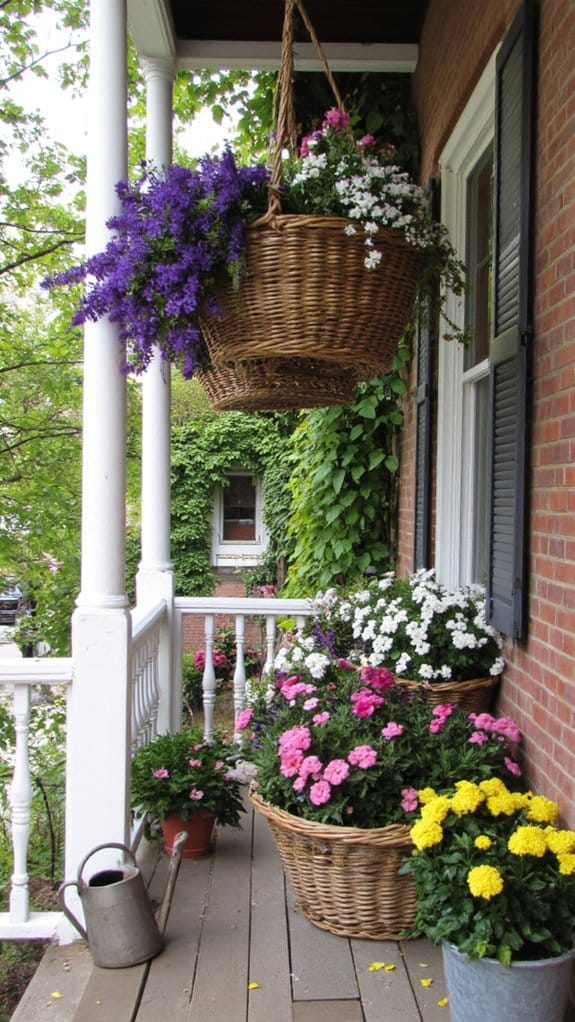
To keep your hanging flower baskets thriving without constant attention, consider using self-watering systems.
I’ve found these systems incredibly helpful for maintaining consistent moisture levels, especially during hot days. They reduce the need for daily watering and let me enjoy my flowers without stress.
Plus, I can focus on other gardening tasks while my baskets flourish beautifully!
Plant Edible Flowers in Your Hanging Flower Baskets
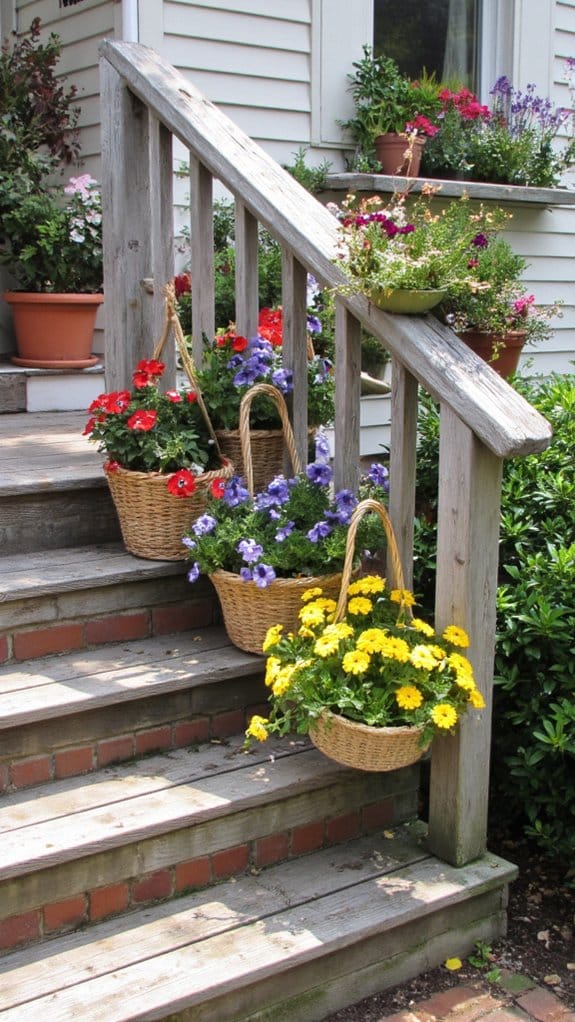
Adding edible flowers to your hanging flower baskets can transform your garden into a vibrant and tasty delight.
I love planting nasturtiums, pansies, and calendulas because they add color and flavor to my dishes. Not only do they look stunning, but they also attract beneficial insects.
You’ll find that incorporating these blooms elevates both your garden’s beauty and your culinary creations!
Rotate Seasonal Plants for Continuous Blooms
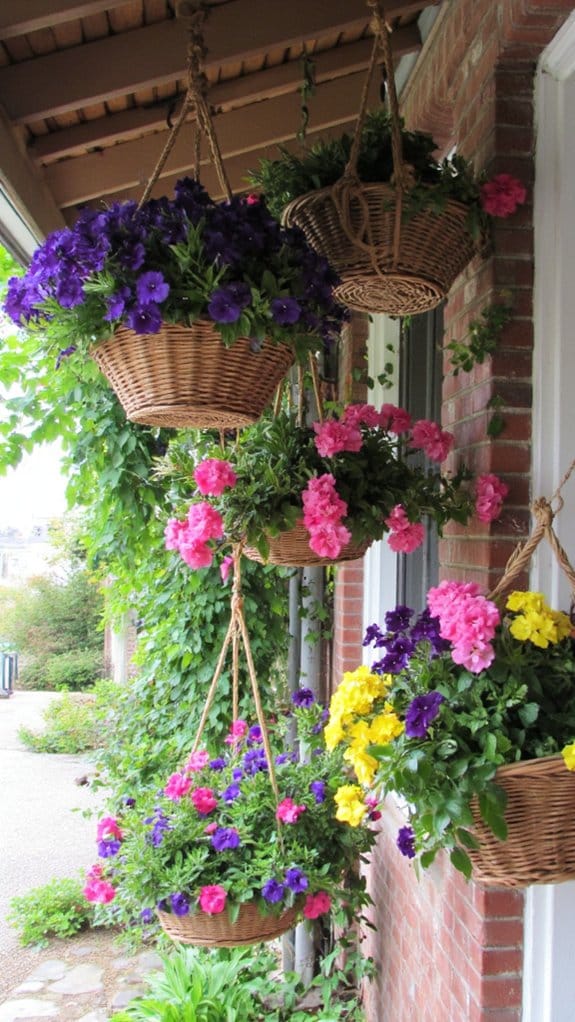
After enjoying the beauty and flavor of edible flowers, I like to keep my hanging baskets vibrant all year round by rotating seasonal plants.
In spring, I opt for cheerful pansies and petunias, while summer brings lush geraniums and cascading lobelia.
As fall approaches, I switch to rich chrysanthemums and ornamental peppers, ensuring my baskets always showcase stunning blooms throughout the seasons.
Find the Ideal Location for Your Hanging Baskets
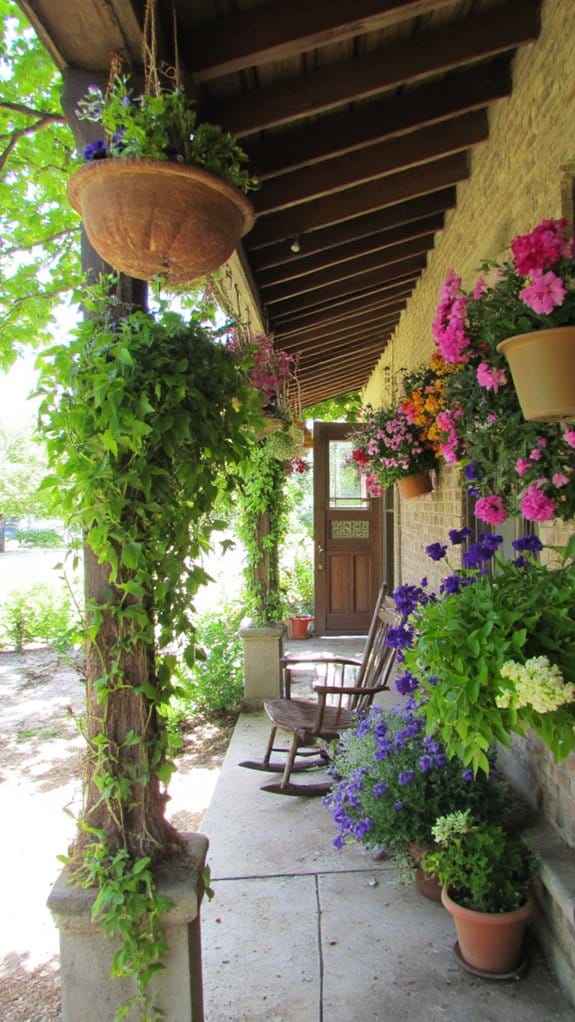
Where’s the best spot for your hanging baskets?
I’ve found that bright, indirect sunlight works wonders for most flowers.
Consider placing them near a patio or porch, where you can enjoy their beauty daily.
Placing your hanging baskets near a patio or porch lets you savor their beauty every day.
Make certain they’re easily accessible for watering and maintenance.
Avoid overly windy areas, as strong gusts can damage delicate blooms.
Finding the right spot makes all the difference!
Design Hanging Flower Baskets to Attract Pollinators
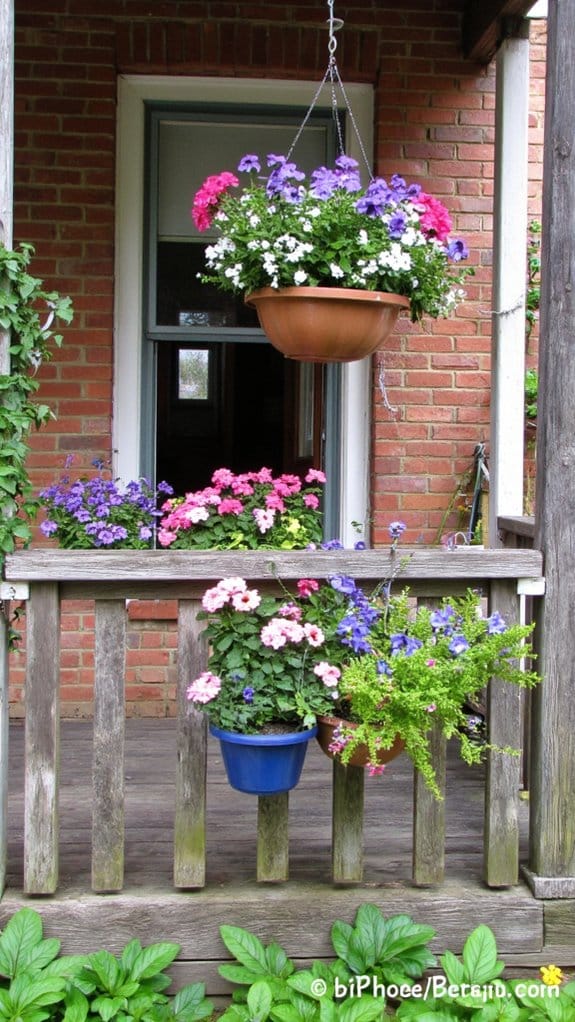
To attract pollinators like bees and butterflies, I focus on choosing vibrant flowers that provide nectar and pollen.
I love incorporating plants like lavender, petunias, and marigolds into my hanging baskets. These flowers not only brighten my space but also draw in those essential pollinators.
I often mix colors and textures to create a lively, inviting atmosphere that benefits both my garden and local wildlife.
Maintenance Tips for Thriving Hanging Flower Baskets
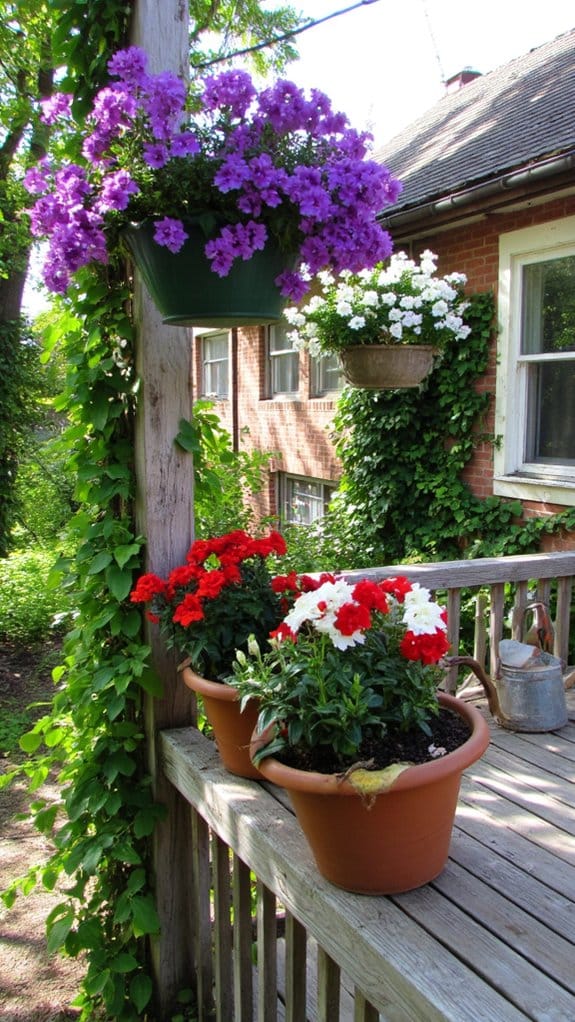
While maintaining thriving hanging flower baskets may seem challenging, it’s actually quite manageable with a few simple tips.
I make certain to water them regularly, allowing the soil to dry slightly between sessions.
Fertilizing every few weeks keeps them nourished.
Also, I prune any dead or yellowing leaves to encourage new growth.
Finally, I check for pests to guarantee they stay healthy and vibrant.
