

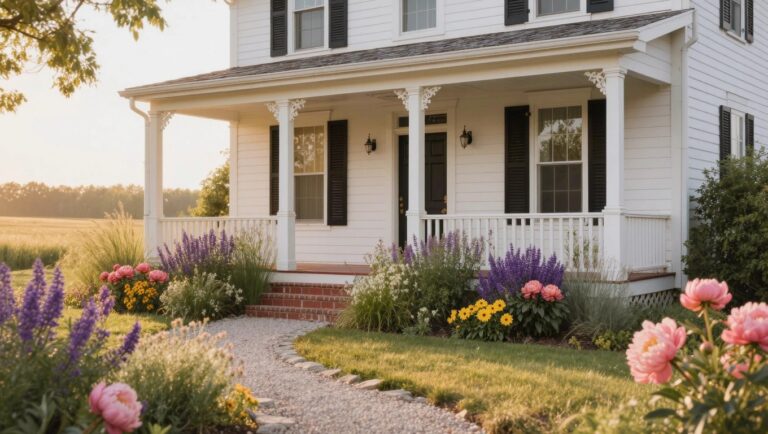
I’ve been using perennial flower beds to add steady color to my yard for several seasons now. They perform best when you match plants to your light conditions and layer them by height for natural depth. I skip overly packed designs because they turn scruffy as plants mature and spread. Thoughtful repeats of two or three varieties keep the look cohesive through changing seasons. I borrowed a mounding approach from a similar bed last spring, and it filled out stronger than I expected.
Perennials Along the Front Porch

A simple perennial bed running right by the porch steps adds color where it counts most. You get pinks from coneflowers, yellows from daylilies, and purples from lavender, all blooming through summer and bouncing back each spring. It pulls the eye to the entry without much upkeep once established.
Set up beds like this against a low stone wall for easy edging. They suit older homes with porches, especially where the yard slopes a bit. Plant in full sun, space them so they have room to spread, and mulch well to cut down on weeding.
Raised Planter for Entry Perennials
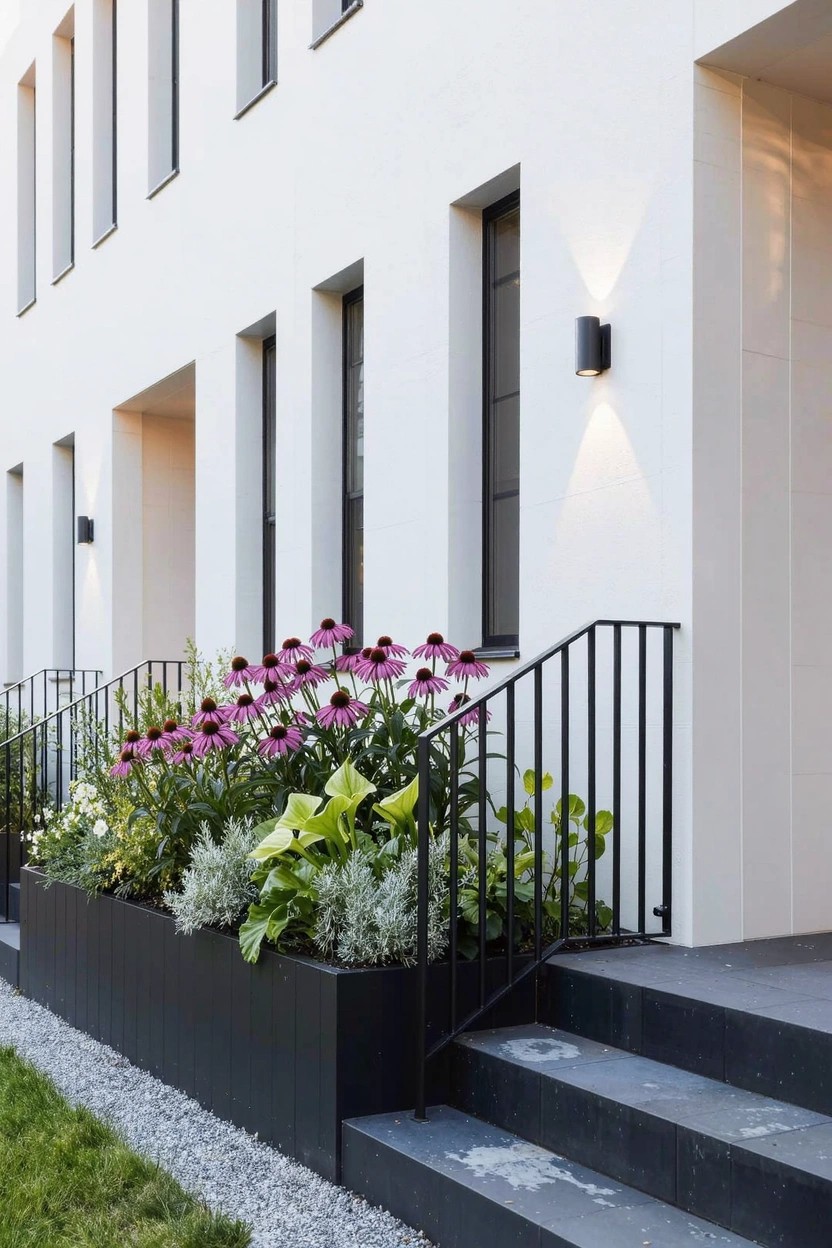
A raised planter box like this sits right at the base of the front steps. Filled with colorful perennials such as purple coneflowers, it brings life to a stark white exterior. The black box keeps things simple and lets the flowers stand out without much fuss.
This works well on modern homes or any plain facade that needs a pop of color. Plant tough varieties that return yearly, and position it where you walk by every day. Suits small front yards… just make sure good drainage so the roots stay happy.
Perennials Planted Against the House
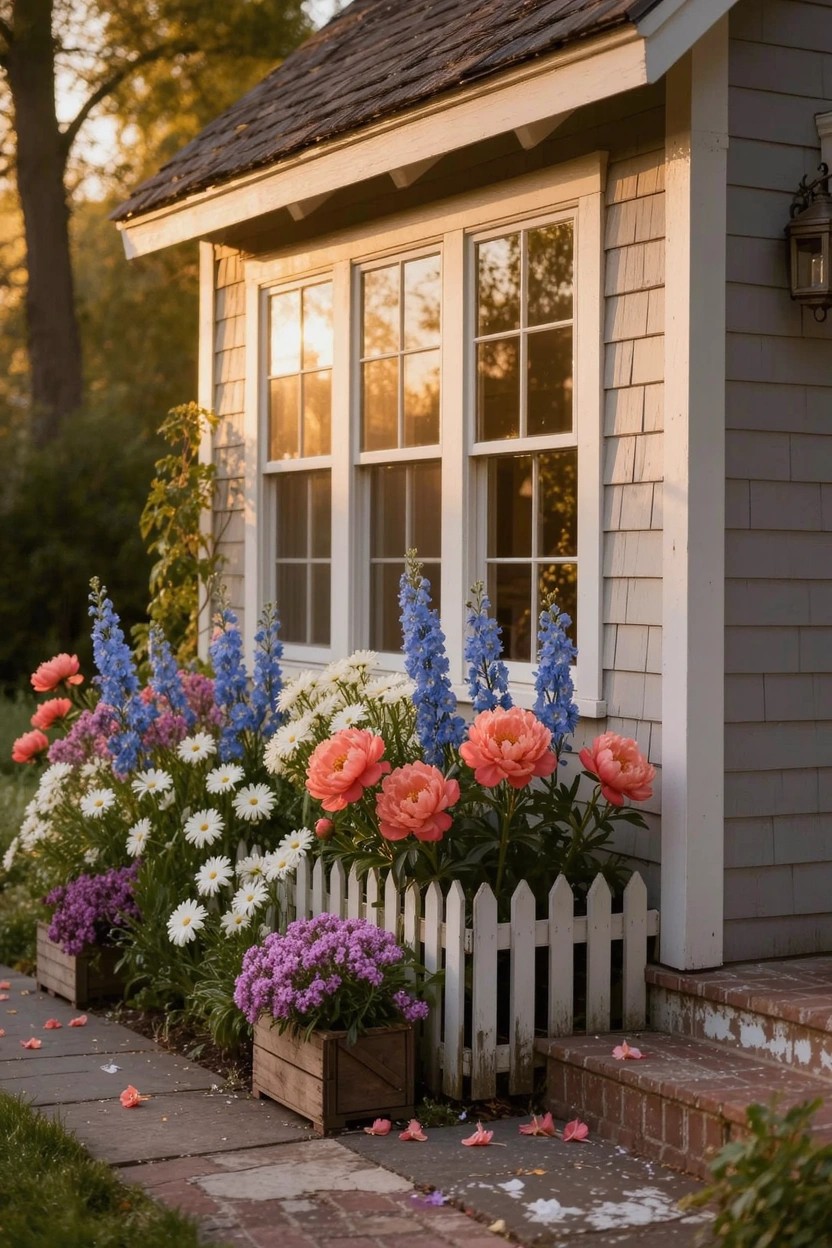
Planting perennials right up against the house foundation gives your exterior a soft, lived-in look that draws the eye without much fuss. Tall blue delphiniums and full peony blooms hug the gray siding here, filling in the space and making those big windows stand out. It’s a simple way to add color that comes back each year.
This works best on cottage-style homes or anywhere with a plain wall you want to warm up. Tuck in a low white picket fence to keep things neat… and mulch well so the plants thrive. Just watch the height so they don’t block the view.
Vibrant Perennial Bed Along the Patio

A simple curved bed packed with colorful perennials makes a backyard patio feel alive. You see reds from dahlias, purples from salvia, and yellows from sunflowers all mixed together right at the edge. It pulls the eye without overwhelming the space. And since these plants come back strong each year, you get that pop of color season after season.
This works best in smaller yards or next to a modern house like this one, where the stone wall keeps everything neat. Plant in full sun, mix heights for interest, and keep the bed low enough not to block doors. Watch for overcrowding though. Thin as needed come spring.
Gravel Beds with Lavender Plants
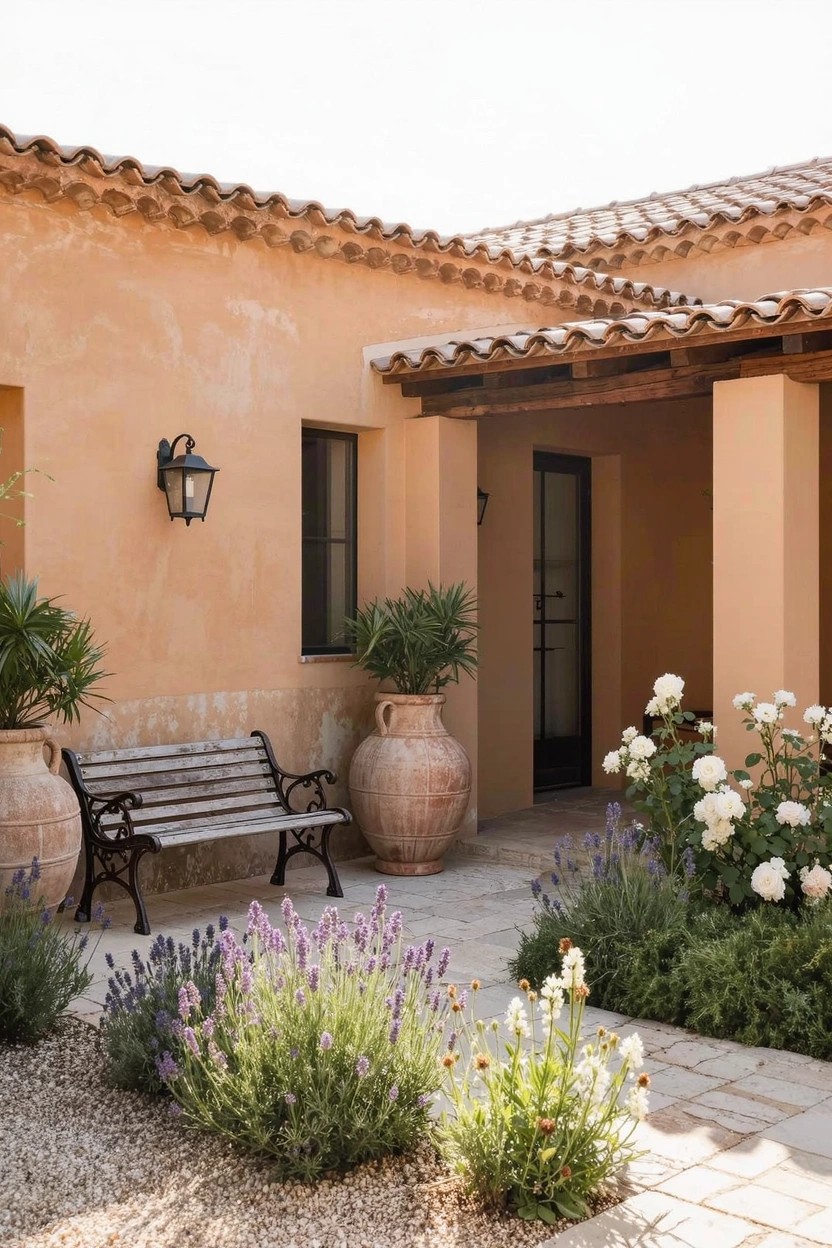
Gravel beds like this one let lavender thrive right up against the house and patio. The purple blooms keep coming back strong in summer heat. They edge the path and bench without crowding the space. It’s a simple way to add color where grass won’t grow.
Try this in sunny dry spots near entries or seating. Lavender handles poor soil fine as long as it drains well. Add a few white roses nearby for more punch. Just don’t overwater or the roots rot.
Perennial Beds Lining the Front Walk
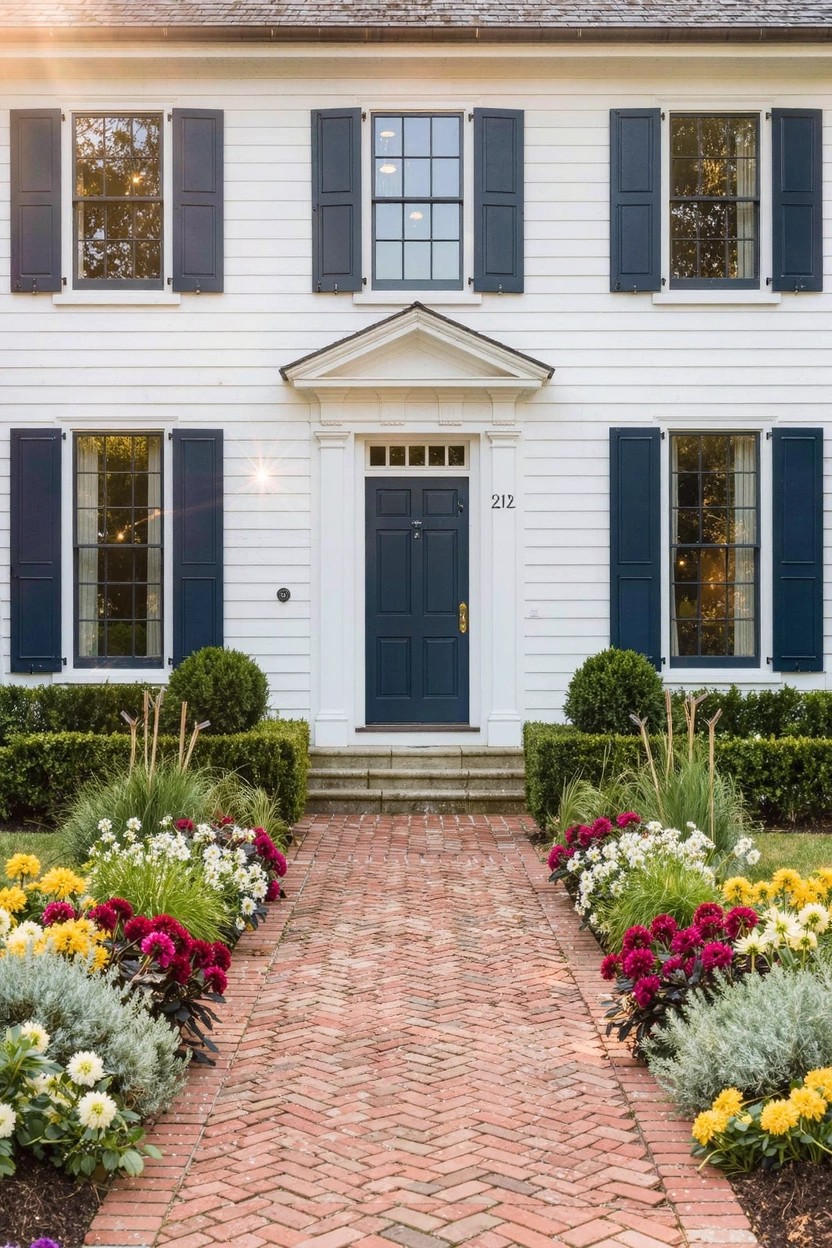
A simple way to boost curb appeal is planting colorful perennials right along the brick walkway to your front door. Here, a mix of pinks, reds, yellows, and whites creates a cheerful path that draws folks right up to the entry. These beds stand out because they come back reliably each year, keeping that fresh look with little fuss.
This idea suits classic homes with straight paths, like a white house with dark shutters. Tuck in tough growers such as daisies and coneflowers, edged with boxwoods for neatness. Watch the scale. too wide, and it overwhelms the walk.
Lupines Line the Path
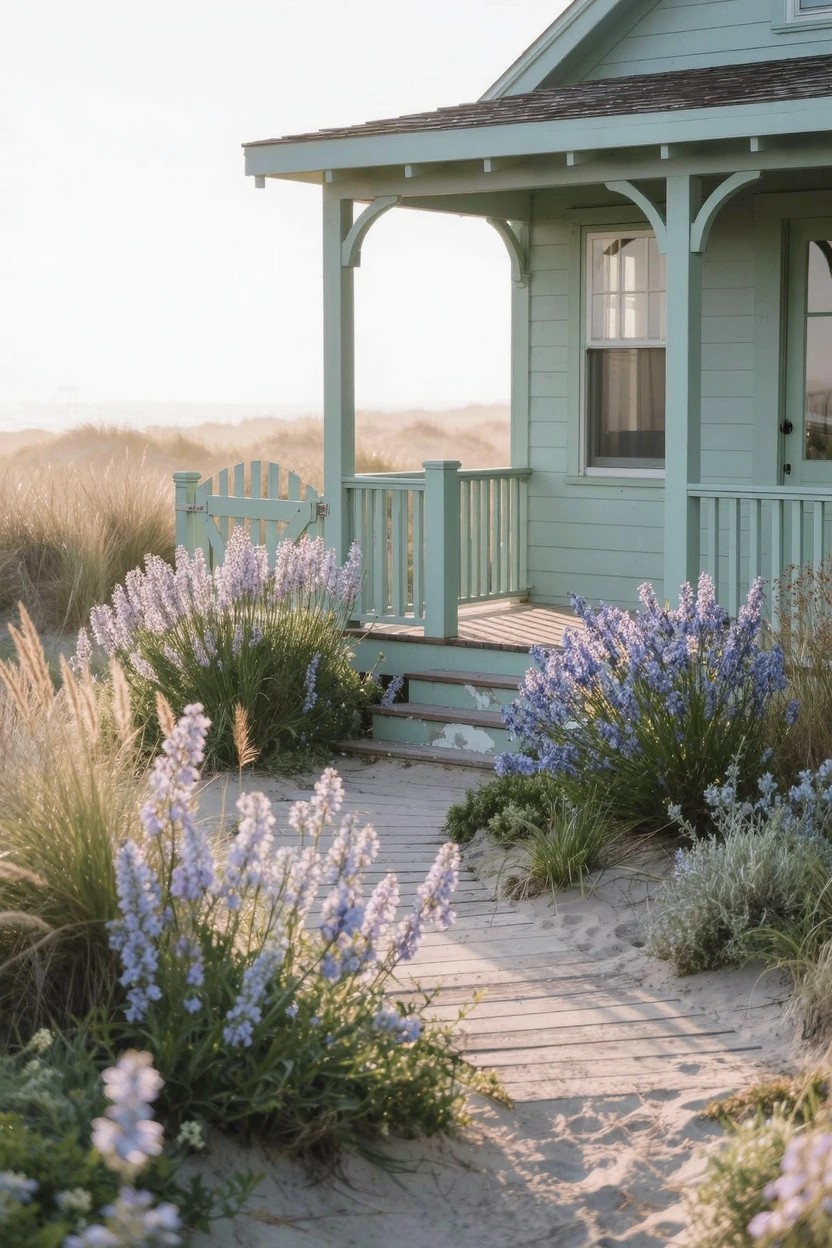
Tall purple lupines planted in thick drifts make a simple flower bed that guides you right to the front porch. They work so well here because they stand up to sandy soil and come back year after year with that bright color pop against the beach grass. The mint green house color lets the flowers take center stage without clashing.
Try this in a seaside yard or anywhere with loose, dry dirt. Space the plants so they fill out along both sides of the path, maybe 2 feet apart. Skip it if your spot stays too wet, though. Lupines like it lean and sunny.
Tiered Flower Beds on Stone Walls
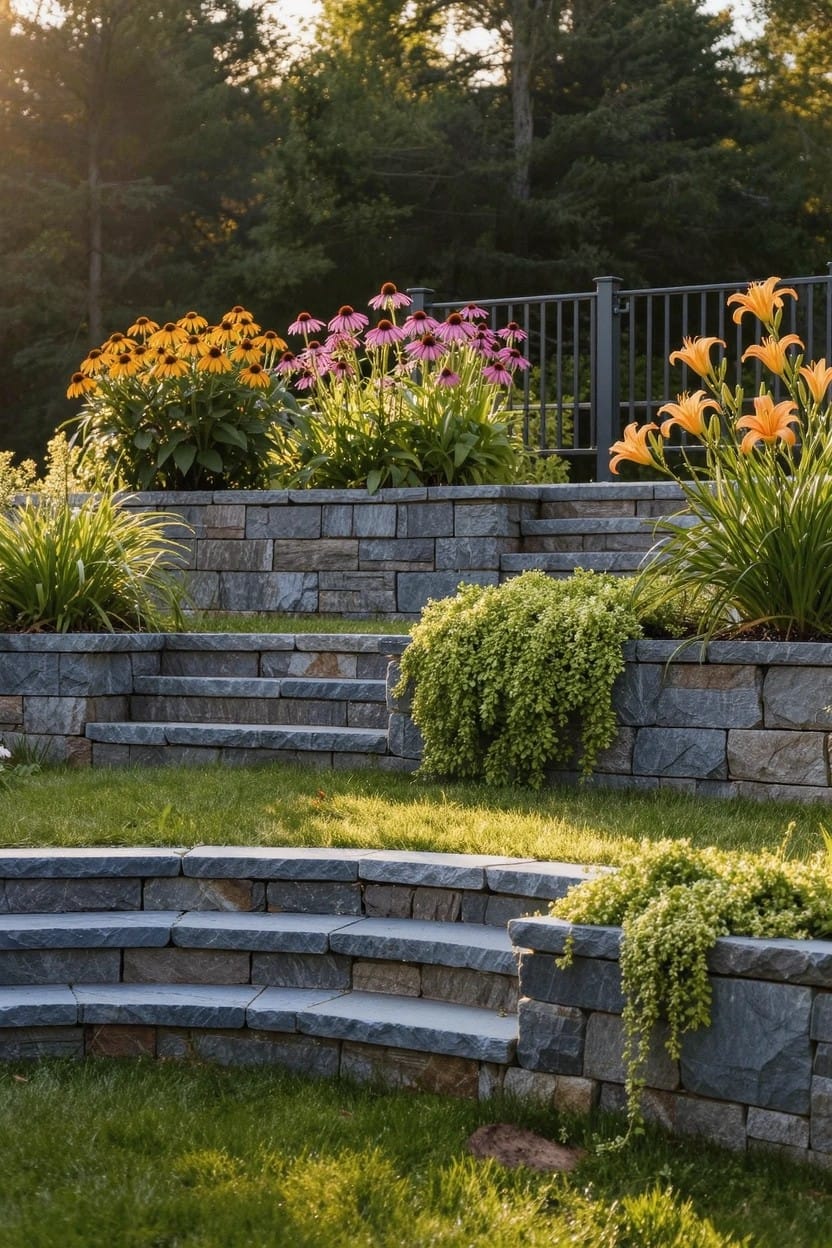
One smart way to handle a sloped yard is to build tiered flower beds right into stone retaining walls. You get flat planting spots where none existed before. Plus colorful perennials like black-eyed Susans and daylilies spill over the edges for that natural look. It turns a tricky hill into something pretty and useful.
These work best on moderate slopes around a backyard or side yard. Go for tough perennials that come back each year. Stone walls hold up well and let plants root in the pockets. Just make sure you have good drainage so the soil doesn’t wash out after rain. Fits older homes with a casual yard vibe.
Stone Retaining Walls as Flower Beds

Raised beds made from the same local stone as the house work great along a driveway or front slope. They hold back soil while packing in color from perennials that return year after year. No need for extra flat yard space. It ties the planting right into the home’s look.
This fits sloped lots around stone or Craftsman-style houses best. Stack the stones loose enough for drainage. Plant a mix of heights like salvia up front and taller spikes behind. Watch for weeds in the gravel joints.
Porch Facing Flower Beds

A porch set up to face right into your flower beds pulls the garden into everyday life. You get to see the perennials do their thing from a shady spot, rain or shine. Those big multi-pane windows keep bugs out but let the view pour in, and the wood railing adds a sturdy feel without getting fussy.
Put this on a simple house with open yard space ahead. Low-growing perennials fill that field area best, coming back thick year after year. Rustic spots like cabins take to it natural. Watch the porch floor for damp spots if your area’s wet.
Perennials Along Stone Porch Bases

Planting colorful perennials right at the base of a low stone wall under a porch brings easy color to a rustic cabin setup. Flowers like daisies, cosmos, and black-eyed Susans fill in thick and bloom for months. They hug the stones without hiding them, and since they’re perennials, they pop back strong each spring.
This idea fits sloped yards or mountain homes best, where the stone wall keeps soil in place. Tuck plants along the edge so they spill forward a bit. Go for sun-loving types that handle dry spells. Just keep taller ones trimmed back from the porch steps.
Tall Purple Flowers at the Entry

Tall purple flowers in those big urns make a simple statement right at the front door. They stand out against a plain white house and give some life to the steps without taking over. Perennials like alliums keep coming back strong each spring, so the color shows up year after year.
Set up a pair of urns on either side of your entry for balance. This works well on homes with clean lines or traditional looks. Just pick varieties that match your zone, and keep them trimmed so they stay neat.
Poolside Perennial Borders
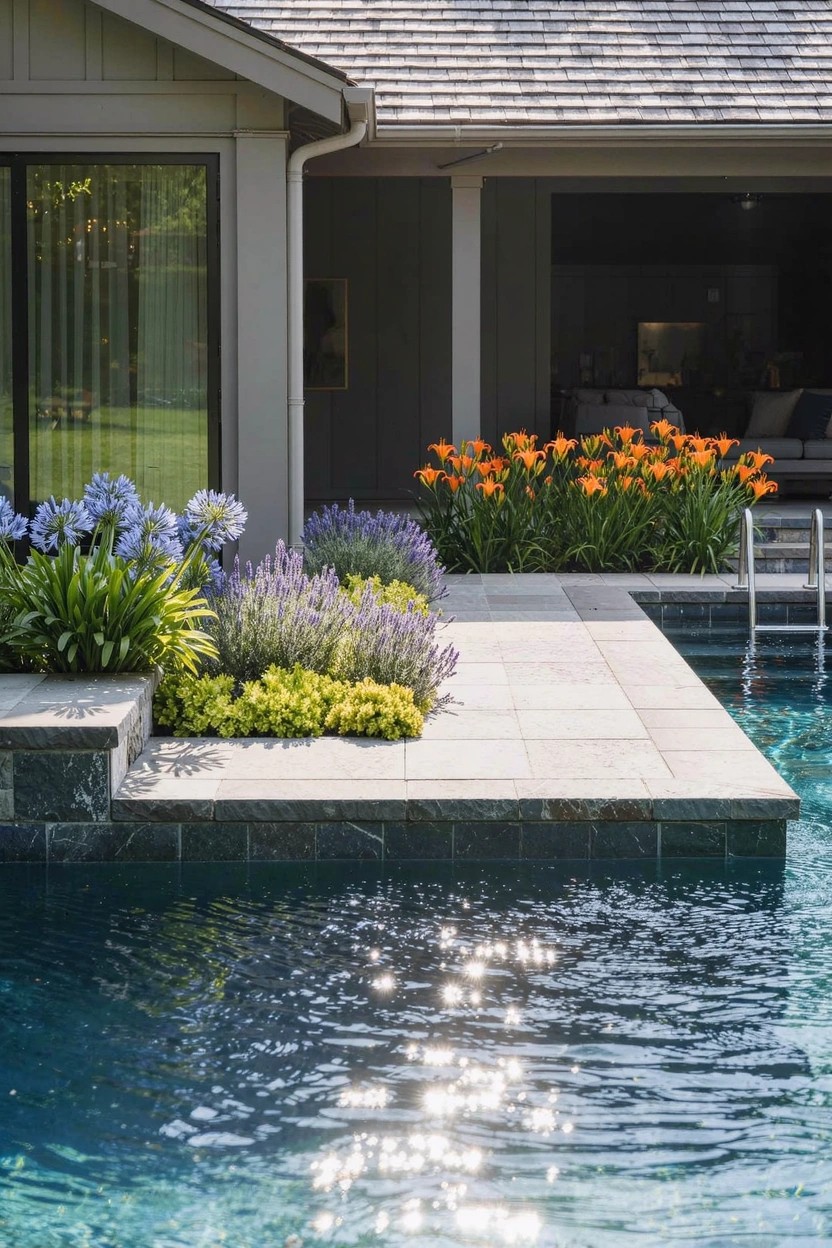
One simple way to add color near water is planting perennials right along the pool edge. You see blues from agapanthus and oranges from tulips mixed in with lavender and low greens. They hug the stone deck without spilling over. These plants come back each year and hold their spot through summer heat.
This setup works best on sunny patios or decks where the hard surfaces need some life. Pick tough varieties that take full sun and don’t mind wet feet now and then. It suits modern homes with clean lines. Just keep the beds trimmed so they stay neat.
Garden Pavilion with Shade Perennials
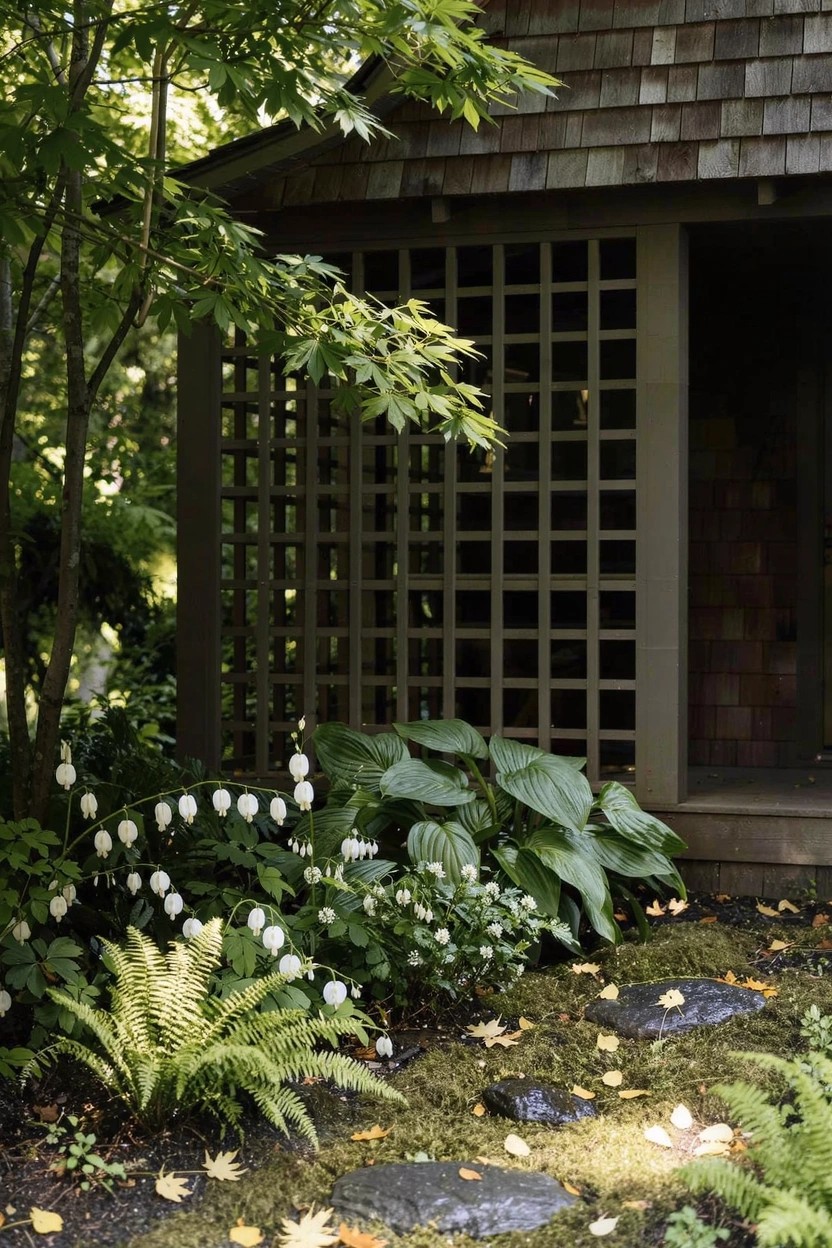
A wooden pavilion like this one works well when you plant shade perennials right around it. The lattice walls and shingle roof give it a simple cabin feel, and the ferns, hostas, and white flowers fill in the edges nicely. People like how it creates a quiet spot without much fuss. The plants come back each year and keep things looking full.
Put something similar in a shady corner of the yard, maybe near a path or patio. It suits older homes or wooded lots best. Just choose perennials that handle low light, and watch they don’t crowd the entry. Easy to maintain once established.
Perennial Beds at Porch Pillars
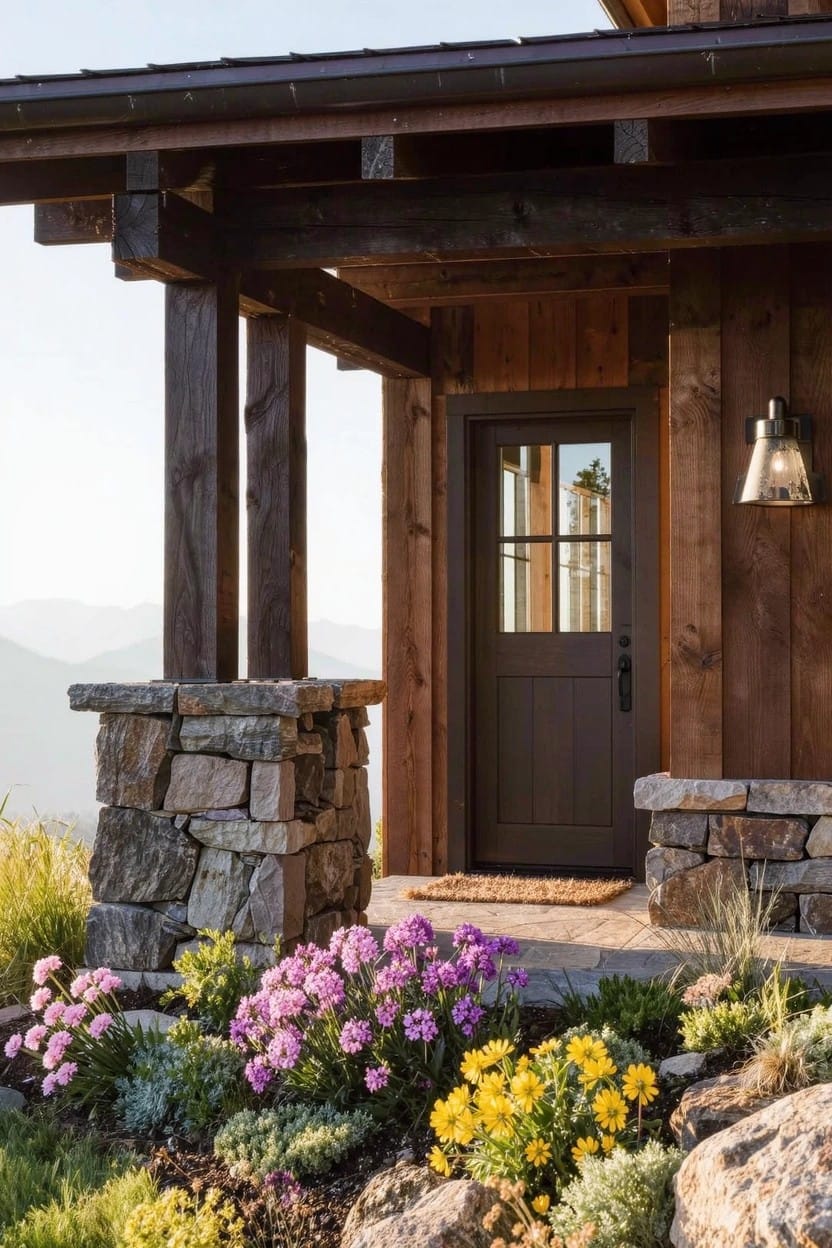
One simple way to boost curb appeal is planting colorful perennials right at the base of your porch pillars. In this setup, low pink flowers and yellow daisies mix with rocks and grasses. They hug the stone without climbing up. Perennials like these come back strong each spring. That means steady color with little replanting.
Try this on rustic homes or sloped yards where soil stays rocky. Use tough varieties that handle dry spots. Keep plantings under two feet tall so they frame the entry but don’t crowd the steps. It works best where you want natural color without fussy beds.
Rusted Steel Planters for Raised Beds

These rusted steel planters line up neatly along a patio edge. They form simple raised beds that hold perennials without much fuss. The metal’s natural patina blends with garden plants over time. It gives a sturdy, modern frame for flowers that return strong each year.
Set them in a row like this for a clean backyard border. Fill with colorful perennials such as salvia or echinacea. They suit most any yard size, especially patios or walkways. Line the bottoms to avoid rust stains on pavers below. Easy to build or buy ready-made.
Perennials Along the House Base

A simple row of perennials right up against the house foundation does a lot for curb appeal. In this case, purple flowers mixed with soft grasses add color to a plain white shingle exterior. They hide the base without growing too tall or bushy. It’s a low-key way to tie the house into the yard.
Plant these kinds of perennials on sunny, dry spots like beach yards or cottage foundations. Go for tough ones like lavender or dune grass that return strong every spring. Pair with a gravel path for drainage. Skip it on shady sides, though. They need full sun to bloom well.
Patio Edged with Colorful Perennials
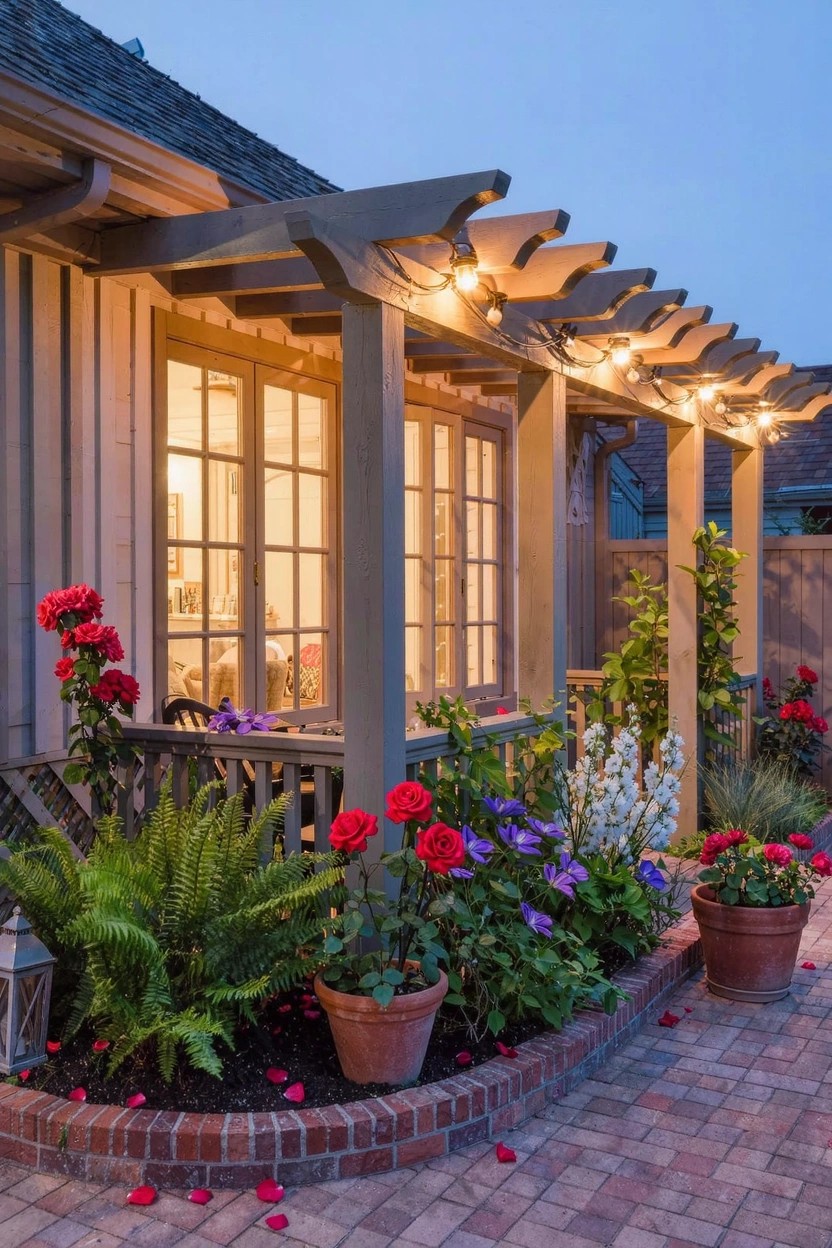
One simple way to boost curb appeal is edging a patio with perennials that bloom reliably year after year. Here, red roses mix with tall white flowers and lower greens right along the brick path. The colors pop at dusk, and since they return strong, you get that garden look without starting over every spring.
This works best on smaller patios next to the house, where the flowers frame a seating spot. Go for full-sun perennials like roses and foxgloves if your spot gets afternoon light. Just keep the beds mulched to hold moisture… saves watering time.
Perennial Beds Along the Front Path
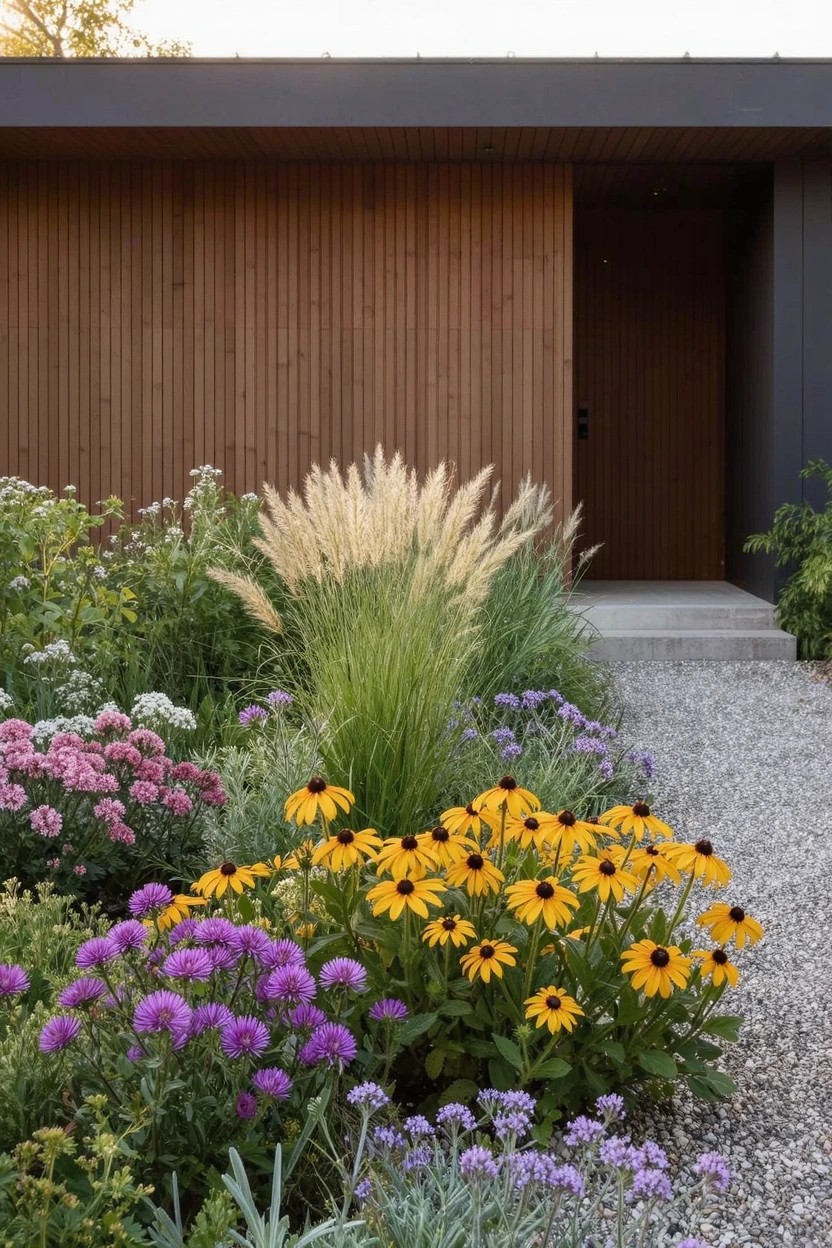
A simple gravel path leads right to the door here, edged with low perennials and taller grasses. Yellow black-eyed Susans mix with purples and pinks for color that lasts into fall. These plants come back strong each year, so the bed fills out without constant replanting. It softens the plain wooden siding too.
This works best for a side-entry or straight-shot walkway on smaller front yards. Go taller in back with grasses like miscanthus, then shorter flowers near the path edge. Gravel drains well and lets roots spread. Just trim back in spring… and keep weeds pulled early. Suits ranch or modern homes fine.
Raised Beds Around a Garden Shed

A weathered wooden shed makes a fine focal point in the yard when you tuck raised beds right up alongside it. The perennials in those beds put on a show of color through the season. Orange marigolds and purple blooms stand out nice against the shed’s gray tones. And since they’re perennials they bounce back strong each spring.
Set this up in a backyard corner where you want some garden charm without taking much space. It suits older homes or simple lots. Build the beds from scrap wood to keep costs down. Watch that water doesn’t pool in the beds after rain.
Perennials Bordering Stone Steps
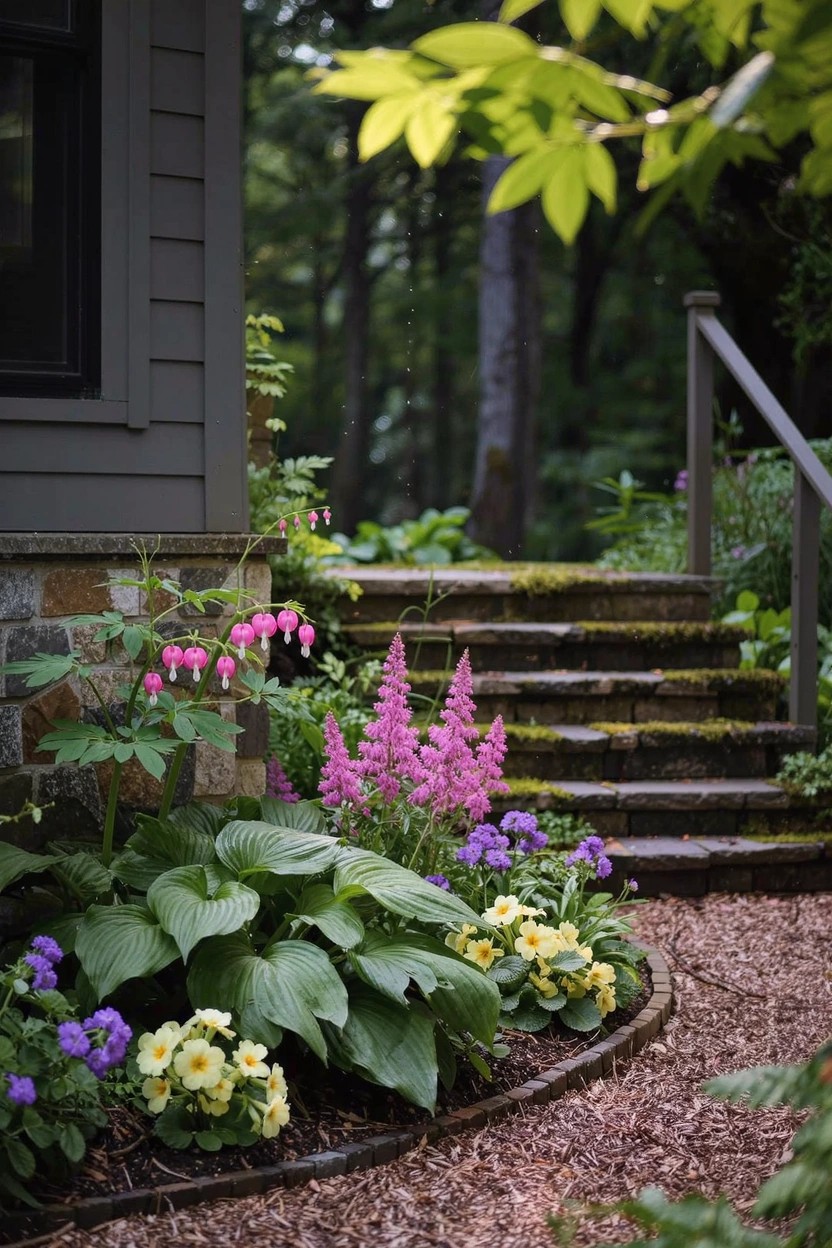
Stone steps leading to the front door get a lift from perennials planted right along the edges. Tall pink spikes and big leafy hostas fill in the bed, making the walk up feel part of the garden. These plants come back each year, so the color stays without starting over.
Try this on cottage homes or cabins tucked in the woods. Tuck taller flowers at the back and low ones up front near the steps. Moss on the stones adds to the look, but trim plants so they don’t block the path.
Frequently Asked Questions
Q: When should I plant these perennials for the best results?
A: Go for early spring or fall in most areas. That timing lets roots dig in deep before summer heat or winter cold arrives. They’ll pop back stronger the next season.
Q: How do I prep my soil before planting?
A: Loosen the top 12 inches and mix in compost or aged manure. Skip harsh chemicals. Healthy soil keeps these flowers thriving year after year.
Q: What if my yard has some shade?
A: Pick shade-tolerant picks like astilbe or heuchera from the ideas list. They deliver color without full sun. And pair them with ferns for texture.
Q: How often do I water a new perennial bed?
A: Keep soil moist but not soggy for the first few weeks. Water deeply once or twice a week. Once established, nature handles most of it…
