

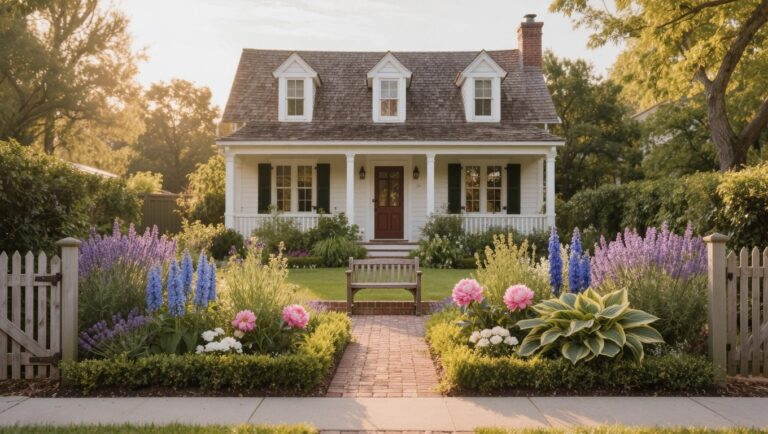
I’ve tinkered with flower beds long enough to see how they anchor a yard’s look. The keepers layer low edging plants with mid-sized bloomers and taller anchors for natural depth. I go for soft curves that follow the ground’s contours instead of boxing everything in rigidly. Forced color clashes or skimpy spacing lead to beds that thin out and look neglected by midsummer. Certain setups like these shift everything for good.
Flower Beds Along the Front Path
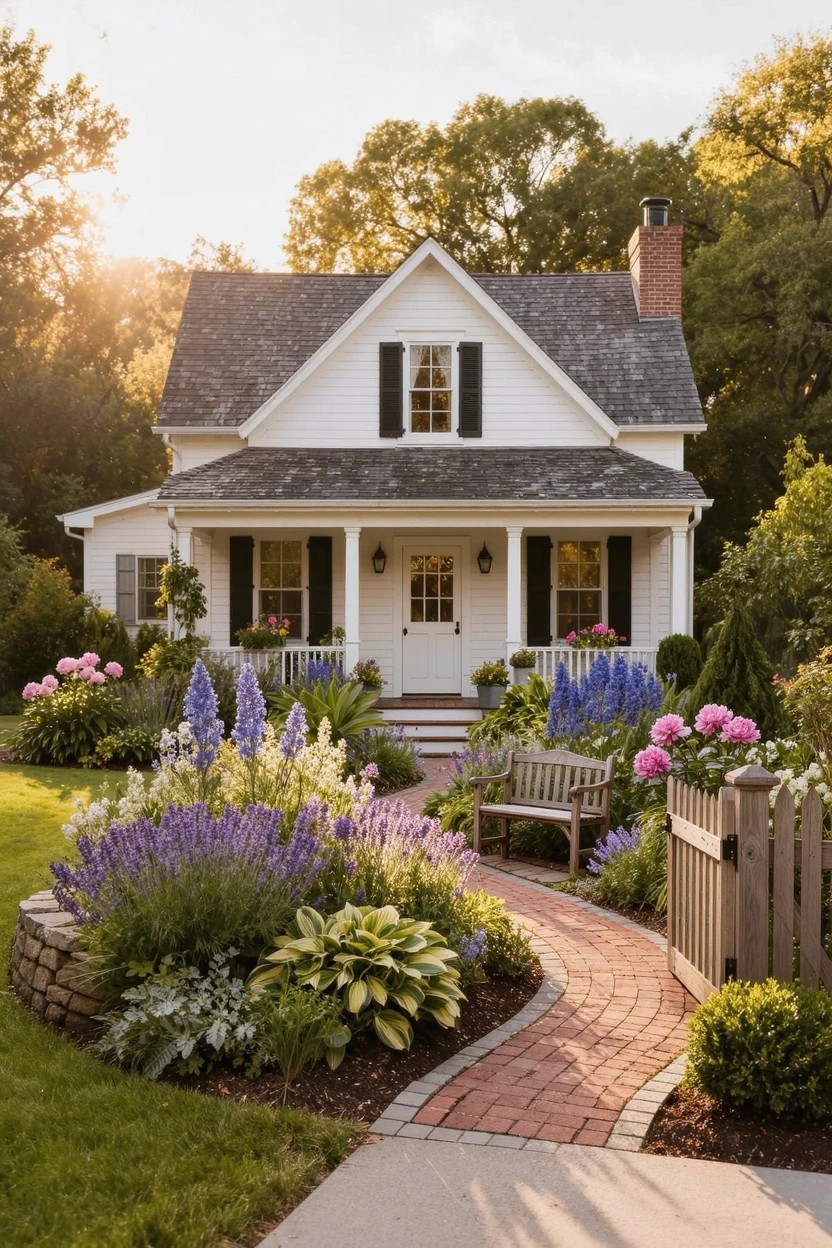
One easy landscaping idea is to edge your walkway with deep flower beds. Tall perennials like delphiniums and hydrangeas fill the borders here, following the curve of a brick path right up to the porch. It softens the hard lines of the walk and house. People notice how the plants make that first approach feel more personal.
Try this on homes with a front porch or entry steps. Pick tough perennials that come back each year. Put the tallest at the back, spill lower ones forward. It suits average yards, but trim back if space feels tight. Just keep the path swept for clean steps.
Corten Steel Raised Beds
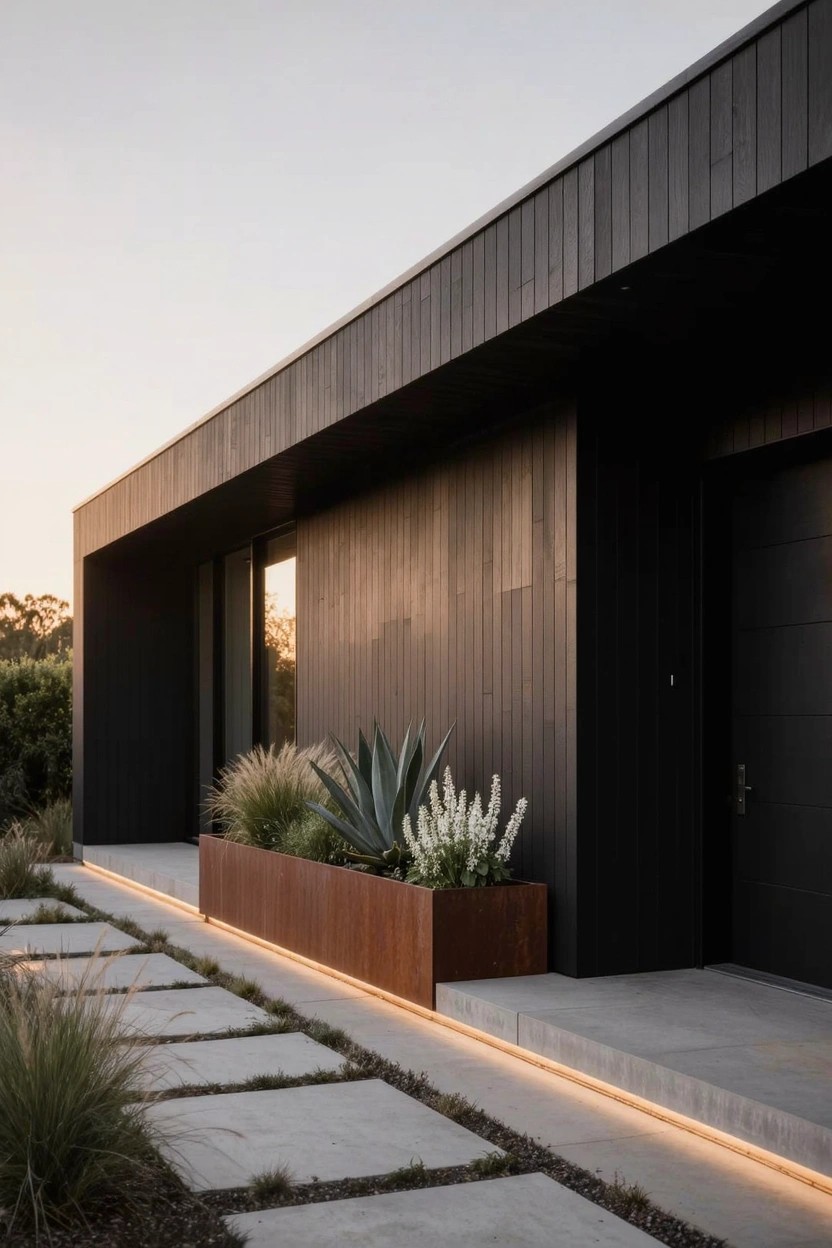
One simple way to edge your walkway is with a long raised bed made from corten steel. It develops that nice rusty patina over time, which looks right at home against dark siding like black-stained wood. Fill it with tough plants such as agave and tall grasses, maybe some white flowers for contrast. Folks like how it keeps things neat without much fuss.
Put these beds next to paths leading to your front door, especially on modern houses or any place with straight lines. They suit yards that get full sun, since the plants inside handle drought well. Just make sure there’s good drainage in the bed, or water might pool. Easy to build or buy ready-made.
Weathered Log Flower Beds
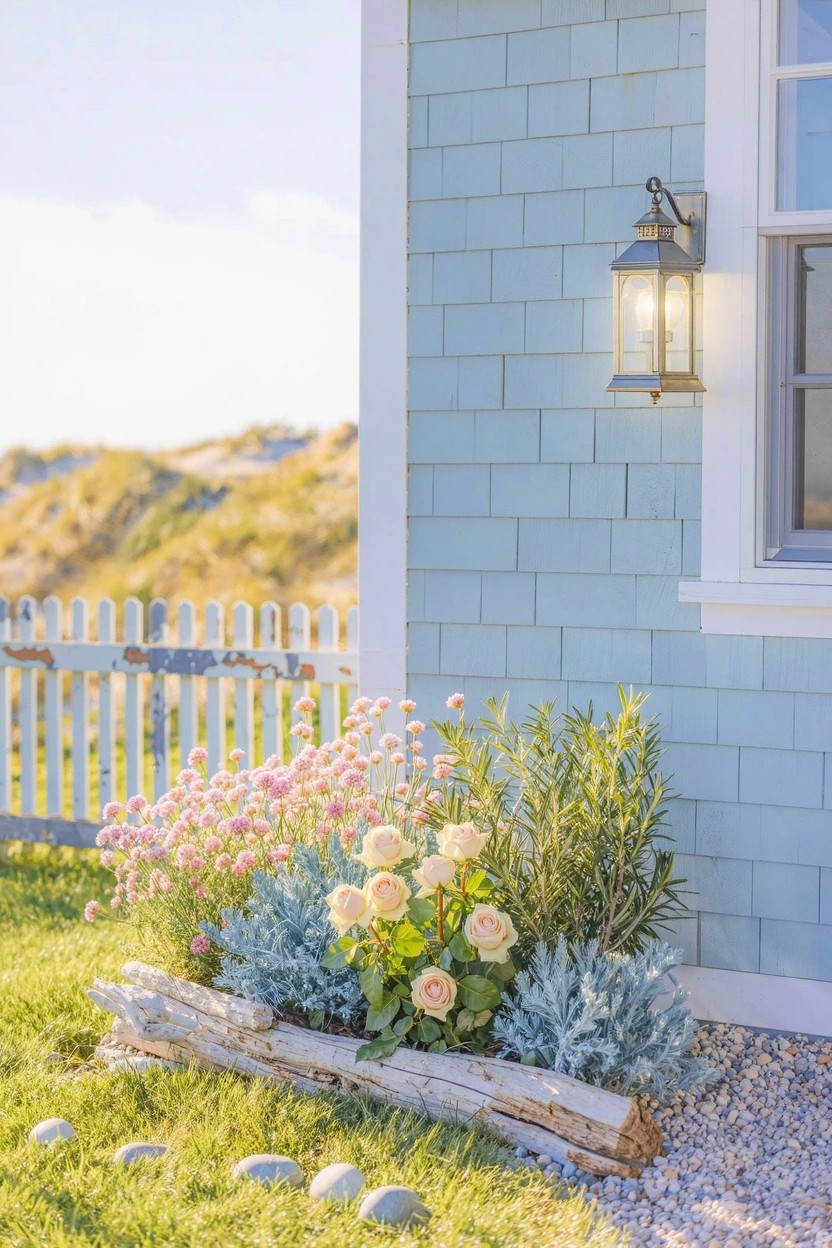
One easy way to add flowers near your house is to use an old log as a planter. You just hollow out a weathered log a bit, fill it with soil, and plant soft pink roses or other low growers inside. It looks natural and fits right against a house corner like this blue shingle one. People like how it blends wood tones with the plants. No fancy edging needed.
These work best in cottage yards or beach spots where you want a relaxed look. Place the log along the foundation or fence line. Pick plants that trail over the edges, like roses and silvery greens. Keep soil moist since logs dry out fast. Avoid super sunny spots unless your plants handle heat.
Circle a Fountain with a Flower Bed
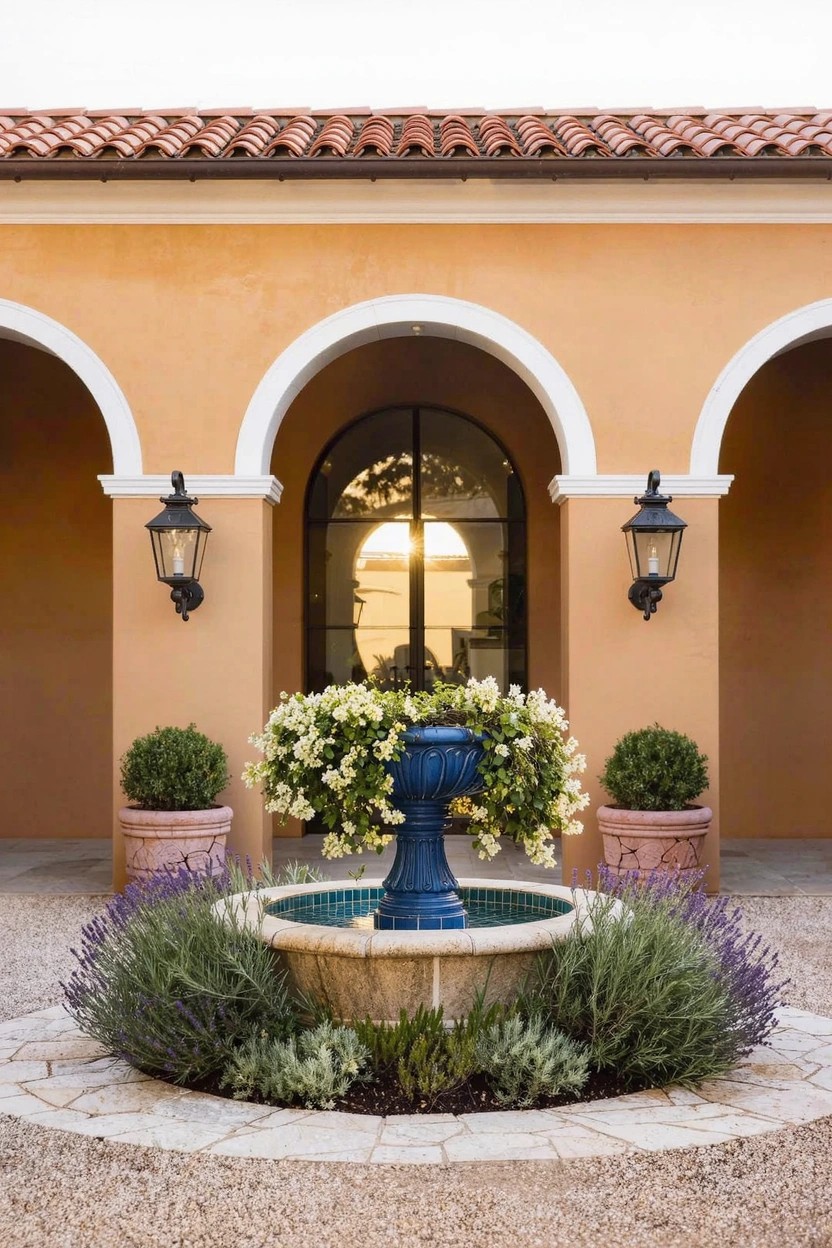
A simple flower bed ringing a fountain turns a plain patio spot into something special. It pulls your eye right to the center where the water plays. Low plants like lavender hug the stone base and fill out the circle without crowding. That setup keeps things neat and gives the space a finished look.
Try this in a courtyard or small yard off the house. Gravel or pavers work best underfoot. Pick tough plants that take dry spots… lavender holds up well. Just make sure water drains away from the house. It fits older homes with tile roofs or stucco walls.
Driftwood Edging for Flower Beds
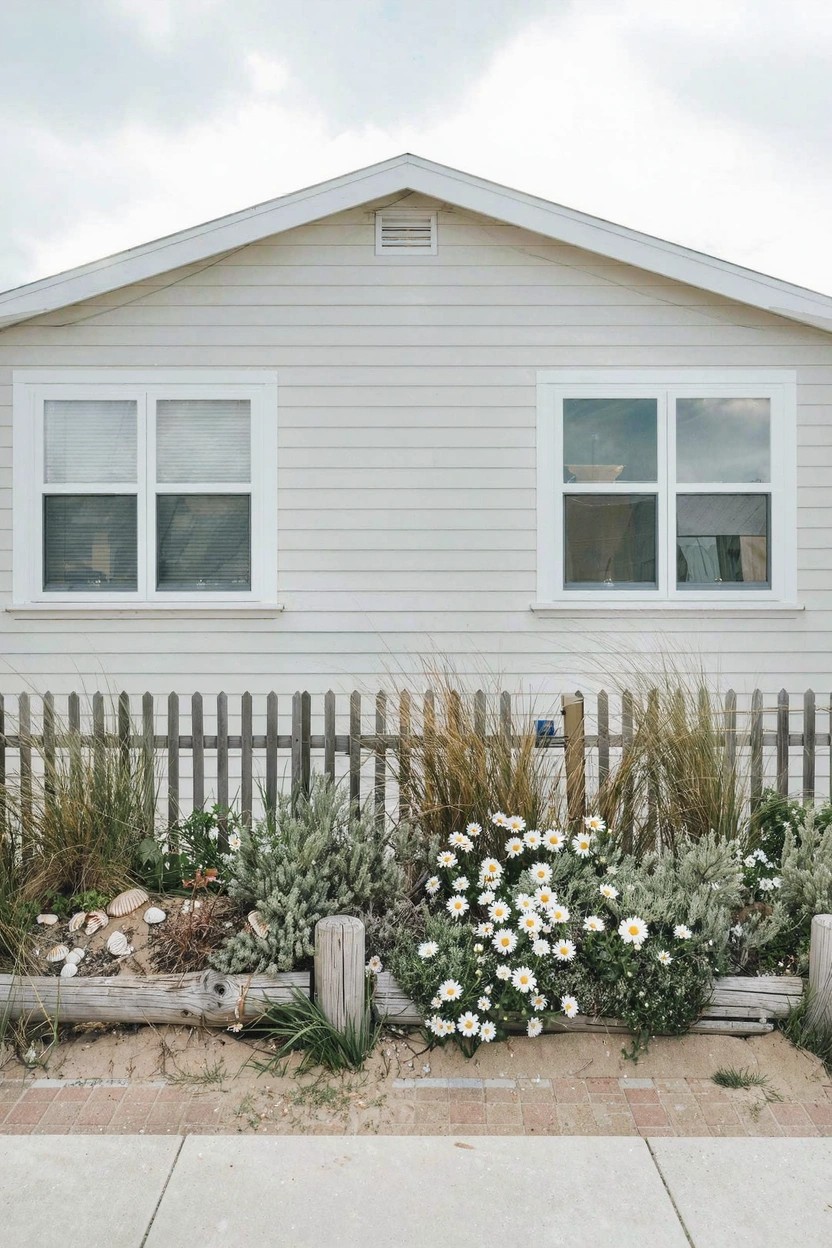
One easy way to build a flower bed is to stack driftwood logs along the front edge. It gives a natural, beachy look that fits right in front of a plain house like this white clapboard one. The logs hold back soil and plants without looking forced, and they let you mix in simple stuff like grasses and daisies that don’t need much water.
Put this setup along your front walk or fence line where it can catch the eye from the street. It suits cottages or ranch homes in sandy yards, especially near the coast. Collect weathered logs from the beach or buy some, layer them sturdy, then fill with tough plants. Skip it if pests worry you inland.
Curved Stone Flower Bed Borders
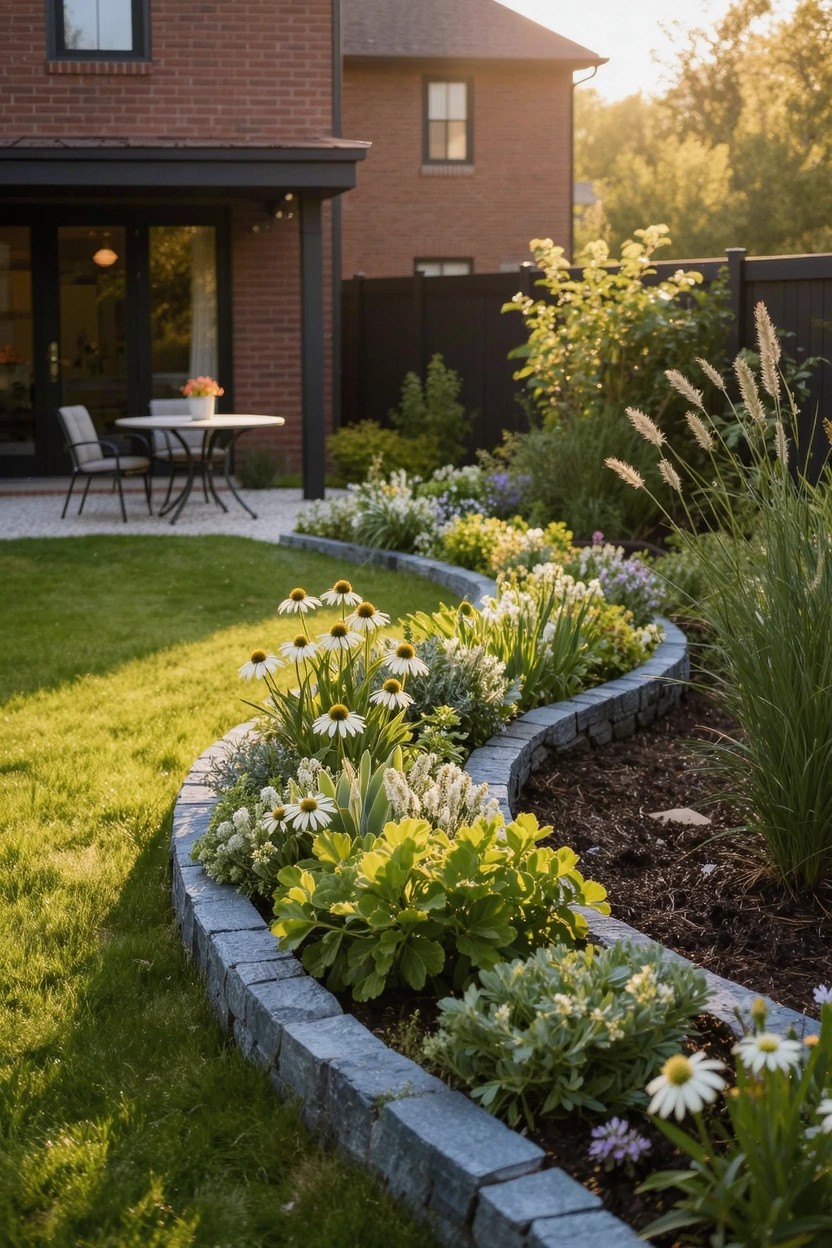
One simple way to give your yard a finished look is to edge flower beds with stone along a gentle curve. This setup follows the lawn’s edge right up to the patio, using low plants like coneflowers and daisies mixed with taller grasses. It keeps everything neat without feeling too rigid, and the curve makes the space flow better from grass to hardscape.
These borders work great in backyards with patios or sitting areas. Pick flat stones that match your house siding, like the gray slabs here against brick. Lay them in a single row for easy upkeep, and plant perennials that fill in over time. Avoid straight lines if you want that softer yard feel. Just watch the bed doesn’t creep too wide.
Pool Edge Flower Beds
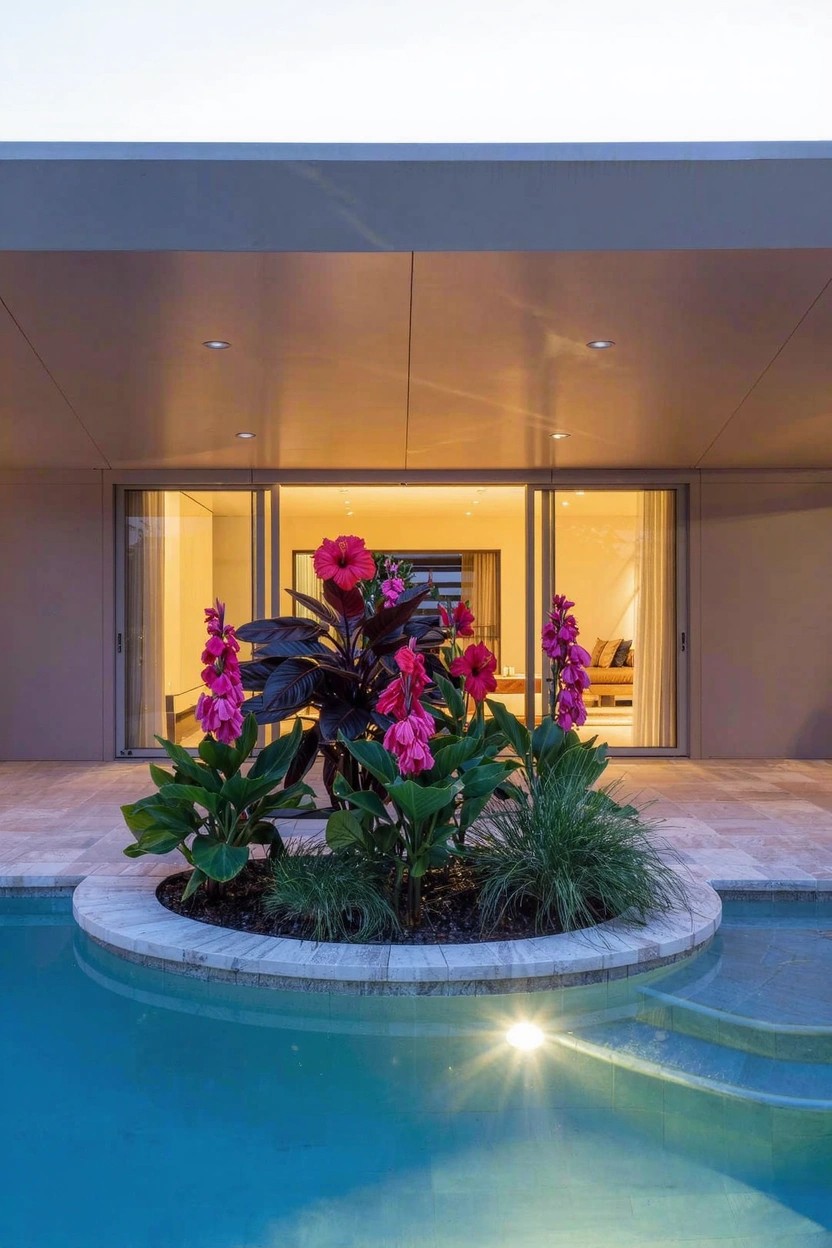
One straightforward way to brighten up a pool area is with built-in flower beds right at the water’s edge. A round planter like this one, packed with tall pink hibiscus and some grasses, sits snug against the pool steps. It adds a punch of color without taking up extra yard space. Plus, the plants soften those hard pool lines a bit.
These planters suit modern homes or any setup with a pool nearby. Go for sun-loving, water-tough varieties so they last through splashes and heat. A simple raised circle works in tight spots… just match the stone or tile to your patio for a clean look. Skip anything too fussy.
Raised Beds Line a Garden Path
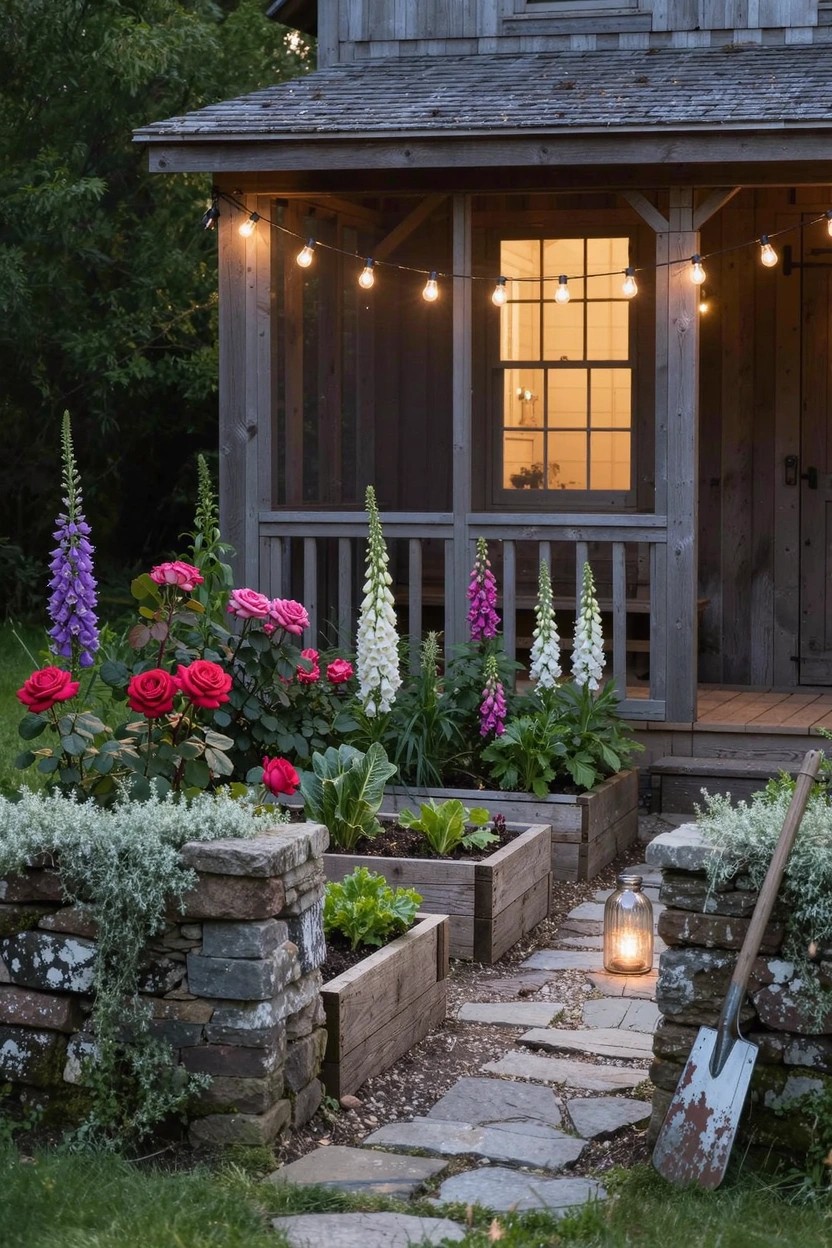
Raised beds running right alongside a gravel path make a yard feel put-together and welcoming. They turn the walk to your door into its own little garden strip. Here, wooden beds hold greens and flowers next to stone borders planted with tall foxgloves. It keeps things neat while letting plants spill over just enough.
This works best in front of a cottage or cabin-style home where you want low upkeep but steady color. Build the beds from untreated wood to age nicely outdoors. Fill them with a mix of edibles and perennials for year-round use. Just make sure the path stays wide enough to walk comfortably… two feet at least.
Doorway Flower Planters
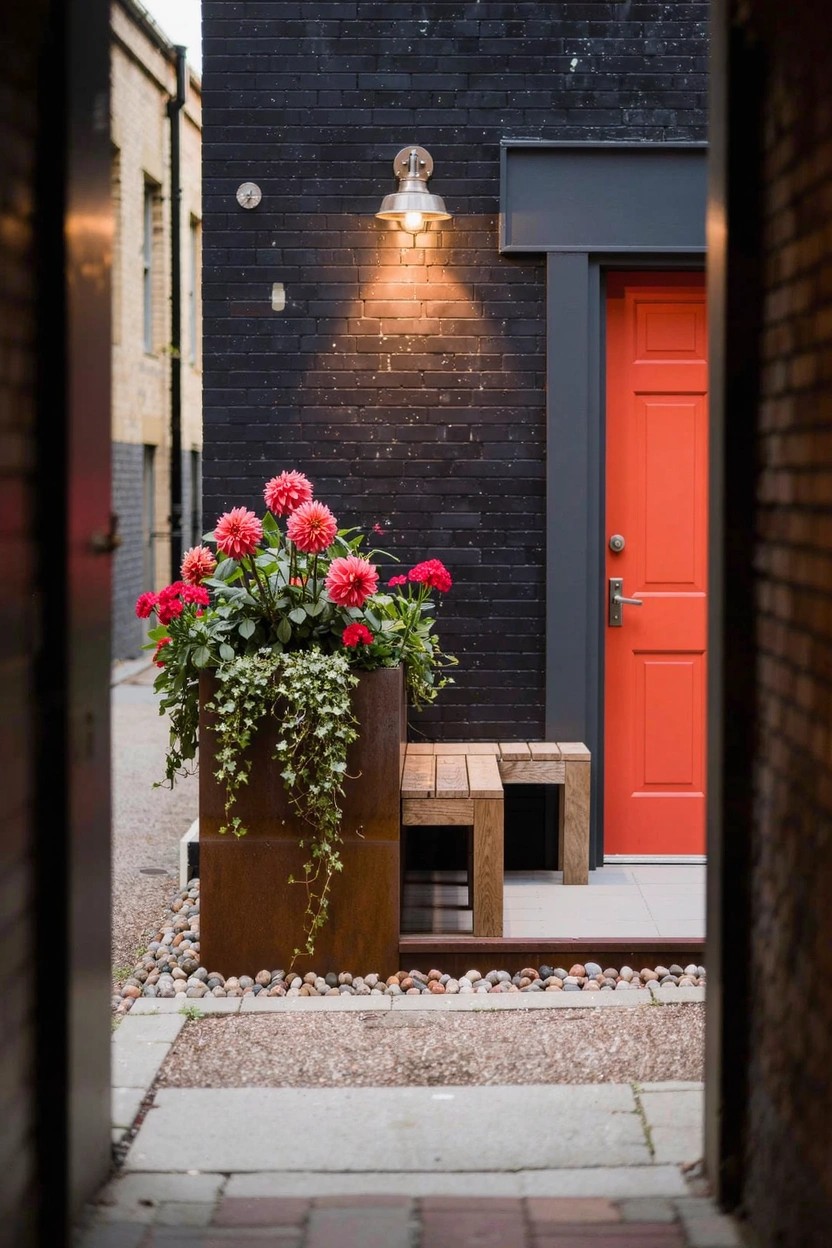
A simple way to brighten up your entry is with a tall planter box parked right next to the door. The red dahlias here fill it out nicely, spilling over with ivy for that full look. It turns a plain wall into something folks notice when they walk up.
These planters fit best in narrow spots, like alleys or side entries where ground space is tight. Go for a metal box that won’t rust easy, pack it with bushy blooms, and set a bench alongside if room allows. Works on brick homes or urban setups… just keep the flowers watered.
Flower Beds Along the Walkway
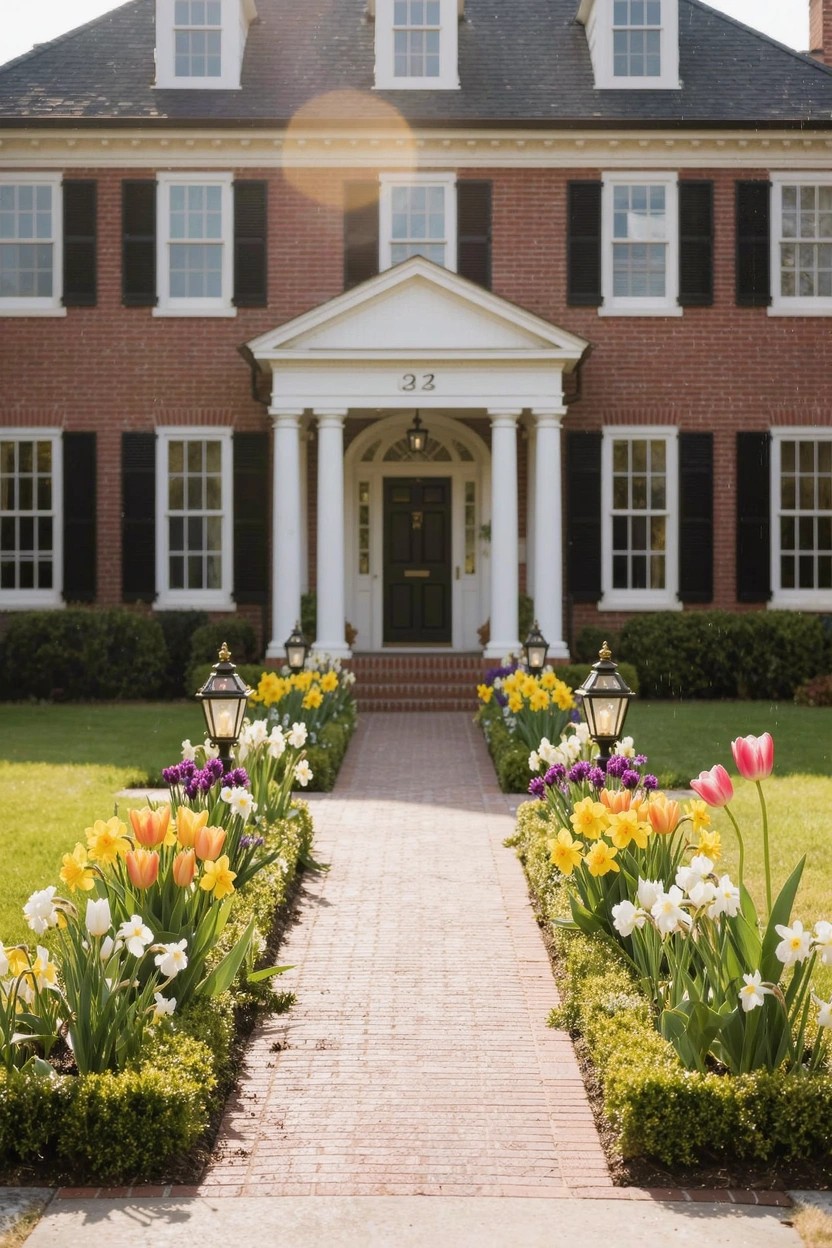
Nothing beats a straight walkway lined with flower beds to welcome folks right up to your front door. In this setup, the beds burst with tulips and daffodils in yellows, whites, and pinks. They pull your eye along the path and make even a plain brick house feel lively and cared for. It’s a simple way to add color without much fuss.
Plant low-growing bulbs like these along both sides of your path. They work great on traditional homes with formal entries. Keep the beds neat, about two feet wide, and mulch well to cut down on weeding. Just watch that taller plants don’t block the door… or spill onto the walk.
Tiered Flower Beds on a Slope
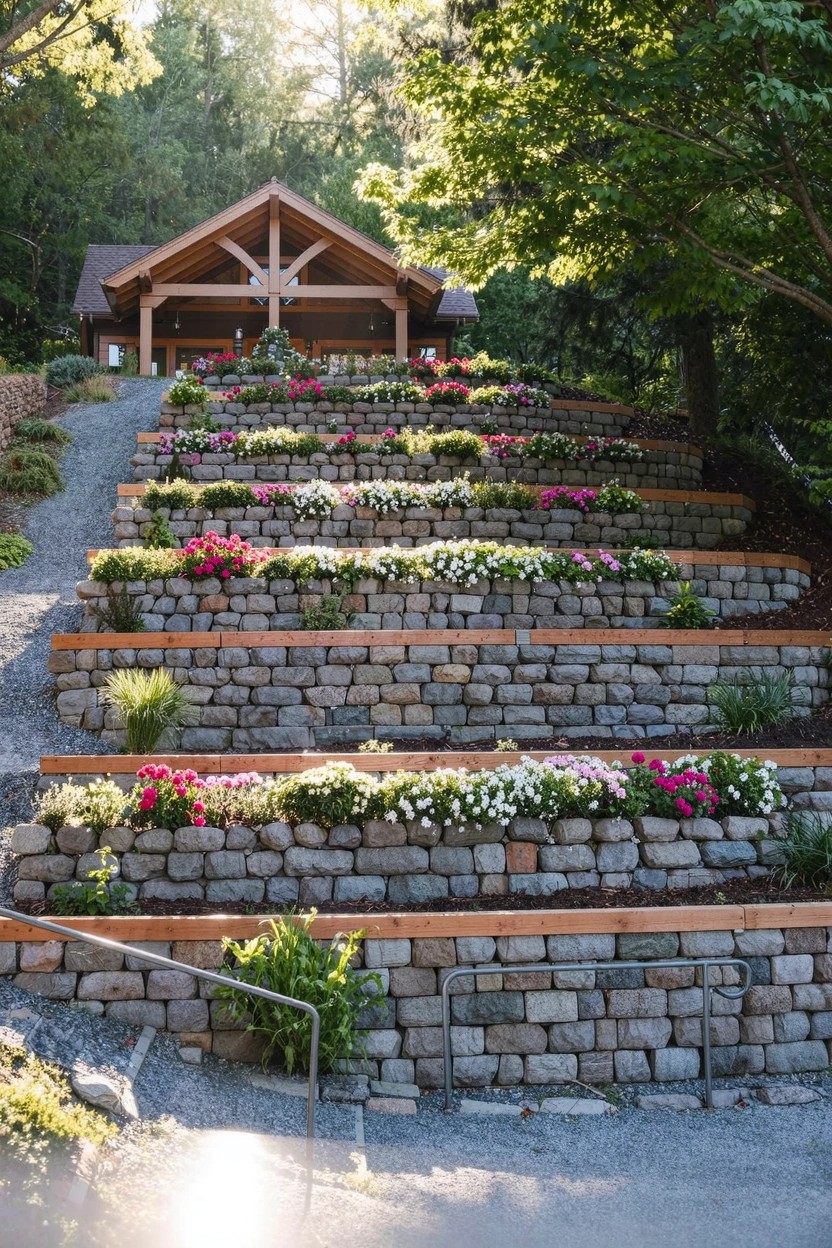
Slopes around a house can be tricky to garden. Tiered flower beds fix that by stepping up the hill with low stone walls. In this setup, the walls create level planting pockets full of pink and white blooms. It turns a bare hillside into color from bottom to top, easy on the eyes as you walk up.
Build these where your yard rises toward the entry. Stack natural stone for walls about a foot high, fill with tough flowers that handle some shade or sun. They suit cabin homes or wooded lots best. Watch the drainage so water does not pool behind the stones.
Window Flower Boxes
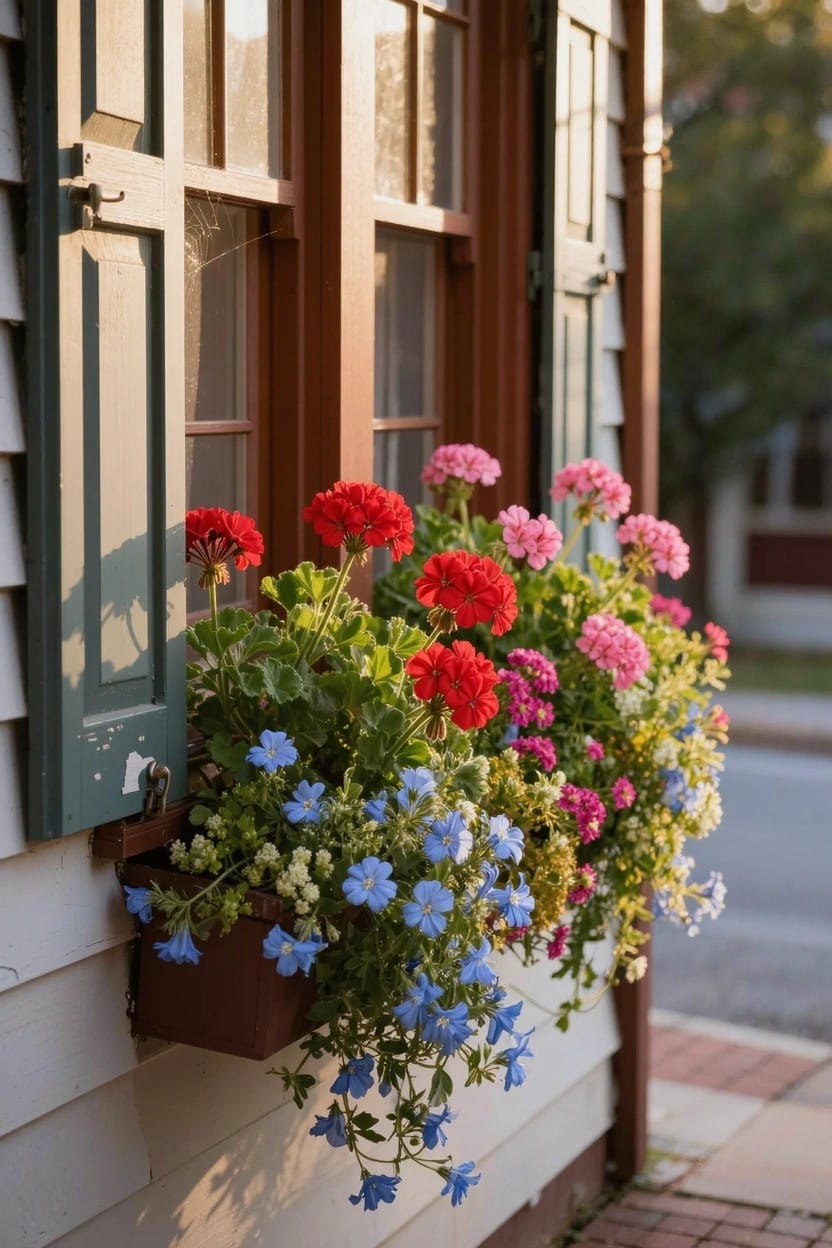
A window flower box full of bright blooms adds easy color to the front of your house. It softens plain siding and shutters without much work. Folks driving by can’t help but notice that cheerful spillover.
Put one under a window that faces the street. Go for trailing flowers like geraniums in red and pink with lobelia trailing blue. This fits older clapboard homes best. Water often though. They dry out quick.
Flower Beds Along a Garden Path
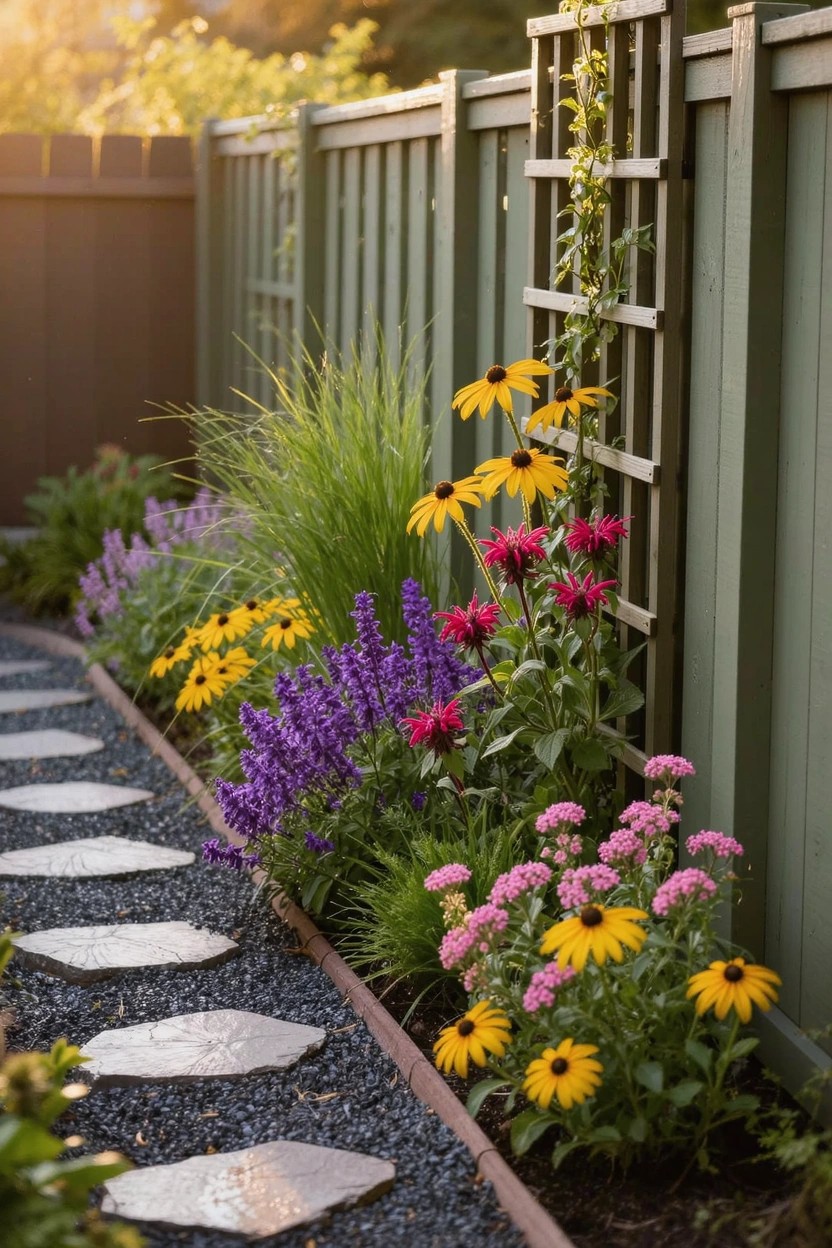
One easy way to make a yard path more interesting is to line it with flower beds. This setup turns a simple walkway into something with color and life all season. You get tall flowers like black-eyed Susans brushing the edges, mixed with lower plants for a full look. It works because it fills narrow spots without taking up much room.
Plant perennials such as salvia and bee balm along the path for reliable blooms, then add annuals for extra punch. This fits side yards or back paths next to a fence. Keep the path stones spaced for easy walking, and use gravel between to cut down on weeds. Just watch the height so nothing blocks the way.
Circular Raised Flower Beds
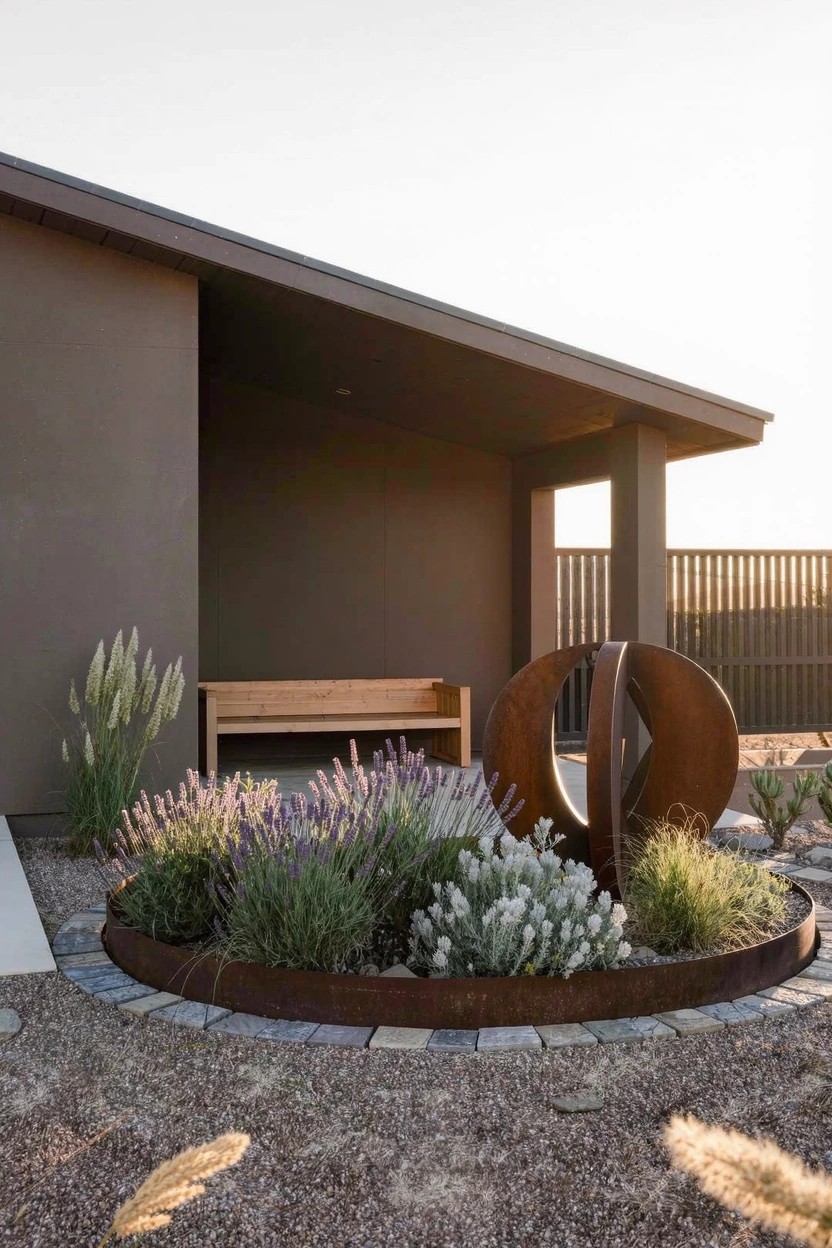
Round raised flower beds offer a clean way to bring plants right up to your house. This one uses rusted metal for the edging, filled with lavender, grasses, and low-water plants that stay tidy. The circle shape fits well against modern walls and a simple bench, making the entry area feel put-together without much fuss.
Put these beds near porches or paths in sunny spots. They suit homes with gravel yards or dry climates, where tough plants thrive. Build with corten steel sheets bent into shape. Keep an eye on drainage to avoid soggy roots.
Hanging Baskets on Brick Walls
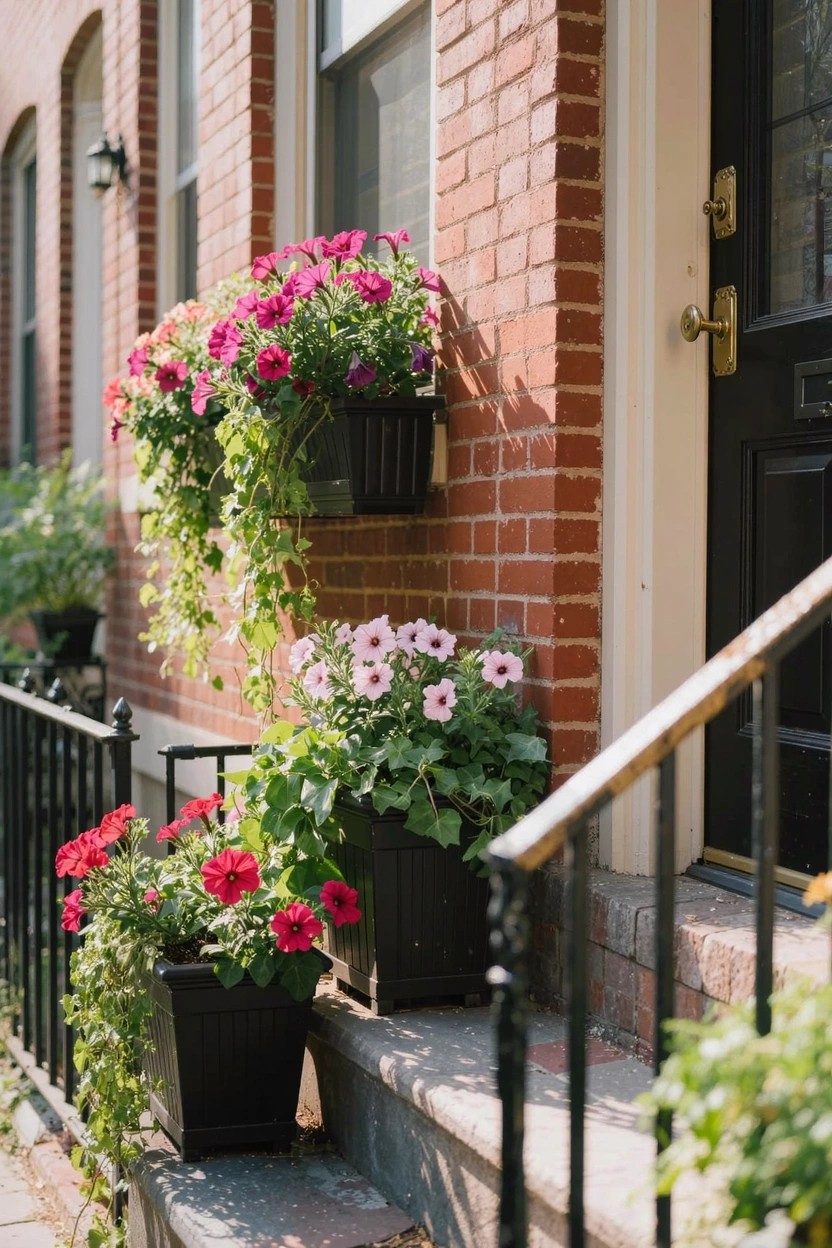
Hanging baskets overflowing with flowers do a nice job on brick houses. The brick gives a solid backdrop and the blooms add color up high. Pink and red ones trailing down the wall here catch your eye and lead right to the front door.
This works best on townhouses or older homes where yard space is tight. Put baskets under windows or near steps. Trailing petunias fill out fast. Keep up with watering though. They dry out quicker in the sun.
Curved Flower Beds Around Trees
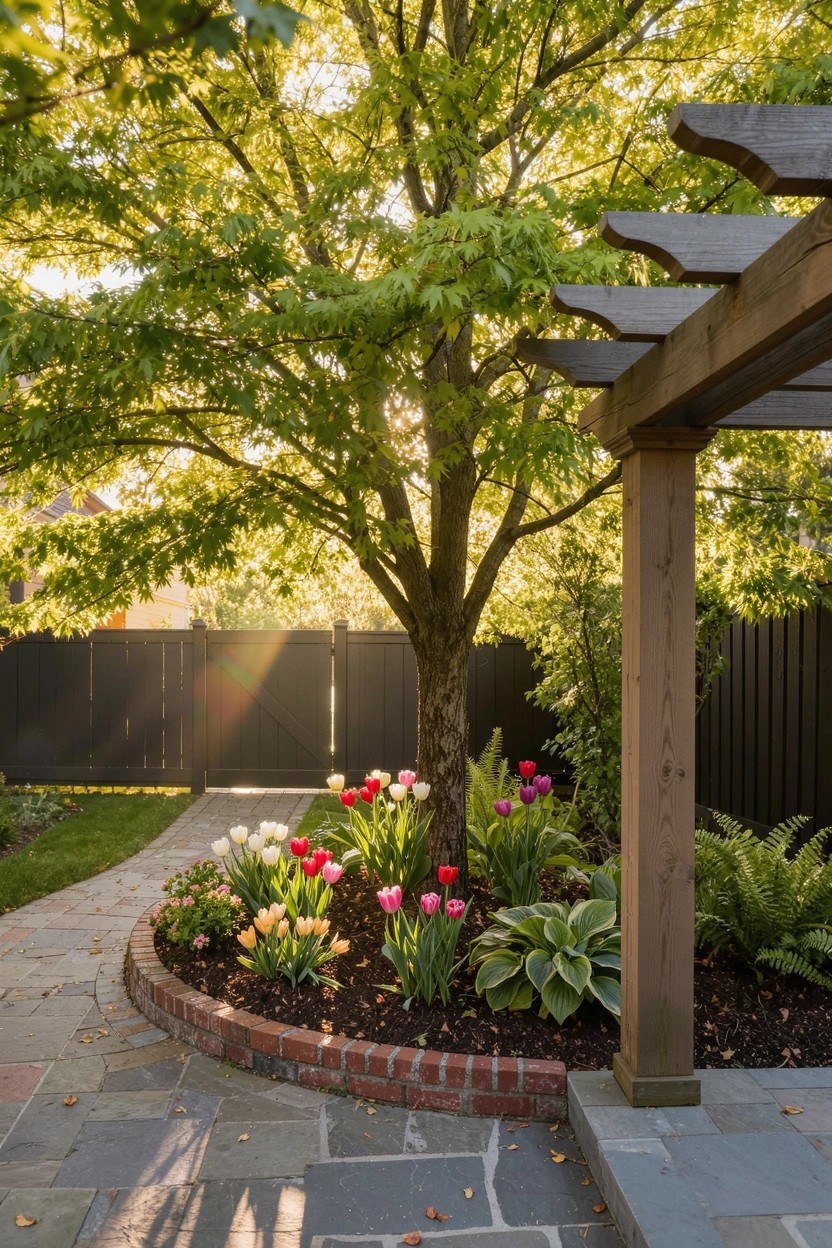
One simple landscaping trick is to tuck a flower bed right up against the base of a mature tree. It fills in bare soil with color and makes the tree itself stand out more. Tulips work well here. They pop in spring and circle the trunk without crowding it.
Build the bed with a curved brick border to hold everything in place. This fits most yards. Especially ones with paths nearby. Go for low-growing plants so they don’t fight the tree roots. Keep the bed narrow. About two feet wide does the job.
Poolside Flower Beds
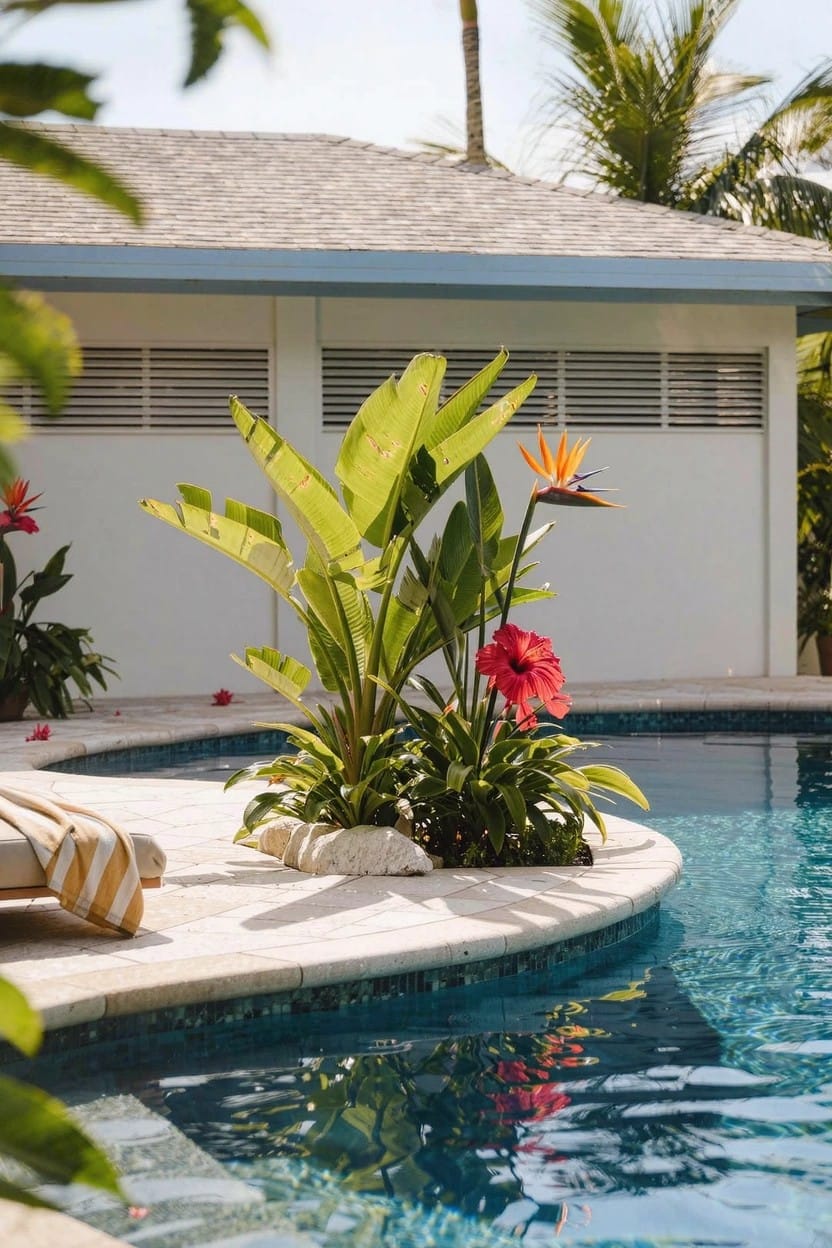
One straightforward flower bed idea is to tuck them right into your pool edge. Plants like hibiscus and bird of paradise grow straight out of the curved stone surround. It pulls the pool into the yard naturally. No big gap between hard deck and greenery.
This setup suits sunny backyards in warm spots. Use raised beds built into the deck material, maybe coral stone or concrete. Go for tough, upright plants that won’t mind pool splash. Keep roots from spreading under the pool liner… and trim often to cut down on pool cleanup. Works on smaller pools too.
Raised Flower Beds with Rusty Rails
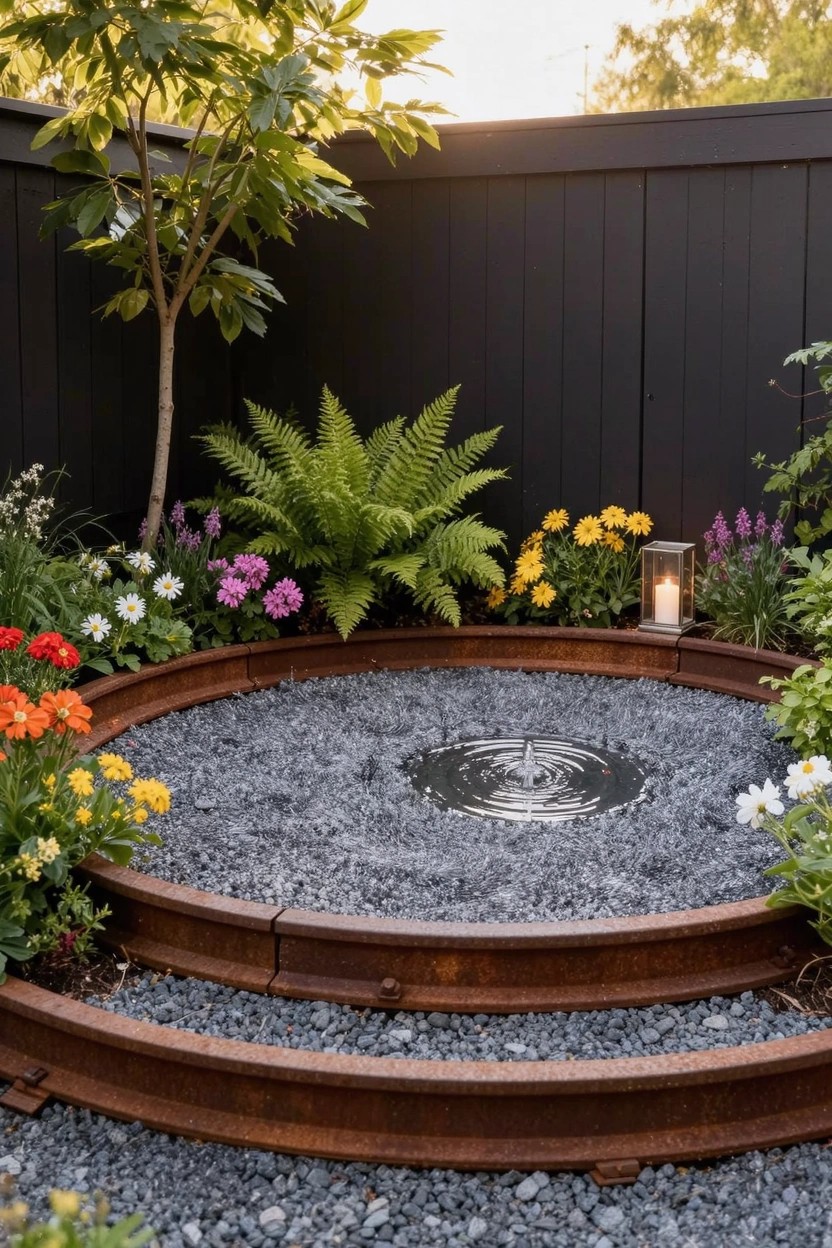
One simple way to make your flower beds stand out is using old rusty rails for the edging. These rails give a sturdy raised circle that holds back gravel or soil just right. In this setup, the center has a small water drip that keeps things interesting without much work. The rust adds that aged backyard charm people like, and it pairs easy with colorful flowers around the edge.
You can try this in a smaller yard spot, like near a fence or patio corner. It works best on homes with a casual style, nothing too fancy. Hunt for used rails at salvage yards, stack two or three high, and seal them if you want less rust over time. Just watch the water doesn’t leak out the bottom.
Frequently Asked Questions
Q: What if my yard gets mostly shade?
A: Pick shade-lovers like impatiens, astilbe, or hostas. They fill out beds beautifully without direct sun. Layer them with ferns for that lush, woodland vibe.
Q: How do I start these ideas on a tight budget?
A: Hunt for perennials at end-of-season sales or divide plants from friends. Mulch heavily to save on future replacements. Your yard transforms fast without breaking the bank.
Q: Won’t these beds turn into a weedy mess?
A: Lay down landscape fabric before planting, then top with thick mulch. Pull any stragglers weekly at first. And skip the chemicals, your flowers stay happy.
Q: How much upkeep do creative beds really need?
A: Deadhead spent blooms to keep them tidy. Water deeply once a week for the first month. After that, nature handles most of it.
