

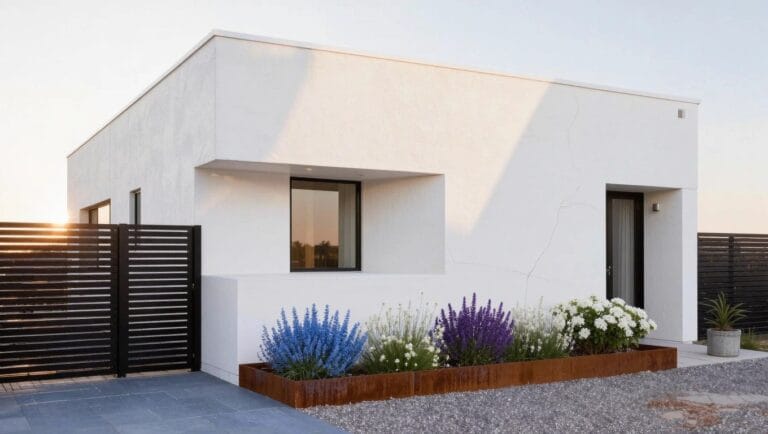
I’ve been eyeing the fence line in my backyard lately, wondering how a well-planned flower bed could soften its stark lines and pull the whole yard together. Those designs work best when they layer tall backdrop plants with lower spillers in front, creating rhythm without crowding the space. They fall flat, though, if you skip soil prep and end up with patchy growth that exposes the fence too soon. I like the ones that mix hardy perennials with a few climbers, especially since my fence gets full sun most days. A handful here feel practical enough to adapt.
Raised Planters Along the Fence
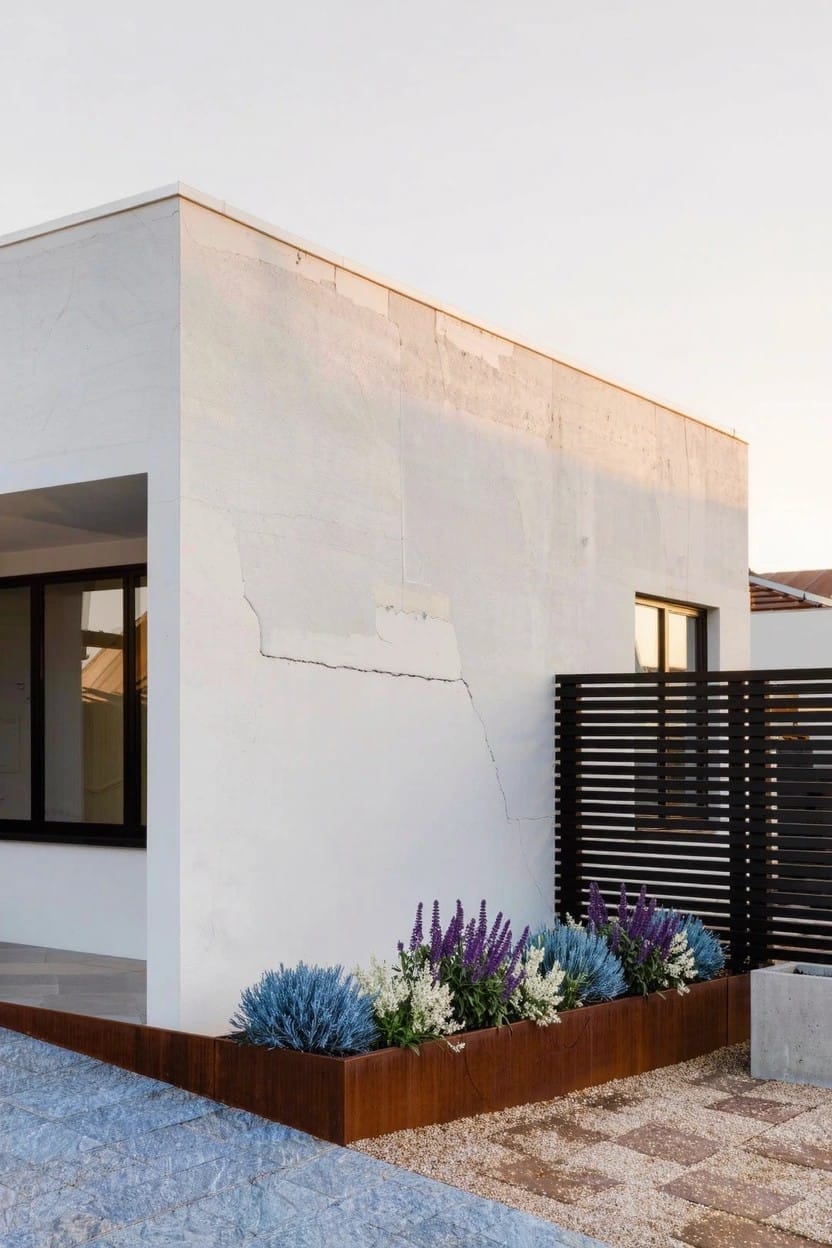
Raised planters tucked right up against a fence make a simple border that adds color and shape to plain yard edges. Here the corten-style metal rim holds back lavender and blue grasses, giving a low patch of purple blooms that contrasts nicely with the white house wall and black slats. Folks like how it fills empty space without sprawling out.
Put these in side yards or along back fences where room is tight. They suit modern homes or clean-lined setups best, and drought-tough plants keep upkeep low. Watch the drainage though… wet soil can rot roots fast.
Flower Beds Along Picket Fences
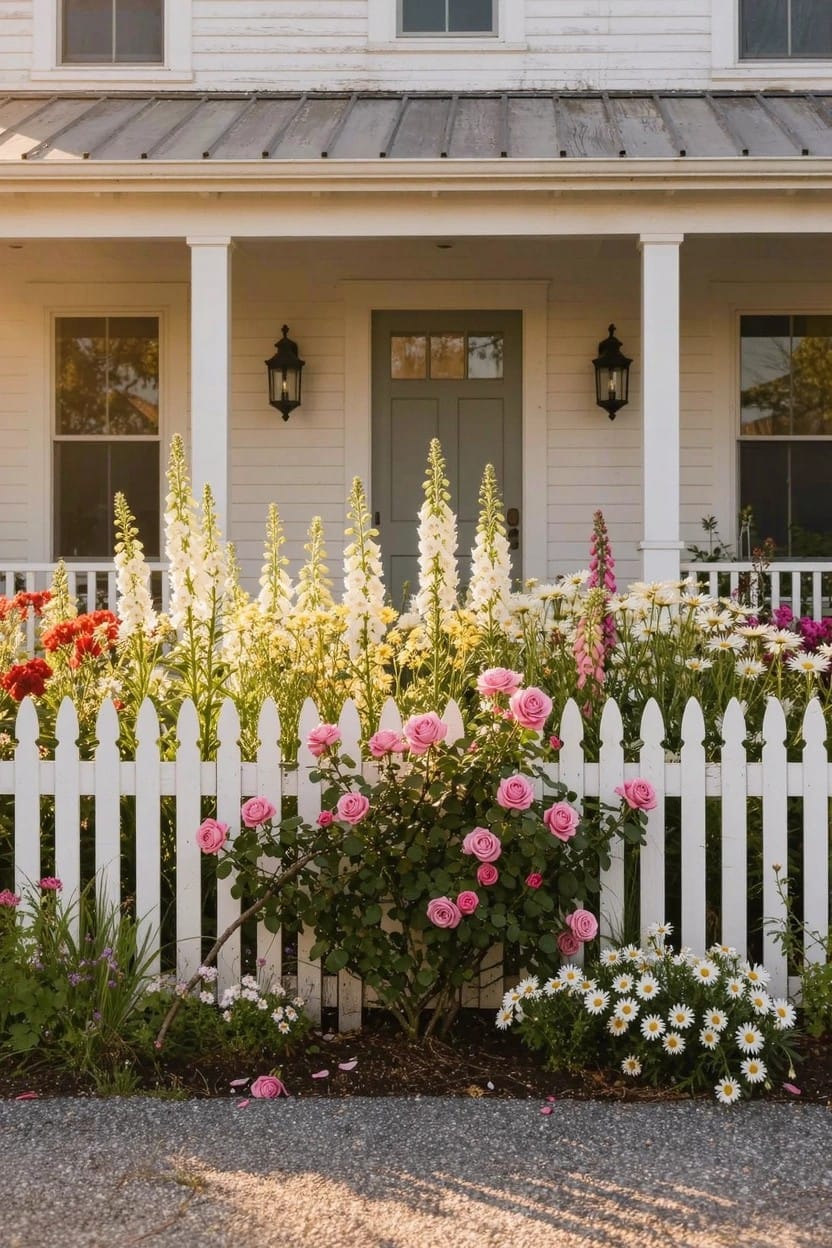
A simple flower bed running right along the fence line can turn a plain front yard into something welcoming. Here, tall white foxgloves tower in the back while pink roses and daisies hug the base of the white picket fence. It fills the edge without spilling over, and the mix of heights keeps things interesting from the street.
This idea fits older homes with that classic front porch setup. Tuck it along any low fence in a sunny spot, starting with perennials for easy care. Keep plants from crowding the path… and watch how it softens straight lines year after year.
Planting Fence Lines with Pots and Shrubs
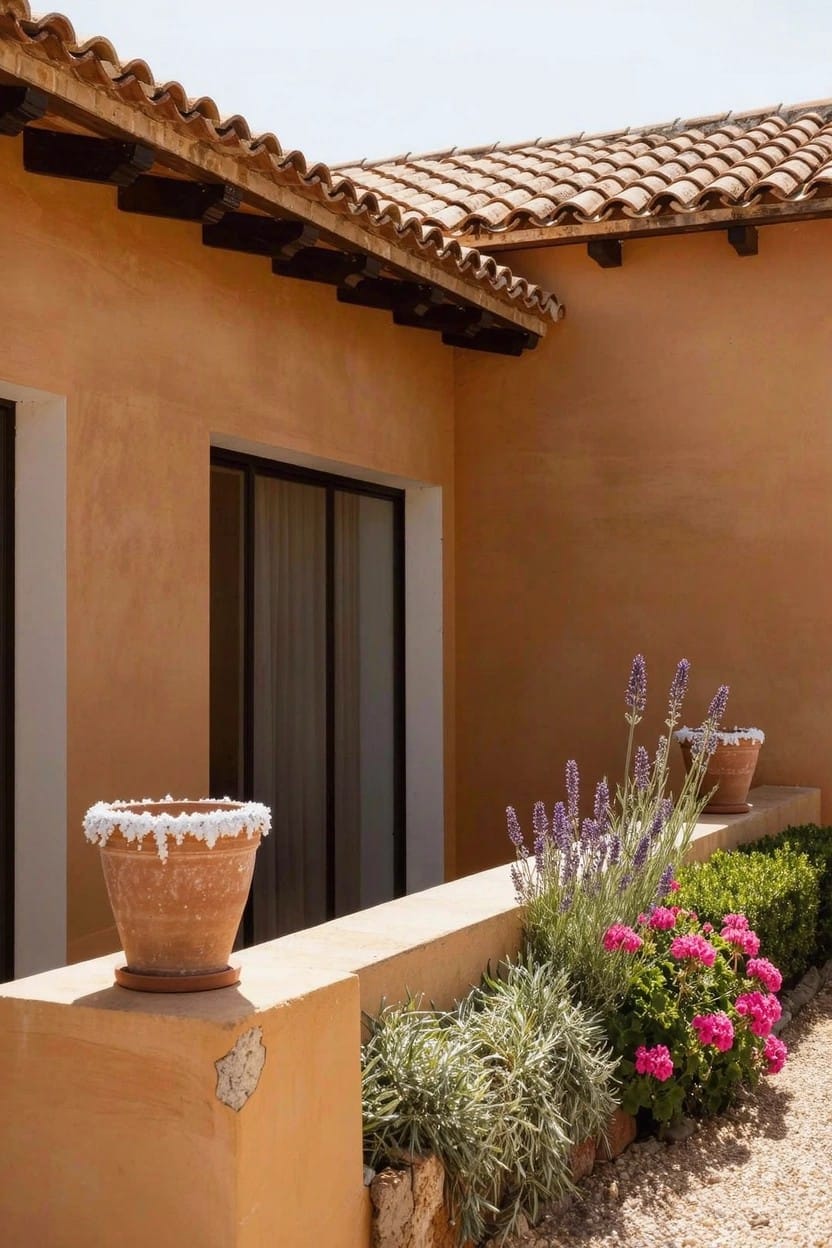
A low wall makes a good base for flower beds like this one. Tall lavender fills in along the bottom with its gray-green leaves and purple spikes, while terracotta pots sit right on top. The pink flowers nearby add a bit more color. It’s a straightforward look that fits sunny, dry yards without much fuss.
Put this to work where you have a simple boundary wall or fence edge. It suits older stucco houses in warm spots. Just make sure the wall can hold the pots steady, and pick tough plants like lavender that handle heat. Skip it if your fence is tall or shaky.
Beach Plants Along a Fence Line
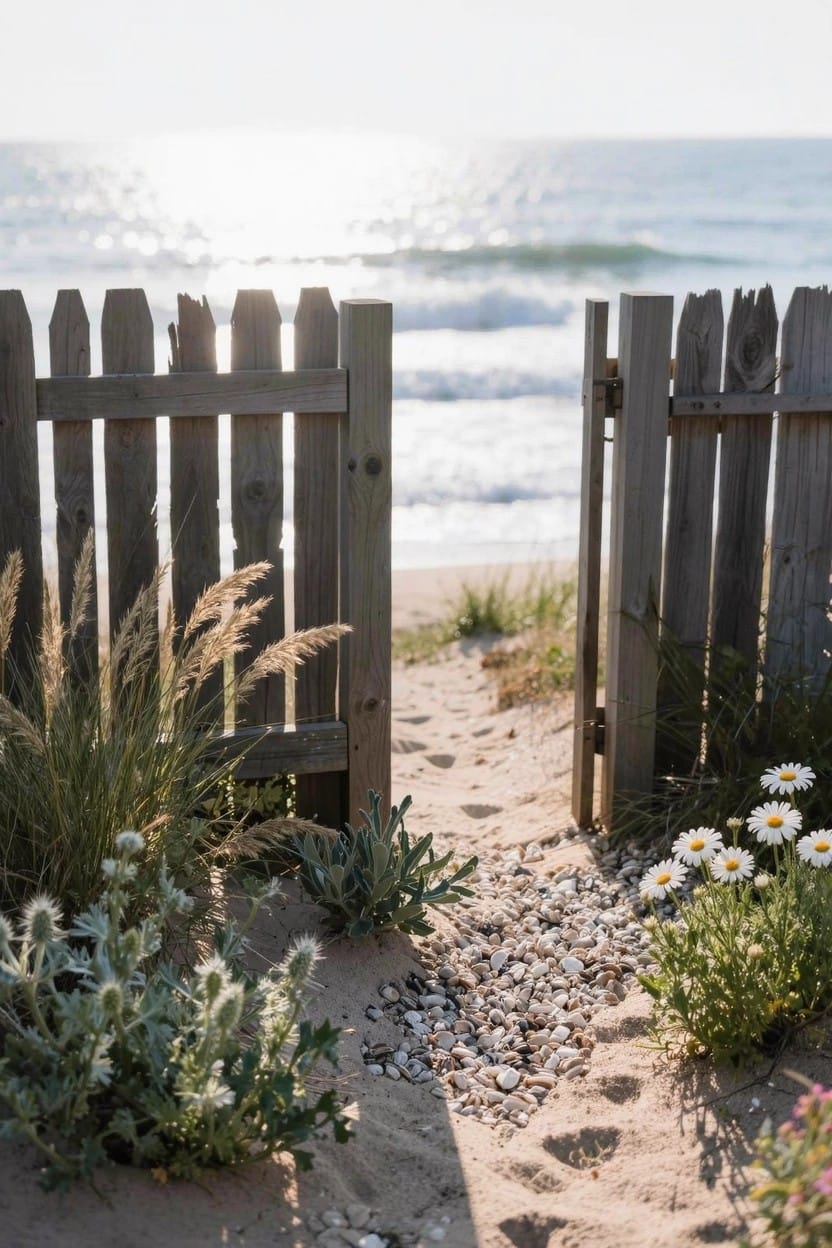
One nice way to work flowers into a fence line is with tough beach plants like tall grasses and little daisies. They grow right up against the weathered wooden fence here, filling in without much fuss. That open gate draws your eye straight to the water, and the plants make the whole spot feel easy and right at home by the shore.
You can pull this off in any dry yard or coastal setup. Stick to natives that handle salt and wind, tuck them along the fence base, and run a simple pebbled path through. It suits older beach houses best. Just don’t overplant, or it’ll crowd the walk.
Spotlighted Plants Along the Fence
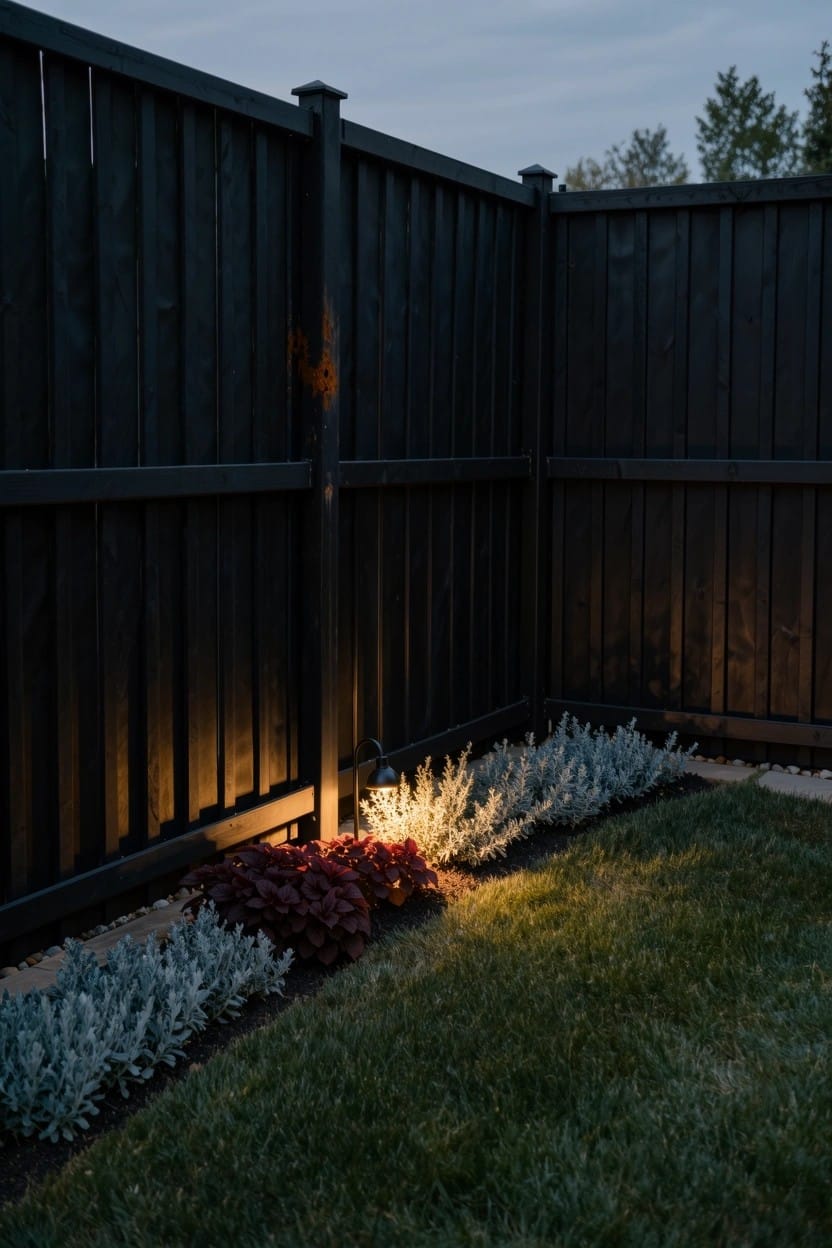
A dark fence works great as a backdrop for plants tucked along its base. Add a ground spotlight like this one and the reds and silvers really pop at night. It gives your yard a quiet glow without much fuss.
This idea fits narrow strips where grass won’t grow well. Try it on backyard fences or side yards, especially if your home has simple lines. Keep the light low to avoid glare, and pick tough plants that handle some shade from the fence.
Flowers Spilling Over an Iron Fence
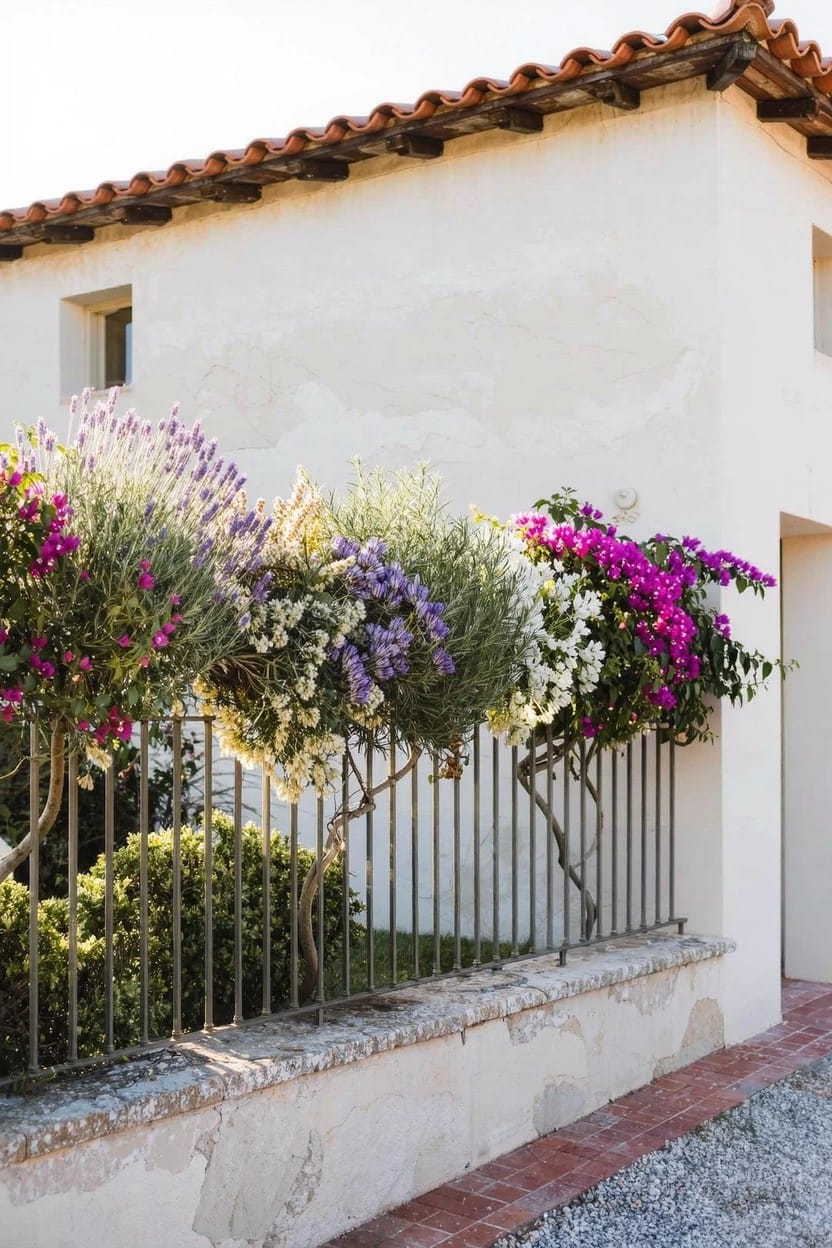
One straightforward landscaping idea is planting flowers that spill right over the top of an iron fence. It turns a plain fence line into something full of life. Against the white stucco wall here, the lavender and bougainvillea add color and movement without much fuss.
This setup shines in sunny yards next to a house or walkway. Go for trailing plants that can handle heat. Train the branches over the fence as they grow. It fits older homes with simple walls. Just watch for overgrowth… trim back in spring.
Tiered Planters on a Fence Wall
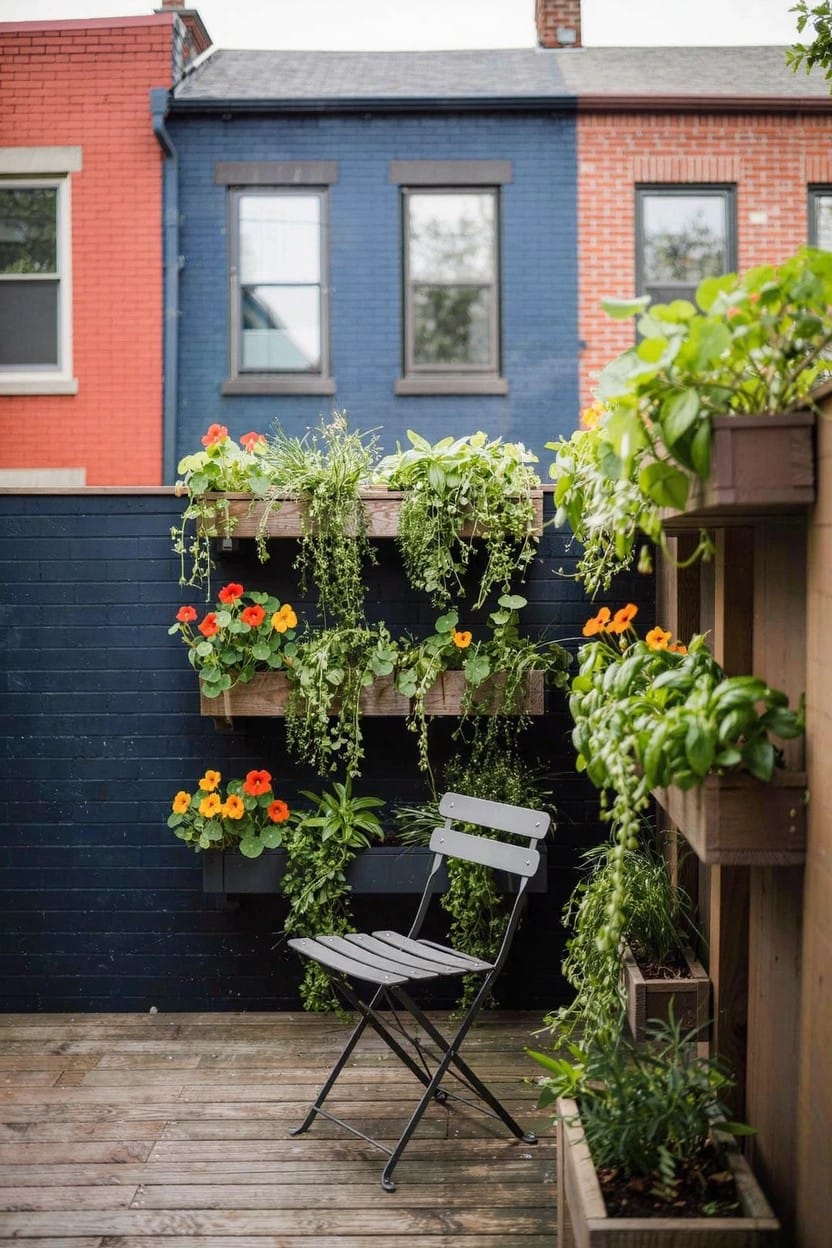
Simple wooden shelves bolted to a fence wall hold pots of trailing flowers and herbs. This setup packs a lot of green into tight spots. It softens a plain boundary and gives the patio some life without taking up deck space.
These work best in backyards along alleys or side yards. Mount them on sturdy walls like brick or block. Go for cascading plants such as nasturtiums or ivy. Just make sure the shelves can handle the weight. And check drainage so roots stay happy.
Narrow Flower Beds Along Bamboo Fences
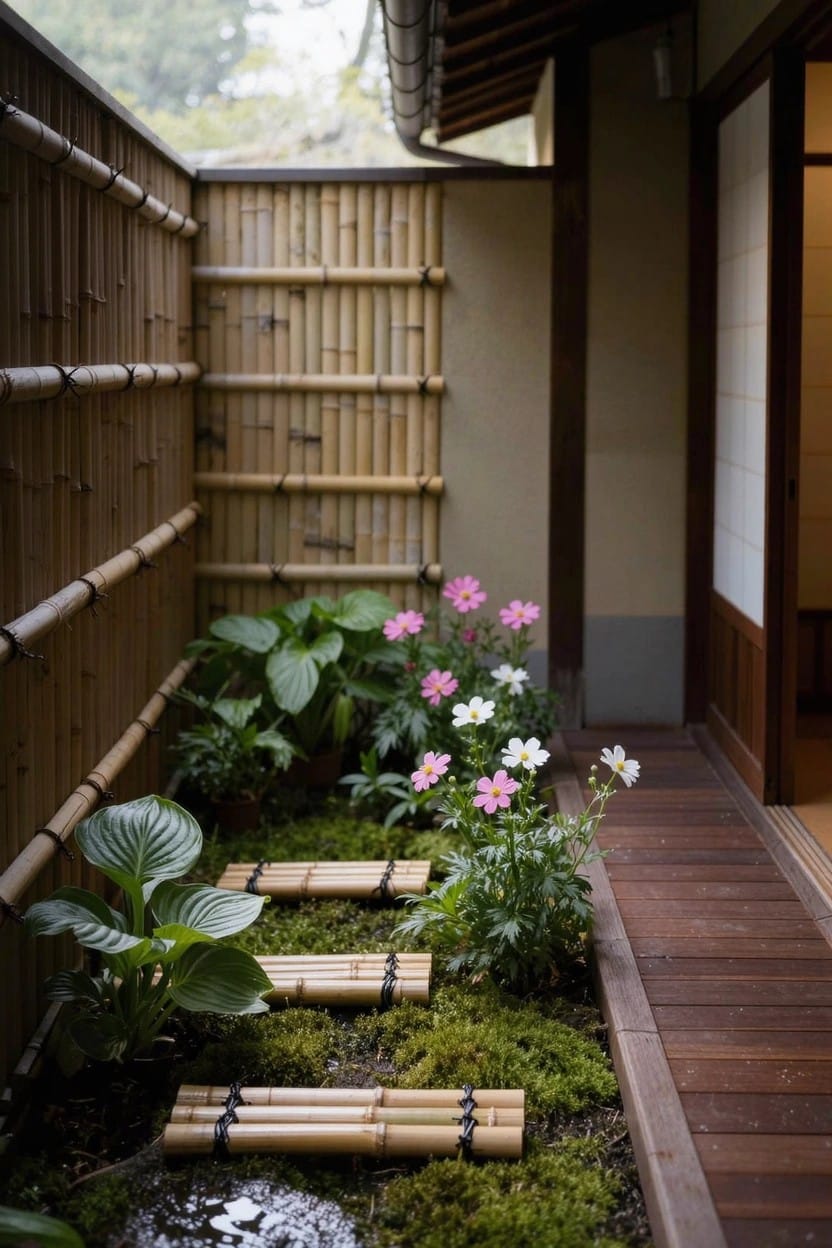
Bamboo screens make a perfect backdrop for tight flower beds right along fence lines. They hold back the planting area while letting flowers like pink and white cosmos stand out against low moss and hosta leaves. Bamboo stepping stones weave through it all. Keeps things neat and adds that quiet garden feel without crowding the yard.
Put this in skinny spots next to walkways or patios. It fits older homes with wood siding or any setup short on space. Just make sure the area stays shady and damp for the moss… or swap in ground cover that handles sun better.
Flower Beds Along a Wooden Fence
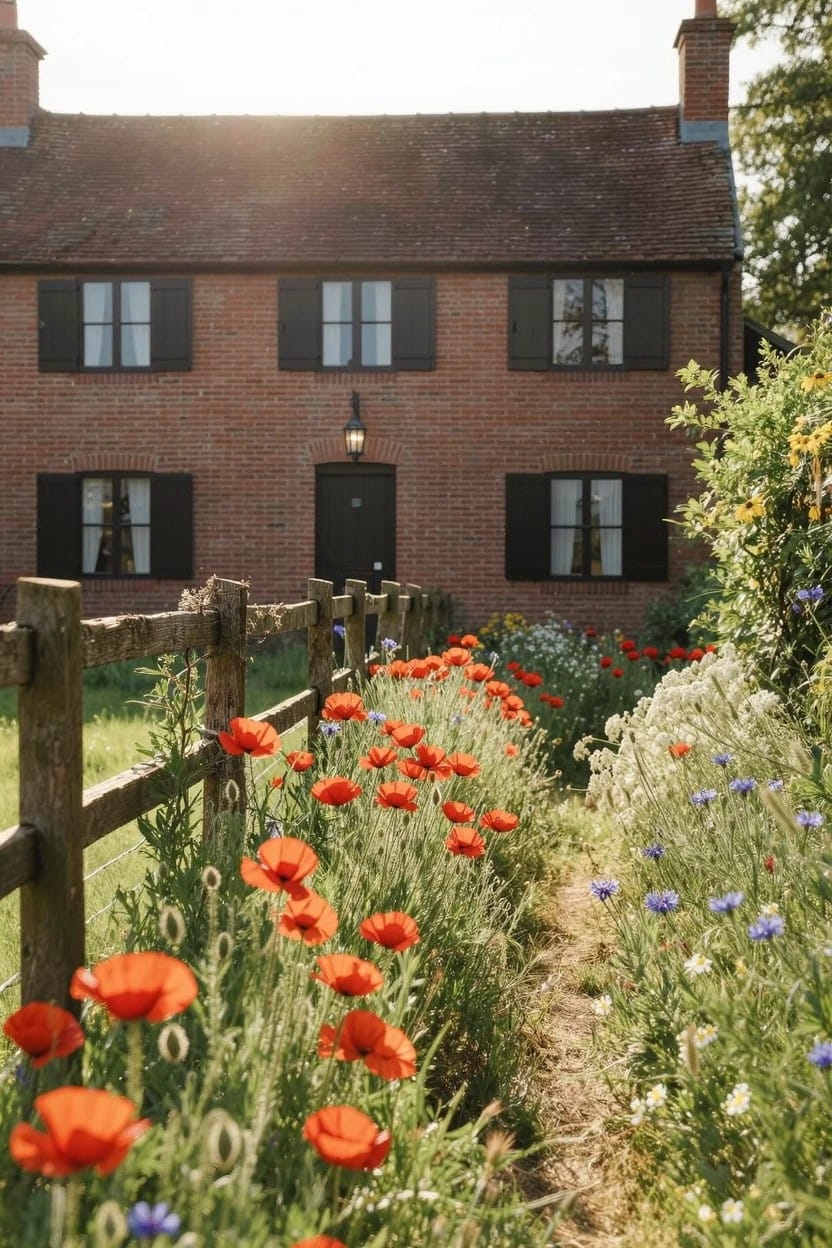
A narrow planting strip of poppies and wildflowers runs right along this old wooden fence. The red blooms stand out against the rough wood and pull your eye down the path to the house door. It’s a straightforward way to fill that edge space with color that feels natural, not forced.
Plant something tough like poppies or cornflowers there. They spread on their own and suit country-style yards or older homes with simple brick fronts. Keep the bed to one or two feet wide so it doesn’t crowd the path. Works best where you want visitors to notice the flowers first.
Low Plantings Along Fence Lines
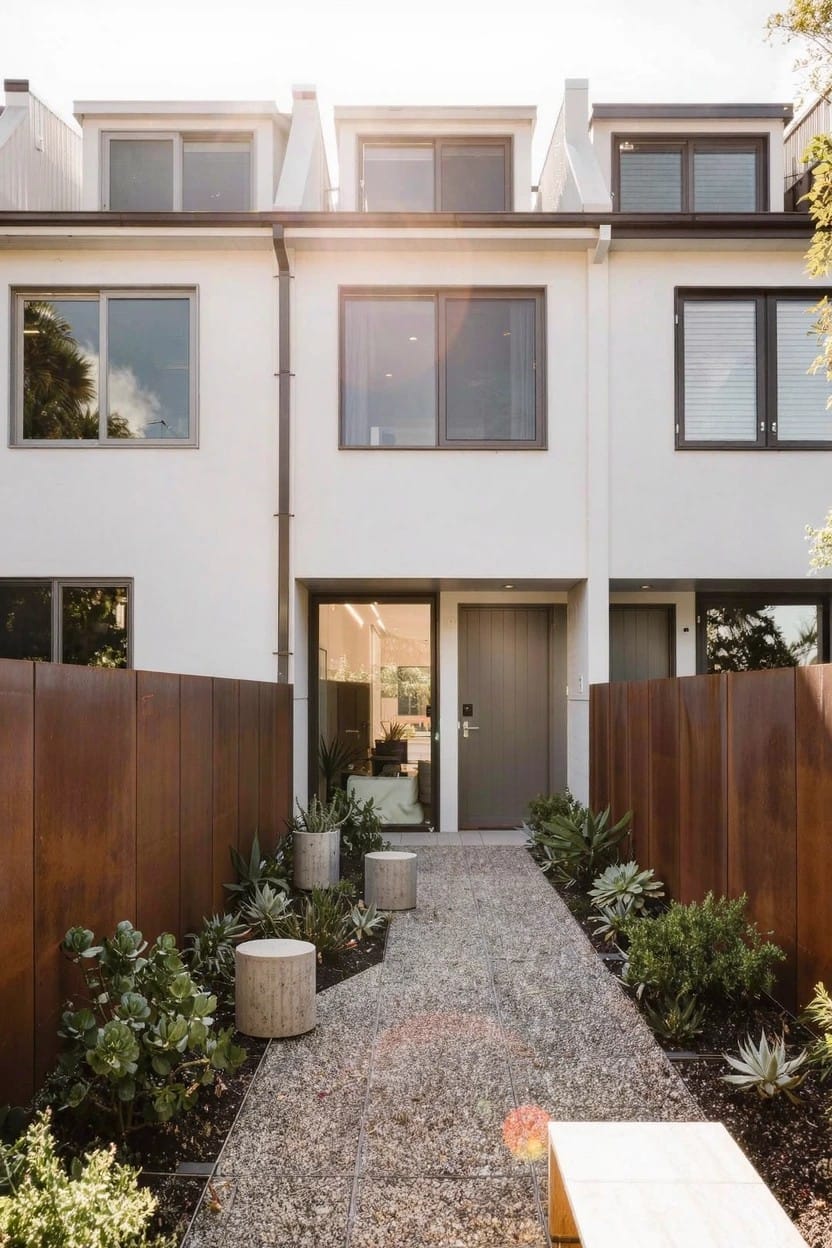
One straightforward way to bring some life to fence lines is with low plantings of succulents and grasses right at the base. Here, tough reddish corten steel fences run along both sides of a gravel path. The spiky agave and soft grasses hug the bottom edges. That simple layering adds texture without crowding the space. It keeps the modern look clean.
Try this in narrow side yards or entry paths where you want color but not a lot of upkeep. Drought-tolerant picks like these hold up in sun and fit homes with a crisp white facade. Just leave room for the path. Mulch lightly if needed, but gravel works fine too.
Flower Beds Along Front Steps
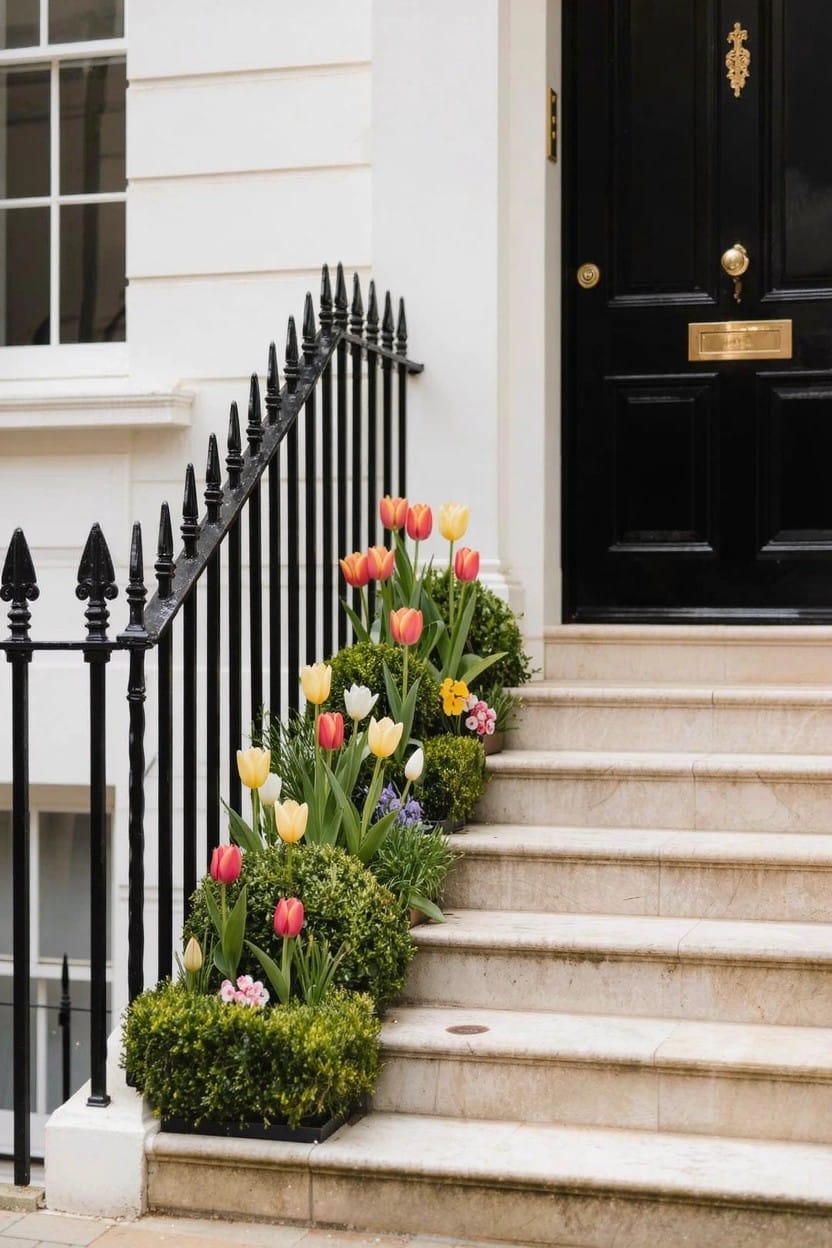
One simple way to add color to your entry is planting flowers right along the base of the steps. Here, tulips in shades of orange, pink, and yellow fill spots next to black iron railings on a white house. It pulls the eye up to the door without much effort. People notice it because the blooms stand out against the stone and metal.
You can do this on any home with a few steps to the front door. Use low-growing flowers or bulbs that won’t flop over the path. It suits townhouses or older places with railings best. Keep the beds neat, and refresh them seasonally… tulips in spring work every time.
Trough Planter Along the Fence
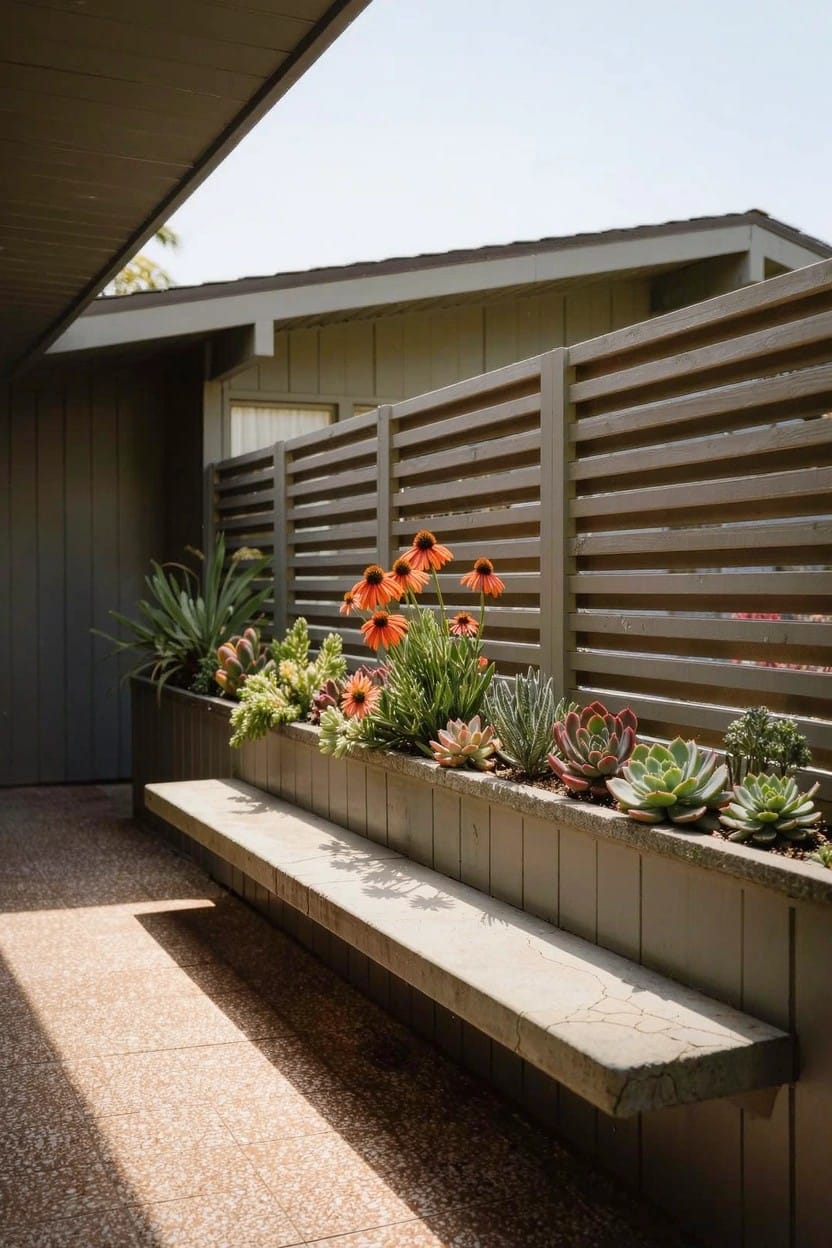
A simple trough planter runs right up against a slatted fence here, filled with clumps of succulents and those cheery orange flowers. It turns a plain fence line into something with real color and texture. The plants spill over a bit, softening the hard edges without much fuss.
This works best in sunny spots where low-water plants like agaves and echeverias thrive. Tuck it along a side yard fence or patio edge, maybe add a bench below like this one. Skip it in shady areas, though. Keeps things easy to tend from ground level.
Flower Beds Along a Picket Fence
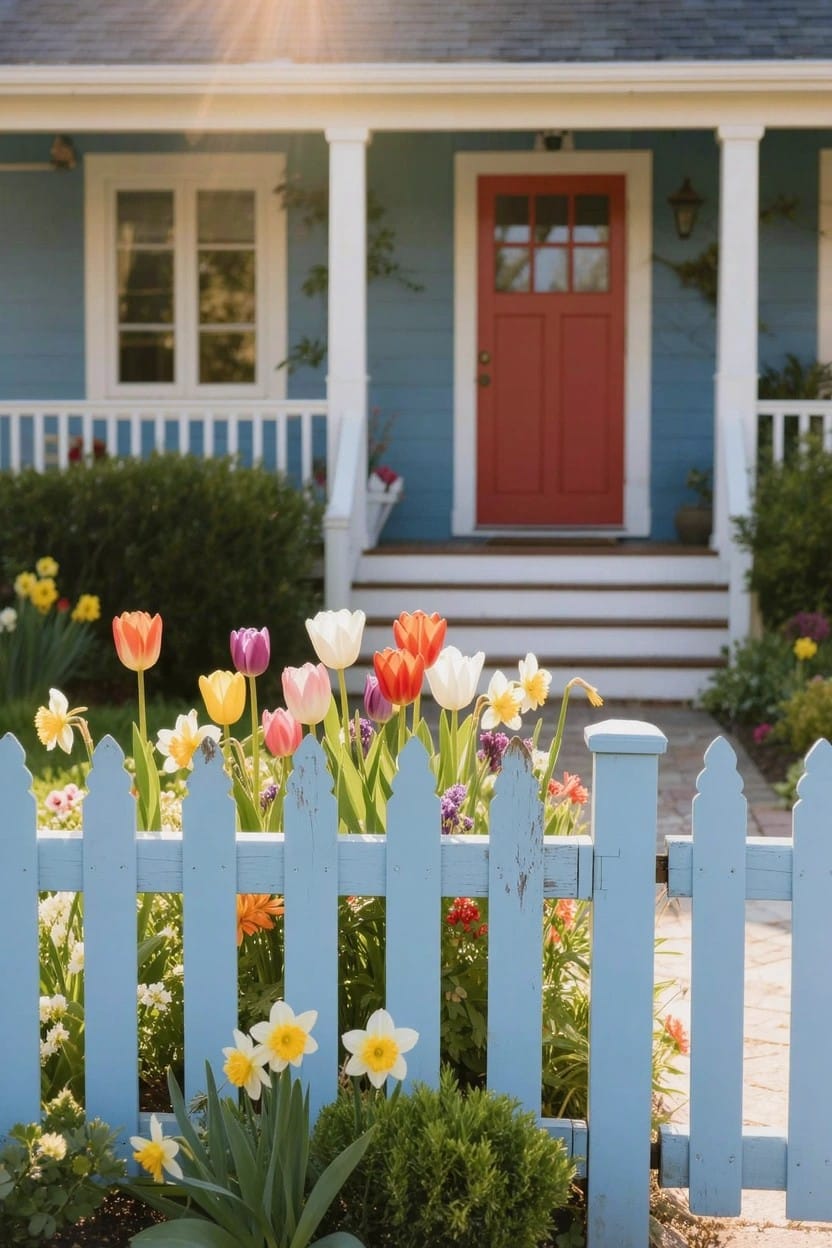
Flowers planted tight against a picket fence create a simple border garden that frames the yard nicely. Tulips in bright colors stand out against the white slats. Folks like it because it boosts curb appeal fast, especially in spring when everything blooms at once.
Try this in smaller front yards around older homes. Go for bulbs that come up early, then add tougher plants to carry through summer. It fits cottage looks well… just keep the bed weeded so it stays neat.
Flower Beds Along the Front Fence
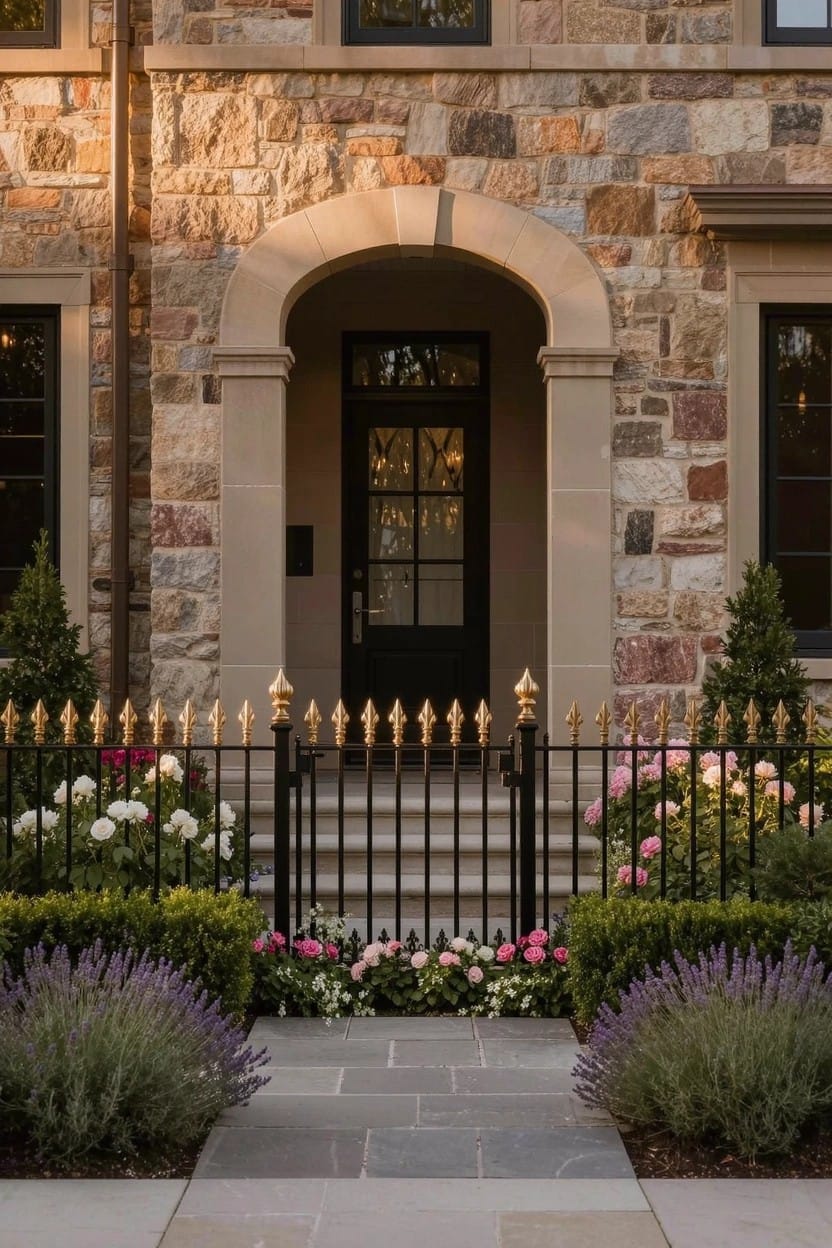
Flower beds tucked right along a front fence add easy color and life to the walk up to your door. Here they mix big blooms like hydrangeas with low lavender and some roses spilling over. That layering keeps things interesting from the street, and it softens the fence without crowding the path.
This setup fits older stone or brick homes with a straight walkway. Line up perennials and small shrubs against the fence, taller ones behind shorter. A simple iron fence lets the plants show. Just trim back once a year to keep it neat.
Flower Beds Along Pool Fences
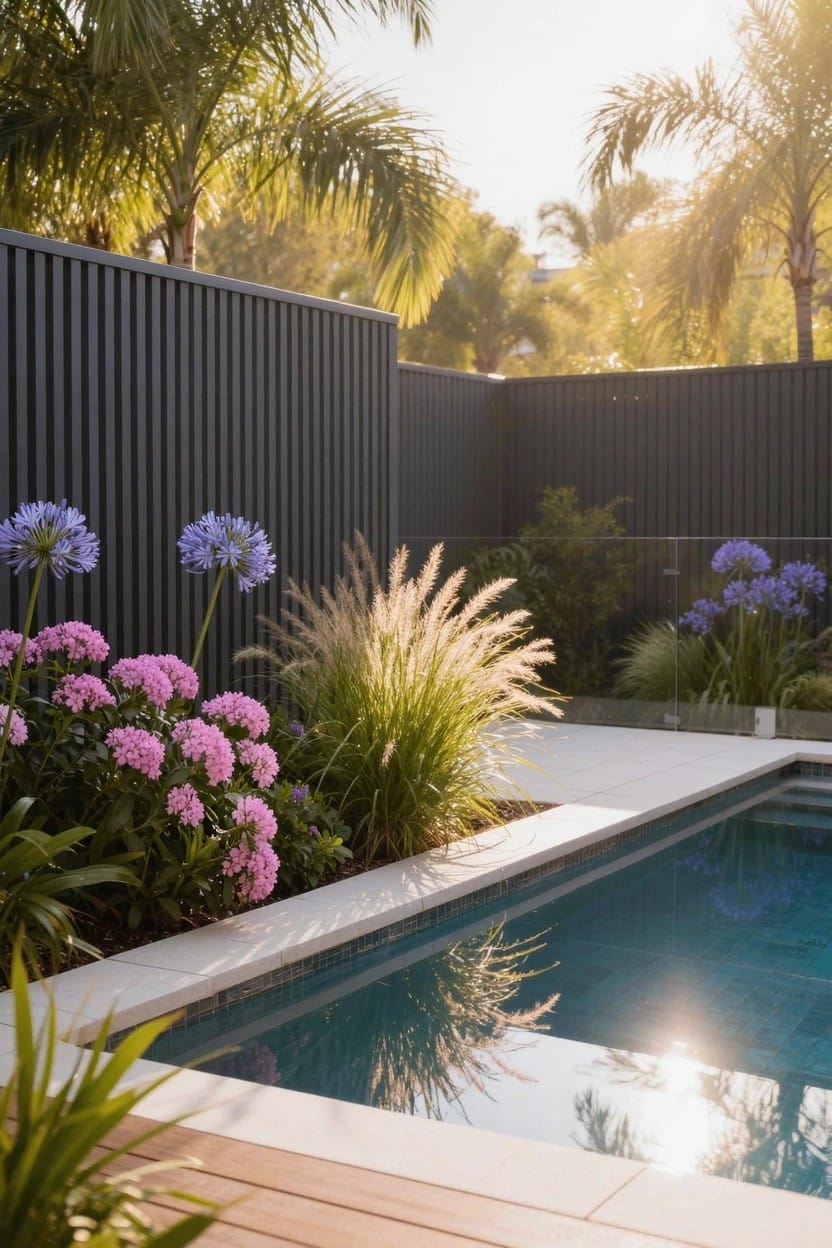
One straightforward landscaping idea is filling narrow beds along a fence with colorful flowers and tall grasses. Here the pink hydrangeas and purple agapanthus stand out nicely against the dark fence panels. Then pampas grass brings in height and movement. It turns a plain boundary into something with real visual pull right by the pool.
You can pull this off in most backyards that back onto a fence, especially with a pool or patio nearby. Layer shorter blooms up front and taller grasses at the back for depth. It suits sunny spots in warmer areas. Just trim the grasses once a year to keep things tidy.
White Flowers Along Black Fences
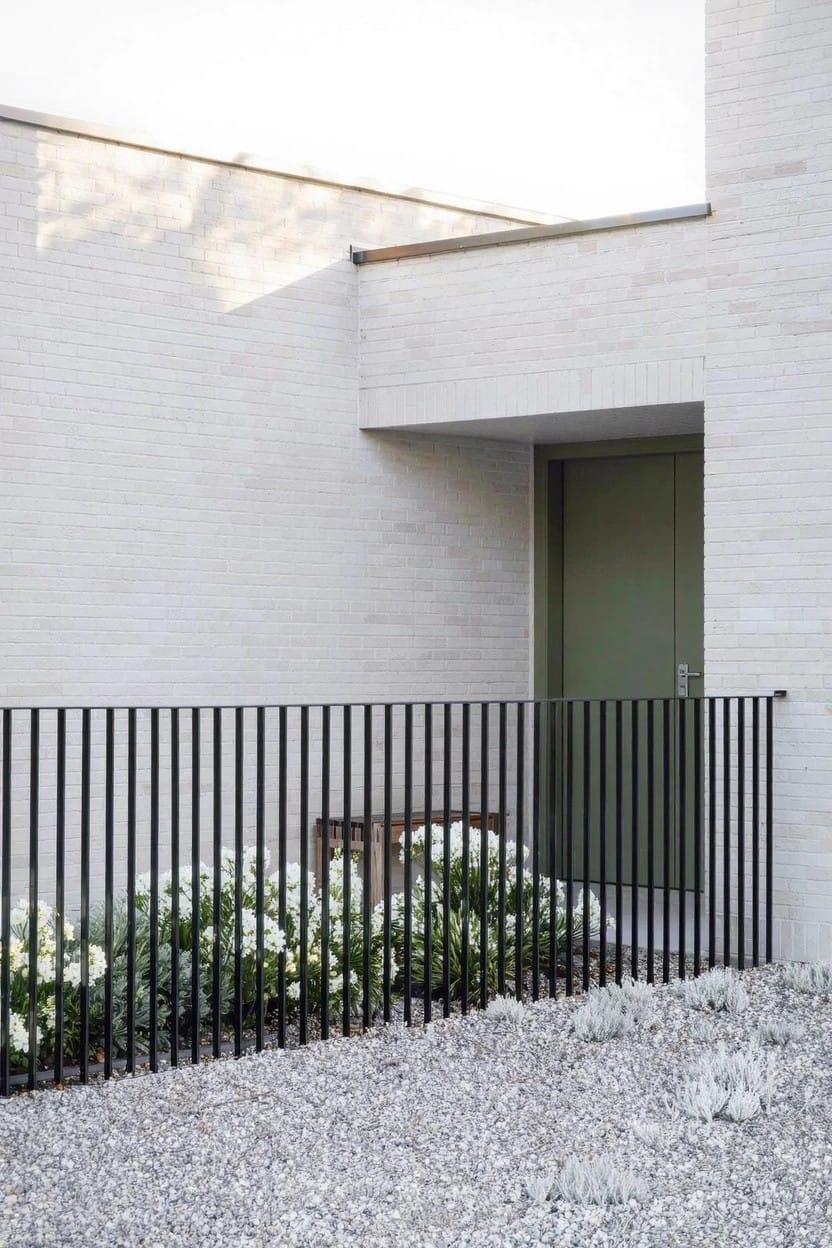
White flowers tucked right at the base of a black metal fence make a simple flower bed that catches the eye. They soften those straight-up bars without hiding them, and the white color pops against the dark metal. It keeps things clean while adding some life along the edge.
This works best in front yards next to modern houses with light walls. Go for low plants that spill forward a little, maybe over gravel mulch to cut down on weeding. Skip tall stuff, or it might crowd the fence too much.
Tropical Flower Beds Along Bamboo Fences
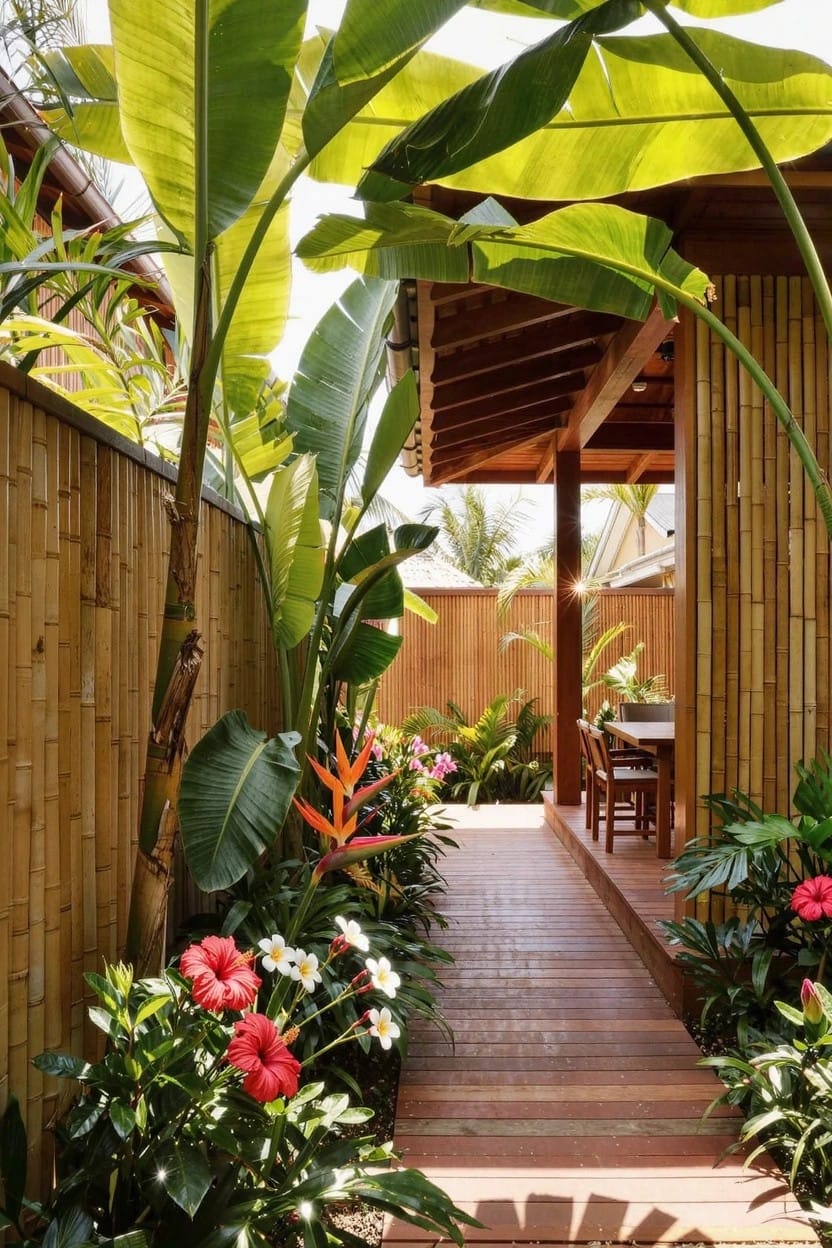
Bamboo fences make a nice backdrop for flower beds. You can pack in tropical plants like bird of paradise and bright gerberas right along the fence line. This setup fills the space with color and greens things up fast. It turns a plain walkway into something that feels full and lively.
Try this in backyards with warm weather. It hides the fence behind the plants and leads the eye to a patio or seating area. Just keep an eye on watering those big leaves… they like it moist. Works well for privacy without closing things off too much.
Flower Boxes on Brick Walls
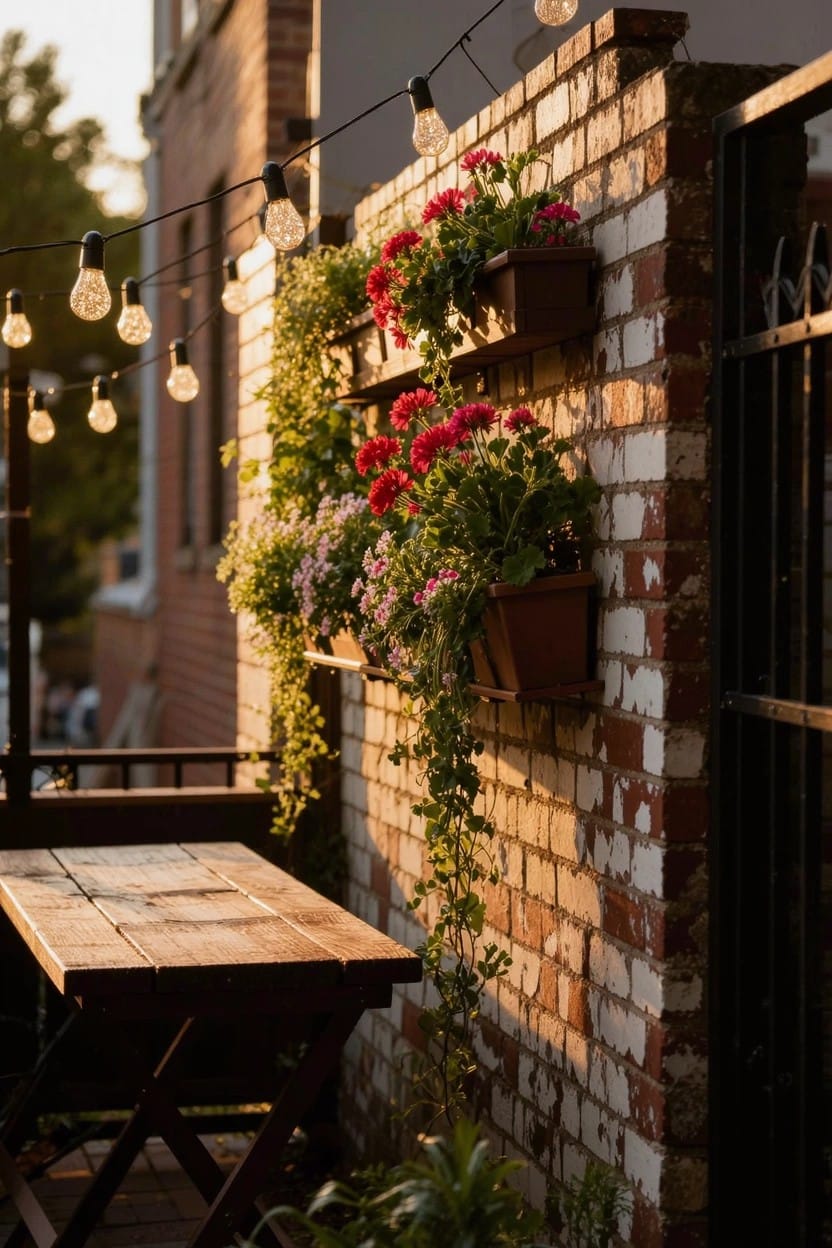
Flower boxes mounted straight on brick walls like this make a plain fence line pop with color. The red geraniums and trailing petunias spill right over the edges. It softens the hard brick without crowding the patio space below.
These work best along side fences or back patios on older homes. Bolt them in securely so they hold up when full of wet soil. Add some ivy for year-round green if you want. Keeps things simple and pretty.
Tulip Beds Along the Fence
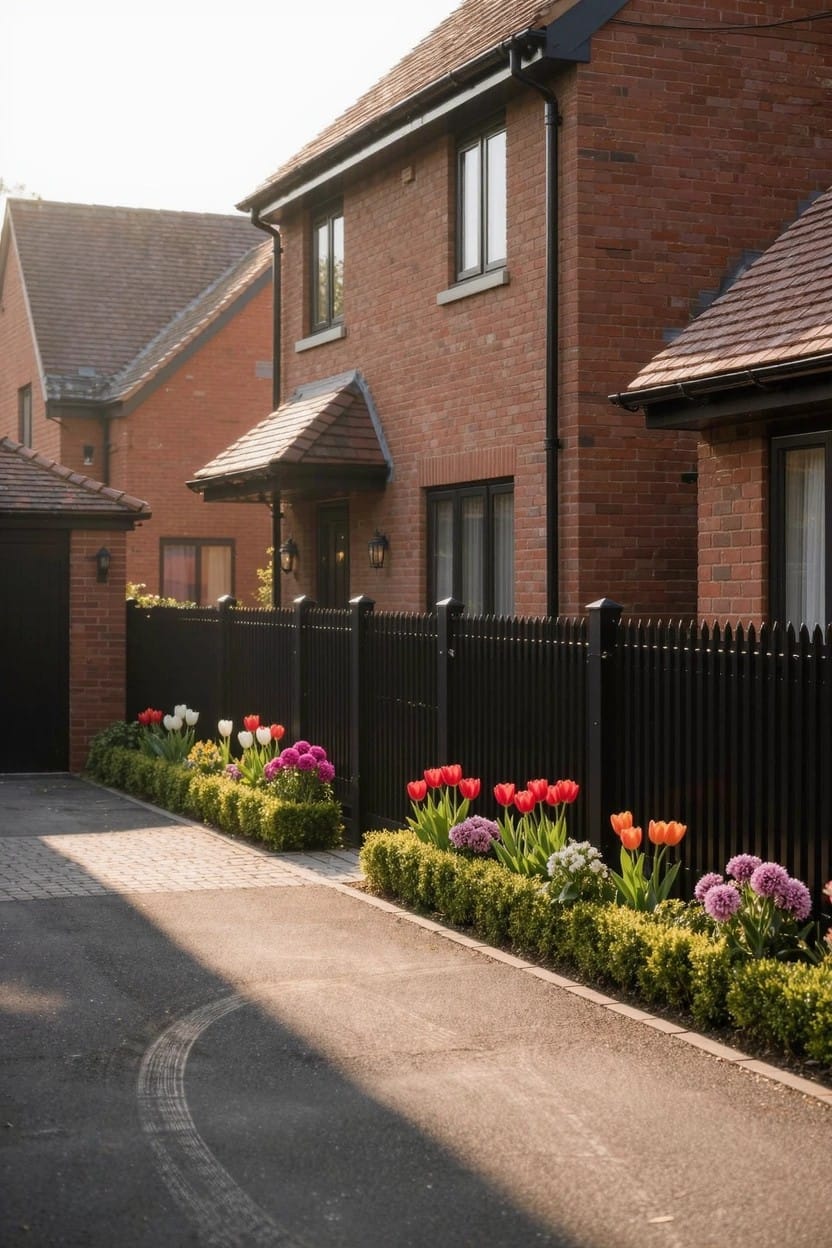
One simple way to brighten up a fence line is planting tulips right in front of low boxwood hedges. The dark black fence in the background makes those pink, white, and red tulip blooms pop even more. It turns a plain driveway edge into something cheerful, especially in spring when the flowers are at their best.
This works well in tight spots like side yards or next to driveways on suburban homes. Go for mixed colors in the tulips to keep it lively, and shear the boxwoods once a year to stay neat. Brick houses seem to pair nicely with it… just make sure the fence color contrasts enough.
Flower Beds Along the Front Fence
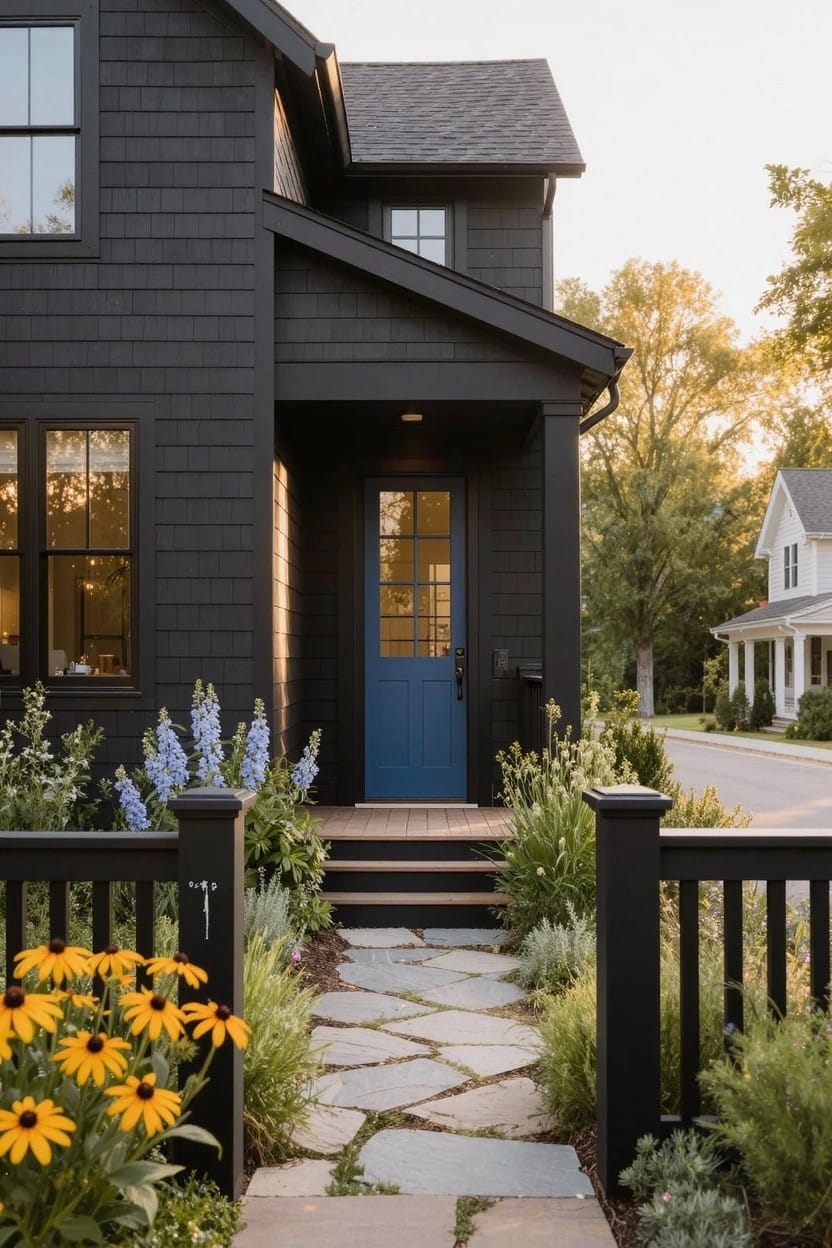
One simple way to build interest along a front fence is filling the beds with perennials of different heights. Tall blue delphiniums in the back give height. Bright yellow black-eyed Susans up front add color. Together they pull the eye along the fence toward the house path.
This works best in a small entry area where you want to welcome folks right in. Try it on homes with dark siding. The flowers hide the fence a bit without crowding the walk. Just make sure taller plants don’t flop over the path.
White Flowers Along the Fence Line
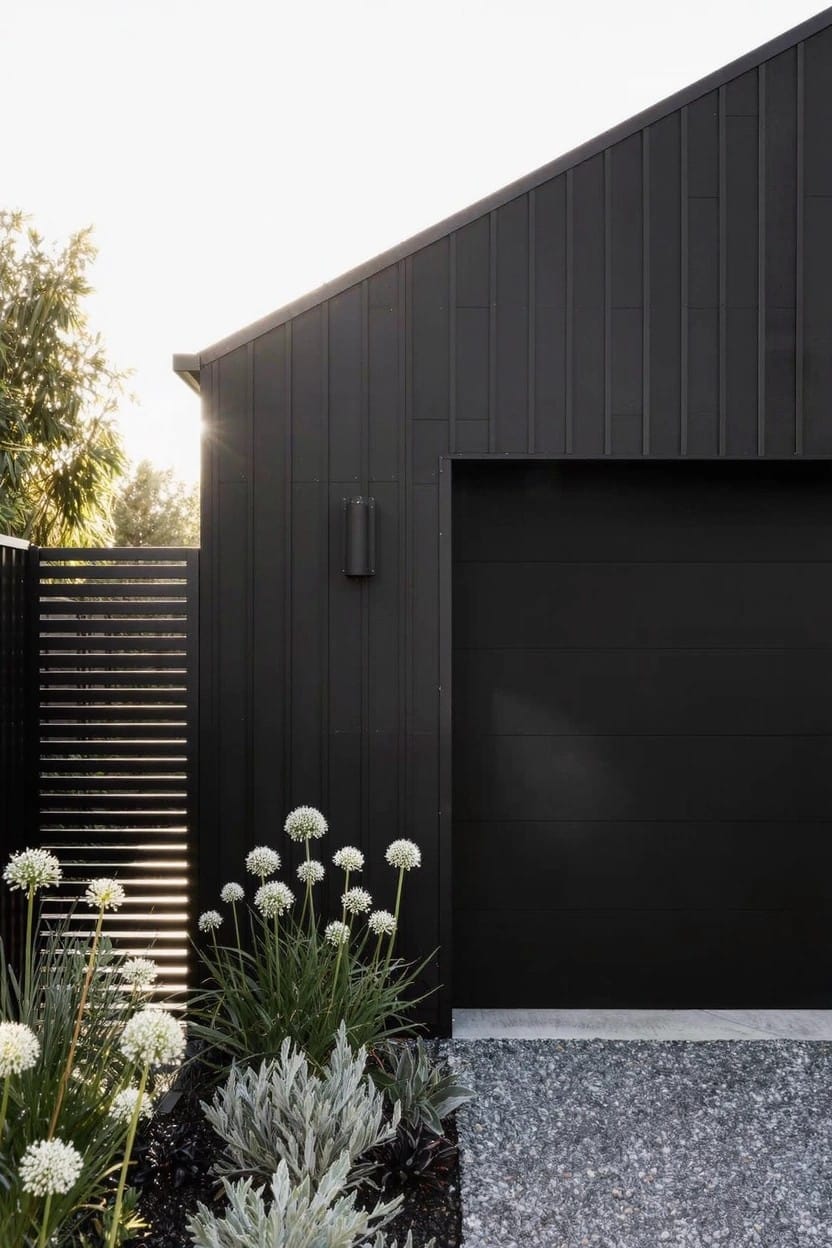
White flowers planted right along the fence line make a simple statement here. Against the dark slatted fence and black house siding, those round clusters of blooms stand out clean and bright. It’s a low-key way to add some life without much fuss.
Try this in a narrow bed next to your fence, especially if you’ve got dark materials or gravel around. It suits modern homes or any yard wanting a bit of contrast. Just pick tough perennials that handle sun, and space them so they fill in over time.
Wildflowers Along Stone Walls
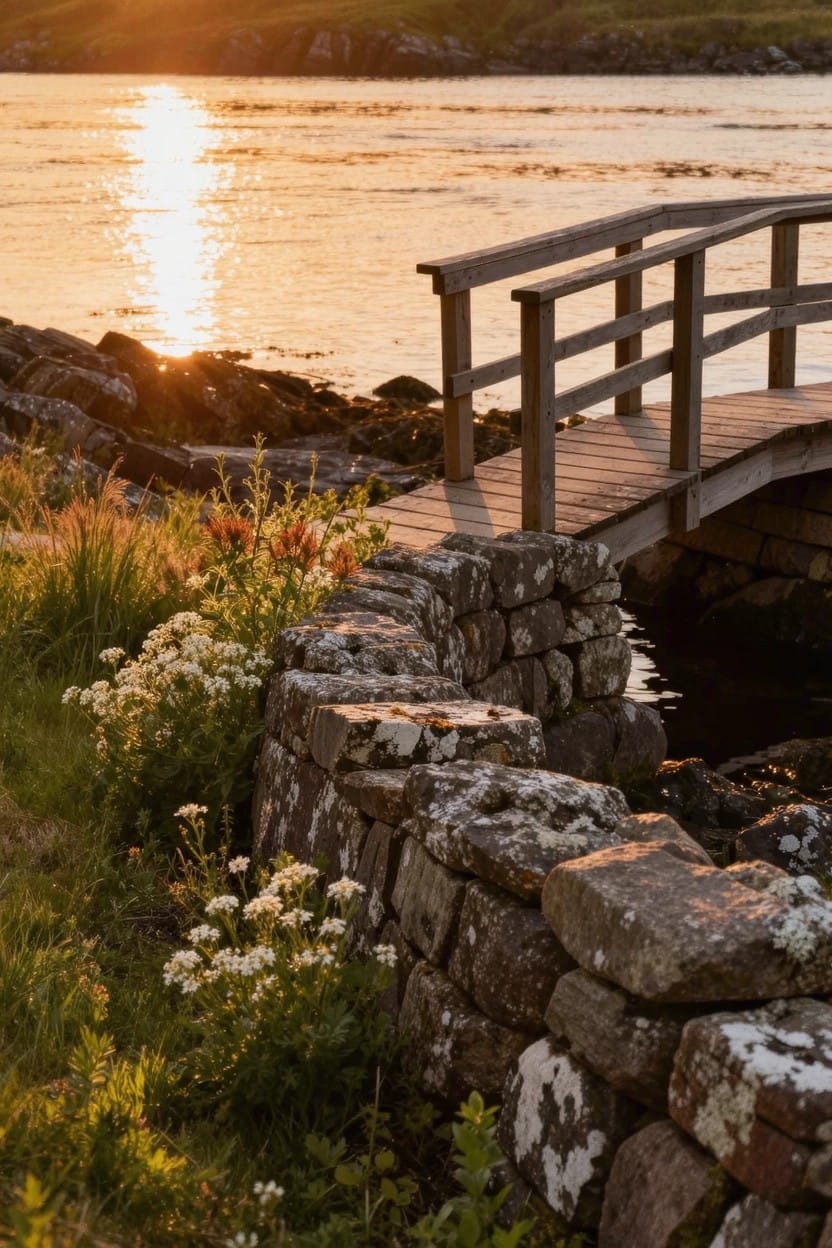
One nice landscaping touch is planting wildflowers right along a low stone wall. You see it here with a simple wooden bridge crossing nearby water. The flowers spill over the wall edges and mix with the grass. That softens the hard stone look. It also draws attention to the path without much effort.
This works best in yards with natural boundaries like streams or ditches. Plant tough, low-growing flowers that handle some shade or damp spots. It suits older homes or cottage-style places. Just trim back anything that crowds the walkway.
Stepping Stones in Fence Line Gardens
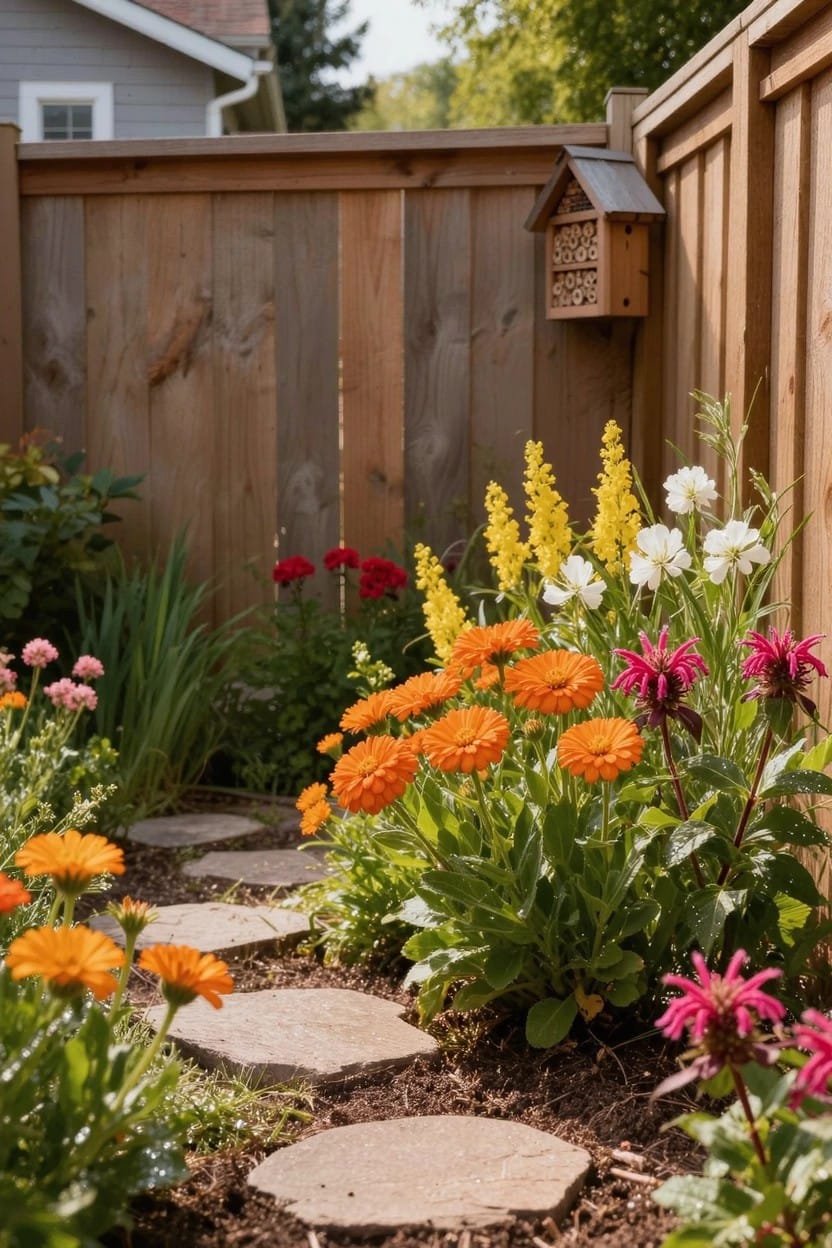
One simple way to make a flower bed along your fence more usable is to add stepping stones that wind right through the plants. This path draws you into the garden without damaging the blooms. You see orange daisies and tall yellow spikes hugging the wooden fence here. It turns a plain border into something you actually walk through.
These paths work best in narrow yards or side areas where you need access without wide open space. Lay flat stones in a casual curve, and plant lower flowers like marigolds near the edges. Keep taller ones back by the fence. Watch for muddy spots after rain. Suits most homes with a fence.
Flower Beds Along a Picket Fence
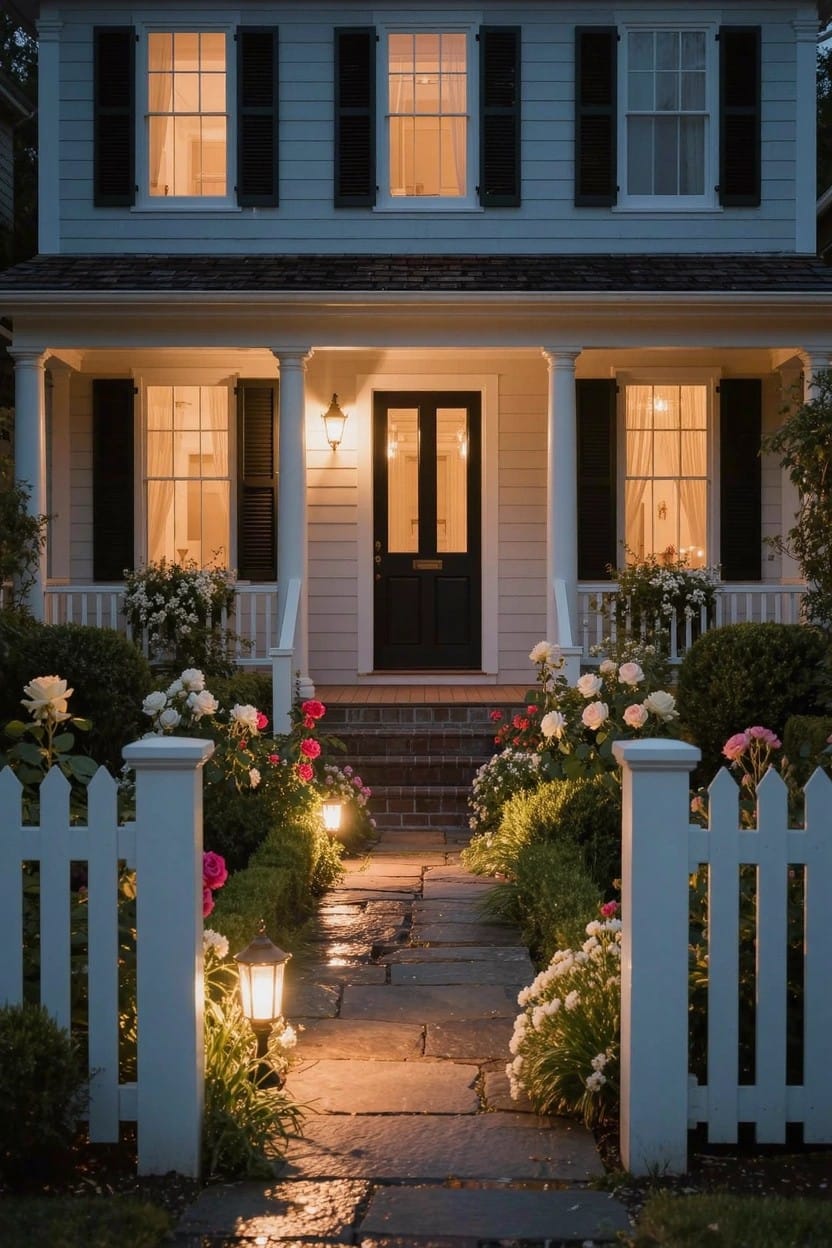
One straightforward landscaping idea is flower beds tucked right along a picket fence. They fill the space with roses in white and pink, plus some green shrubs for shape. This setup draws your eye along the fence to the house path. It adds color without taking over the yard.
You can pull this off in a front yard with room for a walkway. Go for repeat planting like roses that bloom a lot. Keep beds low so they don’t block the fence. A stone path through them works best, and small lights make it nice after dark. Suits older style homes.
Frequently Asked Questions
Q: How wide should the flower bed be next to my fence?
A: Aim for 2 to 3 feet wide. That gives plants room to spread without crowding the fence. You reach in easily for weeding too.
Q: What plants work best if the fence side stays shady?
A: Go for astilbe or bleeding hearts. They pop with color and handle low light like champs. Pair them with some lamium for ground cover that stays put.
Q: How do I stop grass and weeds from invading the bed?
A: Lay down cardboard or landscape fabric before adding soil and mulch. It smothers grass over time. Top with 2 inches of mulch to keep it tidy.
Q: Can I pull this off without spending much?
A: Start with perennials from a local sale or divide from friends’ gardens. They come back yearly and save cash. But skip the cheap annuals, they fizzle fast.
