

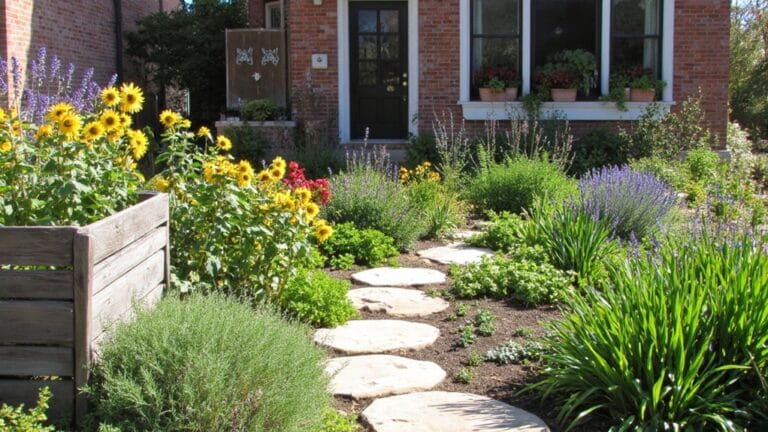
Creating a balanced flower garden is all about thoughtful design and harmony. It’s not just the blooms themselves but how they blend together to create a stunning visual. From layering different heights to picking complementary colors, every detail plays its part. I’m thrilled to share some inspiring ideas that will help transform your outdoor space. Let’s explore ways to achieve that perfect balance in your garden.
Essential Flower Garden Layout Basics to Get Started
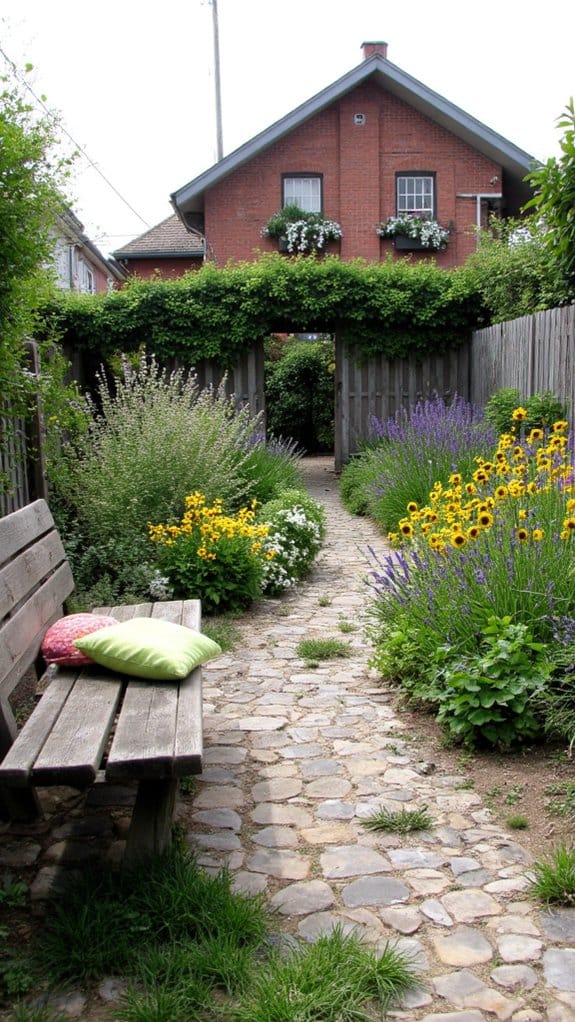
When starting a flower garden, understanding a few essential layout basics can make all the difference.
I’ve found that planning your garden in layers creates depth and interest. By placing taller plants at the back and shorter ones in front, you guarantee every bloom gets noticed.
Grouping flowers by color or type adds harmony, making your garden not just beautiful, but also cohesive.
Choosing the Right Location for Your Flower Garden
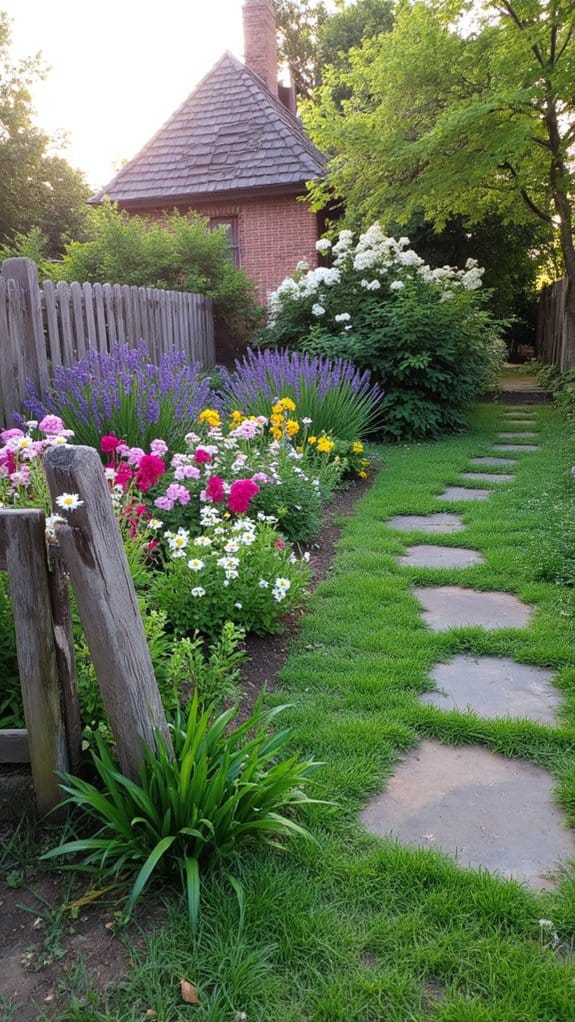
Finding the perfect spot for your flower garden is just as important as the layout itself.
I always look for a location that gets plenty of sunlight, ideally six to eight hours a day. Good drainage is essential, too—avoid low spots that collect water.
Finally, consider proximity to water sources for easy maintenance, ensuring my flowers thrive effortlessly throughout the growing season.
Selecting Seasonal Flowers for Continuous Blooms
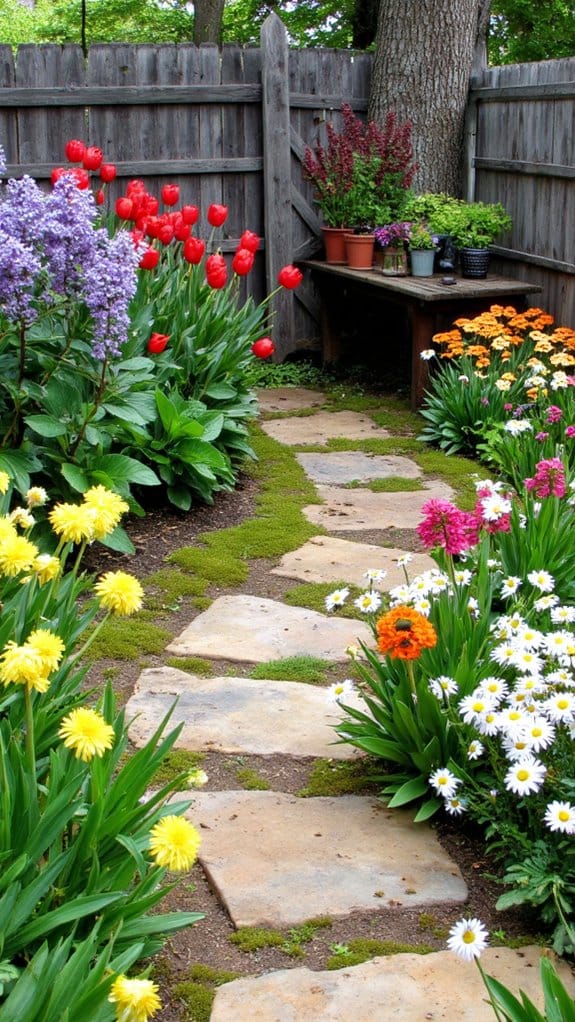
To create a vibrant flower garden that blooms throughout the seasons, I always choose a mix of annuals and perennials.
Creating a colorful flower garden year-round involves a delightful mix of annuals and perennials.
I love planting early bloomers like pansies for spring, followed by summer favorites like zinnias.
Then, I add fall-flowering asters and chrysanthemums.
This combination guarantees my garden remains lively and colorful year-round, bringing joy to my outdoor space with continuous blooms.
Designing a Colorful Flower Bed for Maximum Impact
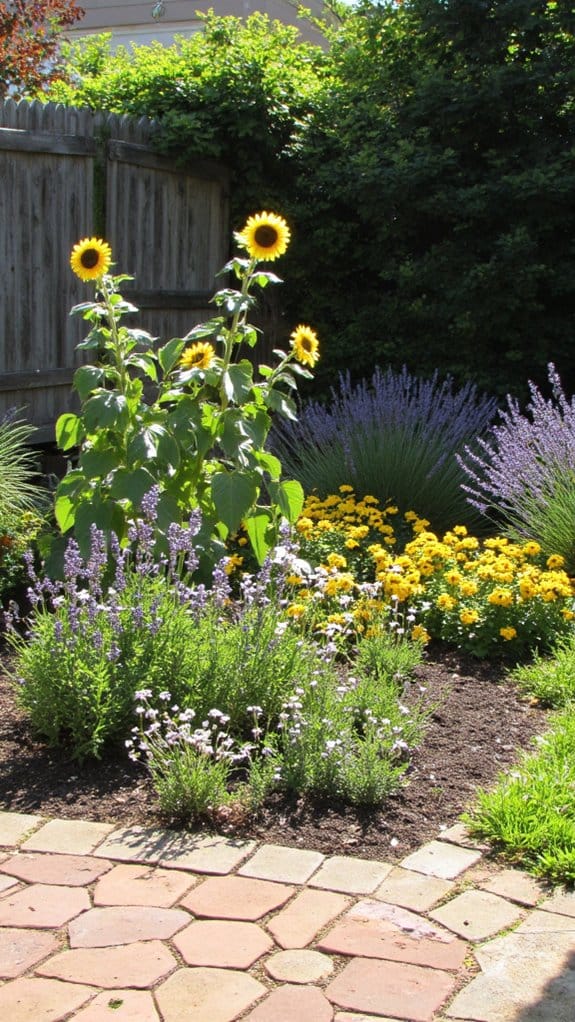
Creating a flower bed that makes a statement is just as important as choosing the right flowers for continuous blooms.
I love combining bold colors and varied heights to create visual interest. Grouping flowers in odd numbers adds a natural touch, while contrasting foliage enhances the overall effect.
Don’t forget to reflect on seasonal changes, ensuring your garden remains vibrant throughout the year!
Tips for Layered Planting to Utilize Vertical Space
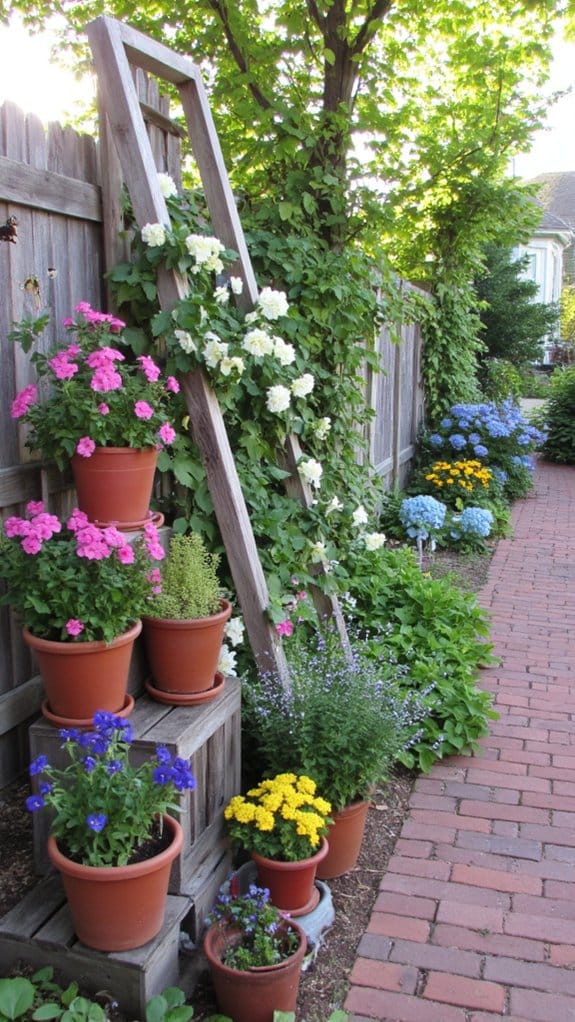
While layering plants can seem challenging at first, it’s a fantastic way to maximize vertical space in your flower garden.
I recommend starting with taller plants at the back or center, then adding medium-height varieties, and finishing with low-growing blooms in front. This creates depth and visual interest.
Don’t forget to take into account sunlight and moisture needs for each layer!
Creating Accessible Pathways for Garden Flow
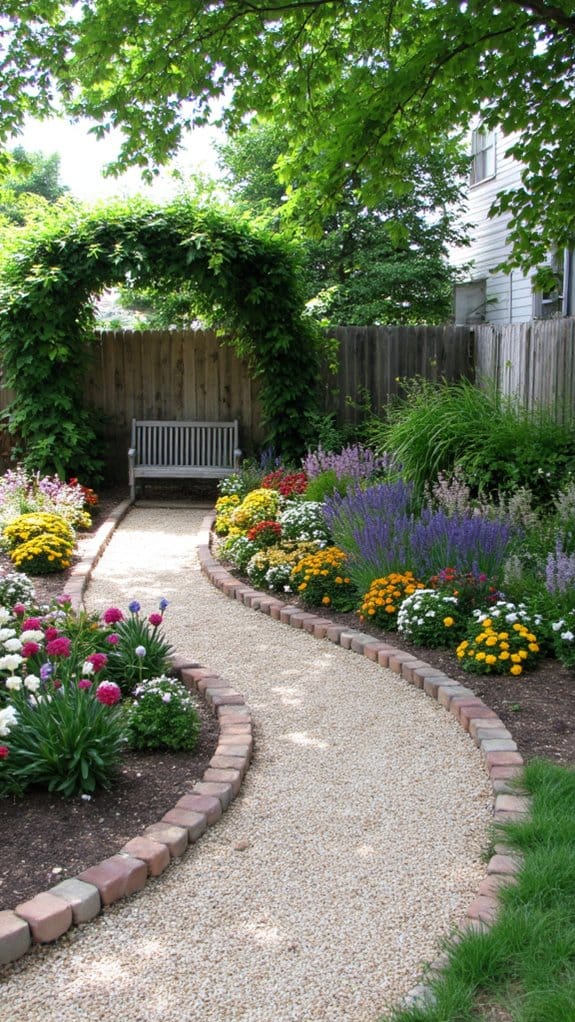
How can I guarantee my flower garden flows smoothly?
I’ve found that creating accessible pathways is key. I layout wide, inviting paths using gravel or mulch to guide visitors through my blooms.
Curved paths add a natural feel, while strategic placement of stepping stones keeps things organized.
This way, I make certain every corner of my garden is easy to explore and appreciate.
Create a Focal Point With Bold Blooms
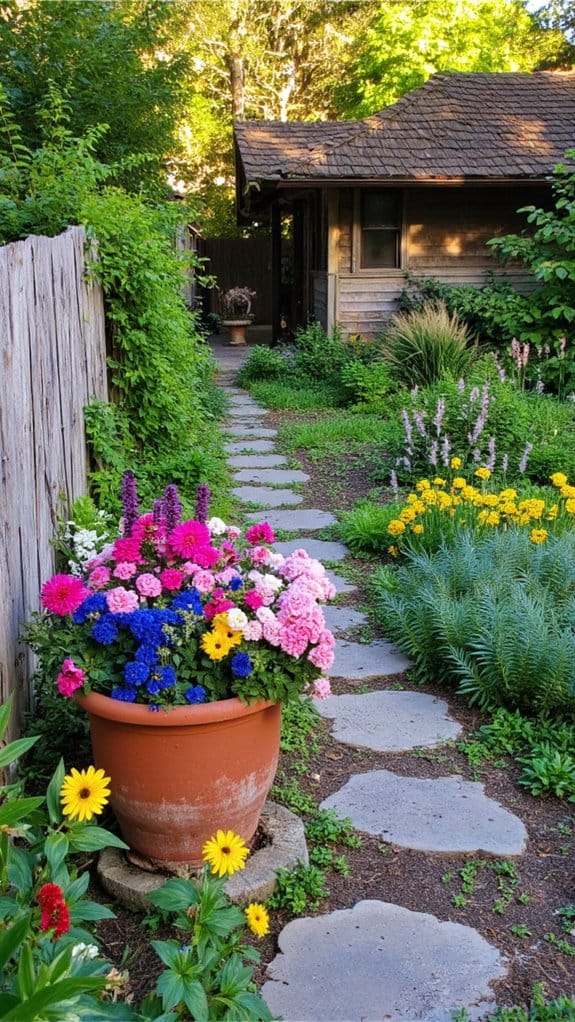
To draw the eye and enhance the overall beauty of my flower garden, I focus on incorporating bold blooms as striking focal points.
I love using vibrant colors like deep reds, bright yellows, and rich purples. Positioning these flowers in clusters or at varying heights creates drama and interest, making sure they stand out against softer, more subtle blooms around them.
Combining Perennials and Annuals for Year-Round Interest
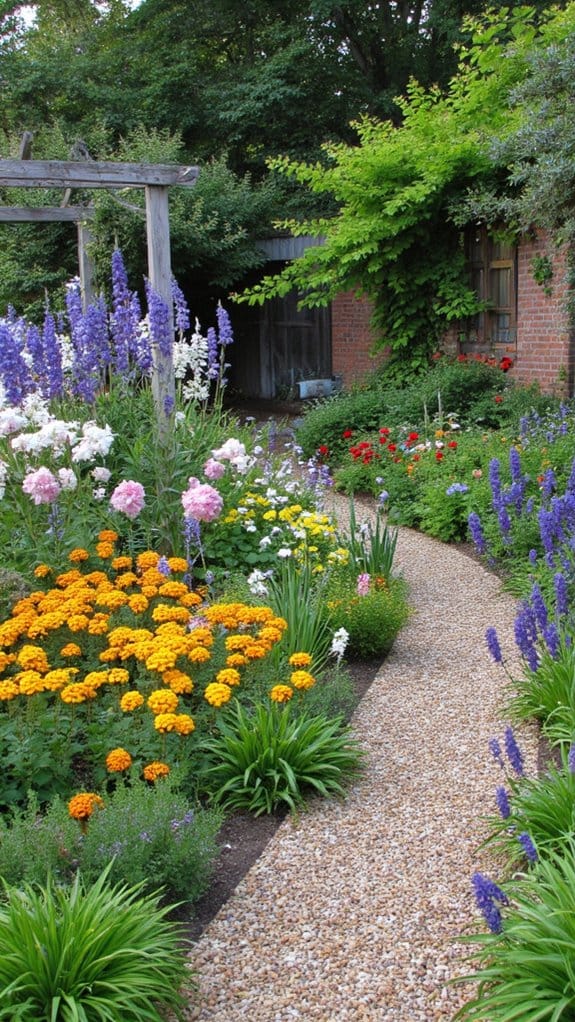
Incorporating both perennials and annuals in my flower garden not only adds depth but also guarantees there’s something in bloom throughout the year.
I love how perennials provide a reliable foundation, while annuals bring vibrant bursts of color.
Edging Techniques for Clean, Defined Borders
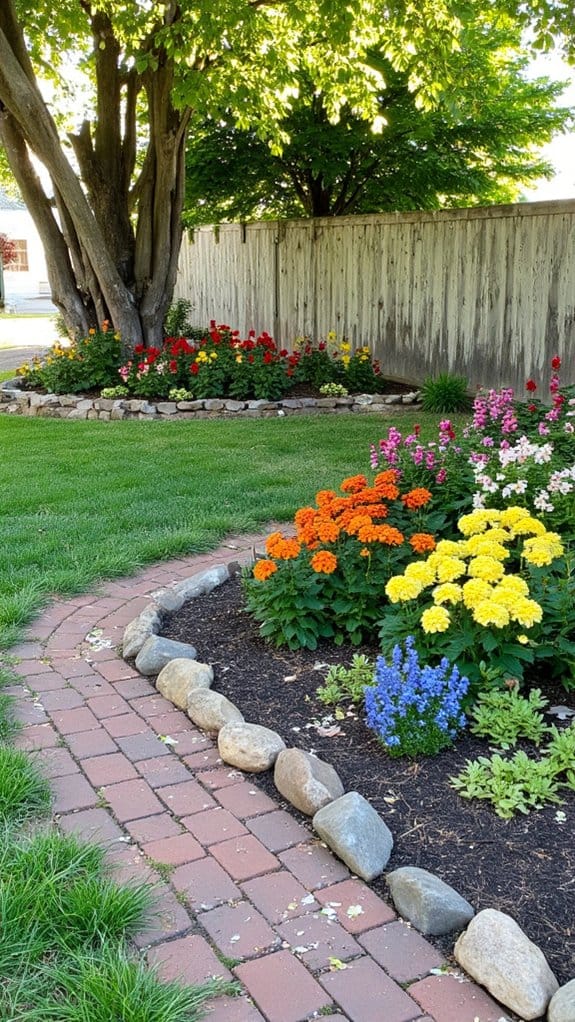
One of the key elements of a well-maintained flower garden is clearly defined borders.
I’ve found that using materials like bricks, stones, or metal edging creates a clean look and prevents grass from creeping into my flower beds.
I also love incorporating natural elements, like wood or bamboo, for a rustic feel.
Whichever technique you choose, defined borders elevate your garden’s overall appearance.
Embracing Symmetry in Your Flower Garden Design
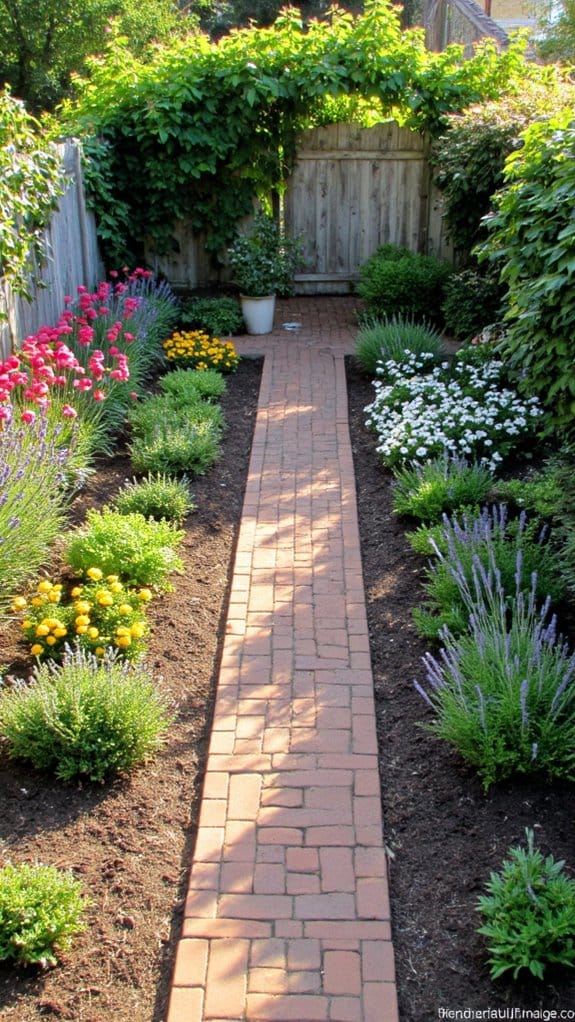
While some may shy away from rigid designs, I find that embracing symmetry in a flower garden can create a stunning visual impact.
The Charm of a Cottage Garden Style

After exploring the beauty of symmetry, I can’t help but appreciate the charm of a cottage garden style.
There’s something magical about the delightful mix of colors, textures, and scents. I love the way flowers, herbs, and vegetables intertwine, creating a cozy, inviting atmosphere.
With its relaxed feel and natural beauty, a cottage garden truly captures my heart and inspires creativity.
Incorporating Modern Minimalist Design in Your Flower Garden
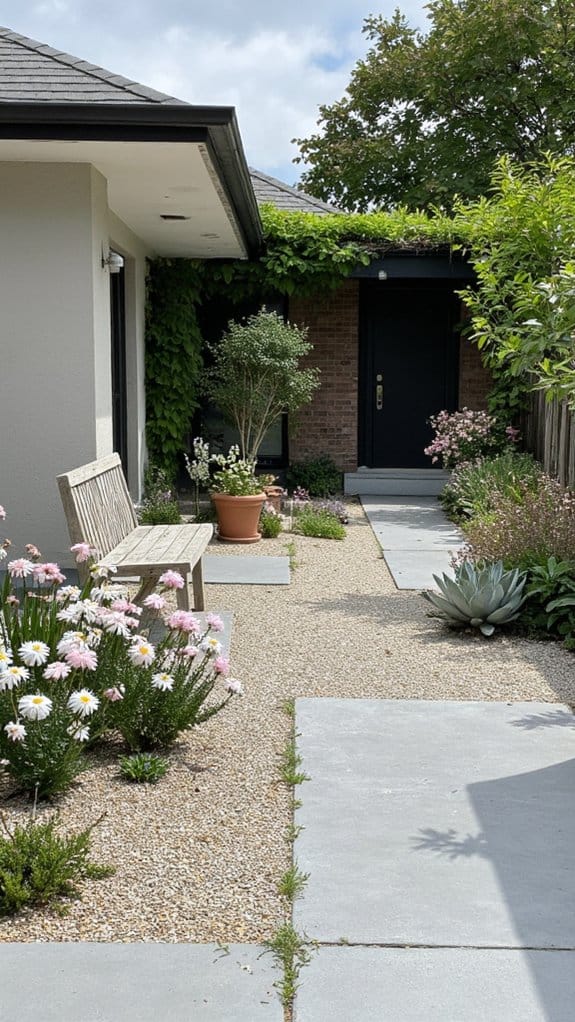
Embracing a modern minimalist design in my flower garden allows me to focus on simplicity and elegance, creating a serene space that feels both intentional and calming.
I choose a limited color palette, opting for white, greens, and soft pastels. By incorporating clean lines and open spaces, I highlight the beauty of each flower, encouraging a peaceful atmosphere that invites relaxation and contemplation.
Adding Height With Trellises and Arches
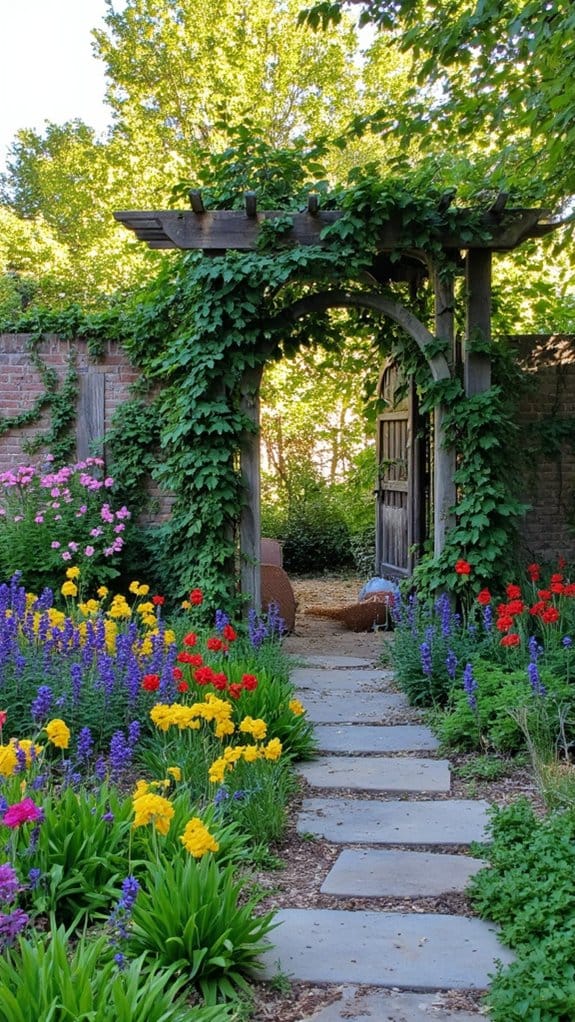
Trellises and arches can transform your flower garden by adding vertical interest and dimension.
I love how they create a stunning focal point, drawing the eye upward. You can train climbing plants to weave through them, adding lush greenery and blooms.
Plus, they offer charming pathways or cozy nooks, making my garden feel more inviting and vibrant.
They create delightful pathways and inviting corners, enhancing the warmth and vibrancy of my garden.
It’s a simple way to elevate your space!
Designing a Pollinator-Friendly Flower Garden
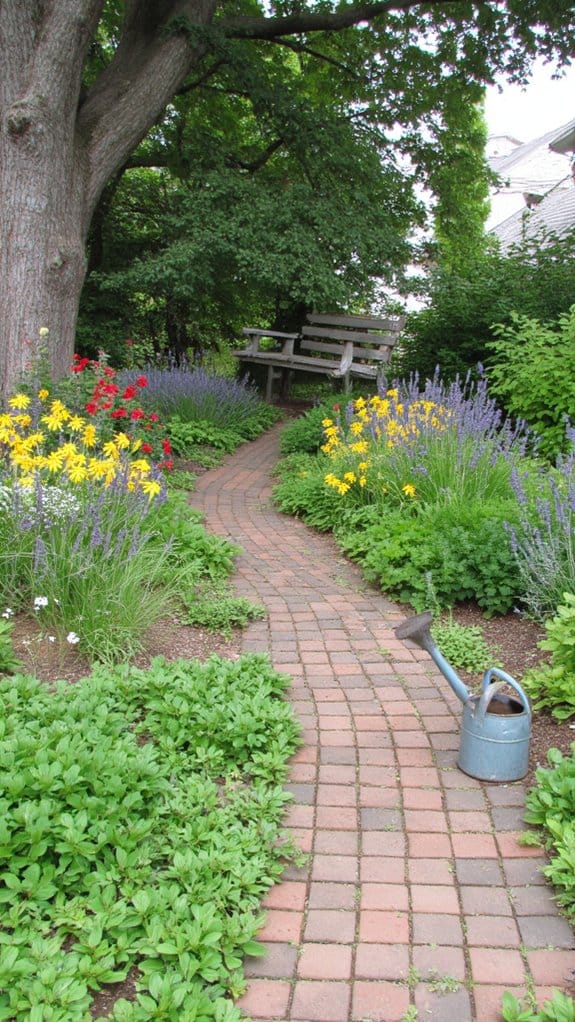
As I think about enhancing my flower garden with vertical elements, I can’t help but consider how important it’s to create a space that attracts pollinators.
I’m choosing native plants, like coneflowers and milkweed, which provide essential nectar.
I’ll also guarantee there’s a mix of colors and shapes, making it visually appealing while supporting bees and butterflies.
Let’s nurture our buzzing friends together!
Using Containers for Flexible Flower Arrangements
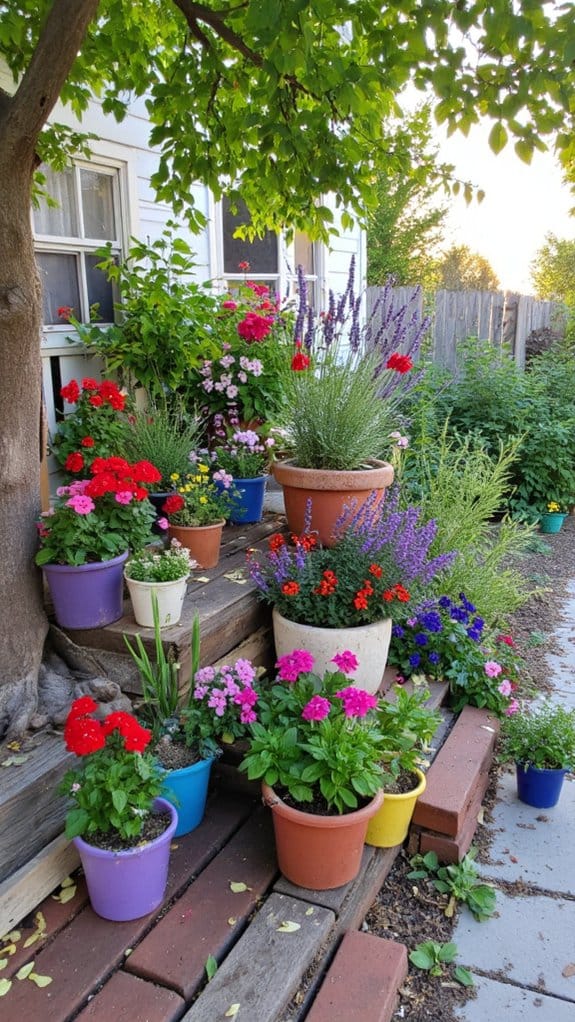
While I love the idea of a traditional flower garden, using containers offers a flexible way to arrange blooms that can adapt to any space.
I can easily change the layout, mix colors, and experiment with different heights.
Plus, containers allow me to move plants around to catch the sun or create a stunning focal point wherever I want.
It’s gardening made easy!
Choosing Native Plants for Sustainable Gardening
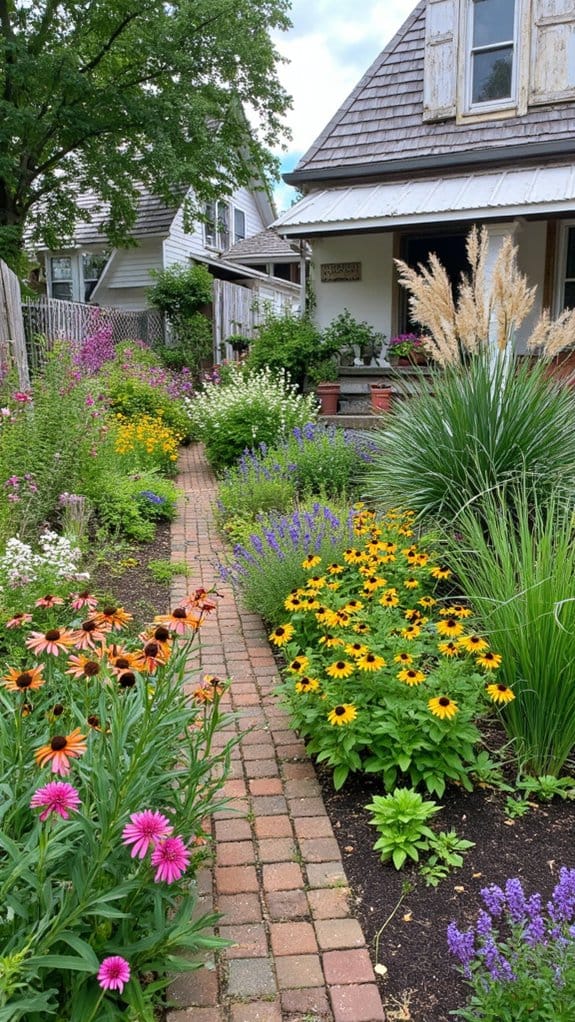
Container gardening has its advantages, but when it comes to creating a sustainable flower garden, choosing native plants makes a significant impact.
I’ve found that native plants thrive in local conditions, require less maintenance, and attract beneficial pollinators.
Crafting a Sensory Flower Garden With Textures and Scents
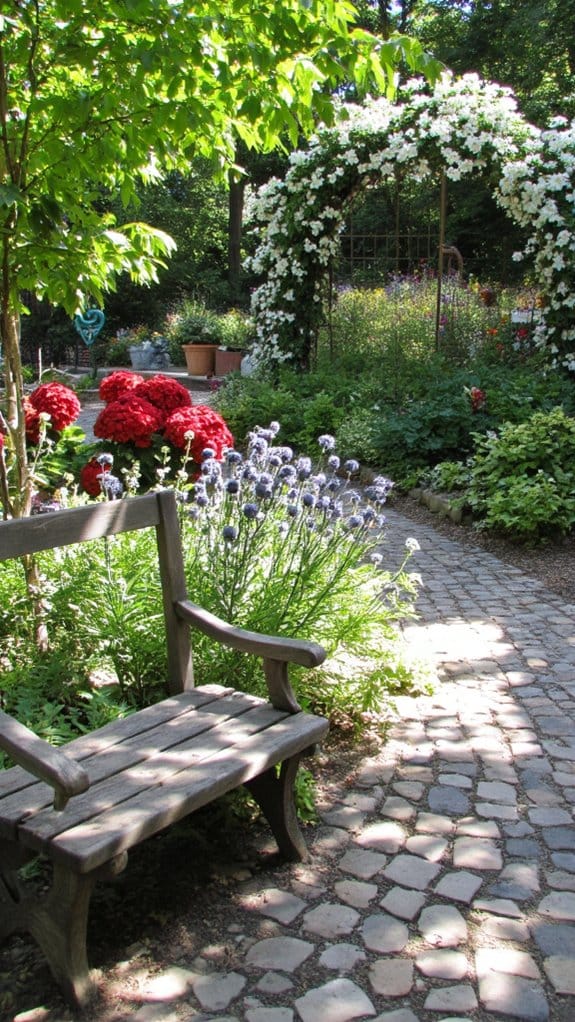
Creating a sensory flower garden is an exciting way to engage not just the eyes but also the touch and smell.
I love mixing plants with varied textures, like soft lamb’s ear and feathery ferns. Incorporating fragrant blooms, such as lavender and jasmine, adds another layer of delight.
Planning for Wildlife: Attracting Birds and Butterflies
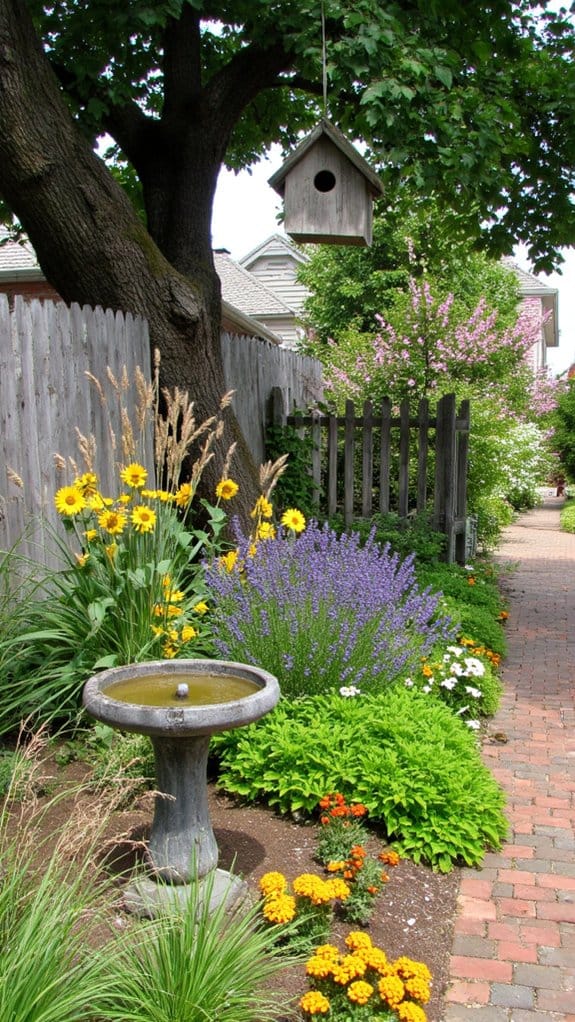
In addition to engaging the senses, I love to contemplate how my flower garden can support local wildlife, especially birds and butterflies.
I choose native plants with vibrant blooms and provide varied heights to create a welcoming habitat.
Adding a water source and avoiding pesticides helps attract these beautiful creatures, making my garden not just a feast for the eyes but a haven for wildlife too.
Why Good Soil Matters for Your Flower Garden

Soil serves as the foundation for a thriving flower garden, and I can’t emphasize enough how essential it’s to get it right.
Good soil provides the nutrients plants need, retains moisture, and promotes healthy root growth.
I’ve found that investing time in soil testing and amendment pays off with vibrant blooms and robust plants.
Healthy soil truly makes all the difference in my garden.
Seasonal Decorations and Accents to Enhance Your Garden
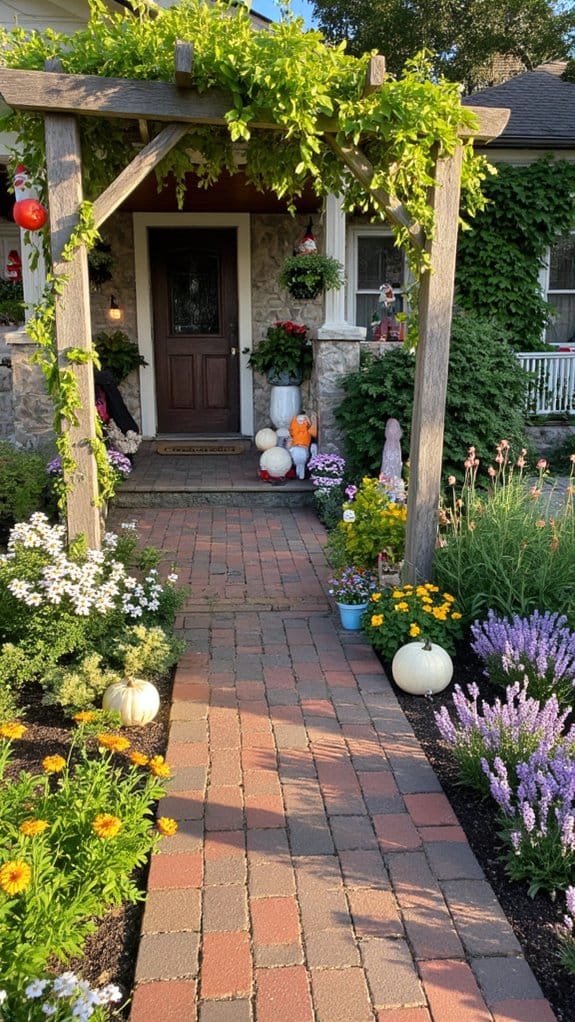
How can you make your flower garden even more inviting? I love adding seasonal decorations like colorful planters, festive lanterns, and charming garden stakes.
In spring, I’ll incorporate pastel accents, while autumn calls for warm, earthy tones.
Don’t forget about whimsical touches, like birdhouses or small sculptures, to create a playful atmosphere.
These accents truly bring my garden to life throughout the year!
Understanding Color Theory in Flower Arrangement

While planning my flower arrangements, I’ve found that understanding color theory can transform a simple bouquet into a stunning focal point.
By pairing complementary colors, I create vibrant contrasts that catch the eye. I also enjoy using analogous colors for a harmonious look.
Experimenting with shades and tones allows me to evoke different moods, making each arrangement uniquely enchanting.
Balancing Formal and Informal Garden Areas
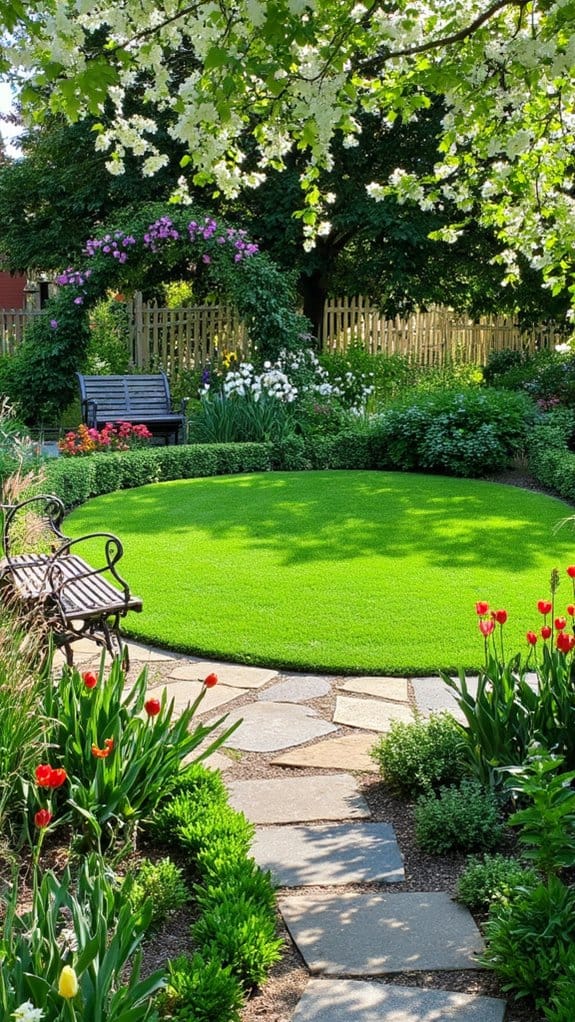
Creating a visually appealing garden often involves striking a balance between formal and informal areas.
I’ve found that incorporating structured elements, like neatly trimmed hedges, alongside relaxed plantings, creates harmony.
For instance, placing a formal pathway next to a wildflower patch invites exploration while maintaining order.
This blend not only enhances visual interest but also reflects my personality and gardening style beautifully.
Incorporating Edible Flowers for Beauty and Use
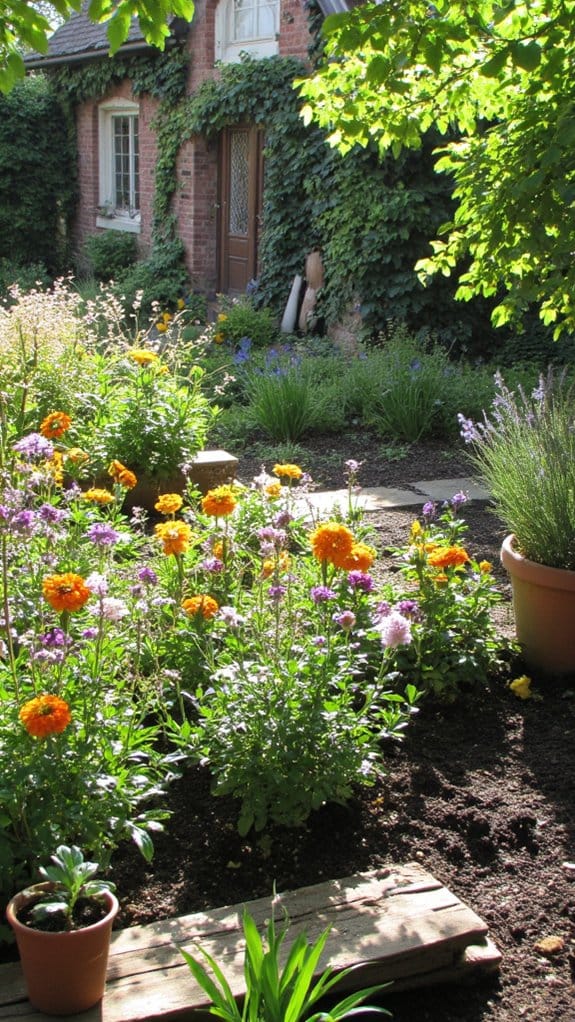
Since I love combining aesthetics with practicality in my garden, incorporating edible flowers has become one of my favorite strategies. They add vibrant colors and unique textures while providing flavorful additions to my meals.
I’ve planted nasturtiums, pansies, and marigolds among my regular blooms. Not only do they attract pollinators, but they also elevate my dishes with beauty and taste.
