

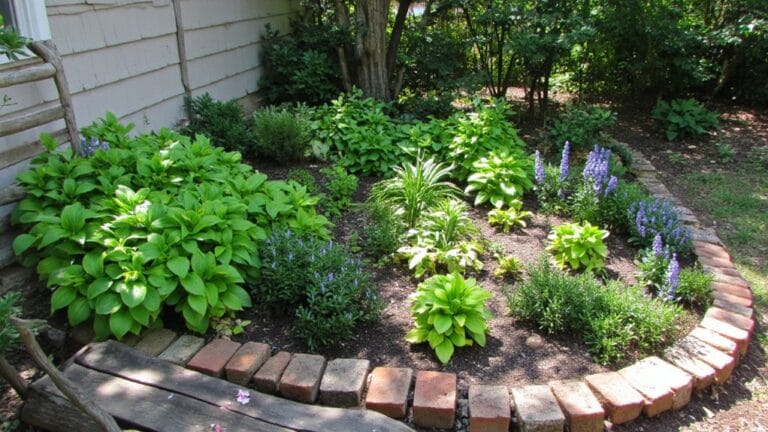
Thinking about those neglected corners of our gardens? Let’s breathe new life into them with dreamy flower beds perfect for low light conditions. Low light doesn’t mean boring; it means embracing lush ferns and vibrant astilbes. I’ve found some inspiring ideas to make these shady spots truly enchanting. Ready to transform your own garden corners into magical retreats?
Understanding the Benefits of Shady Flower Beds
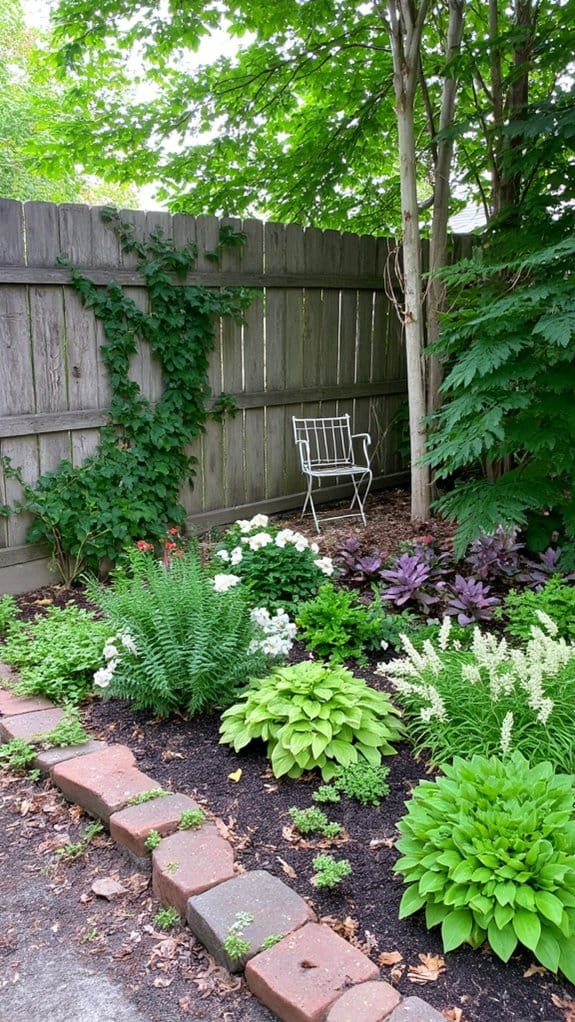
While many gardeners might shy away from shady spots, I’ve discovered that shady flower beds can be incredibly rewarding.
They offer a tranquil oasis, cooling the garden environment while providing unique textures and colors.
Plus, I’ve found they require less maintenance, as they often need less watering.
Shady flower beds are a joy, requiring less maintenance and offering a refreshing escape.
Embracing these spaces has transformed my garden into a lush retreat I truly cherish.
Choosing the Right Flowers for Low Light Conditions
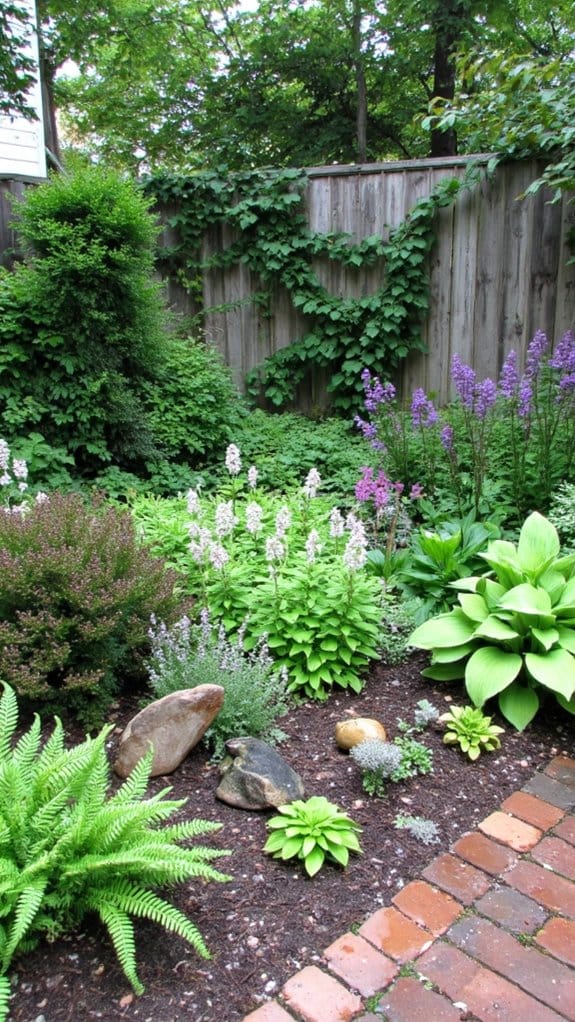
Shady areas in your garden can be a canvas for vibrant blooms and lush foliage, but selecting the right flowers for low light conditions is key to creating that stunning visual impact.
I love using plants like hostas, astilbes, and heucheras. They thrive in shade, offering beautiful colors and textures.
Don’t shy away from experimenting to find what truly brings your shaded corners to life!
Lush Ferns: The Perfect Foliage for Shade
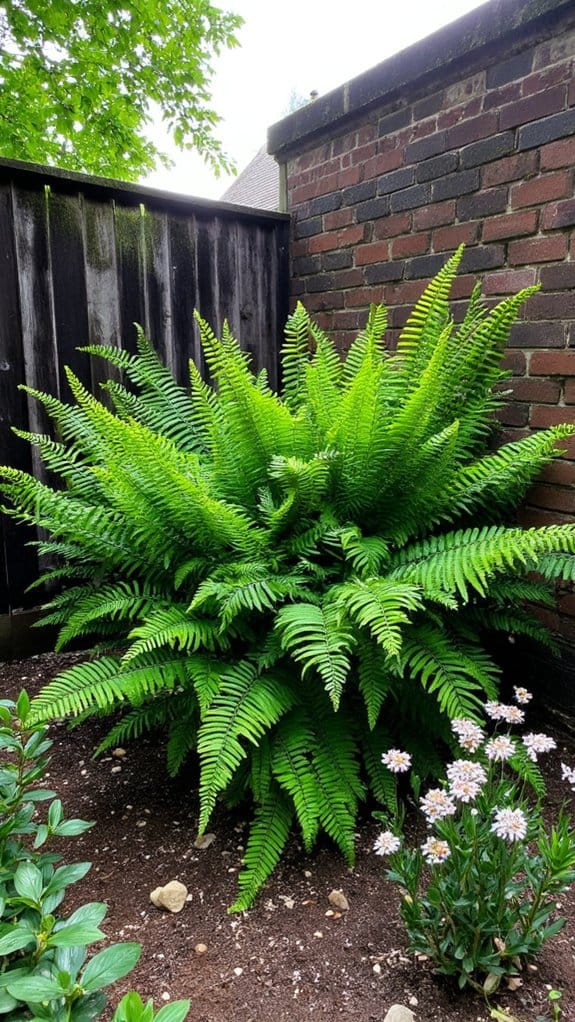
If you want to add depth and texture to your shady garden spots, lush ferns are an excellent choice. Their graceful fronds create a soft, inviting atmosphere, and they thrive in low light.
I love how they come in various shapes and sizes, making it easy to mix and match. Plus, they require minimal care, allowing me to enjoy my garden without constant maintenance.
Astilbe: Adding Color With Feathery Plumes
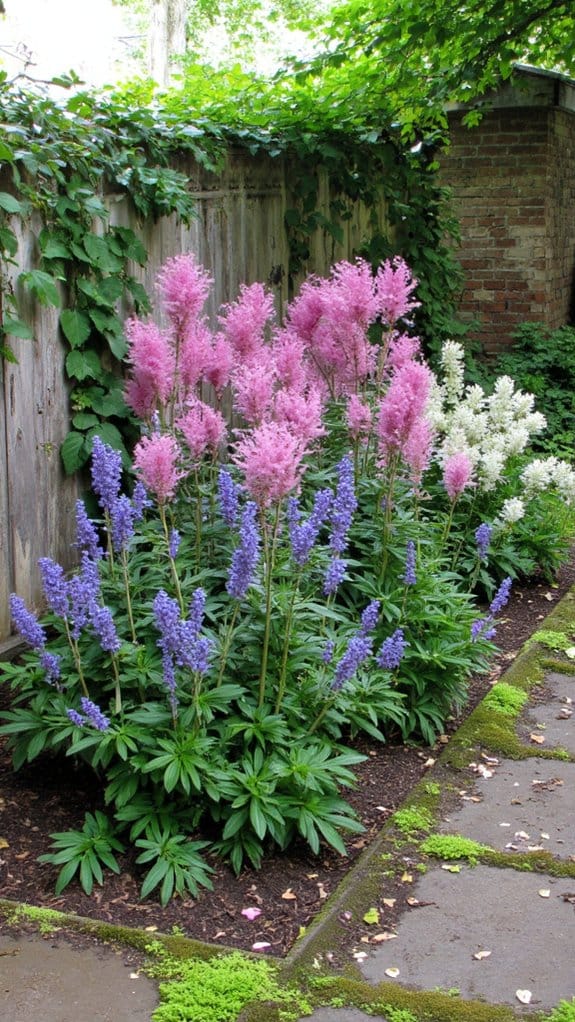
After appreciating the lush ferns that add texture to a shaded garden, it’s time to infuse some vibrant color with astilbe.
These stunning plants produce feathery plumes in shades of pink, purple, and white, creating a striking contrast against the greenery.
I love how they thrive in moist, shady spots, bringing life and movement to my flower bed while attracting pollinators.
Hostas: Versatile Plants for Your Shady Corner
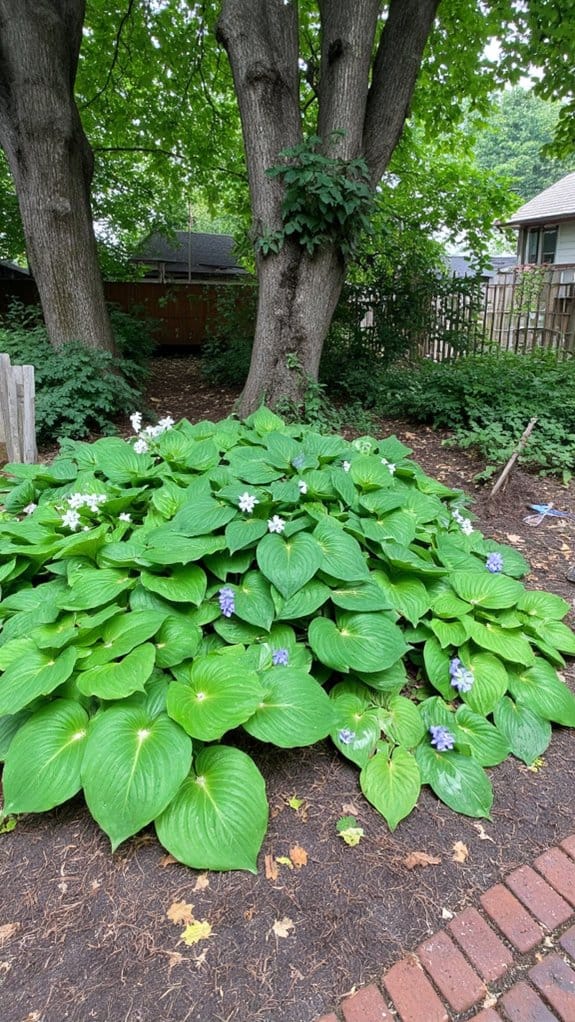
When it comes to adding structure and variety to a shaded corner of my garden, hostas are my go-to choice.
Their lush foliage comes in various sizes and shades of green, blue, and gold, creating a stunning visual impact.
I love how they thrive in low light, requiring minimal maintenance while bringing life to those otherwise forgotten spots in my yard.
Bleeding Heart: A Romantic Touch to Your Garden
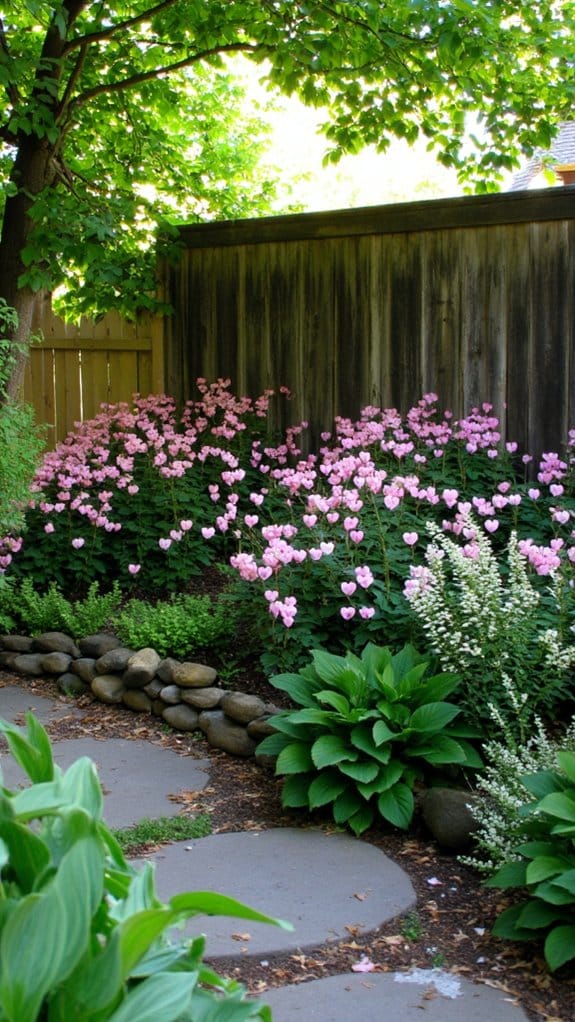
For a truly enchanting addition to my shady garden, nothing compares to the delicate beauty of bleeding heart plants.
Their heart-shaped blooms dangle gracefully, creating a romantic atmosphere. I love how they thrive in low light, adding a whimsical touch to corners that need life.
With their stunning pink and white hues, they effortlessly brighten up my outdoor space.
Hellebores: Early Bloomers for Shady Spots
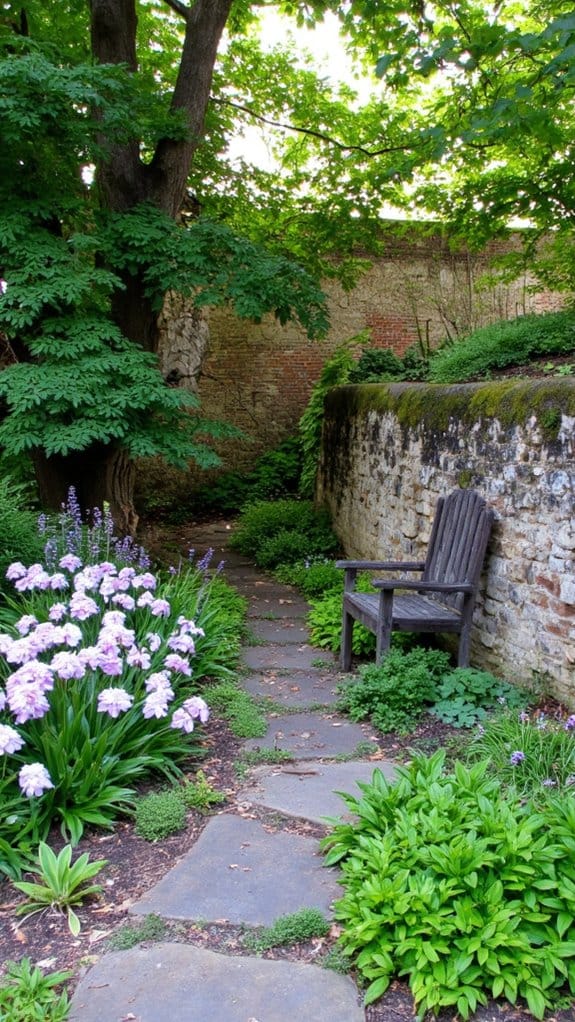
While bleeding hearts bring a romantic allure to my shady garden, hellebores step in as the stars of early spring.
Bleeding hearts enchant my garden, but it’s the hellebores that truly shine as early spring’s highlights.
Their stunning blooms emerge in varied hues, often poking through the last remnants of winter.
I love how they thrive in the shadows, bringing life and color when most other plants are still waking up.
Hellebores truly add charm to my low-light corners.
Jacob’s Ladder: A Unique Addition to Your Flower Bed
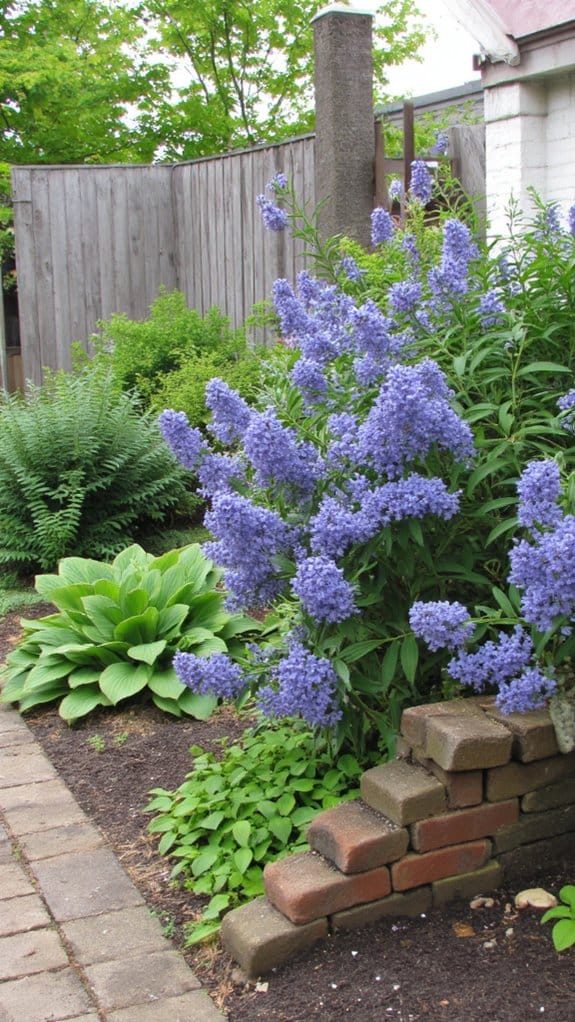
Although they mightn’t be the first plant that comes to mind for shady flower beds, Jacob’s Ladder offers a unique charm that can’t be overlooked.
I love their delicate, cascading foliage and clusters of lovely blue flowers. They thrive in partial to full shade, making them perfect for those dim corners of my garden.
Trust me, they’re a worthwhile addition!
Japanese Forest Grass: Graceful and Low-Maintenance
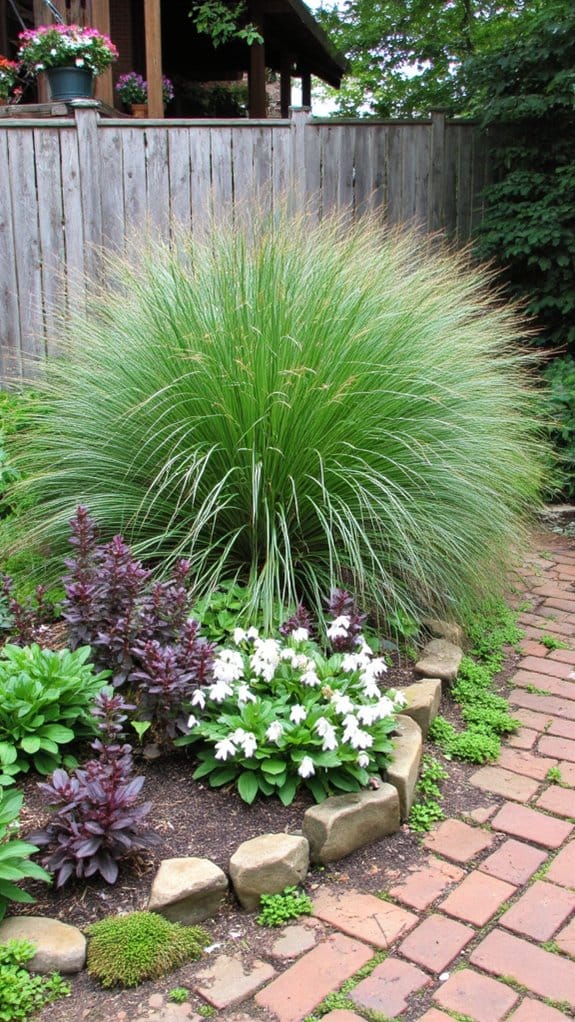
If you’re looking to add a touch of elegance to your shady flower bed, Japanese Forest Grass is an excellent choice.
This graceful plant thrives in low light and requires minimal maintenance. Its arching, soft-textured blades create a lush backdrop for other plants.
Plus, it’s versatile enough to complement various styles, making it a perfect addition to any serene garden space.
Lungwort: Charming Flowers With Variegated Foliage
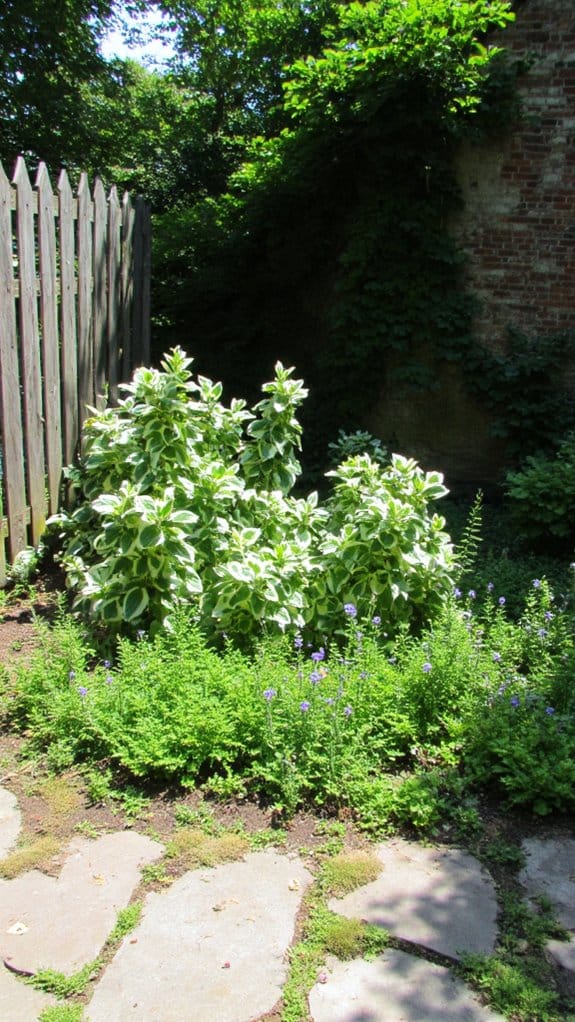
After incorporating the elegant Japanese Forest Grass into your shady flower bed, consider adding Lungwort for a splash of color and texture.
These charming plants showcase stunning variegated foliage, often speckled with silver or white. In spring, they produce delightful blue or pink flowers that brighten up those dim corners.
I’ve found they thrive in moisture-rich soil, making them a perfect addition!
Toad Lily: Exotic Blooms for a Shaded Oasis
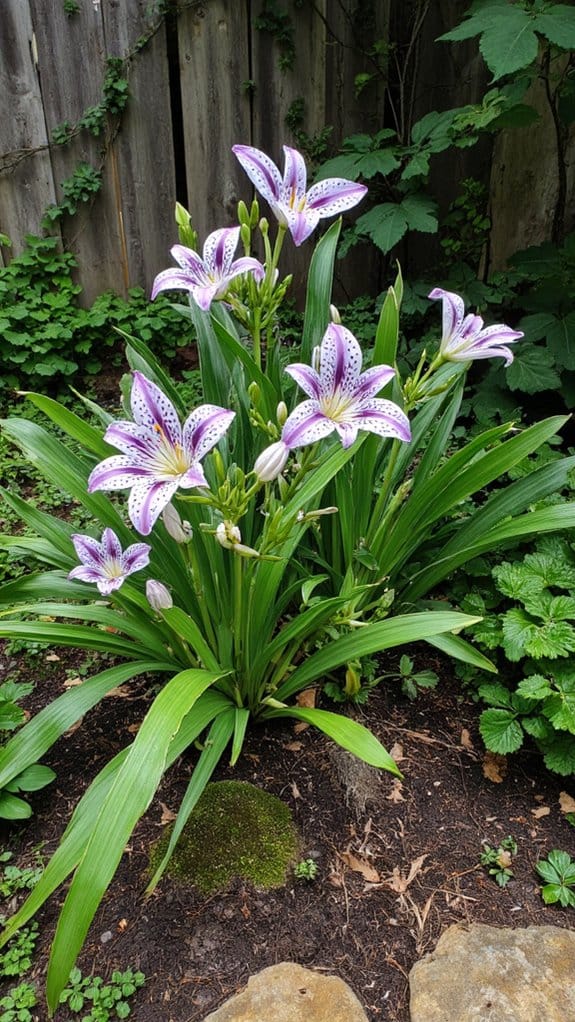
When you’re looking to add a touch of the exotic to your shady oasis, Toad Lilies are a fantastic choice.
Their unique, spotted blooms bring an intriguing flair to low-light corners, thriving in rich, well-drained soil.
I love how they attract curious pollinators, creating a lively atmosphere.
Plus, their delicate appearance complements other shade-loving plants beautifully, enhancing your garden’s charm.
Coral Bells: Colorful Leaves and Tiny Flowers
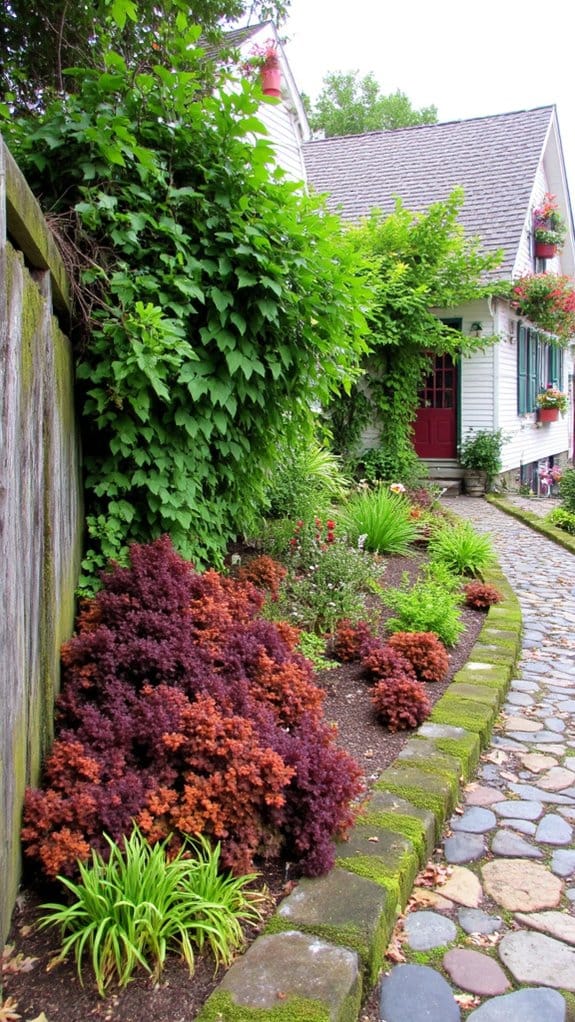
Coral Bells, with their vibrant foliage and delicate blooms, can truly transform any shaded area into a visual delight.
I love how their colorful leaves bring life to low-light corners, creating a stunning backdrop for other plants.
Plus, the tiny flowers add a charming touch.
With varieties ranging from deep burgundy to bright green, there’s a perfect option for every shaded garden.
Impatiens: Brightening Up the Darkest Corners
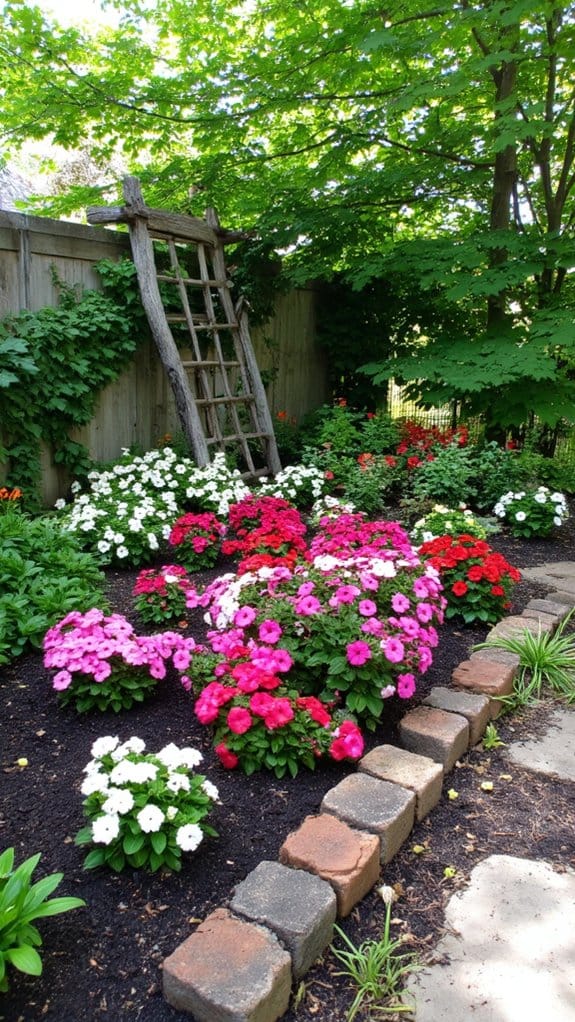
Although many plants struggle in low light, Impatiens shine brightly, instantly transforming even the darkest corners of your garden.
Impatiens thrive in low light, bringing vibrant color and life to even the shadiest corners of your garden.
I love how their vibrant blooms come in various colors, adding a cheerful touch to shaded areas.
They’re easy to care for and thrive in moisture-rich soil, making them perfect for those tricky spots.
Trust me, Impatiens will elevate your shady flower bed effortlessly!
Cyclamen: Beautiful Blooms in Unexpected Places
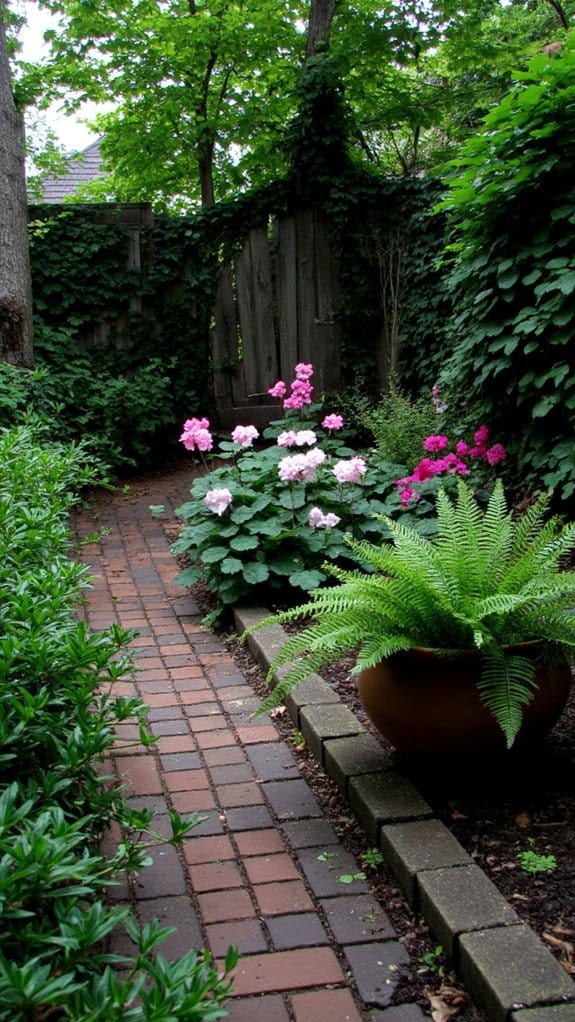
After showcasing the vibrant Impatiens, let’s explore another gem for shaded areas: Cyclamen.
These delicate flowers bring a whimsical touch to low-light corners with their charming blooms in various colors. I love how they thrive in cool conditions, providing unexpected beauty.
Planting Cyclamen beneath trees or in tucked-away spots transforms those forgotten areas into delightful focal points. You won’t be disappointed!
Foxglove: Tall and Elegant for Vertical Interest
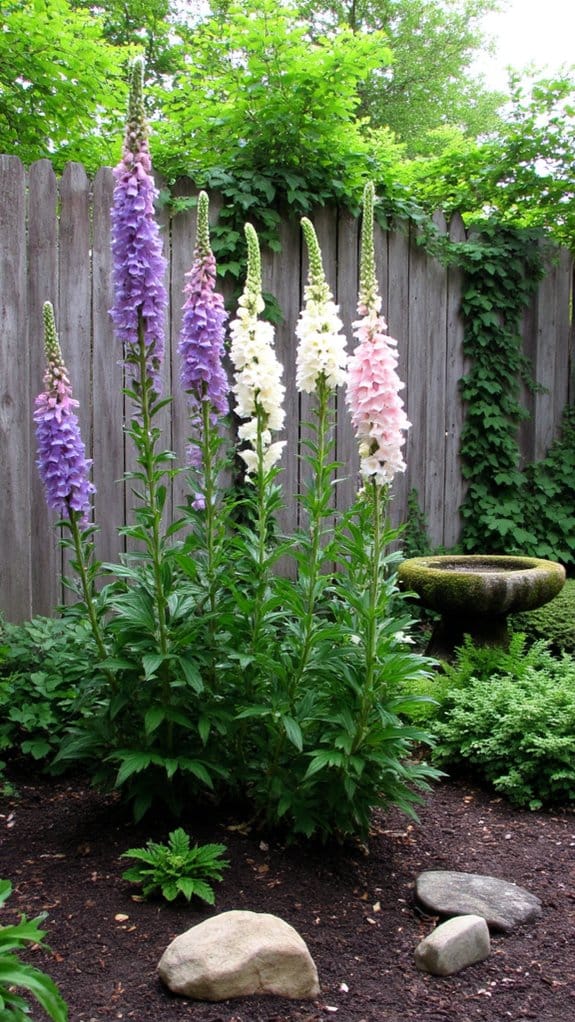
Foxglove stands tall and proud, adding a touch of elegance to any shady garden.
I love how its spires bloom with delicate, bell-shaped flowers that draw the eye upward. They’re not just beautiful; they also attract pollinators, making your garden lively.
Planting them in clusters creates stunning vertical interest, transforming those dim corners into vibrant focal points that truly shine.
Periwinkle: A Ground Cover That Thrives in Shade
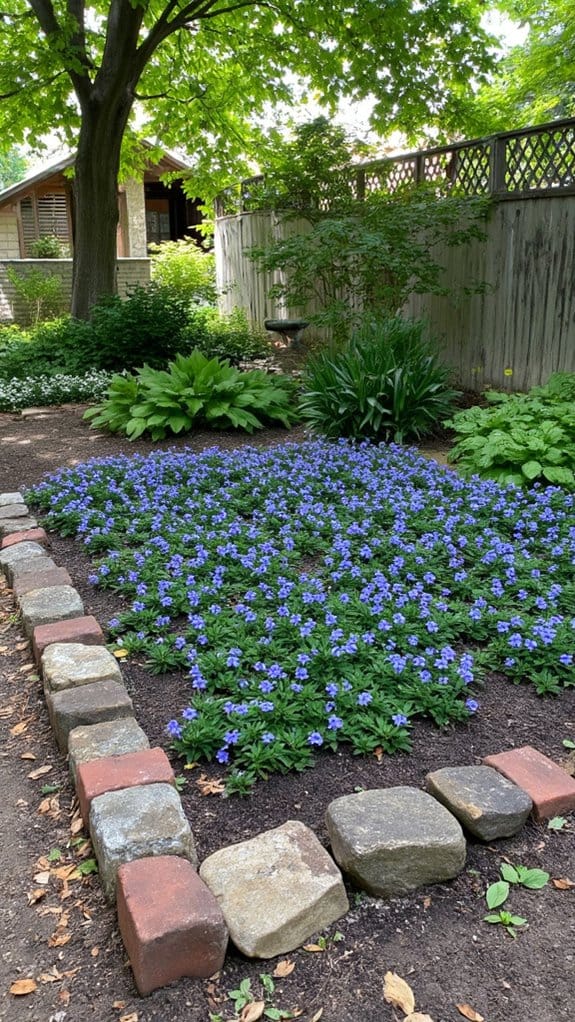
While tall flowers like foxglove can elevate the vertical aspects of a shady garden, ground covers like periwinkle work wonders at the base.
I love how periwinkle carpets the ground with its glossy leaves and delicate blue flowers. It thrives in shade, spreading quickly and suppressing weeds.
Plus, it adds a lovely touch of color to those dim corners in my garden.
Geum: Bold and Cheerful Blooms for Your Garden
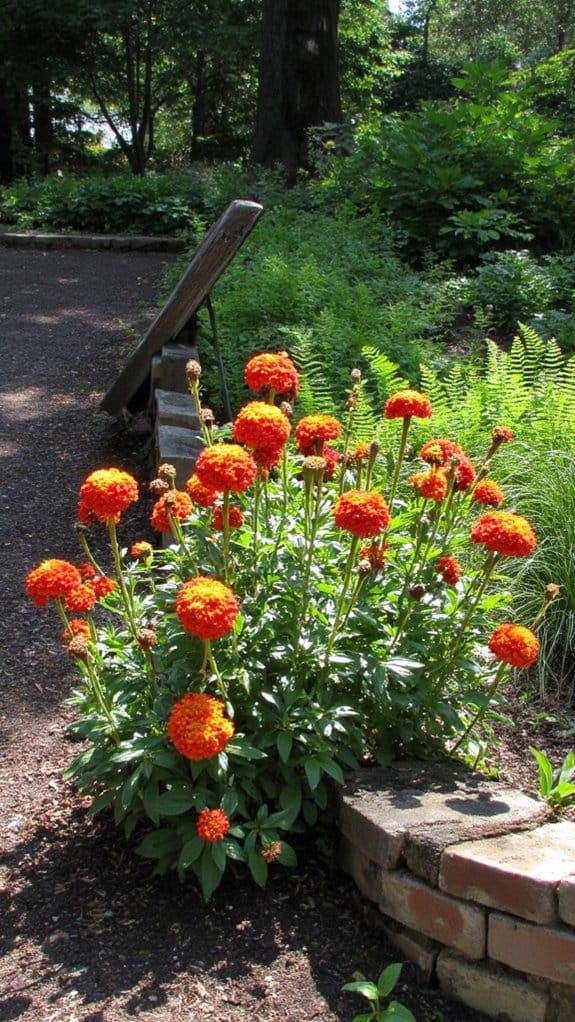
Geum brings a burst of color to any shady garden, and I can’t get enough of its bold, cheerful blooms.
These perennial beauties thrive in low light, making them perfect for those dim corners. Their vibrant hues—from fiery oranges to sunny yellows—brighten up my space effortlessly.
Plus, they attract pollinators, adding life to my garden. You’ll love them too!
Trillium: Native Wildflowers for Naturalized Areas
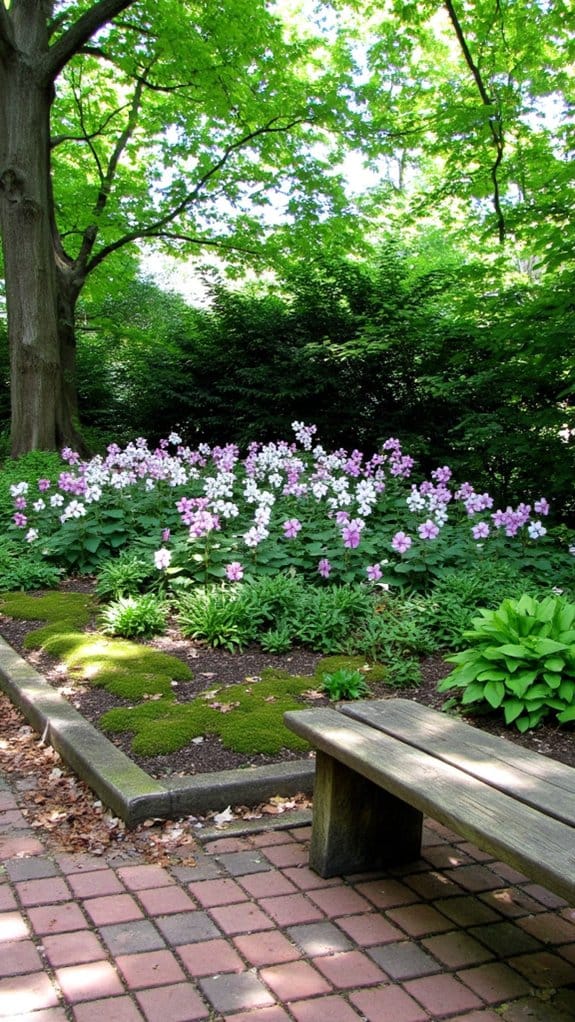
When I think of native wildflowers that thrive in shady spots, Trillium immediately comes to mind.
These charming plants, with their unique three-petaled flowers, create a beautiful carpet of color in naturalized areas. They’re perfect for adding a touch of elegance to low-light corners.
Plus, their presence supports local ecosystems, attracting pollinators and enhancing the overall beauty of your garden.
Anemone: a Shady Beauty With Delicate Flowers
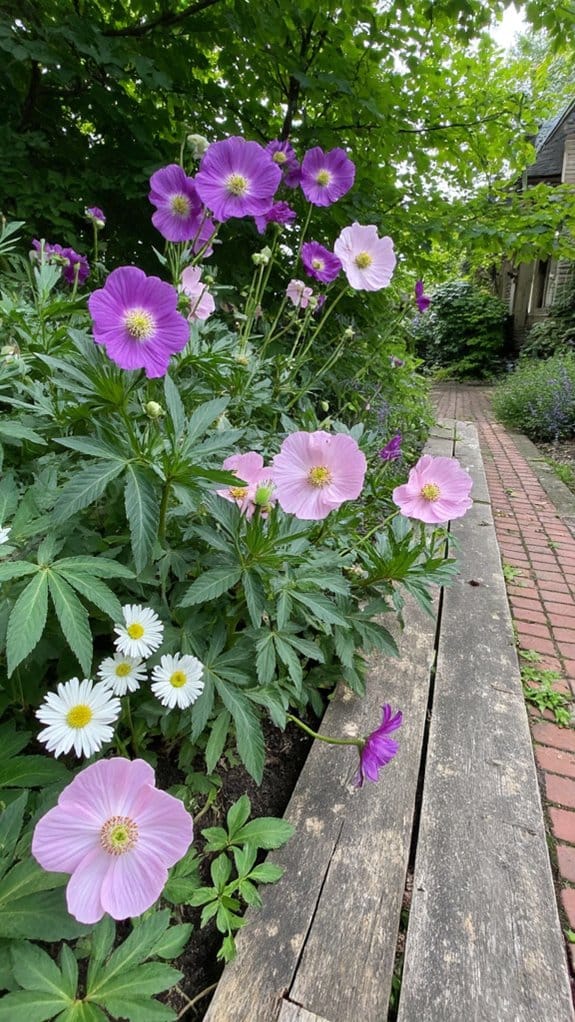
After admiring the beauty of Trillium in shady areas, I can’t help but think of Anemone.
These delicate flowers add a touch of elegance to my garden’s low-light corners. Their soft blooms sway gently in the breeze, creating a dreamy atmosphere.
I love how they thrive in the shade, effortlessly brightening those dim spots with their charming presence.
Brunnera: Forget-Me-Nots for a Touch of Blue
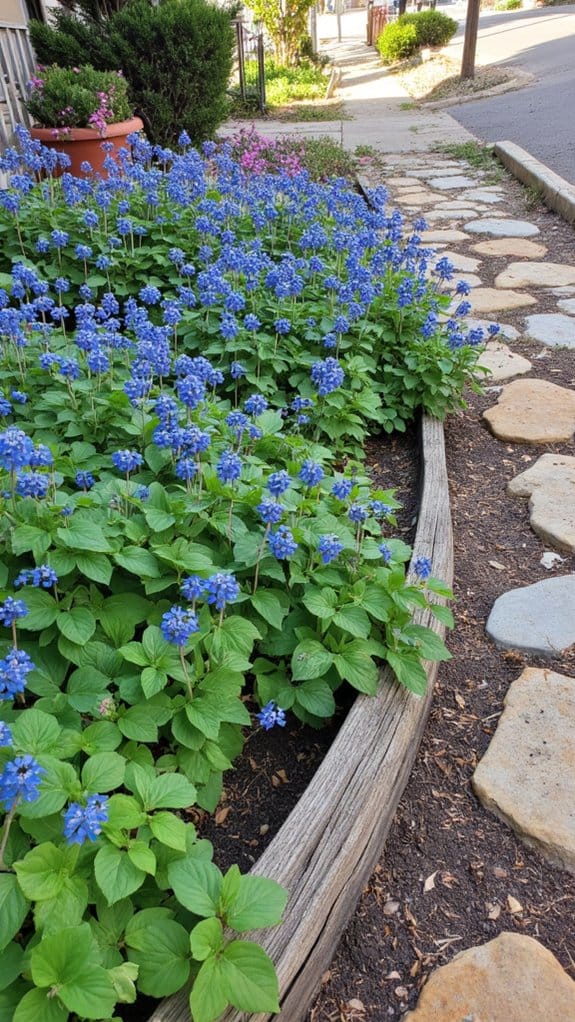
Although I often find myself captivated by bold colors in the garden, there’s something undeniably enchanting about Brunnera, or false forget-me-nots, that brings a revitalizing touch of blue to shady areas.
Their delicate, heart-shaped leaves create a lovely backdrop, while the bright blue flowers emerge in spring, adding a whimsical charm.
I absolutely adore how they effortlessly brighten low-light corners!
Layering Your Flower Bed Design
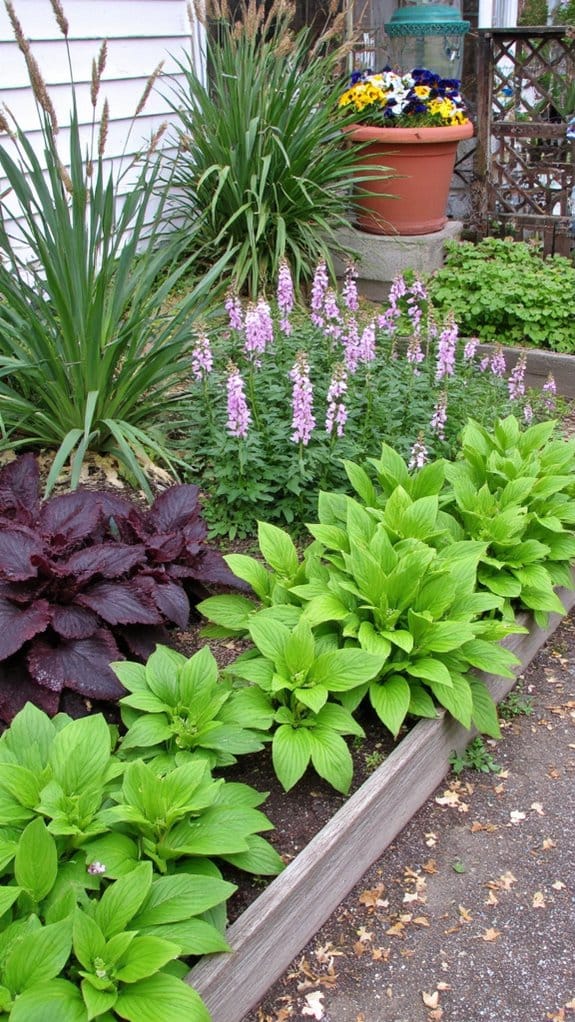
To create an eye-catching flower bed design, I find that layering different plant heights and textures not only adds depth but also enhances visual interest.
I love placing taller plants at the back and medium-sized blooms in the middle, while low-growing varieties fill the front. This arrangement creates a natural flow, making each plant stand out beautifully in the shady corners of my garden.
How to Add Hardscapes for a Shady Retreat
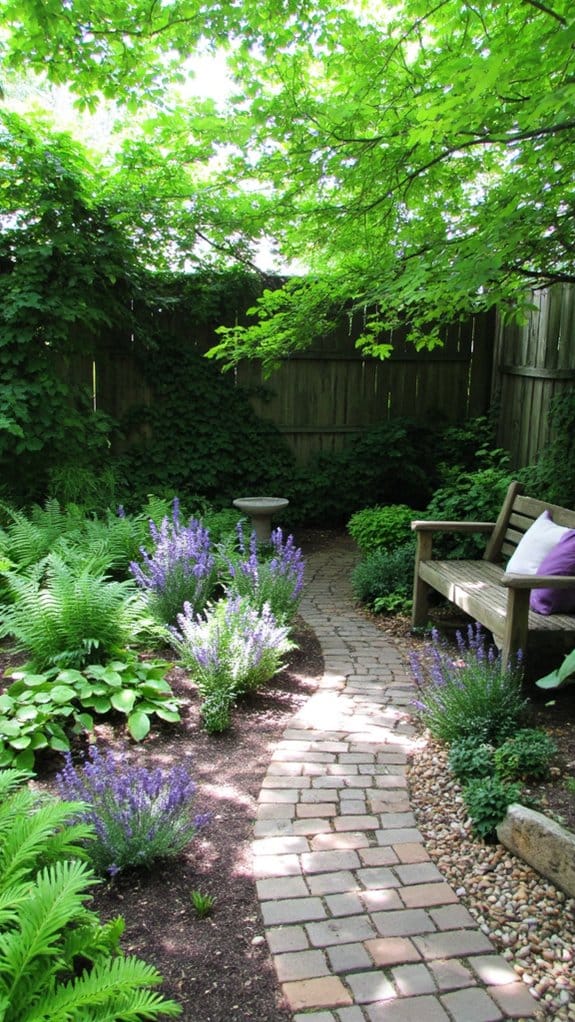
Creating a relaxing shady retreat in your garden can be greatly enhanced by incorporating hardscapes that provide structure and functionality.
I love adding stone pathways to guide visitors through lush plantings, and a cozy bench invites you to sit and enjoy the tranquility.
Consider using decorative boulders or a small patio to define the space, creating an inviting atmosphere in those low-light corners.
Essential Maintenance Tips for Shady Flower Beds
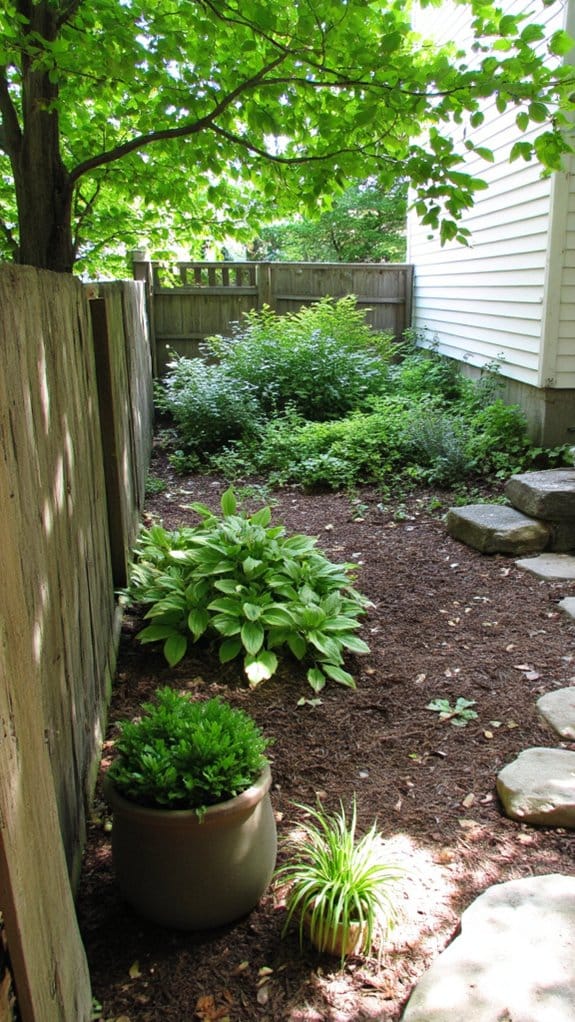
After setting up your hardscapes, maintaining your shady flower beds becomes key to keeping them vibrant and healthy.
I always check for pests and diseases regularly, ensuring I catch any issues early.
Mulching helps retain moisture and suppress weeds, while careful pruning encourages airflow.
Finally, I adjust watering to prevent over-saturation, allowing my plants to thrive in their cozy, low-light environment.
Inspiring Real-Life Examples of Shady Flower Beds
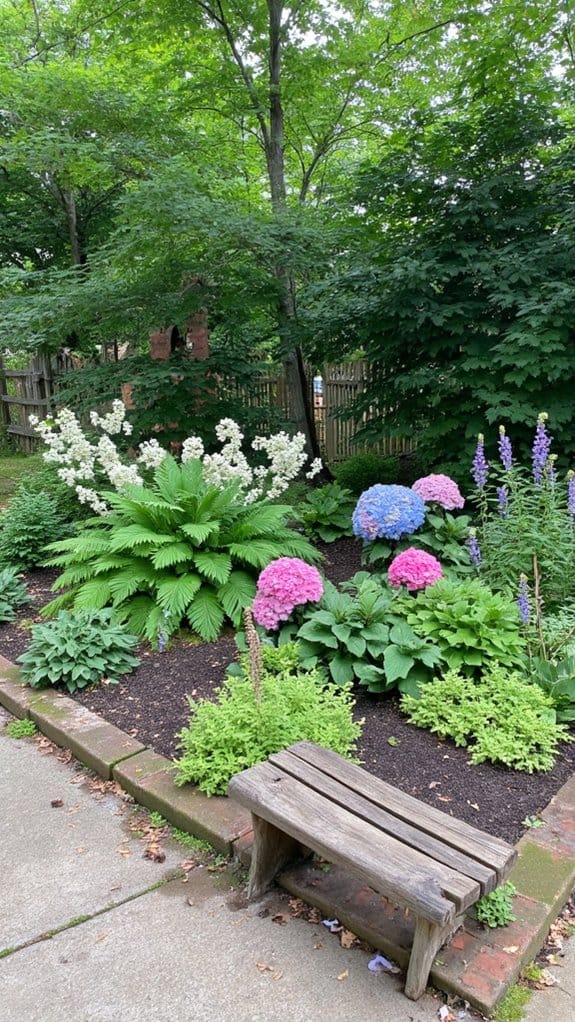
While shaded areas might seem challenging for flower beds, I’ve seen some truly stunning examples that prove otherwise.
One garden I visited featured vibrant hostas paired with delicate ferns, creating a lush, layered look.
Another showcased bright astilbes and bold heucheras, adding pops of color.
These inspiring designs remind me that with creativity, even the shadiest spots can become enchanting flower beds.
