


Those low-light corners in the yard tend to stay bare because we push sun-hungry plants into them. I once filled one with impatiens that barely lasted a season, a mistake I won’t repeat. Ferns and hellebores build reliable structure there, filling out over time with steady color. Poor choices fall flat when they demand too much sun or turn leggy in the gloom. The setup using hostas edged with vinca feels worth copying for its simple hold on the space.
Shade Gardens by the House Corner
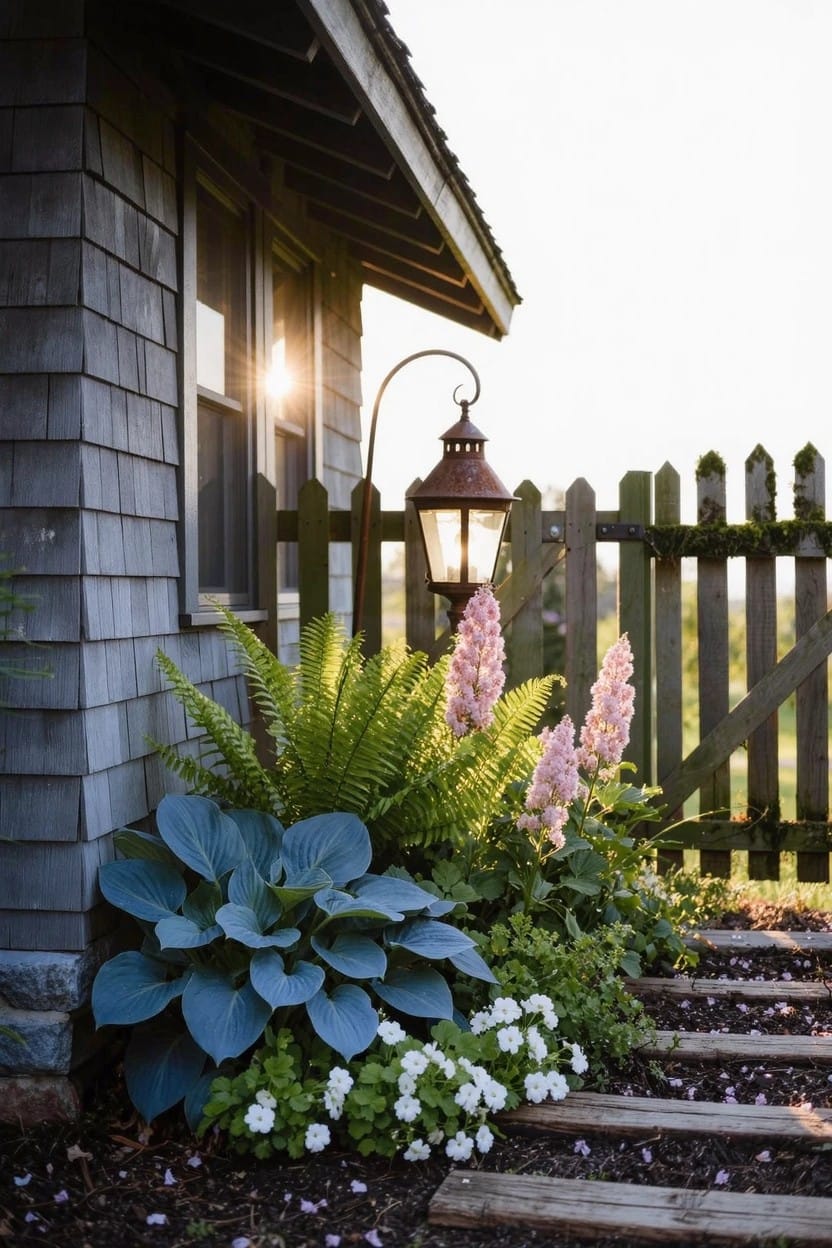
Those low light spots right next to the house make perfect flower beds. Big hostas and ferns fill them out with thick green leaves. Tall foxgloves add pink spikes that stand up well in the shade. It turns a dark corner into something full and green.
Put these plants along the base of your house siding. They suit older homes with wood shingles or any shady yard edge. Tuck in a path of stepping stones to reach the door. A hooked lantern gives light at night. Keep soil damp and mulch to hold moisture.
Shade-Tolerant Plants in Rust Planters
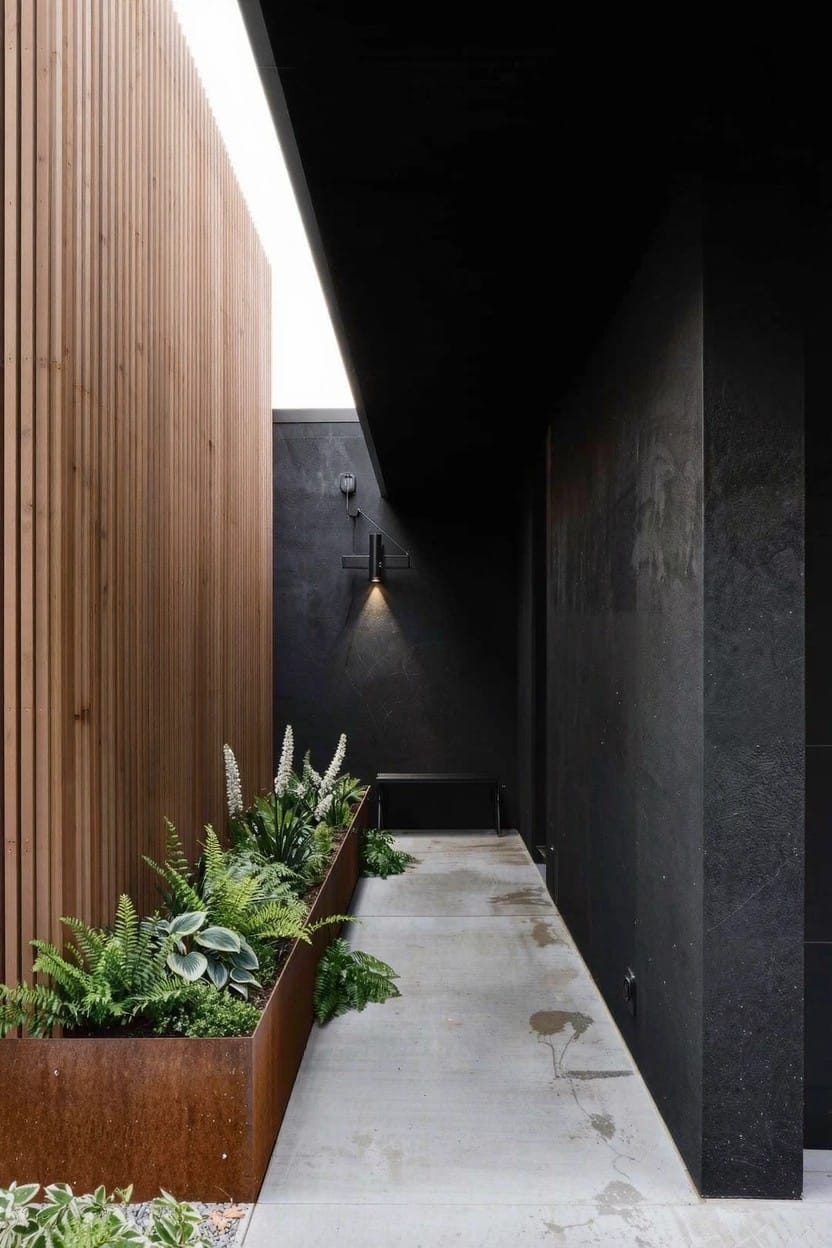
One simple way to brighten a dark walkway is to line it with trough-style planters made from corten steel. Those rusty metal boxes hold up well outdoors and let you pack in ferns and other low-light plants that thrive where sun hardly reaches. The green spills over just enough to make the path feel alive without crowding the way.
This setup works best in narrow side yards or entry corridors next to tall walls or fences. Fill the planters with ferns, hostas, or even some foxgloves if there’s a bit more light. Keep the soil moist since it’s shady. It suits modern homes or any spot that stays dim most of the day. Just watch for slugs in all that dampness.
Brick Arbor Bench for Shady Spots
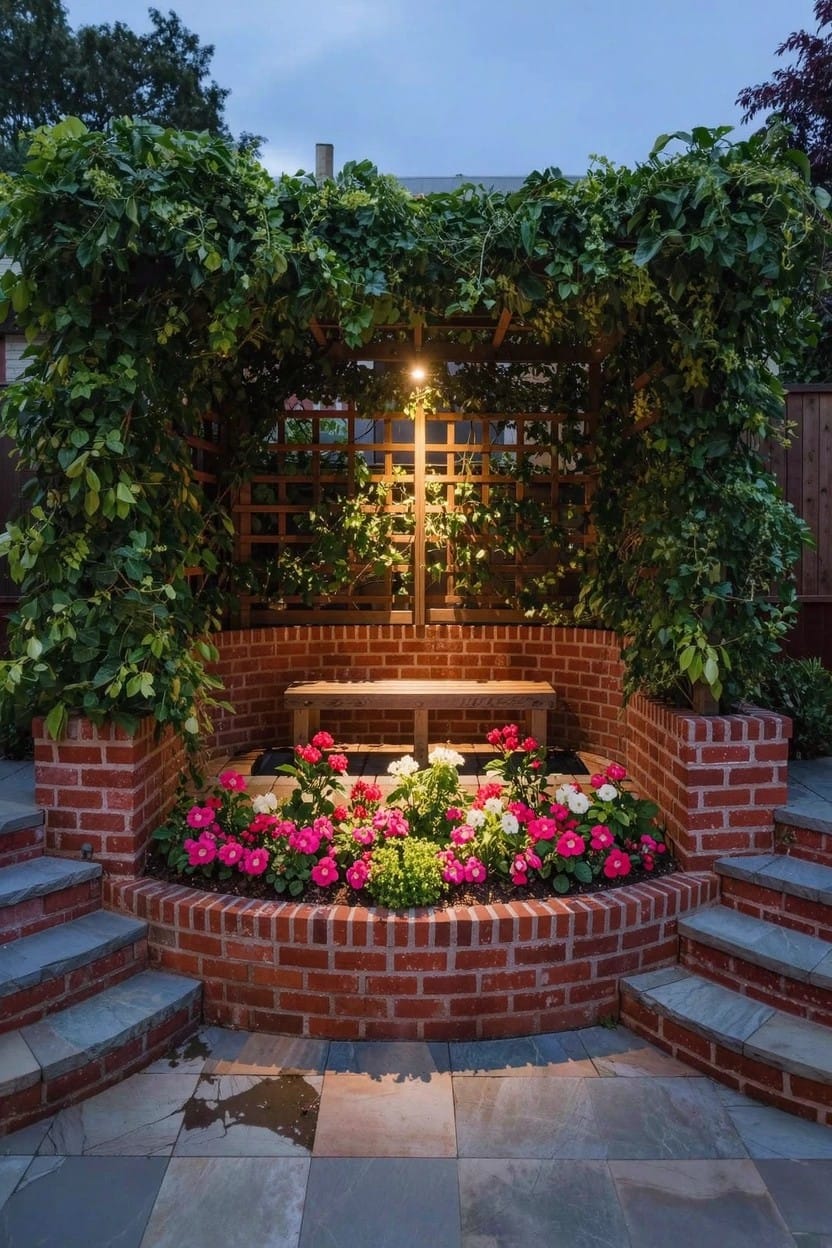
A simple curved brick arbor makes a perfect shady nook with a built-in bench right in the center. Vines climb thick over the wooden trellis frame, blocking out light while keeping things green and private. Flowers tucked around the base bring in some pink and white color without needing much sun. Folks like this because it turns an overlooked corner into a spot you actually want to sit in.
Put one like this at the end of a path or against a fence where shade hangs heavy. Brick holds up year round, and shade plants fill it out fast. Watch the moisture though… vines can get heavy when wet. Suits most any backyard, even smaller ones.
Lush Foliage for Shady Side Paths
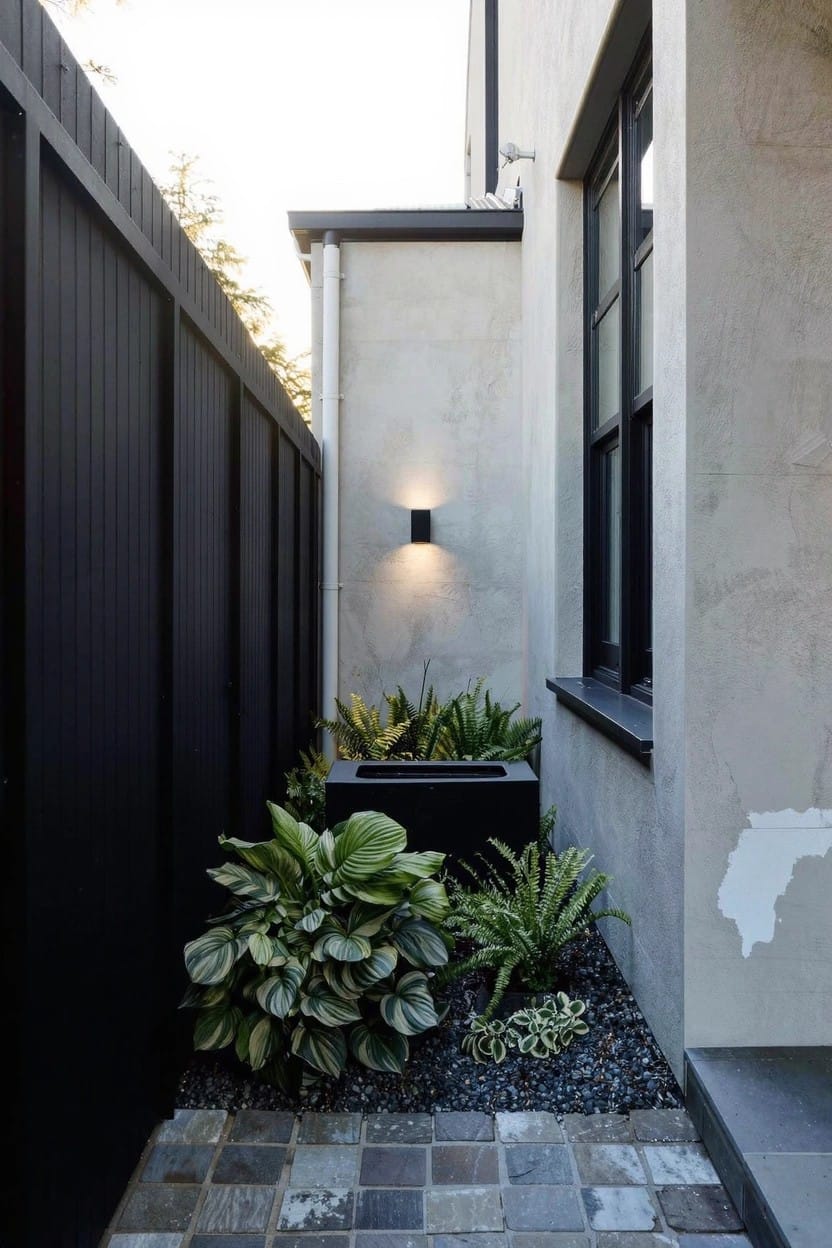
Narrow side paths and passages get almost no sun. That’s where tough shade plants shine. A long black trough planter crammed with big leafy greens like ferns and peace lilies fills the spot right up. It softens the plain stucco wall and makes walking through feel less like a tunnel.
This idea fits tight urban yards or any house with a skinny walkway. Go for bold, upright plants that don’t spread too wild. Set the planter against the house side for that clean look. Keep soil moist but watch drainage… wet roots spell trouble in shade.
Shady Beds Edged with Rocks

A good shady flower bed like this runs right along the house foundation. Rocks form a clean curved edge, then mulch fills in with hostas, grasses, and white blooms that handle low light just fine. It pulls the eye without much fuss and keeps weeds down too.
Put one in those dim corners next to your house or fence. Suits wooded yards or any spot trees shade. Mix heights for interest, toss in a birdbath if you want. Watch the soil stays moist.
Low-Light Corner Planting
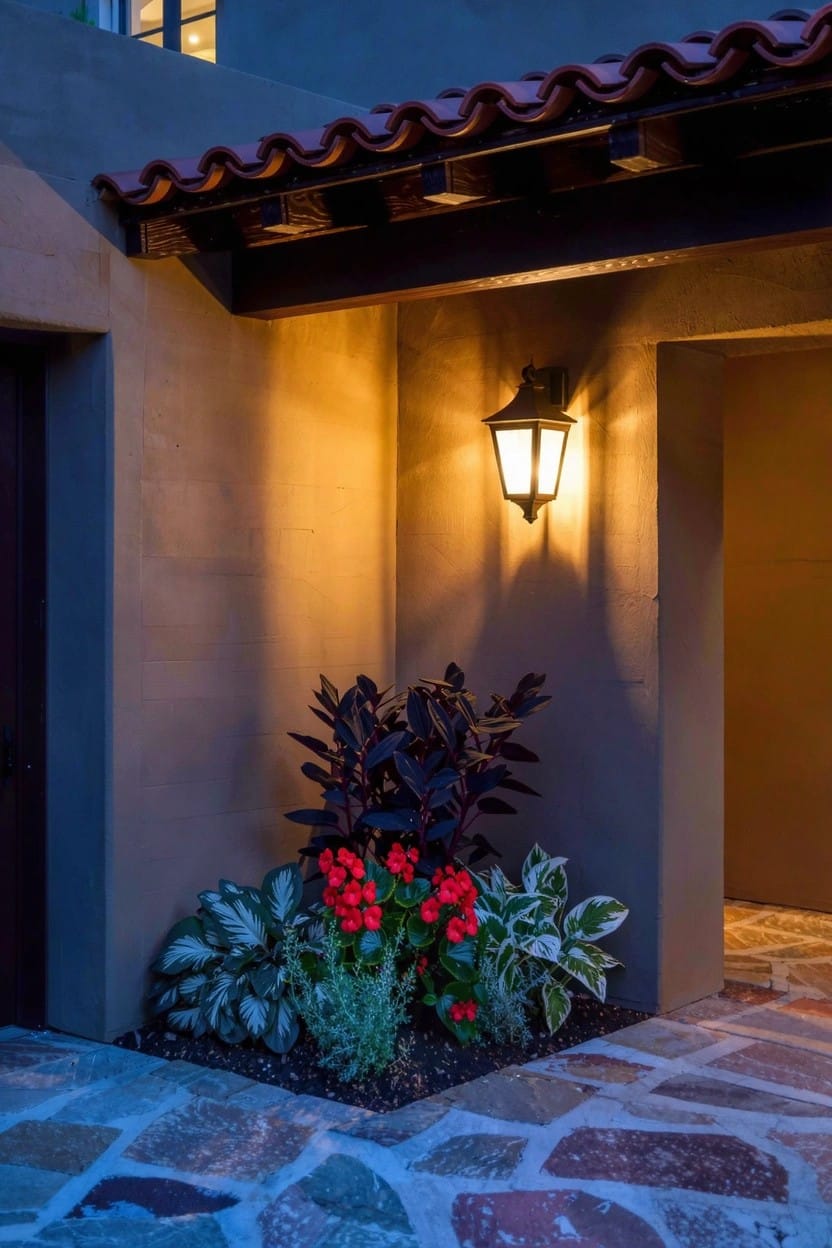
A simple flower bed tucked in a shady spot by the entry can really brighten things up. Those red blooms pop against the dark leafy plants and light-colored wall. The lantern nearby makes them glow after dark. It’s a easy way to fill an overlooked corner without much sun.
This kind of planting suits spots under overhangs or next to house walls. Go for shade lovers like impatiens or begonias for color, plus caladiums for bold leaves. Works on most homes with some stucco or adobe feel. Just keep soil moist… they won’t take dry shade.
Raised Planters for Shady House Corners
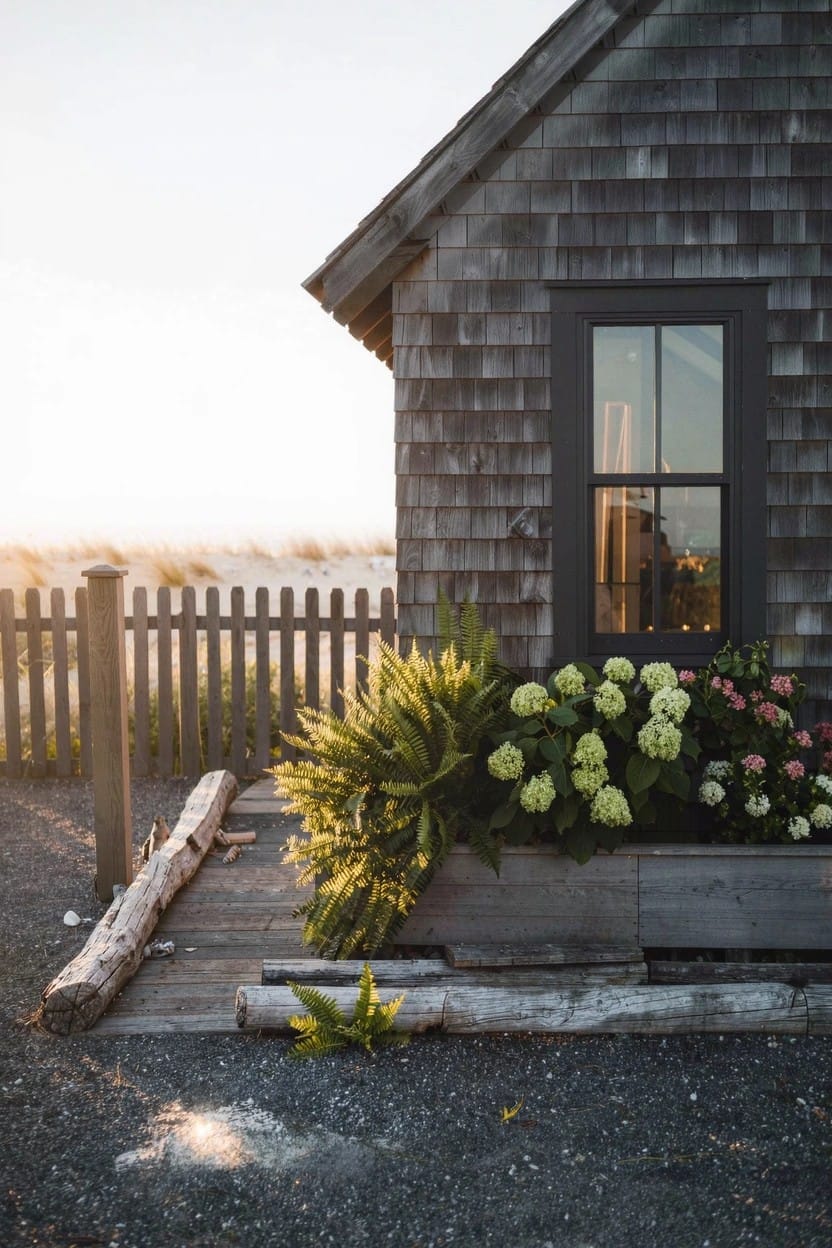
One easy way to brighten up those dark spots next to your house is with a raised wooden planter. It holds plants that do well in low light, like ferns and big clusters of hydrangeas. These setups work because they lift the greenery right off the ground where roots can stay cool and moist. No more bare dirt staring back at you.
Put one along the foundation where the house blocks the sun most of the day. Wood fits older cottages or beach houses best. Just make sure the box drains well so the soil doesn’t stay soggy. Fill it with tough shade lovers and let it spill over a bit.
Shady Flower Beds by Brick Walls
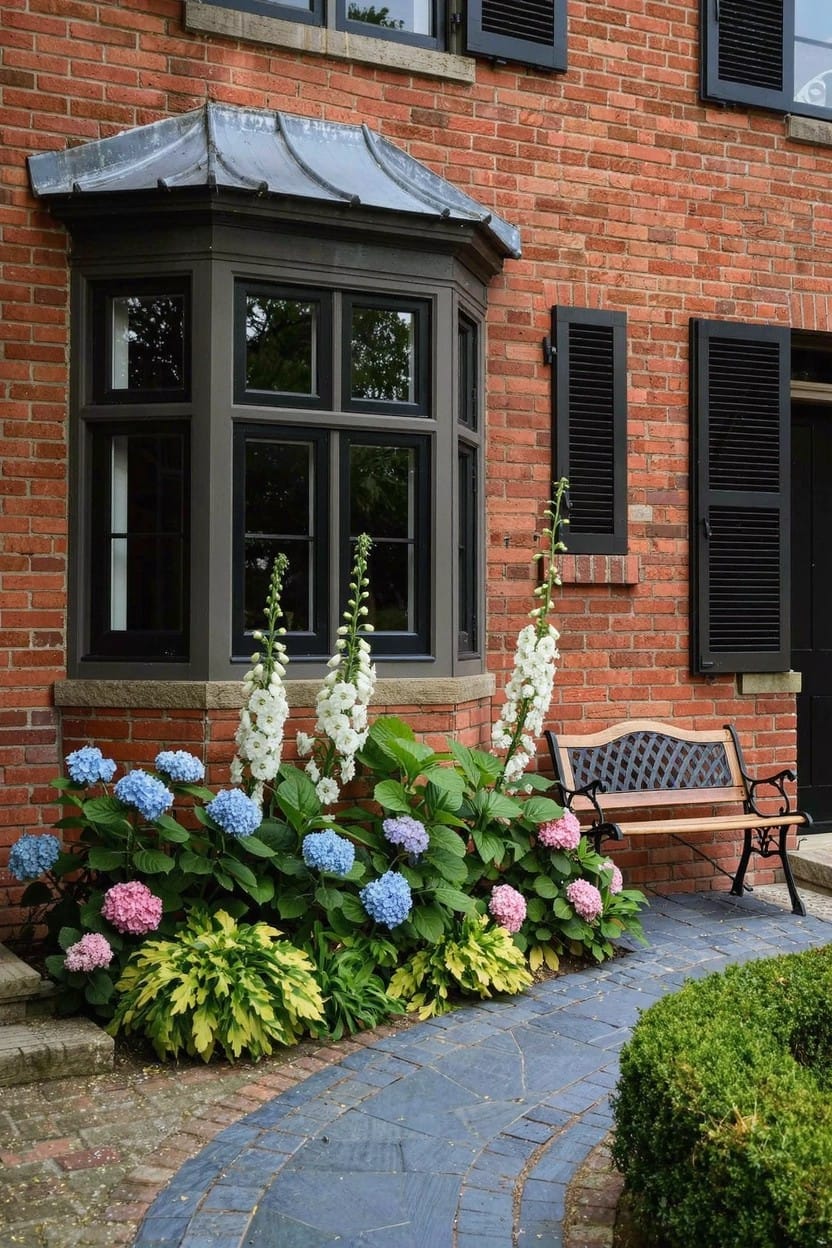
One simple way to fill those low-light spots right up against the house is with a mix of hydrangeas and foxgloves. These plants handle shade well and give you big blooms in blues, pinks, and whites without much sun. The layers add height and keep the bed looking full all season. It softens that brick wall nicely.
Put this kind of bed along a path or walkway near your entry. It works best on older homes with solid foundations where shade lingers. Keep the soil damp… these plants like it moist. Just trim back in fall to tidy up.
Hanging Planters for Shady Corners
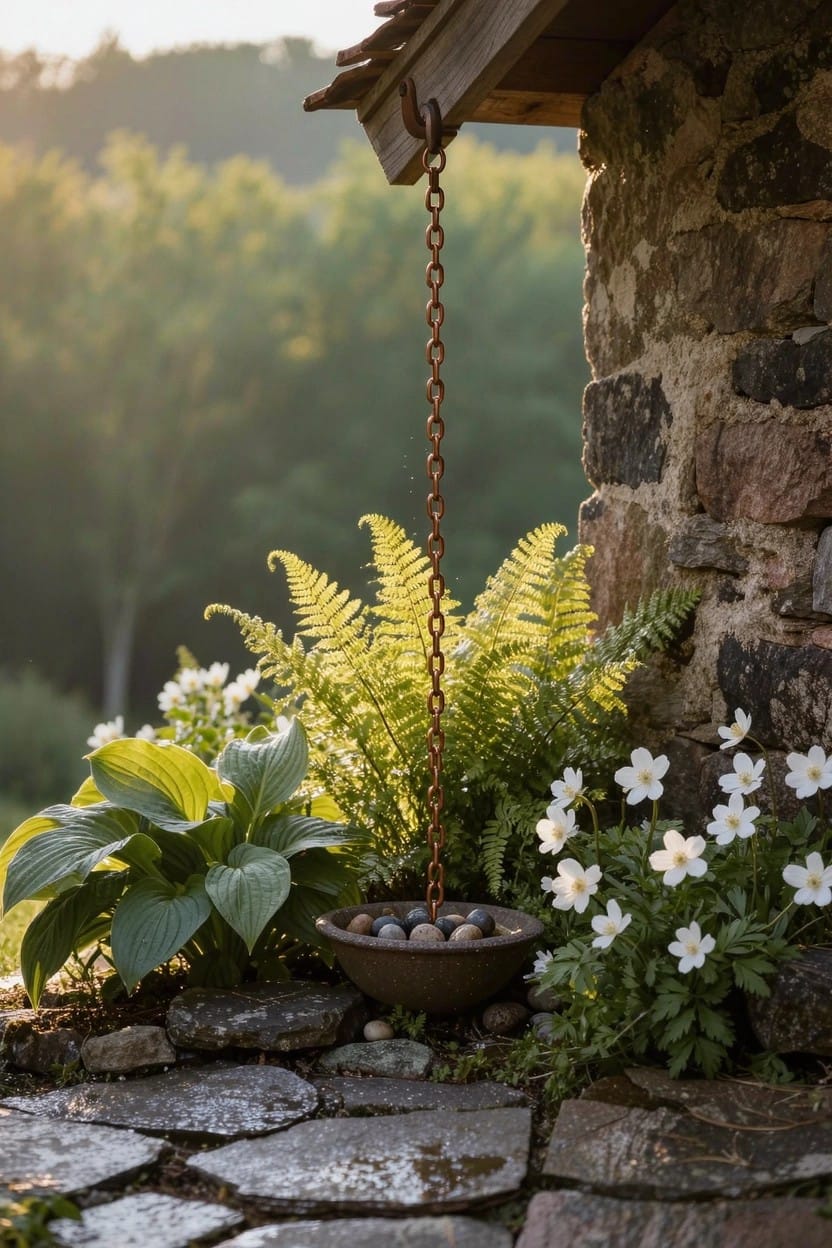
One easy way to brighten up those dark spots under your roof overhang is with a simple hanging planter on a chain. It works great in low light because you can fill it with ferns that actually like the shade. No need for fancy baskets. Just a plain bowl holds up well and lets the green spill out naturally.
Try this next to a stone wall or any shady house corner where ground plants struggle. It fits older homes with rustic siding. Keep soil moist since ferns need it, and add a few pebbles at the bottom for drainage. Won’t take much space either.
Shady Flower Beds in Narrow Passages

Dark narrow spots between walls often stay shady all day. Fill them with tough shade plants like big leafy greens, pink blooms, and yellow flowers. Against black brick, they add color and make the walk feel welcoming. No need for much sun. These beds brighten up what would otherwise be plain.
Use this idea for side paths or entry alleys on any home with tight yards. Plant in a low box or right at the base. Gravel on the ground keeps it neat and lets water drain. A simple bench fits if there’s room. Skip it on super-windy sites though.
Raised Planters Along Shady Walls
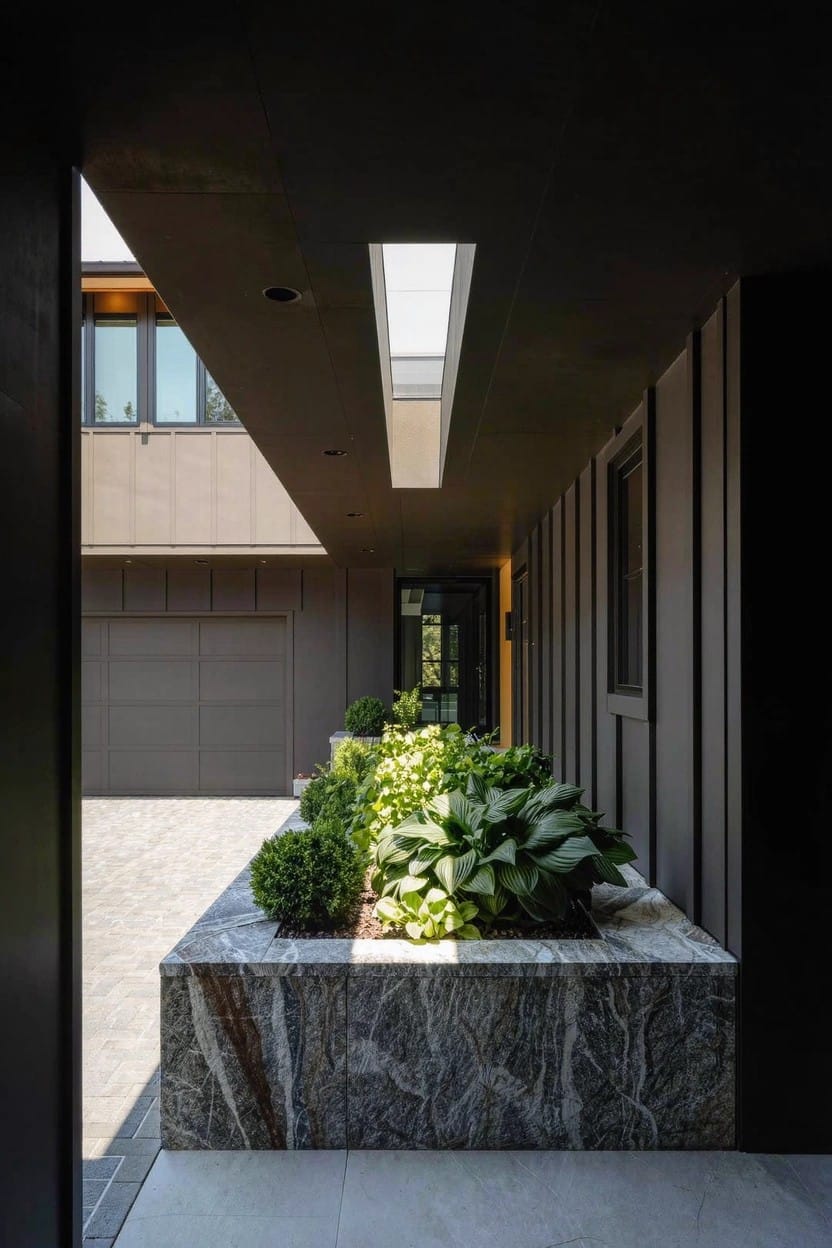
One simple way to fill a low-light corner is with a raised planter tucked right against the wall. Here, hostas and similar greens fill a long marble-edged box along a covered walkway. These plants handle shade just fine, and the setup keeps everything neat without spilling over the path.
Try this next to a garage or entry where sun barely reaches. It suits modern homes with dark siding. Just ensure good drainage so roots don’t sit wet. Low fuss once established.
Arched Garden Swing for Shady Spots
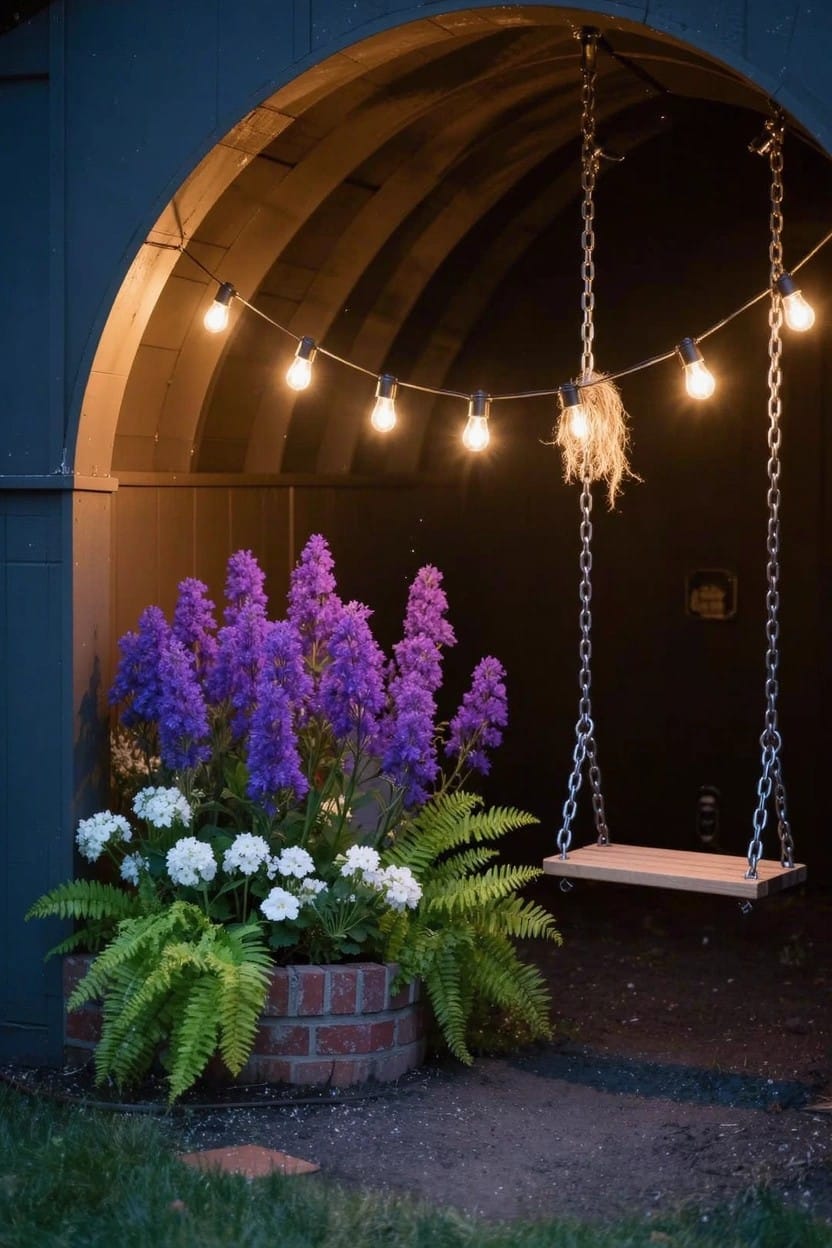
A simple arched structure like this makes a shady corner feel like a real hangout spot. The dark wood arch shelters a chain-hung swing just right for low-light areas where sun doesn’t reach. Tall purple lupines and ferns nearby fill in with color and texture that thrive without much light.
Put one in a backyard nook or along a fence line. It works best on homes with a casual yard setup. Add string lights overhead for evenings, but keep plants tough for shade like hostas or impatiens if lupines won’t grow there. Watch the swing doesn’t swing into plants.
Shade Plants Beside Front Steps
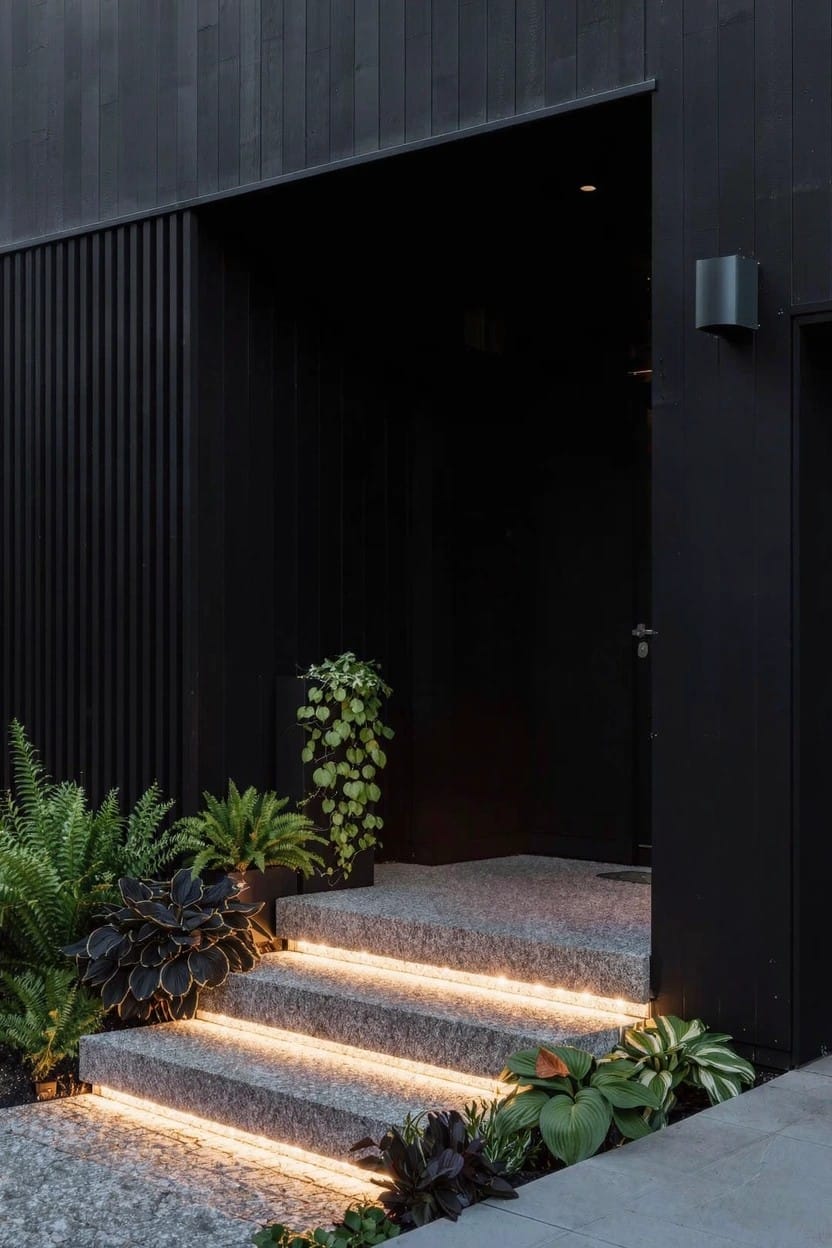
Those shady spots right by your front steps don’t have to stay bare. Here you see ferns and deep green leafy plants tucked in around concrete steps leading to a dark wood house. They fill the low light perfectly and make the entry feel welcoming without much sun.
Try this where your walkway hits a shadow from the house or trees. It suits most homes, especially modern ones with clean lines. Keep the soil damp and add a few pots for easy swaps. The glow from under the steps at night ties it all together nicely.
Foxgloves for Shady Borders
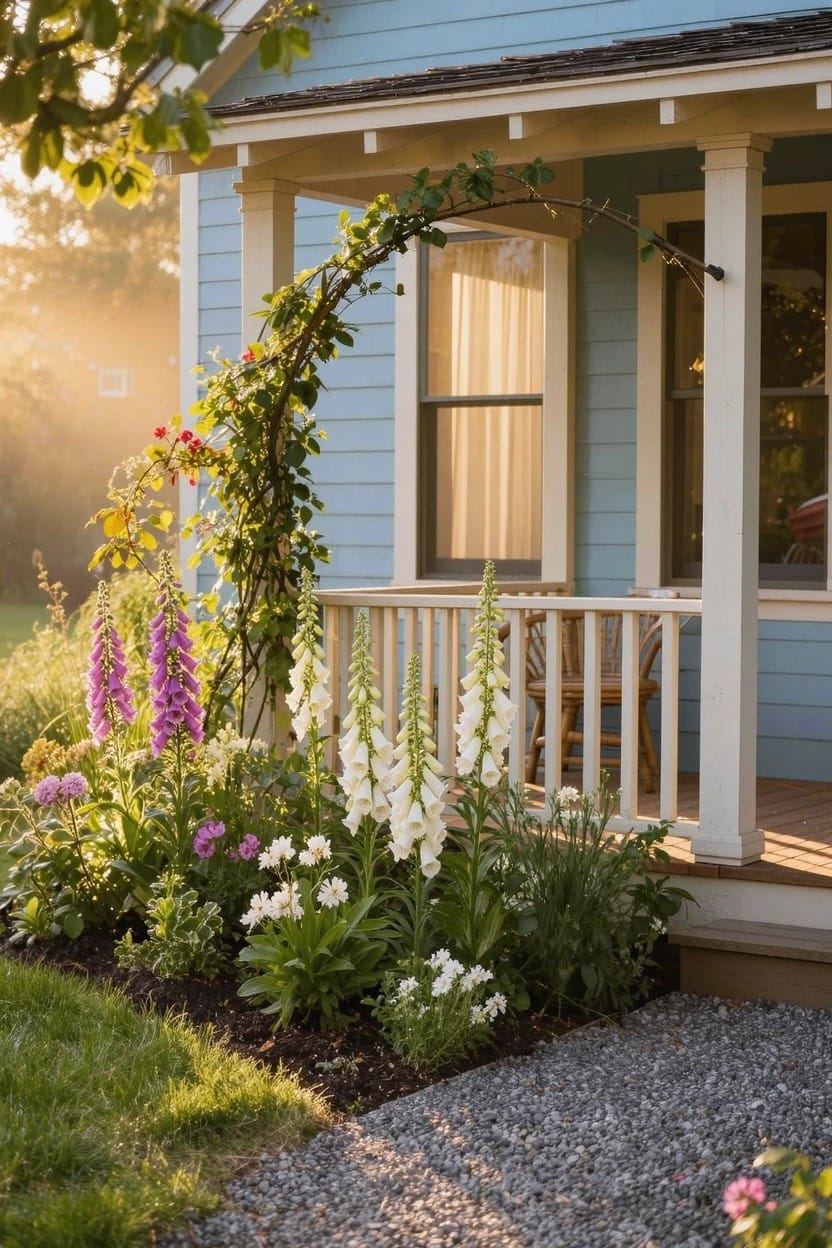
Foxgloves do well in those tough shady spots right up against the house. They grow tall with those spiky blooms in pink and white that catch the eye even when the light is low. You get height without needing full sun. And they mix easy with lower plants for a full look.
Plant them along porch edges or foundation lines where grass struggles. They suit older homes like cottages with a bit of porch. Keep an eye on the height though. They can get leggy if too dry. Space them out so they don’t crowd each other.
Tall Yellow Flowers in Shady Corners
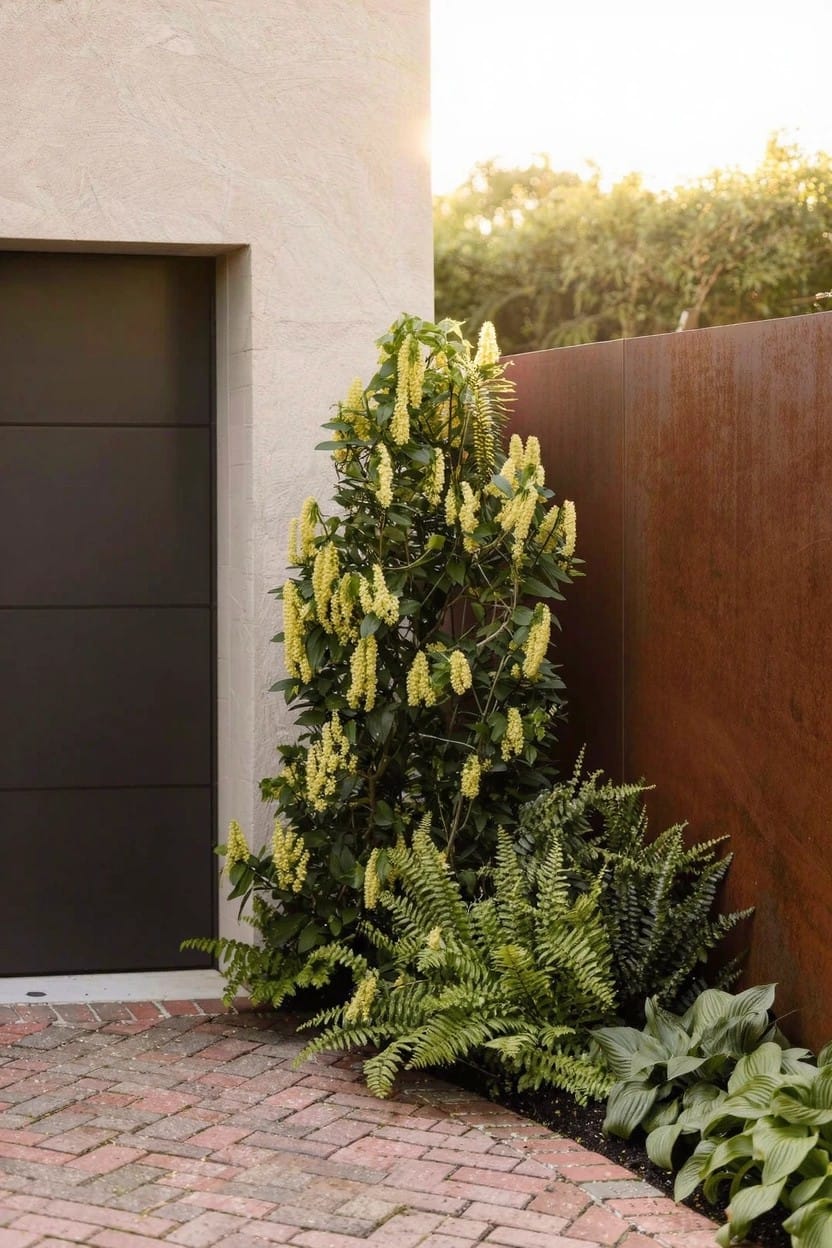
A tall shrub loaded with upright yellow blooms makes a shady spot by the garage feel alive. Those flower spikes pull the eye up against a plain wall and dark door. They add color and structure where grass or sun-lovers won’t grow. Folks like how it turns a forgotten corner into something noticeable.
Tuck one of these near hard edges like fences or walls. Ferns and hostas fill in below to cover bare soil. It suits simple homes with modern touches. Keep the soil moist. Not too picky about exact shade levels.
Poolside Beds with Grasses and Flowers

One simple way to brighten up those shady spots right next to the pool is with tall ornamental grasses mixed in with bold flowers. You get some height from the grasses, plus pops of red and pink that show up even in low light. It fills out the edge without crowding the water, and the plants hold their own against a bit of splash.
This setup works best in narrow borders along modern pools or patios where sun is limited. Go for tough varieties like fountain grass and salvia that don’t mind partial shade. Just keep an eye on overgrowth near the pool tile… trim back as needed to stay neat.
Shady Plants Around Stone Steps
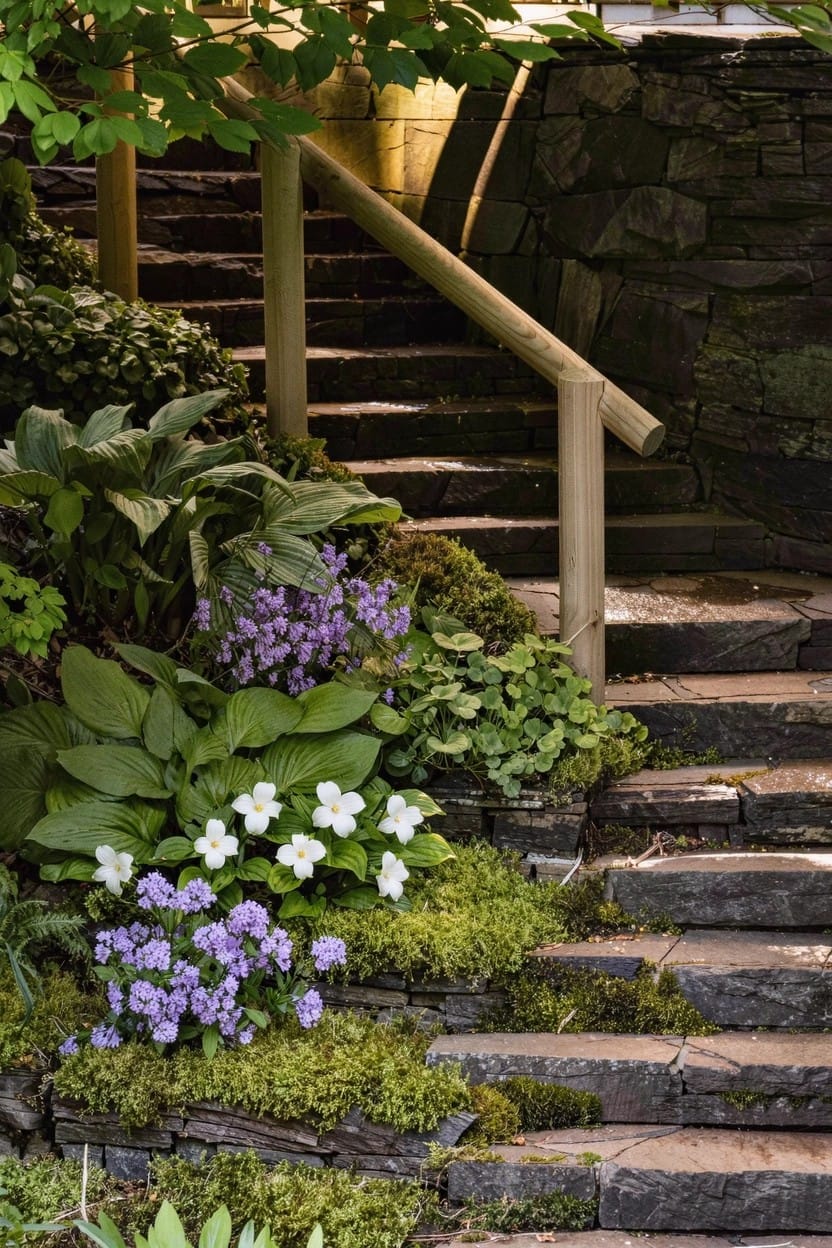
Stone steps tucked in shady corners can look plain and hard. Line them with low-light plants like big hostas and clusters of purple flowers. Those greens and blooms spill softly over the edges. They grow thick without needing sun. It turns a simple walkway into something alive and easy on the eyes.
Put this to work along stairs that get little light. It fits older homes with stone paths or patios. Plant right at the step edges but leave the treads open. Moss might creep in too. Watch that plants don’t block footing.
Hanging Ferns on Balcony Railings
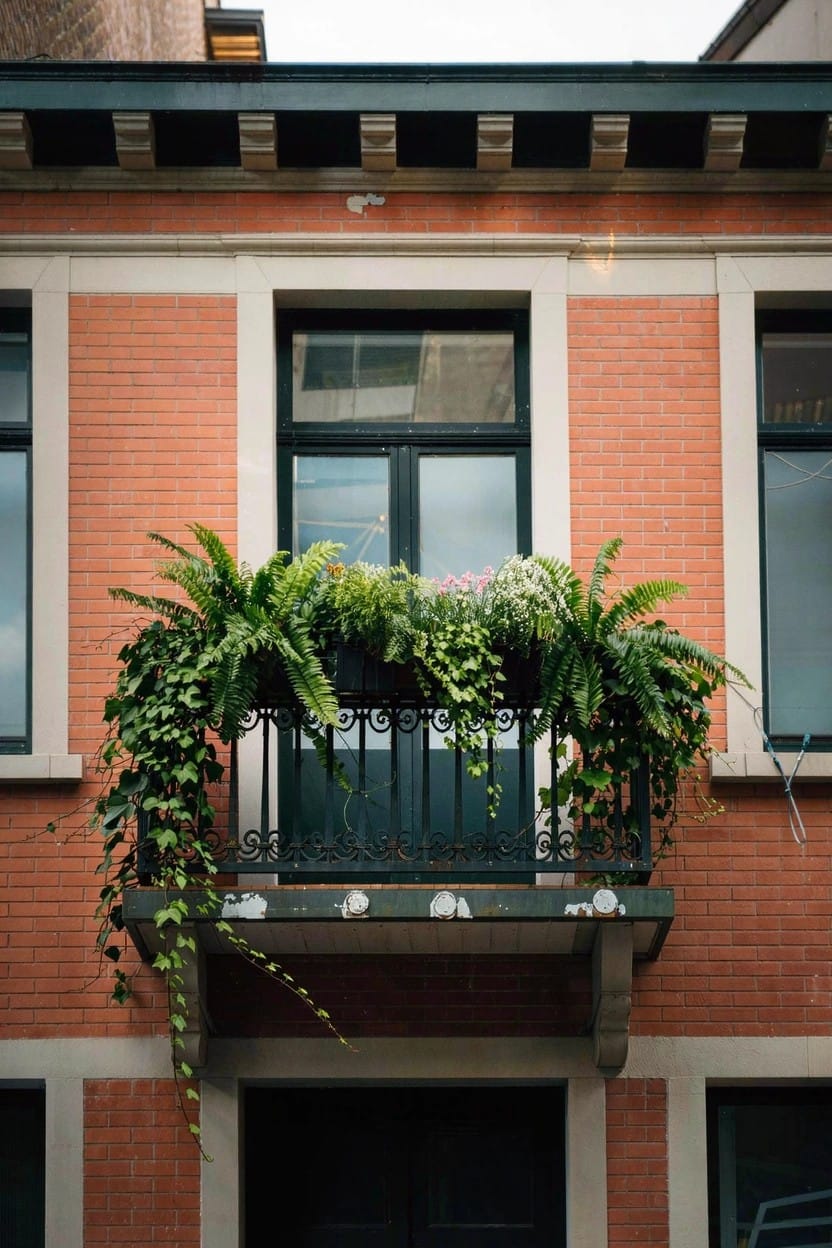
Nothing beats ferns for filling out a shady balcony spot. They spill over the railing in thick green waves, like in this brick house setup with its black iron rail. These plants handle low light well and keep that fresh look all season without much fuss.
Put hanging baskets or railing planters right on the ironwork where you get afternoon shade or north exposure. It suits townhouses or older homes with simple facades. Watch the weight though, so the railing stays steady.
Wisteria Pergola for Shady Patios

A simple wooden pergola draped in blooming wisteria makes a great shady spot right outside the house. The long purple cascades hang down thick enough to block sun but let dappled light through. It turns a plain patio into something special without much work. Folks like how the flowers come back every year and fill the air with that sweet smell too.
Put one of these over a patio near the back door where morning sun fades quick. It suits older homes with brick floors or stone paths. Plant blue hydrangeas underneath since they handle the shade fine. Just trim the wisteria once a year or it takes over… keeps everything neat.
Shade-Loving Plants in Balcony Planters
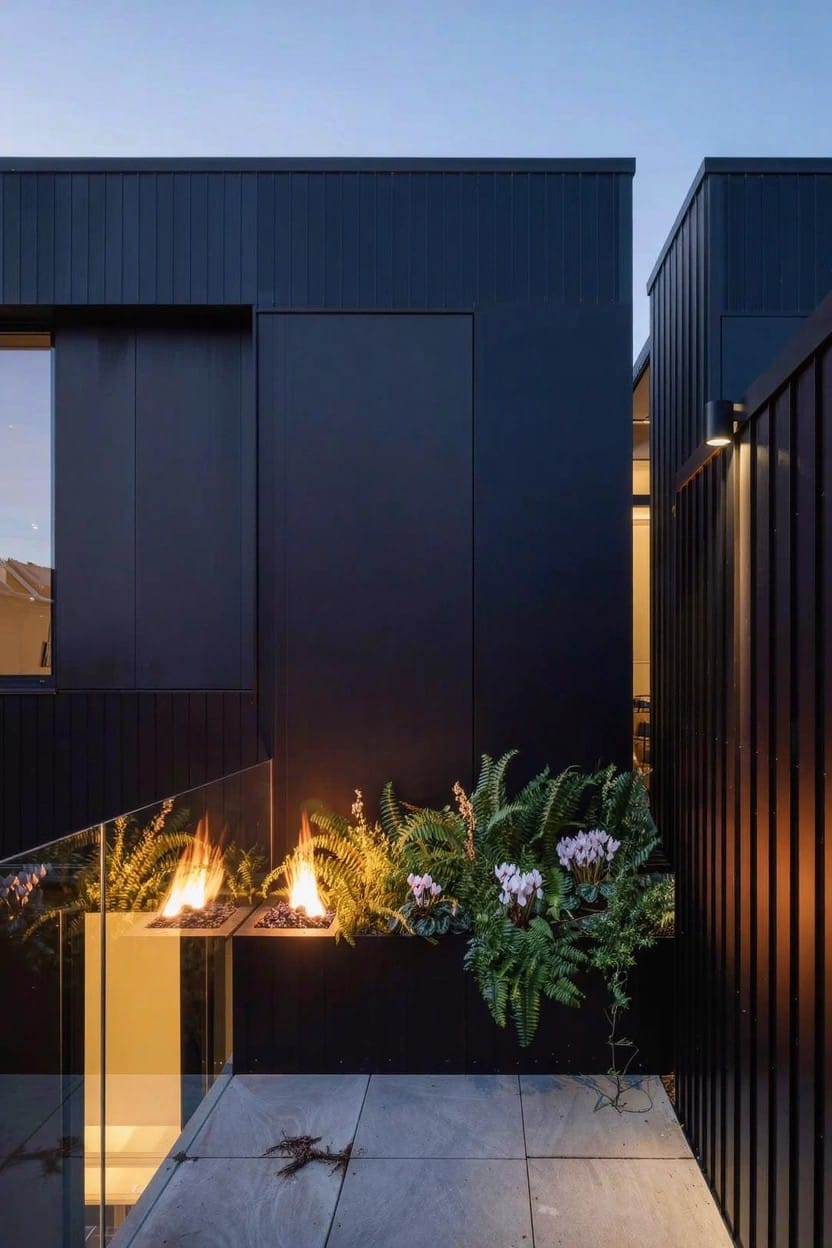
One simple way to brighten a low-light balcony corner is with planters full of ferns and flowering plants. These setups work well against dark house walls because the green foliage stands out nicely. The plants here look healthy in the shade, tucked along a glass edge with a fire feature below for extra warmth on cool evenings.
Try this on urban balconies or patios that get little sun. It suits modern homes with sleek siding. Pick tough shade lovers like ferns and impatiens, and make sure the planters drain well to avoid root rot. A linear fire keeps the spot usable year-round.
Shady Window Recess Planting
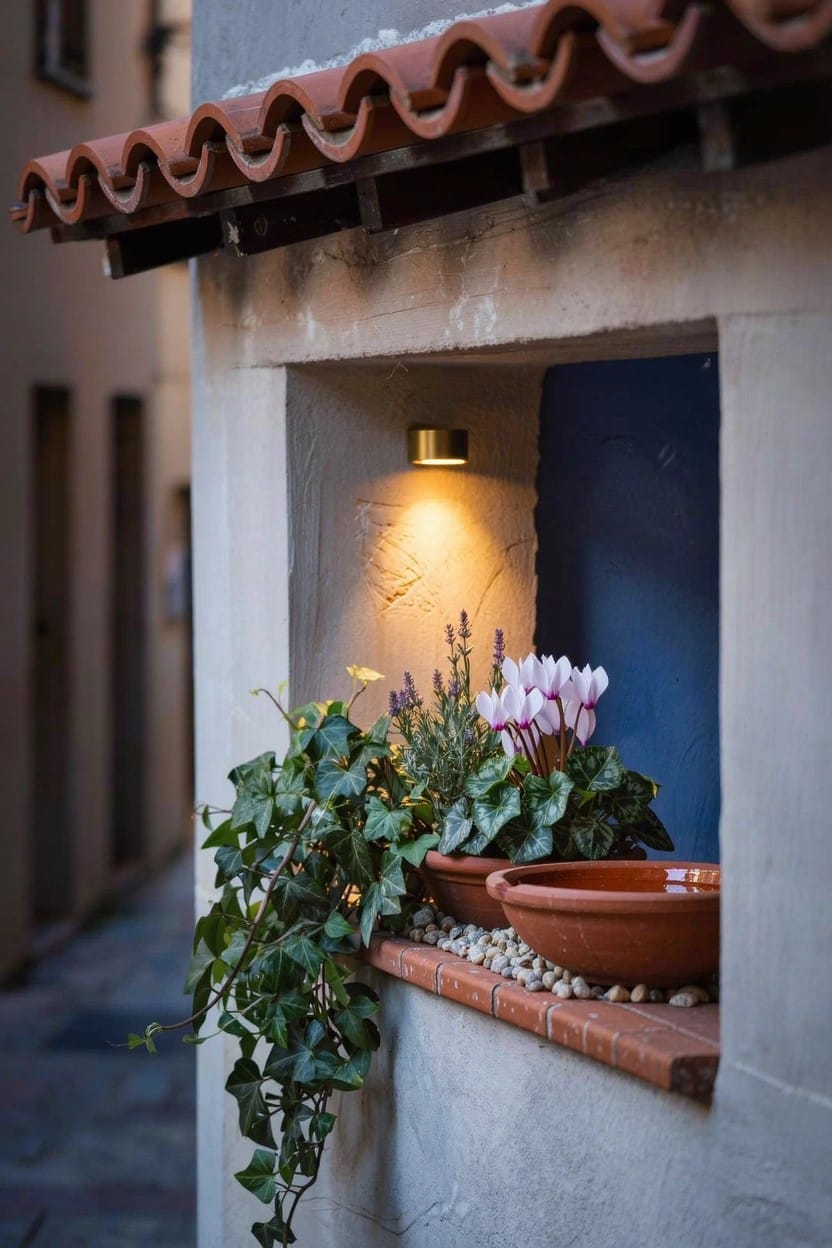
A window recess like this makes a natural spot for flowers in low light. The deep ledge holds pots steady, and plants such as cyclamen handle the shade just fine. Trailing ivy softens the edge and spills over nicely.
Put this to work on stucco walls or any home with inset windows. Go for clay pots to match old-style houses, mix in lavender for scent, and add a simple wall light for evenings. Narrow paths or alley sides suit it best. Keep soil moist but not soggy.
Ferns for Shady House Beds
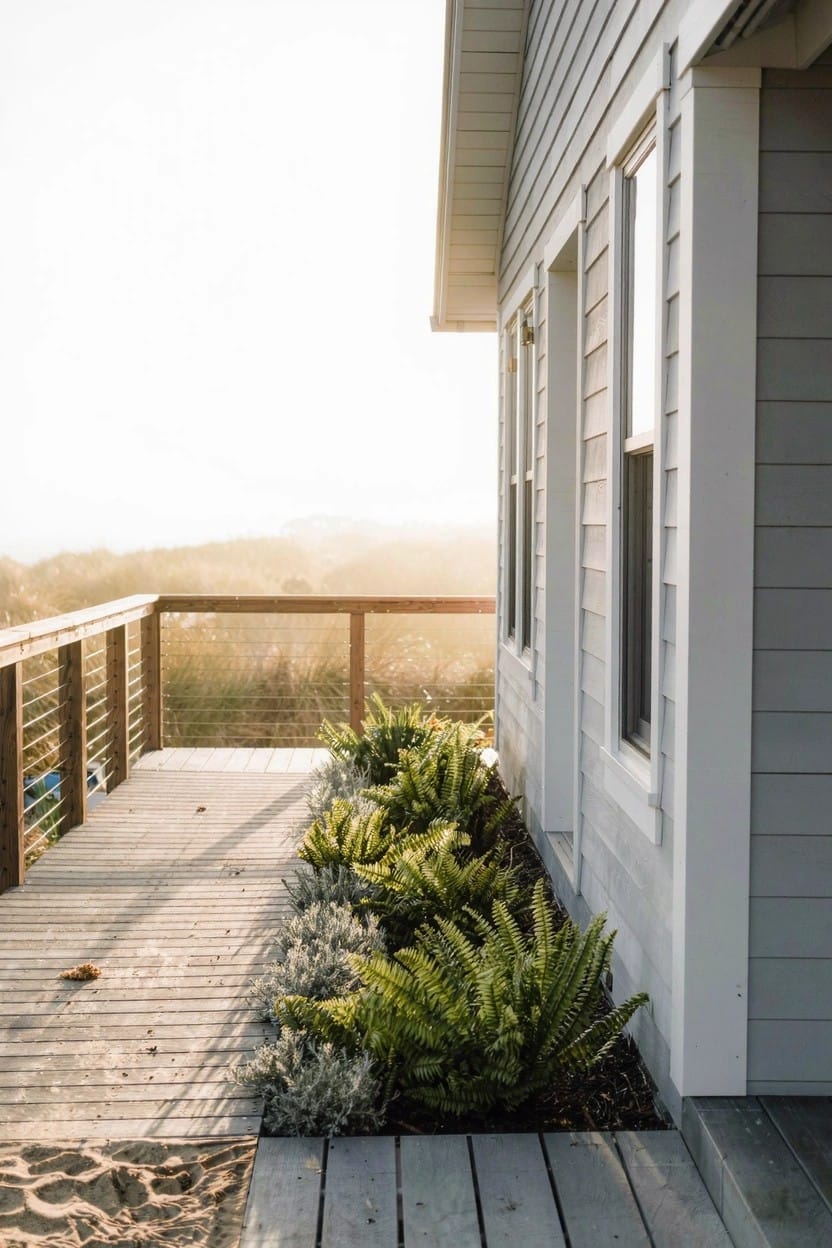
Ferns make a good choice for those low-light spots right along your house foundation. They handle shade well, filling in where grass or sun lovers won’t grow. The soft green fronds add some life without much fuss, like along a deck edge where overhangs block the light.
Try this on homes with decks or porches that create deep shade. It suits coastal yards or wooded lots, where soil stays damp. Just make sure the ground drains to avoid rot, and mulch to keep weeds down.
Calla Lilies in Shady Flower Beds
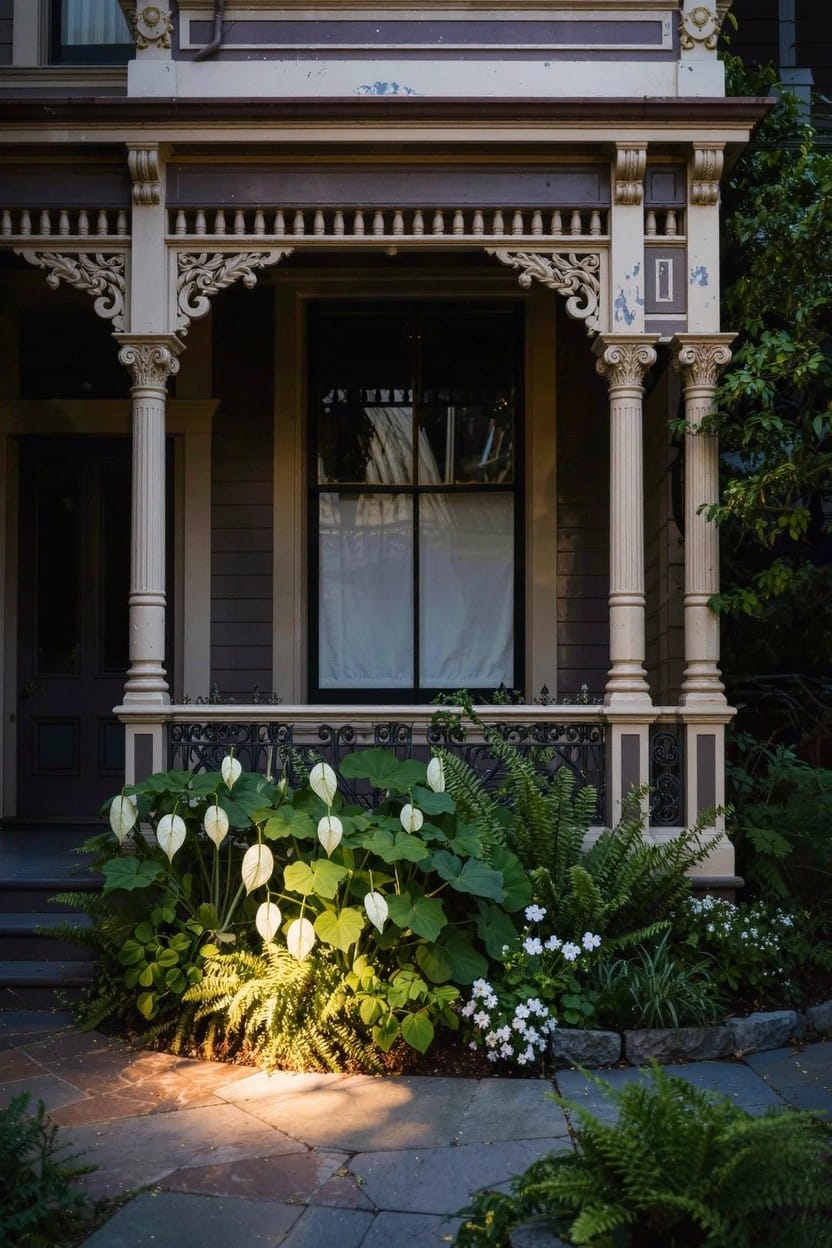
Those tough shady spots by the house foundation don’t have to stay bare. Calla lilies handle low light just fine. Their tall white blooms push up through broad green leaves and catch the eye without much sun. It’s a simple way to add height and color where grass won’t grow.
Try them along a walkway or porch base. They fit right in with older homes that have steps and columns. Keep the soil damp and mulch around the bulbs. Watch for slugs though. They come back year after year once established.
Ferns in Shady Linear Beds

A simple row of ferns tucked into a narrow bed along a walkway can wake up those dark corners that get no direct sun. These tough plants stay lush and green without much light, filling the space with soft texture that softens hard edges like concrete walls.
Put this idea to work beside a patio or entry path where shade hangs heavy from overhangs or buildings. It suits plain backyards or modern setups best. Keep soil damp and add a bit of mulch to hold moisture, and the ferns will spread on their own over time.
Frequently Asked Questions
Q: What if my shady corner gets zero direct sun all day?
A: Pick reliable shade champs like hostas, ferns, and hellebores. They soak up that dim light and fill the space with lush greenery. Just keep the soil moist, and they’ll reward you with zero fuss.
Q: How do I stop weeds from taking over my new shady bed?
A: Lay down cardboard or landscape fabric before planting, then top with a thick layer of mulch. Weeds struggle to punch through in low light anyway. Refresh the mulch yearly to stay ahead.
Q: Can heavy clay soil handle these flower bed ideas?
A: Work in plenty of organic matter first to loosen it up. Plants like astilbe and brunnera settle right in once you do. And skip the digging marathons, they prefer gentle tucking.
Q: How do I sneak in some color without sun-loving blooms?
A: Layer in foliage stars with bold hues, think coral bells or lungwort. Their leaves deliver that dreamy pop year-round. Berries from mahonia add winter sparkle too.
