

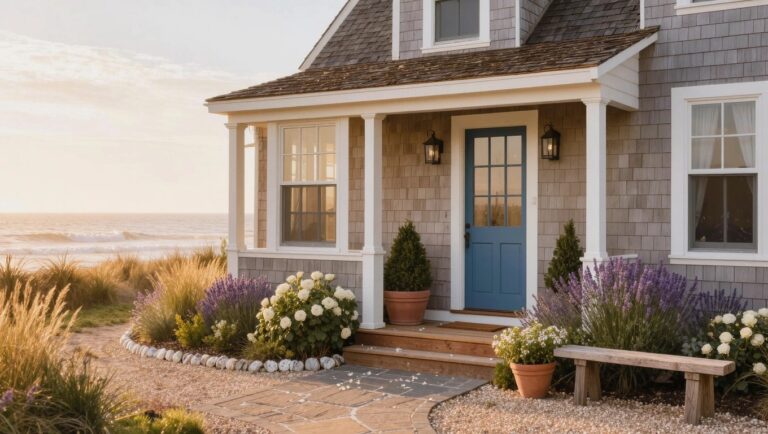
I’ve been eyeing my garden’s flower beds this season, wanting them to feel more composed and less haphazard. What elevates a design comes down to curves that echo the yard’s natural lines and plants chosen for their reliable form. Busy mixes of textures and heights tend to muddle the effect, turning polish into clutter. I favor beds built around a few sturdy perennials that repeat softly along the border. Simple repetition like that delivers real staying power.
Entry Garden Beds
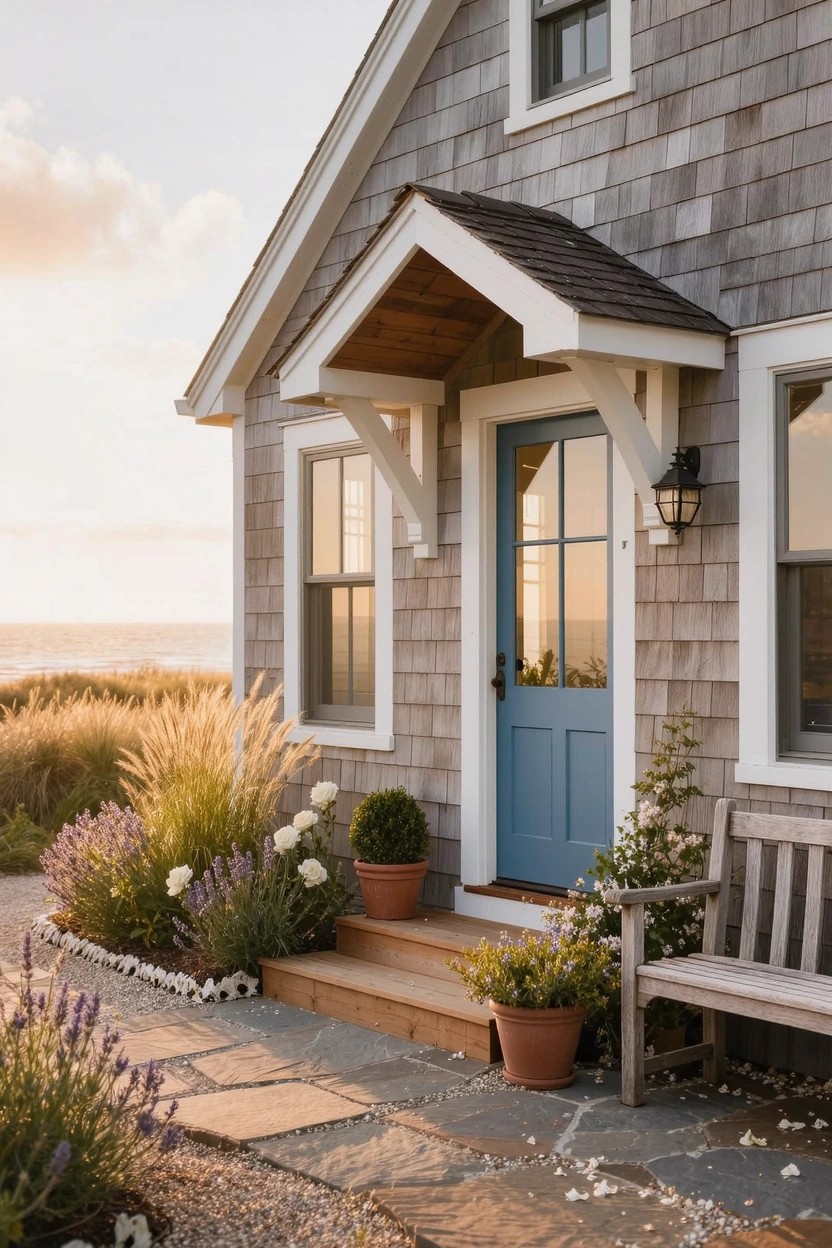
One straightforward way to give your front entry a polished look is with garden beds tucked right along the steps. Tall grasses sway next to white flower clusters and lavender, plus a few pots for extra fill. They draw the eye up to the door without much fuss.
Put these beds on porches like this one, where the path meets the house. They suit shingle-style homes or coastal spots best. Go with tough perennials that handle sun and wind. Trim them back in spring… keeps things neat year-round.
Tall Grasses Line the Path

Tall grasses planted in a row along your front walkway make a strong, simple statement. They stand up straight most of the time but move a bit in the wind, which keeps things from feeling too stiff. Paired with the dark siding on a house like this, the grasses pull the eye right to the door without much fuss.
You can set this up along any straight path leading to your entry, works best in modern or clean-lined yards. Use concrete planters for the grasses, tuck in low boxwoods below them, and add a few red flowers at the base for punch. It’s fairly easy to maintain, just trim back once a year.
Hydrangeas by the Front Steps
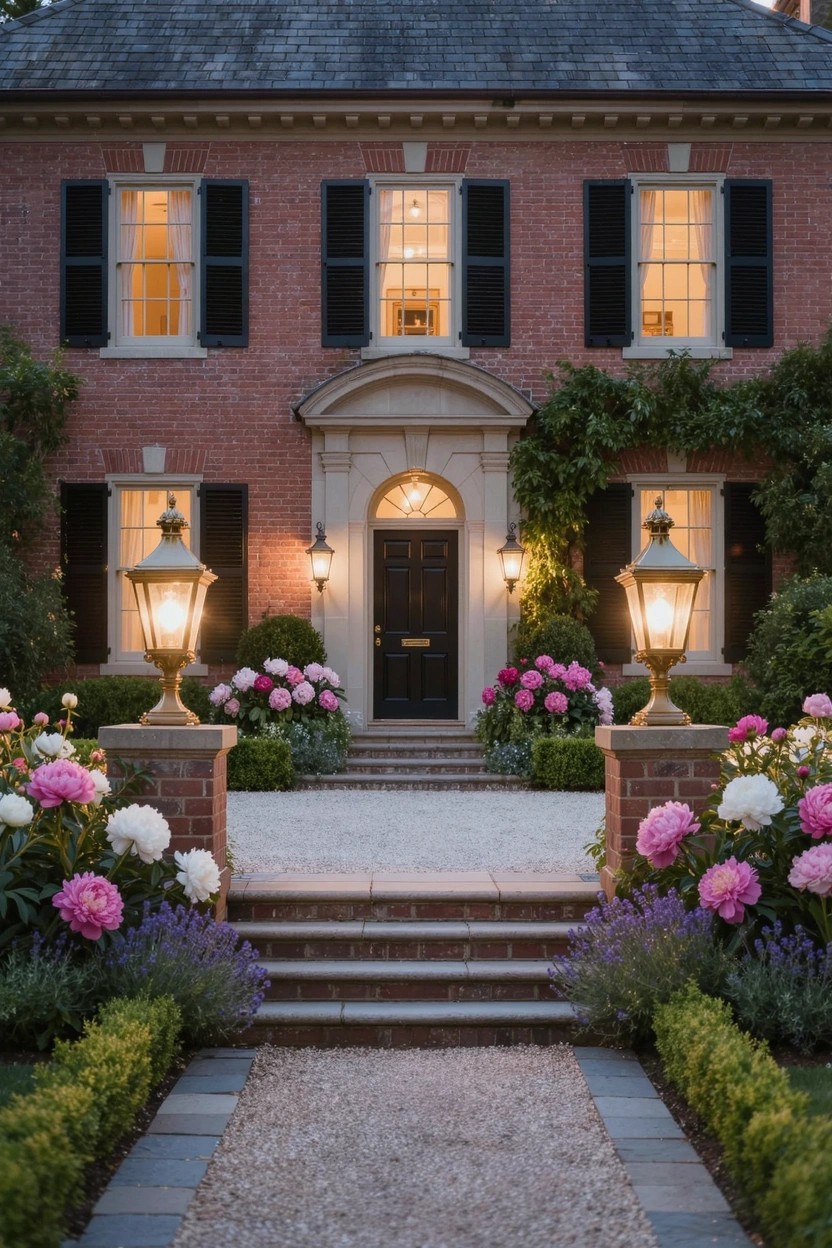
Big hydrangeas planted right beside the front steps give any entry a soft, full border that feels put-together. The pink and white blooms here fill out matching beds on both sides of the path, working with the house’s classic lines without overpowering them. It’s a simple planting that adds color through summer.
You can pull this off on most homes with a raised entry, especially brick or stone ones. Set the beds back a bit from the steps, mulch well, and let the bushes grow to four feet or so. They do best in partial shade. Watch for too much sun, though. That turns the blooms brown fast.
Gravel Paths Through Flower Beds

A gravel path like this cuts right through thick flower beds to reach the house. Tall foxgloves stand out along the edges, mixed with lower plants for color and height. It’s a straightforward way to make the front yard feel put-together without much fuss. The path guides folks naturally to the door, and the beds keep everything looking full even in smaller spaces.
You can pull this off in front of older homes or cottages where you want easy access. Lay down gravel over landscape fabric first to cut down on weeds. Plant perennials that come back each year along the sides. It suits yards near the coast or with some slope, since gravel handles water fine. Just trim back the flowers now and then so they don’t spill over.
Entry Garden Beds with Tall Grasses

Tall grasses mixed with white flowers work well in a narrow bed right by the front steps. They bring height and a bit of movement to the entry area without crowding the path or door. That simple planting softens plain walls nicely.
Try this along a driveway or walkway on homes with clean modern lines. It suits gravel or stone surrounds best, since the plants won’t fight the hard edges. Go easy on watering if you pick drought-tough varieties… keeps it looking good year round.
Flower Beds Edging Entry Steps
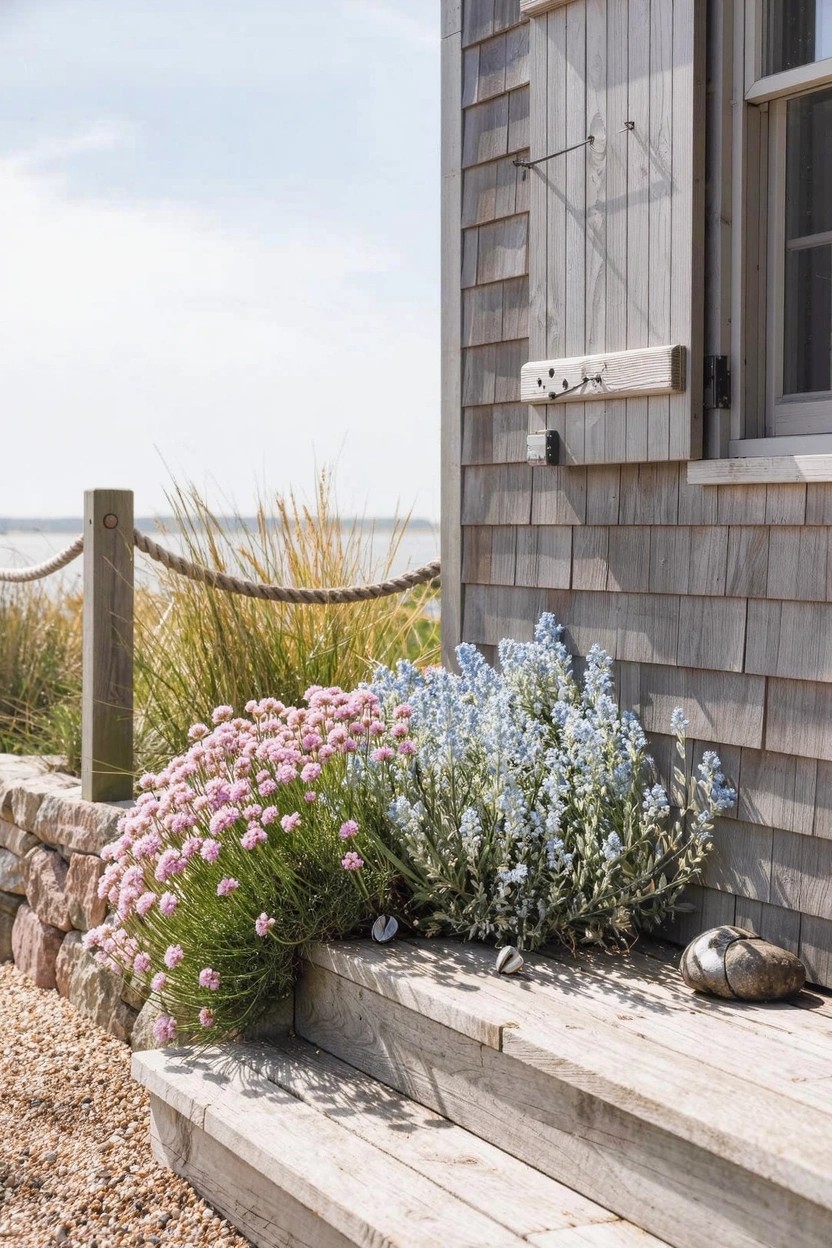
One simple way to boost curb appeal is planting flower beds right along your entry steps. Here the pink blooms and blue flowers mix with tall grasses, tucked against a low stone wall at the base of plain wooden steps. It adds color without fuss, and keeps things looking neat around a shingle house. Folks like how it draws the eye up to the door.
Try this on cottages or beach homes where you want low upkeep. Pick perennials that hug the ground so they don’t hide windows. The stone wall holds soil back. Watch the plant heights though. Grasses in back work best… keeps it layered but not wild.
Tulip Beds Along the Front Path
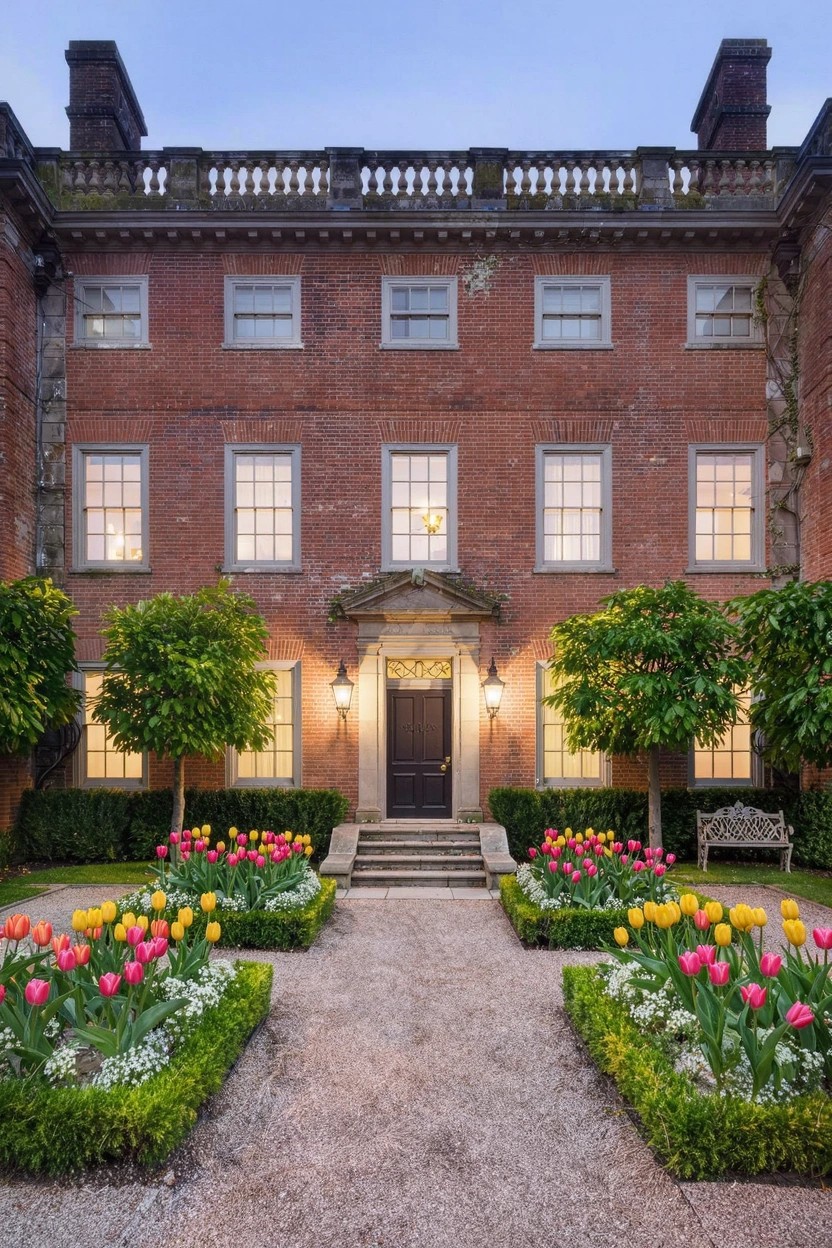
Flower beds like these make the walk up to your door feel special. Tight boxwood edges hold back waves of tulips in pinks, yellows, and reds. They pull your eye straight to the house steps without much effort. Folks notice this kind of setup because it stays neat even after rain.
Put them where the path hits the street or sidewalk. Suits older brick homes or any place with a straight walkway. Bulbs go in come fall, and they pop in spring. Watch the scale though. Too wide and they crowd the path… smaller yards do best with beds just two feet deep.
Brick-Edged Flower Beds by the Driveway
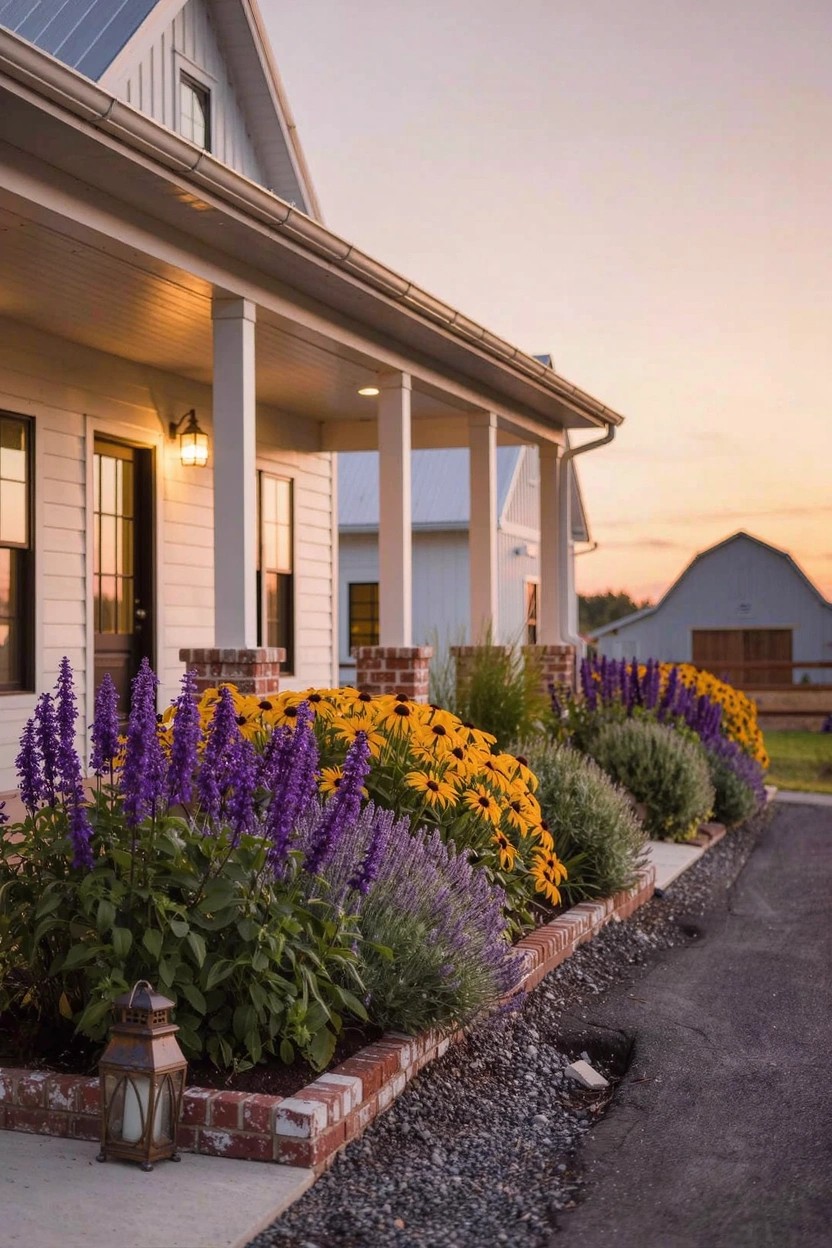
A simple brick border around flower beds running along the driveway keeps everything looking tidy and put together. It frames the plants nicely, like the tall purple salvia and sunny black-eyed Susans here, without much fuss. Folks notice it right away from the road. Gives that polished front yard feel.
These beds work best on homes with some country charm, like farmhouses or cottages. Lay the bricks low along the edge, fill with perennials that come back each year, and mulch with gravel to cut down on weeding. Just keep the plants from spilling over the path… or it undoes the neat look quick.
Boxwood-Edged Flower Beds

Boxwood hedges make flower beds look sharp and put-together. You edge the beds with these low, green plants, then fill in with tulips or other bulbs. The straight lines and neat shapes stand out against a gravel courtyard. It pulls the garden together without much fuss.
This setup works best in front of stone houses or formal yards. Trim the boxwoods a couple times a year to keep the edges crisp. Spring flowers give color, but the hedges carry the look through summer. Just right for smaller spaces.
Tiered Raised Planters for Narrow Yards

Raised planters stacked in tiers turn a skinny yard into something useful and pretty. You see them here hugging a tall fence, packed with flowers and low plants. They save ground space for paths or grass, and the layers give height without crowding things in.
Try this along side yards or fences where room is tight. Use rough wood boxes you can build yourself, then plant trailing stuff on top and bushier ones below. It fits older brick homes or row houses best. Keep drainage good so the wood lasts.
Brick-Edged Flower Beds
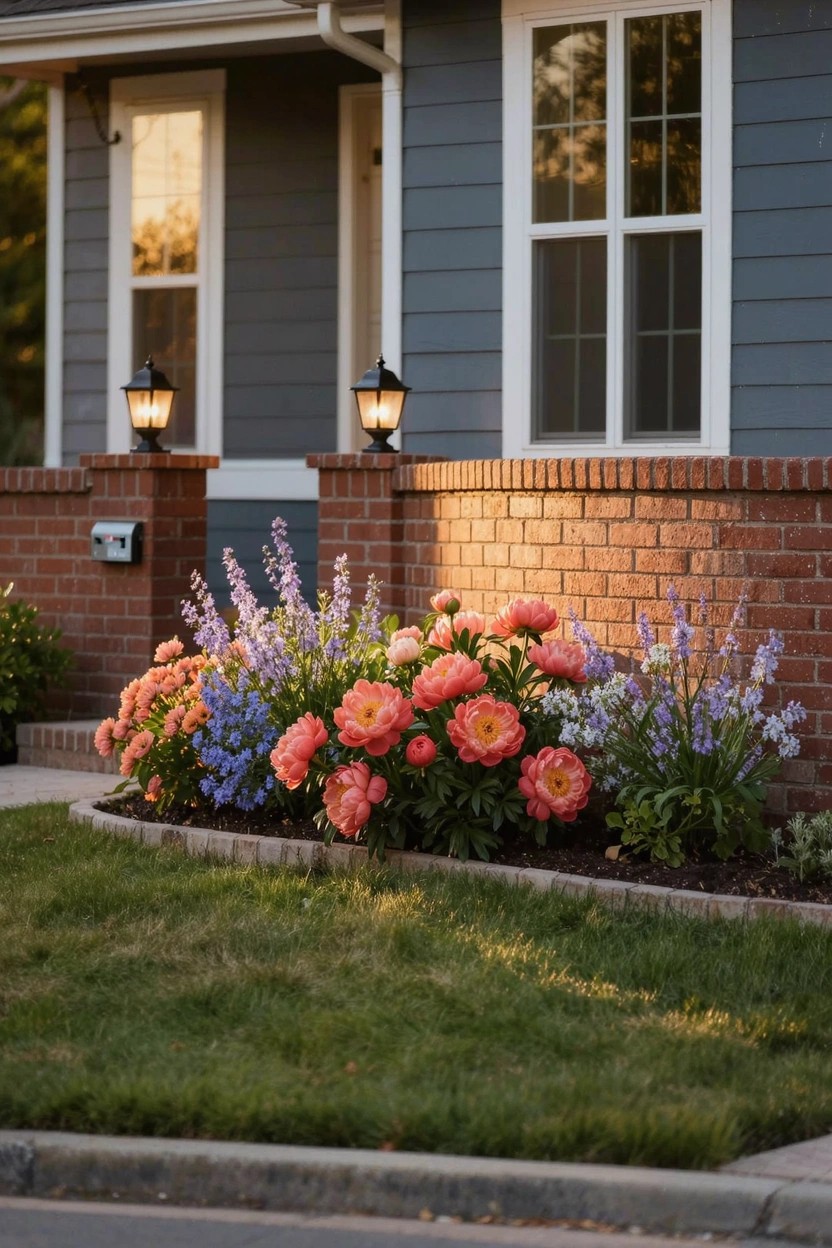
A simple brick edge turns a basic flower bed into something that looks put-together right away. You see it here with mounded peonies and lavender hugging the walk. The brick picks up on nearby accents and keeps everything contained. No sprawling mess. Just clean lines and color that pops.
This setup fits most front yards, especially where you already have brick or stone details. Go for tough perennials that fill out big. Line the edge with matching bricks or pavers. It holds up year after year… low fuss for steady curb appeal.
Stone Planters at Entry Steps
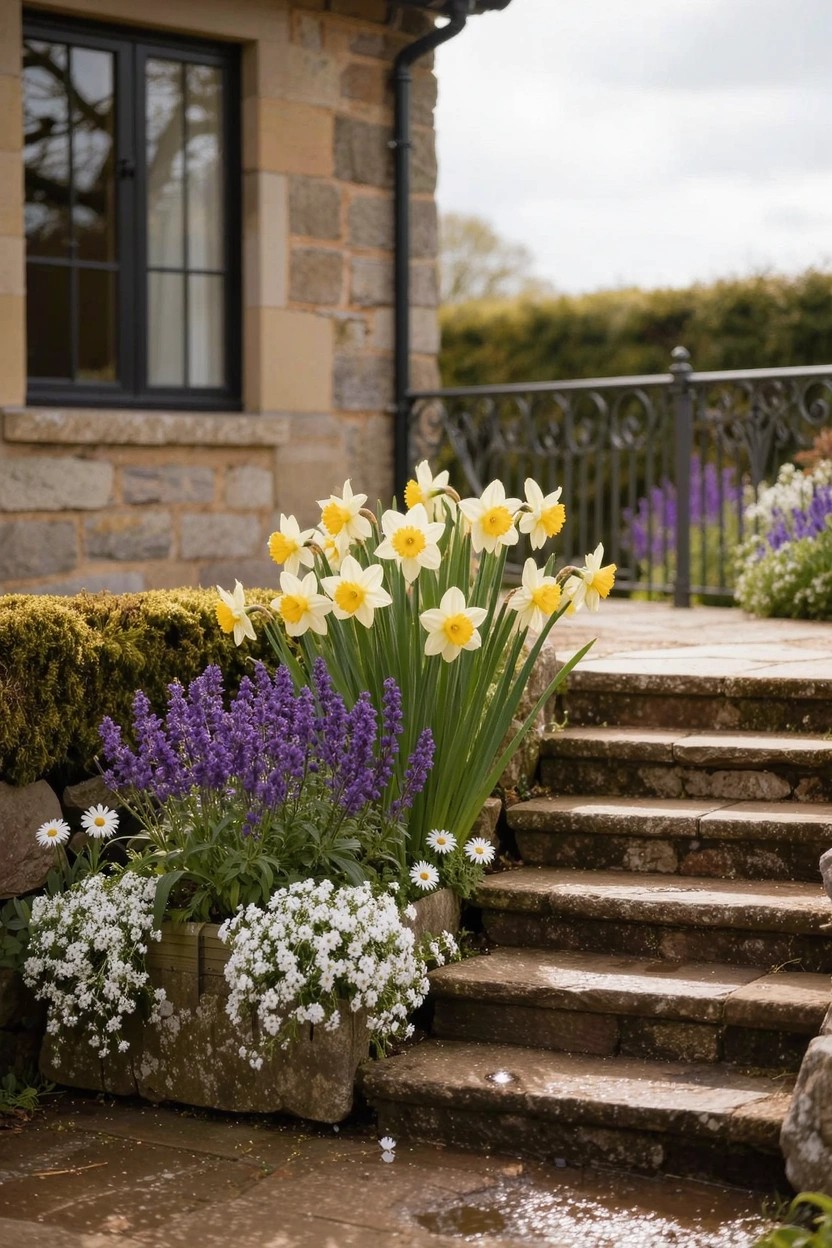
A simple stone planter like this one sits right at the base of the steps. It matches the house stone and steps exactly, which keeps everything looking pulled together. Packed with daffodils, lavender, and daisies, it adds color without overwhelming the space.
This works best on older stone homes or any place with hard steps. Pick perennials and bulbs that trail over the edge for that full look. Just make sure the planter drains well… wet roots won’t last. It suits a front entry where you want low upkeep but steady curb appeal.
Long Concrete Flower Beds
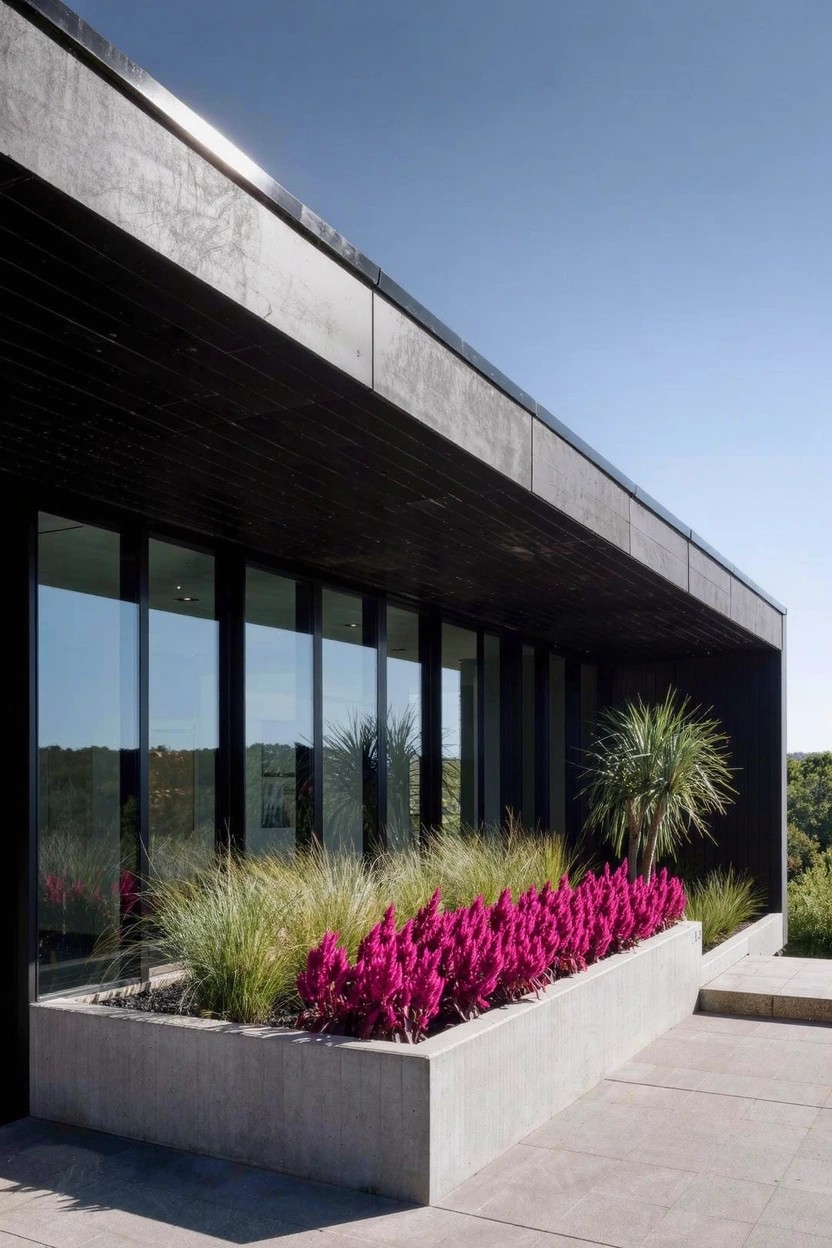
A long concrete trough makes a solid flower bed right up against the house wall. Here, tall grasses mix with bright pink blooms for a punch of color that fits the dark modern look. It stays neat and structured. No mess spilling over.
These work best on patios or side entries where you want color without much fuss. Fill the back with grasses for height, then add flowers up front. Suits clean-lined homes. Keep soil simple and check drainage so roots don’t rot.
Entry Steps with Terracotta Pots

A pair of large terracotta pots sits right at the base of the front steps, each bursting with tall white flowers. That simple move adds real polish to the entry without much fuss. The matching pots and their height pull the eye up to the door, making the whole approach feel put together.
This idea suits homes with steps leading up to the entrance, like Spanish-style places with warm walls. Plant something upright and airy in the pots to keep the look open. Just make sure the pots are heavy enough not to tip… and refresh the flowers each season for that always-neat vibe.
Lavender Beds Edging Pool Paths

Lavender beds like these work so well along a pool path. They add that soft, silvery green touch right next to the stone paving and blue pool tiles. The bushes stay low and tidy, which keeps the whole area looking polished without much fuss. Plus, the scent is a nice bonus on warm days.
You can plant these in full sun spots around any backyard pool or patio. They fit right in with stone or tile hardscape, especially on homes with a bit of Mediterranean style. Just make sure the soil drains well, or they might get leggy. Drought tolerant too, which saves water.
Flower Beds Along the Foundation

Flower beds tucked right up against the house foundation offer a straightforward way to add color and shape to the front yard. Packed tight with pink and white blooms, they follow the base of the home in a gentle curve. This setup makes the entry feel more settled, especially with the stone accents there.
You can pull this off on most ranch or two-story homes with light siding. Go for easy annuals that bloom all summer, edge the bed with dark mulch to keep it neat, and plant in masses for impact. It suits flat lawns best… just watch that the flowers don’t flop over walkways.
Climbing Roses on a Wall Trellis
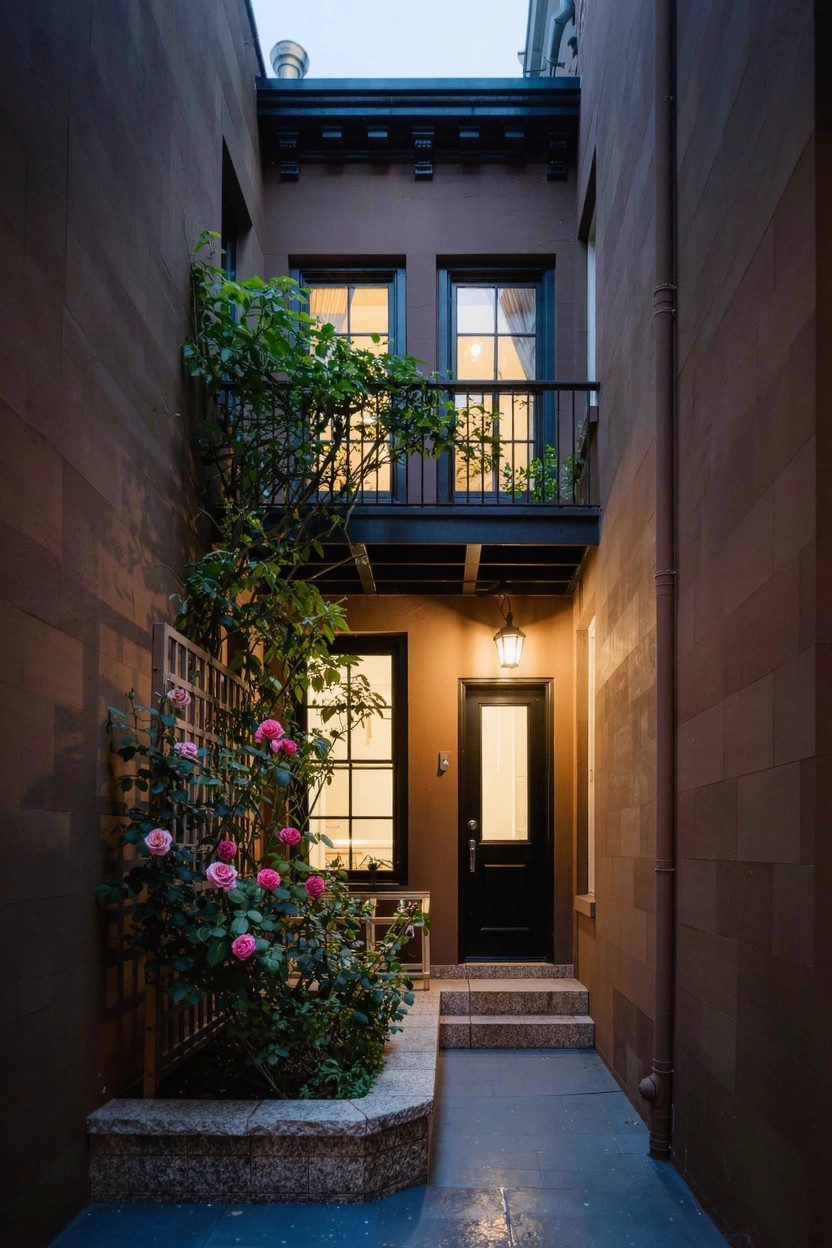
A trellis flat against the brick wall lets climbing roses grow up and add color right by the entry door. Those pink blooms catch the eye without taking up ground space. It turns a tight spot into something with real garden feel.
This works best in narrow alleys or side yards where you can’t plant wide beds. Pick tough climbers that hold their flowers late into the season. Mount the trellis secure on brick or stone. Keep it pruned so it stays neat around the door and steps.
Poolside Gravel Beds
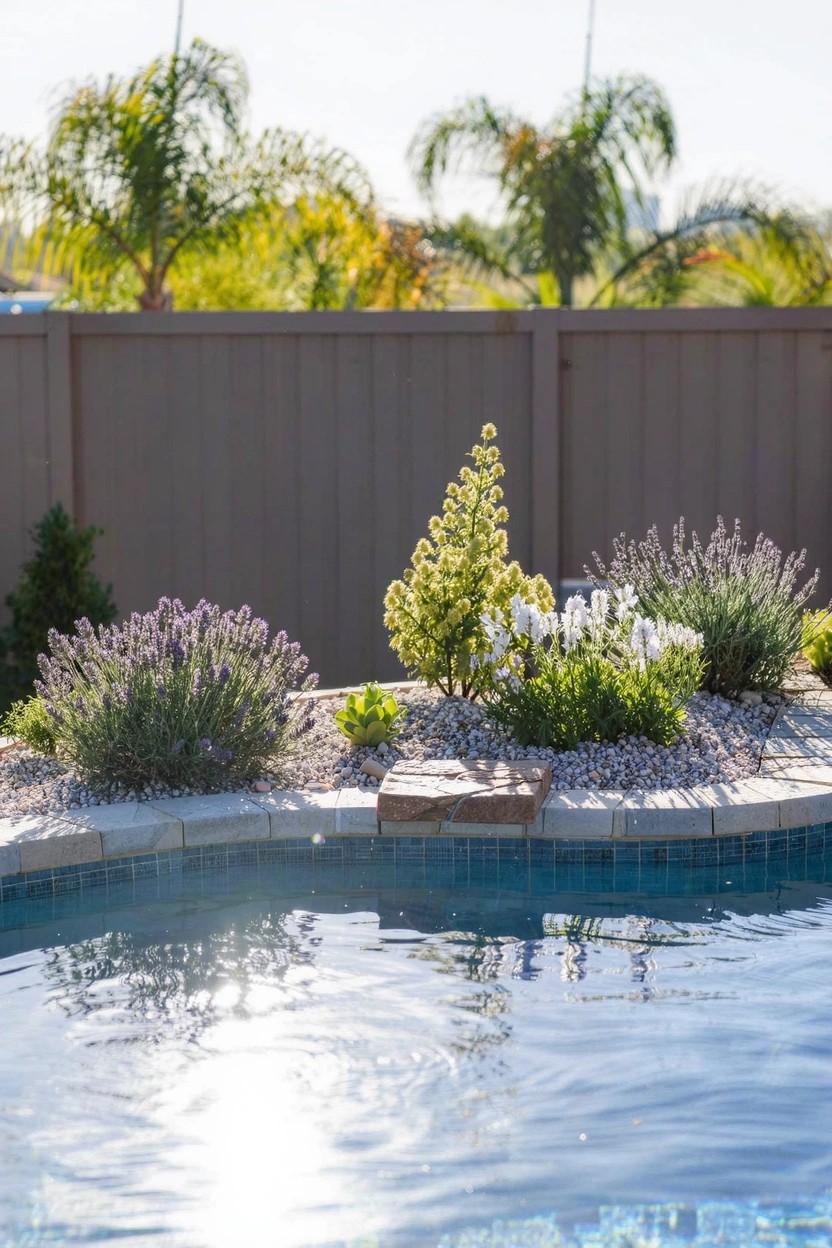
One straightforward landscaping idea for backyards is gravel beds right along the pool edge. Filled with low-water plants like lavender and some upright grasses, they follow the pool’s curve and keep weeds down easy. That clean gravel mulch gives a finished look without fuss, and the plants add color that lasts through summer.
Put these beds in full sun spots where you want less mowing or trimming. They fit ranch houses or any yard with a pool, especially drier climates. Go with pale gravel to match stone coping. Watch the plant height though. Nothing too tall that hangs into the water.
Tiered Flower Beds on a Slope

Tiered flower beds handle a slope well. They keep soil from washing away and let you plant in neat layers. Rusted metal edges hold everything together. That gives a sturdy look that blends with plants over time.
Put them along steps or a path to your house. They suit yards with a hill to the side or back. Go with tough plants like lavender or grasses. Keep an eye on drainage so water does not pool.
Wisteria Pergola Over the Patio
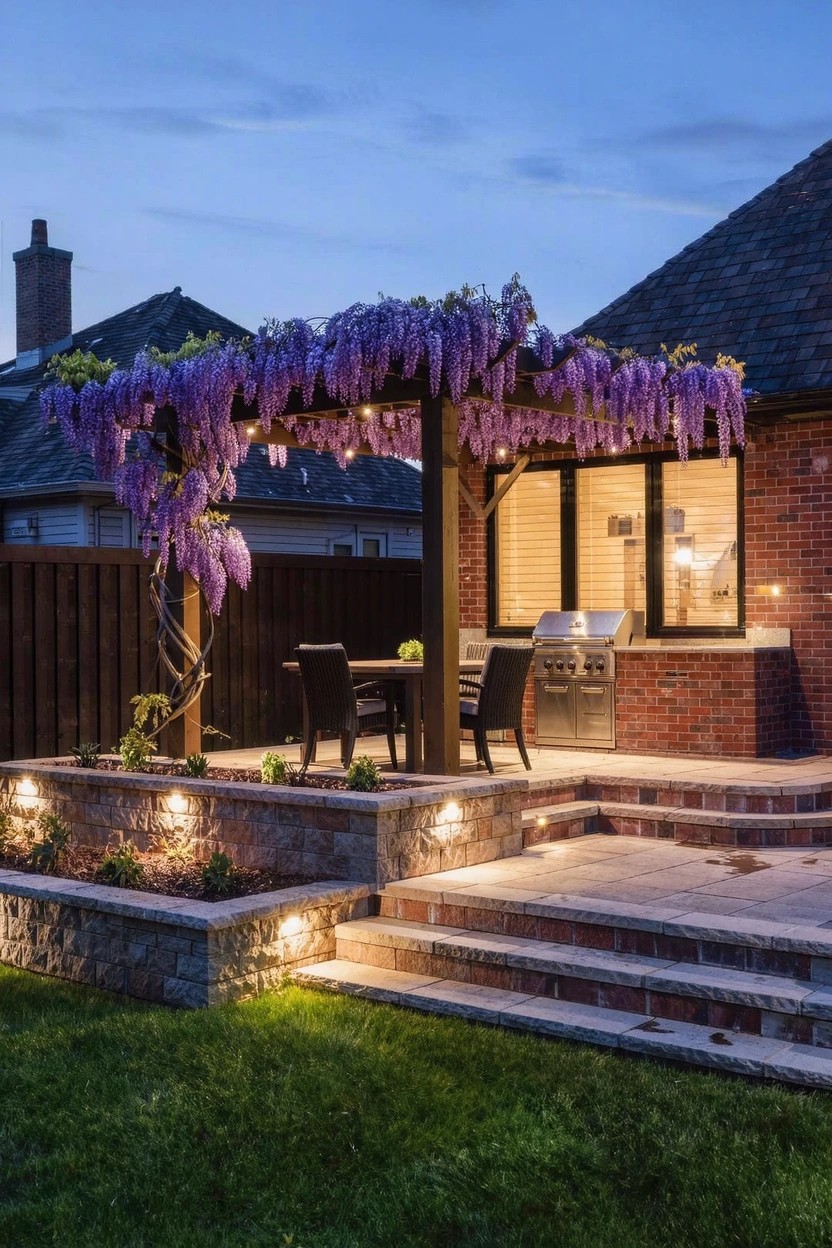
A simple pergola like this one turns a basic patio into something special when you let wisteria climb all over it. The purple flowers hang down thick and full, giving shade for meals outside without blocking the view. It works because the vines grow fast and flower heavy, so you get that polished garden look without much fuss.
Put one over your grill area or dining spot if you have room in the yard. It suits brick or stone houses best, especially with steps down to the grass. Just keep the vines trimmed back from the house, or they can get too wild. String lights help too, once the sun goes down.
Balcony Flower Pots in a Row

Nothing beats a simple row of pots along a balcony edge for bringing flowers right up to your home’s facade. These terracotta planters, packed with pink bougainvillea and a mix of green shrubs, turn a plain stucco wall into something alive and welcoming. It’s an easy way to add color without digging up the yard, and the uniform lineup keeps it looking neat.
This setup works best on older homes with Mediterranean vibes or any balcony that needs a lift. Line up matching pots, choose tough bloomers like bougainvillea that trail over the edge, and make sure the rail can handle the weight. Skip it if your balcony faces heavy wind. Keeps maintenance low too.
Flower Beds Edging Stone Steps
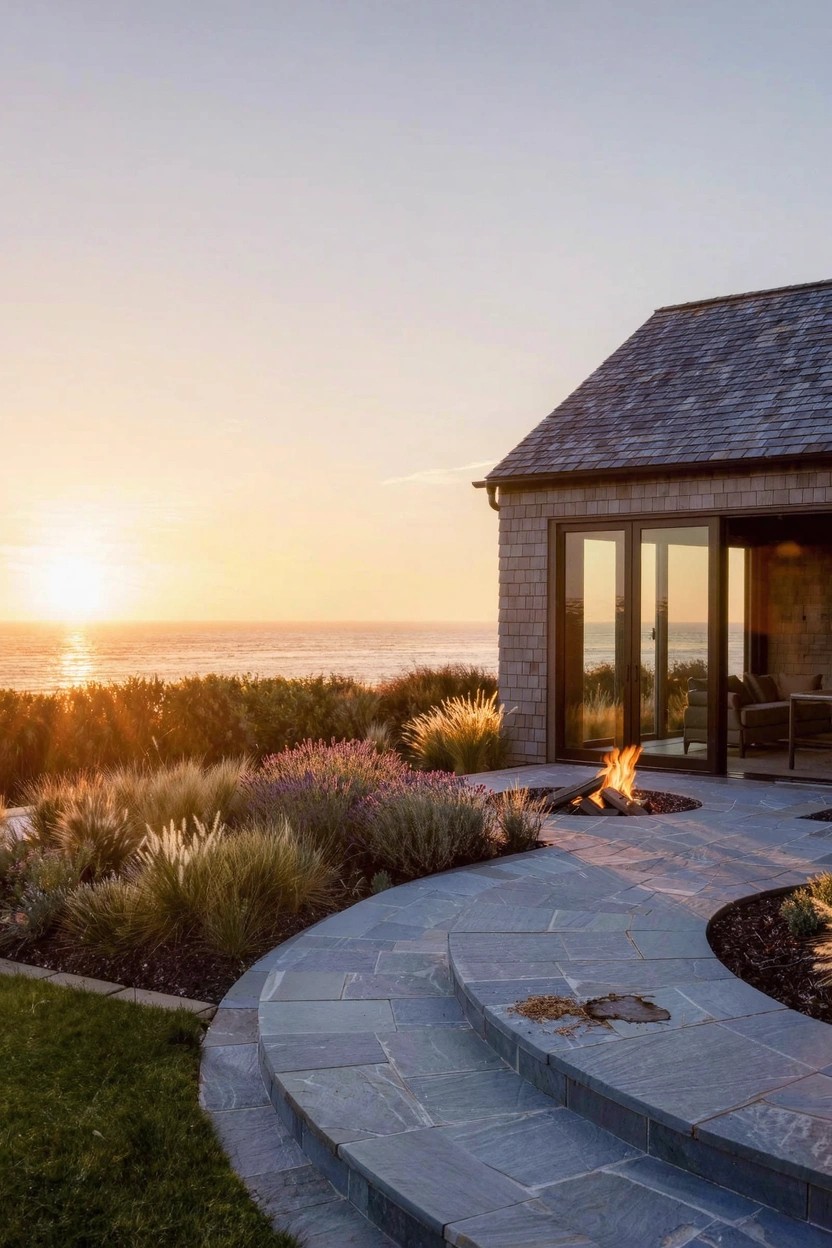
One nice touch in this setup is flower beds that hug the edges of curved stone steps. Tall grasses sway next to low clumps of blooms like lavender, giving a clean, layered look that pulls the patio into the yard. It feels polished but grows naturally.
Try this where steps lead to a back patio or deck. It suits sloped yards or coastal gardens best, since the plants hold up to wind and salt. Pick perennials that fit your zone, and mulch to keep weeds down.
Hydrangea Beds by Porch Seating
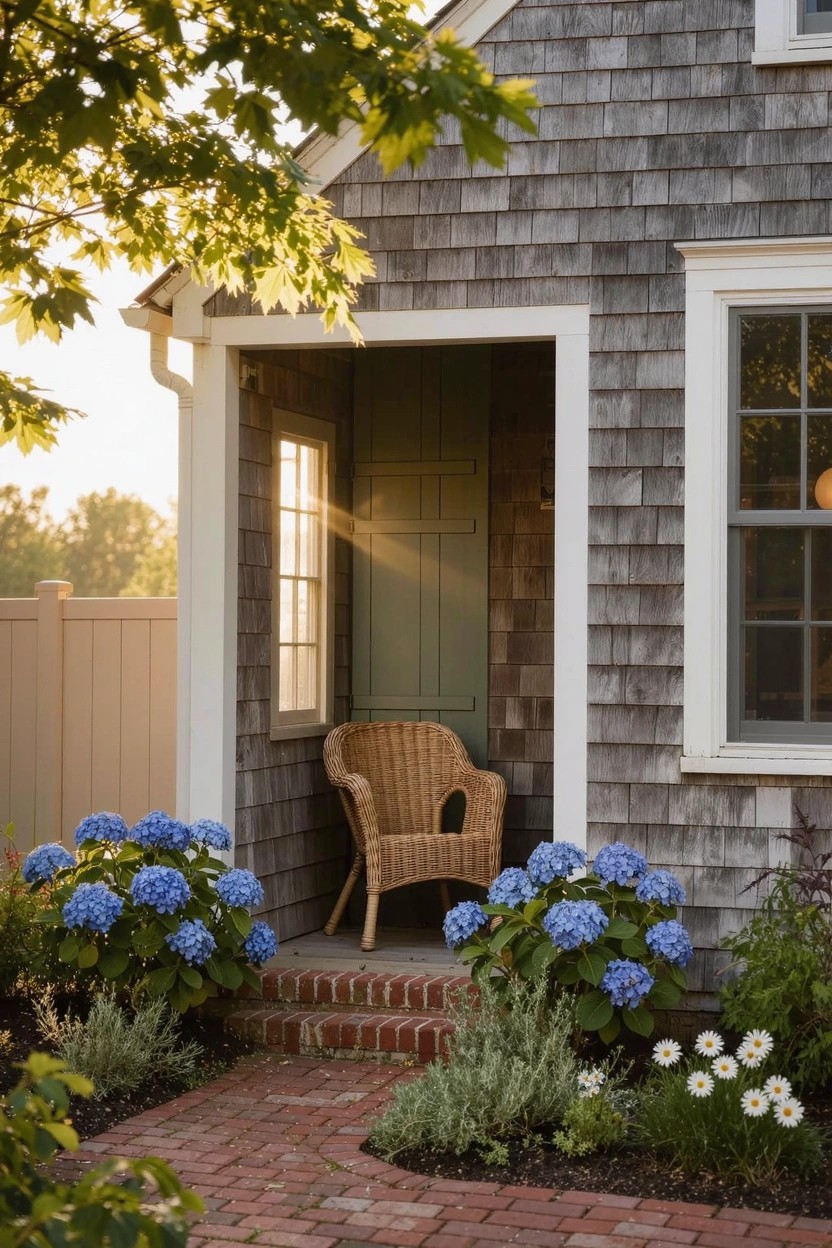
Big hydrangea bushes planted right next to porch seating make the entry feel put together. Here, blue blooms sit on both sides of a wicker chair under a shingled overhang. They add bulk and color without crowding the space, and that repeat on either side keeps things balanced.
This setup suits cottage-style homes or cozy side porches. Plant them close to the steps where they get morning sun. Brick paths like this one help too. Watch that the bushes don’t grow too wild… trim them back each year.
Frequently Asked Questions
Q: How do I adapt these designs to my shady yard?
A: Swap sun-lovers for hostas, ferns, and astilbe that thrive without much light. Layer them with low-growing impatiens for color pops. Your bed stays elegant even in the shadows.
Q: What’s the quickest way to edge a flower bed like in design 12?
A: Dig a clean trench with a half-moon edger, then backfill with soil or add bricks for definition. Mulch right up to the edge to keep it tidy. Done in an afternoon.
Q: Can I make one of these low-maintenance for busy weeks?
A:
Pick design 7 with perennials and ornamental grasses. They come back yearly and need little fuss beyond a spring trim.
Q: How do I stop weeds from ruining the polished vibe?
A: Spread a thick layer of mulch after planting. It blocks light so weeds can’t sprout. Refresh it once a season to keep things sharp.
