

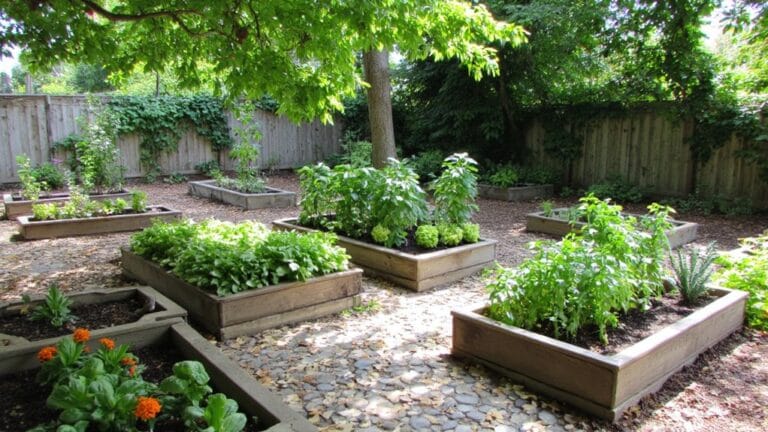
Looking to refresh your outdoor space with a touch of style and functionality? Elevated garden beds might just be the perfect fit. These chic solutions not only boost your garden’s growth but also add a lovely visual appeal. With a variety of designs to choose from, there’s plenty of inspiration to explore. Let’s delve into how these garden beds can transform your backyard into a charming outdoor oasis.
Why Choose Elevated Garden Beds for Your Space
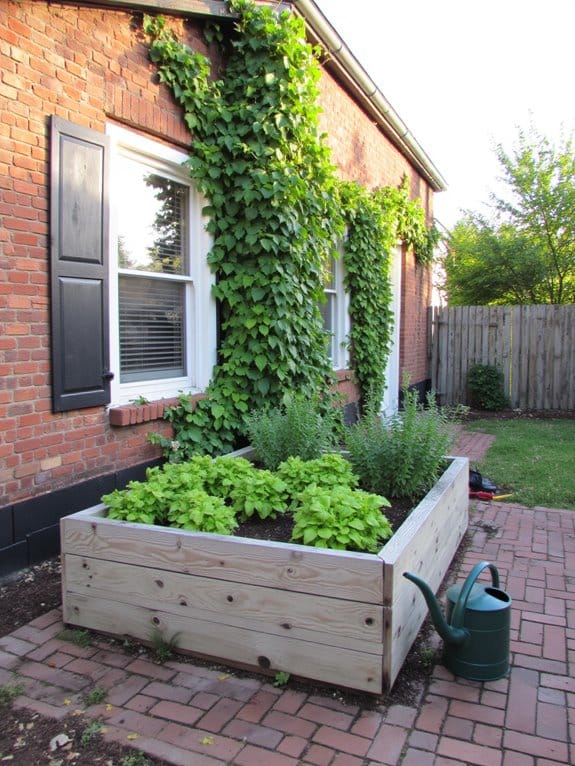
When I discovered elevated garden beds, I realized how they could transform my gardening experience.
They not only provide better access for planting and harvesting, but they also enhance the aesthetics of my outdoor space.
Plus, I can customize their height to suit my needs. This means less strain on my back and knees, making gardening so much more enjoyable for me.
Understanding the Benefits of Elevated Garden Beds
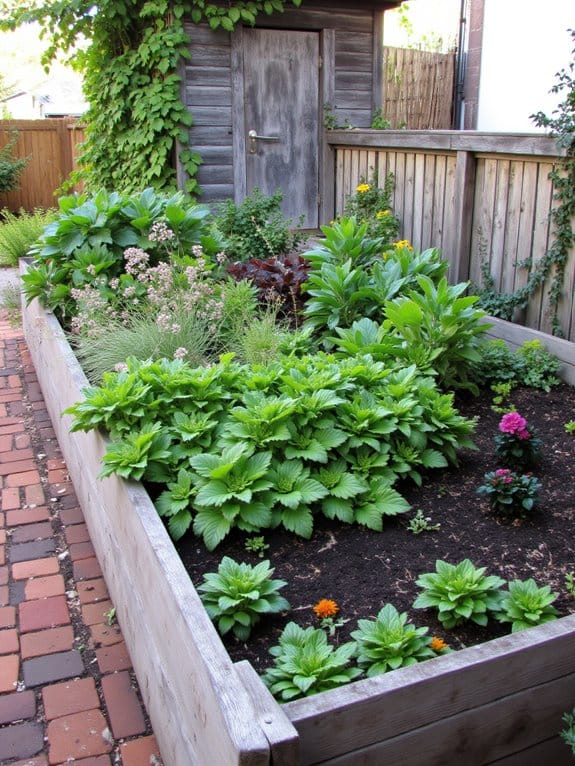
Elevated garden beds offer a range of benefits that go beyond just accessibility.
They improve drainage, which means healthier plants and less disease.
I’ve noticed they also reduce the strain on my back while gardening, making it more enjoyable.
Plus, they can deter pests like rabbits and provide a unique aesthetic to my outdoor space.Elevated garden beds not only enhance beauty but also help keep pests like rabbits at bay.
It’s a win-win for any gardener!
Select the Best Materials for Your Elevated Beds
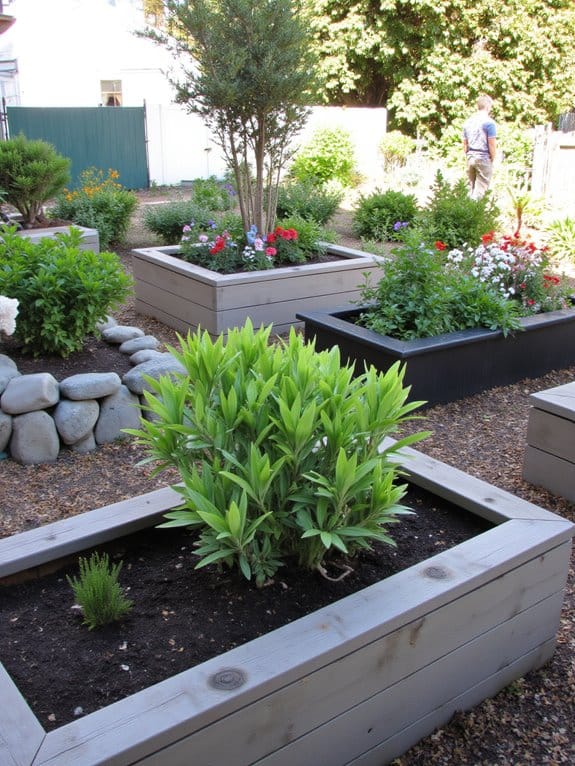
Choosing the right materials for your elevated garden beds can greatly impact their durability and functionality.
I prefer using rot-resistant wood like cedar or composite materials, as they withstand the elements. Metal options, like galvanized steel, also provide a modern touch.
Make sure to avoid treated wood, as chemicals can leach into the soil.
Ultimately, it’s about finding what suits your style and needs best.
Best Elevated Garden Bed Designs for Small Spaces
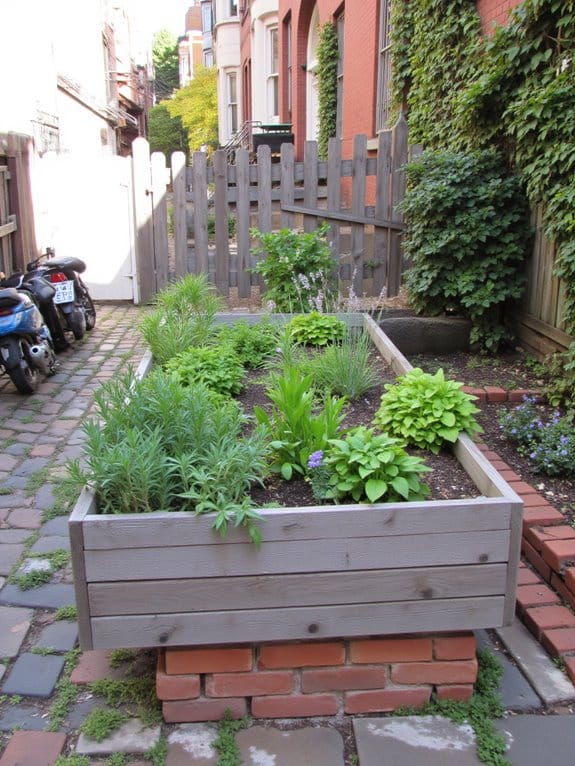
Although small spaces may seem limiting, they can actually inspire creative designs for elevated garden beds.
I love using vertical stands or wall-mounted planters, which maximize planting area without taking up much room.
Corner beds can also fit snugly in tight spots, while tiered designs allow for a variety of plants.
With the right layout, even the smallest space can flourish!
Create Multi-Tiered Elevated Garden Beds
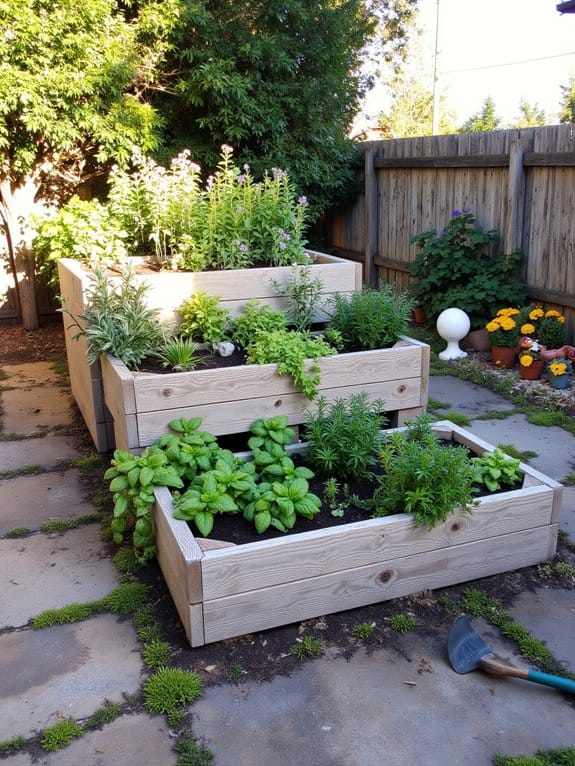
When I think about creating multi-tiered elevated garden beds, I envision a dynamic layout that not only optimizes space but also adds visual interest to my garden.
By stacking beds at different heights, I can cultivate a variety of plants while making maintenance easier.
Plus, it creates a stunning focal point, drawing the eye and enhancing my outdoor space beautifully.
Maximize Sunlight With Elevated Garden Bed Placement
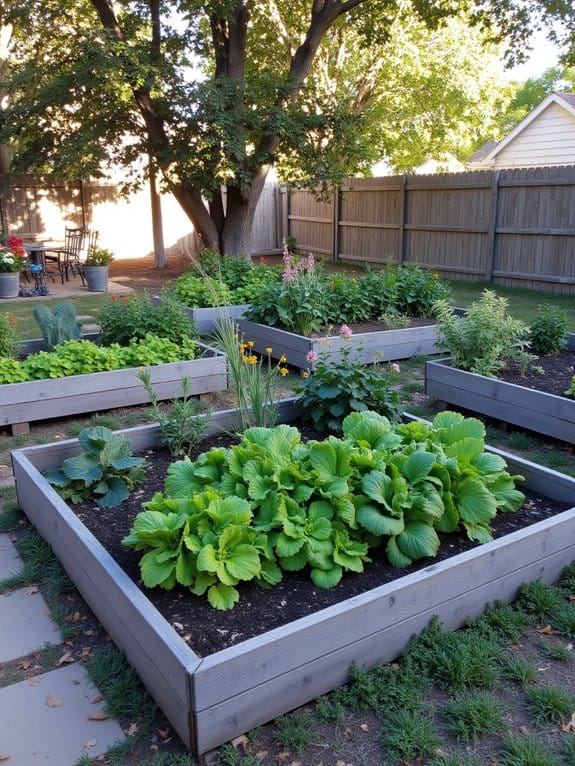
After creating those stunning multi-tiered elevated garden beds, it’s time to think about their placement to maximize sunlight exposure.
I recommend positioning them in a south-facing area, where they’ll soak up the most rays. Avoid shading from trees or buildings, and consider the height of your beds to guarantee each tier gets ample light throughout the day.
Happy gardening!
Incorporate Vertical Gardening Techniques in Elevated Beds
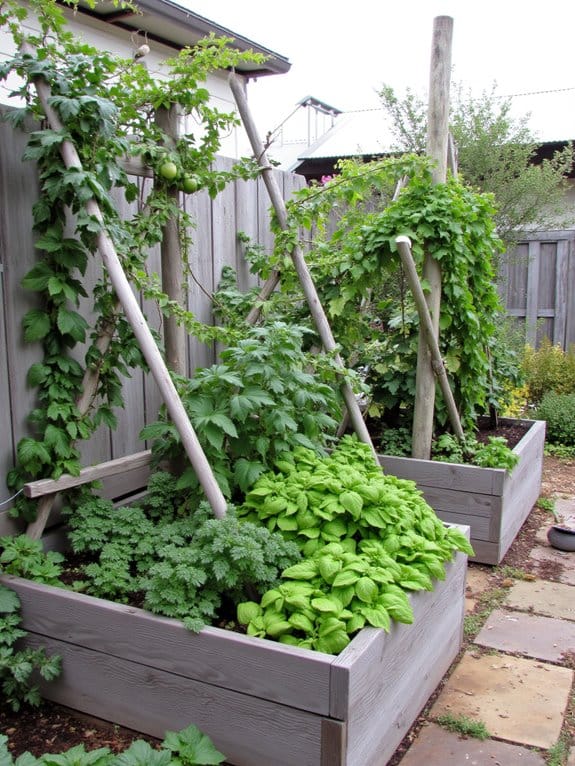
To truly maximize the potential of your elevated garden beds, I suggest incorporating vertical gardening techniques that not only save space but also create a stunning visual display.
You can use trellises, wall-mounted planters, or hanging pots to grow climbing plants, herbs, and flowers. This approach not only enhances your garden’s aesthetics but also allows for better air circulation and easier maintenance.
How to Make Your Elevated Beds Easily Accessible?
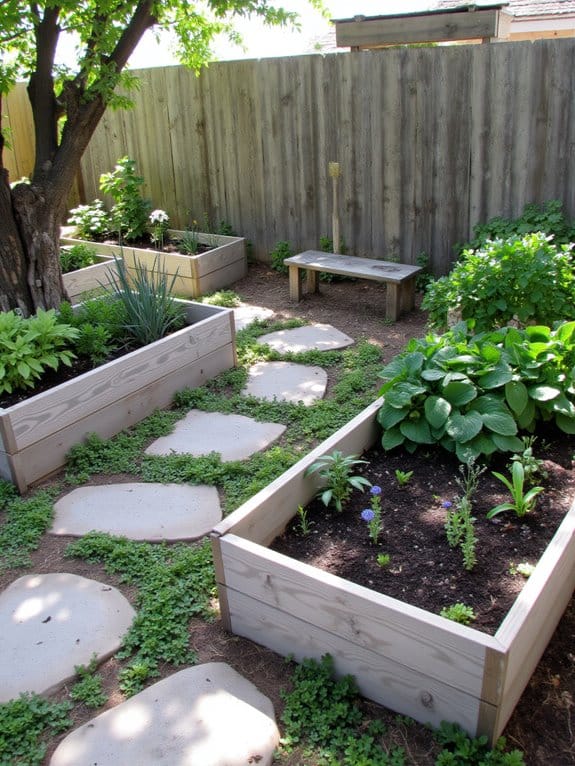
How can I make my elevated garden beds more accessible?
I’ve found that placing them at a comfortable height is key.
I also guarantee there’s enough space around each bed for easy movement.
Adding pathways with gravel or stepping stones helps too.Creating pathways with gravel or stepping stones enhances accessibility in your garden, making movement around the beds easier.
Finally, I keep tools nearby in a garden cart, so everything I need is within reach while I’m tending to my plants.
Best Containers for Elevated Garden Beds
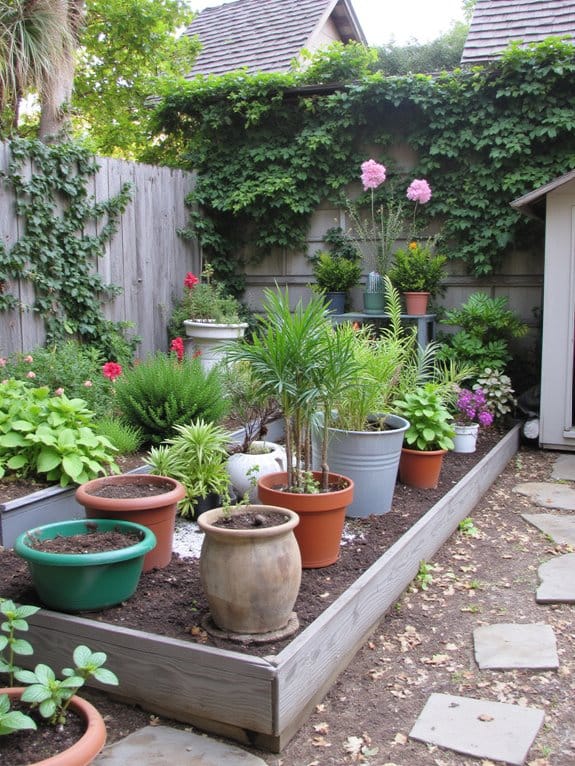
Creating accessible elevated garden beds is just the beginning; choosing the right containers can greatly enhance your gardening experience.
I love using wooden boxes for their natural look, but fabric pots work wonders too, promoting healthy root growth.
Don’t forget about durable plastic containers; they’re lightweight and easy to move.
Each option has its benefits, so pick what suits your plants best!
Design Ideas for Customizing the Aesthetic of Your Elevated Garden Bed
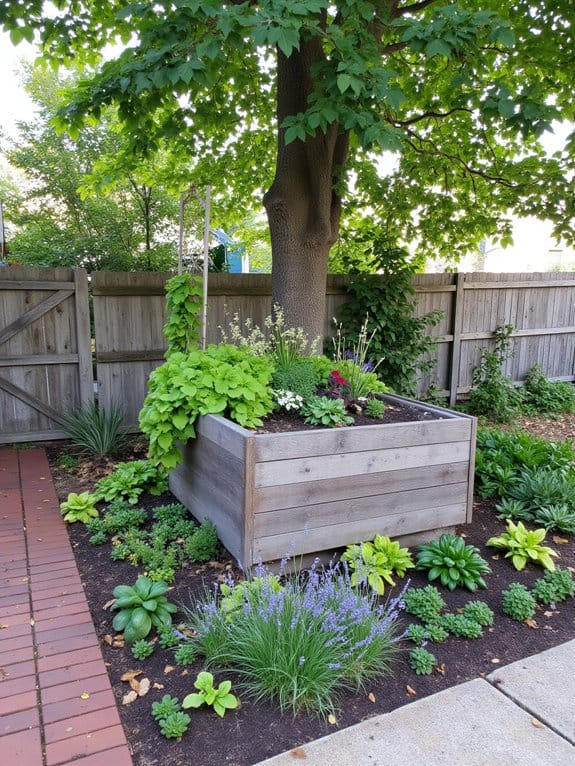
Elevated garden beds can be stunning focal points in your outdoor space, and there are countless ways to customize their aesthetic.
I love adding decorative elements like painted wood, trellises, or even fairy lights to create a whimsical vibe.
Using colorful planters or integrating unique materials, like stone or metal, enhances their look.
Personal touches truly make your elevated garden bed a standout feature!
Companion Planting Strategies for Elevated Garden Beds
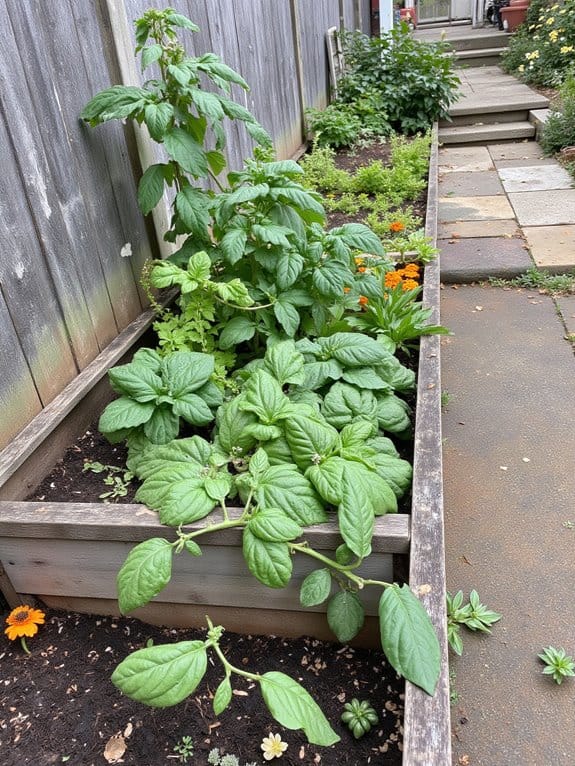
While it might seem challenging, companion planting in elevated garden beds can greatly enhance both plant health and yield.
I’ve found that pairing plants like tomatoes with basil not only improves flavor but also deters pests.
Similarly, planting marigolds alongside your veggies attracts beneficial insects.
Seasonal Planting Strategies for Elevated Beds
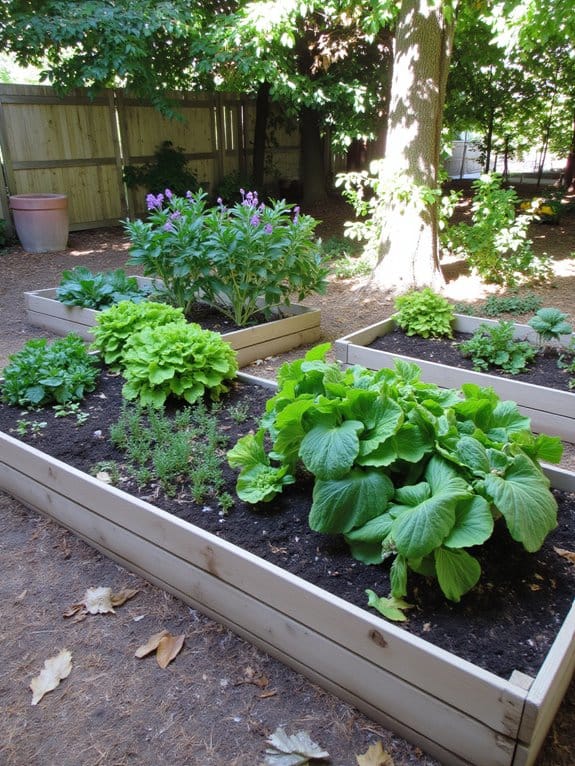
As I plan my garden for each season, I focus on the specific needs of the plants I want to grow in my elevated beds.
In spring, I plant quick-growing greens, while summer calls for vibrant tomatoes and peppers.
As fall approaches, I shift to hearty root vegetables.
This rotation not only maximizes space but keeps my garden thriving throughout the year.
Integrate Pathways Around Your Elevated Garden
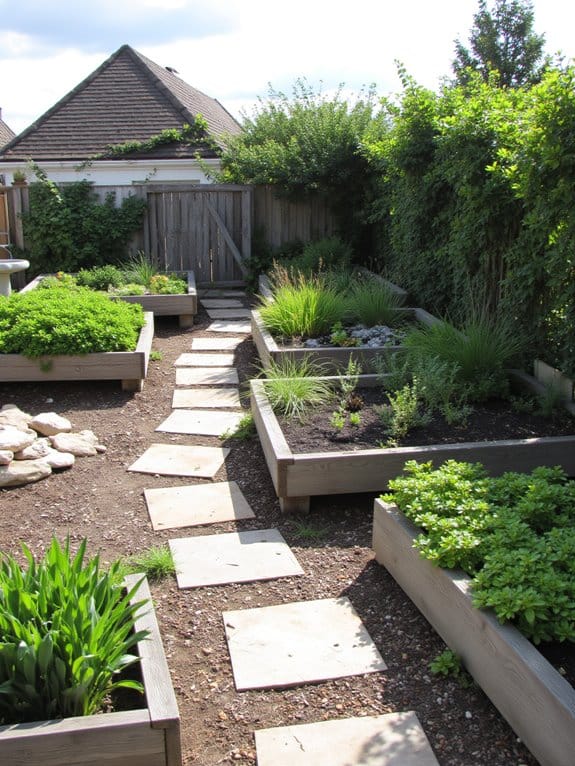
Creating a functional and inviting garden layout involves more than just selecting the right plants; it also requires thoughtful planning of pathways around your elevated beds.
I’ve found that well-placed paths not only enhance accessibility but also create visual interest. Consider using gravel or stepping stones to define walking areas, ensuring you can easily tend to your plants while enjoying the beauty of your space.
Build Elevated Beds for Herbs and Vegetables
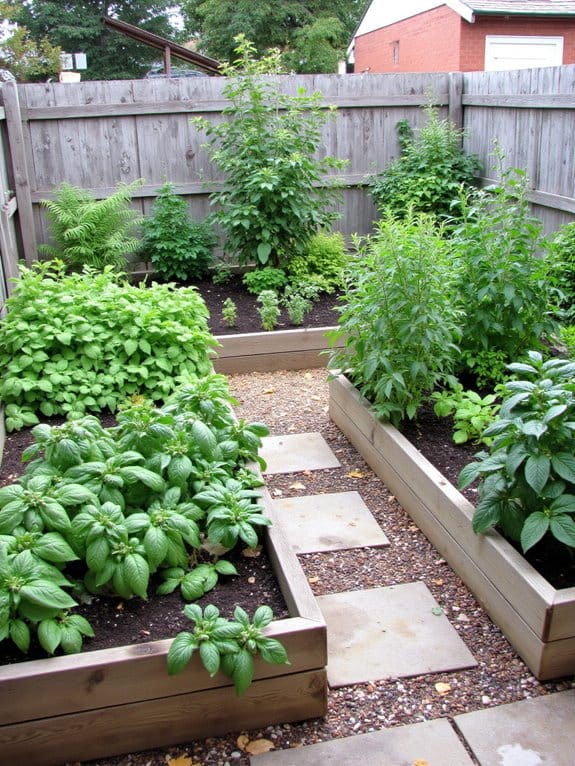
How can you make the most of your gardening space?
I find building elevated beds for herbs and vegetables is a game-changer. They not only save my back from bending but also create a controlled environment for my plants.
With proper drainage and sun exposure, I can easily grow fresh herbs and veggies, enhancing both my meals and outdoor experience.
Design Elevated Beds to Attract Pollinators
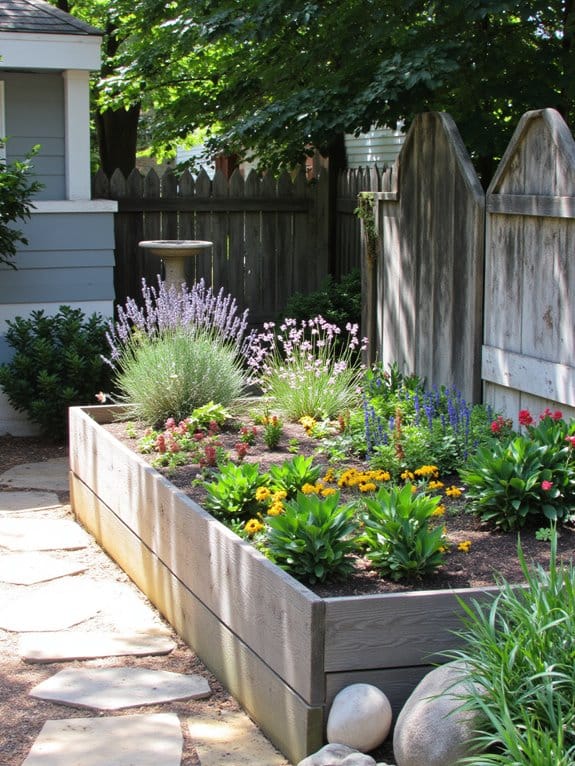
Building elevated beds for herbs and vegetables can also serve another purpose: attracting pollinators to your garden.
I love incorporating native flowers and plants that provide nectar and pollen. Adding colorful blooms like coneflowers or lavender not only enhances beauty but also invites bees and butterflies.
Positioning these beds in sunny spots guarantees pollinators thrive while helping my plants flourish.
Use Color Schemes to Enhance Your Garden Layout
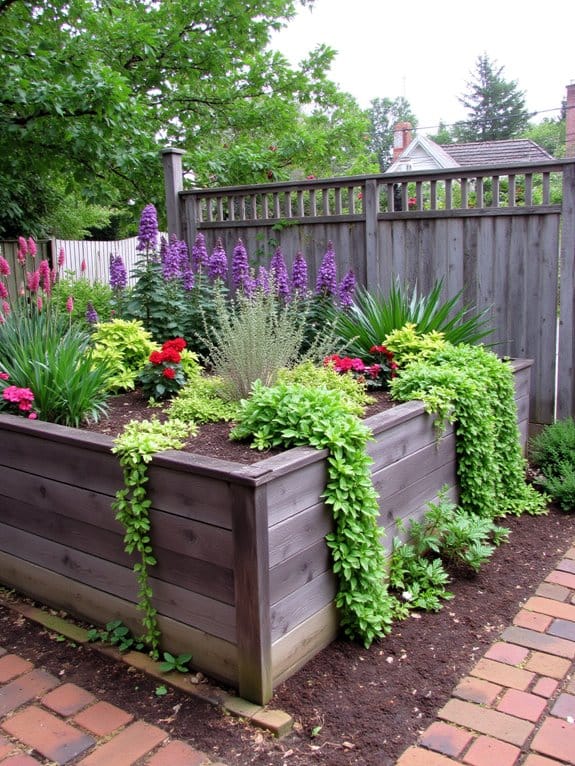
While planning your garden layout, using color schemes can dramatically enhance its visual appeal and create a harmonious environment.
I love mixing warm and cool tones to draw attention to specific areas. For instance, pairing vibrant flowers with lush green foliage creates a stunning contrast.
Don’t forget to reflect on seasonal changes; this keeps your garden fresh and exciting throughout the year!
Incorporate Water Features With Elevated Garden Beds
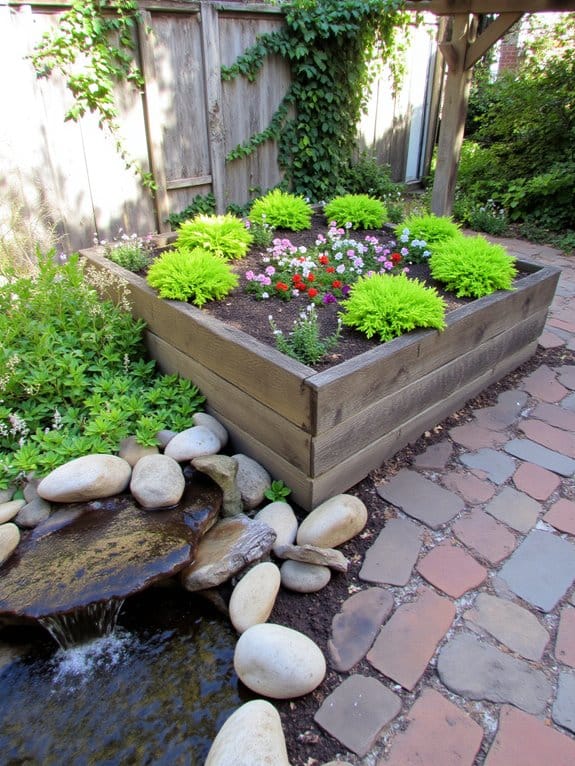
Adding water features to your garden can transform elevated beds into stunning focal points, enhancing both aesthetics and tranquility.
I love placing small fountains or ponds near my elevated beds; the sound of bubbling water is so calming.
Surrounding these features with lush plants creates a serene atmosphere, inviting me to spend more time outdoors.
It truly elevates my garden experience!
Add Lighting for Nighttime Enjoyment in Your Garden
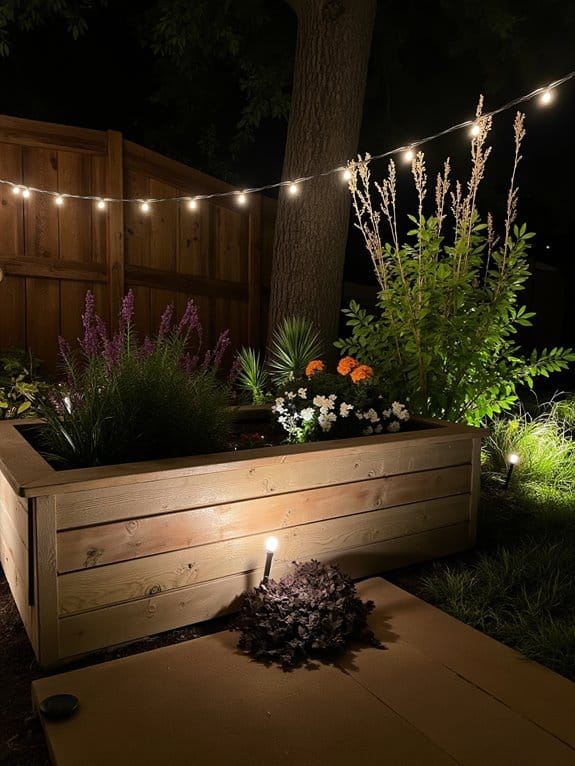
When dusk falls and the garden transforms, I love illuminating my elevated beds with strategically placed lighting.As dusk settles, my garden glows with carefully arranged lights, turning elevated beds into a nighttime wonder.
Soft string lights drape gracefully overhead, while solar-powered stakes add a warm glow to the plants below.
This setup not only enhances the beauty of my garden but also creates a cozy atmosphere for evening gatherings.
It truly makes my outdoor space come alive at night!
Affordable DIY Elevated Garden Bed Ideas With Budget Tips
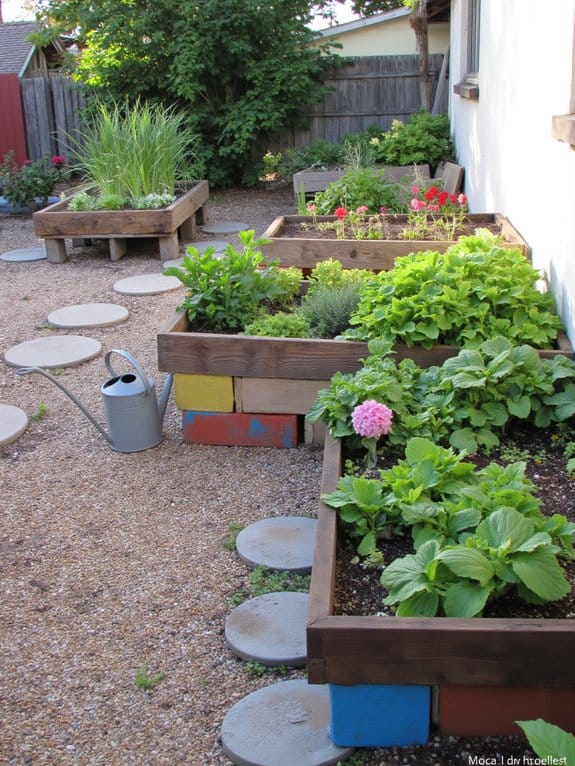
Creating elevated garden beds on a budget can be both fun and rewarding.
I’ve found using reclaimed wood or pallets to be an affordable option. For a simple design, I cut the wood to size, then stack and secure it.
Don’t forget to check local classifieds for free materials. With some creativity, you can build beautiful beds without breaking the bank!
Choose the Right Soil and Drainage for Elevated Beds
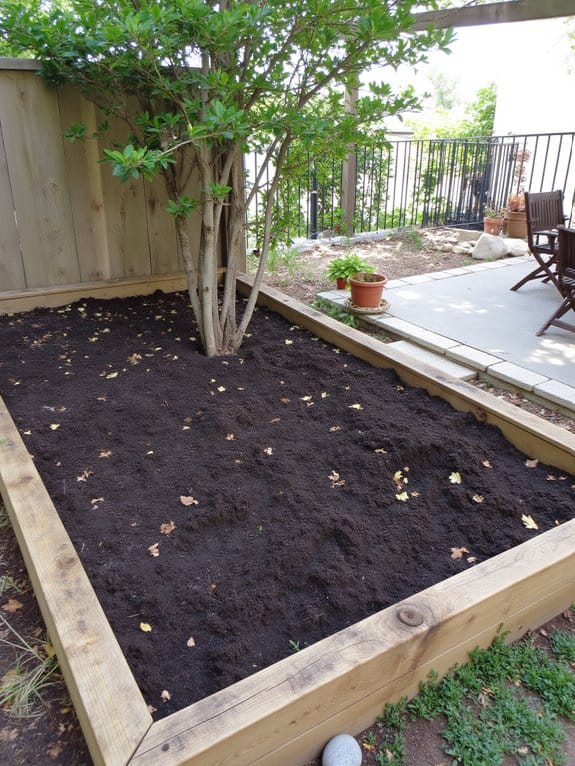
Choosing the right soil and ensuring proper drainage are essential for the success of your elevated garden beds.
I recommend using a mix of high-quality potting soil, compost, and perlite for ideal nutrients and aeration.
Don’t forget to include drainage holes at the bottom of your beds; this prevents water from pooling and keeps your plants healthy and thriving.
Happy gardening!
Tips for Maintaining Your Elevated Garden Beds
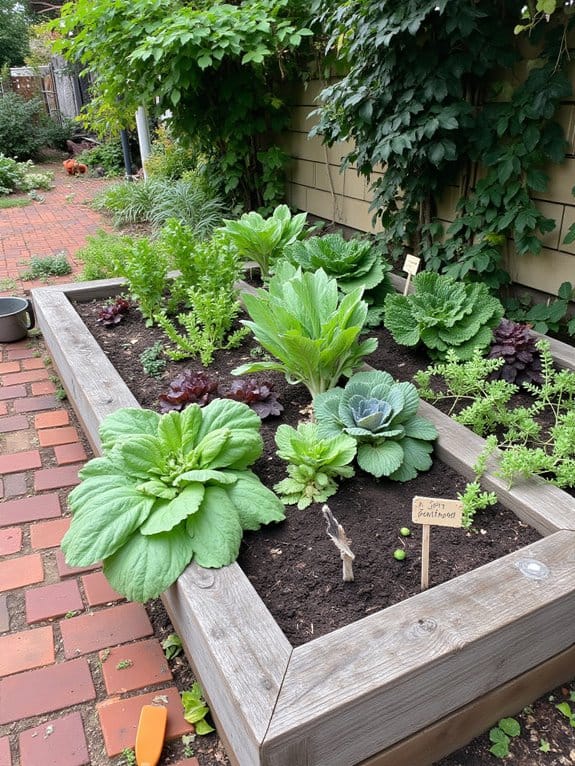
Although maintaining elevated garden beds may seem intimidating at first, it’s actually quite straightforward once you establish a routine.
I water my plants regularly, ensuring the soil stays moist but not soggy. I also remove weeds promptly to prevent competition for nutrients.
Additionally, I check for pests, and I’m vigilant about fertilizing when necessary. A little effort goes a long way in keeping my garden thriving!
Incorporate Seating Into Your Elevated Garden Design
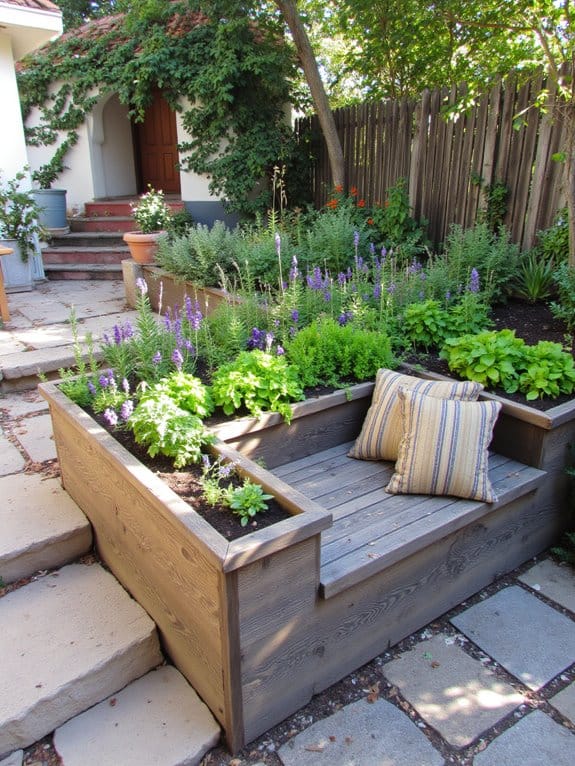
When I design my elevated garden, I always think about how to incorporate seating, as it transforms the space into a welcoming retreat.
I love adding rustic benches or cozy chairs that blend with the greenery. This not only encourages relaxation but also creates a perfect spot for enjoying my plants.
A little seating goes a long way in enhancing the overall vibe!
Make Your Elevated Garden Eco-Friendly for Wildlife
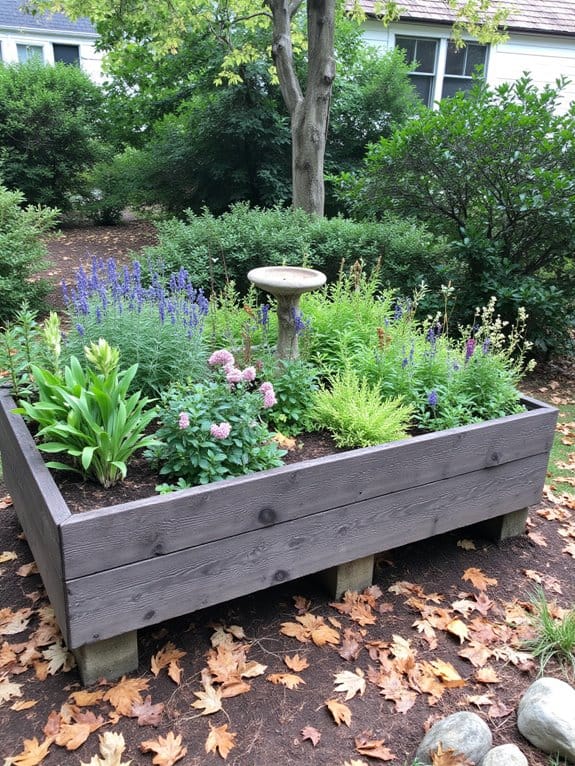
Seating areas in my elevated garden not only invite relaxation but also provide a vantage point to observe local wildlife.
I’ve added native plants, which attract birds and pollinators, creating a thriving ecosystem.
I also use organic practices, avoiding harmful chemicals that could disrupt this balance.
