

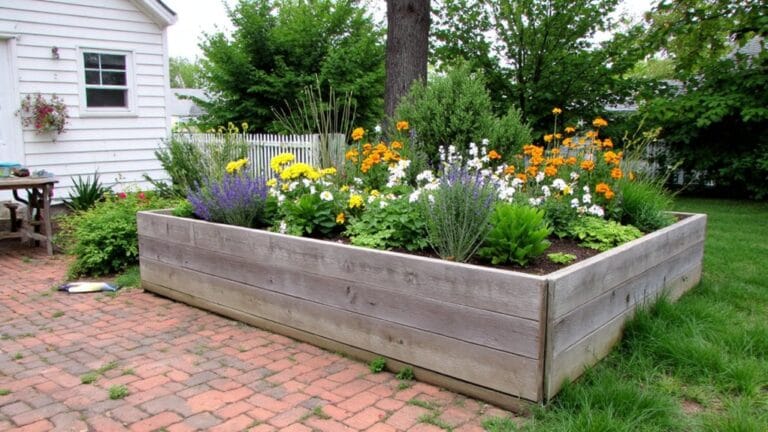
Elevated raised bed flower gardens can truly elevate your outdoor space into a functional and beautiful retreat. They take away the inconvenience of bending down, making it so much easier to plant and maintain your blooms. The design options are truly endless, from tiered structures to unique shapes. If you’re looking to enhance your garden’s potential while keeping things accessible, there are some ideas you’ll definitely want to explore.
Why Choose Elevated Raised Beds for Your Flower Garden
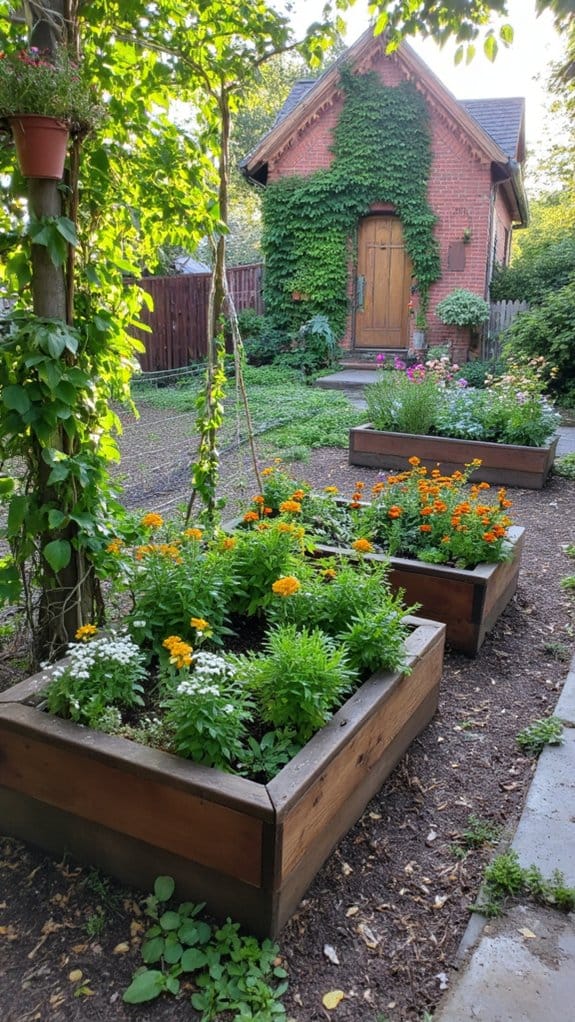
Why should you consider elevated raised beds for your flower garden?
Elevated raised beds make gardening accessible and enjoyable. They reduce strain on your back and knees, allowing me to spend more time tending to my flowers.
Plus, they offer excellent drainage and soil control, which means my plants thrive. You’ll love how easy it’s to create a stunning floral display!
Tips for Soil Preparation in Elevated Raised Beds
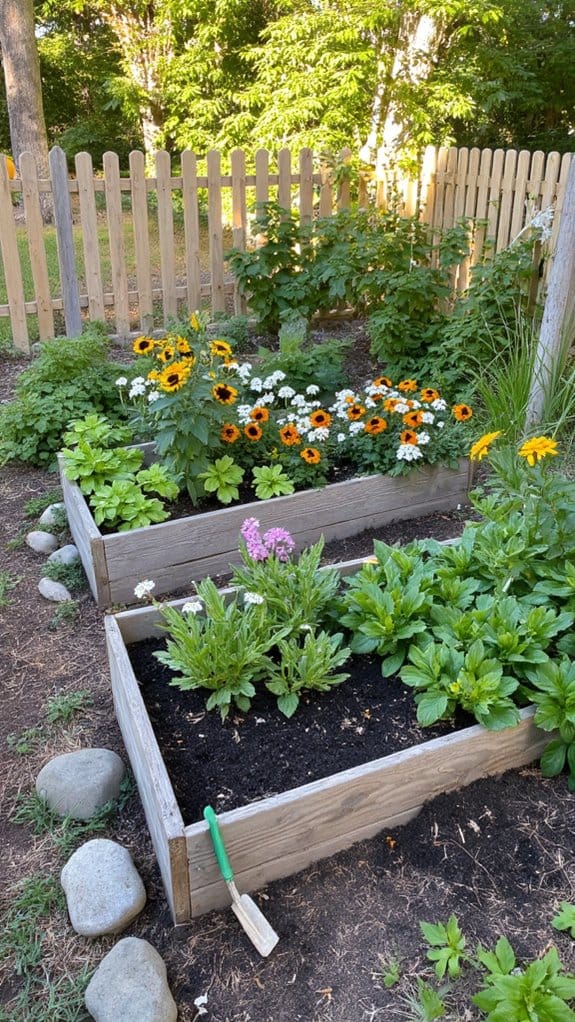
As I prepare my elevated raised beds for planting, I know that proper soil preparation is key to a thriving flower garden.
I start by mixing high-quality compost with garden soil to guarantee good drainage and nutrients.
Adding perlite or vermiculite improves aeration.
Finally, I check the pH level, aiming for slightly acidic to neutral, to create the best environment for my flowers.
How to Water Elevated Flower Beds Effectively

How can I guarantee my elevated flower beds get the right amount of water?
I use a soaker hose or drip irrigation system for consistent moisture.
I check the soil regularly, ensuring it’s damp but not soggy.
Early morning watering helps reduce evaporation.
Finally, I add mulch to retain moisture and regulate temperature, keeping my plants happy and thriving.
Designing Your Elevated Raised Bed Layout
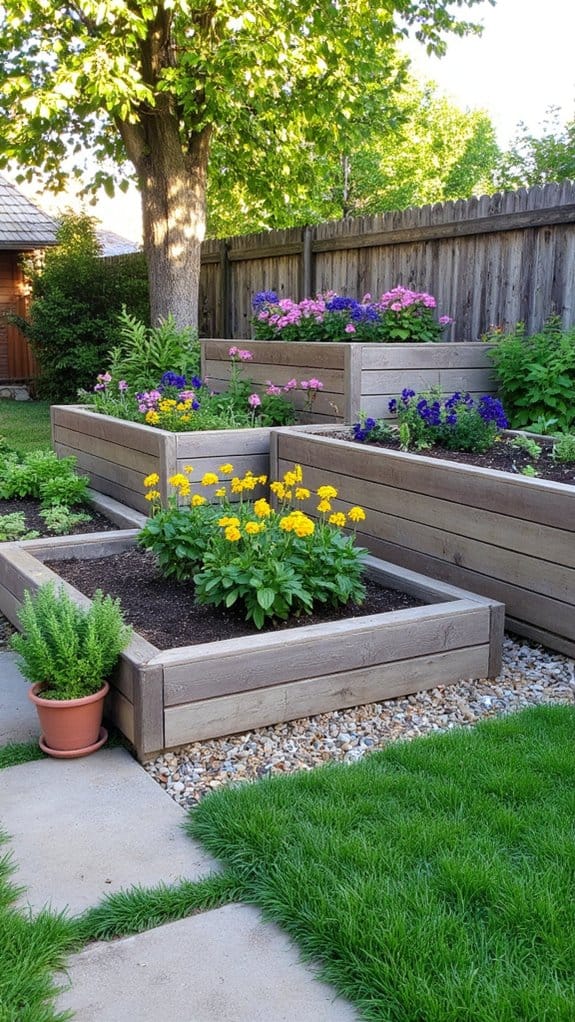
When I design my elevated raised bed layout, I always consider the space’s sunlight exposure and the plants’ growth habits.
I like to group plants with similar light and water needs together. Additionally, I make certain there’s enough space between beds for easy access.
Finally, I visualize the height and color combinations, creating a visually appealing and functional garden that thrives beautifully.
Using Trellises for Vertical Flower Growth
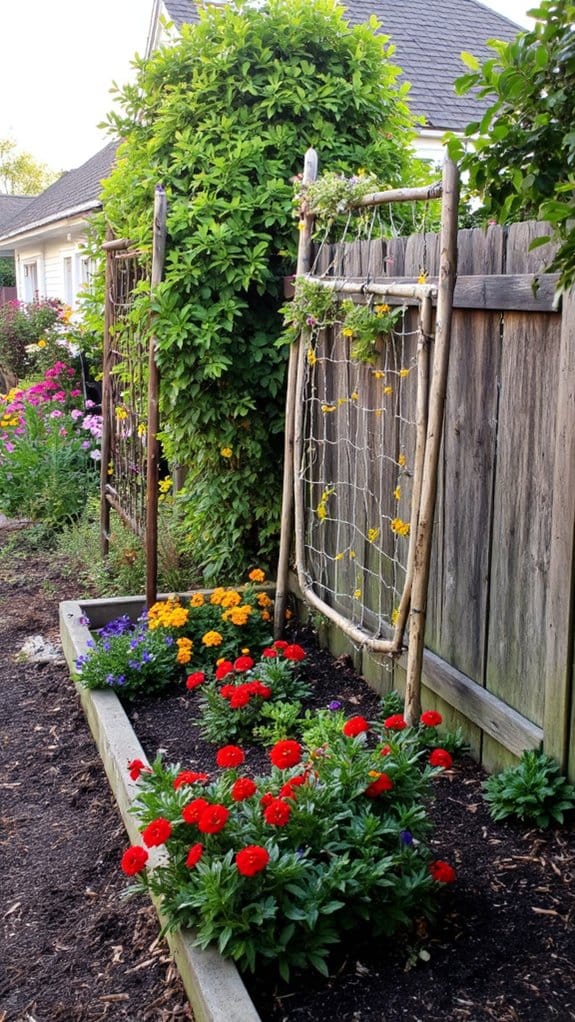
While I love the beauty of sprawling flowers, I’ve found that using trellises can transform my garden into a vertical paradise.
They not only save space but also add dimension and intrigue. Climbing flowers like sweet peas and morning glories flourish on them, creating stunning visual displays.
Plus, they promote better air circulation, which keeps my plants healthy and vibrant.
Creative Color Combinations for Flower Planting
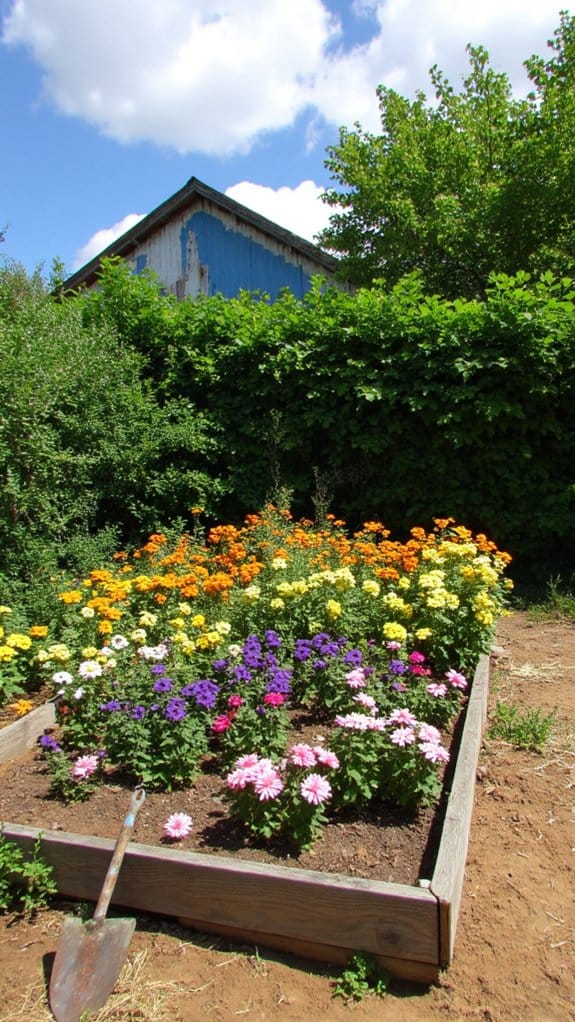
What makes a flower garden truly stand out? It’s all about color combinations!
I love mixing bold hues like deep purple with bright yellow, creating a vibrant contrast. Pastels, like soft pinks and whites, can evoke a dreamy atmosphere.
Don’t shy away from experimenting! Pairing complementary colors not only enhances beauty but also draws attention to your blooms, making your garden unforgettable.
Companion Planting: Which Flowers Thrive Together?
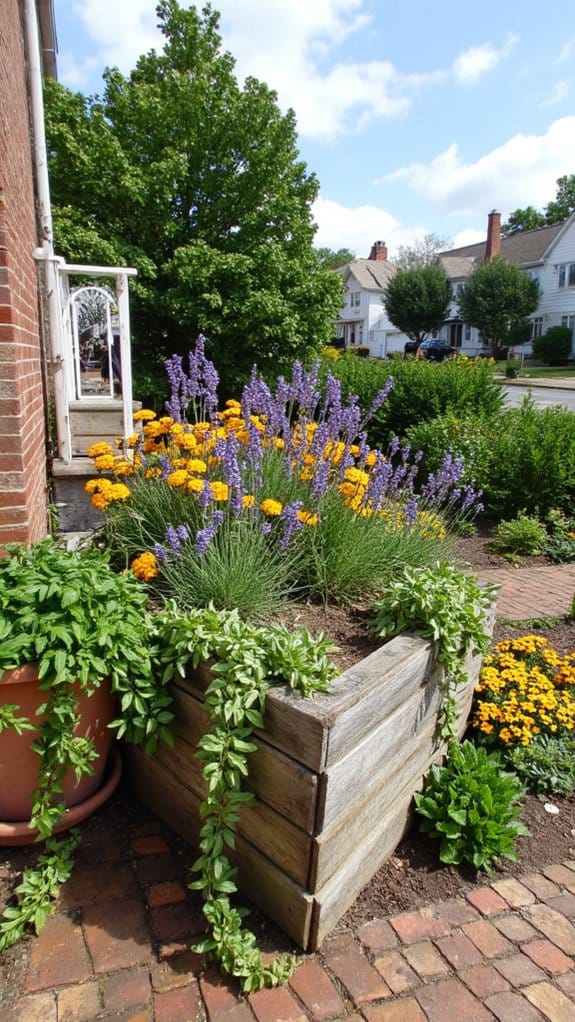
Have you ever wondered which flowers flourish together in a raised bed?
I’ve found that planting marigolds with zinnias boosts both their growth and vibrancy.
Similarly, nasturtiums and sunflowers create a beautiful, mutually beneficial environment.
Nasturtiums and sunflowers cultivate a vibrant, supportive atmosphere in your garden.
Pairing these flowers not only enhances your garden’s aesthetics but also promotes healthier plants.
Experimenting with these combinations can lead to a stunning, thriving flower garden!
Seasonal Flower Selection for Continuous Blooms
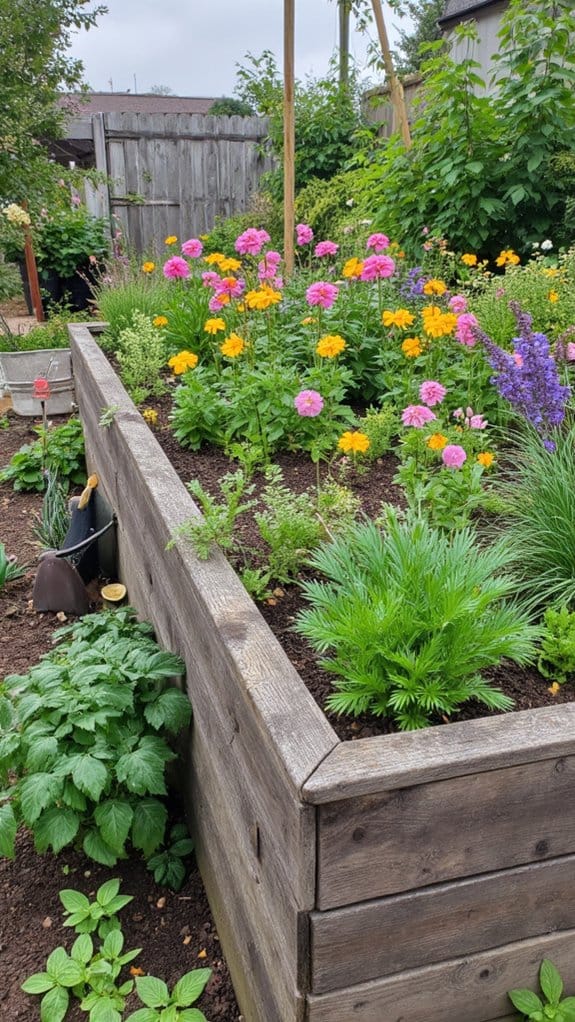
To guarantee your raised bed flower garden remains vibrant throughout the growing season, it’s essential to choose flowers that bloom at different times.
I love mixing early bloomers like pansies with mid-season favorites such as zinnias, and late bloomers like asters.
This way, I enjoy a continuous display of color and life, ensuring my garden always looks its best.
Fertilizing Your Elevated Flower Garden: Tips You Need to Know
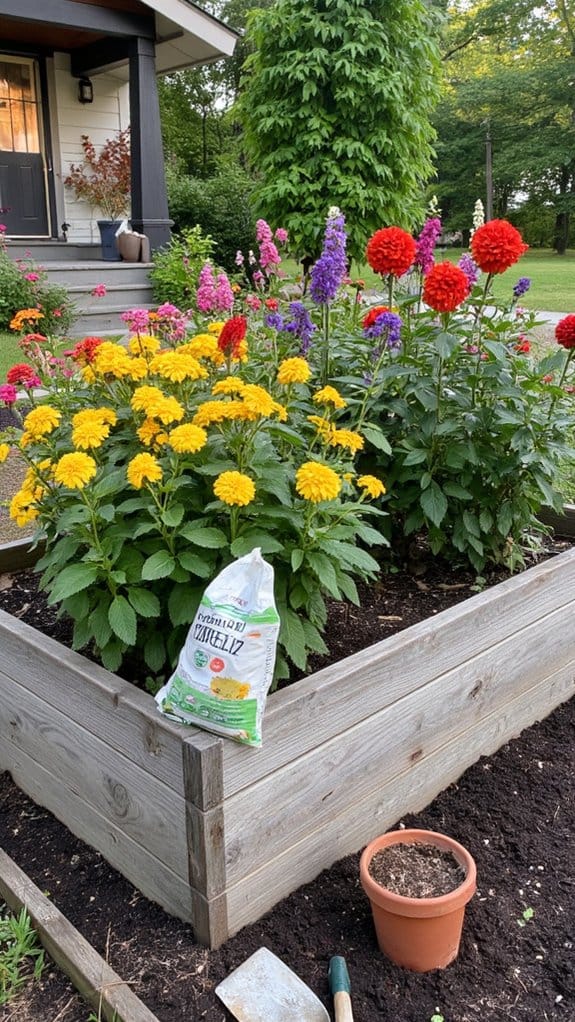
Although it may seem intimidating at first, fertilizing your elevated flower garden is essential for promoting healthy growth and vibrant blooms.
I recommend using a balanced, slow-release fertilizer to nourish your plants over time. Apply it in early spring and again mid-season, following package instructions.
Don’t forget to water the soil afterward; this helps the nutrients reach the roots effectively.
Happy gardening!
Pest Control Strategies for Raised Bed Flower Gardens
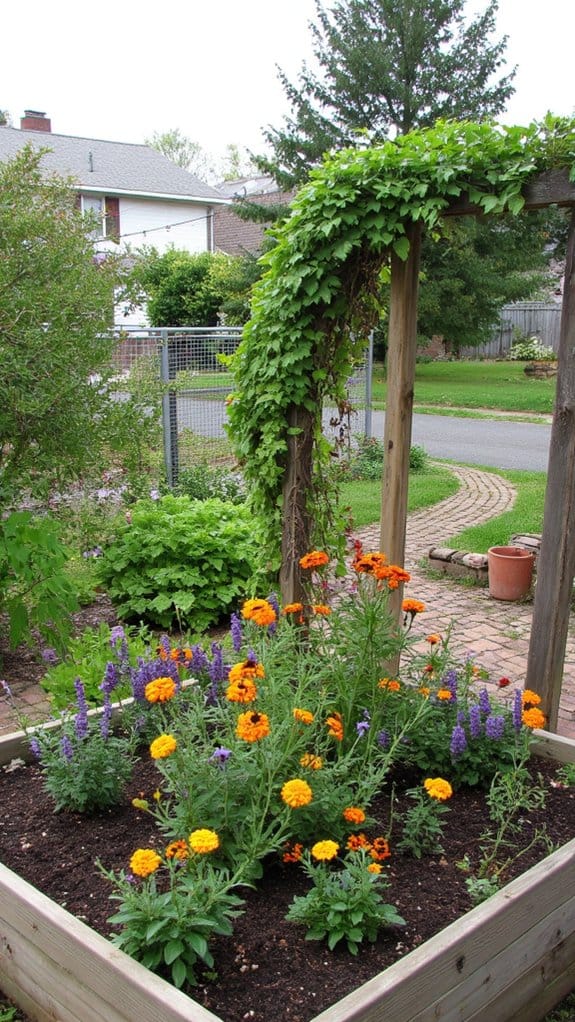
While tending to my raised bed flower garden, I’ve learned that managing pests can be just as essential as nurturing the plants themselves.
I’ve found that companion planting works wonders; marigolds deter aphids, while basil keeps flies at bay.
Additionally, I use natural insecticides like neem oil and regularly check for signs of trouble, ensuring my flowers thrive without unwanted guests.
Creating a Pollinator-Friendly Flower Garden
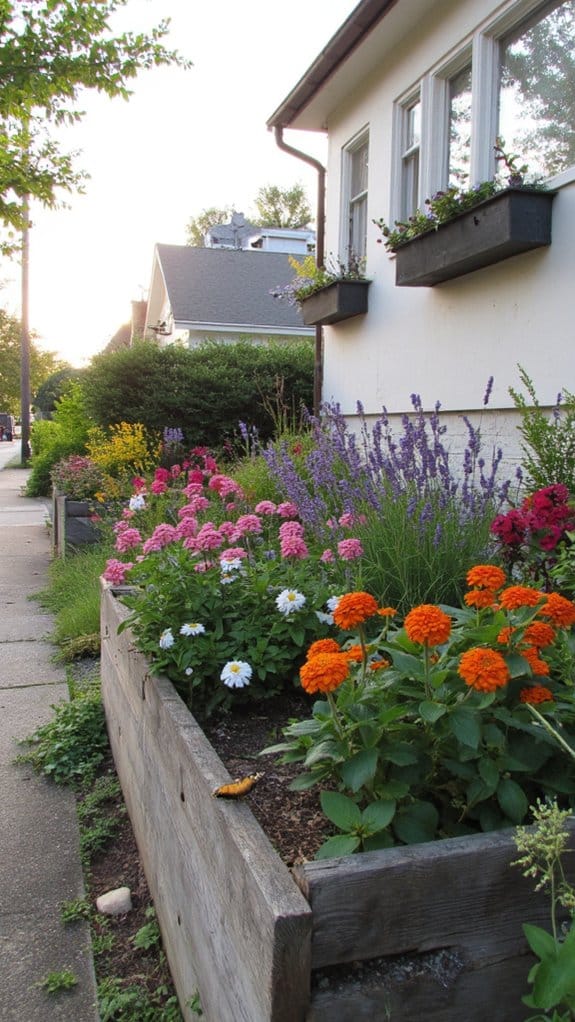
Creating a pollinator-friendly flower garden not only supports crucial ecosystems but also enhances the beauty of my raised beds.
I choose native plants like coneflowers and lavender that attract bees and butterflies. I avoid pesticides and provide diverse blooms throughout the seasons.
Using Decorative Edging to Beautify Your Raised Beds
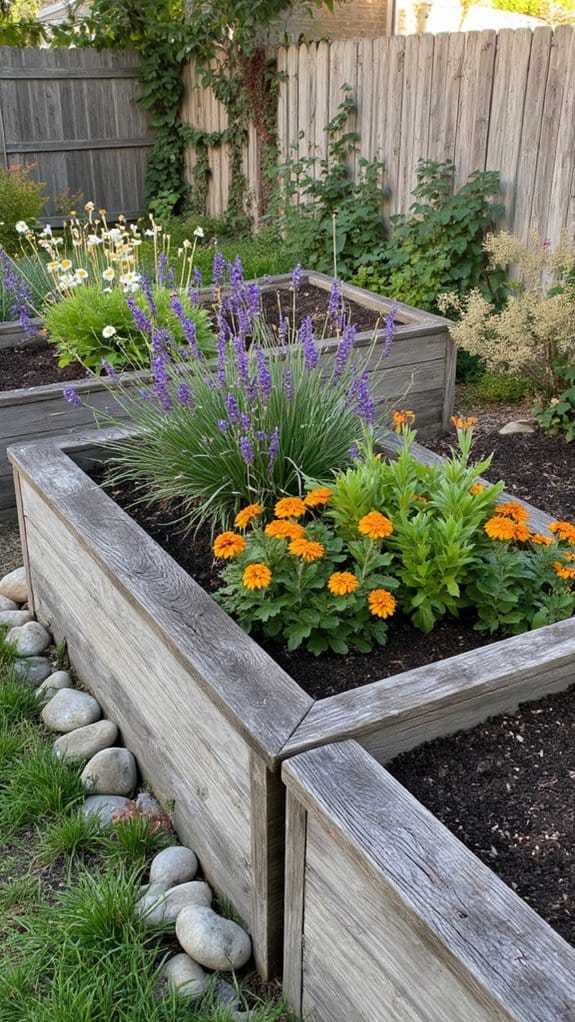
To enhance the visual appeal of my raised beds, I’ve discovered that decorative edging can make a significant difference.
I’ve experimented with various materials like wooden planks, bricks, and even metal strips. Each option adds a unique charm and helps define the garden’s boundaries.
Plus, it keeps the soil in place while preventing weeds, making my gardening experience even more enjoyable.
Integrating Edibles Into Your Elevated Flower Beds
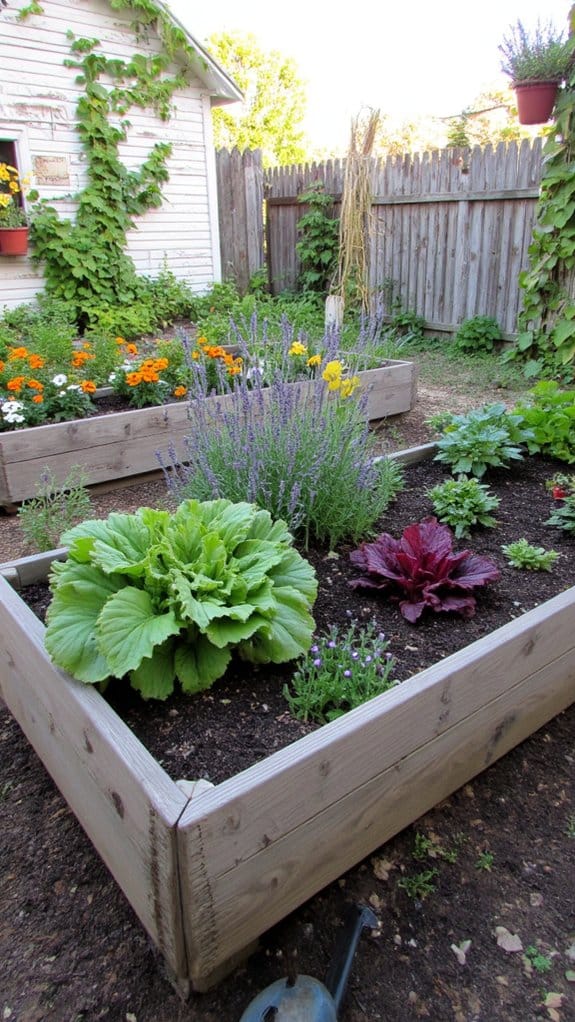
Integrating edibles into my elevated flower beds not only adds diversity but also makes my garden more functional.
I love mixing vibrant flowers with herbs like basil and chives, creating an eye-catching display that’s also useful in the kitchen.
Plus, the elevated design makes it easy to tend to both the flowers and the edibles, enhancing my gardening experience.
Adding Decorative Elements to Your Elevated Raised Beds
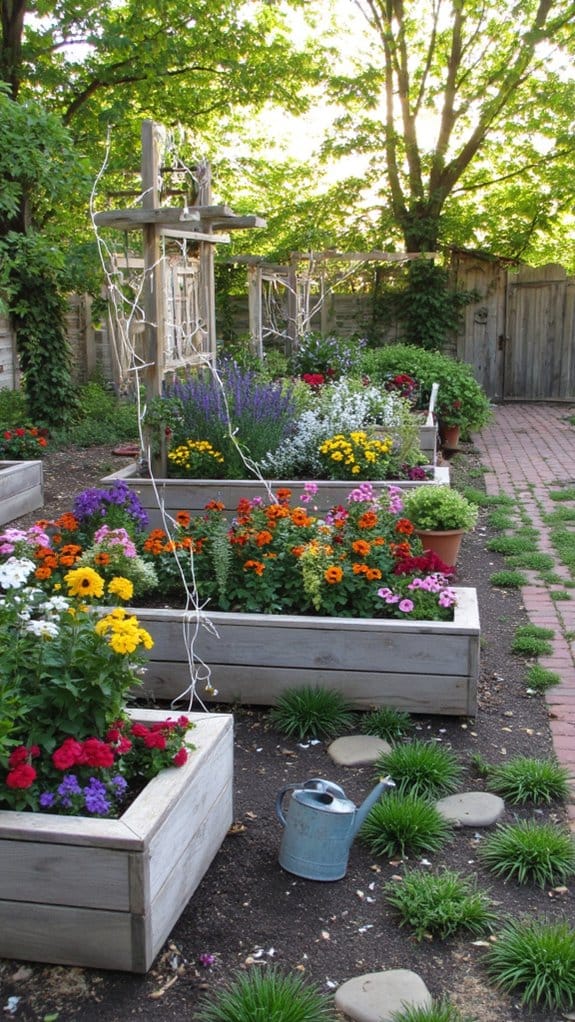
How can I make my elevated raised beds even more inviting?
I love adding decorative elements like colorful pots, twinkling fairy lights, and charming garden statues.
A vibrant trellis or a rustic wooden sign can enhance the aesthetic too.
Incorporating these features not only beautifies my garden but also creates a delightful atmosphere, making it a perfect spot to relax and enjoy nature.
Seasonal Maintenance Tips for Elevated Flower Beds
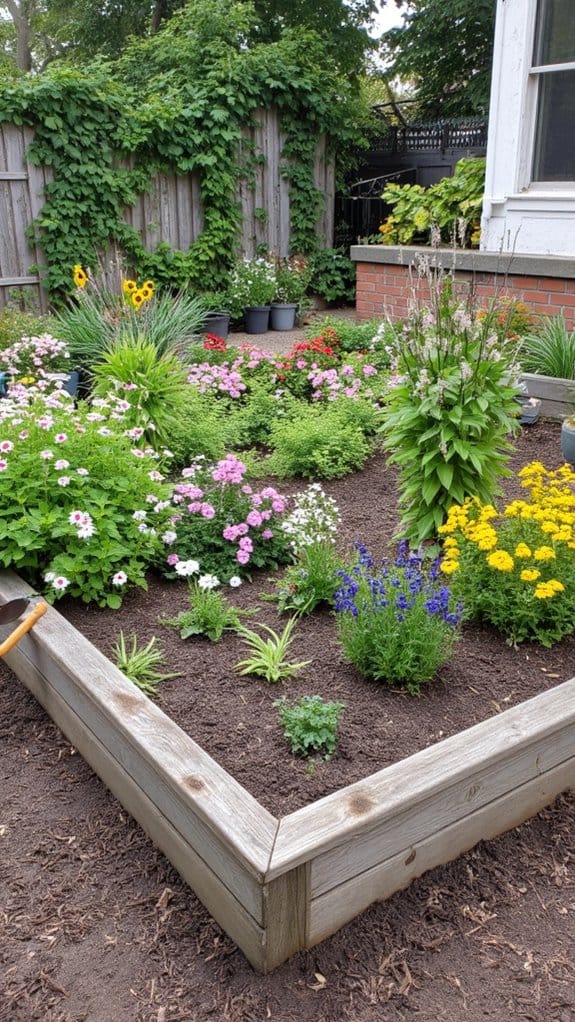
As the seasons change, keeping my elevated flower beds thriving requires a bit of attention and care.
In spring, I’m careful to remove any debris and refresh the soil.
During summer, I monitor moisture levels and deadhead flowers regularly.
In fall, I clear out spent plants and add mulch for insulation.
Winter calls for protection from harsh weather and occasional watering.
DIY Elevated Raised Bed Plans for Different Spaces
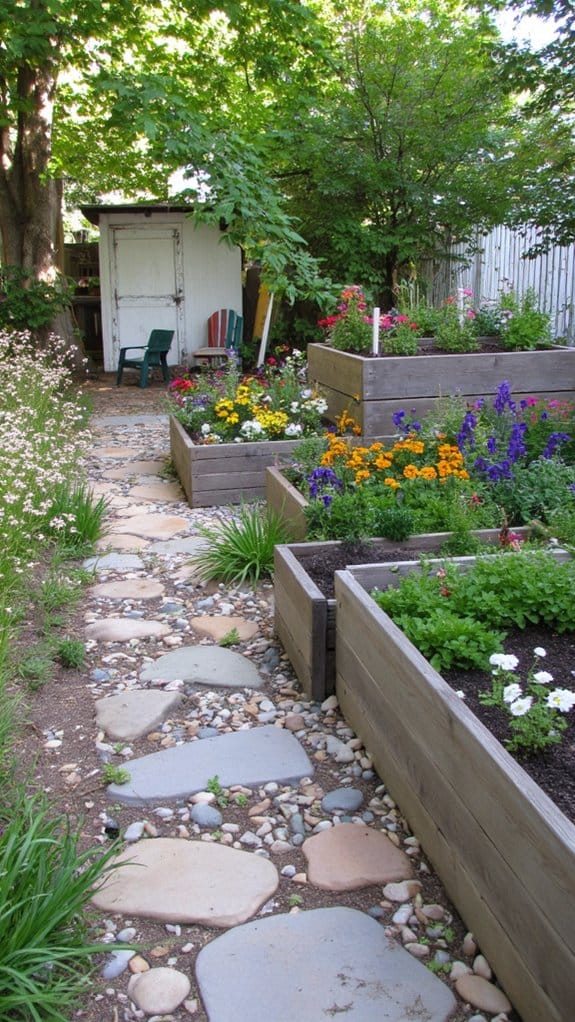
When I decided to create elevated raised beds, I quickly realized that the design can vary greatly depending on the space you have available.
Designing elevated raised beds requires adapting to your available space, ensuring both functionality and accessibility.
For smaller areas, I built compact, rectangular beds that fit snugly against walls.
In larger spaces, I opted for wider, free-standing beds.
Each design allowed me to maximize planting potential while ensuring easy access for maintenance and harvesting.
Maximizing Space: Using Elevated Beds in Small Urban Gardens

Even though urban gardens often come with space constraints, I’ve found that elevated beds can transform these small areas into vibrant floral havens.
By stacking plants vertically, I maximize every inch of my garden. These beds not only save space but also make maintenance easier.
Plus, they add a beautiful touch at eye level, making my garden feel more inviting and lush.
Showcasing Your Elevated Flower Garden With Photography Tips
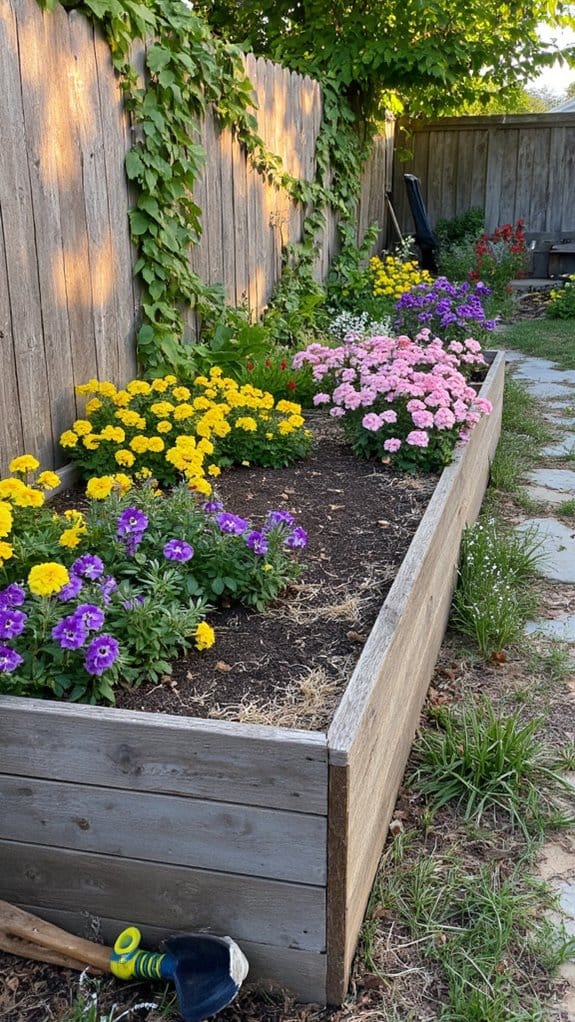
How can I best capture the beauty of my elevated flower garden?
I focus on natural light, shooting early in the morning or late afternoon for the softest glow.
I experiment with different angles, getting close to highlight unique flowers.
Using a shallow depth of field helps blur the background, making my blooms pop.
Finally, I don’t forget to include some garden context!
How to Create a Stunning Evening Display With Garden Lighting

Transforming your elevated flower garden into a magical evening retreat is all about the right lighting.
I love using string lights draped between the beds for a soft glow. Solar-powered lanterns scattered throughout create a whimsical vibe.
Don’t forget to spotlight your favorite blooms with garden spotlights; they really pop at night.
With the right lighting, your garden becomes a nighttime wonderland.
Color Psychology: Choosing Flowers for Your Elevated Garden
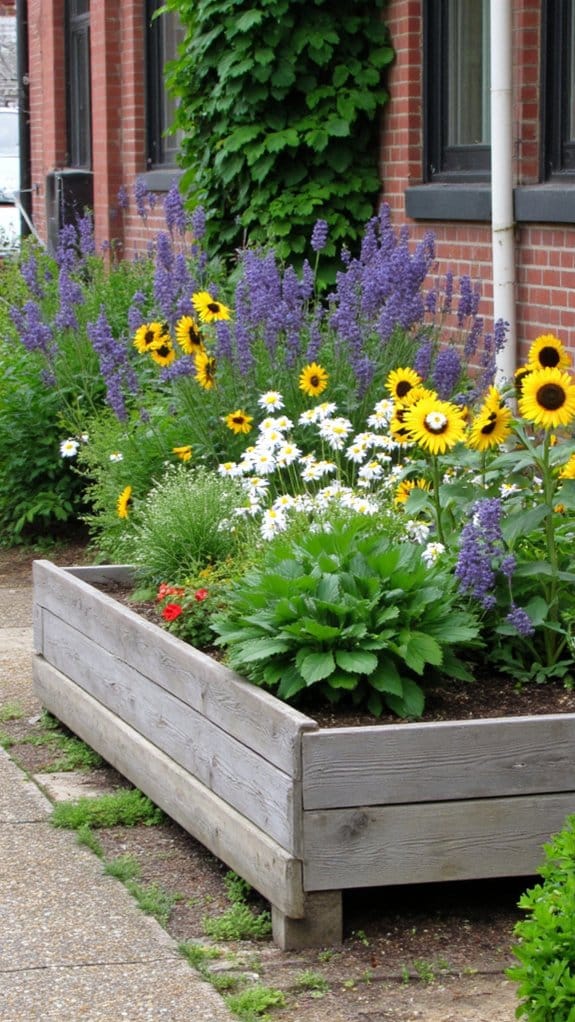
When selecting flowers for your elevated garden, I often consider the psychology of color, as it can greatly impact the mood and atmosphere of the space.
For instance, vibrant reds and yellows evoke energy and cheerfulness, while blues and purples create a calming effect.
Creating a Themed Flower Garden With Elevated Beds

What if you could design a flower garden that tells a story or evokes a specific feeling?
I love creating themed elevated beds, like a cottage garden bursting with daisies and lavender or a tropical retreat with vibrant hibiscus and ferns.
