


When designing flower beds along your home, it’s essential to create a cohesive look that complements your personal style and enhances your landscape. Choosing the right plants and arrangements can turn ordinary spaces into beautiful focal points. From perennials to seasonal blooms, there are so many possibilities to explore. Let’s explore some inspiring ideas that can elevate your home’s exterior while ensuring it remains both functional and beautiful.
Choosing the Right Location for Your Flower Beds
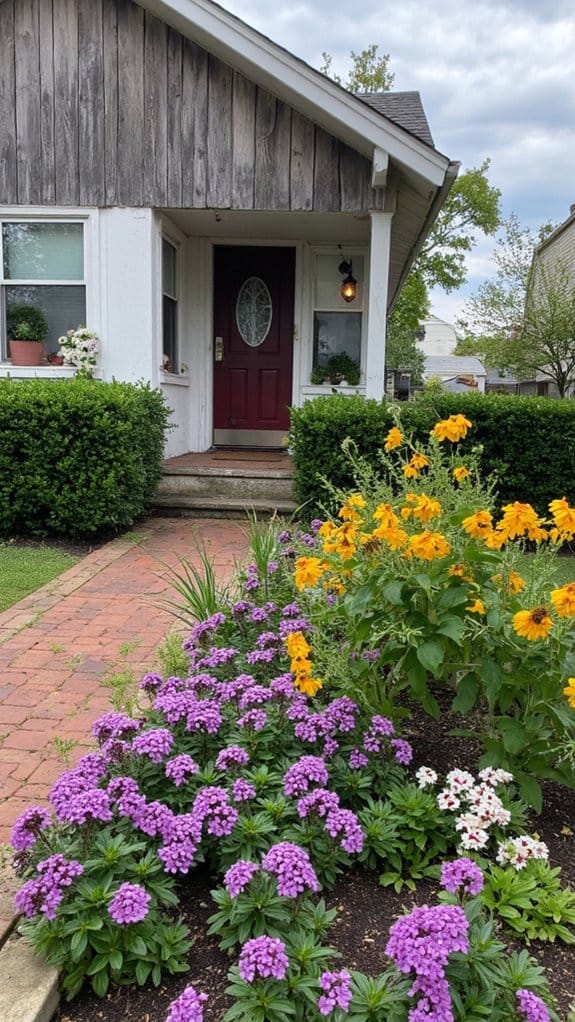
When I choose the right location for my flower beds, I often consider three key factors: sunlight, drainage, and visibility.
I look for areas that receive at least six hours of sunlight daily, ensuring my plants thrive. Good drainage keeps roots healthy, preventing waterlogging.
Finally, I position flower beds where they can be easily seen, adding beauty and charm to my yard.
Consider Your Home’s Architectural Style
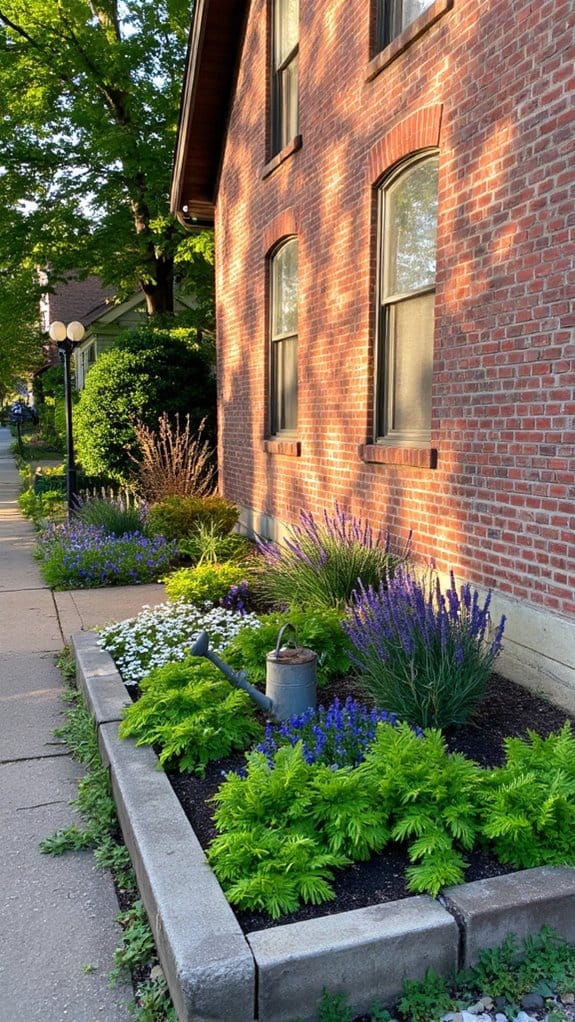
As I plan my flower beds, I always take my home’s architectural style into account, since it greatly influences the overall aesthetic.
For instance, a modern home looks stunning with sleek, minimalist plantings, while a traditional house benefits from classic blooms and structured layouts.
Matching the flower bed design to my home’s style creates a cohesive, inviting look that truly enhances my property’s charm.
Select Seasonal Flowers for Your Flower Beds

Choosing the right seasonal flowers for my flower beds not only complements my home’s architectural style but also guarantees vibrant colors and textures throughout the year.
I love mixing perennials and annuals for variety. In spring, I opt for tulips and daffodils, while summer calls for zinnias and marigolds.
As autumn arrives, I enjoy planting chrysanthemums and asters for lasting beauty.
Create a Color Palette to Complement Your Home

To guarantee my flower beds harmonize with my home’s exterior, I carefully create a color palette that reflects its style.
I consider the hues of my siding, roof, and trim, selecting flowers that either complement or contrast beautifully.
Incorporate Perennials for Long-Lasting Beauty
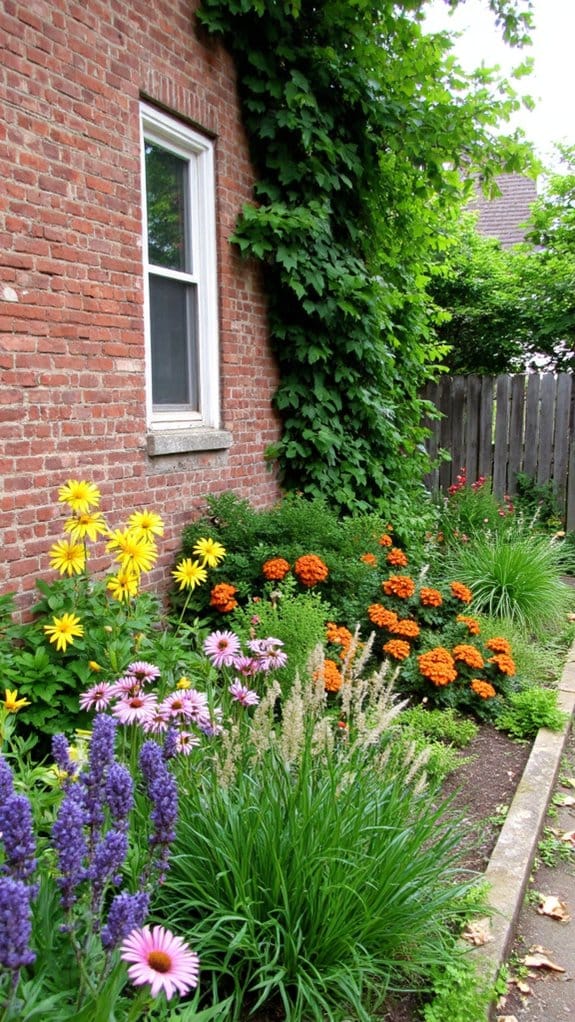
Incorporating perennials not only adds long-lasting beauty to my flower beds but also reduces the need for frequent replanting.
Incorporating perennials enhances flower beds with enduring beauty and lessens the need for constant replanting.
I love choosing varieties that bloom at different times, ensuring my garden stays vibrant throughout the seasons.
Plus, their established root systems make them resilient against pests and drought.
With perennials, I can enjoy a lush landscape with minimal effort year after year.
Add Annuals for Instant Color and Impact

While perennials create a stable foundation in my flower beds, adding annuals brings an instant burst of color and excitement.
I love mixing vibrant petunias and zinnias to draw the eye. They bloom all season long, filling in gaps and creating a lively atmosphere.
Plus, I can easily switch them out each year for something fresh and new to enjoy!
Go Native: Low-Maintenance Flower Bed Ideas
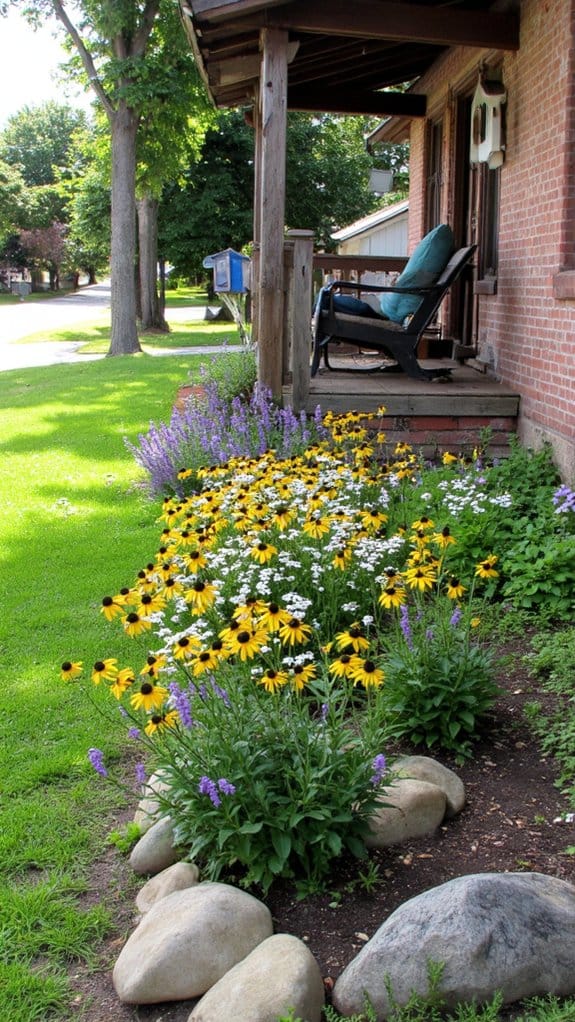
Choosing native plants for your flower beds not only enhances the beauty of your garden but also greatly reduces maintenance efforts.
I love how these plants thrive naturally in our local climate, requiring less water and fewer chemicals.
Plus, they attract beneficial pollinators like butterflies and bees.
Use Edging Materials to Define Your Flower Bed
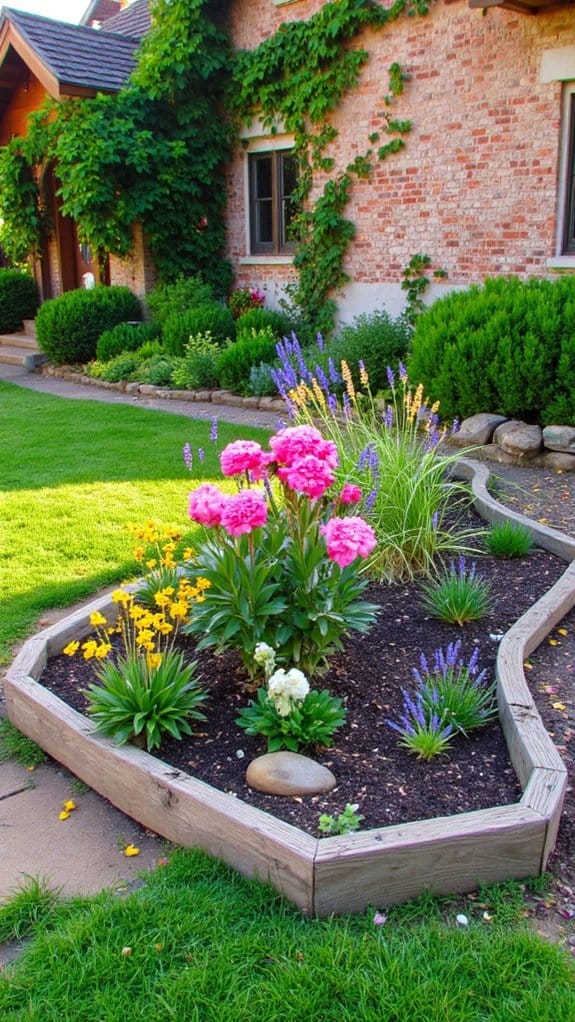
Three key elements can transform your flower bed and give it a polished look: edging materials.
I love using bricks, stones, or even metal to create a clear boundary. Not only do they define the space, but they also help contain soil and mulch, making maintenance easier.
Plus, they add a touch of style that enhances the overall appeal of your garden.
Mix Flowers With Foliage for Added Texture
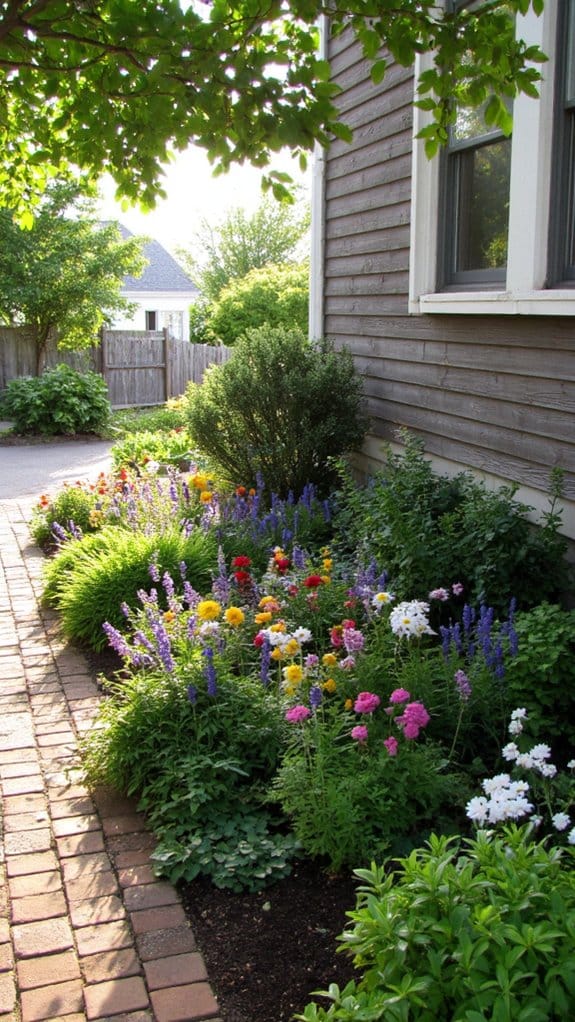
To create a visually stunning flower bed, I often mix vibrant flowers with lush foliage, as this combination adds depth and interest to the landscape.
The contrast between colorful blooms and rich green leaves creates a dynamic effect.
I love choosing different leaf shapes and textures, which enhances the overall look and keeps the garden exciting throughout the seasons.
It’s truly a game changer!
Design a Cottage Garden Look With Flower Beds
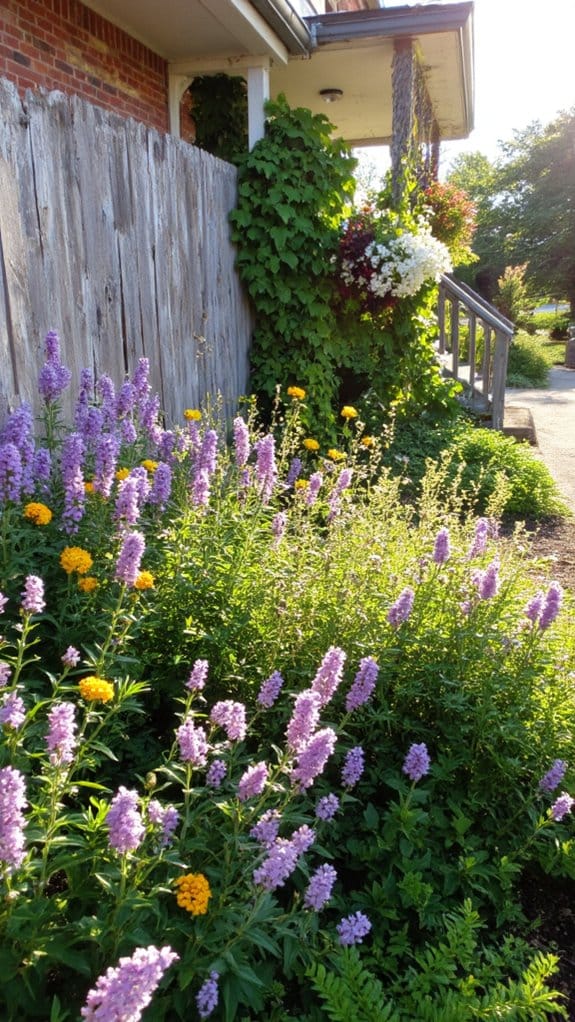
While designing a cottage garden look with flower beds, I find that embracing a relaxed and informal vibe is essential.
I love mixing an array of colorful blooms, like daisies, hollyhocks, and lavender, to create a whimsical feel.
Layering different heights and textures adds depth, while allowing plants to spill over edges gives that charming, lived-in appearance we all adore in cottage gardens.
Fill Empty Spaces With Ground Covers
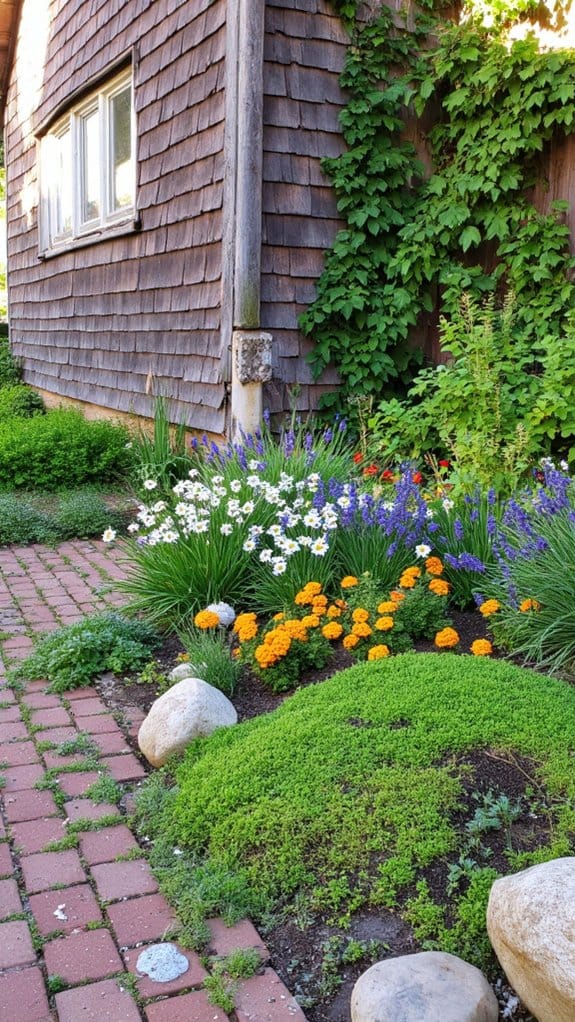
As I explore ways to enhance my garden, filling empty spaces with ground covers proves to be a smart solution.
These low-growing plants not only suppress weeds but also add texture and color. I’ve found varieties like creeping thyme and ajuga work wonders, creating a lush backdrop for my flowers.
Plus, they’re low-maintenance, which is a bonus for my busy schedule!
Add Decorative Elements Like Statues and Trellises
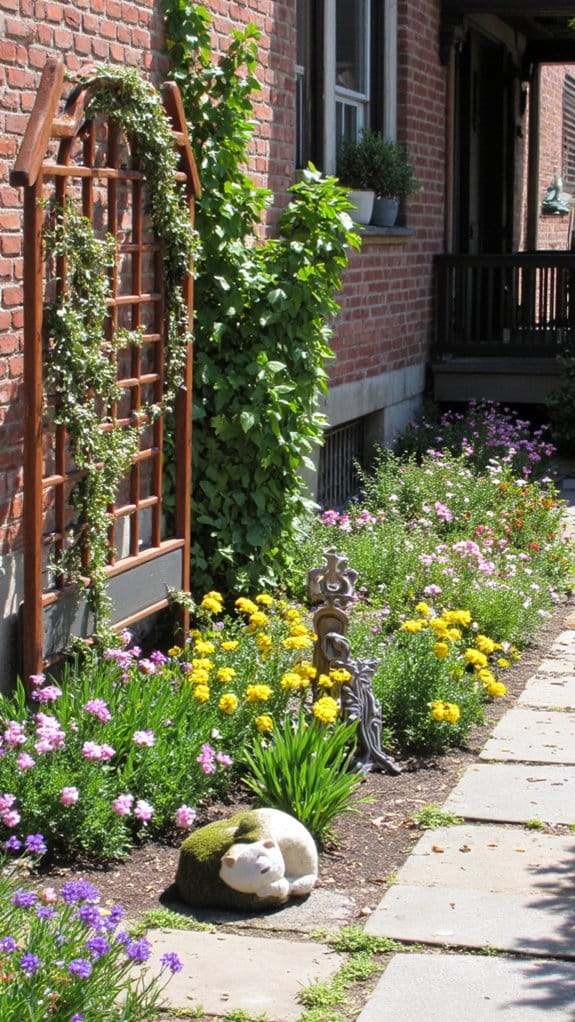
Incorporating decorative elements like statues and trellises can transform a flower bed from ordinary to extraordinary.
I love adding a whimsical statue or a rustic trellis to create visual interest. These features not only enhance the beauty of the flowers but also provide height and structure.
Plus, they invite the eye to explore the garden, making it feel more inviting.
Use Containers for Versatile Flower Bed Design
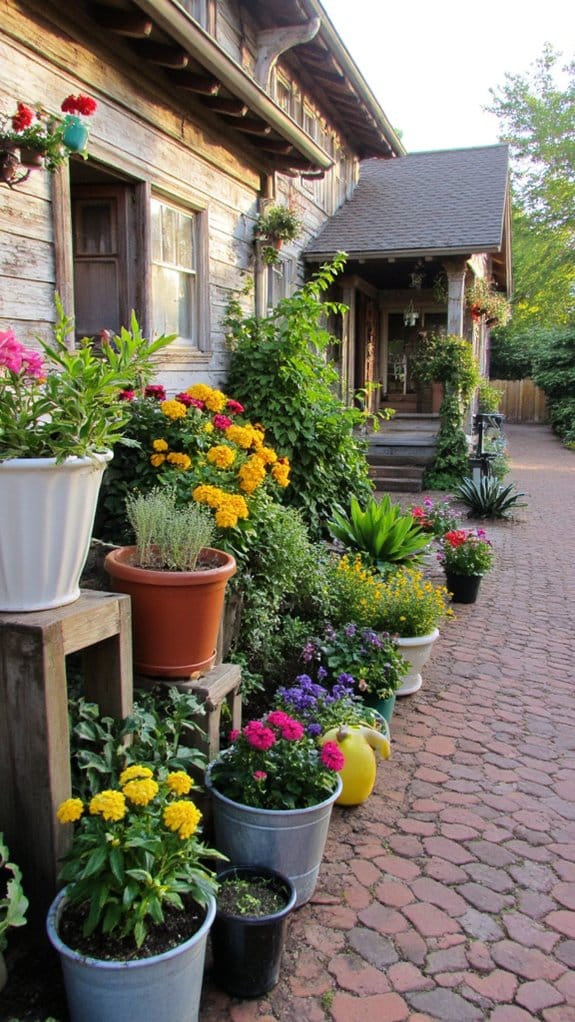
Using containers can really elevate your flower bed design, especially when you’re looking for versatility.
I love mixing different container sizes and materials to create dynamic arrangements. You can easily move them around to change the landscape’s look or adapt to seasonal blooms.
Plus, they’re perfect for small spaces, allowing you to experiment with colors and textures without committing to a permanent layout.
Create Flower Beds for Shade and Sunlight
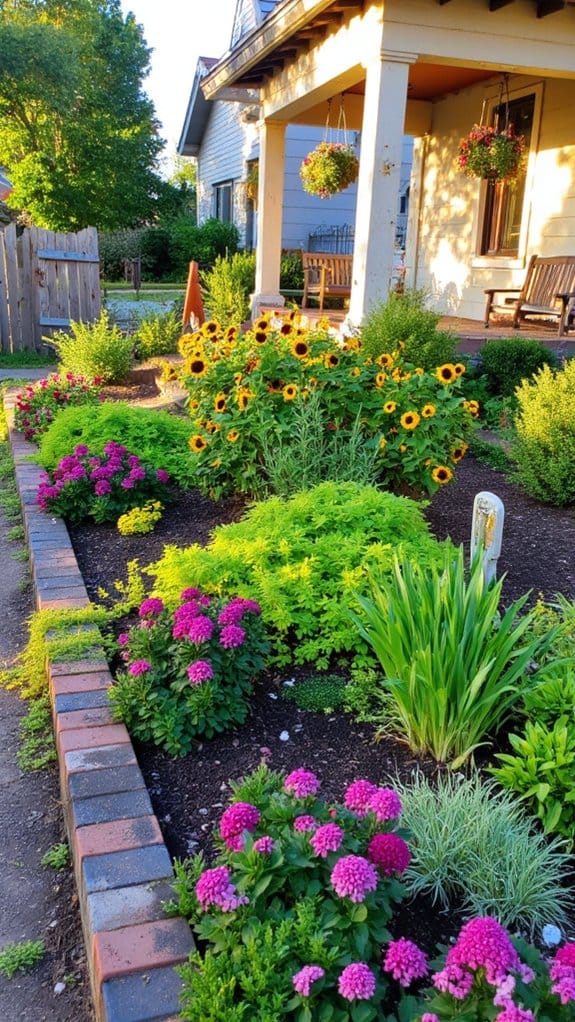
Whether you have a sun-drenched garden or a shady nook, creating flower beds tailored to each light condition can make all the difference.
Tailoring flower beds to sun or shade ensures vibrant blooms in any garden setting.
For sunny areas, I love using vibrant annuals and perennials that thrive in bright light.
In shaded spots, I opt for shade-tolerant plants like hostas and ferns.
This approach guarantees my flower beds flourish beautifully, no matter the light!
Design Pollinator-Friendly Flower Beds
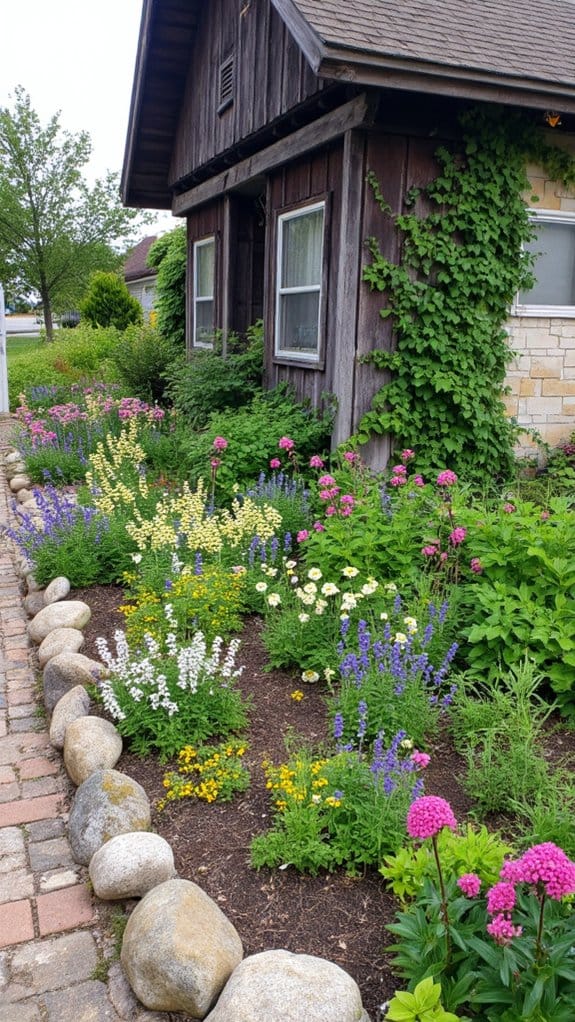
Designing pollinator-friendly flower beds not only beautifies your garden but also supports essential ecosystems.
I love selecting native plants, as they attract bees, butterflies, and other beneficial insects. Incorporating a variety of colors and textures creates visual interest while providing food sources.
Don’t forget to include plants that bloom at different times, ensuring a continuous supply of nectar throughout the growing season.
Utilize Vertical Gardening for Limited Space
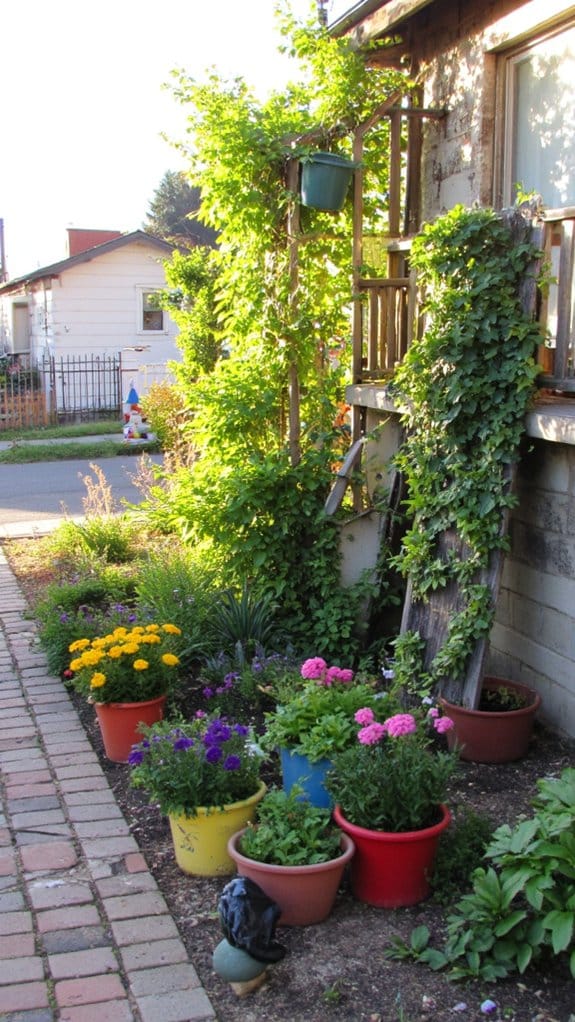
While limited space can feel like a barrier to creating a vibrant garden, vertical gardening offers an effective solution that transforms even the smallest areas into lush displays.
I love using wall planters, trellises, and hanging pots to maximize my space. By layering plants vertically, I not only save ground space but also add depth and visual interest to my flower beds.
Design Pathways to Your Flower Beds

Creating inviting pathways to your flower beds not only enhances accessibility but also adds charm to your garden.
I’ve found that using natural materials like stone or mulch creates a warm, organic feel. Curved paths can soften the look, guiding guests through your blooms.
Plus, incorporating small benches along the way invites relaxation, making your garden a true haven for enjoyment.
Incorporate Aromatic Plants in Your Flower Bed
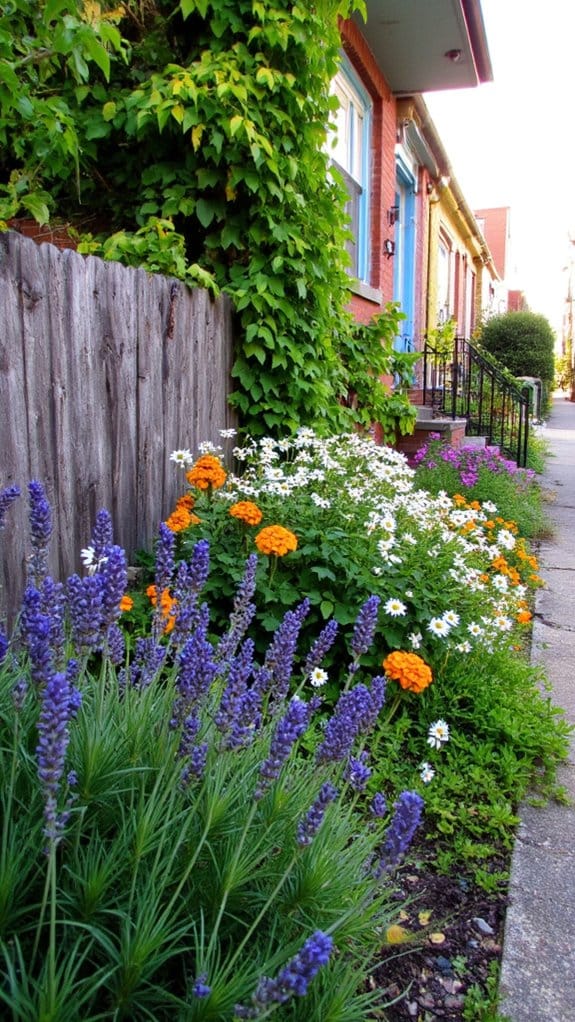
Incorporating aromatic plants into your flower bed not only elevates the sensory experience but also attracts beneficial pollinators.
I love adding lavender, rosemary, and mint for their delightful scents and culinary uses. These plants create a fragrant haven, inviting bees and butterflies while enhancing my garden’s beauty.
Plus, the aroma wafting through the air makes spending time outside even more enjoyable.
Make Your Flower Beds Interesting All Year
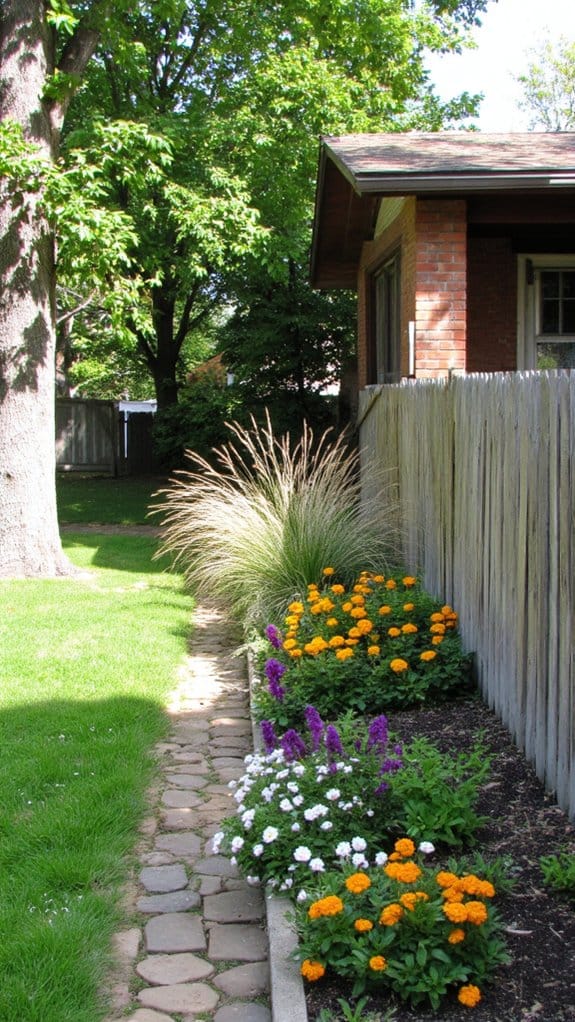
To keep my flower beds enchanting throughout the year, I focus on selecting a mix of plants that bloom in different seasons.
I incorporate early spring bulbs, vibrant summer perennials, and colorful fall foliage to guarantee there’s always something eye-catching.
I also add evergreens for winter interest, allowing my flower beds to maintain texture and beauty, no matter the season.
Choose Low-Water Plants for Drought Resistance

While planning my flower beds, I always consider the importance of drought resistance.
I love incorporating low-water plants like succulents and native grasses. They not only thrive in dry conditions but also add unique textures and colors to my garden.
Choosing these plants helps me conserve water and reduces maintenance, making my flower beds both beautiful and sustainable.
Add Rock or Gravel for a Modern Touch
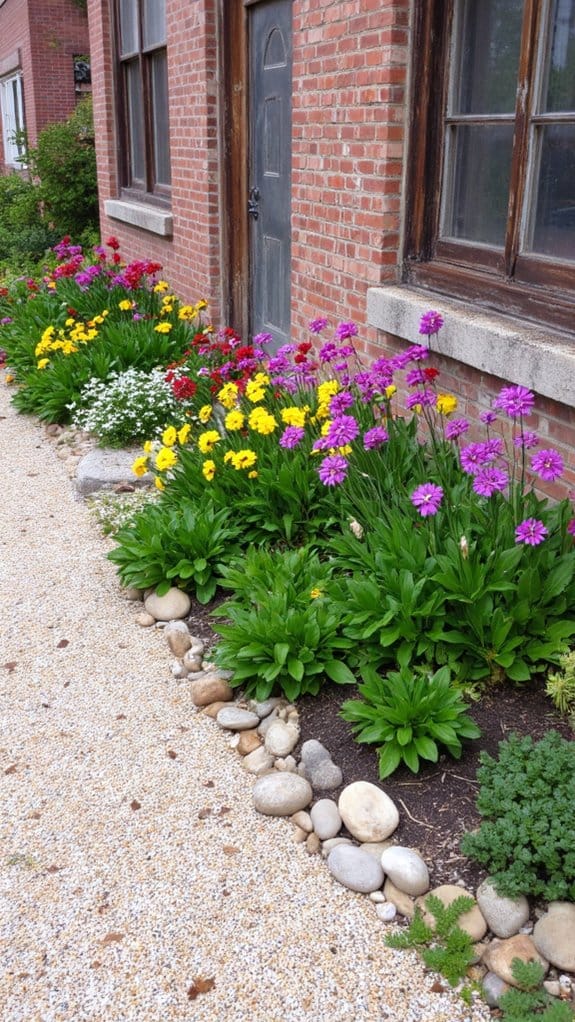
After selecting low-water plants for my flower beds, I found that adding rock or gravel can elevate the overall design.
It creates a sleek, modern aesthetic while reducing weeds and maintenance. I love how the natural textures contrast with vibrant blooms, adding depth.
Plus, gravel’s drainage benefits keep my plants healthy. It’s a simple yet impactful way to enhance my outdoor space.
Edible Flower Beds: Combine Beauty and Function
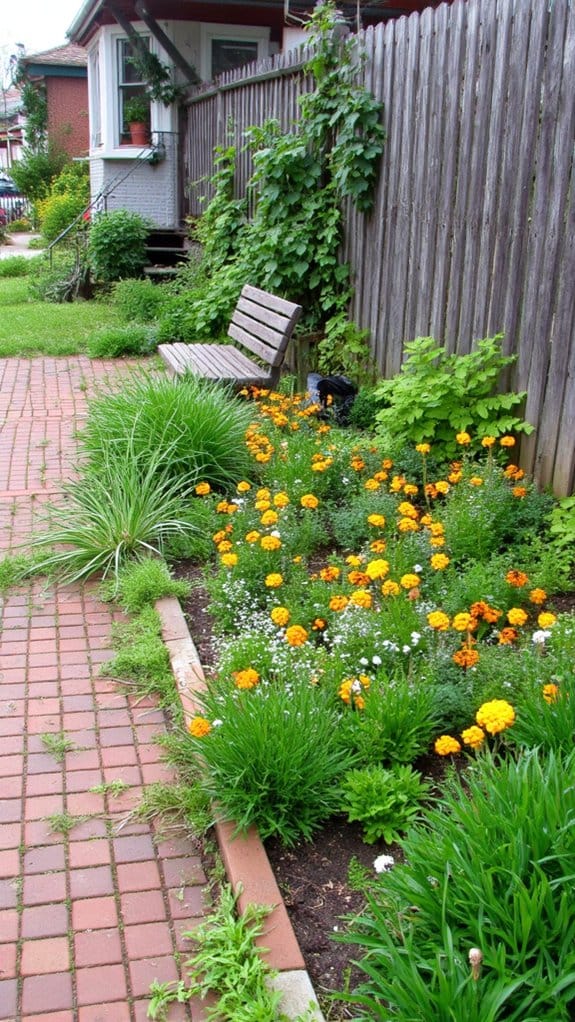
Incorporating edible flowers into my garden has transformed the way I view flower beds, blending beauty with functionality.
I love planting nasturtiums, pansies, and calendulas, which not only brighten my space but also add unique flavors to my dishes.
It’s rewarding to create a vibrant, colorful display while knowing I can enjoy these blooms in salads or as garnishes.
Plan for Easy Maintenance and Care
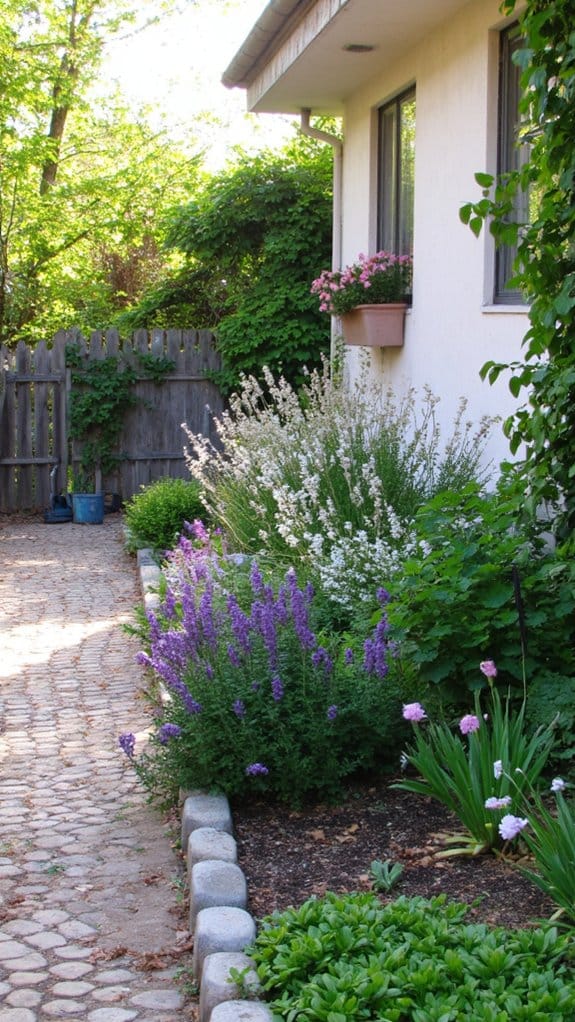
To keep your flower beds looking their best without constant upkeep, I recommend planning for easy maintenance from the start.
Choose drought-resistant plants and group them by water needs to simplify irrigation. Incorporate mulch to suppress weeds and retain moisture.
Finally, opt for perennials that thrive in your climate, reducing the need for replanting each year.
This way, you’ll enjoy beauty with less effort!
Seasonal Flower Bed Maintenance Tips for Longevity

While maintaining a flower bed might seem challenging, a few seasonal tips can make all the difference in ensuring its longevity.
I always start by deadheading spent blooms in spring and mulching in summer to retain moisture.
In fall, I trim back perennials and add compost for nutrients.
Finally, I check for pests regularly to keep my flower bed thriving year-round.
