

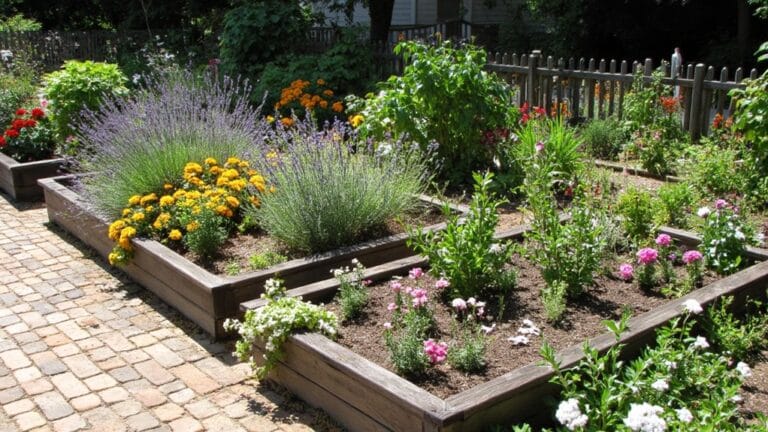
Ready to bring a splash of color to your garden with raised flower beds?
These versatile garden features can transform any outdoor space, from quaint cottage charm to sleek modern vibes.
By mixing colors and textures, you create an inviting atmosphere that also supports local pollinators.
Join me as we explore some inspiring ideas to elevate your garden game.
Let’s get creative with nature’s palette!
How to Choose the Right Raised Flower Bed for Your Garden
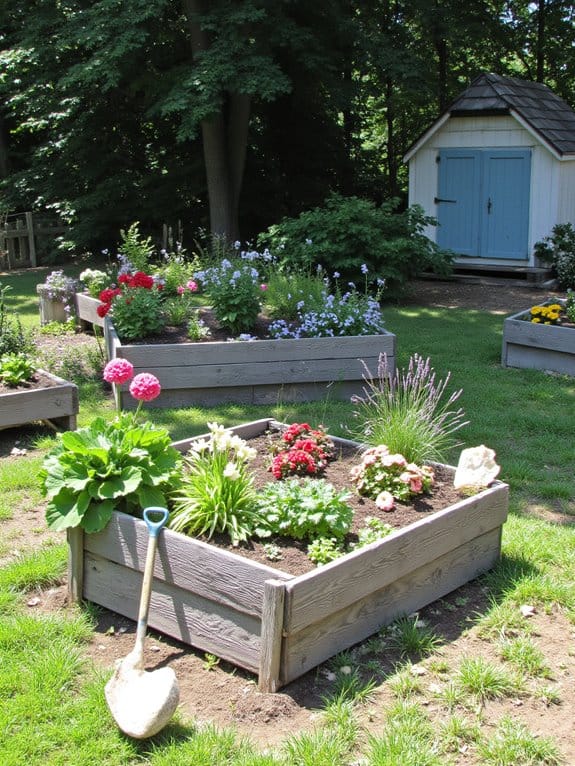
Have you ever wondered how to choose the perfect raised flower bed for your garden?
I’ve found it’s essential to take into account size, materials, and location.
Think about how much space you have and what plants you want to grow.
Choosing durable materials like wood or metal can guarantee longevity.
Finally, place your bed where it gets plenty of sunlight for thriving blooms.
Traditional Flower Bed Designs for Timeless Beauty
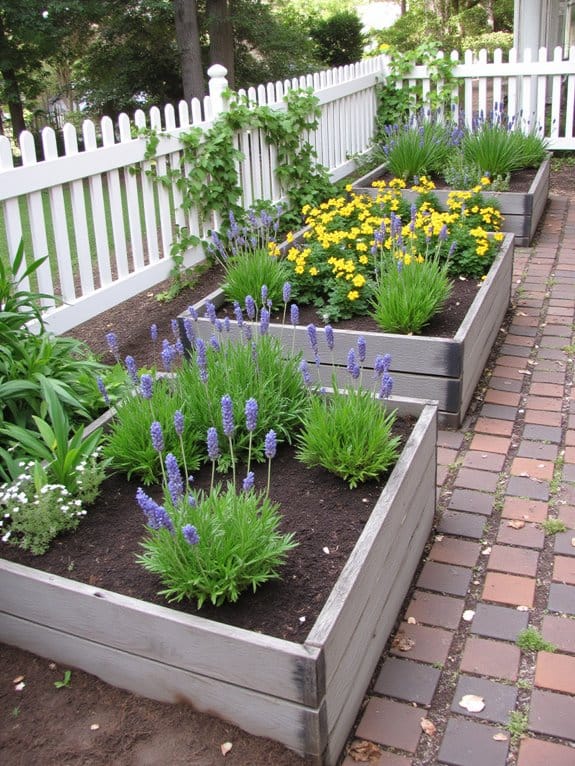
After selecting the right raised flower bed, I love exploring traditional flower bed designs that never go out of style.
Classic patterns, like the cottage garden, fill the space with charming blooms and greenery. Incorporating symmetrical layouts or curved edges adds an elegant touch.
I often choose perennial flowers for lasting beauty, ensuring my garden remains vibrant year after year.
Sleek and Minimalist Raised Bed Ideas
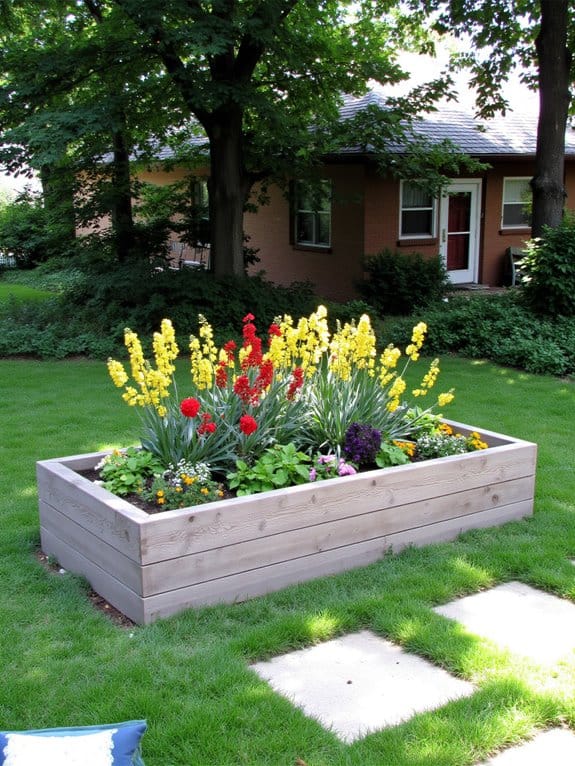
While traditional designs exude charm, I’ve found that sleek and minimalist raised bed ideas offer a modern twist that complements contemporary landscapes beautifully.
Using materials like metal or smooth concrete, these beds create clean lines and an unobtrusive look.
Pairing them with monochromatic plants or textured foliage enhances their appeal, making your garden feel sophisticated yet inviting.
It’s a perfect blend of form and function.
Vertical Gardening Techniques for Small Spaces
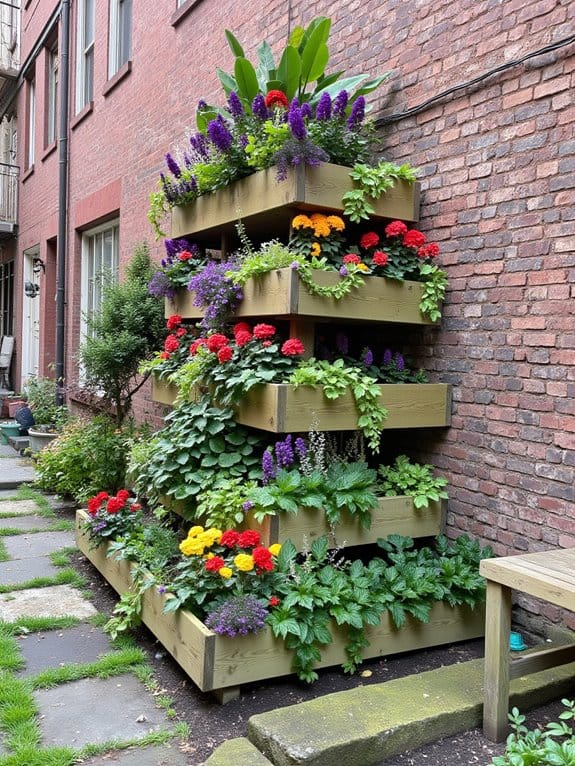
Vertical gardening transforms even the tiniest of spaces into lush, green retreats.
I love using wall-mounted planters and trellises to maximize my gardening area. Hanging pots filled with herbs or flowers add charm while saving ground space.
You can also utilize repurposed pallets for an eye-catching vertical garden.
These techniques not only enhance aesthetics but also create a vibrant, productive environment.
Color Coordination in Your Flower Bed Designs
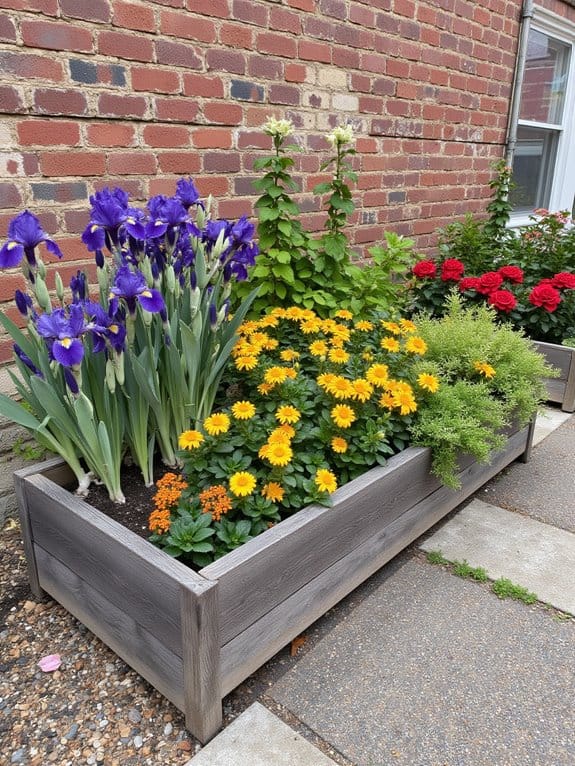
When I design a flower bed, color coordination becomes an essential aspect that can elevate the entire space.
I love mixing complementary colors to create a vibrant display. For instance, pairing bold reds with soft whites adds depth.
I also consider different shades of one color for a more harmonious look. This balance transforms the flower bed into a stunning focal point in my garden.
Planning for Year-Round Color in Your Garden
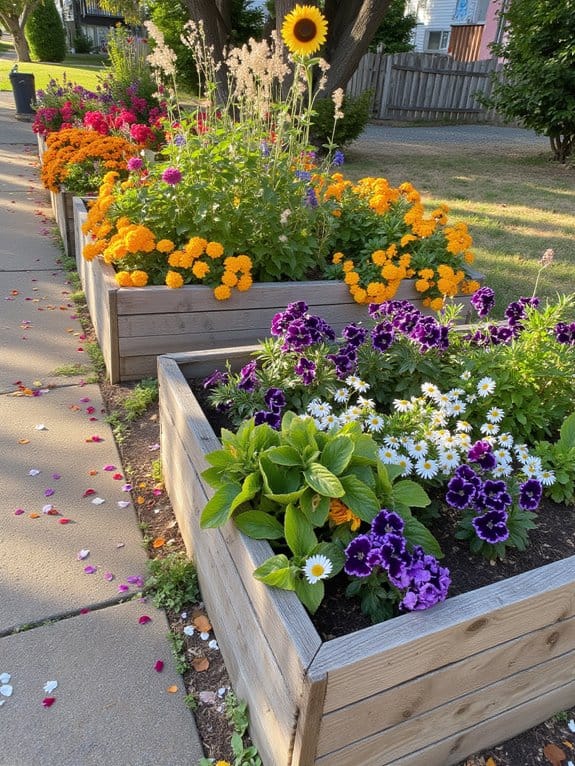
To achieve year-round color in my garden, I focus on selecting a variety of plants that bloom in different seasons.
I mix early spring bulbs, summer perennials, and autumn foliage to guarantee vibrant displays throughout the year.
I also incorporate evergreen plants for winter interest, creating a dynamic landscape that never looks bare.
This thoughtful planning makes my garden a joy in every season.
Edible Flowers and Herbs for Flavorful Raised Beds
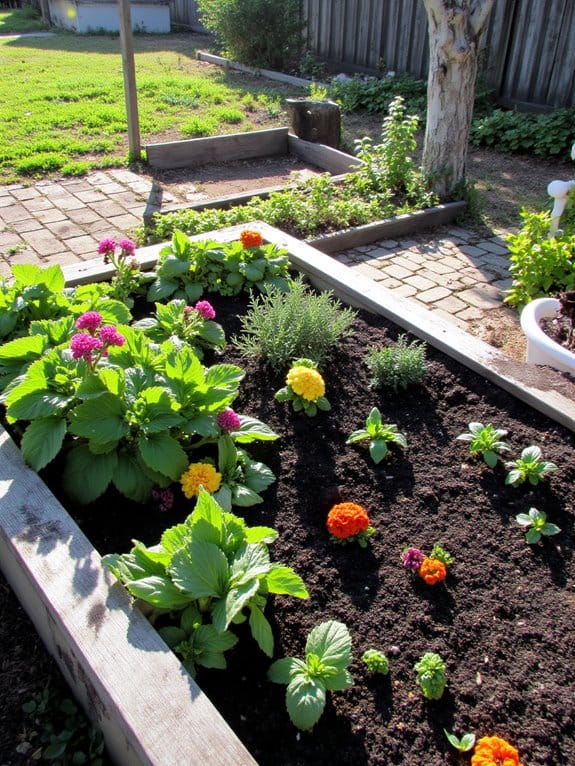
Incorporating edible flowers and herbs into my raised beds not only enhances the flavor of my meals but also adds a splash of color to my garden.
I love growing nasturtiums for their peppery taste and vibrant blooms, along with basil and chives for cooking.
These plants attract pollinators, creating a lively garden that’s both beautiful and delicious.
It’s a win-win!
Low-Maintenance Native Plant Flower Beds
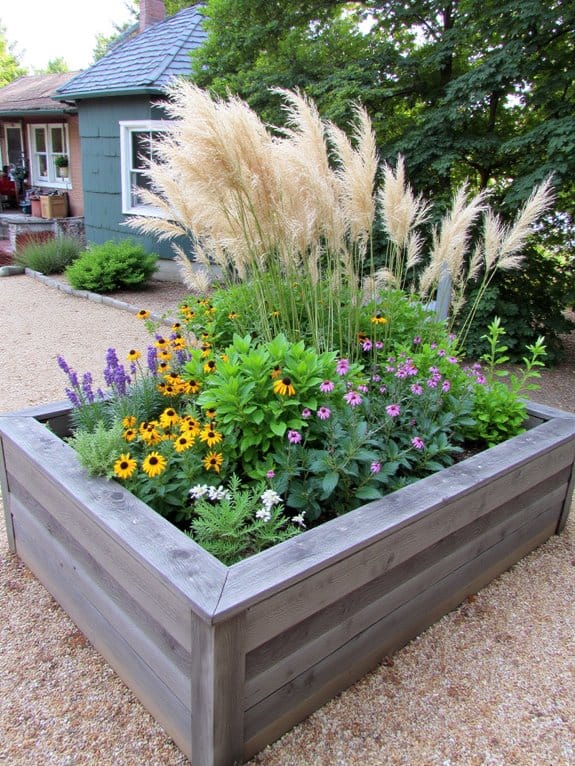
Although busy schedules can make gardening seem challenging, creating low-maintenance native plant flower beds has been a game-changer for me.
I’ve discovered that these plants thrive naturally in my area, requiring minimal upkeep. They not only fill my garden with vibrant colors but also create a beautiful, eco-friendly space.
Plus, they attract local wildlife, adding life to my outdoor sanctuary.
Pollinator-Friendly Raised Flower Beds to Attract Bees and Butterflies
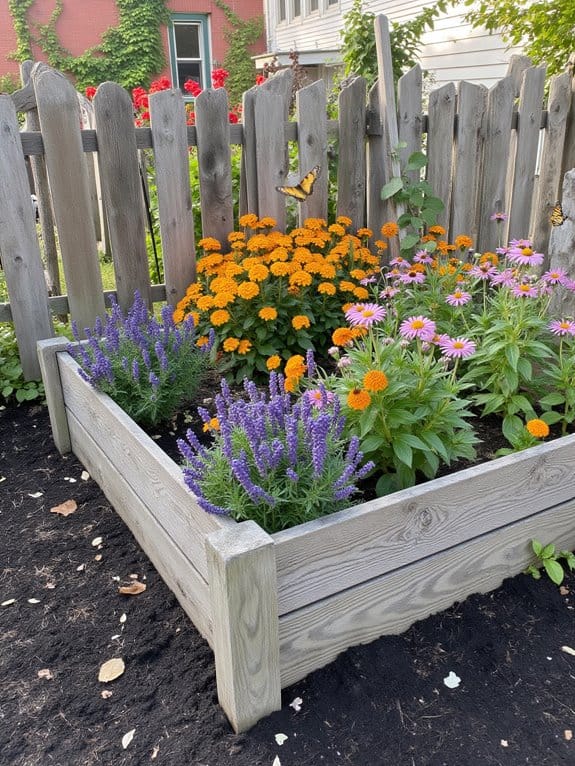
Creating a pollinator-friendly raised flower bed can transform your garden into a vibrant haven for bees and butterflies, making it a joy to watch these creatures thrive.
I love choosing native flowers like coneflowers and milkweed, as they attract pollinators effortlessly.
Adding diverse blooms guarantees a steady supply of nectar, encouraging these essential insects to visit and flourish in my garden.
Herb and Flower Combinations in Raised Flower Beds
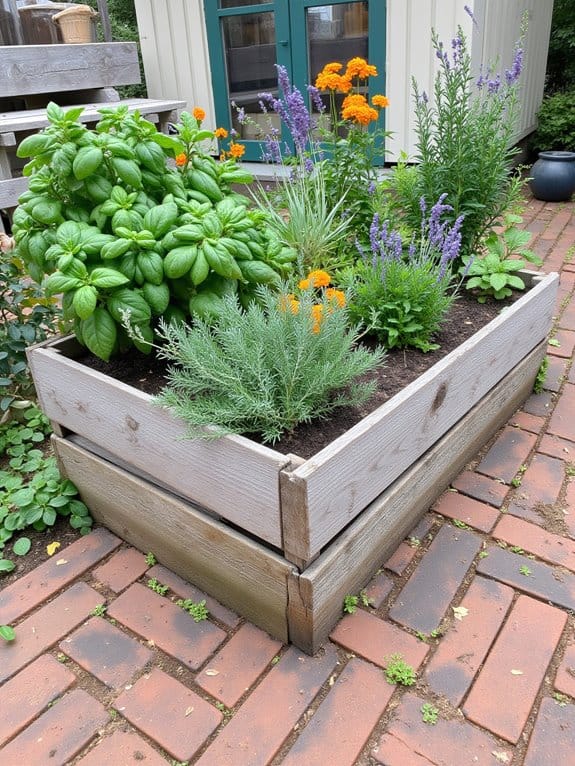
When I mix herbs and flowers in my raised flower beds, I not only enhance the garden’s beauty but also boost its functionality.
For instance, pairing vibrant marigolds with fragrant basil not only looks stunning but also helps repel pests.
I love combining colorful zinnias with chives, adding both visual appeal and culinary flavor to my meals.
It’s a win-win for my garden and kitchen!
Using Reclaimed Materials for Rustic Raised Beds
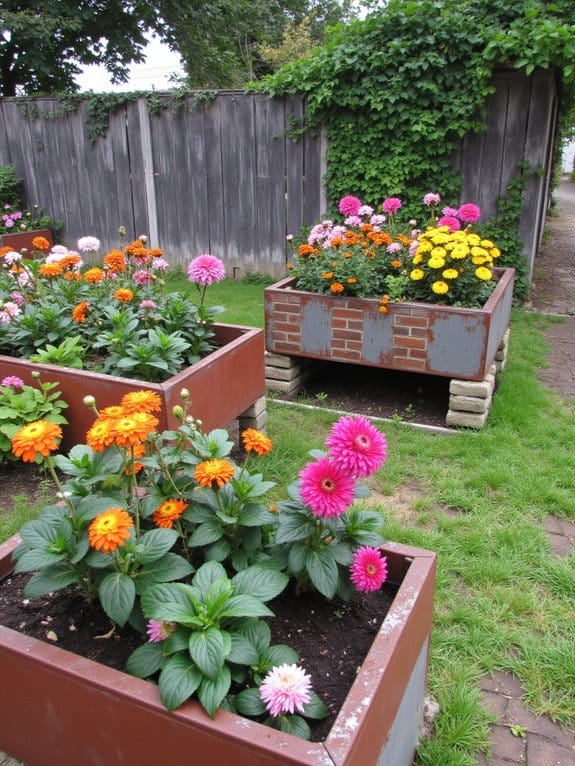
As I explore ways to make my garden more sustainable, using reclaimed materials for rustic raised beds has become a favorite approach.
I love repurposing old pallets, bricks, and wood to create unique designs that add character to my garden. Not only does this save money, but it also reduces waste and provides a charming, weathered look that perfectly complements my plants.
Mixing Leaf Shapes and Sizes for Textural Variety
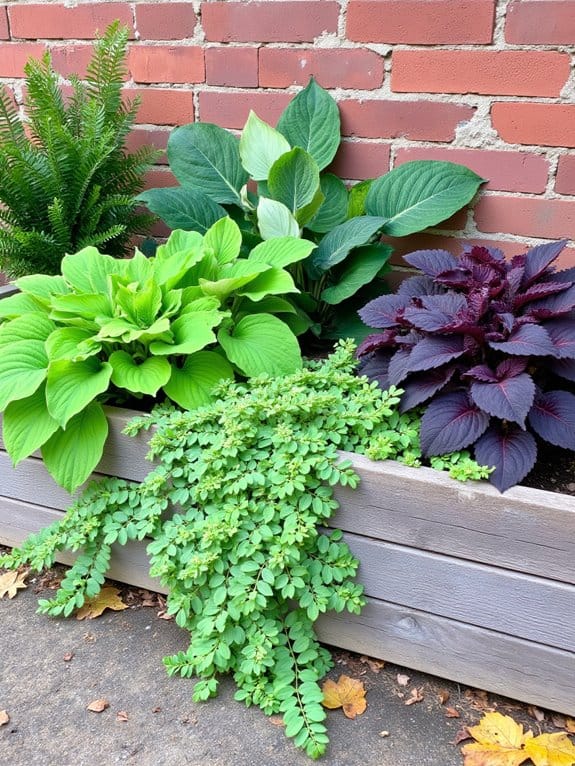
Incorporating a variety of leaf shapes and sizes can transform your raised flower bed into a visually stunning display.
I love mixing broad, textured leaves with delicate, fern-like foliage to create depth. The contrast between glossy and matte leaves adds interest, while varying colors enhances the overall harmony.
Don’t underestimate how diverse leaf shapes can elevate your garden’s appeal and invite admiration.
Thematic Flower Gardens: Designing With Color Palettes
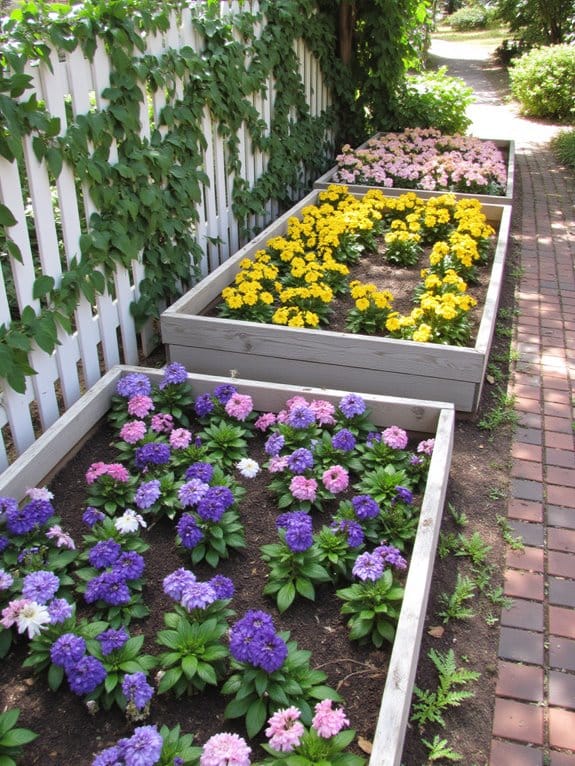
When I design a flower garden, choosing a cohesive color palette is essential for creating a harmonious and inviting space.
I love selecting complementary colors like blues and yellows or creating a dreamy vibe with pastels.
Succulent and Cactus Arrangements for Low Water Needs
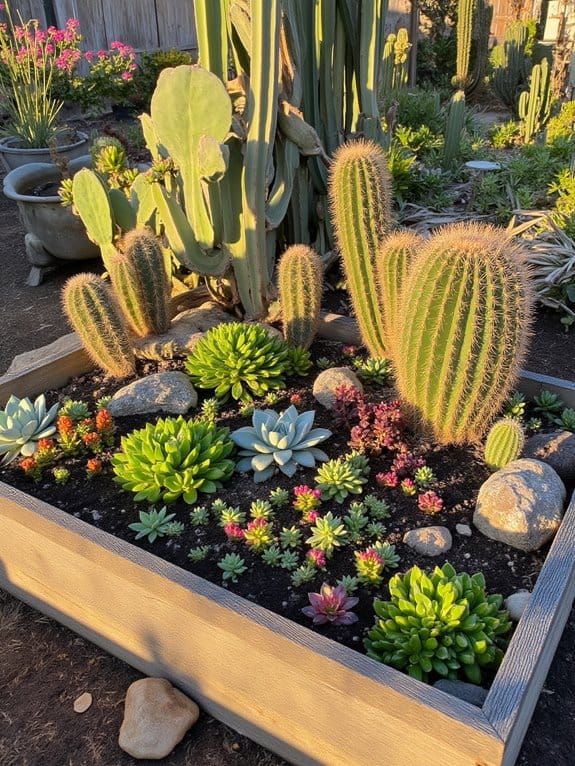
While I appreciate the beauty of traditional flower gardens, I often turn to succulents and cacti for their striking forms and minimal water needs.
These low-maintenance plants thrive in raised beds, allowing me to create unique arrangements. I mix different shapes and colors, adding rocks for texture.
It’s a fun way to showcase nature’s resilience while keeping my garden vibrant and fresh!
Incorporating Fragrant Flowers Into Your Designs
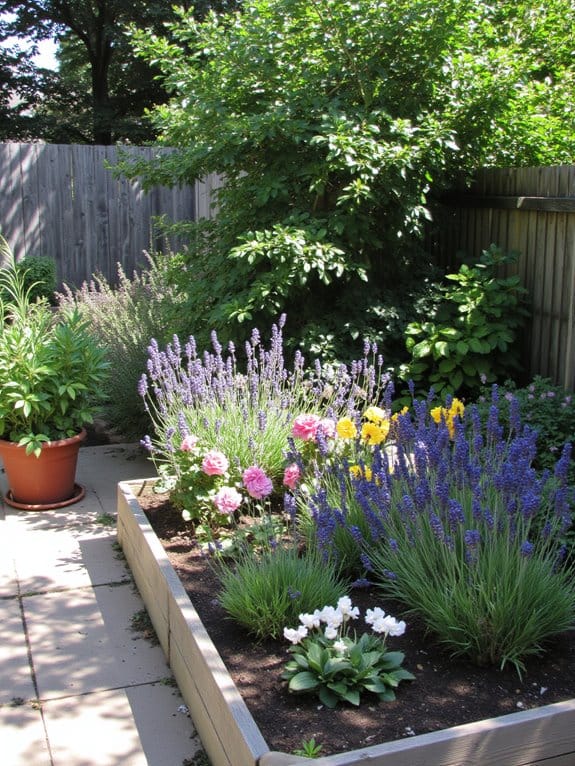
To create a sensory experience in my raised flower beds, I love adding fragrant flowers that not only please the eye but also delight the nose.
Plants like lavender, jasmine, and sweet alyssum bring enchanting aromas while attracting pollinators.
Mixing these with colorful blooms enhances the overall design, making my garden not just a visual treat, but a fragrant haven to enjoy.
Brightening up Dark Corners With Shade-Loving Plants
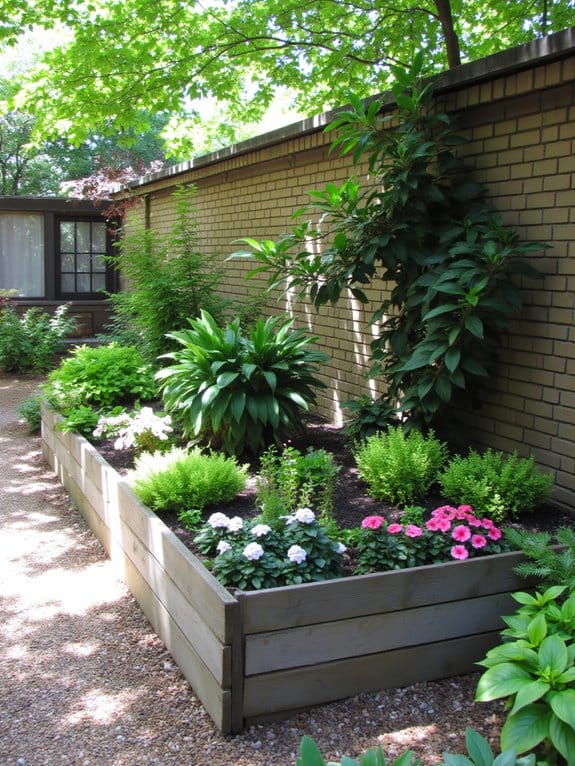
Even though many gardens bask in full sunlight, I’ve found that the shadier corners can be just as vibrant and inviting with the right shade-loving plants.
Consider hostas, ferns, and astilbes to add texture and color. I love mixing varying heights and foliage to create depth.
These plants thrive in low light, transforming dark spaces into lush retreats full of life.
Filling Sunny Spots With Vibrant Sun-Loving Blooms
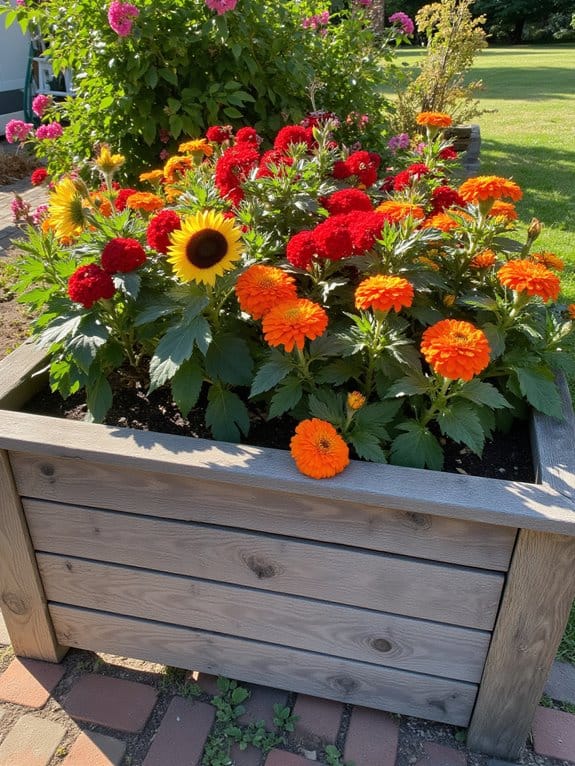
After transforming dark corners with shade-loving plants, it’s time to focus on those sunny spots that can burst with color.
I love filling these areas with vibrant sun-loving blooms like marigolds, zinnias, and sunflowers. They not only thrive in the sunlight but also attract butterflies and bees.
Mixing heights and colors creates a stunning display that brightens my garden all season long.
Adding Colorful Borders to Define Your Garden Spaces

While adding colorful borders to your garden spaces, I find it’s essential to create a clear separation between different areas, enhancing both structure and visual interest.
I love using various materials like bricks, stones, or even painted wood to define borders. Choosing vibrant flowers or foliage for these edges not only adds charm but also guides the eye through my garden’s design.
Companion Planting for Enhanced Growth and Color
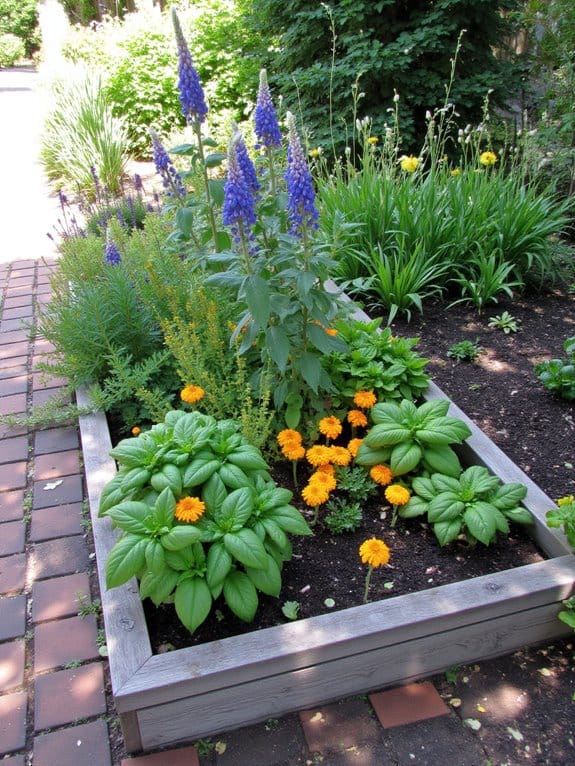
As I explore the world of companion planting, I’ve discovered how pairing certain plants can boost their growth and enhance the garden’s overall color palette.
For instance, marigolds not only deter pests but also bring vibrant orange hues, making them perfect companions for green leafy vegetables.
Similarly, combining sunflowers with zinnias creates a stunning visual display while attracting beneficial pollinators.
Creative Layering With Tiered Designs in Raised Beds
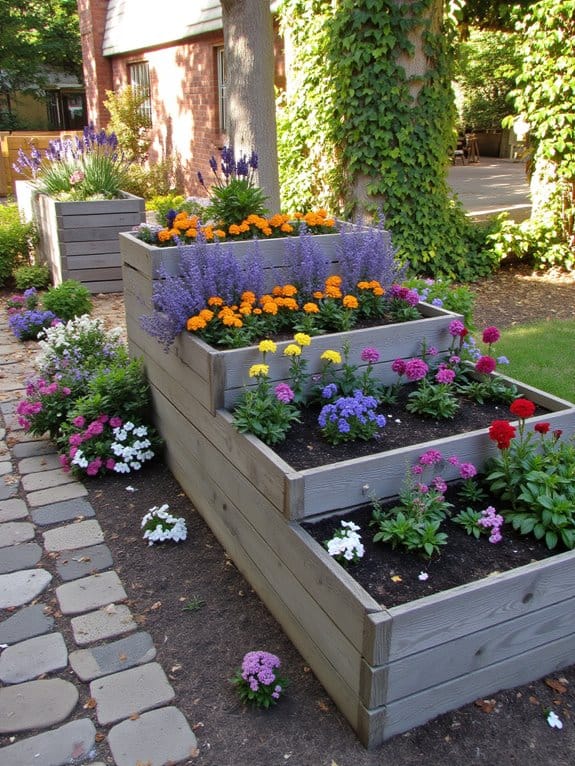
Companion planting not only enhances growth but also sets the stage for more creative garden designs.
I love using tiered designs in my raised beds to create visual interest. By layering plants of varying heights, I can showcase vibrant blooms while maximizing space.
It’s a fantastic way to draw the eye and make the garden feel lush and inviting. Give it a try!
Seasonal Touches to Refresh Your Blooms Throughout the Year
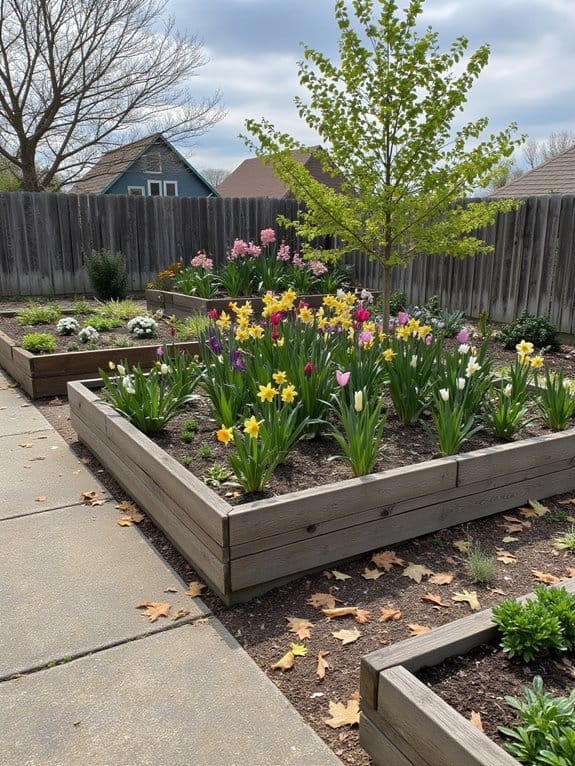
To keep my garden vibrant and inviting all year round, I love incorporating seasonal touches that refresh my blooms.
In spring, I add cheerful pansies; summer brings bright zinnias.
When fall arrives, I plant rich chrysanthemums, and for winter, I use evergreen accents.
These simple additions not only enhance my garden’s beauty but also keep it lively and engaging through every season.
