

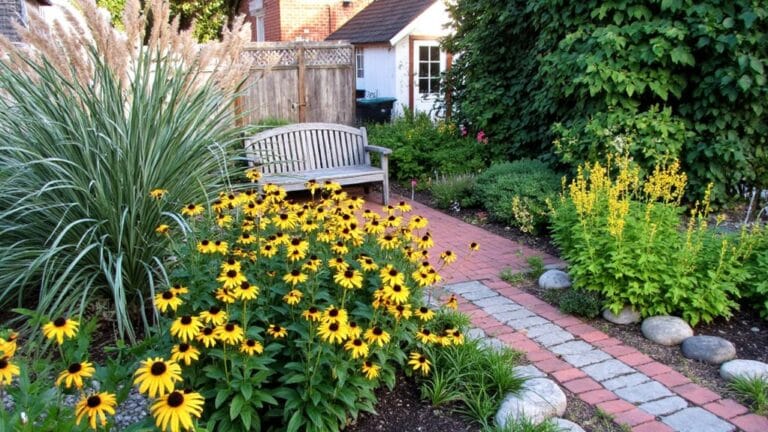
Transforming your garden into a beautiful, low-maintenance oasis is easier than you might think. With the right approach, you can create a vibrant and full space without all the hassle. From selecting drought-resistant perennials to adding native species, there are plenty of ways to keep your garden looking fresh and lovely. Whether you’re a busy bee or just looking for some gardening simplicity, these ideas will inspire you. Let’s explore how you can enjoy a stunning garden without the extra work.
Discover the Benefits of a Low Maintenance Flower Garden
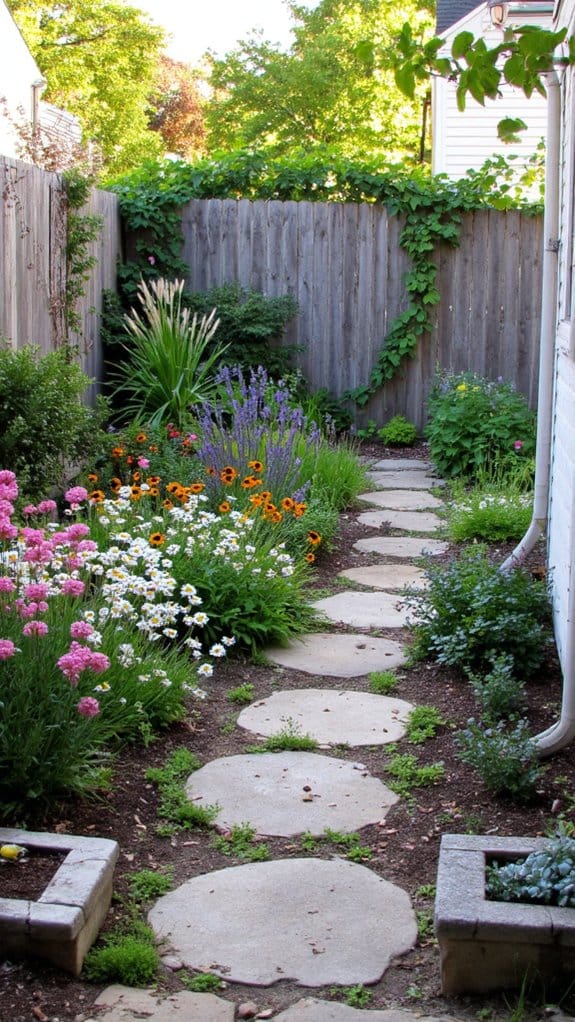
When I think about creating a garden, I often prioritize low maintenance options because they offer a perfect blend of beauty and simplicity.
These gardens allow me to enjoy vibrant blooms without the constant upkeep. I love how they attract pollinators while freeing up my time for other activities.
Plus, they’re forgiving, thriving even with minimal attention, making gardening a joy rather than a chore.
How to Choose the Right Location for Your Flower Garden
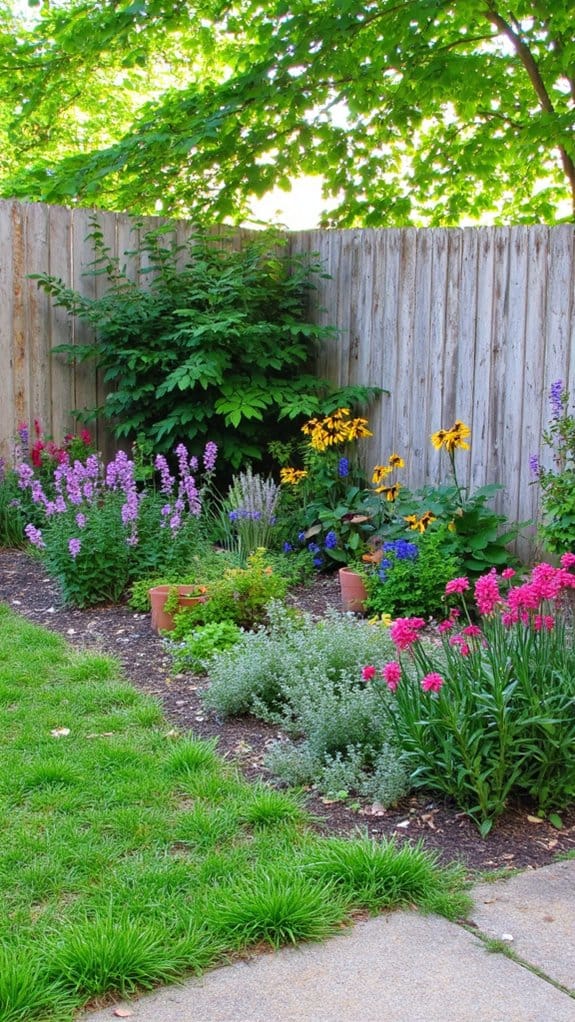
Choosing the right location for your flower garden is just as important as selecting the plants themselves.
I’ve found that a spot with at least six hours of sunlight daily makes a big difference in growth. Additionally, consider proximity to water sources and good drainage.
Avoid shaded areas and wind tunnels to guarantee your flowers thrive and look their best.
Selecting Drought-Resistant Flower Varieties for Low Maintenance
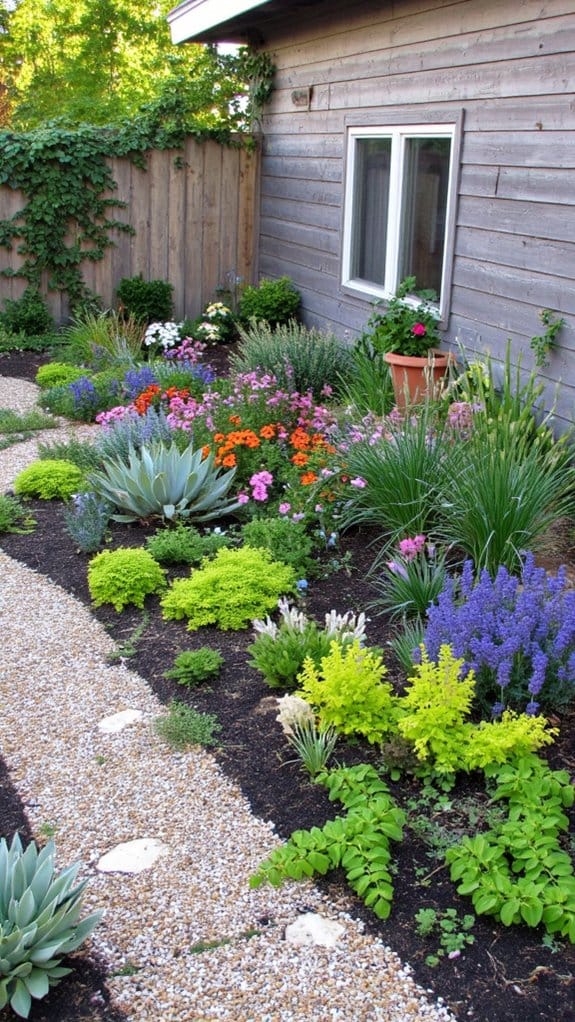
While many flowers are stunning, selecting drought-resistant varieties can save you time and effort in maintaining your garden.
I’ve found that plants like lavender, succulents, and black-eyed Susans thrive even in dry conditions. They not only add beauty but also require minimal watering.
Choosing these resilient blooms allows me to enjoy a vibrant garden without the constant upkeep.
Why Perennials Provide Long-Term Beauty
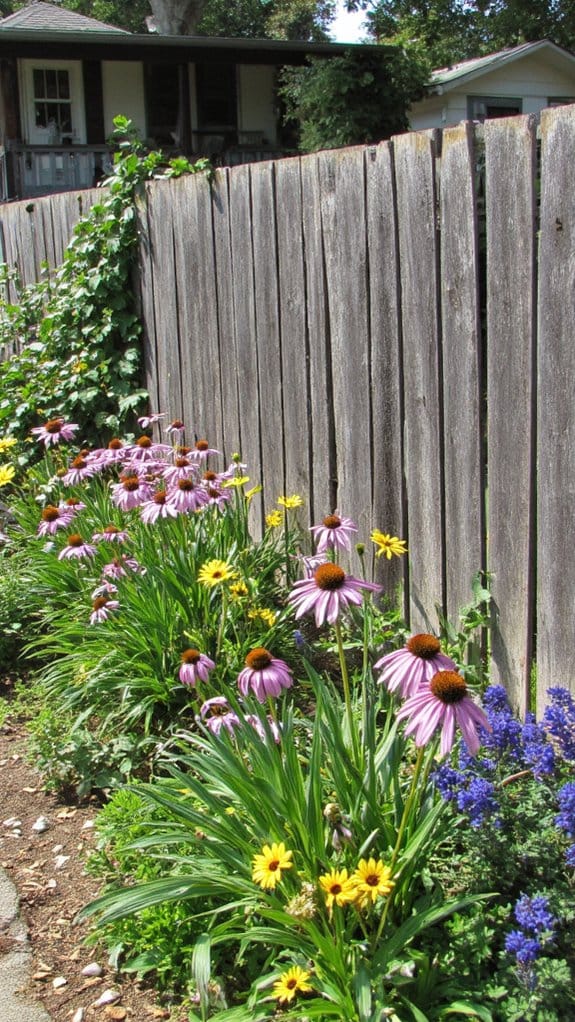
Incorporating drought-resistant flowers is just one way to simplify garden care, but perennials take low maintenance to another level.
I love how they return year after year, adding beauty without constant replanting. Their variety allows me to enjoy blooms in different seasons, creating a dynamic garden.
Plus, they often require less water, making them a smart choice for sustainable gardening.
Choosing Native Flowers for Easy Care
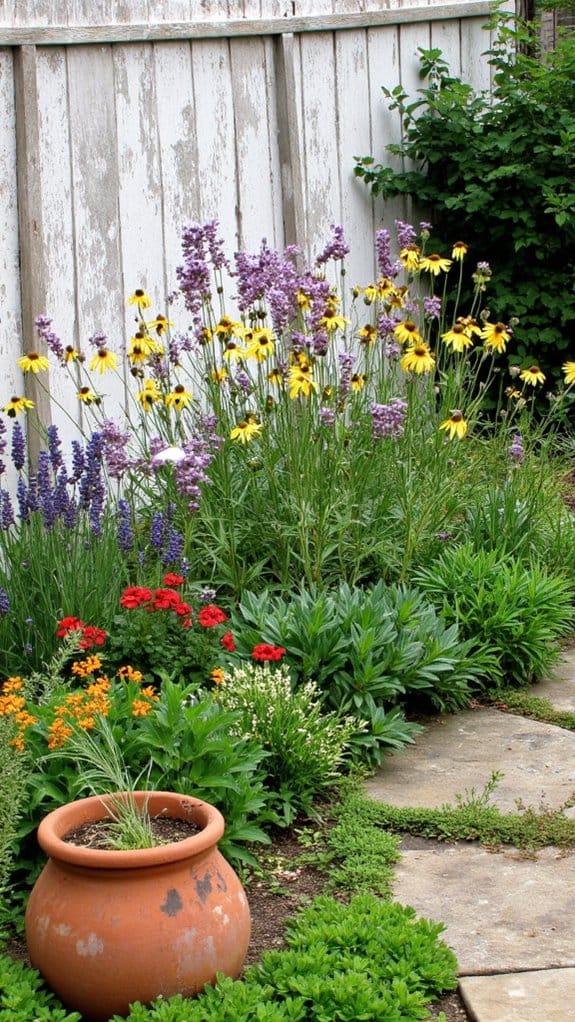
When I decided to simplify my gardening routine, I quickly realized that native flowers are a fantastic option.
They thrive in local conditions, requiring less water and maintenance. Plus, they attract beneficial pollinators like bees and butterflies.
I love how these resilient plants bring color and life to my garden while allowing me to spend less time worrying about upkeep.
How to Use Ground Cover Plants for Low Maintenance Flower Beds
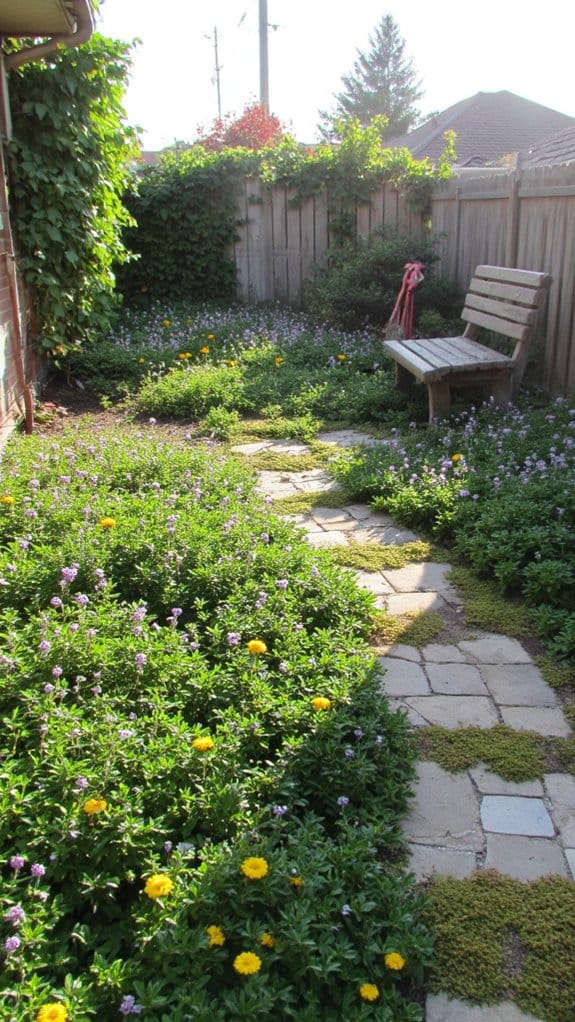
After embracing native flowers, I discovered another fantastic way to create low maintenance flower beds: ground cover plants.
These hardy beauties spread quickly, filling in space and suppressing weeds. I love using varieties like creeping thyme or sedum for their resilience and vibrant colors.
They’re perfect for sunny spots and require little water, making my garden both lush and easy to maintain.
Design With Ornamental Grasses for Added Texture
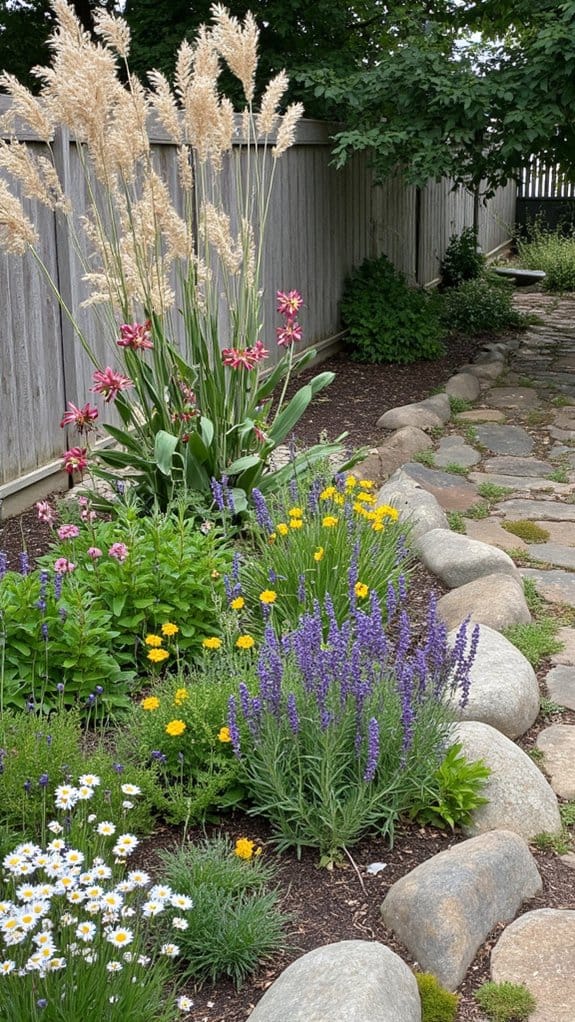
While I was exploring ways to enhance my flower garden, I found that ornamental grasses add a stunning layer of texture and movement.
They sway beautifully in the breeze, creating visual interest without demanding much care. I love mixing different heights and colors to complement my blooms, making the whole garden feel alive.
Plus, they’re drought-tolerant, which is a huge bonus!
Use Raised Beds to Minimize Weeding Efforts
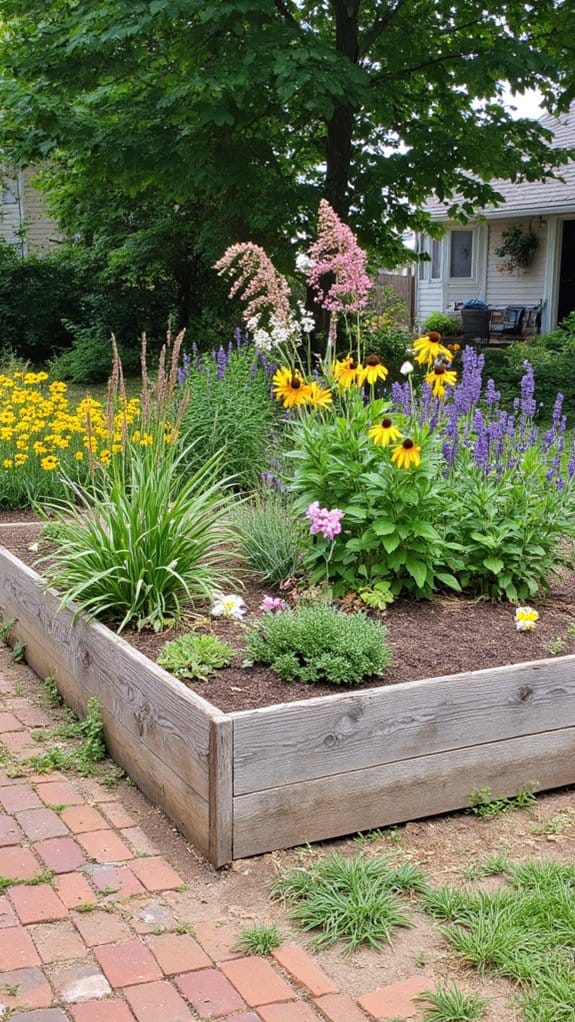
Using raised beds has been a game-changer for my flower garden, as they considerably reduce the need for weeding.
The elevation keeps the soil loose and makes it harder for weeds to establish themselves.
Plus, I can easily access my plants without stepping on the soil, preserving its structure.
This simple change has saved me so much time and effort in maintaining my garden!
Creating Flexibility With Container Gardens
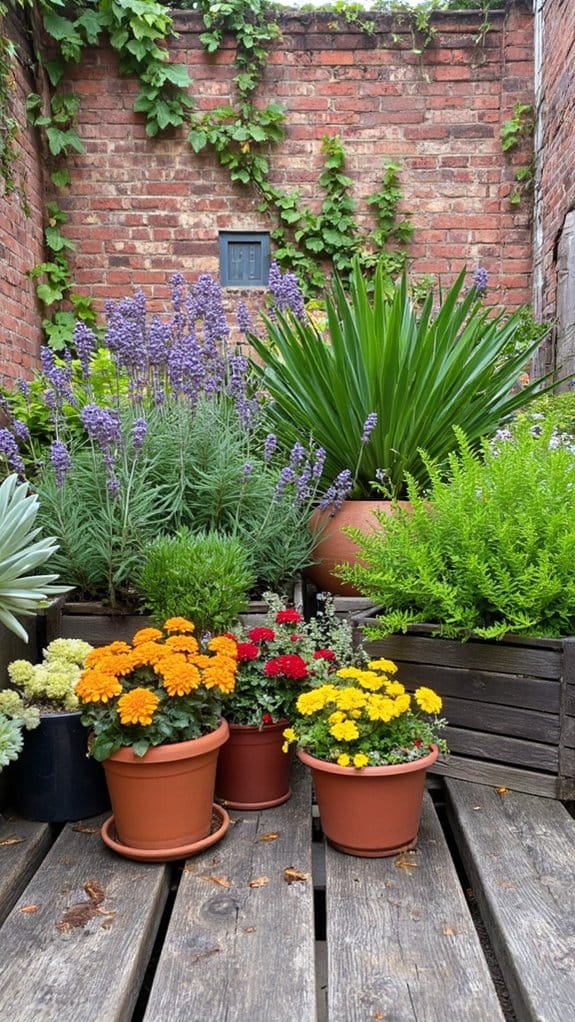
One of the best ways to add versatility to your flower garden is by incorporating container gardens.
I love using pots and planters because they allow me to easily change the layout and mix different plants.
Whether I want to create a seasonal display or move flowers to catch the sunlight, containers make it simple to adapt my garden to any situation.
How Mulch Reduces Your Watering Needs
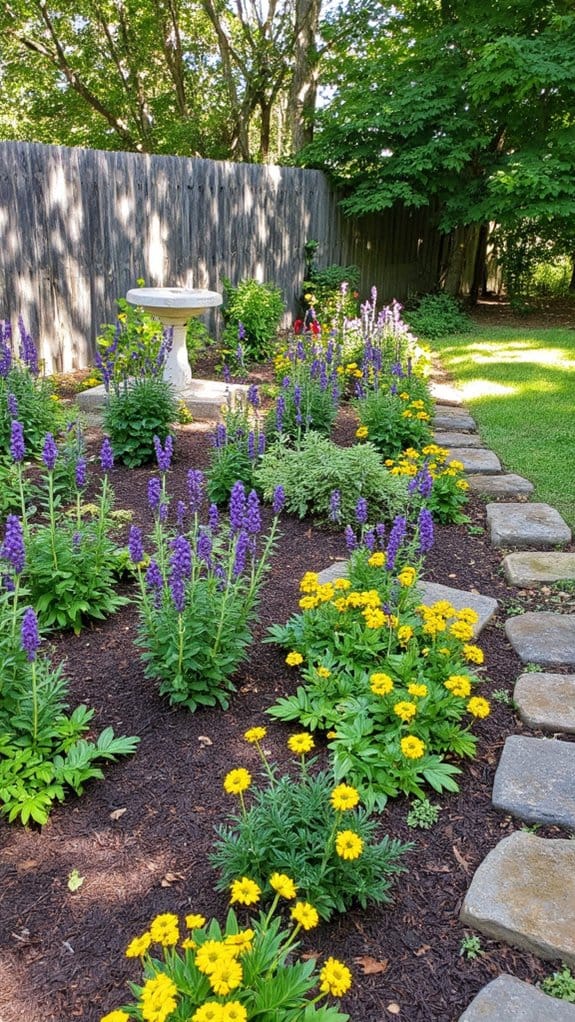
Mulch plays an essential role in reducing my watering needs, especially during hot summer months.
By covering the soil, it retains moisture and prevents evaporation. I’ve noticed my plants thrive longer between waterings, which saves me time and effort.
Covering the soil with mulch keeps moisture in, helping my plants thrive longer and saving me valuable time and effort.
Plus, mulch suppresses weeds, allowing me to focus on enjoying my garden instead of constantly watering or weeding.
It’s a win-win!
Plant in Clusters for a Fuller Garden Look
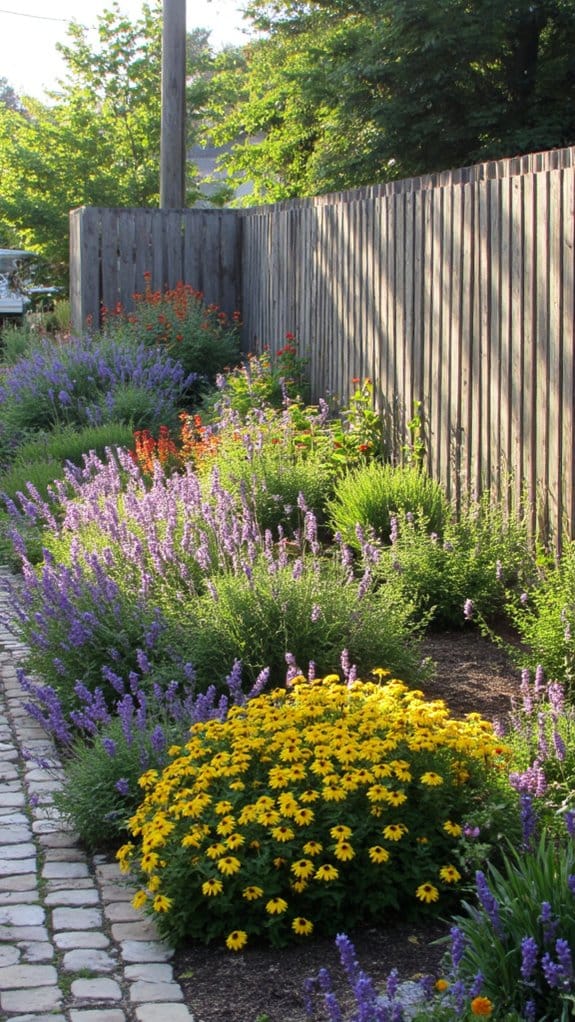
Creating a vibrant garden can be as simple as planting in clusters.
I’ve found that grouping flowers together not only makes the garden look fuller but also creates a stunning visual impact. Choose a variety of colors and sizes, and arrange them in tight clusters.
This approach minimizes empty spaces, allowing your garden to thrive with a lush, lively appearance, while requiring less maintenance.
Choosing Self-Seeding Flowers for Continuous Blooms
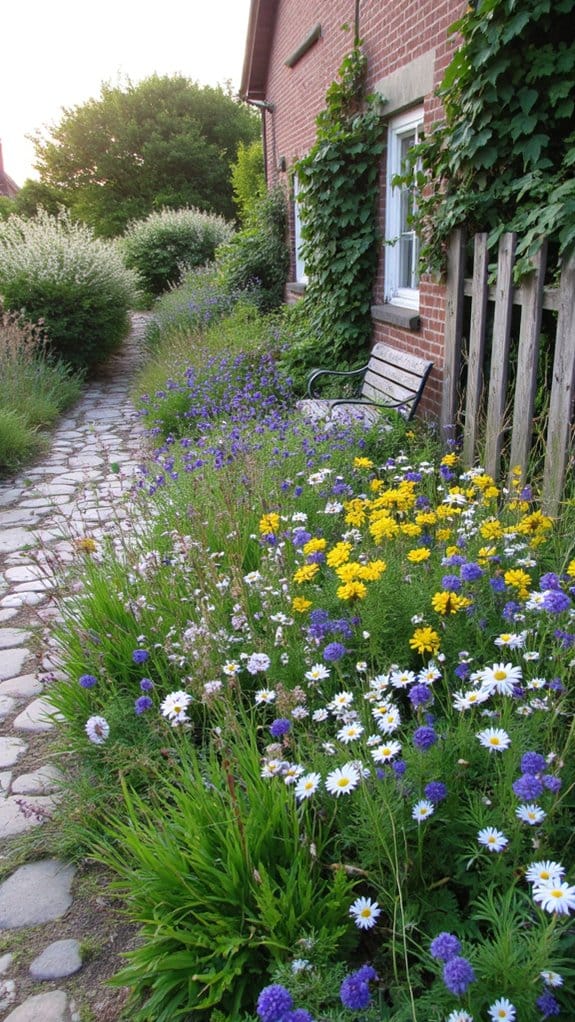
After enhancing the visual appeal of your garden with clusters, consider incorporating self-seeding flowers for a continuous display of blooms.
I love using varieties like cosmos and calendula, as they effortlessly reseed themselves. This way, I enjoy fresh colors year after year without the hassle of replanting.
Plus, they attract pollinators, creating a lively and vibrant garden atmosphere.
Adding Drought-Tolerant Succulents to Your Garden Design
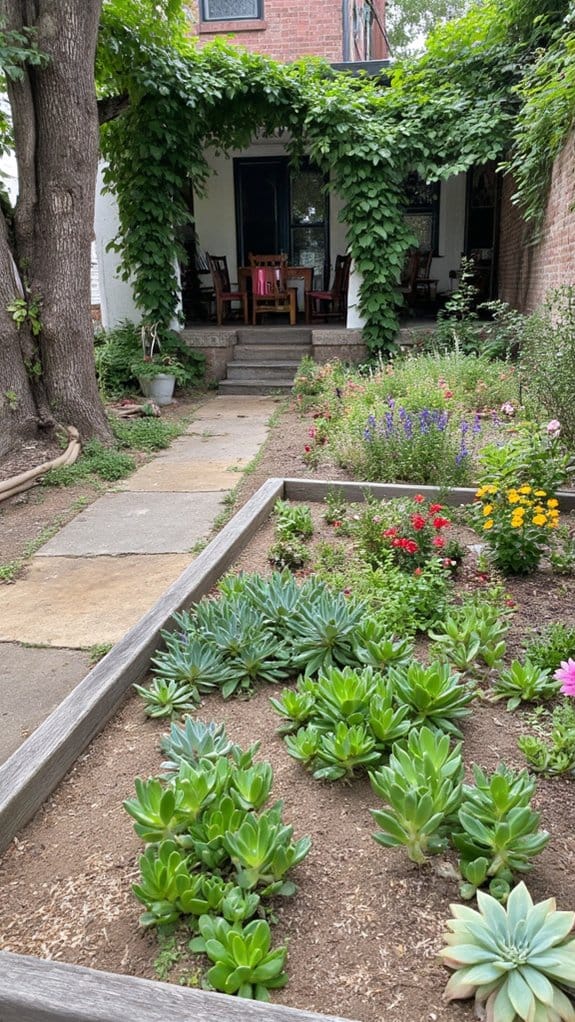
While exploring ways to enhance my garden’s design, I’ve found that adding drought-tolerant succulents is a game-changer.
These hardy plants not only thrive in dry conditions but also add unique textures and colors to my garden.
I love how they require minimal care, allowing me to enjoy a stunning landscape without the stress of constant maintenance.
Plus, they’re simply beautiful!
Why Soil Quality Matters for Low Maintenance Gardens
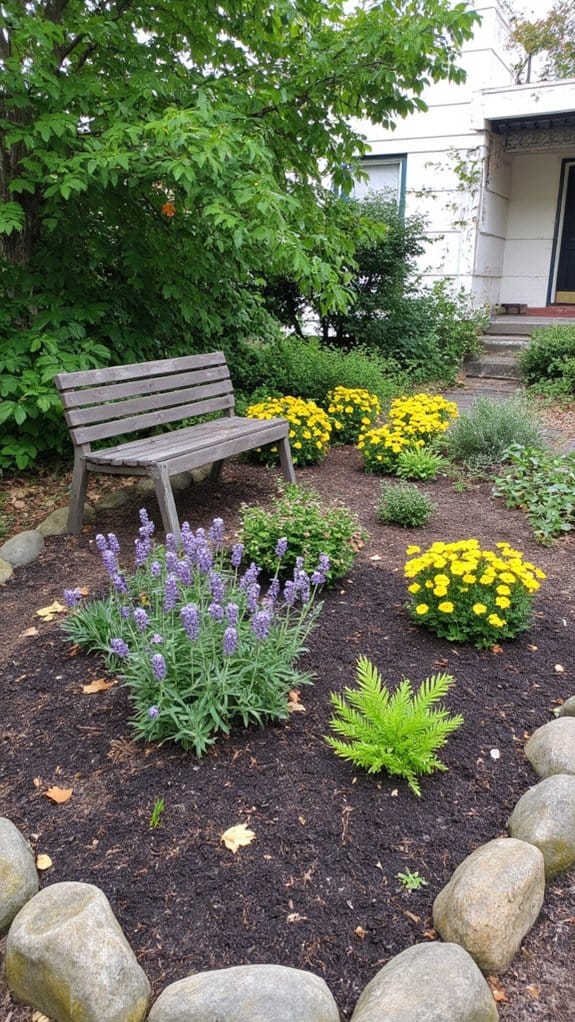
Although I often focus on selecting the right plants for my low maintenance garden, I’ve come to realize that soil quality is just as essential.
Healthy soil provides the nutrients and drainage plants need to thrive without constant attention. By investing in quality soil, I’ve noticed my garden flourishes with less effort, allowing me to enjoy its beauty without the hassle of frequent maintenance.
Mix Annuals With Perennials for Seasonal Interest
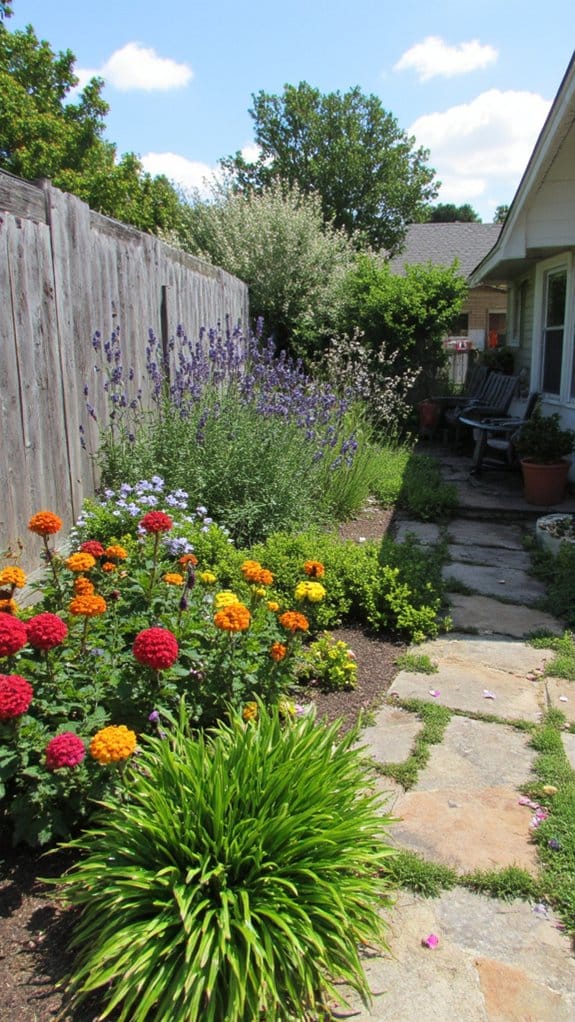
Healthy soil sets the stage for a vibrant garden, but pairing annuals with perennials can really enhance its seasonal appeal.
I love mixing these plants because annuals provide instant color while perennials offer lasting structure. By carefully selecting blooms that complement each other, my garden stays lively throughout the seasons, creating a stunning display that requires minimal effort to maintain.
Selecting Flowers That Attract Pollinators to Your Garden
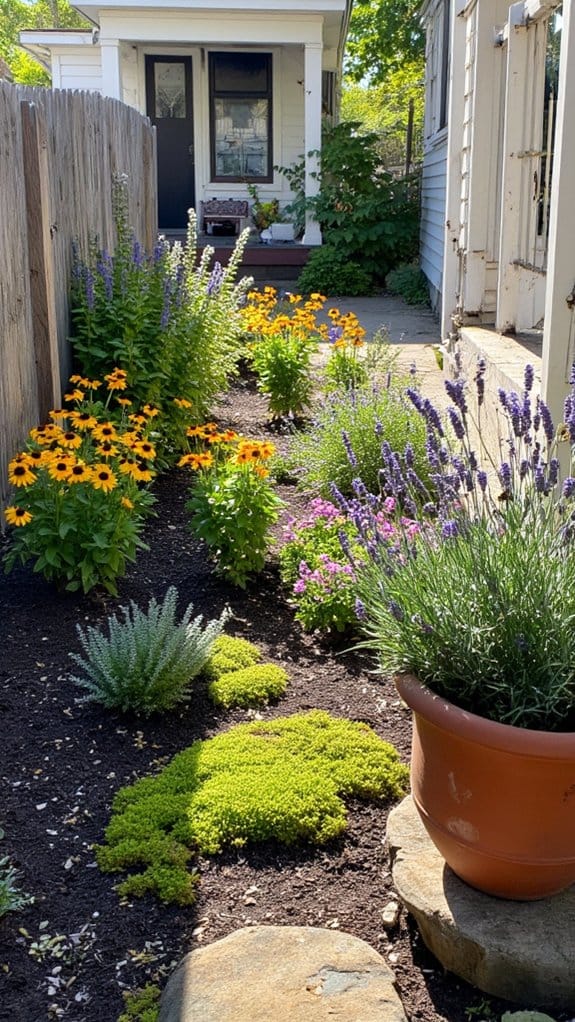
Attracting pollinators to your garden can boost both its beauty and productivity, so I always choose flowers that appeal to bees, butterflies, and hummingbirds.
I love planting vibrant coneflowers, fragrant lavender, and cheerful sunflowers.
These blooms not only look stunning but also draw in beneficial insects.
Create a Colorful Garden With Minimal Effort
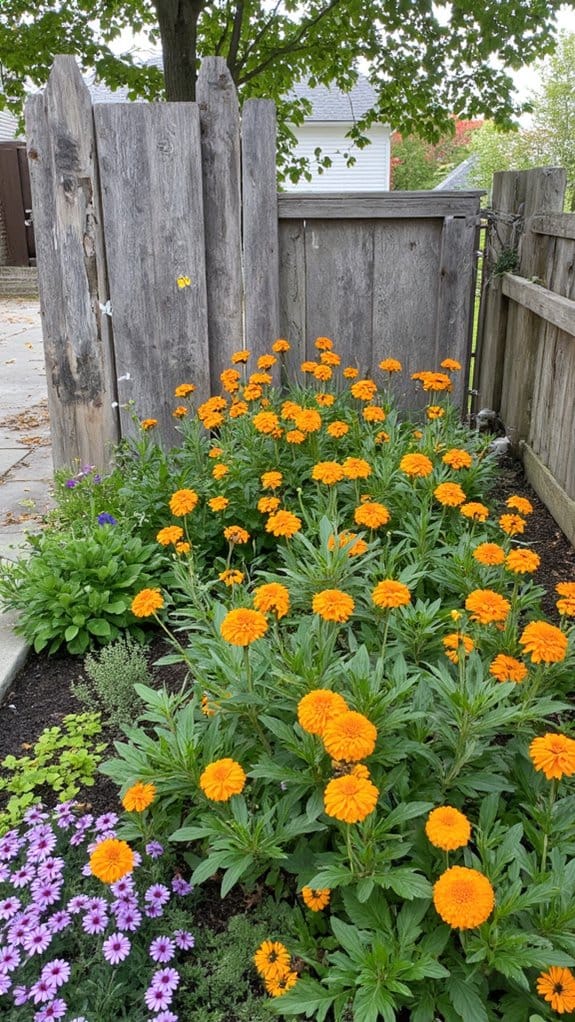
Creating a colorful garden doesn’t have to be a time-consuming task, especially if you choose the right plants.
I love using perennials like coneflowers and daylilies, which bloom year after year without much effort.
Adding some vibrant annuals, like petunias, can also brighten things up quickly.
With the right combination, you’ll enjoy a stunning display with minimal maintenance!
Layering Plants for Depth and Variety
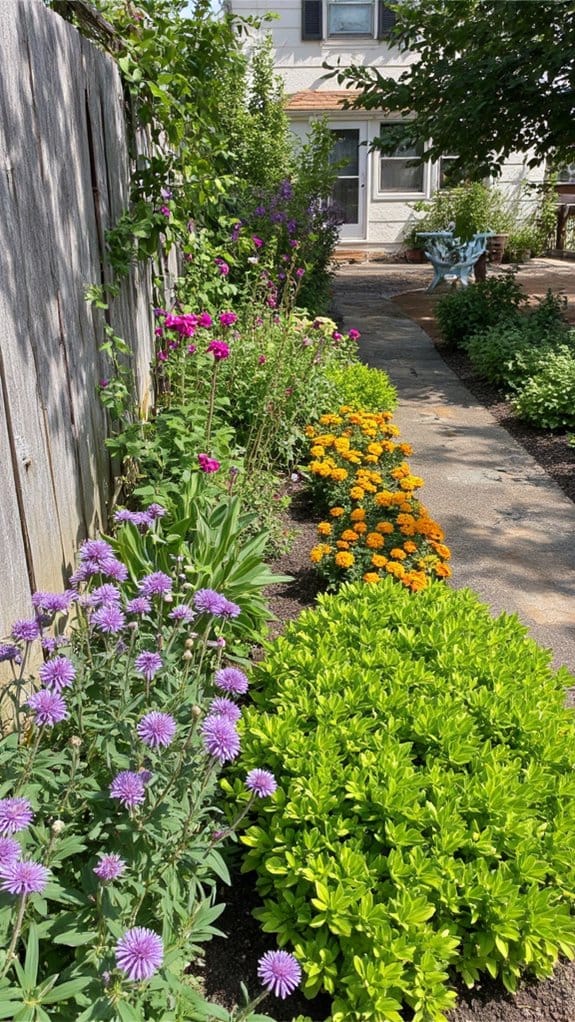
One of the best ways to add depth and variety to your garden is by layering plants in different heights and textures.
I love using taller plants like sunflowers or hollyhocks in the back, while shorter perennials like daisies or lavender can fill in the front.
Mixing foliage shapes and colors creates a dynamic look that feels lush without demanding too much upkeep.
Designing a Low Maintenance Flower Border
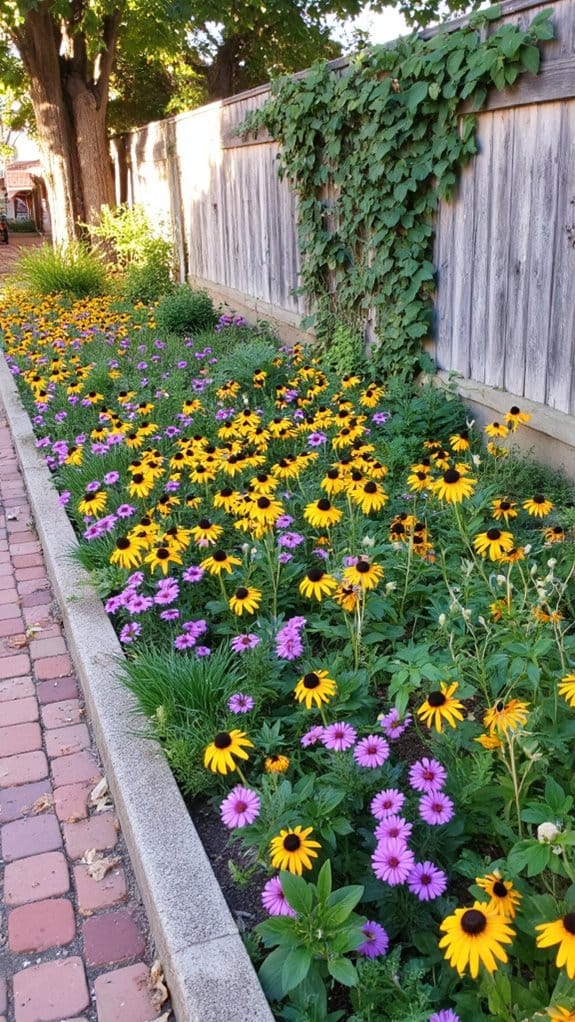
Layering plants adds wonderful dimension to your garden, and designing a low maintenance flower border can enhance that effect while keeping your workload light.
I recommend choosing perennials like daylilies and coneflowers, which bloom year after year. Mixing in some ornamental grasses creates texture.
Finally, using a mulch layer helps retain moisture and suppress weeds, making your border even easier to maintain.
Incorporating Edible Flowers for Dual Purpose
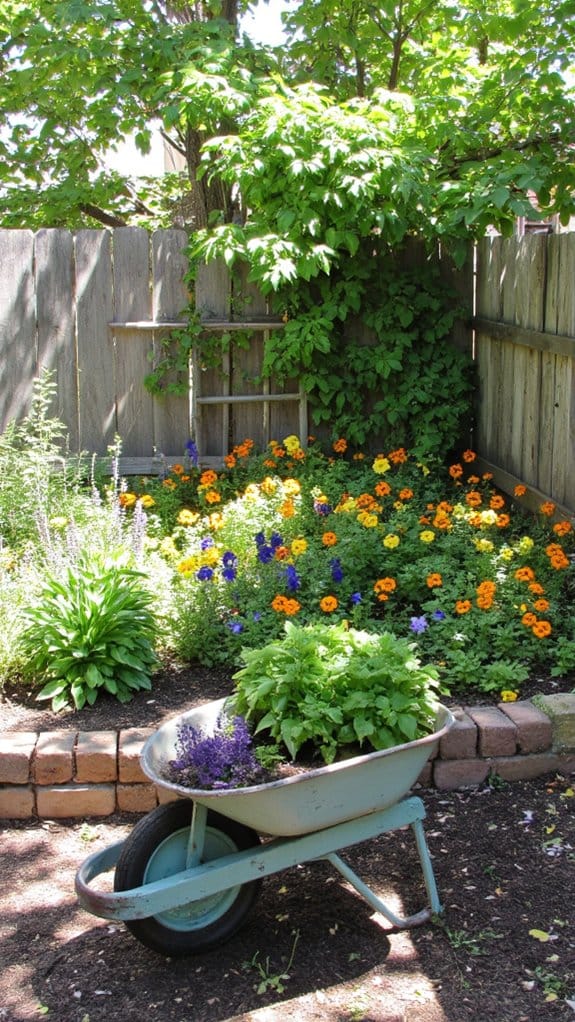
While you might think of flowers solely for their beauty, incorporating edible varieties can elevate your garden’s purpose.
I love adding nasturtiums and pansies, which not only brighten up my space but also offer a unique flavor to salads.
Plus, they attract pollinators! This way, I get a stunning garden that’s both appealing and practical, making my outdoor space truly rewarding.
Drip Irrigation for Easy Watering
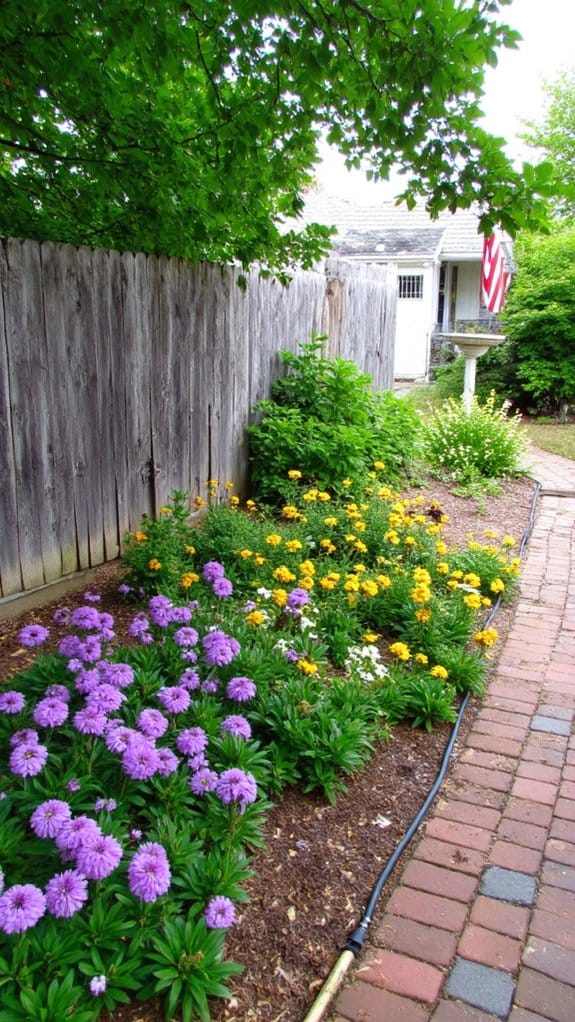
Since I started using drip irrigation in my flower garden, watering has become a breeze.
This system delivers water directly to the roots, minimizing waste and ensuring my plants get just what they need.
I love how it saves me time and effort, especially during hot days.
Plus, my flowers thrive, looking vibrant and lush without constant monitoring.
It’s a game changer!
Selecting Low Maintenance Flowering Shrubs for Your Space
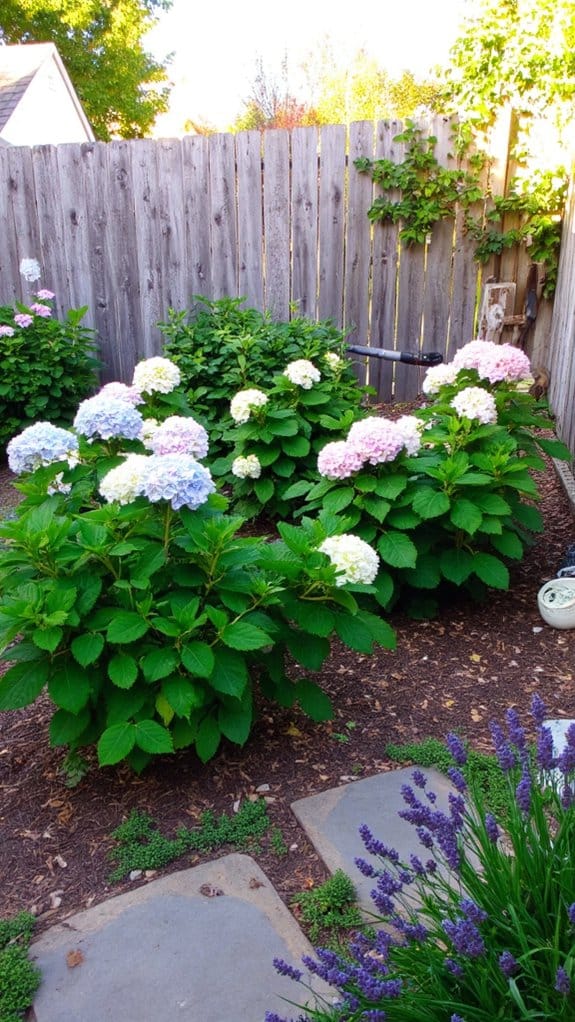
After setting up my drip irrigation system, I realized that selecting the right flowering shrubs can also greatly reduce the amount of care my garden needs.
I love choosing varieties like the Spiraea, which blooms beautifully without much fuss.
Others, like the Butterfly Bush, attract pollinators while requiring little maintenance.
These choices keep my garden vibrant and thriving with minimal effort!
Planning Your Garden for Year-Round Interest
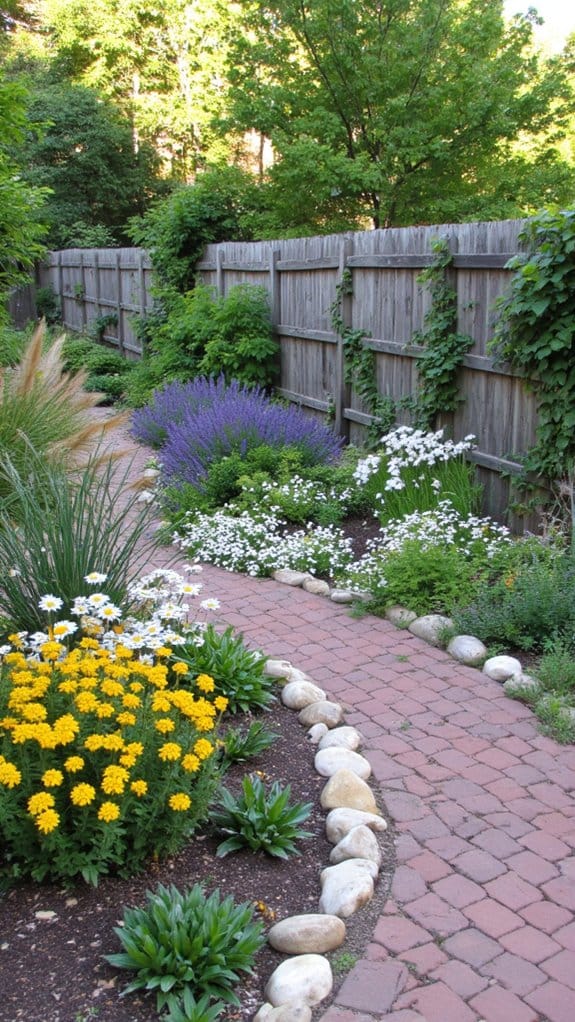
To create a flower garden that captivates year-round, I find it essential to think beyond just seasonal blooms.
I focus on incorporating a mix of evergreens, perennials, and flowering shrubs that provide structure and color throughout the seasons.
