

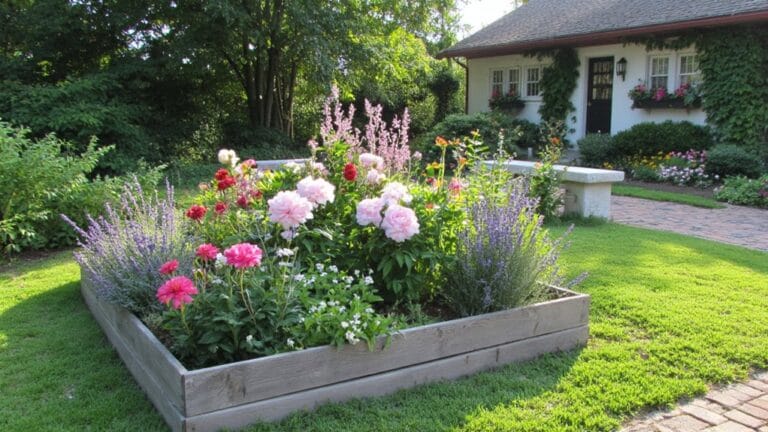
When it comes to sprucing up your garden, polished flower bed ideas are a game changer. A strategically placed flower bed can instantly uplift your outdoor space. Selecting the perfect location and shape is key for that tidy, finished look. Don’t forget the importance of defining edges and layering plants thoughtfully. Let’s explore some inspiring strategies to truly make your garden pop.
Choosing the Right Location for Your Flower Bed
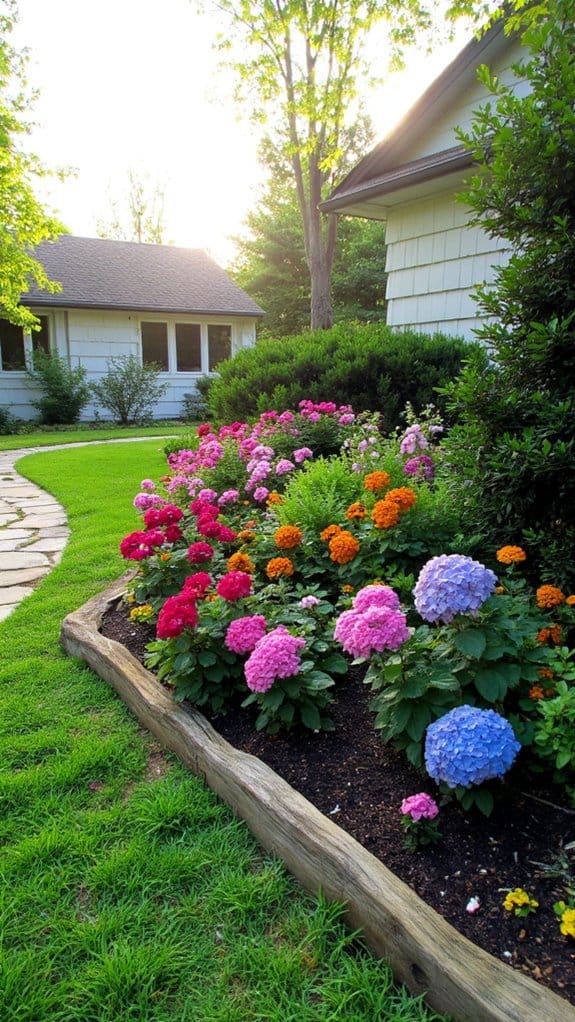
When I’m planning a flower bed, I always start by choosing the right location, as it can make or break the success of my blooms.
I look for areas with adequate sunlight, good drainage, and protection from harsh winds.
I also consider how the flowers will complement existing features in my garden, ensuring they’ll thrive and create a harmonious look.
Selecting the Perfect Flower Bed Shape
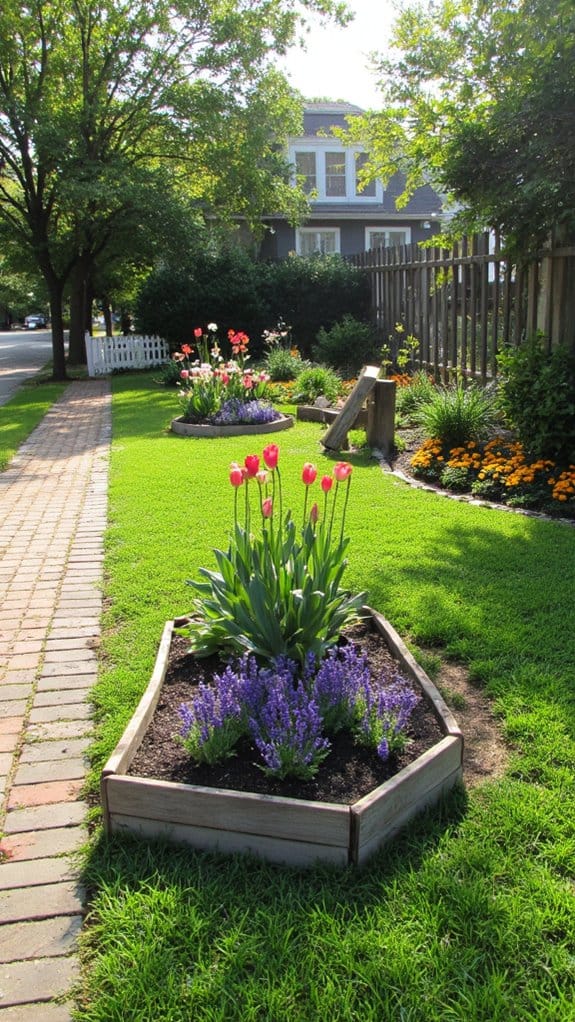
How do you envision your flower bed enhancing your garden’s overall design?
I find that selecting the right shape can make all the difference. Curved beds often create a soft, inviting look, while geometric shapes lend a modern touch.
Think about your garden’s style and choose a shape that complements it, ensuring it flows harmoniously with surrounding elements.
Incorporating Edging for a Defined Look
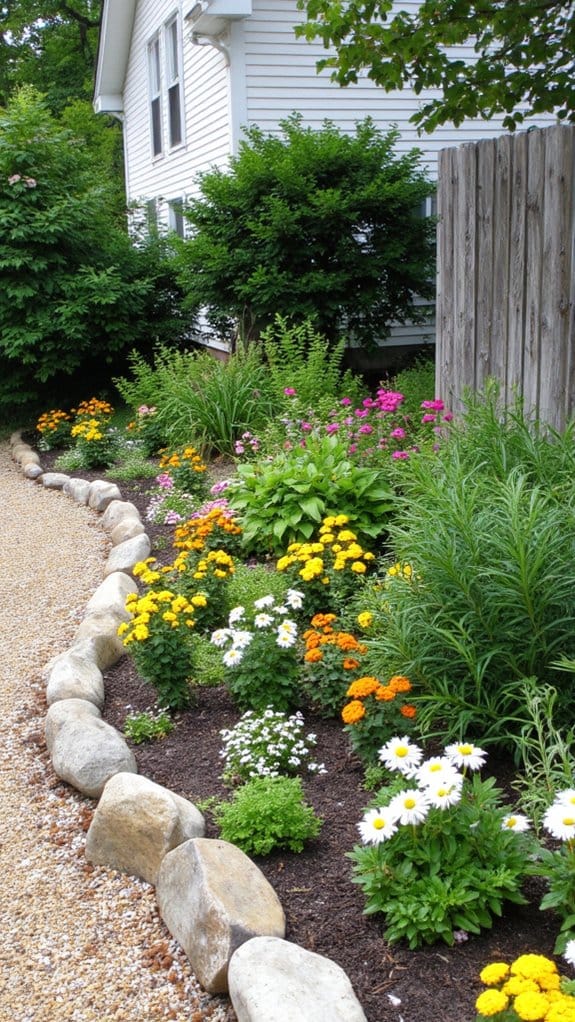
Choosing the right shape for your flower bed sets the stage, but incorporating edging takes it to another level by providing a clean, defined look.
I love using materials like stone, brick, or metal to create boundaries that not only enhance the design but also keep mulch and soil in place.
It’s a simple touch that instantly elevates the overall appearance of my garden.
Layering Plants for Visual Depth
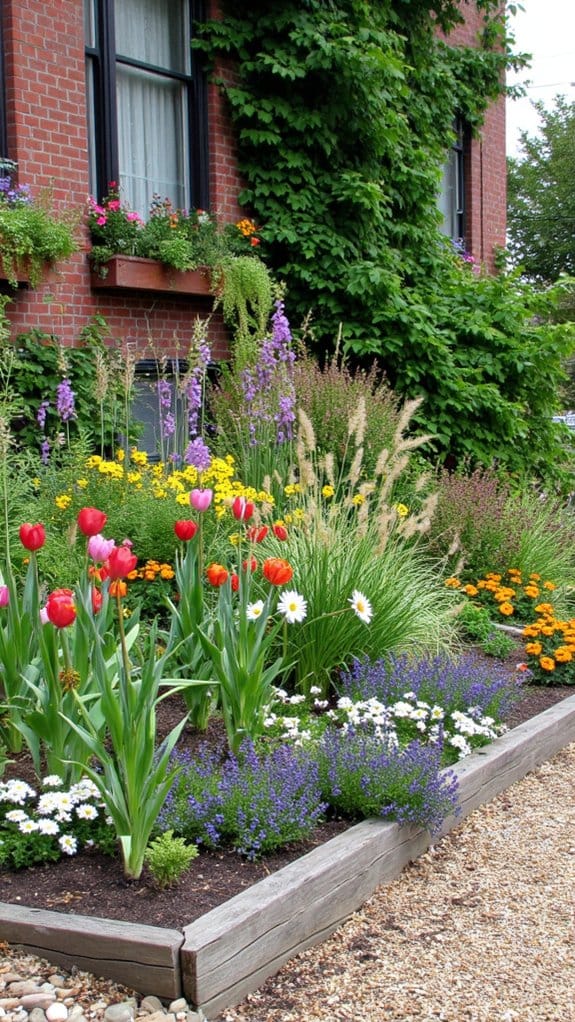
To create a vibrant and inviting flower bed, layering plants not only adds visual depth but also brings a sense of harmony to the design.
I like to place taller plants at the back, medium ones in the middle, and shorter varieties in the front. This arrangement draws the eye and creates a lush, full look, making my flower bed truly stand out.
Mixing Perennials and Annuals for Year-Round Color
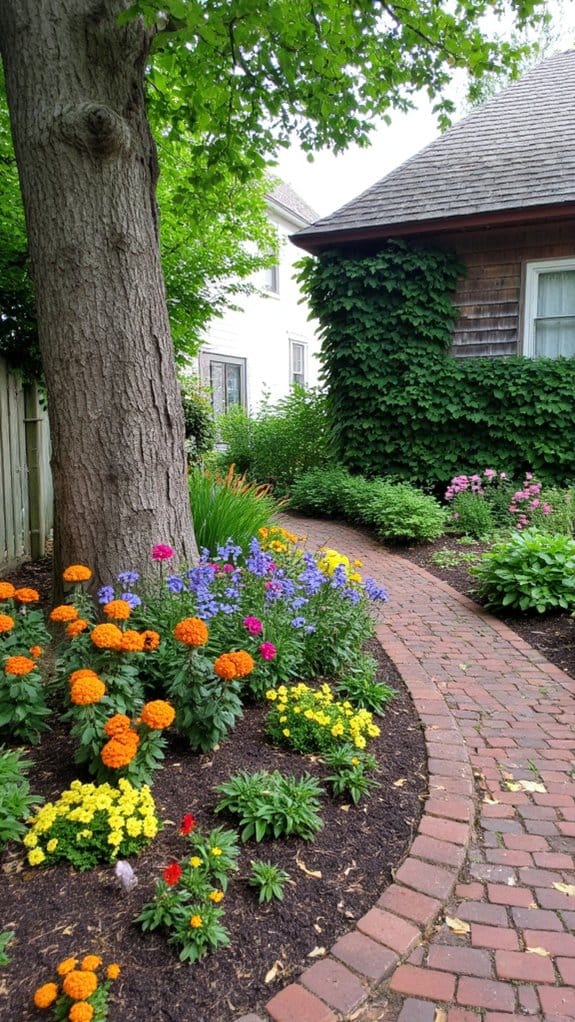
While I love the beauty of a flower bed in full bloom, mixing perennials and annuals guarantees that my garden stays vibrant throughout the seasons.
Perennials bring lasting structure and reliability, while annuals add bursts of color that change with the months.
This combination keeps my garden lively, ensuring there’s always something new to admire, no matter the time of year.
Creating a Vibrant Color Scheme
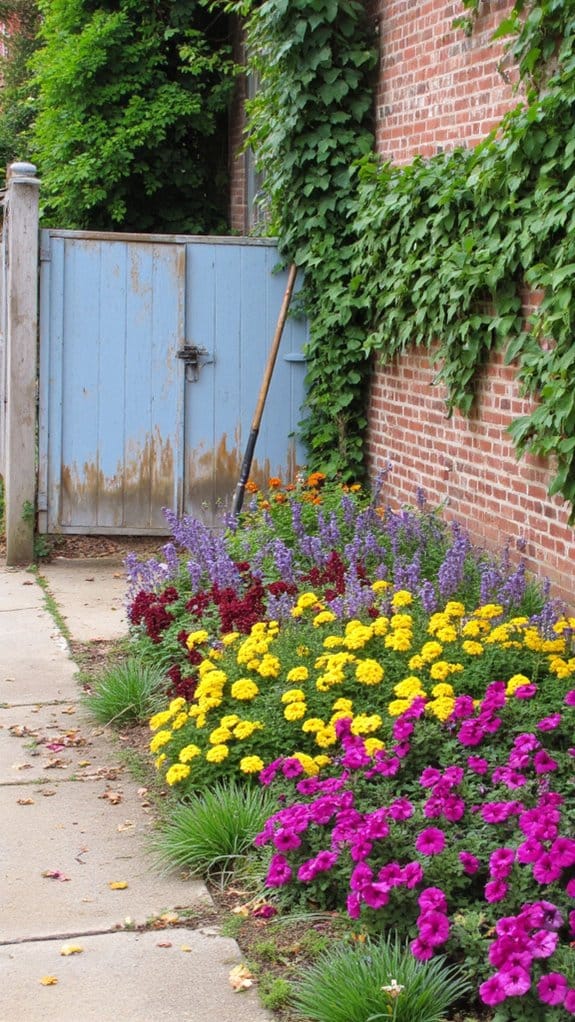
After establishing a solid foundation with perennials and annuals, I love to focus on creating a vibrant color scheme that truly brings my garden to life.
I mix bold hues like reds and yellows with softer pastels to create contrast. Grouping similar colors together adds depth, while varying plant heights enhances visual interest.
This approach transforms my garden into an enchanting, lively space.
Using Focal Points to Draw the Eye
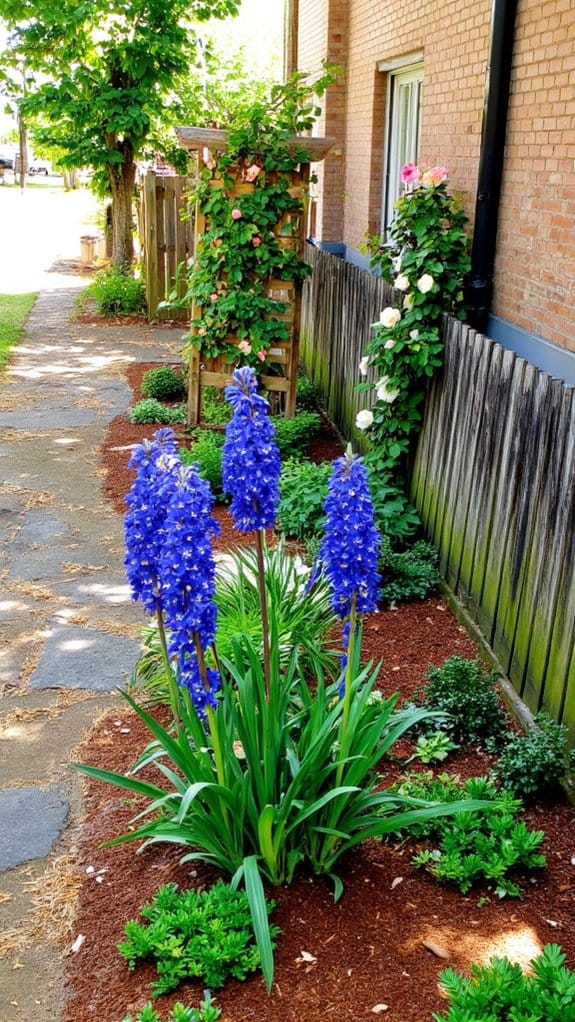
In my garden, having one or two focal points can make all the difference in drawing the eye and creating a sense of harmony.
I love using a striking sculpture or a vibrant flower arrangement as a centerpiece. These elements not only anchor the design but also guide visitors through the space, inviting them to explore every corner of my garden.
Adding Decorative Rocks and Gravel for Texture
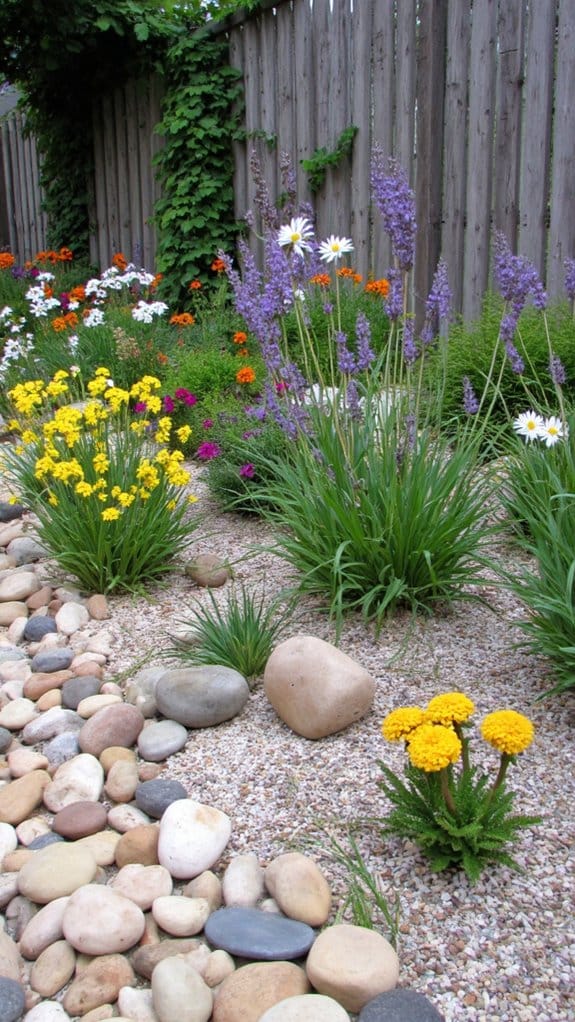
Adding decorative rocks and gravel can truly elevate the texture and visual appeal of your garden flower bed.
I love how these materials create a stunning contrast against vibrant blooms. You can choose different sizes and colors to match your theme.
Plus, they help with drainage and weed control, making maintenance easier. Incorporating them adds a polished touch to any garden design!
Incorporating Vertical Elements With Trellises
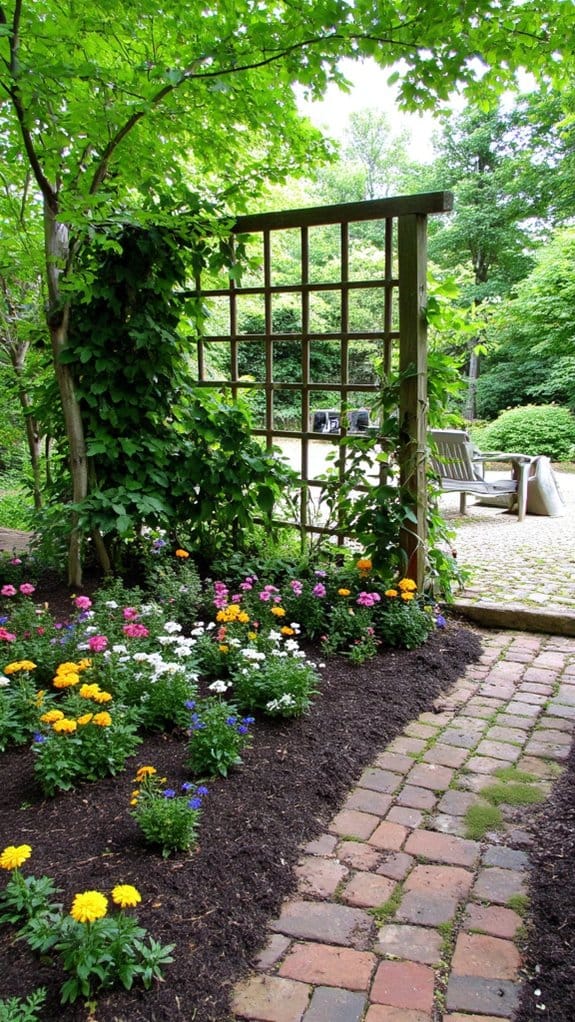
While I often focus on the beauty of flowers, incorporating vertical elements with trellises can transform your garden flower bed into a stunning focal point.
Trellises provide support for climbing plants, adding height and depth. I love training vines and flowering plants to weave through them, creating a dynamic display that draws the eye and enhances the overall design of my garden.
Utilizing Container Gardens for Flexibility
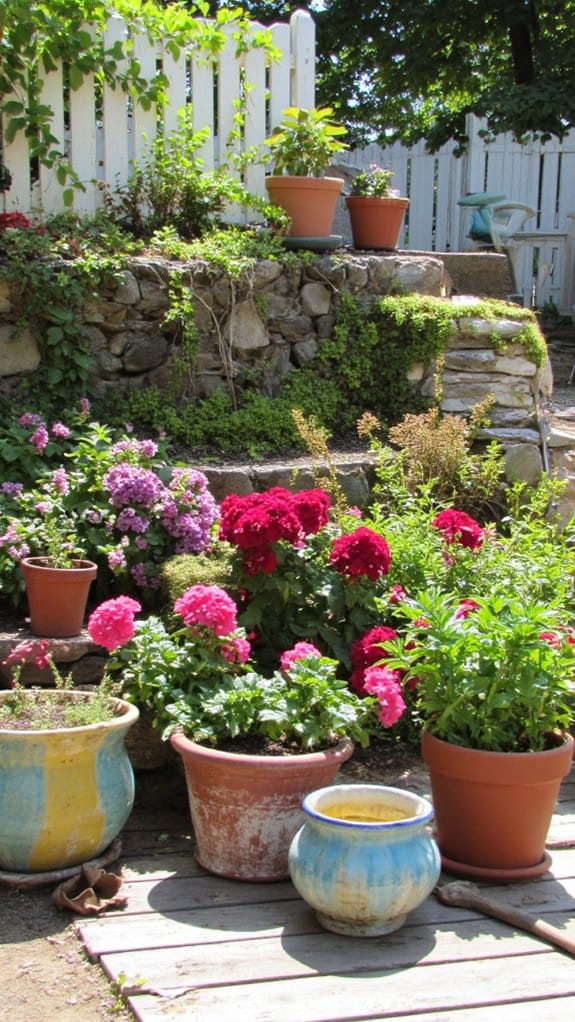
Container gardens offer incredible flexibility, allowing me to create vibrant displays of flowers in any space I choose.
I love how I can easily rearrange pots to suit my mood or the season. Whether it’s a sunny balcony or a shaded corner, these containers let me mix and match colors and textures, ensuring my garden always feels fresh and inviting.
Themed Flower Bed Design Ideas: Cottage, Modern, or Tropical
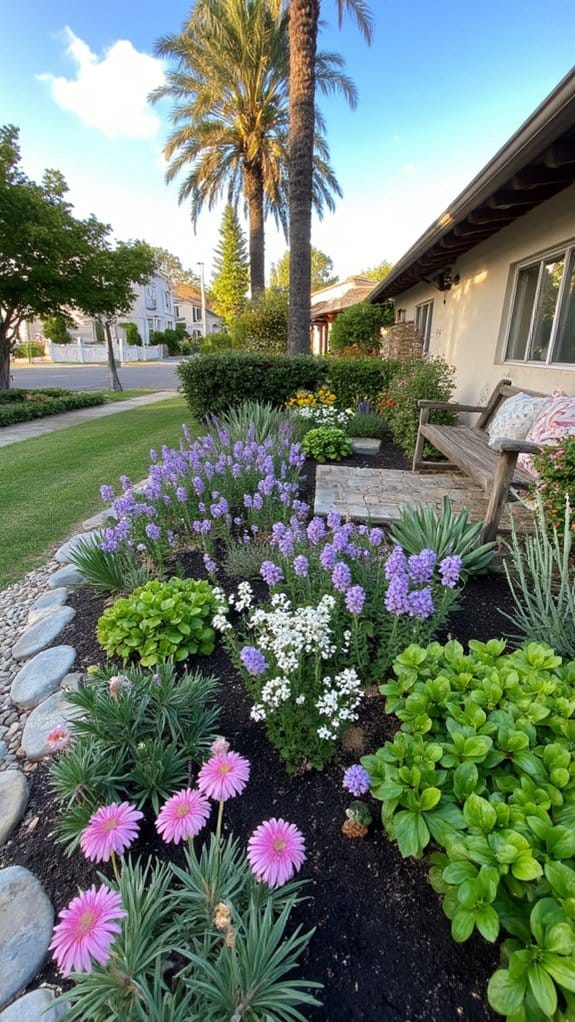
When I think about designing a flower bed, I often find myself drawn to specific themes that reflect my personality and style.
Designing a flower bed is a personal journey, revealing themes that showcase my unique style and personality.
A cozy cottage garden brings warmth with soft pastels and wildflowers.
For a modern twist, I love sleek lines and bold colors.
If I’m in the mood for adventure, a tropical theme with vibrant blooms and lush foliage always excites me.
Make Your Flower Bed a Pollinator Haven
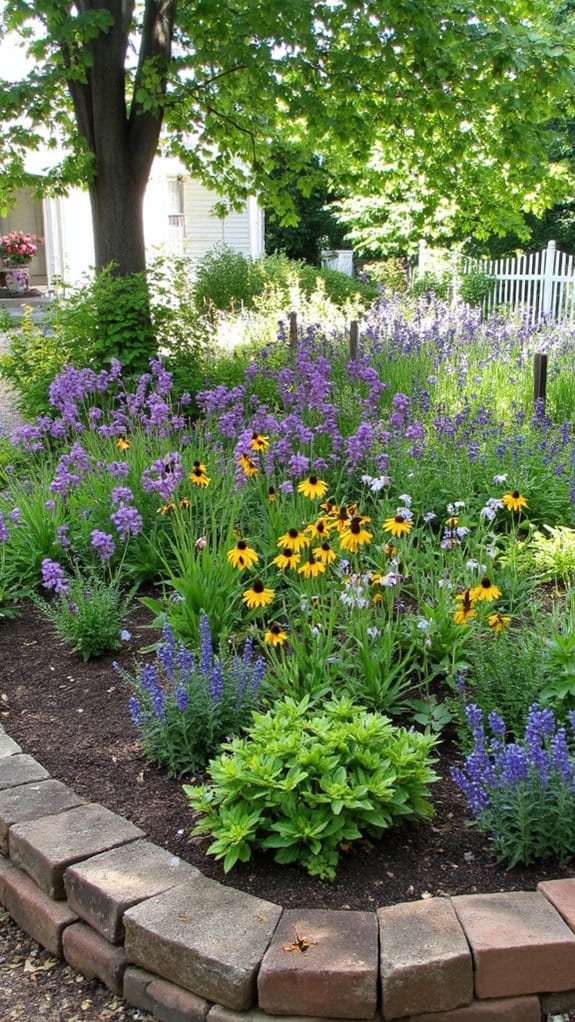
How can I transform my flower bed into a sanctuary for pollinators?
I focus on planting native flowers like coneflowers and milkweed, which attract bees and butterflies.
I avoid pesticides that harm these essential creatures and add a shallow water source for hydration.
Low-Maintenance Plants for Busy Gardeners
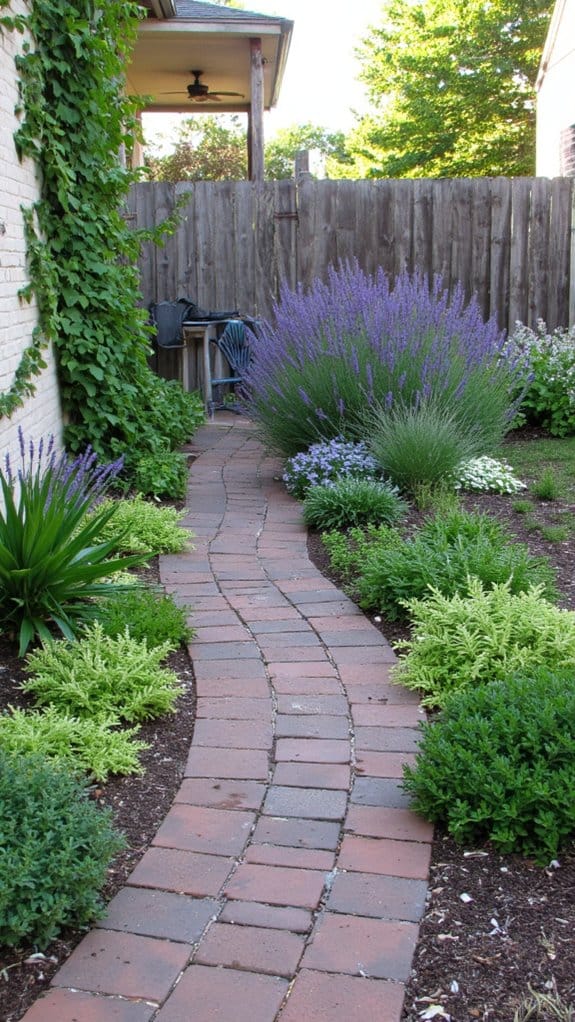
While juggling a busy schedule, I still find joy in my garden by choosing low-maintenance plants that thrive with minimal care.
I love incorporating succulents, lavender, and ornamental grasses—they require little watering and are incredibly resilient.
These plants not only enhance my flower beds but also save me precious time, allowing me to enjoy my outdoor space without constant upkeep.
Adding Height With Raised Flower Beds
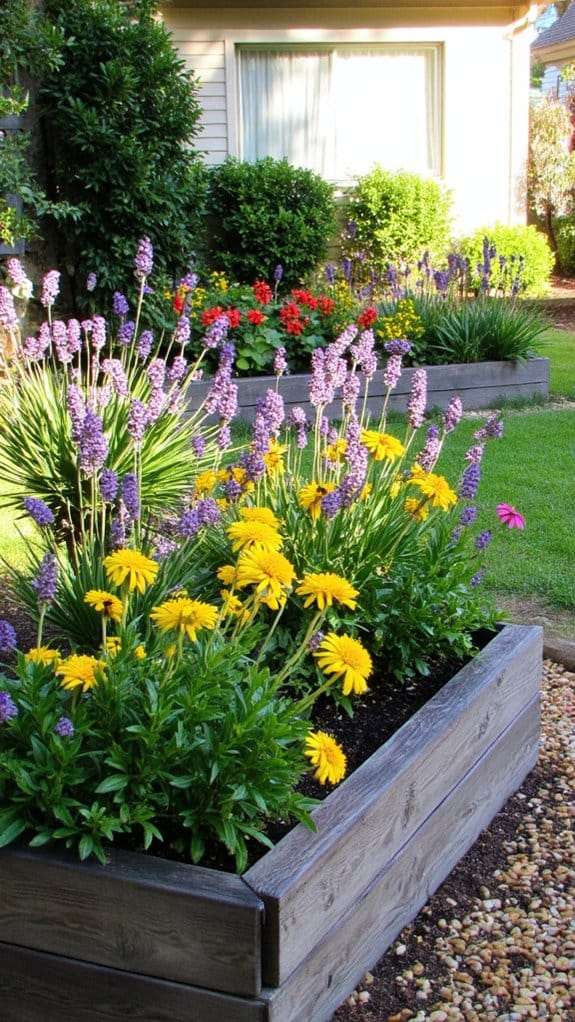
Raised flower beds can transform your garden by adding visual interest and height.
I love how they create layers, making my flowers stand out beautifully. Plus, they’re easier to maintain, reducing the strain on my back.
I often mix different heights and textures, ensuring a dynamic look. If you want to elevate your garden aesthetic, raised beds are a fantastic choice!
Using Ground Covers to Reduce Weeds
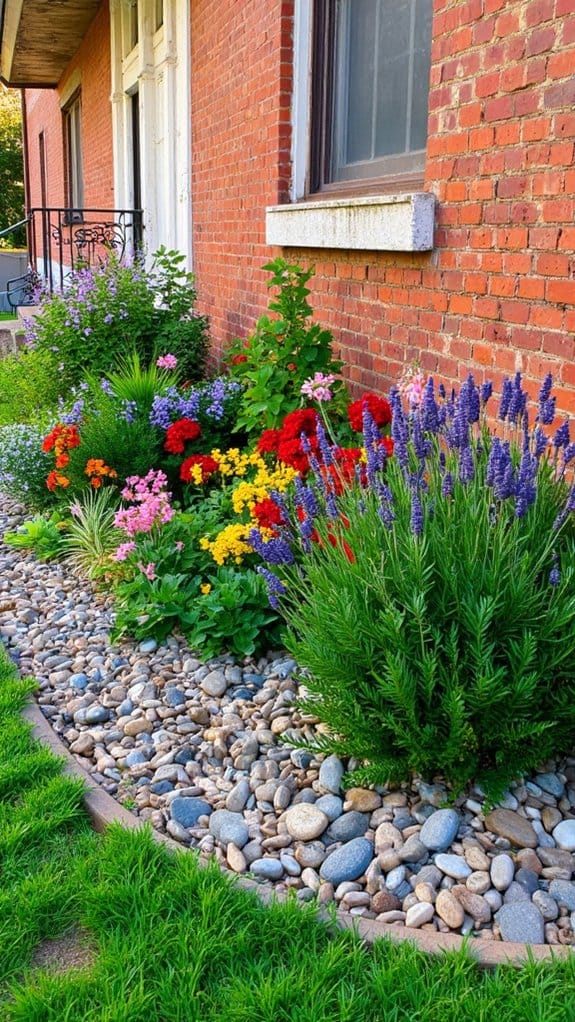
Incorporating ground covers into your garden can considerably reduce weed growth, making maintenance a breeze.
I’ve found that plants like creeping thyme and clover not only suppress weeds but also add beauty to my flower beds. They spread quickly, filling in bare spots while keeping the soil moist.
Design a Fragrant Flower Bed
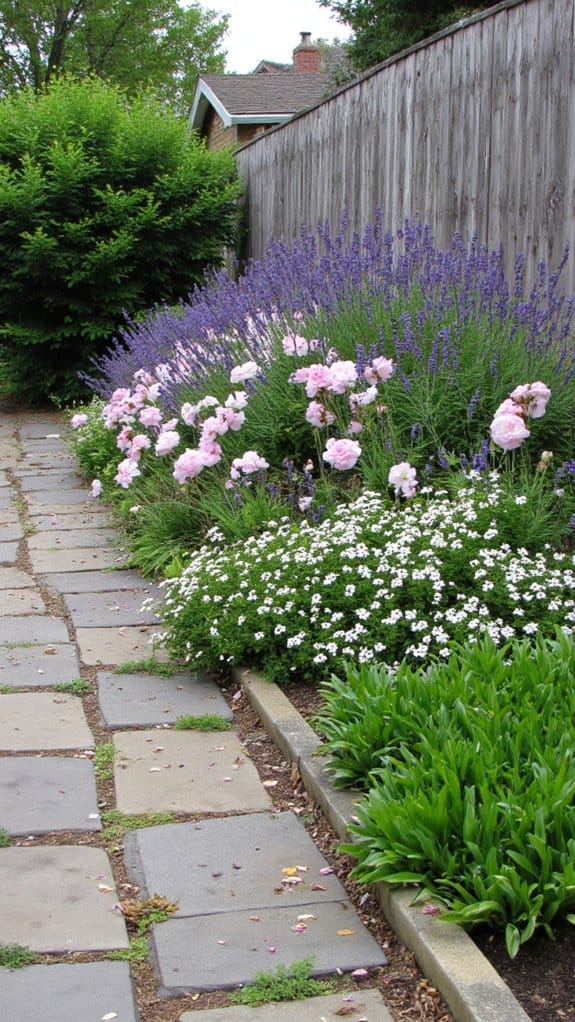
Designing a fragrant flower bed can transform your garden into a sensory delight, inviting you to linger among the blooms.
I love incorporating plants like lavender, jasmine, and peonies for their enchanting scents.
Mixing heights and colors adds visual interest, but don’t forget to reflect on the blooming seasons.
Consider the interplay of heights and colors for a captivating visual tapestry, while keeping blooming seasons in mind for continuous beauty.
This way, your garden remains a fragrant retreat throughout the warmer months.
Planning for Seasonal Blooms
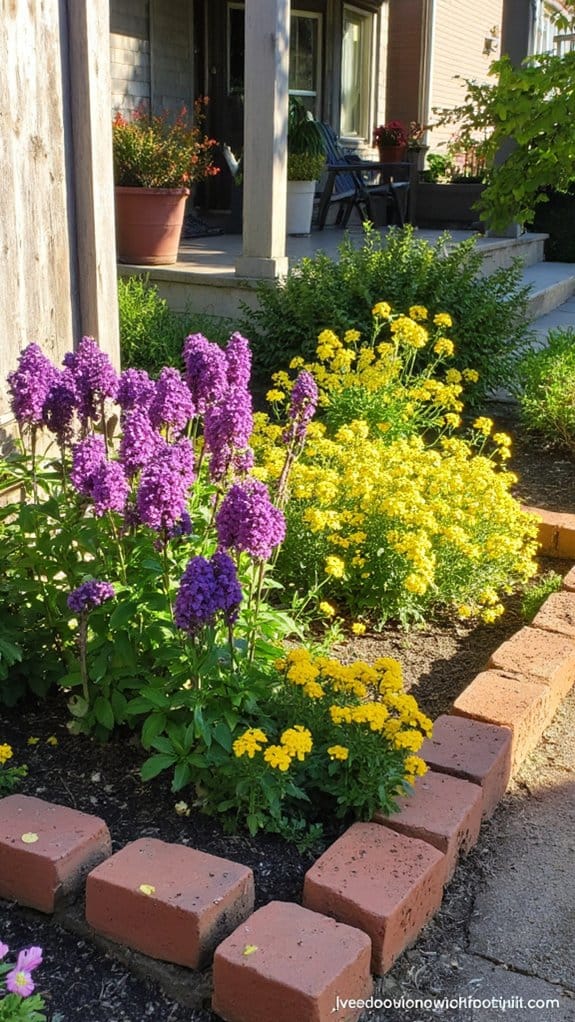
While planning for seasonal blooms, I find it essential to choose flowers that thrive at different times of the year.
I love mixing early spring daffodils with summer zinnias and fall chrysanthemums. This creates a vibrant display that evolves throughout the seasons.
Benefits of Native Plants in Sustainable Gardening
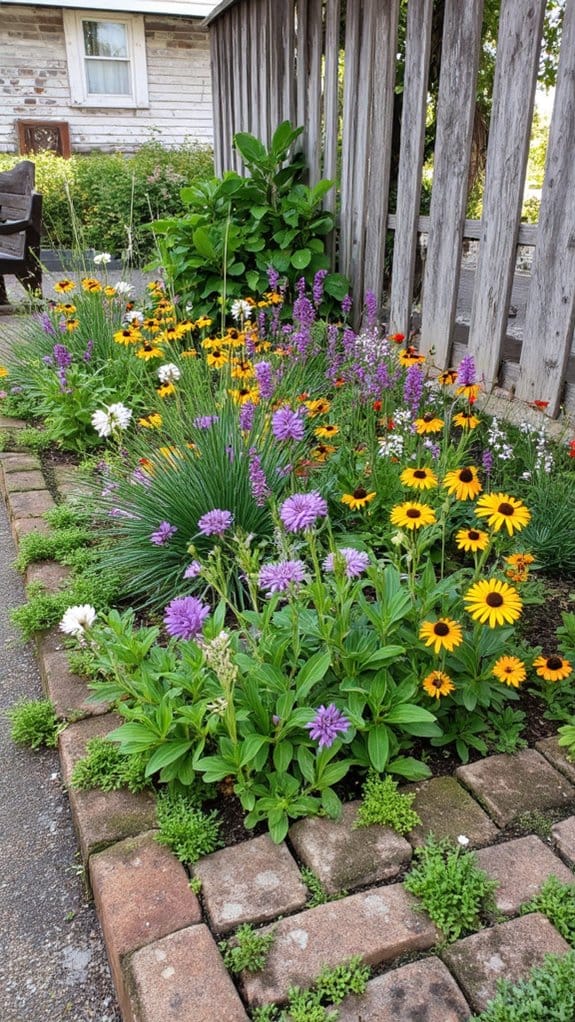
Choosing the right plants not only enhances the beauty of your garden but also supports local ecosystems.
I’ve discovered that native plants require less water and maintenance, making them ideal for sustainable gardening. They attract beneficial insects and provide habitats for wildlife.
Designing for Wildlife: Bees, Butterflies, and Birds
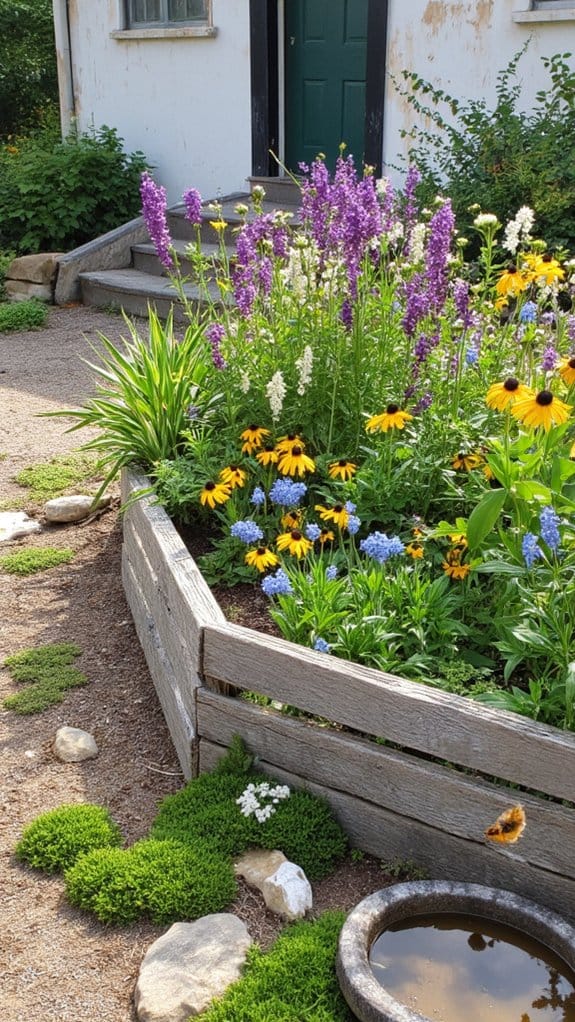
Creating a garden that attracts bees, butterflies, and birds can transform your outdoor space into a vibrant ecosystem.
I love incorporating a variety of native flowering plants that provide nectar and pollen.
Adding water sources like birdbaths and avoiding pesticides encourages wildlife to thrive.
Create a Flower Bed for Shade Areas
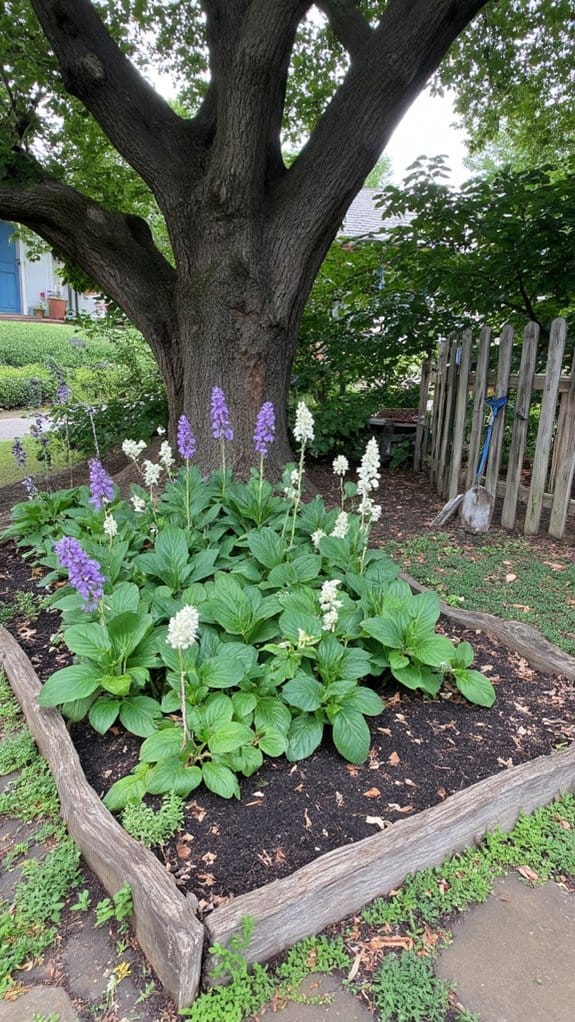
After attracting wildlife to my garden, I often find myself looking for ways to enhance those shaded areas that can be tricky when it comes to flower beds.
I’ve discovered that using shade-tolerant plants, like astilbes and hostas, creates a lush, vibrant display. Layering different heights adds depth, while incorporating ferns offers texture.
These choices transform shady spots into beautiful, inviting spaces.
Colorful Mulch for Enhanced Visual Appeal
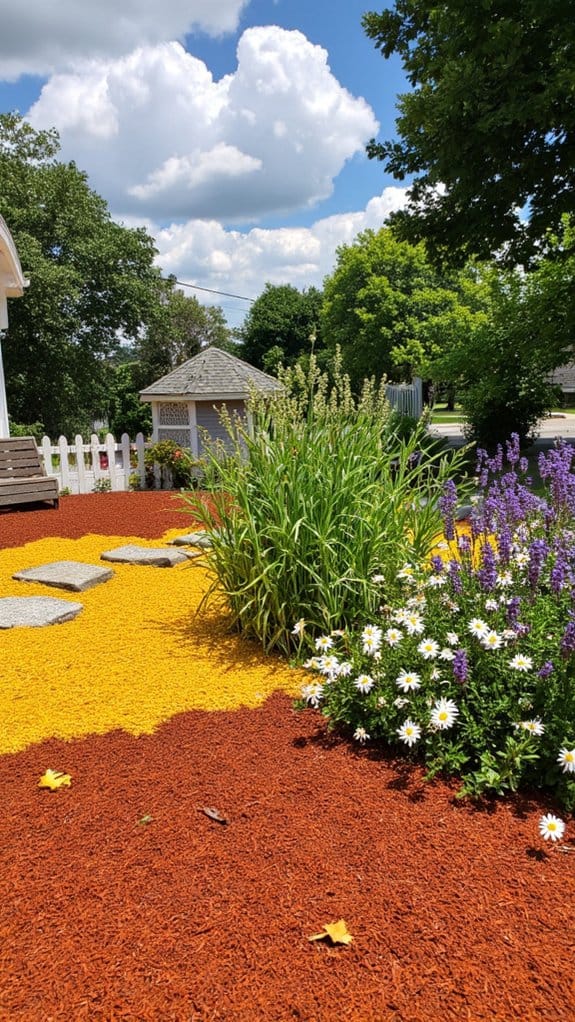
While it might seem like a small detail, adding colorful mulch can greatly elevate the visual appeal of your flower bed.
I love using vibrant shades like red, black, or gold to complement the flowers. It not only enhances the overall look but also helps retain moisture and suppress weeds.
Trust me, a little color goes a long way in creating a polished garden!
Planting for Texture: Foliage Variety Matters
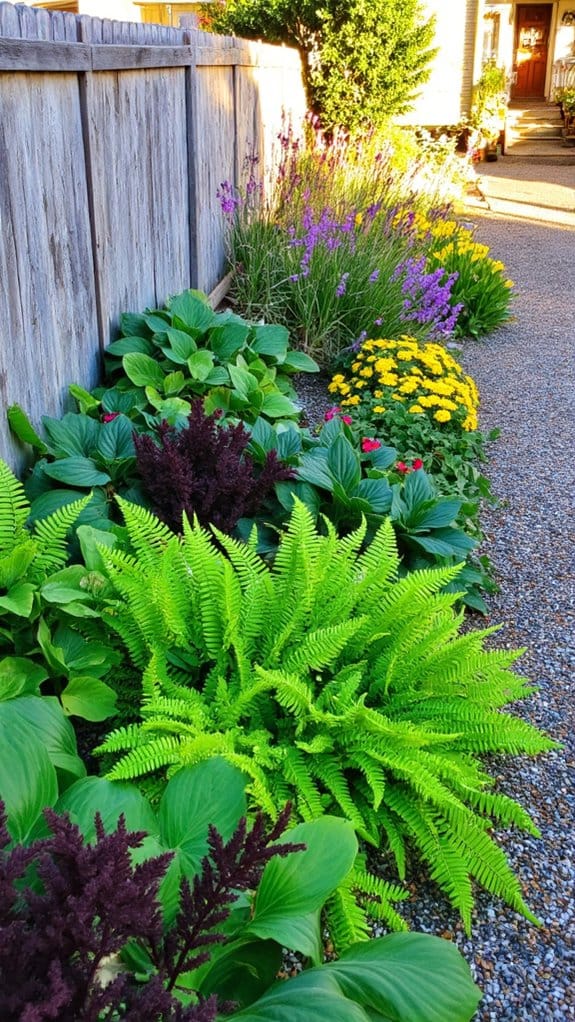
Colorful mulch sets the stage, but it’s the variety of foliage that truly brings a flower bed to life.
I love mixing textures, like the soft leaves of lamb’s ear with the bold fronds of ferns. This contrast creates depth and interest.
Don’t shy away from incorporating different shapes and sizes; it adds a dynamic quality that keeps the eye engaged throughout the seasons.
Edible and Ornamental Plant Pairings
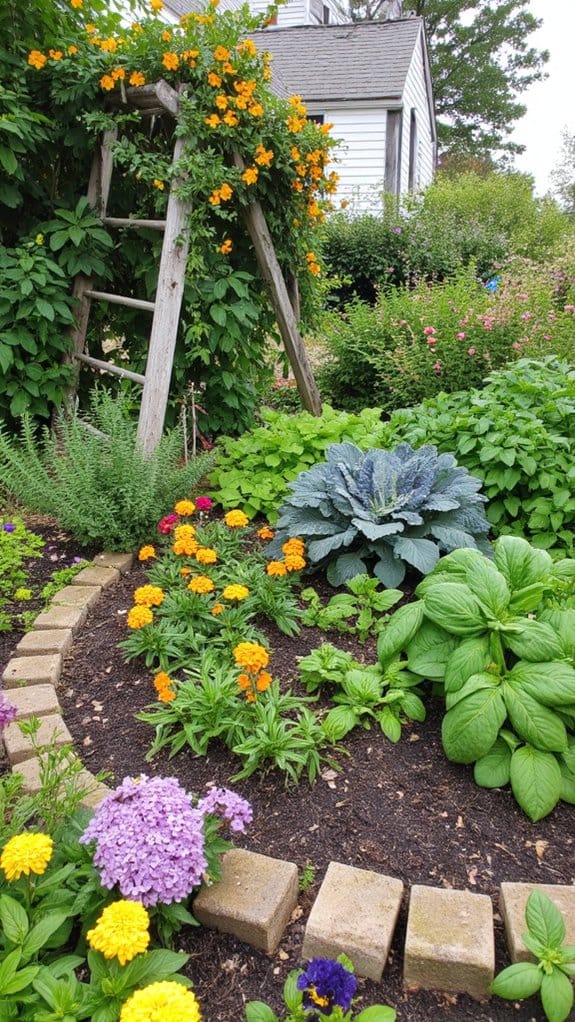
When I design a flower bed, I love blending edible plants with ornamental ones for a stunning and functional display.
For instance, I pair vibrant nasturtiums with leafy greens like kale, creating a feast for the eyes and the palate.
Mixing herbs like basil and chives with colorful petunias not only adds beauty but also enhances the garden’s usability.
It’s a win-win!
Planning for Sun and Shade: A Balanced Approach
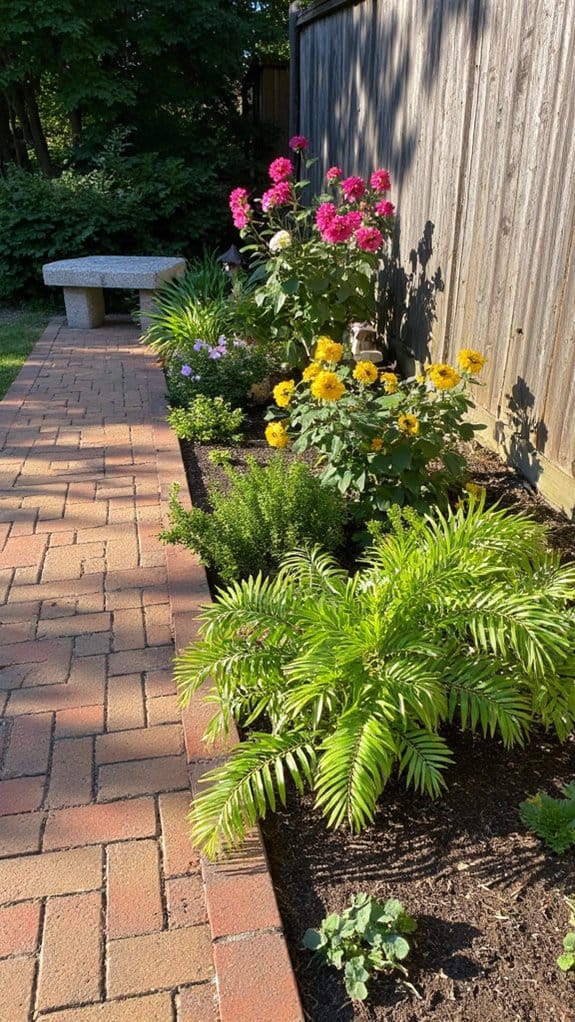
Blending edible and ornamental plants can create a vibrant garden, but it’s important to contemplate the sunlight and shade your flower bed will receive.
I find mapping out the sun’s path helps me determine where to place each plant. Some thrive in full sun, while others prefer partial shade.
Balancing these needs guarantees a healthy, flourishing garden that’s visually appealing and productive.
Create Accessible Pathways in Your Garden
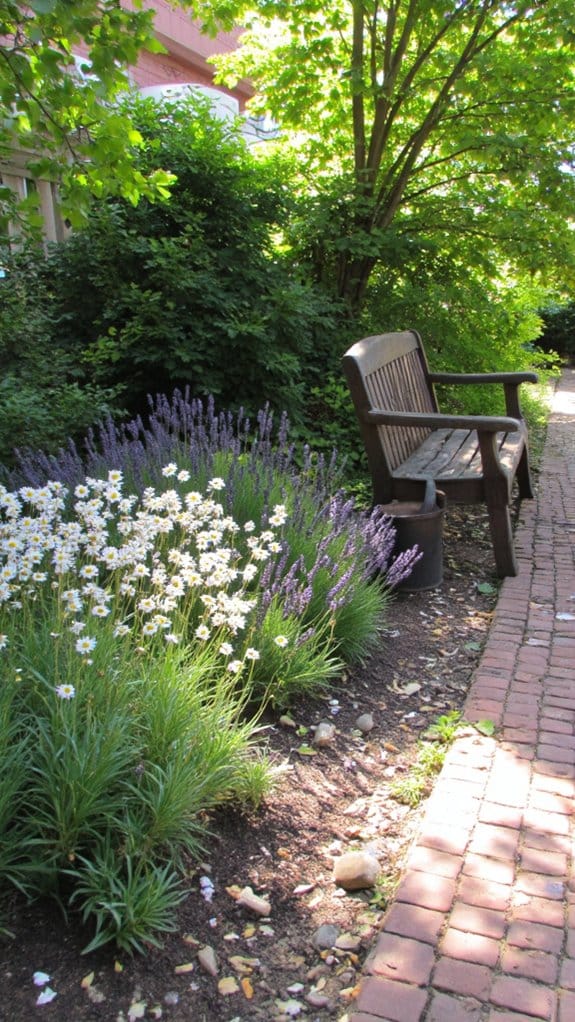
Creating accessible pathways in your garden not only enhances its aesthetic appeal but also guarantees that you can easily navigate through your plants.
I love using materials like gravel or stepping stones to define my paths. It keeps everything organized and adds a polished look.
Plus, I can reach my flowers for maintenance without trampling on them, ensuring they thrive beautifully.
