


Hey there, fellow home and garden enthusiasts! If you’re itching to spruce up your outdoor spaces, creating a charming flower bed might just be the way to go. With a bit of planning and some clever ideas, you can have a colorful and inviting garden in no time. Think about adding different textures and native plants for a unique touch that’s easy to maintain. Let’s explore some delightful ideas to keep your flower bed looking fresh and fabulous.
Create a Perennial Border for Year-Round Beauty
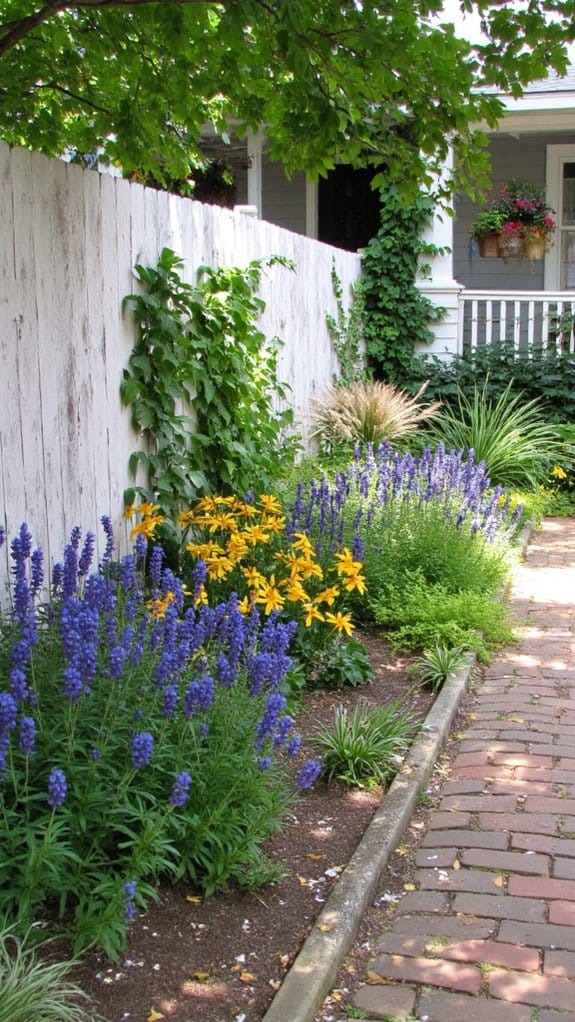
When I think about creating a perennial border, I envision a vibrant tapestry of blooms that offers color and interest throughout the seasons.
I love selecting a mix of heights and textures, combining tall delphiniums and soft daisies for visual appeal.
Planting in layers guarantees that something’s always in bloom, creating a beautiful backdrop for my garden’s ever-changing landscape.
Choose Colorful Annuals for Immediate Impact
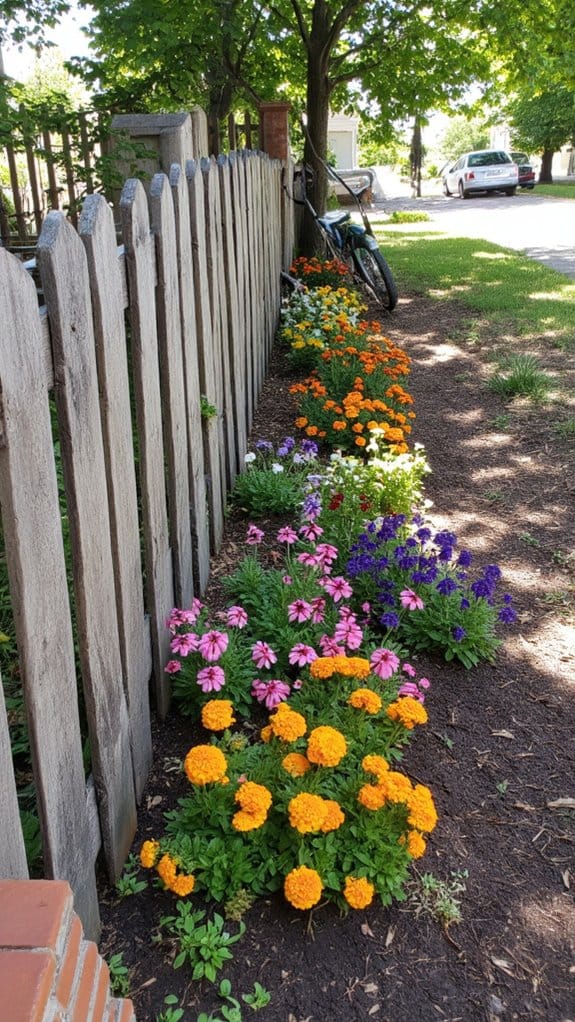
Choosing colorful annuals can transform any flower bed with immediate impact.
I love how these vibrant blooms bring energy and life to my garden. They’re perfect for quick visual appeal, and I often mix various shades to create stunning displays.
Plus, annuals are easy to care for, allowing me to enjoy their beauty without a lot of maintenance.
You won’t regret adding them!
Maximize Space With Versatile Container Gardens
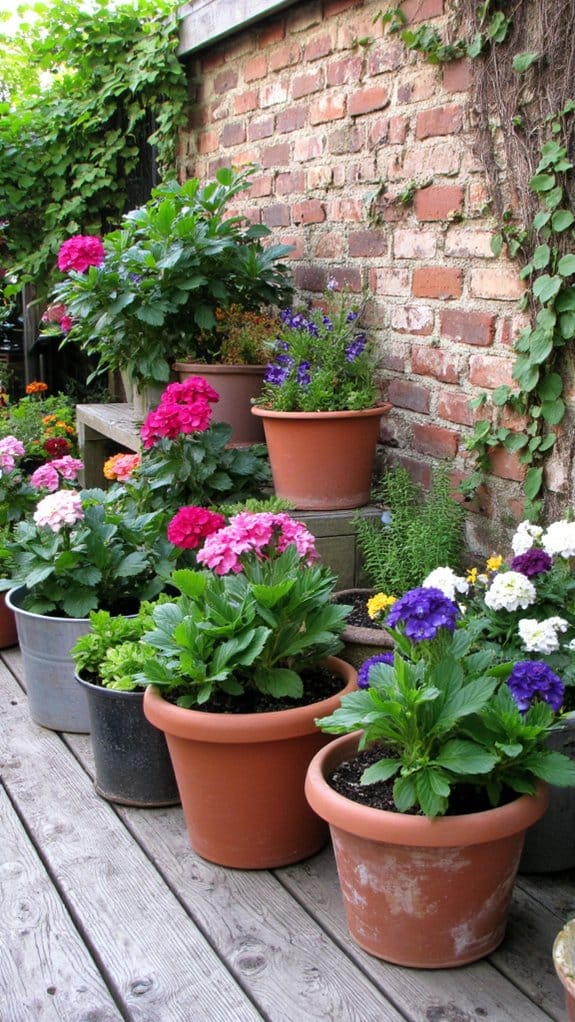
While I love the vibrant colors of annuals, container gardens offer a unique way to maximize space and showcase creativity in any flower bed.
I can easily move them around to create different focal points and adapt to my garden’s layout.
Plus, they allow for experimenting with various plant combinations, adding interest and charm without overwhelming my outdoor area.
Use Native Plants for Low-Maintenance Flower Beds
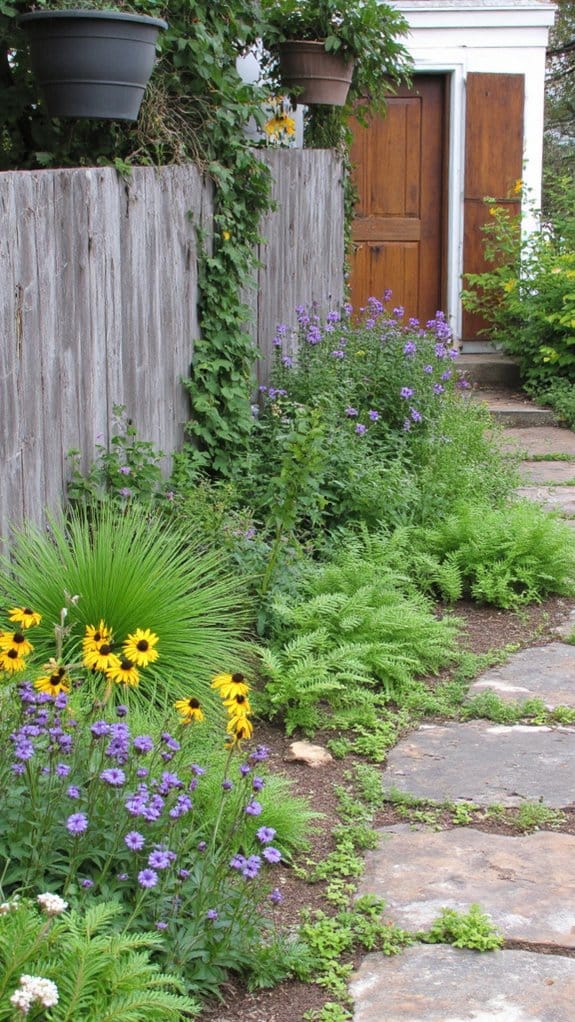
Using native plants not only enhances the beauty of my flower bed but also simplifies maintenance.
These plants thrive in my local climate and soil, requiring less water and fewer chemicals.
I love how they attract local pollinators, creating a vibrant ecosystem.
Plus, I spend less time weeding and worrying about pests, allowing me to enjoy my garden even more.
Build a Raised Flower Bed for Easier Access
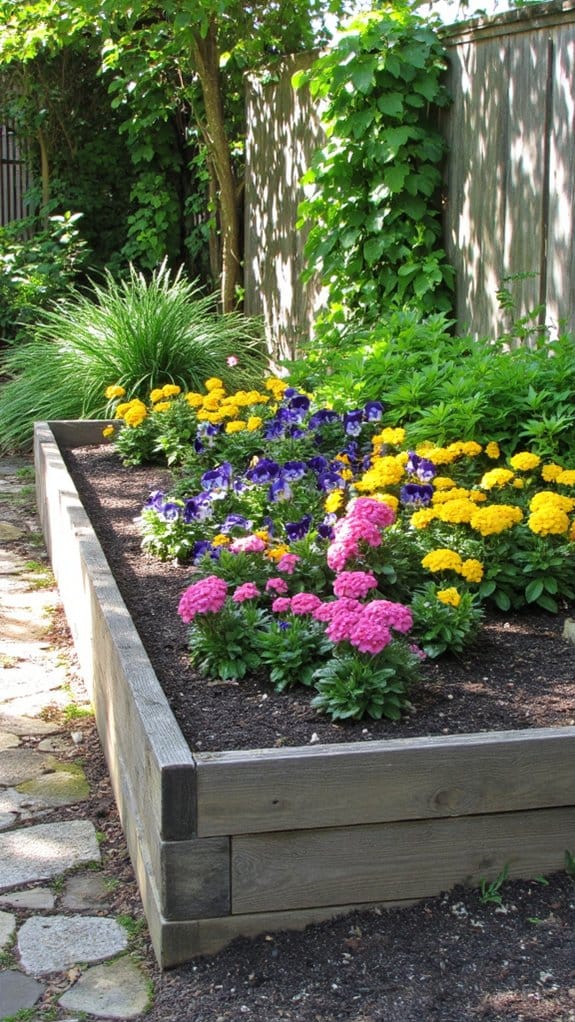
Building a raised flower bed has transformed my gardening experience, making it not only more accessible but also visually appealing.
I love how I can easily tend to my flowers without bending down too much. Plus, the height adds a lovely dimension to my yard.
It’s perfect for showcasing vibrant blooms while keeping weeds at bay. You’ll enjoy this simple upgrade!
Combine Ornamental and Edible Flowers for Aesthetic Appeal
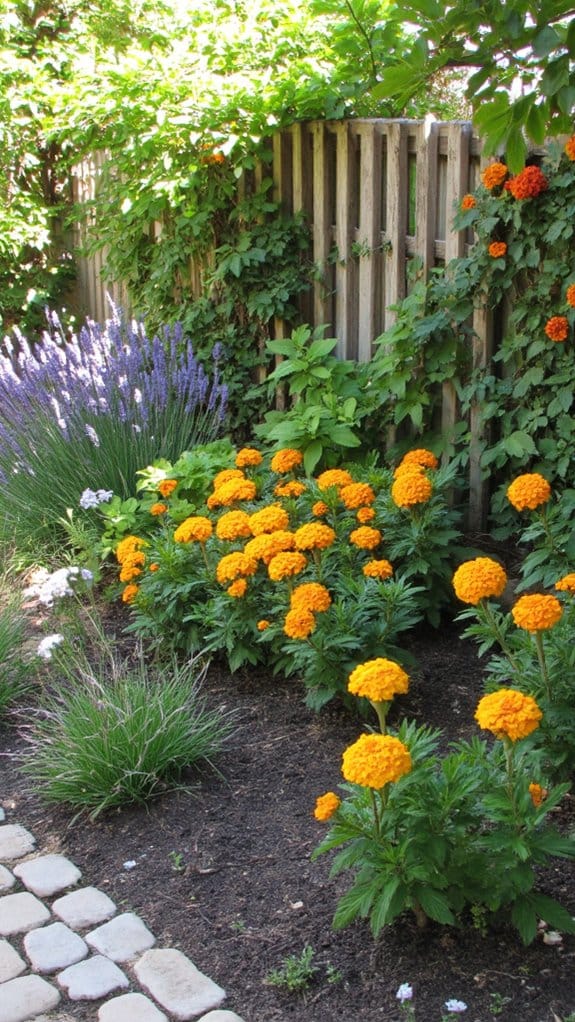
Combining ornamental and edible flowers in my garden not only enhances the beauty of the space but also adds a delightful twist to my culinary endeavors.
I love incorporating vibrant nasturtiums and fragrant marigolds alongside herbs like basil and rosemary. This mix creates a stunning visual impact while providing fresh ingredients for my meals.
Plus, it’s a feast for the eyes and palate!
Choose Drought-Resistant Flowers for Water Savings

When I want to create a beautiful garden while conserving water, choosing drought-resistant flowers becomes essential.
These plants thrive in dry conditions and require less maintenance, which saves me time and effort.
I love incorporating vibrant varieties like lavender, succulents, and coneflowers, as they add color without guzzling water.
Layer Plants by Height for Visual Depth
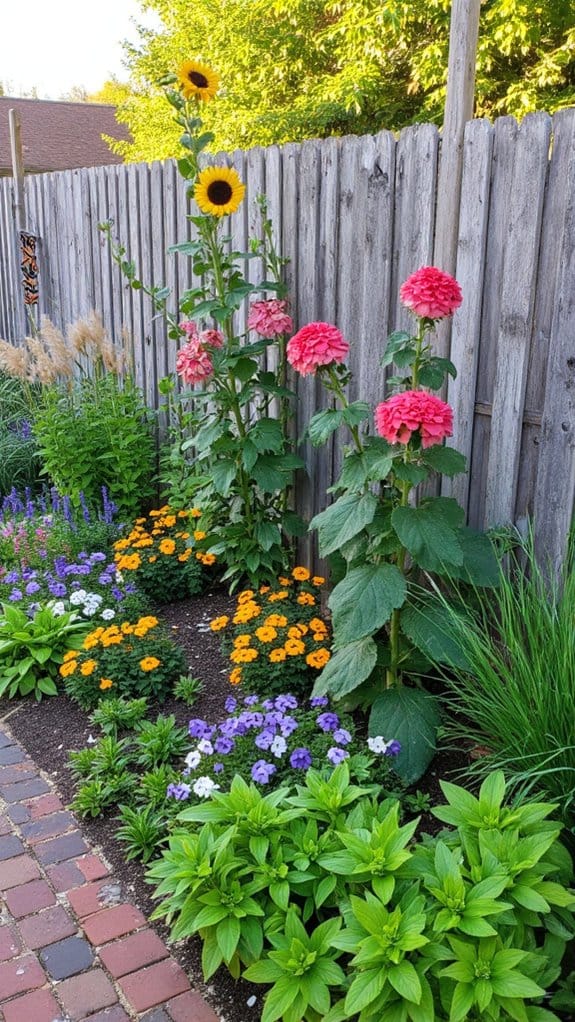
To create a visually appealing flower bed, I find that layering plants by height makes a significant difference.
By placing taller plants at the back and shorter ones in front, I create depth and dimension. This arrangement not only draws the eye but also allows each plant to shine.
It’s a simple yet effective way to enhance your garden’s overall beauty.
Add Trellises for Climbing Flowers and Vines
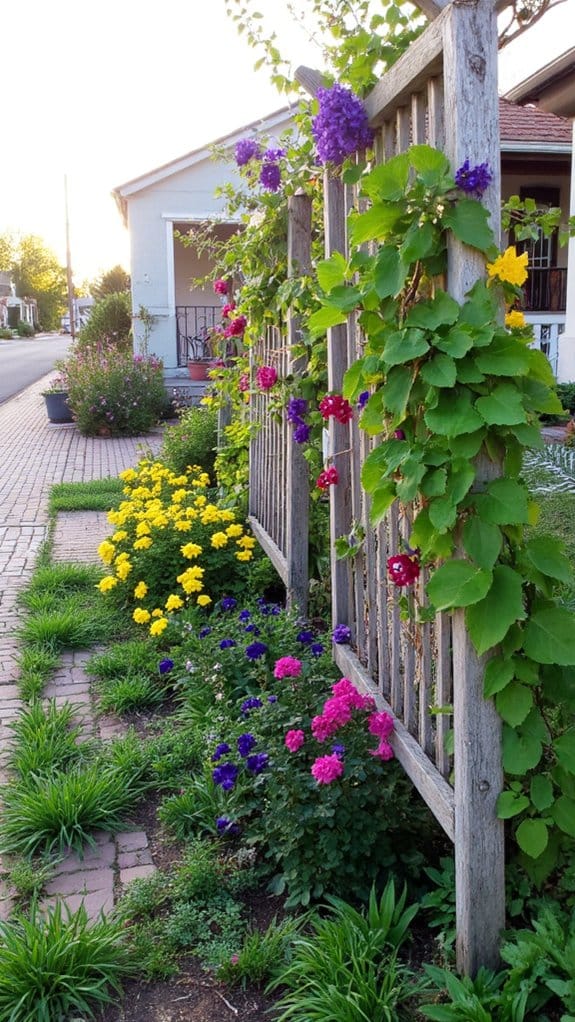
Incorporating trellises into your flower bed can transform the way climbing flowers and vines add character to your garden.
I love how they create vertical interest, drawing the eye upward and adding depth.
Choose trellises that complement your garden style, and plant vibrant climbers like sweet peas or morning glories.
You’ll quickly see how they elevate the overall look of your space!
Apply Mulch to Retain Moisture and Suppress Weeds
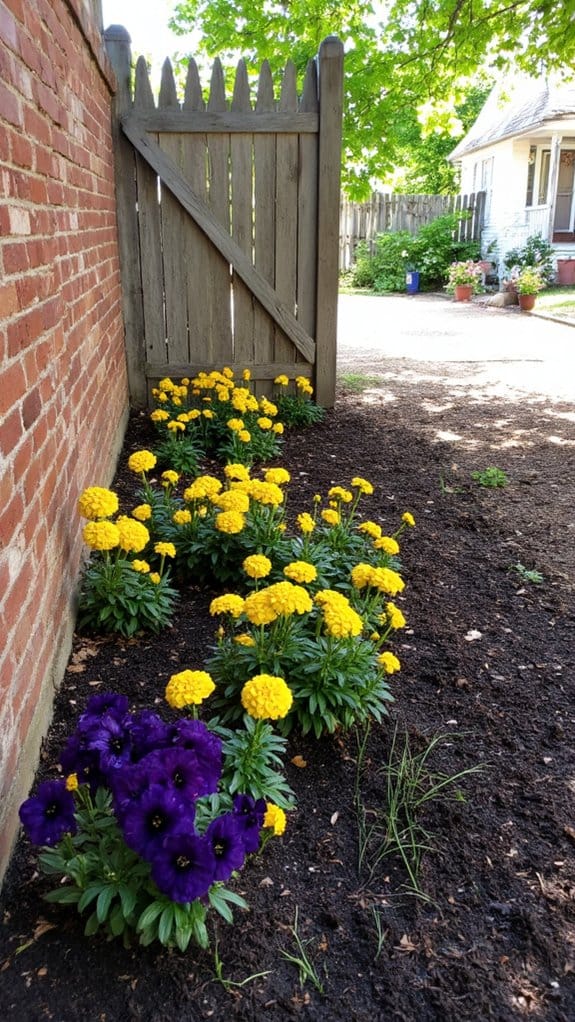
Mulch acts like a protective blanket for your flower bed, helping to retain moisture and suppress those pesky weeds.
I always choose organic mulch, like wood chips or straw, for its natural benefits. It not only keeps the soil moist but also enriches it as it breaks down.
Plus, it gives my flower bed a tidy, finished look. You’ll love the difference!
Create a Fragrant Flower Bed With Scented Blooms

After creating a solid foundation with mulch, it’s time to add another layer of beauty to your flower bed: fragrance.
I love incorporating plants like lavender, jasmine, and sweet alyssum for their delightful scents.
These blooms not only attract pollinators but also create a soothing atmosphere.
These fragrant blooms invite pollinators while nurturing a calming ambiance in your garden.
Plant them in clusters to maximize their aromatic impact and enjoy the sensory experience all season long.
Choose Bold Foliage Plants for Added Texture
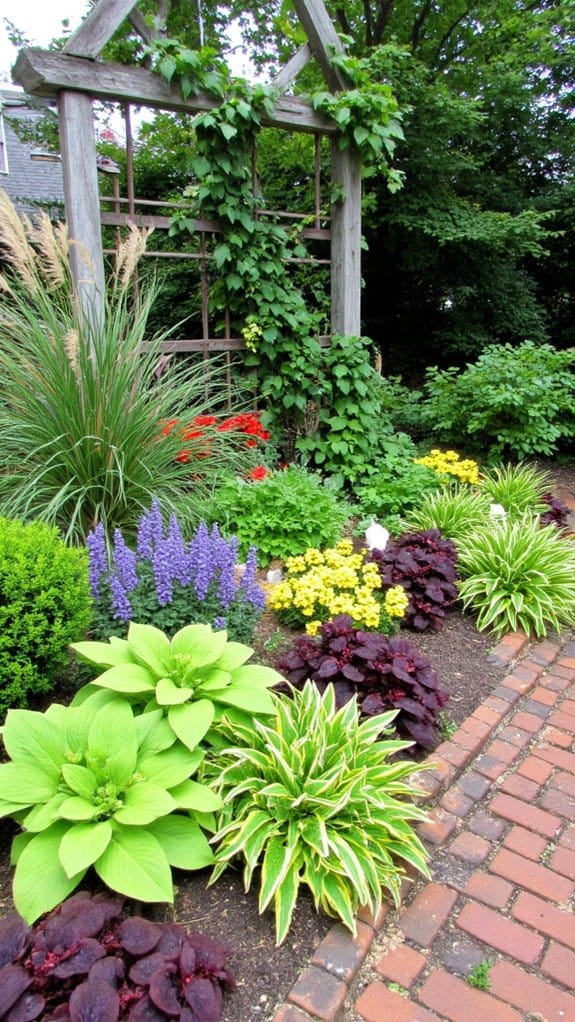
While fragrant flowers can steal the show, bold foliage plants are essential for adding depth and texture to your flower bed.
I love incorporating plants like hostas or ornamental grasses, which provide striking contrasts to colorful blooms. Their varying shapes and shades create visual interest, making the entire arrangement pop.
Don’t underestimate the power of foliage; it truly elevates your garden’s appeal!
Create a Cohesive Color Scheme

To truly make your flower bed stand out, creating a cohesive color scheme is key.
I suggest picking a palette of two to three main colors that complement each other. This approach not only unifies the space but also makes it visually striking.
Consider the bloom times and heights of your plants to maintain balance and harmony throughout the growing season.
Use Recycled Materials for Eco-Friendly Design
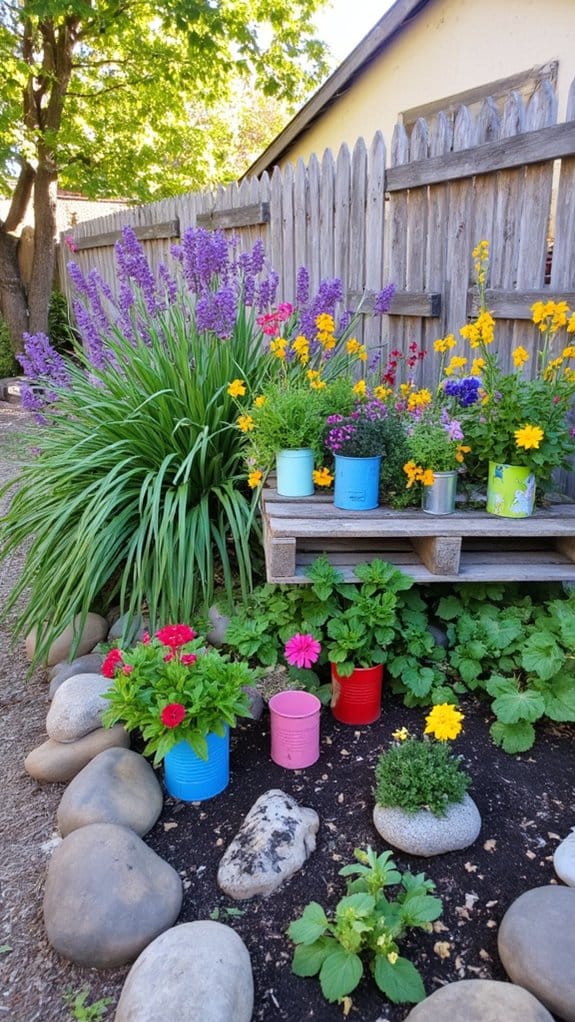
When I think about designing a flower bed, using recycled materials not only enhances my garden’s charm but also supports sustainable practices.
I love repurposing items like old bricks, wooden pallets, or even tin cans. These elements add unique character while keeping waste out of landfills.
Plus, it’s a fun way to express creativity and make my garden truly one-of-a-kind.
Incorporate Seasonal Blooms for Year-Round Color
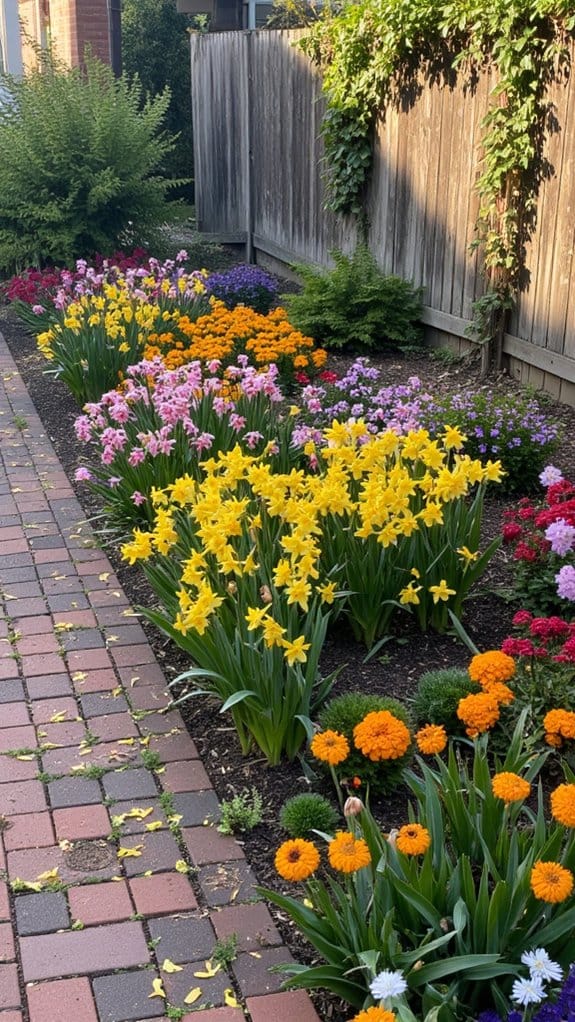
Incorporating seasonal blooms into your flower bed not only keeps the garden vibrant but also allows you to enjoy a variety of colors throughout the year.
I love mixing spring tulips, summer zinnias, autumn chrysanthemums, and winter pansies. This rotation not only guarantees continuous blooms but also creates an ever-changing landscape that keeps my garden fresh and exciting.
It’s a joyful endeavor!
Design a Butterfly Garden With Nectar Plants
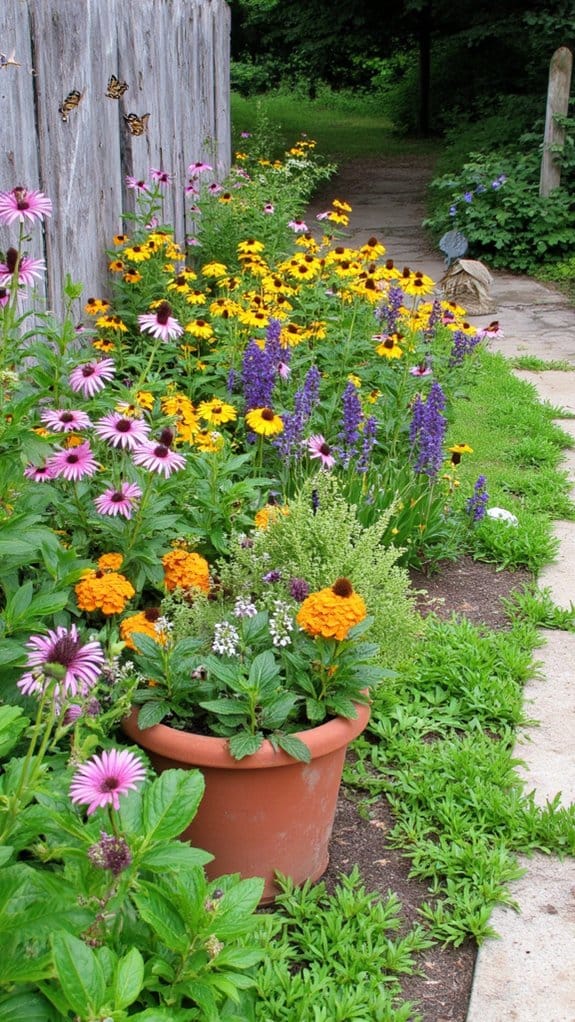
Creating a butterfly garden filled with nectar plants not only attracts these beautiful creatures but also enhances the overall beauty of your outdoor space.
I love choosing plants like milkweed, coneflowers, and butterfly bushes. They’re easy to care for and bloom vibrantly.
Attract Pollinators With Vibrant Flower Choices
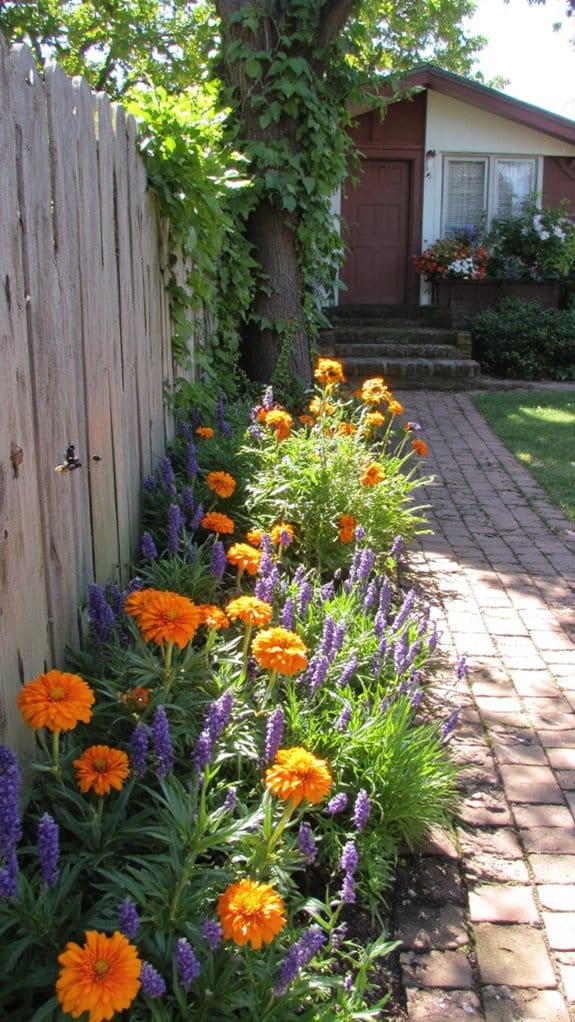
Building on the idea of a butterfly garden, you can further enhance your outdoor space by choosing vibrant flowers that attract a variety of pollinators.
I love planting zinnias, coneflowers, and bee balm. Their bright colors not only create a stunning display but also draw in bees, butterflies, and hummingbirds.
You’ll enjoy watching these creatures thrive in your garden while adding beauty to your landscape.
Define Your Flower Beds With Decorative Edging

While flower beds can be a stunning focal point in any garden, defining their edges with decorative edging can truly enhance their appeal.
I love using materials like stone, wood, or metal to create a clean, defined border. This not only keeps the soil in place but also elevates the overall design, making my flower beds pop and stand out beautifully.
Plant Woodland Plants for a Shaded Flower Bed
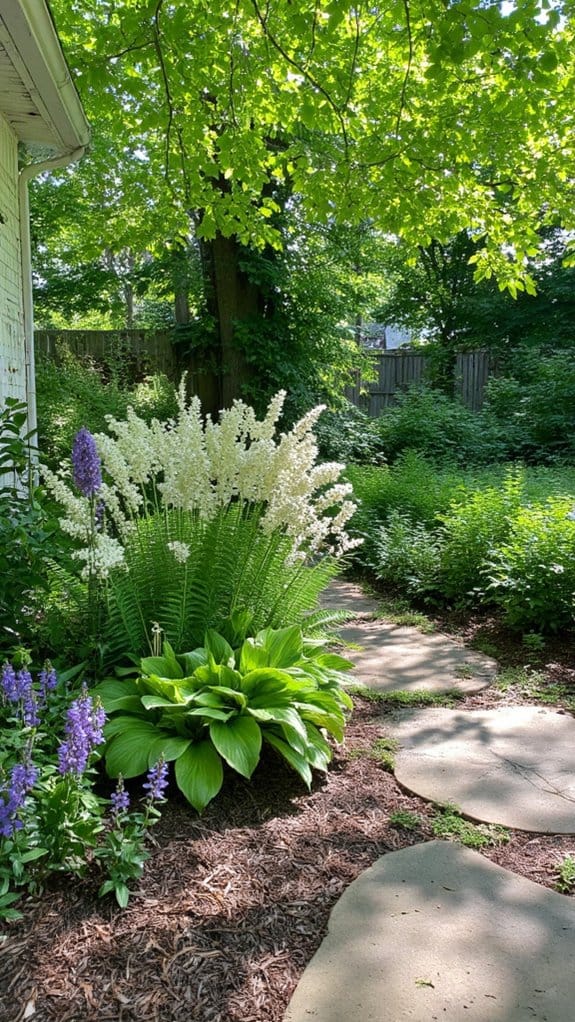
If you’re looking to transform a shaded area of your garden into a vibrant flower bed, consider planting woodland plants.
I love choosing ferns, hostas, and trilliums for their lush foliage and unique textures. They thrive in low light and add depth to the space.
With the right combination, you can create a stunning display that brightens even the shadiest corners of your yard.
Use Low-Growing Flowers for Pathway Borders
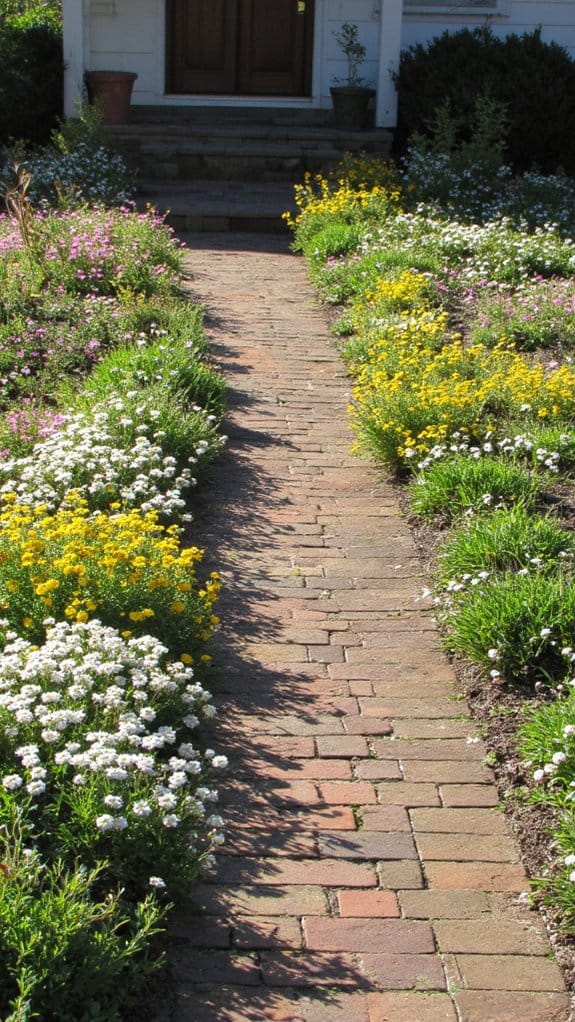
After enhancing shaded areas with woodland plants, I love to focus on creating inviting pathways in my garden.
Using low-growing flowers like creeping thyme or pansies along the borders adds color and charm without obstructing the walkway. They not only soften the edges but also create a welcoming atmosphere.
Plus, their low maintenance means I can enjoy my garden without constant upkeep.
Utilize Vertical Gardening Techniques for Small Spaces
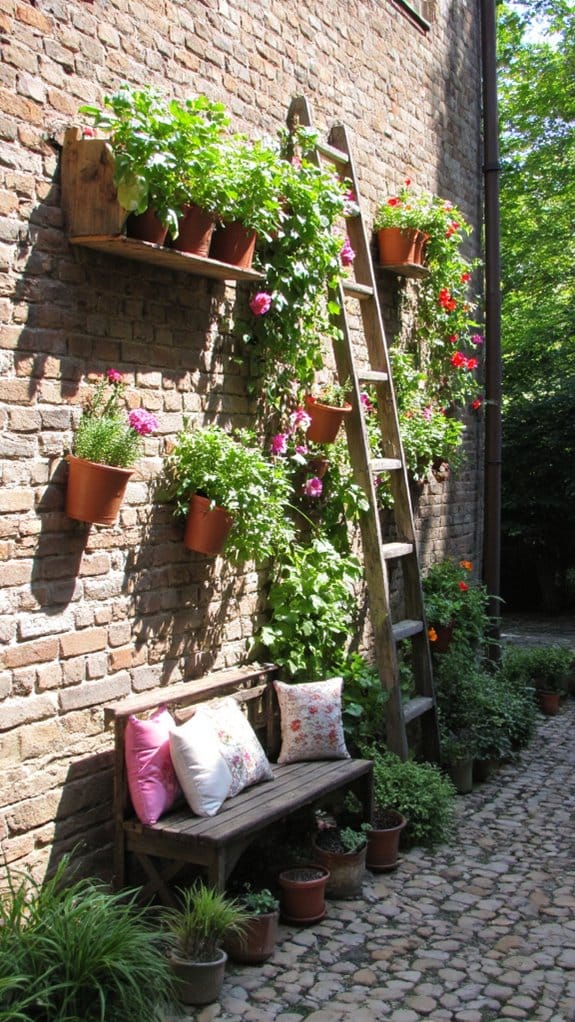
Vertical gardening transforms limited spaces into vibrant green retreats.
I’ve found that using wall planters and trellises allows me to grow flowers and herbs without taking up precious ground space.
Hanging baskets add a pop of color, while vertical planters create eye-catching displays.
These techniques not only maximize my garden’s potential but also enhance my outdoor experience in small areas.
Build a Sensory Garden With Varied Textures
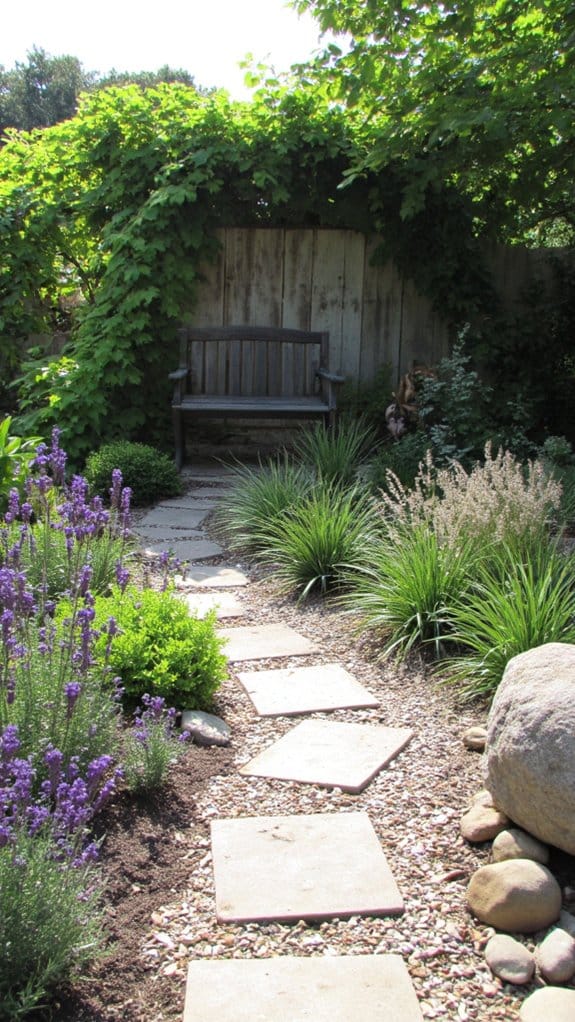
While creating a sensory garden, I focus on incorporating a variety of textures that invite exploration and interaction.
I love mixing soft plants like lamb’s ear with coarse ones like ornamental grasses. Adding smooth stones and rough bark enhances the experience.
Each step reveals something new, encouraging touch and curiosity. It’s a delightful way to engage all the senses in my garden space.
Incorporate Garden Art for Unique Personal Touches

As I explore ways to personalize my garden, incorporating art becomes an essential part of the design.
I love adding unique sculptures, vibrant wind chimes, or handmade pottery to create visual interest. These pieces reflect my personality and make my garden feel inviting.
Even simple touches, like painted rocks or artful stakes, can transform a flower bed into a creative expression of who I am.
Enhance Accessibility and Flow With Pathways

How can I make my flower bed more accessible and inviting?
I’ve found that adding pathways really helps! I create clear, defined routes using gravel, stepping stones, or mulch.
This not only guides visitors through my garden but also prevents trampling my plants.
Plan for Sun and Shade to Maximize Flower Health

To maximize the health of your flowers, it’s crucial to plan for both sun and shade.
I’ve found that grouping plants with similar light needs guarantees they thrive together. For sunny spots, choose vibrant blooms, while shaded areas benefit from shade-tolerant varieties.
Observing your garden throughout the day helps identify these zones, allowing you to create a flourishing flower bed.
