


Creating a garden that blossoms beautifully year after year is a dream for many of us. Choosing the right perennial flowers can make this dream a reality. I love combining resilient favorites with delicate blooms to bring charm and support local wildlife. By understanding the climate and selecting suitable plants, you can enjoy a low-maintenance oasis. Ready to find out which perennials are perfect for your garden?
Why Choose Perennial Flowers for Your Garden?

When I think about gardening, choosing perennial flowers is an easy decision. They bring vibrant color year after year without the hassle of replanting.
I love how they establish deep roots, thriving in various conditions, and attracting pollinators.
Plus, their long-lasting blooms provide a continuous display, making my garden a joyful retreat.
Their enduring flowers create a vibrant showcase, transforming my garden into a blissful escape.
Perennials truly make gardening simpler and more rewarding.
Understanding the Different Types of Perennial Flowers

Exploring the world of perennial flowers reveals a stunning variety that can transform any garden into a vibrant sanctuary.
I’ve come to appreciate the differences among them, from hardy types like daylilies and coneflowers to delicate ones like astilbes and columbines.
Each type brings its own charm, ensuring there’s always something blooming, adding color and life to my garden year after year.
How to Select the Right Perennials for Your Climate

Choosing the right perennials for your climate makes all the difference in creating a thriving garden.
I always start by researching my hardiness zone and understanding the local climate.
Then, I select plants that can withstand my region’s temperature extremes and soil conditions.
It’s also helpful to take into account native species, as they often require less maintenance and are better adapted to local conditions.
Creating a Color Palette With Perennial Flowers
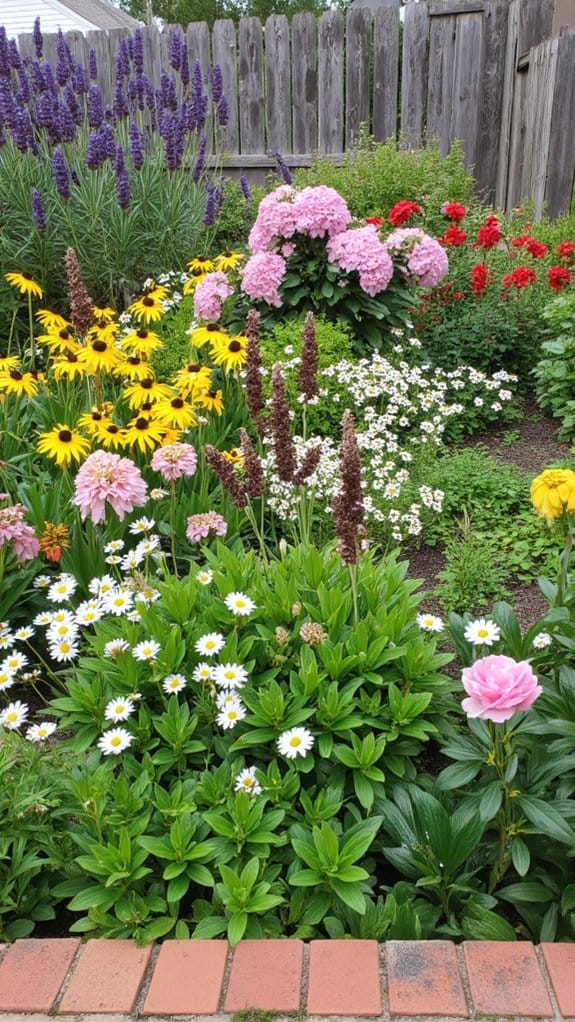
How can I make my perennial flower garden visually striking?
I focus on creating a color palette that complements my home and landscape. I mix bold hues like vibrant reds and yellows with softer pastels for balance.
By considering bloom times, I guarantee continuous color from spring to fall.
Grouping similar colors together enhances the visual impact, making my garden truly enchanting.
Pairing Perennials With Annuals for Year-Round Interest

While perennial flowers bring enduring beauty to my garden, pairing them with annuals adds a dynamic flair that keeps it vibrant throughout the year.
I love mixing colorful annuals like marigolds and zinnias with my beloved perennials. This combination not only fills in gaps but also extends the blooming season, ensuring my garden remains a lively spectacle from spring to fall.
Designing a Low-Maintenance Perennial Garden

Creating a low-maintenance perennial garden allows me to enjoy the beauty of flowers without the constant upkeep.
I choose drought-tolerant varieties and group plants with similar water needs. Using mulch helps suppress weeds and retain moisture.
I also incorporate native plants that thrive in my local climate. This way, I can relax and appreciate my garden’s charm with minimal effort.
Best Perennial Flowers for Sunny Areas

When it comes to selecting the best perennial flowers for sunny areas, I find that a mix of vibrant colors and hardy varieties can really transform my garden.
Some of my favorites include coneflowers, black-eyed Susans, and daylilies. They thrive in full sun, require minimal care, and bloom beautifully year after year, creating a stunning landscape that I love to enjoy.
Ideal Perennials for Shady Spots
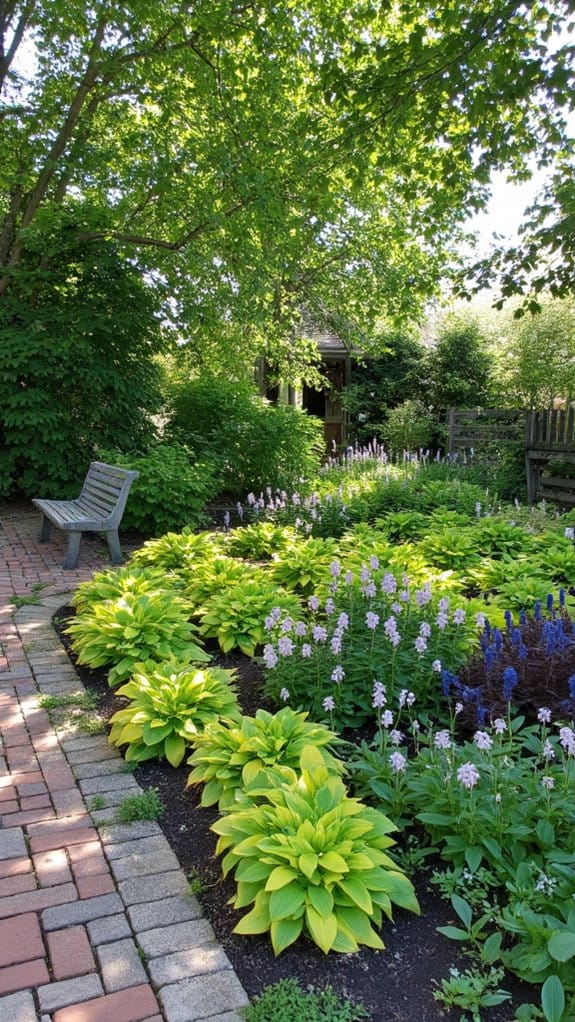
Even though shady spots can be challenging, I’ve discovered a variety of perennials that thrive in low-light conditions.
Hostas are a favorite of mine, with their stunning foliage adding texture. Astilbes bring beautiful blooms, while ferns provide lush greenery.
Hostas, with their stunning foliage, and Astilbes, with beautiful blooms, create a lush, textured paradise in shady gardens.
I also love the delicate charm of bleeding hearts.
These plants not only survive but truly flourish, making my shady garden a vibrant retreat.
Incorporating Native Perennials Into Your Garden
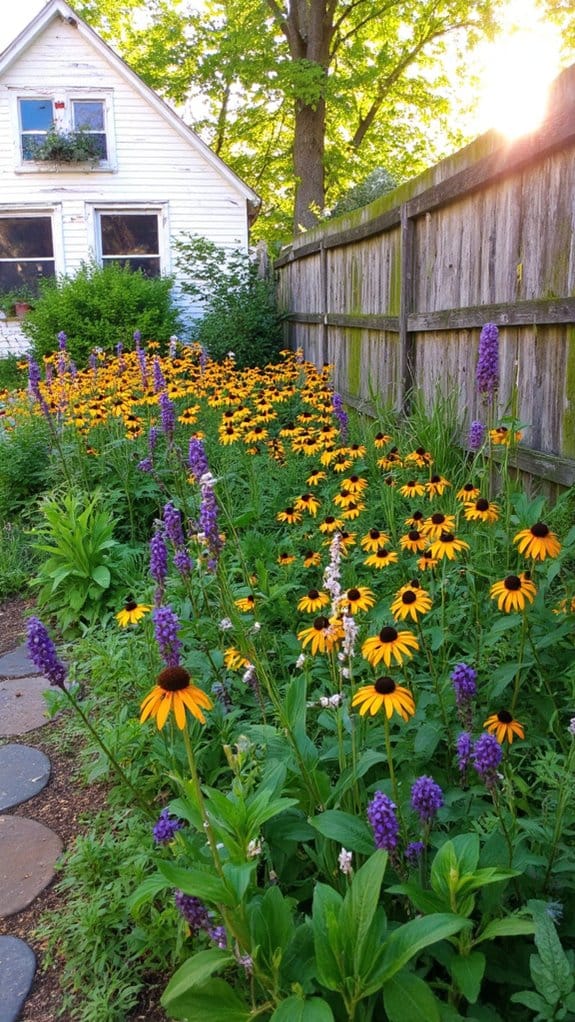
Incorporating native perennials into my garden not only enhances its beauty but also supports local ecosystems.
These plants thrive in my region’s climate and require less maintenance, which means I spend less time watering and weeding.
I love attracting local pollinators, like bees and butterflies, with vibrant flowers.
Plus, it feels great to contribute to the biodiversity of my area.
Planning a Perennial Flower Border for Visual Appeal
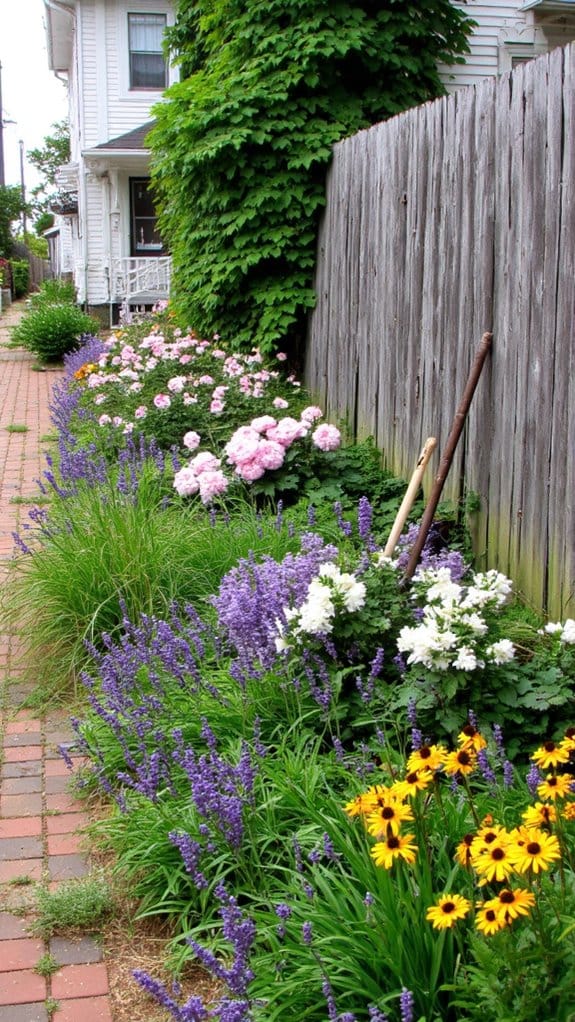
Native perennials not only enrich my garden but also lay the perfect foundation for planning a stunning perennial flower border.
I focus on varying heights and colors to create visual depth. By grouping plants in odd numbers and pairing contrasting blooms, I enhance the border’s appeal.
Seasonal changes keep my garden lively, ensuring there’s always something beautiful to enjoy throughout the year.
Unique Perennial Varieties to Enhance Your Garden
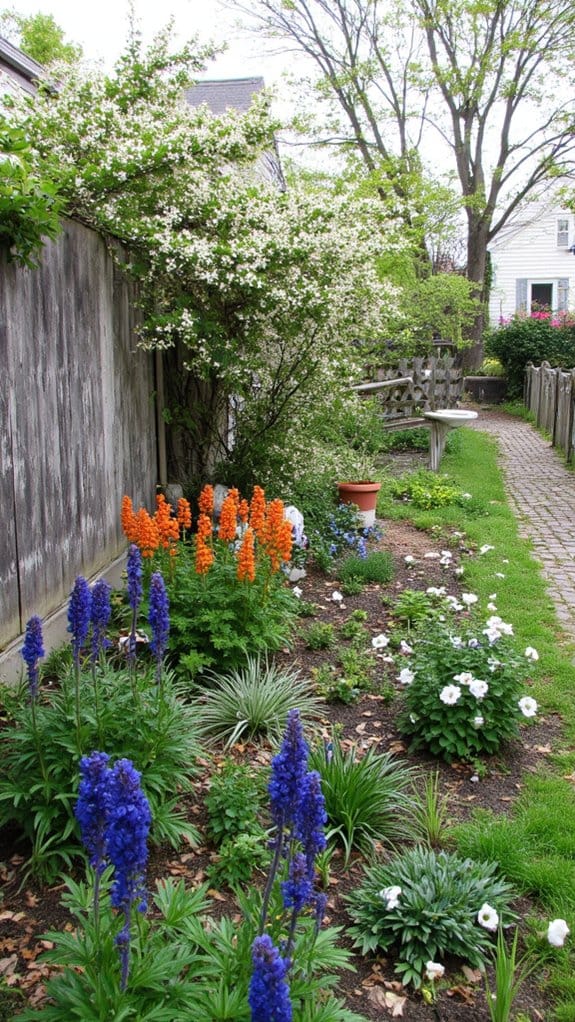
When I look for unique perennial varieties to enhance my garden, I’m always on the lookout for plants that provide both beauty and interest.
I love incorporating things like ‘Heuchera’ with its vibrant foliage and ‘Echinacea’ for their charming blooms.
Incorporating vibrant Heuchera and charming Echinacea transforms my garden into a stunning display of color and beauty.
‘Japanese Anemone’ adds a touch of elegance, while ‘Salvia’ offers stunning color and attracts pollinators.
These choices truly elevate my garden’s appeal!
Creating a Perennial Rock Garden
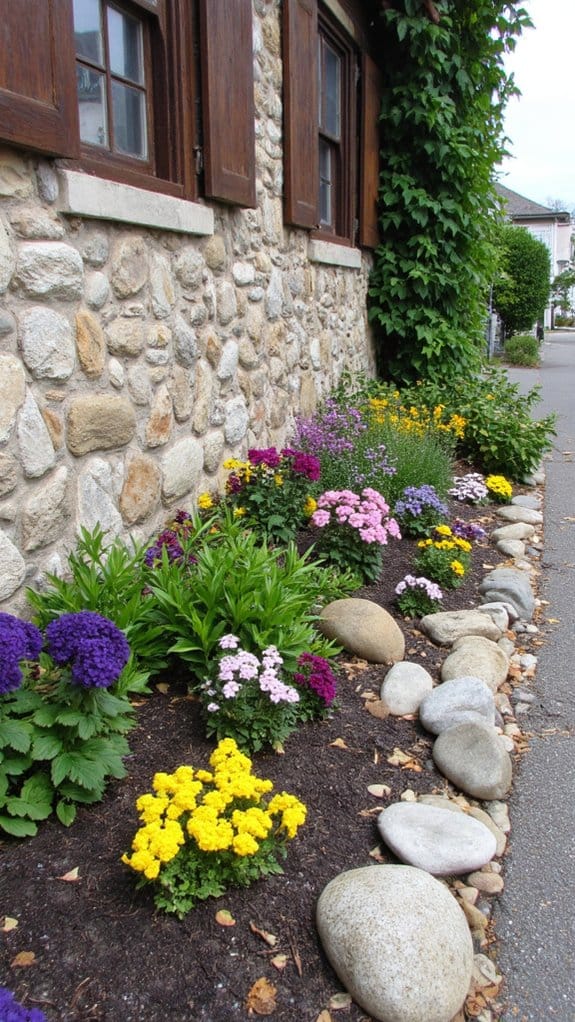
After exploring unique perennial varieties, I find that a rock garden can be a fantastic way to showcase these beautiful plants.
The combination of stones and hardy perennials creates a stunning visual impact. I love using larger rocks as focal points, surrounding them with low-growing plants like sedums.
This layout not only enhances my garden’s beauty but also provides excellent drainage for the plants.
Tips for Planting and Caring for Your Perennials
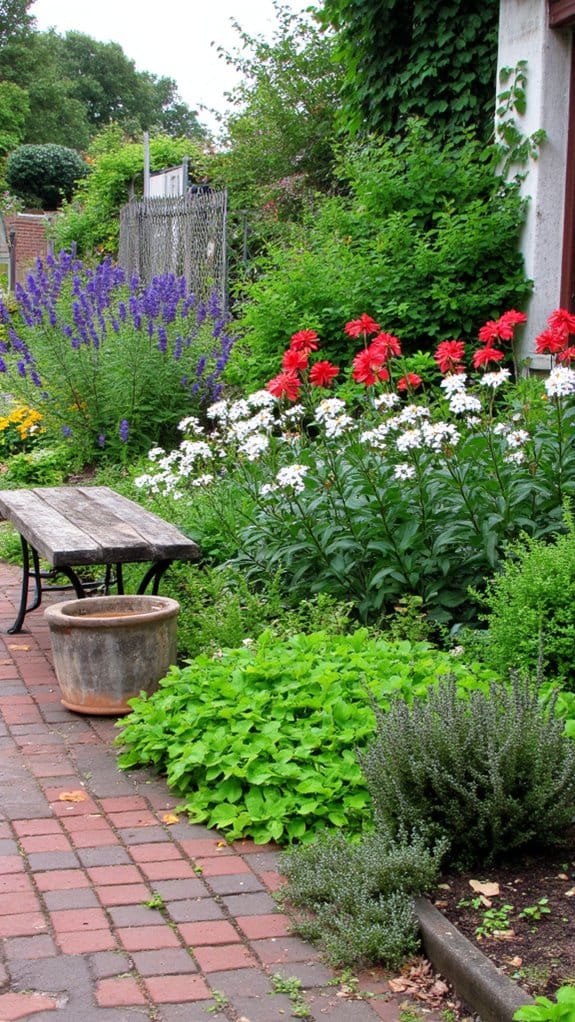
Although planting perennials can seem challenging at first, I’ve found that with a few simple tips, you can set your garden up for success.
Start by choosing the right spot with adequate sunlight and well-draining soil. Water regularly, especially during dry spells, and mulch to retain moisture.
Finally, deadhead spent flowers to encourage new growth and enjoy a vibrant garden year after year.
How to Use Perennials for Spring and Summer Blooms
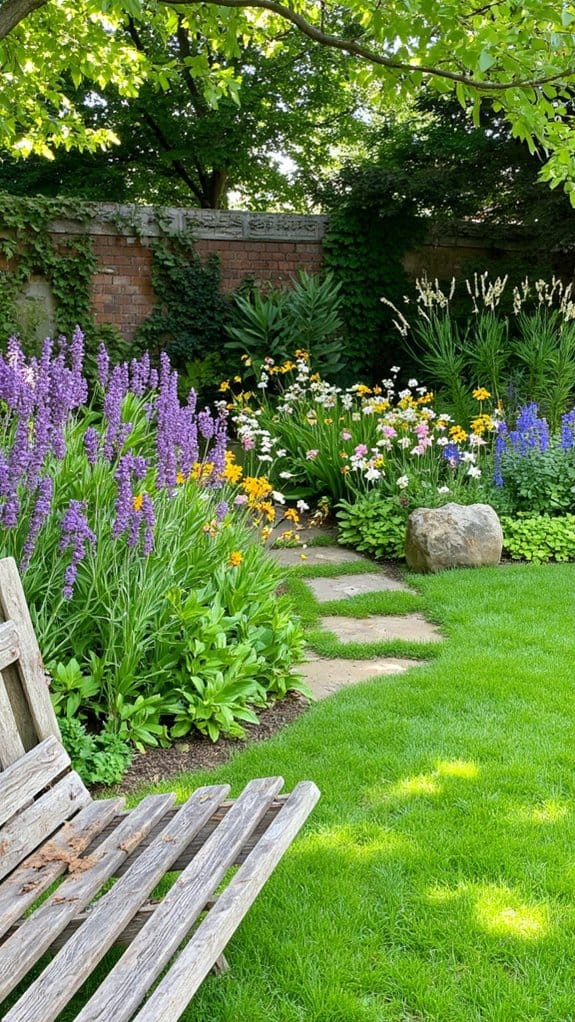
Having successfully planted and cared for your perennials, it’s exciting to think about how to maximize their beauty during the spring and summer months.
I love mixing different varieties to create vibrant color combinations. Grouping taller plants at the back and shorter ones in front enhances visibility.
Regular deadheading encourages more blooms, ensuring my garden stays lush and lively throughout the season.
How to Attract Pollinators With Perennial Flowers?

To attract pollinators with your perennial flowers, I’ve found that selecting the right plants is key.
Incorporate a variety of colors and shapes, like echinacea, bee balm, and lavender, to draw in bees and butterflies.
I also make sure to avoid pesticides, as they can deter these helpful creatures.
Creating a diverse and vibrant garden truly makes a difference!
Integrating Edible Perennials Into Your Flower Garden
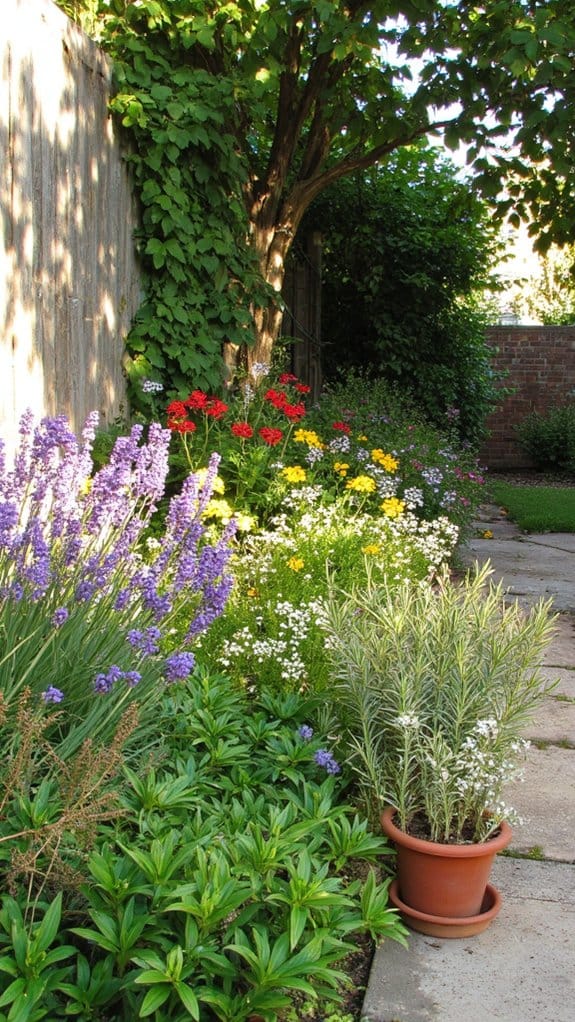
Integrating edible perennials into my flower garden not only enhances its beauty but also provides a sustainable source of fresh produce.
I love planting herbs like chives and thyme alongside vibrant flowers. They attract beneficial insects while offering delicious flavors for my meals.
Plus, with minimal effort, I get the best of both worlds: stunning visuals and fresh ingredients right at my fingertips.
Designing a Perennial Garden for Wildlife
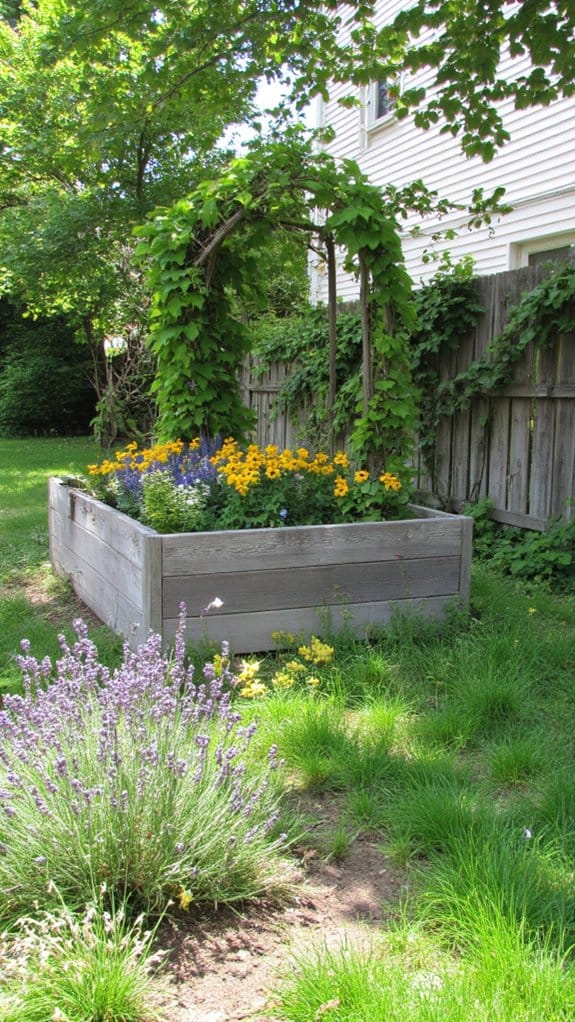
While I want my garden to be visually appealing, I also aim to create a thriving habitat for local wildlife.
I select a mix of native perennials that provide food and shelter, like coneflowers and asters. Incorporating plants with varied bloom times guarantees butterflies and bees visit throughout the season.
I also add water sources and natural mulch to support diverse creatures.
The Best Perennials for Cut Flower Arrangements

Choosing the right perennials for cut flower arrangements can transform any bouquet into a stunning centerpiece.
I love using vibrant blooms like peonies, dahlias, and coneflowers. Their rich colors and unique shapes add depth to arrangements.
Vibrant blooms like peonies, dahlias, and coneflowers bring rich colors and unique shapes to elevate any arrangement.
Additionally, incorporating foliage from plants like salvia or lamb’s ear enhances texture.
These perennials not only brighten my home but also return year after year, ensuring beauty with minimal effort.
Creating a Perennial Cottage Garden Look

After enjoying the vibrant blooms of perennials in my cut flower arrangements, I’ve found that creating a cottage garden look is a delightful way to extend that charm outdoors.
I love mixing various heights, colors, and textures, allowing plants to spill over pathways.
Adding rustic elements like trellises or wooden benches enhances the cozy vibe, inviting me to relax and enjoy my garden’s beauty.
How Perennials Support Sustainable Gardening
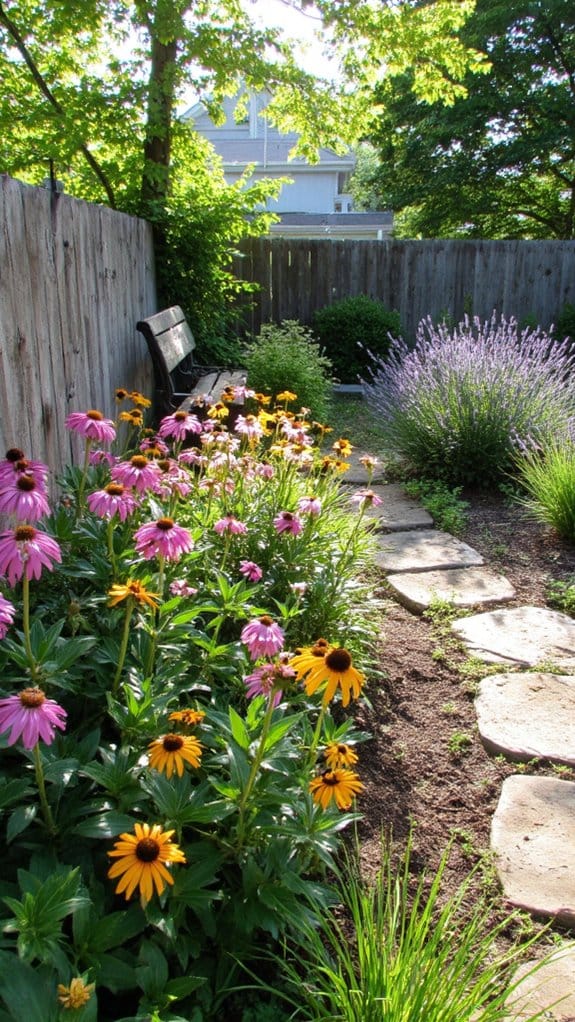
Because I value a garden that thrives with minimal intervention, I’ve discovered how perennials are a key component of sustainable gardening.
They require less water and fewer resources once established, reducing my environmental footprint.
Plus, their deep roots help improve soil health and prevent erosion.
Dividing and Propagating Perennials for Expansion

Building on the benefits of perennials in creating a sustainable garden, I’ve found that dividing and propagating these plants is a fantastic way to expand my garden without needing to buy new specimens.
By carefully digging up established clumps and replanting them, I’ve not only increased my plant variety but also improved their health.
It’s a rewarding process that truly enriches my garden!
Creating Textural Interest With Different Perennial Foliages
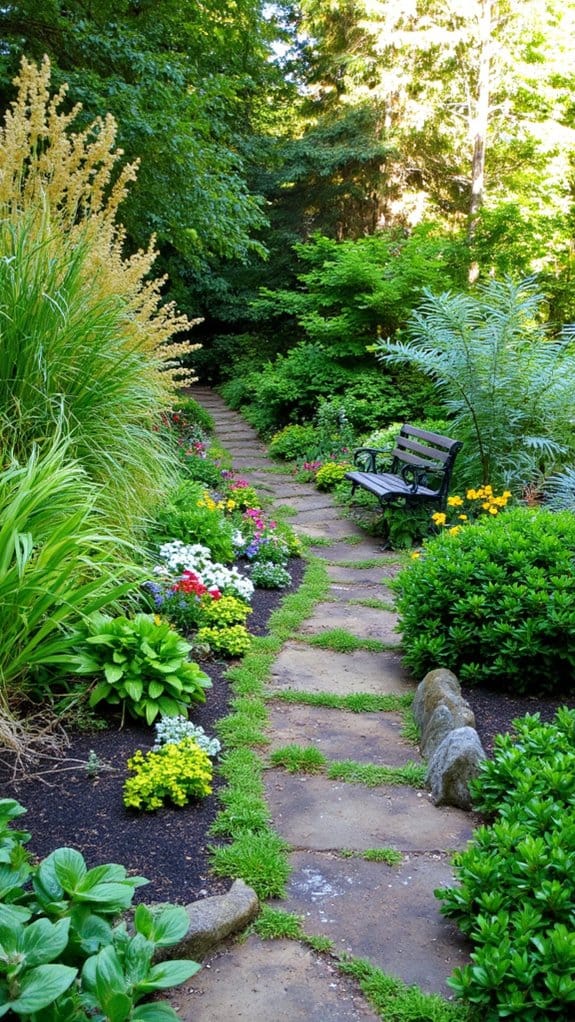
While exploring the beauty of perennial gardens, I’ve discovered that incorporating a variety of foliage can dramatically enhance visual interest.
Different leaf shapes, sizes, and colors create stunning contrasts. For instance, pairing broad, dark leaves with fine-textured, light-hued ones adds depth.
I love mixing hostas, ferns, and ornamental grasses to create a lush, layered effect that keeps my garden vibrant throughout the seasons.
Best Perennial Flowers for Drought-Tolerant Gardens

When it comes to creating a drought-tolerant garden, choosing the right perennial flowers is essential.
I love incorporating lavender, agastache, and echinacea into my garden. These beauties thrive in dry conditions and add vibrant color.
Additionally, sedum and daylilies are fantastic choices, as they require minimal water once established.
Sedum and daylilies are excellent drought-tolerant options, needing very little water once they’re established.
Trust me, these perennials will bring life to your garden year after year!
How to Use Perennials to Control Soil Erosion

To effectively control soil erosion in your garden, I find that using perennial plants is a smart approach.
Their extensive root systems stabilize the soil, preventing runoff and promoting water absorption.
I’ve had great success with deep-rooted varieties like daylilies and aster.
Planting them on slopes or in areas prone to erosion can greatly enhance your garden’s resilience against soil loss.
Seasonal Maintenance Tips for Perennial Gardens

Maintaining a perennial garden throughout the seasons is essential for ensuring its health and vibrancy.
In spring, I divide and transplant crowded plants.
Summer calls for regular watering and deadheading to promote blooms.
During summer, ensure your garden flourishes with consistent watering and deadheading to encourage abundant blooms.
As fall approaches, I cut back foliage and add mulch for winter protection.
Finally, I check for pests and diseases, ensuring my garden thrives year after year.
