

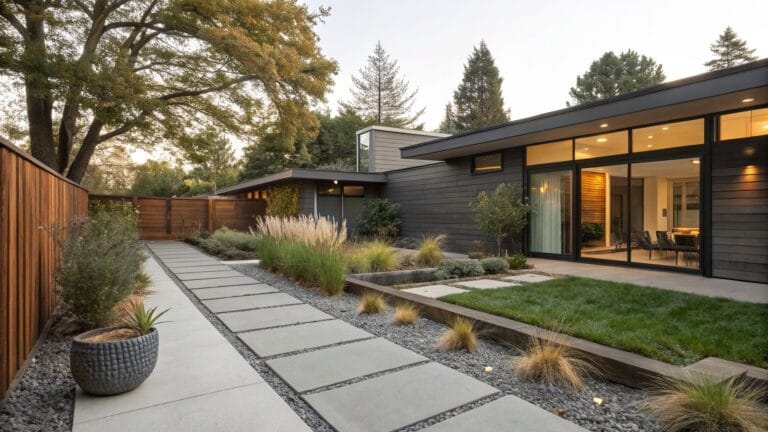
I’ve tinkered with my backyard paths more times than I can count to get that easy movement from the patio to the garden beds.
Good layouts shine when they divide spaces clearly, like keeping the fire pit away from high-traffic spots so nobody bumps elbows.
Overstuffed designs turn into headaches fast.
I lean toward ones with gravel walks that double as drainage because they handle rain without turning muddy.
These approaches prove you can build real flow that lasts without constant fixes.
Straight Pathway with Raised Planters
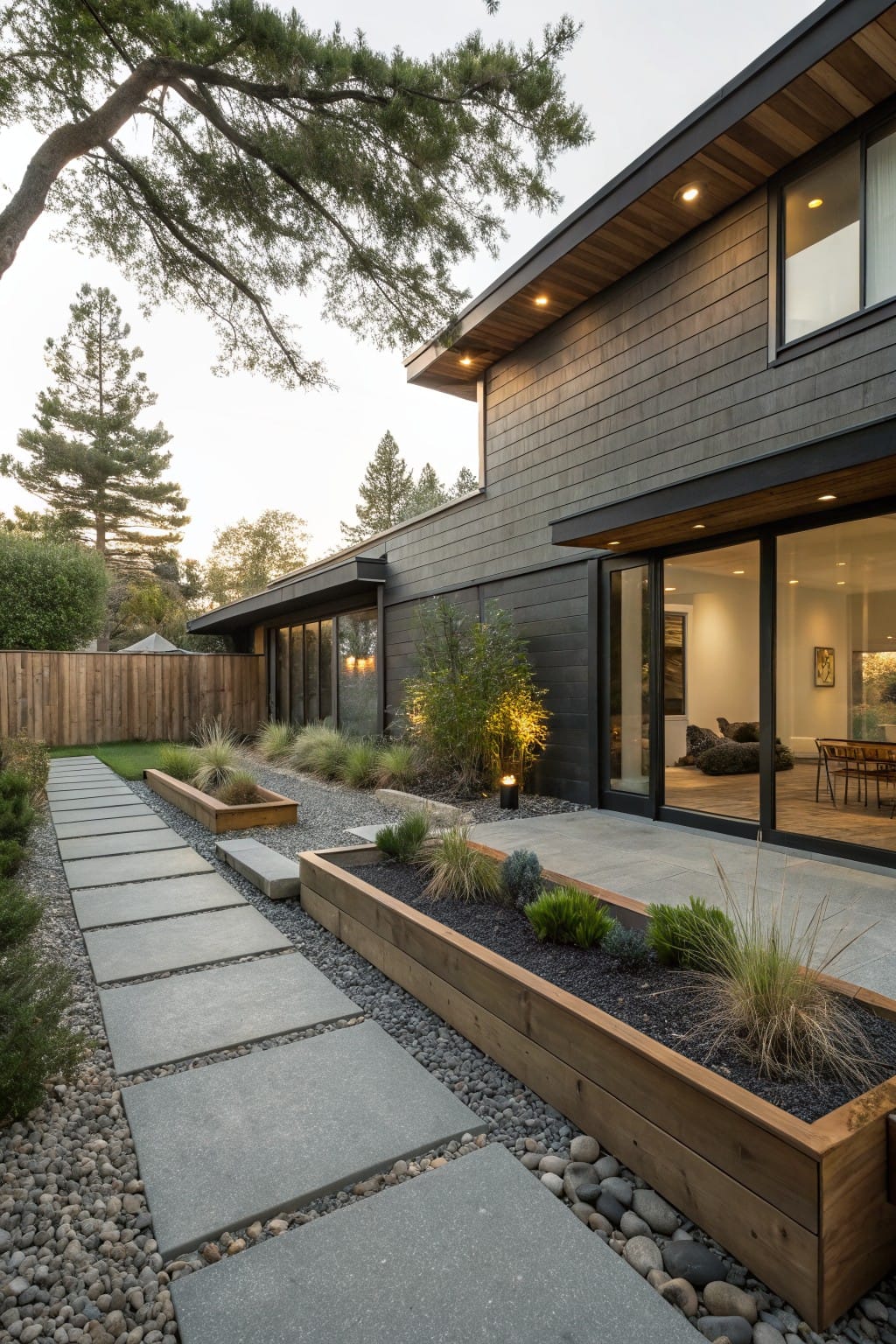
A straight stone pathway like this one cuts right through the backyard grass and gravel. It lines up perfectly with the back patio doors. Raised wooden planters run alongside it, filled with tall grasses that stay low-maintenance. The whole thing makes getting from the yard to the house feel easy and direct. No tripping over plants or wandering off track.
This works best in smaller backyards or ones with modern homes. It keeps foot traffic in one clean line. Plant drought-tolerant grasses in those boxes to cut down on watering. Just watch the wood planters. They might need sealing now and then to hold up. Suits flat yards… adds that bit of structure without much fuss.
Flagstone Path Through the Grass
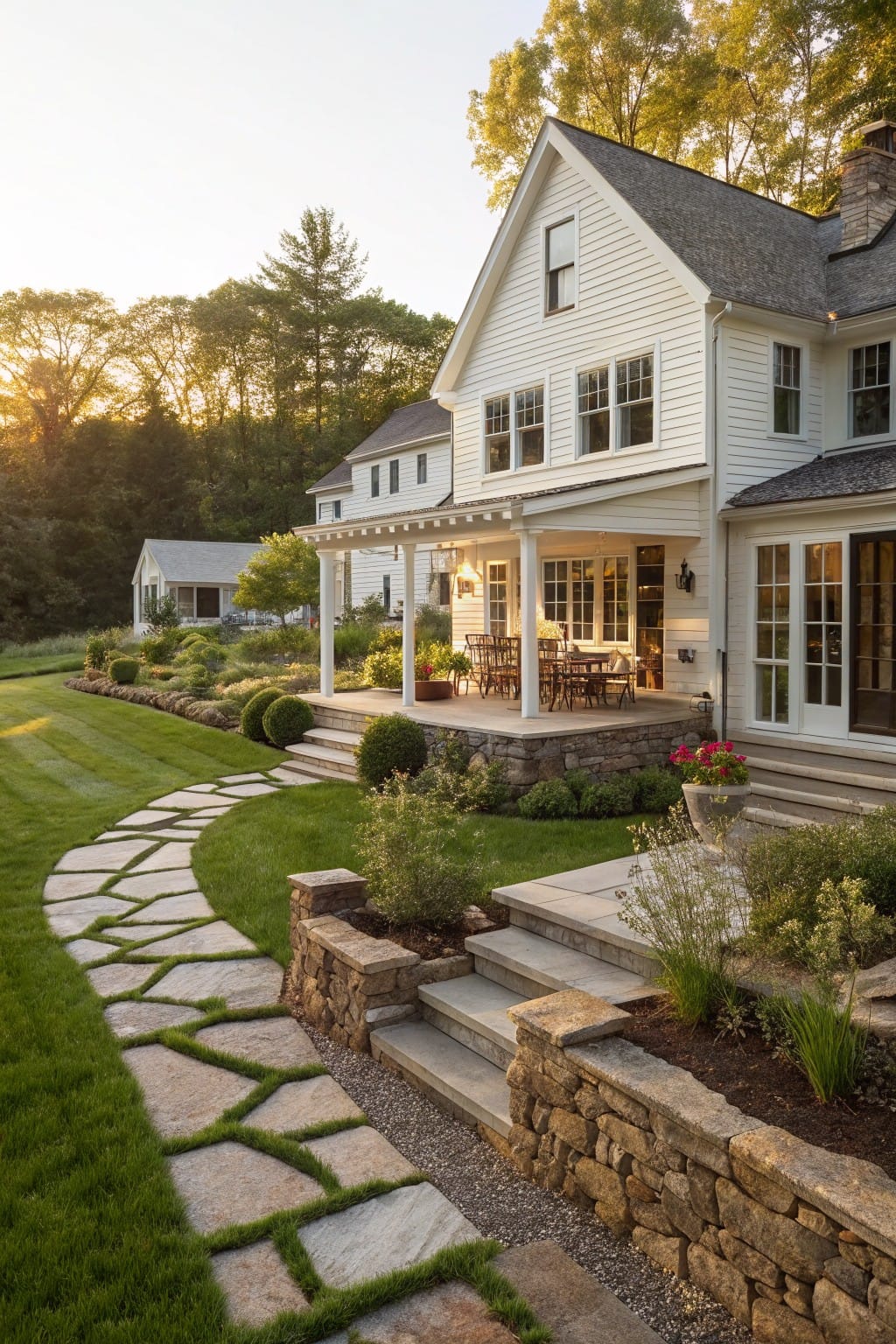
A flagstone path like this one winds gently across the lawn. The irregular stones fit right into the grass without much edging. It pulls your eye straight to the house and makes walking to the porch feel natural. No straight lines here. Just easy flow.
Set these paths where you need to go from yard to back door most days. They work best on bigger flat lawns around older homes. Keep stones big and spaced so grass fills in. Skip gravel underneath if you want less upkeep. Plant low stuff along the edges to hold it together.
Curved Boardwalk Paths Through Grasses
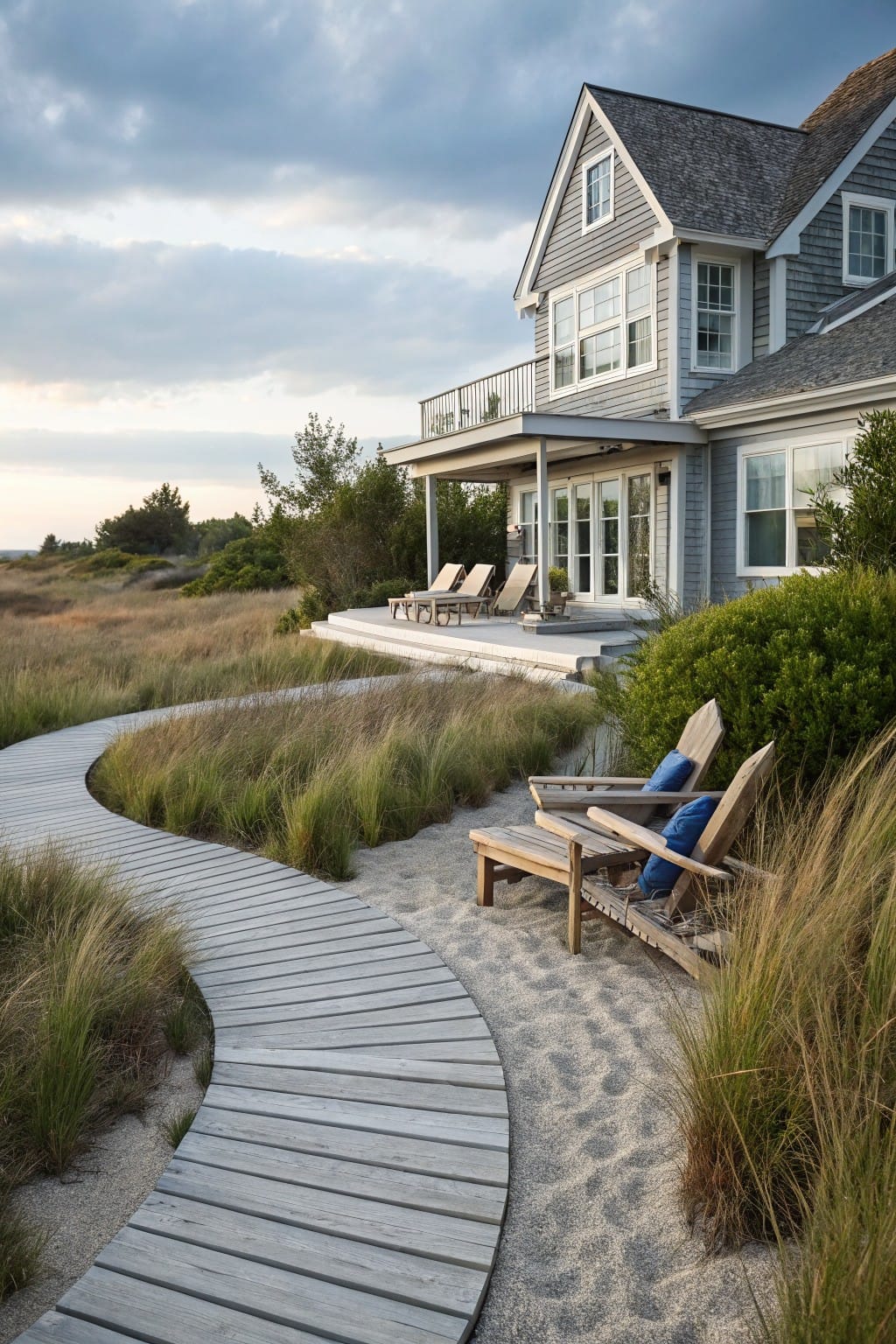
A simple curved boardwalk like this one makes getting around your backyard a lot easier. It winds gently through tall grasses from the sand right up to the house deck. No more trudging through soft dirt or wet spots. Folks with beach yards swear by it because it fits the natural lay of the land and keeps things looking tidy.
Put one in if your yard has uneven ground or wild plantings. Cedar boards weather to that soft gray tone over time. Head it toward a seating spot for the best flow. Skip it on super flat lots though. Straight paths do fine there.
Side Paths Lined with Raised Planters
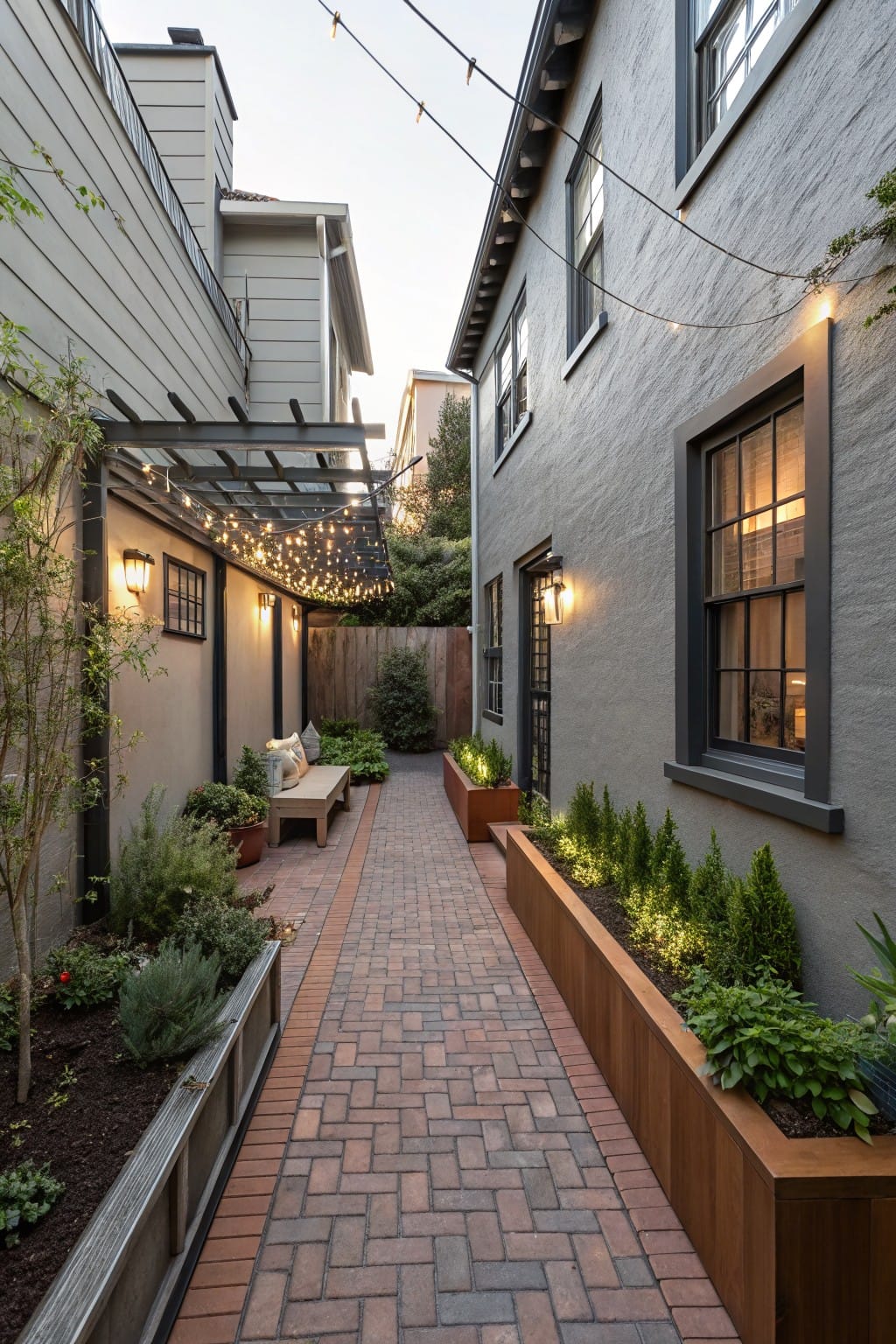
In tight side yards like this one, raised wooden planters along both sides of a walkway turn a plain passage into something useful and green. The path stays clear for walking, while the planters hold boxwoods and herbs that fill the space up high. It keeps things neat without eating into the narrow width.
This setup works best in urban backyards or between attached homes where room is short. Build the planters from cedar or redwood to last, and pick low plants that won’t flop over the path. Add a simple bench halfway if you want a spot to pause. Just make sure good drainage so roots don’t rot.
Straight Gravel Path Lined with Boxwoods
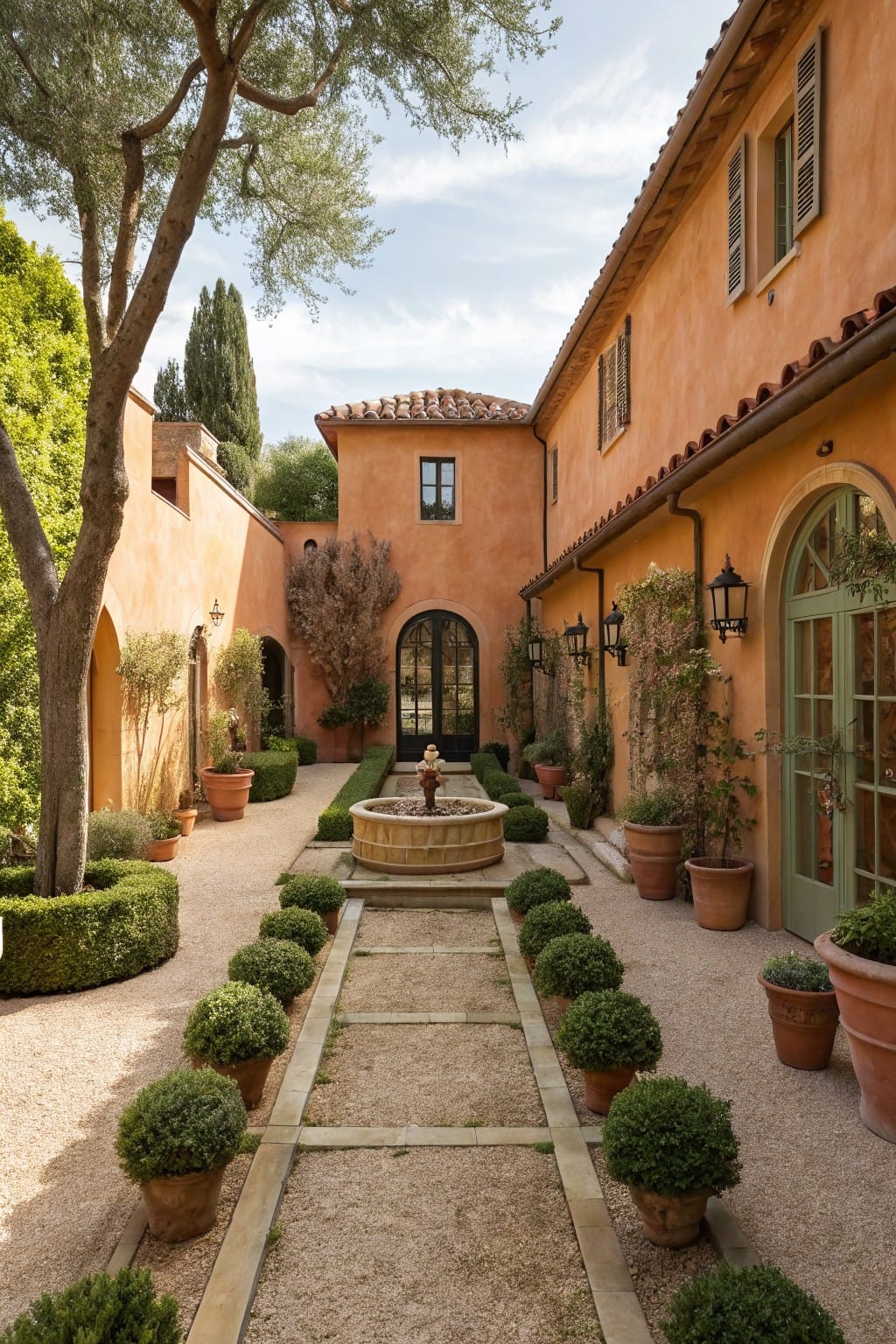
A straight gravel path like this one, edged with clipped boxwoods in terracotta pots, sets up a clean line through the backyard. It guides you right to the central fountain without any guesswork. Folks like how it feels deliberate and keeps the space from looking messy.
Put this layout in a courtyard or narrow side yard where you want foot traffic to flow easy. It suits older stucco homes or places with a touch of Mediterranean feel. Boxwoods hold their shape well and don’t need constant care. Watch the gravel though. It shifts if you don’t tamp it down now and then.
Paver Path to the Deck Patio
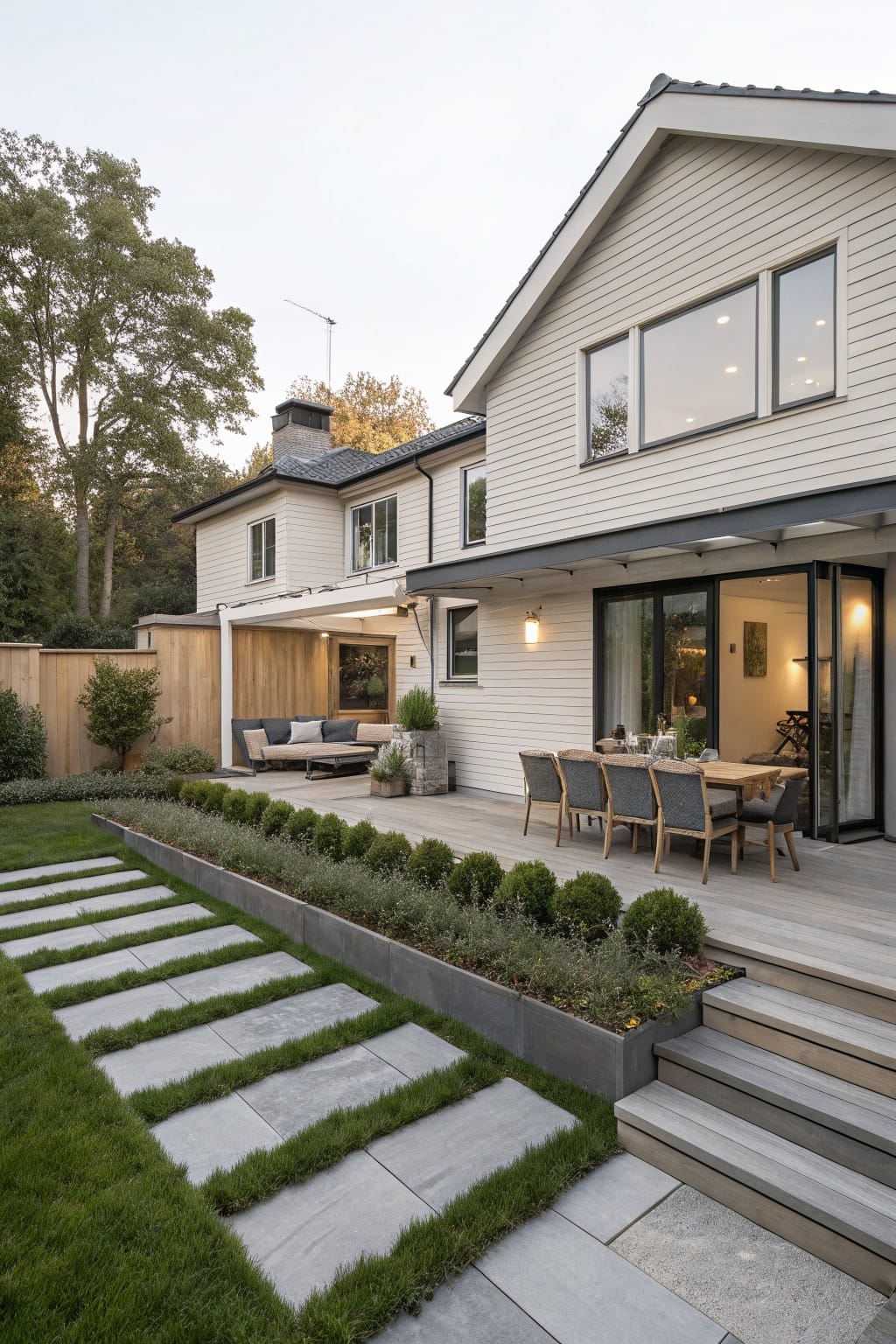
A straight run of wide stone pavers cuts through the lawn and climbs a few steps to the deck. Boxwood hedges tucked into low metal planters edge both sides. This keeps foot traffic on track to the outdoor table and chairs. No guesswork about where to walk.
It suits backyards with decks raised above the yard level. The path handles some slope without looking forced. Trim the hedges regular to stay neat. Scale it to your space so it does not overwhelm a small lawn.
Winding Stone Paths for Backyard Flow
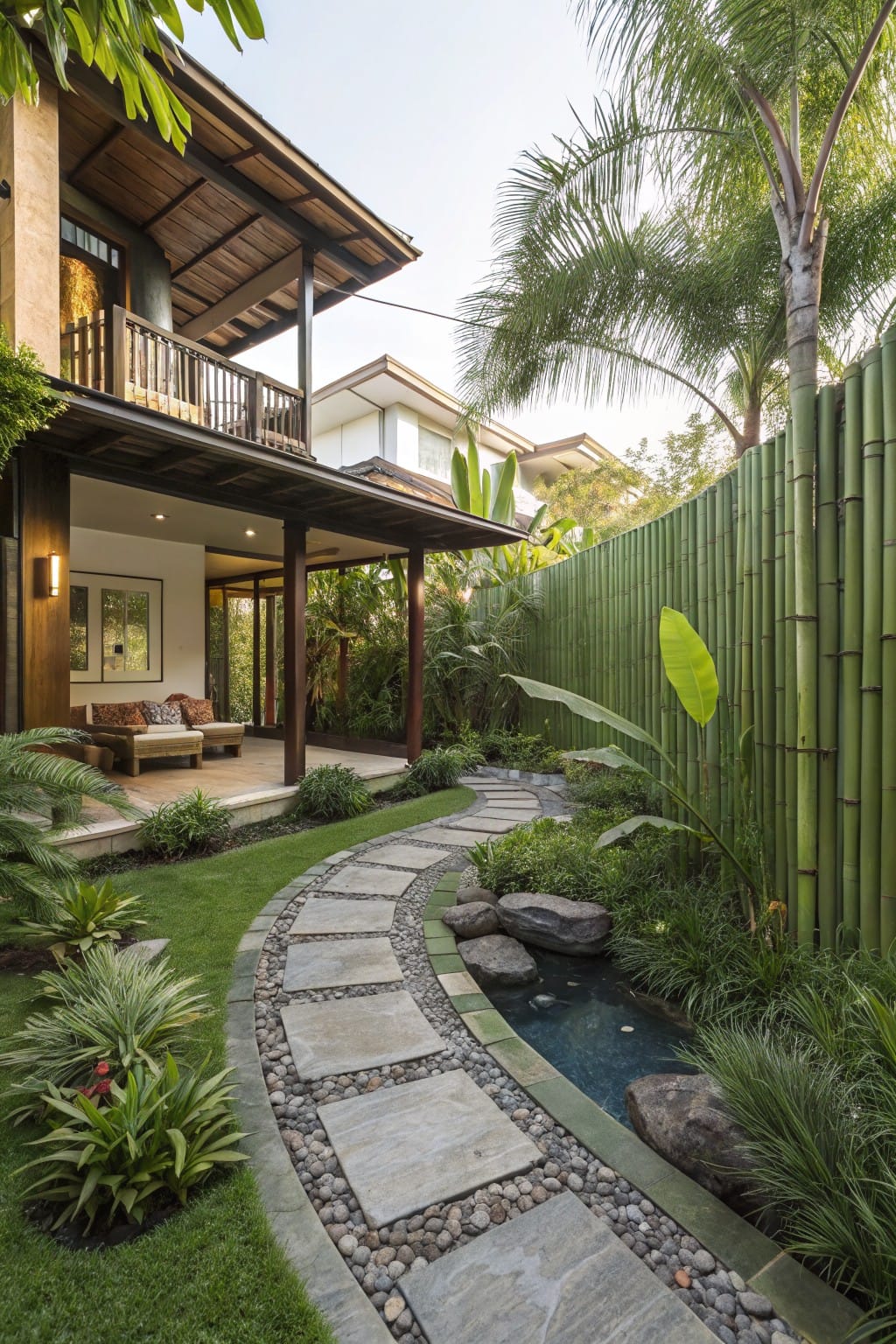
A winding path like this one makes getting around the yard feel easy and natural. Flat stones set into gravel curve gently through grass and low plants, leading from the lawn toward a seating spot by the house. It keeps foot traffic off the grass and adds some interest without much fuss.
These paths suit backyards with plenty of planting room, especially in warmer spots where things grow thick. Lay them where people already walk, maybe toward a patio or gate. Just space the stones right so they don’t shift, and edge with mulch to hold everything neat.
Large Paver Walkway with Grass Joints
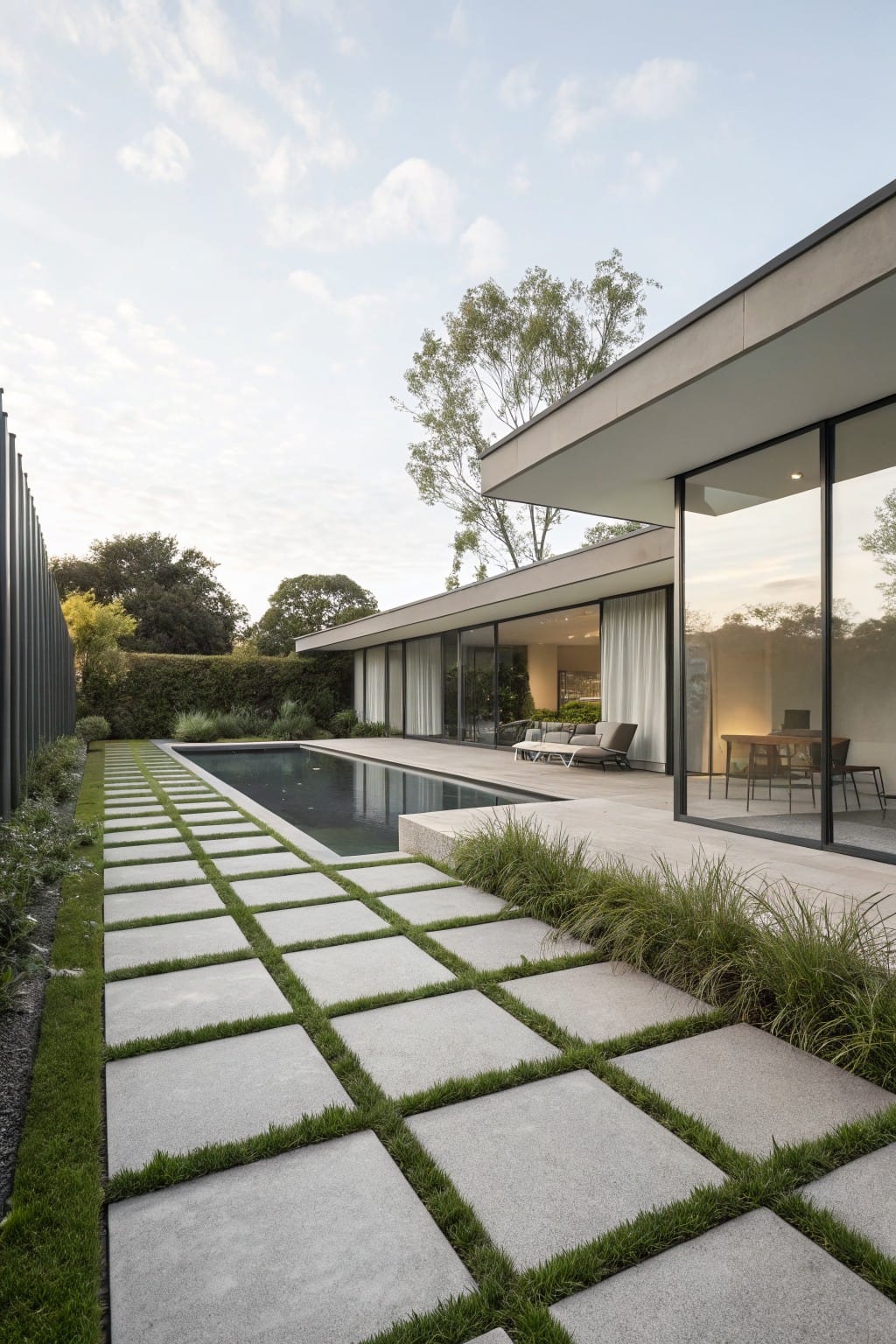
Big square pavers laid out in a neat grid make a solid path here, with grass tucked between each one. It keeps the walkway firm underfoot but lets green peek through everywhere. This setup stands out because it moves you right along the yard without crowding the space. No fussy edges or borders needed.
Try it in long narrow backyards, especially beside a pool or along the house side. Space the pavers about six inches apart so grass fills in easy. Works best on flat ground where you walk to doors or seating a lot. Just keep the grass trimmed or it can creep onto the stones.
Terraced Stone Walls for Sloped Backyards
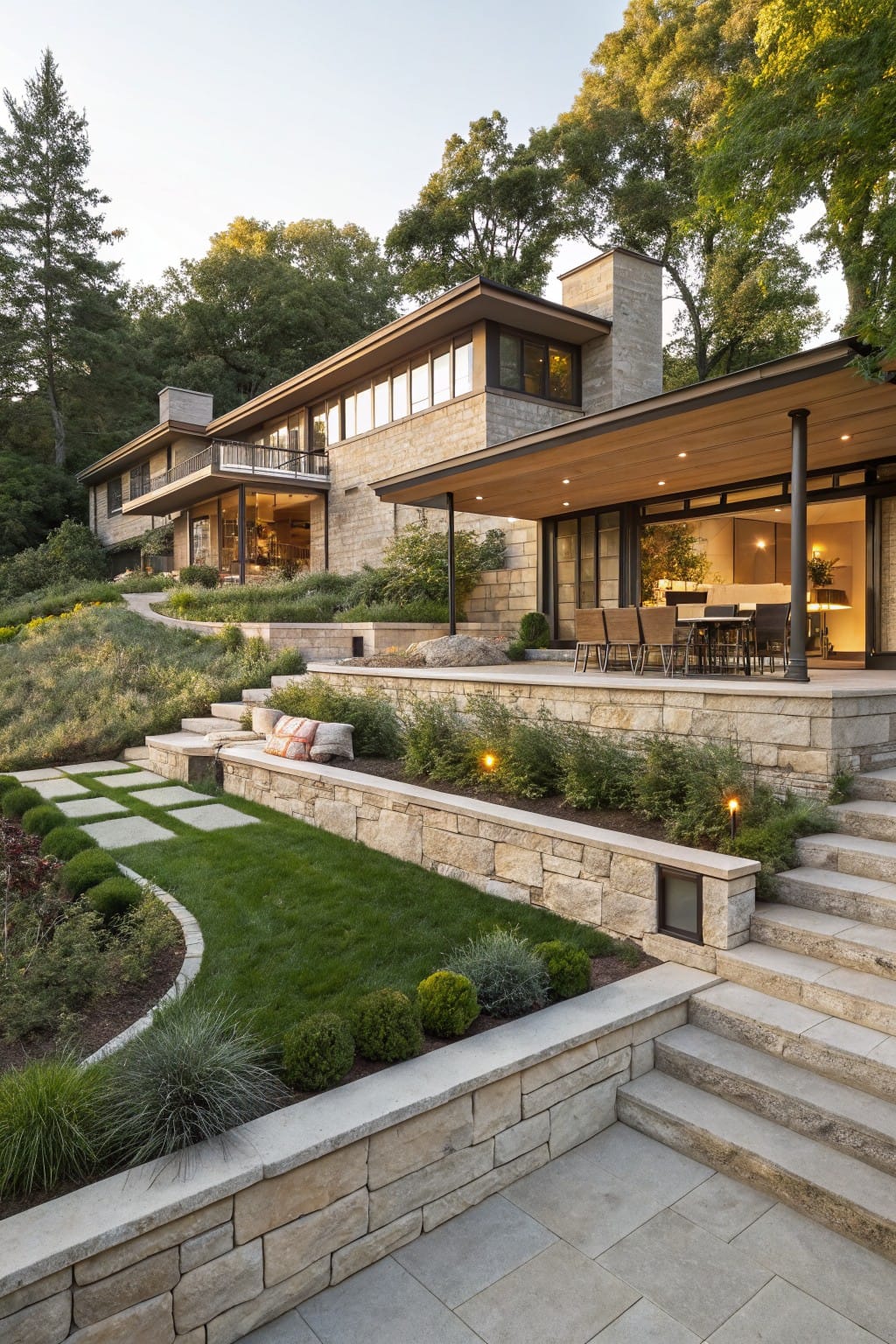
Sloped backyards often sit unused. Terracing them with sturdy stone walls fixes that. It carves out flat levels for seating or planting, like the wide steps here that link everything together. The result is a yard that flows from one spot to the next without feeling steep or wasted.
This layout shines on hillsides where flat ground is hard to come by. Pair it with a modern house that has big glass doors opening onto the terraces. Go for natural stone that matches your area. Just plan for good drainage behind the walls to avoid washouts.
Narrow Pool Along the House Side
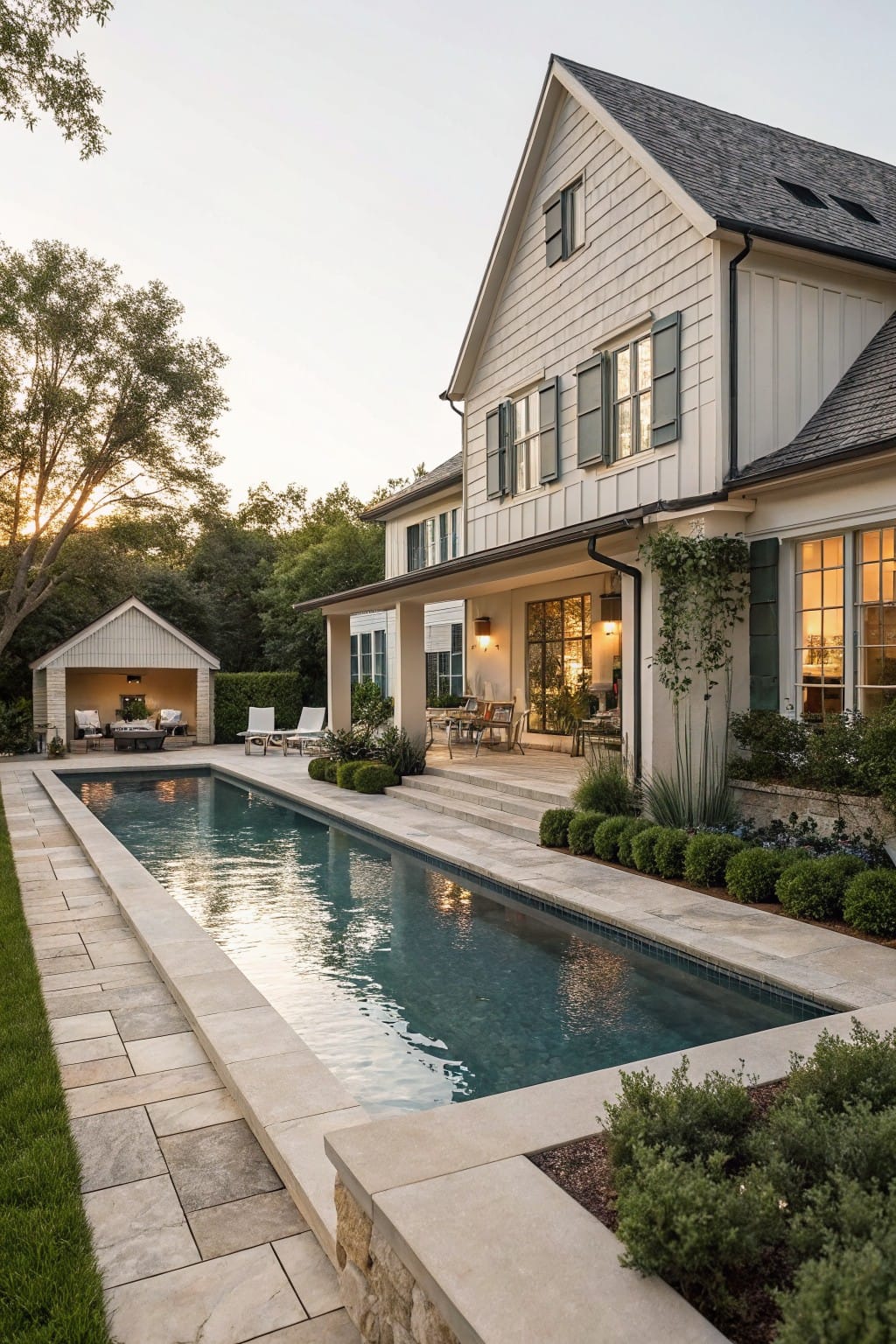
A narrow pool like this one runs right alongside the house and pulls the whole backyard together. It makes the space feel longer and more open. Those stone pavers next to it give a smooth path from the patio doors out to the pool house. No wasted room.
This layout fits best in side yards or skinnier backyards that can’t take a full-size pool. It suits casual family homes with some modern touches. Keep the hedges low so they don’t block the view. Watch the slope too, for good drainage.
Winding Stone Paths Through Garden Beds
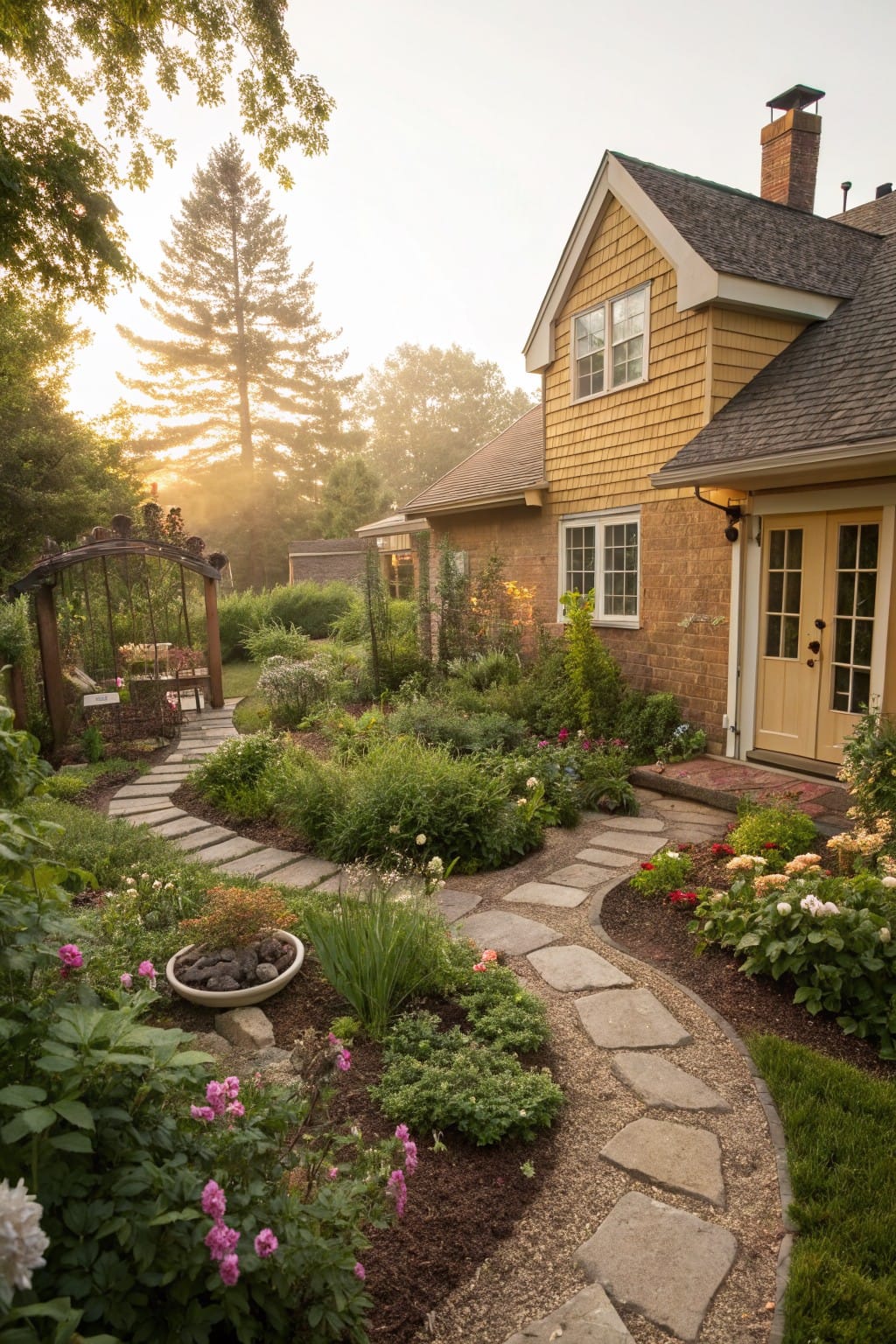
A winding stone path like this one cuts right through thick plantings and flower beds. It gives your backyard a natural flow. You don’t have to trudge over grass or mud to reach the patio or shed. The curves make the yard feel longer too. And those flat stepping stones keep it simple to walk on.
Put this path where you go most. From the back door to a seating spot works great. It suits homes with some slope or uneven ground. Skip it if your yard is tiny. Space the stones so your foot lands flat each time. Add mulch between them to cut down on weeds.
Simple Stepping Stone Walkways
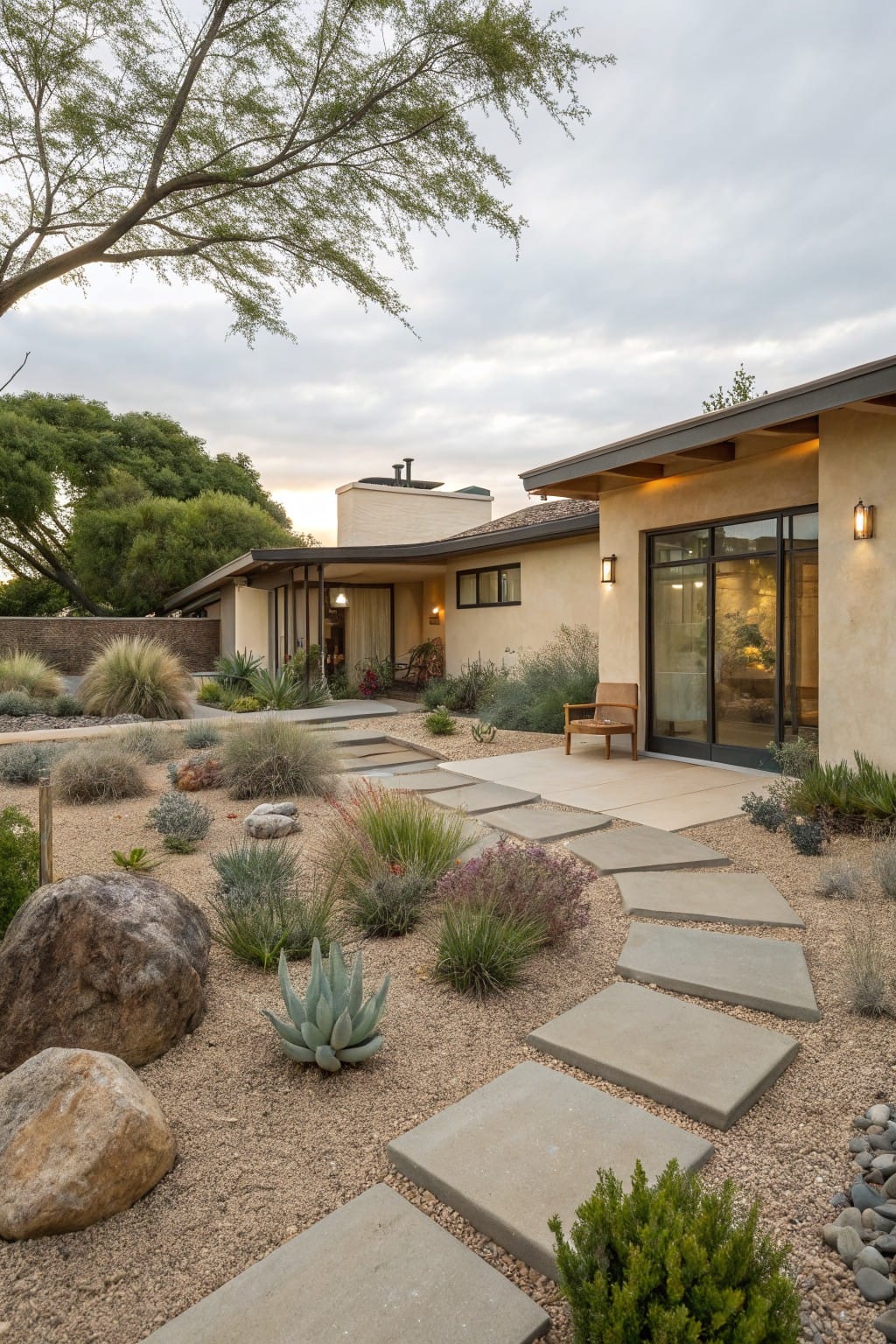
A stepping stone walkway like this cuts right through a gravel yard dotted with tough desert plants. It pulls your eye straight to the house without much fuss. Folks like how it stays clean and dry even after rain. No muddy trails here.
Put these paths where you walk most from the yard to the door. They fit dry spots or sunny backyards best. Space the stones about two feet apart for normal steps. Tuck in agaves or grasses around them but keep the gravel low so water drains fast. Watch for uneven ground though. It can trip you if not leveled right.
Lawn Pathway Leading to the House
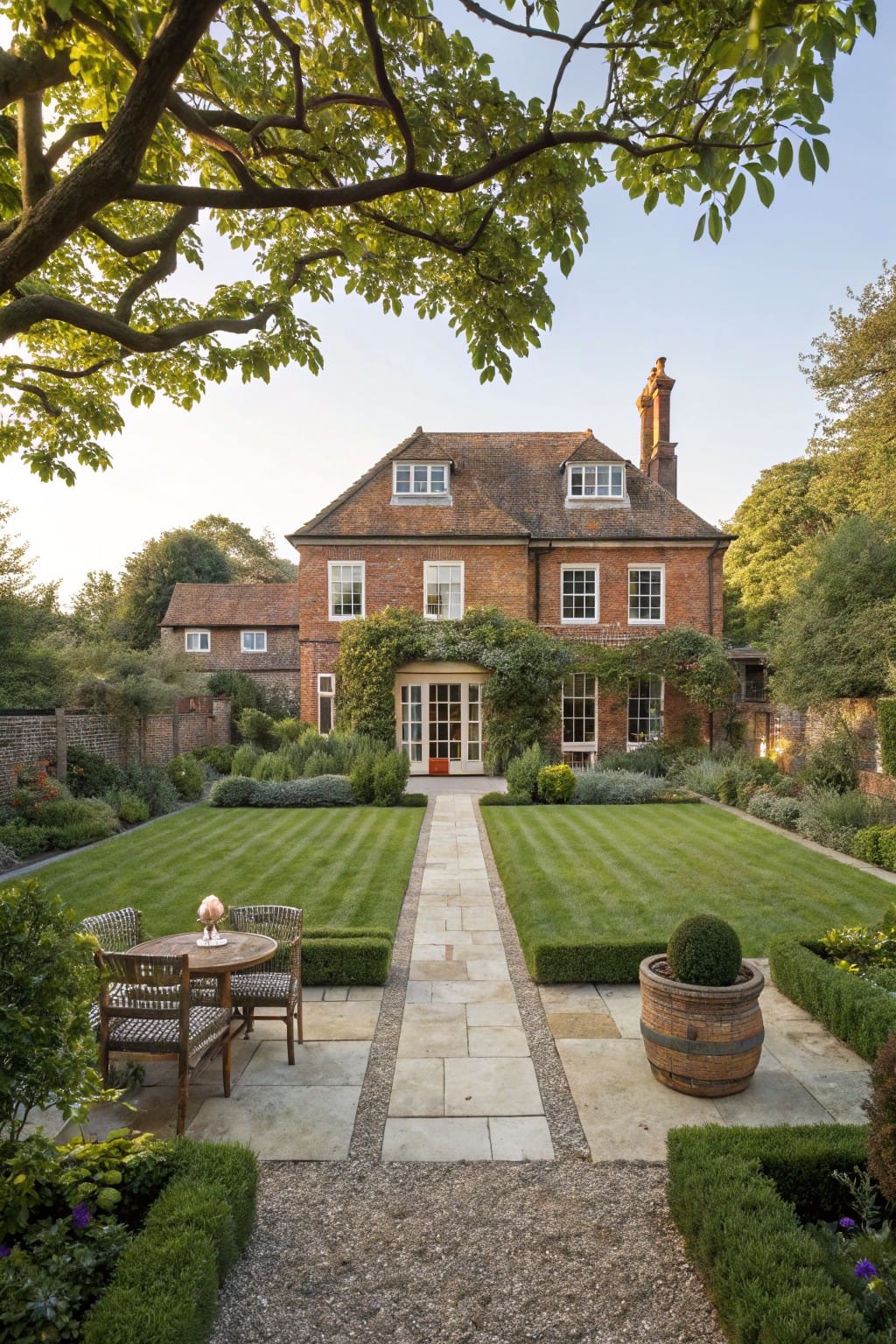
A central pathway cut right through the middle of the backyard lawn does a fine job of organizing the space. It runs straight from the patio area with its table and chairs up to the house door. This kind of layout keeps foot traffic off the grass. It gives the yard a clean direction too.
Stone pavers make a solid choice for the path. They hold up well and look right with a mowed lawn on both sides. Try this in larger backyards behind older homes. Keep the path at least four feet wide. Low hedges along the edges help it stay sharp. Avoid narrow walks. They feel cramped.
Narrow Yard Walkway with Wood Decking
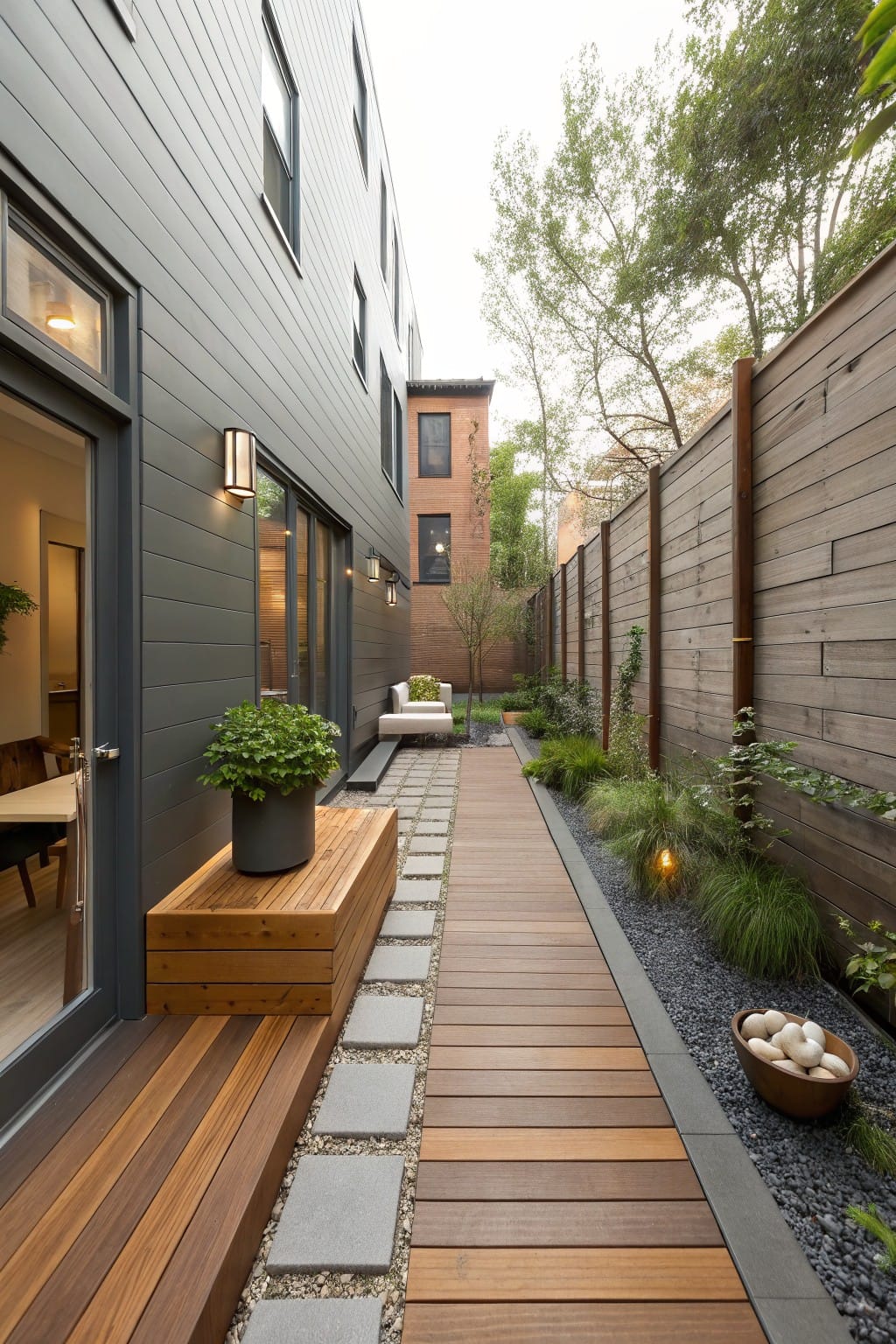
A wooden walkway running straight down a skinny backyard keeps foot traffic simple and the space feeling open. Flanked by gravel beds and clumps of grasses, it directs you from the door to the back without crowding the edges. No mud after rain. Just easy access.
This idea fits row houses or tight urban yards best, where you need function over flash. Pick durable wood like cedar that won’t warp. Gravel stays low fuss, and grasses add green without much trimming. Watch the slope though. Flat paths hold water.
Flagstone Patio with Fire Pit
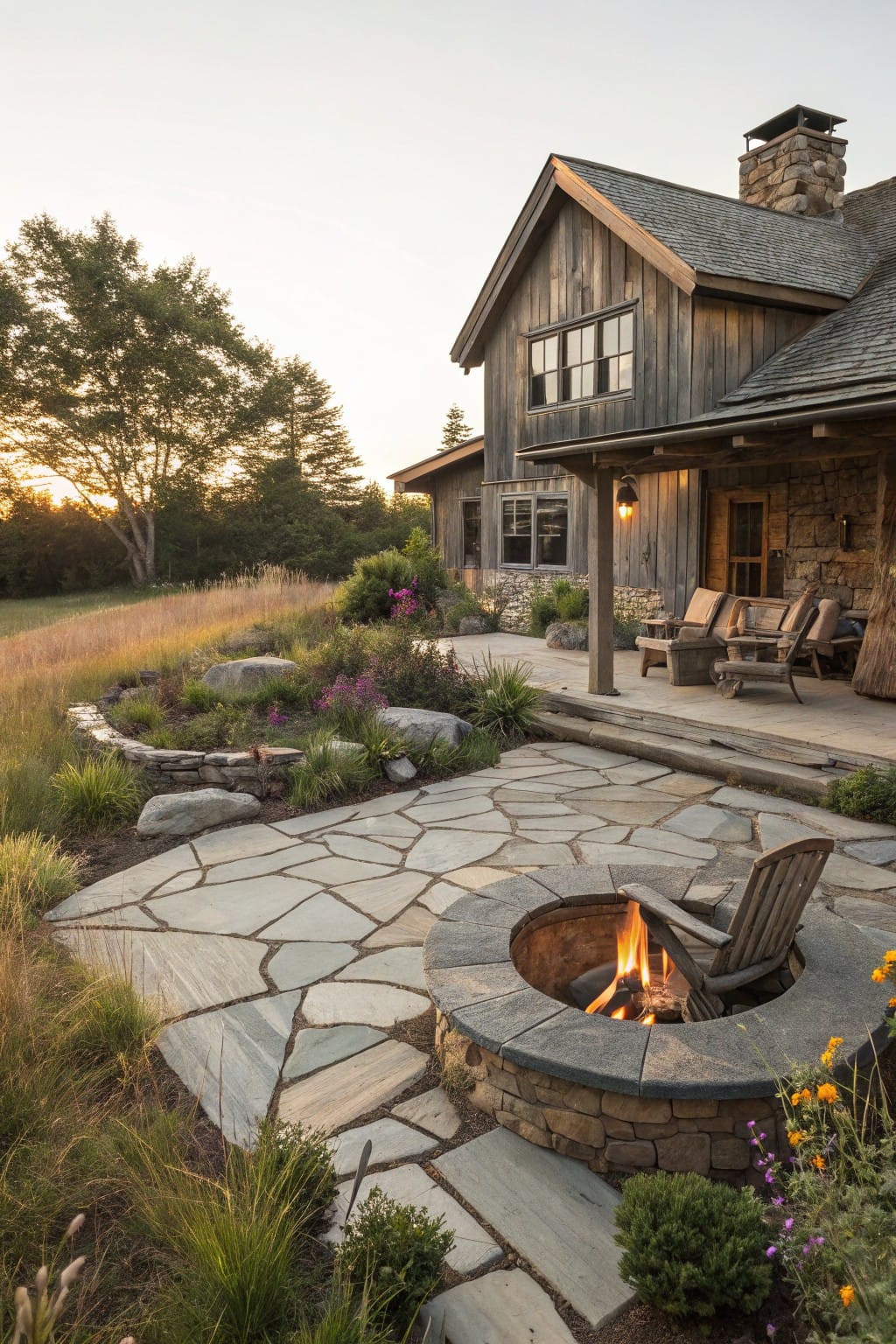
A flagstone patio laid out around a central fire pit makes for a smart backyard spot that feels right at home in a natural setting. The irregular shapes of the stones fit together without looking too perfect. They lead your eye from the house porch straight to the seating area. Folks like how it keeps things open and easy to move around.
This works best behind a cabin-style house or anywhere with trees and grasses nearby. Lay the stones on a gravel base for good drainage. Add simple chairs and keep plantings low around the edges. Skip fussy borders. Just watch the fire pit size so it does not crowd the space.
Covered Outdoor Kitchen
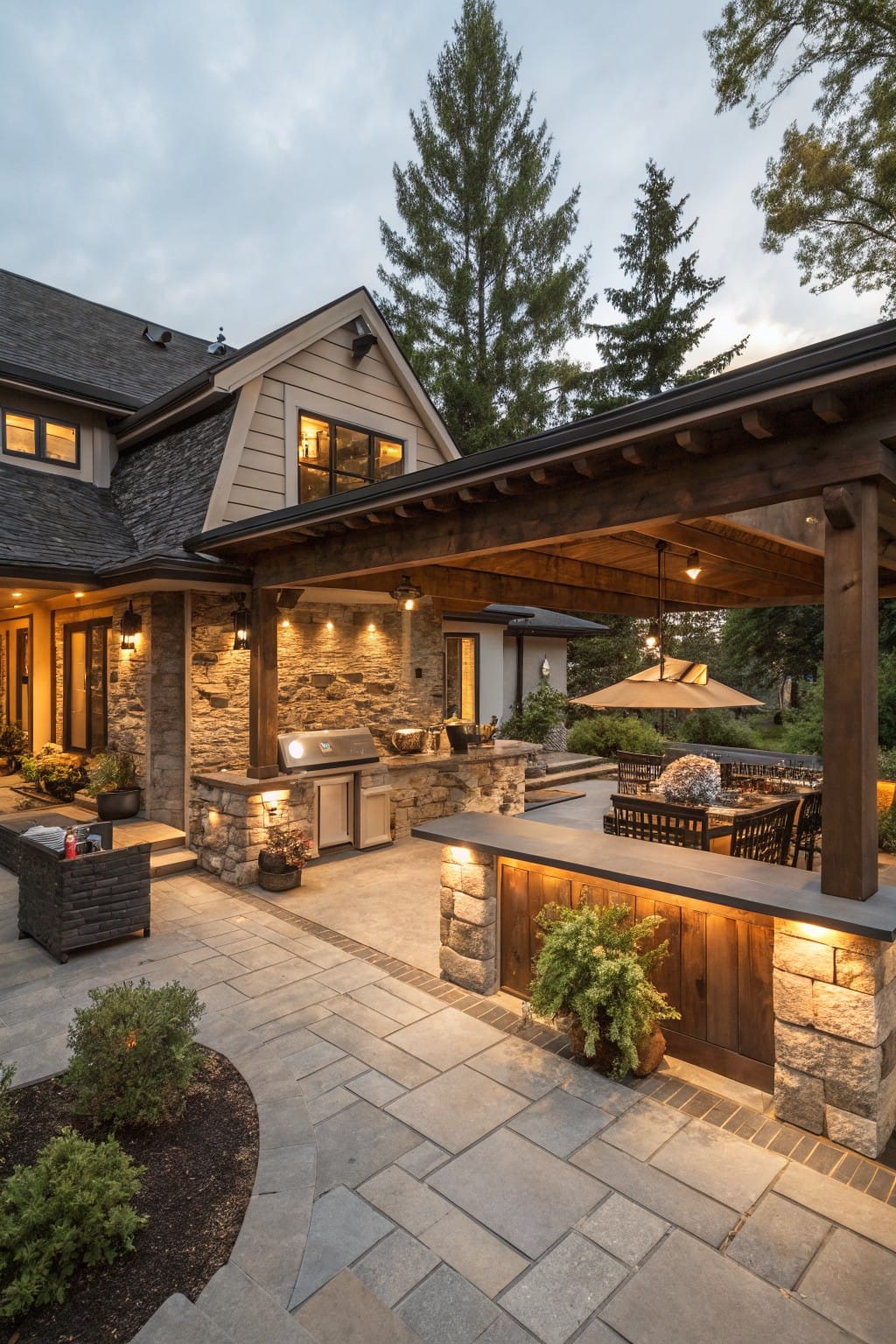
A covered outdoor kitchen gives your backyard a real workhorse spot for cooking and hanging out. Those wood beams overhead keep rain off the stone counters and grill. It holds up year-round and lets everything flow smooth from house to yard.
This works best in bigger backyards where you have patio space to build on. It fits homes with a mix of stone and wood already. Just match the cover style to your roof so it doesn’t stick out.
Patterned Tile Walkway to the Pool
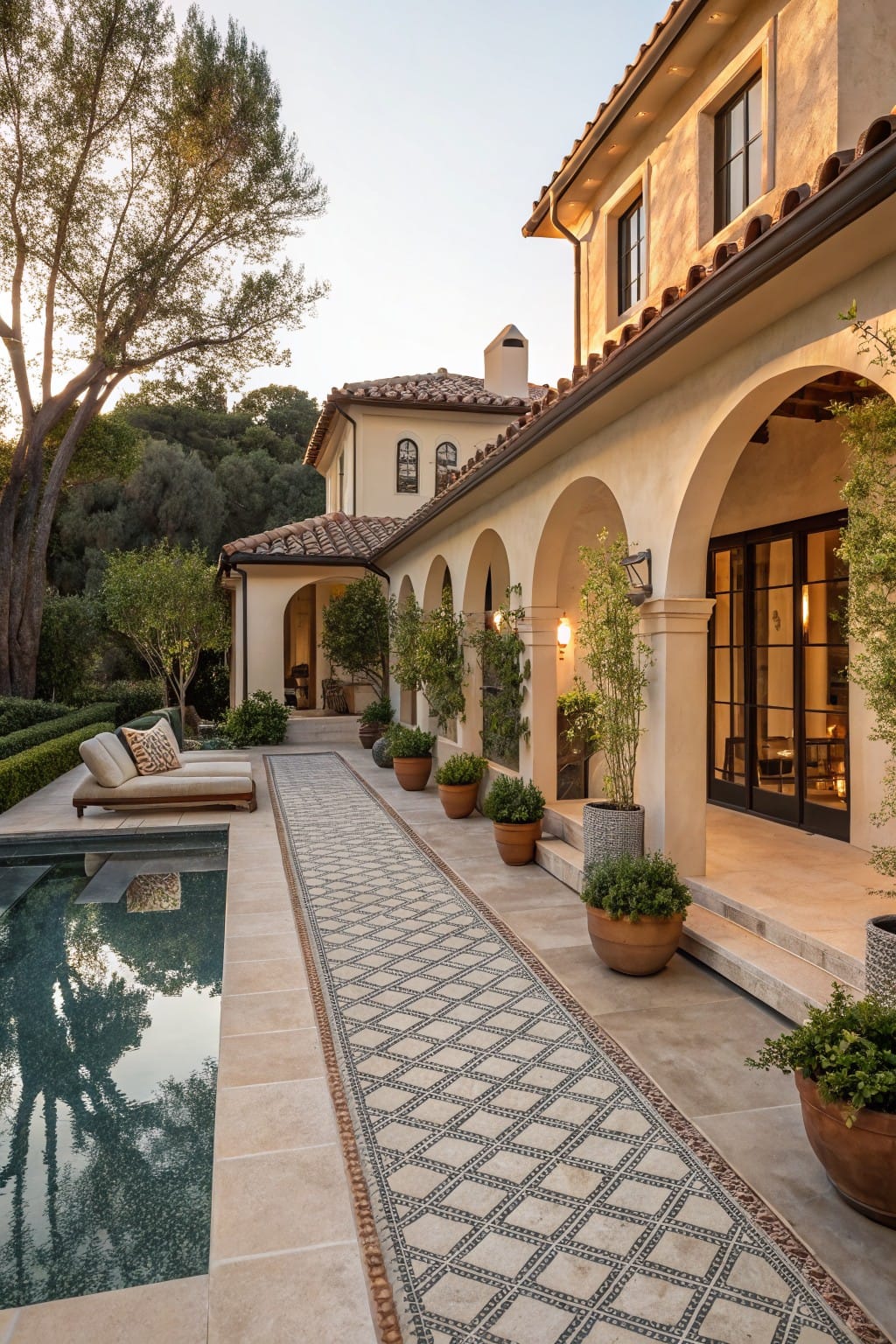
A simple walkway like this one pulls your eye straight from the house to the pool. The diamond tile pattern down the center keeps things interesting but not overdone. It sets up a natural flow for backyard traffic. No guesswork about where to walk.
Put this kind of path in any yard that needs a direct line to the water. It suits level spots behind a casual home. Add pots along the sides for green without the mess of beds. Watch the slope though. Wet tiles can get slippery.
Backyard Reflecting Pond
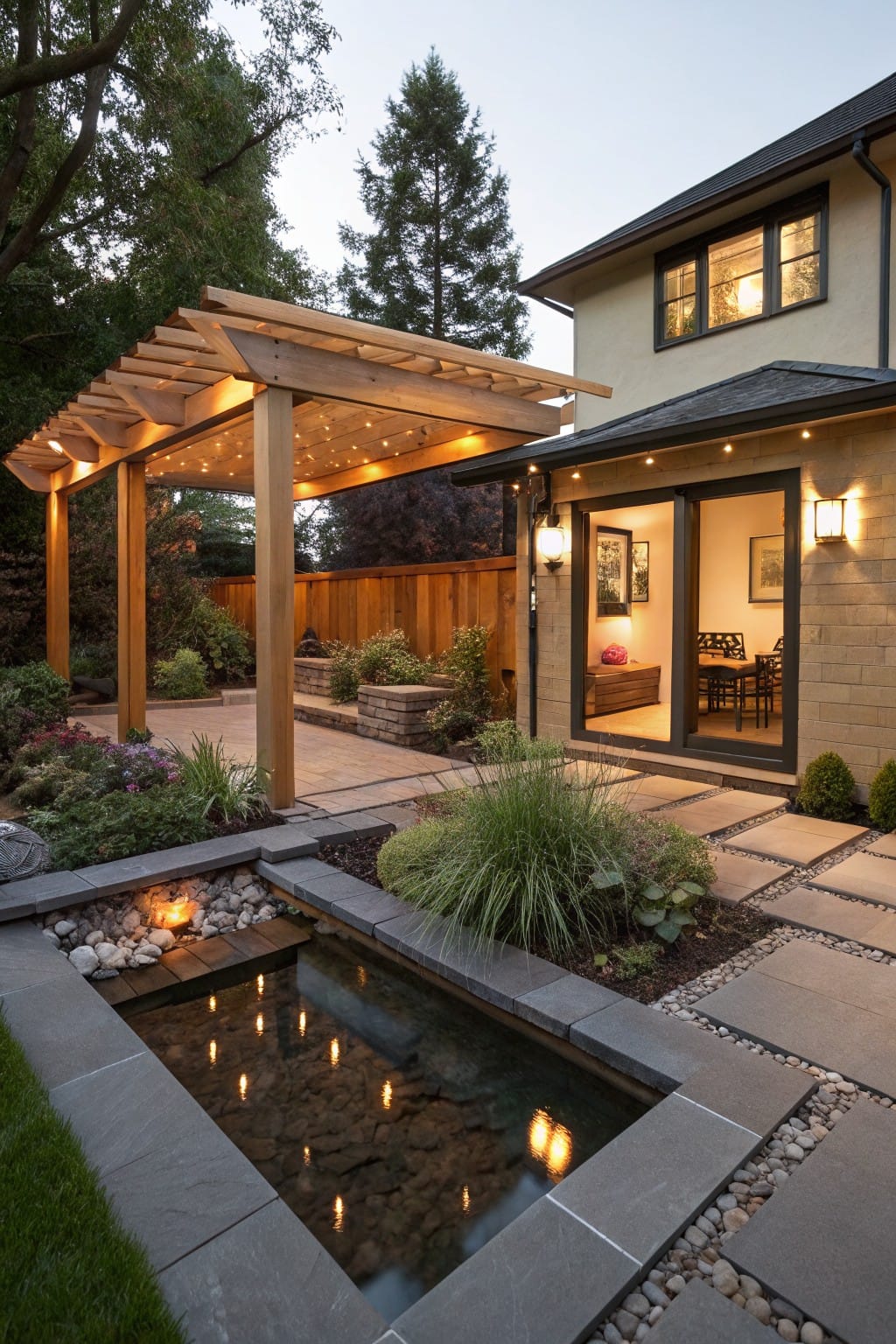
A small reflecting pond like this one sits right in the patio layout. It catches the lights from underwater bulbs and mirrors the pergola overhead. People notice it because it pulls your eye along the stone path without taking up much space. The pebbles around the edge and grasses nearby keep things simple.
Put one near a seating area or walkway in a medium backyard. It works best with modern or craftsman style homes where you want calm without big maintenance. Skip it if your yard floods easy or you hate cleaning water features.
Winding Stone Paths Through Backyard Gardens
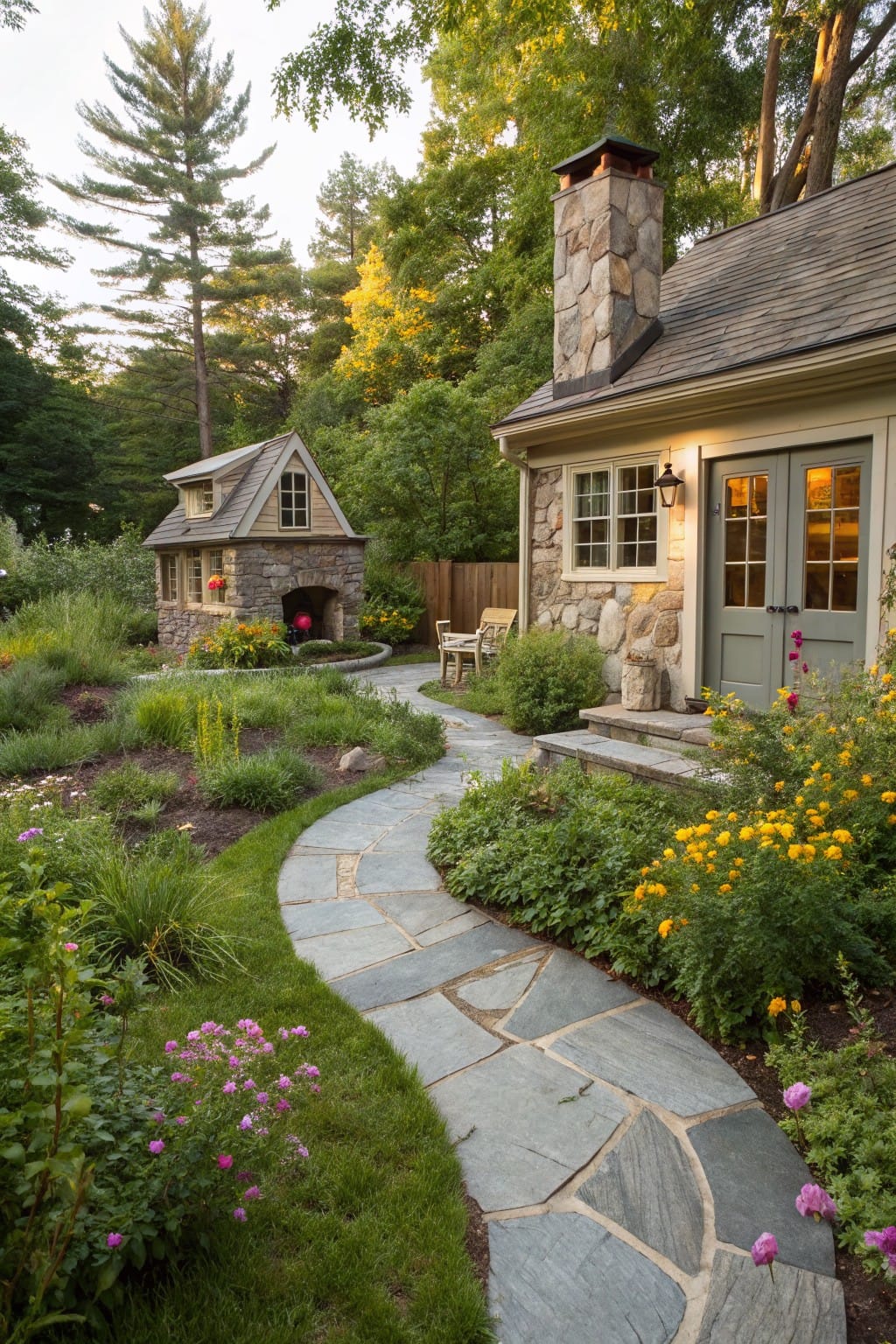
A good winding stone path like this one pulls everything together in a backyard. It curves gently through tall grasses and flower beds right up to the door. That shape makes the walk feel natural. No straight lines here. Just easy steps that fit the lay of the land.
Put one in if you have a cottage or wooded yard. Use flagstone slabs set in sand or gravel for drainage. Keep plants trimmed back so you don’t brush against them too much. It works best where you want to slow folks down a bit. Leads the eye without crowding the space.
Simple Paver Path Through the Lawn
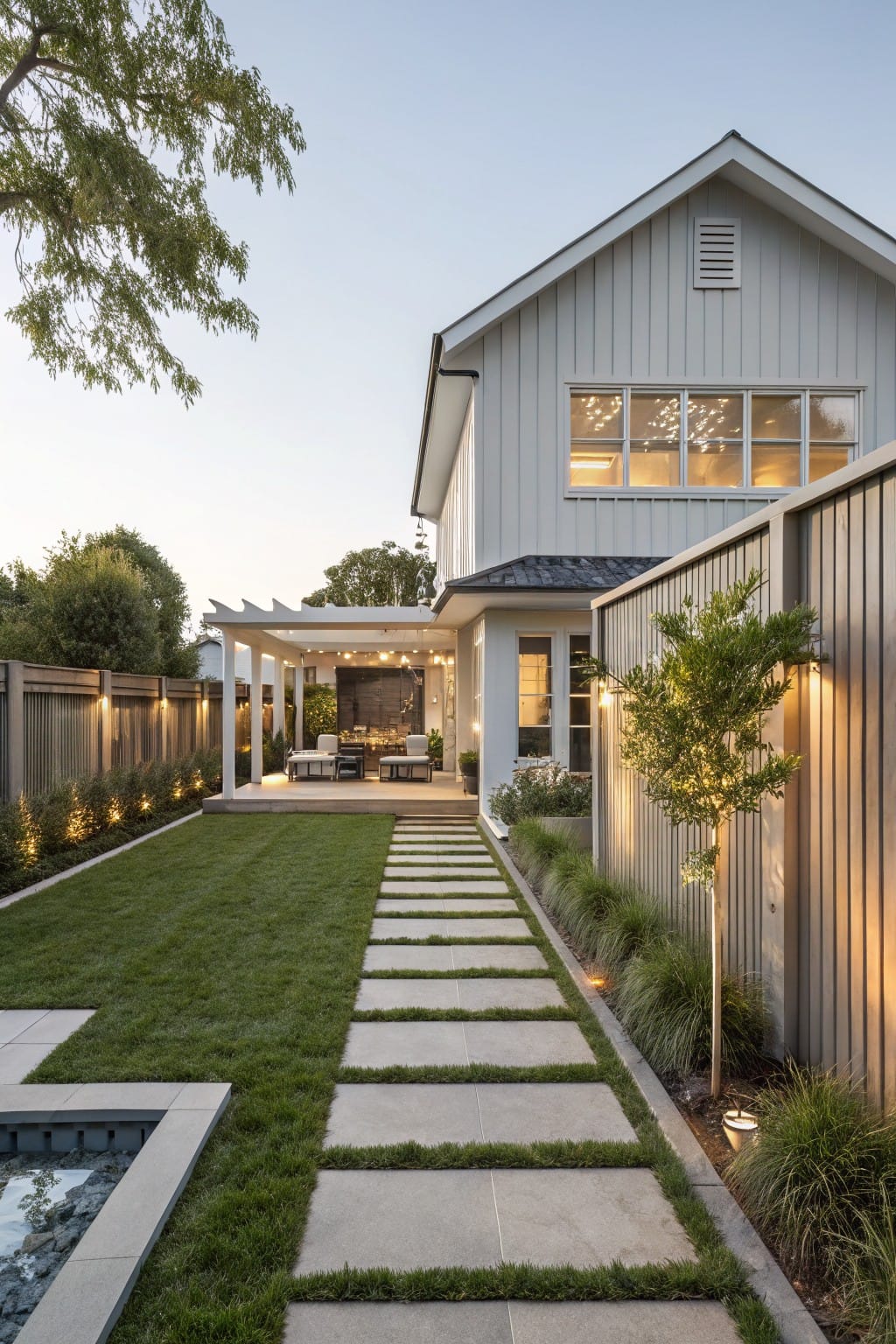
A straight row of wide concrete pavers cuts right through the grass in this backyard. It sets up an easy walking line from the pool edge to the patio without muddying up the yard. People go for this because it handles everyday foot traffic well and keeps things looking tidy.
Put one in if your yard has some size and a clear from-to route like pool to house. It fits plain modern homes or older ones with flat ground. Line the edges with low plants or lights. Watch the spacing so it drains right after rain.
Natural Stone Pathways to the Pool
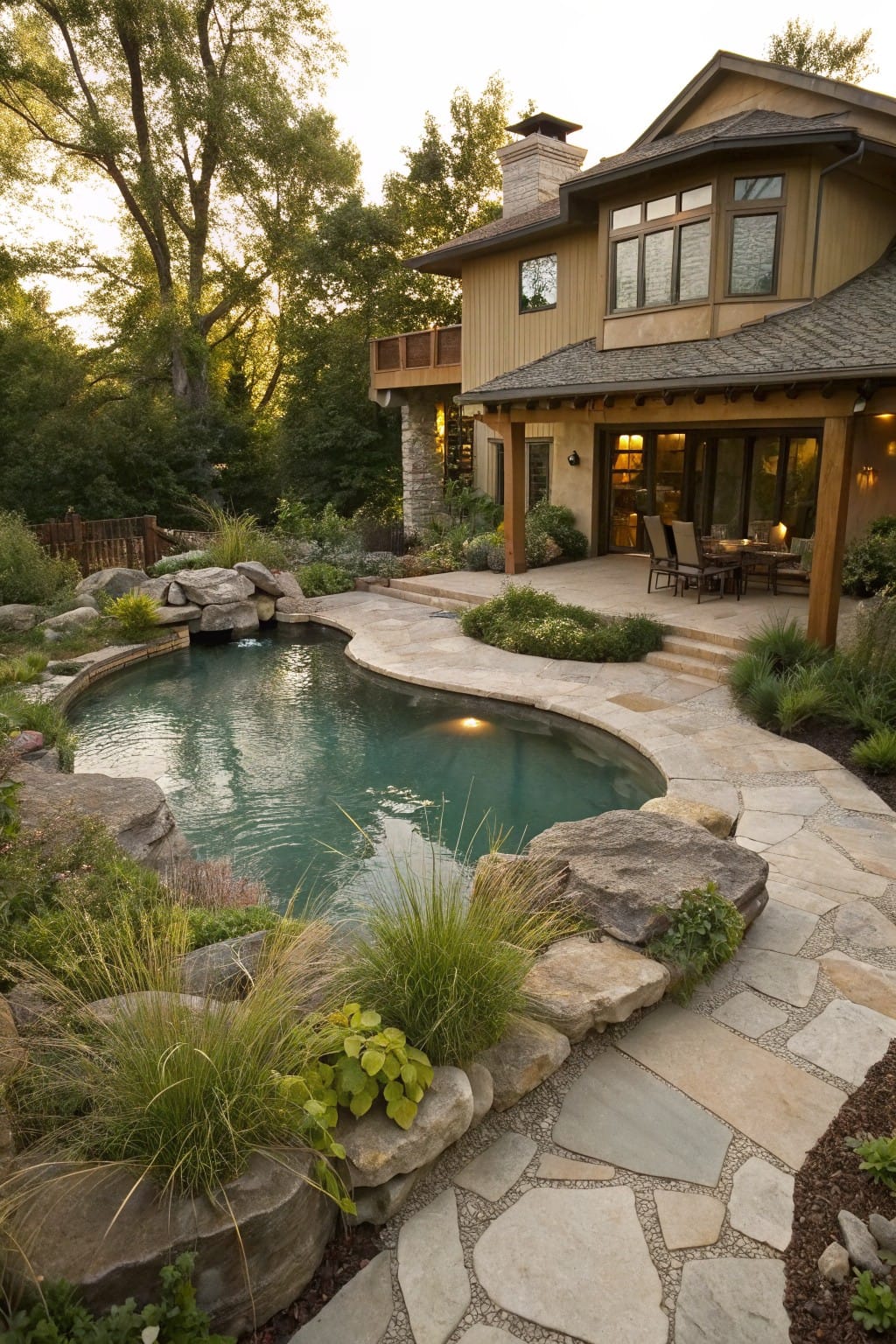
Winding paths like these, cut from rough flagstone, pull you through the yard without feeling forced. They hug the pool’s edge and slip between boulders and tall grasses. What stands out is how they keep everything flowing smooth, no sharp turns or busy lines to trip you up.
You can add them to most backyards, especially ones with a slope or extra rocks already. Lay the stones loose over gravel for drainage, then tuck plants in the gaps. They suit homes with wood siding or stone bases. Just space them wide enough for chairs if folks linger along the way.
Backyard Basketball Court Layout
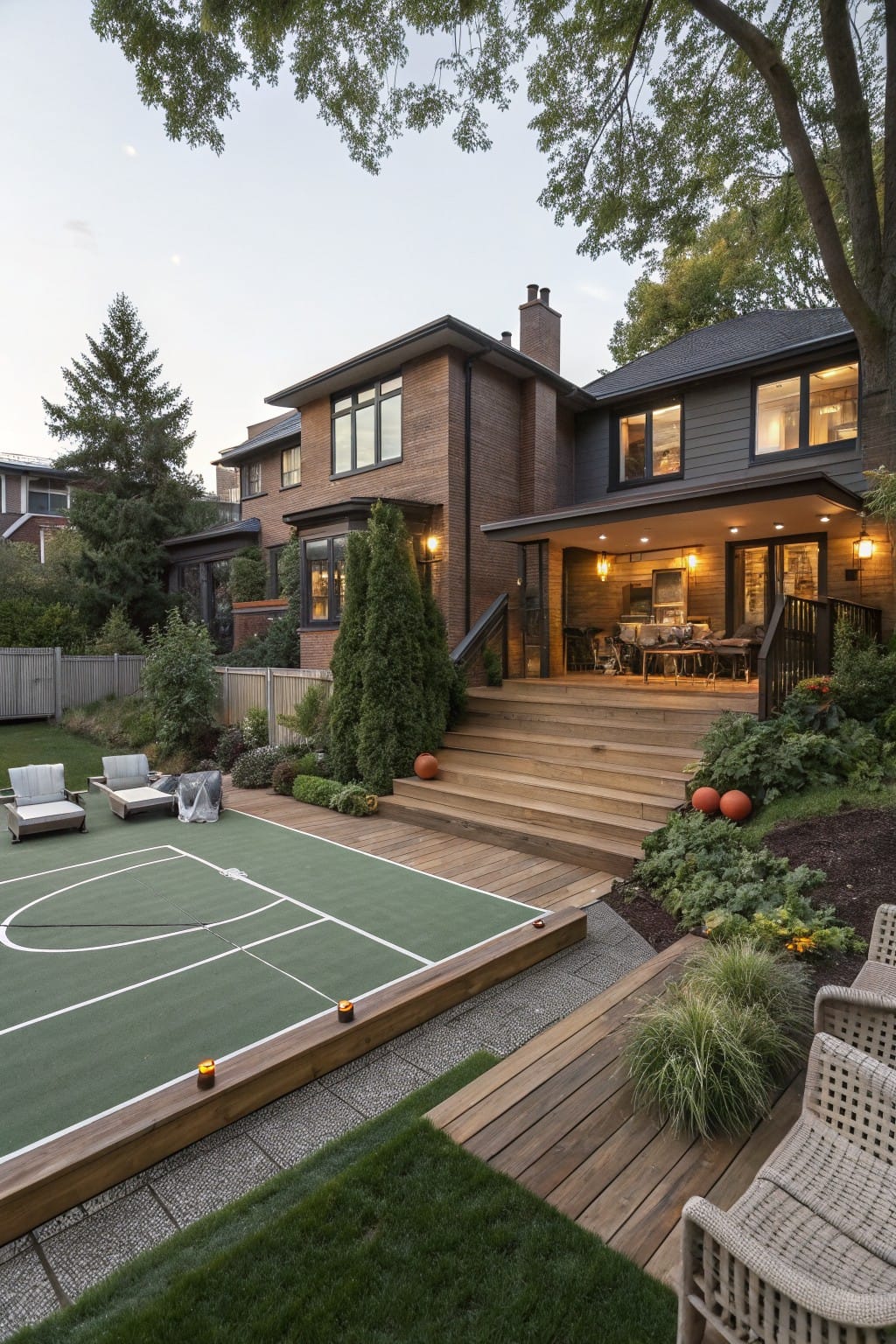
A basketball court built right into the backyard makes good use of open space. Here the green court pad sits flush with the surrounding wood deck, and stairs lead up from it to a patio dining spot. It keeps play areas close to where people hang out, so everyone stays connected without running back and forth.
This layout fits bigger yards that have room for the court plus some landscaping around the edges. Go for durable decking that matches your house siding, and add low plants to soften the hard surfaces. It suits family homes where kids need space to burn energy, but watch the slope so balls don’t roll off too easy.
A Stone Pathway Through Lavender
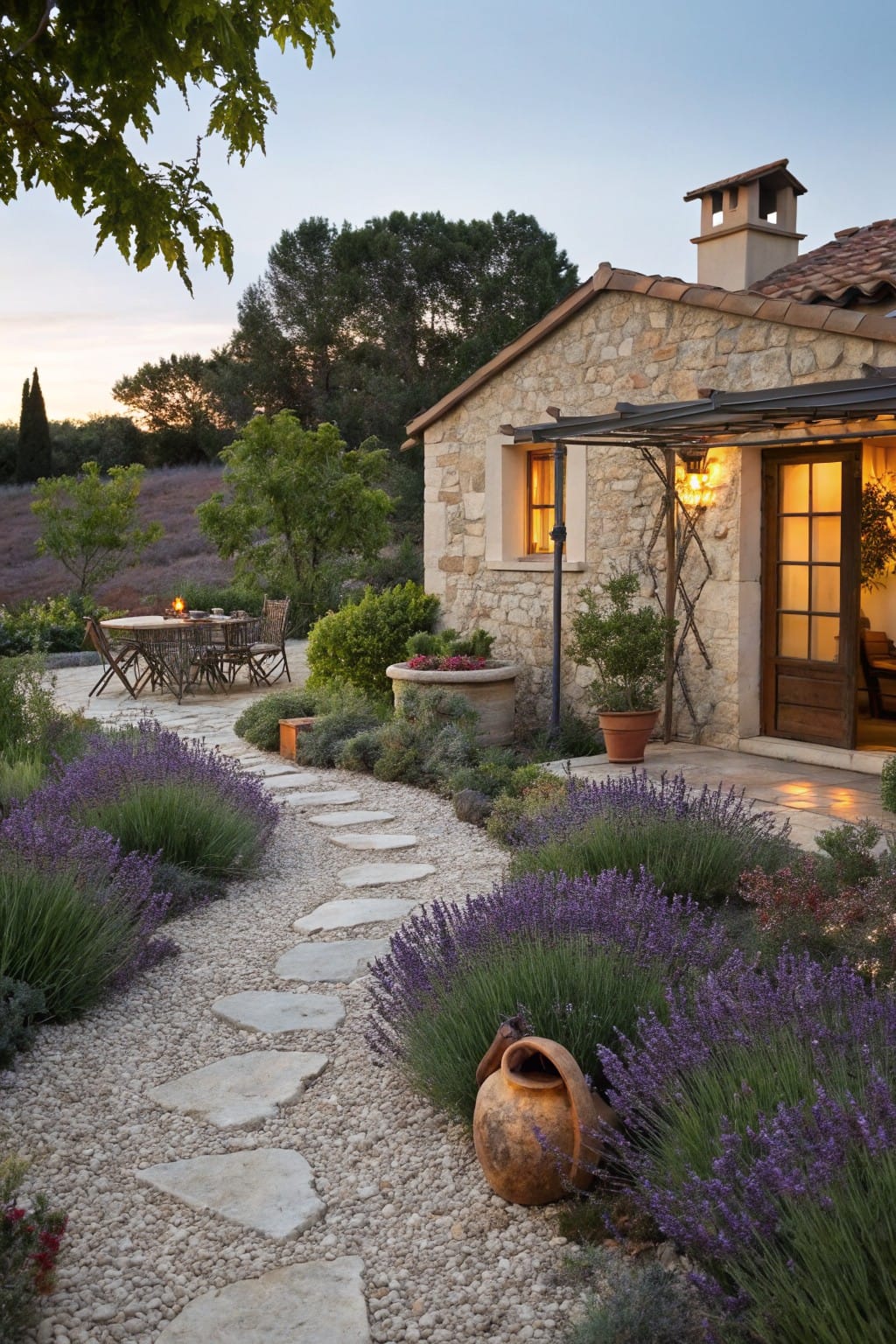
A stone pathway like this one winds gently from the garden straight to the back patio doors. It keeps foot traffic off the grass and gravel while the lavender on both sides softens everything up. Folks like how it pulls you along without trying too hard. Plus that purple bloom repeats all summer.
Put one in where you need a clear route to the house or seating area. Suits country-style homes or any yard with sunny spots for lavender. Space the stones loose enough for drainage. Watch the edges so plants don’t creep over. Works best not too narrow.
Gridded Paver Path Through the Grass
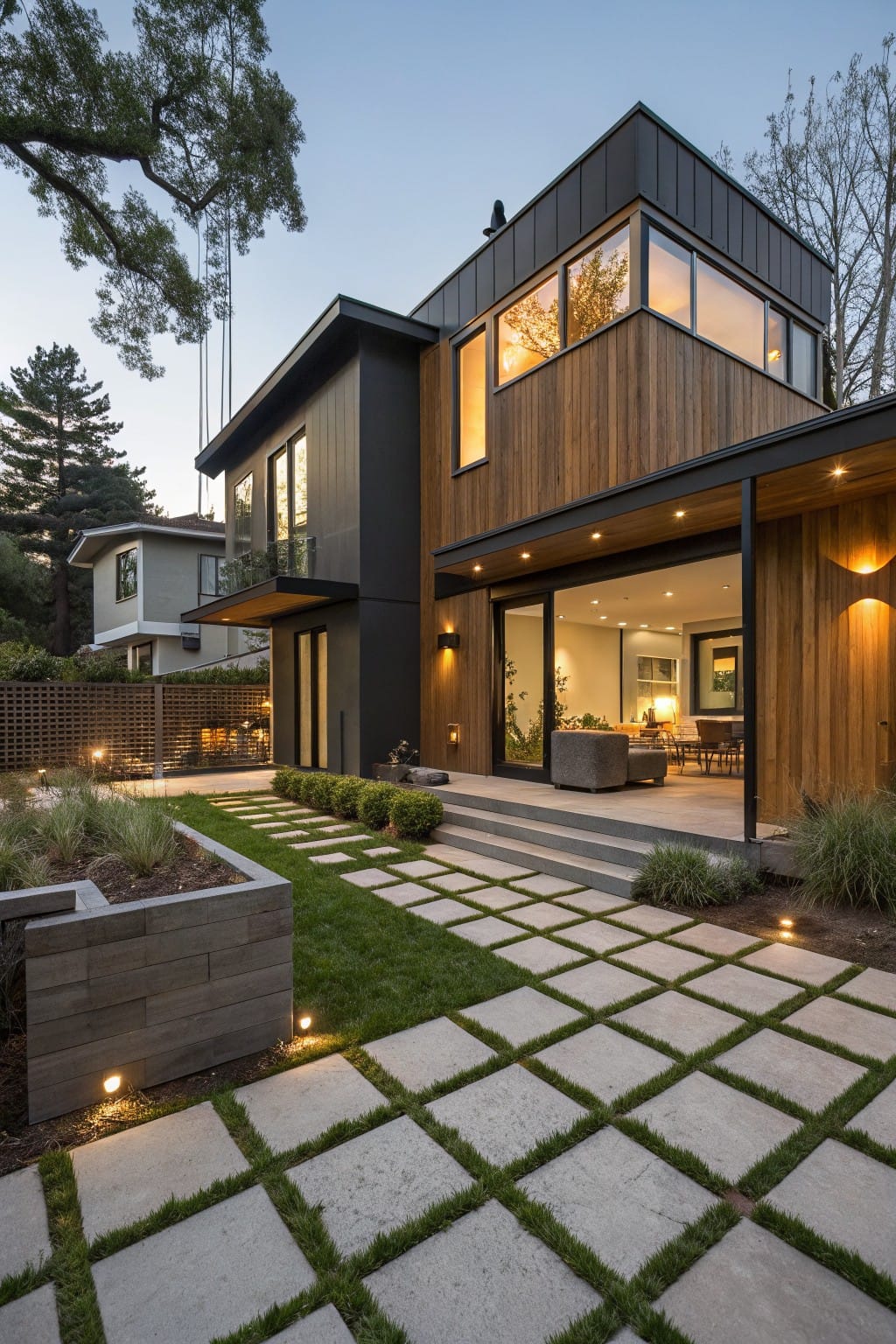
A grid of large square pavers with grass growing between them makes a straight shot from the backyard to the house patio. It keeps foot traffic off the lawn while letting grass stay part of the look. Simple to follow. No mud after rain.
This setup fits yards with room for a direct path, say 4 to 6 feet wide. Good for modern homes or any place you want low upkeep. Set pavers on a gravel base so water drains well. Grass needs sun though, or use gravel instead if shade is an issue.
Frequently Asked Questions
Q: My yard is super small. Which layouts work best there?
A: Go for the linear pathway designs that hug the edges. They stretch the space visually and leave room in the center for seating or play. Mulch the paths to keep it simple and clean.
Q: How do I get that smooth flow without it feeling crowded?
A: Zone everything clearly with low fences or plant borders. Walk the paths yourself after planting to tweak angles. Paths at least three feet wide make movement feel natural.
Q: What’s a budget-friendly way to test these ideas first?
A: Grab some string, stakes, and spray paint to outline paths and zones right on the grass. Live with the layout for a week before digging anything up. Adjust as you go, then commit.
Q: But my soil is rocky clay. Will these layouts still work?
A: Build raised beds for planting zones to beat the poor soil. Amend just those spots with compost for happy plants. Paths over gravel handle drainage fine.
