

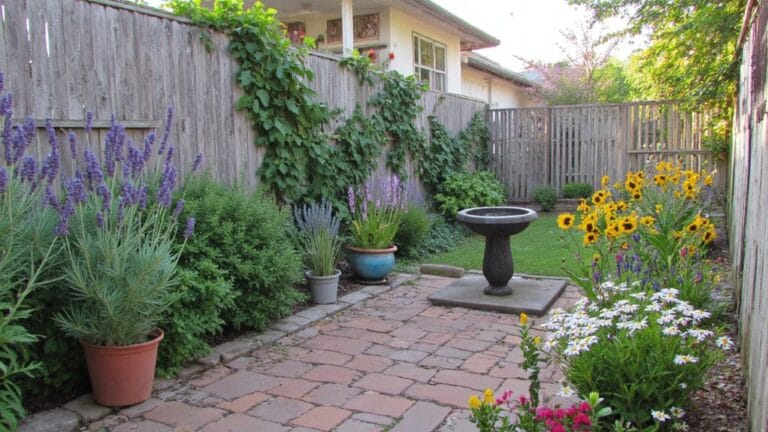
Creating a bee-friendly flower garden is such a delightful way to add charm to your outdoor space. It’s not just about the beauty these flowers bring, but also about supporting our buzzing friends. By choosing a mix of native plants and arranging them thoughtfully, you can make a real difference. Discover some practical ideas and plant combinations that will turn your garden into a haven for bees. Let’s explore how you can make your garden a welcoming home for these essential pollinators.
Choose Native Wildflowers for a Bee-Friendly Garden
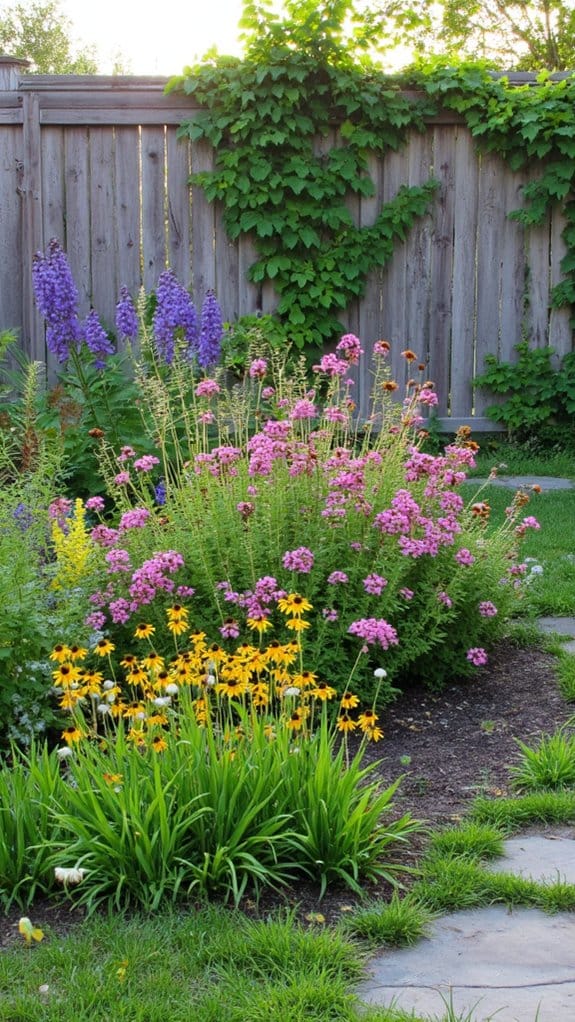
When I think about creating a bee-friendly garden, choosing native wildflowers always comes to mind.
These plants not only thrive in our local soil but also attract a variety of pollinators. I love how they provide essential nectar and pollen throughout the growing season.
Plus, they’re low maintenance! By selecting native wildflowers, I feel like I’m truly supporting our local ecosystem.
Incorporate Perennials for Long-Lasting Blooms
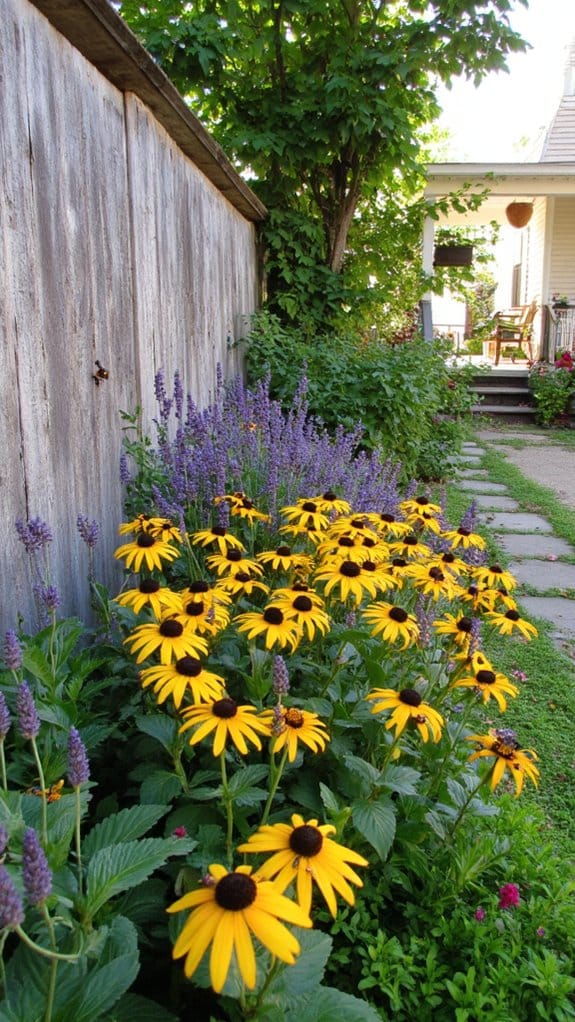
Incorporating perennials into your bee-friendly garden can create a vibrant landscape that blooms year after year.
I love choosing varieties like coneflowers and black-eyed Susans, which attract bees and provide consistent food sources.
Planting them in clusters enhances their visual appeal and encourages pollinators to visit often.
With minimal maintenance, these durable flowers keep your garden buzzing with life season after season.
Add Annuals for Seasonal Variety
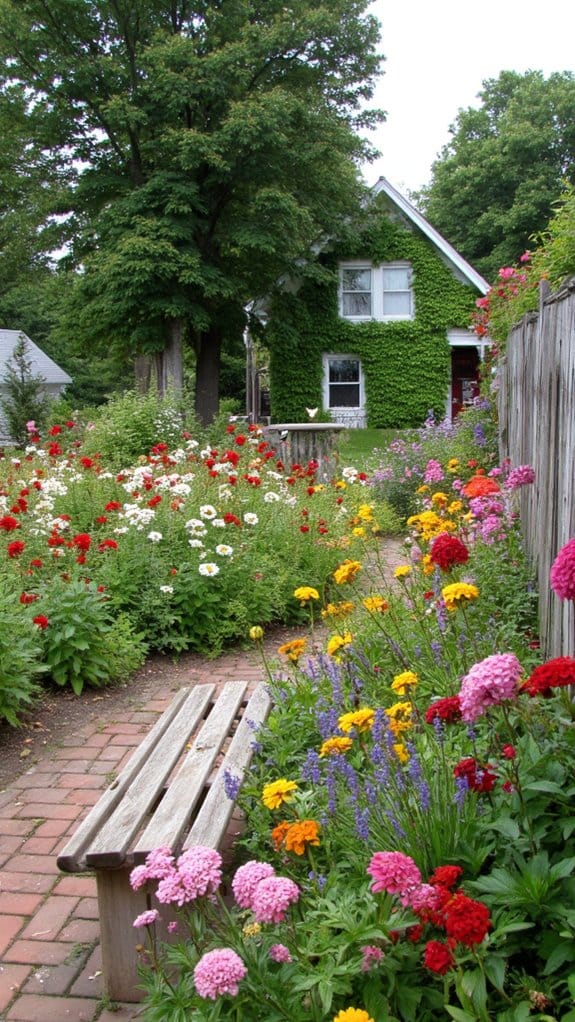
While perennials provide a reliable foundation for your bee-friendly garden, adding annuals can infuse a splash of color and diversity throughout the seasons.
I love choosing a mix of bright blooms like zinnias and cosmos, which attract bees and offer delightful variety.
These seasonal plants keep my garden lively and engaging, ensuring there’s always something beautiful for both me and the pollinators to enjoy.
Layer Flowers by Height for Visual Impact

To create a visually striking bee-friendly garden, I love layering flowers by height.
I start with tall blooms like sunflowers or hollyhocks at the back, then medium-height flowers such as coneflowers in the middle, and finally, shorter varieties like daisies or thyme at the front.
This arrangement not only looks beautiful but also makes it easier for bees to access their favorite nectar.
Use Group Planting to Attract Pollinators

Grouping flowers together not only enhances the garden’s aesthetic but also creates a more inviting space for pollinators.
I’ve found that planting in clusters encourages bees and butterflies to visit more frequently.
By choosing a variety of blooms that flower at different times, I keep the buzz going throughout the season.
Selecting diverse flowers that bloom at various times ensures a continuous attraction for pollinators throughout the season.
It’s a simple yet effective way to support our essential pollinator friends.
Design a Colorful Palette to Draw Bees
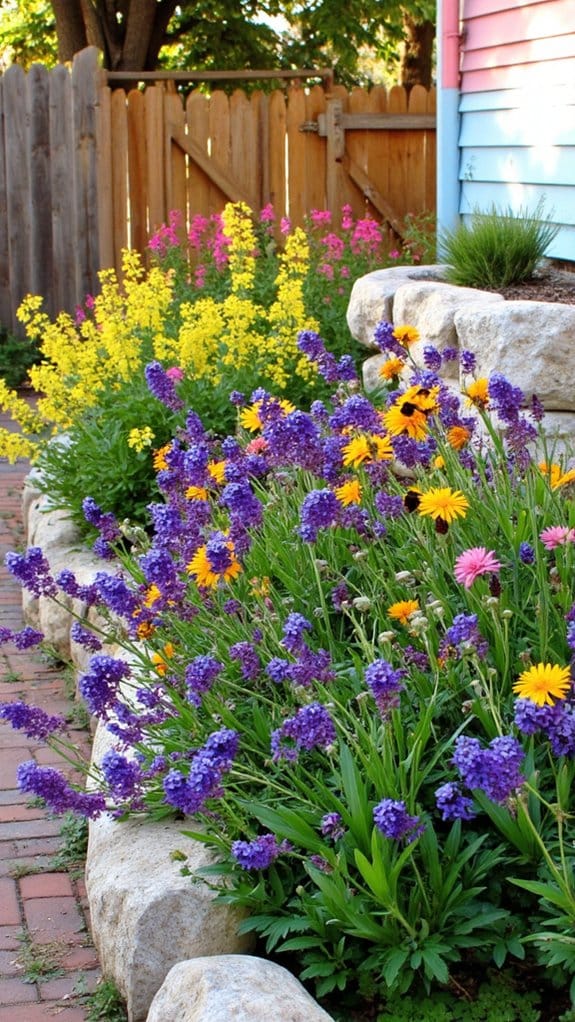
When I design a flower garden aimed at attracting bees, I focus on creating a vibrant color palette that draws them in.
I love mixing bright yellows, deep purples, and fiery reds, as these colors catch bees’ attention. Planting in clusters enhances the visual impact, allowing bees to easily spot their favorite blooms.
A colorful garden not only pleases the eye but also supports our essential pollinators.
Include Herbs That Attract Bees
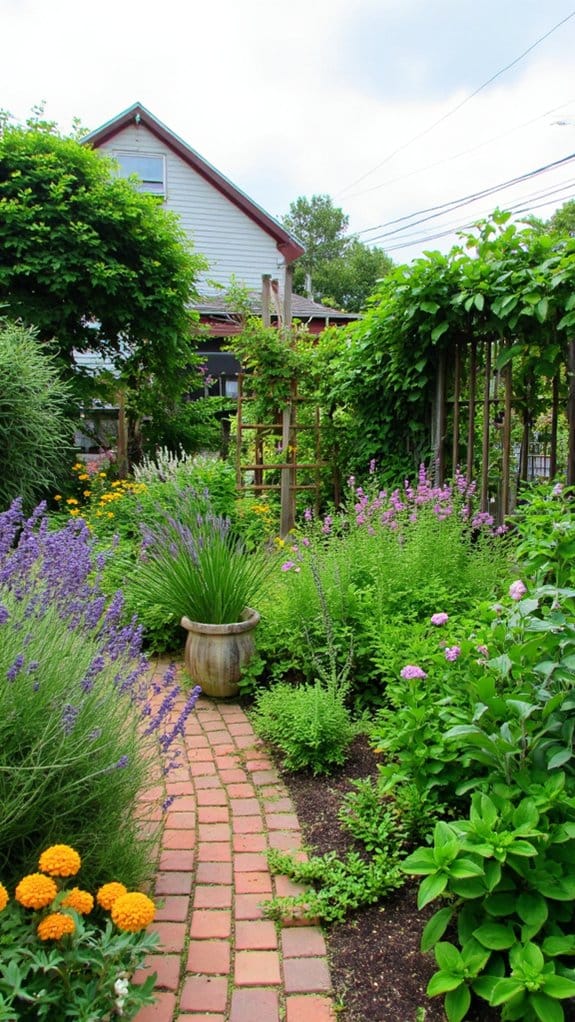
Including herbs that attract bees is a fantastic way to enhance your garden while providing essential food sources for these vital pollinators.
I love planting lavender, mint, and thyme because they not only smell great but also draw in bees.
Add Flowering Trees for Shelter and Food

While I tend to focus on colorful blooms, adding flowering trees to my garden has proven to be a game changer for attracting bees.
These trees not only provide shelter but also offer a wealth of nectar and pollen.
I’ve noticed that species like cherry and dogwood draw in pollinators, making my garden a buzzing haven.
They truly enhance both beauty and biodiversity.
Incorporate Flowering Shrubs for a Buzzing Garden

To create a buzzing garden that welcomes bees, I’ve found incorporating flowering shrubs is crucial.
These vibrant plants not only add beauty to my garden but also provide essential nectar and pollen for hungry pollinators.
Vibrant flowering shrubs enhance garden beauty while offering vital nectar and pollen for our hardworking pollinators.
I love choosing varieties like butterfly bush and blueberry shrubs, which attract bees while offering lovely blooms.
It’s a win-win for both my garden and the bees!
Build a Bee Bath for Hydration

Creating a bee bath is a simple yet effective way to provide hydration for our buzzing friends.
I like to use a shallow dish filled with water and add pebbles for bees to land on safely. This way, they can drink without drowning.
Placing it in a sunny spot near flowers attracts them, ensuring they stay refreshed while pollinating my garden.
Provide Nesting Sites With Bee Hotels
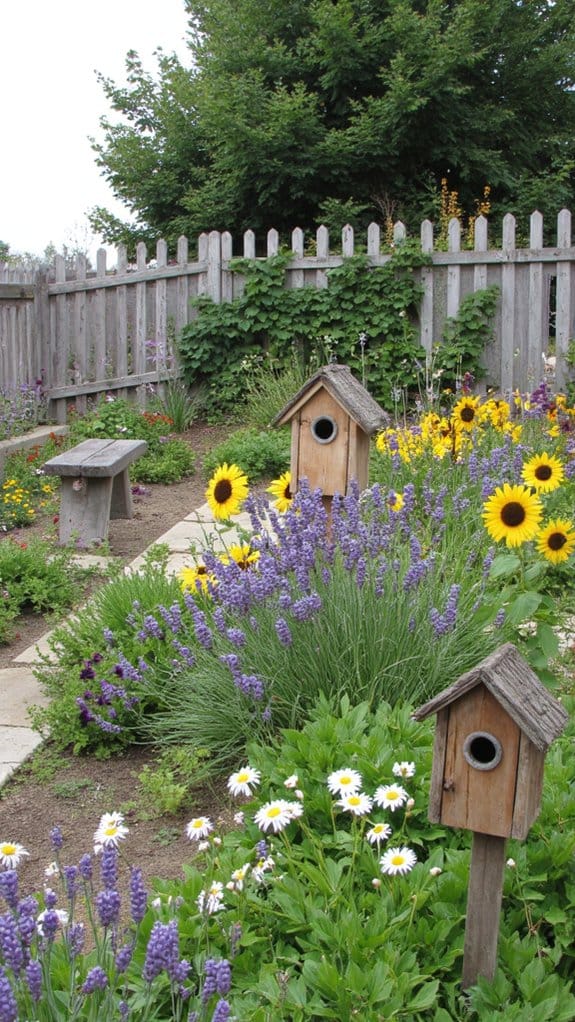
Bee hotels serve as fantastic nesting sites for solitary bees, helping them thrive in our gardens.
I love placing these charming structures near blooming flowers to attract these important pollinators. You can easily create one using bamboo, wood, or even hollow stems.
Avoid Pesticides to Protect Bees

While gardening can be a joy, I know that choosing to avoid pesticides is essential for protecting our bee populations.
These chemicals can harm not only bees but also the entire ecosystem.
Instead, I opt for natural pest control methods, like introducing beneficial insects or using organic solutions.
Choose Flowers With Simple Shapes for Easy Access
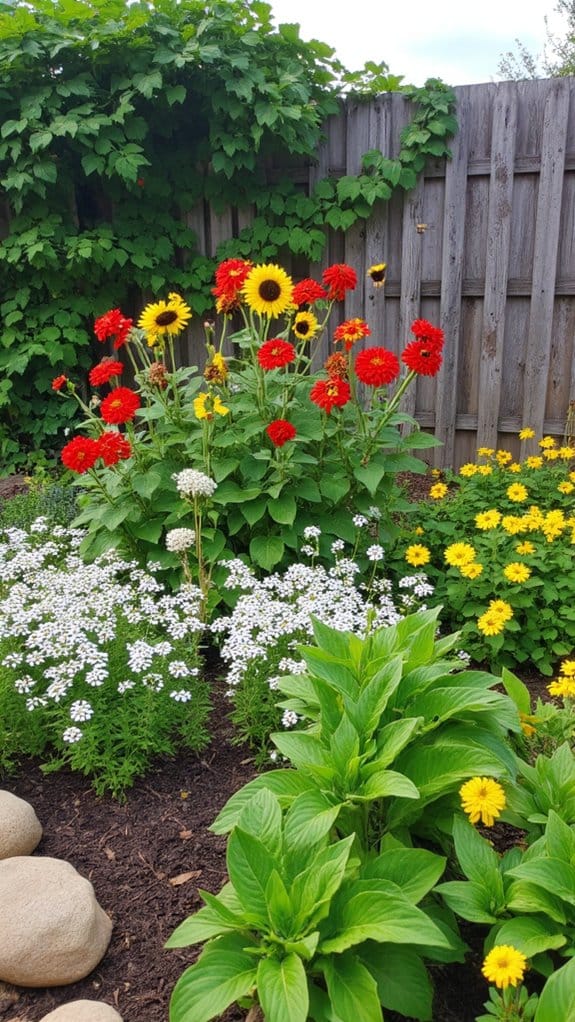
Choosing flowers with simple shapes can greatly enhance a bee-friendly garden, as these blooms provide easier access for our pollinator friends.
I love incorporating daisies, sunflowers, and clovers into my garden. Their open designs allow bees to land and gather nectar effortlessly.
Select Plants With Staggered Bloom Times
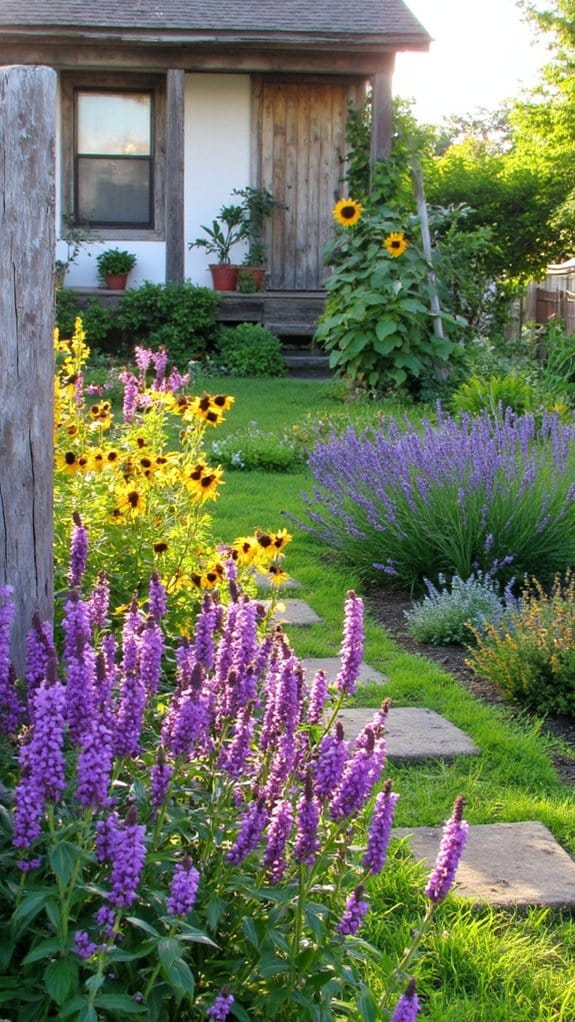
To create a truly bee-friendly garden, I’ve found that selecting plants with staggered bloom times is essential.
This way, I guarantee that there’s always something flowering throughout the seasons. For example, I mix early bloomers like crocuses with summer favorites like coneflowers.
This approach not only attracts bees year-round but also creates a vibrant display in my garden.
Add a Variety of Flower Shapes and Sizes

A diverse array of flower shapes and sizes not only enhances the beauty of your garden but also caters to the needs of various bee species.
I’ve found that including tubular flowers, flat daisies, and spiky blossoms creates a welcoming environment.
This variety guarantees bees can easily access nectar, promoting a healthy ecosystem.
Trust me, your garden will thrive with this thoughtful approach!
Create a Sunny Spot for Bees to Thrive
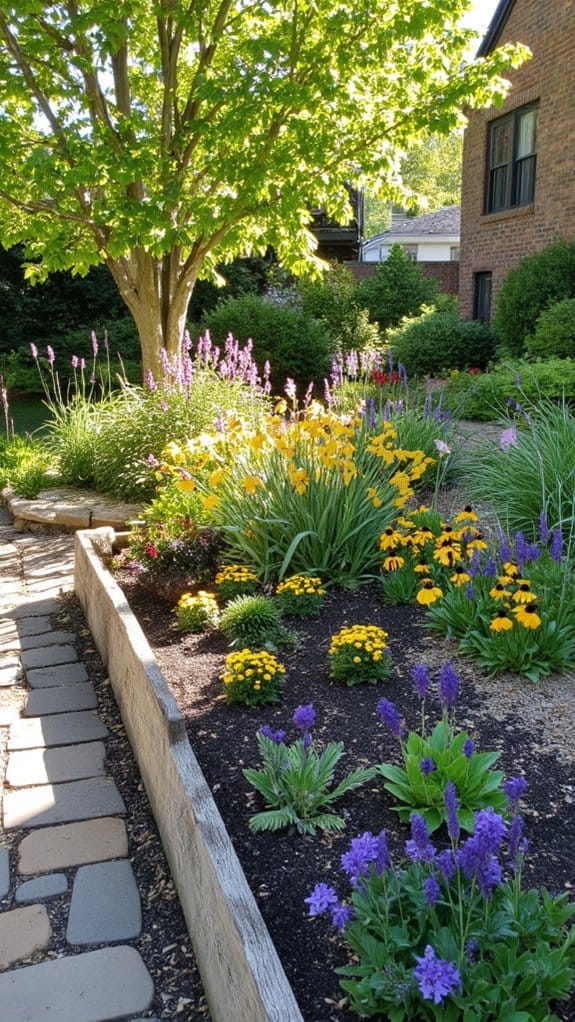
After adding a variety of flower shapes and sizes, it’s time to focus on another important aspect of your garden: sunlight.
Bees love warm, sunny spots, so pick a location that gets plenty of direct sunlight throughout the day. A sunny patch encourages bees to visit your flowers more often, increasing pollination and helping your garden thrive.
Let those bees bask in the warmth!
Use Native Grasses to Support Pollinator Habitats
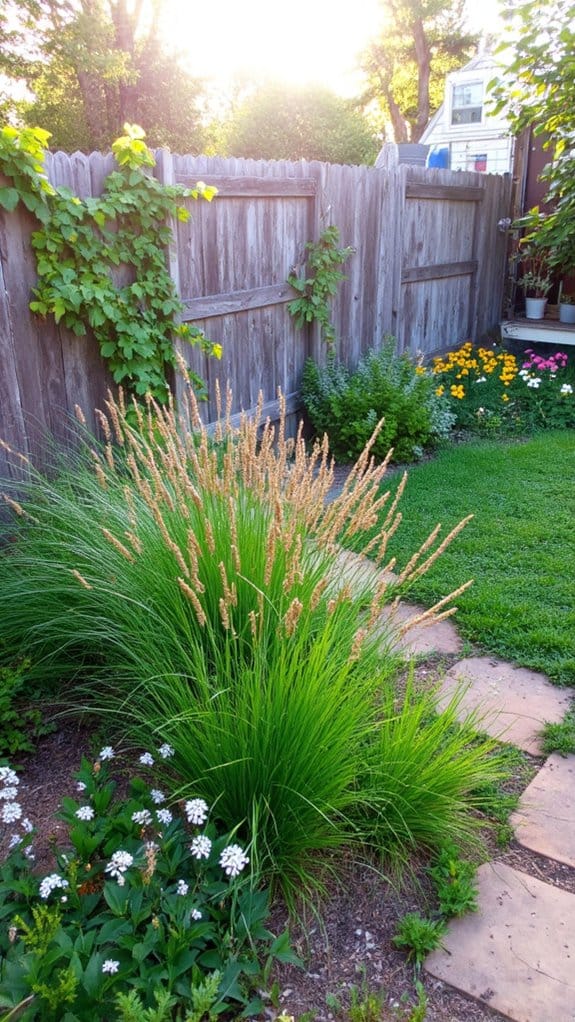
While I might focus on colorful flowers in my garden, incorporating native grasses is equally important for creating a supportive habitat for pollinators.
These grasses provide shelter, nesting sites, and food sources for various insects. By choosing local species, I can enhance biodiversity and guarantee a thriving environment.
Plus, their low maintenance makes them a practical choice for any garden enthusiast.
Incorporate Climbing Plants for Vertical Interest

Adding native grasses not only enhances habitat but also creates a perfect backdrop for climbing plants.
I love incorporating vines like honeysuckle or clematis, which not only add vertical interest but also attract pollinators.
These plants can climb trellises or fences, transforming ordinary spaces into vibrant havens.
Plus, they provide shelter for beneficial insects, making my garden even more inviting.
Choose Drought-Resistant Plants for Easy Care
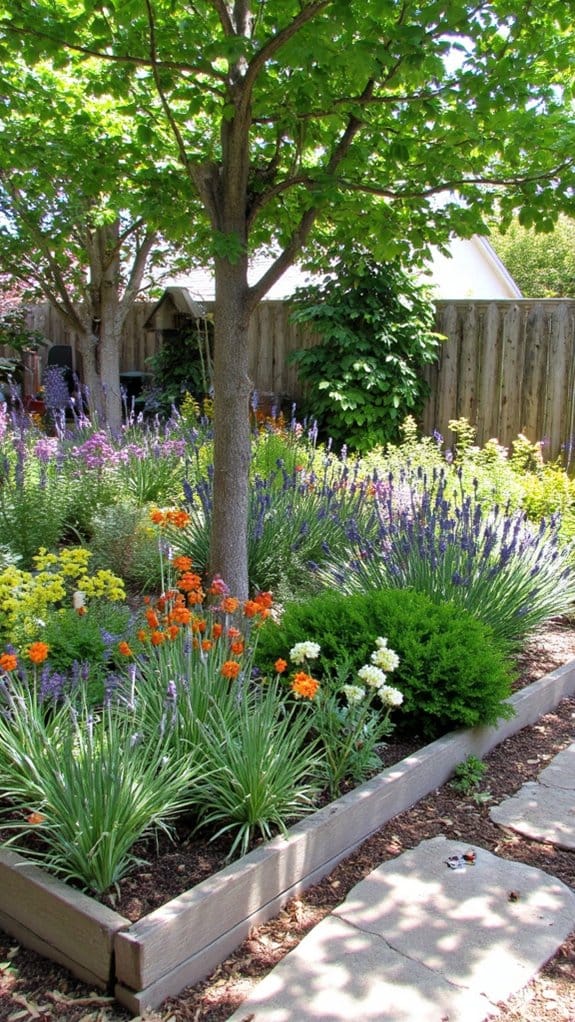
When I design my bee-friendly garden, I always prioritize drought-resistant plants because they thrive with minimal water and require less maintenance.
Prioritizing drought-resistant plants in my bee-friendly garden ensures minimal water use and low maintenance for lasting beauty.
These plants not only support local pollinators but also save me time and effort.
I love incorporating varieties like lavender, succulents, and coneflowers.
They add beauty and resilience, ensuring my garden flourishes even during dry spells.
Create a Pollinator Pathway in Your Neighborhood

Creating a pollinator pathway in your neighborhood can greatly boost local bee populations and enhance biodiversity.
I suggest collaborating with neighbors to plant native flowers, shrubs, and trees that attract pollinators.
You might also consider creating small, interconnected green spaces or gardens.
These efforts won’t only support bees but also create a vibrant community space for everyone to enjoy and appreciate nature.
Educate Others on Bee Conservation

Although many people appreciate the beauty of flowers, few realize the crucial role bees play in our ecosystem.
I’ve found that sharing facts about bees’ contributions to pollination can spark interest. Organizing workshops or community events helps raise awareness.
Use Companion Planting to Enhance Biodiversity
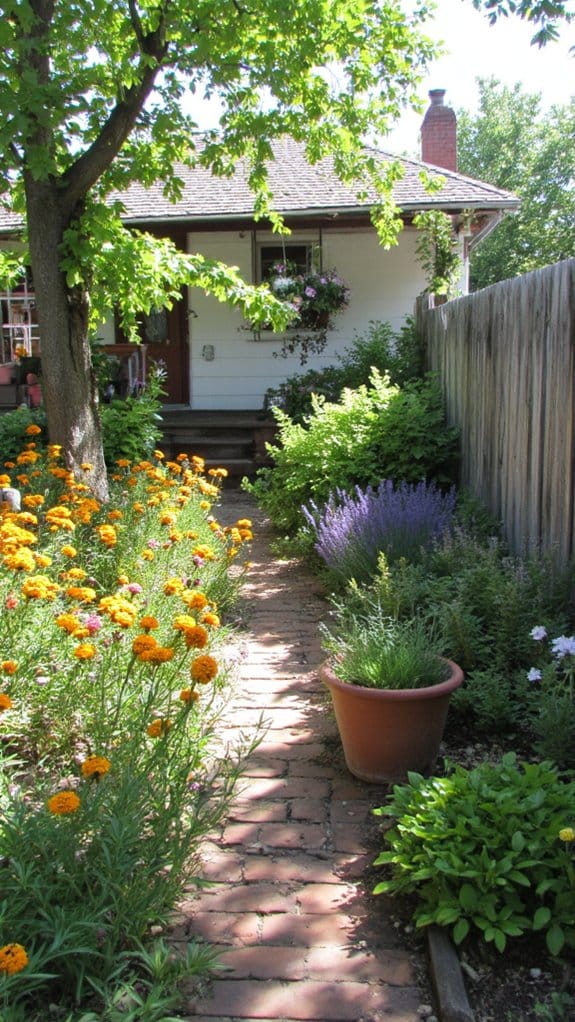
Educating others about bee conservation naturally leads to exploring ways we can enhance biodiversity in our gardens.
One of my favorite methods is companion planting. By pairing plants that benefit each other, like marigolds with tomatoes, I create a thriving ecosystem.
This not only attracts bees but also improves soil health and reduces pests, making my garden a vibrant haven for pollinators.
Organize Community Planting Days for Local Pollinators
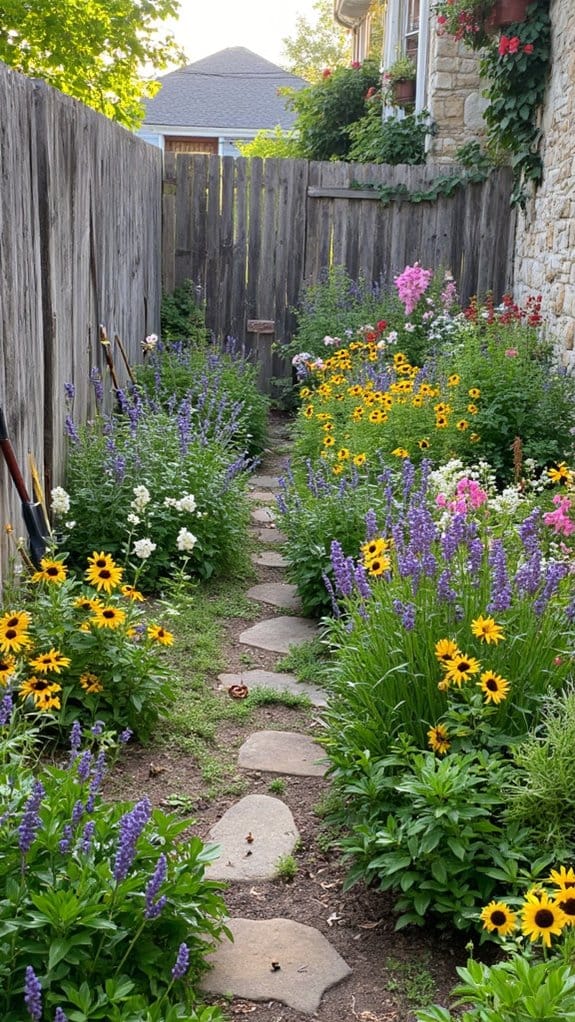
When we come together as a community to organize planting days for local pollinators, we can transform our neighborhoods into thriving habitats.
It’s a chance to educate others about the importance of pollinators while fostering connections.
By choosing native plants, we create a sustainable environment that attracts bees and butterflies.
Choosing native plants nurtures a vibrant ecosystem, inviting bees and butterflies to thrive alongside us.
Let’s roll up our sleeves and make a difference together!
Document Your Garden’s Impact on Local Bees
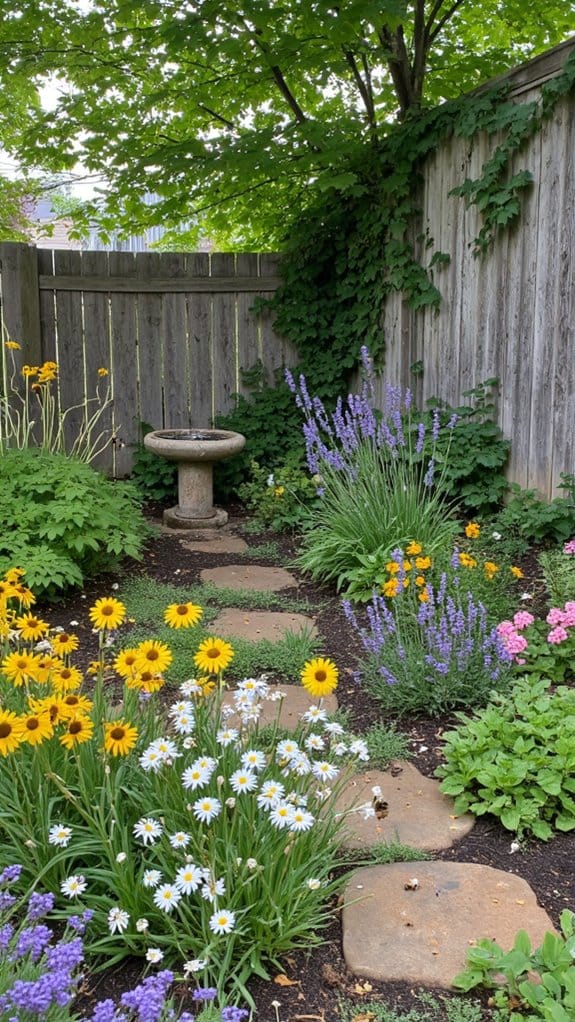
As I tend to my flower garden, I can’t help but notice the buzzing activity of bees, which reminds me of the importance of documenting their presence and interactions.
I keep a journal, noting the different species I see and their behaviors. This not only helps me appreciate their role but also allows me to adjust my garden to better support them.
