

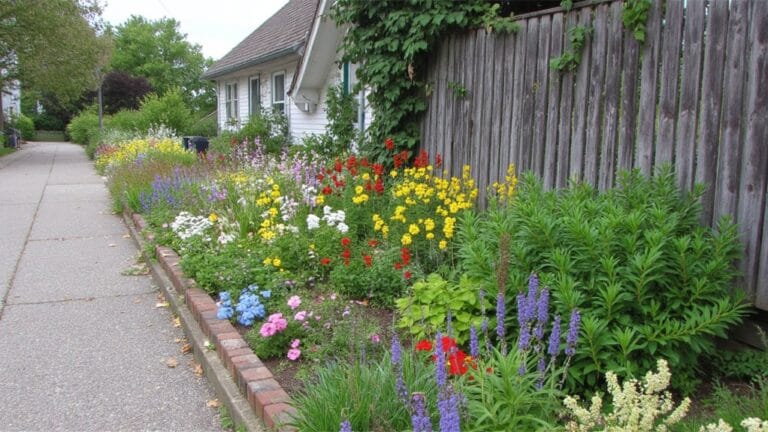
Long narrow flower beds can be a bit tricky, but they offer a fantastic opportunity for creativity. With the right ideas, you can turn these spaces into beautiful displays. From vertical gardening to planning for seasonal blooms, there’s plenty to consider. Let’s explore some clever strategies that make your narrow beds both functional and enchanting. And guess what? There’s more to it than just plants!
Understanding the Challenges of Long Narrow Flower Beds
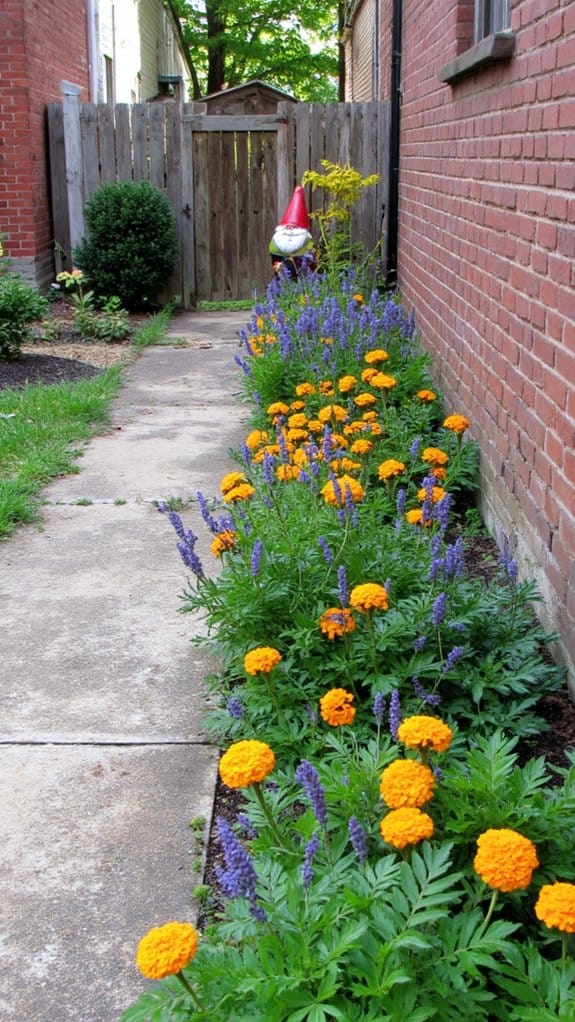
When I think about long narrow flower beds, I realize they present unique challenges that can be tricky to navigate.
Fitting diverse plants into limited space often leads to overcrowding, while ensuring each plant gets enough sunlight can be tough.
Plus, maintaining a cohesive design can feel intimidating.
I’ve learned that careful planning is essential to make the most of these tricky spaces.
Embrace Vertical Gardening for Limited Space
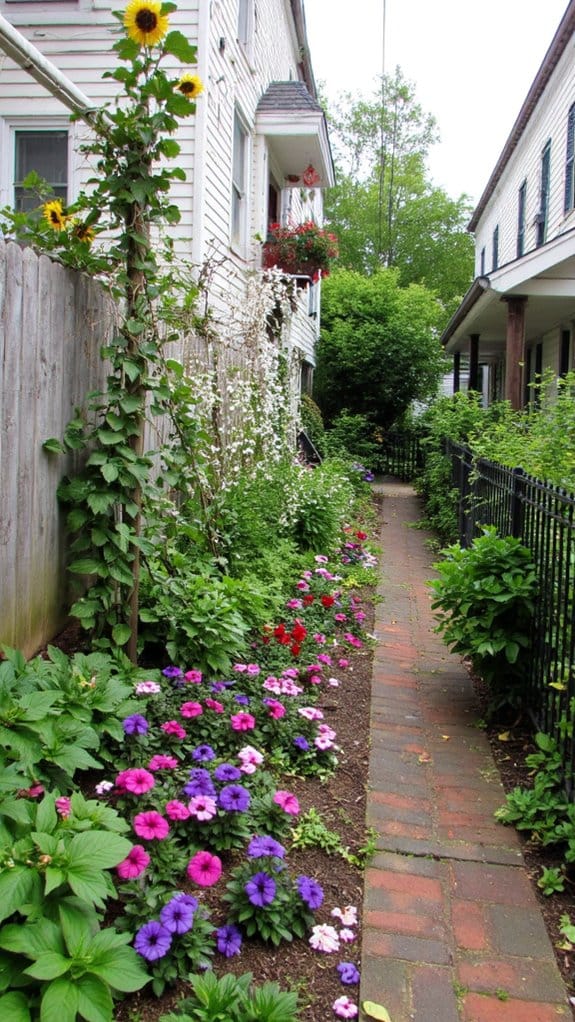
To maximize the potential of long narrow flower beds, I’ve found that embracing vertical gardening can be a game changer.
By using trellises, wall planters, or stacking pots, I can add depth and dimension to my space. Not only does it save ground space, but it also creates a stunning visual display.
You’ll love how lush and vibrant your garden can become!
Create a Colorful Perennial Border Along the Edge
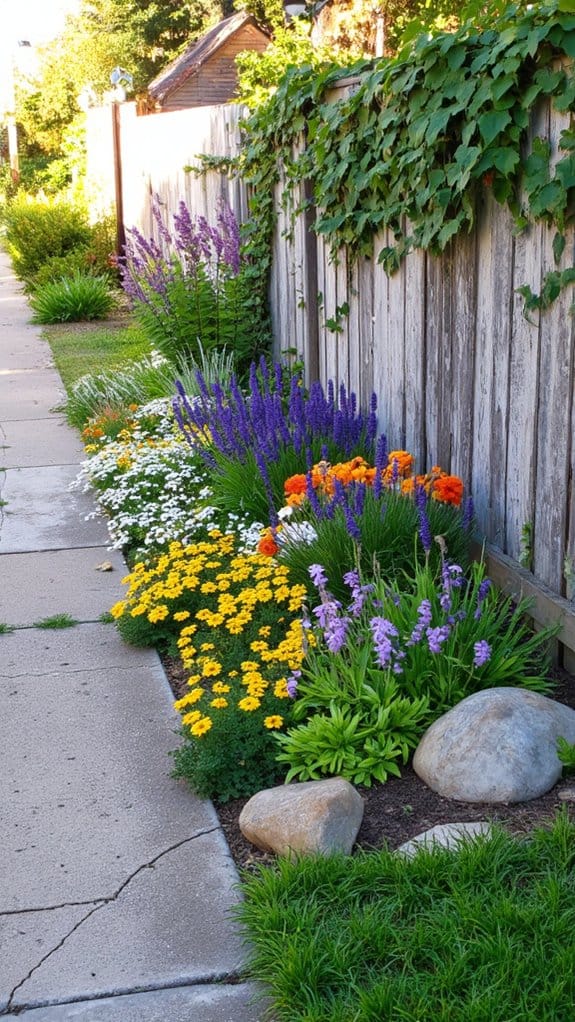
A colorful perennial border can transform the edge of any flower bed into a vibrant showcase.
I love selecting a mix of flowers that bloom at different times, ensuring there’s always something in full color.
Pairing tall blooms like delphiniums with shorter varieties, such as daisies, adds depth.
This border not only attracts pollinators but also creates an inviting atmosphere in my garden.
Use Edible Plants for a Functional Flower Bed
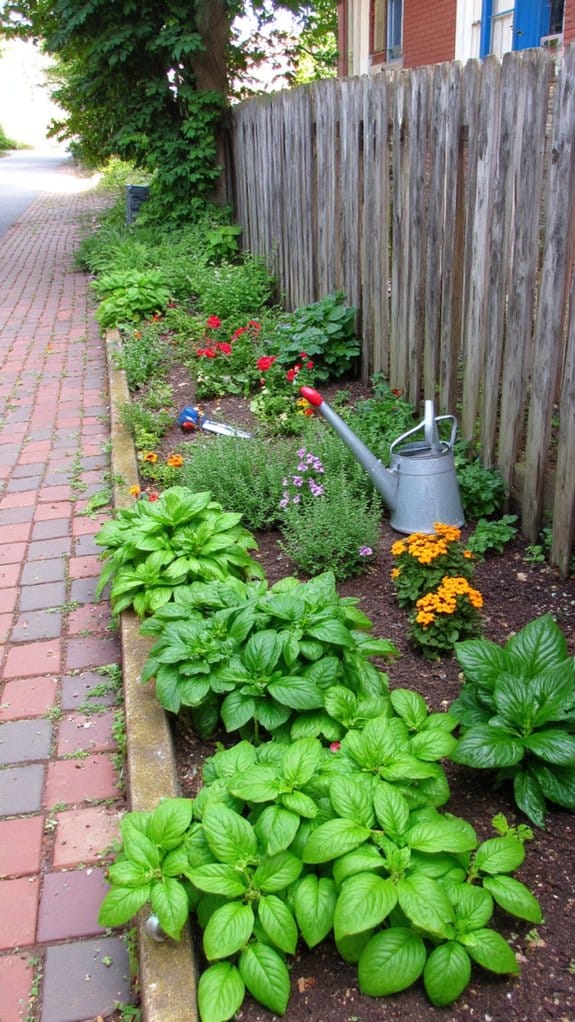
Incorporating edible plants into your flower bed not only adds beauty but also brings practicality to your garden.
I love mixing vibrant herbs like basil and rosemary with colorful flowers. It creates a stunning visual while providing fresh ingredients for cooking.
Plus, the fragrance adds another layer of enjoyment. Transforming your space into a functional garden is both rewarding and delicious!
Incorporate Rock Gardens for Texture and Interest
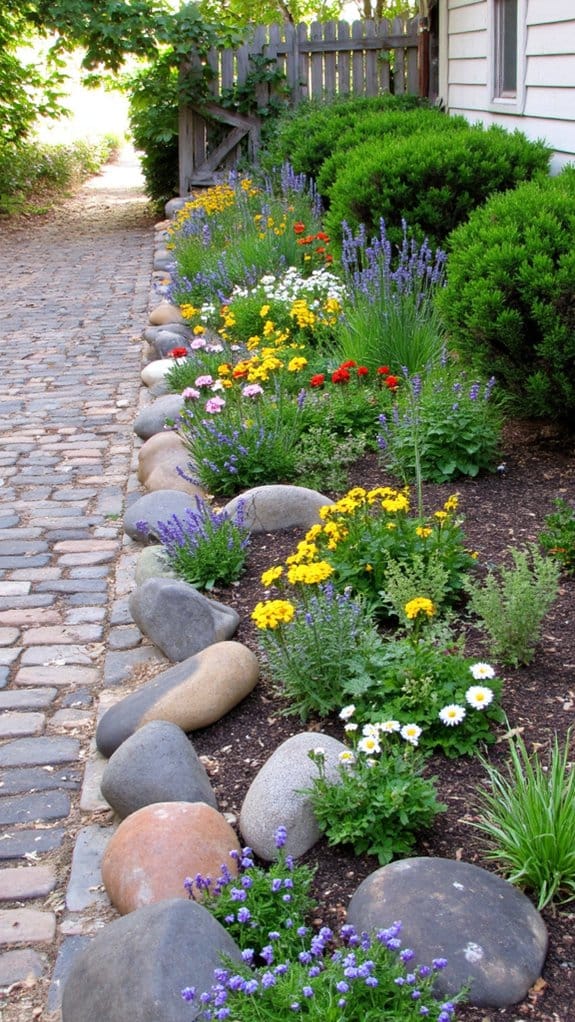
While adding flowers to your garden is essential, incorporating rock gardens can greatly enhance texture and interest.
I love using various stones, pebbles, and boulders to create dynamic layers. They not only provide contrast but also help with drainage.
Plus, rock gardens can serve as a stunning backdrop for your blooms, making your narrow flower bed feel more alive and inviting.
Design Layered Planting for Depth and Dimension
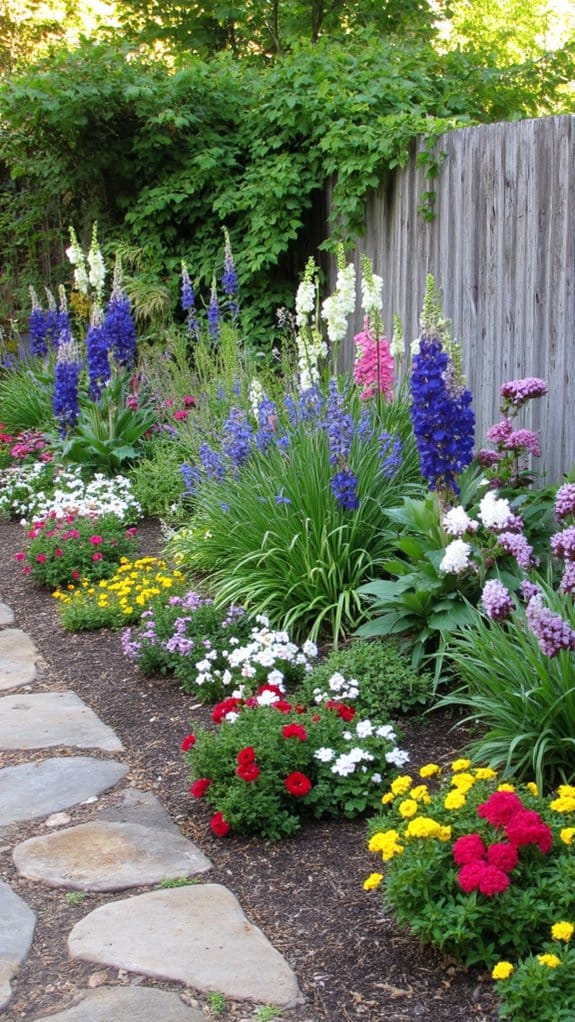
When I design a flower bed, I always focus on creating layered planting to achieve depth and dimension.
I like to start with taller plants at the back, gradually moving to medium-height ones in the middle, and finishing with shorter varieties in the front.
This arrangement not only draws the eye but also guarantees that every plant gets the sunlight it needs to thrive.
Choose Low-Maintenance Plants for Easy Care
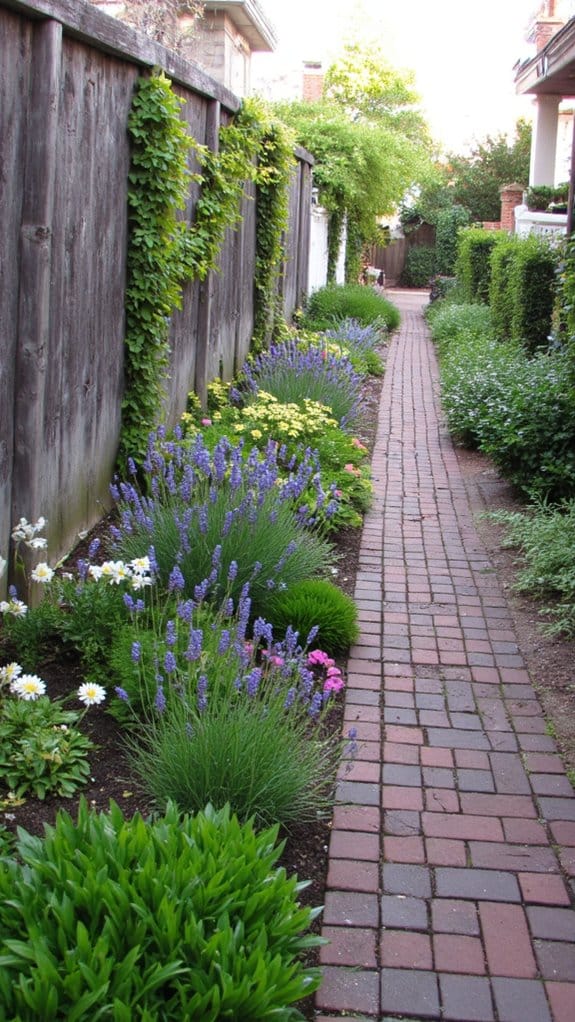
After establishing a layered planting scheme, it’s important to think about the types of plants you choose.
I love opting for low-maintenance varieties, like lavender or sedum, that thrive with minimal care.
These plants not only save me time but also add beauty and texture to my flower bed.
Use Decorative Containers for Added Height
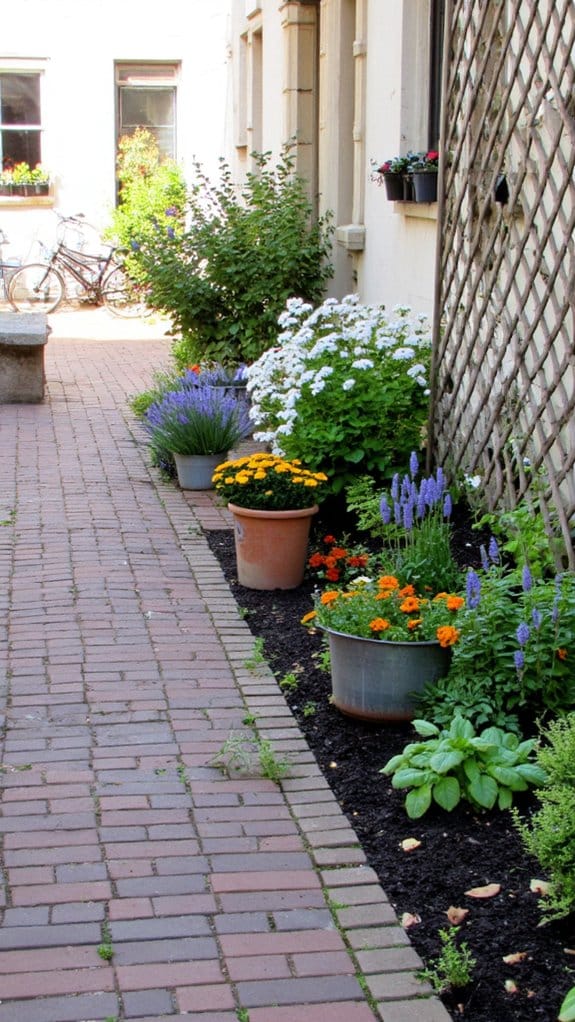
Adding decorative containers is one of my favorite ways to create height in a flower bed.
They not only bring visual interest but also allow me to showcase unique plants.
I often mix various sizes and styles, placing taller containers at the back and shorter ones in front.
This layering effect draws the eye and makes my narrow space feel more dynamic and inviting.
Add a Pathway to Enhance Accessibility and Style
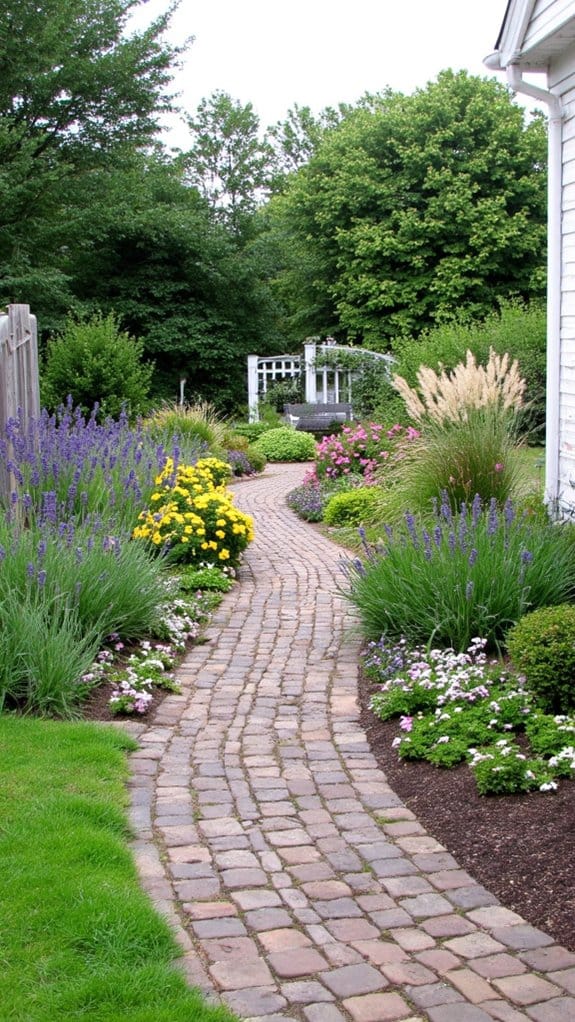
A well-placed pathway can transform a tricky flower bed into a functional and stylish area.
I love using natural stone or gravel to create a winding path that invites people to explore. It not only enhances accessibility but also adds visual interest.
Plus, it keeps plants safe from foot traffic, allowing them to thrive while making my garden look stunning.
Use Trellises to Maximize Vertical Space With Climbing Plants
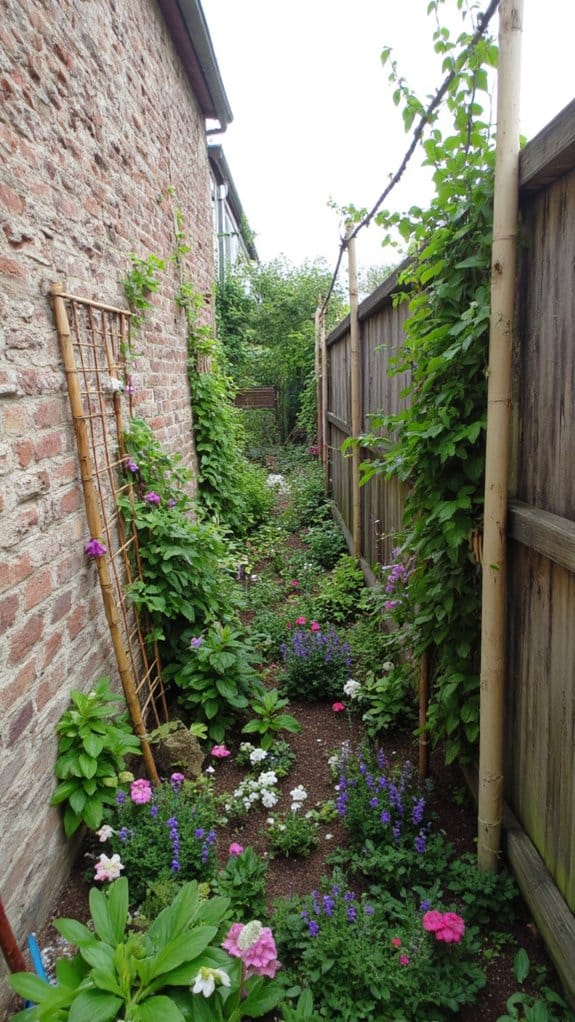
When I want to make the most of limited garden space, trellises become my go-to solution for showcasing climbing plants. They add height and visual interest without taking up much ground area.
I love using them to support varieties like sweet peas or clematis. Plus, they create a lush, green backdrop that enhances my garden’s overall appeal and charm.
Mix Annuals and Perennials for Year-Round Blooms
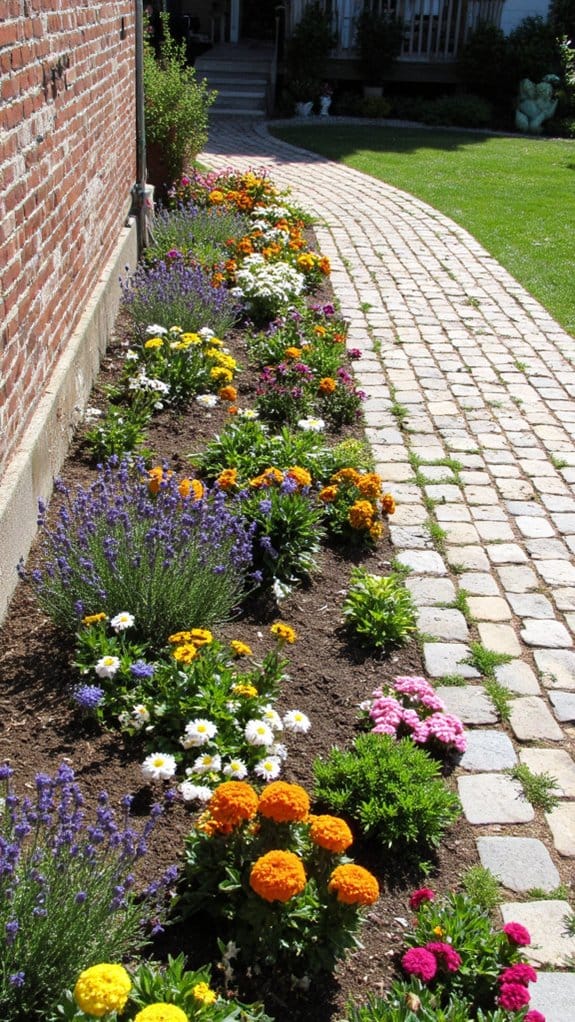
While planning my garden, I find that mixing annuals and perennials is a fantastic way to guarantee vibrant blooms throughout the year.
Annuals provide bursts of color, filling in gaps, while perennials offer structure and longevity.
By selecting varieties that bloom at different times, I create a dynamic display, ensuring my garden remains lively from spring through fall.
It’s a win-win!
Install Drip Irrigation for Efficient Watering
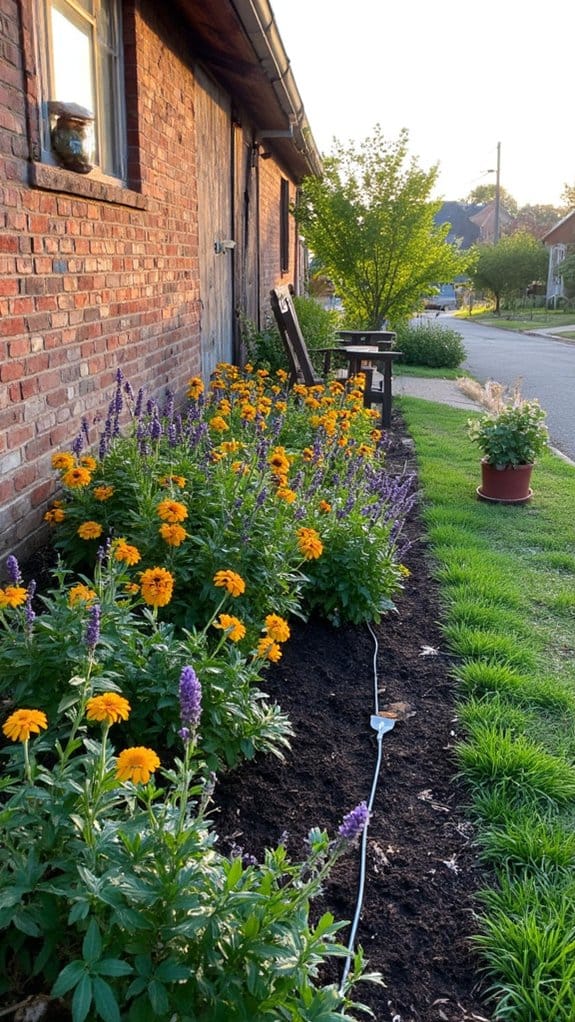
To keep those vibrant blooms thriving, I’ve found that installing drip irrigation is a game changer for efficient watering.
It delivers water directly to the roots, minimizing waste and ensuring my plants get just what they need.
Plus, it’s easy to set up and adjust, allowing me to focus on enjoying my garden rather than constantly hauling a hose around.
Choose Native Plants for Eco-Friendly Gardening
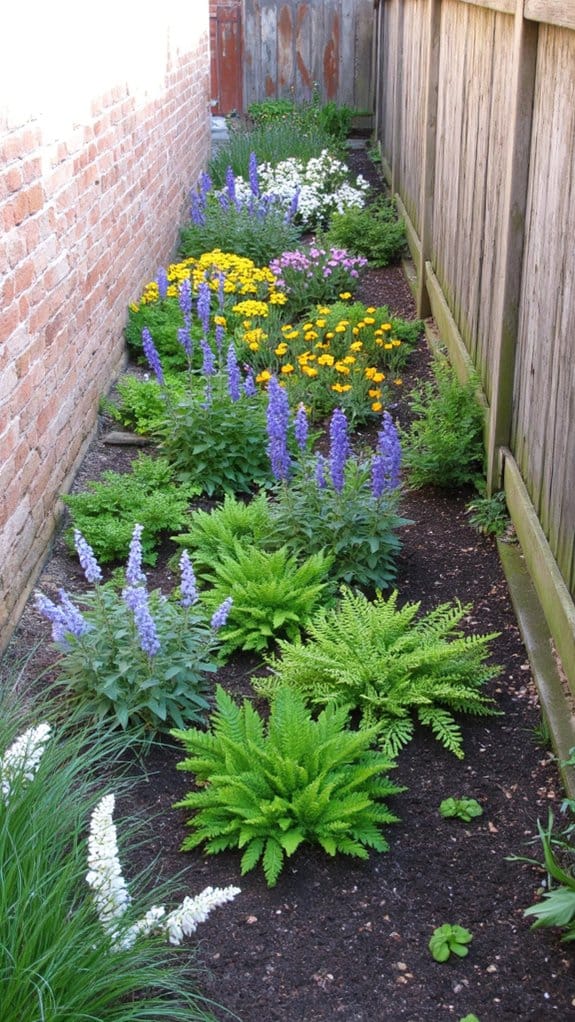
Choosing native plants not only enhances the beauty of your garden but also supports local ecosystems.
I love how these plants require less water and maintenance, making my gardening experience easier. They attract beneficial pollinators like bees and butterflies, creating a vibrant and lively space.
Plus, using native species helps preserve our natural heritage, making my garden both stunning and eco-friendly.
Experiment With Color Schemes for Visual Appeal
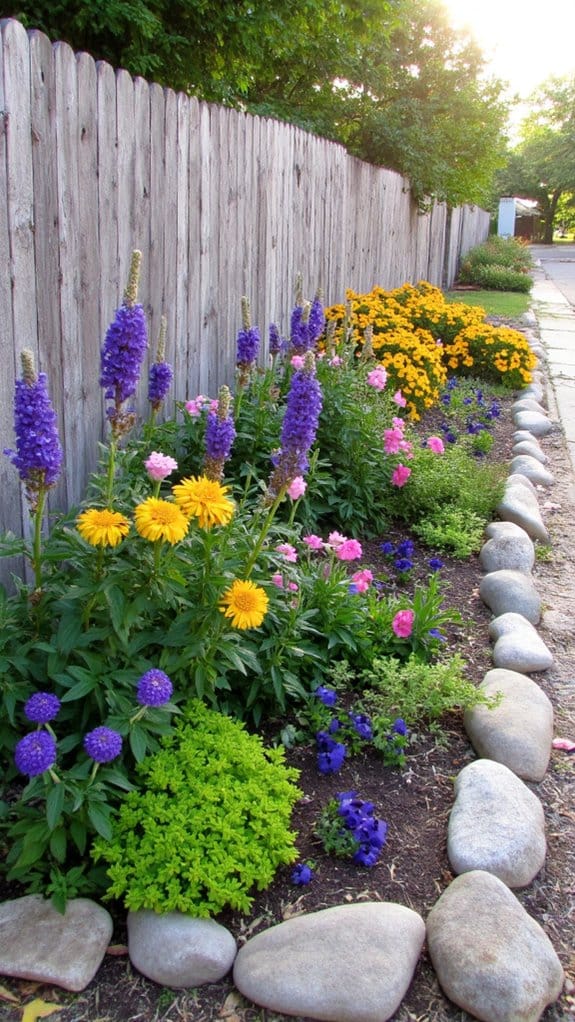
When I think about transforming tricky spaces in my garden, experimenting with color schemes instantly comes to mind.
I love mixing vibrant hues with softer pastels to create visual interest. For a long, narrow flower bed, I often use a gradient effect, shifting colors from one end to the other.
This not only draws the eye but also creates a stunning focal point in my garden.
Use Mulching to Control Weeds and Retain Moisture
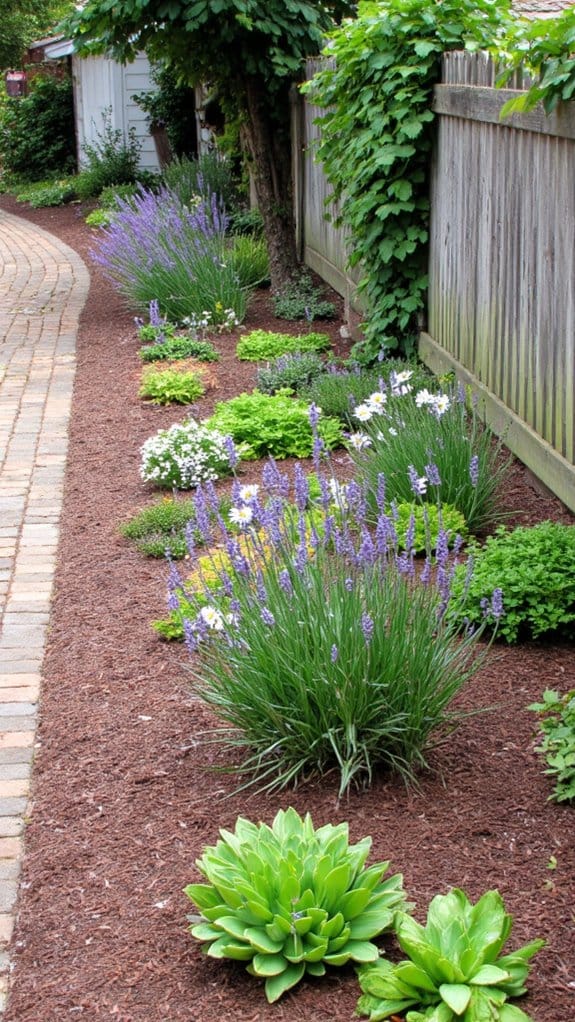
Although I often get lost in the beauty of my flower beds, I know that proper maintenance is essential, which is why I always use mulching to control weeds and retain moisture.
Mulch creates a barrier that suppresses weed growth while keeping the soil temperature stable. Plus, it helps retain moisture, ensuring my plants thrive even during dry spells.
It’s a win-win!
Design a Pollinator-Friendly Flower Bed
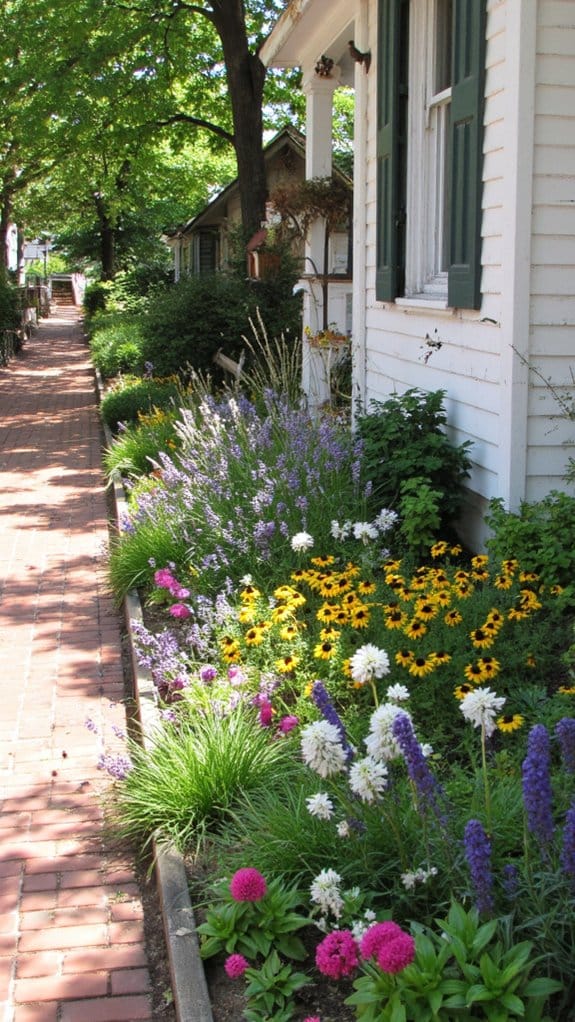
After ensuring my flower beds stay healthy with mulching, I turn my attention to making them inviting for pollinators.
I choose a mix of native flowers, like coneflowers and bee balm, which attract bees and butterflies. I also avoid pesticides, allowing these important creatures to thrive.
Adding diverse heights and colors creates a vibrant habitat, making my garden a lively haven for pollinators.
Add Hardscaping Elements for a Stronger Design
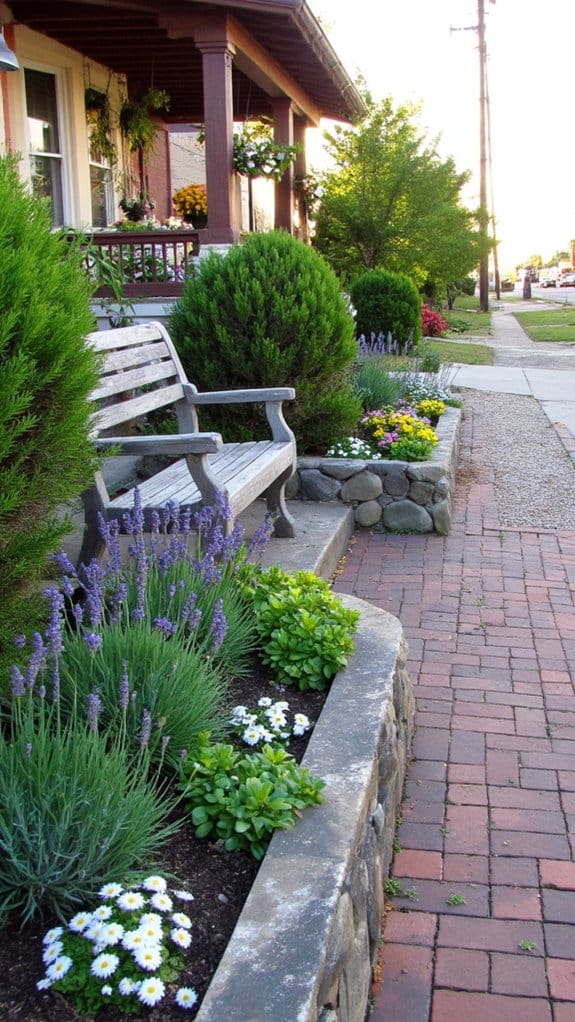
To enhance the overall design of my flower beds, I’ve found that incorporating hardscaping elements can make a significant difference.
Adding features like stone pathways, decorative borders, or even small retaining walls not only provides structure but also creates visual interest.
These elements break up the planting areas, allowing the flowers to shine while giving my garden a polished, cohesive look.
Plan for Seasonal Changes in Your Flower Bed
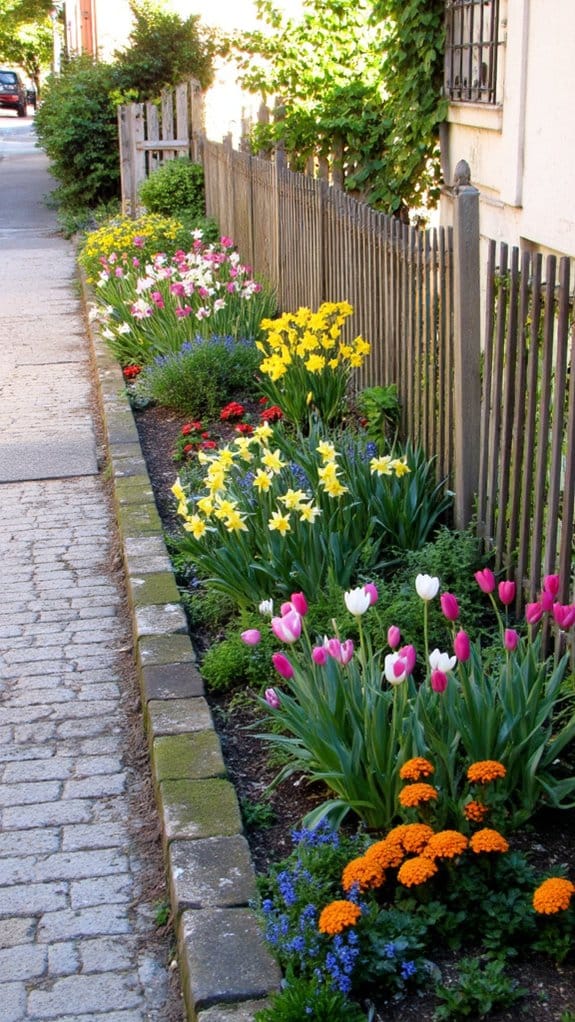
As I tend to my flower beds, I realize that planning for seasonal changes is essential for maintaining a vibrant garden year-round.
I carefully select plants with varying bloom times, ensuring there’s always something in flower. Additionally, I consider foliage colors and textures for each season.
Use Lighting to Showcase Your Long Narrow Flower Bed at Night
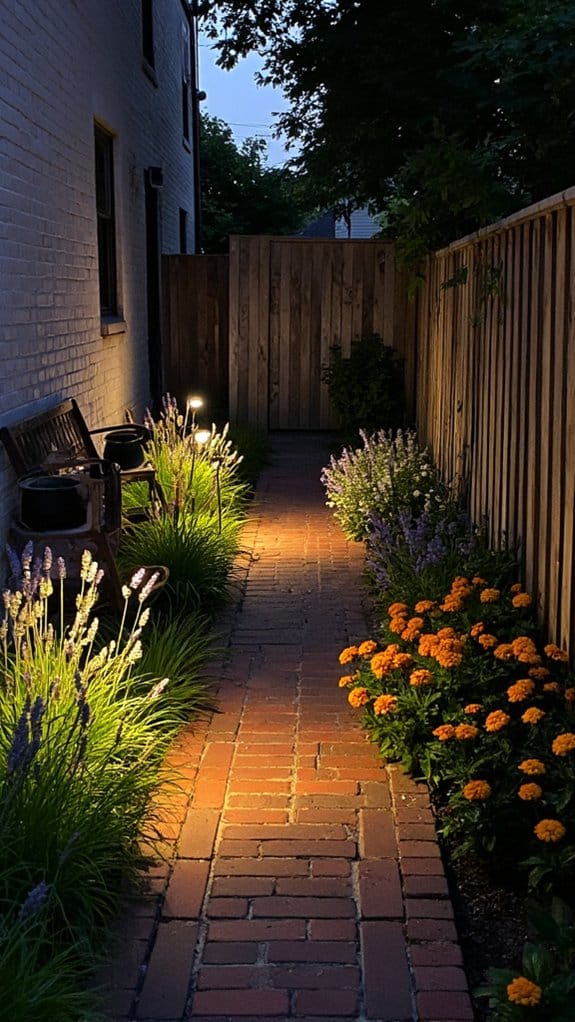
Maintaining a vibrant flower bed throughout the seasons is just one part of the equation; showcasing it at night adds a whole new dimension to your garden.
I love using subtle landscape lighting or string lights to highlight my long narrow flower bed. It creates a magical ambiance and draws the eye, making my flowers stand out even when the sun goes down.
