

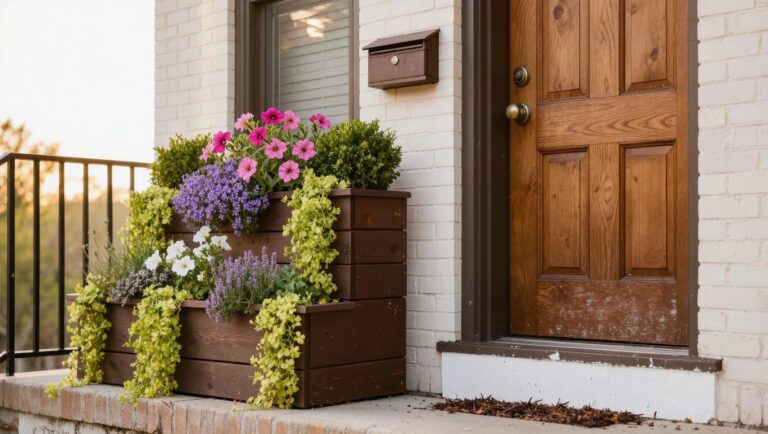
I’ve spent some time reshaping the skinny flower bed along my walkway, where every inch counts.
Small beds like that usually fail when gardeners overload them with mismatched plants that sprawl everywhere.
They work best through simple layers of heights and colors that play off each other without crowding.
I lean toward designs that weave in a few evergreens for year-round structure, since they hold the space together quietly.
A couple of these could easily fit into most yards worth a shot.
Container Plants on Front Steps
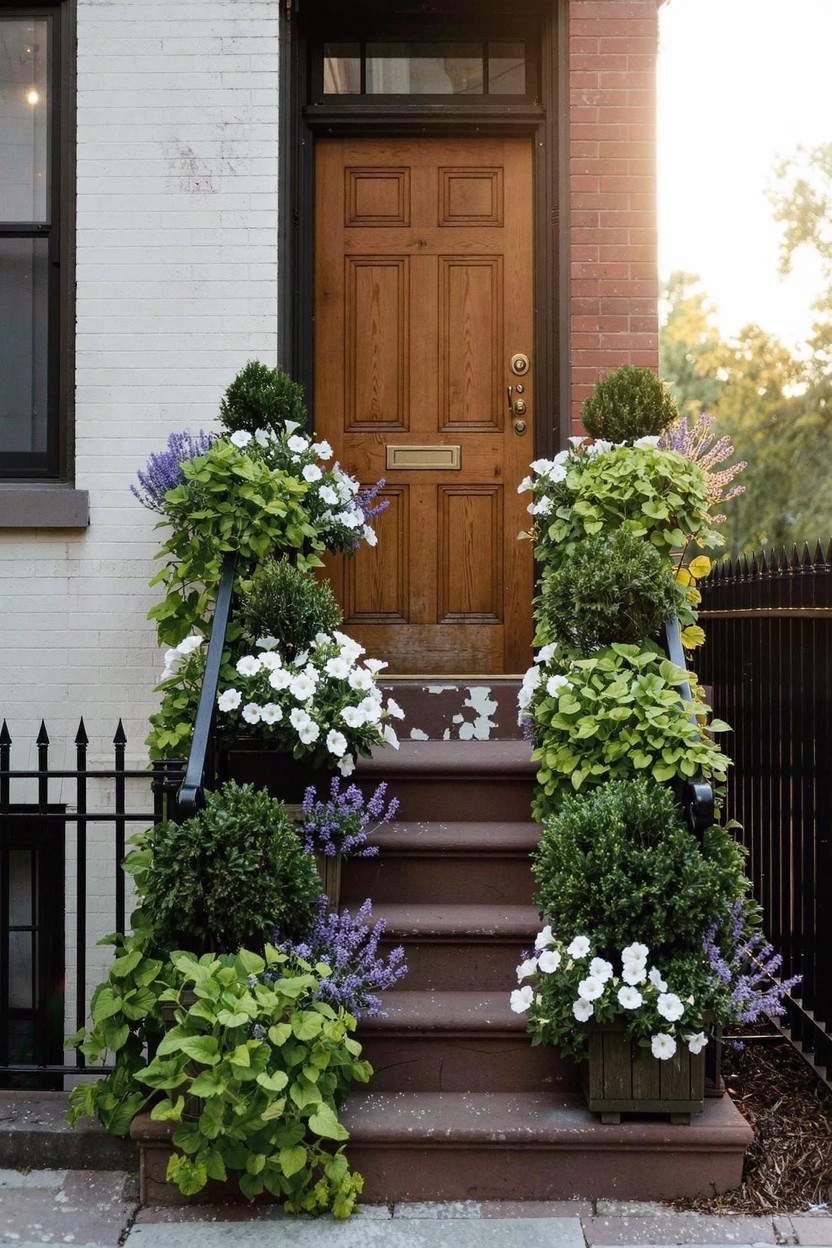
Tight spaces like city stoops don’t leave much room for traditional flower beds. But lining the steps with pots full of plants turns that entry into something alive and welcoming. You get greenery and blooms right at eye level. No digging required. In this setup, boxwood topiaries add structure while trailing white flowers soften everything up.
This works best on rowhouses or townhomes with just a few steps to the door. Pick tough plants like lavender or petunias that handle sun and some shade. Group pots in threes for balance. Water them regularly since they dry out fast. Keep the pots simple, maybe terra cotta, so they don’t steal the show.
Climbing Vines on Metal Poles
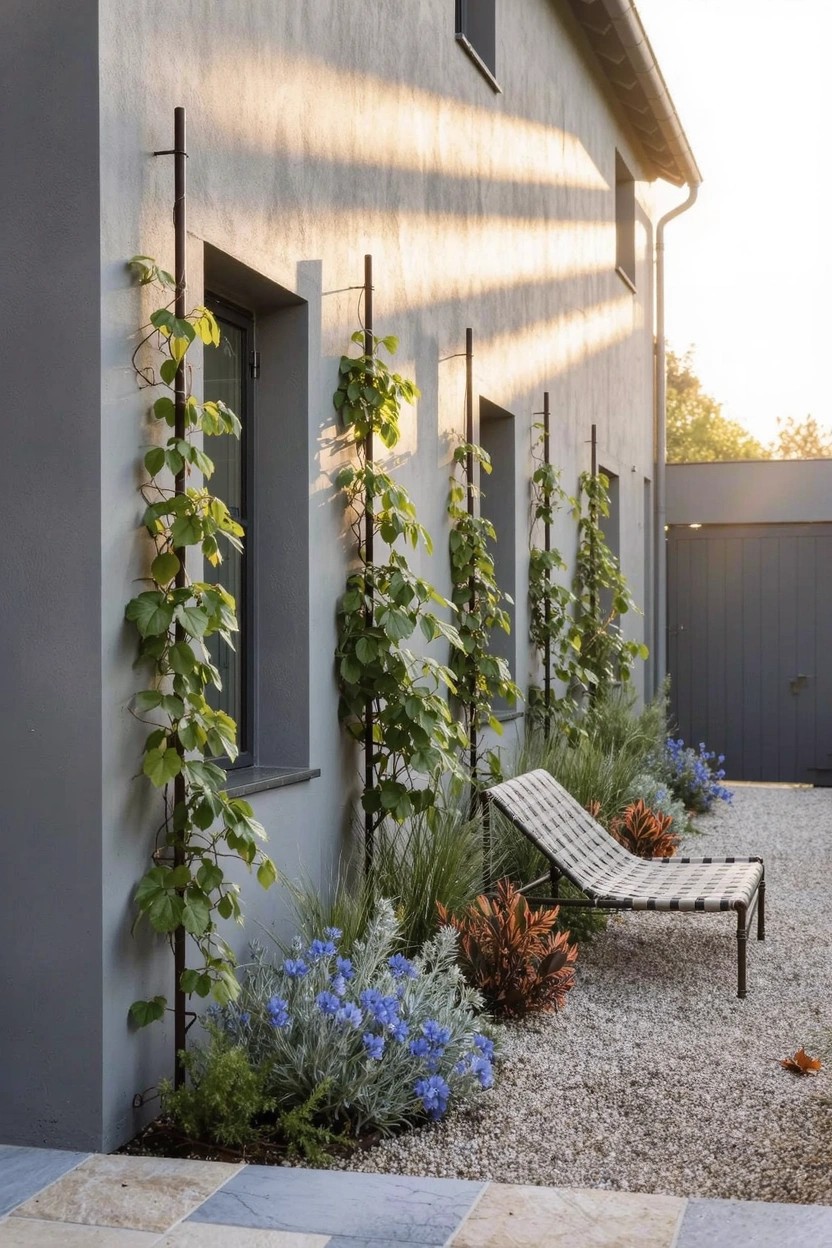
Tall slim metal poles let climbing vines grow straight up against a plain house wall. They add green height without eating up ground space. In tight spots like this, the vines soften the hard gray stucco and frame the narrow windows nicely.
Set the poles right into gravel mulch along the base. Mix in low plants like blue flowers and fuzzy silver ones for ground cover. This works great in narrow side yards or patios next to modern homes. Pick fast-climbing varieties that grab the poles well… and anchor them deep so they hold up in wind.
Small Bed of Tall Roses
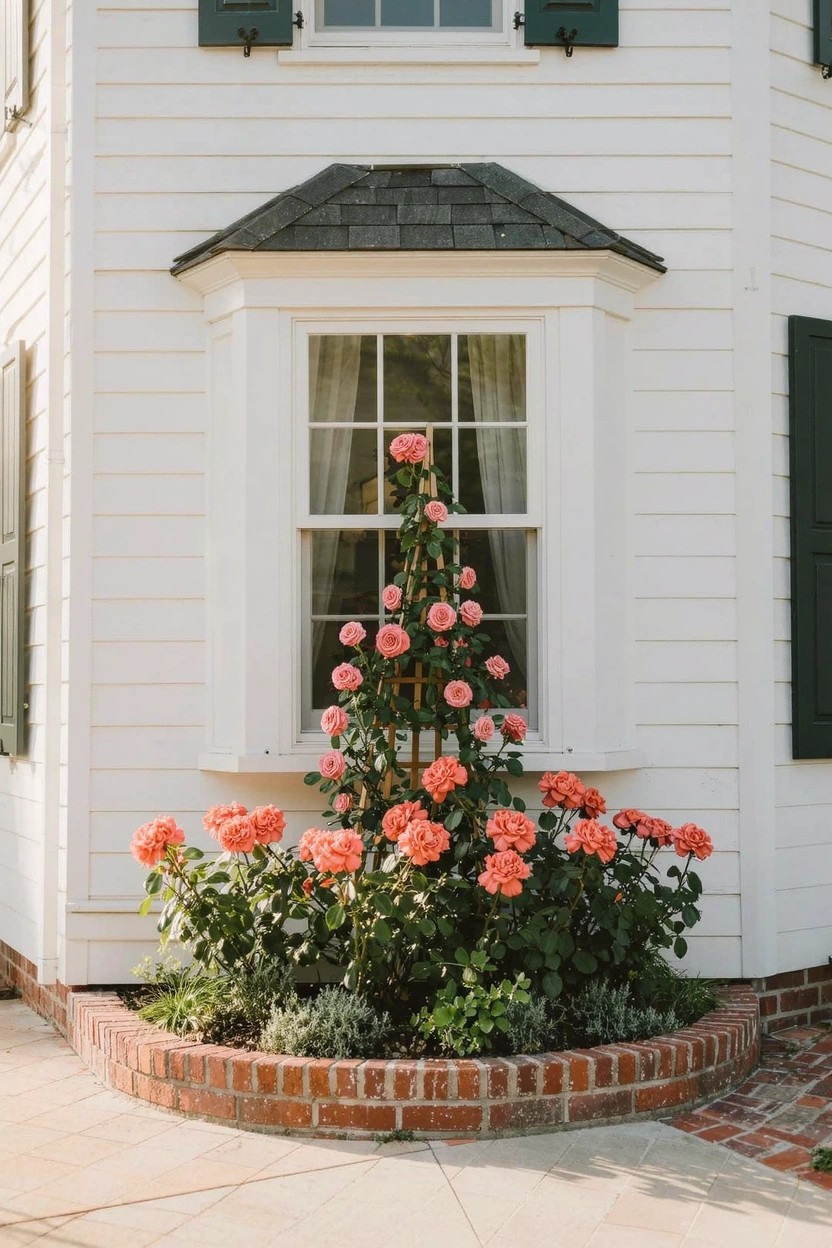
Tall roses like these make a big impact in a tight spot right against the house. Instead of spreading wide, they shoot up fast and cover the wall with color. Here, the pink blooms climb toward the bay window on a white clapboard house, filling the narrow foundation bed without crowding the patio.
This works best in corners or skinny strips where you want height but not bulk. It’s perfect for older homes with simple siding. Go for sturdy climbing varieties, add a brick edge to keep it neat, and prune yearly to control growth. Full sun is key, or they won’t bloom much.
Tall Potted Trees by the Front Door
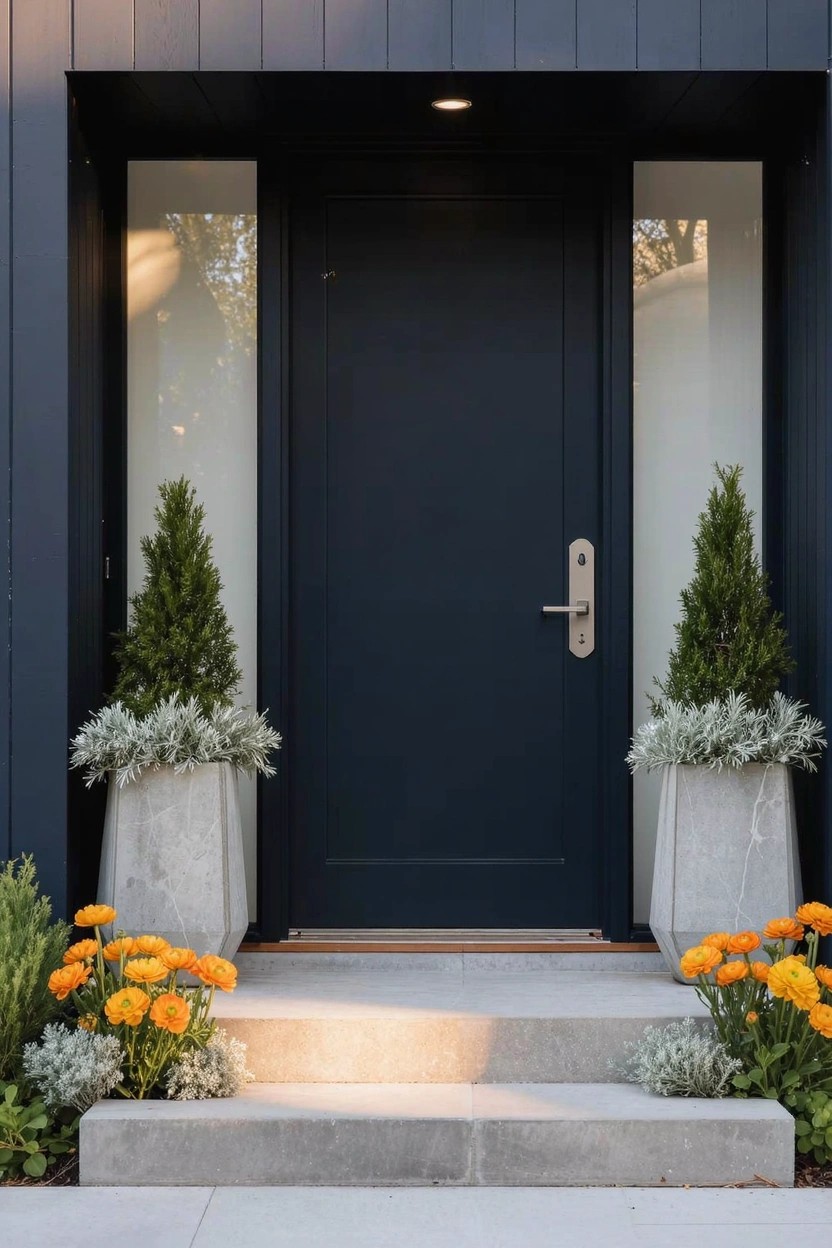
Tall potted trees placed right next to the front door make a strong simple statement. They add height and a bit of green without eating up yard space. Here the matching pair of evergreens stands out against the dark door. It keeps things neat and balanced.
This works best on modern homes with tight entry areas. Go for upright evergreens that stay narrow. White pots give clean contrast. Scale them to your door height… too short and it looks off. Easy to move if you want to switch things up.
Window Boxes on Balcony Ledges
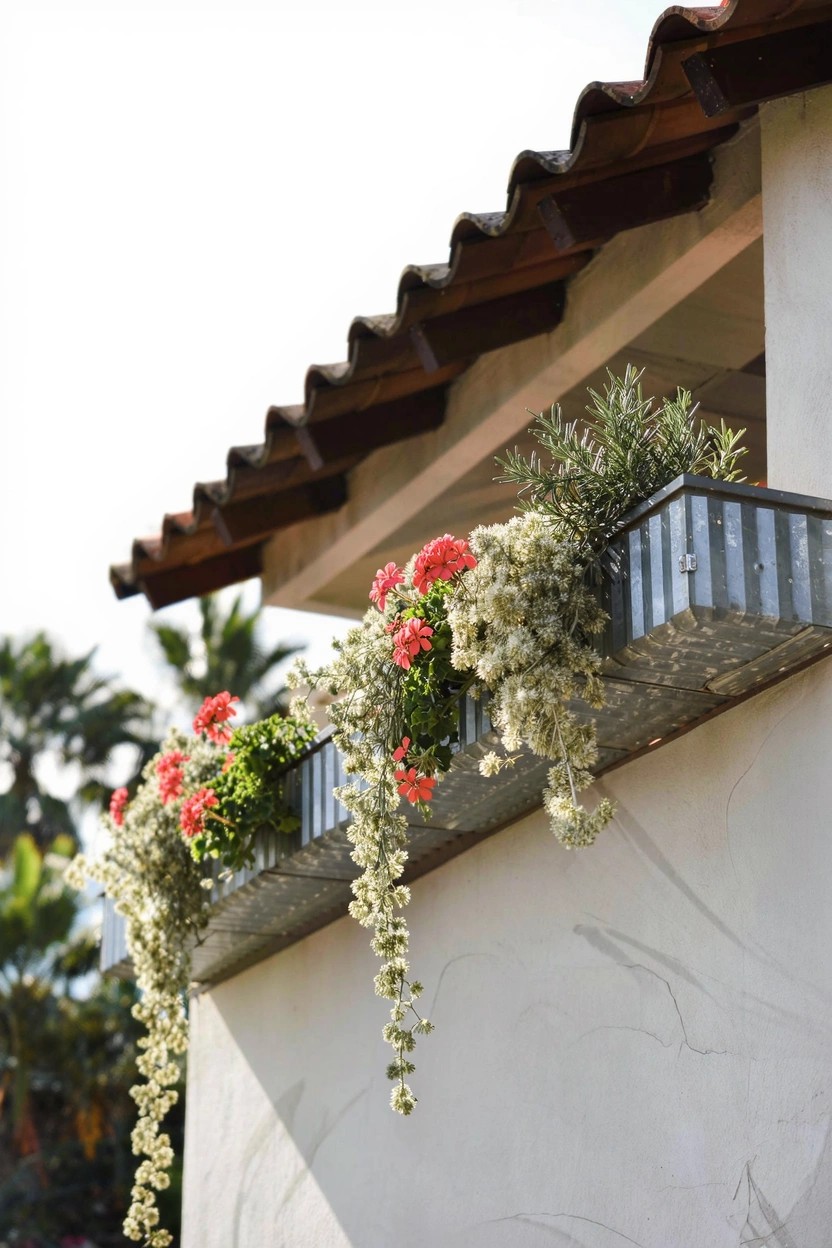
Window boxes tucked under a balcony ledge or roof overhang make a simple way to add flowers where ground space is tight. They lift color right up to eye level against plain walls. In this setup, red geraniums mix with trailing white blooms for a full look that spills over the edge nicely.
These work best on stucco homes or anywhere with a bit of overhang for shade. Mount sturdy metal boxes and plant trailers like ivy or alyssum to soften the drop. Keep soil light and water regularly…elevated spots dry out fast. Good for renters too, if you can attach them securely.
Narrow Flower Beds Along Driveways
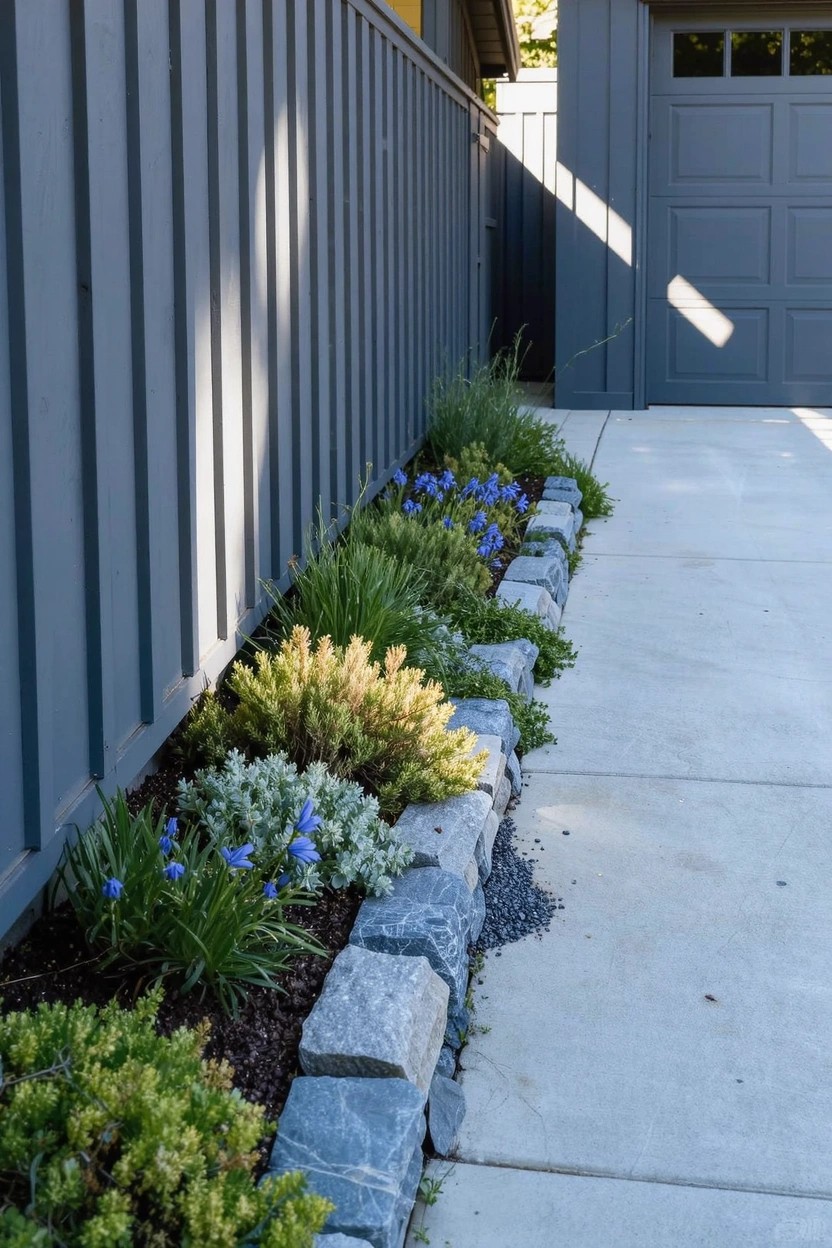
Sometimes you have just a thin strip of dirt between your fence and driveway. This setup turns that awkward spot into a neat flower bed. Rocks along the edge keep soil in place and give it a clean look. Mix in tough plants like blue veronica, grasses, and low shrubs. They add color and texture without crowding the driveway.
It works best in small yards or urban lots where space is tight. Pick drought-tolerant plants so you aren’t watering much. Gray rocks match a fence like this one nicely. Just make sure the bed drains well, or roots might rot after rain.
Planter Box with Built-In Bench

One smart way to make use of tight spaces along your house is a raised planter that includes a bench right on top. It fits snug against the wall, like this white one matching the siding, and holds tall grasses plus flowers for some color. People like it because you get planting and seating without taking up much room.
This works best in narrow side yards or beside a patio where you want a quick spot to sit. Try it on farmhouse homes or even plainer ones with clean lines. Just make sure the box drains well so roots don’t rot, and pick sturdy plants that won’t flop over the edge.
Vertical Pallet Planter on Walls
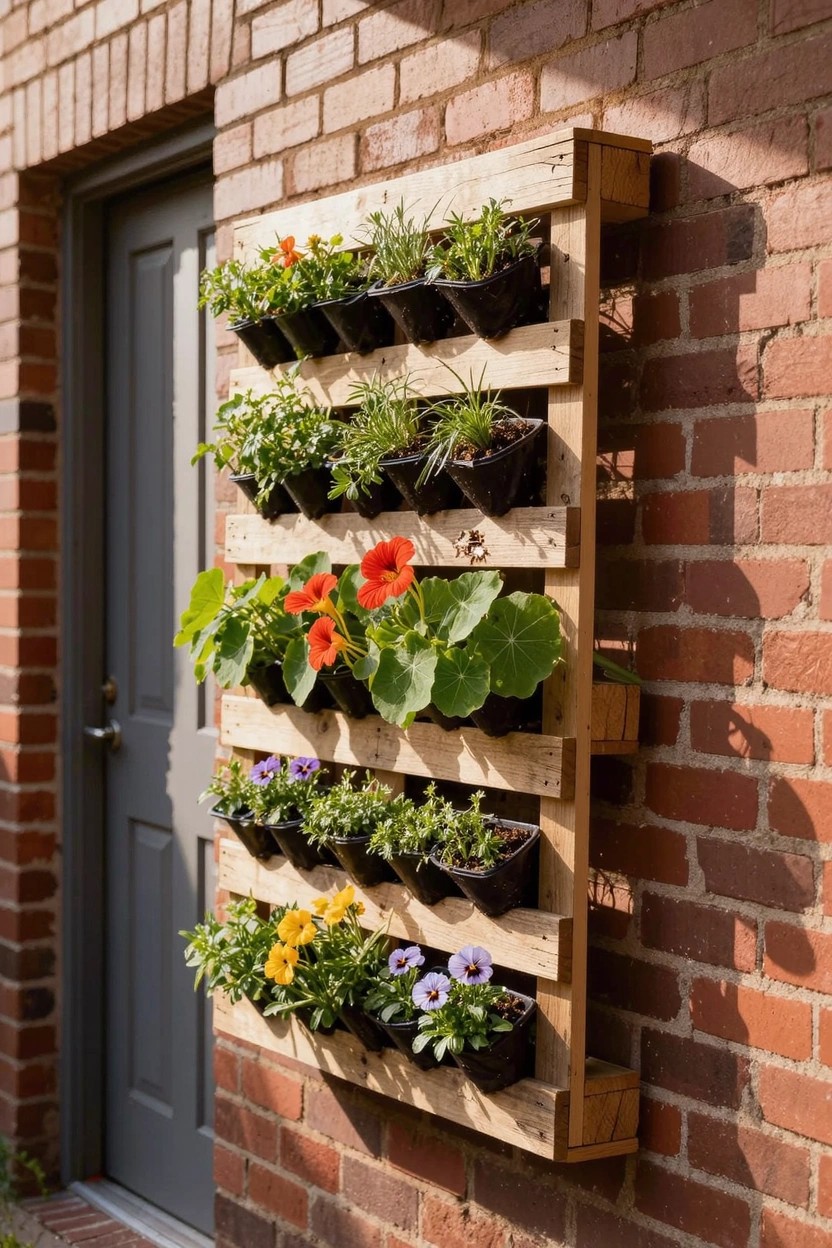
A simple pallet nailed flat to the wall turns into a stacked planter for pots. You see herbs and bright flowers like orange geraniums tucked in there, all on a plain brick side. It stands out because it packs in plants without grabbing any ground space. Folks with skinny lots or just a doorway patch like this a lot.
Hang one on a sunny wall near your entry or patio. It suits older homes or rentals where you can’t dig beds. Pick pots that fit snug, and screw the pallet firm so pots stay put. Watch for too much shade though, or greens won’t thrive.
Raised Trough Planters for Narrow Spots
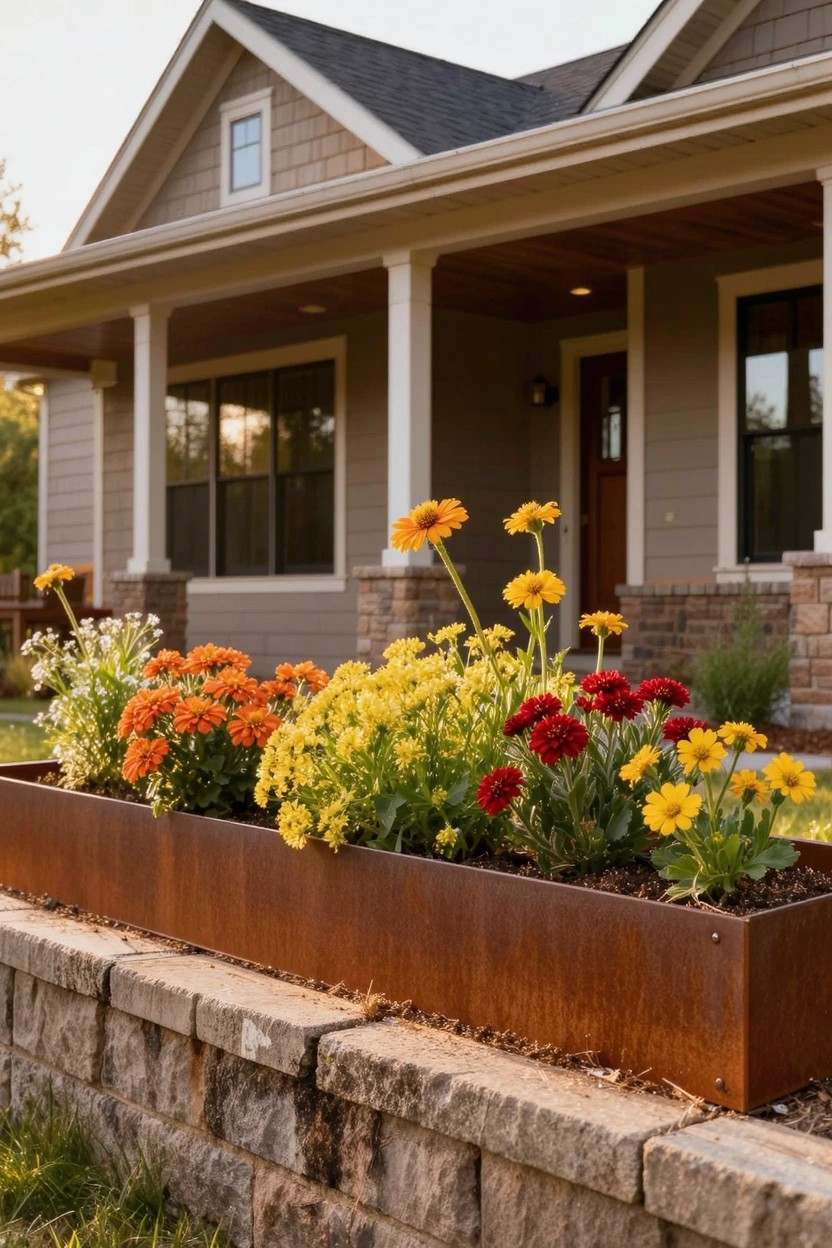
A long metal trough planter like this one sits right along the front wall. Filled with a mix of orange marigolds and yellow daisies, it brings bold color to a tight space. No need for digging up sod or wide beds. It just hugs the edge and does the job.
These work best in front yards with retaining walls or skinny strips along the house. Go for corten steel. It weathers to a nice patina over time. Plant low growers to keep the scale right. Just make sure it drains well so roots don’t rot.
Stacked Block Planters on Walls
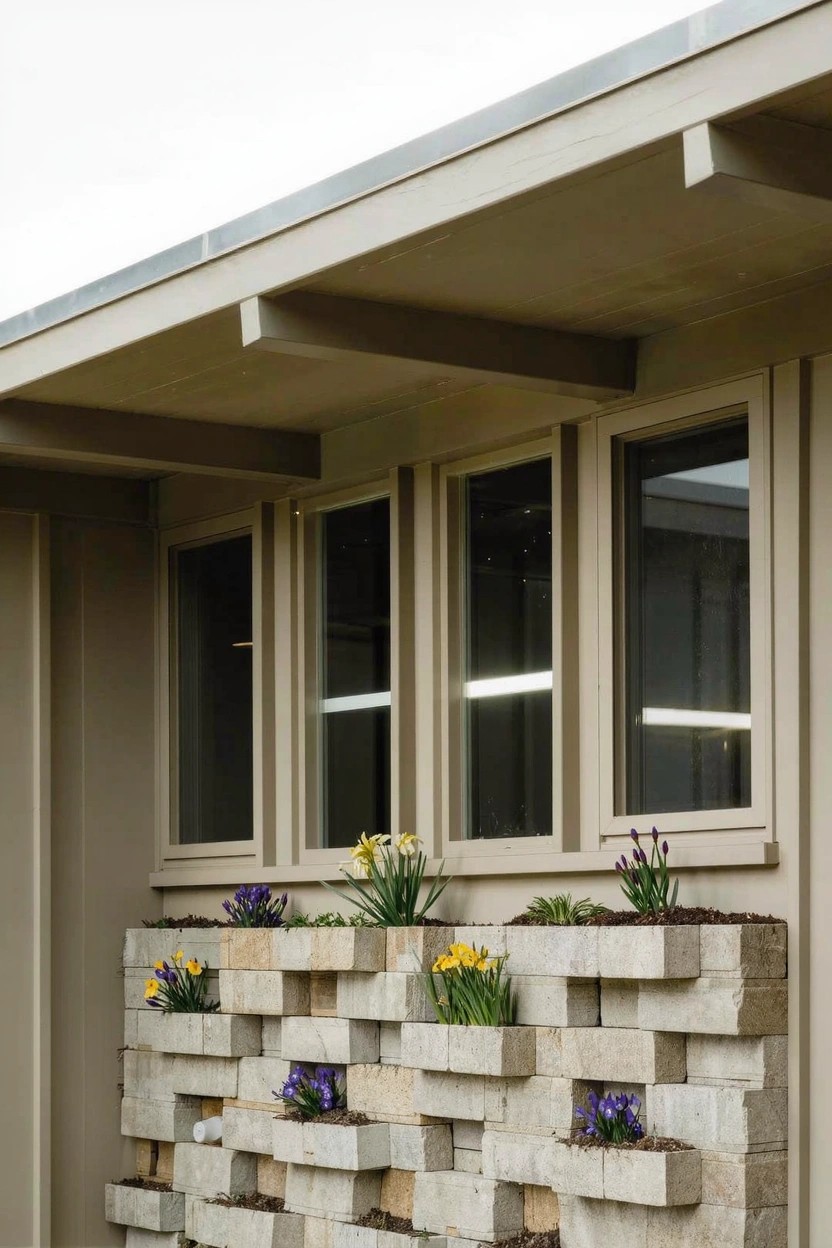
Concrete blocks stacked right against the house wall make a simple vertical flower bed. You fill the openings with soil and small plants, and it turns a blank wall into something alive without taking up any ground space. The blocks match the neutral wall tones here, and the flowers pop nicely next to the windows.
This works best in tight side yards or along foundations where you can’t dig beds. It suits homes with flat walls, like mid-century styles. Just add gravel at the bottom for drainage, or the soil stays too wet after rain.
Tall Planters for Narrow Walkways
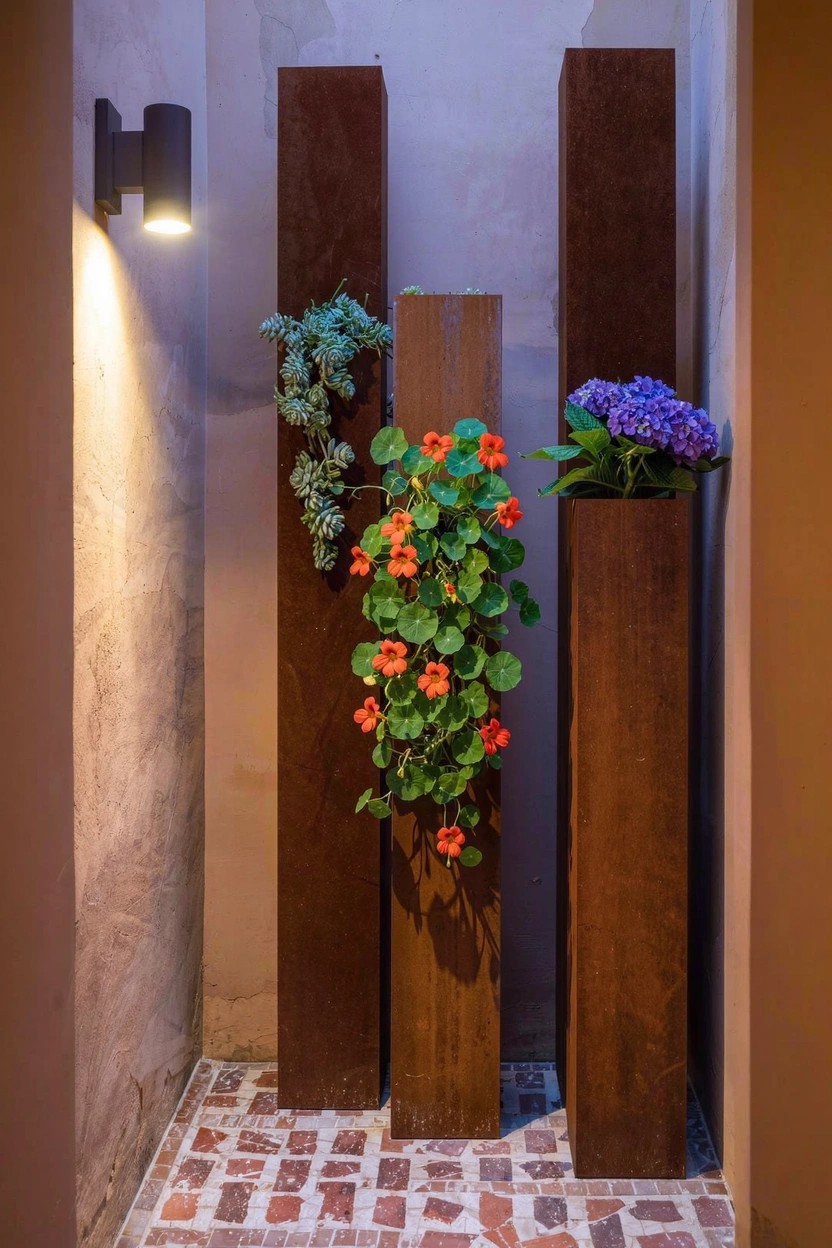
Tall wooden planters like these fit right into skinny outdoor paths or passages. They use the height instead of the width, so you keep the walking space clear while adding lots of green. A mix of trailing flowers and bushy ones fills them out without spilling over.
Put them along a side entry or between walls where ground planting won’t work. They suit older homes with stucco or brick. Pick planters about as wide as your path allows, and plant low trailers at the base with taller stuff up top. Watch the drainage, though. Wet roots spell trouble.
Driveway Corner Flower Bed
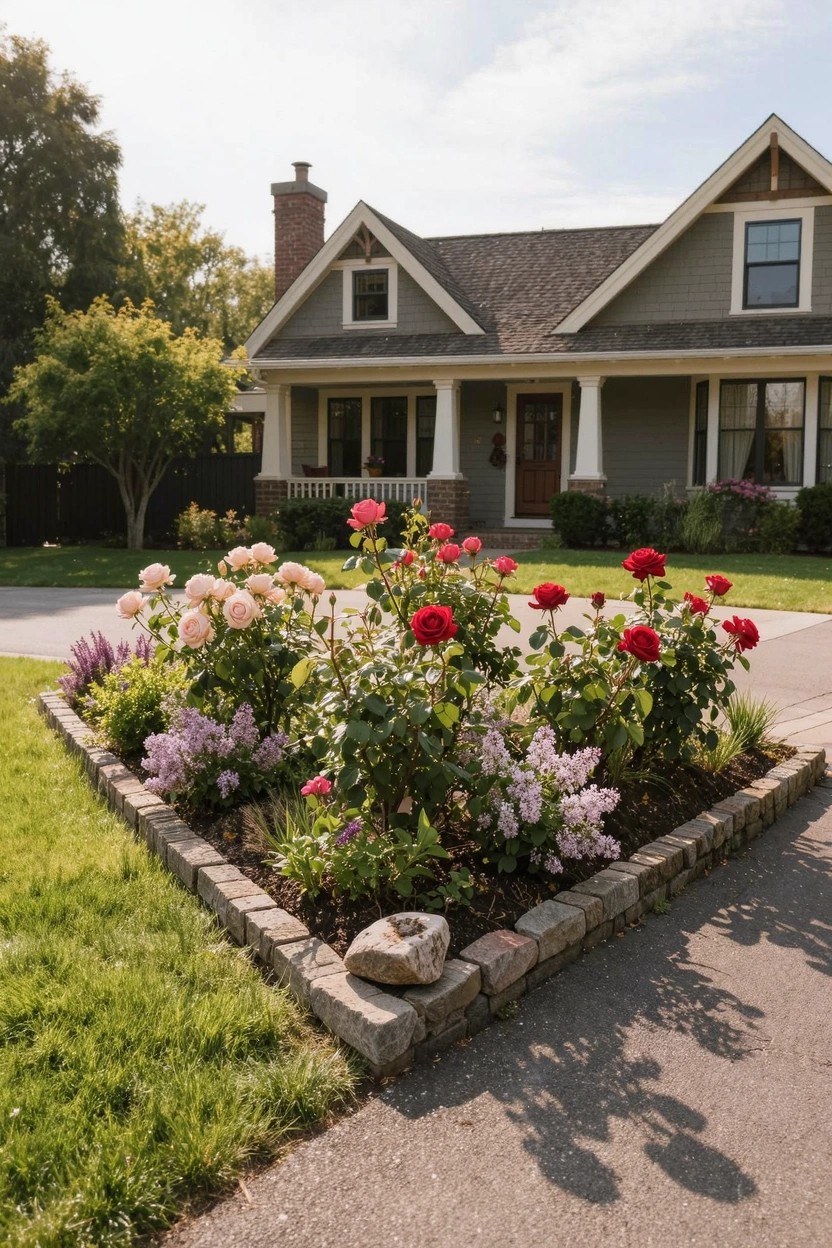
One smart way to use that narrow spot where the driveway meets the lawn is a wedge-shaped flower bed. It turns an odd triangle of grass into something pretty without eating up yard space. Here, roses in pinks and reds fill it right up, edged neatly with bricks. That setup makes the front yard look fuller and more put-together.
This works best on homes with a driveway that tapers toward the house. Plant low bushes or perennials that won’t flop onto the pavement. Keep the edging simple, like bricks or stones, to hold soil in place. Just make sure the spot gets enough sun, or pick shade lovers instead.
Window Boxes on Brick Walls
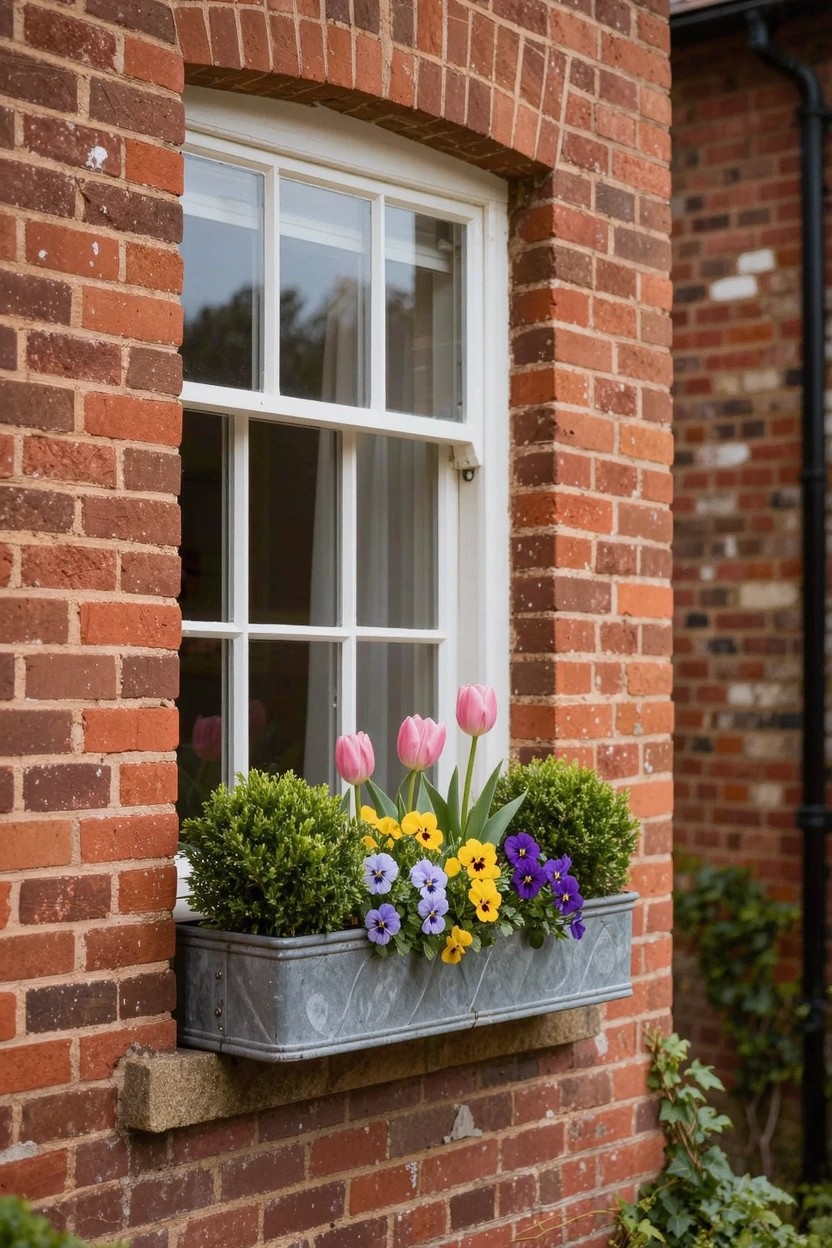
Window boxes work great on plain brick walls like this. They add color and life right at eye level without using any ground space. That’s a big plus for tight spots along a walkway or city sidewalk. The flowers spill over just enough to soften the hard brick look.
Hang a metal box under your sash windows for that old-house feel. Mix bulbs like tulips with pansies and some boxwood for year-round green. It suits traditional homes best. Just remember to water regularly so nothing wilts in the sun.
Narrow Flower Beds Along Walkways
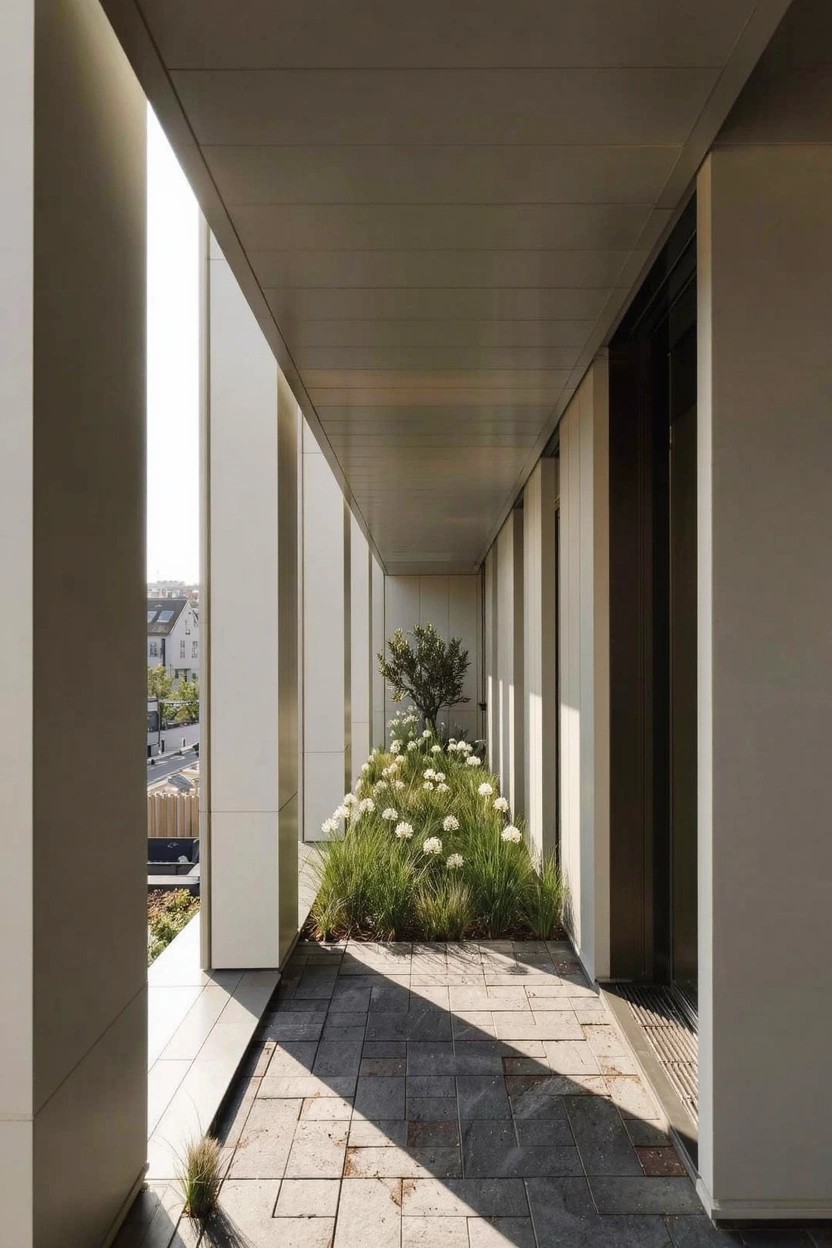
One simple way to fit flowers into a tight spot is to run a skinny bed right along a walkway. This setup works because it uses space you already have. The plants tuck in neat without crowding the path. White flowers like the ones shown here keep it clean and modern. They add green life where there’s not much room for wider beds.
Try this along a side path or covered entry on smaller lots. It suits townhouses or urban homes best. Just make sure the soil drains well so roots don’t stay wet. Keep plants low growing to avoid brushing heads as you walk by.
Narrow Planters Under the Porch
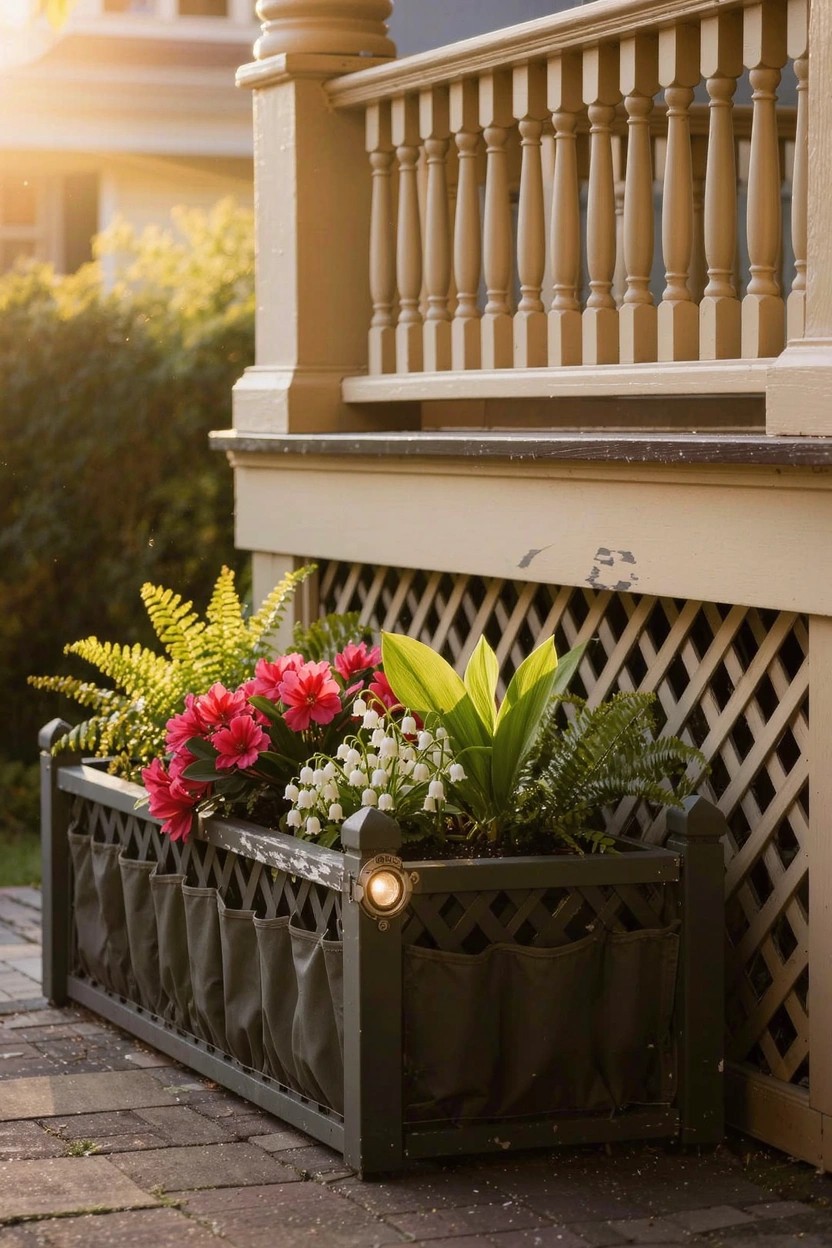
Tight spaces under a porch railing often go unused. But a long narrow planter like this one fits right there against the house wall. It brings flowers and greenery close without eating up walkway room. The lattice sides match the porch lattice nicely. Adds color where you see it every day coming or going.
Put one along the foundation where the porch meets the house. Works best on older homes with that overhang style. Go for tough plants like ferns and impatiens that handle shade. Make sure it drains well so roots don’t rot. A small light inside helps at night. Simple spot to brighten up.
Pathside Succulent Gardens
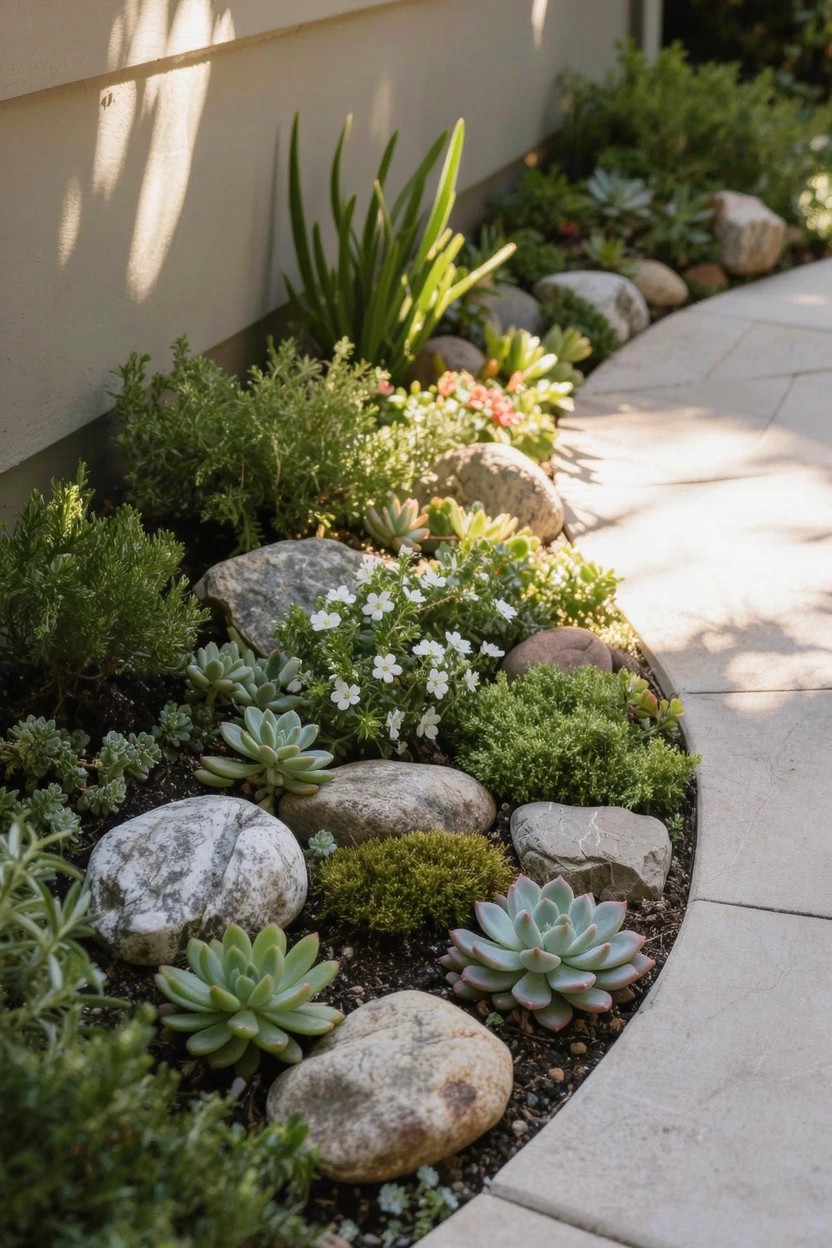
One simple way to fill those skinny spots next to a walkway is with succulents tucked among rocks. This setup hugs the curve of the path without taking up yard space. The plants stay low and colorful, like those chunky echeveria rosettes mixed with white flowers. It keeps things tidy and easy to walk by.
These beds work best in sunny, dry areas where succulents thrive without much water. Try them along a side path or front entry on a small lot. They suit ranch houses or modern homes with clean lines. Just pick rocks that match your soil color so it blends right in.
Raised Wooden Planters Beside the House
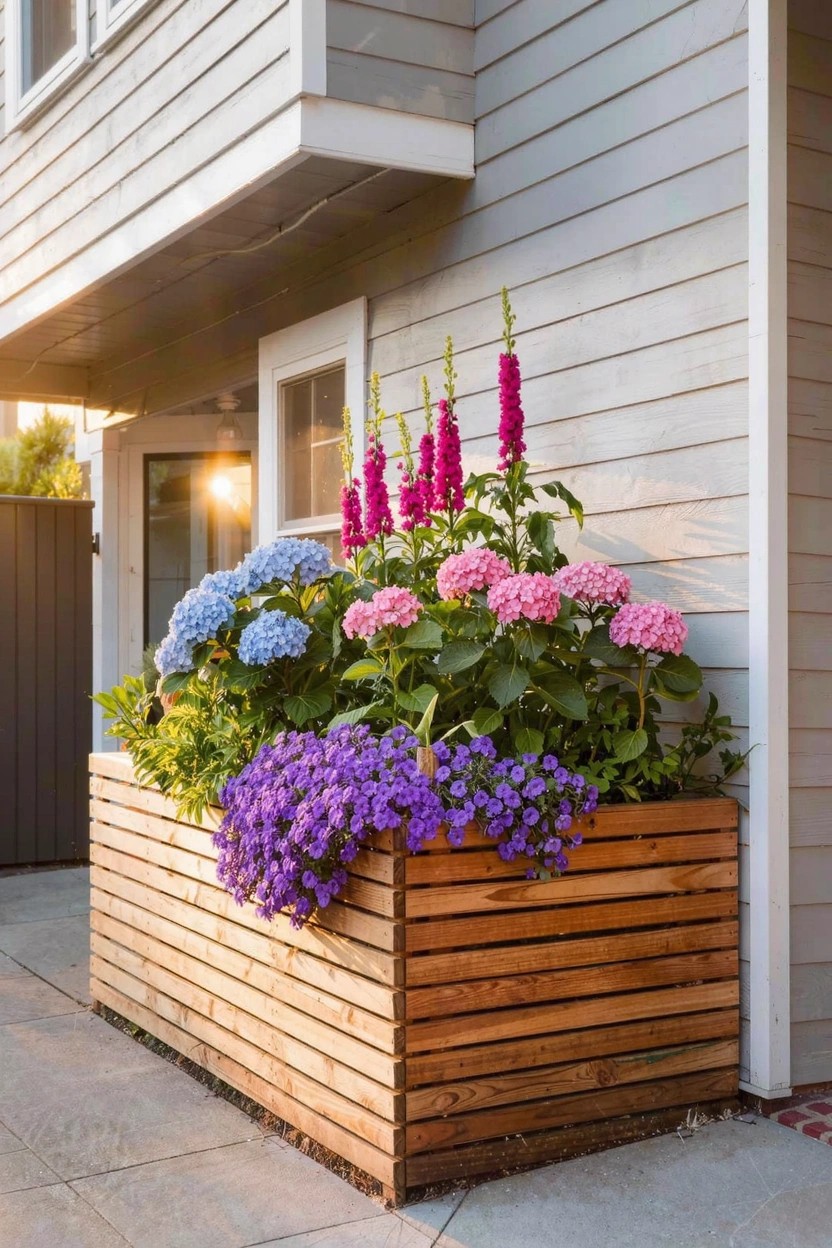
Sometimes you just don’t have much room for a traditional flower bed. A tall raised wooden planter solves that. Tucked right against the house wall, it lets plants grow up and out without spreading across the yard. The foxgloves and hydrangeas here fill it full, giving plenty of color in a small footprint.
Put one like this in a side area or along a walkway where space is tight. Use rot-resistant wood like cedar, and pick perennials that stand tall. It suits most any house style, but watch the drainage so roots don’t rot.
Narrow Flower Beds Along Fences
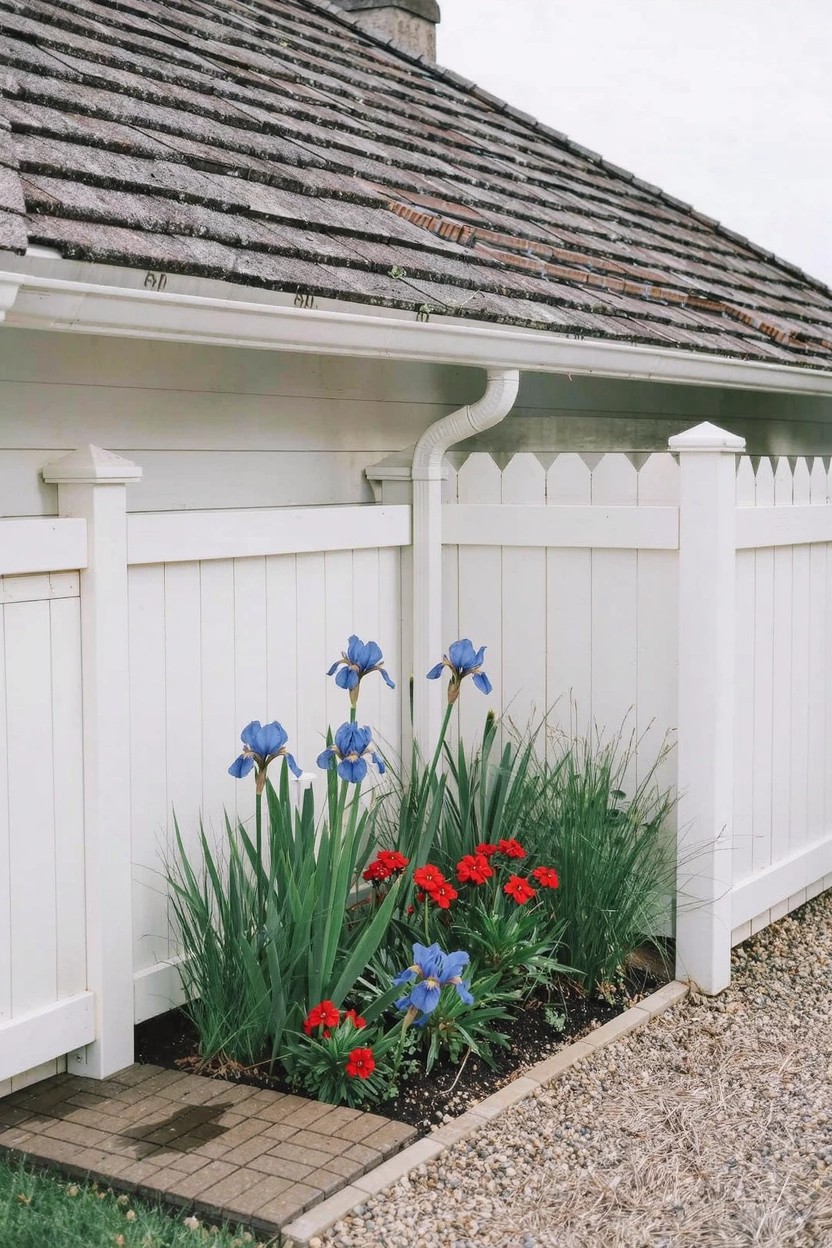
White fences give homes a clean look. Planting flowers right up against them works well in tight spots. You get color and height without eating up yard space. Here tall blue irises mix with lower red blooms for easy interest all season.
These beds fit best between a fence and driveway or walkway. They suit small lots or side yards where room is short. Pick perennials that won’t sprawl too much. Keep soil mulched to hold moisture… and watch weeds don’t sneak in.
Steel Planters Along Steps
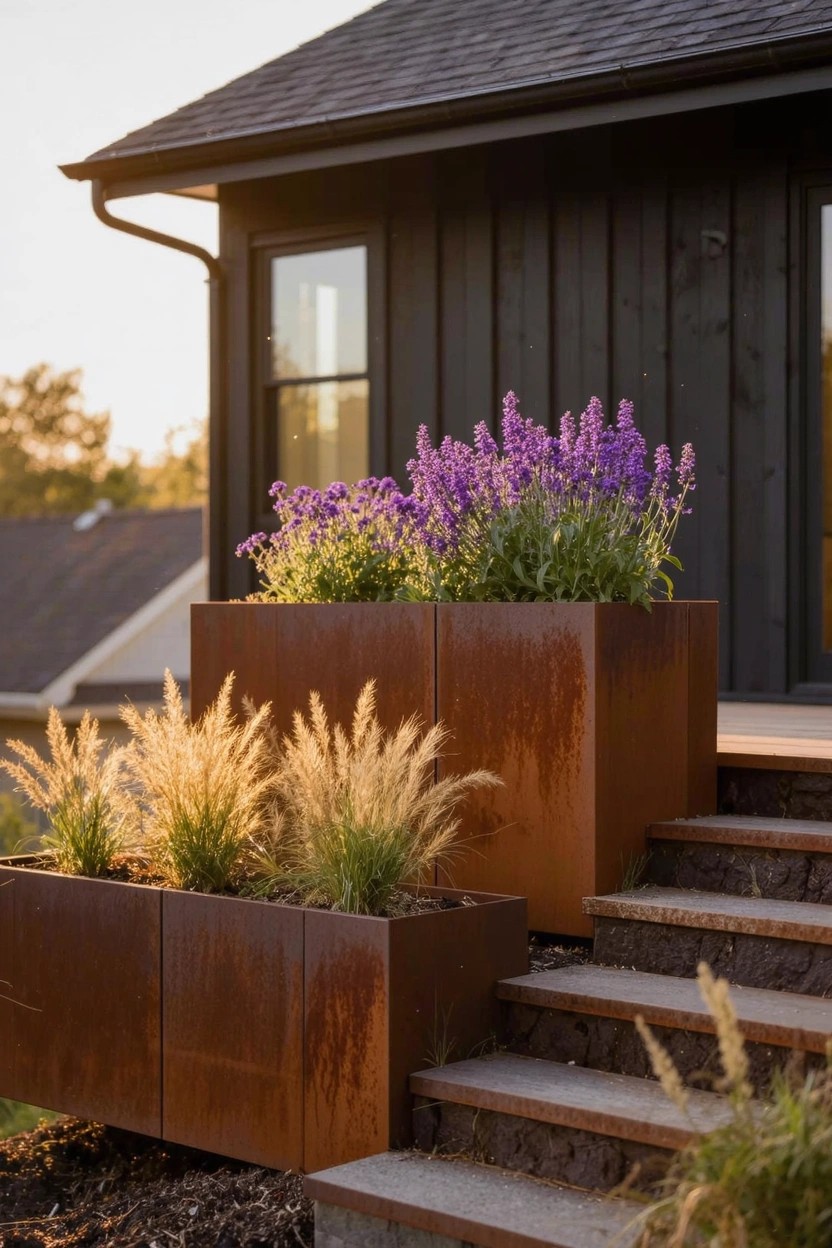
Big steel planters like these fit right on or beside entry steps. They turn a skinny spot into a flower bed without stealing yard room. Purple salvia and tall grasses fill them up nice, and the rusty metal picks up on the dark siding for a clean look that lasts.
This works best on modern homes or any tight entryway. Stack a couple boxes if you need height, and pick upright plants that won’t flop over. Keep an eye on drainage though. Water runs off metal fast, but roots still need it good.
Wall-Mounted Buckets for Herbs
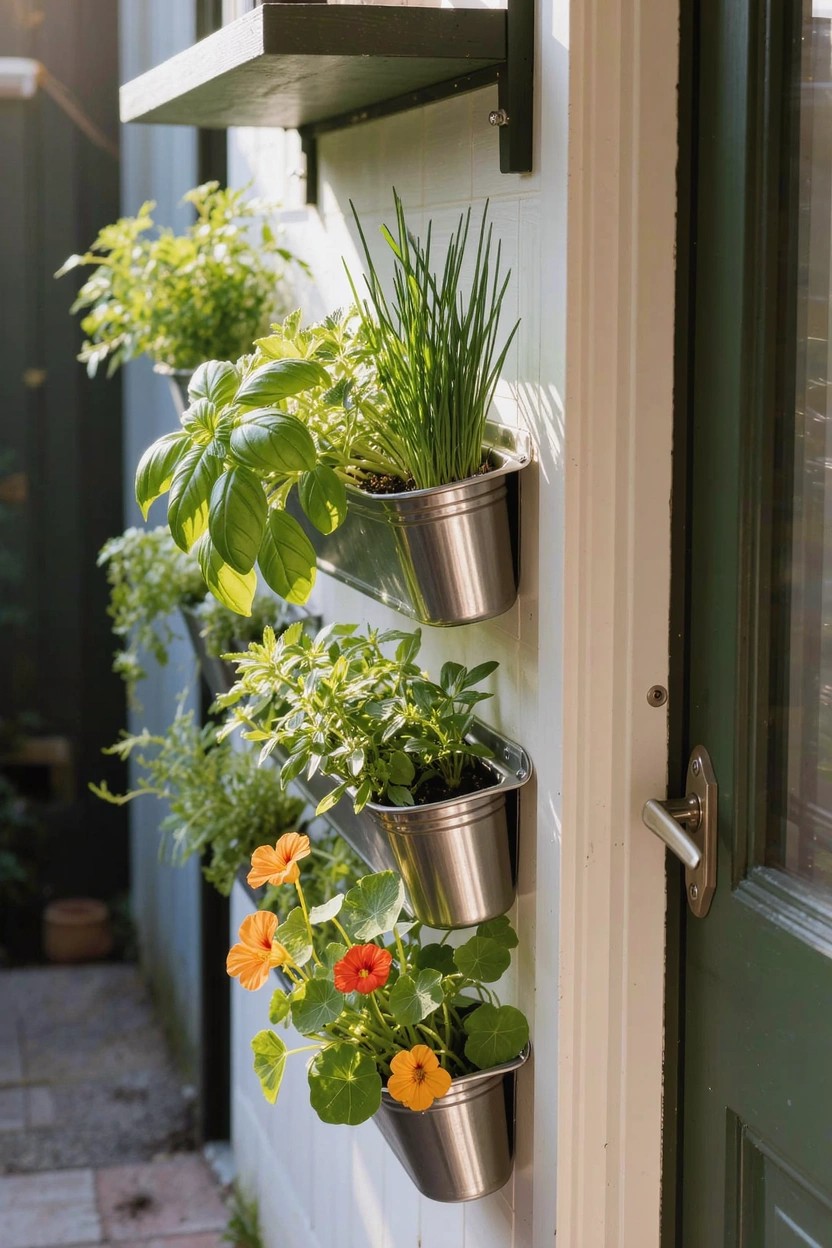
Sometimes you just don’t have room for a flower bed. This idea fixes that. Hang galvanized buckets right on the exterior wall, like by the door here with basil, chives, and those bright orange nasturtiums. It puts green right where you see it every day, and you can grab fresh herbs without stepping into the yard.
Try it near a back door or side entry in tight spots, like apartments or skinny yards. Pick buckets that hook securely, drill good mounting brackets, and add drainage holes. Sturdy white walls like this take it fine, but check for drips on patios below.
Planters on Front Steps
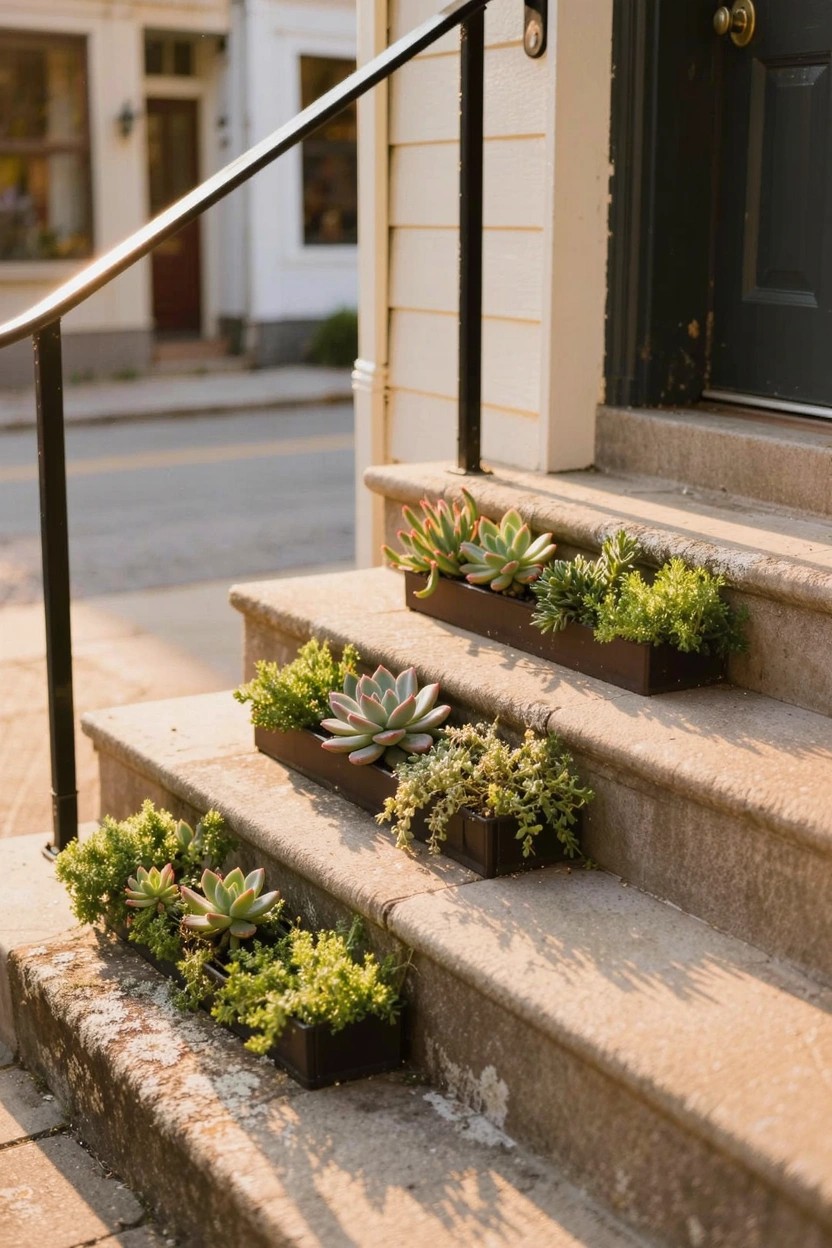
One easy way to add green to a front entry is lining the steps with low rectangular planters. These wooden boxes hold succulents that trail a bit over the edges. They bring life right to your doorstep without using up yard space. Folks like how it softens plain concrete stairs.
This setup fits tight spots like urban stoops or row houses. Pick planters no taller than six inches to keep steps clear. Drought-tough plants such as echeveria do best here. Water less often. Skip it if steps get heavy traffic.
Narrow Balcony Flower Planters
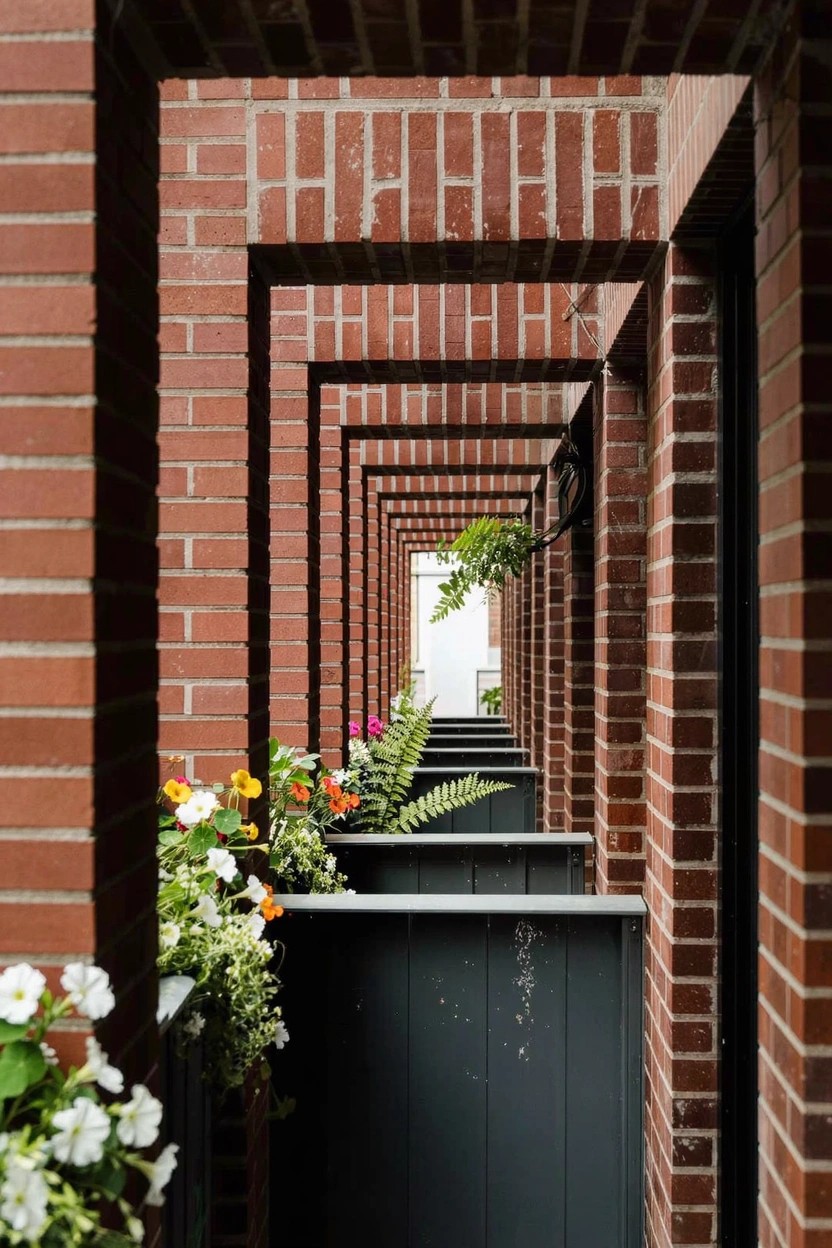
Sometimes the best spots for flowers are those skinny balconies or walkways squeezed between walls. Here, simple planters hooked onto the railings hold a mix of bright blooms and ferns. They turn a plain brick passageway into something cheerful without taking up floor space. The red brick sets off the colors nicely, and it feels right at home in older buildings.
These planters work great on apartment balconies or along side entries in row houses. Pick railing boxes that won’t tip, and fill them with easy growers like petunias or trailing ivy. They suit tight urban spots best. Just make sure to water regularly since they dry out fast.
Round Flower Bed at Porch Pillar
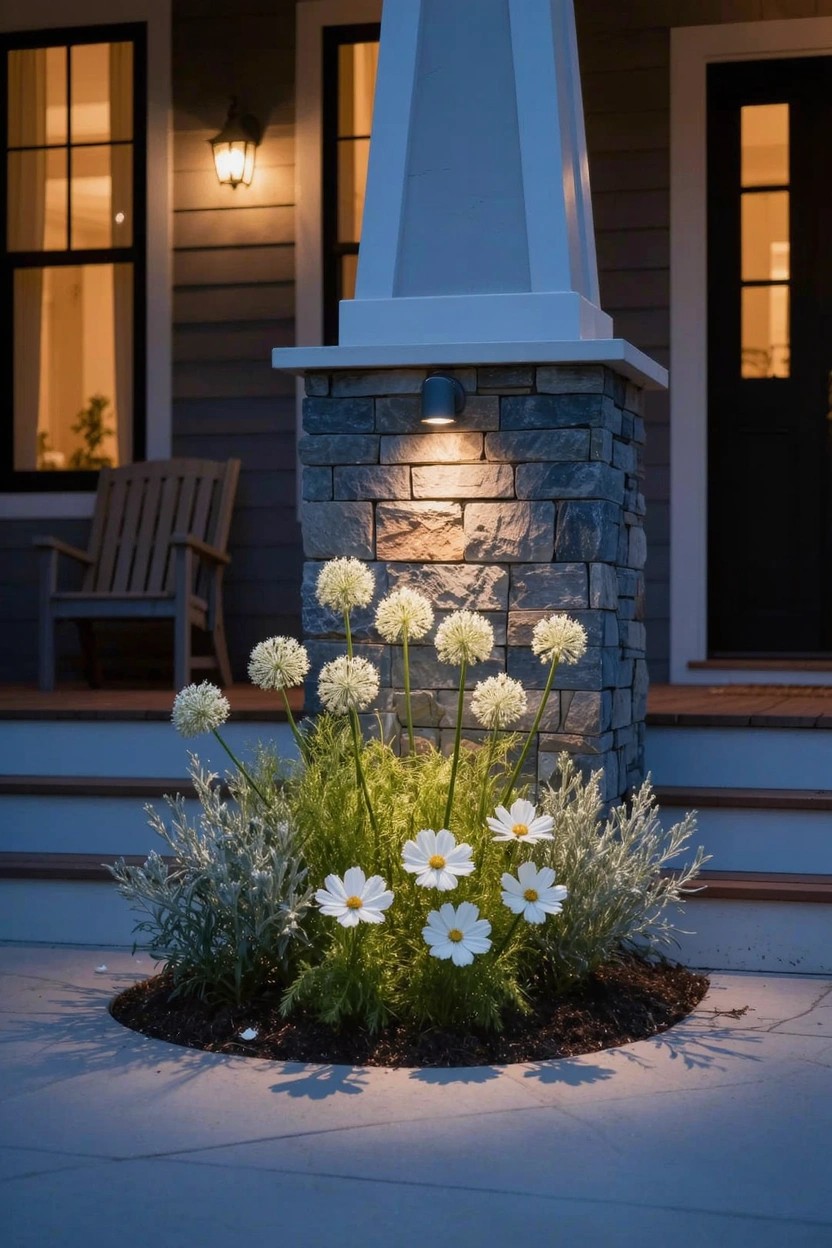
A round flower bed planted right at the base of a porch pillar is a good fit for tight spaces along the front walk. It uses just a foot or so of ground without crowding the steps. White flowers like alliums and daisies fill it out here and hold their own against the stone.
Put one in where a pillar or post sits close to the house edge. This works on craftsman or ranch style homes with simple entries. Keep the bed mulched to hold moisture, and pick tough plants that take some shade from the porch roof.
Balcony Edge Flower Beds
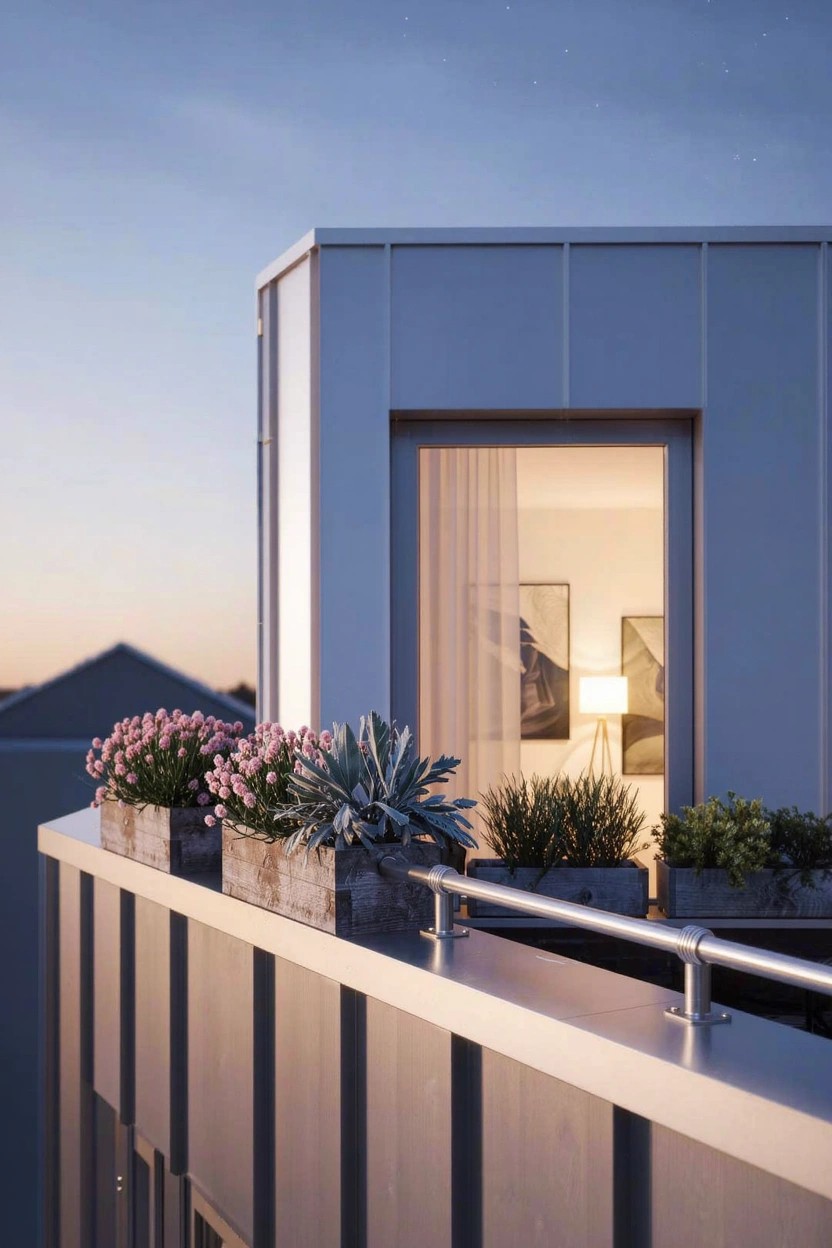
Balconies don’t leave much room for planting. But setting flower beds right along the edge changes that. Wooden boxes or planters tucked onto the ledge hold colorful blooms and low plants without crowding the space. You get greenery where there was none before. It works because it uses the balcony itself as part of the garden.
These setups suit apartments or any tight balcony on a townhome. Pick sturdy boxes that won’t tip, and go for lighter plants like succulents or trailing flowers to keep the weight down. Drainage matters too, so add holes or saucers. Pink flowers in one box, spiky greens in another… it fills out quick and looks full right away.
Frequently Asked Questions
Q: What if my tiny space gets no sun at all?
A: Stick with tough shade lovers like astilbe or bleeding hearts. Plant them close together for a lush fill. They bloom reliably without fighting for light.
Q: How do I fix poor soil before planting?
A: Dig in some compost or leaf mold right into the top layer. Work it around gently with a trowel. Your flowers root strong from day one.
Q: Can I pull off these ideas on a shoestring?
A: Hunt thrift stores for old bricks or pots to edge and contain. Reuse clippings from neighbors too. Fresh look, zero big spend.
Q: What’s the laziest way to fight weeds?
A: Slap down landscape fabric topped with two inches of mulch. Pull any stragglers weekly. Stays tidy with bare minimum effort.
