


Looking to spruce up your garden with a touch of natural elegance? Incorporating rocks into flower beds can be a game changer. The right stones can layer and add texture, making your blooms pop with color. From river rocks to driftwood or vertical arrangements, each option brings its own unique charm. Let’s explore some inspiring ideas to elevate your garden’s aesthetics.
Choosing the Right Location for Your Rock Flower Bed
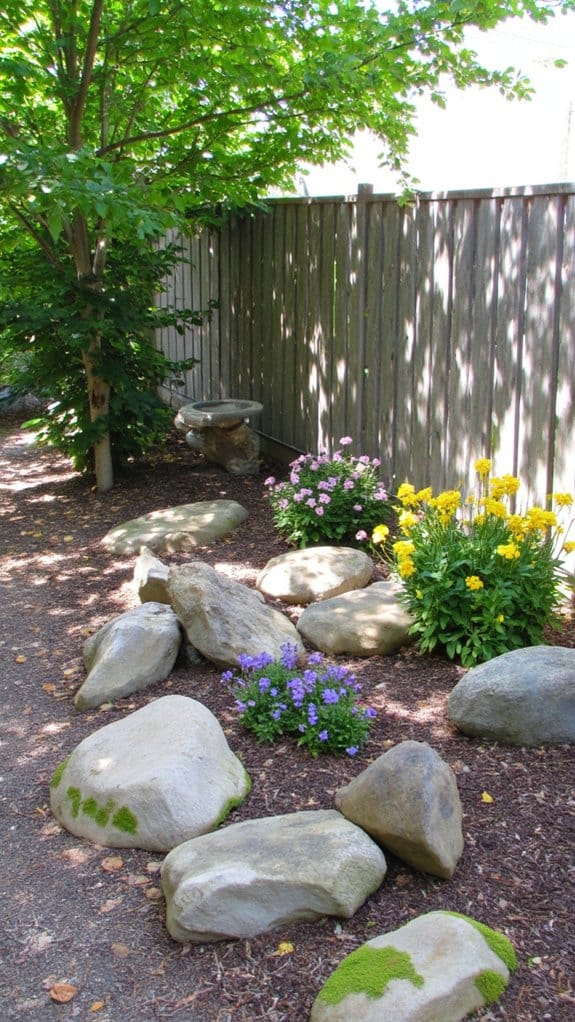
When I think about creating a rock flower bed, choosing the right location is essential.
I always look for areas with good sunlight, as most flowers thrive in bright conditions.
It’s also important to take into account drainage; I avoid spots where water tends to pool.
Finally, I think about visibility—placing it where I can enjoy the view makes all the effort worthwhile.
Essential Tools for Building Rock Flower Beds
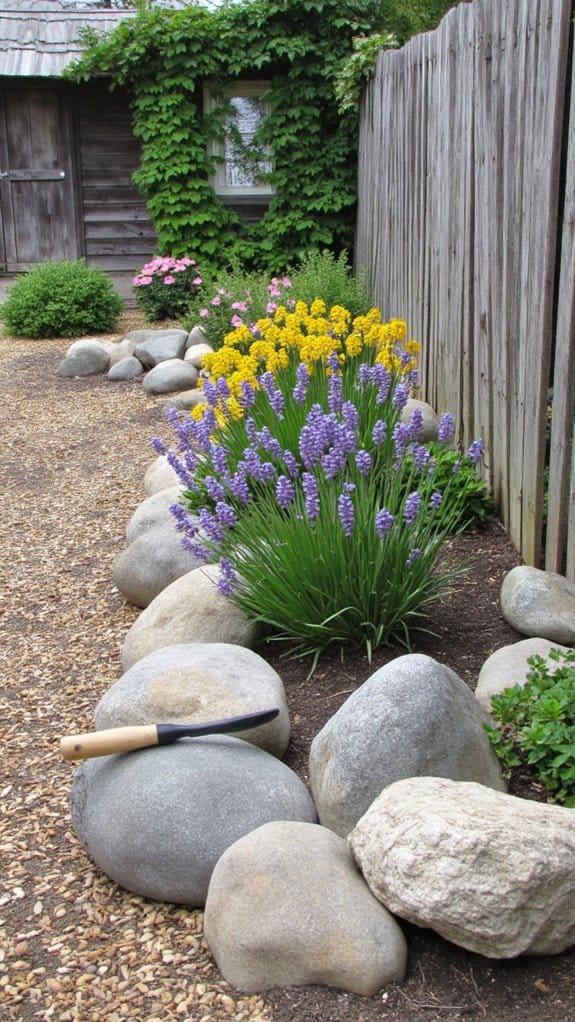
Building a rock flower bed requires a few essential tools to confirm the project goes smoothly.
First, I grab a sturdy shovel for digging and leveling the ground. A garden rake helps me smooth out the soil, while a wheelbarrow makes transporting rocks easier.
A sturdy shovel, garden rake, and wheelbarrow are essential for digging, leveling, and transporting rocks efficiently.
Don’t forget gloves to protect my hands and a measuring tape to verify everything’s perfectly aligned.
With these tools, I’m ready to create!
Selecting the Best Rocks for Your Flower Bed

With the tools in hand, choosing the right rocks can make a significant difference in the overall look and durability of your flower bed.
I love using a mix of sizes and shapes to create visual interest. Look for natural stones like river rocks or slate, as they blend beautifully with plants.
Preparing the Soil for Rock Flower Beds

Before I start arranging the rocks, I always guarantee the soil is well-prepared to support my flower bed.
I begin by clearing any weeds and debris, then I loosen the soil with a garden fork.
Adding organic matter, like compost, enriches it.
Finally, I level the ground to create a stable base, ensuring my flowers thrive beautifully among the rocks.
Designing a Succulent Rock Flower Bed
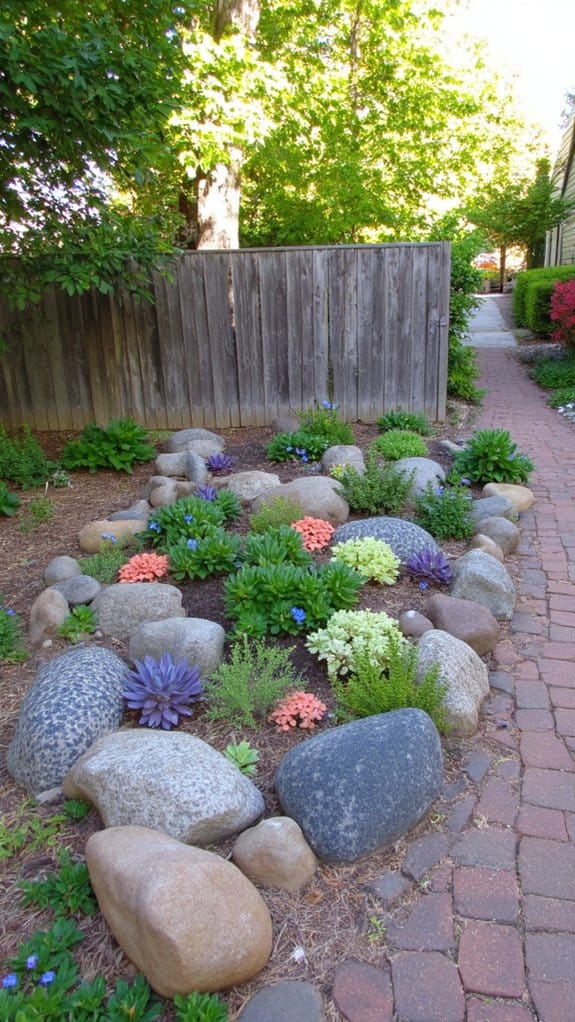
While designing a succulent rock flower bed, I focus on creating a harmonious blend of textures and colors that complement each other.
I choose various succulent species, mixing vibrant hues with unique shapes. Using natural stones, I outline the bed, enhancing its visual appeal.
I guarantee proper spacing to promote airflow and growth, making my garden a stunning, low-maintenance oasis.
Incorporating Native Plants Into Your Rock Garden
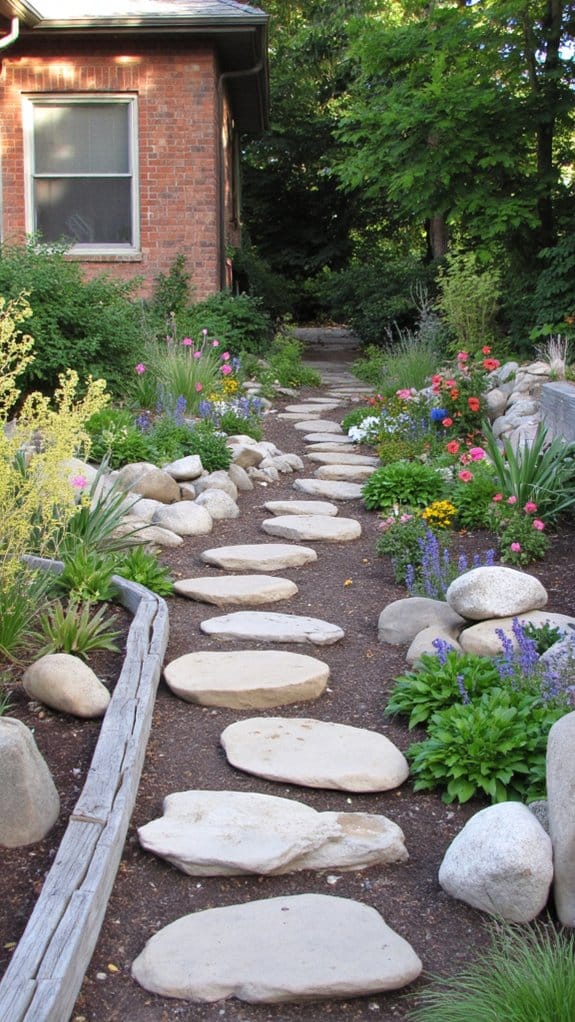
As I explore ways to enhance my rock garden, incorporating native plants becomes a priority, since these species are well-adapted to the local climate and soil conditions.
I love selecting plants that thrive in my area, adding color and texture while supporting local wildlife.
It’s rewarding to create a sustainable landscape that blends beautifully with the natural surroundings.
Native plants truly make my garden shine!
Create a Colorful Cactus Rock Flower Bed
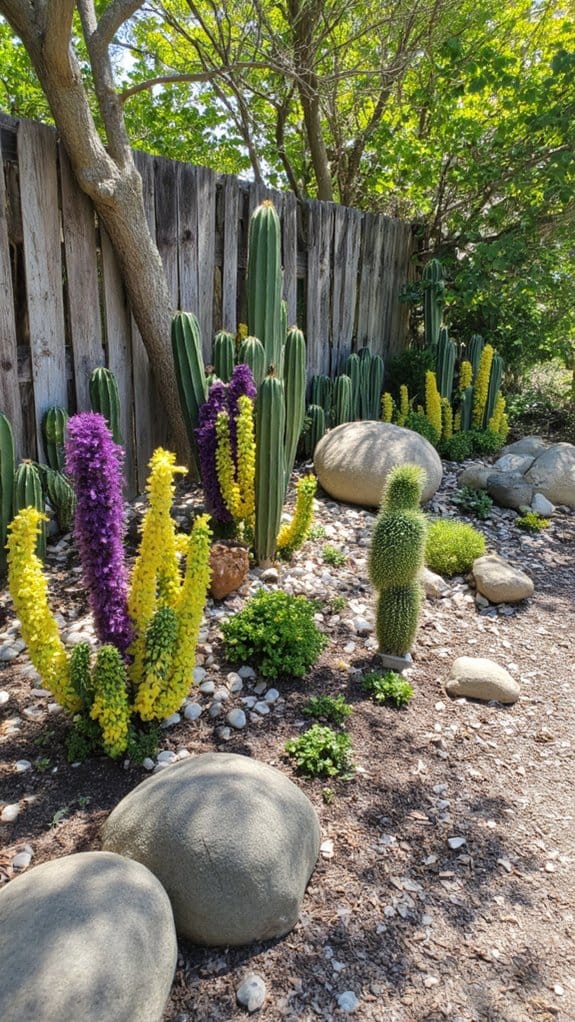
Creating a colorful cactus rock flower bed can transform your garden into a vibrant oasis, especially if you carefully select a variety of cactus species.
I love mixing different shapes, sizes, and colors to create a stunning visual display. Incorporating flowering cacti adds bursts of color, while the rocks provide a perfect backdrop.
It’s a low-maintenance option that brings joy year-round!
Arranging Rocks for a Natural Look
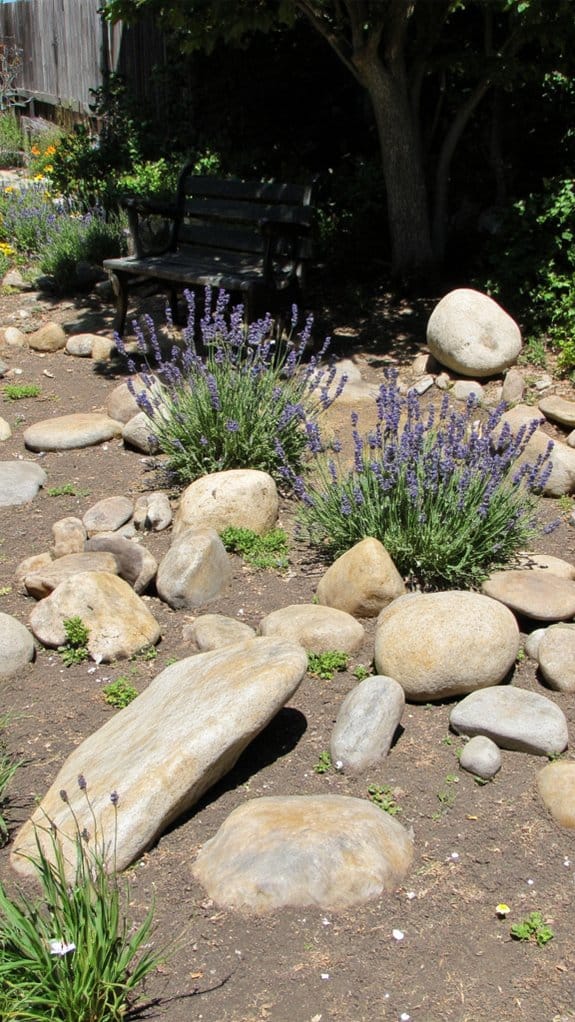
To achieve a natural look in your rock flower bed, I suggest arranging the rocks in a way that mimics the patterns found in nature.
Try clustering larger stones together while placing smaller ones nearby to create visual interest.
Don’t be afraid to vary the sizes and shapes; it’ll add depth.
Using Pebbles for Textural Contrast in Rock Flower Beds
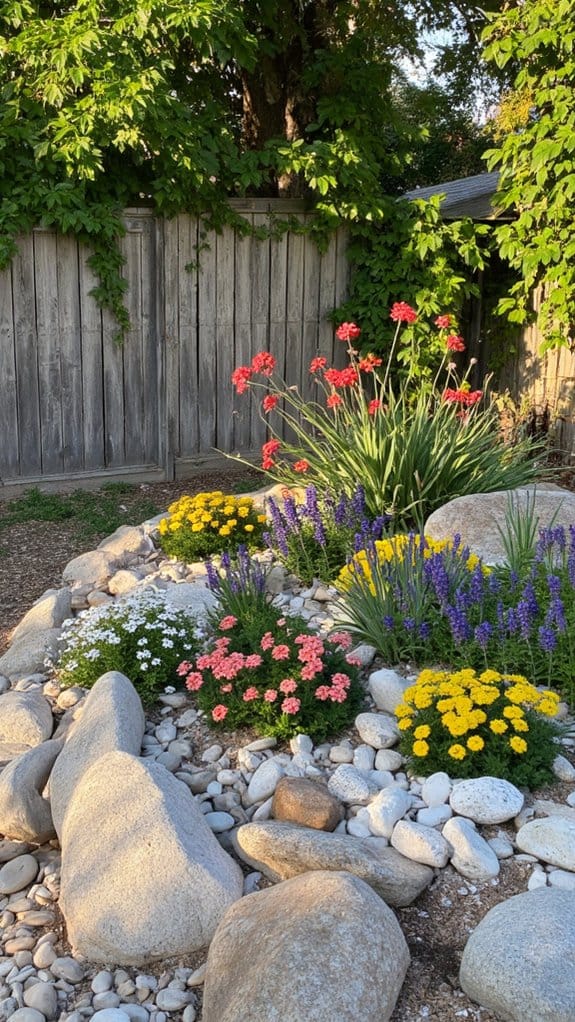
Incorporating pebbles into your rock flower bed can greatly enhance its visual appeal by providing a striking textural contrast.
I love mixing smooth, round pebbles with jagged stones to create a dynamic look. You can choose colors that complement your flowers, making the entire arrangement pop.
This contrast draws the eye and adds depth, transforming a simple flower bed into a stunning focal point.
Building a Rock Flower Bed Around a Tree
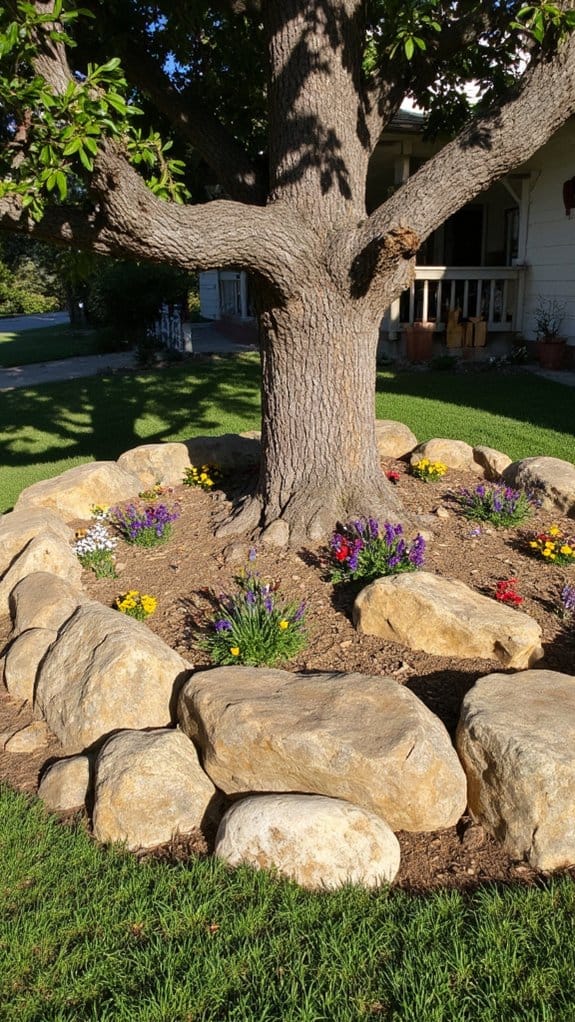
While building a rock flower bed around a tree can seem challenging, it’s a rewarding way to enhance your landscape.
I love how the rocks create a natural frame, highlighting the tree’s beauty.
Start by choosing various-sized rocks to guarantee stability and visual interest.
Then, fill in with colorful flowers that complement the tree, creating a stunning focal point in your yard.
Create a Mediterranean-Style Rock Garden
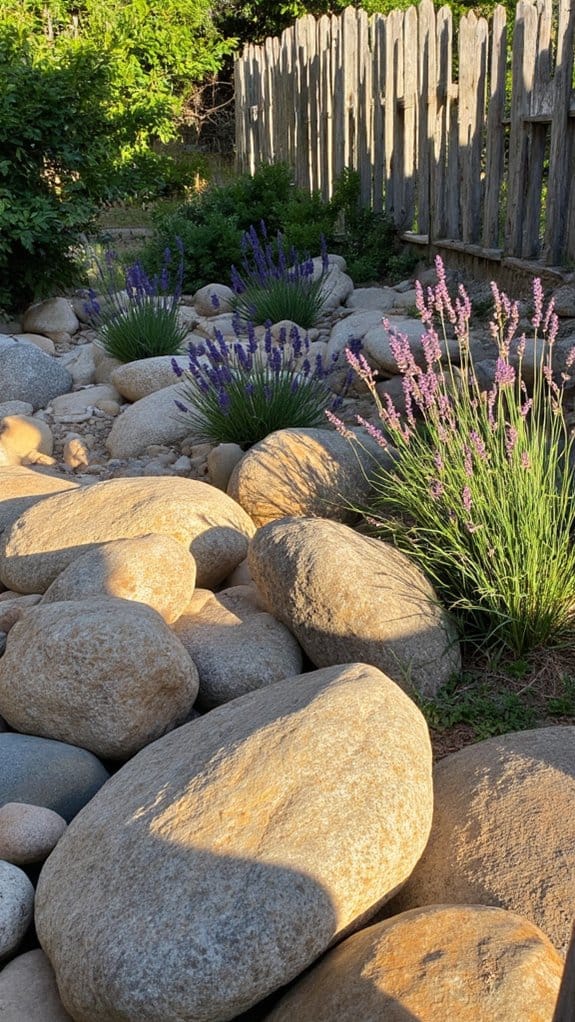
Creating a Mediterranean-style rock garden brings a touch of warmth and charm to any outdoor space.
I love using drought-tolerant plants like lavender and succulents, combined with terracotta pots and gravel paths.
The key is layering rocks of various sizes to mimic natural landscapes.
This design not only enhances aesthetics but also creates a serene atmosphere perfect for relaxation and enjoying nature.
Adding Edging Stones to Define Your Rock Flower Bed

Adding edging stones can really define your rock flower bed, giving it a polished look.
I love how these stones create a clear boundary, separating the flowers from the surrounding area. They also add structure and depth to the bed, enhancing its visual appeal.
Choosing stones that complement your plants can truly elevate the overall aesthetic of your garden.
Mixing Annuals and Perennials in Rock Beds

Mixing annuals and perennials in rock beds can create a dynamic and vibrant display throughout the seasons.
I love combining the bright, bold colors of annuals with the sturdy, lasting presence of perennials.
It’s exciting to watch the annuals bloom in a burst of color while the perennials provide structure and texture, ensuring my rock bed looks stunning year-round.
Designing a Vertical Rock Flower Bed
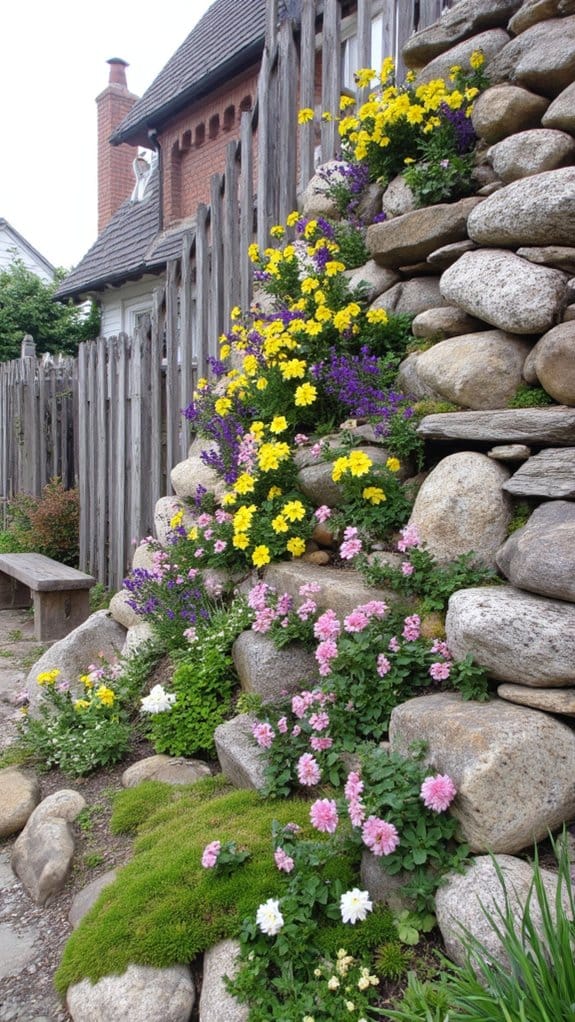
While exploring the idea of a vertical rock flower bed, I found it’s a fantastic way to maximize space and create a striking focal point in the garden.
By stacking rocks and incorporating various plants, I can add layers of texture and color.
Plus, it’s a great solution for small areas, allowing me to enjoy vibrant blooms without taking up too much ground space.
Make Your Succulents Shine All Year
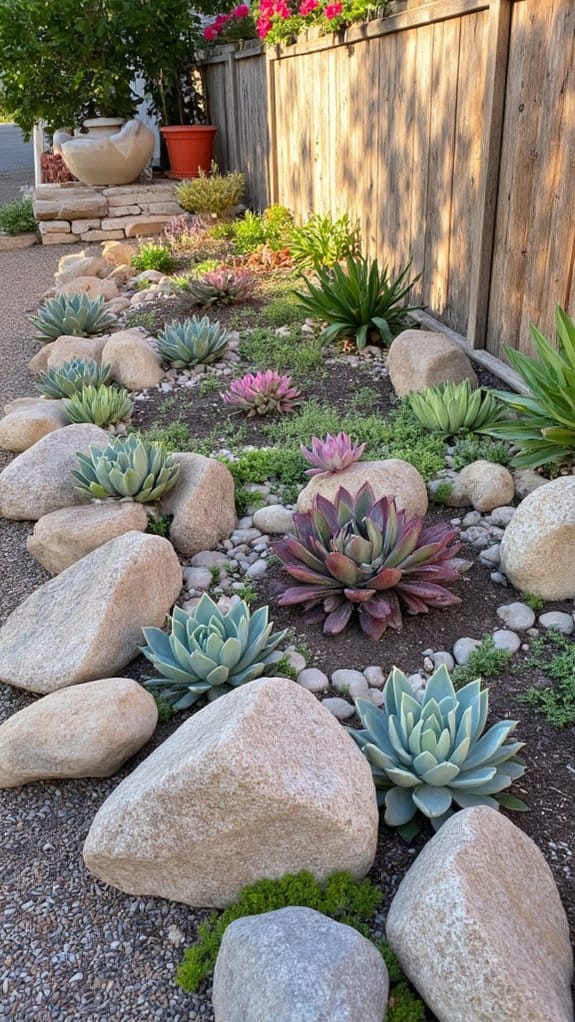
To guarantee my succulents shine all year, I focus on creating the right environment for them to thrive.
I choose well-draining soil and place them in a sunny spot, ensuring they get at least six hours of light daily.
I also rotate them occasionally to promote even growth.
With proper care, my succulents stay vibrant and healthy throughout the seasons.
Adding Water Features to Your Rock Flower Bed
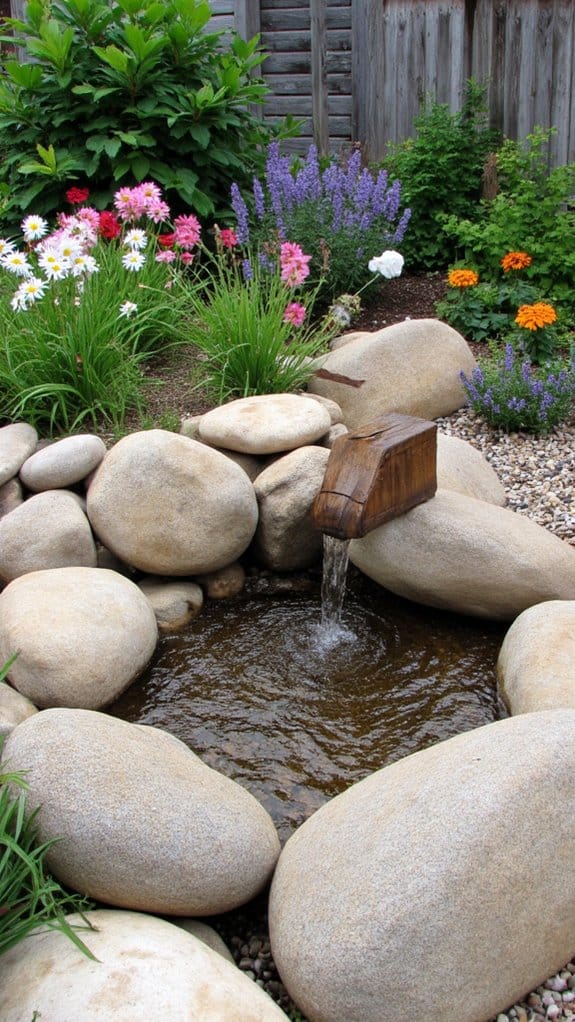
After ensuring my succulents thrive in their vibrant surroundings, I often think about how to enhance my rock flower bed further.
Adding a small water feature, like a bubbling fountain or a miniature pond, brings a soothing element to the space. The gentle sound of flowing water not only attracts birds but also creates a revitalizing ambiance, making my garden feel more alive.
Using Driftwood and Stones for Unique Accents

Incorporating driftwood and stones into my rock flower bed can transform it into a stunning focal point.
I love using weathered driftwood as natural sculptures, adding character and an organic touch. Pairing it with various stones creates contrast and depth.
It’s amazing how these elements enhance the overall beauty, inviting curiosity and admiration from anyone who visits my garden.
Designing a Rock Flower Bed With a Pathway
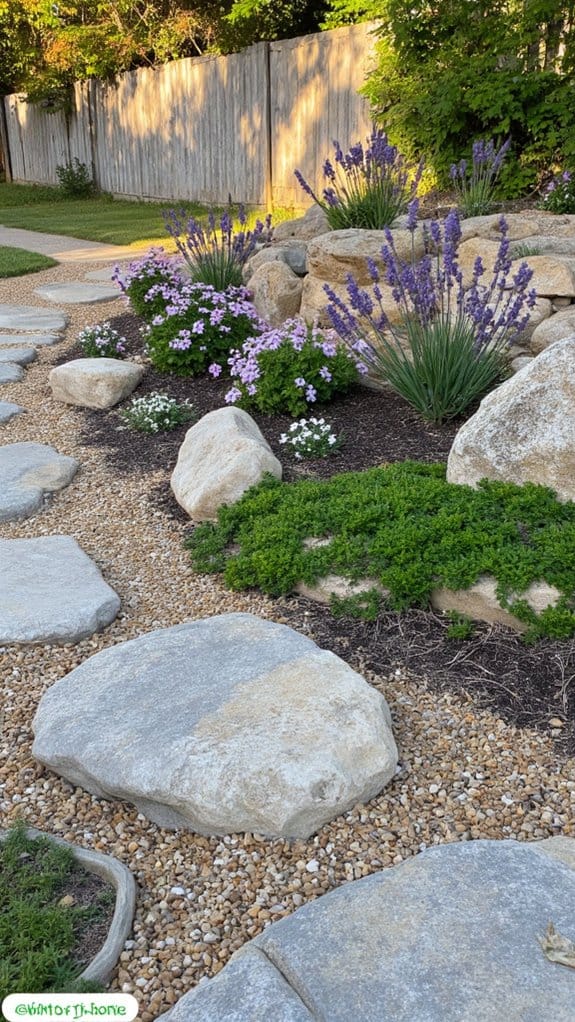
Creating a rock flower bed with a pathway not only enhances the aesthetic appeal of my garden but also invites exploration.
I’ve chosen smooth stones to outline the path, guiding visitors through vibrant blooms. The natural texture of the rocks complements the flowers beautifully, creating a serene atmosphere.
It’s a perfect spot for quiet reflection or enjoying nature’s beauty up close.
Enhancing Your Flower Bed With Decorative Gravel

While I was exploring ways to enhance my flower bed, I discovered that decorative gravel adds both beauty and function.
It creates a clean, polished look while helping with drainage and weed control.
I’ve found that choosing different colors and sizes of gravel can really complement the flowers.
Plus, it’s low maintenance, which is always a bonus for busy gardeners like me!
Creating a Rustic Rock Flower Bed With Reclaimed Materials
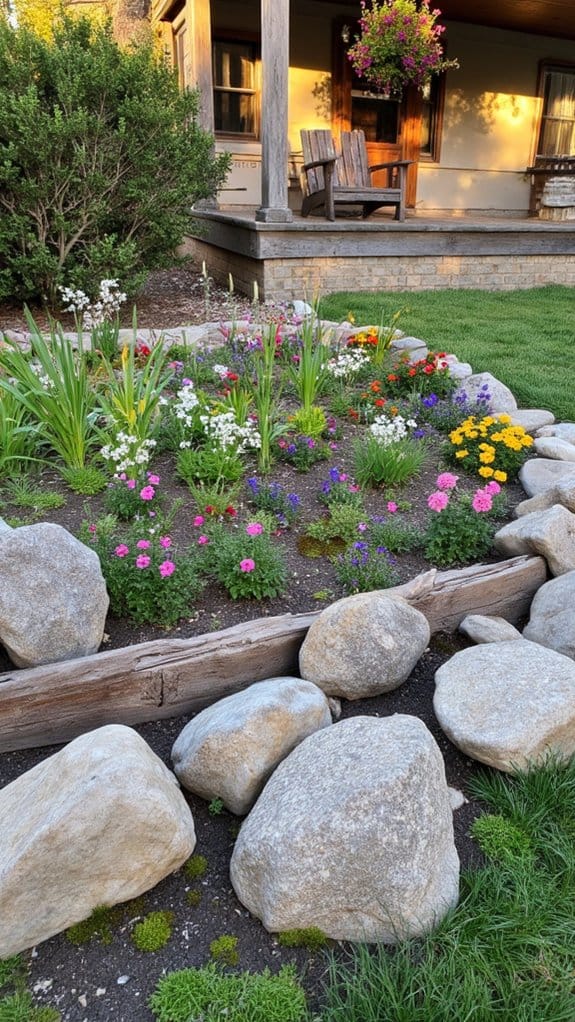
When I decided to design a rustic rock flower bed, I turned to reclaimed materials that not only add character but also tell a story.
I gathered old bricks, weathered wood, and stones from my property, creating a charming, textured border.
Mixing in vibrant flowers, I let nature’s beauty shine, resulting in a stunning focal point that reflects my personal style and love for sustainability.
Maintaining Your Rock Flower Bed
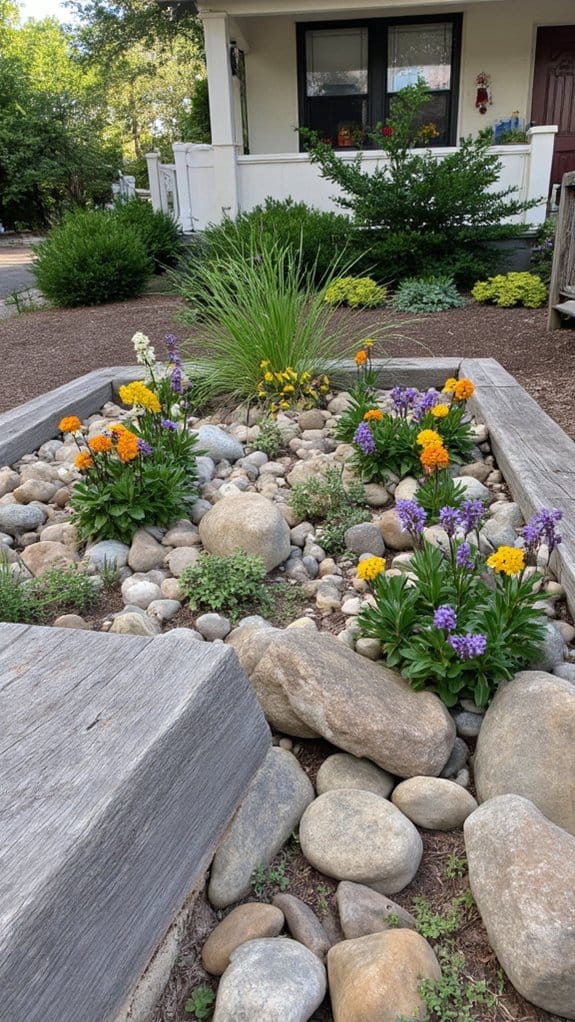
To keep my rock flower bed thriving, I focus on a few key maintenance tasks that confirm it remains a vibrant centerpiece.
I regularly check for weeds, pulling them out by the roots to prevent competition.
Additionally, I ensure proper drainage by adjusting rocks as needed, and I refresh the mulch to retain moisture and enhance the overall look.
Regularly inspecting plants helps me spot any issues early.
Seasonal Planting Ideas for Rock Gardens
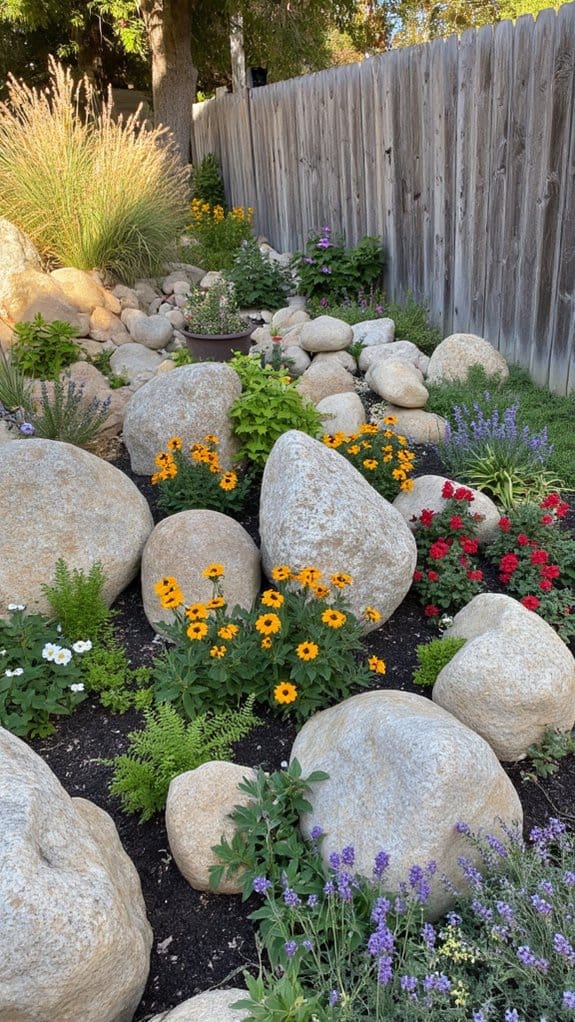
As I plan my seasonal planting for the rock garden, I consider the unique beauty each season offers.
In spring, I love adding vibrant tulips and daffodils.
Summer calls for heat-tolerant succulents, while fall brings rich hues with asters and ornamental grasses.
In winter, I often incorporate evergreen plants for structure.
Each season truly transforms the garden, creating a stunning visual experience year-round.
Enhancing Your Rock Flower Bed With Mulch and Ground Cover
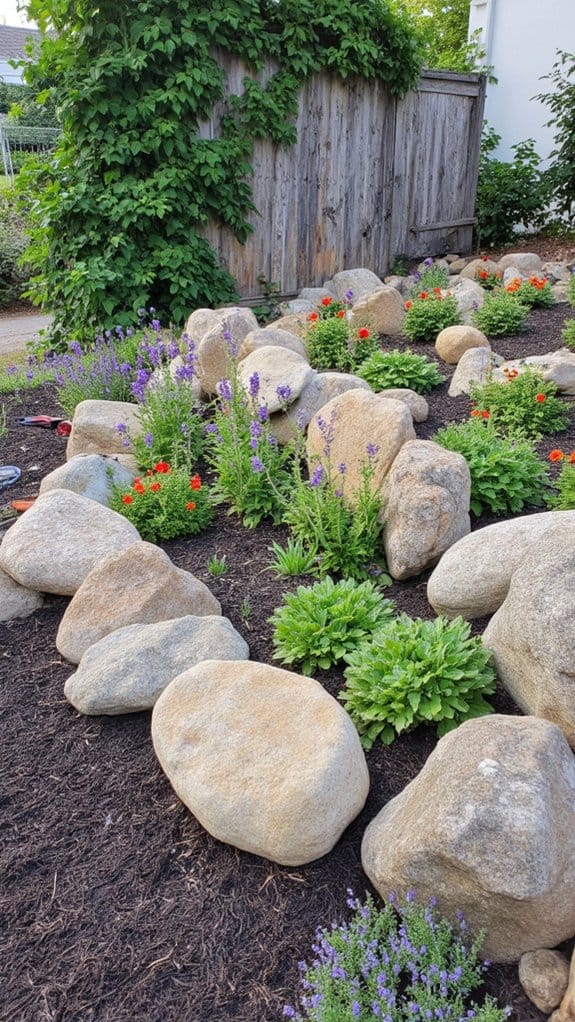
While I’m designing my rock flower bed, I always consider how mulch and ground cover can enhance its appearance and health.
Using organic mulch not only conserves moisture but also suppresses weeds, keeping my flowers thriving.
I love incorporating low-growing ground covers, like creeping thyme or sedum, which add texture and fill empty spaces, creating a lush, inviting landscape that’s easy to maintain.
