


I’ve always admired flower beds that hold their own in full sun, delivering steady color from spring right into fall without much fuss.
I gravitate toward ones with sturdy perennials like coneflowers anchoring drifts of waving salvias, since that backbone prevents the scraggly drop-off so many beds suffer.
Gardeners pull off vibrant all-season looks by staggering bloom times and mixing heights for natural depth.
They fall flat when folks overload with mismatched annuals that burn out or crowd each other.
I’d snag the gravel-mulched layout for my side yard.
Flower Beds Along the Front Path
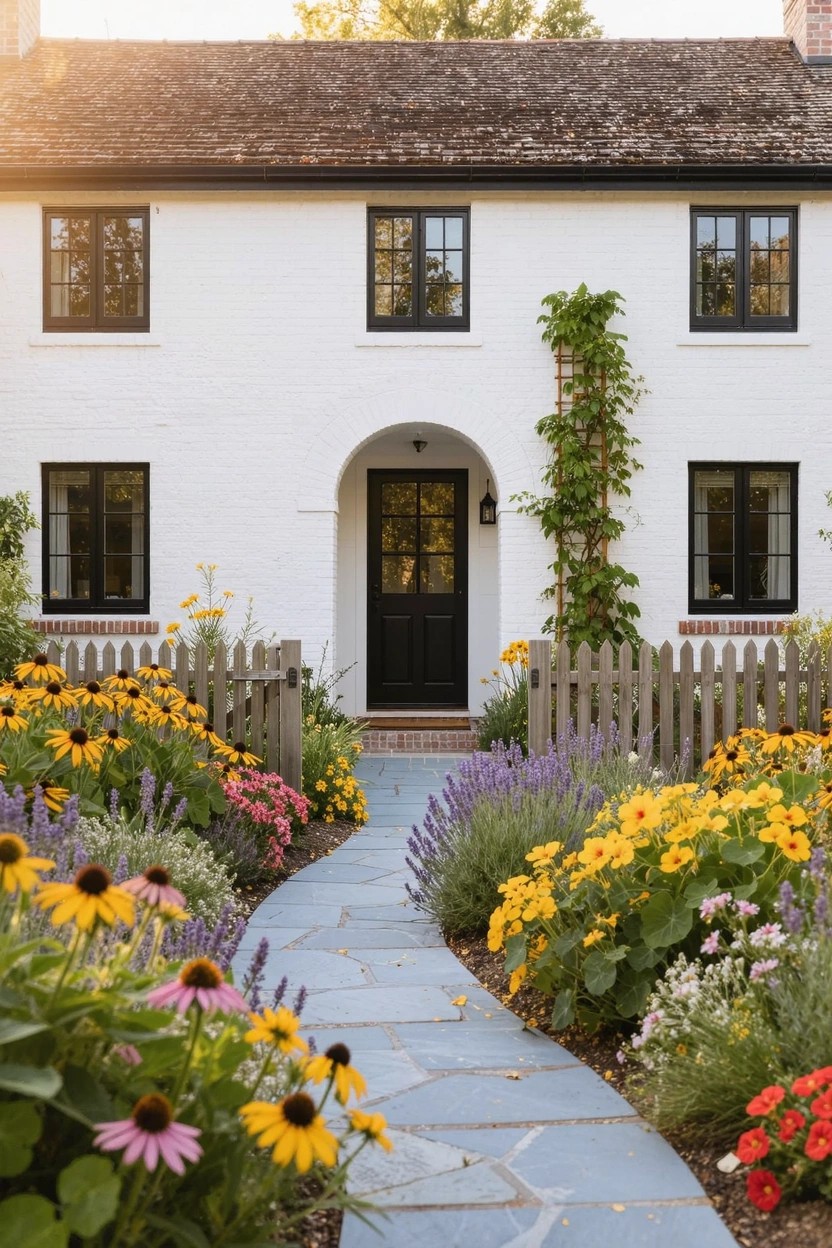
A simple stone walkway like this one gets a big lift from flower beds planted right alongside it. Tall sunflowers and black-eyed Susans mix with lower lavender and coneflowers to fill out the edges all summer long. The colors pop against the path stones and draw folks right up to the door without much fuss.
These beds do best in full sun yards where you want easy curb appeal. Tuck them next to any straight or winding path leading to your entry. Cottage homes take to it natural, but it’ll work on ranch styles too. Keep taller plants back a bit so you don’t brush flowers walking by.
Raised Planters for Full Sun Flowers
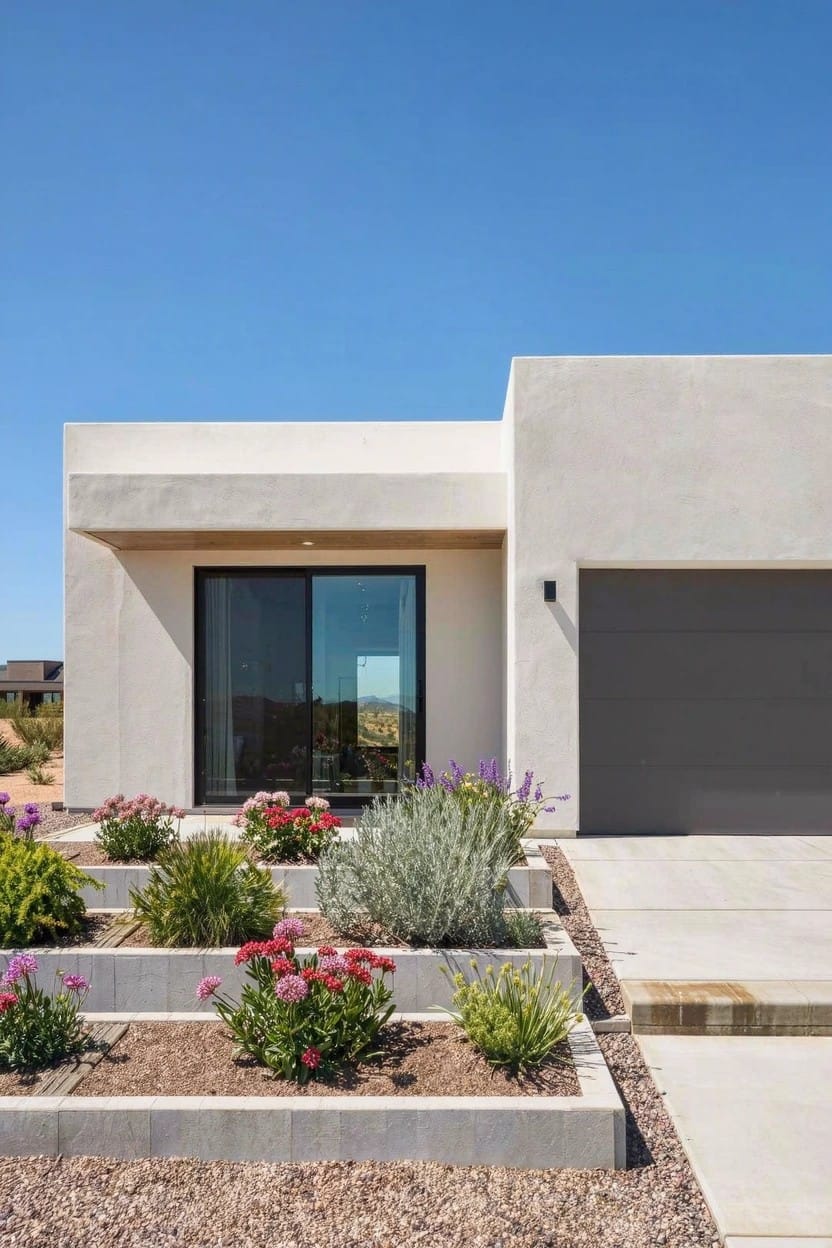
Raised concrete planters like these work great in sunny spots. They hold back gravel mulch and let colorful plants spill over the edges a bit. Pink blooms and lavender stand out against a plain house front. The setup keeps everything neat while adding real life to the yard.
Put these along a driveway or walkway where they get all day sun. They suit dry yards best, since plants like salvia or agastache handle heat without much water. Go easy on the soil mix to avoid soggy roots. Modern homes pick this up quick, but older ones can use it too for a fresh look.
Lavender Beds Along the Entry Path
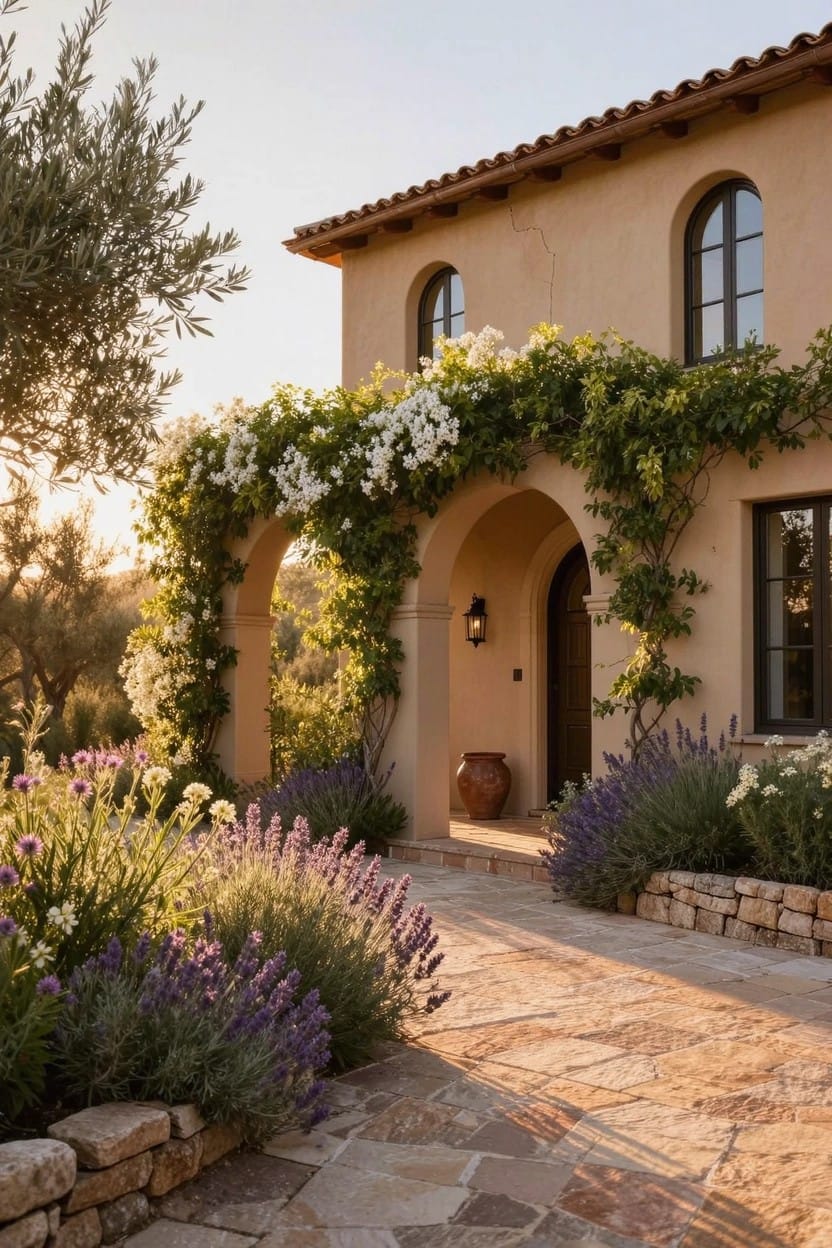
Lavender does real well in full sun. You see it here lining both sides of the stone path right up to the house. Those purple spikes mix nice with the low green plants and stay colorful most of the season. It’s a simple bed setup that gives the front yard some life without much fuss.
Put these beds where the sun hits hard all day. They suit dry spots near the driveway or walkway. Go for a stucco or stone house like this one. Trim the plants back once a year and keep the soil on the dry side. The white climbers on the arch up top help tie it all together.
Bright Flowers Around Porch Steps

A flower bed planted right up to the porch steps makes the entry pop without much fuss. Those big sunflowers mixed with white daisies and touches of orange hold their color through the summer heat. They thrive in full sun and give the house a welcoming feel from the street.
This works best on smaller homes like cottages in open, sunny spots. Tuck taller blooms against the foundation and spill shorter ones forward. A driftwood piece adds a natural edge. Keep soil well drained to avoid rot after rains.
Black-Eyed Susans in Dune Gardens

Beach homes look right at home with dune-style flower beds planted right up against the foundation. Black-eyed Susans do well here. They handle full sun and sandy soil without much fuss, and their yellow blooms stand out nice against light blue siding like on this cottage.
Set these beds along the front walk or house edge where sand or dry spots give you trouble. They suit coastal yards or any full-sun area with poor dirt. Start with good spacing so they fill in over time. One thing. They spread, so edge them if you want to keep things neat.
Potted Flowers on Entry Stairs

Nothing beats a row of bright potted flowers marching up your front steps. They turn a plain entry into something cheerful right away. These zinnias in terracotta pots catch the eye with their reds, pinks, and yellows. And they do well in full sun, keeping color going all season without much fuss.
Put them on stairs that get good light, like this setup facing south. They suit older homes with a few steps up to the door. Just check the pots don’t tip on narrow treads. Pick tough bloomers like zinnias or marigolds that handle heat.
Gravel Flower Beds Edging Wooden Decks

Gravel flower beds like this one work great in full sun. They hold up to heat and dry spells without much fuss. You get bright pops of color from yellow black-eyed Susans and purple salvia, plus some tall grasses for height. The gravel keeps weeds down and lets the plants breathe. Against a wood deck and siding, it all looks clean and tied together.
Put these beds along decks or patios where sun hits hard all day. They suit modern homes or any yard with good drainage. Just mix in a few different perennials that bloom over months. Keep the gravel topped up… and water new plants till they settle. Avoid shady spots, though. These need the sun to thrive.
Vibrant Flower Beds Along the Path
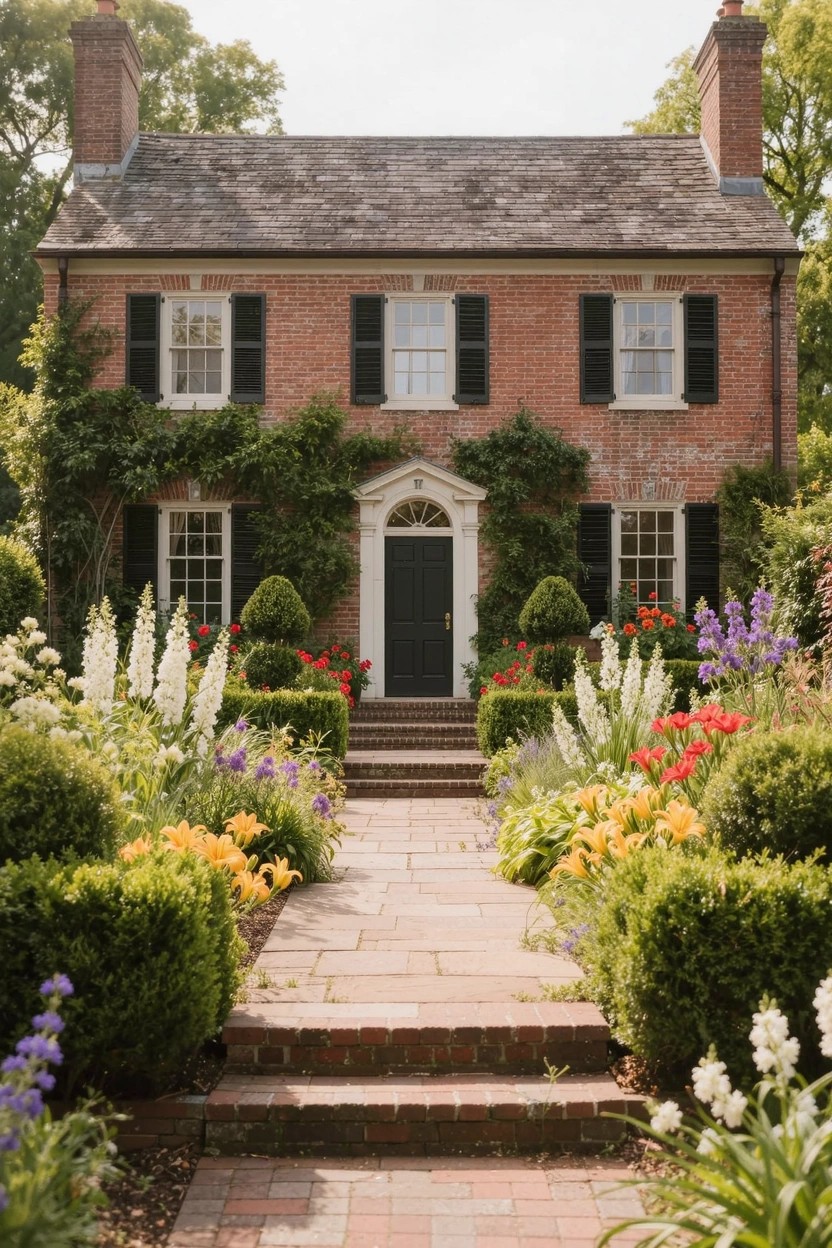
A simple row of colorful flowers running right alongside the walkway to your front door can turn a plain approach into something alive all summer. Tall whites mixed with reds and yellows catch the eye without overwhelming the house, and they hold up in full sun where other plants might fade. It’s a straightforward way to add season-long color that feels natural around an older home.
Plant these beds where they get at least six hours of sun, maybe flanking brick or stone steps like this one. Go for tough perennials such as foxgloves, salvia, and daylilies that come back year after year. Keep the path itself neat… weeds creep in quick if you let them. This works best on homes with some structure up front, so the flowers play off it instead of competing.
Flower Beds Along the Front Path
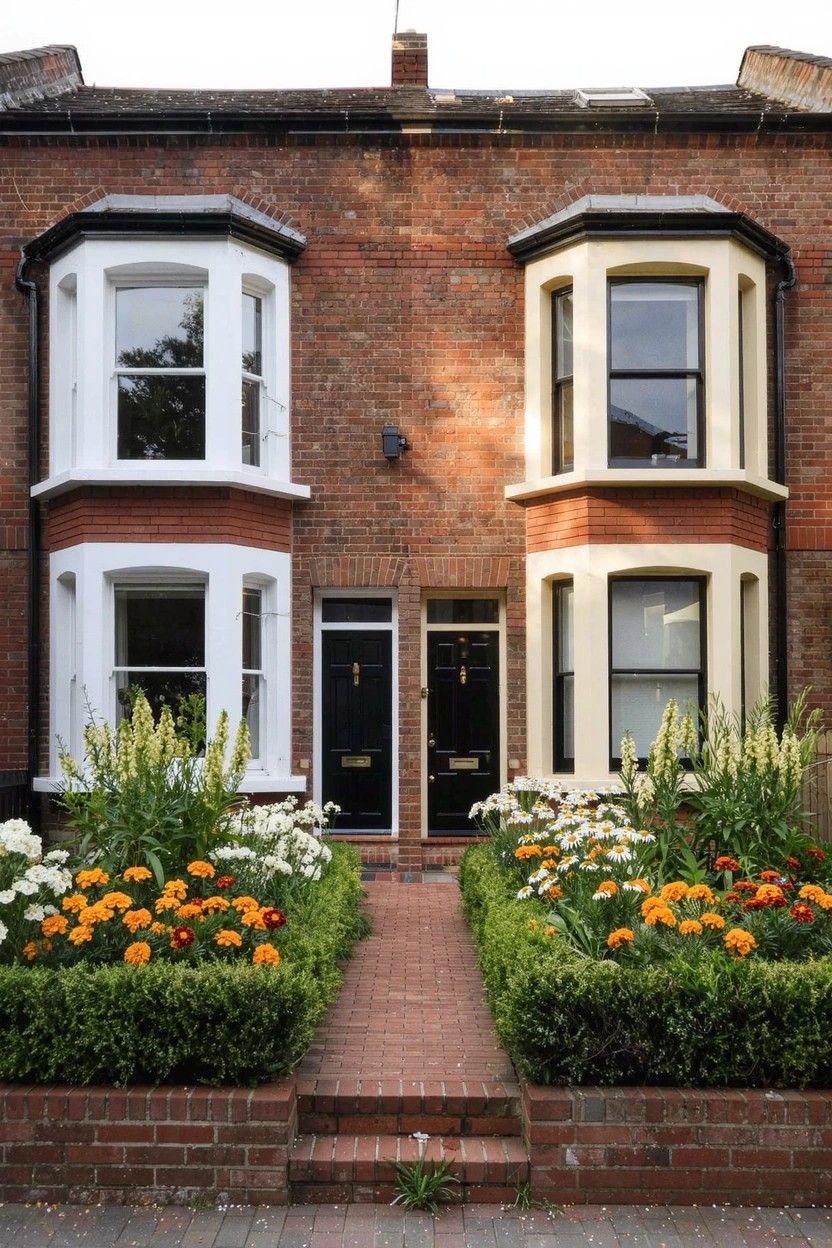
Flower beds tucked right along the front path make a welcoming change to plain walkways. They fill that strip of ground with color from full-sun plants that hold up through the months. Orange marigolds and white daisies work well here. The beds stay neat and pull folks toward the door.
Set this up in small front yards where space is tight. Use low box hedges to edge the path first. Then tuck in easy bloomers that take full sun. It suits brick houses like these older terraces. Just keep after the deadheading so it does not get messy.
Driveway Flower Beds Edged in Rocks
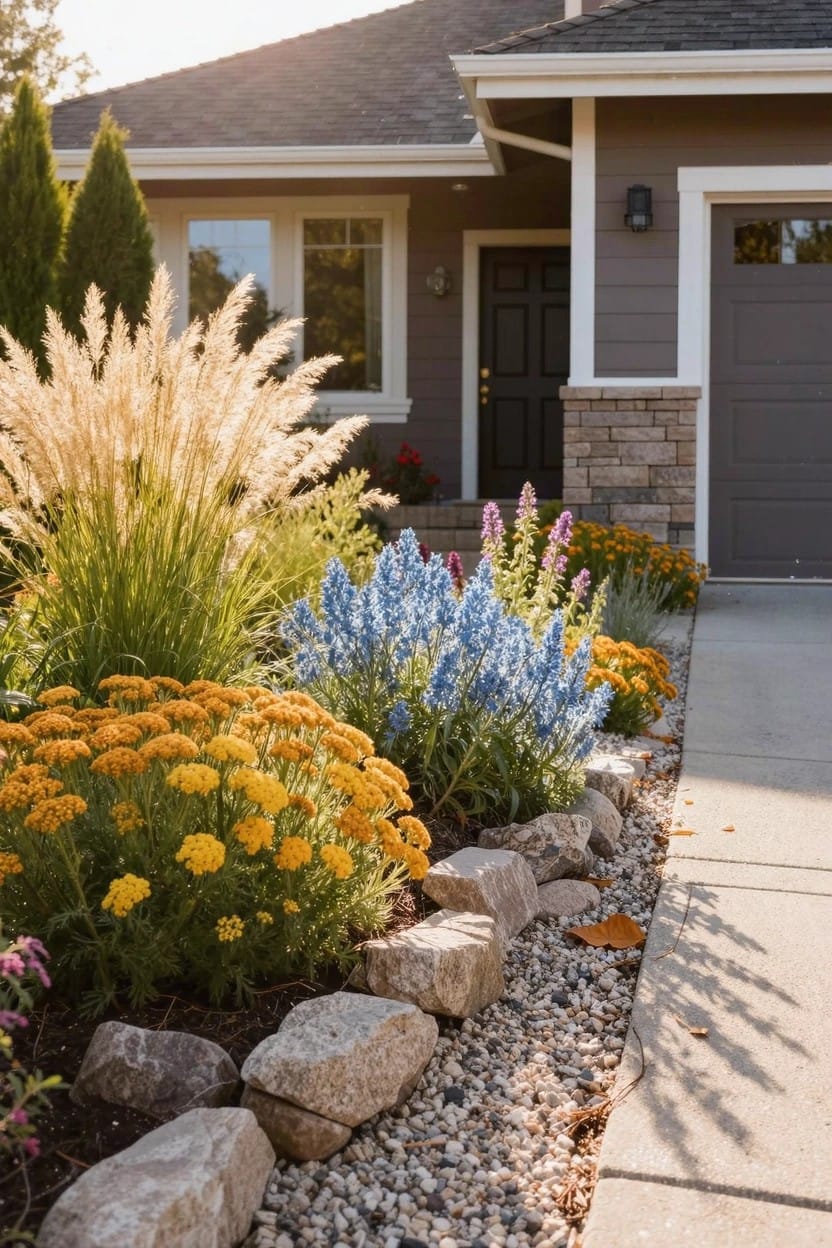
A simple way to boost curb appeal is edging flower beds along your driveway with rocks. In this setup, tall grasses stand behind clumps of blue delphiniums and orange marigolds. The mix gives height and steady color through summer. Rocks keep soil in place. Gravel mulch cuts down on weeds.
These beds work best in full sun next to pavement, where heat bounces off concrete. They suit most homes, from ranch to modern. Pick tough perennials like these that handle dry spells. Just refresh gravel now and then… keeps it tidy.
Terraced Beds on Rocky Slopes
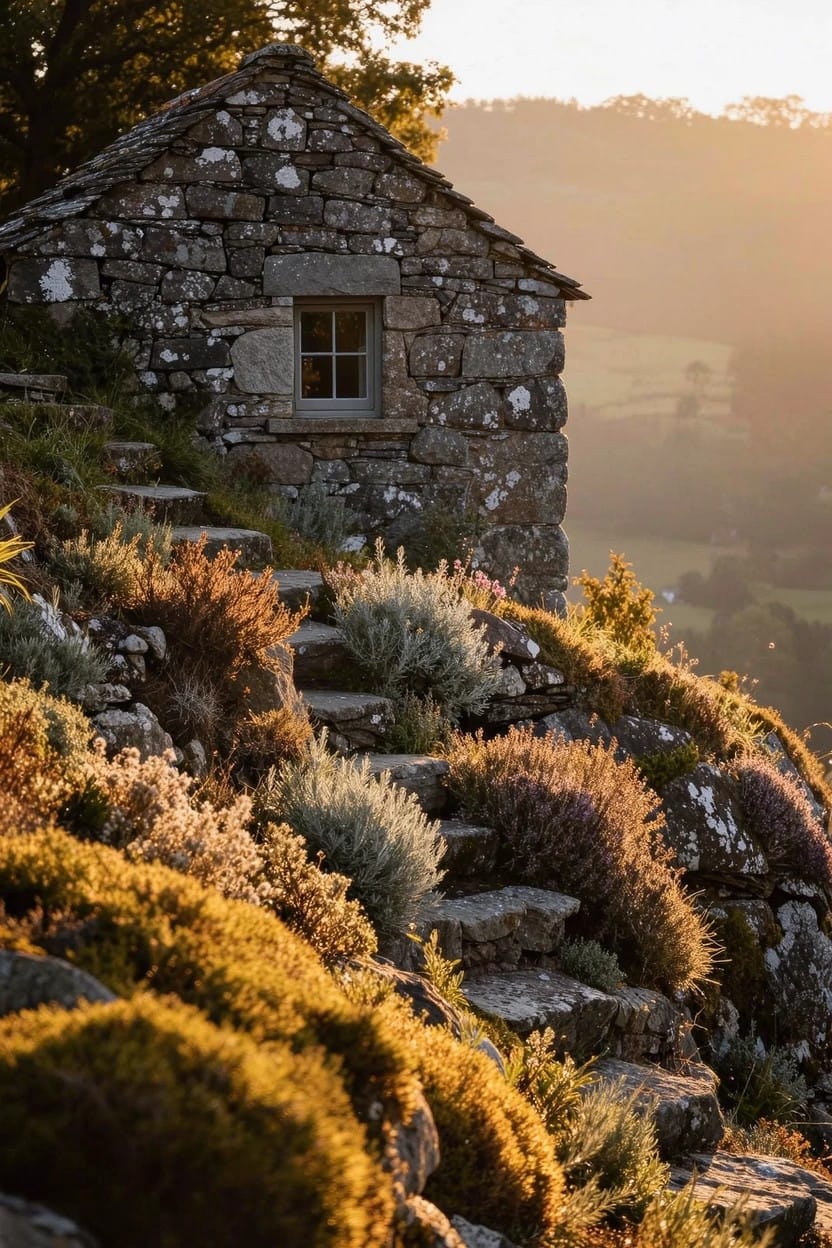
One simple way to handle a steep yard is terracing with stone steps and filling the levels with tough, sun-loving plants. This setup works great because the plants hug the rocks naturally. They get plenty of light and drain fast, so no soggy roots. Colors from lavenders and grasses keep it lively through fall.
Try this around a shed or cottage if your spot gets full sun most of the day. Stone walls hold soil in place. Pick drought-tough varieties like lavender, sedums, or ornamental grasses. It fits older stone houses best. Watch drainage though. Poor spots turn muddy quick.
Vibrant Flower Beds Along the House Base

One simple way to add color to your home’s exterior is to fill the strip right along the foundation with bright flowers. They catch the eye as you approach, especially when planted thick like the reds and yellows here against neutral shingles. Full sun keeps them blooming strong through the season, no fuss needed.
This works best on sunny sides of the house, like south or west exposures. Try it with easy growers such as zinnias, marigolds, or salvia that handle heat well. Suits beach houses or ranch styles with low foundations. Just mulch to keep weeds down, and edge the beds to stay tidy.
Raised Brick Planters for Full Sun Flowers
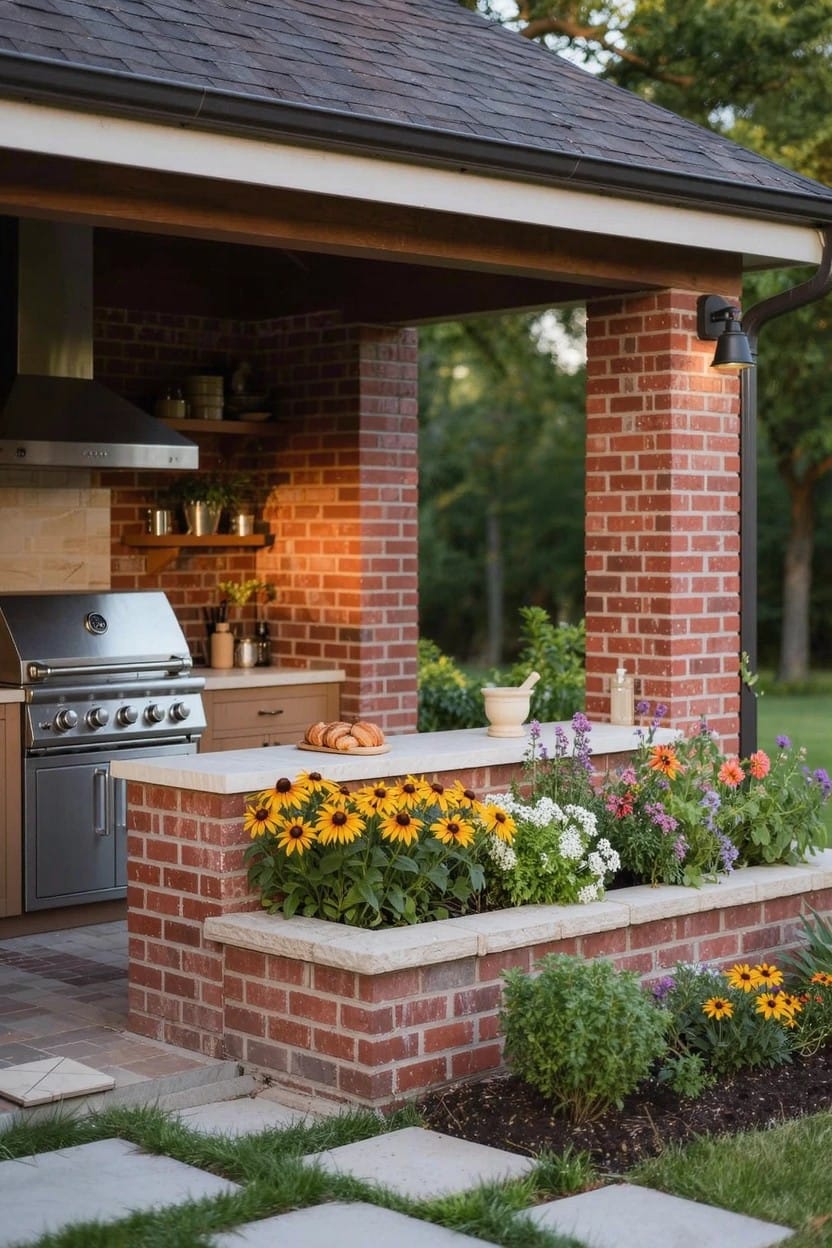
One straightforward way to brighten a sunny patio is raised brick planters stuffed with tough full sun flowers. They hug the edge of an outdoor kitchen or seating wall, like the sunflowers and mixed blooms doing so well here. The brick gives structure, and the flowers add easy color that lasts through summer.
Put these where your yard gets hot sun most of the day, right along hardscaped areas. They suit ranch homes or simple backyards with patios. Go for heat-loving picks like sunflowers or zinnias, and add good drainage so roots don’t bake. Keeps things neat without much fuss.
Daisy-Lined Brick Path to the Porch
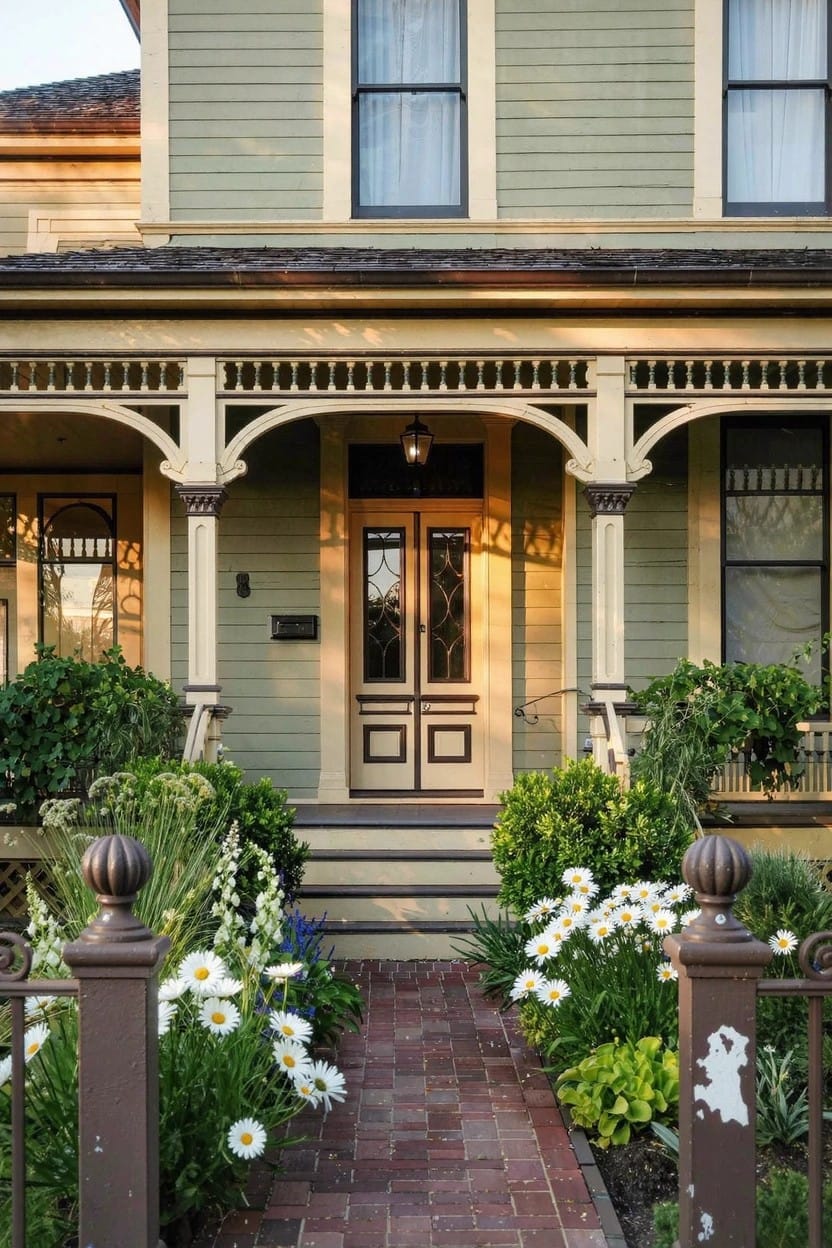
White daisies planted along both sides of a brick walkway make a clean welcome to the front door. They pop against the path and steps, and that green house paint nearby keeps things from getting too busy. These flowers hold up in full sun all season, blooming steady without much fuss.
Try this on homes with a porch or raised entry. It works best where you have good drainage along the path. Plant the daisies close to the bricks, mix in some low shrubs for year-round green, and keep the beds weeded. Older houses like this one take to it right away.
Pergola with Border Flowers
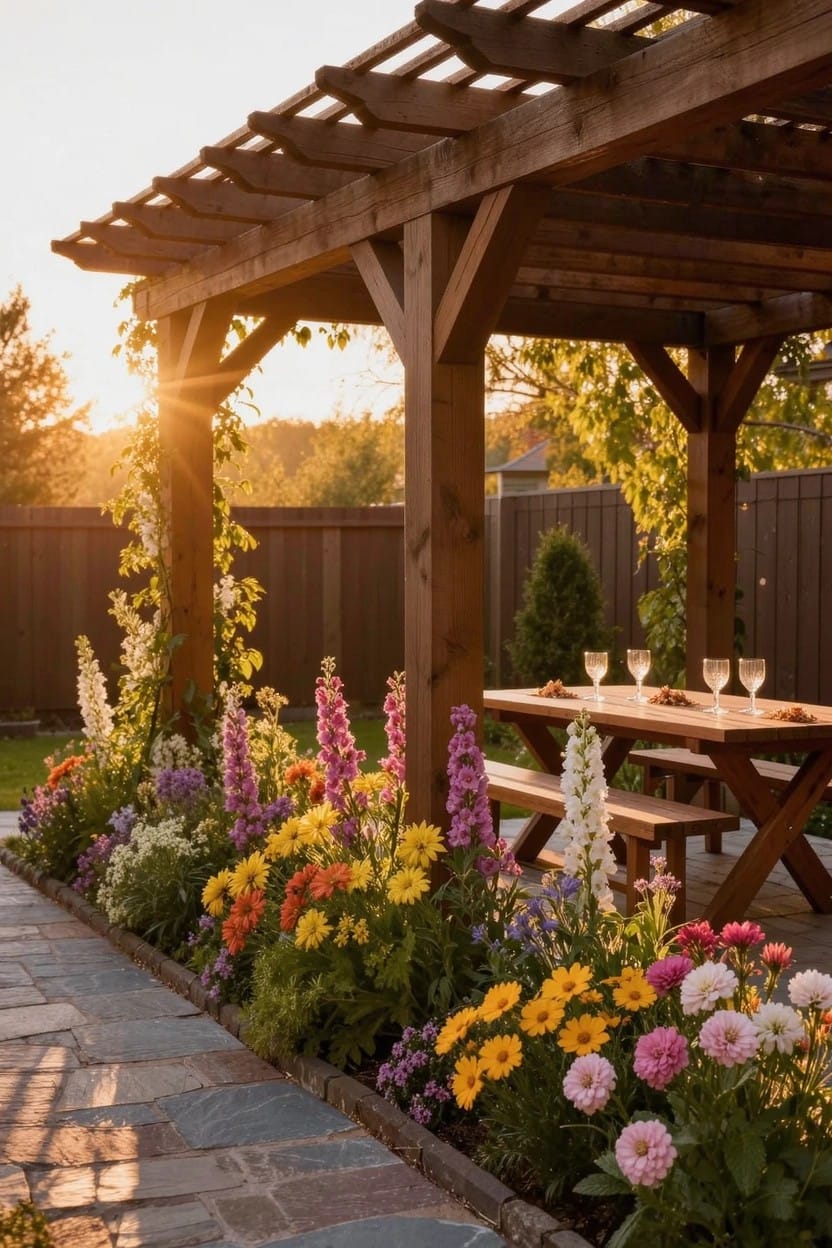
A wooden pergola over a simple picnic table makes a good spot for outdoor meals. What stands out here are the tall flower beds planted right along the edges. Colors from pink foxgloves to yellow daisies catch the full sun and keep blooming through the season. It turns a basic structure into something lively without much fuss.
This setup fits average backyards that get sun most of the day. Line the borders with perennials that handle heat well, like delphiniums or tall phlox. Keep the plants back from the table so you have room to move. Watch that the pergola wood matches your fence or house siding.
Balcony Rail Planters
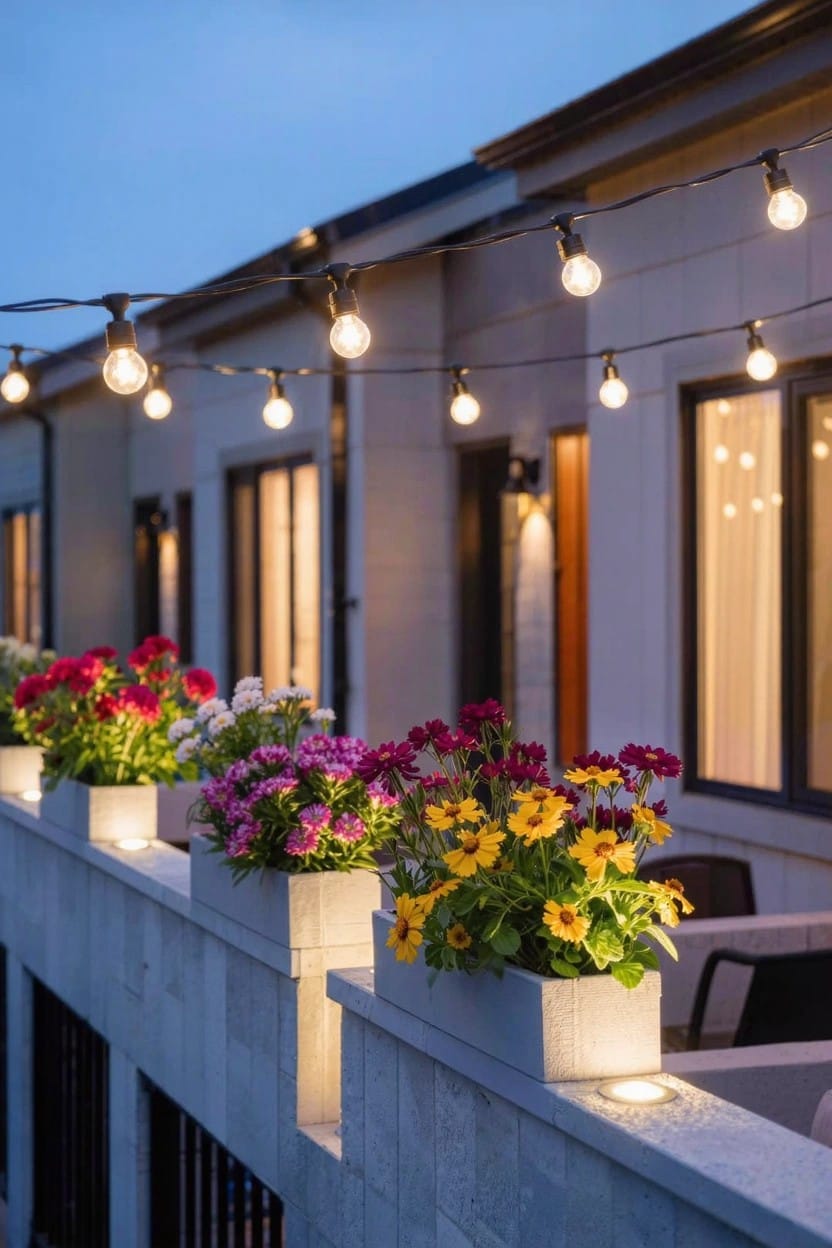
One easy landscaping move for balconies is lining the rail with square planters full of full-sun flowers. These setups add bright color right where you see it from the yard or street below. Daisies and similar bloomers hold up well in sun all season. They fit plain modern railings without much fuss.
Put them on upper-level balconies that get direct light most of the day. They suit homes with white or light siding best. Watch for wind up there. Secure the planters tight and choose tough varieties that won’t wilt.
Tiered Stone Flower Beds for Slopes
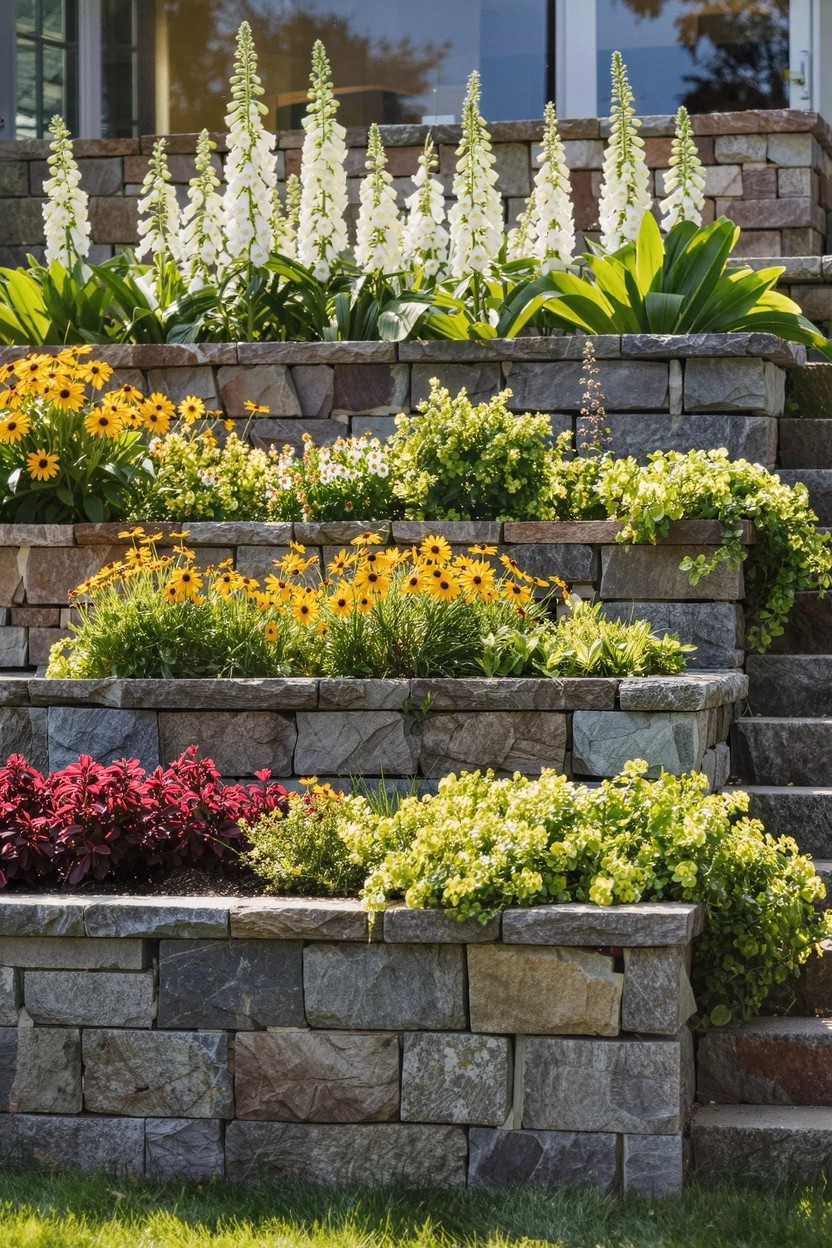
Slopes can be tricky for planting. But these tiered stone beds turn that problem into a real plus. You get level planting spots stacked up, full of color from flowers that love full sun. Tall white spires up top mix with yellow daisies and red leaves below. It keeps soil in place and lets plants spread without washing out.
Put this setup on any sunny hillside near the house. Stone walls hold up well and match most homes, from cottages to ranch styles. Pick tough perennials like black-eyed Susans or foxgloves that bloom for months. Just make sure good drainage so roots don’t drown after rain. Easy to build if you go slow.
Large Steel Planters at the Front Entry
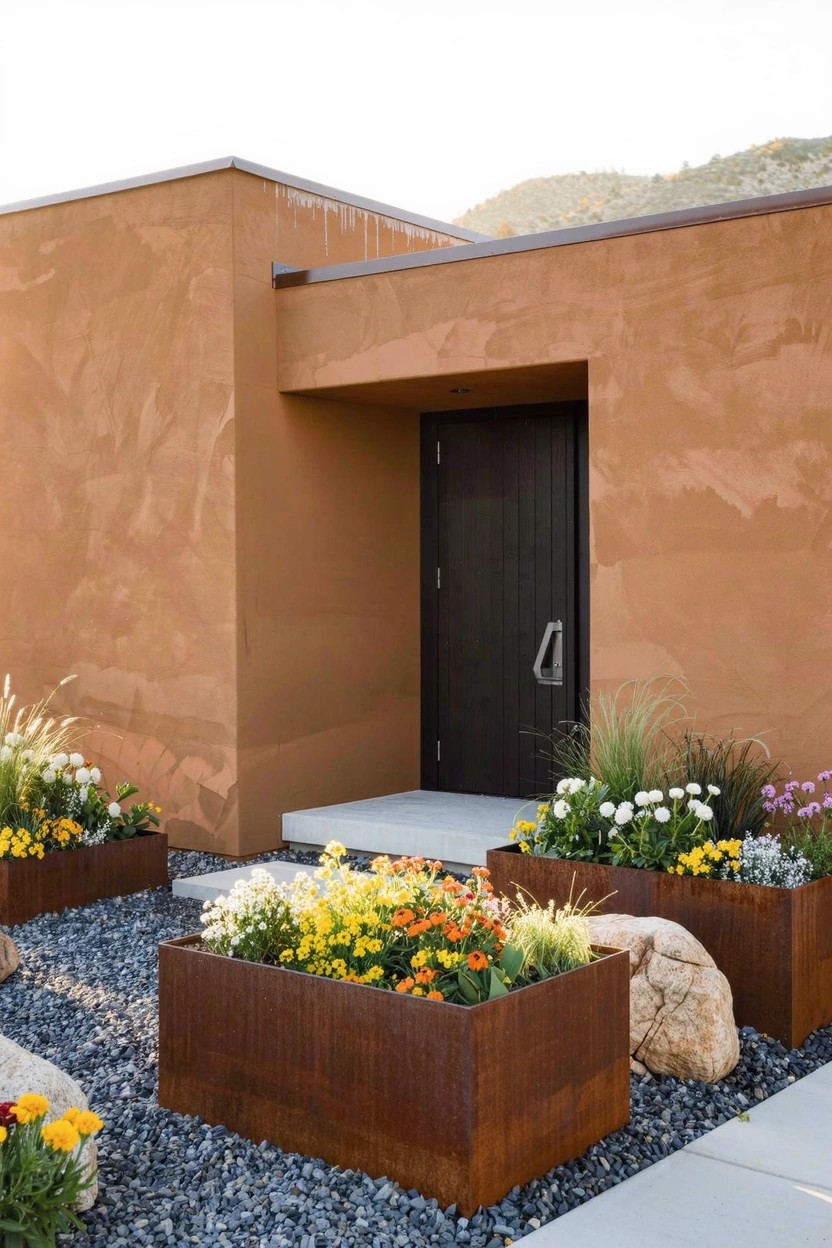
These big corten steel planters parked right next to the entry door make a simple flower bed setup that packs in color. You see yellow daisies, orange marigolds, and white blooms spilling over the edges, all against a gravel base. The rusty metal picks up the warm tones in the house walls without much fuss.
Put them in full sun spots where grass struggles. They suit modern houses or drier yards, holding heat-loving plants that bloom for months. Go for deep boxes at least two feet wide to give roots room. One thing. The rust will spread over time, so embrace it or seal the inside.
Frequently Asked Questions
Q: How do I mix plants for color all season long?
A: Grab early bloomers like salvia, mid-season stars such as coneflowers, and late ones like asters from the ideas list. Plant them together in drifts for a natural flow. That way, something always pops.
Q: My yard soil drains poorly. What now?
A: Dig in compost or aged manure to a foot deep before planting. It opens up the ground so roots breathe and water flows. These sun lovers take off fast after that boost.
Q: How much water do these beds really need?
A: Soak new plants deeply twice a week for the first month. Cut back once they root in, and rain covers the rest. Stick your finger in the soil, and water only if it’s dry down an inch.
Q: Deadheading sounds like work. Do I have to?
A: Pinch off spent blooms on petunias and such to spark more flowers. Skip it on tough perennials like black-eyed Susans, they rebloom anyway. Quick snip keeps the bed fresh.
