

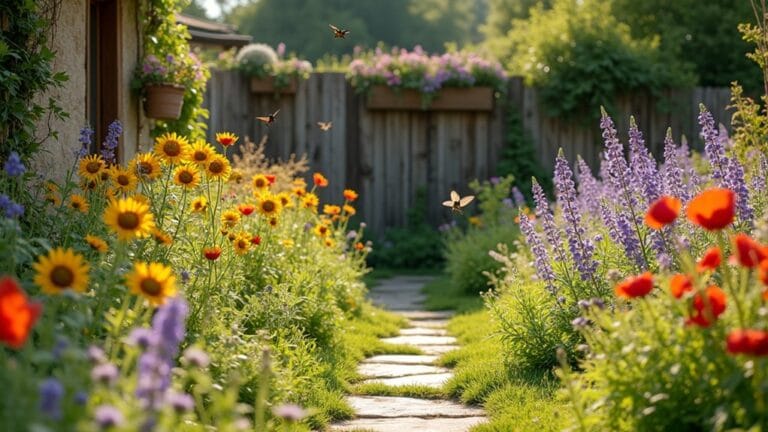
Hey lovely readers! 🌼 Are you looking to transform your garden into a beautiful haven that also supports our precious pollinators? Wildflower landscaping is a fantastic way to do just that. By incorporating native species, you can create a garden that’s not only stunning but also beneficial for the environment. Let’s explore some creative wildflower landscaping ideas that will make your outdoor space both gorgeous and eco-friendly.
Choose Native Wildflower Species
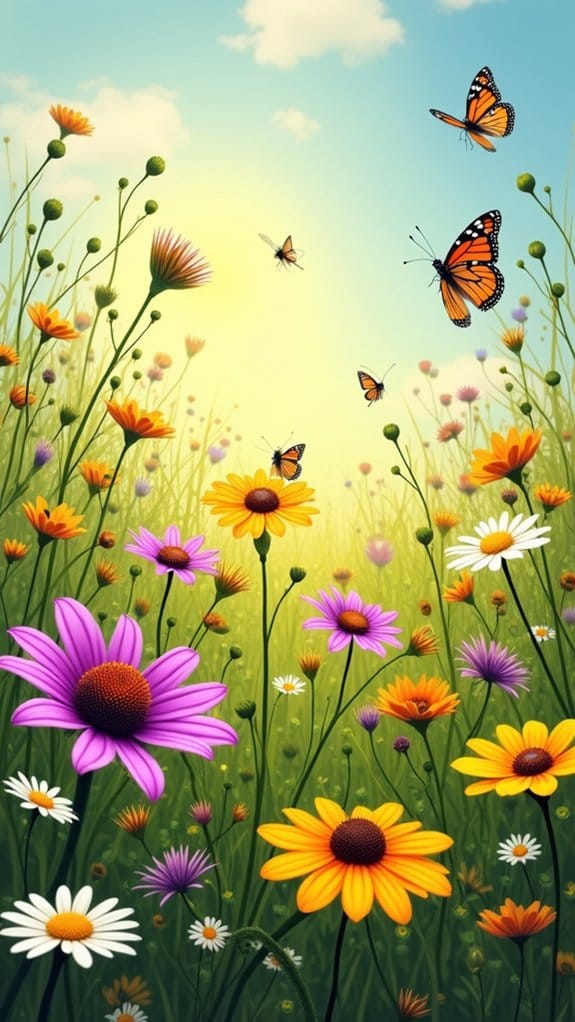
When I plan a wildflower garden, I always start by choosing native species because they thrive in the local environment.
Native plants not only require less maintenance, but they also attract local pollinators like bees and butterflies.
Create a Wildflower Meadow
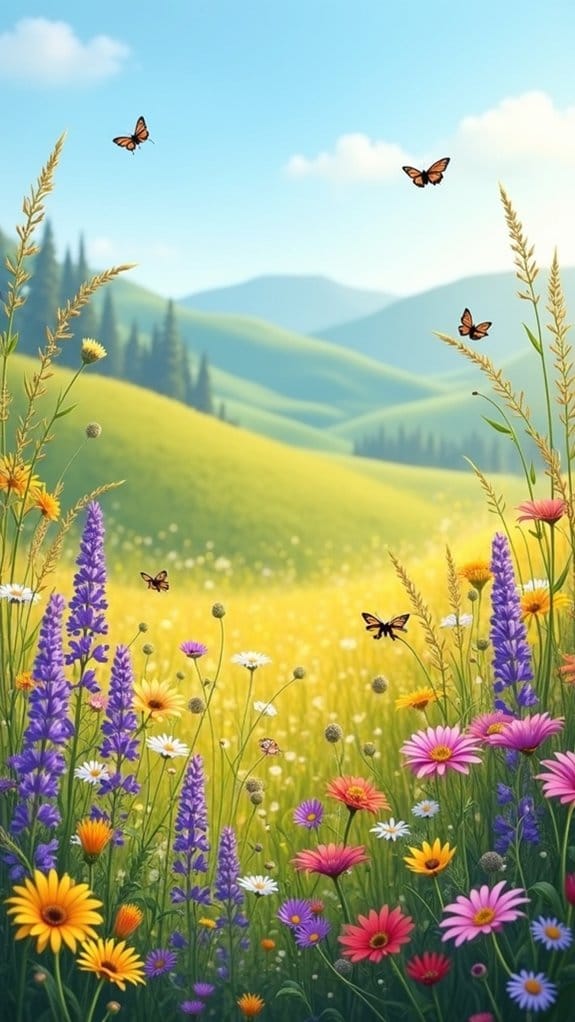
Creating a wildflower meadow is one of the most rewarding projects I’ve undertaken in my garden.
I started by clearing a small area, removing any weeds or grass. Then, I scattered a mix of native wildflower seeds, ensuring to follow the recommended planting depth.
Regular watering helped them establish, and soon, vibrant blooms filled my space, attracting bees and butterflies.
It’s truly magical!
Incorporate Perennial Flowers
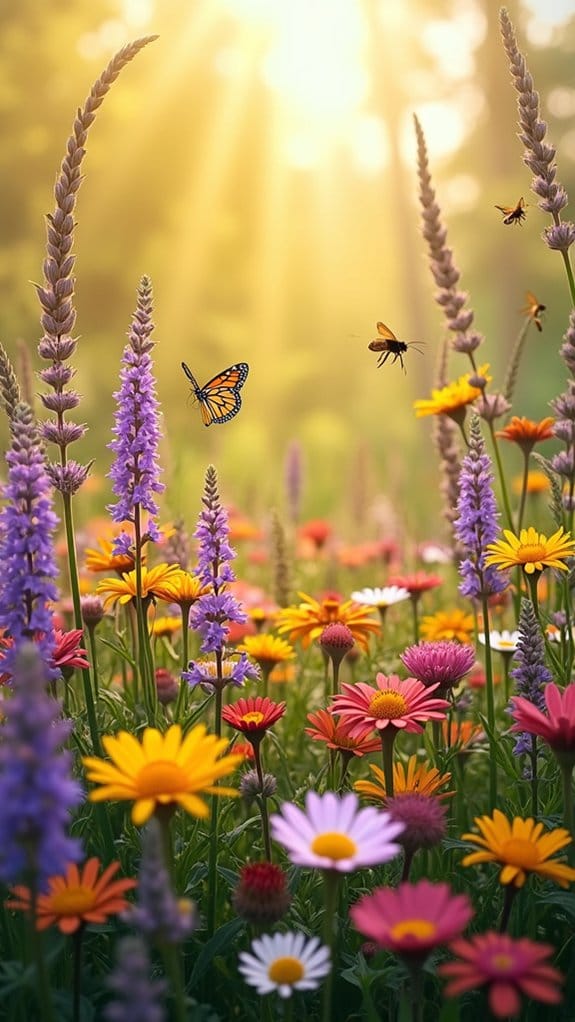
Incorporating perennial flowers into my wildflower landscape not only adds structure but also guarantees a burst of color year after year.
I love choosing varieties like coneflowers, black-eyed Susans, and bee balm, which attract pollinators while thriving in my garden. Their resilience means less upkeep for me, and I’m always delighted when butterflies and bees visit my vibrant blooms.
Design a Pollinator Garden Bed
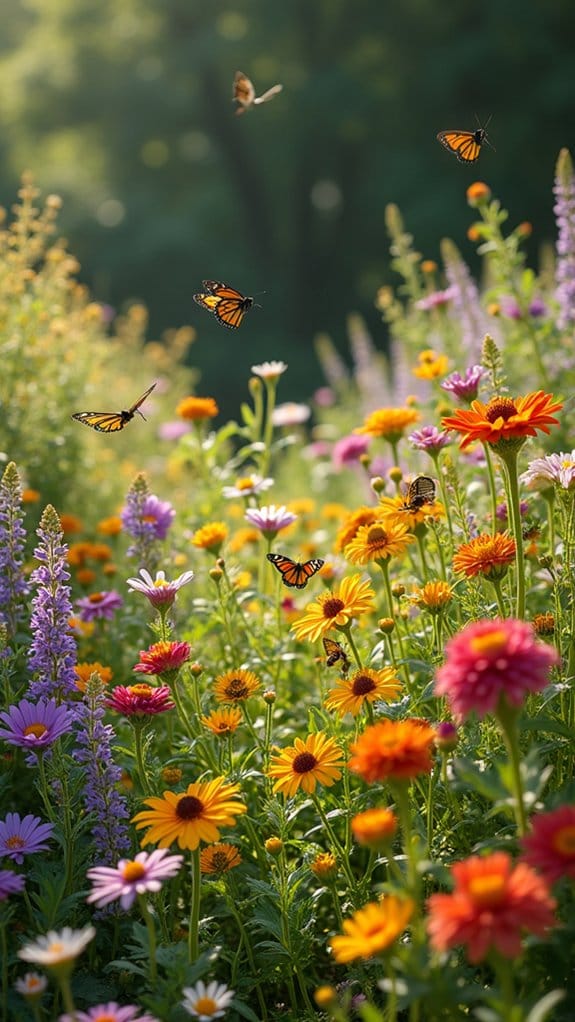
Building on the vibrant colors of perennial flowers, designing a pollinator garden bed transforms my outdoor space into a buzzing sanctuary.
I choose native plants that bloom at different times, ensuring food sources all season long.
Grouping flowers in clusters invites bees, butterflies, and hummingbirds to visit.
Clustered flowers create a vibrant invitation for bees, butterflies, and hummingbirds, enhancing the beauty and vitality of the garden.
Adding a few rocks and logs creates shelter, making my garden a haven for these essential pollinators.
Add a Butterfly Garden
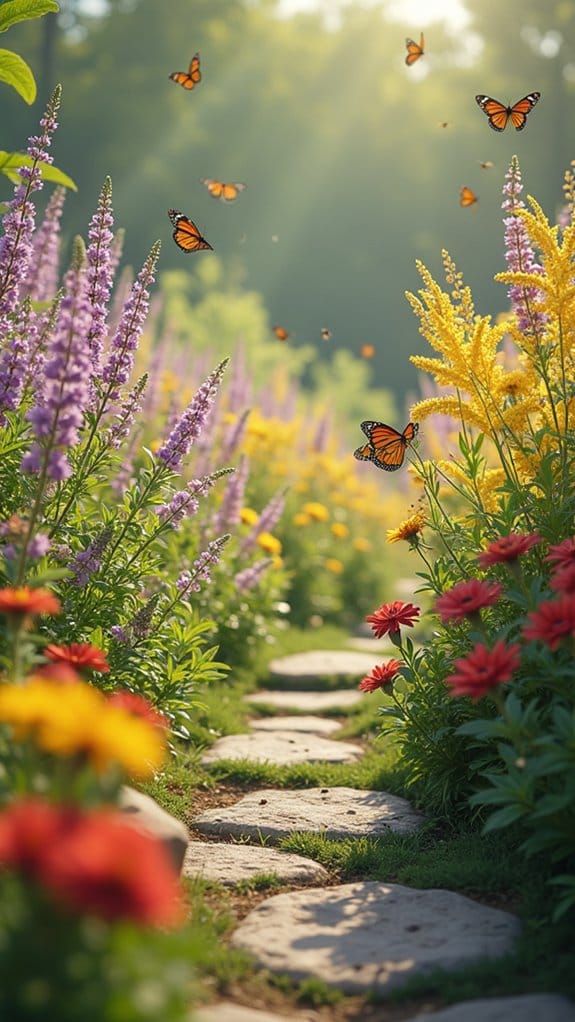
Adding a butterfly garden can transform any corner of my yard into a vibrant haven for these delicate creatures.
I love choosing nectar-rich flowers like coneflowers and milkweed, which attract various butterfly species.
It’s essential to include host plants for caterpillars, ensuring their life cycle thrives.
With a sunny spot and some water sources, I’ve created a beautiful butterfly sanctuary right at home.
Use a Variety of Flower Shapes and Sizes
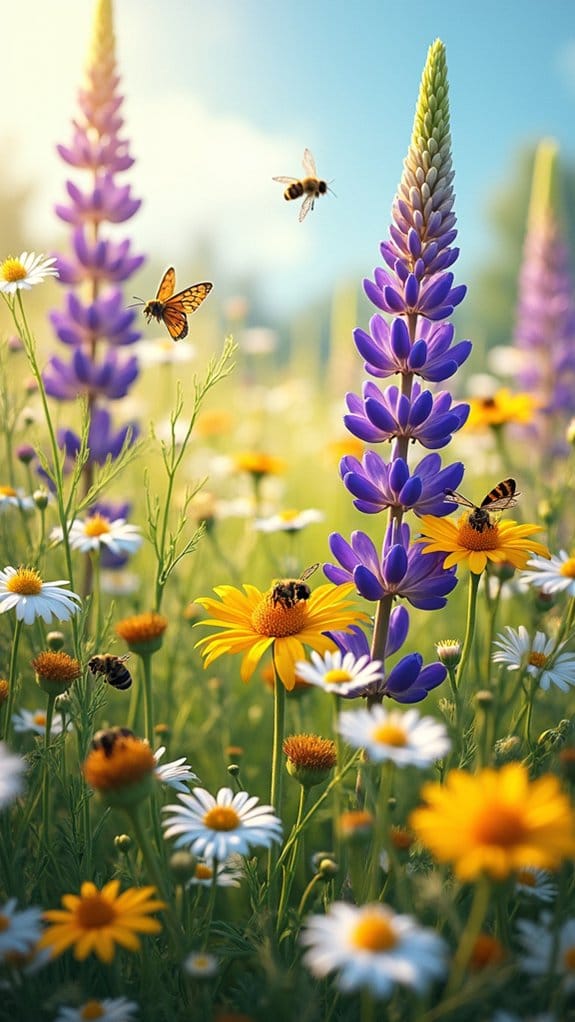
A diverse array of flower shapes and sizes can make your wildflower garden truly enchanting.
I love mixing tall, spiky blooms with short, round ones to create visual interest. Varying the shapes attracts different pollinators, like butterflies and bees, ensuring a lively ecosystem.
Plus, the contrasting sizes add depth and texture, making every corner of the garden a delightful discovery.
Incorporate Grasses and Ground Covers
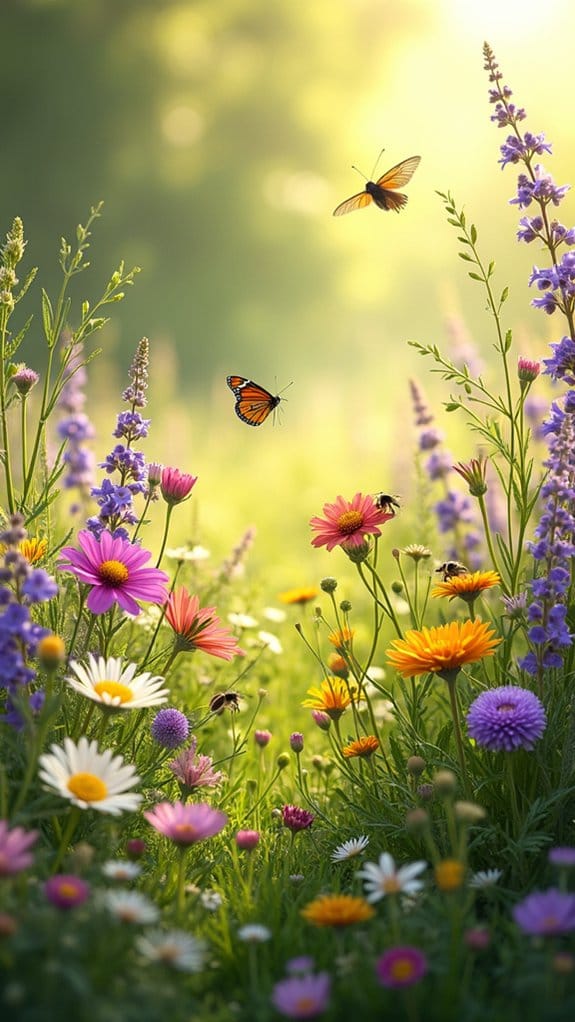
While many people focus solely on flowers when creating a wildflower garden, incorporating grasses and ground covers can greatly enhance the overall design.
I’ve found that these elements provide texture and structure, supporting the vibrant blooms. Plus, they help retain moisture and reduce weeds.
Implement Layered Planting Techniques
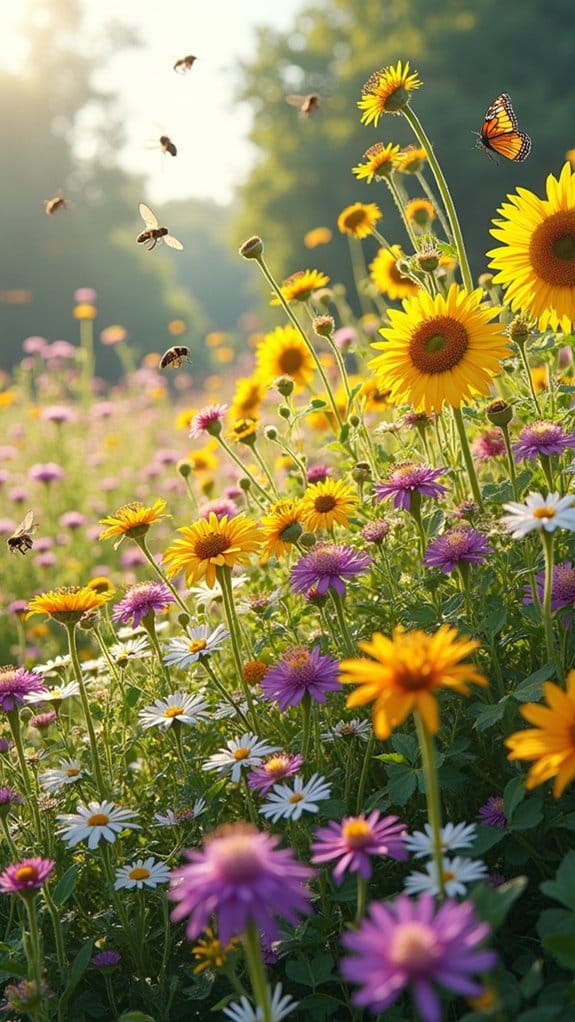
Incorporating grasses and ground covers lays a strong foundation for your wildflower garden, but implementing layered planting techniques takes it to the next level.
By arranging plants in layers—tall flowers in the back, mid-height in the middle, and low-growing varieties up front—you create visual interest and diverse habitats.
This approach not only looks stunning but also supports a variety of pollinators.
Create a Colorful Pollinator Pathway
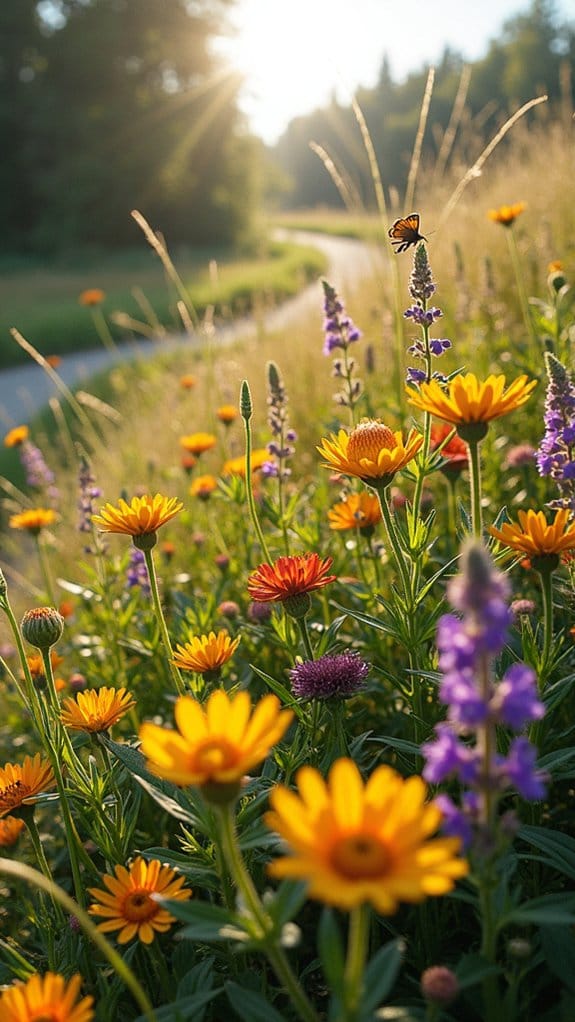
Creating a colorful pollinator pathway not only enhances the beauty of your garden but also plays an essential role in supporting local wildlife.
I love selecting a mix of native wildflowers in vibrant hues, like purple coneflowers and yellow black-eyed Susans. This diversity attracts bees, butterflies, and other beneficial insects, creating a lively ecosystem right in my backyard.
It’s truly rewarding to watch nature thrive!
Include Scented Flowers
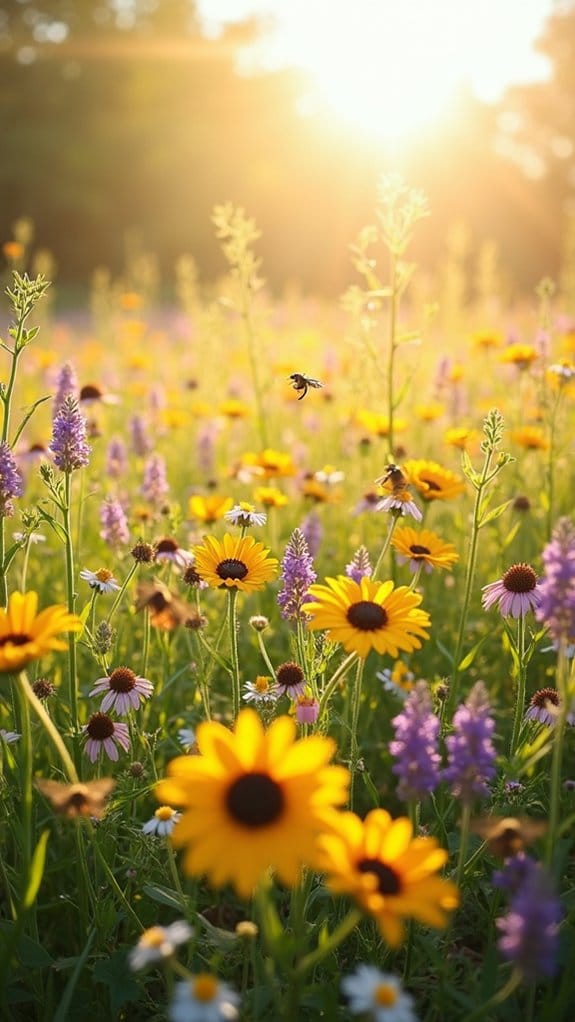
Enhancing your garden with scented flowers adds another layer of sensory delight alongside your vibrant pollinator pathway.
I love incorporating blooms like lavender, bee balm, and jasmine, which not only attract pollinators but also fill the air with their enchanting fragrances.
The sweet aromas invite me to linger, making my garden a perfect retreat for both me and the buzzing visitors.
Provide Water Sources for Pollinators
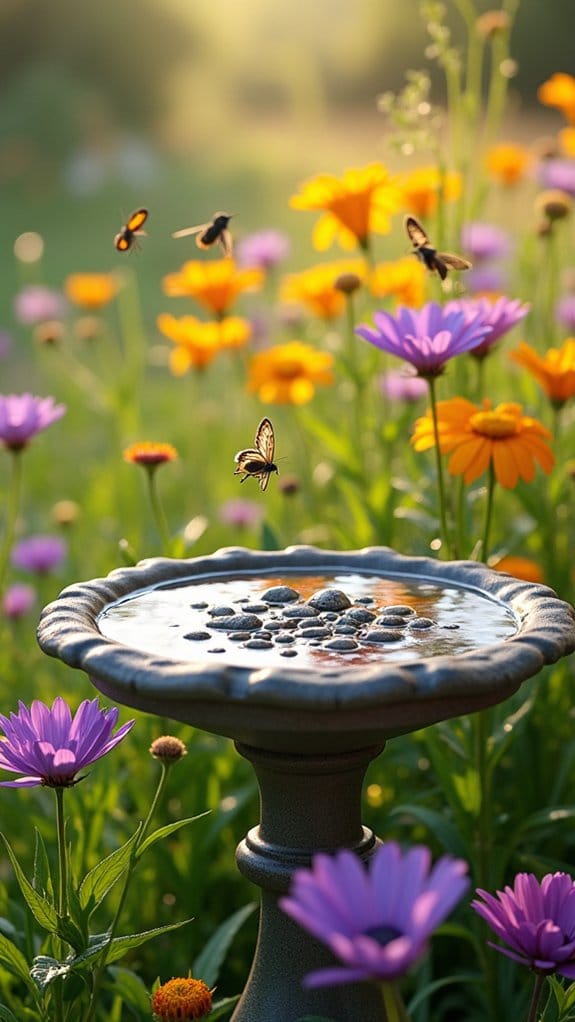
Providing water sources for pollinators is essential for a thriving garden ecosystem.
I’ve found that shallow dishes filled with pebbles and water work wonders. Just a small amount of water is enough for bees, butterflies, and other pollinators to hydrate.
Be sure to refresh the water regularly to keep it clean and inviting. Your efforts will attract more friendly visitors to your garden!
Use Natural Mulch to Retain Moisture
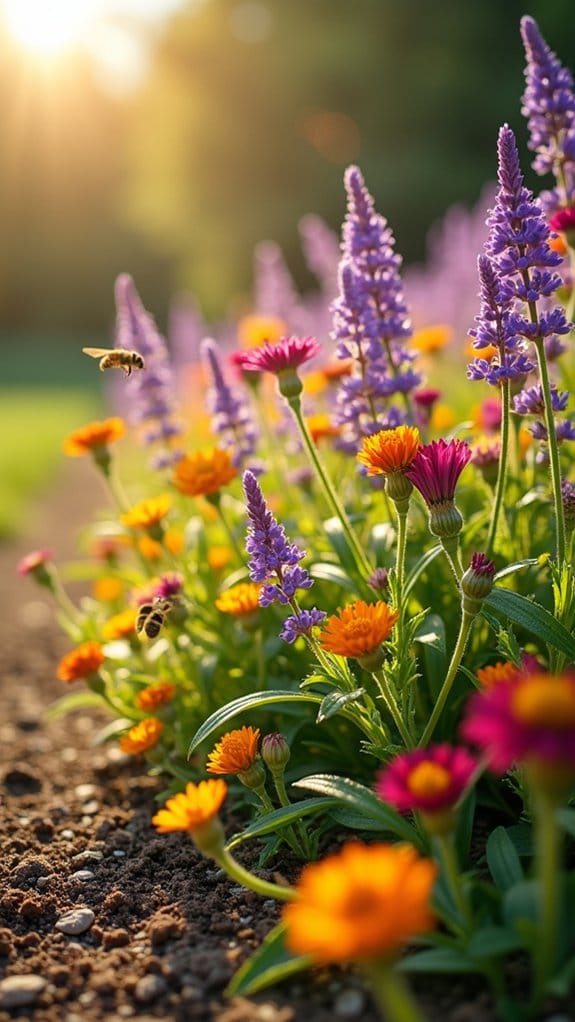
When I started using natural mulch in my garden, I quickly noticed how much it helped retain moisture in the soil.
Using natural mulch in my garden significantly improved soil moisture retention and overall plant health.
It not only keeps the roots hydrated but also suppresses weeds, allowing my wildflowers to thrive.
Plus, organic materials like wood chips or straw break down over time, enriching the soil.
It’s a simple yet effective way to support my garden’s health.
Create Shelter With Native Shrubs
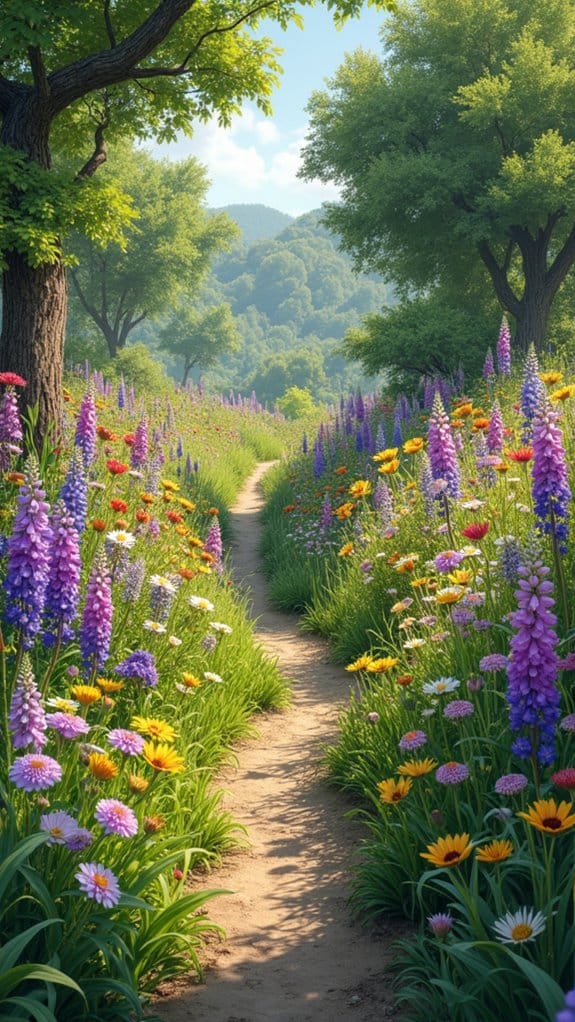
Creating a welcoming habitat for wildlife is easier than you might think, especially when you incorporate native shrubs into your landscaping.
These plants provide essential shelter and food for birds, insects, and small mammals. I love choosing varieties that thrive in my region, ensuring they support local ecosystems.
Plus, they add beauty and texture to my garden while promoting biodiversity.
Add Vertical Elements With Climbing Plants
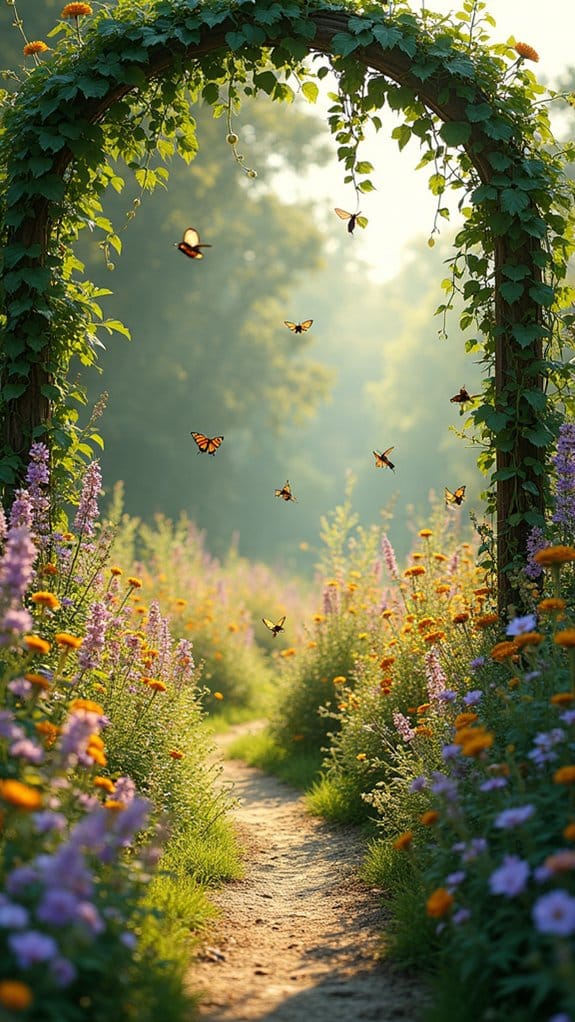
After establishing a cozy shelter with native shrubs, I find that adding vertical elements with climbing plants really enhances the garden’s appeal.
Vining plants like clematis or sweet peas create stunning focal points and draw in pollinators.
I love using trellises or arbors, which not only support these plants but also add height and dimension, making my outdoor space feel more vibrant and alive.
Design a Wildflower Border
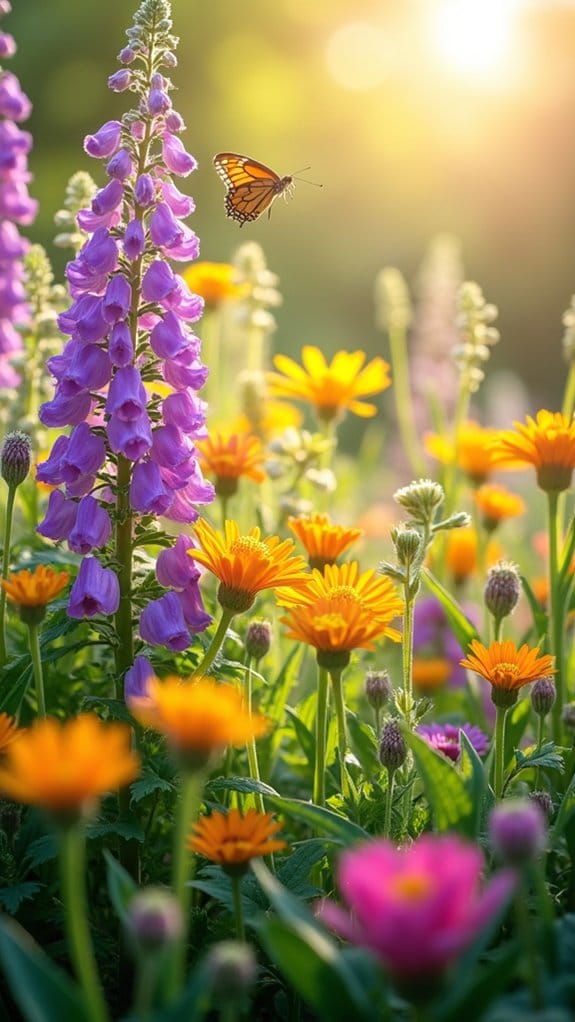
While I love the idea of a wildflower border, it’s important to choose the right mix of species to create a vibrant and diverse display.
I often include native flowers like coneflowers, black-eyed Susans, and wild lupine.
Planting in clusters, rather than single specimens, enhances visual impact.
Don’t forget to reflect on bloom times for continuous color throughout the growing season.
Install Bee Hotels and Insect Houses
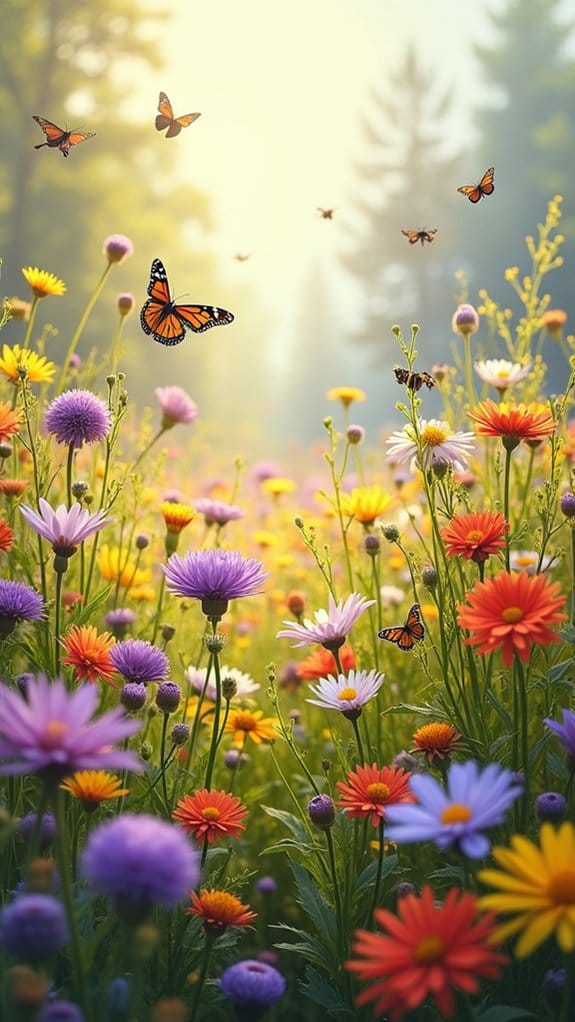
To truly enhance a wildflower garden, installing bee hotels and insect houses can make a significant difference.
I’ve found that these structures provide essential habitats for pollinators like bees and butterflies.
Placing them in sunny, sheltered spots encourages these helpful insects to thrive.
Utilize Edible Wildflowers
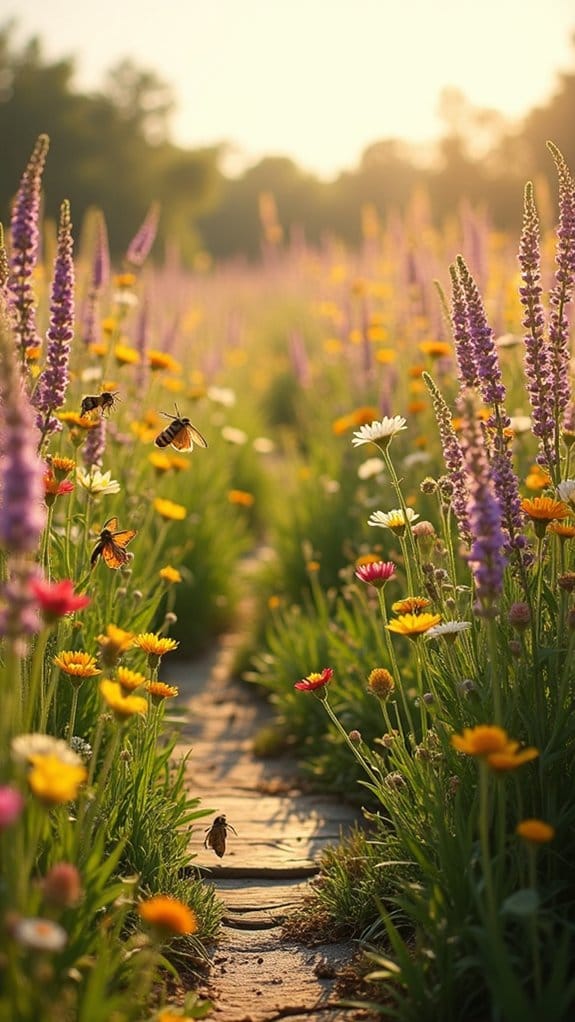
Incorporating edible wildflowers into your garden not only adds vibrant color but also provides unique flavors for your culinary creations.
I love using nasturtiums in salads for a peppery kick and borage flowers for a rejuvenating cucumber taste. They’re easy to grow and attract pollinators, too.
Encourage Self-Seeding
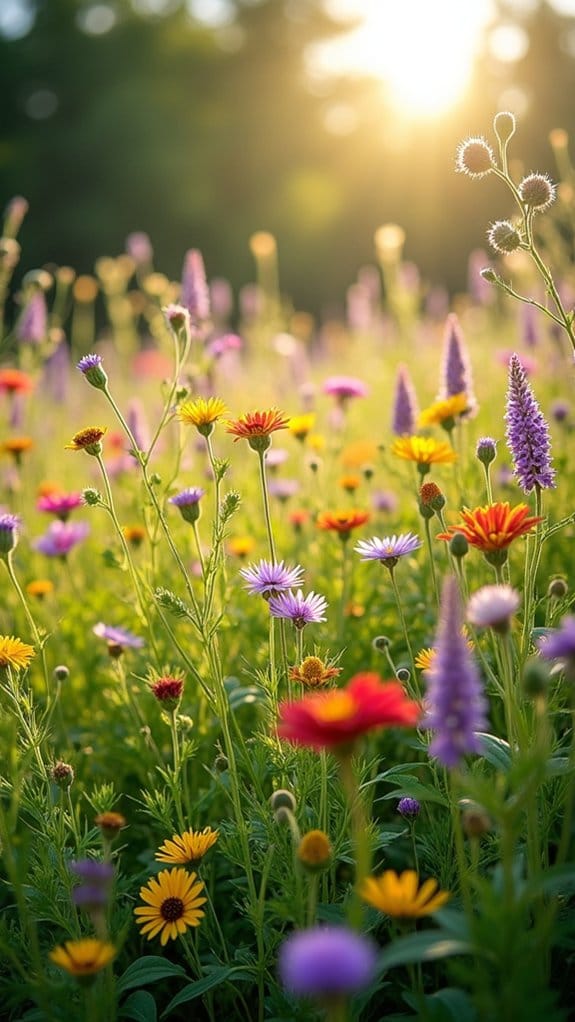
After enjoying the vibrant colors and flavors of edible wildflowers, I find it rewarding to let nature take the reins by encouraging self-seeding.
I simply allow my wildflowers to drop their seeds in the garden, creating an ever-evolving landscape. This natural method not only saves me time and effort but also attracts pollinators, enhancing the beauty and biodiversity of my space.
Plan for Year-Round Blooms
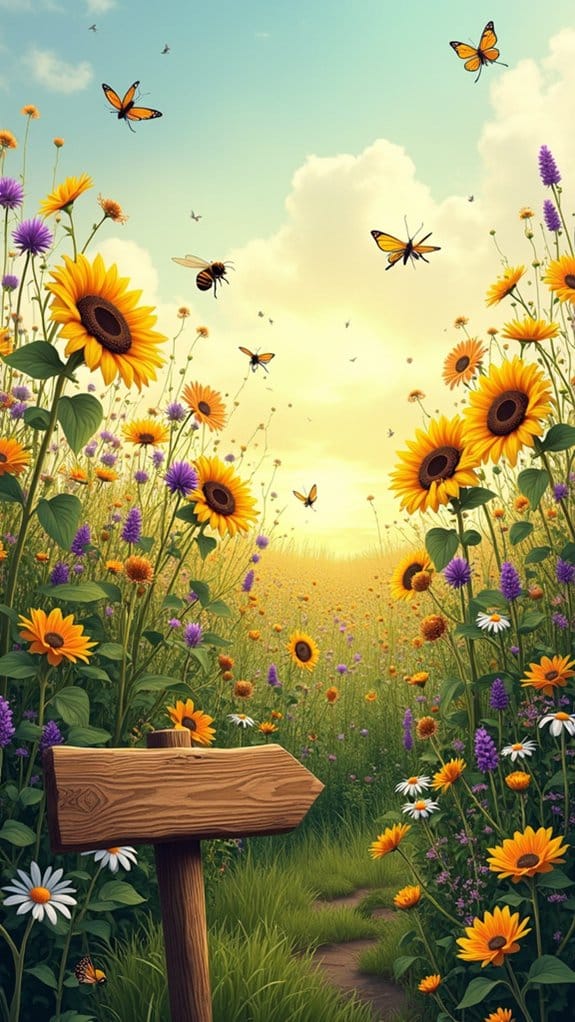
While planning a wildflower garden, I always keep in mind the importance of having blooms throughout the year.
I choose a mix of early, mid, and late-blooming flowers to create continuous color and attract pollinators.
Create a Rustic Wildflower Arrangement
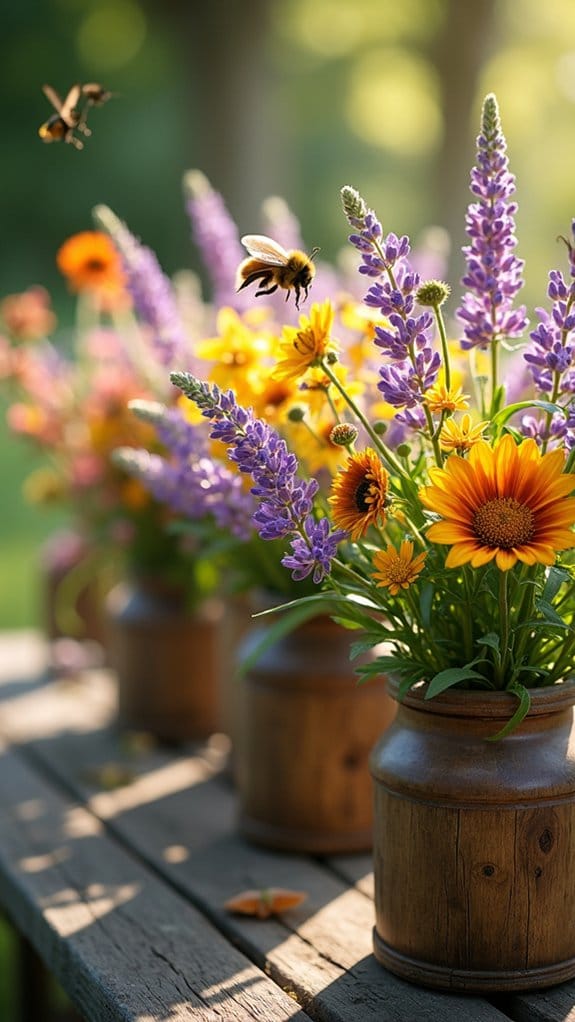
Creating a rustic wildflower arrangement brings the beauty of nature indoors and captures the charm of a meadow.
I love gathering an assortment of wildflowers like daisies, cornflowers, and lavender.
Using a simple mason jar or wicker basket adds to the rustic feel.
Just mix different heights and colors, and you’ll have a stunning centerpiece that brightens any room and brings a touch of the outdoors inside.
Educate Others About Pollinator Conservation
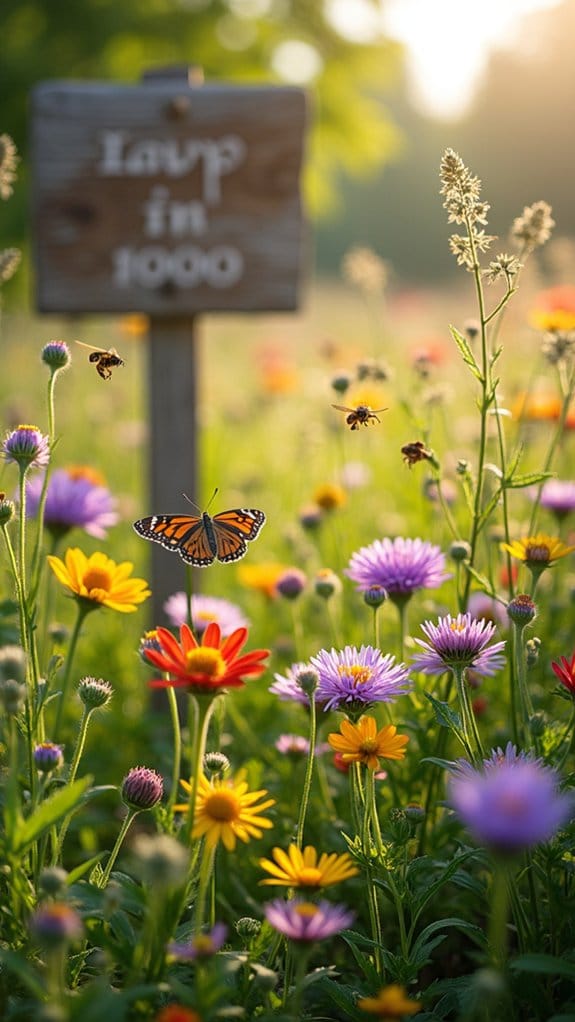
As we enjoy the beauty of wildflowers in our gardens, it’s crucial to remember the role pollinators play in sustaining these vibrant ecosystems.
I encourage you to share what you learn about pollinator conservation with friends and family. Host workshops, create informative flyers, or engage on social media.
Together, we can spread awareness and inspire action to protect these indispensable creatures.
