

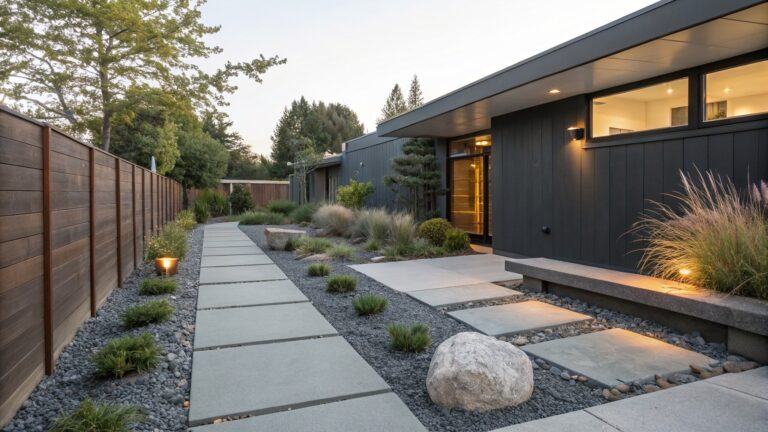
I’ve started using gravel in my side yard flower beds to cut down on weeding time, and it really lets the layout breathe without all the fuss of traditional mulches.
The clean edges and simple planting structure make pathways pop right away, guiding you through the space in a way that feels intentional from day one.
Gravel holds up well over seasons too, shifting just enough to settle around roots without turning into a muddy mess.
I notice how these minimalist beds draw attention to the plants themselves first, rather than competing ground covers.
Some of the gravel patterns here would adapt nicely to sloped spots in real yards, worth sketching out before you dig.
Low-Maintenance Gravel Beds Along a Stone Path
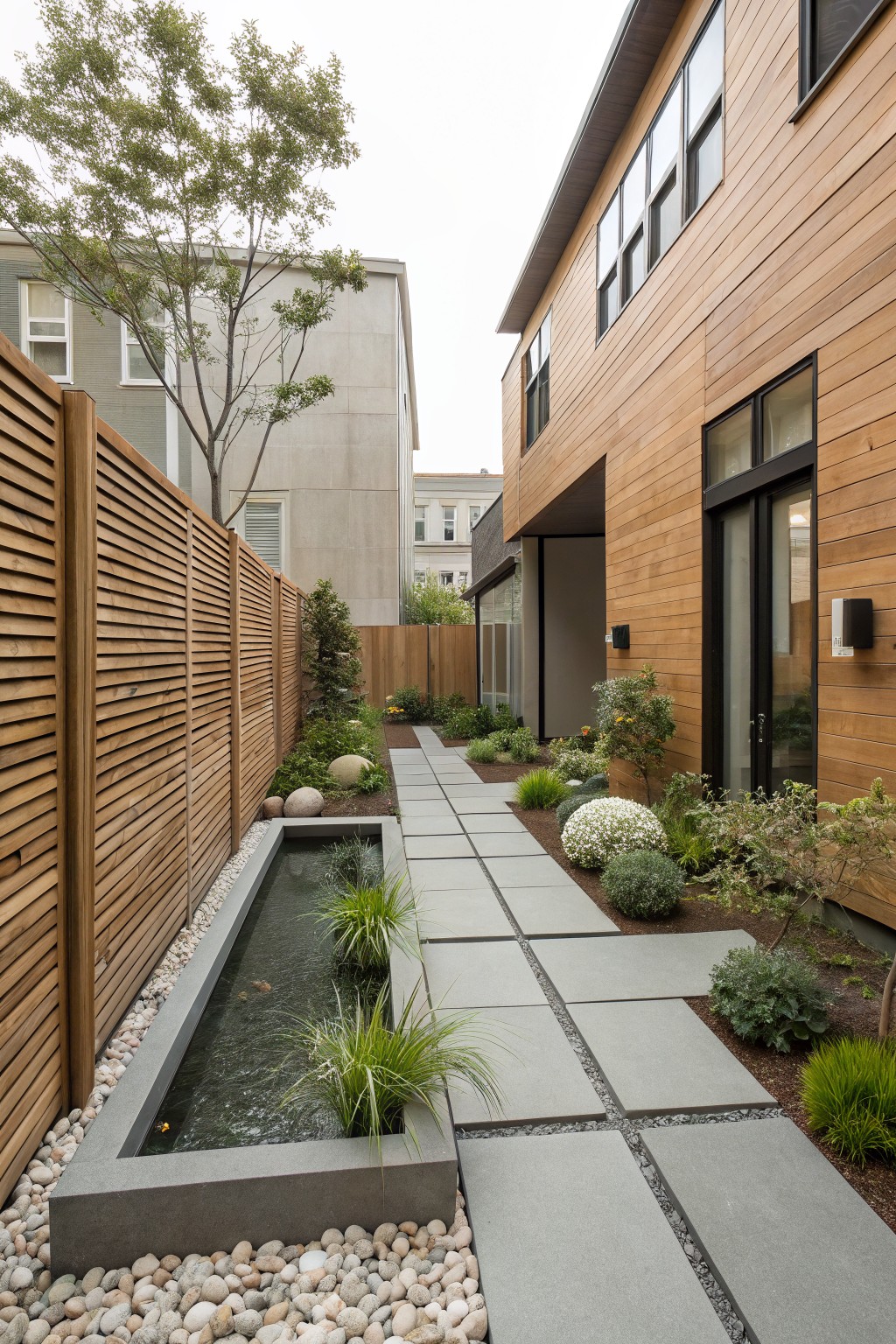
Gravel works great here in narrow planting beds right next to the path. It’s mulched around low grasses, small shrubs, and a couple boulders, keeping everything tidy without much weeding or watering. That slim water channel running alongside adds a nice reflective touch but stays simple since it’s built right into the layout.
This kind of setup fits side yards or tight spots between houses. Pair it with big stone pavers like these for a clean walk. Stick to tough plants that don’t need fussing, and it holds up year round.
Gravel Fire Pit Patio
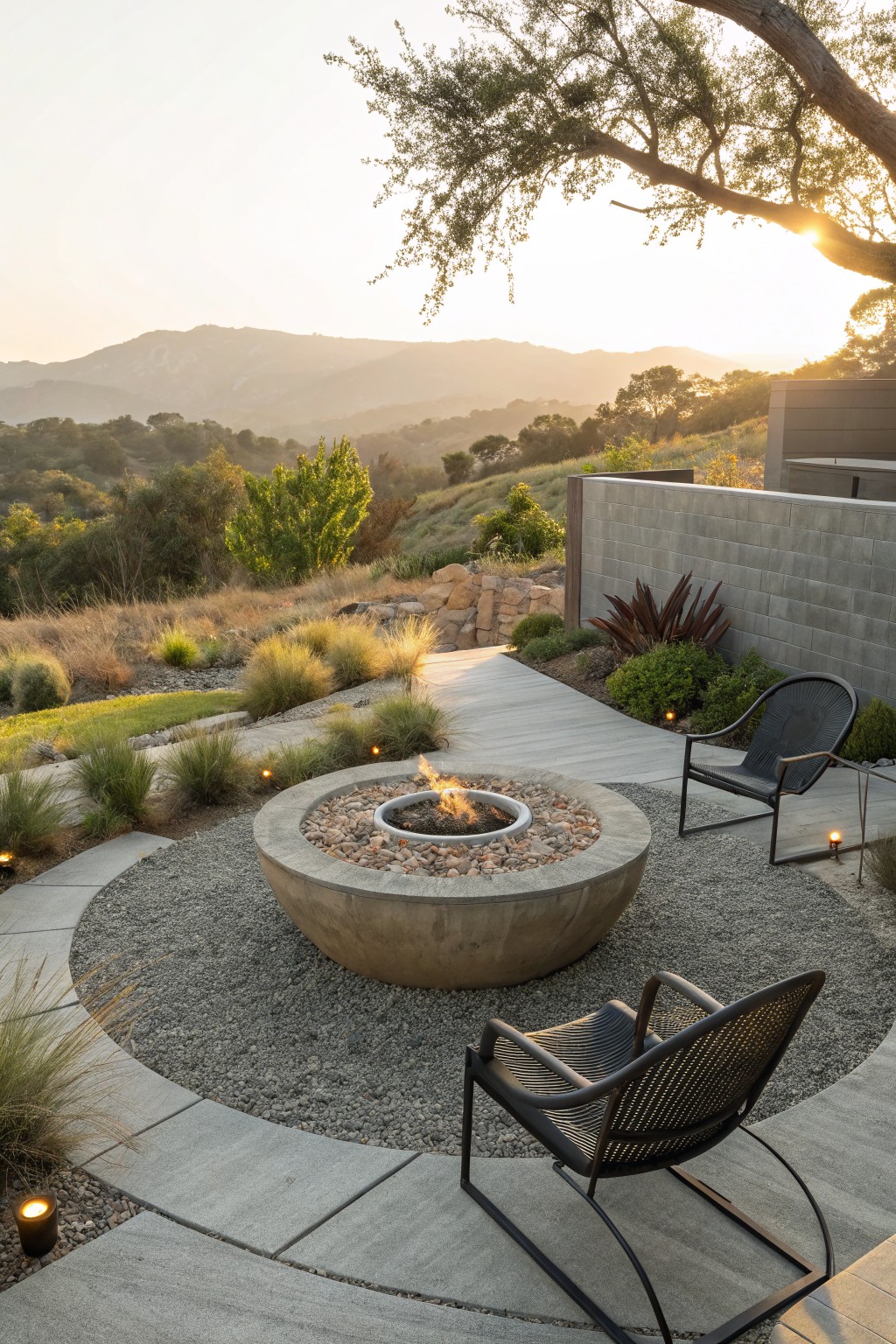
This setup uses a big concrete fire pit right in the middle of a gravel circle. It keeps things simple and open for sitting around after dinner. The gravel handles the mess from the fire without much cleanup. Grasses around the edge add some green without needing constant watering or trimming.
Put this in a backyard corner with a view or near the house for easy access. It works great on sloped lots where grass is tough to grow. Go for drought-tolerant plants like those tall grasses to stay low-maintenance. Just make sure the gravel is at least 4 inches deep so it doesn’t shift underfoot.
Narrow Gravel Beds Along Stone Paths
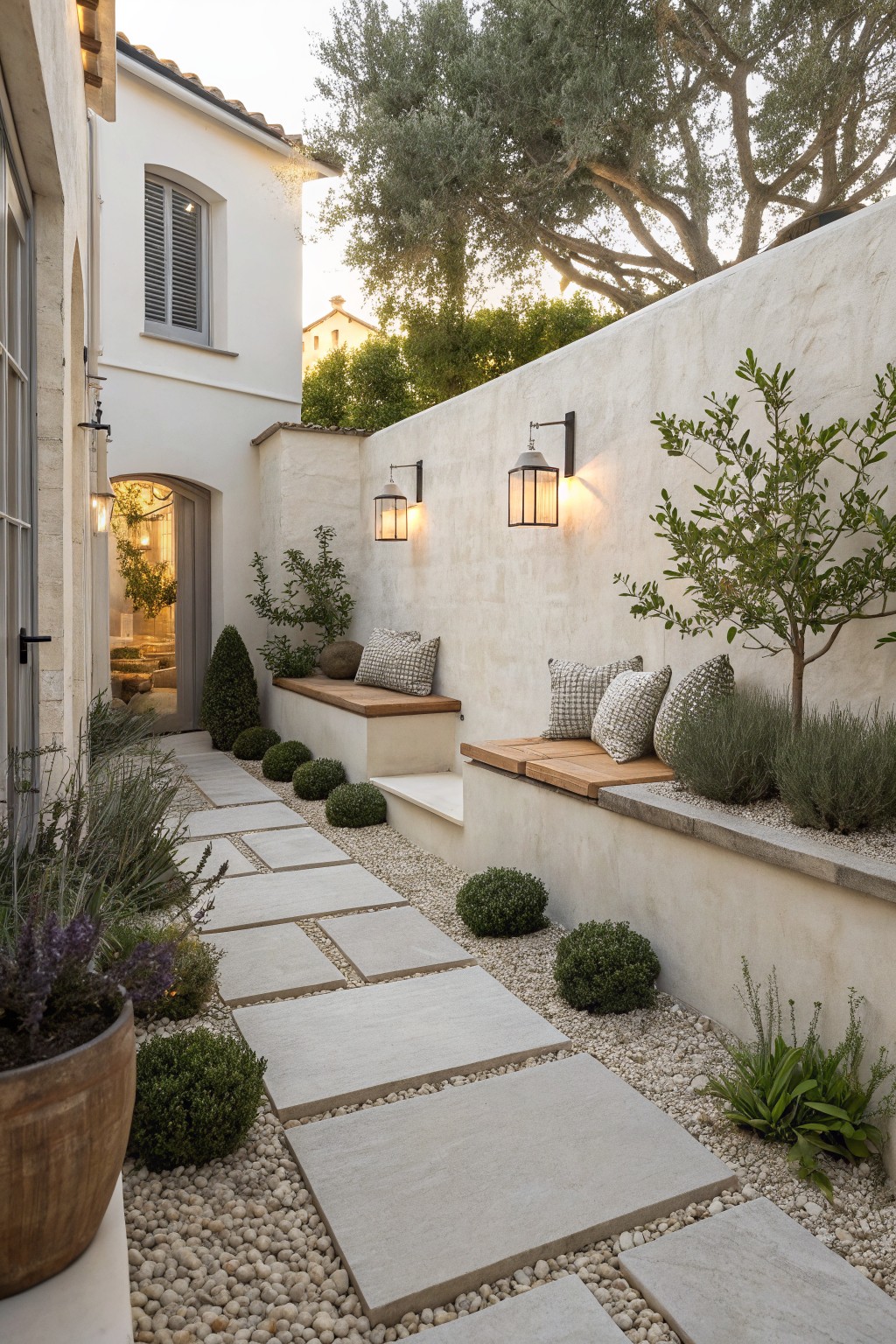
One straightforward way to handle a walkway without much upkeep is setting large stone pavers into gravel beds. You see it here with those wide gray slabs spaced out just right, letting the white gravel fill in between. Low boxwoods and lavender tuck into the edges, keeping everything neat without needing constant trimming or watering. It makes the path feel intentional, not fussy.
This setup shines in tight side yards or courtyards where you want access without mowing or edging every week. It fits homes with a bit of Mediterranean vibe, or anywhere dryish dirt makes grass a hassle. Just pick gravel that drains well, and plants that handle neglect. Skip anything tall that might flop over the stones.
Poolside Paths with Gravel and Pavers
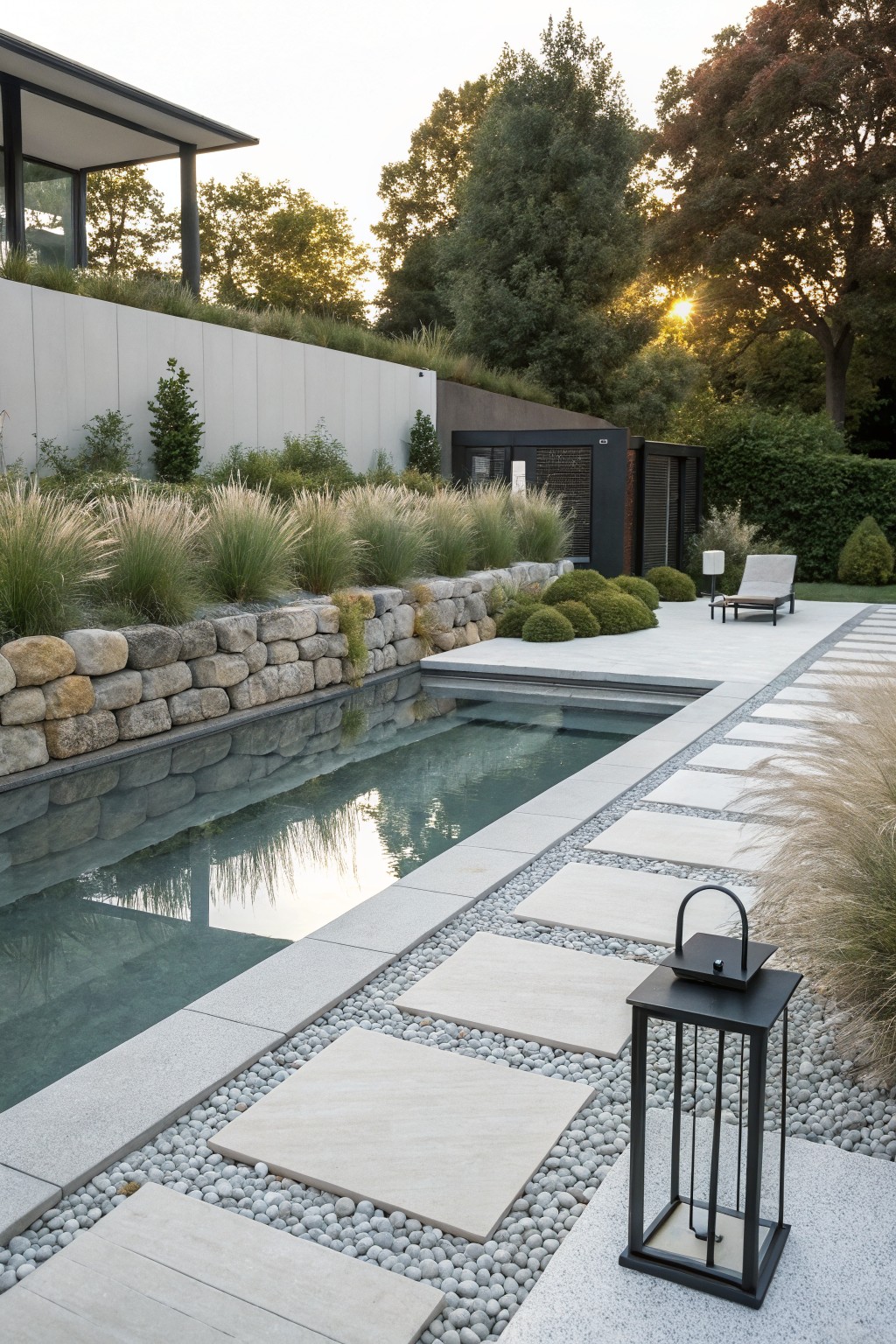
Large square pavers laid in beds of white gravel make a simple path right up to the pool edge. The gravel fills the gaps nicely and lets water drain fast, so you don’t get puddles after rain. Paired with tall grasses along the side, it keeps things looking neat without much weeding.
This setup works great for sloped yards where you need to step down to the water. Use it around modern homes with clean lines, or even older ones getting a refresh. Just pick pavers big enough to walk on comfortably, and go with smooth gravel that doesn’t shift underfoot. Skip it if your area’s too shady, since gravel shows dirt more there.
Stone-Edged Gravel Beds
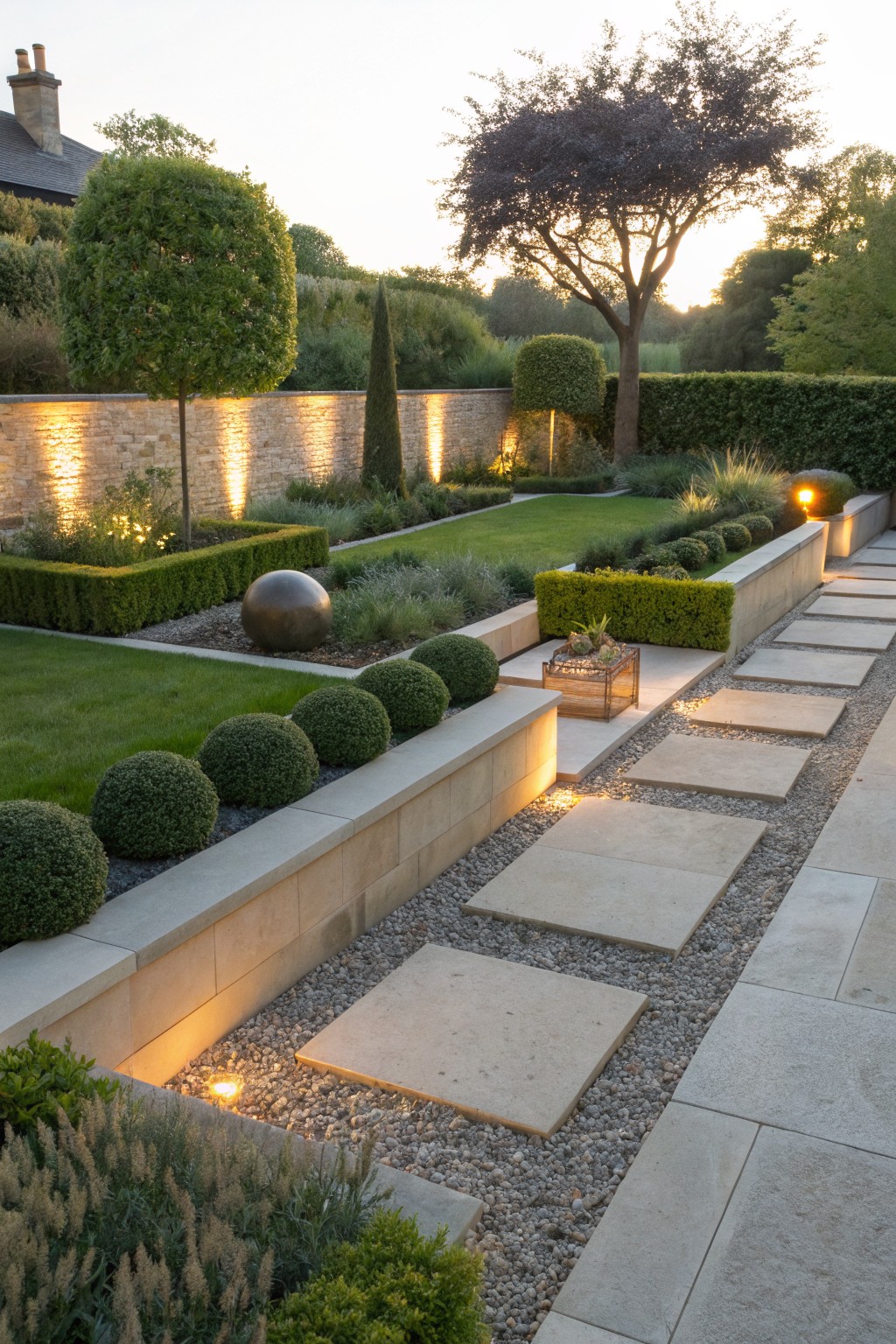
Gravel beds held in by low stone walls make for simple landscaping that stays tidy with little effort. You see it here with round boxwoods and soft grasses tucked into the gravel mulch. The stone keeps everything in line, water drains right through to avoid mud, and weeds have a hard time taking hold. It’s a clean look that fits right with a modern yard.
Run a path of flat stone steps right through the gravel areas between beds. This setup suits side yards or spaces next to the house where you want definition without fussy planting. Go for light-colored gravel and stone that blends with your walls. Tough, drought-friendly plants keep the maintenance low… just rake now and then.
Raised Gravel Beds for Low-Maintenance Planting
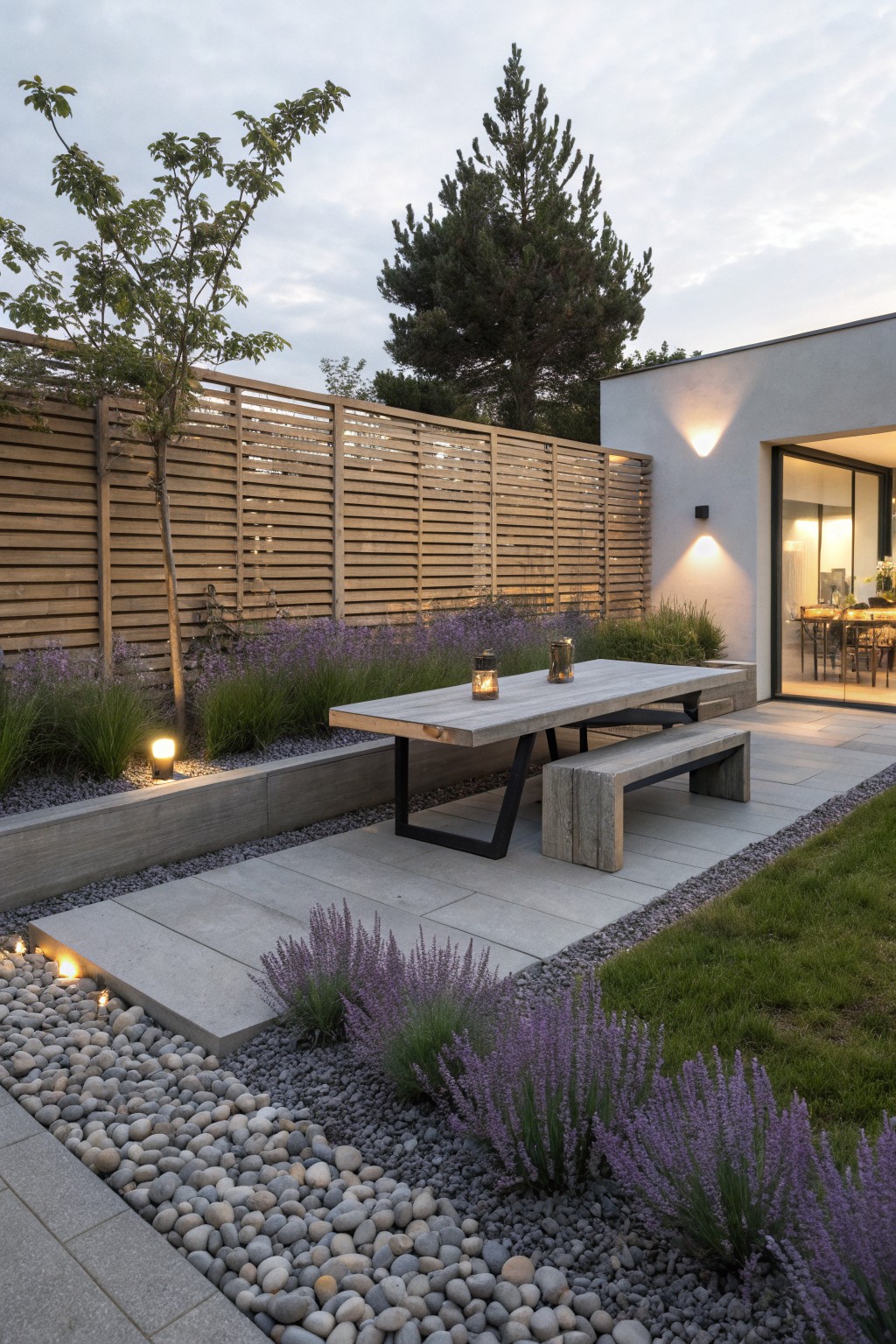
Raised concrete beds like these make flower gardens simple to tend. Filled with gravel mulch and tough plants such as lavender, they cut down on weeding and watering. The gravel lets excess water drain right through, and it keeps soil from washing away during rain. A few ornamental grasses add height without much fuss.
Put this idea along a patio or walkway where you want color but not work. It fits modern homes with clean lines, especially in sunny spots. Pick lavender varieties that thrive locally, and top with larger pebbles for a polished look. Skip it in shady areas, though, since gravel beds do best in full sun.
Gravel Paths with Spaced Pavers
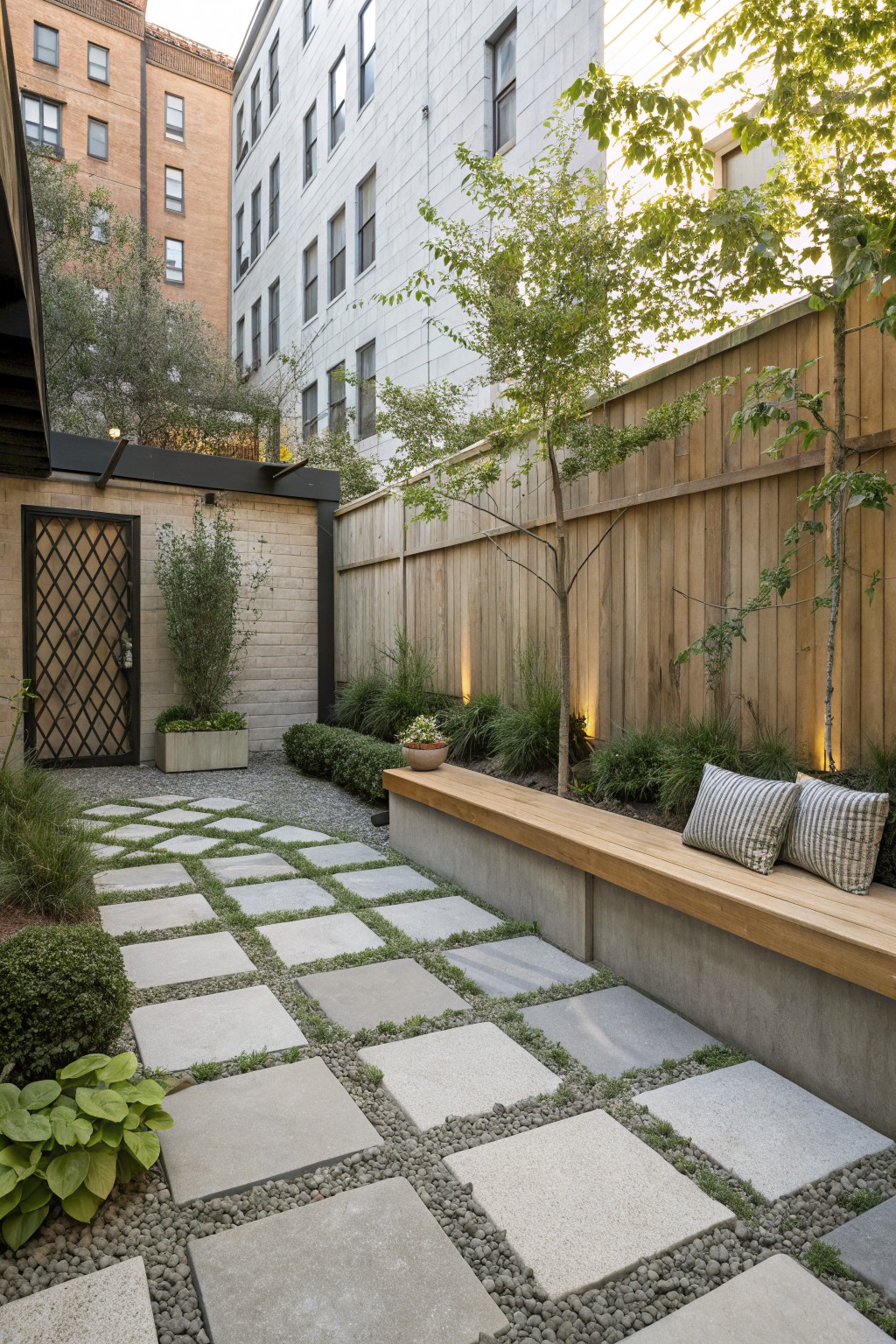
One straightforward way to handle walkways in a small garden is spacing out large concrete pavers in gravel. It creates a clear path without pouring a full slab of anything. The gravel stays put around the edges, and low plants fill in just enough to keep it from looking bare. Maintenance stays simple since weeds pull easy from gravel.
This works best in tight urban yards or courtyards backed up to buildings. Lay the pavers where people naturally walk, then add simple shrubs along the sides for definition. A bench nearby makes it usable right away. Skip it if your spot gets heavy foot traffic, gravel can shift there.
Winding Gravel Path with Raised Beds
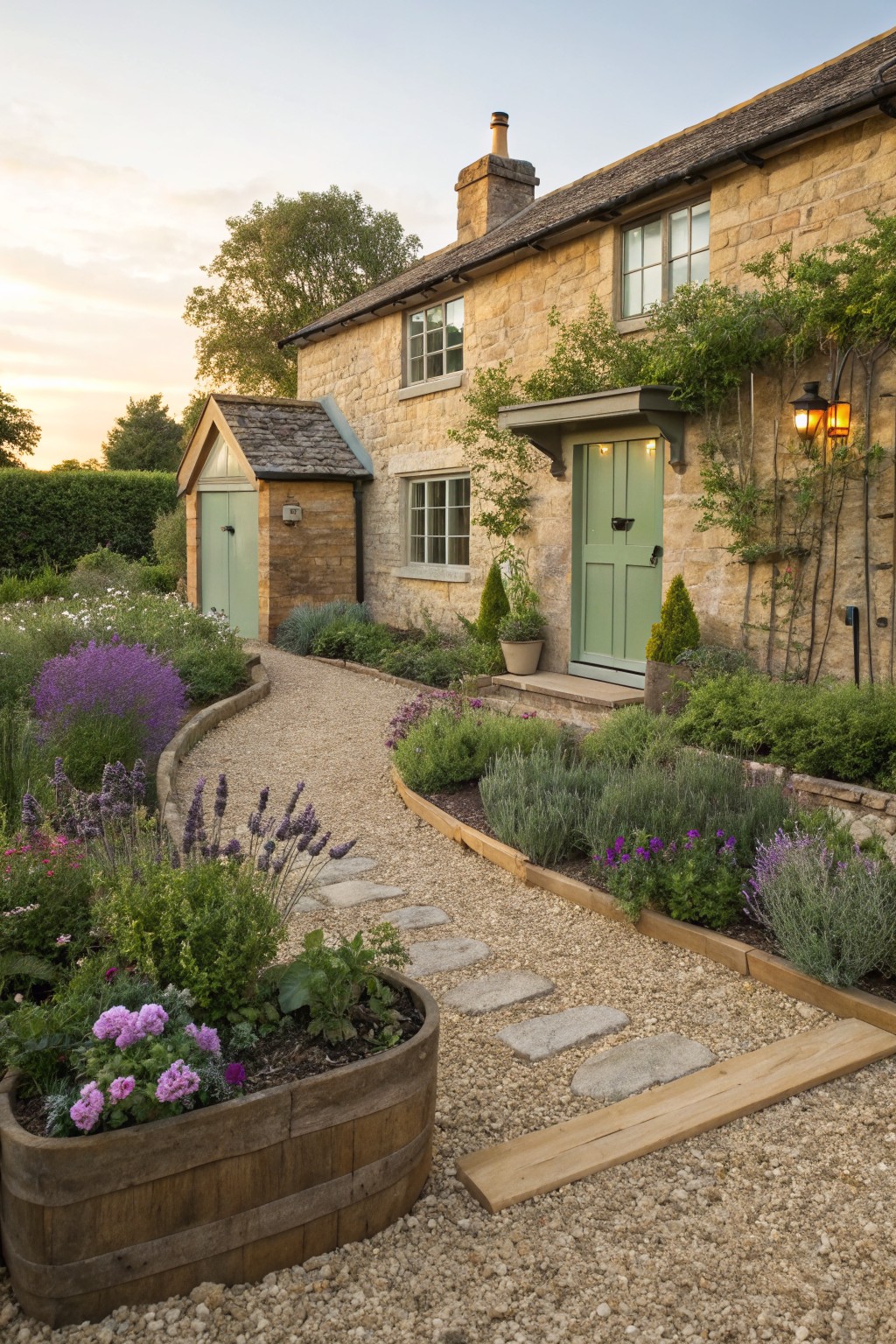
A simple gravel path curves gently toward the house door, bordered by raised wooden beds filled with lavender and low herbs. Gravel stays tidy without much raking, and those tough plants handle dry spells on their own. It pulls the eye along without fuss, keeping the front yard neat year-round.
This works best in smaller front gardens or cottage-style homes where you want charm but not daily upkeep. Build low wood edges around the path, plant perennials that spread easy, then top beds with pea gravel for drainage. Skip anything too thirsty… it stays pretty with just occasional trimming.
Gravel Beds with Succulents and Agaves
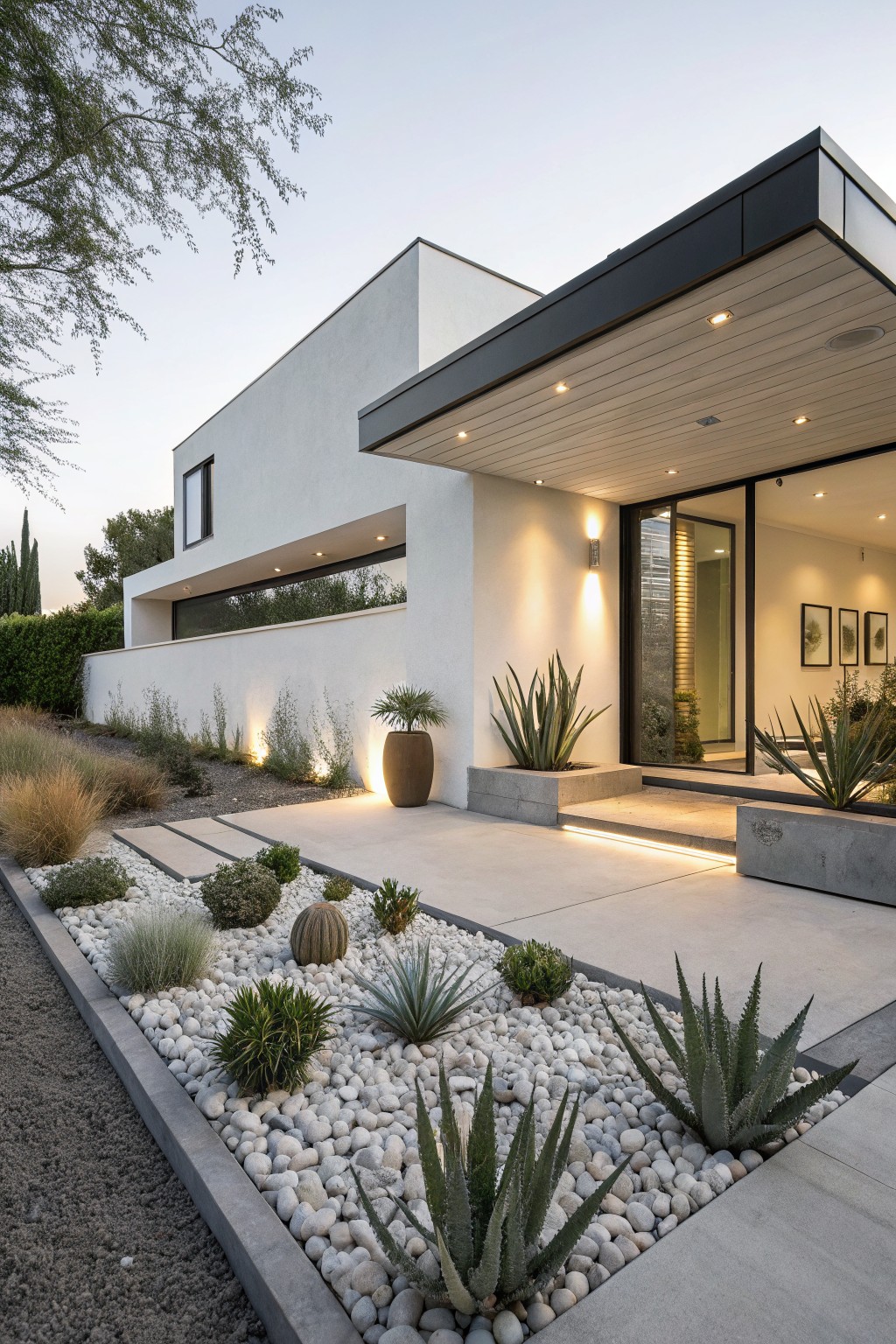
Gravel beds like these keep things simple and neat around the house entry. They use white pebbles mixed with tough plants such as agaves and small succulents that don’t need much water or fussing. The clean concrete edging holds it all in place without looking busy. It’s a good fit for dry areas where you want color and texture but not daily work.
You can set this up along walkways or near the front door on any modern or simple home. Pick spots with full sun and good drainage. Start with larger plants like agaves for structure then fill in with grasses or barrels for variety. Just rake the gravel now and then to keep it fresh. It works best where you want low upkeep without bare dirt.
Gravel Pathway with Built-In Bench Planter
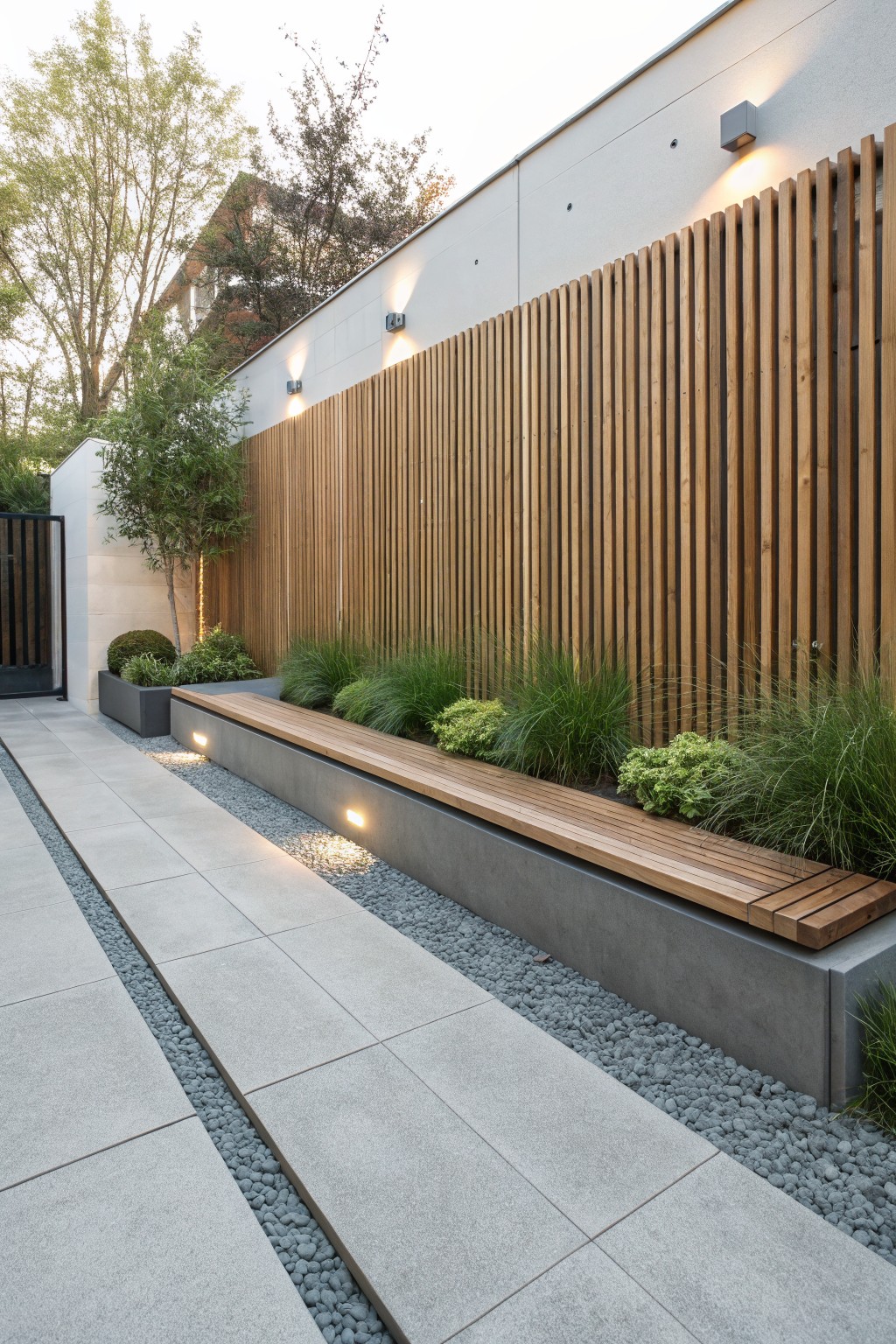
A concrete planter wall runs right along a simple gravel path, topped with wooden slats to make a handy bench. Ornamental grasses fill the bed nicely, staying low and needing little care. Gravel fills the narrow strip between the path pavers and the planter, handling water runoff without mud. It’s a clean way to add seating without eating up yard space.
This works best in side yards or leading to a back gate, where you want function without much upkeep. Pick tough grasses that don’t flop over the path. Keep the concrete plain, maybe paint it if your style calls for it. Narrow spots like this stay neat year-round.
Sculptural Gravel Beds with Boulders
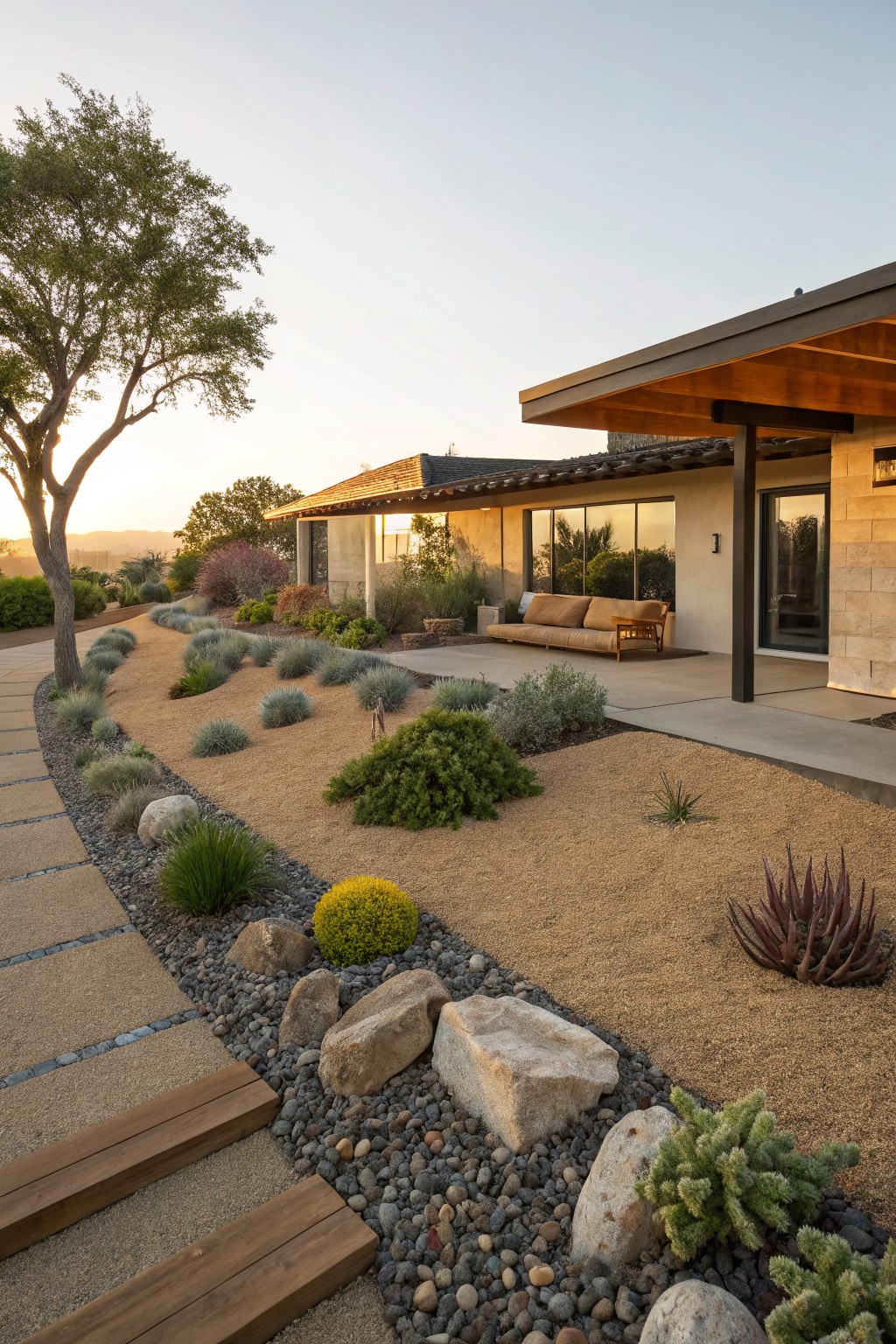
Gravel beds like this one curve around in soft shapes, holding clumps of grasses, spiky agaves, and yellow flowers. Big boulders sit right in the mix, giving weight and interest without extra planting. It’s a clean way to fill space that feels wild but controlled, and the gravel keeps weeds down while letting water drain fast.
These work best on slopes or sunny spots where regular lawns struggle. Line them along paths to your house or use them to soften hard edges. Go for tough, local plants that barely need care, and space the boulders to break up the gravel. Skip anything fussy. It suits modern homes in dry climates just fine.
Gravel Walkway with Bordering Flower Beds
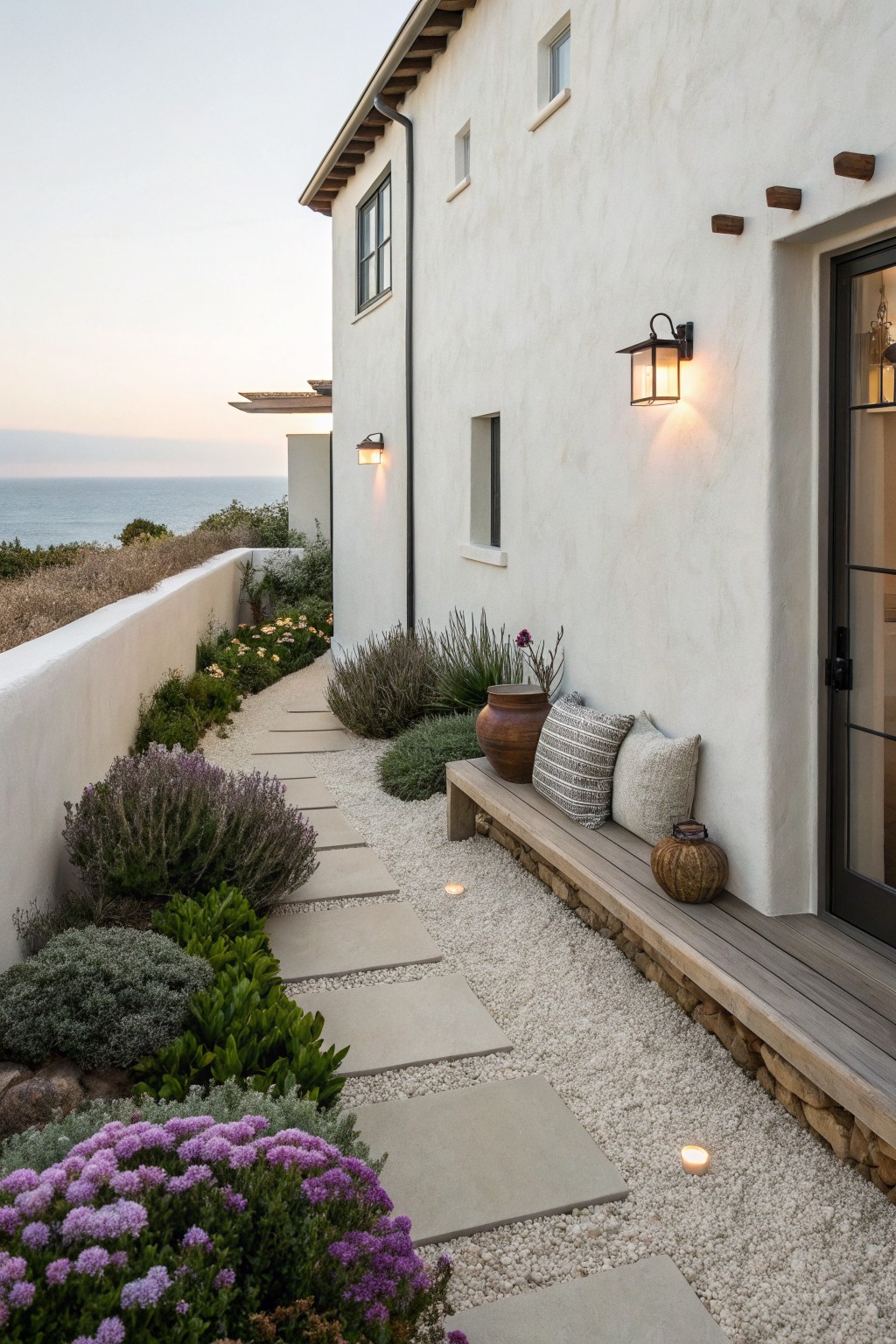
One straightforward way to handle side yard access is a gravel walkway edged in simple flower beds. Here the path uses wide concrete pavers set in gravel, with low lavender and other bushy plants tucked right up against the house wall. It keeps things open and neat, without much weeding or mowing needed. Those purple blooms add a bit of color that lasts.
This setup works great for narrow spots leading to a side door or gate, especially in dry climates where drought-tolerant plants like lavender thrive. Just lay gravel over landscape fabric, drop in the pavers for steps, and plant shallow-rooted stuff that won’t crowd the path. Skip anything too tall… keeps the house wall visible and the walk clear.
Corten Steel Raised Beds for Gravel Planting
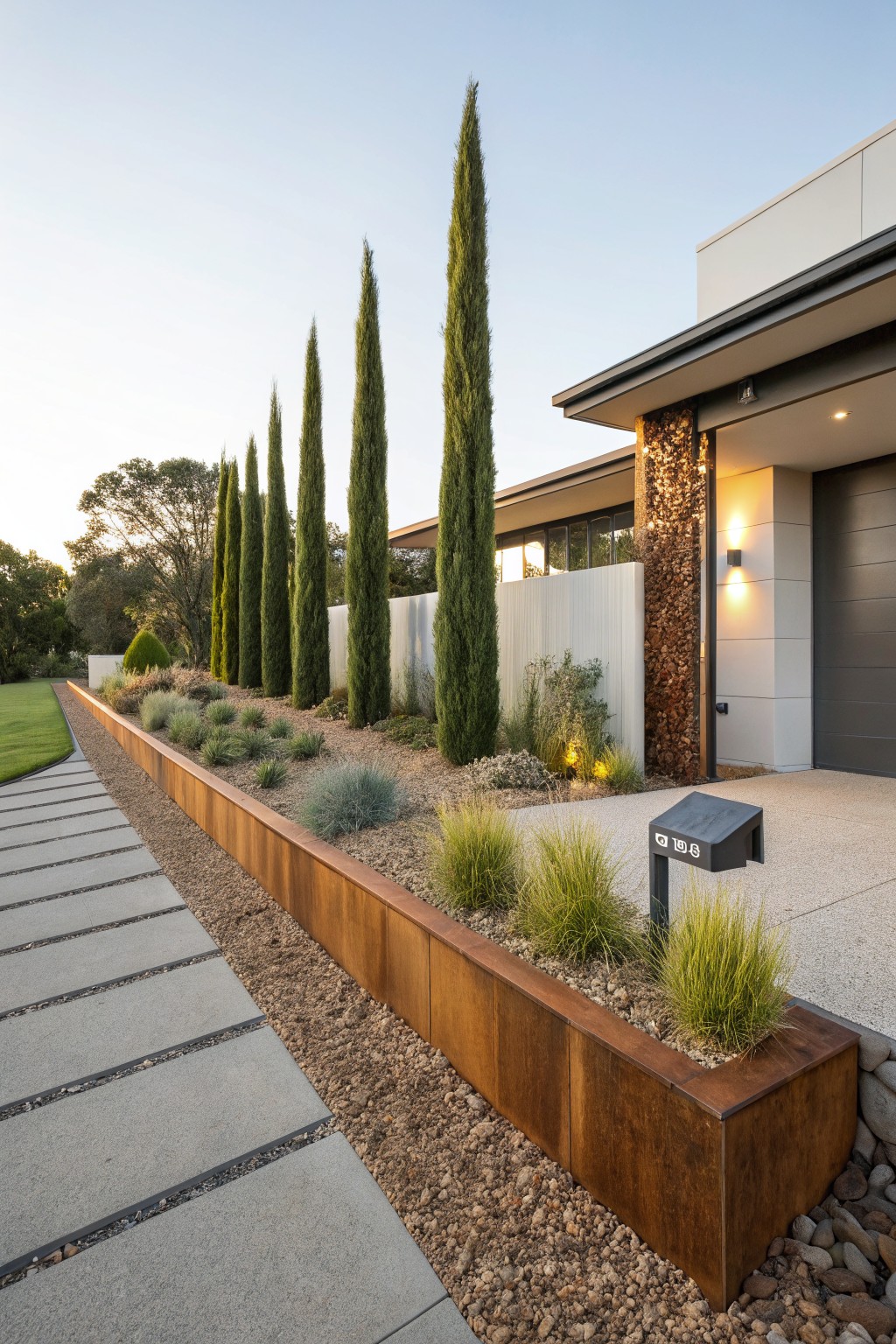
Corten steel makes a tough, low-maintenance edge for gravel beds like this one. The rusty metal panels form clean raised borders that hold back gravel and drought-tolerant grasses, keeping weeds out and the look sharp. It fits right against a modern house, adding some warmth without much upkeep.
Use these beds along paths or driveways where you need definition but not fussy plants. They work best in full sun with stuff like lomandra or sedges that handle dry soil. Just let the steel develop its patina over a couple years. It suits flat yards or slopes pretty well.
Corten Steel Raised Beds for Gravel Gardens
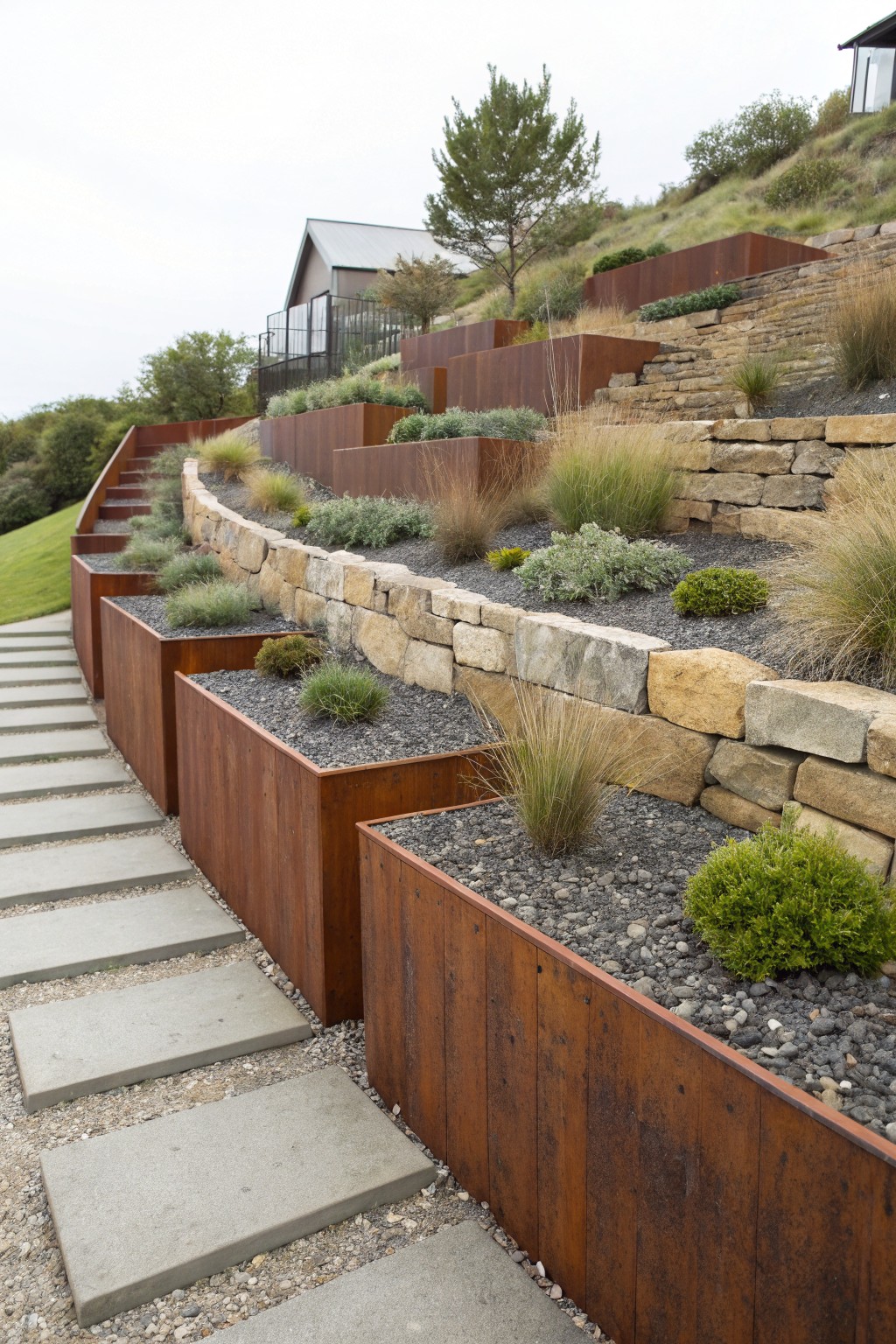
One straightforward way to handle a sloped yard is with corten steel raised planters like these. They hold back soil while creating neat beds for gravel mulch and tough grasses. The rusty metal patina blends right into natural stone walls. It keeps everything low fuss since gravel cuts down on weeding and the plants mostly take care of themselves.
These beds work best on hillsides or anywhere drainage is tricky. Fill them with small gravel and drought tolerant stuff like feather grass or sedums. Pair with stone for that rugged feel. Just make sure the steel is thick enough to last and check local rules on corten since it weathers to a runoff.
Low-Maintenance Gravel Flower Beds
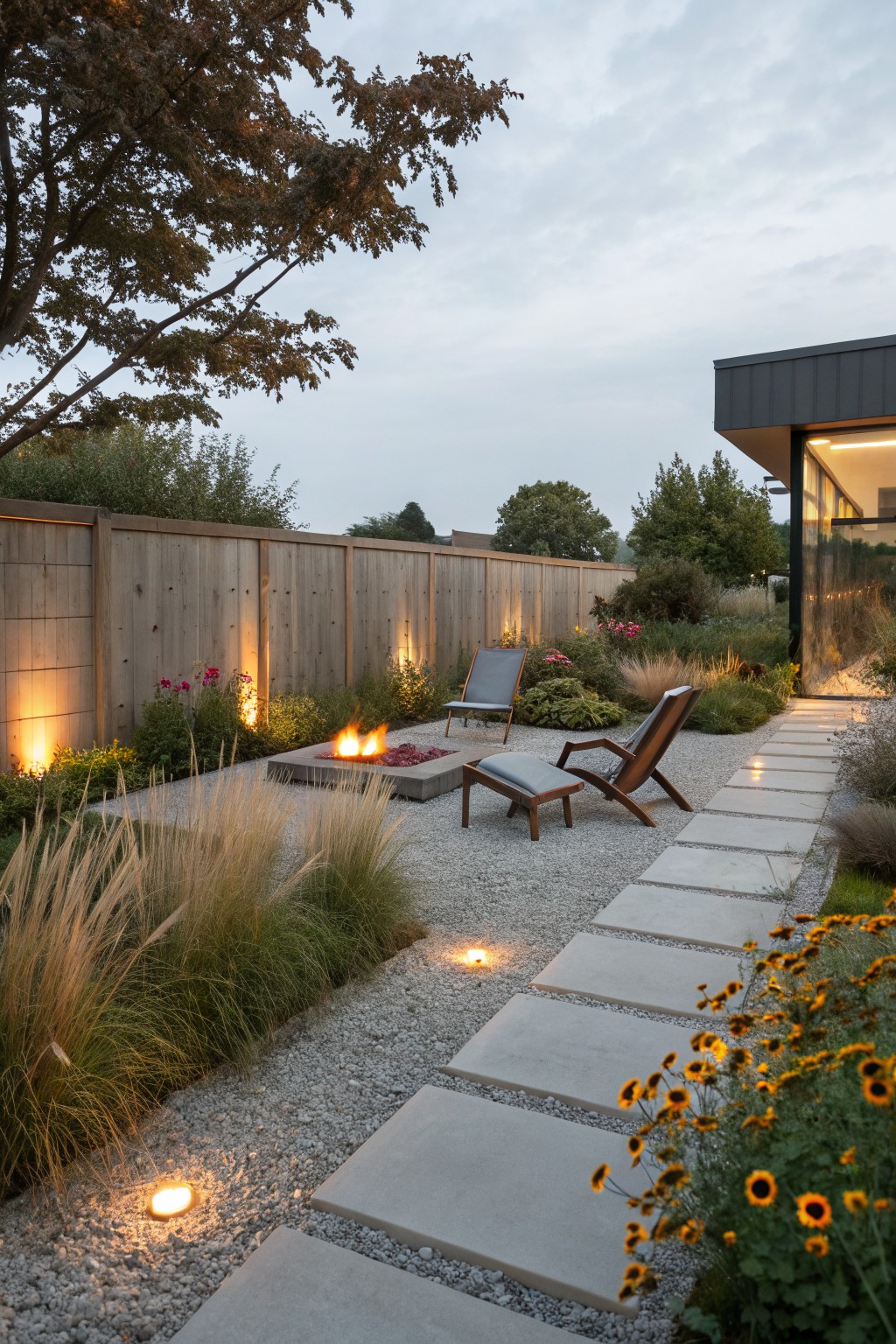
Gravel works great as a mulch in flower beds like these. It keeps weeds down and holds in moisture, so you spend less time watering and weeding. Pair it with tough grasses and simple flowers, and the beds look full without much fuss. The tall grasses here add height and movement, while the gravel gives a clean, modern feel that fits right into a backyard setup.
These beds suit smaller yards or spots near a patio where you want some green but not the upkeep. Lay gravel two inches deep over landscape fabric, then plant drought-tolerant stuff like feather reed grass or black-eyed Susans. Add paver steps if you need a path through. Just keep plants spaced so they don’t crowd the gravel. It stays neat year after year.
Gravel Paths in Rock Gardens
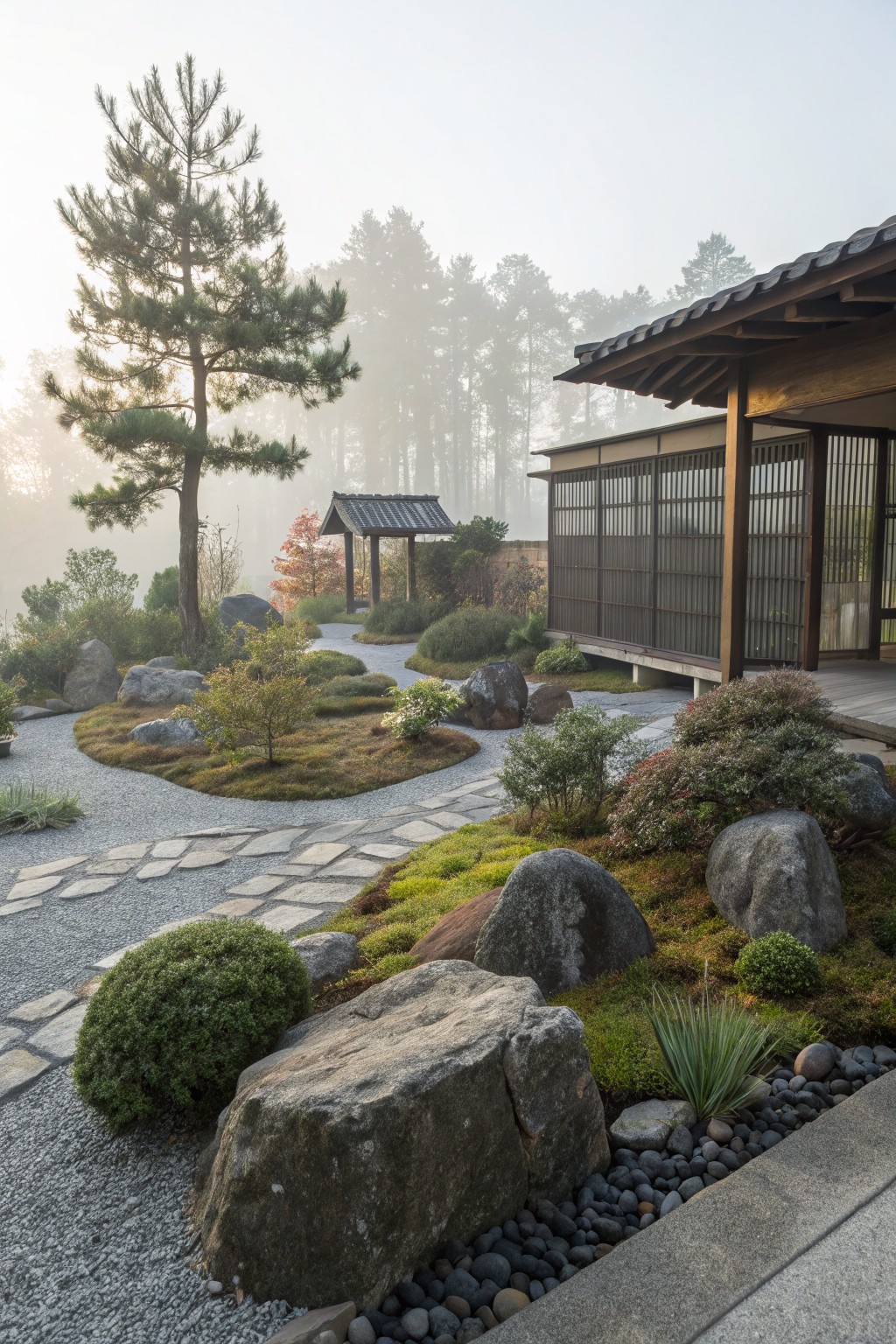
Gravel paths like these make a garden feel calm and put together without much work. They wind gently through beds of moss, low shrubs, and big boulders, keeping everything neat. No grass to mow. Just rake now and then. The mix of smooth gravel and rough stones gives a natural look that fits right into a hillside spot.
Use this setup in smaller yards or slopes where mowing is tough. Pair light gravel paths with darker pebbles at the edges for contrast. Add a few clipped pines or azaleas for green without the fuss. It works best around a house with clean lines, like a modern take on Asian style. Skip it if you want color bursts, though. Stick to the quiet vibe.
Gravel Beds Along a Narrow Path
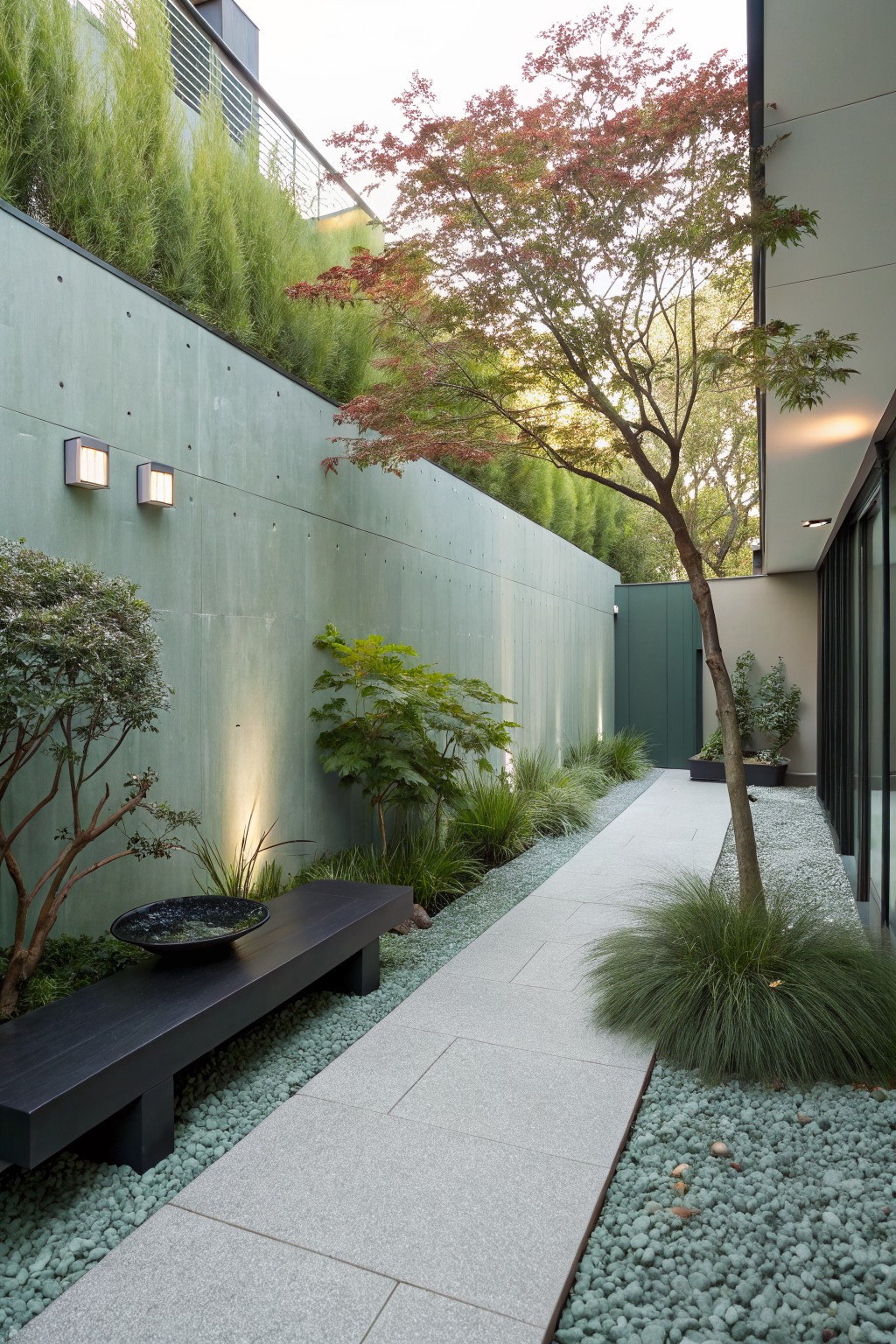
Gravel beds like these work great in tight spaces. They fill in around grasses and small trees, holding back weeds while keeping everything looking sharp. No constant mowing or edging needed. The pale green pebbles pick up the concrete walls and give a calm, even look that fits modern homes.
Use this in side yards or passages between the house and fence. It suits urban lots where room is short. Pick drought-tough plants like those tall grasses. Top up the gravel every couple years to stay tidy.
Gravel Path with Raised Stone Beds
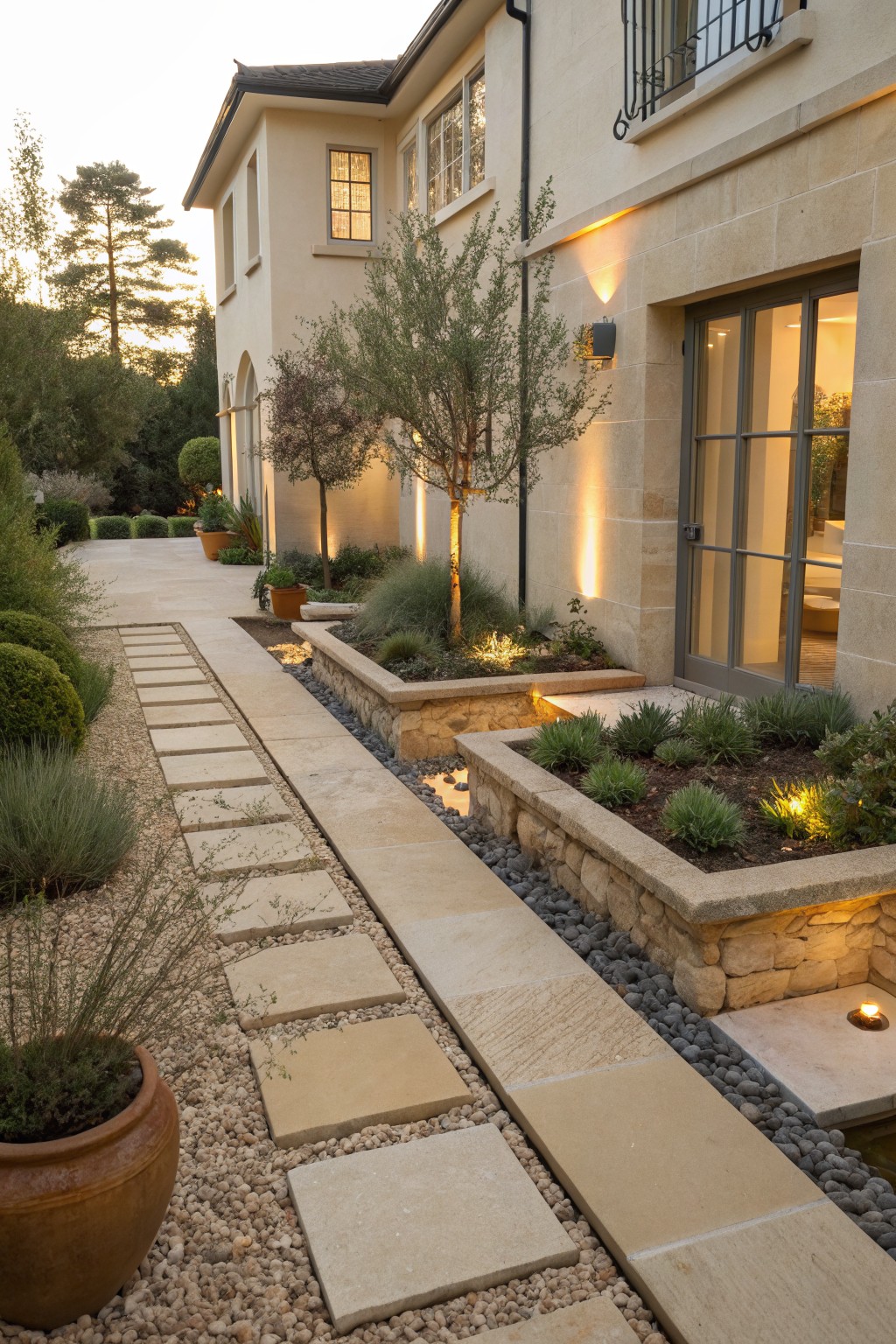
This landscaping idea keeps a walkway simple and clean. Wide gravel channels run alongside raised stone beds filled with tough plants like grasses and small olive trees. The beige stepping stones set into the gravel give just enough path without paving everything over. Low lights tucked into the beds make it practical at night too. It’s all about easy upkeep. No mowing the path. Just rake now and then.
Side yards or entries to a back door work best for this. Match the stone and gravel tones to your house like the light beige here. Pick drought-friendly plants that won’t overrun the beds. Skip anything too fussy… it stays minimalist that way.
Balcony Gravel Bed with Herb Pots
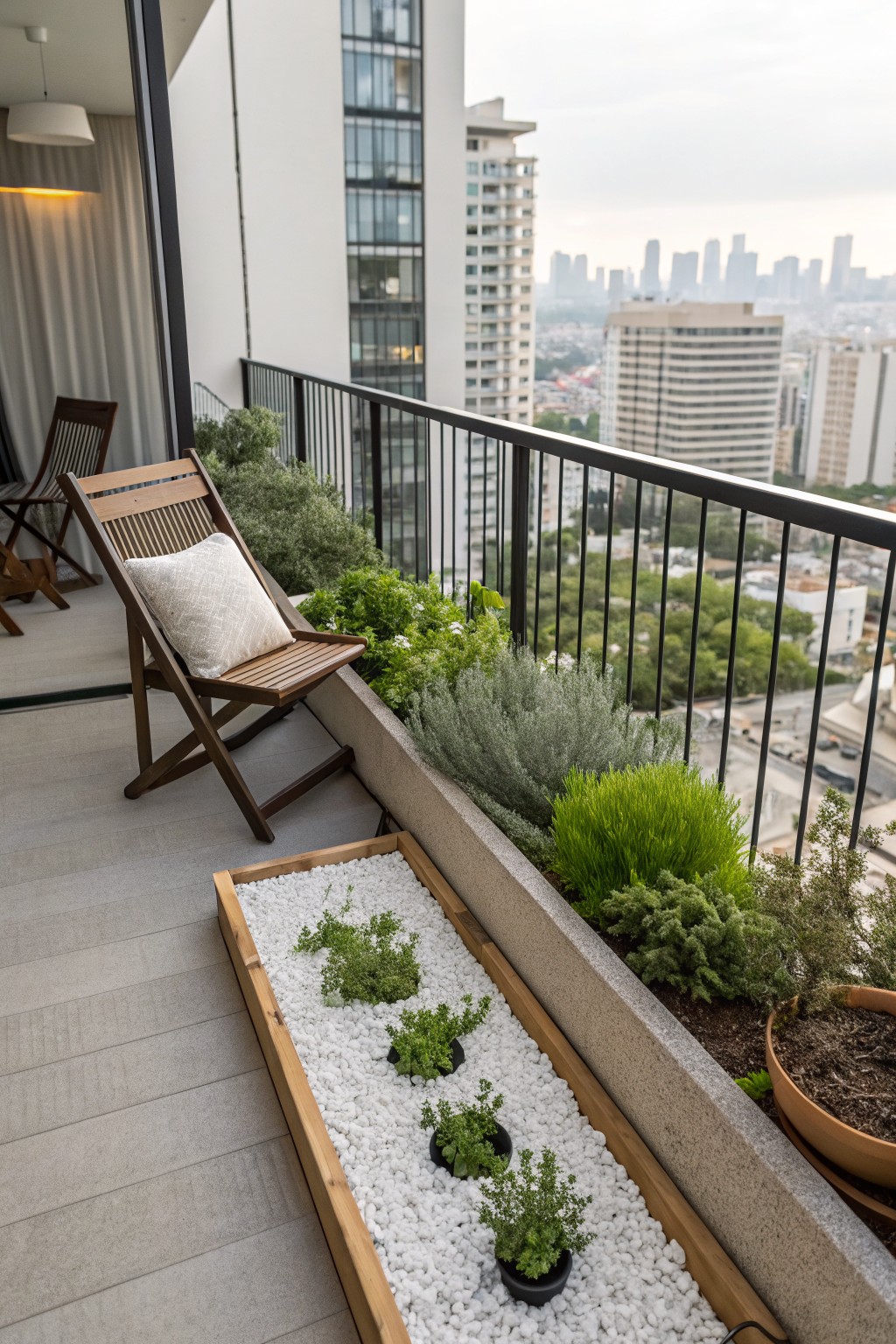
A simple wooden planter box runs along the balcony edge, filled with white pebbles and a handful of small potted herbs. The gravel keeps soil mess down and weeds away, while the plants add green without taking over. It’s clean and modern, fitting right into a high-rise spot.
This works best on small balconies or terraces where you want low upkeep. Set black nursery pots straight into the gravel for herbs like basil or mint, easy to swap out. Skip big plants to keep it airy, and it suits city homes with limited sun.
Raised Metal Planters with Gravel Beds
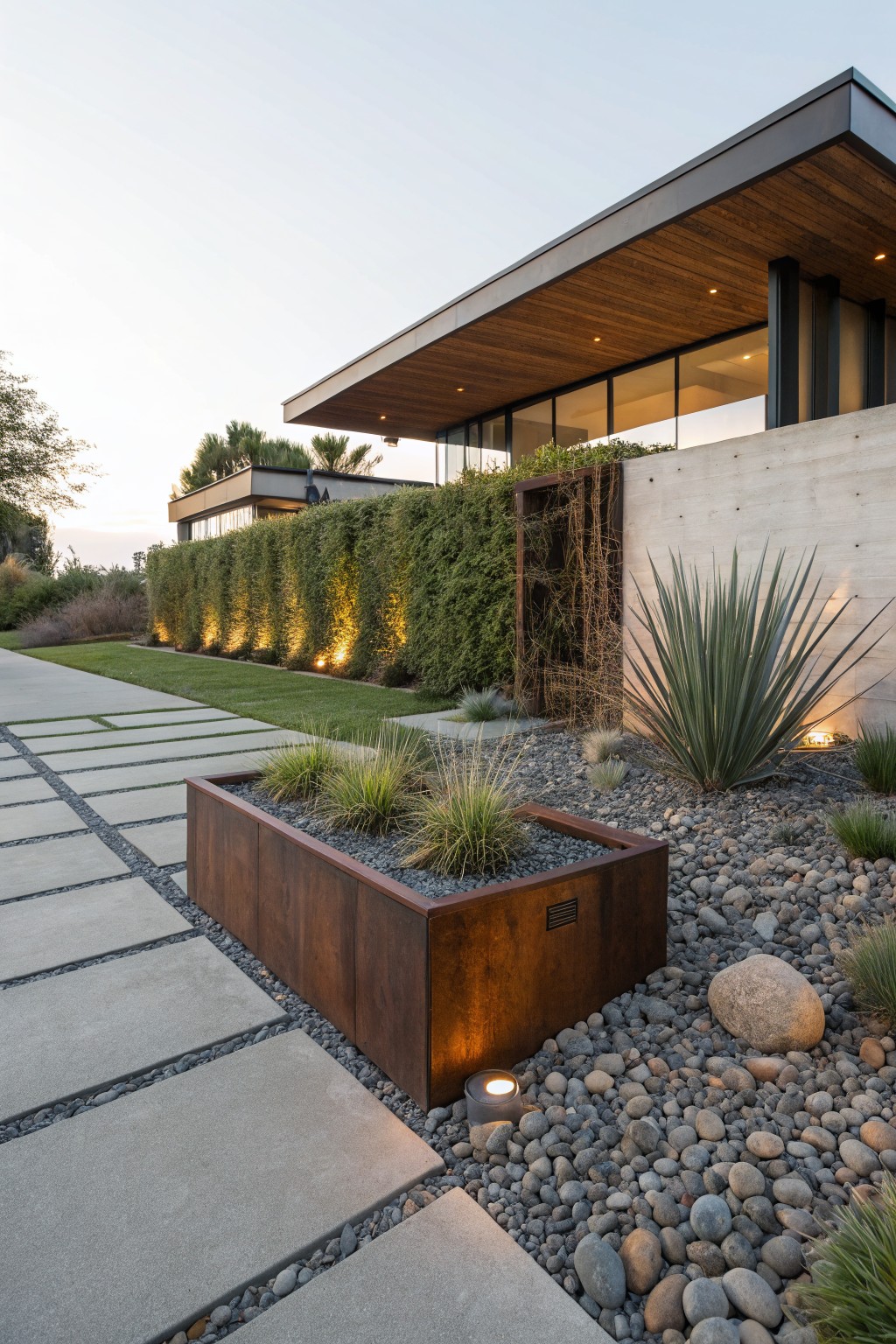
One clean way to handle flower beds is with these oversized corten steel planters set right into the path. Filled with clumps of grass and edged by gravel, they stay low fuss. No soil to till, just gravel to rake now and then. The rusty metal blends right in with stone and concrete around it.
These work best along walkways to the front door or side yard. Suits modern homes in dry areas where you want plants but not the work. Pick tough grasses or sedges that don’t need much water. Skip them if your spot gets constant rain, since the metal patinas over time.
Frequently Asked Questions
Q: Do I really need landscape fabric under the gravel?
A: Lay it down flat before you spread the gravel. It keeps weeds from popping up through the stones. Your beds stay clean with way less pulling.
Q: What plants fit best in these low-water setups?
A: Go for tough ones like lavender, sedum, or ornamental grasses. They soak up what little moisture drains through. Colors pop against the gravel without daily fuss.
Q: Will heavy rain scatter the gravel everywhere?
A: Pick angular pea gravel. It locks together tight. Set simple edging around the bed and rain won’t budge it.
Q: How do I edge the beds to keep that clean look?
A: Bury bricks or stones along the border. Hammer them level with the gravel top. And refresh the line once a year if dirt builds up.
