

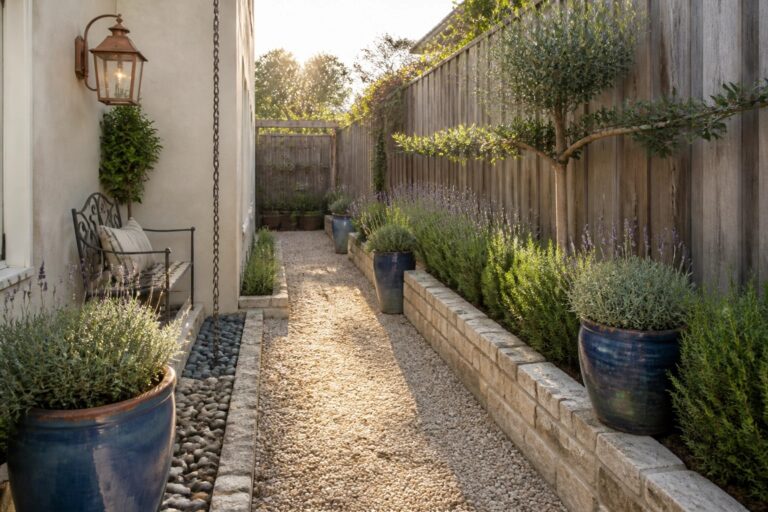
Narrow side yards often stay awkward because the path and planting layout never quite match how people move through them day to day.
When I plan changes in these spots I focus first on the sequence of edges and beds so the length starts to feel like part of the larger yard rather than a leftover strip.
Width is not the real issue.
A steady line of low edging or repeated planting can give the eye something to follow and keep the space from looking scattered after a few seasons.
I usually test one small stretch of a new path material before committing to the full length so I can see how it settles with actual use.
Gravel Paths For Narrow Side Yards
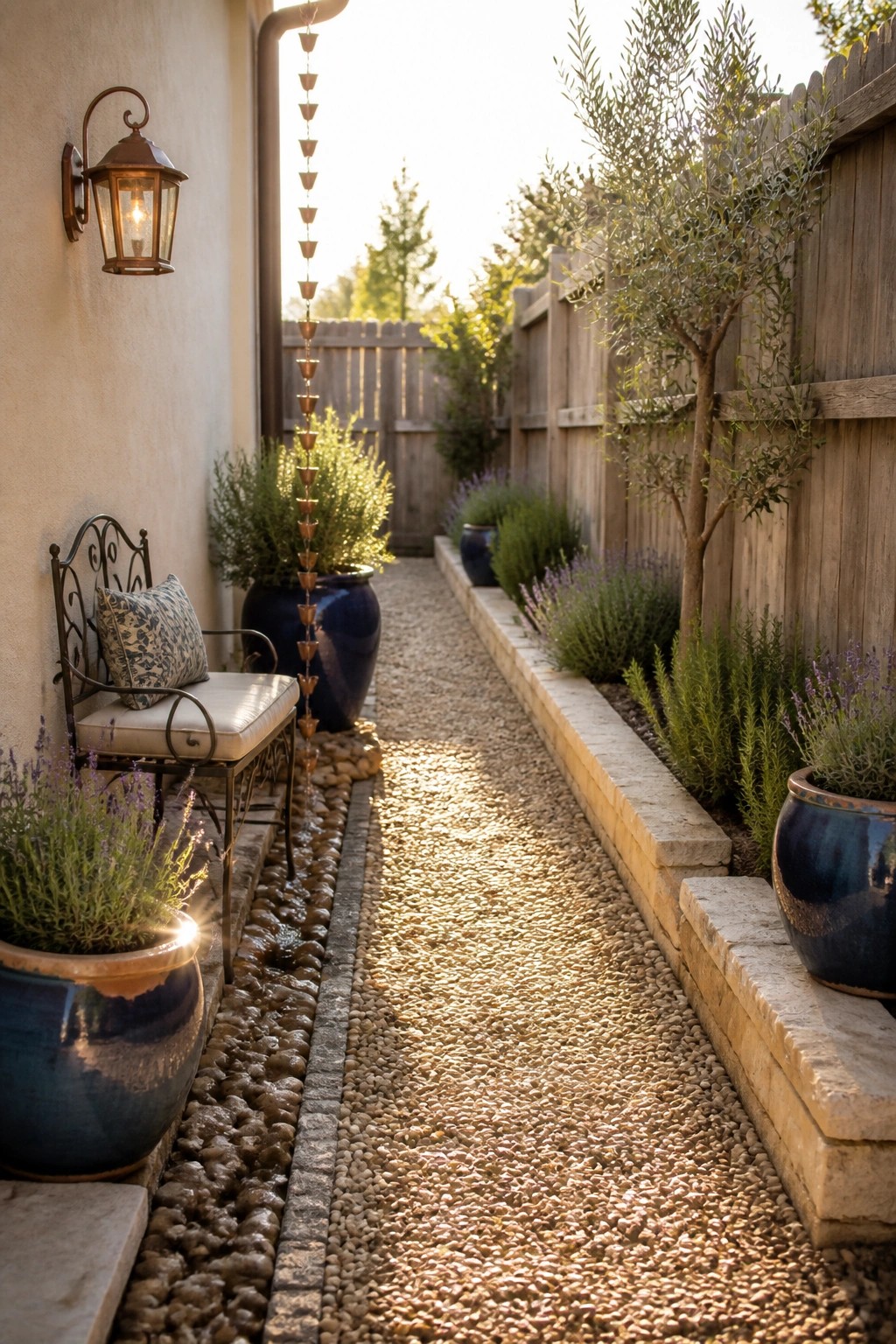
A gravel path gives a narrow side yard a clear purpose without taking up much space. It drains well, stays low maintenance, and creates a simple route from the front to the back of the house.
Set the gravel between low edging on one side and a few large pots on the other. This setup works especially well on long, tight lots where a full garden bed would feel cramped.
Stepping Stones In Gravel Keep Narrow Walkways Usable
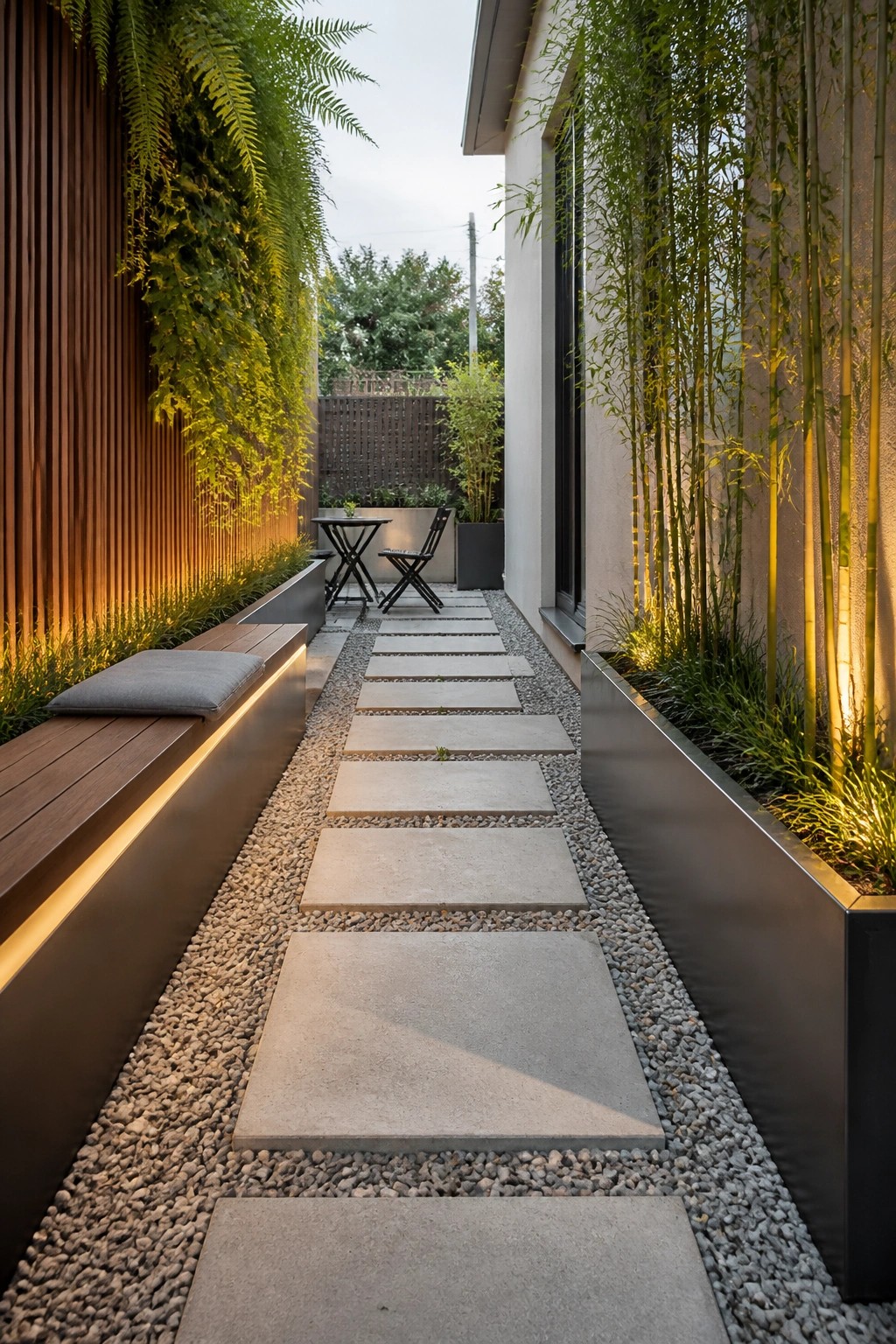
A gravel base with stepping stones laid across it gives you a clean walking surface without needing a full paved path. This setup works especially well in tight side yards where you still need to move through the space for maintenance or daily access. The gravel drains well and lets you adjust the stones later if needed.
This approach suits homes with long, narrow lots where grass would be hard to maintain. Keep the beds on either side low so the path feels open rather than closed in. Use the same gravel tone throughout to tie everything together without extra edging.
Run a Narrow Water Rill Down a Long Path
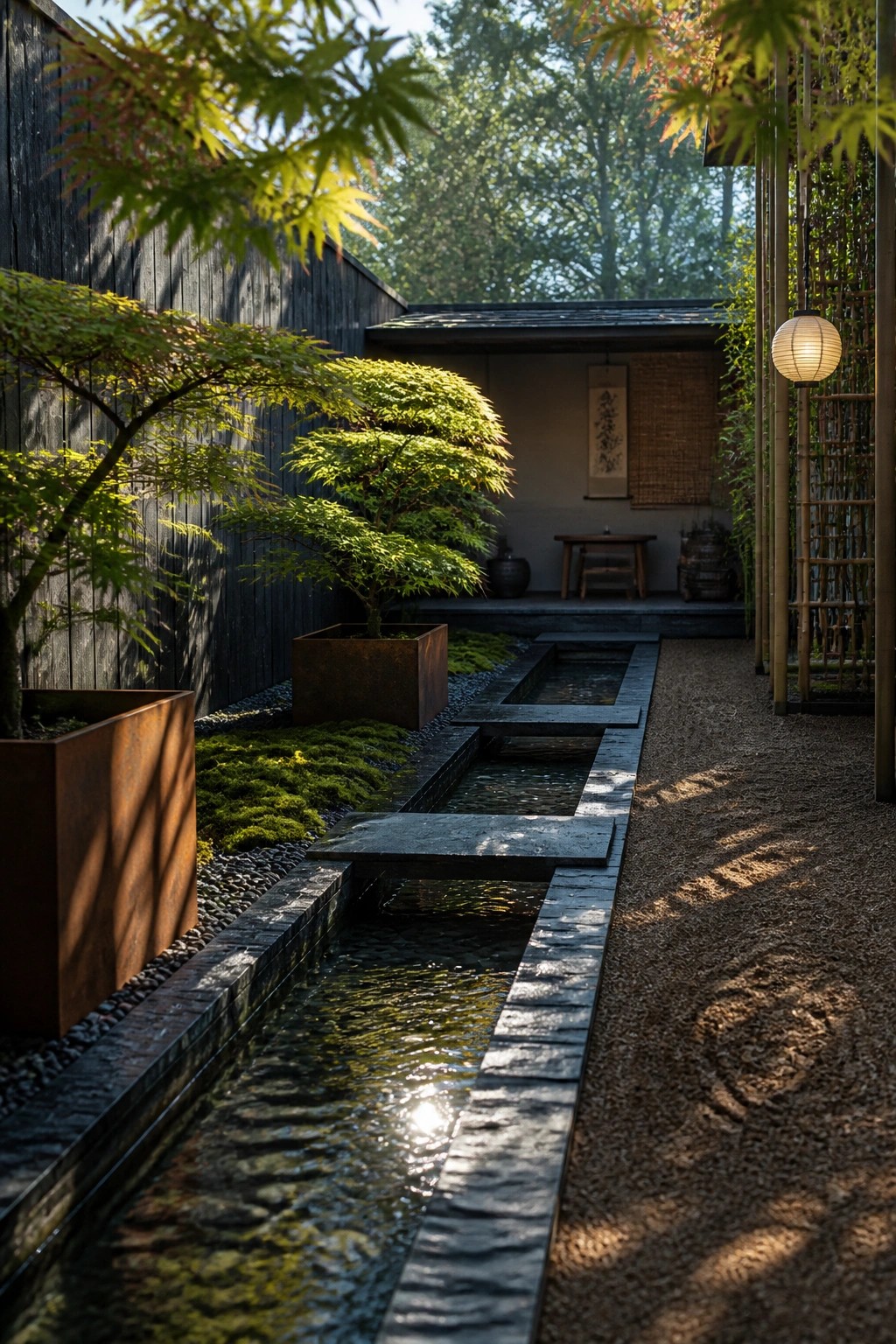
A shallow water channel gives a narrow side yard something to follow. It turns a plain strip of ground into a steady line that feels calm and purposeful without crowding the space.
This works best between fences or along the side of a house where width is limited. Keep the rill modest in scale and pair it with simple gravel or low planting so the path stays easy to walk and maintain.
Line Narrow Paths With Raised Planters
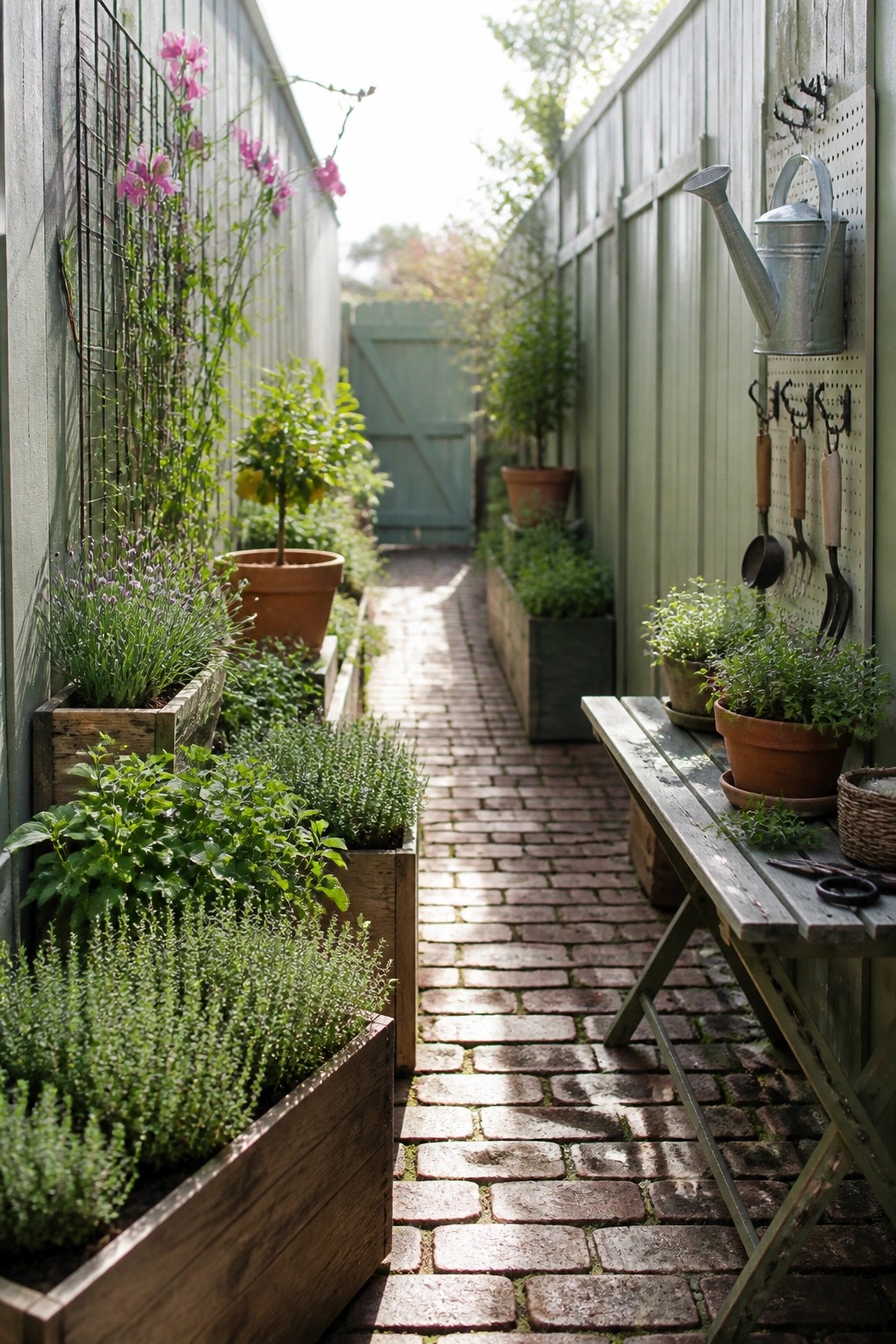
Raised planters turn a narrow side yard into something more useful by giving plants room to grow without crowding the walkway. The wooden boxes keep everything contained and make it easy to reach herbs or flowers from the path.
They work best in long, tight spaces where regular beds would feel cramped. Keep the path itself simple so it stays easy to walk, and choose planters that match the width you have left on each side.
Line Narrow Paths With Built-In Benches
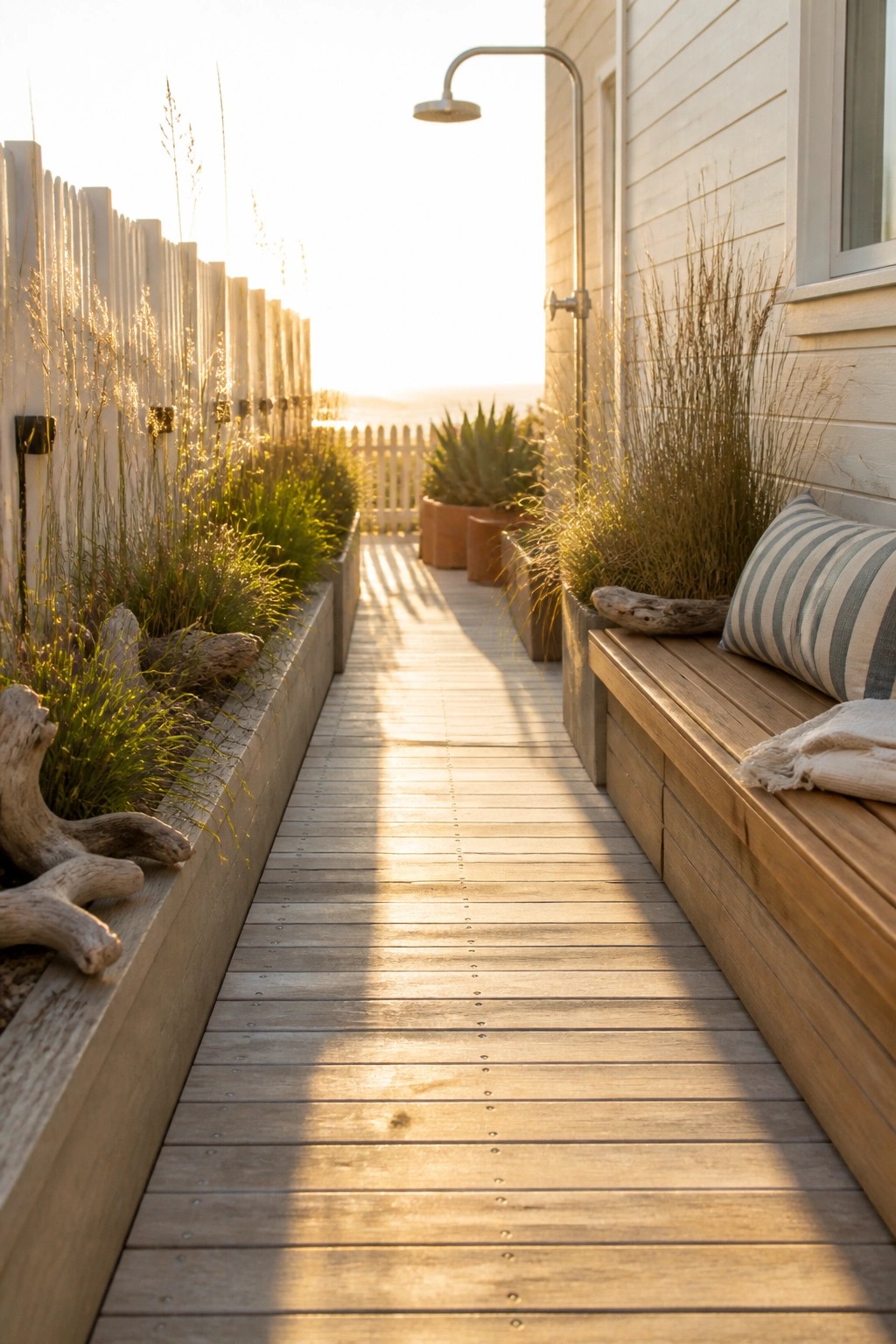
A long, narrow side yard often ends up as just a walkway, but adding a bench along one edge changes how the space gets used. People can actually stop and sit instead of passing through quickly, and the bench gives the path a purpose without needing much extra room.
This setup works best when the bench is built low and simple so it does not block the flow. Pair it with raised planters on the opposite side to keep the planting from spilling into the walking area and to create a bit of enclosure.
Add a Linear Water Feature Along the Path
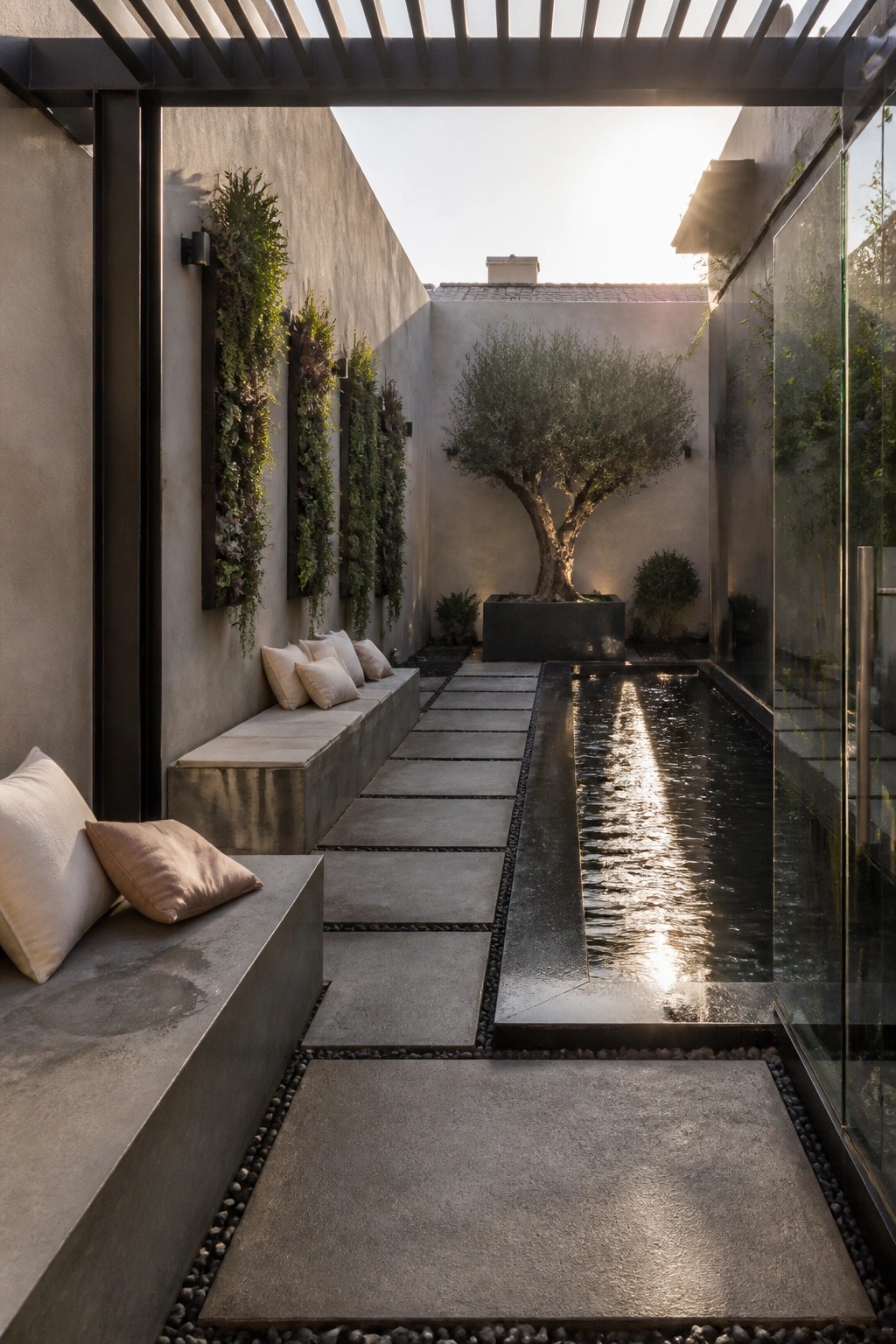
A narrow side yard often ends up as wasted space, but running a slim water channel right beside the walkway gives it purpose and a quiet sense of movement. The water reflects light and sky, which helps the whole length feel less cramped without needing extra width.
This works best in long, tight passages where you want something low-maintenance that still feels intentional. Keep the pool narrow, match the edging to your paving, and let simple planting or a bench run alongside it so the area stays usable rather than just decorative.
Cover a Narrow Path with a Pergola
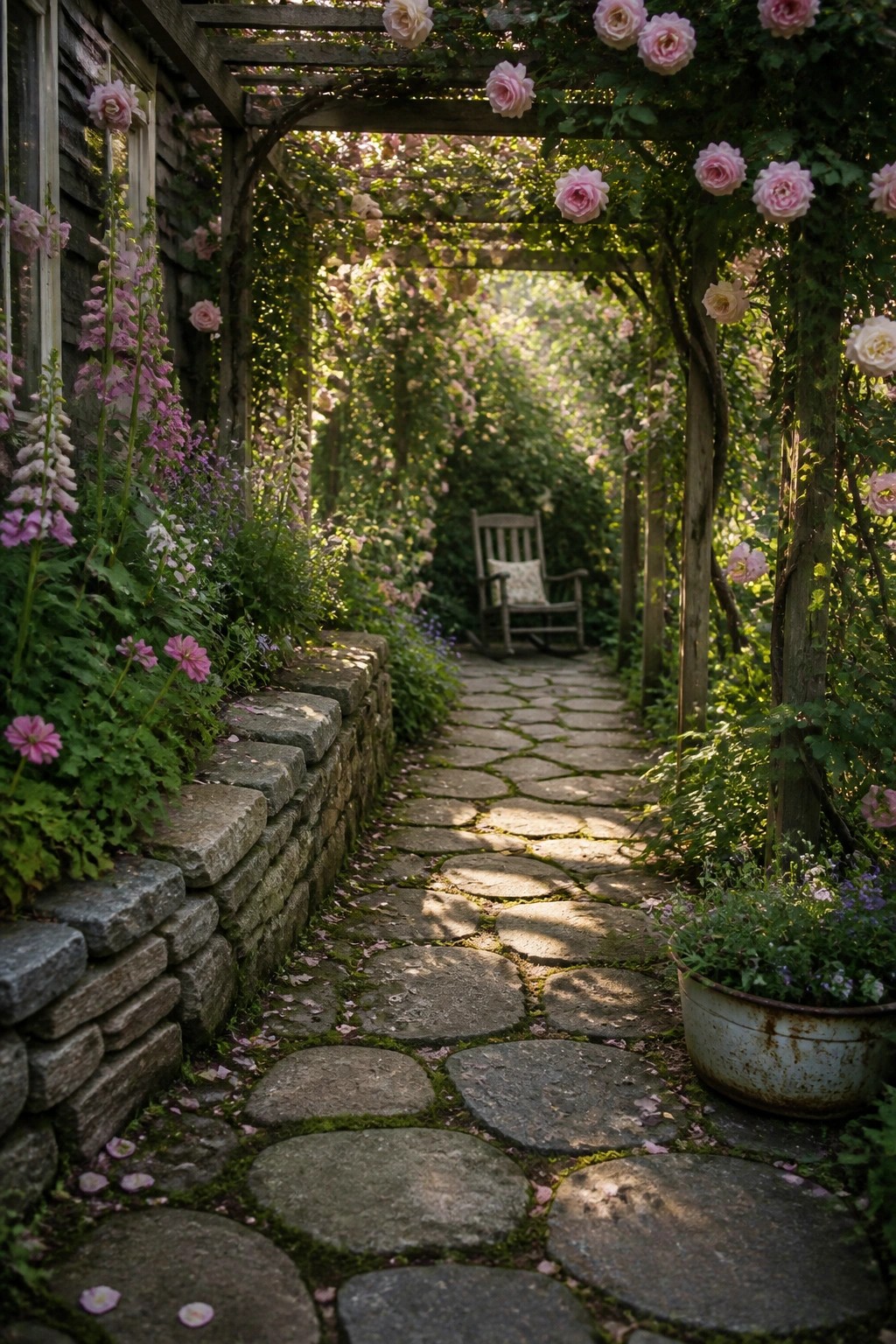
A simple pergola overhead turns a basic walkway into a shaded passage that feels more like a destination. Climbing roses or similar vines soften the wood and create a gentle canopy without closing off the space completely.
This approach suits long side yards or tight garden corridors where shade and structure are needed. Keep the path material consistent, like stone or gravel, and let the planting spill over the edges a bit so the whole thing feels connected rather than too formal.
Mount Storage On The Walls
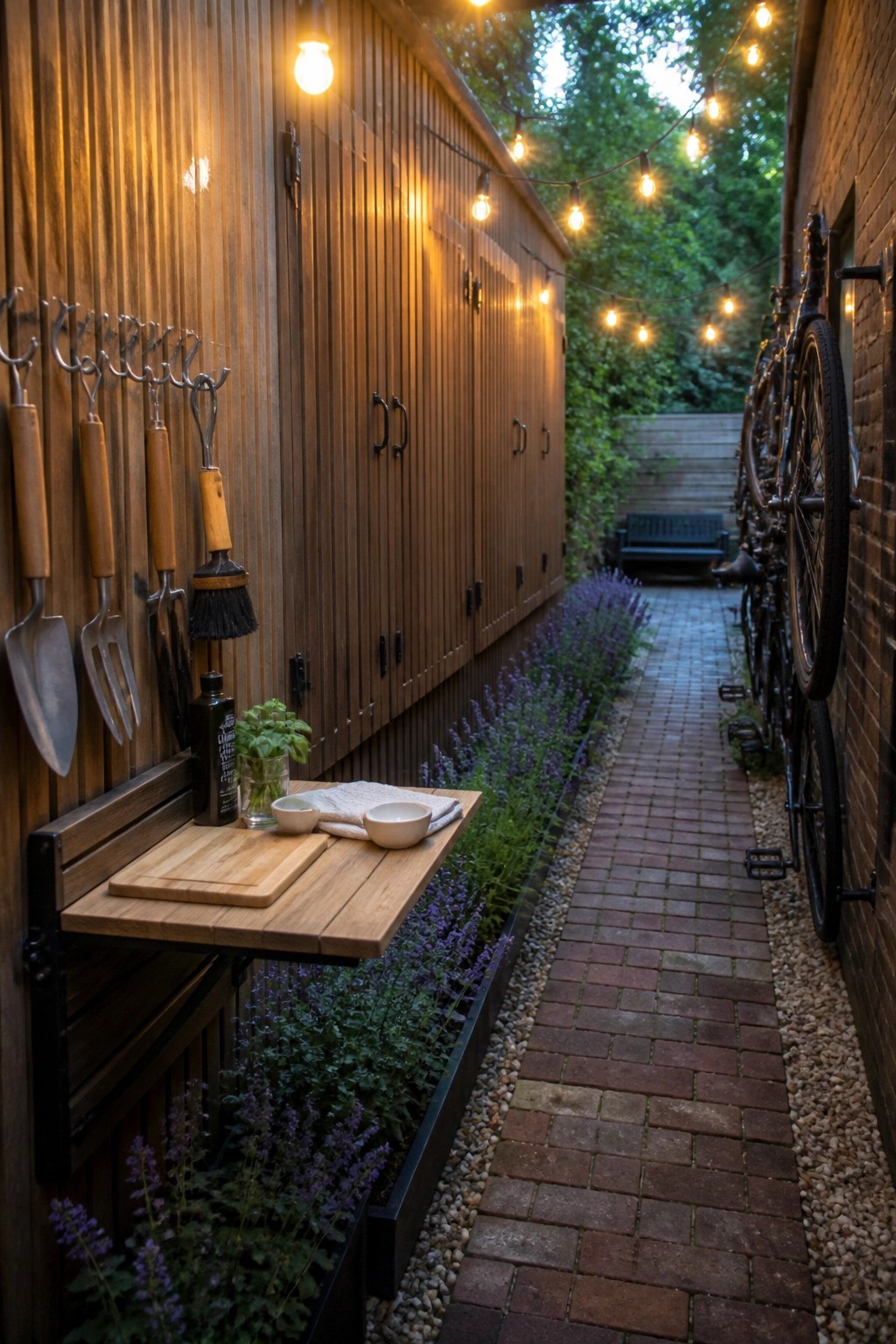
One simple way to make a narrow side yard more useful is to put the walls to work for storage. Hooks and racks keep tools, bikes, and other items off the ground so the path stays open and easy to walk through.
This works best in long, tight spaces where floor room is limited. Choose sturdy hardware that fits the wall material, and keep the items you use often within reach.
Line a Narrow Path With a Pond
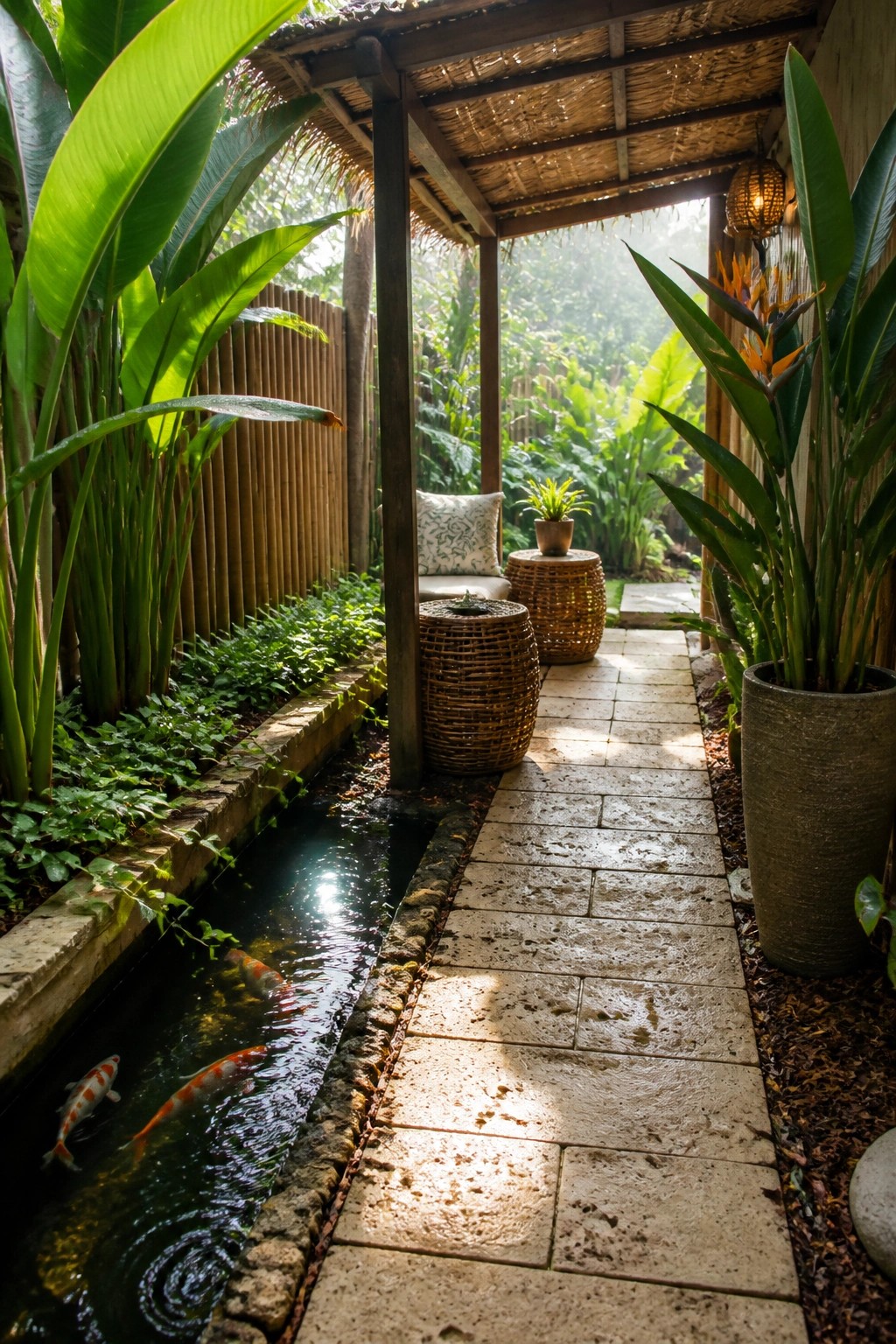
A long narrow garden often feels like wasted space until you run a pond right alongside the path. The water adds movement and life without taking up much width, and the fish keep things interesting as you walk through.
This setup works best in side yards that get some shade and already have room for edging plants. Keep the pond narrow so the path stays usable, and check how much maintenance the fish and water will need in your climate.
Run a Raised Bed Down a Narrow Side Yard
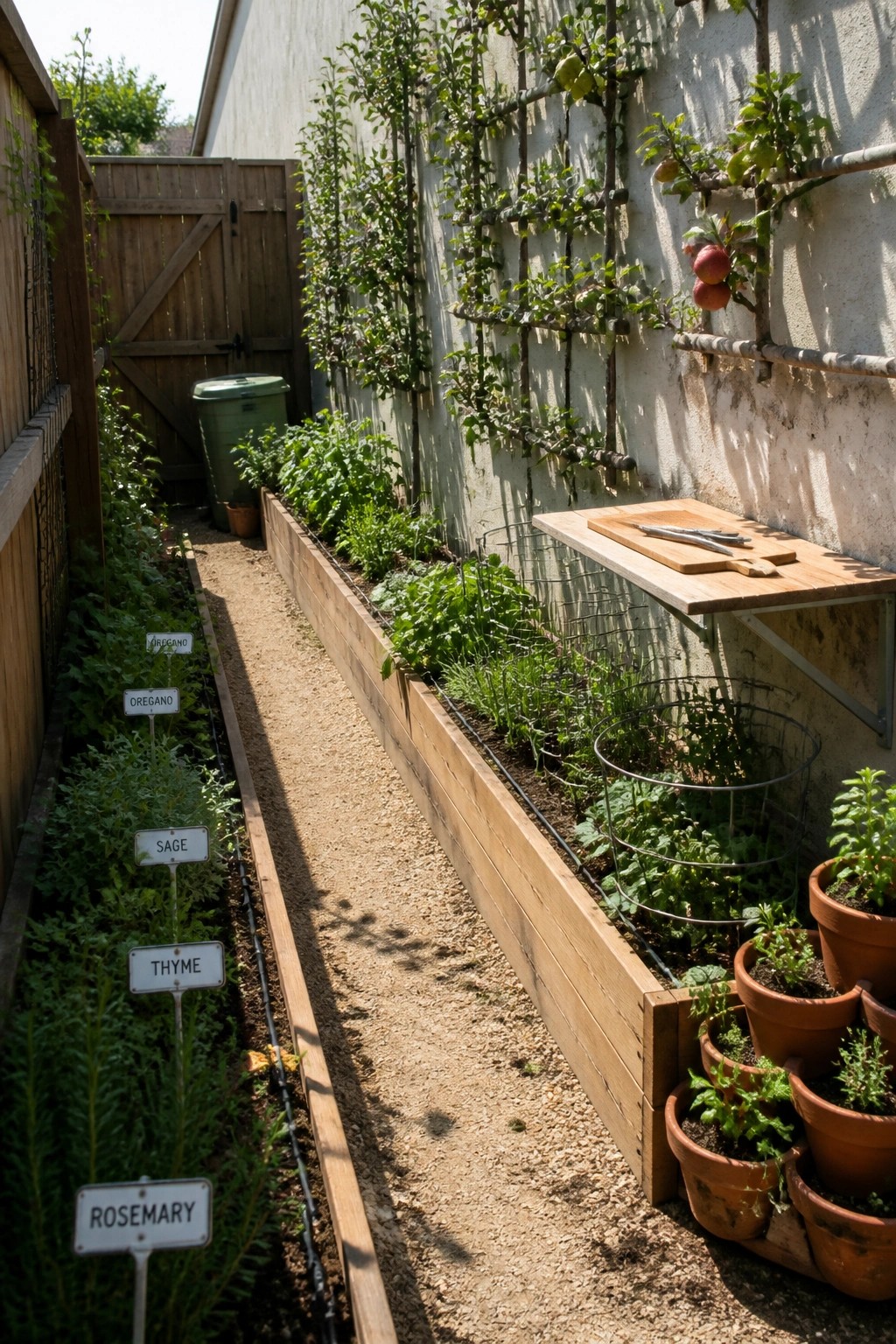
A long raised bed turns a slim strip of ground into actual growing space. It keeps the soil contained, makes weeding simpler, and gives you room for herbs, vegetables, and even a few fruit trees without eating into the walkway.
This setup works best along the side of a house or fence where the bed can run the full length. Keep the bed narrow enough for easy reach from one side, add a simple path beside it, and train any taller plants flat against the wall so they do not crowd the passage.
String Lights Over Narrow Walkways
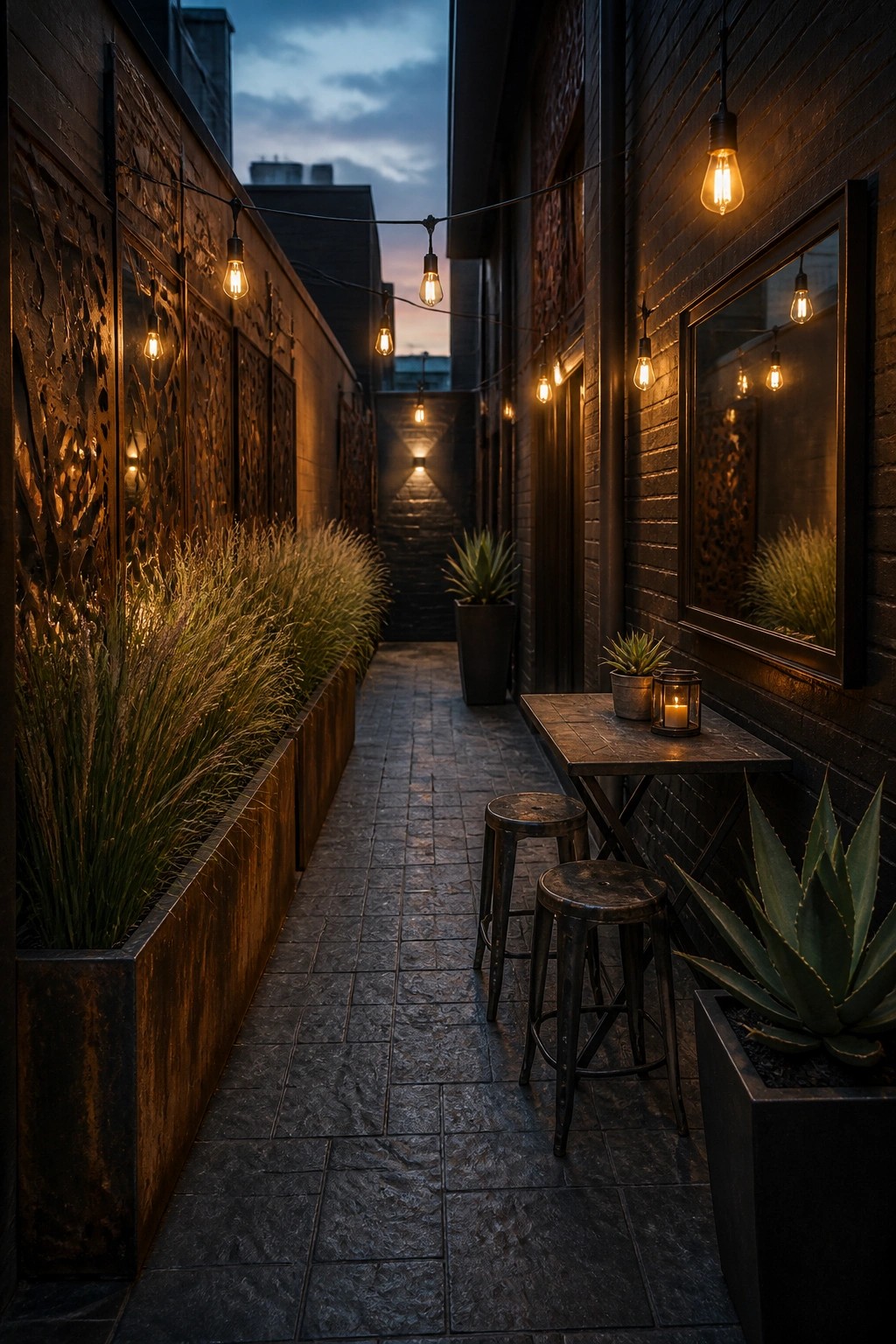
String lights work well in tight side yards because they add light without taking up floor space. They turn a plain walkway into a spot where people can actually sit and spend time instead of just passing through.
This approach suits homes with long narrow passages between the house and a fence or neighboring wall. Keep the lights simple and hang them overhead so the path stays clear. A couple of stools and a small table are usually enough. Just watch the spacing so the area does not feel cluttered at night.
Stepping Stones Over Gravel In Narrow Passages
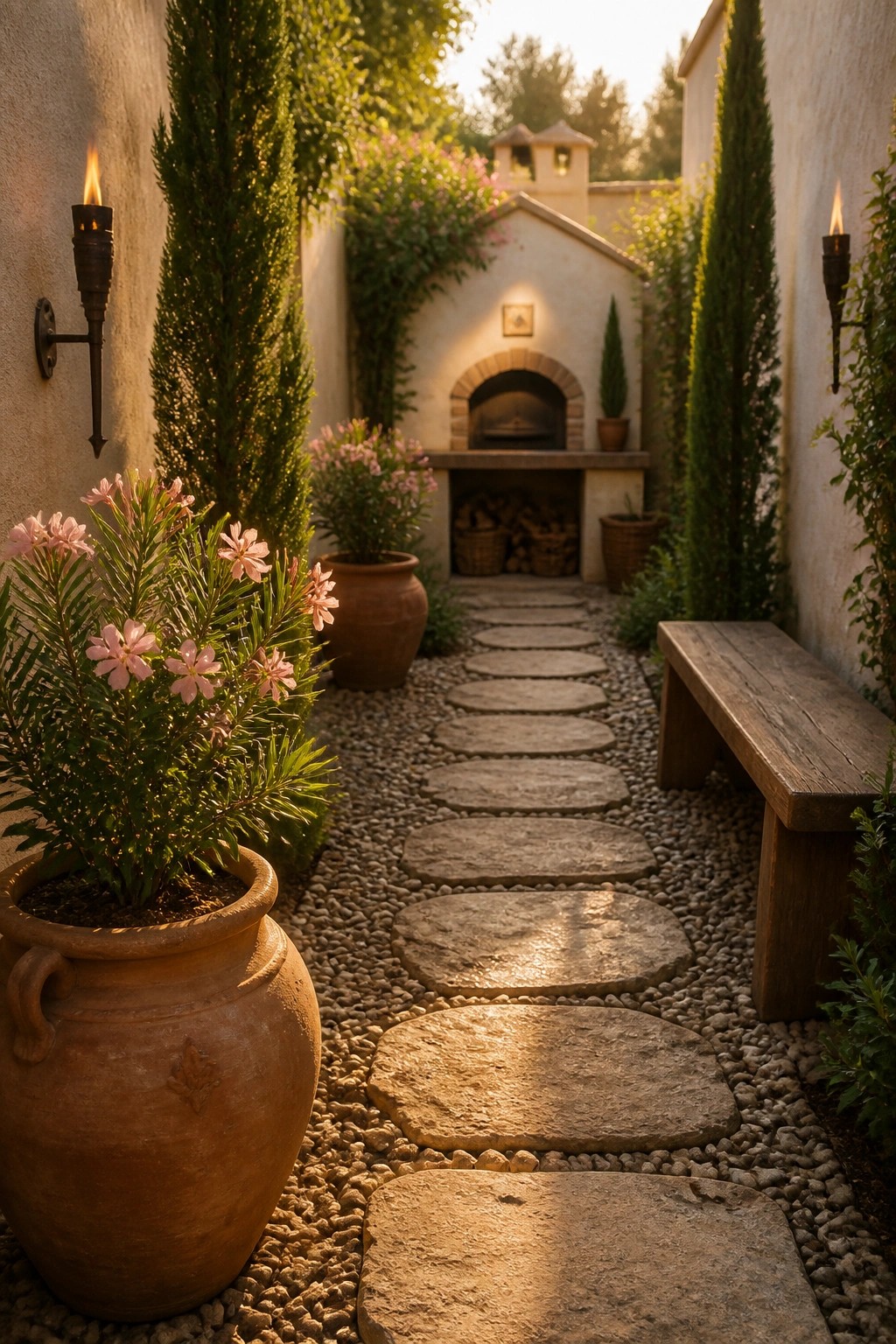
A gravel base with stepping stones laid down the center gives a narrow side yard a clear walking path without making the space feel too built up. The loose gravel drains well and softens the look while the flat stones keep feet dry and the route obvious.
This works best in long tight areas between a house wall and a fence or neighboring property. Line the edges with tall narrow trees or large pots to add height and some privacy without crowding the walkway itself.
Line Narrow Paths With A Meadow Planting
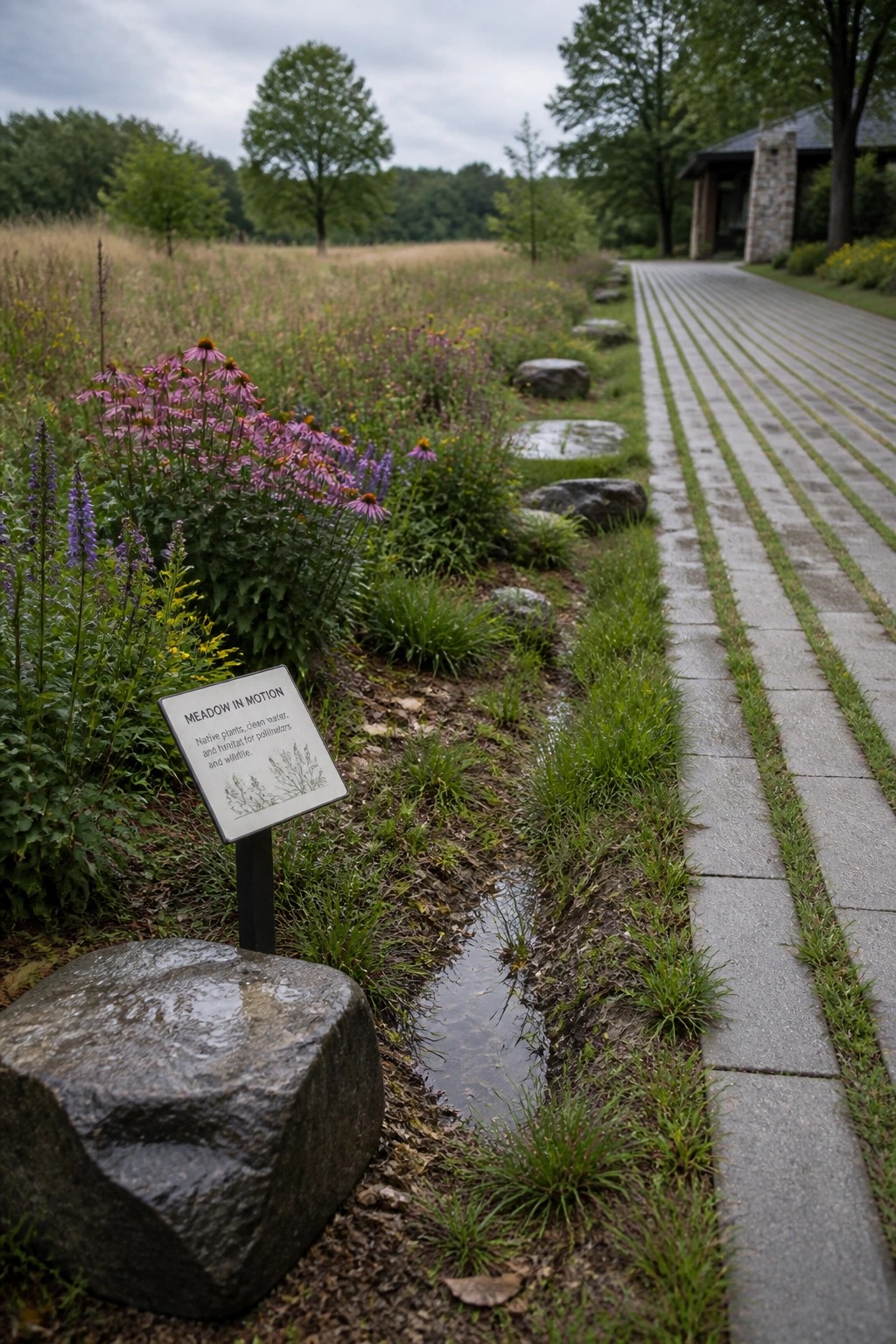
A long walkway often leaves awkward strips of land on either side that are hard to use. Planting a narrow meadow strip filled with native flowers turns that space into something useful instead of just leftover ground. The flowers bring color and support pollinators without needing much width.
This works best in side yards or along driveways where you want low care and some seasonal interest. Keep the planting loose and let the water edge handle drainage so the bed stays healthy. Avoid packing in too many different plants or the narrow space can start to look messy.
Built-In Seating For Narrow Side Yards

A built-in bench along one wall turns a tight walkway into a place where you can actually sit and spend time. The long cushion and simple pillows keep the setup low and out of the way while still giving real seating without taking up floor space.
This works best in side yards or passages that already have solid walls on both sides. Keep the bench depth modest so people can still walk past, and use the wall above for hanging lights or climbing plants to soften the feel without crowding the path.
Turn A Narrow Side Yard Into An Outdoor Dining Area
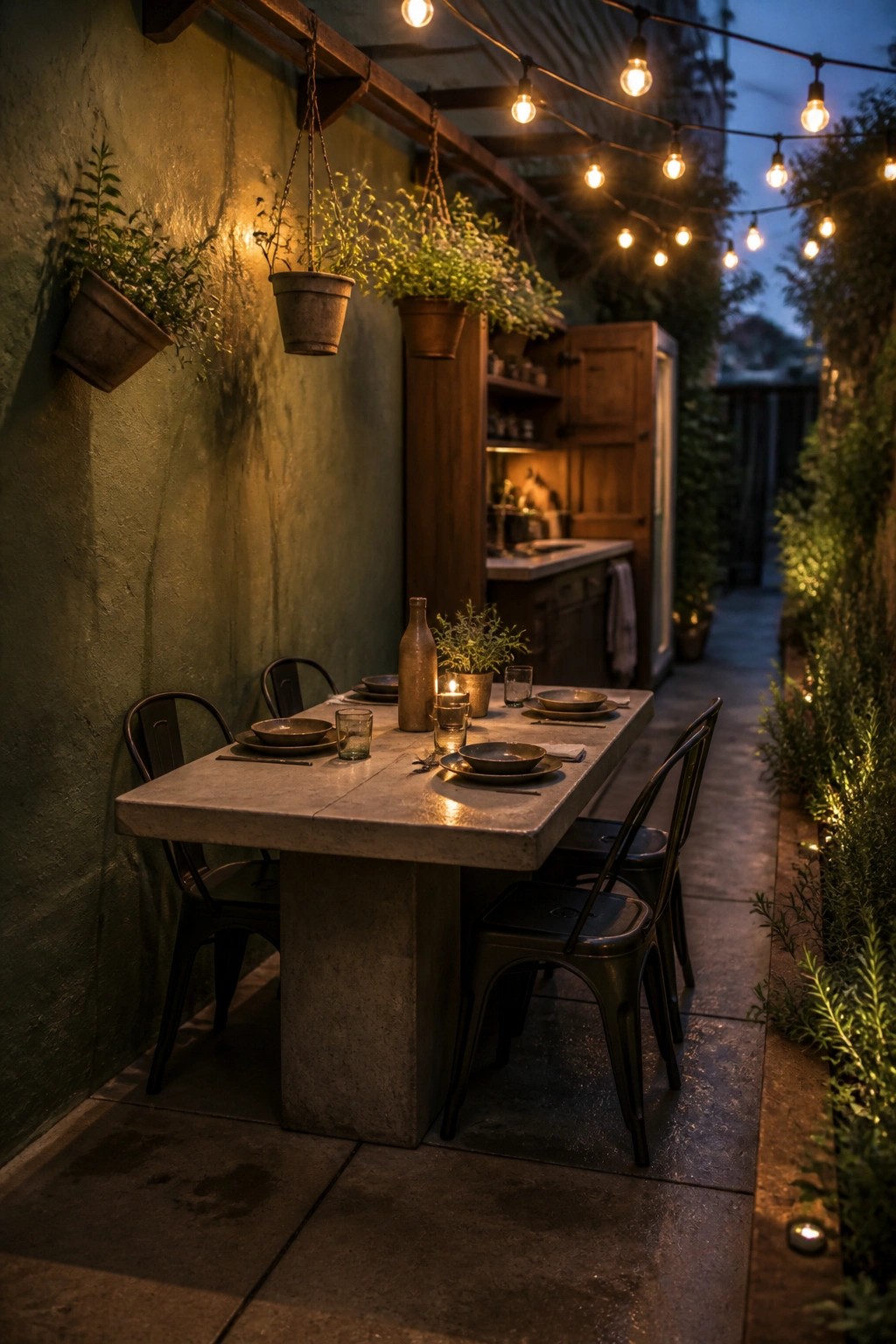
A long table placed along one wall turns a tight side yard into a place where people can actually sit and eat. The setup works because it uses the length of the space instead of fighting against it, and overhead string lights keep the area usable after dark without needing much floor space.
This approach suits homes with narrow passages between the house and a fence or neighboring wall. Keep the table simple and sturdy, add a few chairs on the open side, and run lights along the top edge so the walkway stays clear. Avoid cluttering the opposite wall if you want room to walk through.
Line Narrow Paths With Potted Trees
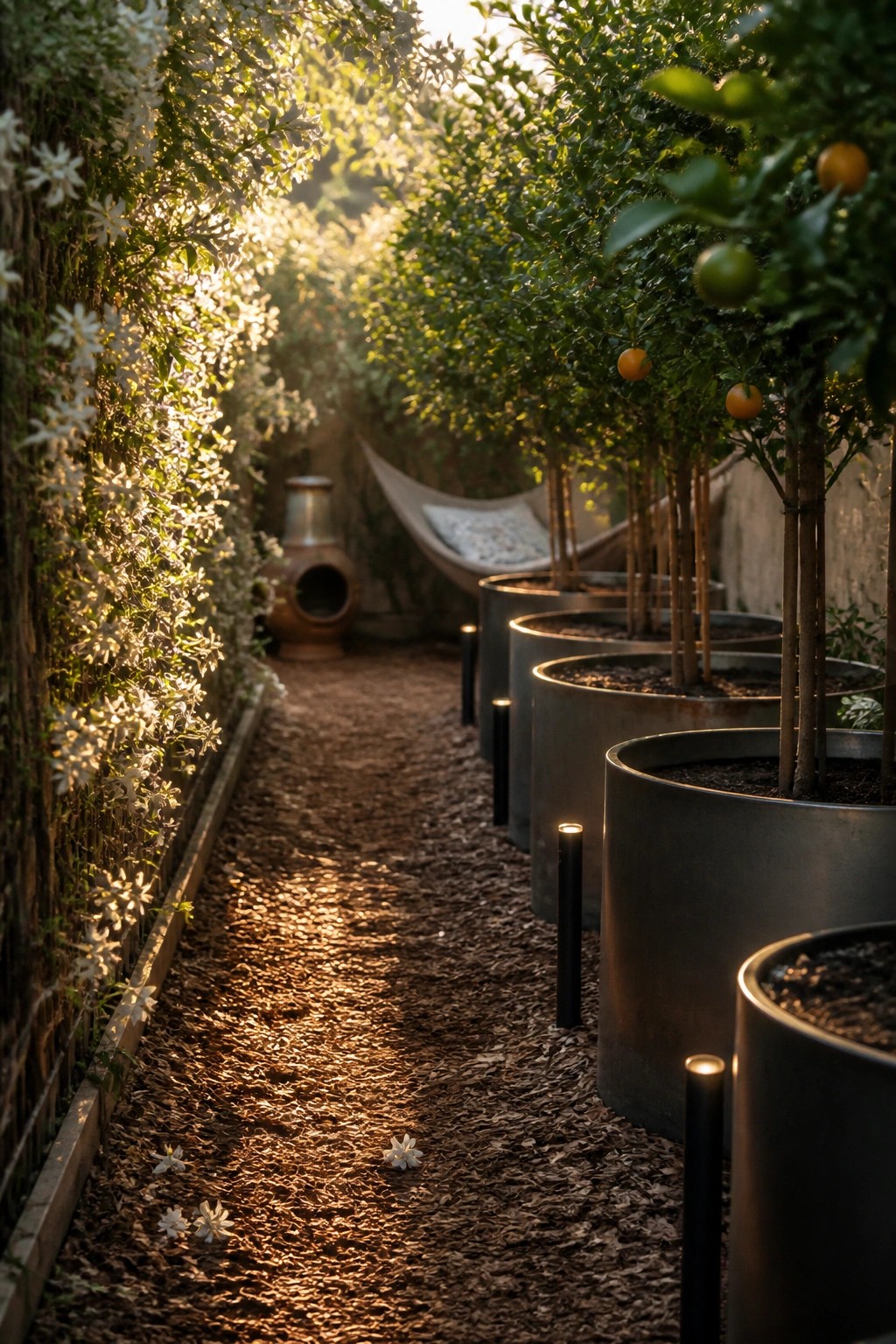
Narrow side yards often get ignored because they feel too tight for real planting. Setting a row of large containers along one side adds useful greenery and even room for small fruit trees without digging up the ground.
This approach suits homes with long walkways or slim passages between fences. Choose deep pots that can handle the root systems, space them evenly, and add simple path lights so the area stays practical at night.
Mix Materials Along A Narrow Path
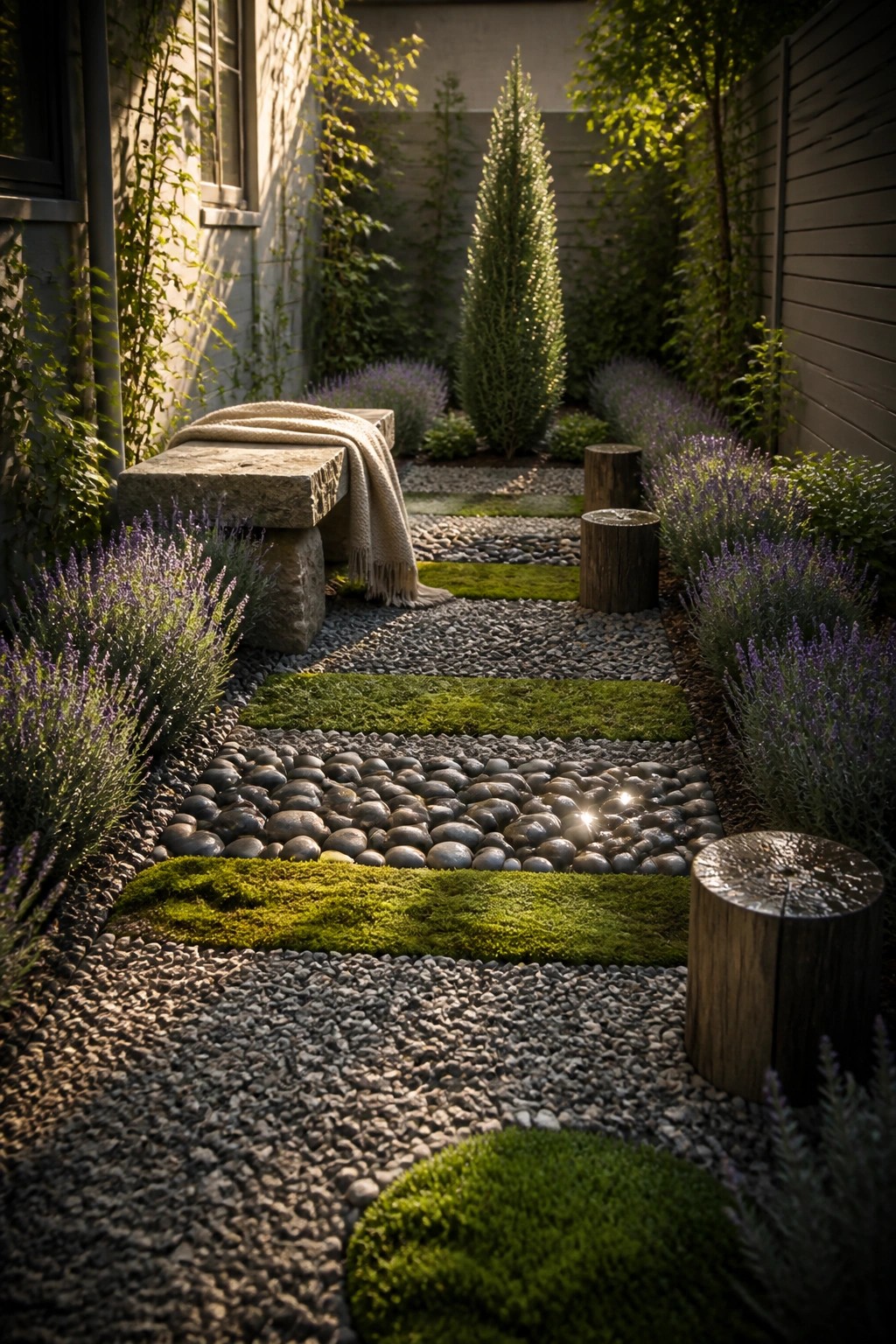
A path that changes materials every few feet can make a long narrow garden feel more interesting. Using strips of moss between sections of gravel keeps the walkway from looking like one flat surface and adds a bit of texture underfoot.
This works best in side yards or tight passages where you want to slow the eye down without crowding the space. Keep the strips fairly even in width and let low plants spill over the edges so the whole thing stays simple and easy to walk on.
Set Metal Plates Into Gravel for the Path
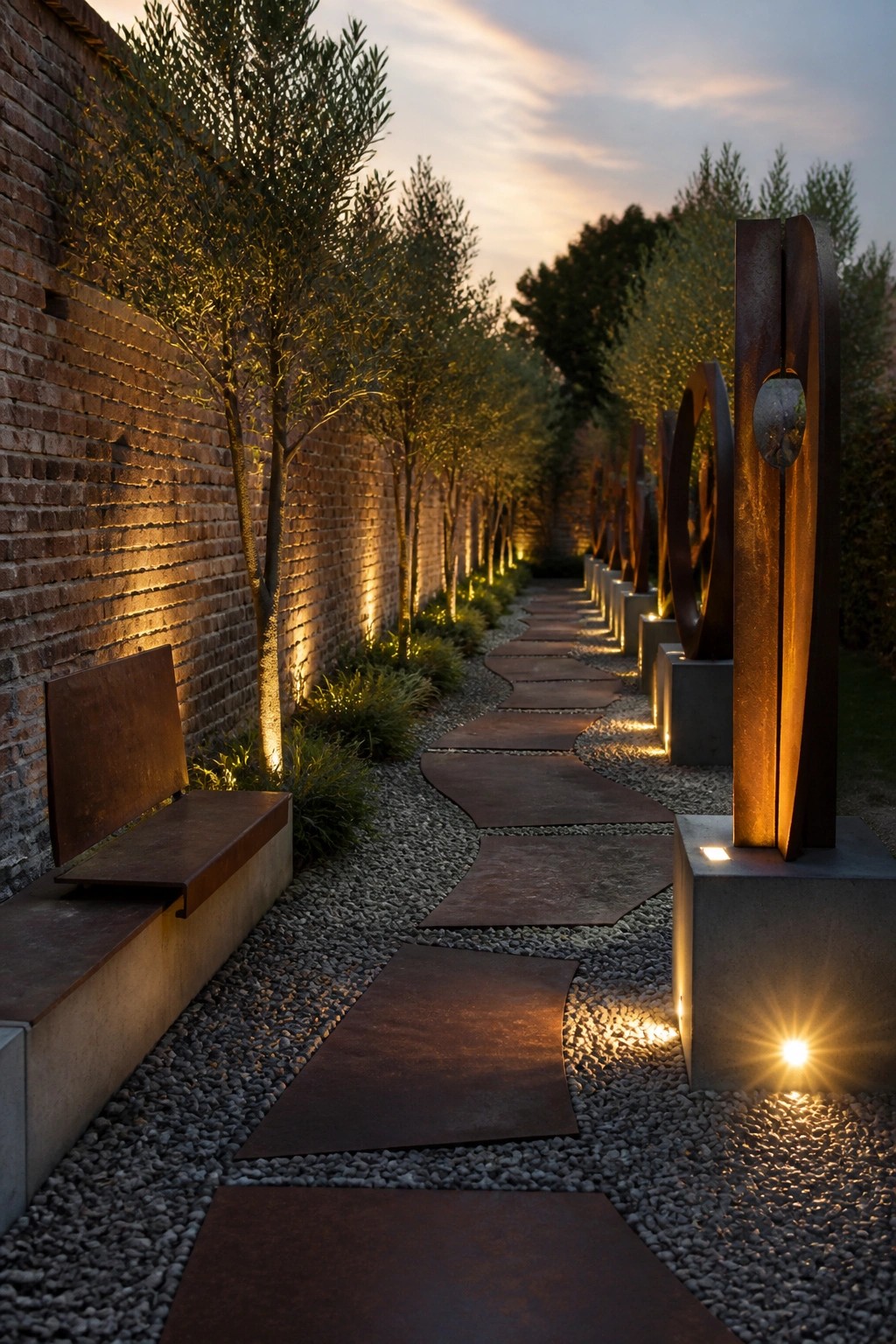
A gravel path with large metal plates laid across it gives a narrow side yard a clear route without making the space feel closed in. The plates stay put underfoot and let water drain through the gravel, which helps keep the walkway practical in all kinds of weather.
This works best along the side of a house where space is limited. Keep the plates spaced so they follow the natural line of the yard, and add low lighting near the edges if you want the path to stay usable after dark.
Frequently Asked Questions
Q: What plants stay low enough for a narrow walkway without constant trimming? A: Go with ground covers like moss or low sedum that hug the ground and spread slowly. They handle foot traffic lightly and need just occasional weeding to stay neat. Water them deeply once a week during dry spells.
Q: How do I add a few lights along a long side yard path without digging trenches? A: Stick solar stake lights into the soil every four or five feet. They charge on their own and turn on at dusk. Angle them slightly toward the ground so the path stays visible but not harsh.
Q: Can seating fit in a skinny side yard or will it block the flow? A: Tuck a slim bench against one fence and keep the opposite side open for walking. A narrow ledge or two stools work even better if space gets tight. This setup lets you rest without turning the area into an obstacle course.
