

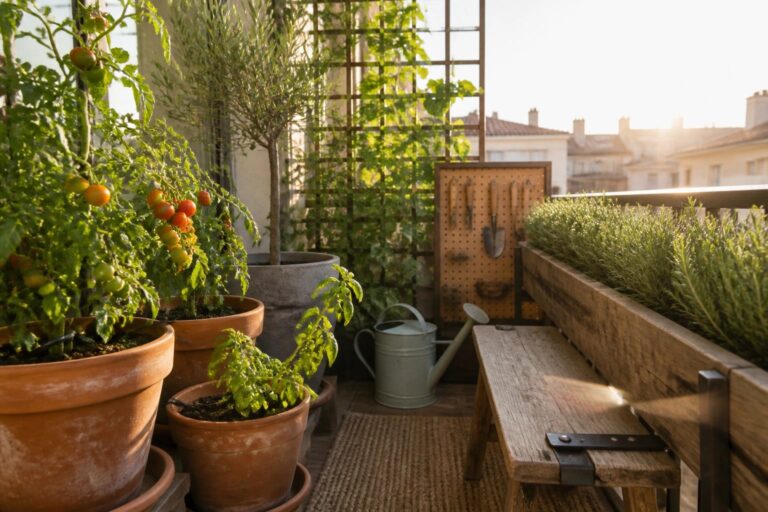
I have found that balcony gardens tend to work best when the containers sit at a height and depth that lets me reach everything without stretching or stepping over pots.
It is easy to overlook how often you will need to water and harvest until the setup is already in place and suddenly feels awkward.
Access changes everything.
Thinking ahead about movement through the space has saved me from a few layouts that looked fine on paper but would have been frustrating in daily use.
The ideas that focus on reachable rows and movable containers seem worth trying first because they match how I actually spend time on my balcony.
Arrange Pots Along the Balcony for Easy Harvests
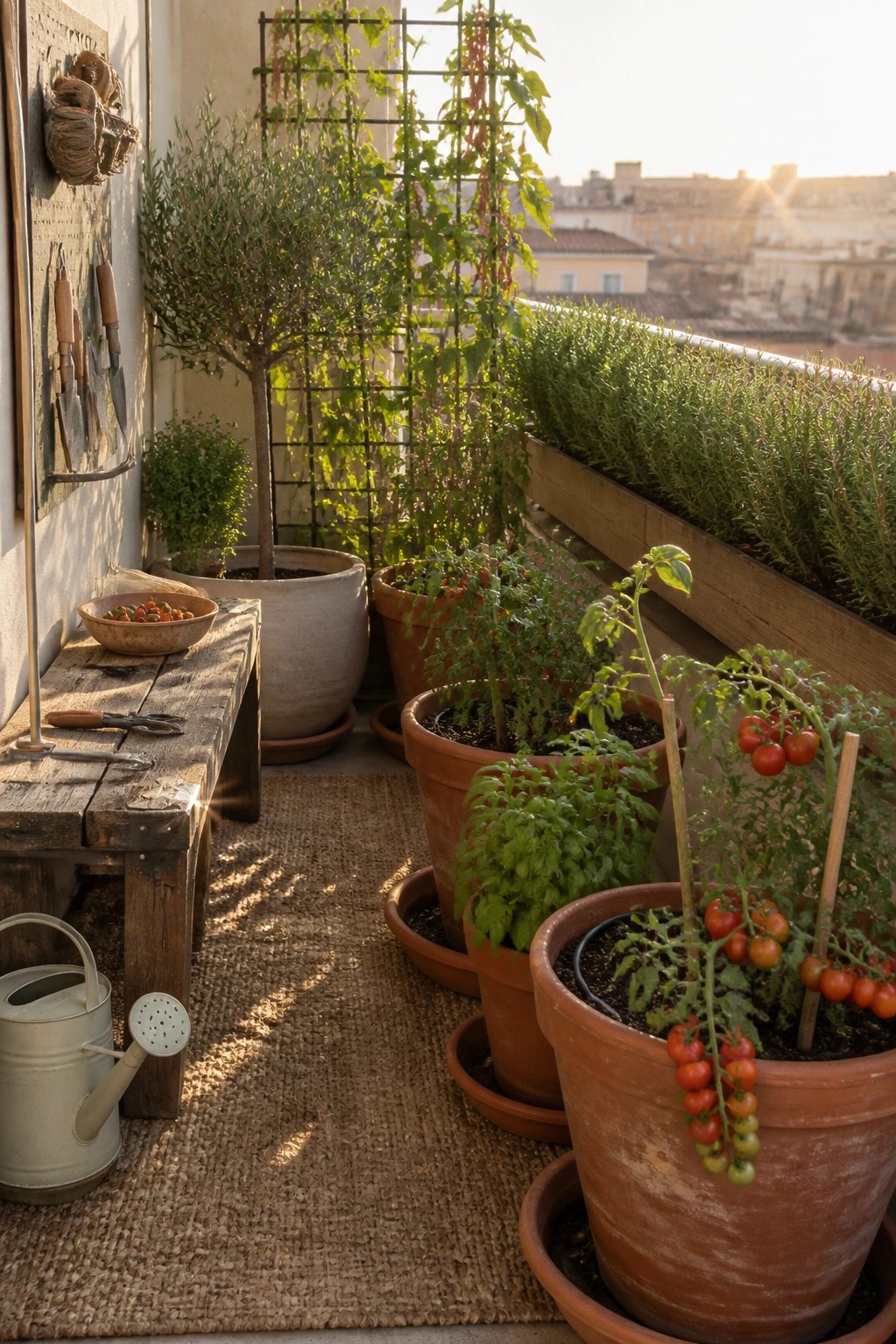
Placing vegetable containers in a single row keeps everything within reach. Tomatoes and herbs stay right where you can water them or pick a few ripe pieces without stepping over other plants or moving heavy pots around.
This setup works well on narrow balconies or small terraces where space is limited. Use sturdy pots that can handle the weight of soil and water, and leave a clear path in front so you can move freely when it is time to harvest.
Wheeled Containers Keep Balcony Gardens Easy to Manage
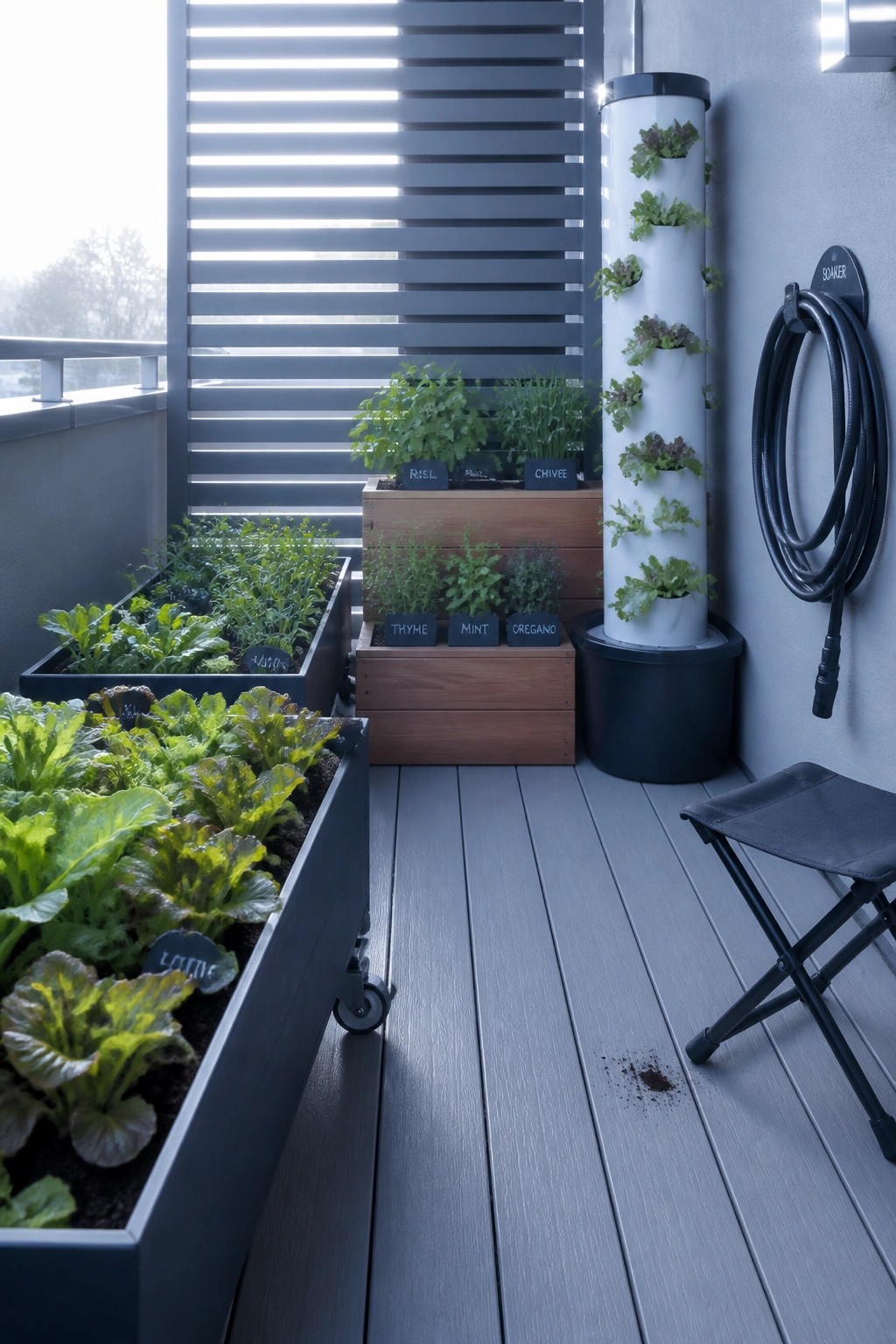
Wheeled planters give you a simple way to adjust plant placement without lifting heavy pots. On a balcony you can roll them toward the sun when needed or pull them close when it is time to harvest. This keeps the work light and lets you make the most of limited space.
Try grouping a few matching rectangular beds on casters with a vertical tower in the corner. The wheels let you rearrange the setup as plants grow or as the season changes. Just watch the floor weight limits and make sure the wheels lock so the beds stay put on windy days.
Tiered Buckets Maximize Balcony Space
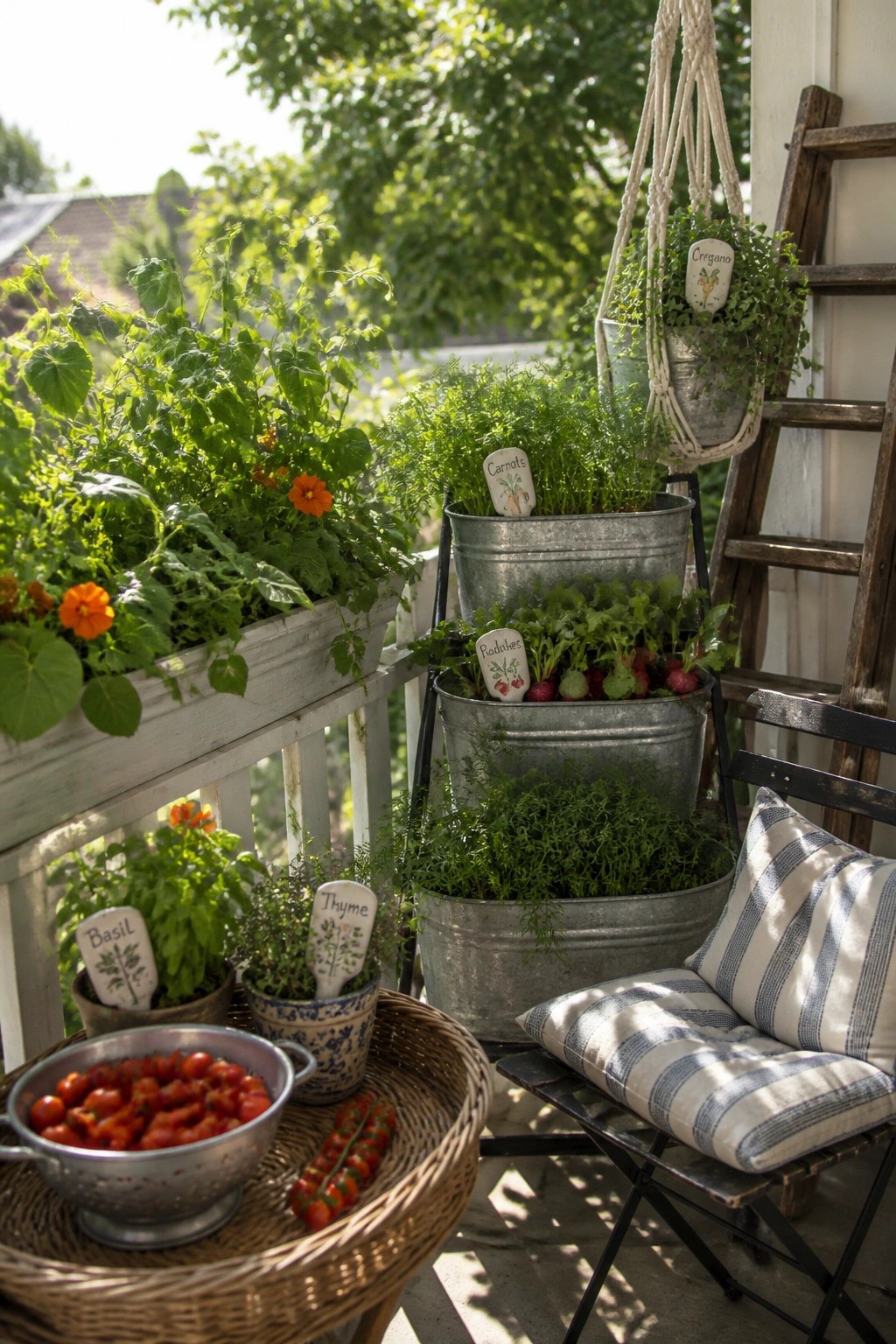
Many balconies have room for only a few pots, which limits how much you can grow. A tiered stand with metal buckets lets you stack several containers in the same footprint and still reach every plant.
This works best on small urban balconies where floor space is tight. The buckets drain well, the stand keeps plants at different heights, and you can label each level so harvesting stays simple.
Wooden Crates Keep Balcony Vegetables Easy To Reach
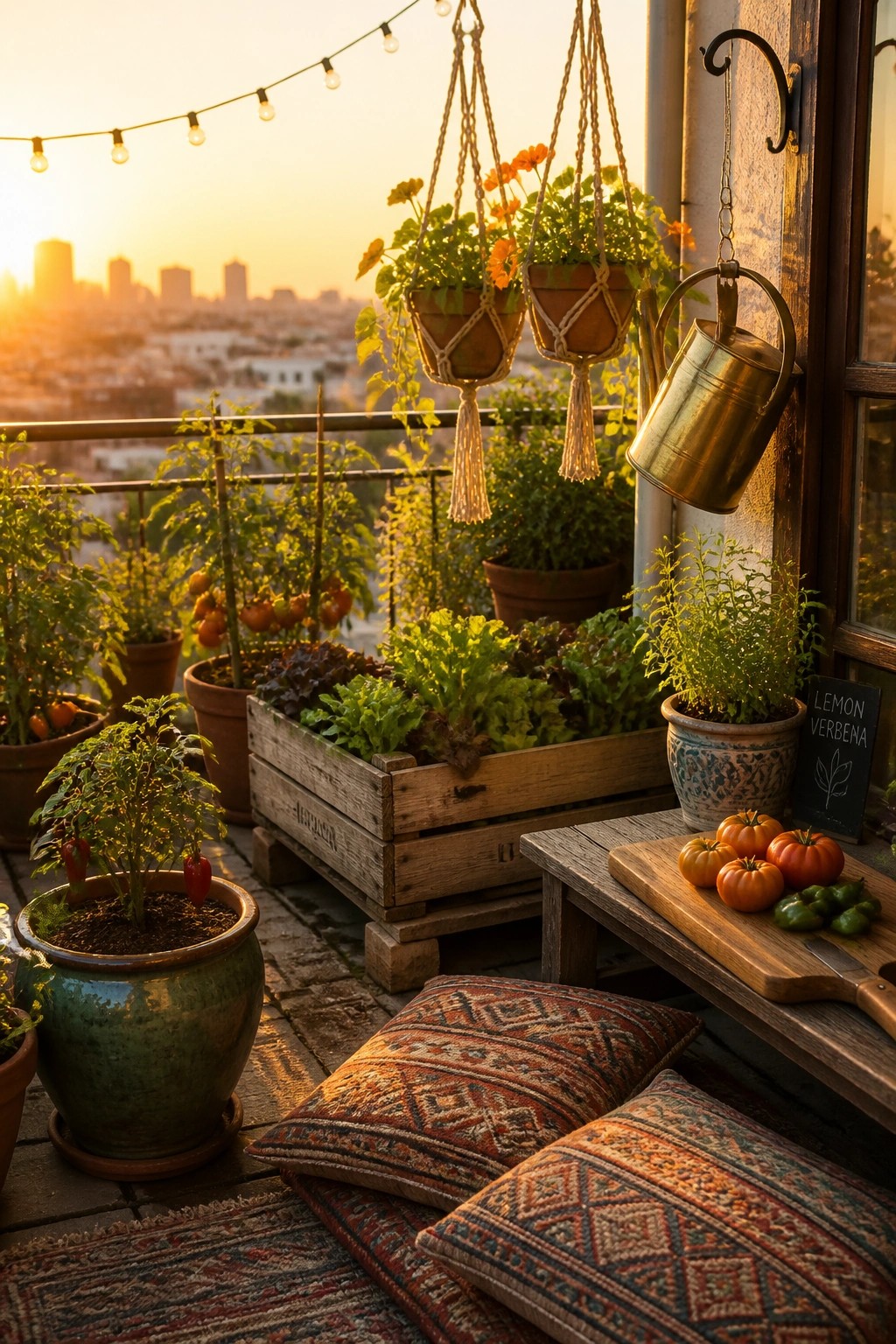
Many balcony gardeners find that wooden crates give vegetables a little extra height, which makes daily care and harvesting feel less awkward. You can fit more plants without crowding the floor, and the open sides let you see when things are ready to pick.
This setup works best on small urban balconies where floor space is limited. Set the crates along the railing, keep a few pots nearby for herbs, and add a low bench or cushions so you can sit while you work.
Add a Sink for Easier Balcony Herb Care
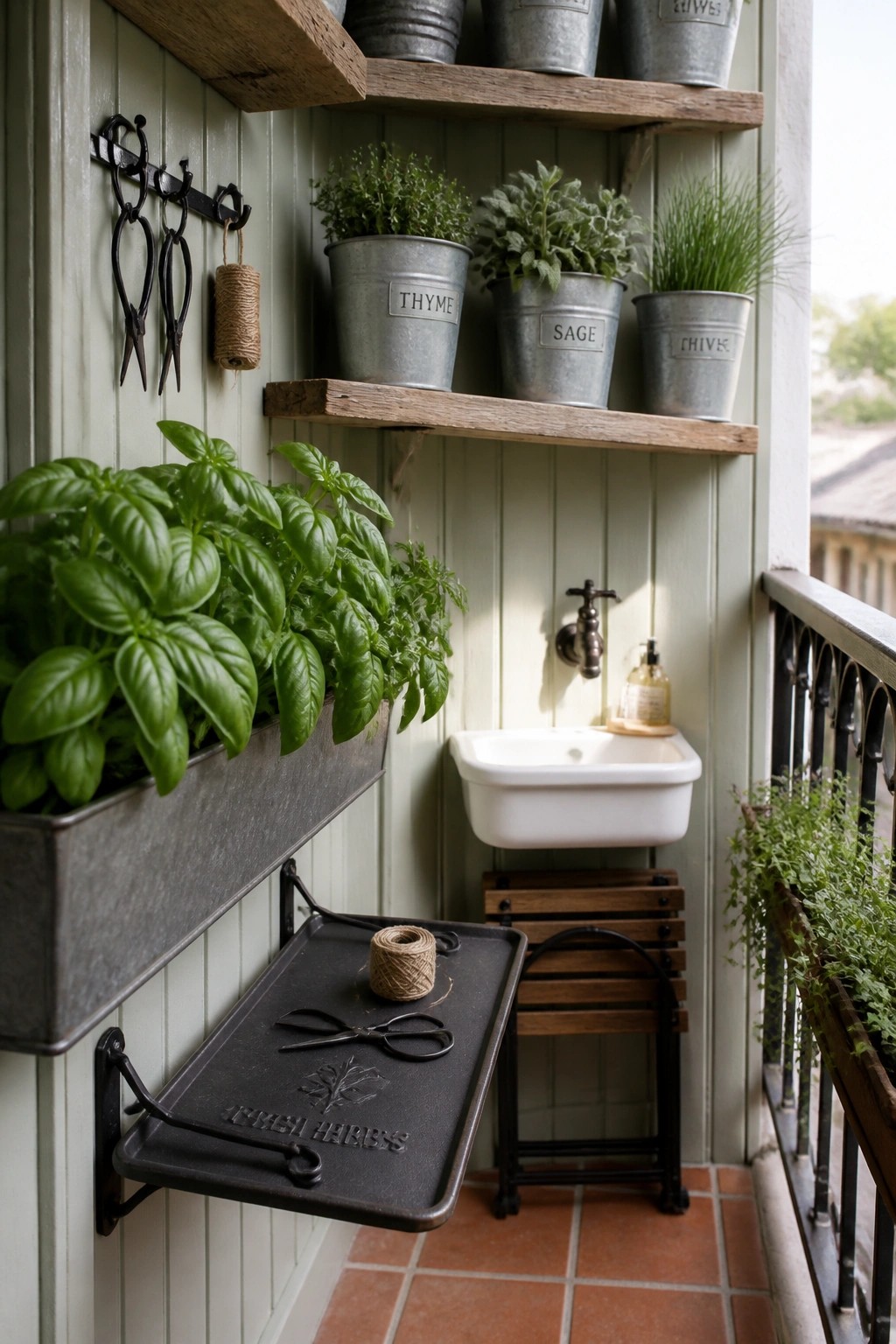
A small sink mounted right on the balcony makes a big difference when you grow herbs and vegetables in containers. It lets you water, rinse leaves, and clean up without running back and forth through the house, which keeps the whole process quicker and less messy.
This works best on balconies that already have some wall space and decent drainage. Mount the sink at a comfortable height, then keep your most-used containers and tools nearby so harvesting and daily care stay simple.
Vertical Shelving for Balcony Gardens
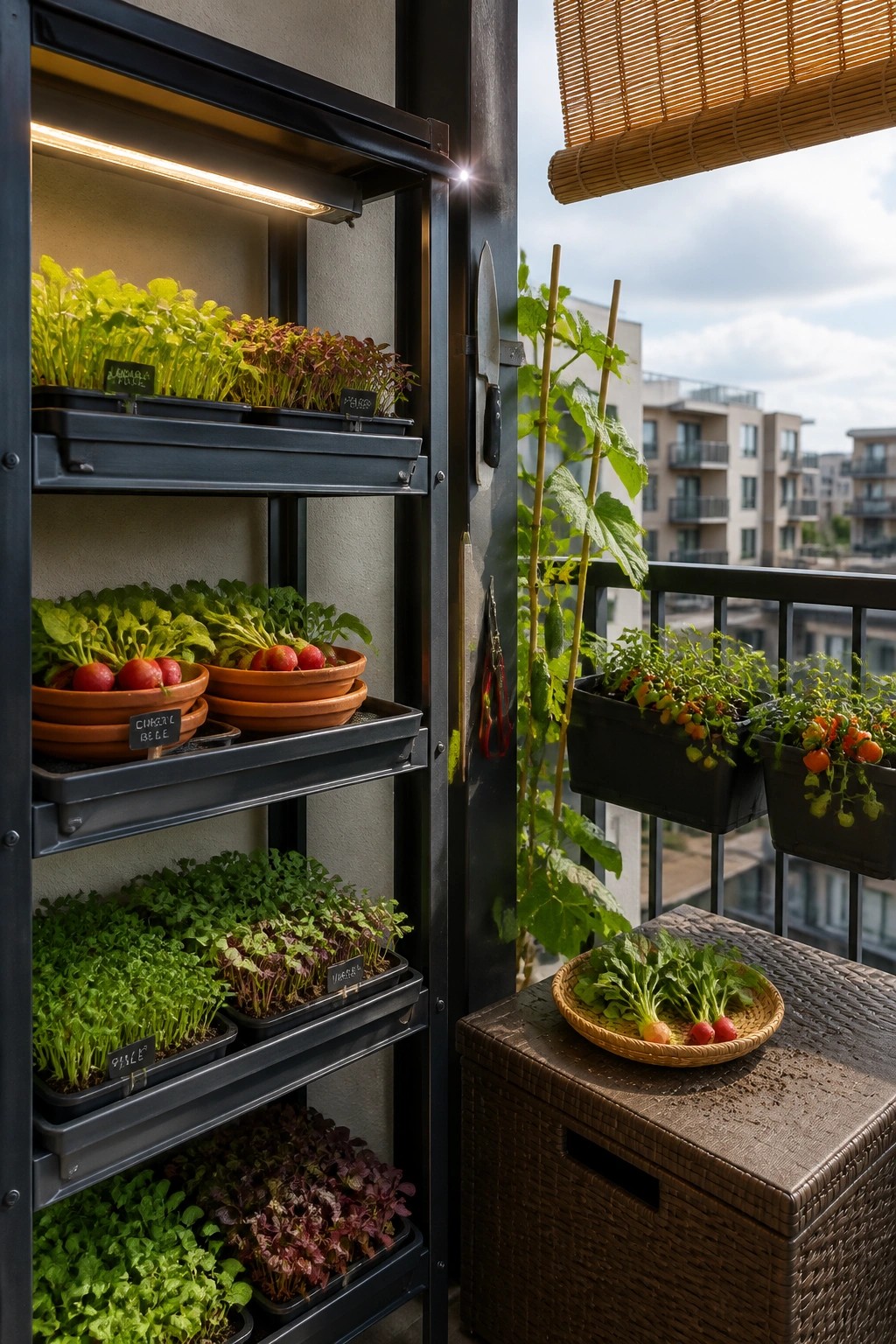
A tall shelving unit makes it easy to grow more vegetables when floor space is limited. The stacked trays hold plenty of containers at different heights, and built-in lights keep the plants healthy without needing much sun.
This approach suits small urban balconies where you want fresh produce close at hand. Keep a harvest basket nearby so picking is simple, and check that the unit is sturdy enough to handle the weight of full trays.
Use Different Container Heights
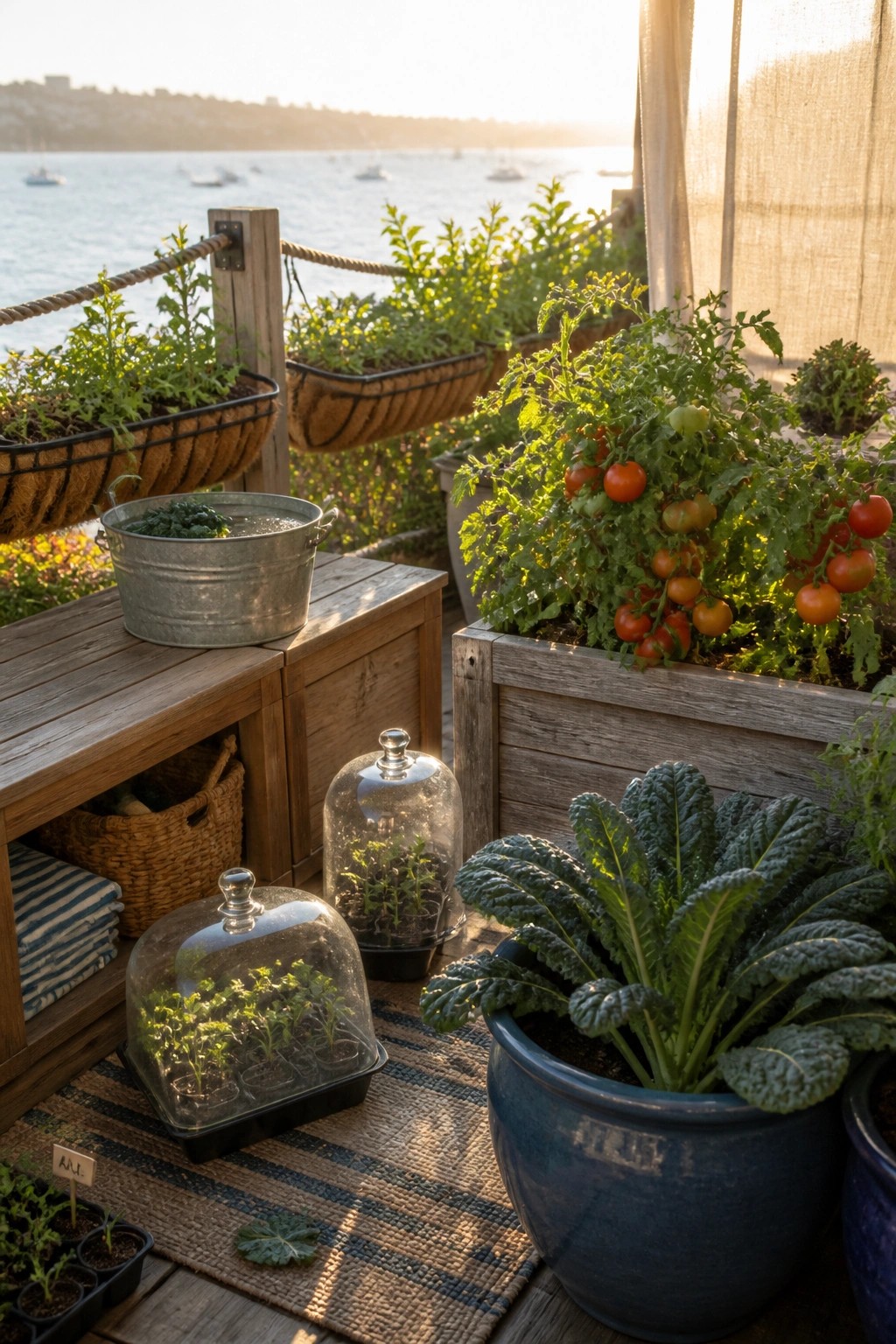
Placing vegetable containers at different heights makes daily harvesting much simpler on a balcony. Taller wooden boxes and large pots bring plants up to a comfortable level while smaller pots and trays stay lower for quick checks or watering.
This setup works well on most balconies because it fits many plants into a small space without crowding the floor. Try mixing a few raised wooden planters with standard pots so you can reach everything without bending or stretching too far.
Pallet Shelving For Balcony Gardens
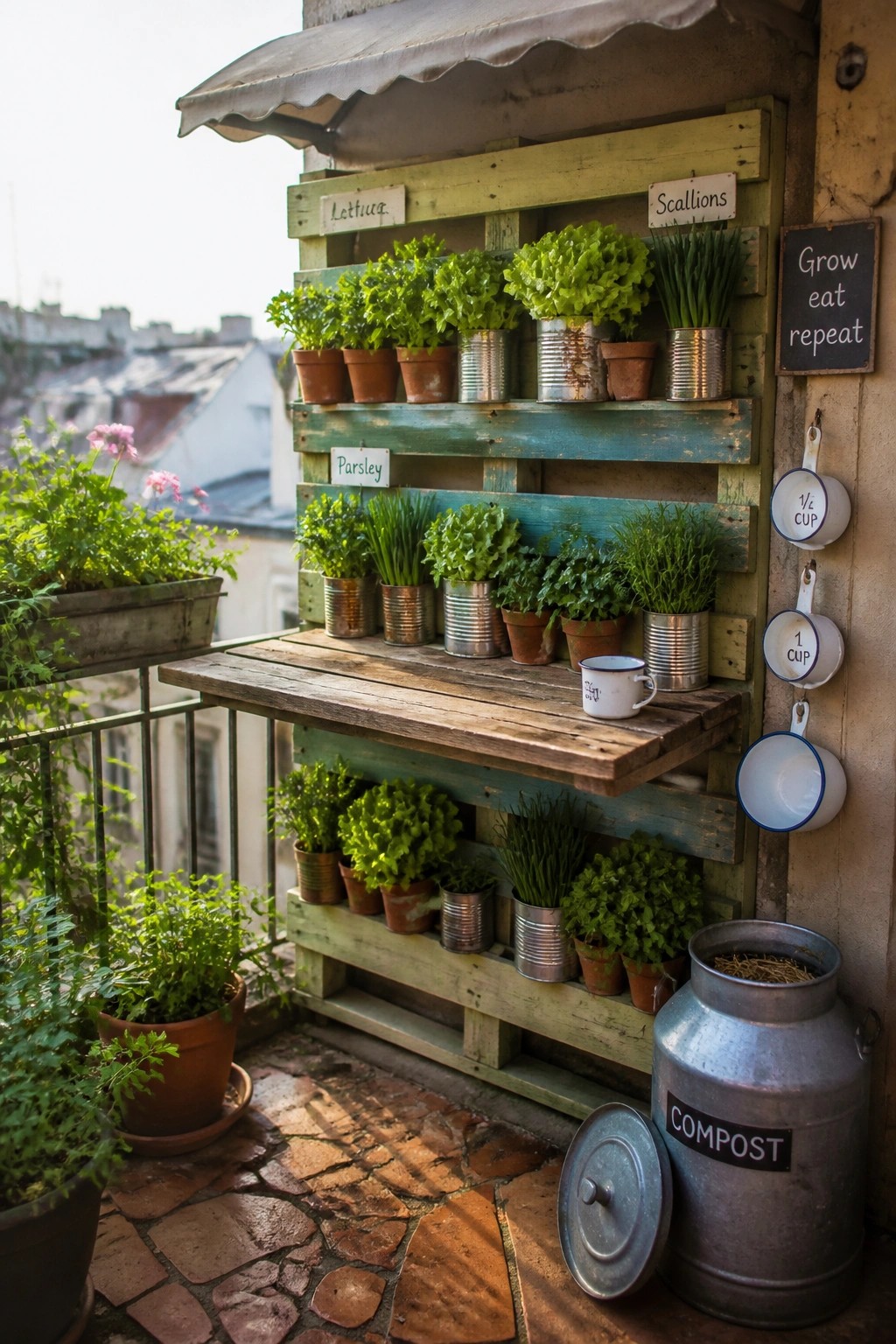
Old pallets can turn a narrow balcony wall into useful growing space without crowding the floor. The stacked shelves hold plenty of pots at different heights, so everything stays easy to water and pick.
This approach suits small urban balconies where room is tight. Secure the pallets well to the railing or wall, and stick with lightweight containers like metal cans so you can move things around as the seasons change.
Raised Planters Keep Balcony Vegetables Within Reach
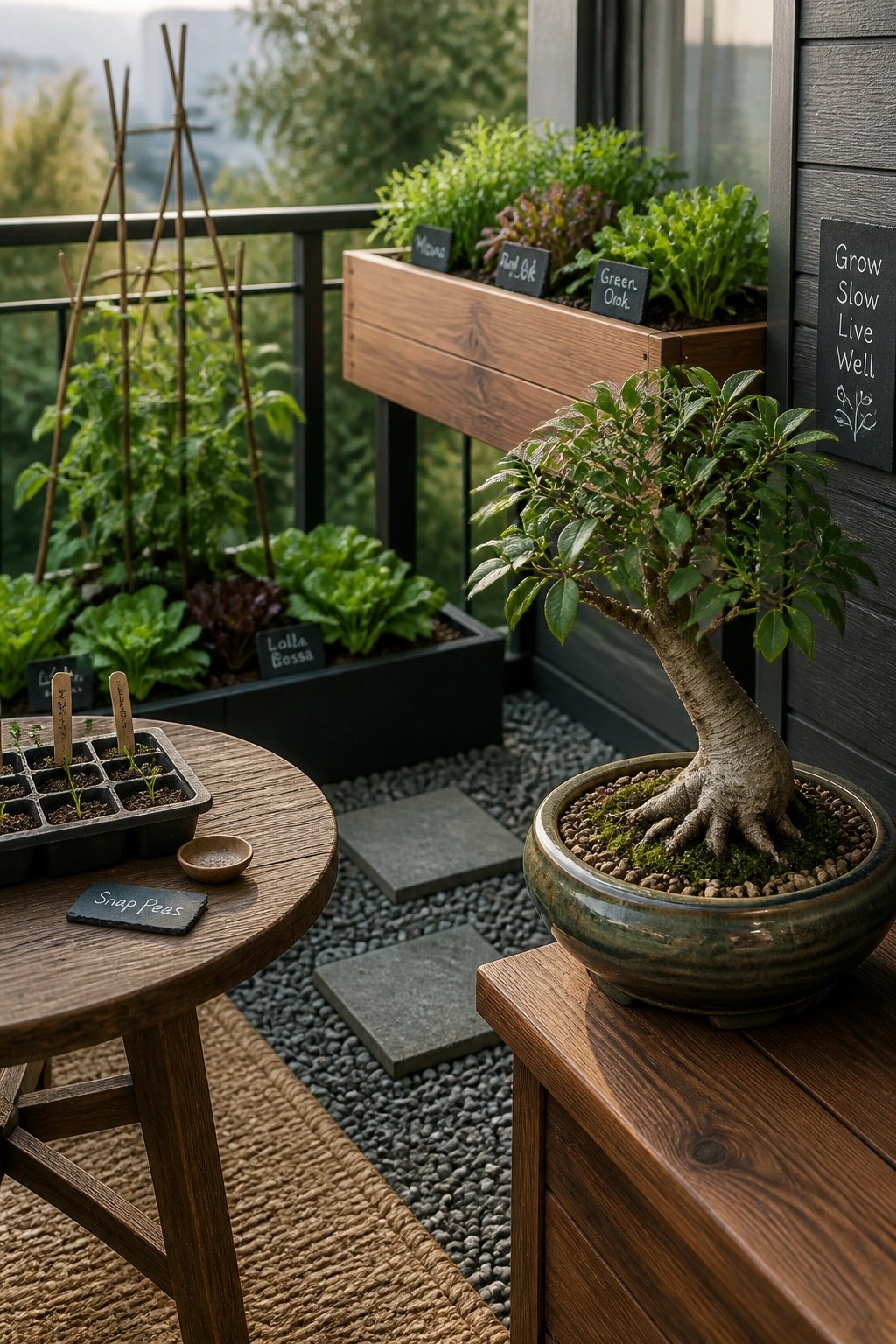
Many balconies work well for vegetables when you use raised wooden planters instead of pots scattered on the floor. The height makes it easier to water, check for pests, and pick produce without bending or reaching over railings.
Mount the planters along the outer edge so the crops get good light and stay close at hand. This approach suits apartments with limited floor space and works best when you stick to compact varieties that do not outgrow the boxes.
Terracotta Pots Along The Balcony Railing
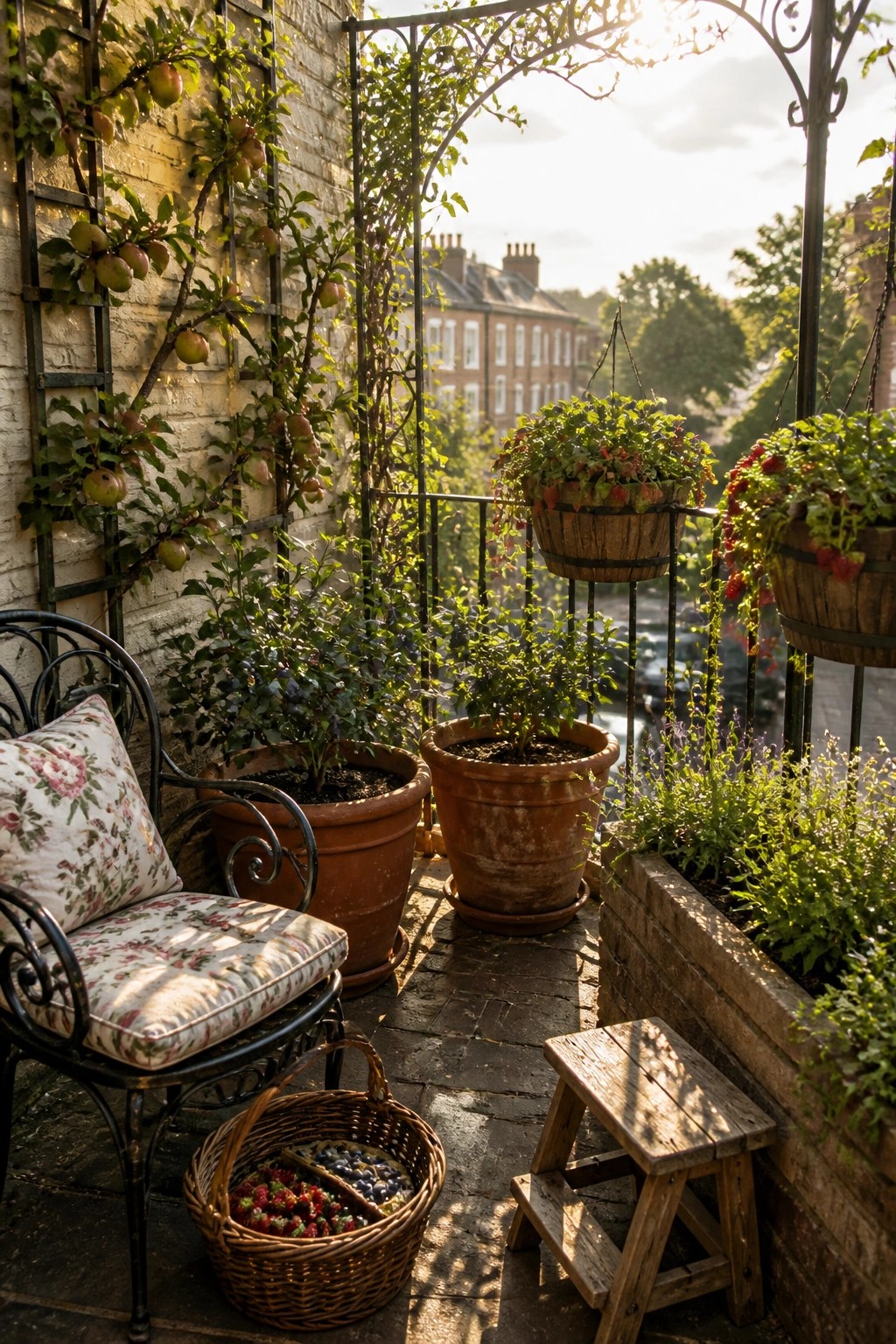
Large terracotta pots work well on balconies because they give vegetable roots room to grow and stay put even on windy days. Many people line them up along the edge so the plants get sun while the middle of the floor stays open for a chair or two.
A low wooden stool helps reach anything higher, and a basket on the ground makes it easy to drop produce straight into it after picking. This setup suits small city balconies where space is tight but you still want a steady supply of herbs or berries close to the kitchen.
Mobile Containers For Easy Balcony Access
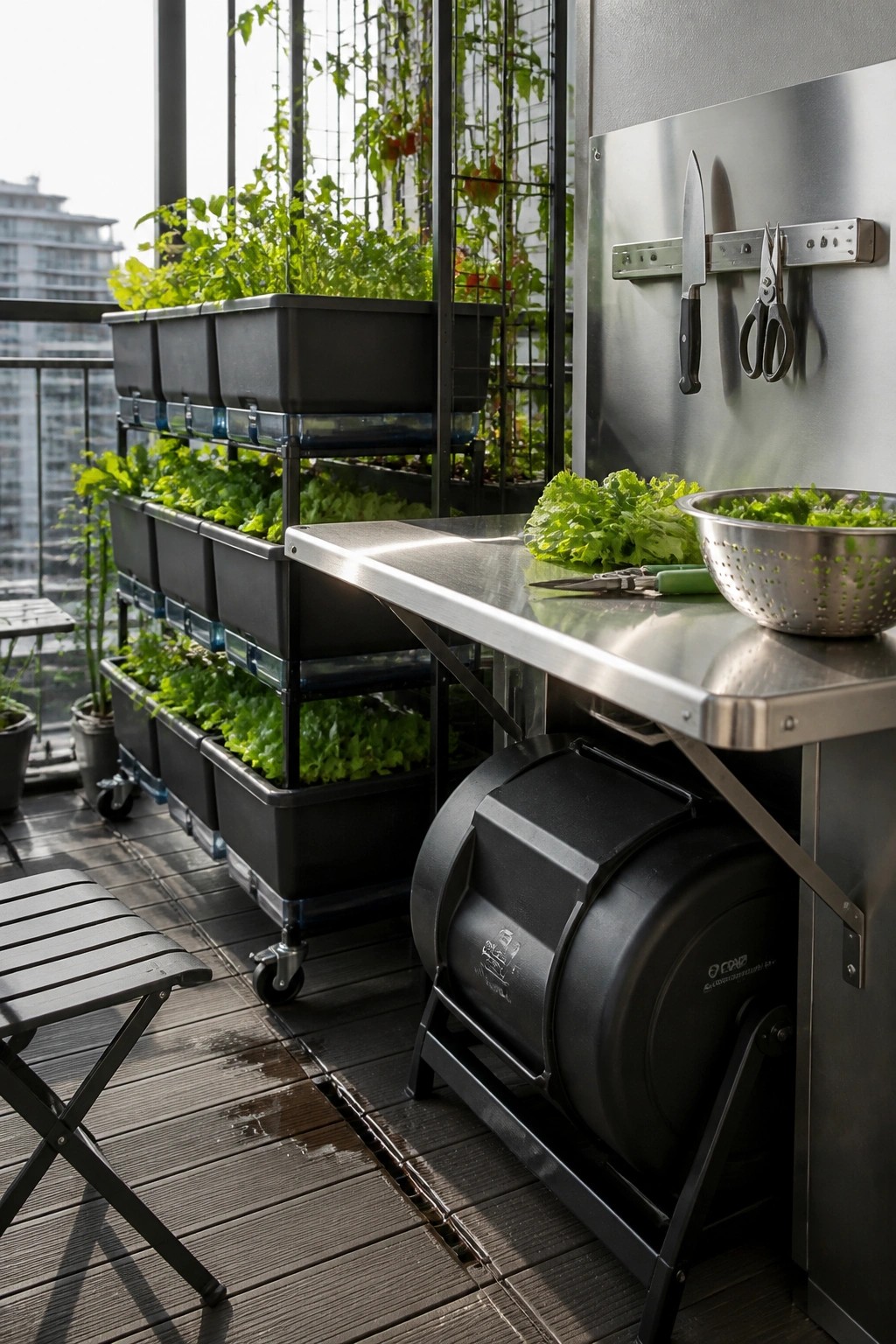
Wheeled containers let you move the whole garden when you need better light or more floor space. This works well on balconies where fixed beds are not possible and every inch counts.
Roll the bins out for watering or harvest and push them back when you want the area clear. They suit small urban spots where you want fresh greens without a full yard.
Use Raised Ledges to Keep Pots Within Easy Reach
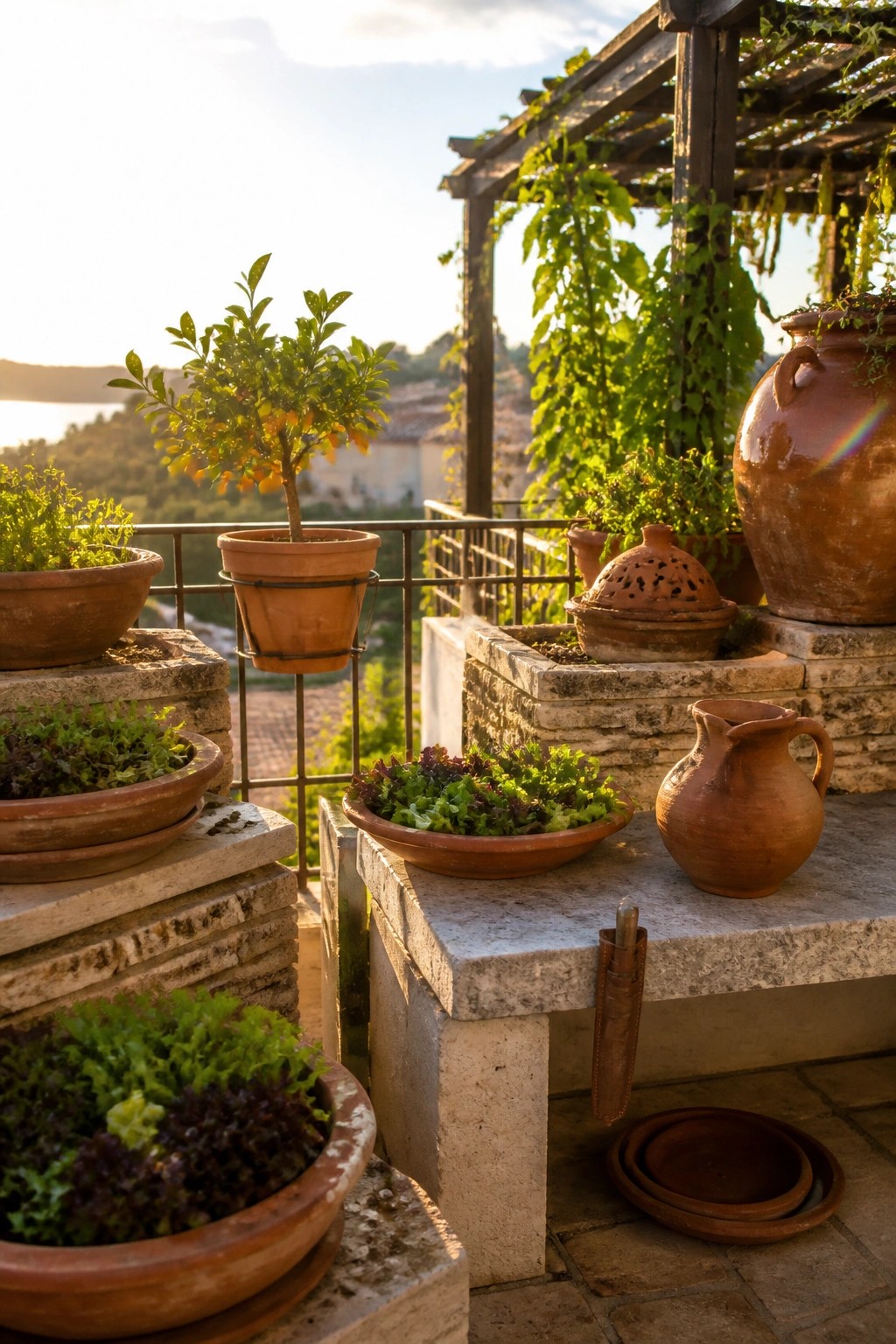
Placing containers on raised stone ledges makes harvesting much simpler on a balcony. You avoid constant bending or stretching, and the plants stay at a comfortable height even when the floor space fills up with other pots. This approach works especially well with vegetables and herbs that need frequent picking.
It suits smaller balconies where floor room is limited and you want everything accessible without moving things around. Try grouping a few pots on the ledge and keep the rest on lower surfaces so you can reach the ones you use most often without extra steps.
Label Containers For Faster Harvests
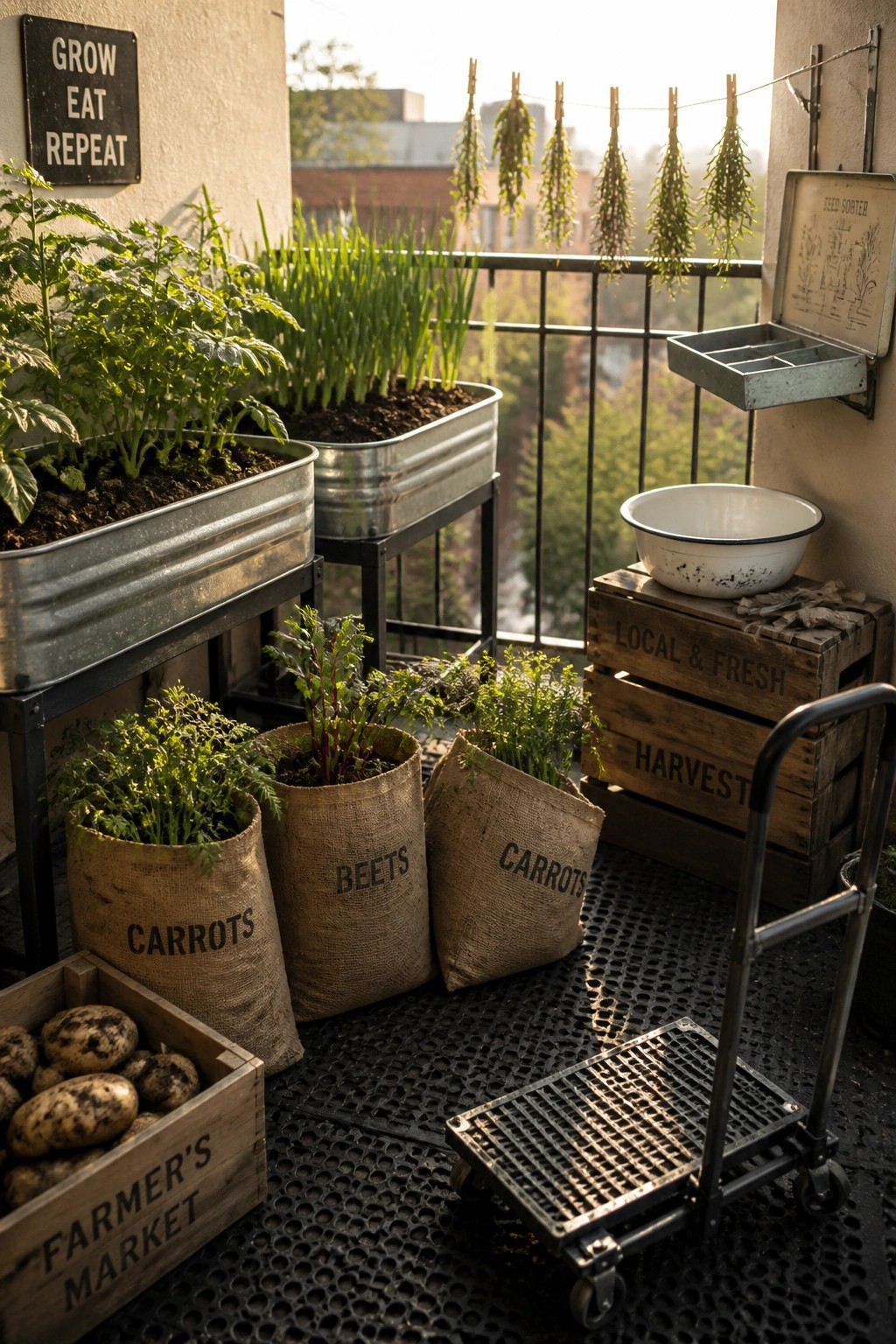
Many balcony gardeners find that clear labels make the whole process smoother. When each sack or bin shows exactly what is growing inside, you avoid digging around to find what you want and can harvest in just a few minutes.
This setup works best on small urban balconies where space is limited and you need to move containers around. Use sturdy fabric sacks or metal troughs with bold lettering so you can rearrange things easily without losing track of your crops.
Add a Fold-Down Table for Easy Harvesting
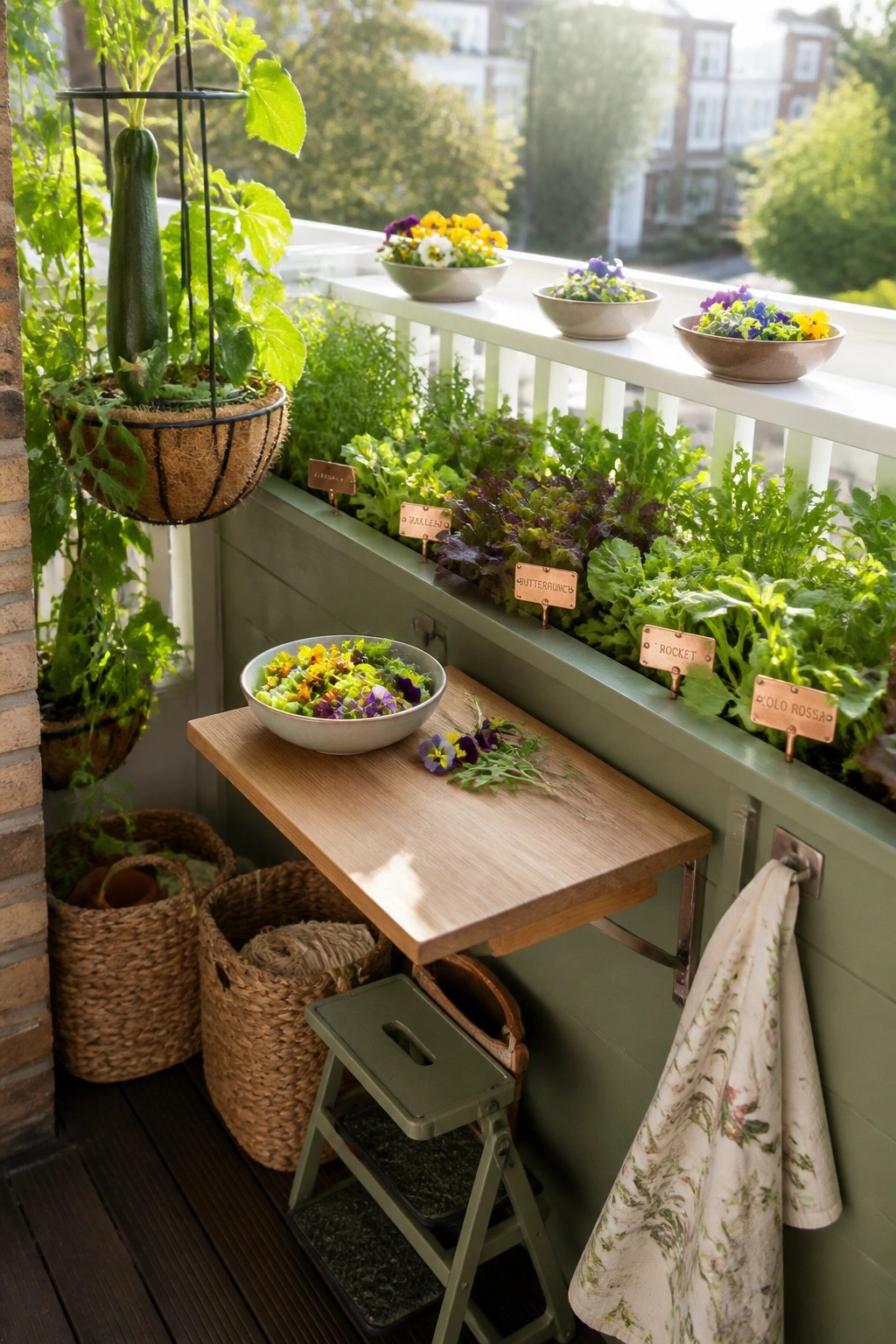
A small work surface right next to the plants makes harvesting much more practical on a balcony. The table folds down when needed and stays out of the way the rest of the time, which keeps the limited space usable for both growing and daily tasks.
This idea works best on narrow balconies where floor room is tight. It suits apartment setups that focus on quick access to salad greens and herbs. Make sure the brackets can handle some weight and choose a wood or finish that holds up outdoors.
Pull-Out Drawers For Simple Harvests
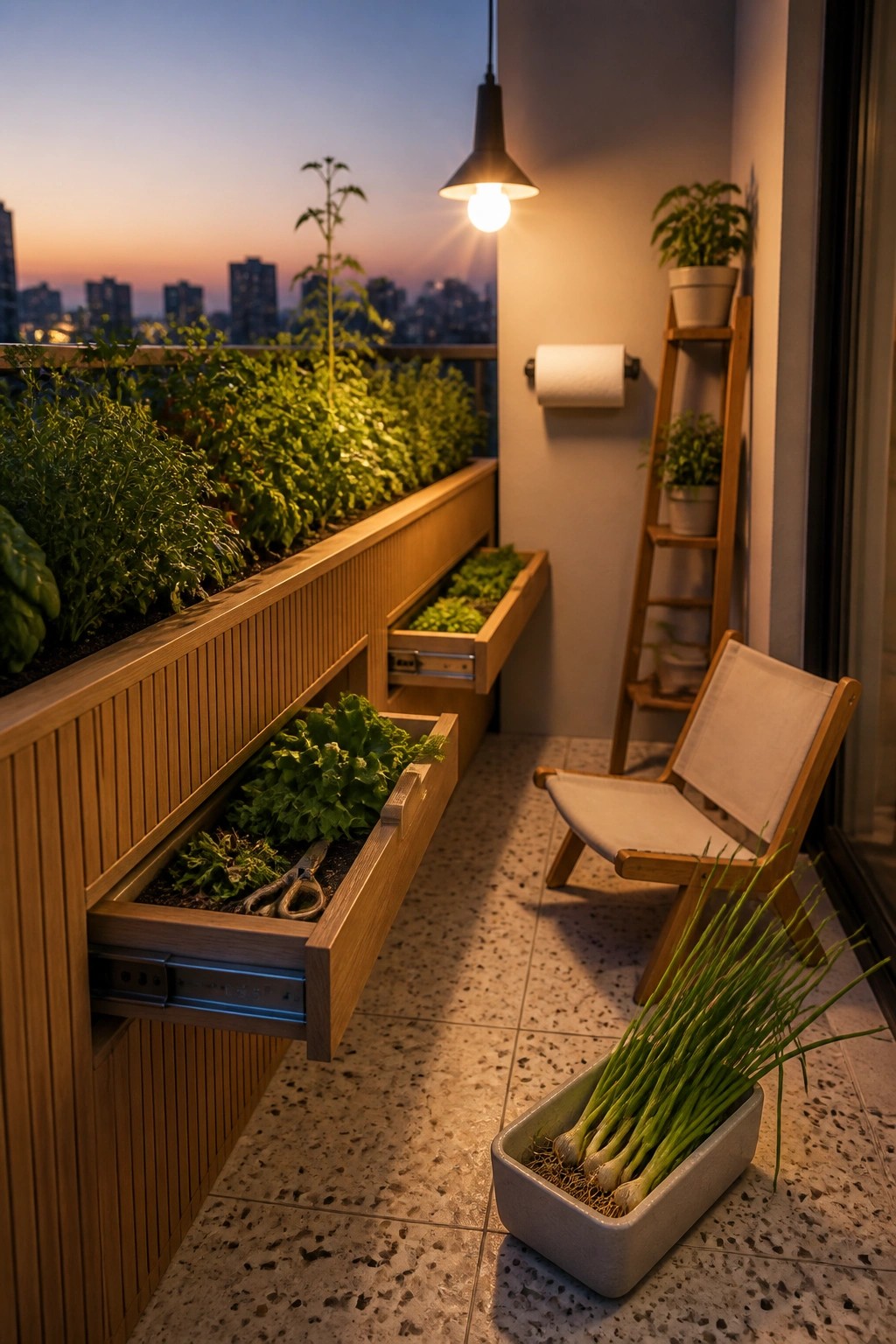
Balcony gardens often run into the same problem. Plants end up tucked against the rail or stacked in ways that make picking awkward. Pull-out drawers solve that by letting you slide a whole section forward when you need to harvest.
They work best on narrow balconies where you cannot walk behind the planters. Build or buy a few sturdy wooden drawers on heavy slides, line them with landscape fabric, and plant quick crops like lettuce or herbs. Keep the ones you use most often at a comfortable height so you can reach them without bending far.
Mixing Container Types on a Balcony
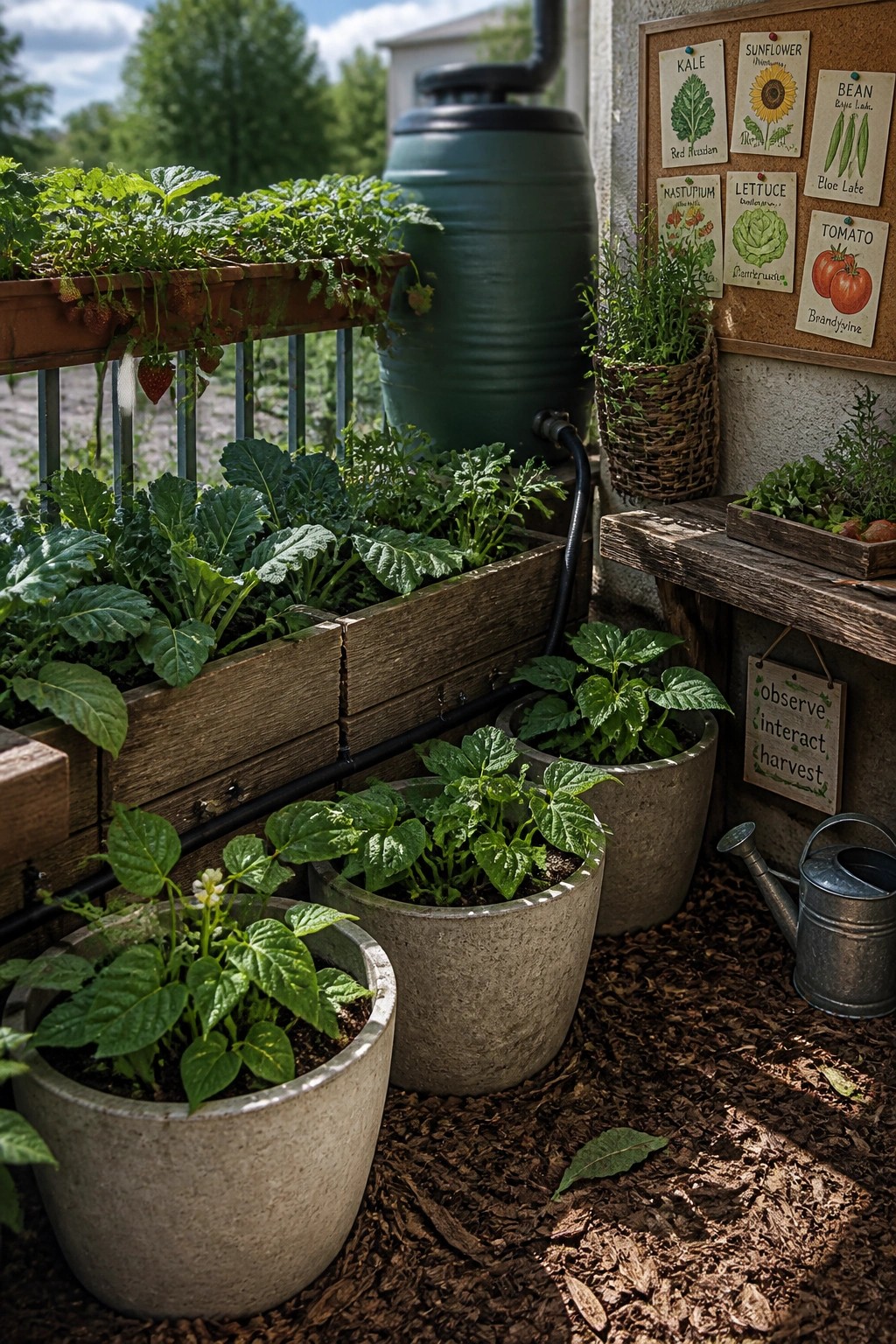
Many people like using a mix of wooden crates and large pots for balcony vegetable gardens because it makes the most of limited space. The different sizes let you fit more plants without crowding, and everything stays easy to reach when it is time to water or harvest.
This setup works best on small urban balconies where a traditional garden bed will not fit. Try placing the larger containers along the edge and smaller ones in front so nothing blocks access, and make sure every pot has drainage holes to keep the plants healthy.
Use A Small Greenhouse Cabinet On The Balcony
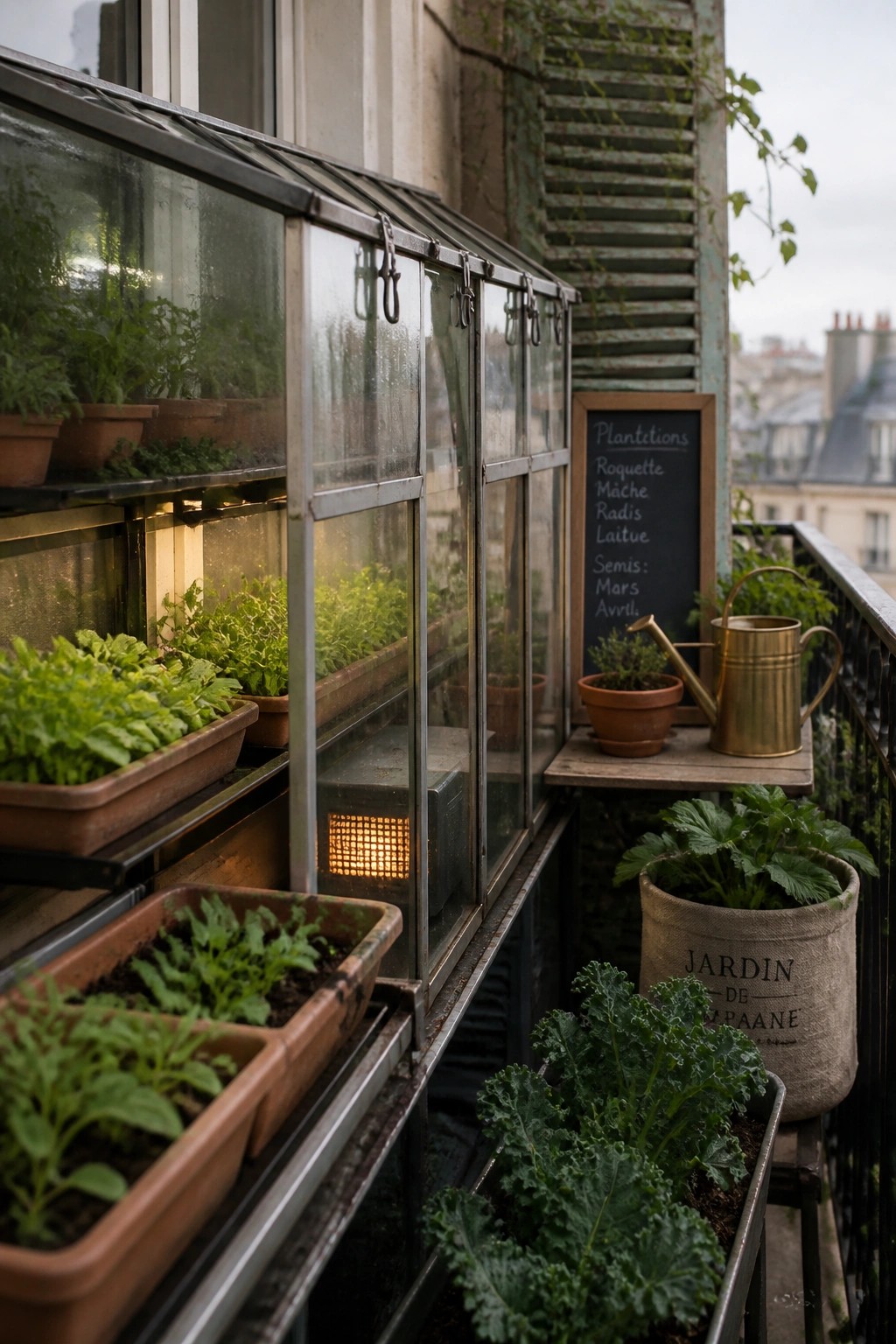
A compact greenhouse cabinet gives balcony gardeners a simple way to shield young plants from wind and sudden temperature drops. The enclosed space holds in warmth while still letting in light, which helps leafy crops stay productive longer than they would in open pots.
This setup works especially well on urban balconies where space is tight and weather can be unpredictable. Place the cabinet against a wall or railing so the shelves stay easy to reach, and use the area in front for larger containers that need less protection.
Vertical Shelving for Balcony Gardens
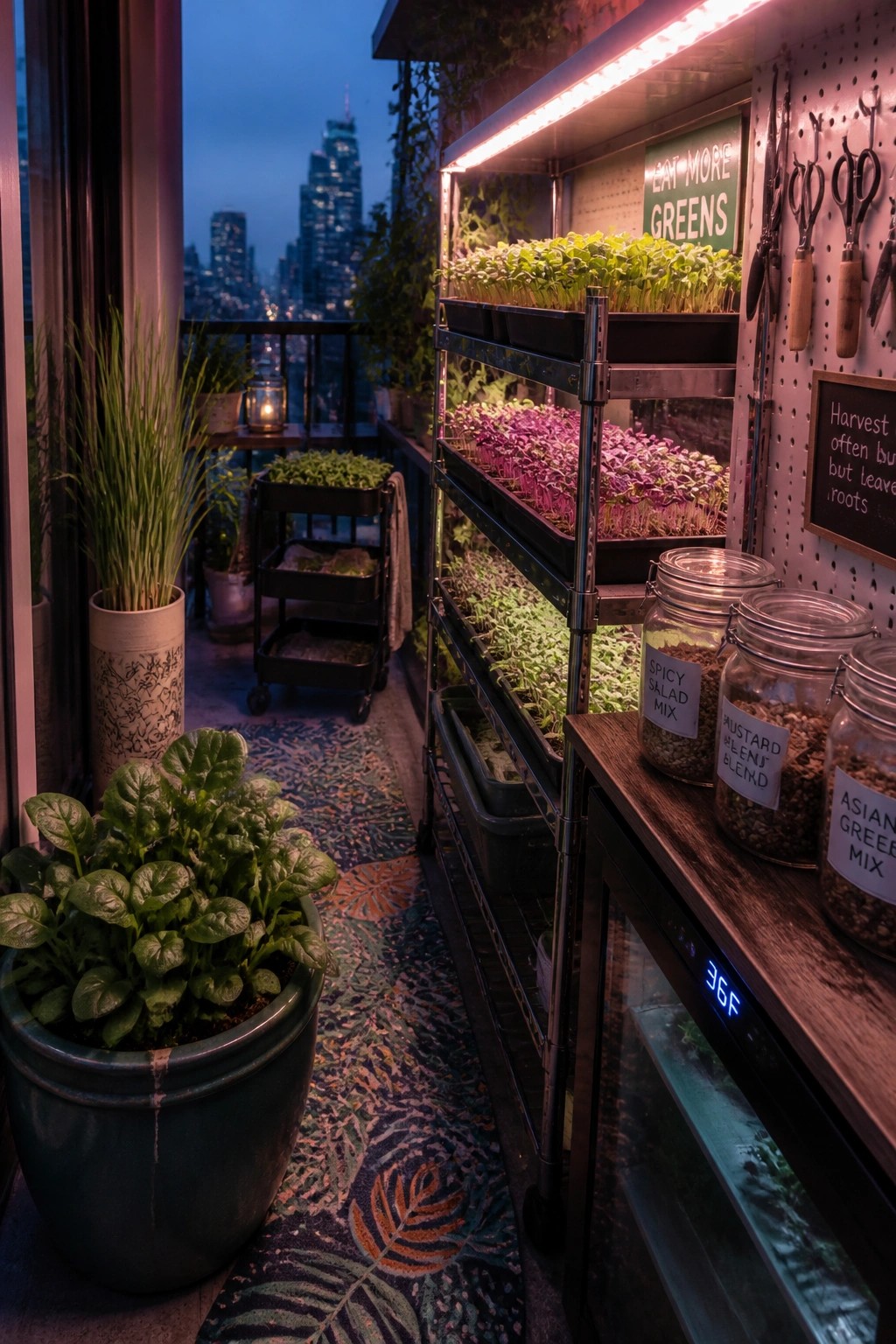
A tall shelving unit gives you room to grow trays of greens without crowding the floor space. The open metal frame holds several levels at once, and a simple overhead light keeps the plants growing even when natural light is low.
This approach works best on narrow balconies where pots alone will not produce enough. Keep the unit against one wall and leave enough room to walk past it when you need to water or harvest.
Line the Balcony With Concrete Trough Planters
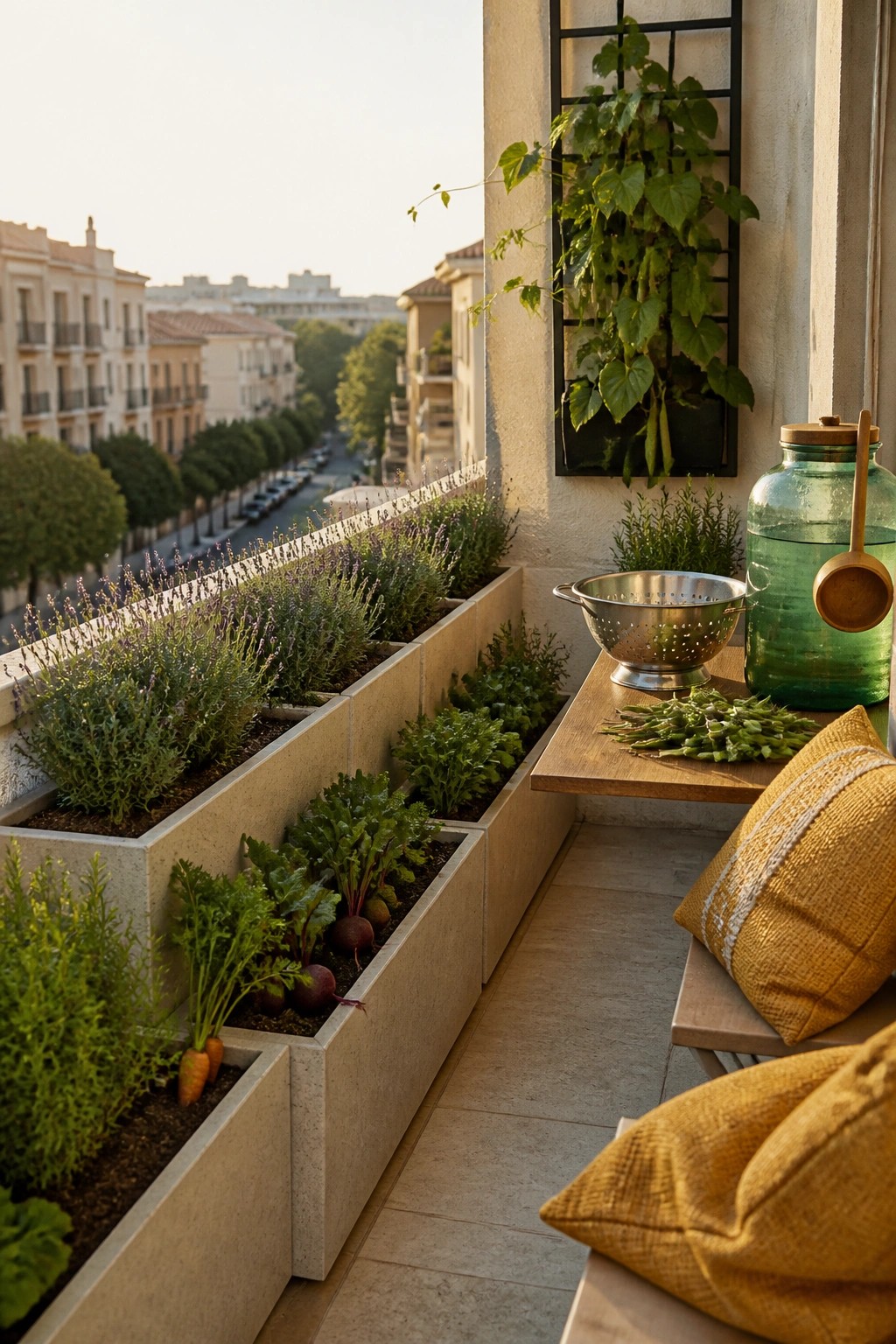
Long concrete troughs give you a simple way to grow a real vegetable garden on a balcony without crowding the space. They sit low along the edge and hold enough soil for root crops and leafy greens to do well.
This setup works best on balconies with a solid railing and decent sun. Keep the troughs in a single row so you can reach in from one side for watering and harvesting without stepping over anything.
Frequently Asked Questions
Q: My balcony gets really hot. How often do I need to water the containers?
A: Check the soil with your finger each day. If it feels dry an inch down, give them a good soak until water drains out the bottom. Morning watering works best to avoid evaporation.
Q: What vegetables work if my balcony only gets a few hours of sun?
A: Leafy greens like lettuce and spinach do fine with less light. Stick to those instead of tomatoes or peppers that need full sun.
Q: How can I reach the plants in the back without knocking things over?
A: Place taller containers toward the wall and shorter ones up front. This setup lets you grab what you need easily from the edge. Keep pathways clear by spacing them a bit apart.
