

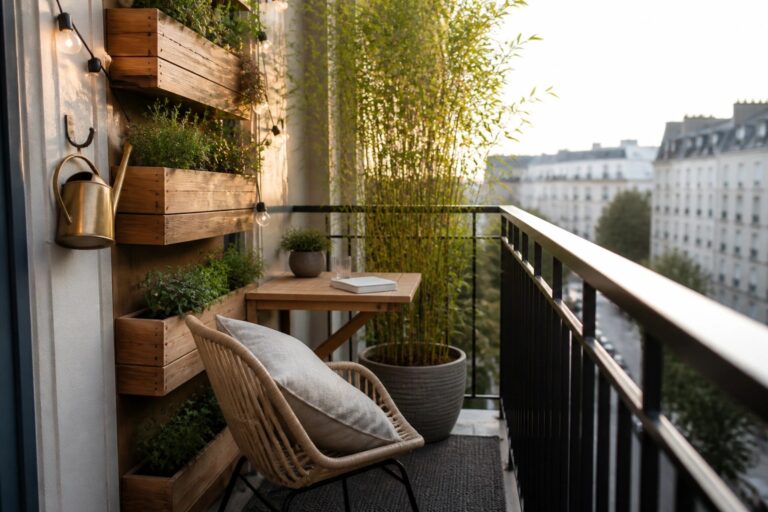
When I step onto a balcony that feels open to the neighbors I immediately notice how little privacy there is and how that changes the way the space gets used.
Adding greenery or simple screens can help but the real challenge comes from keeping enough open floor area so the area does not start to feel cramped right away.
Scale matters most.
I have found that layering plants at different heights often works better than filling every corner with large pots.
Testing a few of these approaches in my own space showed me which ones actually hold up once daily life takes over.
Use Tall Plants In Pots For Natural Screening
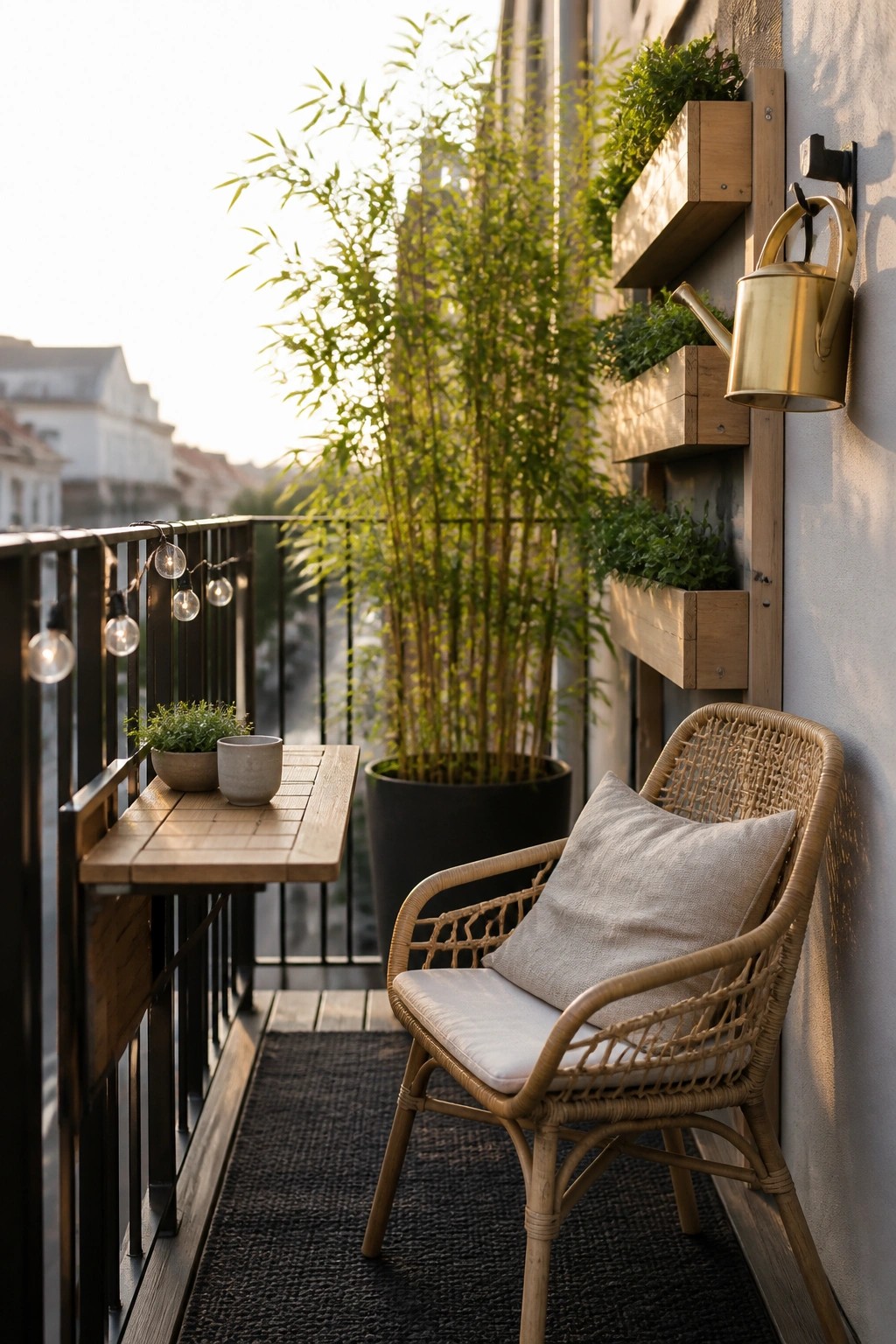
Tall plants in big pots give a balcony quick privacy without eating up walking space. They block sight lines from the side while still letting light through the leaves, and the look stays simple rather than cluttered.
This works especially well on narrow city balconies where floor room is tight. Pick something upright like bamboo that stays in one spot and pair it with a few wall planters higher up so the railing stays mostly clear.
Create Privacy With Planters On A Slatted Screen
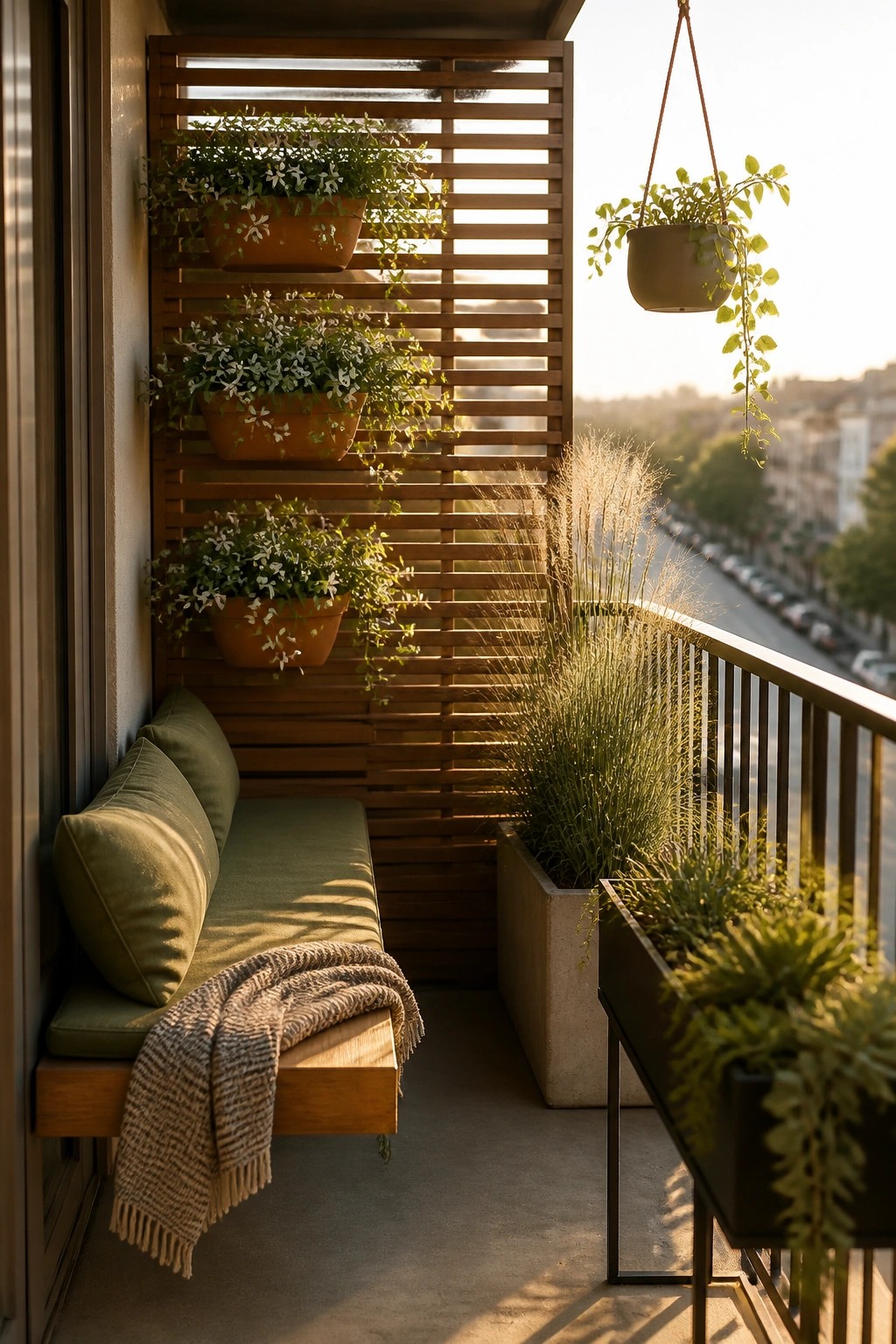
A wooden slatted screen gives you a simple way to add privacy while still keeping plants in view. The vertical layout holds several pots without eating into floor space, and the gaps let in light and air.
This works best on balconies that face other buildings or busy streets. Attach the planters straight to the slats so the greenery fills in over time and creates a soft screen that still feels open.
Hang Planters On A Slatted Wall
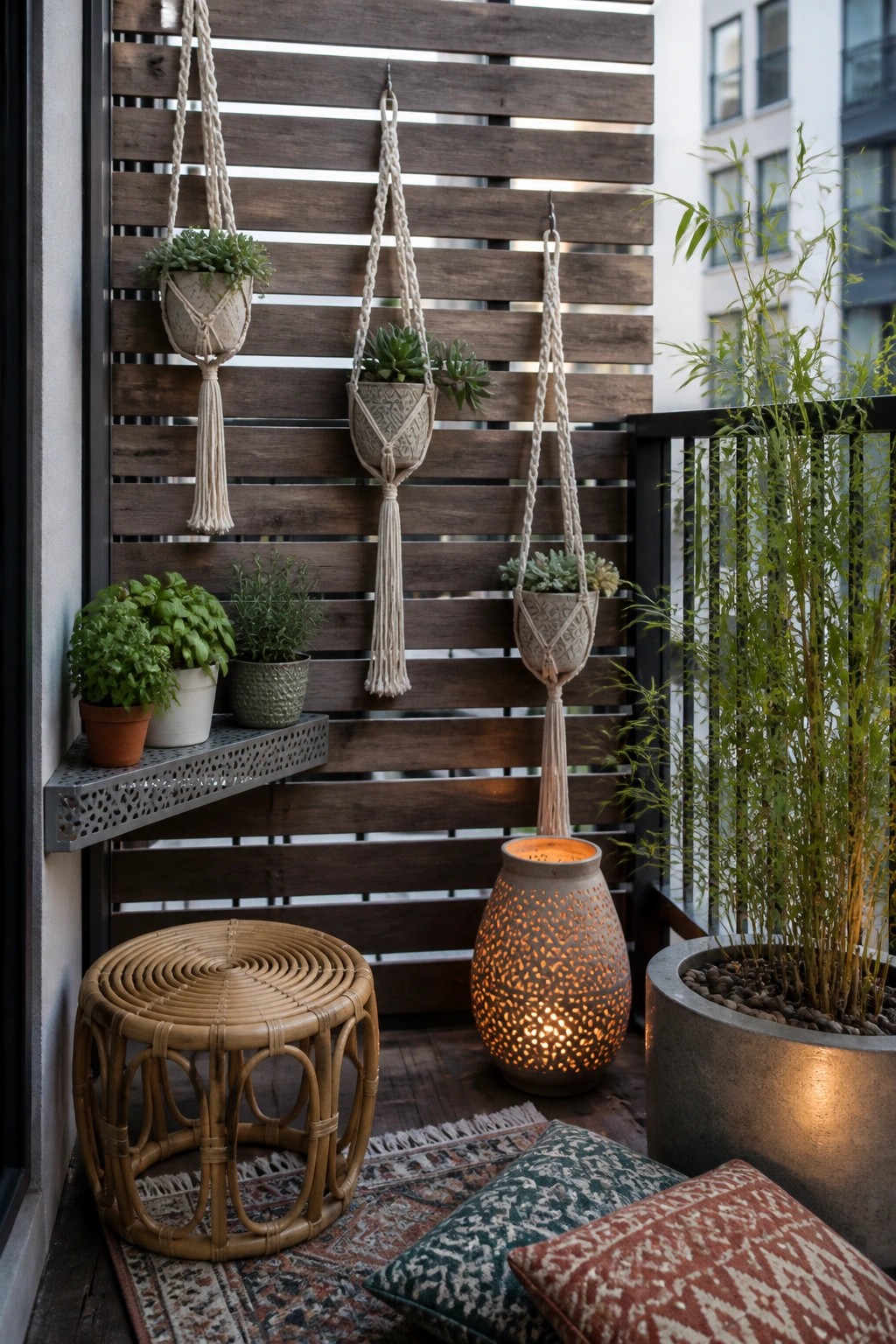
A wooden slatted wall gives you a clean surface for hanging planters without using up floor space. The vertical setup adds greenery that helps block sightlines from neighboring buildings while keeping the balcony open underneath.
This approach works well on small urban balconies where floor room is limited. You can add or remove hangers as needed and still keep a seat or two on the floor.
Mount Planters on the Wall
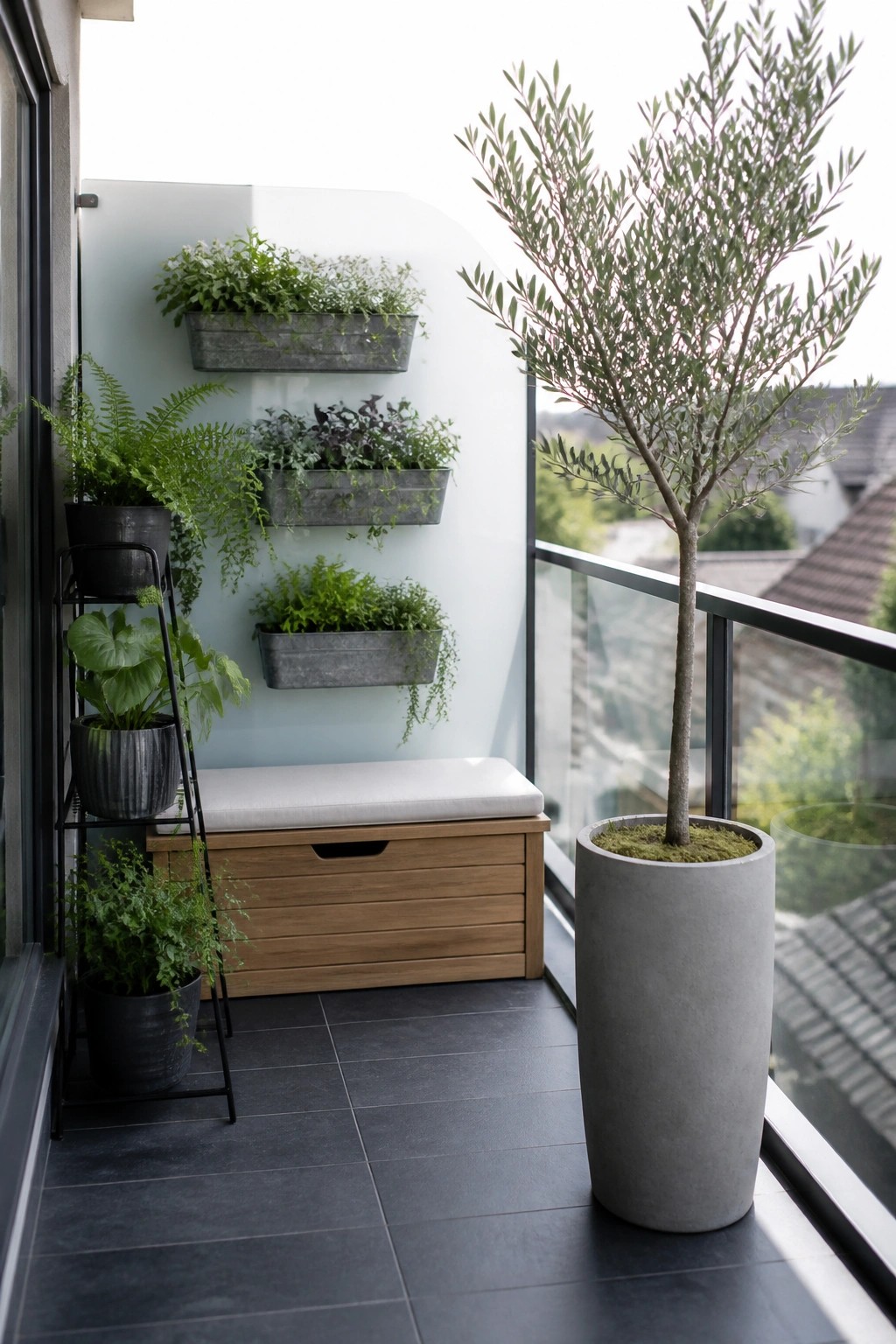
Wall-mounted planters let you add more greenery without filling up the floor. On a balcony this keeps walking space clear while still giving you layers of plants at different heights. It works especially well when the back wall is solid and you want some screening from the sides or above.
This setup suits smaller balconies or any outdoor spot where floor room is limited. Use metal or lightweight boxes and space them so they do not block too much light. Check the brackets are secure before loading them with soil and plants.
Slatted Screens Keep Balconies Private
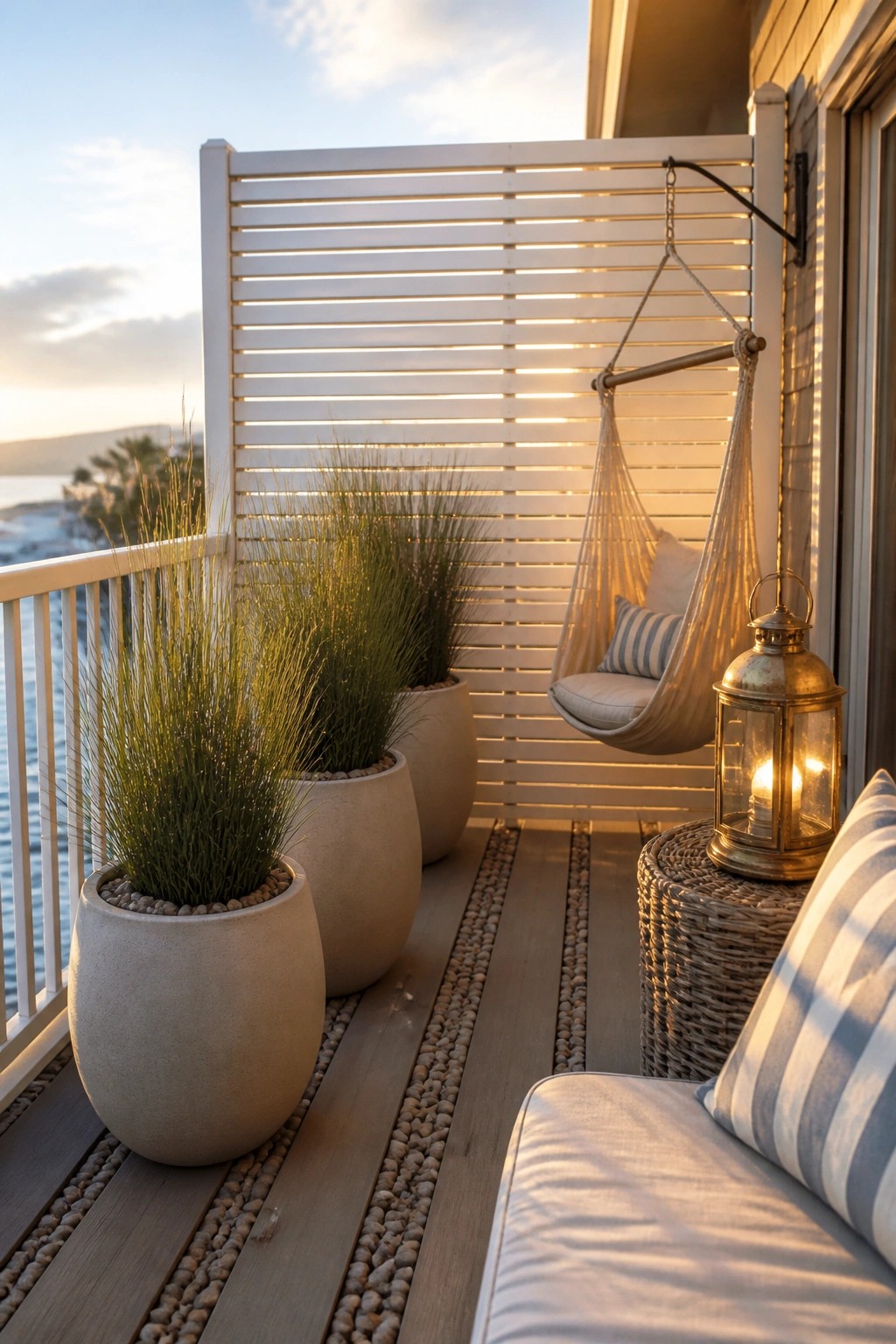
A simple screen made of horizontal slats gives a balcony privacy without making it feel boxed in. The gaps let air and light through, so the space still feels open even when the screen runs along the full length of the railing.
This setup works best on balconies that sit close to another building or overlook a shared area. Set a few tall pots along the base to soften the look and add height without crowding the floor.
Save Floor Space With Wall-Mounted Planters

Many balconies feel smaller once you start adding pots and planters on the floor. Mounting them on the wall moves the plants up and out of the way while still giving you plenty of greenery. It keeps the walking space clear and avoids that cluttered look.
This works well on narrow balconies where floor room is limited. Space the planters at different heights so the plants can trail down naturally. Just check that your wall can support the weight and choose planters that drain properly to avoid drips on the seating area below.
Vertical Garden Walls
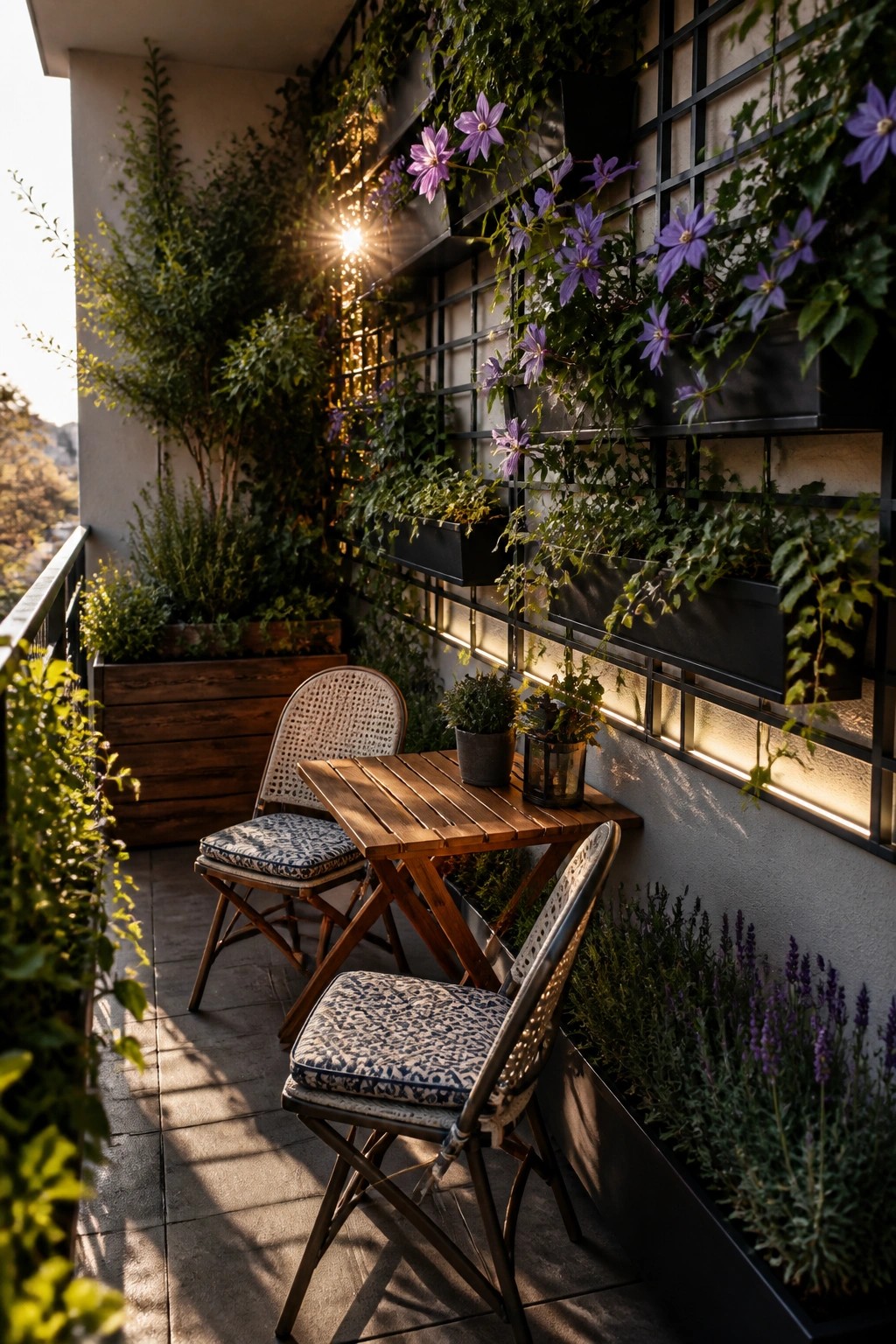
A vertical garden wall works well on balconies that need more privacy but cannot spare much floor space. The grid structure holds planters at different heights so vines and flowers fill in over time and form a living screen.
This setup suits apartments or townhomes where neighbors sit close by. Mount the grid on the outer wall, choose easy climbers, and leave the seating area open in front. It adds greenery without making the space feel smaller.
Perforated Screens Add Privacy On Small Balconies
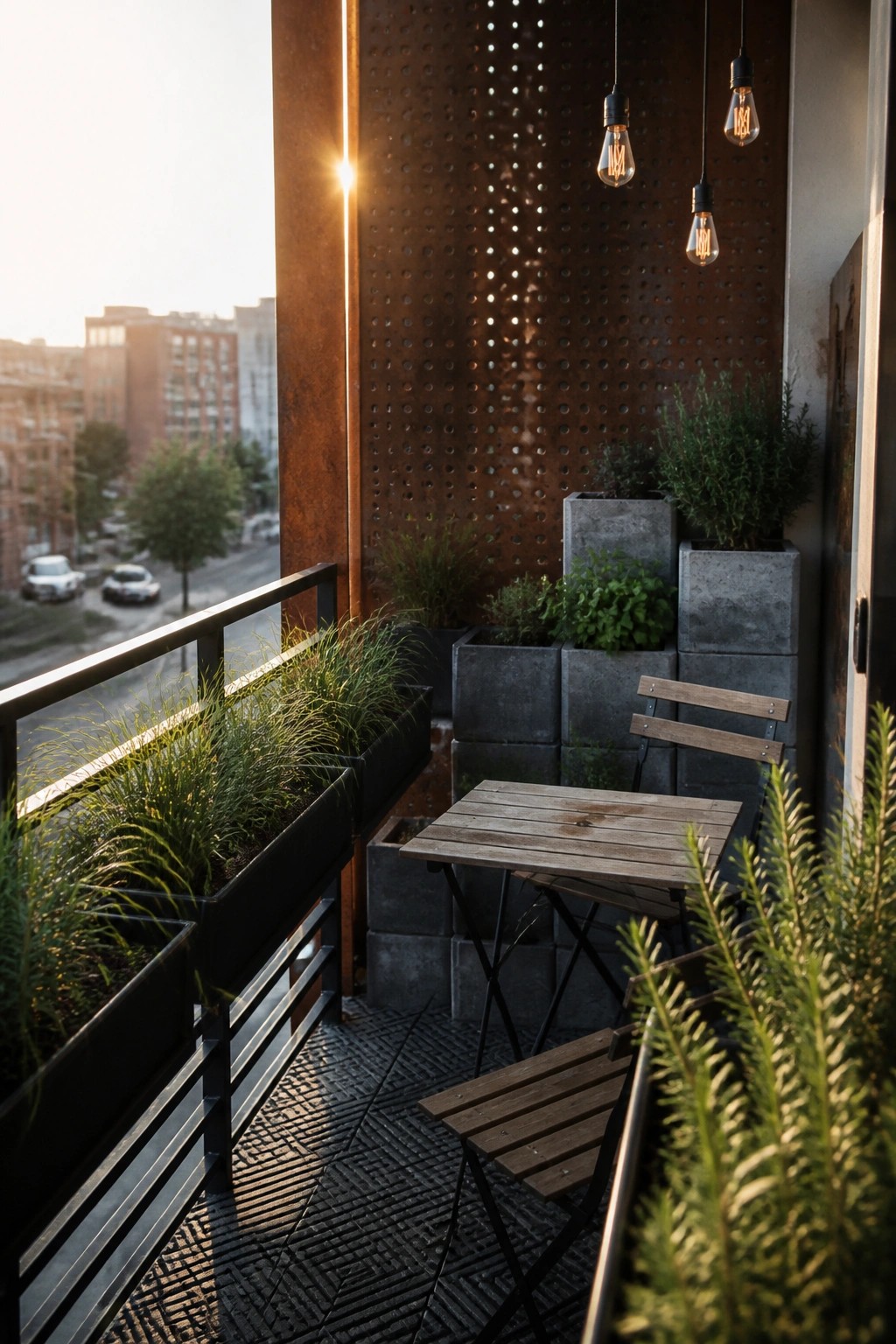
A perforated metal panel along one side of the balcony gives a surprising amount of privacy while still letting light through. The holes keep the space from feeling closed in, and the panel doubles as a backdrop for stacked planters.
This works best on balconies that face other buildings or walkways. Keep the screen simple, add a few tall plants in front of it, and the whole area feels more sheltered without needing extra furniture or heavy structures.
Use A Living Wall For Privacy
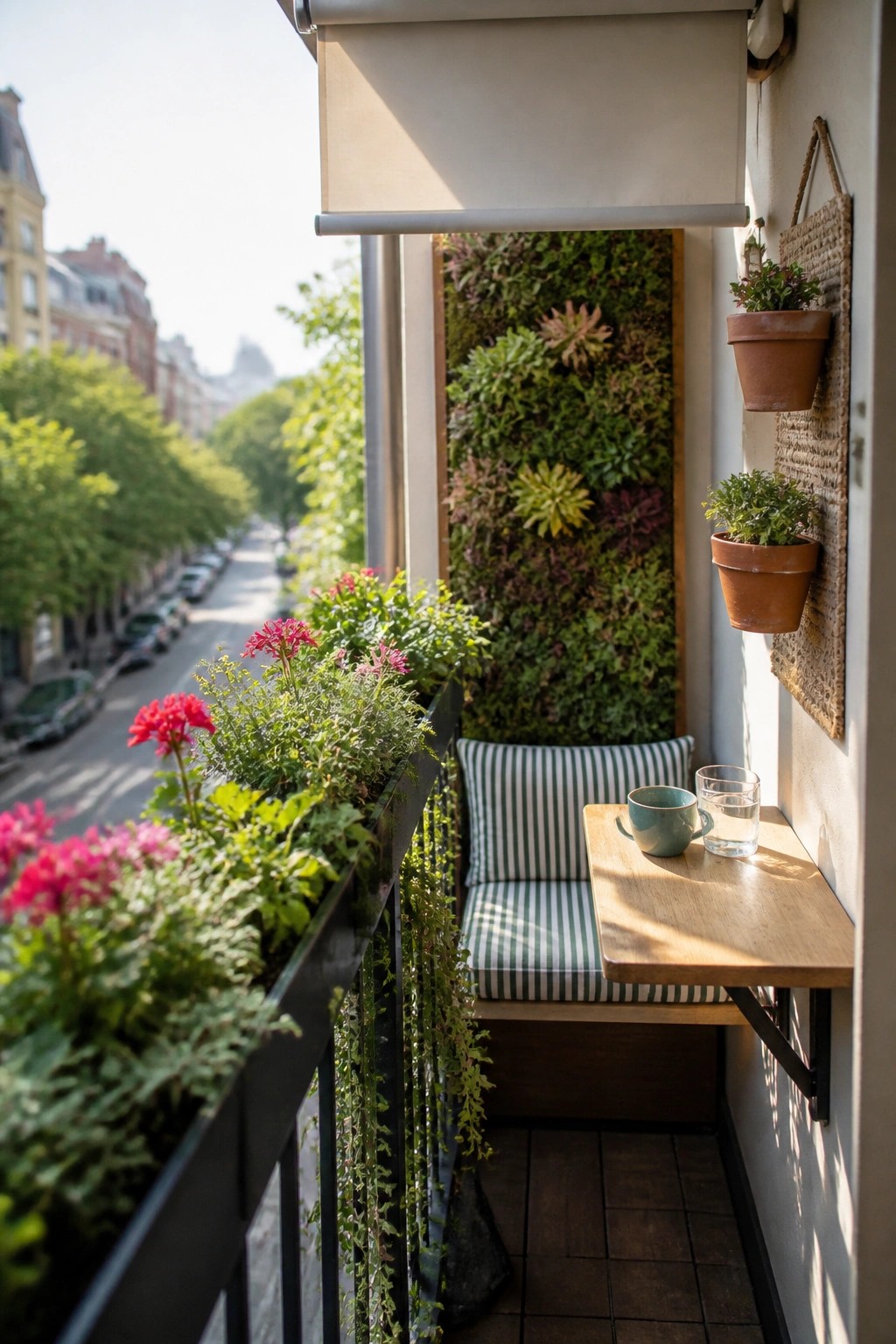
A living wall gives you privacy on a balcony without eating up floor space. It turns the back wall into a green screen that blocks views while keeping the area open and usable.
This setup works best on narrow balconies or those that face other buildings. Mount a planted panel on the rear wall and keep furniture simple so the space still feels comfortable rather than cramped.
Pair A Bamboo Screen With Raised Planters
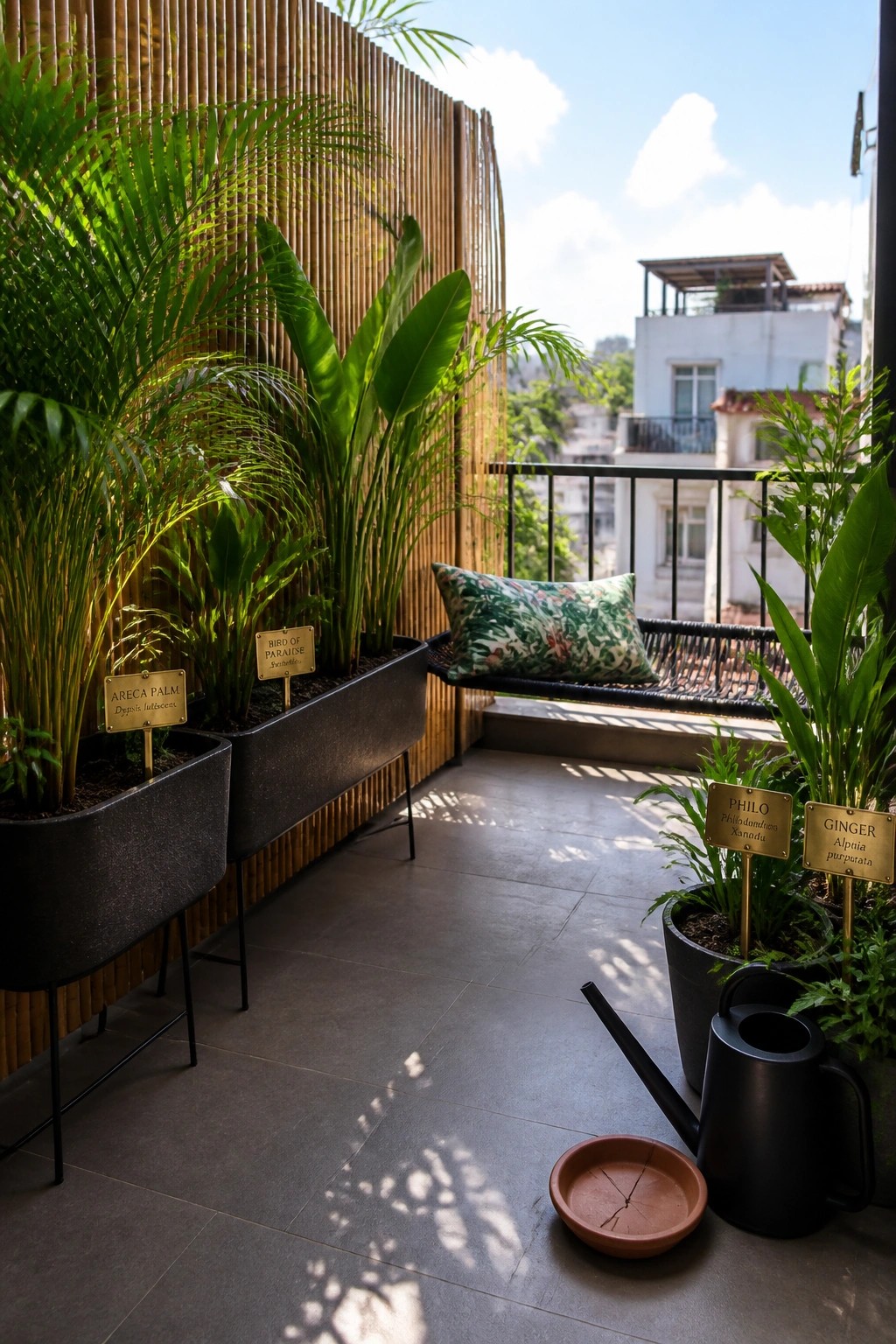
A bamboo screen along the back edge of a balcony creates a solid backdrop that stops the eye, while raised planters in front of it let you grow tall plants without losing floor space. The combination gives privacy quickly and keeps the area from feeling boxed in.
This setup works best on narrow balconies or upper floors where neighbors can see in. Choose planters on legs so air can move underneath and the floor stays open for chairs or walking through. Stick with plants that reach eye level on their own to get the most screening from the least amount of stuff.
Lattice Screens Add Privacy Without Floor Space
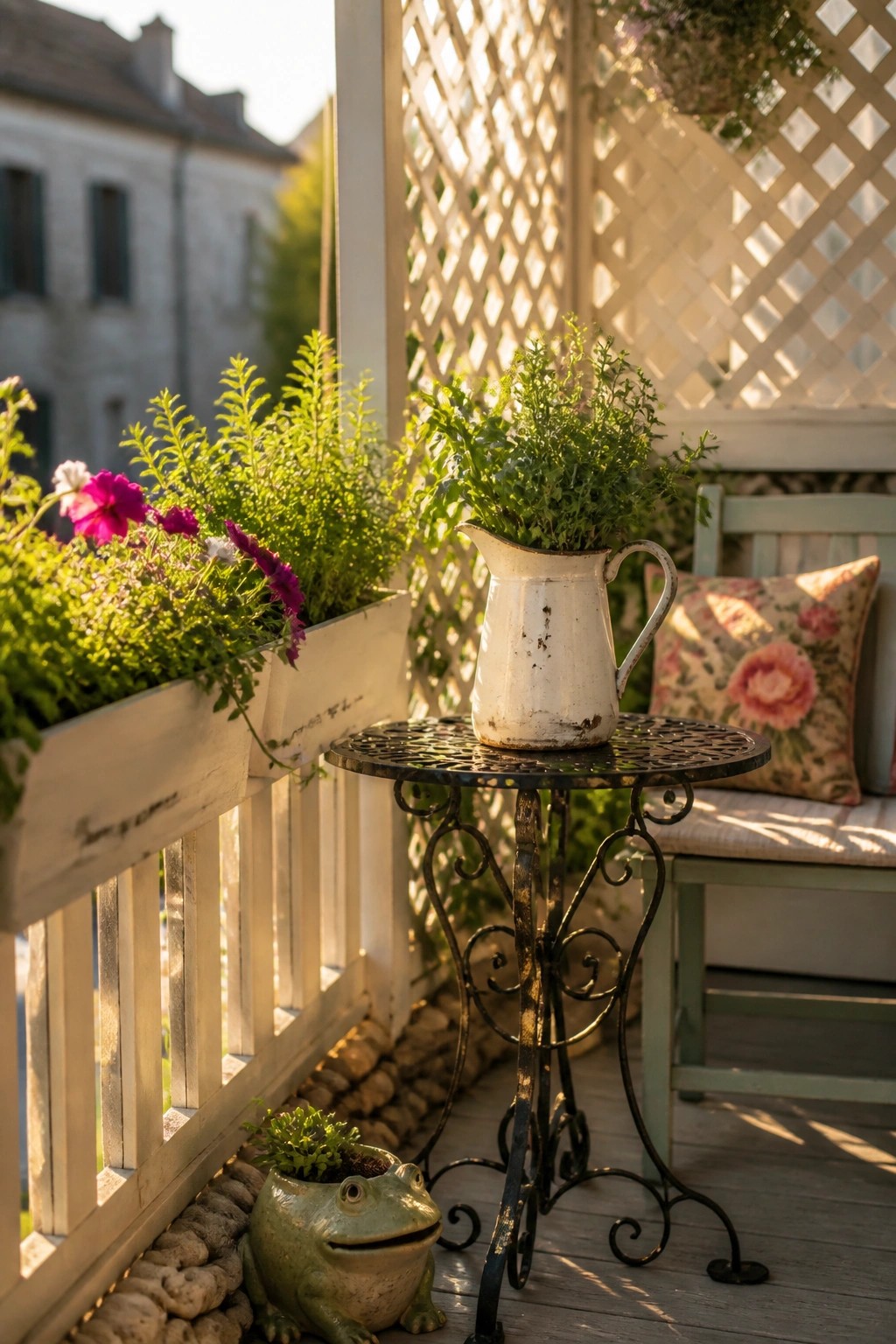
A lattice panel set along one side of the balcony gives just enough separation from the space next door. Light still passes through, so the area does not feel closed in, and the open pattern keeps the look light rather than heavy.
Mount the lattice behind a bench or small table and keep most planting in boxes along the railing. This works especially well on narrow balconies where floor space needs to stay clear for walking.
Slatted Screens With Tall Plants
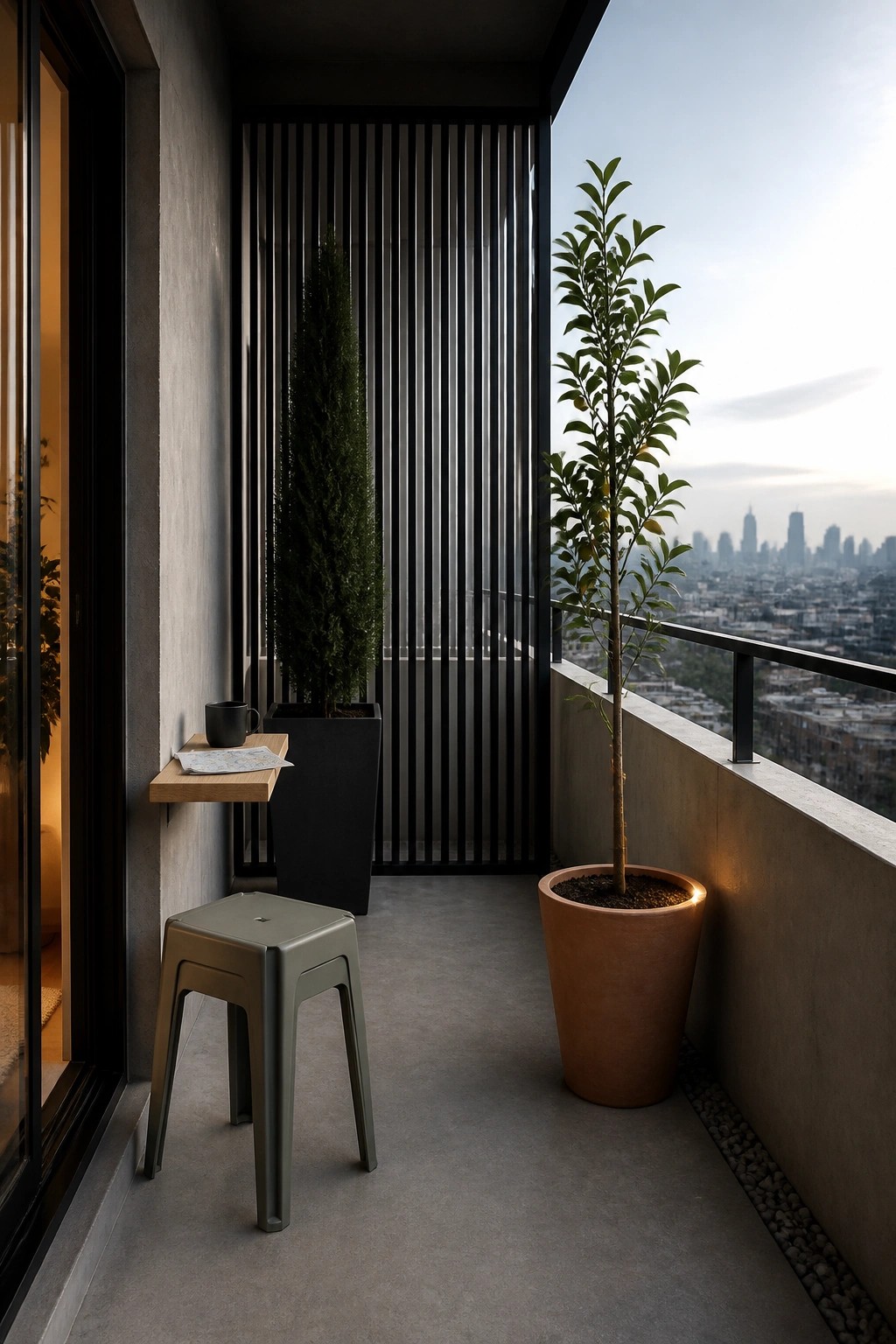
A slatted panel along one side of the balcony gives quick privacy without eating into floor space. Pairing it with one or two tall potted trees adds a soft layer that feels less solid than a full wall.
This setup suits narrow urban balconies where you still want an open view straight ahead. Keep the pots narrow and the plants upright so the area stays easy to walk through.
Line the Ledge with Potted Plants
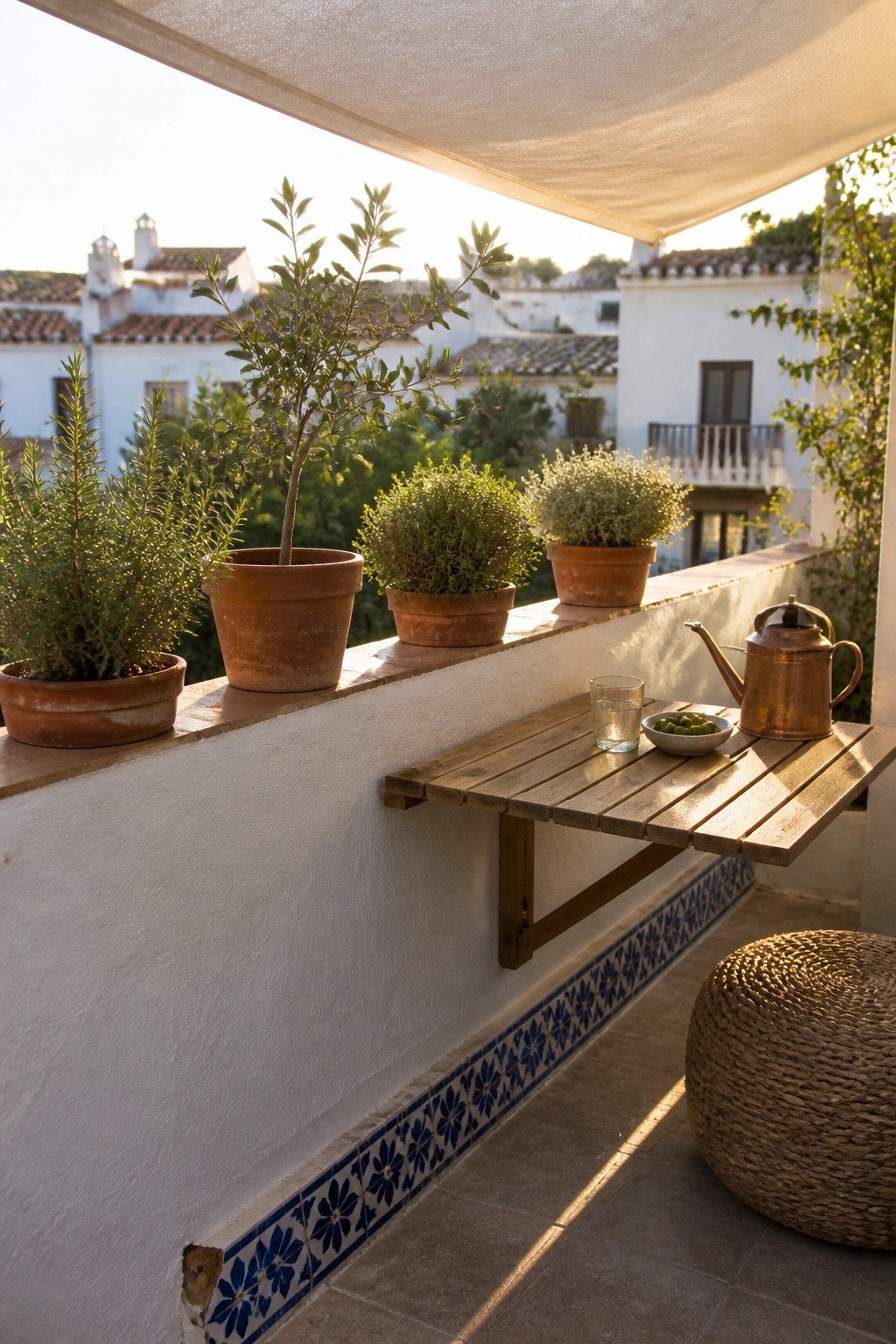
Putting plants along the outer ledge keeps the floor clear and still gives you a full row of greenery. This works especially well on small balconies where every inch of walking space matters. The pots sit out of the way but still create a soft screen that adds privacy from below and the sides.
This setup suits apartments or townhomes with narrow ledges and works best with lightweight pots that can handle sun and wind. Choose plants that stay compact so they do not block views or get too heavy. A fold-down table underneath gives you a spot to eat or work without adding permanent furniture.
Build Privacy With A Vertical Pallet Wall
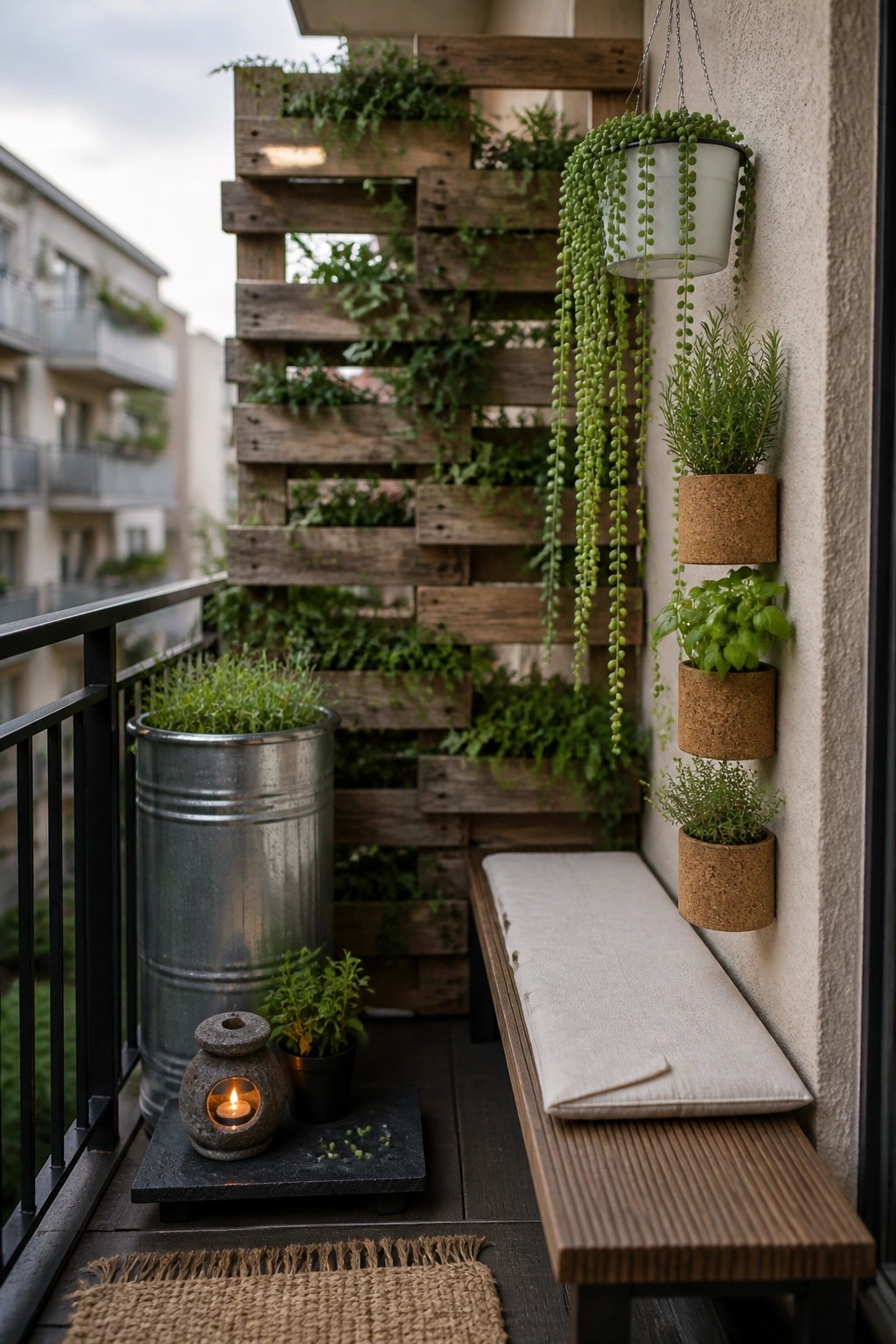
A simple wood pallet turned upright can give a balcony real privacy without eating up the floor. The gaps between the slats let plants spill through while the whole structure blocks the view from the side or back.
This approach suits small city balconies where you still want room to sit. Secure the pallet well, then tuck in trailing plants and a few pots at different heights so the screen fills in over time.
Wood Slat Screens For Narrow Balconies
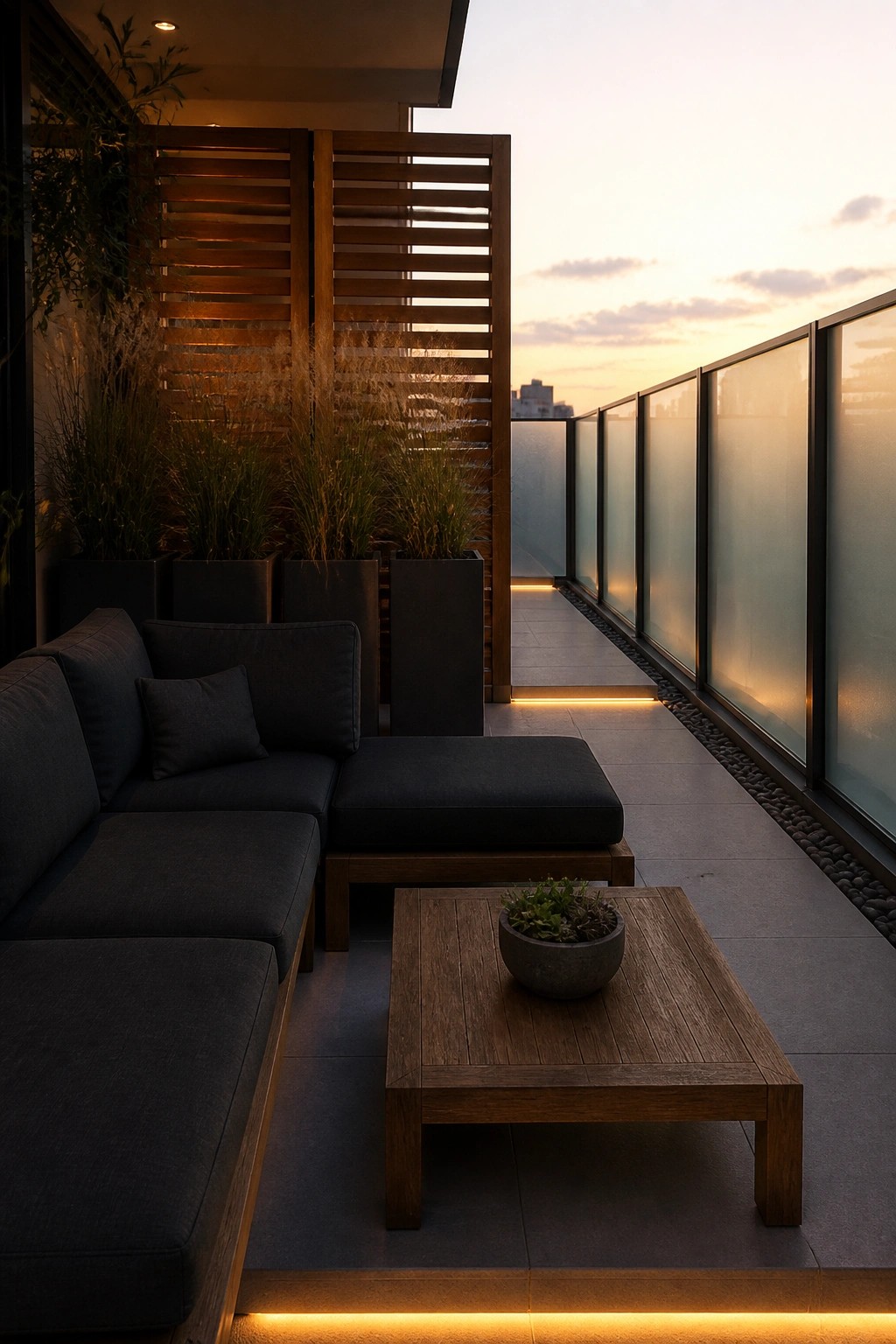
A simple wood slat screen along the side of a balcony gives you solid privacy without eating up floor space. The open gaps keep air moving and let some light in, so the area still feels open rather than closed off.
This setup works best on narrow balconies where you need coverage on one or two sides only. Place a few tall planters with grasses right against the screen to soften the look and add more height. Just keep the screen height above seated eye level so it actually blocks the view you want hidden.
Add Vertical Plant Shelving For Natural Privacy
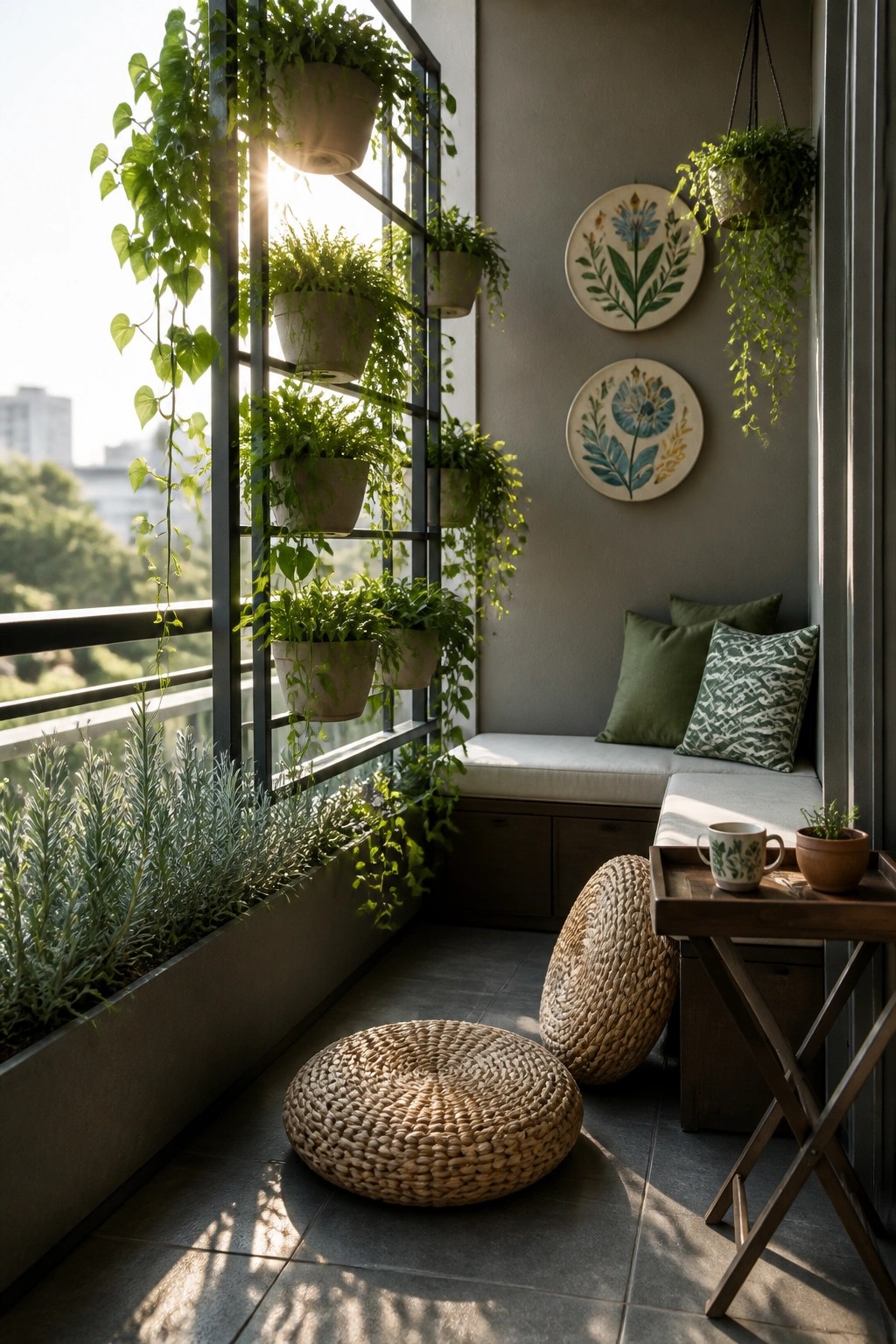
A tall plant stand set against the railing gives you a living screen without eating up floor space. The plants grow upward in tiers, so the view stays blocked from the side while the seating area stays open and usable.
This works well on narrow balconies where a full row of pots would feel cramped. Keep the bottom clear for movement and let the upper levels handle most of the screening. It suits apartments that face other buildings or busy streets.
Use Lattice Panels To Separate Balcony Views
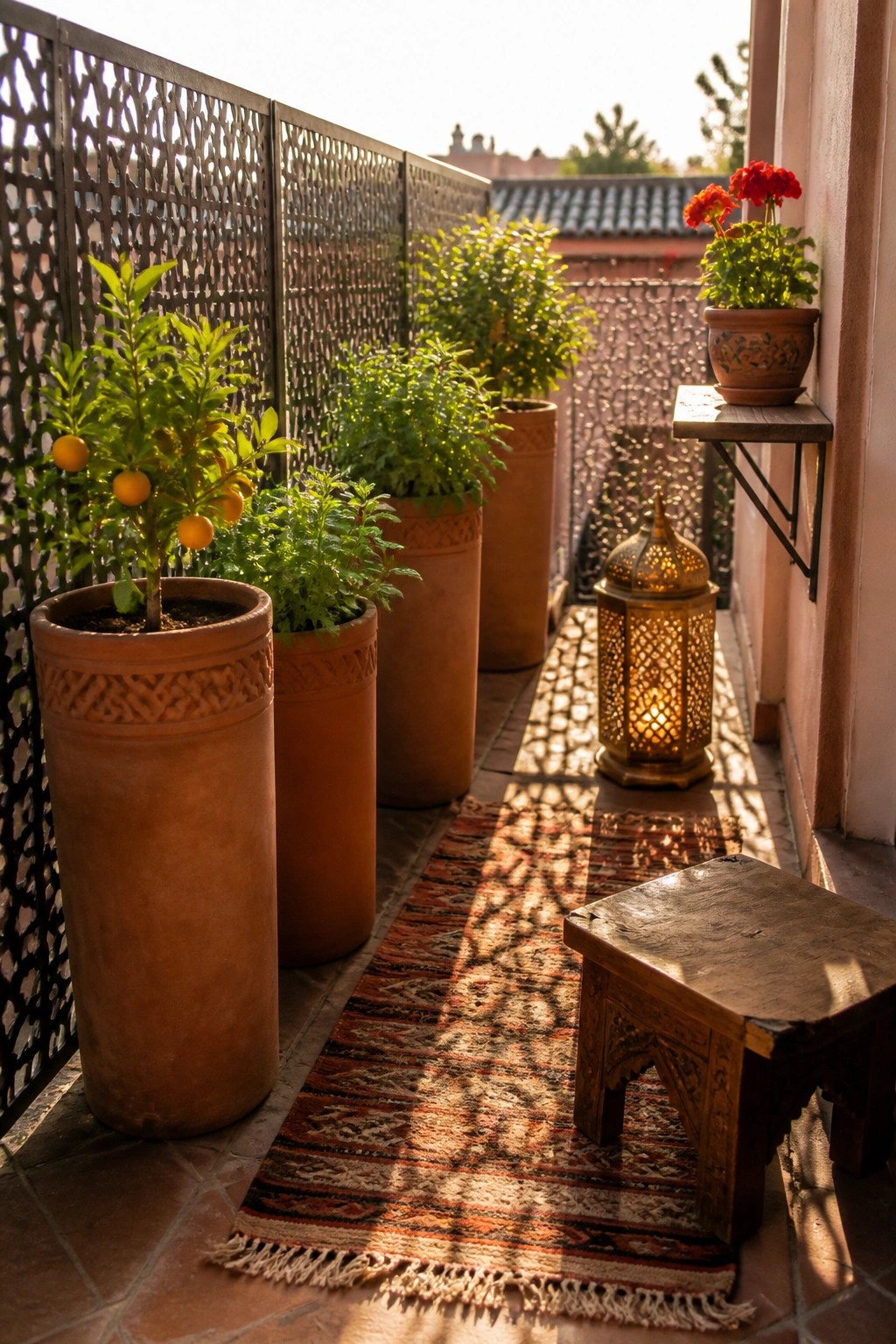
A lattice screen along one side of the balcony gives privacy without closing the space in. It blocks the direct view from outside while still letting in light and air.
Place a few taller pots in front of the screen to soften the look and add greenery. This setup works especially well on narrow balconies where a solid wall would feel too heavy.
Tall Planters With Slatted Screens
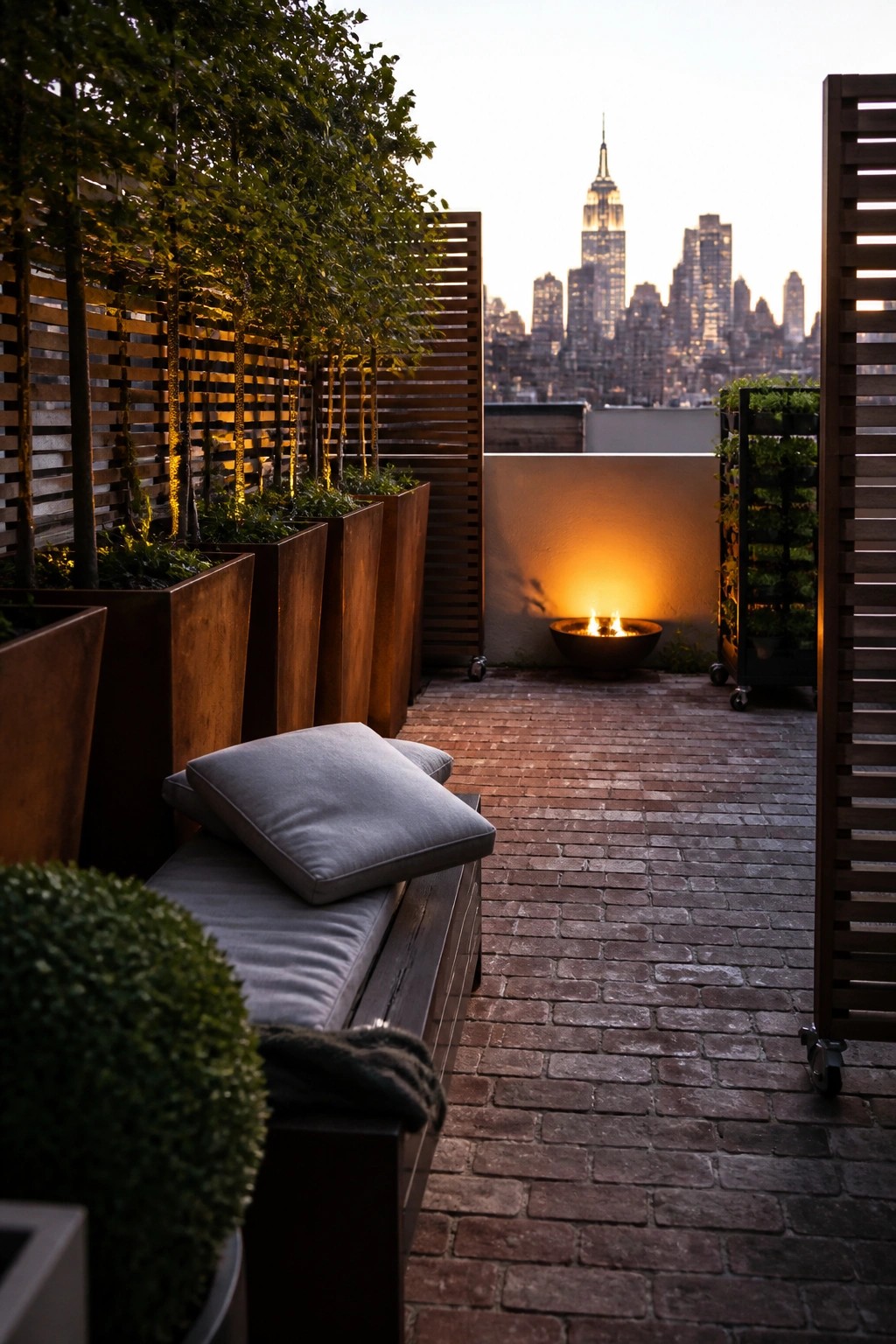
Placing a line of tall planters along one side gives you privacy without filling the floor with extra furniture or walls. The trees inside add height and some greenery, while the wooden slats behind them act as a simple screen that blocks the view from neighbors or the street.
This approach works best on rooftops or balconies that already have some open space. It keeps the area usable for seating and walking through, and the whole setup stays easy to adjust if you need to move things around later.
Tall Potted Plants For Balcony Privacy
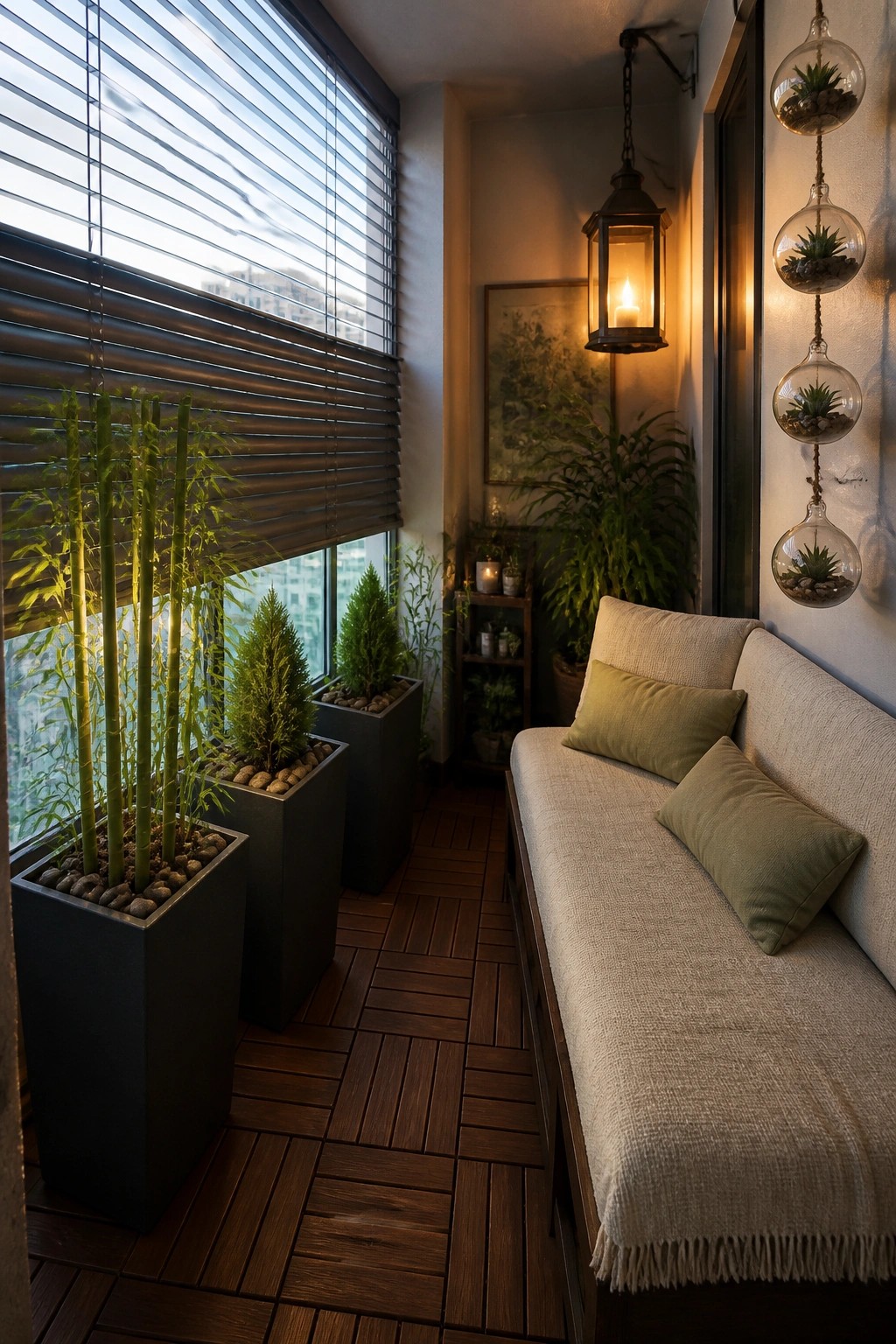
Placing tall plants in large containers along the outer edge works well for balconies that need privacy. The height blocks views from outside while the pots keep everything contained so the floor stays open for seating or walking.
This approach suits apartments and small outdoor spaces where a full wall or screen would feel too heavy. Choose plants that grow upright and stay fairly narrow, and group a few together rather than spreading them out. Dark containers help them blend into the background instead of drawing attention.
Frequently Asked Questions
Q: How do I keep taller plants from leaning into my walking space over time? A: Tie stems loosely to a slim stake or railing hook every couple weeks. This trains them upward without adding bulk or floor clutter.
Q: What if my balcony faces a busy street and I need sound dampening too? A: Layer a few dense leafy plants like boxwood in deep pots along the edge. The extra foliage softens noise while the setup stays narrow.
Q: Can I swap in fabric screens if living walls feel like too much work? A: Hang lightweight outdoor curtains on a tension rod between posts. They slide open when you want more light and roll away for storage in bad weather.
