

When planning a small garden I notice that the walls and fences often get overlooked even though they can change the whole feel of the space.
Vertical ideas help build height and interest while leaving room for movement and planting at ground level.
My own yard proved that point last year.
A few well placed elements on the vertical surfaces created focal points that made the garden read as intentional instead of cluttered.
Over time those choices have held up because they work with how plants grow and how people actually use the area.
Mount a Ladder on the Wall for Vertical Plants

A wall-mounted ladder gives you an easy way to add several plants without using up floor space. In small outdoor areas this keeps the ground clear while still creating a green focal point that draws the eye upward.
This approach works best along blank walls in narrow courtyards or side yards where regular beds would feel cramped. Choose a simple metal or wood ladder, hang it securely, and set small pots on the rungs so you can swap plants with the seasons.
A Ladder Works Well For Vertical Plants

Many people turn to a simple ladder when they need more plants but have almost no floor space. It leans flat against the wall and holds several pots at different heights so the greenery shows up without crowding the walkway.
This approach suits a small entry or narrow porch where you want height without blocking the door. Choose a sturdy frame that can handle the weight of the pots and check that it sits level on the ground.
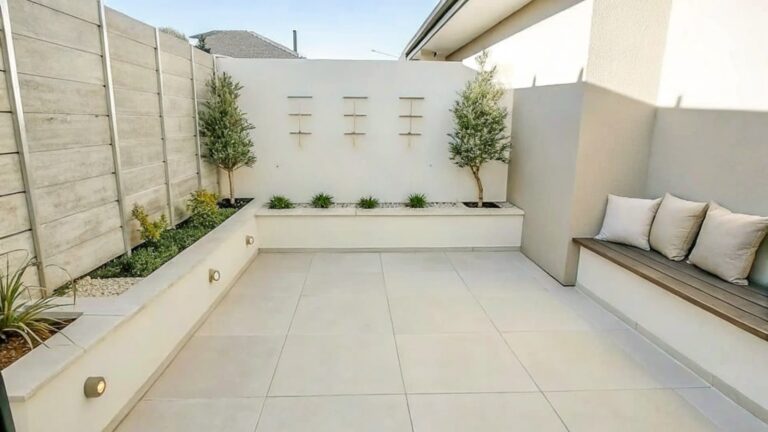
A Wall Trellis Adds Vertical Interest Without Taking Up Floor Space

Many small outdoor spots run out of room fast once you add seating or a table. A basic slatted panel on the wall solves that by giving plants a place to hang at different heights so the vines can trail down without crowding the floor.
This works especially well on balconies or narrow patios where you still want some greenery. Keep the panel simple and light colored so it blends with the wall, and use a few pots of trailing plants rather than filling every slot.
Macrame Wall Hangings Add Vertical Interest
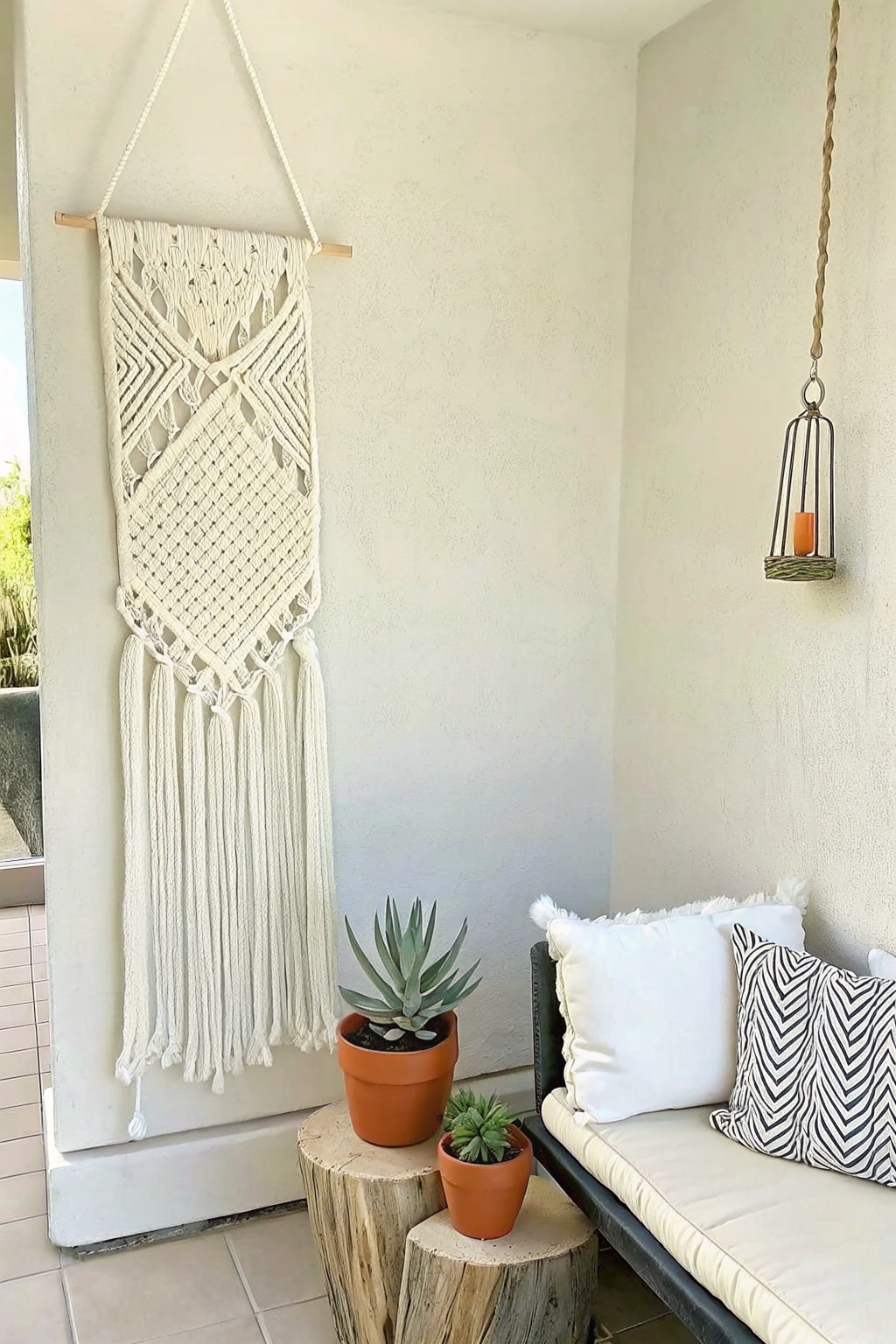
A macrame hanging on an outdoor wall gives a small seating area some texture and shape without crowding the floor. It draws the eye upward and makes the space feel a bit more finished.
Hang one over a bench or low seating spot and keep the plants compact so the area stays open. This works best on covered patios or balconies where you need something light that holds up to the weather.
Mount a Bench on the Wall

A wall-mounted bench keeps narrow side yards usable without eating into the path. It turns an empty stretch of wall into a simple seating spot while leaving the ground clear for walking or planting.
This works best on homes with straight exterior walls and limited width. Keep the bench low and plain so it blends with the house rather than competing with the garden beds around it.
Built-In Raised Beds For Tight Outdoor Spaces
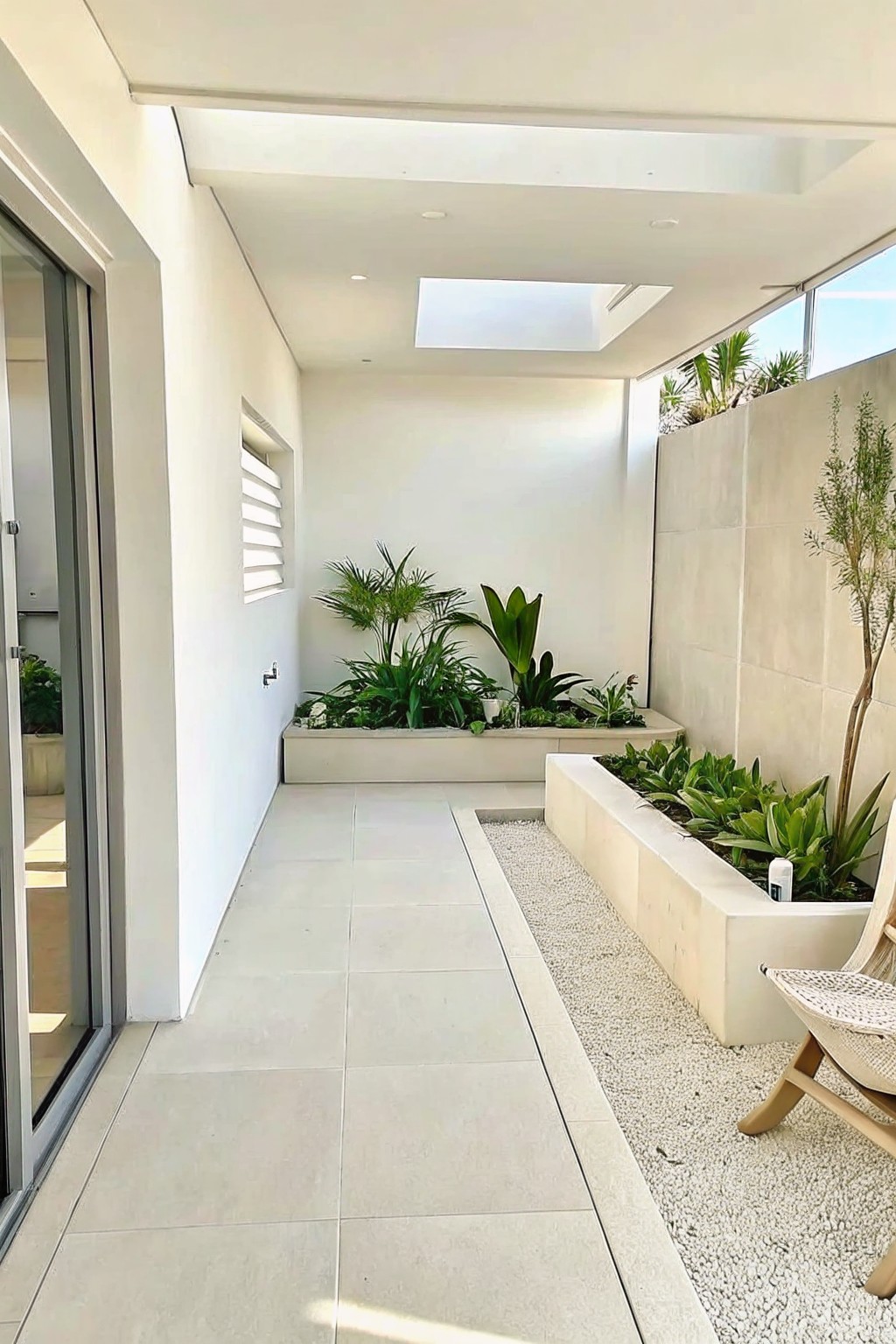
Raised beds built right into the walls work well when floor space is limited. They keep plants off the ground so the walkway stays clear and the area feels more open. The long concrete planter in this courtyard shows how a single line of greenery can become the main focal point without adding extra furniture or clutter.
This setup suits modern homes with narrow side yards or small courtyards. Keep the beds low and simple so they blend with the paving and walls. Use a mix of taller and low plants inside the bed to add height without blocking light or movement.
Bistro Seating For Compact Balconies
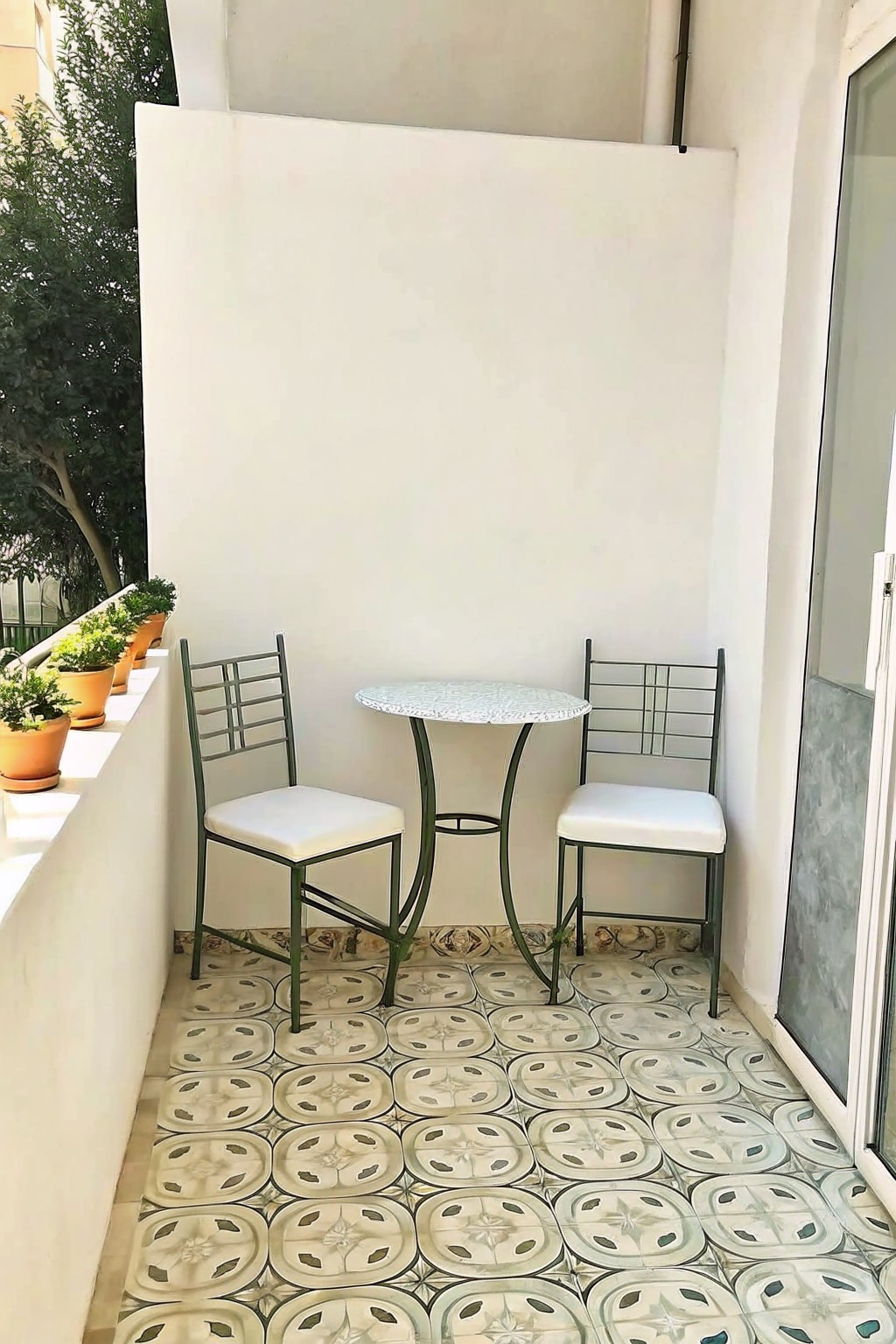
A small round table with two chairs can turn a narrow balcony into a usable spot without eating up the whole floor. The setup stays simple and leaves room to walk around, which makes the space feel more open than it actually is.
This works best on apartment balconies or small terraces where bigger furniture would crowd things. Keep the chairs light and the table scaled down so the area still feels open, and add a few pots along the edge if you want a bit more greenery without blocking the path.
A Tall Trellis Adds Vertical Interest in Small Corners

One simple way to bring more life into a tight outdoor spot is to use height. A tall arched trellis lets vines climb upward so the floor stays open for walking or seating.
This approach works well on small patios or balconies where space is limited. Set the trellis against a wall and add a couple of pots at the base to keep the look balanced without crowding the area.
Paver Paths With Grass Infill
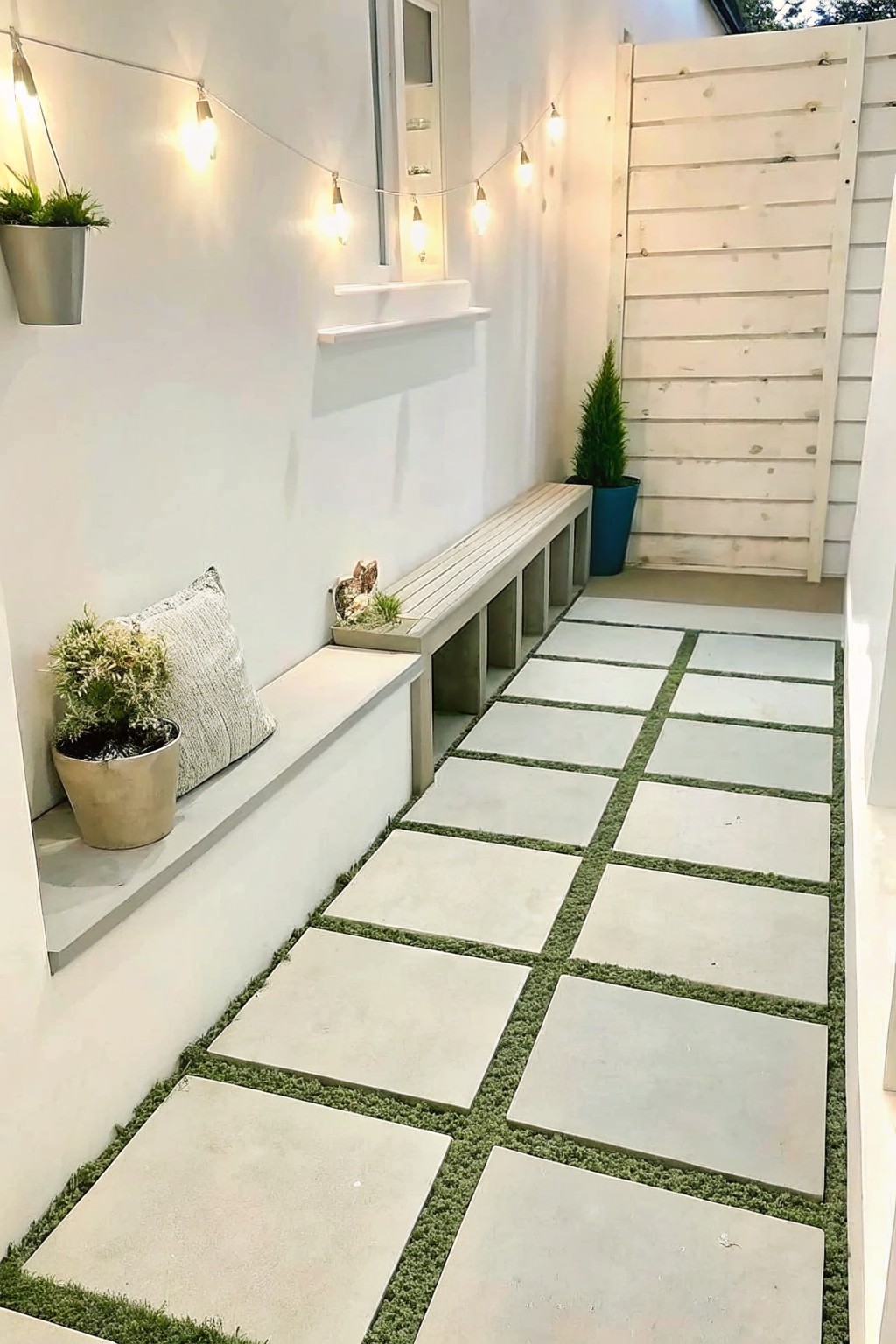
A grid of square pavers set into turf gives a narrow side yard a clear walking surface without covering the whole ground. It keeps the space feeling open while still handling foot traffic, which is useful when every foot of garden counts.
This works best along fences or between buildings where a full patio would feel cramped. Keep the pavers light in color and the grass strips narrow so the path stays easy to mow and does not dominate the view.
Vertical Reed Screens Add Height in Narrow Gardens

Many small gardens feel flat without some kind of vertical element to break up the walls. Tall reed panels placed at the back of a tight space give that lift right away and turn an empty wall into a simple focal point.
These screens suit narrow side yards or small courtyards best, where floor space stays open for walking or seating. Pair them with a couple of taller pots and keep the rest of the planting low so the vertical lines stay the main feature.
Planters Offer Simple Focal Points for Compact Patios
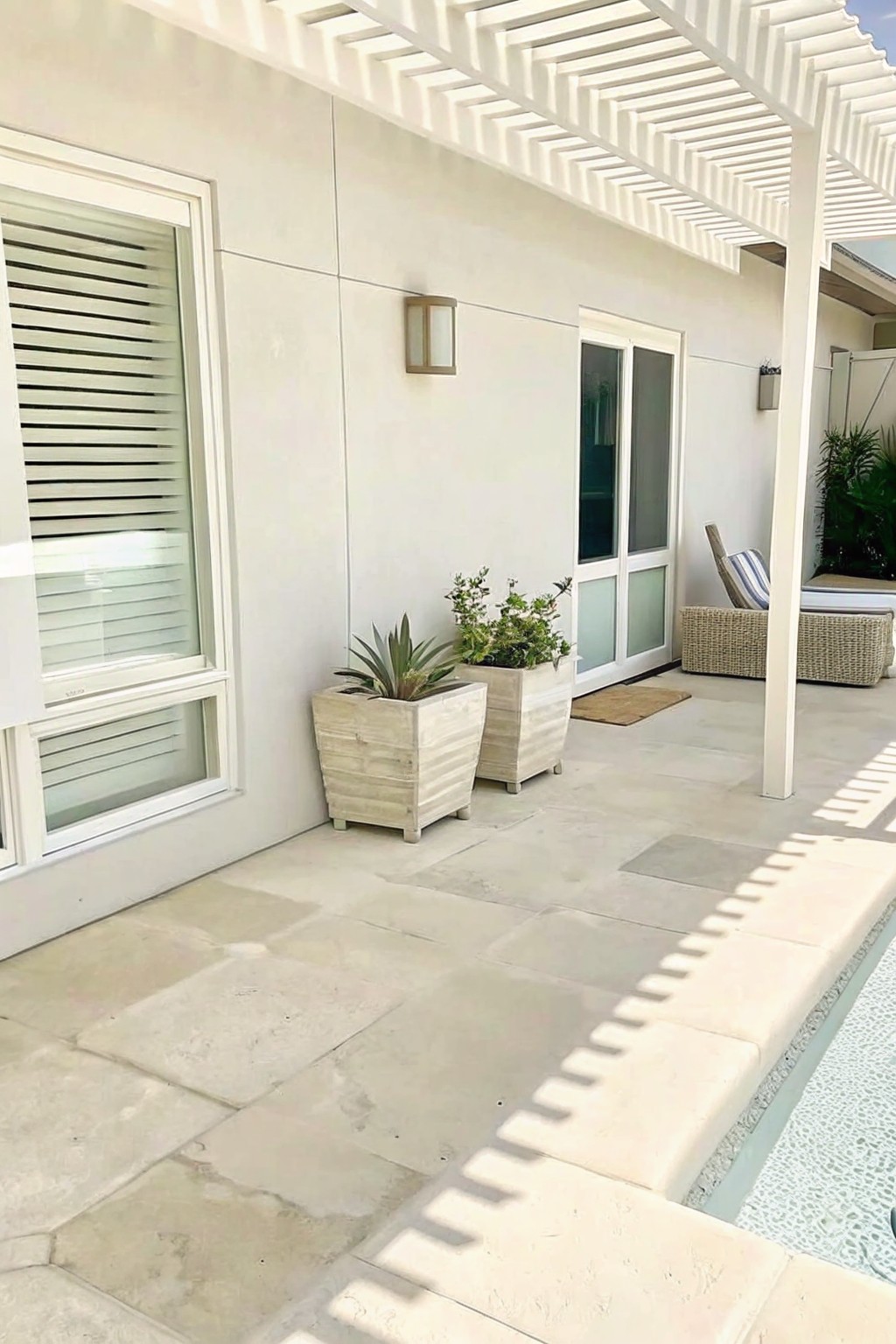
A pair of large planters set against a wall can turn an empty stretch of patio into something that feels more finished. They take up little floor space yet give the eye a clear place to rest, which helps the whole area feel more intentional.
This setup suits homes with narrow outdoor zones or long blank walls. Place the planters near a seating area or doorway so they frame the view without blocking movement, and pick containers that match the scale of nearby furniture.
Mount a Grid Frame for Vertical Plants
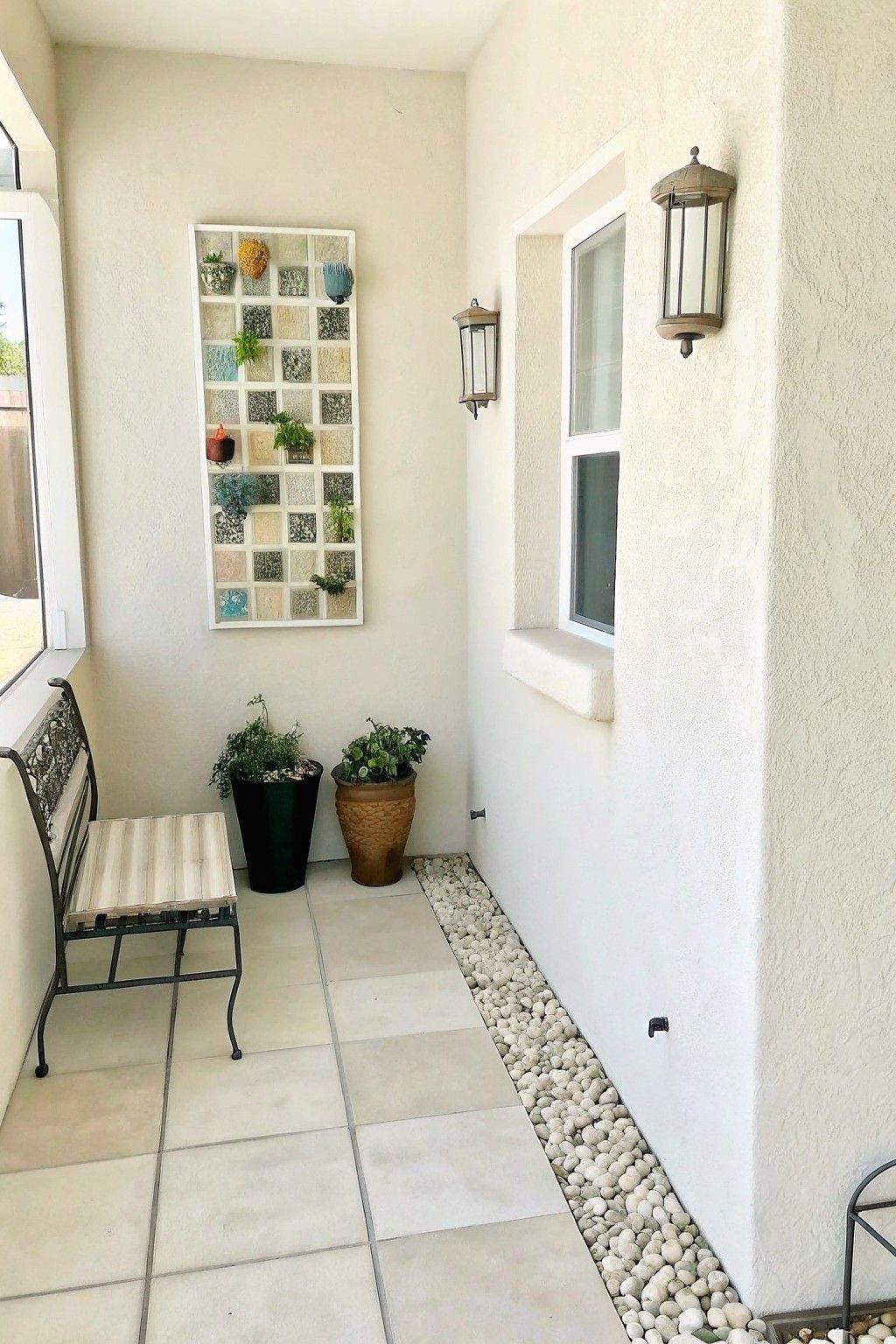
A wall grid with small plants tucked into the openings gives a simple way to add greenery without using floor space. It works especially well on a narrow patio or porch where every inch counts and you still want something living to look at.
This setup suits homes with plain stucco walls or similar surfaces that can take a few screws. Keep the plants small and choose ones that handle the light in that spot, then add a couple of larger pots below if you want more height without crowding the walkway.
Hang Wall Planters To Add Greenery In Tight Outdoor Spots
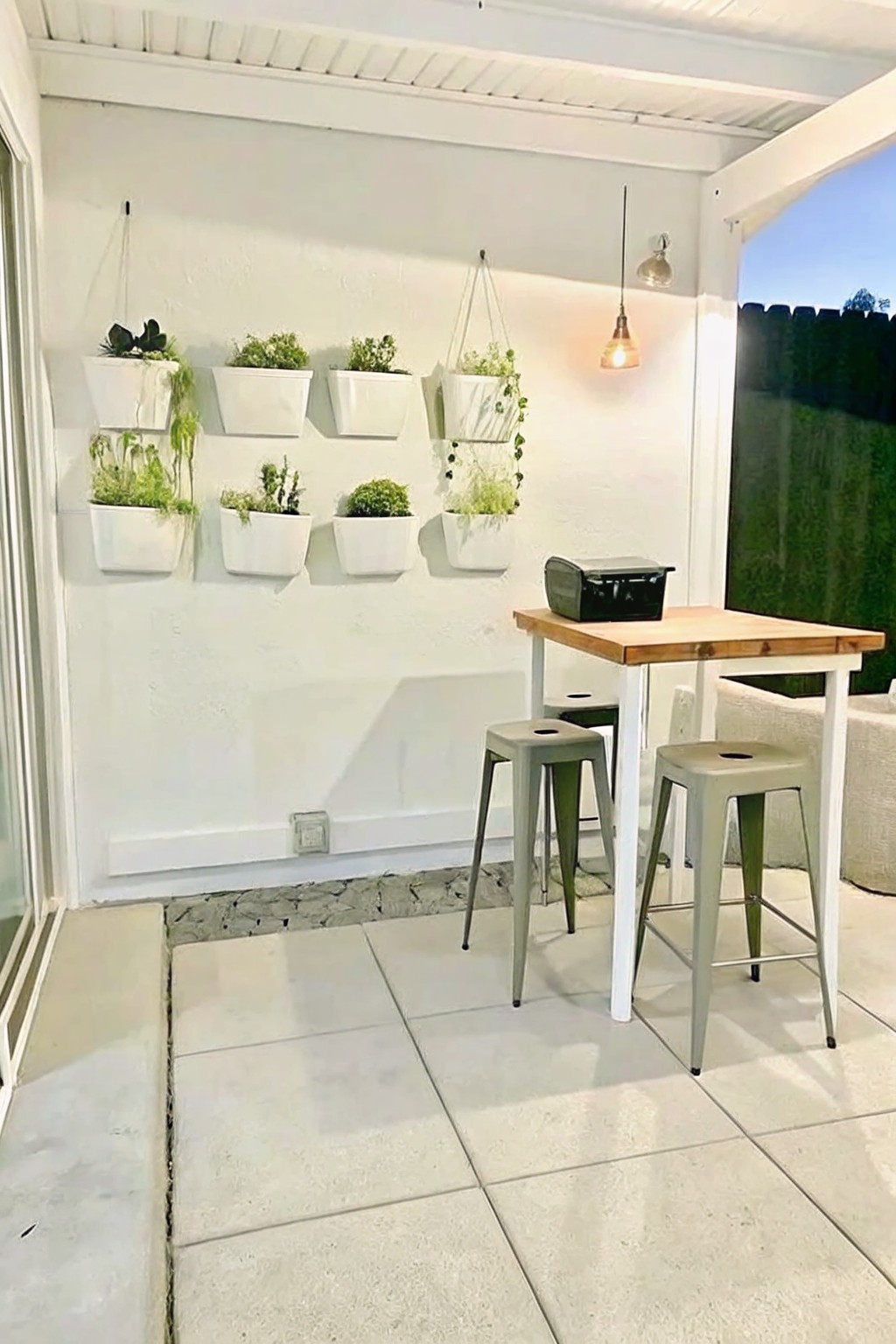
Mounting planters directly on a wall gives you a simple way to bring in plants when floor space is limited. It keeps the area open for seating and movement while still creating a green backdrop that feels intentional. Many people use this approach on covered patios or small side yards where a full garden bed is not possible.
This setup works best on a solid wall that can handle the weight and on surfaces that get decent light. Choose lightweight pots and secure them at different heights so the plants can trail or stay compact. It suits homes with small outdoor living areas that still need a bit of softness without crowding the floor.
Vertical Wall Grids For Compact Planting
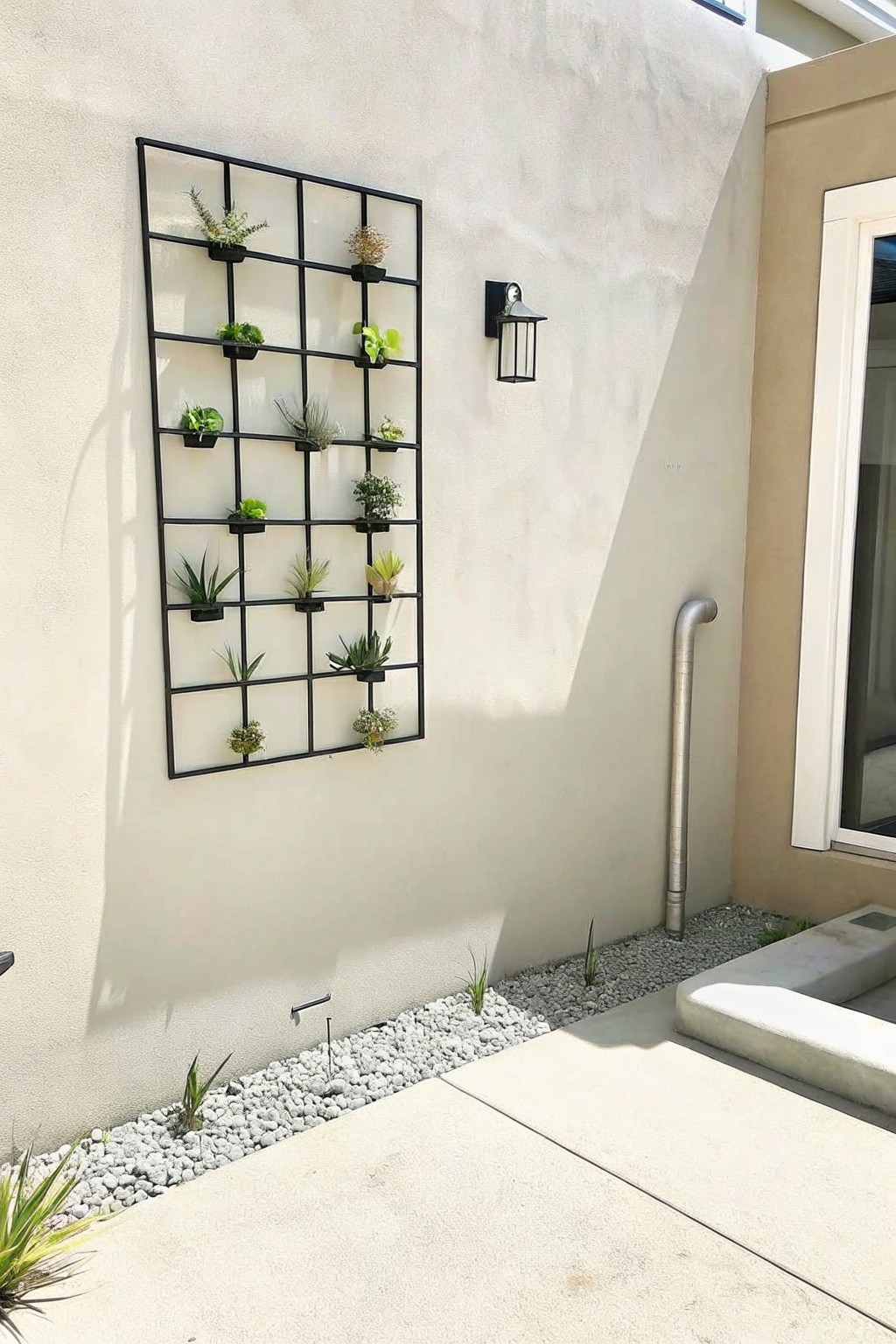
A simple grid mounted on a plain wall lets you add a cluster of plants without using up ground space. It keeps the look tidy and gives small yards or narrow side areas a bit of greenery that feels intentional rather than scattered.
Place the grid where it gets decent light and choose plants that stay small, like succulents or grasses that fit in shallow pots. The setup works best on solid walls that can hold the weight and stays low maintenance as long as you water by hand or add a simple drip line.
Build Seating Right Into the Foundation Wall

A low stone bench built along the side of the house gives you a place to sit without crowding the walkway or needing extra furniture. It uses the existing wall for support and keeps everything close to the ground so the space still feels open.
This setup works best on homes with a simple foundation and a bit of planting room in front. Add a few pots at the base and some weatherproof cushions if you want it to feel more like a regular seat.
Pallet Seating Works Well on Small Balconies

Pallet furniture gives you a simple way to build seating that actually fits a narrow balcony without crowding the floor. The low profile keeps the space open while still giving you a full place to sit and relax.
Start with clean, sturdy pallets and add basic cushions on top. This setup works best on apartments or townhomes where every inch counts and you want something easy to move or change later.
Stepping Stone Paths In Small Gardens
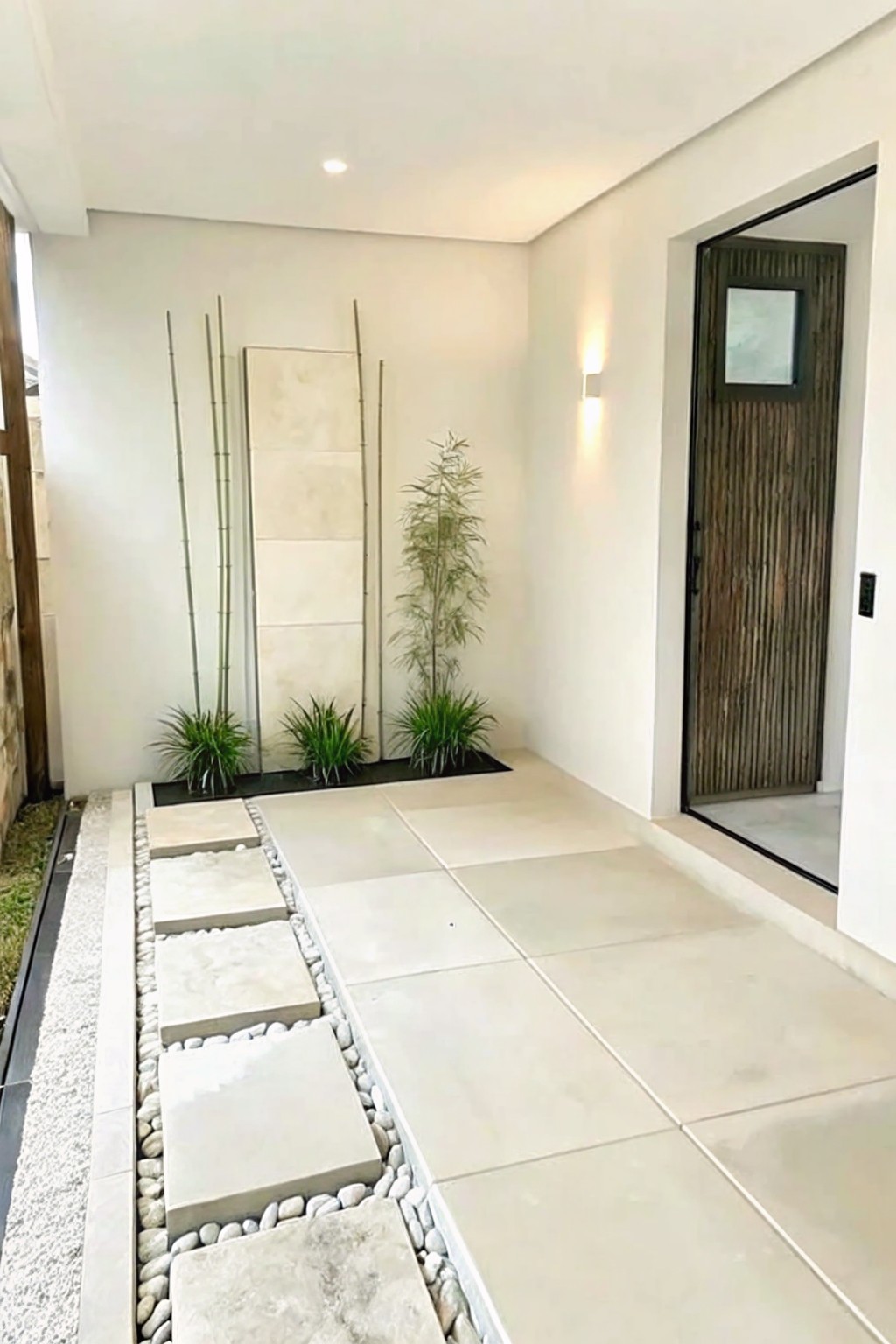
A row of square pavers set into a border of pebbles makes a simple path that works well in narrow side yards or small entry areas. The stones stay level and easy to walk on while the pebbles keep weeds down and give the whole thing a clean edge without needing much upkeep.
This layout suits modern homes or tight spaces where a full patio would feel too big. Keep the stones in a straight line and add a few tall plants along one side to add height without taking up floor space.
Use a Wall Trellis to Add Height in Small Spaces
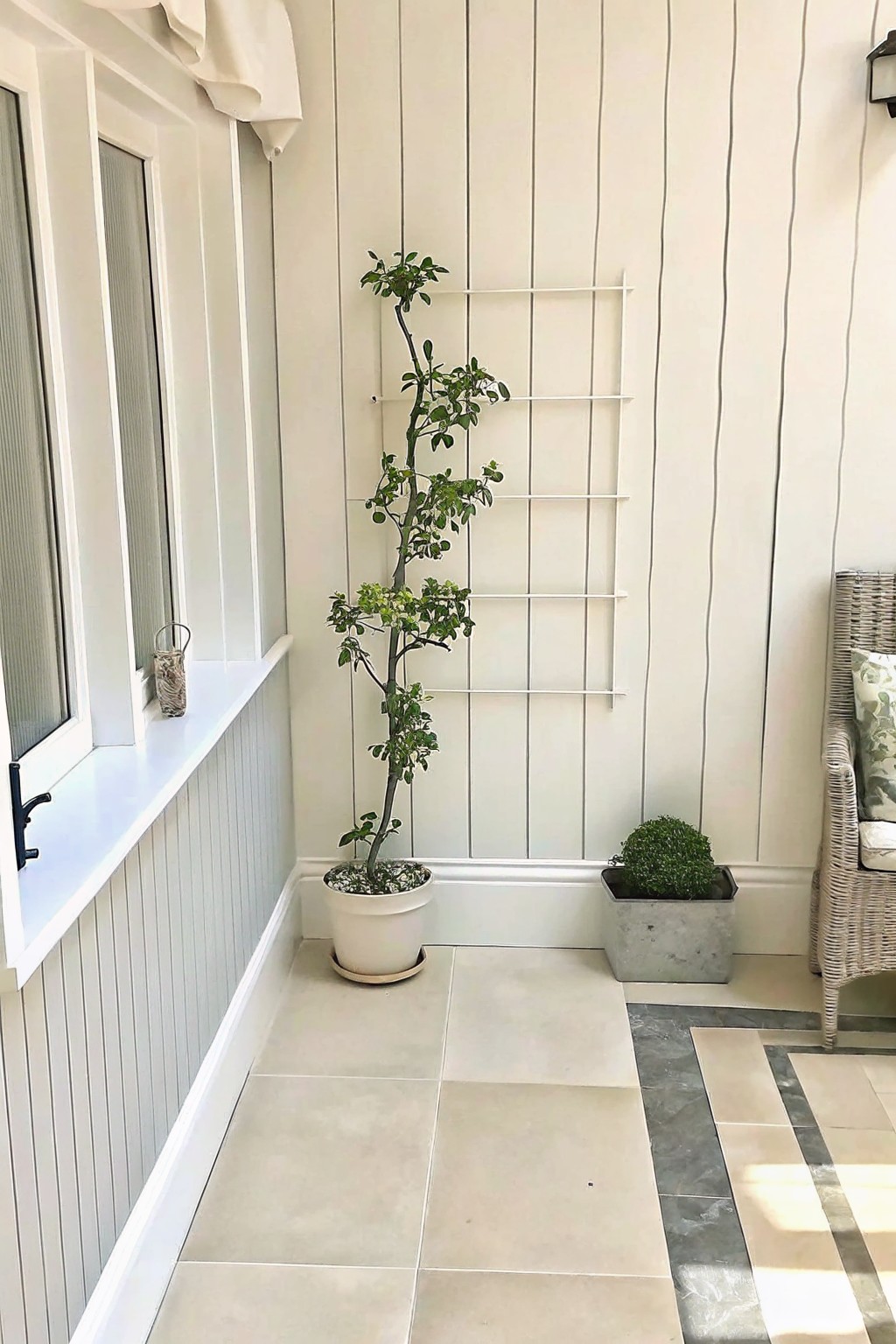
A wall-mounted trellis paired with a tall potted plant gives you vertical interest without crowding the floor. In tight outdoor areas this keeps the space open while still creating a clear focal point that draws the eye upward.
This setup works especially well on porches or balconies where floor room is limited. Pick a simple grid style in a light color and a plant that can be trained as it grows. Make sure the pot has good drainage and check the wall fixings once a year.
Use a Vertical Ladder for Wall Planters

A vertical planter ladder gives you several spots for plants without using up floor space. It works especially well on porches or house walls where room is limited and you still want some greenery close by.
The setup suits small yards or entry areas best. Mount it on a solid wall, keep the troughs simple, and choose plants that handle the light in that spot. Check the weight once it is full so the brackets stay secure over time.
Hang Small Planters on Blank Walls

Hanging a row of small pots on an empty wall adds a bit of green without taking up any floor space. This works especially well on patios or balconies where the floor already holds seating or larger plants.
Group the pots in a loose cluster rather than a strict grid. It suits compact outdoor areas and keeps the look simple while still making the wall feel less bare.
Hang Plants From A Wooden Ladder
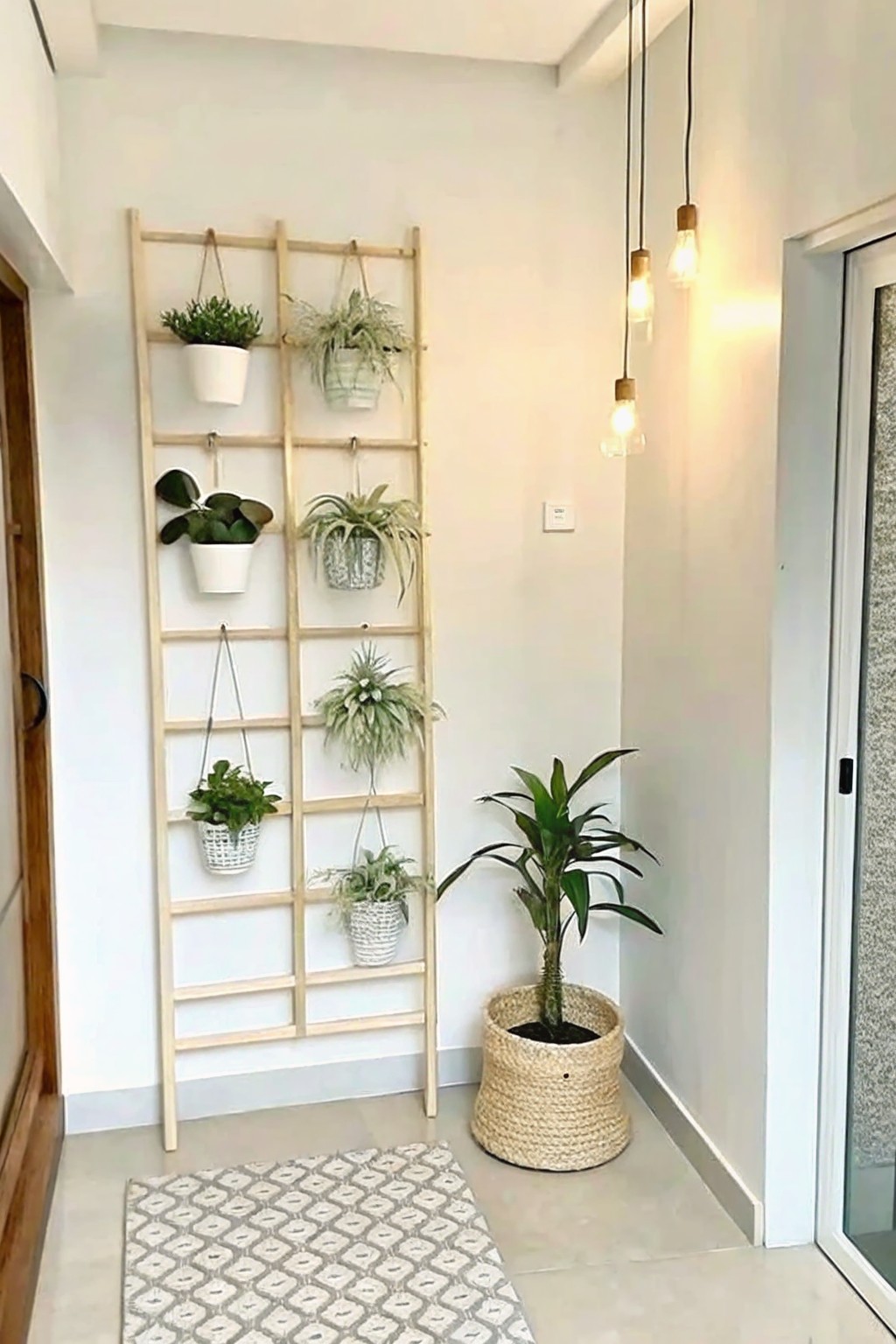
A wooden ladder leaned against the wall turns an empty vertical surface into useful plant space. It keeps the floor clear while letting you fit several pots in one spot, which works well in narrow indoor areas that still need some greenery.
Place the ladder where it will not block traffic and hang the pots from the rungs at different heights. This approach suits apartments or small homes where floor room is limited but a blank wall is available.
Stone Walls Add Height Without Taking Floor Space
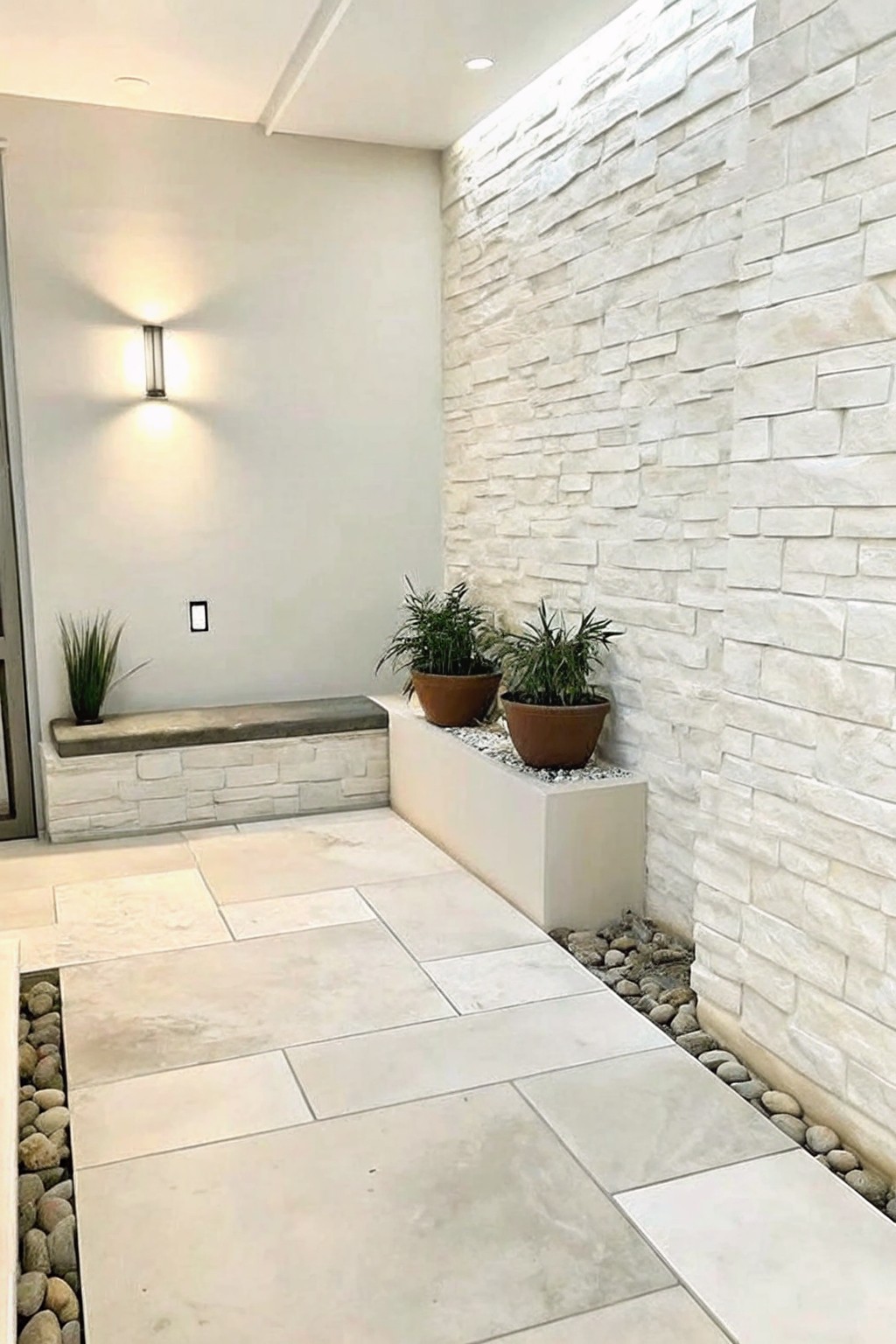
A stacked stone wall works well in small gardens because it brings texture and structure straight up instead of spreading out. The vertical surface gives the eye something to rest on while the floor stays open for walking or simple seating.
Place a few pots along the base and run pebbles along the bottom edge to keep the look tidy. This approach suits narrow side yards or covered entries where you want a focal point but cannot add wide beds or large furniture.
Frequently Asked Questions
Q: How do I hang a lightweight trellis on siding without leaving holes? A: Use outdoor adhesive hooks rated for the weight and clip the trellis in place. Test the hold after a rain to catch any loosening early. Swap the hooks every season if sun fades the adhesive.
Q: Which plants stay healthy in narrow vertical pockets that get afternoon shade? A: Ferns and ivy handle the lower light without much fuss. Tuck them into pockets with good drainage and mist the leaves once a week during dry spells. Trim any yellow tips as soon as they show.
Q: What works as a compact focal point on a fence already crowded with tools? A: Lean a small metal art piece against the fence at eye level. Move one or two potted plants in front to frame it. Shift the arrangement every few weeks so nothing gets baked in one spot.
Q: How do I keep soil from spilling out of wall-mounted pockets after watering? A: Pack the pockets with a light mix that includes perlite. Water slowly so it soaks in instead of running over the edges. Check the bottom seam once a month and tuck any loose fabric back in.
