

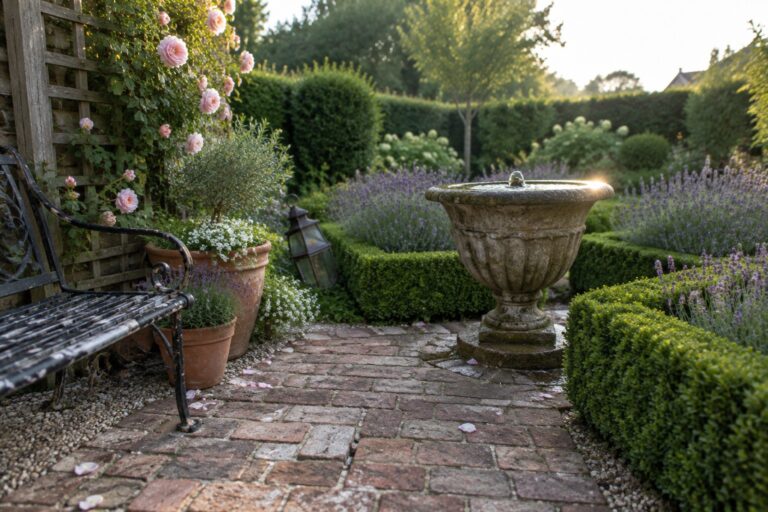
I have found that water features often become the quiet center of a garden once they settle into the layout.
A recirculating fountain can help tie pathways and planting beds together if the scale matches the surrounding beds rather than overpowering them.
I always check water flow before committing to a spot.
Some setups look balanced on paper but end up pulling focus from the rest of the yard once installed.
Testing the pump noise level in the actual space has saved me from a few poor choices in the past.
Anchor a Garden Path with a Recirculating Fountain
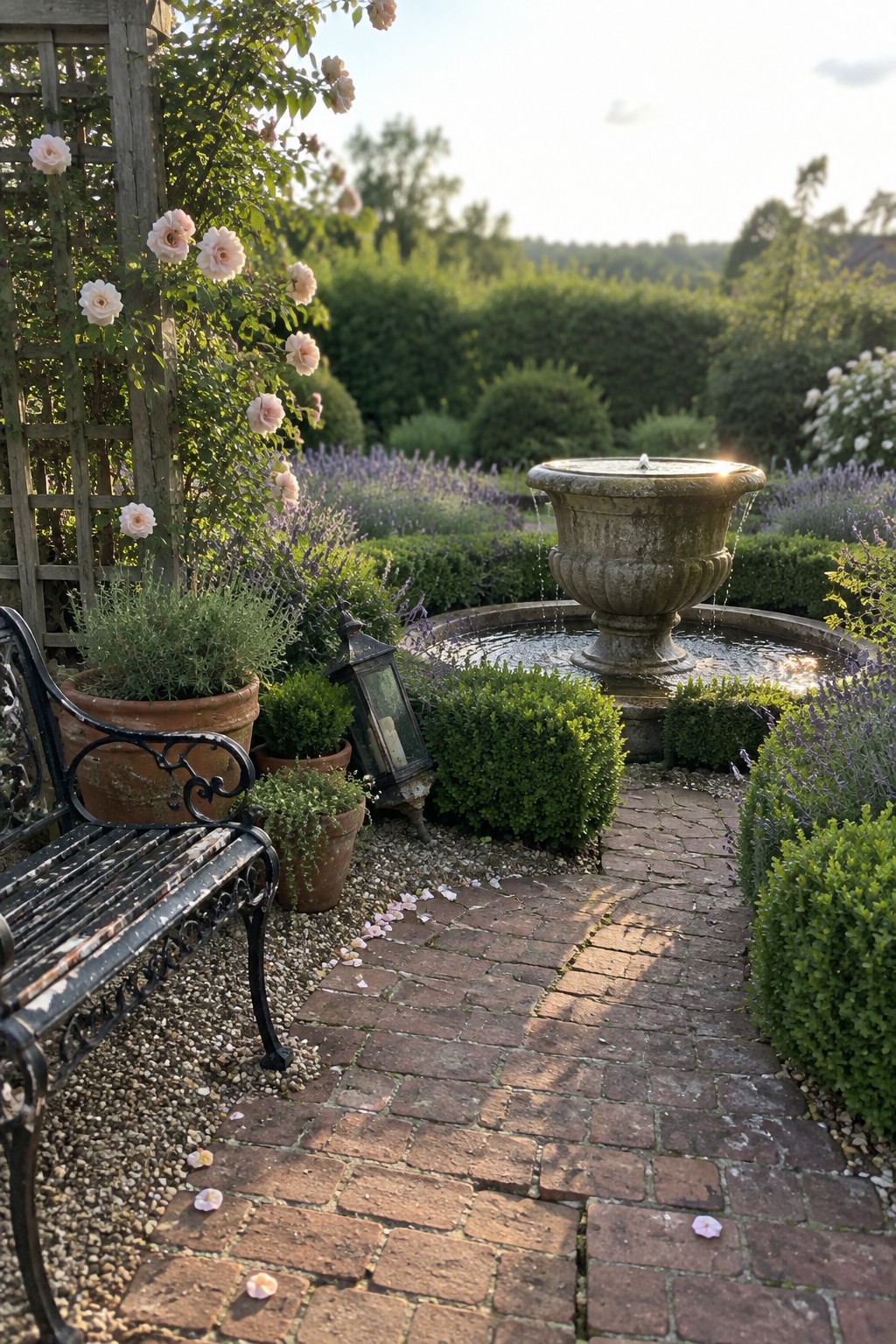
A recirculating fountain at the end of a path gives the garden a clear stopping point. It turns a simple walkway into something more structured without adding much work.
This works best on brick or gravel paths in smaller gardens where you want one strong focal point. Keep the basin modest in size so it fits the scale of the path and does not block the route.
Place a Wall Fountain Beside Your Patio Table

A small wall fountain adds a gentle sound of water right where you sit outside. It turns an ordinary patio corner into a spot that feels a little more finished and restful without needing a lot of floor space.
This setup works best on a paved patio against a solid wall, especially in warmer climates where you spend time outdoors in the evening. Keep the pump hidden in the basin and run it on a timer so the water stays fresh without constant attention.
Add a Recirculating Fountain by the Pool

A recirculating fountain works well right next to a pool because it adds the sound of moving water without any complicated plumbing. The water stays contained and cycles through the same bowls, so you get the look and feel of a garden feature while keeping everything simple to maintain.
Set the fountain on a bed of dark pebbles at the edge of the deck so it sits slightly apart from the seating. This placement keeps the splash contained and lets the sound carry over to the loungers without overwhelming the space. It suits homes with smaller yards or existing pool decks where you want one clear focal point.
A Central Fountain In A Gravel Garden
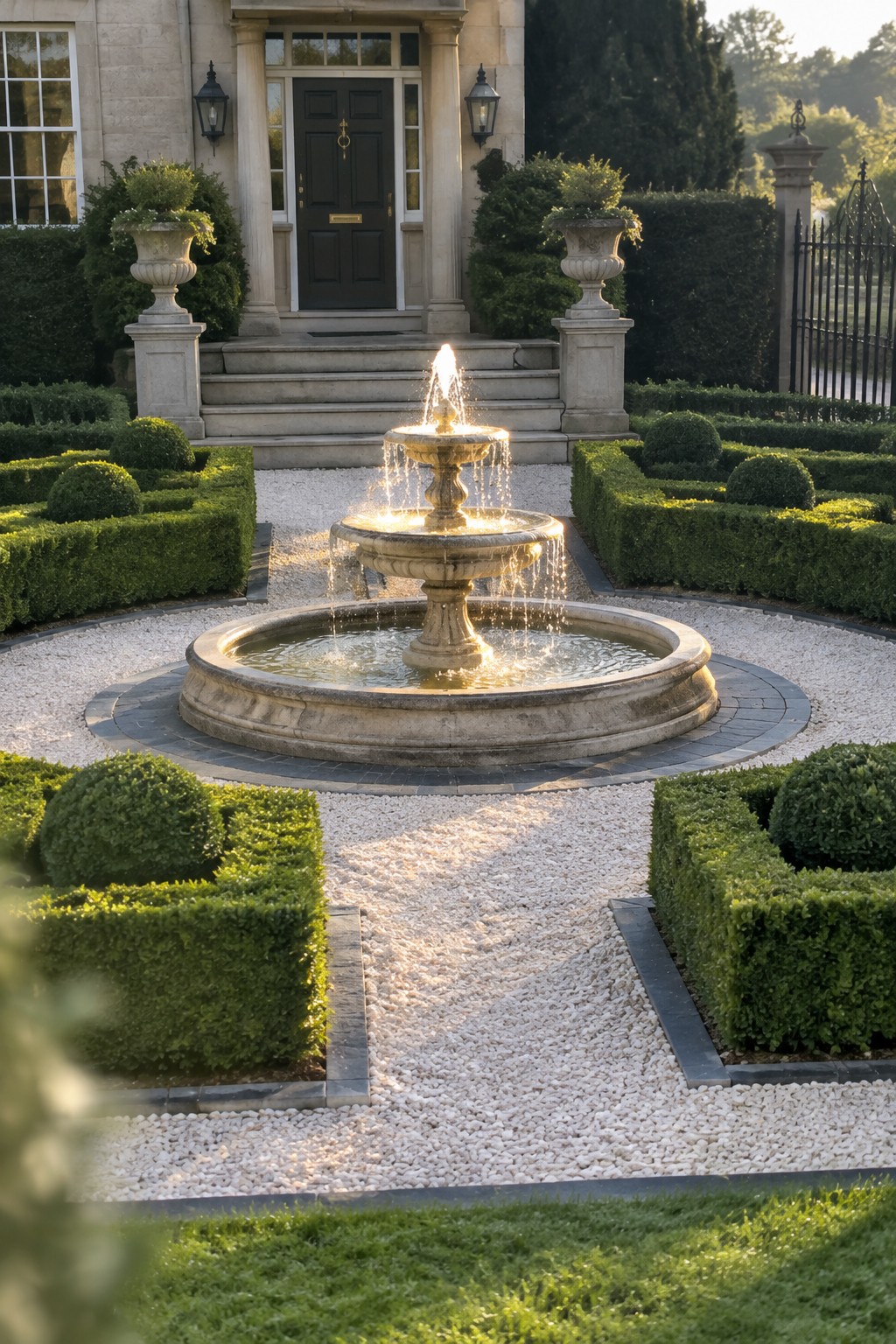
A recirculating fountain placed in the middle of a gravel area gives the garden a clear focal point without a lot of extra planting. The water sound stays pleasant and the setup stays simple to maintain since the pump just cycles the same water.
This works best in front yards or side gardens where the space is fairly open and you want something structured but not fussy. Keep the surrounding hedges low and neat so the fountain remains the main feature instead of getting lost among taller plants.
Stone Basin Fountains For Narrow Garden Paths

A stone basin paired with a simple wall spout creates a compact water feature that slips easily into a tight garden walkway. The recirculating pump keeps water moving without much fuss, and the basin itself adds weight and texture that grounds the whole path.
This setup suits side yards or passages between buildings where there is little room for anything larger. Set the basin low near the end of the path so the sound carries without blocking the route.
Add a Narrow Water Channel Along the Patio
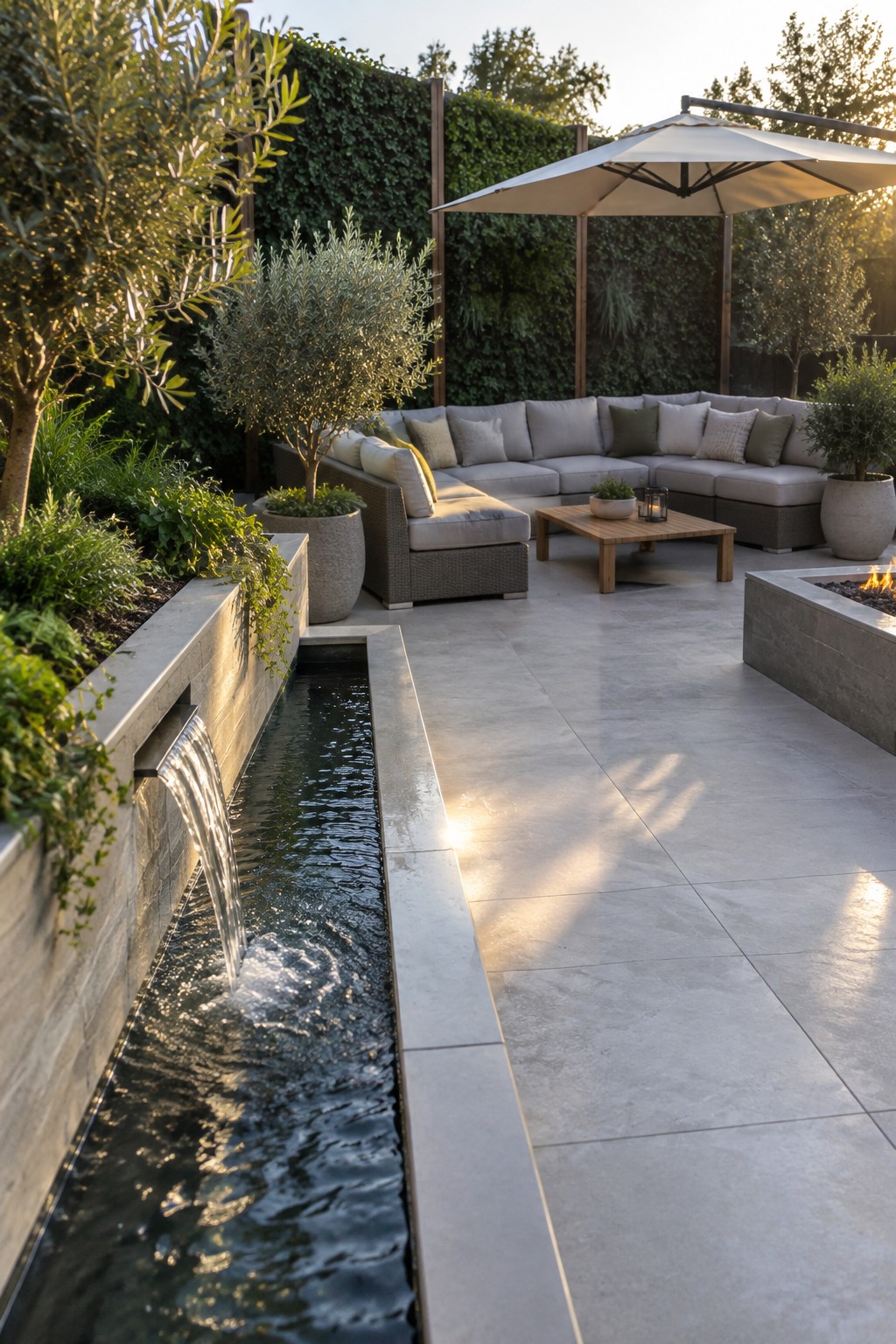
A long, thin water feature running beside the seating area gives the space movement and sound without taking up room for furniture. The recirculating setup keeps water flowing quietly along the edge, which helps the patio feel calmer even when the rest of the yard is busy.
This idea suits homes with straight patio lines and limited space. Keep the channel fairly narrow so it does not block foot traffic, and place the pump at one end so the water returns easily without extra piping.
Place a Recirculating Fountain in a Tiled Niche

A wall fountain set into a tiled niche gives you moving water without needing extra floor space. The recirculating setup stays simple to run and adds a steady sound that helps the whole pool area feel calmer.
This works best on a patio or poolside wall that already has some shade or planting nearby. Keep the tile pattern bold but limited so it does not compete with the rest of the space, and make sure the basin sits low enough for easy cleaning.
Wall Fountains Work Well in Small Spaces

A wall fountain takes up almost no floor space, which makes it a good choice for balconies or narrow patios. The water recirculates from a small pump, so there is no need for new plumbing or a big basin.
This setup suits apartment balconies or compact yards where a freestanding fountain would crowd the area. Keep the pump cord hidden and check the water level every few days, especially in warm weather.
Tuck a Fountain Into an Herb Garden

A small recirculating fountain works well in an herb garden because it adds sound and movement without needing a big water feature. The low brick base keeps it stable and lets the plants grow right up around the edges so the whole area feels connected.
This setup suits a sunny side yard or a corner of a larger garden where you already grow herbs in raised beds. Keep the pump accessible for occasional cleaning and choose a simple bowl shape that does not compete with the greenery.
Tuck A Stone Basin Fountain Into Gravel And Rocks
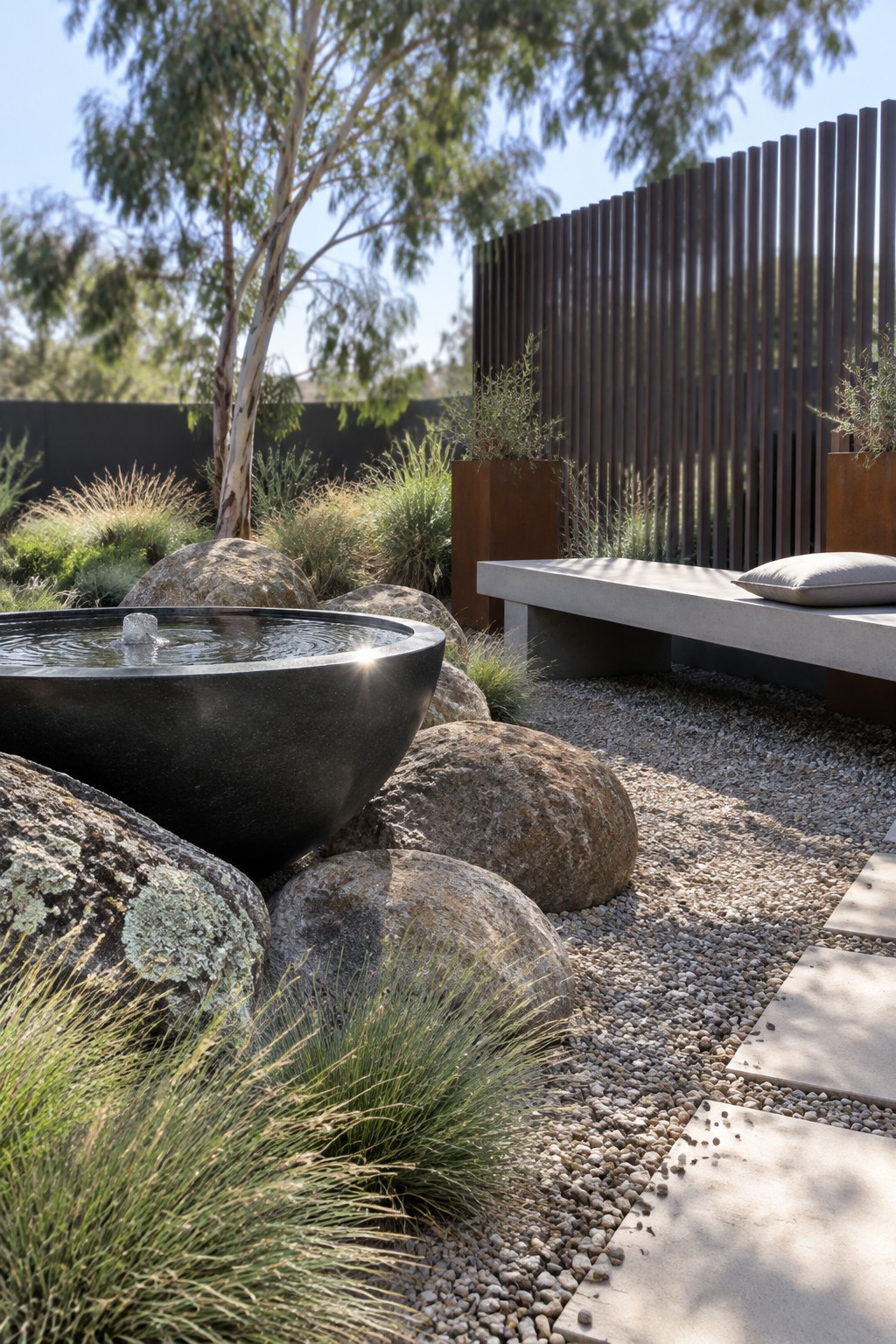
A low black stone basin with a small recirculating fountain blends easily into a gravel and boulder setting. The water stays contained, the pump runs quietly, and the whole feature feels like it belongs with the surrounding rocks and grasses rather than sitting on top of them.
This approach works best in gardens that already use gravel or a dry creek bed. Keep the basin low so it reads as part of the ground plane, and place it where you can reach the pump without stepping on plants. It suits smaller modern yards that need one calm water sound without extra structure.
Line a Garden Path With a Simple Trough Fountain
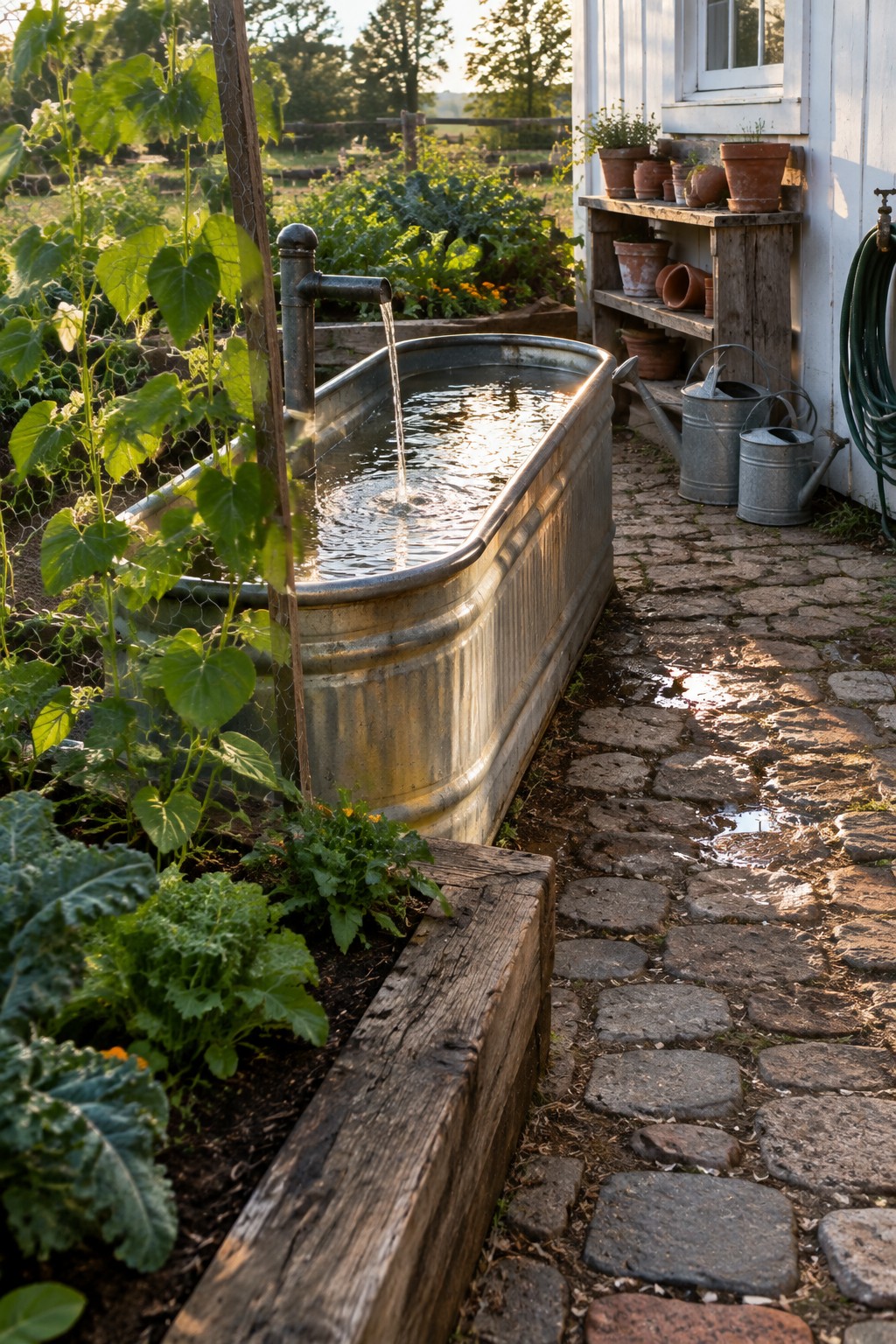
A long metal trough makes an easy water feature when you set it right along a garden path. The running water stays visible from the walkway, and the shape fits neatly against the edge of a bed without taking up much space.
This works best in smaller gardens or along an existing route you already walk every day. Keep the pump hidden inside the trough, run the outlet through a simple pipe or spout, and let the water recirculate so you do not need to add much beyond an occasional top-up.
Mount a Wall Fountain on Your Patio

A wall fountain keeps the water feature off the floor and leaves room for seating and plants. It also adds the sound of moving water without needing a big basin or pump setup in the middle of the space. Many people like this option when the patio sits right against the house and floor space feels tight.
This works best on a solid exterior wall that can handle the weight and moisture. Make sure the fountain has a hidden reservoir so the water recirculates quietly. It suits small urban patios or side courtyards where you want the look of a garden without crowding the walking area.
Combine a Fountain With a Fire Pit on Your Patio

A recirculating fountain works well when it sits right next to the fire pit. The sound of water softens the space while the fire adds warmth, and both features pull people toward the same spot without needing much extra decoration.
This setup fits best on a stone or concrete patio where you already have seating arranged around the fire. Keep the fountain low and built into a wall or planter so it does not block views or take up floor space. Just make sure the pump is easy to reach for cleaning.
Frequently Asked Questions
Q: How do I keep the water from turning green in summer? A: Add a small amount of fountain treatment each month. The recirculating flow helps but a bit of cleaner keeps algae away.
Q: Can I run one of these fountains on a timer? A: Yes. Set it to run during the day when you enjoy the garden most. That saves electricity at night.
Q: What size pump works best for a small patio fountain? A: Pick one rated for your basin volume. It should cycle the water every hour to stay fresh.
