


A fence can make a garden feel tidy and private, but a plain stretch of boards may leave the yard looking a little unfinished.
I like how a matching arbor gives the entrance a clear focal point while helping the fence feel like part of a considered layout.
The best results often come from practical choices, such as repeating materials, adding climbing plants, or framing a path without making the space feel crowded.
Even small updates can make a noticeable difference in how a garden looks and works.
I’d save the details that suit your yard and adapt them to the fence, plants, and pathways you already have.
Add Structure To An Overgrown Garden

A worn fence and overgrown edges can make a garden feel neglected. A white picket fence paired with an arbor gives the entrance a clear focal point and makes the yard feel more orderly.
This idea works well where a gate opens onto a path or garden. Clear the growth around the fence first, then add an arbor that fits the gate and leave enough room for people to pass comfortably.
Add Privacy With a Garden Fence And Arbor

Replacing a rusty chain-link fence with a solid wood fence gives this narrow side yard much-needed privacy. The arbor over the gate makes the entrance feel like part of the garden, rather than just a way through.
This idea works well in side yards where neighbors are close and space is limited. Choose a fence height that meets local rules, then keep the gravel path clear so it remains easy to walk through.
Add Structure To A Plain Garden Fence

A dark stain and a simple arbor turn an ordinary fence into a clear focal point for the garden. The arbor gives the fence a little shape and makes the planting below it feel more intentional, without needing to change the whole yard.
This idea works well when a fence takes up much of the view from a patio or small garden. Choose an arbor that fits the fence’s scale, then keep the planting around its base low enough that it does not crowd the path.
Add A Garden Arbor To Define The Fence

A plain, weathered fence can make a garden feel neglected. Adding an arbor at the center gives the fence a clear focal point and makes the planting bed feel more intentional. Here, the gate and arbor turn an ordinary stretch of fence into a garden entrance.
This idea works well in a backyard with a long fence or an existing flower bed. Keep the arbor and gate in proportion to the fence, then plant around them without blocking the path through. A fresh coat of paint can help tie the new feature into the rest of the fence.
Make A Garden Path Feel More Finished

Replacing a weathered, uneven fence with a neat bamboo screen and arched gate gives the garden path a clear entrance. The simple change makes the walkway feel planned instead of like a gap between fence panels.
For a similar effect, let the gate mark the start of a path, and keep the opening wide enough to walk through comfortably. This works well in a small garden too, where a defined entrance can make the layout feel more organized without adding much.
Create A Clear Garden Entrance

A simple arbor can give a garden entrance a purpose, especially when a plain or damaged fence makes the yard feel neglected. Here, the new wooden arbor marks the opening, and a stone path leads visitors through the garden.
This idea works well where a path meets a fence or garden border. Keep the opening wide enough to walk through comfortably, and choose a sturdy arbor that suits the fence material and holds up outdoors.
Make A Plain Garden Fence More Welcoming

A simple fence can feel more like a garden entrance when the gate becomes a clear focal point. Here, an arbor above the gate gives the fence a finished look, while the fresh paint helps the entry stand out.
For a similar update, choose an arbor that fits the gate without crowding it, then keep the nearby planting fairly simple. This works well in a backyard where the fence is functional but the entrance could use a little more character.
Turn A Plain Fence Into A Garden Entrance

A fence can do more than mark the edge of a yard. Here, a rusted fence becomes a garden feature with a simple arbor that gives the path a clear entrance and makes the space feel more planned.
For a similar look, place an arbor where a path meets the fence, then let a climbing plant grow over it. Keep the path wide enough to walk through comfortably, and choose a sturdy arbor suited to outdoor weather.
Replace A Worn Fence With A Clear Garden Entrance

A broken, overgrown fence can make a garden feel neglected. Replacing it with a sturdy wood fence and a simple arbor gives the yard a clear entrance, while the stone posts help define the opening.
This idea works well when you want more privacy without losing a welcoming way into the garden. Keep the gate wide enough to pass through comfortably, and leave a clear path beyond it so the entrance feels practical, not just decorative.
Make A Garden Entrance More Usable

A plain fence gate can feel like an afterthought. Adding a wooden arbor turns the entrance into a small destination, and a built-in bench makes the space useful instead of simply decorative.
This idea works well along a garden path where there is room for people to pause without blocking the way. Keep the arbor sized to the gate and path, and leave enough clearance for the gate to open easily.
Turn A Plain Fence Into A Planted Garden Feature

A blank block wall can make a garden feel unfinished. Adding a horizontal wood screen and a simple arbor turns it into a clear focal point, while the plants make the fence feel more connected to the garden.
This idea works well in a small backyard where the fence takes up much of the view. Keep the planting fairly simple and leave enough room for the arbor to stand out. Choose wood and metal finishes that can handle outdoor weather.
Add Flowering Vines To A Garden Arbor

A simple arbor can make a plain fence gate feel like a proper garden entrance. Here, climbing roses bring color up around the gate, while the pale fence and a neat flower bed make the whole entry look cared for.
If your gate feels a little bare, train a climbing rose or another suitable vine along the arbor posts. Check the plant’s mature size and leave room for the gate to swing freely. A few low plants at the base are enough to finish the area without crowding the path.
Add A Garden Arbor To Define A Narrow Side Yard

A narrow side yard can feel like a leftover space when it is cluttered and bordered by a plain fence. Clearing the path and adding a simple arbor gives the area a clear entrance and makes the walk through the yard feel more intentional.
This idea works well beside a house where there is little room for extra features. Keep the path open and use a few pots near the fence or arbor rather than filling every gap. A compact layout is easier to maintain and leaves space to pass through.
Give A Plain Garden Fence A Clear Entrance

A simple fence can do more than mark the yard’s edge. Here, replacing the low picket fence with a taller privacy fence and arbor makes the front walk feel like a proper entrance to the garden.
This idea works well in a small front yard where the path meets the sidewalk. Keep the arbor wide enough to walk through comfortably, and leave room beside the path for planting rather than crowding the entry.
Update A Worn Fence With A Garden Arbor

A weathered fence can make a garden feel neglected, but a simple arbor helps give it a clear focal point. Here, the refreshed fence is paired with a sturdy overhead frame and small lights, making the boundary feel more intentional.
Use an arbor to break up a long fence and mark a spot you want people to notice. Keep the structure in proportion to the fence, and choose weather-resistant materials so it holds up outdoors.
Use An Arbor To Make A Fence Opening Feel Planned

A plain gap in a fence can feel more like a leftover space than an entrance. Adding an arbor above a picket gate gives the opening a clear purpose, while the matching fence sections make the yard feel more organized.
This idea works well where a path or gate connects two parts of a yard. Choose an arbor that fits the gate and leave enough room for people to pass comfortably. Flowering vines can fill it in over time, but the entrance still works without them.
Make A Pool Fence Feel More Like A Garden Feature

A plain fence can make a pool area feel closed off. Adding an arbor at the center turns part of that boundary into a garden feature, while the refreshed fence gives the whole space a more finished look.
For a similar update, choose an arbor that suits the fence’s height and leave enough room to walk through comfortably. Flowering vines can dress it up over time, but keep them trimmed so they don’t block the opening or crowd the pool area.
Train Fruit Trees Along A Garden Arbor

Training fruit trees across an arbor gives a vegetable bed a clear focal point while making better use of vertical space. The after photo replaces a small, crowded plant support with a broad black arbor carrying espaliered trees, so the garden feels more organized without giving up the raised bed.
This idea suits a sunny backyard where there’s room to guide branches along a sturdy frame. Leave enough space for vegetables below, and prune the trees regularly so their growth stays manageable and doesn’t shade the whole bed.
Give A Garden Fence A Clean, Finished Look
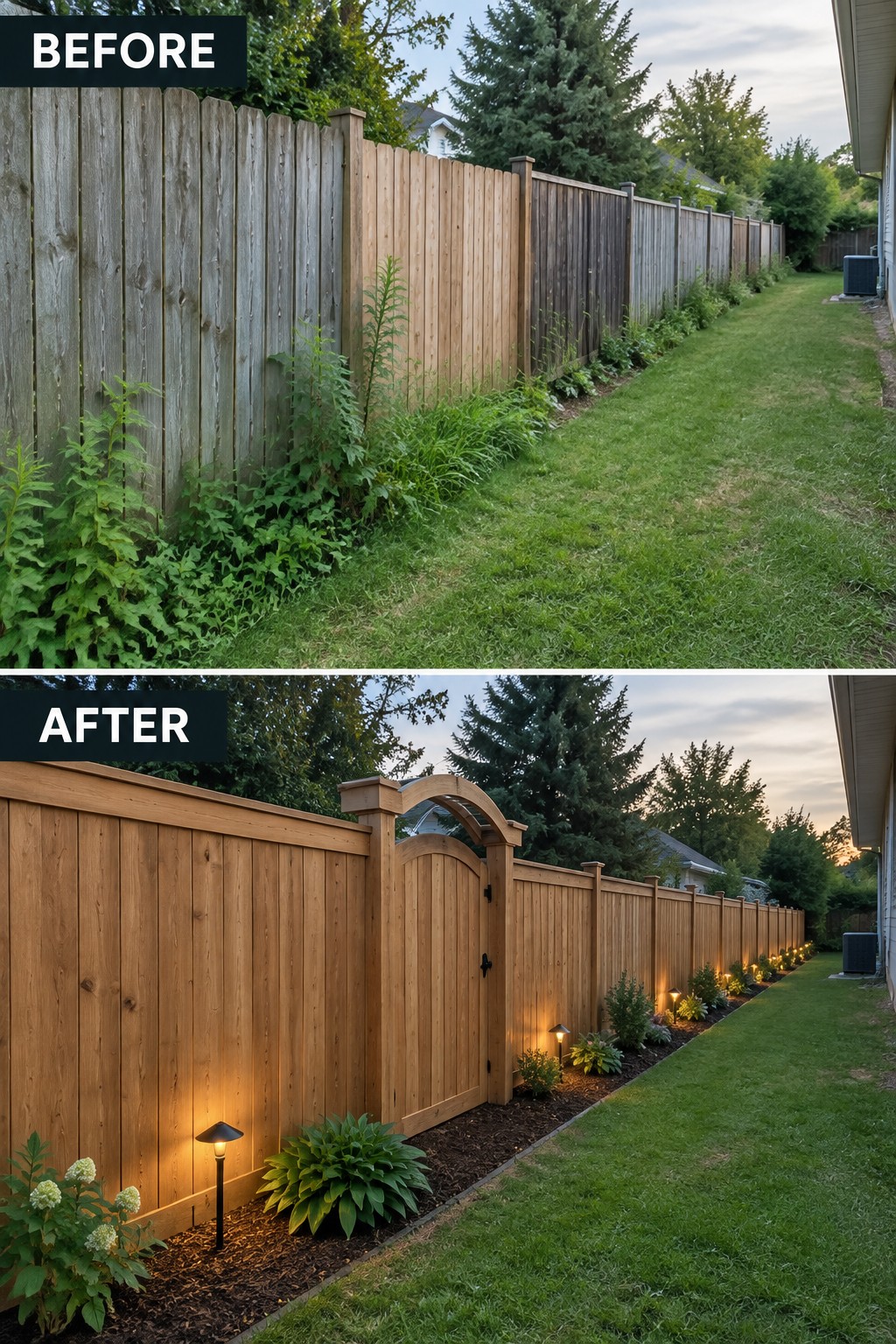
Replacing a patchwork, weathered fence with one consistent wooden design makes a side yard feel more orderly. A matching arbor over the gate gives the fence a clear entrance, while a narrow mulched bed helps keep the planting edge neat.
This idea works well in a long side yard where the fence is a major part of the view. Choose an arbor that suits the fence’s height and style, and leave enough room for the gate to swing and for people to pass comfortably.
Replace A Worn Fence With A More Useful Garden Entrance
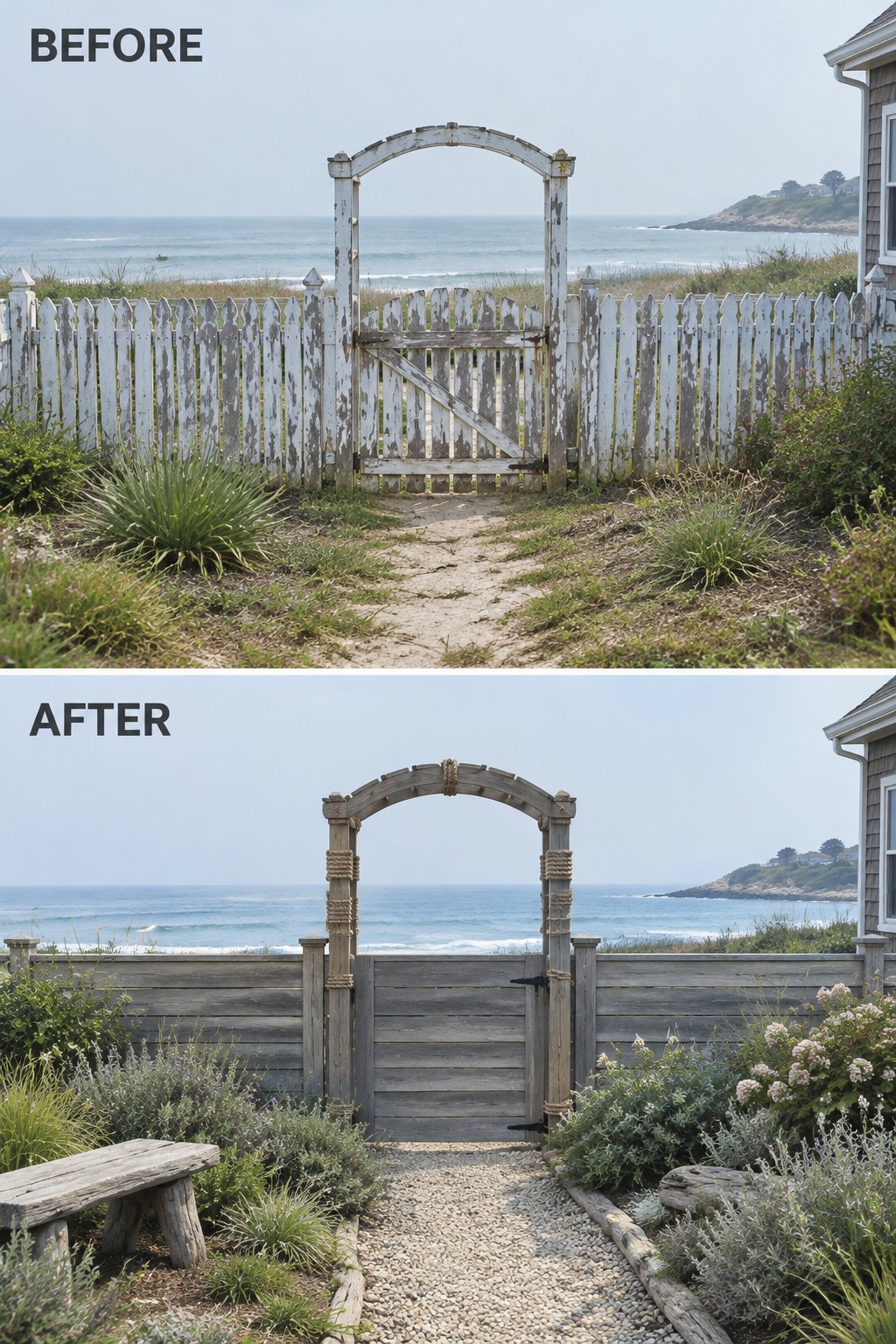
A simple fence update can make a neglected garden entrance feel planned and easier to use. Here, a solid wood fence and matching gate replace the weathered pickets, while the arbor marks the way through the fence.
This idea works well in a coastal or cottage-style yard where a clear path matters as much as privacy. Choose weather-resistant materials, and keep the opening wide enough for everyday access. Gravel gives the approach a tidy surface without making it feel too formal.
Replace A Chain-Link Fence With A Private Garden Entrance
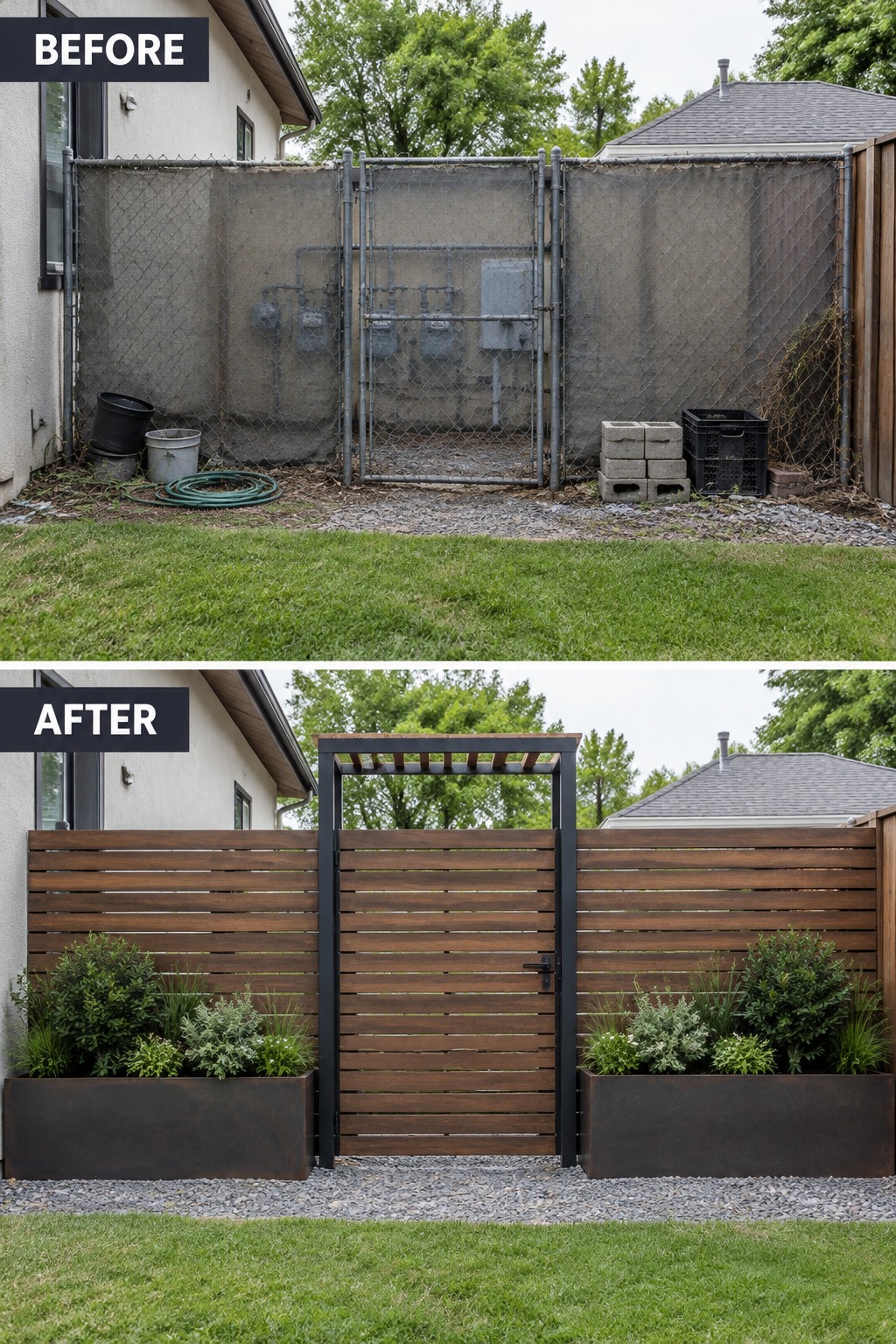
A worn chain-link enclosure can make a side yard feel like a place to hide rather than part of the garden. Replacing it with a solid horizontal fence and a simple arbor over the gate gives the area more privacy and makes the entrance feel intentional.
This idea works well for narrow side yards or utility areas that need screening. Keep the arbor close to the height and width of the gate, and use planters along the fence to bring in greenery without taking up much walking space.
Turn A Plain Fence Into A Garden Entrance

A simple arbor can give a plain fence a clear entrance and make the patio feel more like a planned outdoor room. Here, the arbor is the main change, with climbing greenery helping it blend into the garden.
Use an arbor where you want to mark a transition between the patio and the rest of the yard. Choose a size that leaves comfortable room to walk through, and train vines along it gradually so the opening stays easy to use.
Paint A Garden Fence To Add Color

A plain fence can become a garden feature with paint and a simple flower design. Here, the blue-green color gives the fence and arbor a more unified look, while painted flowers add interest without taking up planting space.
This idea works well in a shared garden or a small yard where fence space is easy to use. Pick an exterior paint color that suits the setting, then keep the painted pattern simple so it does not compete with real plants.
Clear Overgrowth To Make A Garden Entrance

Removing dense growth can turn a hidden gate into a useful garden entrance. Here, a wood fence and arbor replace the overgrown opening, giving the path a clear destination and the garden a more defined edge.
If vines have swallowed a gate or fence, start by cutting them back before deciding what needs replacing. A simple arbor can mark the entry, but leave enough room for the gate to swing and for people to pass comfortably.
Frequently Asked Questions
Q: How do I make sure the arbor and fence look like they belong together?
A: Repeat one or two details, such as the same wood stain, paint color, or post shape. They don’t need to match exactly; a shared detail is often enough to tie them together.
Q: Should I build the arbor before or after putting up the fence?
A: Plan both at the same time, even if you install the fence first. That way, you can leave a clear opening and set the arbor posts securely without having to redo nearby fence sections.
Q: What can I plant around an arbor without hiding it?
A: Choose a light climber, such as a clematis, and train it along the sides rather than letting it cover the whole frame. Leave enough open space to show off the arbor’s shape.
Q: How can I keep a wooden arbor and fence from wearing out?
A: Keep soil and mulch from piling against the wood, and check for loose fasteners or peeling finish each year. Touch up the finish when needed to help protect the wood from rain and sun.
