


Rabbits can undo a season of careful planting, especially when flower beds sit open along the lawn.
I’ve found that a fence works best when it protects the plants without making the garden feel boxed in or difficult to tend.
The right height, spacing, and materials can keep rabbits out while still letting flowers, paths, and the shape of the yard stay visible.
Even a small change to the bed’s edging can make the whole area feel tidier and easier to maintain.
I’d save the designs that suit your yard and adapt them to the plants and rabbit pressure you actually have.
Create A Defined Flower Bed

Replacing the overgrown bed with a neat mulched border gives the fence line a clear shape and makes the flowers easier to care for. The lavender and roses fill the space without hiding the fence or letting the planting feel crowded.
For a similar look, clear weeds first, then mark out a simple bed and use mulch to keep the soil tidy. Choose plants suited to your conditions, and leave enough room between them for healthy growth.
Add A Defined Border Along The Fence
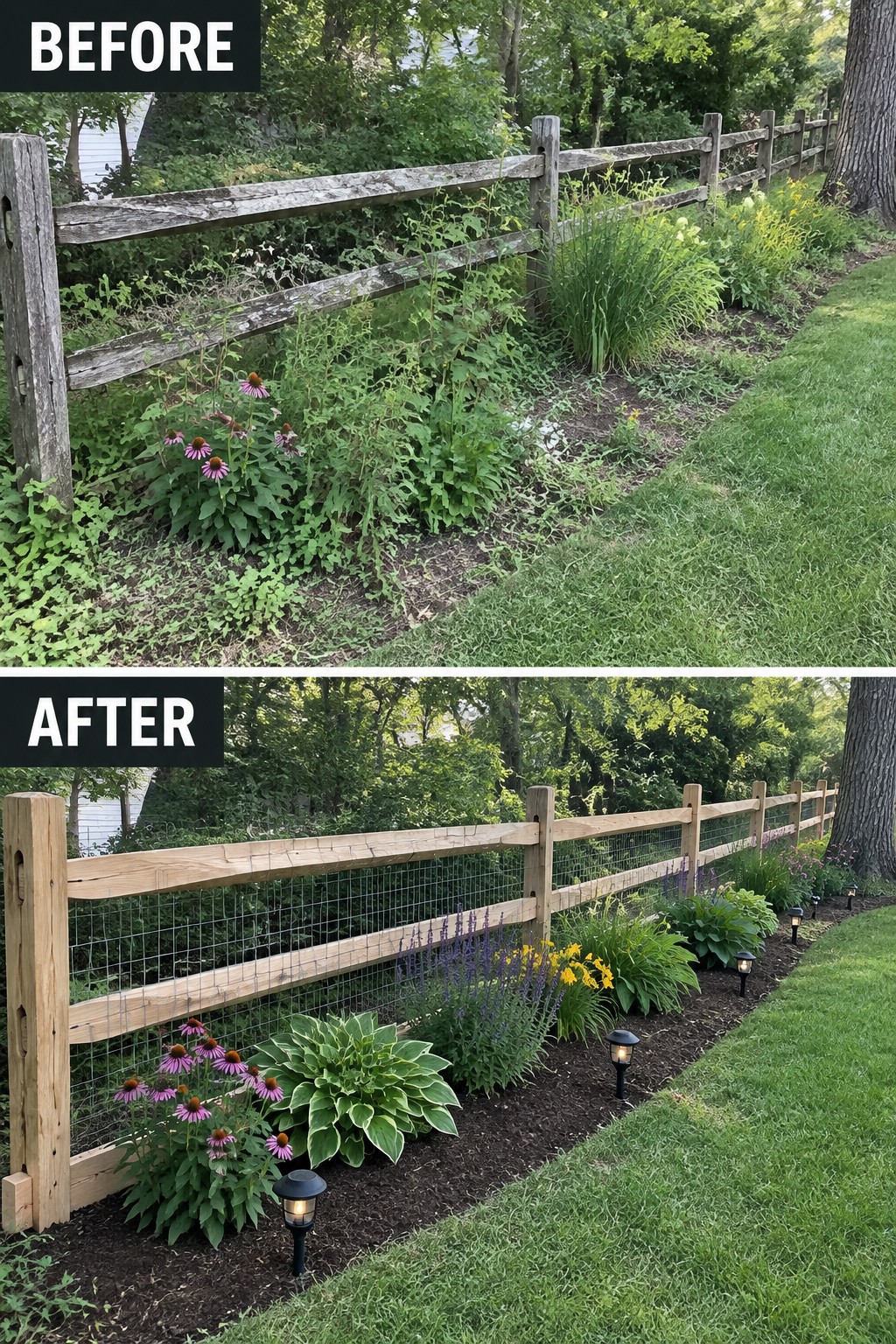
A clear garden bed makes a fence line easier to maintain and gives flowers room to stand out. Here, a fresh mulch border replaces the overgrown strip, while wire mesh between the rails helps keep rabbits out.
Start by clearing weeds and setting a clean edge along the lawn. A sturdy mesh fence can protect the planting without hiding it, and mulch helps keep the bed looking tidy. Leave enough space to reach plants and check the fence for gaps.
Add A Sturdy Barrier Around Flower Beds

A low decorative border can mark a garden bed, but it may not keep rabbits from reaching the plants. Replacing the small open edging with a taller metal fence makes the bed more protected while keeping it visible from the yard.
Use a sturdy fence with narrow gaps, set close to the ground so rabbits cannot easily slip underneath. This works well around small flower beds near the house; leave enough room inside to tend the plants and keep the gate easy to open.
Protect Flower Beds With Covered Raised Beds

The open flower bed has been rebuilt as a raised wooden planter with hinged mesh covers. This gives flowers a barrier from rabbits while keeping the bed tidy and making the plants easy to reach.
Use sturdy mesh with openings small enough to keep rabbits out, and make each cover easy to lift for watering and weeding. This setup works well for a compact flower bed, but leave enough room around it to tend the plants comfortably.
Add A Screen To Protect A Narrow Garden Bed

Replacing the chain-link fence with a solid reed screen gives this narrow planting strip more privacy and a clearer boundary. The stepping stones also make it easier to walk through without trampling the plants.
For a similar side yard, secure a sturdy screen to the existing fence and leave enough room for plants to grow. A screen can help deter rabbits, but check for gaps at the bottom and add a separate wire barrier if rabbits can still reach the flower bed.
Add A Low Fence To Protect Garden Beds

A low fence gives a sloped flower bed a clear edge and helps keep rabbits away from the plants. In the after photo, a short wooden picket fence runs along the stone border, making the planting area look more organized.
Use a simple barrier that follows the shape of your bed and leaves room to tend the plants. Keep it low enough to suit the garden, but make sure the gaps are small enough to discourage rabbits from squeezing through.
Add Structure To An Untidy Garden Bed

The bed looks more planned once the scattered plants are replaced with fuller, grouped plantings and a neatly clipped hedge along the edge. Repeating the same hedge plants gives the border a clear line and makes the whole garden bed feel less patchy.
Use a low hedge to mark the edge of a flower bed, but leave enough room for the flowers and shrubs behind it to grow. A hedge can help define the planting area, though it is not a reliable barrier against rabbits on its own.
Add A Lattice Barrier Around Flower Beds

A low lattice barrier can give a flower bed a clearer edge while helping keep rabbits away from tender plants. Here, the plain bed is screened with white lattice, and flowering climbers grow along it, making the barrier part of the planting rather than an afterthought.
Use weather-resistant lattice and secure it firmly, with openings small enough to discourage rabbits from squeezing through. Keep it low enough to reach plants for pruning and weeding, and leave room for the flowers to grow without crowding the walkway.
Enclose The Garden Bed To Keep Rabbits Out

A simple enclosure gives a flower bed a clear boundary and helps protect plants from rabbits. Here, wire panels attached to sturdy posts replace the open brick edging, and a gate makes it easy to get inside.
For a similar setup, choose mesh with openings small enough to keep rabbits from slipping through, and secure it close to the ground. A gate is handy for larger beds, but keep the path inside clear so you can reach plants for watering and weeding.
Use A Simple Barrier To Protect Garden Beds

The bed looks tidier after the loose, patchy planting is cleaned up and a low barrier is added along the front. A simple barrier can help keep rabbits away from new growth while giving the garden a clearer edge.
For a similar bed, use sturdy posts and wire or mesh with openings small enough to block rabbits. Keep the barrier low and close to the ground, and leave enough room to reach in for weeding and watering.
Cover Young Plants With Garden Netting

The young plants in the open bed are vulnerable to nibbling, so covering them with netting creates a simple layer of protection. In the after photo, hoops hold the mesh above the plants, keeping rabbits out without pressing the cover onto the leaves.
Use flexible hoops to make a low tunnel, and secure the netting along the edges so rabbits cannot slip underneath. Leave enough room for the plants to grow, and lift one end when you need to weed or water.
Add A Gate To Protect The Front Garden

A low fence can keep flower beds separate from the path and make the garden feel more orderly. Here, a taller black fence and gate replace a short border, giving rabbits less direct access to the planting while leaving a clear way to reach the front door.
This idea works well for a front yard where beds sit close to a sidewalk or walkway. Choose a fence with narrow gaps and a gate that closes securely, then make sure the path stays easy to use.
Build Up A Tidy Raised Flower Bed

A raised wooden bed gives a scruffy planting strip a clear shape and makes it easier to keep the flowers together. In the after photo, the loose border has been replaced with a contained bed full of healthy plants.
For a similar look, choose sturdy boards and make the bed wide enough for the plants you want to grow, while leaving room to reach in and tend them. A raised edge can help define the garden, but rabbits may still hop over it, so add a suitable barrier if keeping them out is the main goal.
Refresh A Worn Fence To Protect Garden Beds

A sound fence gives rabbits one less easy route into a flower bed, and a fresh coat of paint can make an old barrier look cared for again. Here, the weathered pickets are replaced with a clean white fence, while a narrow bed runs along its base.
For a similar setup, check that the fence has no gaps rabbits can squeeze through, especially near the ground and at the ends. Keep the planting strip tidy so you can spot damage or holes and tend the flowers without crowding the fence.
Use Stone Edging To Define A Garden Bed

A clear edge can make a garden bed look tidy and keep mulch from spilling onto the path. Here, a low stone wall replaces a loose border, giving the plants a more finished outline.
For a similar look, choose edging that suits the size of the bed and leaves enough room for plants to grow. Stone edging defines the space, but it is not a rabbit barrier on its own, so add mesh or fencing if protecting flowers is the main goal.
Raise Flower Beds To Keep Rabbits Out
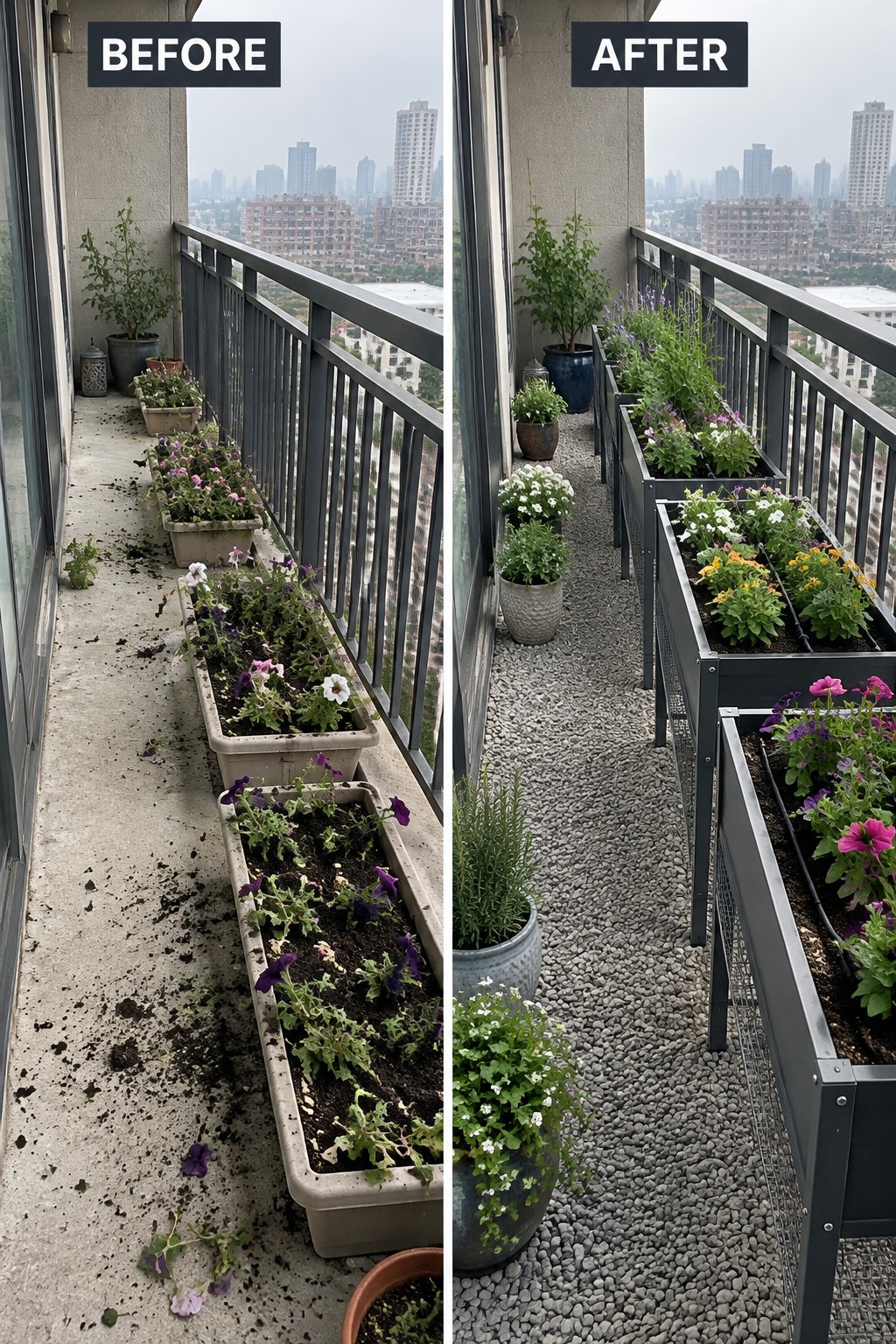
The balcony garden works better with raised beds that give flowers a clear, protected growing space. In the after photo, the scattered planters have been replaced with sturdier raised beds, making the plants easier to group and less exposed to rabbits.
For a narrow balcony or small yard, choose beds with sides high enough to discourage nibbling, and add mesh if rabbits can still reach the plants. Leave a clear walkway beside them so tending the flowers does not become awkward.
Build A Raised Border Along The Fence

A gabion-style raised border gives a long fence-side flower bed a clear edge and lifts the planting above the lawn. In the after photo, a stone-filled wire wall with a wooden top replaces the loose, uneven bed edge. The structure also makes the garden look more deliberate.
For a similar setup, keep the border low enough to reach the plants easily, and check that it suits the slope and drainage in your yard. A sturdy edge can help protect a bed, but rabbits may still get in from above, so add a suitable mesh barrier if keeping them out is the main goal.
Protect Individual Plants With Wire Cages
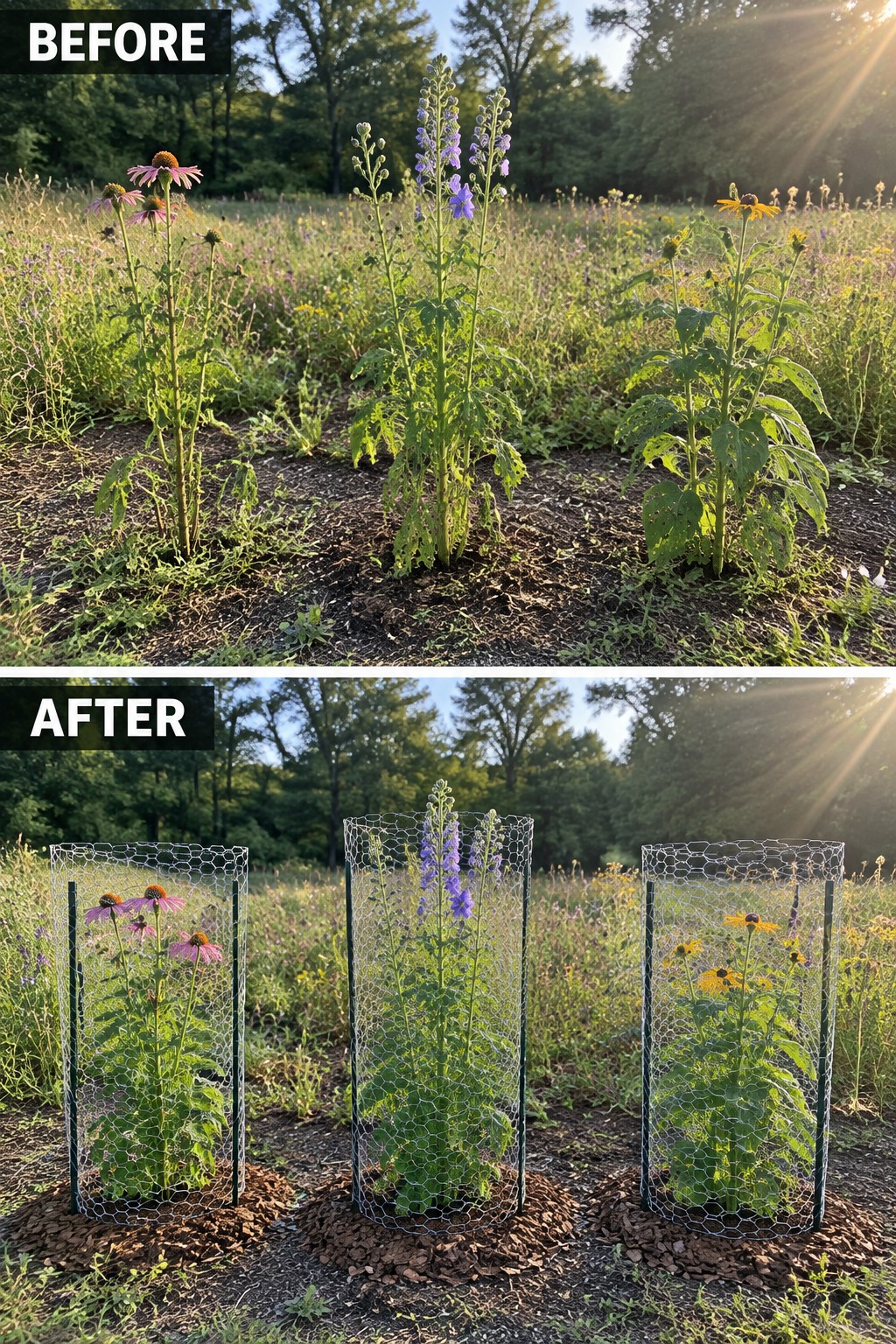
Wire cages give vulnerable flowers a simple barrier without enclosing the whole garden. In the after photo, separate mesh guards surround the plants, helping keep rabbits from reaching the stems and leaves while leaving the rest of the meadow open.
Use this approach for a few prized or newly planted flowers, especially where a larger fence would feel out of place. Set each cage firmly in the ground and make it tall and wide enough to protect the plant as it grows.
Frequently Asked Questions
Q: How tall should a fence be to keep rabbits out of my flower bed?
A: A fence about 2 feet tall is usually enough for most gardens. Make sure it has small openings, since rabbits can squeeze through gaps that look surprisingly narrow.
Q: Do I need to bury the fence underground?
A: It helps. Rabbits may dig beneath the edge, so bury the bottom several inches or bend it outward along the ground and secure it with landscape pins.
Q: What kind of fence works well without blocking the flowers?
A: Choose narrow-gauge wire mesh, such as hardware cloth, and keep the posts simple so the fence stays unobtrusive. You’ll still be able to see your flowers, and the mesh is harder for rabbits to chew through than plastic netting.
Q: Can I use a short decorative fence by itself?
A: A low picket fence can mark the bed, but rabbits may hop over it. Pair it with mesh or choose a taller barrier if you’re relying on the fence for protection.
