


A yard can feel unfinished when its edges lack definition, even if the lawn and planting beds are well cared for.
I like how split rail fencing adds a clear boundary without making a garden feel boxed in, and its open construction suits both casual country yards and more structured landscapes.
The right layout can help guide a path, frame a planting area, or add a little privacy while keeping the space connected to its surroundings.
Small choices in height, spacing, and placement can make a noticeable difference, and some of these approaches are easy to adapt to a real yard.
Add Structure To A Bare Backyard
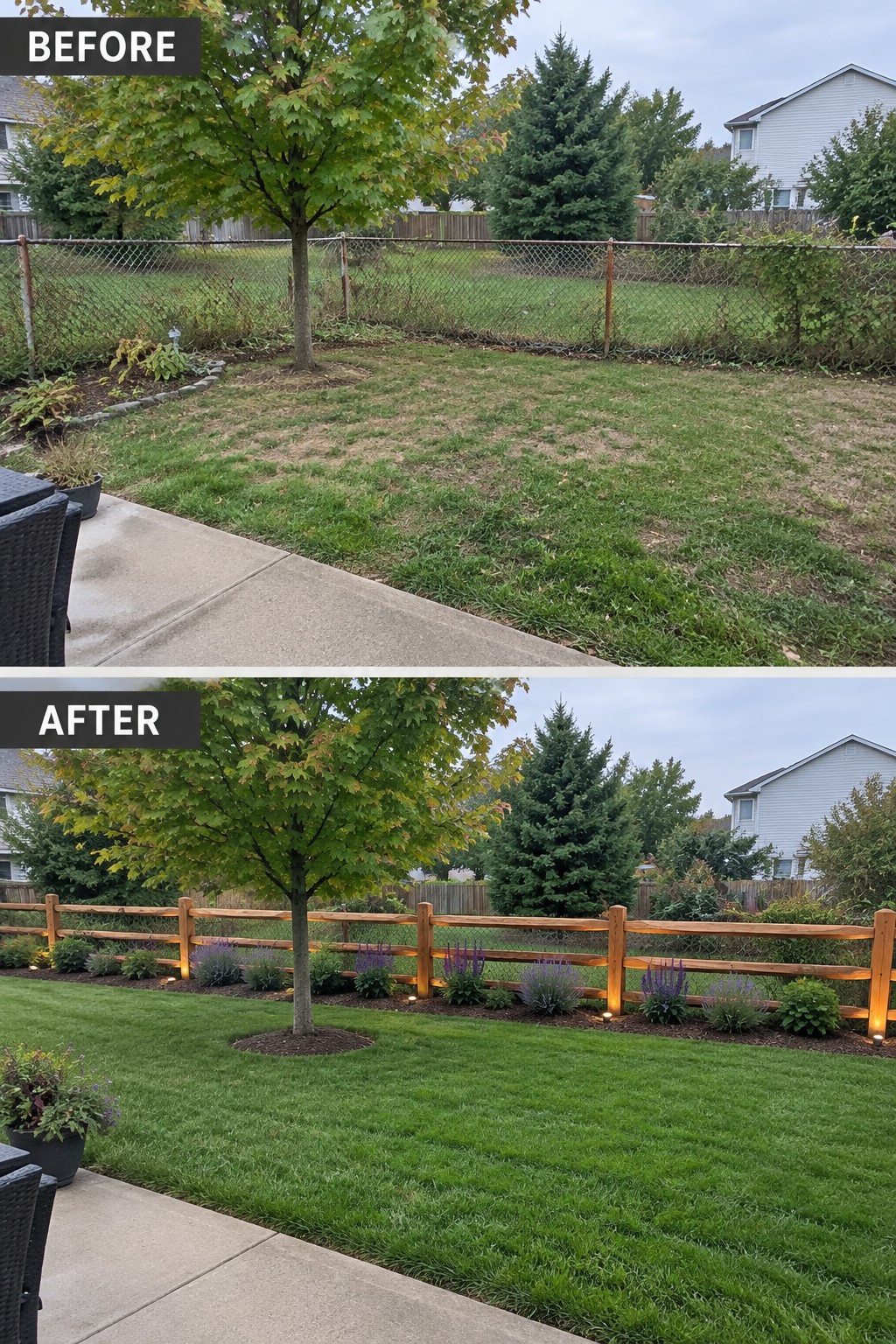
A simple split-rail fence can give an untidy yard a clear edge and make the lawn feel more planned. Here, a planted border along the fence replaces a patchy, open strip with a neater garden boundary.
This idea works well in a backyard that needs definition but not a major redesign. Clean up the lawn edge first, then add a modest bed with plants suited to the light and room to grow.
Add Structure To An Overgrown Fence Line

Clearing the weeds and giving the split-rail fence a defined garden bed makes this yard look cared for without changing the fence itself. The roses also show how planting along a fence can turn a rough boundary into a garden feature.
Start by removing unwanted growth, then edge the bed and add mulch before planting. Choose shrubs or flowers that suit the amount of sun and leave enough room to reach the fence for repairs.
Add Structure To A Split Rail Garden Fence
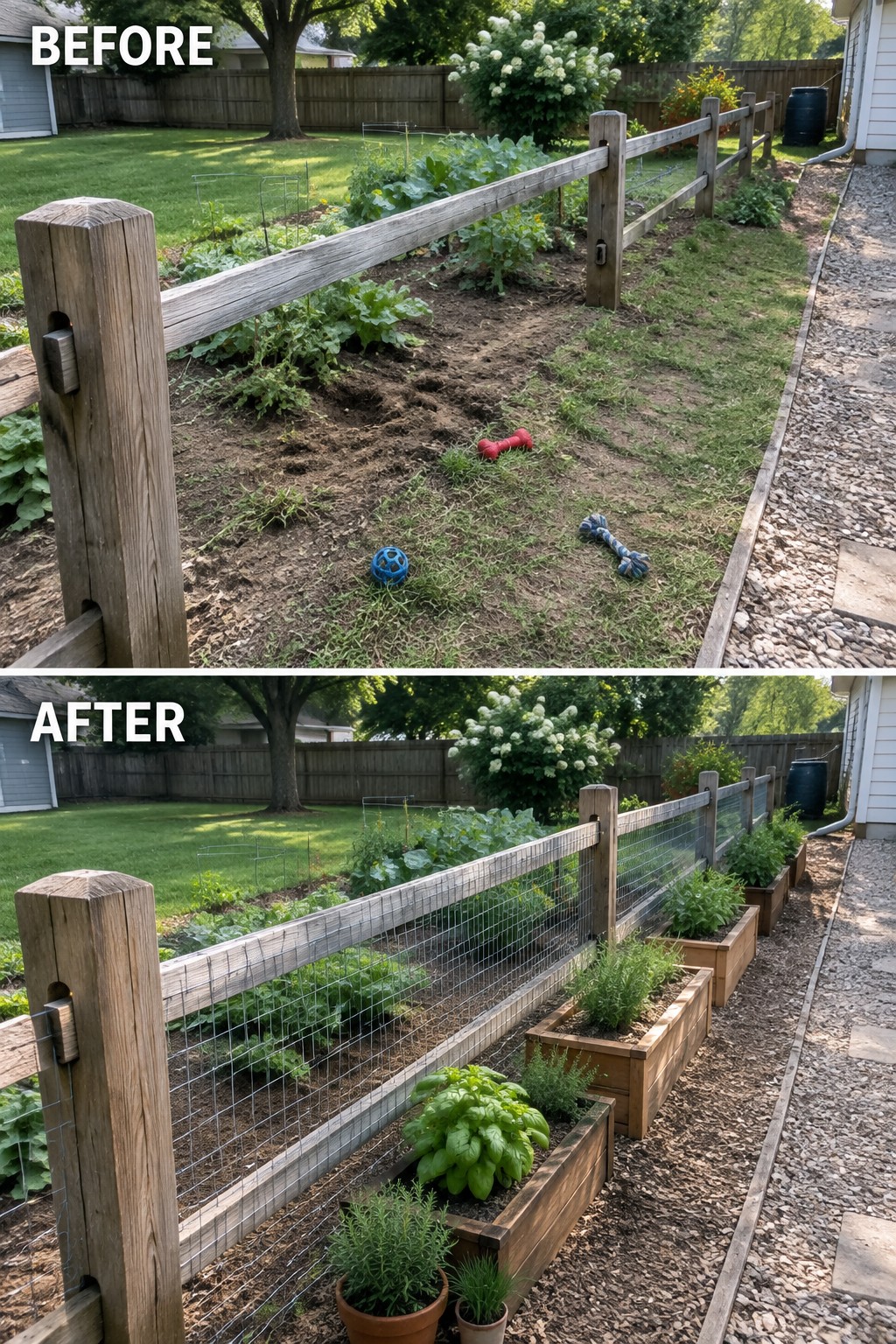
A split rail fence can do more than mark the edge of a garden. Adding wire mesh between the rails gives climbing plants and vegetables a clear boundary while helping keep pets out. Here, raised beds along the fence also make the planting area look more organized.
This idea works well for a backyard garden that needs a sturdier barrier without hiding the fence. Choose mesh with openings small enough for the plants or pets you have in mind, and keep a clear path beside the beds for easy access.
Add Structure To An Untidy Front Yard
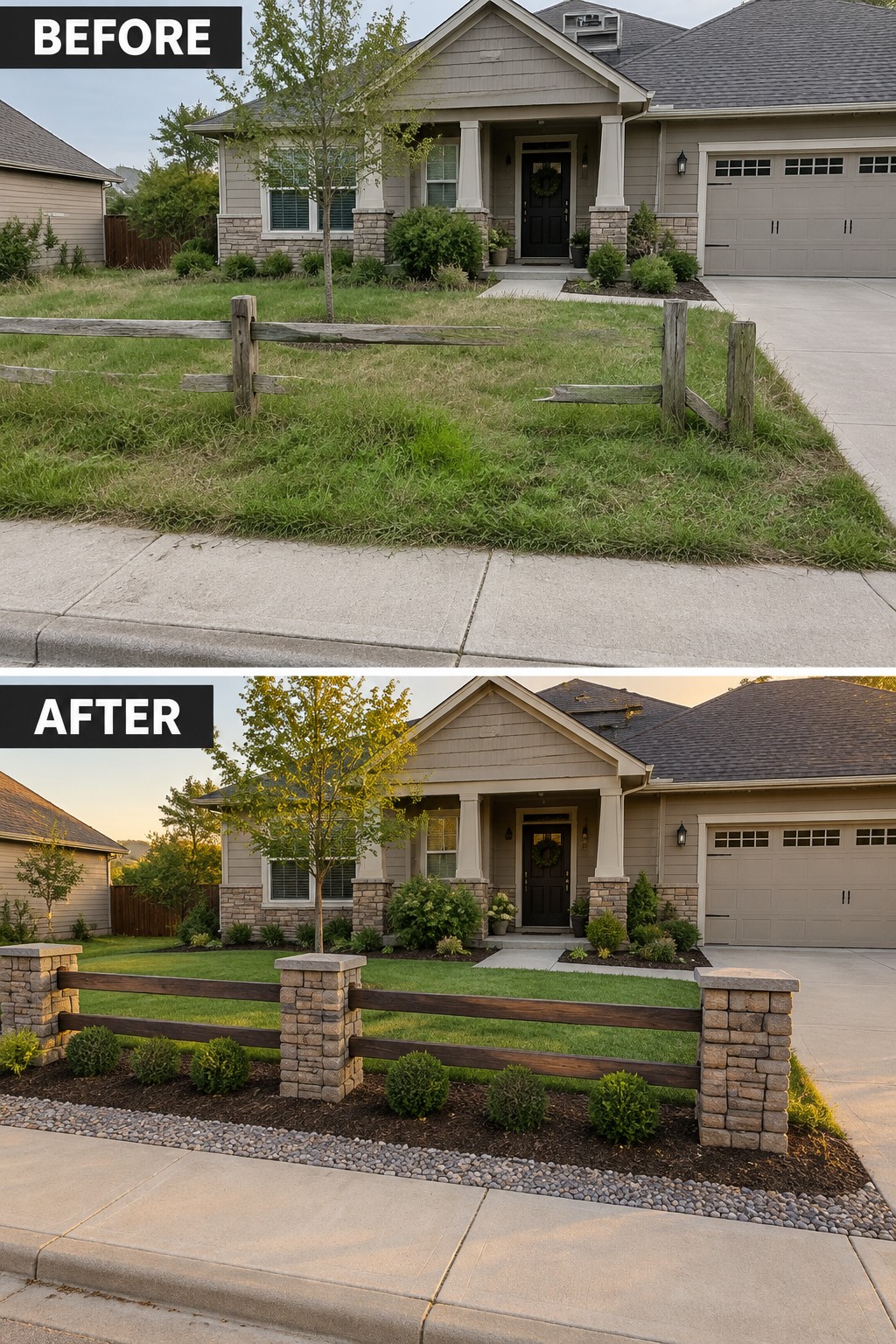
A simple split rail fence can give a messy front yard a clear edge. Here, sturdy stone posts and dark wood rails replace a broken fence, while a neat lawn and planted border make the space look cared for.
This idea works well when you want to define a front lawn without blocking the view of the house. Keep the fence low and the planting simple, and leave enough room for easy access and lawn maintenance.
Turn A Bare Fence Line Into A Flower Border

The fence line looks unfinished when the ground beside it is mostly bare. A planted border gives that space a clear purpose and makes the split rail fence feel like part of the garden, rather than just a boundary.
Start with a simple bed that follows the fence, then mix taller flowers toward the back with shorter plants near the lawn. Leave enough room to maintain the bed and walk along the fence, and keep the planting within a manageable width so it doesn’t become crowded.
Turn An Untidy Fence Line Into A Productive Garden
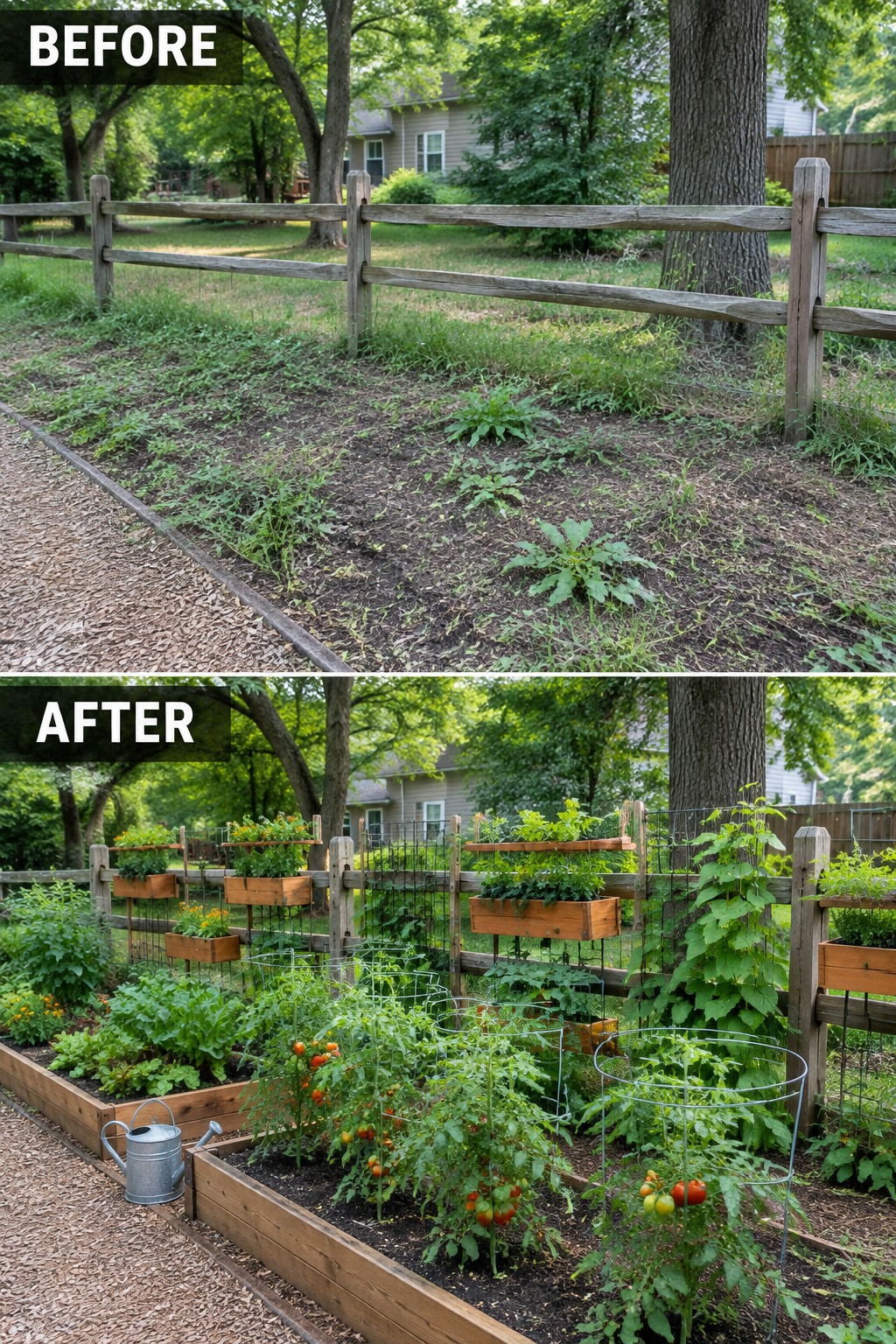
A bare, weedy strip along a split rail fence can become useful growing space once the planting has clear structure. Here, raised beds and smaller planters turn the fence line into a productive garden without removing the existing fence.
This idea works well in a backyard where the fence already marks the edge of a planting area. Start by clearing weeds, then place beds where they won’t block access or crowd the path. Keep the layout simple so there’s room to tend the plants.
Make A Patio Feel More Private

A simple patio seating area feels much more usable when the yard behind it offers some privacy. Here, a tall hedge fills the open view beyond the fence, turning the seating space from exposed to sheltered without changing the basic layout.
For a patio beside a split rail fence, plant a dense hedge along the fence line and leave enough room for it to grow without crowding the seating. Choose plants suited to your climate, and keep them trimmed so the fence and patio remain easy to maintain.
Define The Lawn With A Planted Border
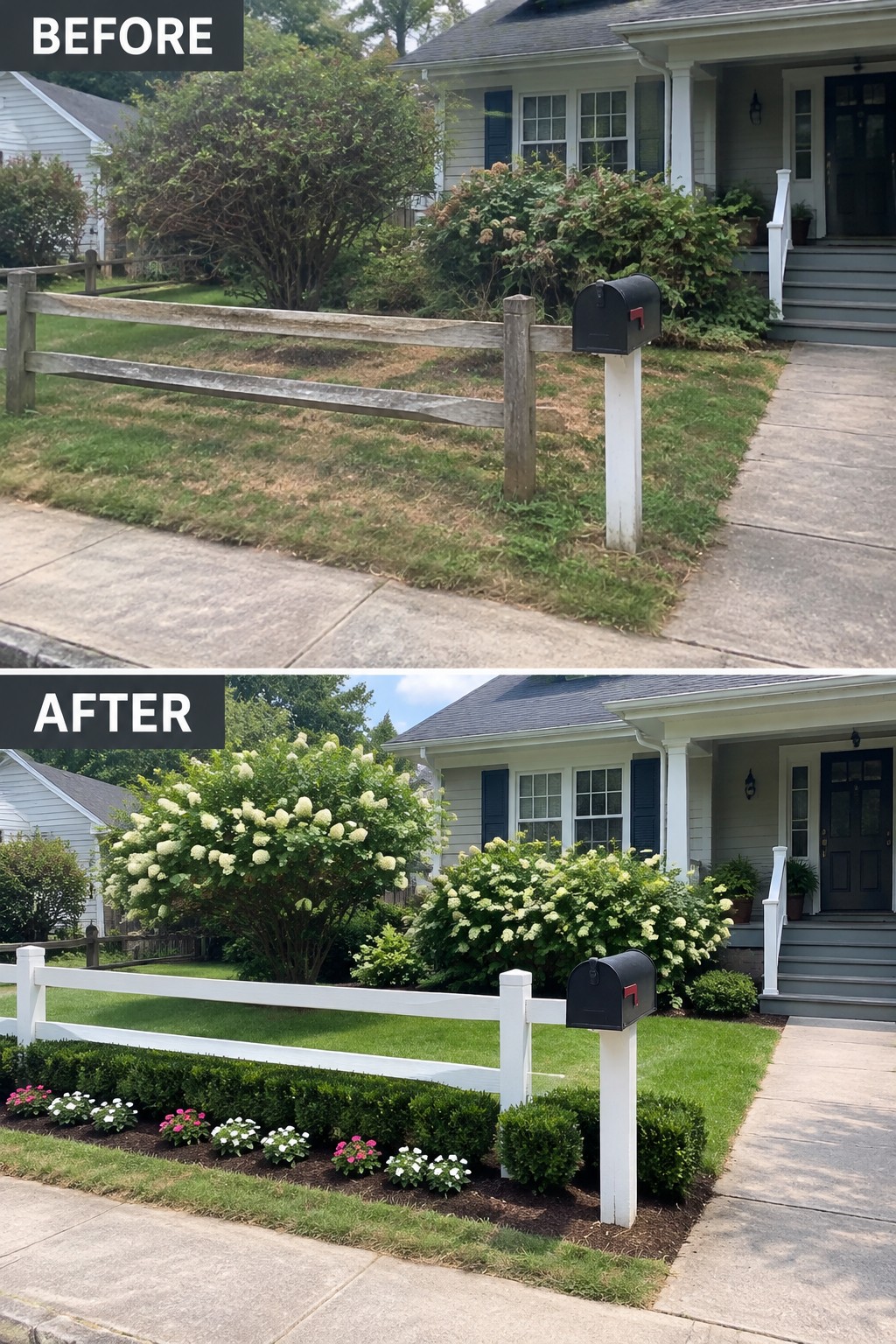
Replacing a weathered split rail fence and patchy grass with a clean white fence, a tidier lawn, and a narrow flower bed gives the front yard a clearer shape. The planting border helps the fence feel like part of the landscaping rather than a separate feature.
For a similar look, keep the bed simple and low near the sidewalk so it is easy to maintain and does not block the view. A few repeating flowers and compact shrubs can make a small front yard feel planned without crowding it.
Turn A Fence Corner Into A Garden Seat

A neglected corner beside a split rail fence can become a useful place to sit. Here, a simple corner bench turns an overgrown patch into a small outdoor seating area, while clearing the weeds and adding mulch makes the space easier to maintain.
This idea suits a quiet spot in a backyard where there’s room for a compact bench. Keep the seat sized to the corner, and leave enough clear ground in front to move around comfortably.
Plant A Flower Border Along The Fence

A plain strip beside a split rail fence can become a garden feature when you plant it as a flower border. Here, a narrow bed of colorful blooms replaces the patchy ground along the fence and gives the yard a more finished look.
Keep the planting bed wide enough for flowers to grow without spilling into the path, and leave room to reach the fence for upkeep. A mix of bloom heights works well along a long fence line, but choose plants suited to your sun and soil so the border stays manageable.
Replace A Worn Fence With A Clean Split Rail Fence

A sturdy split rail fence can bring order to a pasture or large yard without making it feel closed in. Here, the muddy, weathered fence line is replaced with straight rails and solid posts, giving the open lawn a clearer edge.
This style works well around fields, long driveways, and roomy yards where a tall fence would feel too imposing. Set the posts securely and keep the rails level, especially on uneven ground, so the fence looks neat and holds up over time.
Use Fence Lighting To Make A Patio More Usable
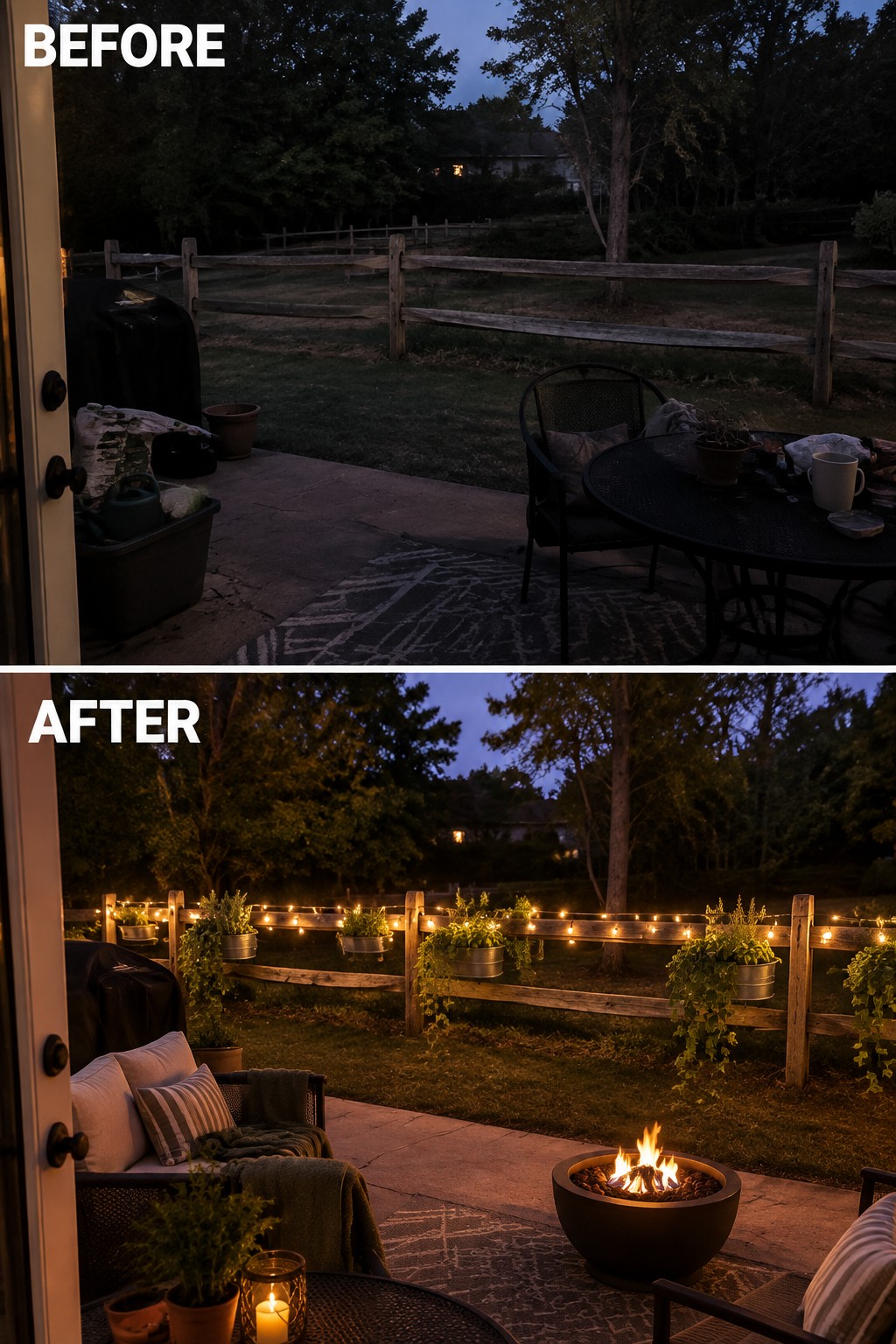
A simple string of lights along a split rail fence can help an otherwise dark patio feel like a place to sit after sunset. Here, the fence line lights make the yard easier to see, while a fire pit gives the seating area a clear purpose.
This works well when a patio is near a fence and overhead lighting is not practical. Choose outdoor-rated lights and secure them neatly along the rails, keeping the seating area and paths clear.
Organize A Split Rail Fence Line
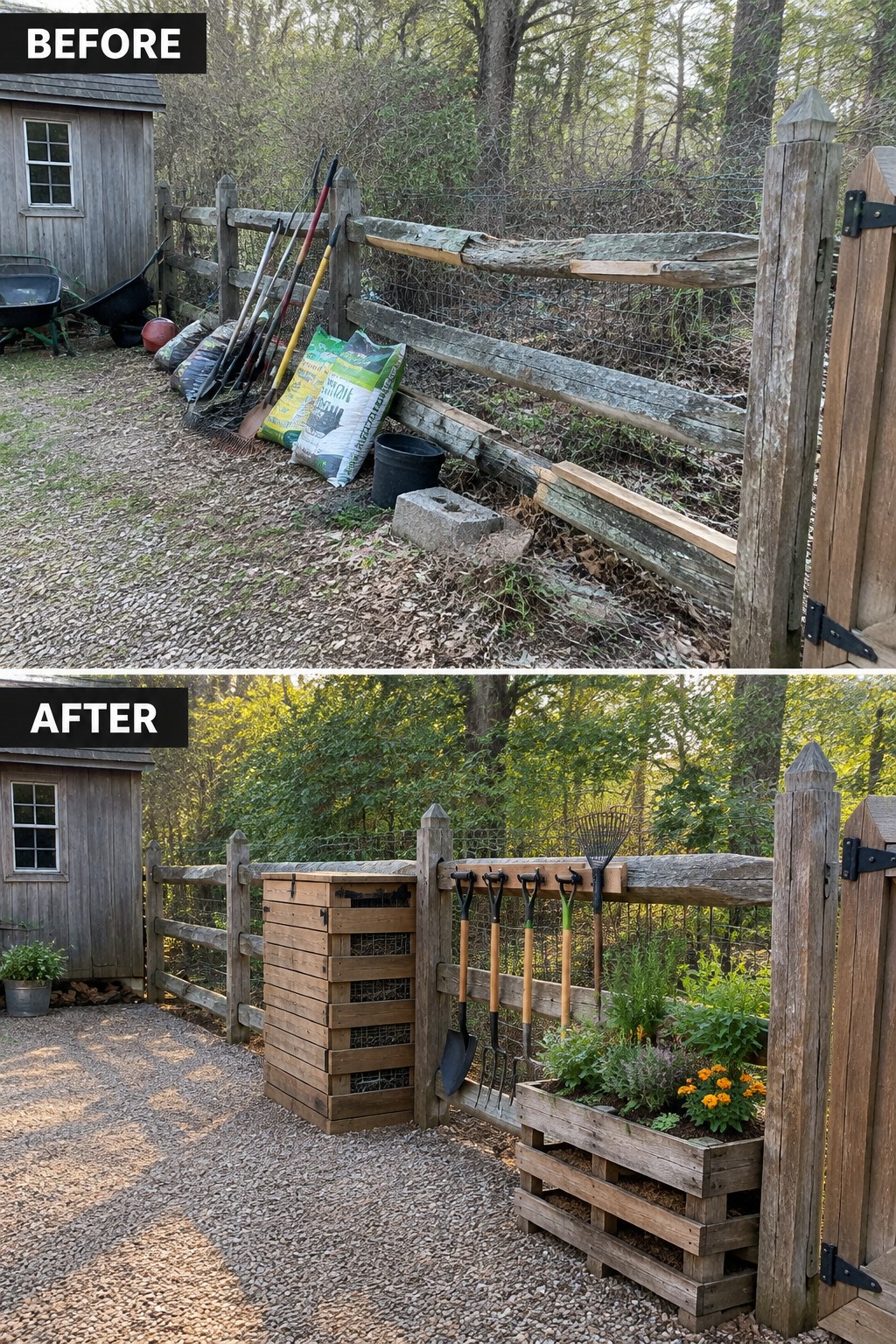
A split rail fence can do more than mark the edge of a yard. In this makeover, a simple wooden rack keeps loose tools in one place, while a raised planter adds a clear garden area along the fence. The space feels tidier because storage and planting each have a purpose.
This idea works well in a garden shed area or along a fence that gets regular use. Start by clearing away clutter, then add weather-resistant tool storage and a planter that leaves enough room to walk past. Keep the setup compact so the fence line stays easy to maintain.
Give A Garden Path A Clear Entrance

The bare opening in the split rail fence felt like part of an overgrown yard, with no clear arrival point. A simple wooden arbor and gate turn it into a proper entrance and give the path a more defined start.
This idea works well when a garden path passes through a fence or planted area. Keep the gate easy to open and leave enough room beside the path for plants to grow without blocking the way.
Use A Split Rail Fence For Vertical Planters
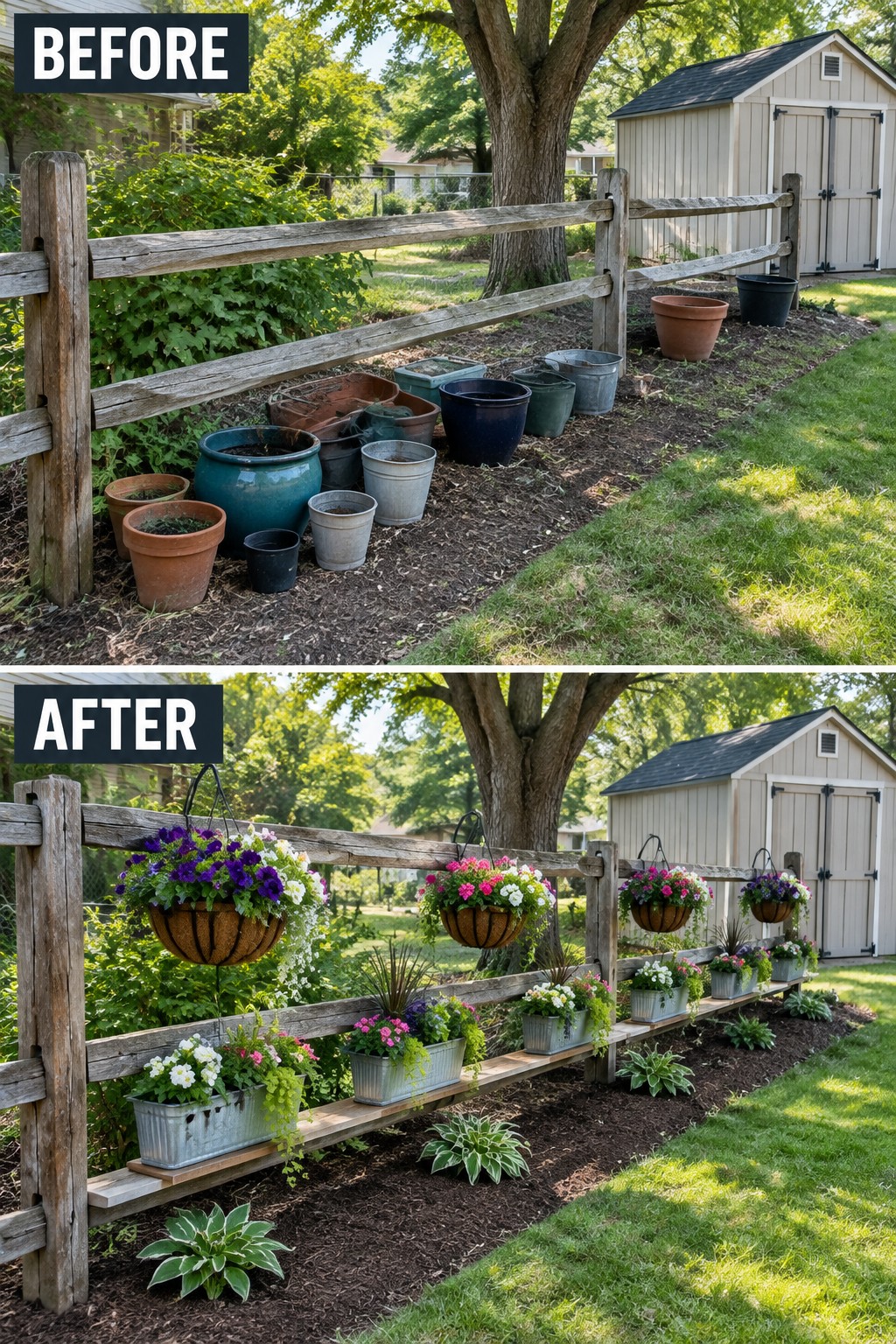
A split rail fence can do more than mark the edge of a garden. In this yard, hanging baskets and planter boxes turn an otherwise bare fence line into a tidy planting area, while keeping the flowers off the ground.
Try this idea along a sunny fence where there’s room to tend the plants without blocking a path. Check that the fence and any added shelf can support the planters, and leave enough space between containers for watering and growth.
Create A Defined Play Area Along The Fence
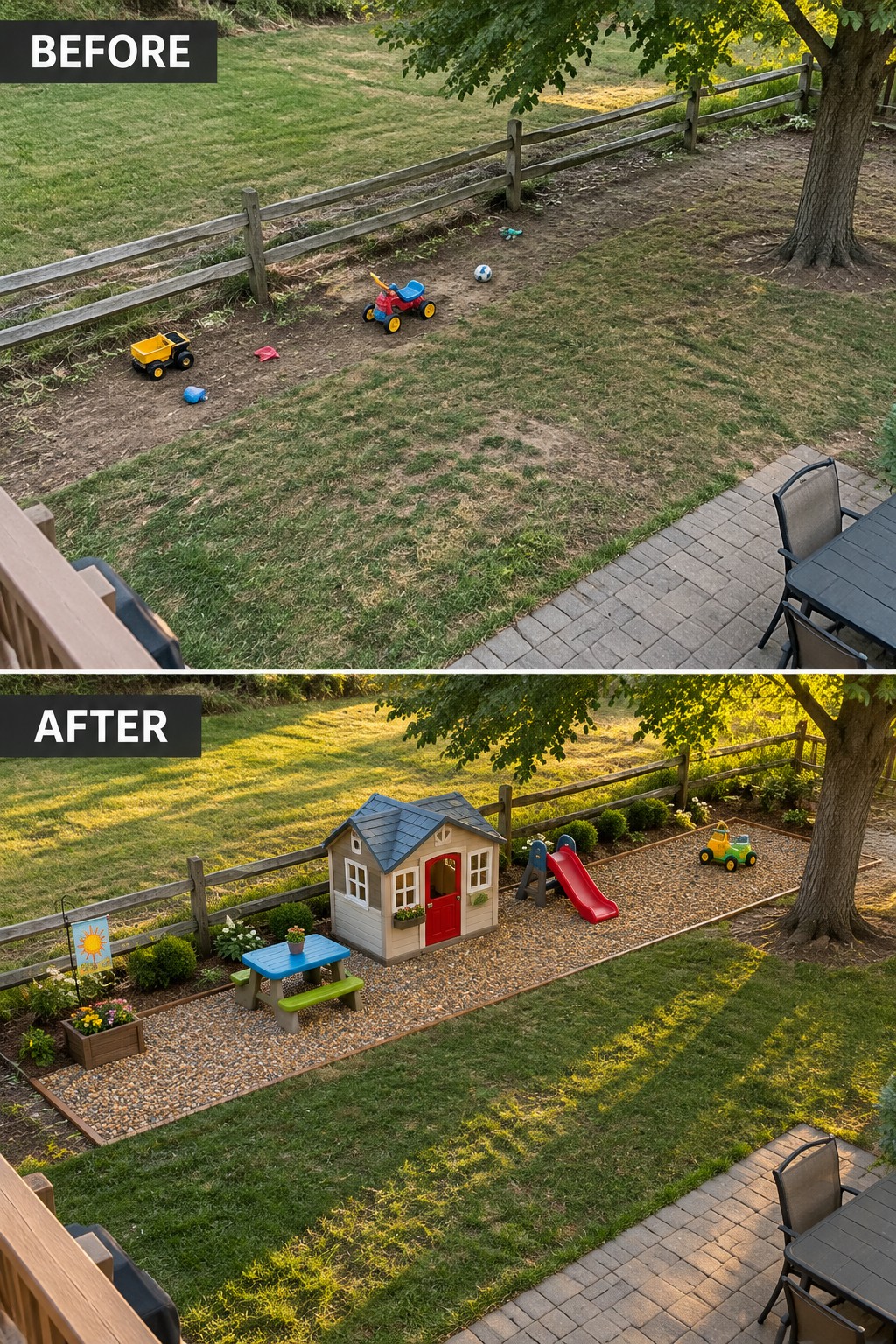
A bare, worn patch of lawn can become a more usable part of the yard when you give it a clear purpose. Here, a gravel play area follows the split rail fence, keeping the children’s space distinct from the grass.
For a similar setup, mark out a level area beside the fence and choose a surface that suits the play equipment and your climate. Keep enough room around toys for children to move, and leave the lawn open rather than filling every part of the yard.
Plant A Low Hedge Along The Fence

A sparse fence line can look untidy even when the fence itself is in good shape. A neat row of low shrubs gives the split rail fence a planted border and makes the garden bed feel more deliberate.
Use shrubs that suit your climate and leave enough room for them to fill out without crowding the path or gate. A simple hedge works well when you want a tidy edge but still want to see through the open fence rails.
Make A Split Rail Fence Work As A Herb Garden

A split rail fence can do more than mark the edge of a yard. In this makeover, narrow wooden shelves turn the fence into a place to grow herbs, making use of space that would otherwise sit empty.
For a similar setup, secure sturdy shelves to the fence rails and use compact pots with good drainage. It works well beside a kitchen garden or a small yard, but leave enough room to reach the plants and move along the fence.
Turn A Muddy Yard Into A Garden Feature
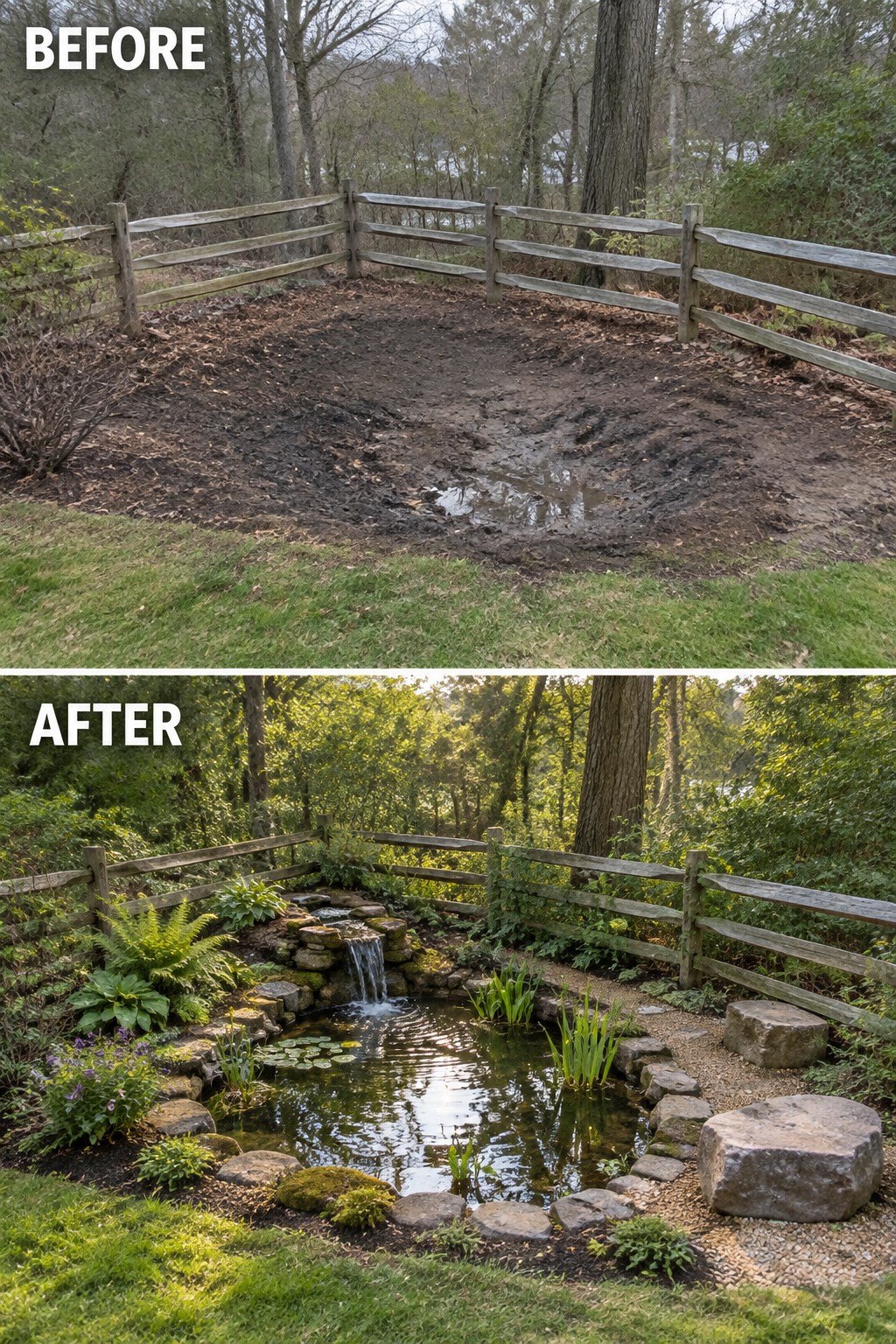
A bare, muddy patch can become a useful part of the landscape when it has a clear purpose. Here, the low spot is shaped into a small pond, with stone edging to define its outline and help it feel settled into the yard.
This idea suits a damp or awkward corner near a split rail fence. Start by checking drainage and choosing a pond size that leaves room to walk around it; then use stones and a few water-loving plants to keep the edges neat without crowding the space.
Add A Gate To Define The Garden Path

The open, overgrown fence line leaves the walkway feeling unfinished. Adding a simple gate gives the split rail fence a clear entrance and makes the path feel like part of the garden rather than a gap in the yard.
Use this idea where a walkway leads from the sidewalk to the front door, especially if you want a little separation without blocking the view. Keep the gate wide enough for easy access, and clear the planting beds around the path so the entrance stays easy to use.
Create A Planted Border Along The Fence
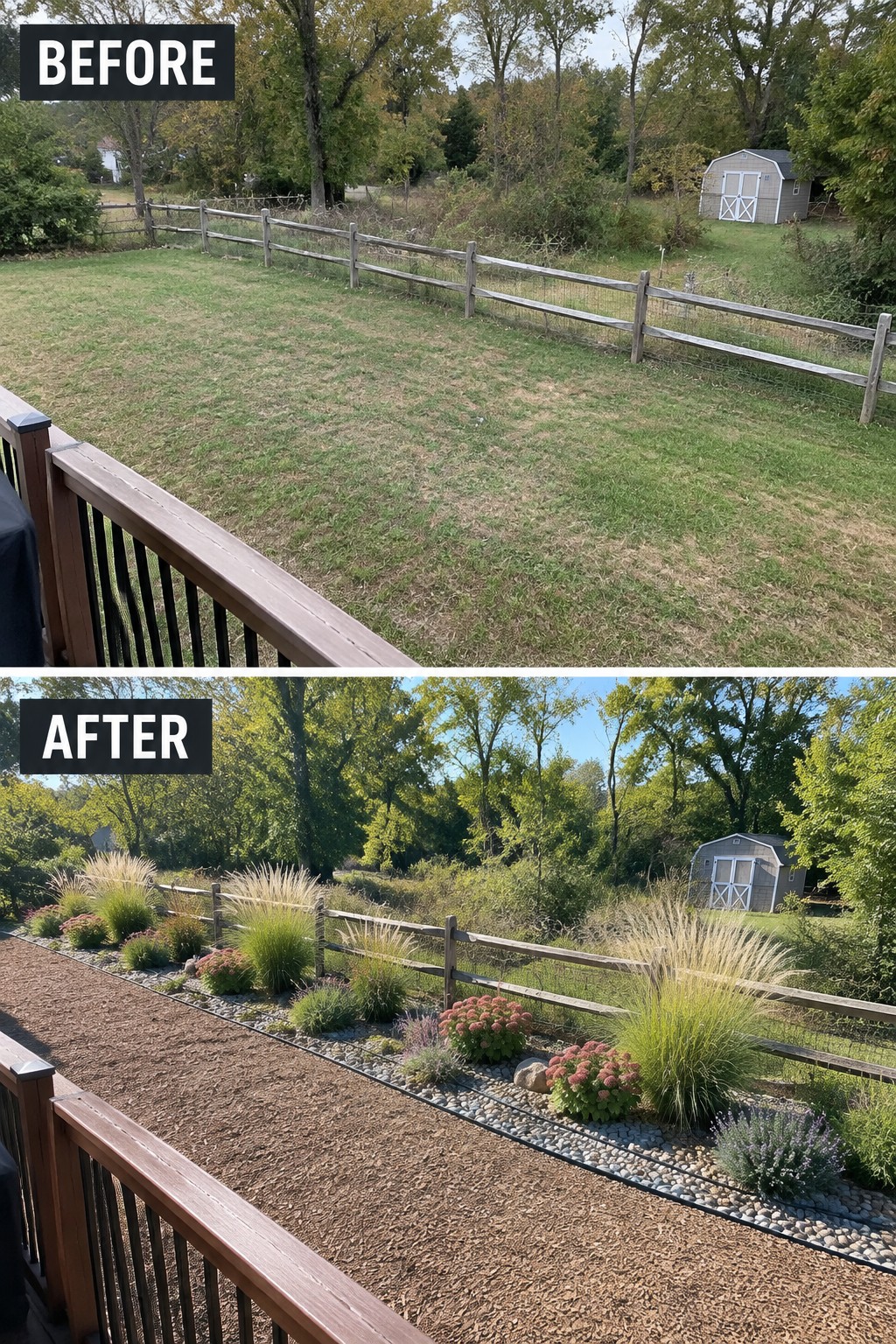
A bare fence line can make a backyard feel unfinished. Adding a narrow garden bed gives it a clear edge and brings color and texture to the yard without taking away the open lawn.
Keep the planting in a simple repeating pattern, with grasses and flowering plants spaced so they have room to grow. A strip of gravel can help separate the bed from the lawn, but leave enough space to mow and maintain the fence.
Dress Up A Split Rail Fence With Seasonal Plantings
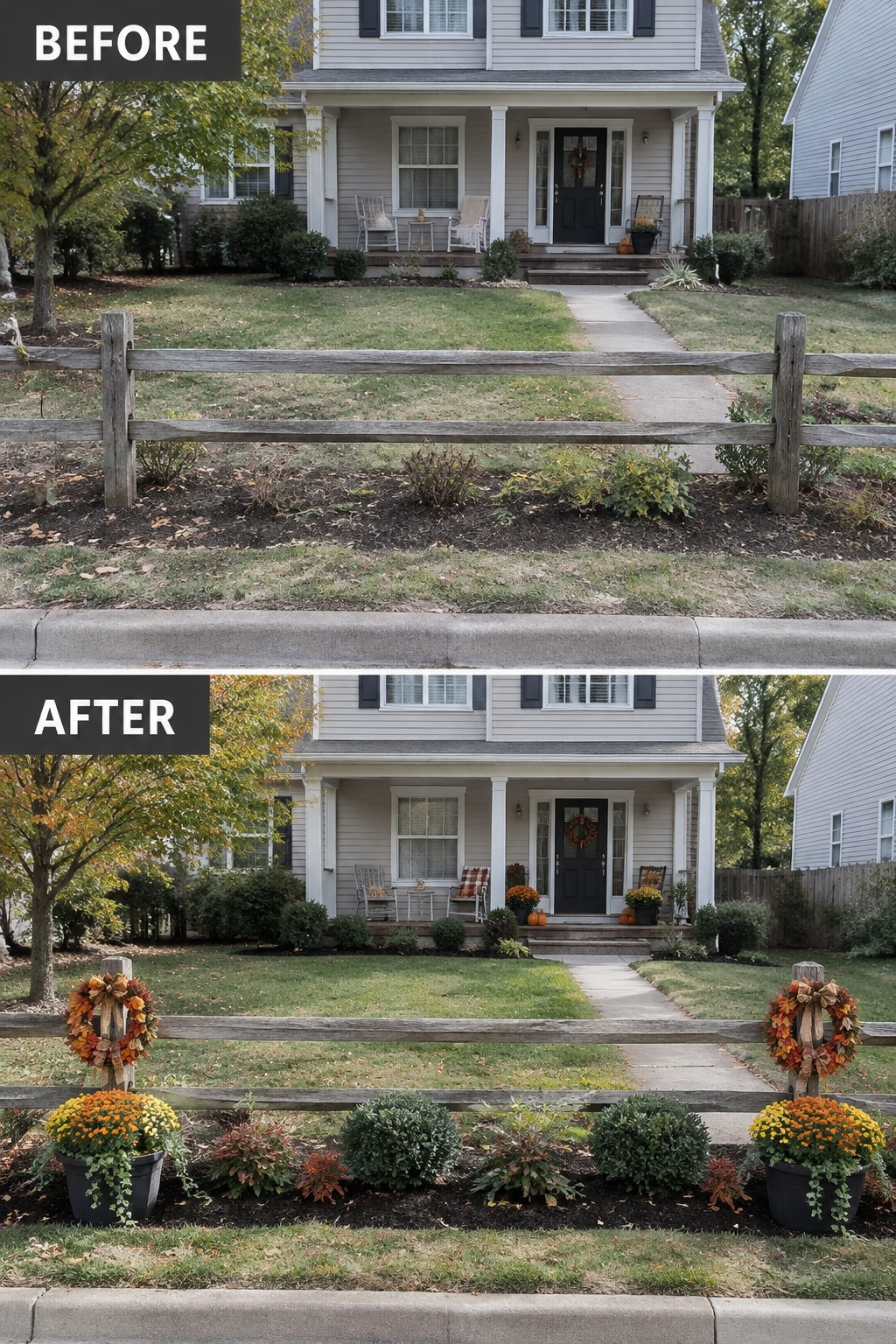
A plain split rail fence can look a little unfinished when the ground around it is bare. A few full planters and autumn wreaths make the fence line feel cared for without changing the fence itself.
Use this idea to give a simple front yard some color and a clear focal point. Set matching containers near the posts, and leave enough room around them for the lawn and walkway to stay easy to maintain.
Make A Clear Path Through An Overgrown Fence Line
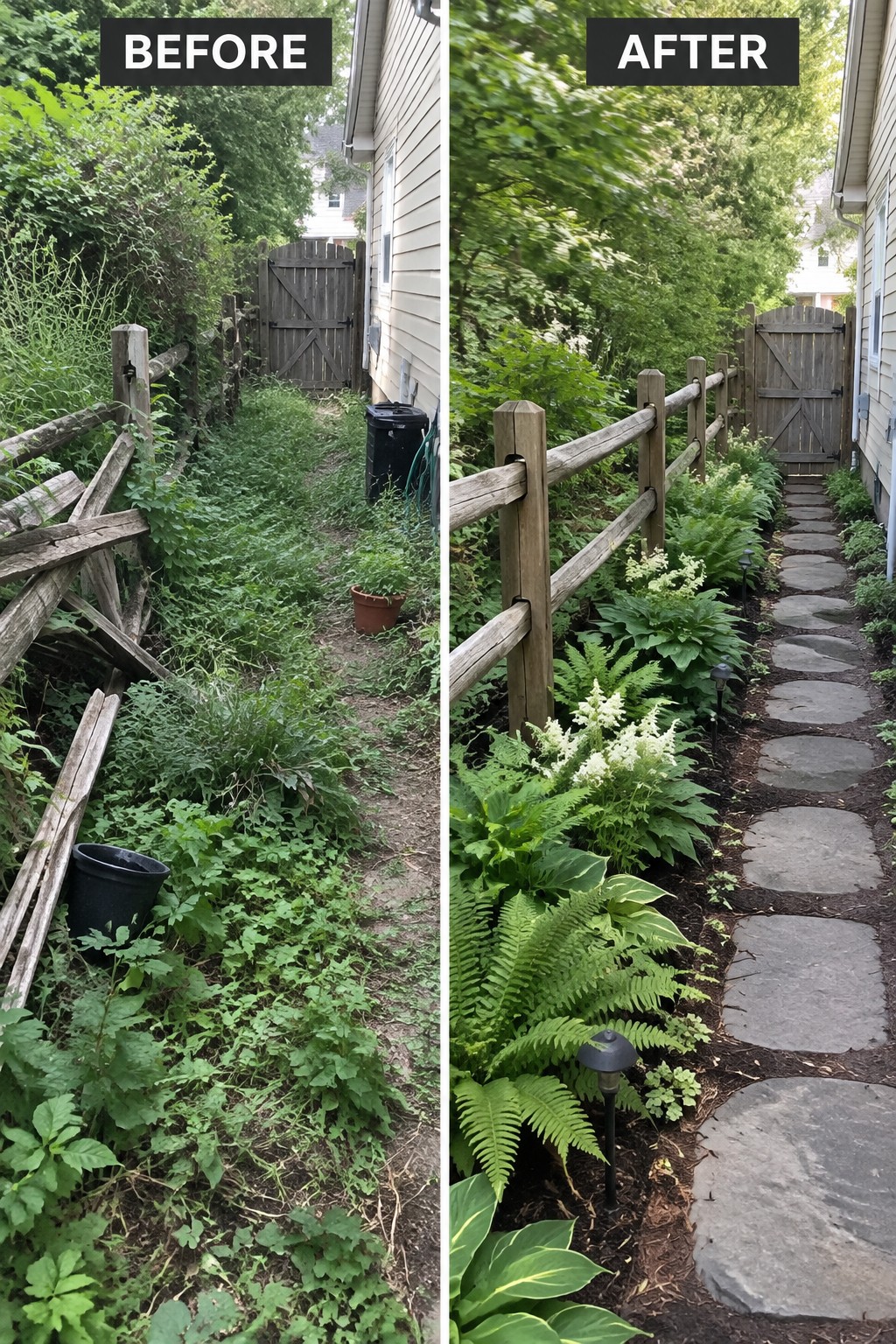
An overgrown side yard can be hard to use, even with a fence already in place. Clearing the weeds and laying stepping stones creates a simple route to the gate, while the split rail fence helps define the edge of the garden.
For a narrow side yard, keep the path wide enough to walk comfortably and leave room for plants along the fence. A few low-growing plants can soften the border without spreading onto the stones.
Frequently Asked Questions
Q: Can I keep a split rail fence from looking too open around my garden?
A: Yes. Add wire mesh to the back of the rails to keep pets out and give climbing plants something to grab onto. Choose a mesh size that won’t block too much light or make the fence feel bulky.
Q: Will split rail fencing work on a sloped yard?
A: It can, though the rails may leave gaps if you keep each section level. Stepping the sections down the slope usually gives a neater look, while following the ground’s contour can work better for gentle grades.
Q: How do I keep the wood from rotting near the garden soil?
A: Leave a little clearance between the bottom rail and the ground, and don’t pile mulch against the posts. That helps the wood dry out after rain and keeps it in better shape.
Q: Can I use split rail fencing for a small vegetable garden?
A: Sure, especially if you add mesh to keep out rabbits and other small visitors. Make sure the gate closes securely, since a pretty fence won’t do much if there’s an easy way in.
