

A vegetable garden can look untidy when its edges are unclear, and an open bed may be easy for pets or wildlife to wander into.
I like how a well-chosen fence gives the garden a sense of structure while helping protect the plants inside.
Some designs also make it easier to reach beds, keep paths defined, and make use of a small backyard without making it feel closed off.
The change can be simple, but seeing a once-scattered growing area feel organized and cared for is satisfying.
I’d save any approach that suits your garden’s size, materials, and practical needs.
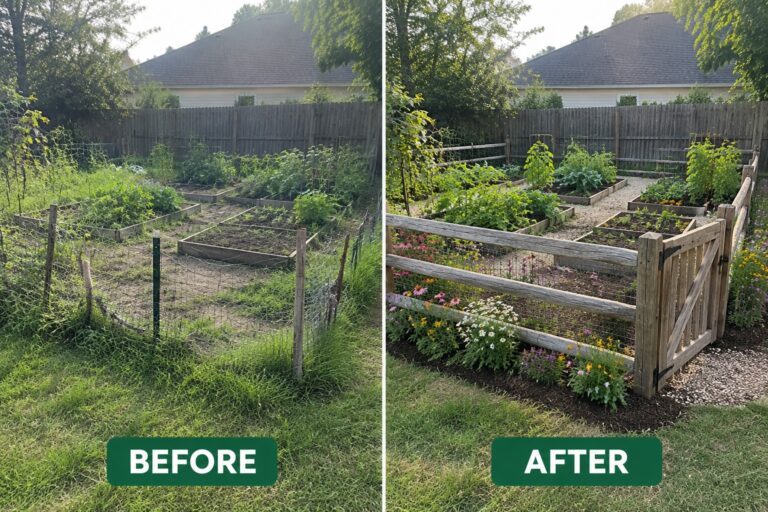
Add A Fence Around Raised Garden Beds

The vegetable beds look more organized once they’re enclosed by a simple wooden fence. It gives the garden a clear boundary and helps keep plants separate from the lawn.
For a similar setup, leave enough room between the beds and fence to tend plants and move through the garden. A gate makes access easier, especially if you need to bring in soil or carry out vegetables.
Add A Picket Fence To Define The Vegetable Garden

A simple fence gives a vegetable garden a clear boundary and makes the yard look more orderly. Here, the loose wire enclosure is replaced with a white picket fence, while the garden beds stay open and easy to reach.
This works well in a small side or front yard where you want to keep the garden separate from the lawn. Leave enough room for a gate and paths, and choose a fence height that contains the garden without blocking access to the plants.
Add Privacy Around Vegetable Beds
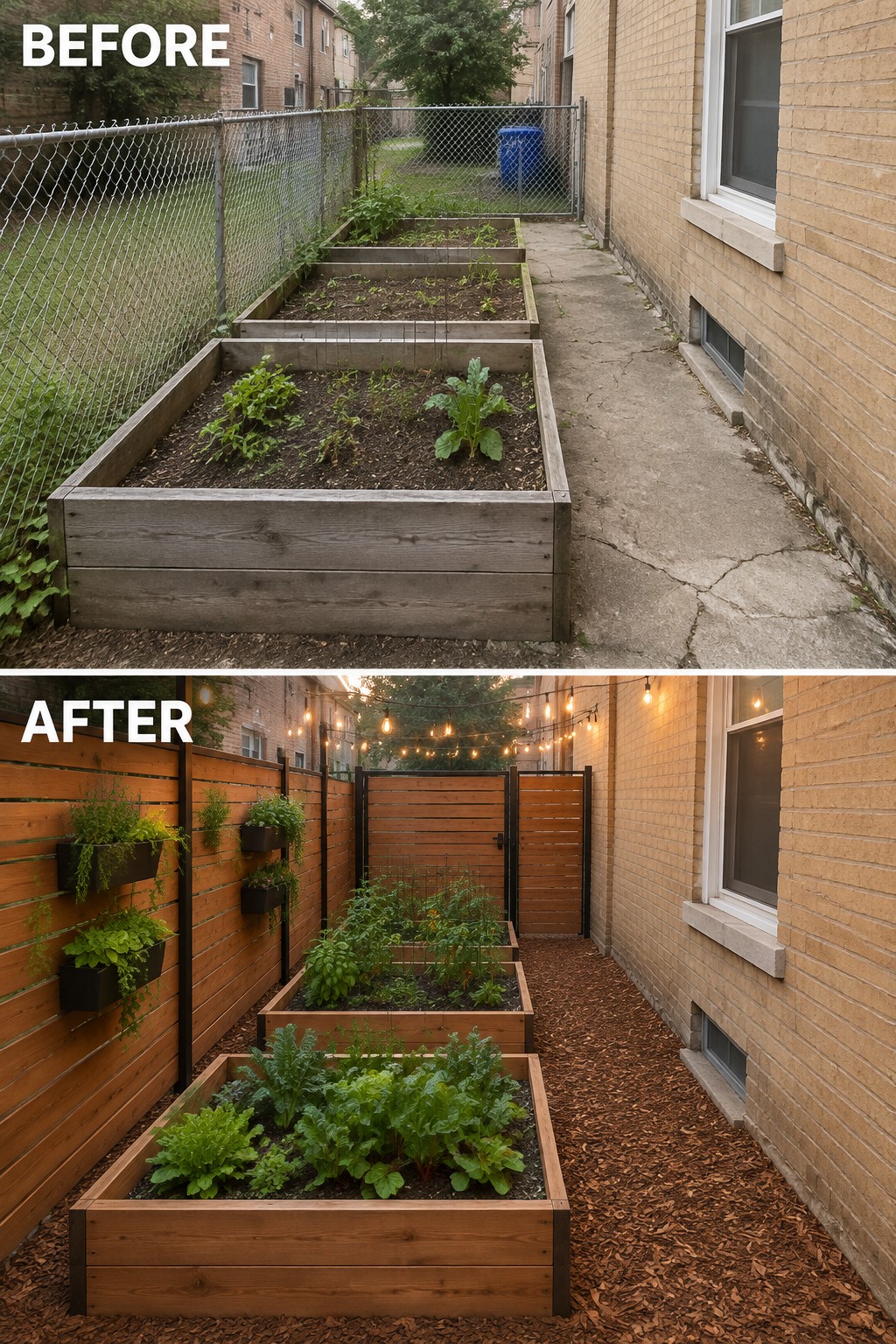
Replacing the chain-link fence with a solid wood fence gives this narrow garden a clearer boundary and helps shield the beds from view. The raised beds remain the focus, while the fence makes the growing area feel more organized.
This idea works well in a side yard or other small space where neighbors or nearby buildings are close. Choose a fence height that gives enough privacy without making the area feel closed in, and leave a clear path beside the beds for tending and harvesting.
Add A Privacy Screen Behind Vegetable Beds
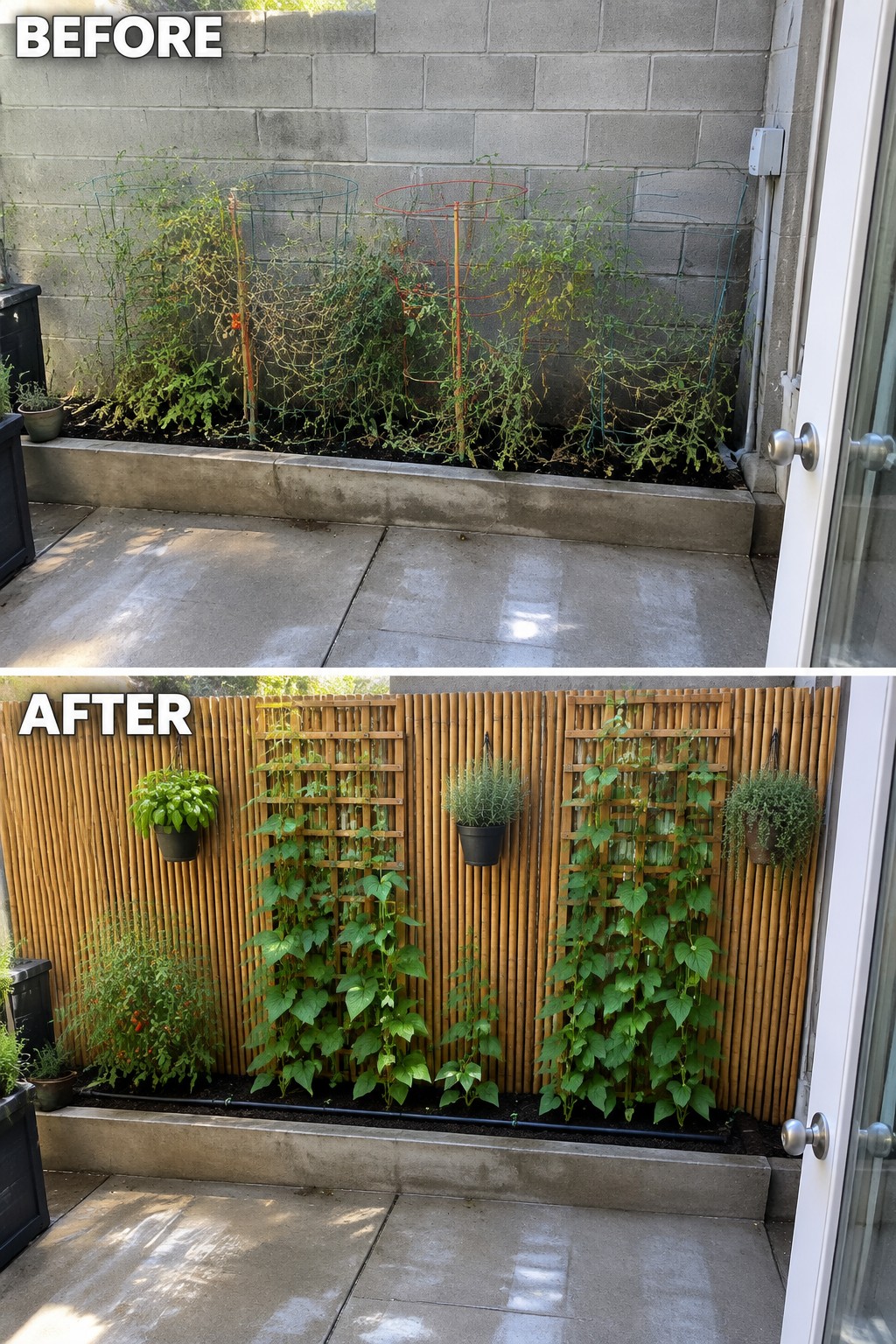
The bare block wall has been covered with a bamboo screen, giving the vegetable bed a more finished backdrop while keeping the growing area in place. A simple screen can hide an unattractive fence and make a small garden feel more defined.
For a similar setup, attach a weather-resistant screen securely to the existing fence, then add trellises where climbing vegetables can grow. Leave enough room to reach the plants and check that the screen does not block needed sunlight.
Build A Defined Vegetable Garden Area
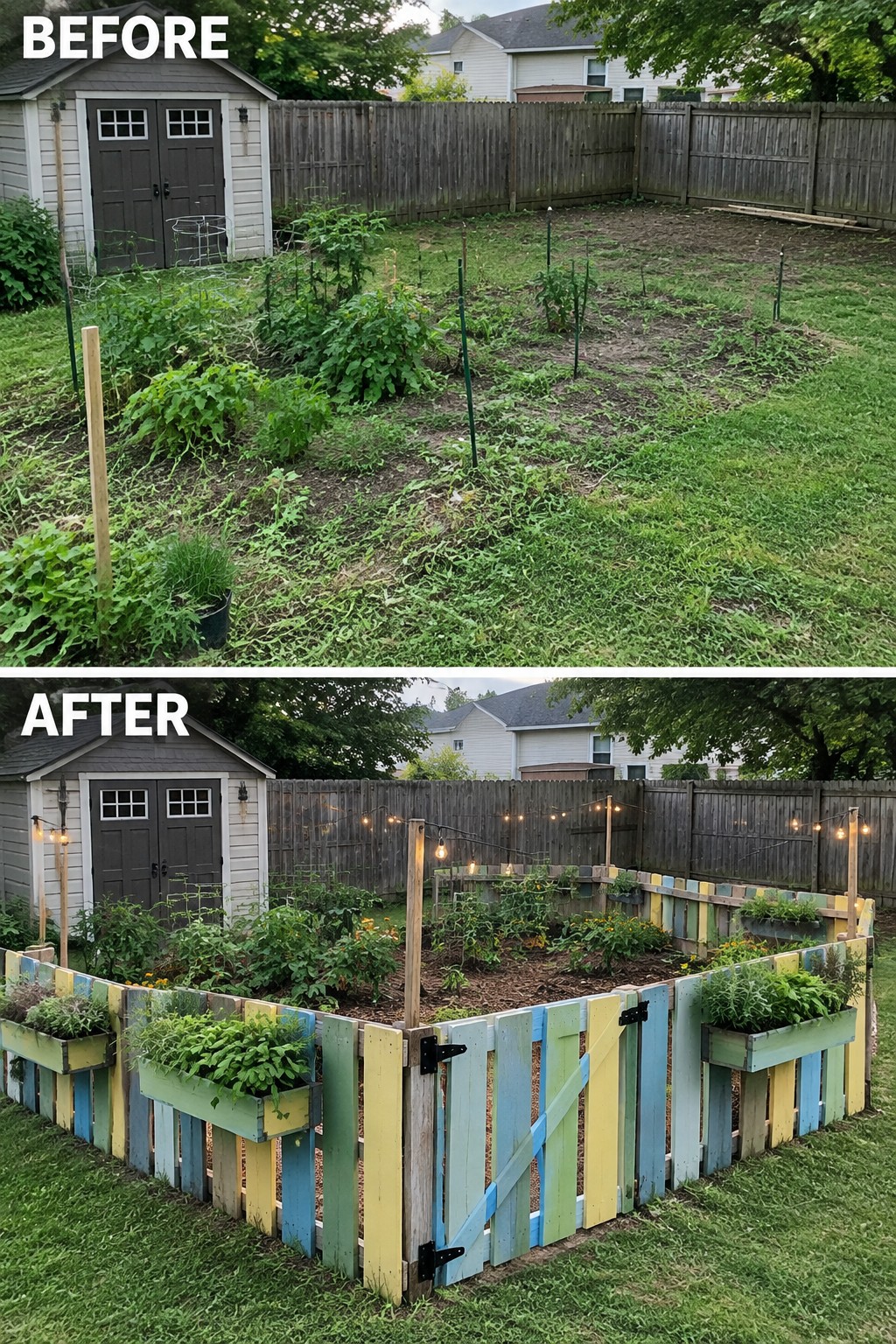
A low fence can turn a scattered garden into a clear, contained space. Here, colorful boards enclose the vegetable beds and give the yard a more organized layout.
This idea works well in a backyard where plants spread into the lawn or need a little separation from foot traffic. Keep the enclosure wide enough to reach the beds comfortably, and leave a simple gate for easy access.
Use A Trellis Fence To Grow Upward

A low, bare garden bed can feel much more organized when the fence also supports vertical growing. Here, lattice panels and trellises create room for climbing plants while keeping the vegetable garden enclosed and making better use of a narrow space.
This idea works well in a small side yard or along an existing fence. Add sturdy supports where you plan to grow climbing vegetables, and leave enough room below to reach the beds and tend the plants.
Build A Low Wall To Define The Garden

Replacing the worn timber edging with a low stone wall gives the vegetable garden a clearer boundary. The black railing above it helps keep the beds distinct from the path without blocking the view into the garden.
This approach suits a cottage garden or a sloped yard where loose soil needs a sturdier edge. Keep the wall low enough to reach the beds easily, and include a gate if you need to bring tools or a wheelbarrow inside.
Build Raised Beds Along A Garden Fence

A narrow, overgrown strip can become a much easier vegetable garden when the planting area has a clear edge. Here, loose ground-level rows were replaced with raised beds held by stone-filled wire walls and wood caps, leaving a gravel path beside them.
This setup works well along a fence where space is limited. Keep the beds narrow enough to reach from the path, and leave a comfortable walking lane so harvesting and watering are easy.
Enclose The Vegetable Garden With A Low Hedge

An overgrown vegetable patch can be hard to manage, so giving it a clear boundary makes the whole yard feel more orderly. Here, a clipped hedge and small gate define the garden without blocking the beds from view.
This idea works well when you want to separate vegetables from the lawn but still keep the garden easy to reach. Leave enough room inside for paths and harvesting, and choose a hedge that won’t spread into the beds.
Enclose The Vegetable Garden With A Wire Fence

A simple wood frame with wire mesh gives an open vegetable garden a clear boundary and helps keep animals out. In the after photo, the loose rope edging has been replaced with sturdy panels and a hinged gate, making the garden easier to protect and enter.
For a similar setup, choose mesh with openings small enough to deter the animals in your area, and make sure the gate closes securely. Keep the fence high enough for its purpose without making it harder to reach plants or tend beds.
Add Decorative Panels Around A Vegetable Garden

Adding a fence around raised beds can make a small vegetable garden feel more organized and private. Here, decorative panels replace the open sides, while a gravel path keeps the beds easy to reach.
For a similar setup, use panels that let in enough light and leave a comfortable walkway between beds. This works well in a narrow side yard where a clear boundary can make the growing space feel planned without taking up much room.
Add A Garden Gate To Welcome Visitors

Replacing the chain-link entrance with a vine-covered wooden arch gives this community garden a clear, welcoming entrance. The gate makes the garden feel like a defined place, rather than an open plot behind a fence.
For a shared vegetable garden, a simple arbor can mark the entrance without blocking the view inside. Train climbing plants over it, but keep the gate easy to open and leave enough room for people carrying tools or harvest baskets.
Enclose Vegetable Beds With A Sturdy Fence

A simple fence can turn a neglected corner into a more organized vegetable garden. Here, a wood-framed enclosure with corrugated panels replaces an old compost bin and gives the planting area a clear boundary.
This idea works well in small yards where you want to keep beds together and protect them from pets or foot traffic. Leave enough room inside to reach every bed, and include a gate wide enough for a wheelbarrow.
Enclose Vegetable Beds With A Low Fence

A low fence can turn an unused patch of lawn into a clear, protected vegetable garden. Here, the garden beds sit behind a short wooden fence with a gate, while the existing brick border gives the area a sturdy base.
This idea works well in a front or side yard where you want the beds to look tidy and stay separate from the lawn. Keep the fence low enough to reach over easily, and leave a gate wide enough to carry soil and supplies through.
Use A Fence For Vertical Vegetable Gardening

The empty patio became a compact growing area by using the fence as a backdrop for wall-mounted planters. This works well in a narrow space because it gives vegetables room to grow without taking up much of the floor.
Try sturdy planter boxes or pockets attached securely to a fence, and choose crops that suit their depth, such as leafy greens and herbs. Leave enough open space below so the patio stays easy to walk through, and check that the plants get the light they need.
Enclose A Vegetable Garden With Woven Fencing

A simple rope boundary can mark off a vegetable patch, but woven fencing gives the garden a more finished shape. Here, the low fence defines the growing area while still letting the beds remain easy to see and reach.
This approach works well in a backyard where you want to keep the garden distinct from the lawn. Use sturdy posts and flexible branches or similar materials, and include a gate wide enough for a wheelbarrow. Keep the fence low enough that it doesn’t shade the plants.
Enclose Vegetable Beds With A Wooden Fence

A low wooden fence can turn a patchy, unused yard into a defined vegetable garden. Here, the enclosed beds create a clear boundary and a gate makes the space easy to enter.
This works well when you want to keep beds together and make the garden feel separate from the rest of the yard. Leave enough room inside for paths and tending the plants, and choose weather-resistant wood for the fence.
Refresh A Weathered Fence To Define The Garden
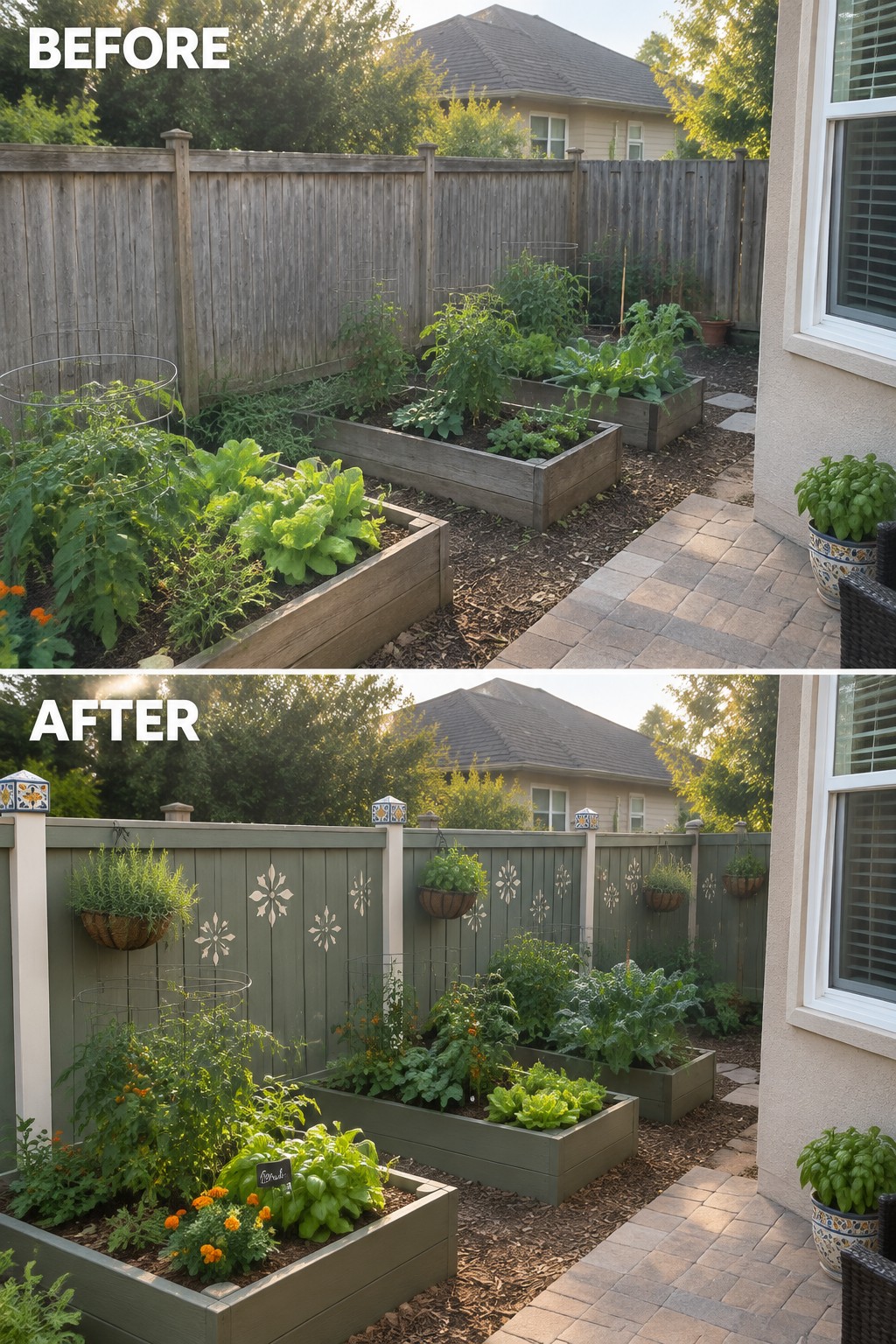
A tired fence can make a vegetable garden feel messy, even when the raised beds are in good shape. Painting the fence a muted green and adding simple decorative cutouts gives the beds a clearer backdrop and makes the whole growing area feel more organized.
This idea works well in a small backyard where the fence is already the main boundary. Choose an outdoor paint suited to the fence material, and keep the pattern simple so it does not compete with the plants. Hanging baskets can add growing space, but leave the paths clear for tending the beds.
Add A Pergola-Style Frame To A Vegetable Garden Fence

A basic wire enclosure can keep a vegetable garden contained, but a wood frame above the fence gives it more structure and supports climbing plants. In this garden, the open wire fence was replaced with a sturdier enclosure topped by a simple overhead frame.
This idea works well when you grow vining vegetables such as beans or cucumbers. Make sure the posts and overhead beams are strong enough for the plants, and leave a gate wide enough to carry tools and harvests through.
Frequently Asked Questions
Q: How tall should a fence be to keep rabbits out of my vegetable garden?
A: A fence about 2 feet tall can deter many rabbits, but bury the bottom several inches or bend it outward along the ground. Rabbits can squeeze under a fence more easily than you might expect.
Q: Do I need to leave a gate in the garden fence?
A: Yes, even a small gate makes it much easier to carry tools, compost, and harvest baskets in and out. Make the opening wide enough for anything you plan to bring through, and add a latch that closes securely.
Q: What’s a good fence option if I’m on a tight budget?
A: Garden stakes with wire mesh are a simple, affordable choice. Secure the mesh firmly at ground level so animals can’t push beneath it.
Q: Will a fence block sunlight from my vegetables?
A: A low, open fence usually lets plenty of light through. If you’re choosing a taller design, place it where it won’t shade sun-loving crops during the brightest part of the day.
