

A plain fence can make a garden feel unfinished, even when the rest of the yard is well cared for.
Climbing roses add color and soften hard lines, while the fence gives their growth a clear structure.
I like how this pairing can bring more privacy and shape to a yard without requiring a full redesign.
The change often comes from practical choices, such as spacing the plants well and guiding their stems along the fence.
Some of these approaches are worth adapting to a fence that needs a little more life.
Add Climbing Roses To A Plain Fence

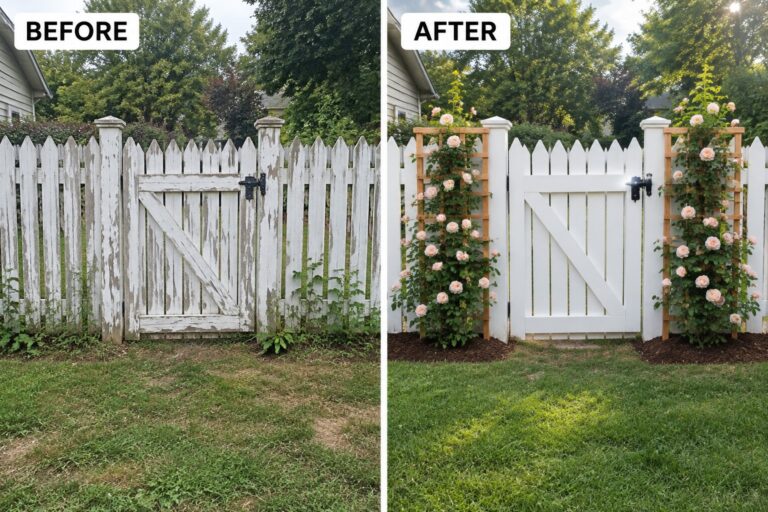
A tired fence can look much more cared for when climbing roses give it a clear focal point. Here, wooden trellises beside the gate support the roses, while a fresh coat of white paint helps the fence look neat again.
Use sturdy trellises where you want the roses to climb, and leave enough room for the gate to open and for the plants to grow. This idea works well along a garden entrance or a plain stretch of fence, but avoid crowding the walkway with branches.
Add Structure To An Overgrown Fence Line

A neglected fence can become a useful planting area instead of a spot where weeds and clutter collect. Here, wooden trellis panels cover the chain-link fence, giving climbing roses a place to grow and making the narrow border feel more intentional.
For a similar look, secure trellis panels firmly to the fence and choose rose varieties suited to your sunlight and space. Keep the planting strip clear enough to tend, and leave room along the path for easy access.
Turn A Plain Fence Into A Rose Garden Feature

A weathered fence can feel like a missed opportunity in the garden. Staining the boards and training climbing roses along them turns that long, plain boundary into a useful growing space and a feature in its own right.
This idea works well along a property line where there’s room for a narrow planting bed. Use sturdy supports to guide the roses, and leave enough space for pruning and airflow so the plants don’t crowd the fence.
Train Climbing Roses Along A Garden Wall
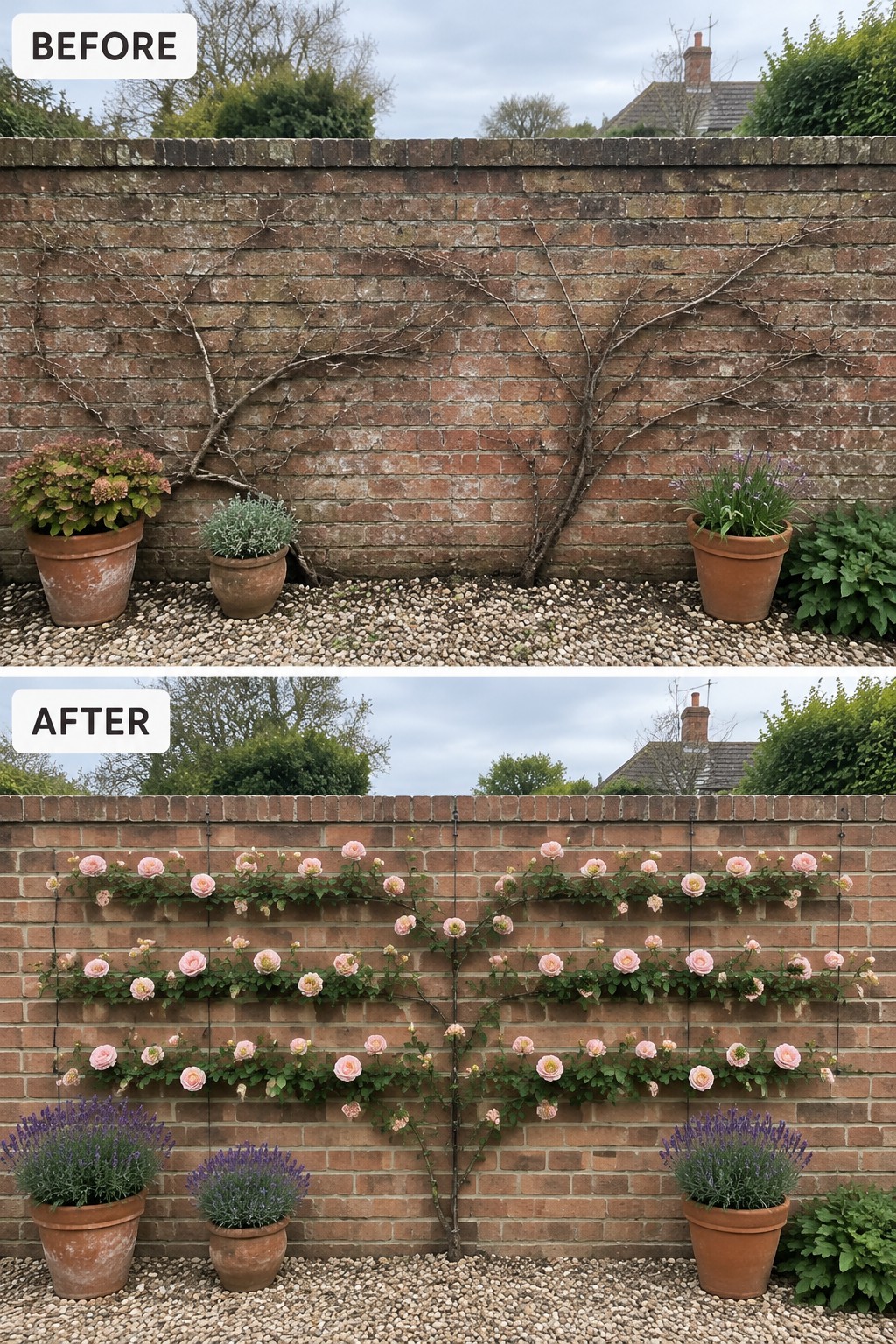
A bare brick wall can feel like a missed opportunity in the garden. Training a climbing rose across it gives the wall a clear focal point, and the change from sparse, leafless branches to flowering stems shows how much a little structure can do.
Use horizontal wires or supports fixed securely to the wall, and tie in the rose’s main stems as they grow. This approach works well where a fence or wall needs more color, but leave enough space around the plant for pruning and airflow.
Use Climbing Roses To Bring A Plain Fence To Life
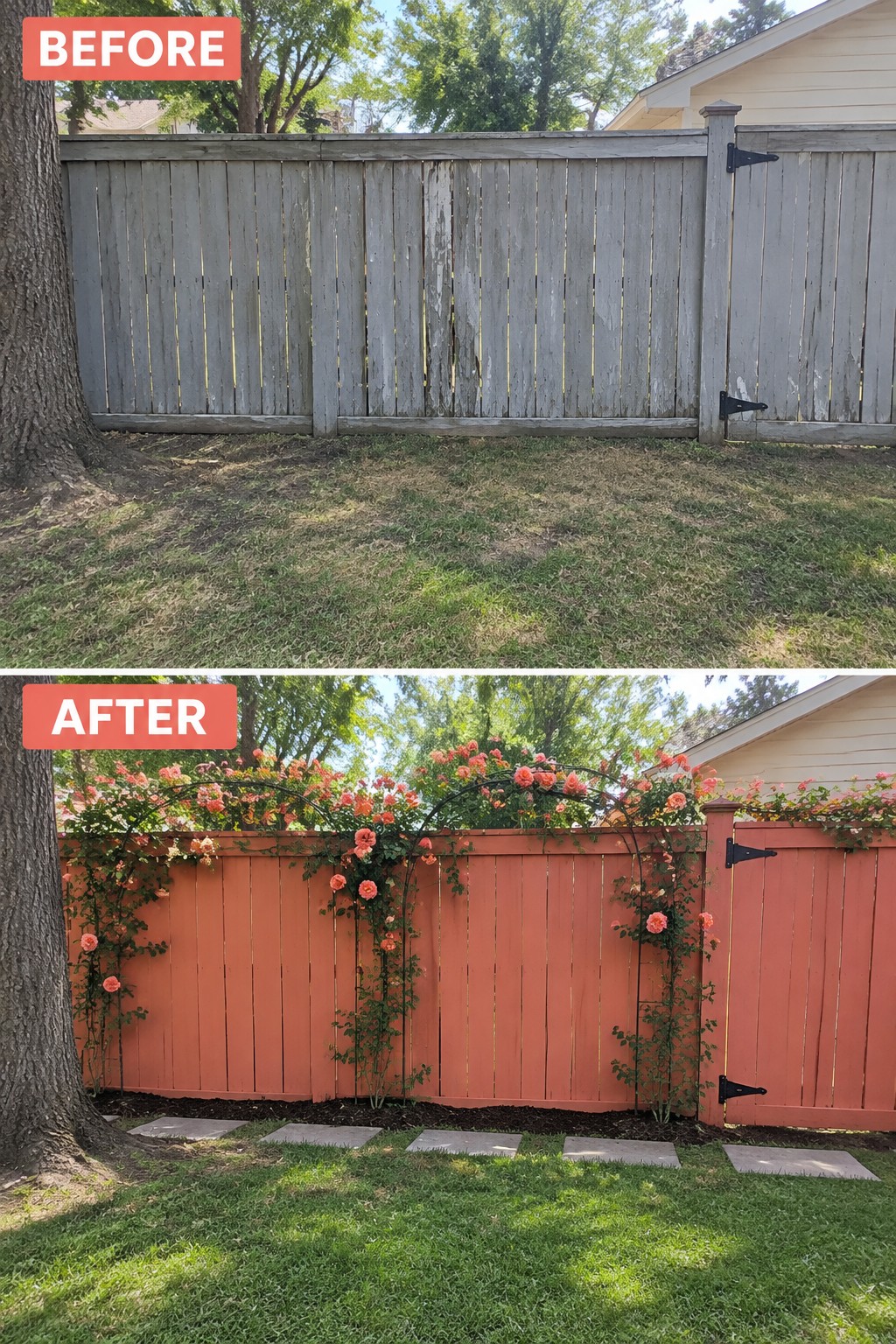
A faded fence can become a garden feature when climbing roses are trained along it. Here, the fresh coral paint gives the fence a clean backdrop, while the flowers add color and make the fence line feel planted rather than bare.
This idea suits a side yard or backyard where a fence takes up a lot of the view. Use a trellis or sturdy supports to guide the roses, and leave enough room for pruning and airflow. A simple path of pavers can help keep the planting bed easy to reach.
Turn A Narrow Patio Into A Seating Area
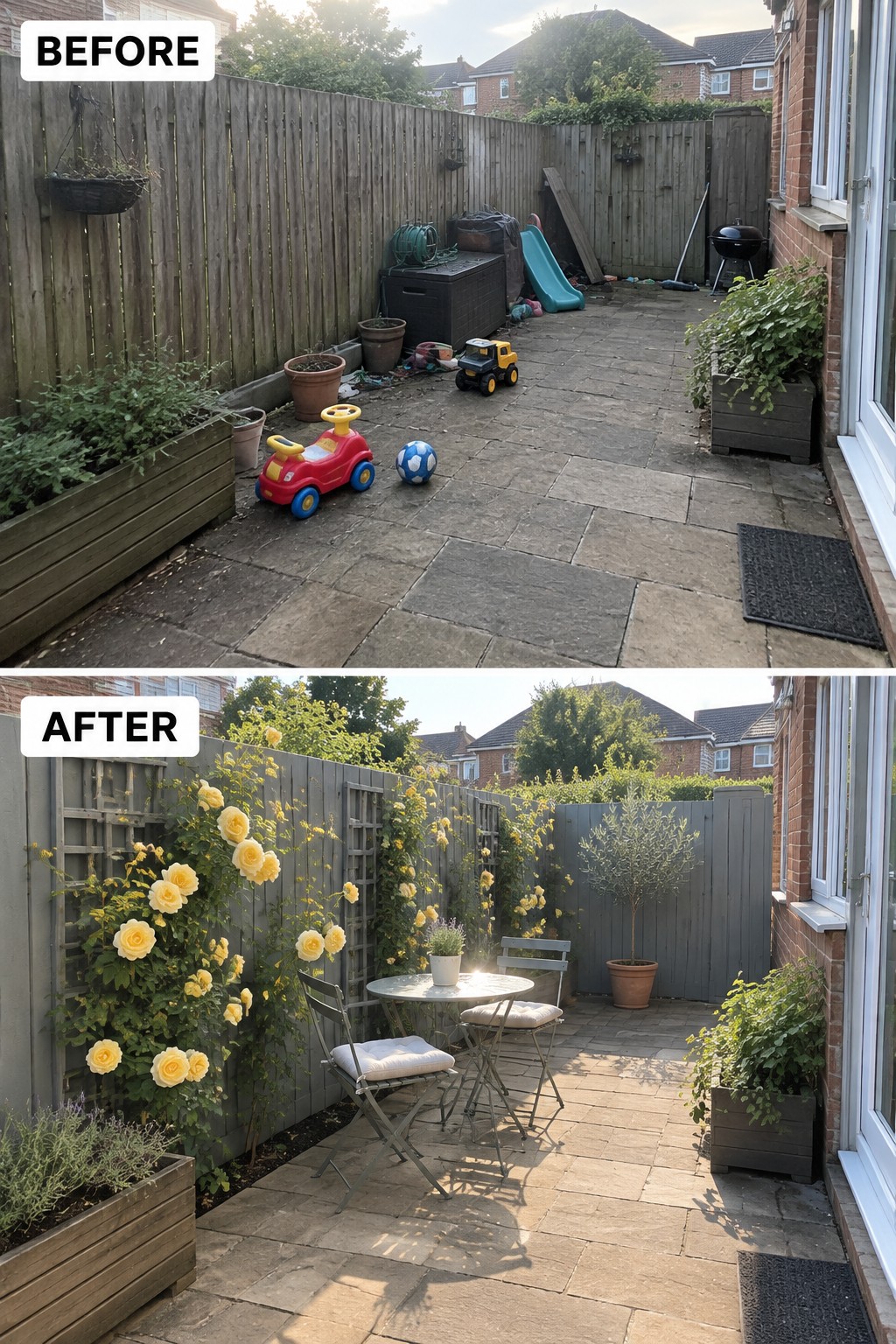
A small patio can become more useful when you give it a clear place to sit. Here, the cluttered paving gives way to a compact table and chairs, while climbing roses bring color to the fence without taking up much floor space.
For a similar layout, keep the furniture modest and leave a clear route through the patio. Train roses on sturdy fence supports, and leave enough room around them for pruning and airflow.
Replace An Overgrown Fence Line With A Rose Trellis

The narrow side yard feels more orderly once the tangled chain-link fence is replaced with a sturdy wooden trellis for climbing roses. The flowers bring color to a space that might otherwise feel like a plain passage beside the house.
This idea works well in a small yard where there is little room for planting beds. Clear weeds first, then give the roses a strong support and keep the path open with an easy-care surface such as gravel.
Use Rose Arbors To Define A Fence Line

A plain fence can feel like a boundary with little purpose. Adding rose-covered arbors turns sections of it into garden features, while the planting along the base makes the edge feel more planned.
Use a few arbors at intervals rather than crowding the fence with structures. Climbing roses need sturdy supports and room to spread, so leave space for paths and choose varieties suited to your climate.
Make A Plain Garden Gate A Rose-Filled Focal Point
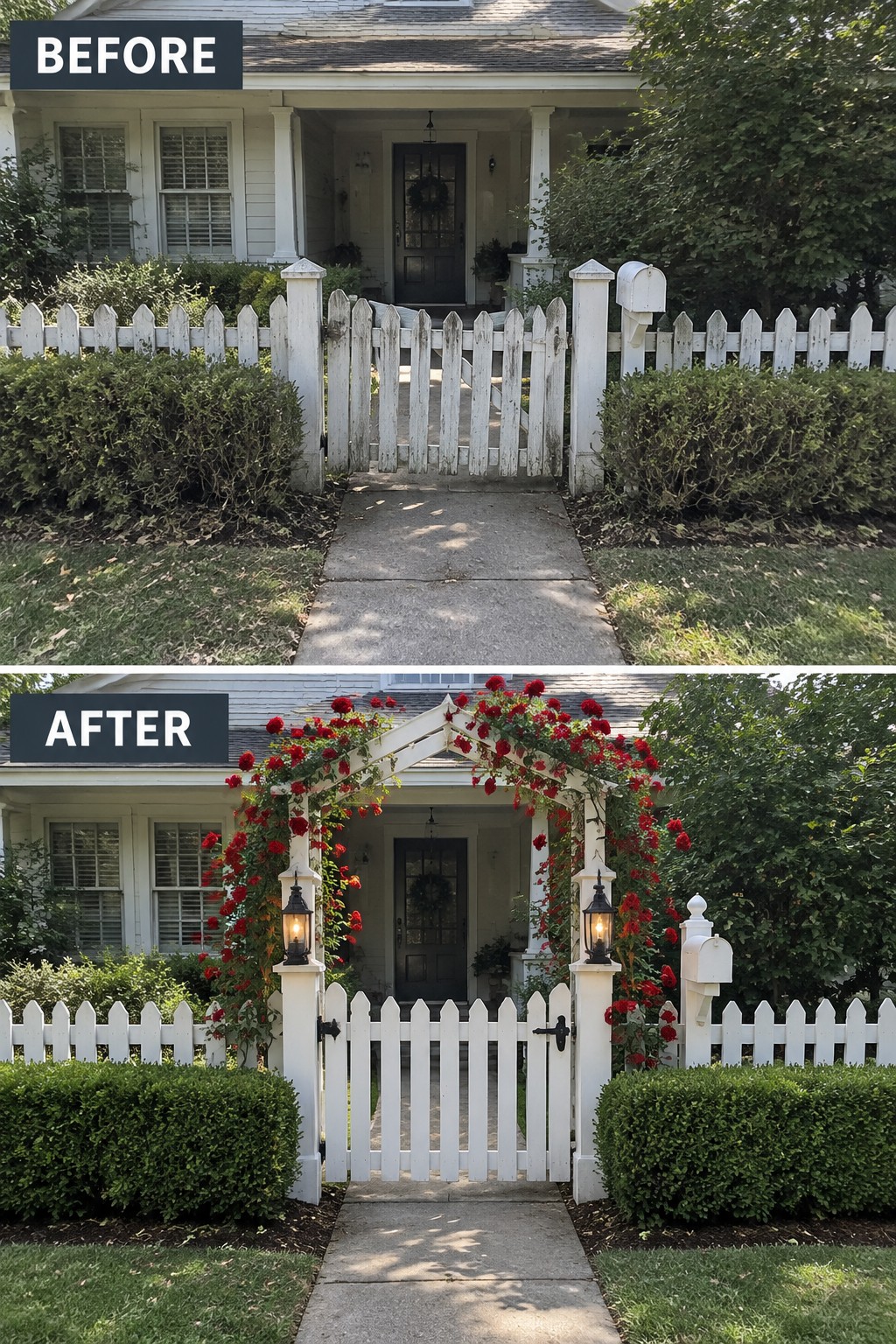
The plain picket gate feels more like part of the fence than a feature. A white rose arch changes that, giving the entry a clear focal point and making the approach to the porch feel more planned.
For a similar effect, train climbing roses over a sturdy arch set around a garden gate. Leave enough room for the gate to swing and for people to pass, and prune the roses so they do not crowd the walkway.
Give A Bare Fence A Clear Garden Plan
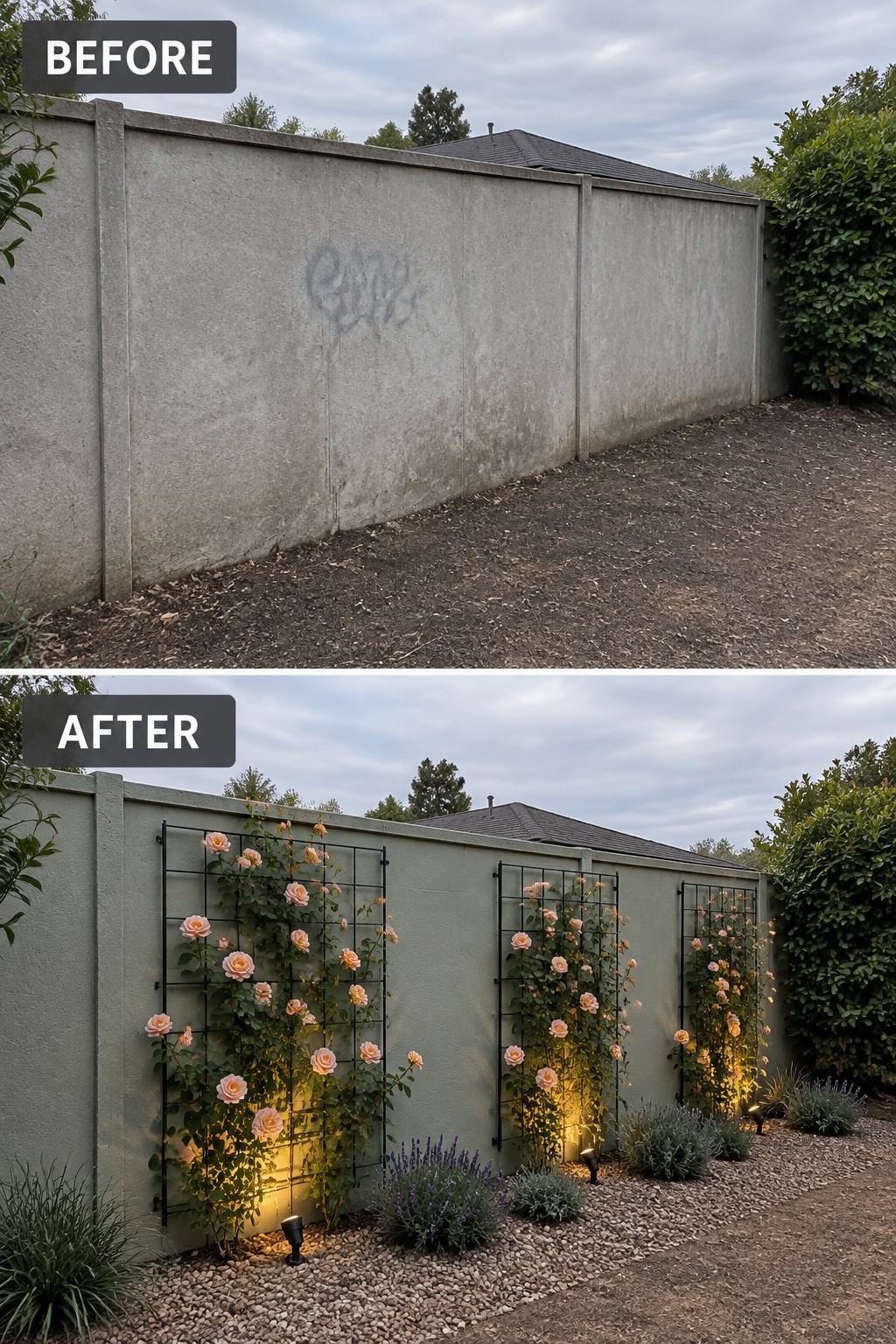
A long, plain fence can make a garden feel unfinished. Training climbing roses on a few trellises gives the fence a repeating structure and turns it into a garden feature without replacing it.
Use sturdy trellises and leave enough room between them for the roses to grow. A gravel strip and a few low plants can keep the base tidy, but avoid crowding the area so the roses are easy to prune and care for.
Build A Rose Fence With A Raised Garden Bed

The sagging screen fence left this patio edge looking unfinished. Replacing it with a sturdy lattice fence above a low stone wall gives climbing roses room to grow and makes the narrow planting strip feel deliberate.
This approach works well along a patio where a plain fence needs more structure and privacy. Choose a strong trellis or lattice that can support mature roses, and leave enough space for the plants to grow without crowding the path.
Create A Clear Garden Path Along The Fence

The fence line works better as a garden when the overgrowth is cleared and the path has a defined edge. Climbing roses turn the fence into a planted feature, while a neat mulch path makes the narrow space feel planned rather than neglected.
For a similar side yard, start by clearing weeds and trimming back existing growth, then give the path a firm border and enough room to walk comfortably. Train roses along a sturdy fence or trellis, and leave space at their base for care and airflow.
Turn A Small Balcony Into A Seating Area
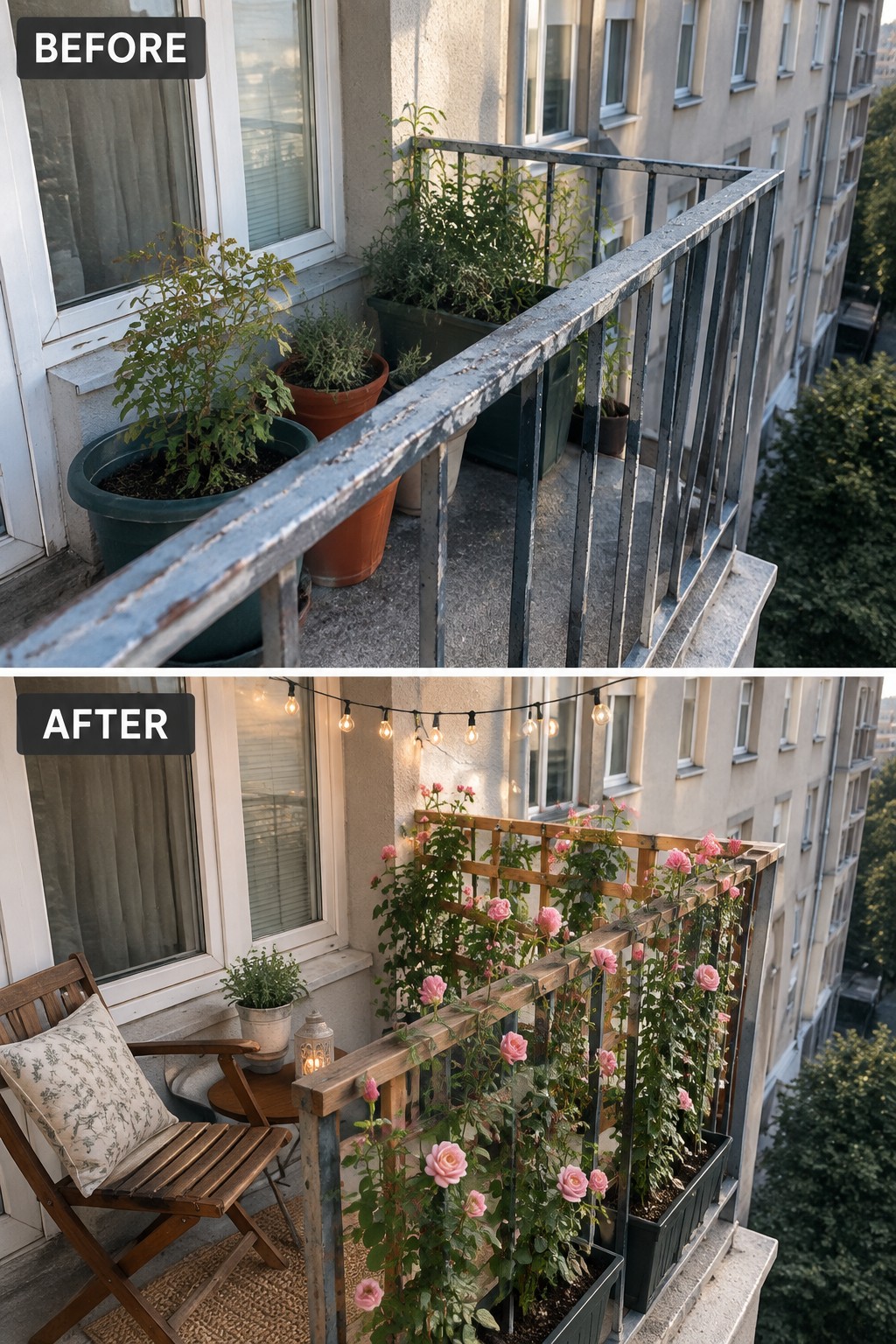
A narrow balcony can feel like a place for spare pots rather than somewhere to sit. Replacing the cluttered setup with a compact chair and a few rose planters makes the space more usable, while training the roses along the railing gives the planting a clear direction.
Keep the furniture small enough to leave a path, and use sturdy planters that can be secured against wind. A simple string of lights can help the balcony feel comfortable in the evening without taking up floor space.
Turn A Worn Fence Into A Rose Garden Feature
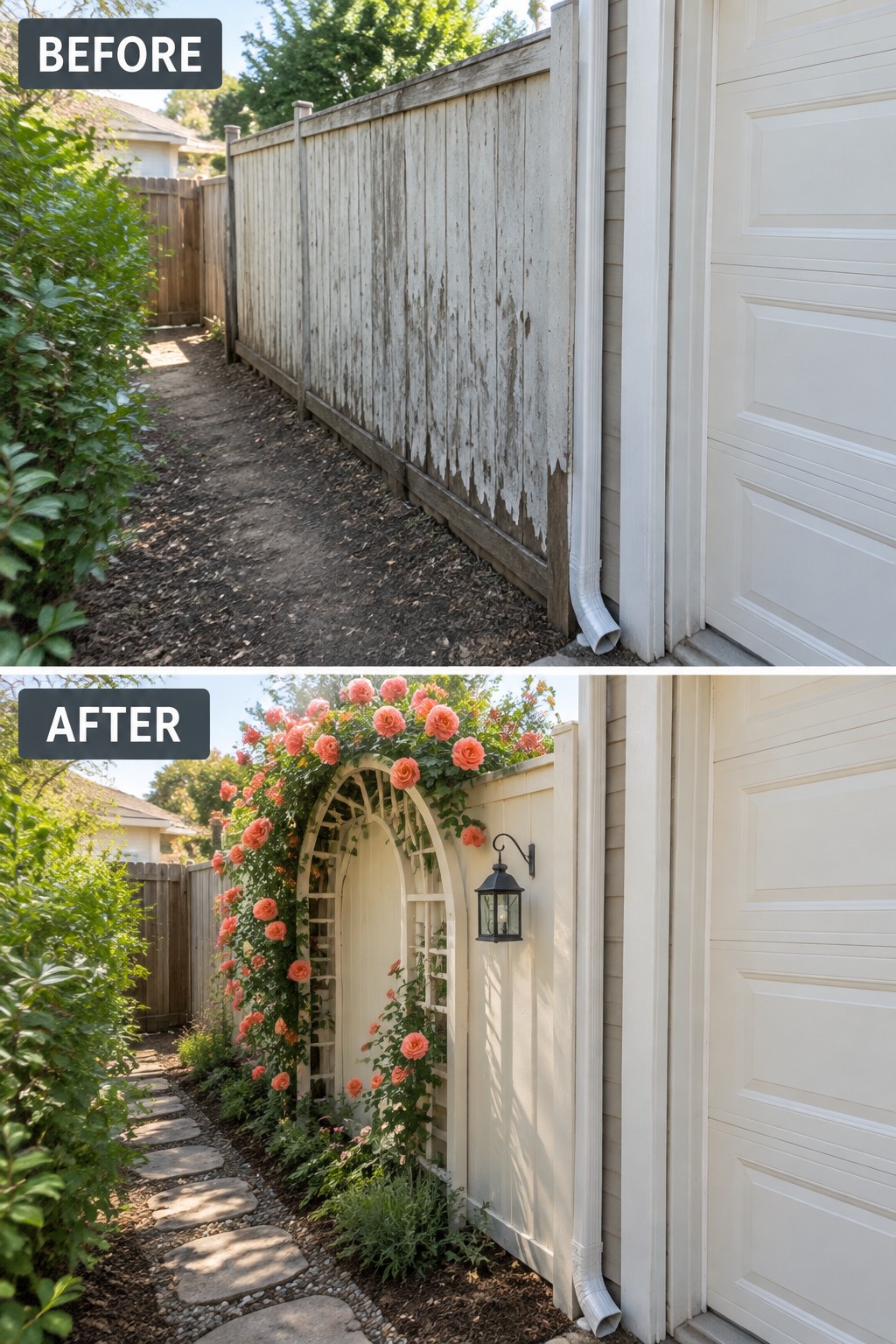
A tired fence can become the main feature of a narrow side yard when you give climbing roses a sturdy structure to grow on. Here, a pale trellis and arch replace the peeling fence surface, making the path feel planned rather than forgotten.
For a similar look, check that the fence or trellis can support mature rose growth, then guide the canes along the structure as they grow. Leave enough room beside the path to walk and tend the plants without crowding the space.
Turn A Small Patio Into A Seating Area
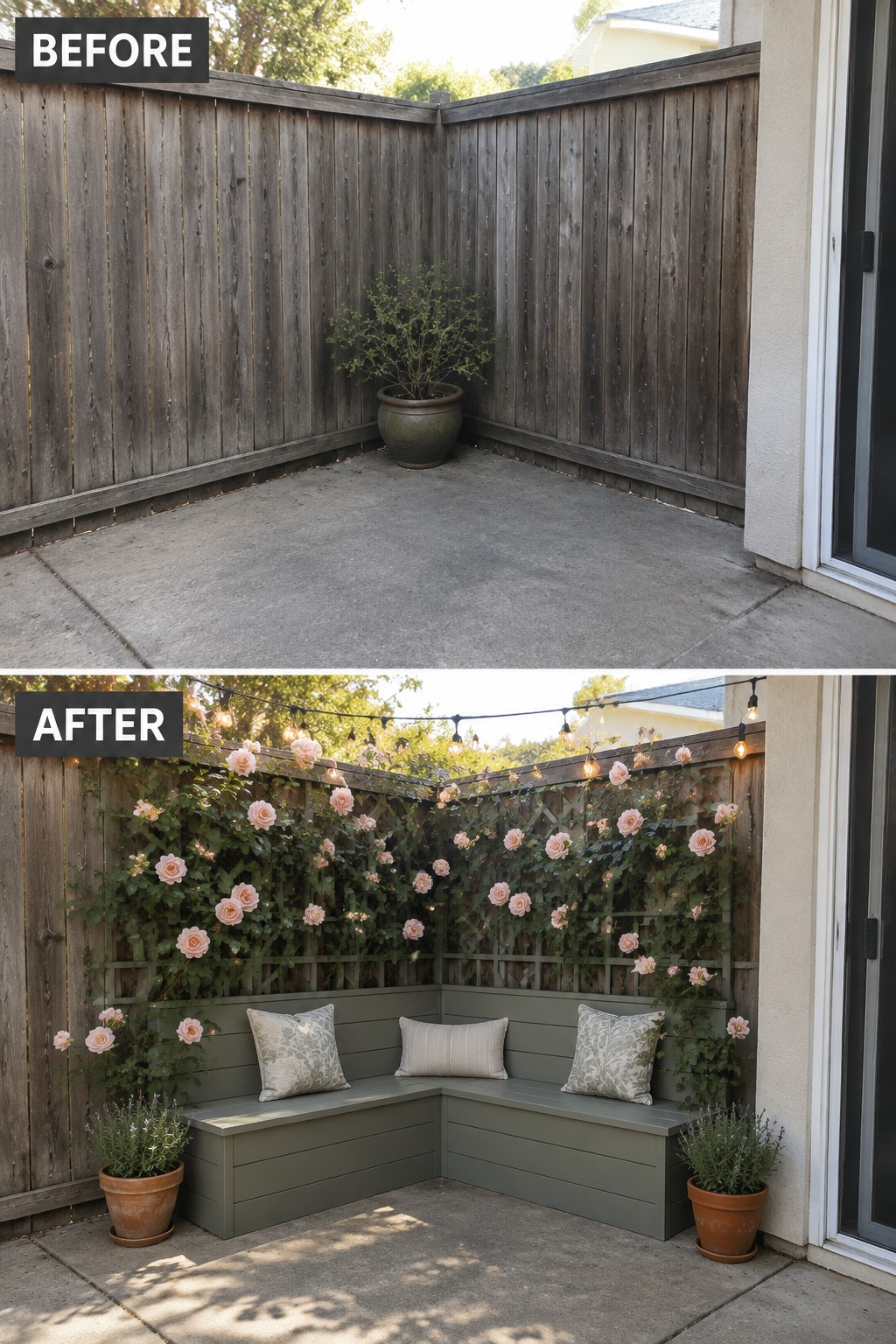
An empty patio can be hard to use until it has a clear purpose. Here, a built-in corner bench turns the bare concrete into a spot for sitting, while climbing roses make the fence feel like part of the garden.
This idea suits a small patio where a separate table and chairs might take up too much room. Keep the bench narrow enough to leave space to walk, and train roses on sturdy supports so the fence stays accessible for maintenance.
Give A Neglected Fence Line A Clear Garden Shape
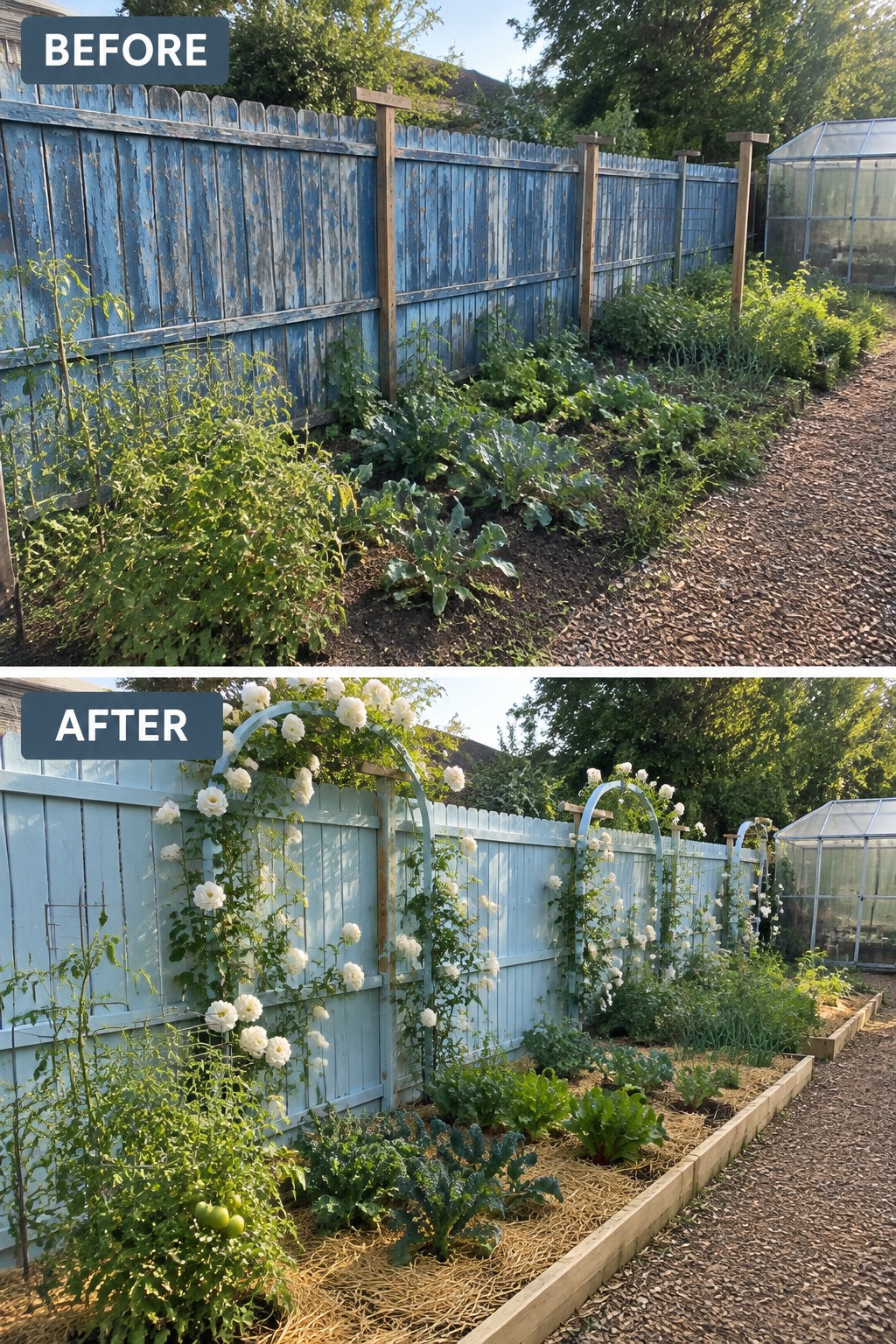
The fence line works better as a garden once the overgrowth is organized into a defined bed. In the finished space, a raised edge and climbing roses give the planting a clear boundary, while keeping the fence as the main backdrop.
For a similar yard, clear weeds first, then mark out a bed wide enough for plants without narrowing the path. Train roses on sturdy supports, and leave enough room around them for pruning and access.
Add Privacy And Color Along A Fence Line

Replacing a tired chain-link fence with a solid wooden fence gives this narrow garden edge a more finished look and a little more privacy. Climbing roses break up the long stretch of wood with color, so the fence becomes part of the garden rather than just a boundary.
For a similar result, train roses on sturdy supports and leave enough room for them to grow without blocking the path. Repeat a few plants along the fence for a steady rhythm, but keep the bed narrow where space is tight.
Add Climbing Roses To A Neglected Fence Line

An overgrown fence can make a garden look untidy, even when there is plenty of space to plant. Clearing the weeds and training climbing roses along the ironwork gives the fence line a clear shape and turns it into part of the garden.
Start by removing unwanted growth and checking that the fence can support the plants. Leave room for the roses to spread, and keep a low hedge or other planting trimmed so it does not crowd the base.
Replace Temporary Fence Mesh With Rose-Supporting Trellis
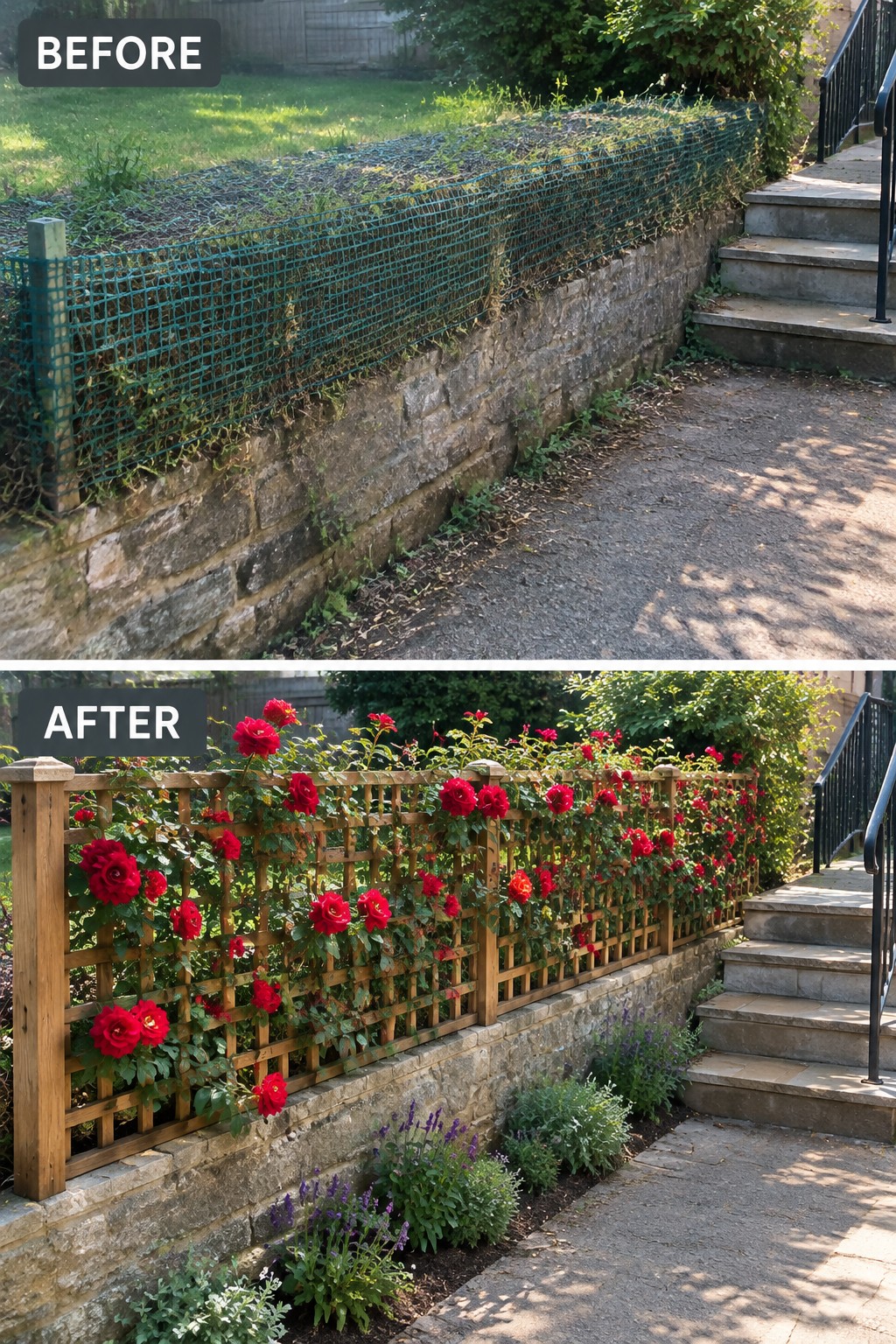
A simple wooden trellis gives climbing roses a sturdy, orderly place to grow. Here, it replaces loose mesh above the stone wall, turning a scruffy fence line into a more deliberate garden feature.
This idea works well where a low retaining wall borders a path or steps. Secure the trellis firmly, then guide the rose stems across it as they grow, leaving enough room to reach the plants and pass along the path.
Make A Poolside Fence Feel More Private
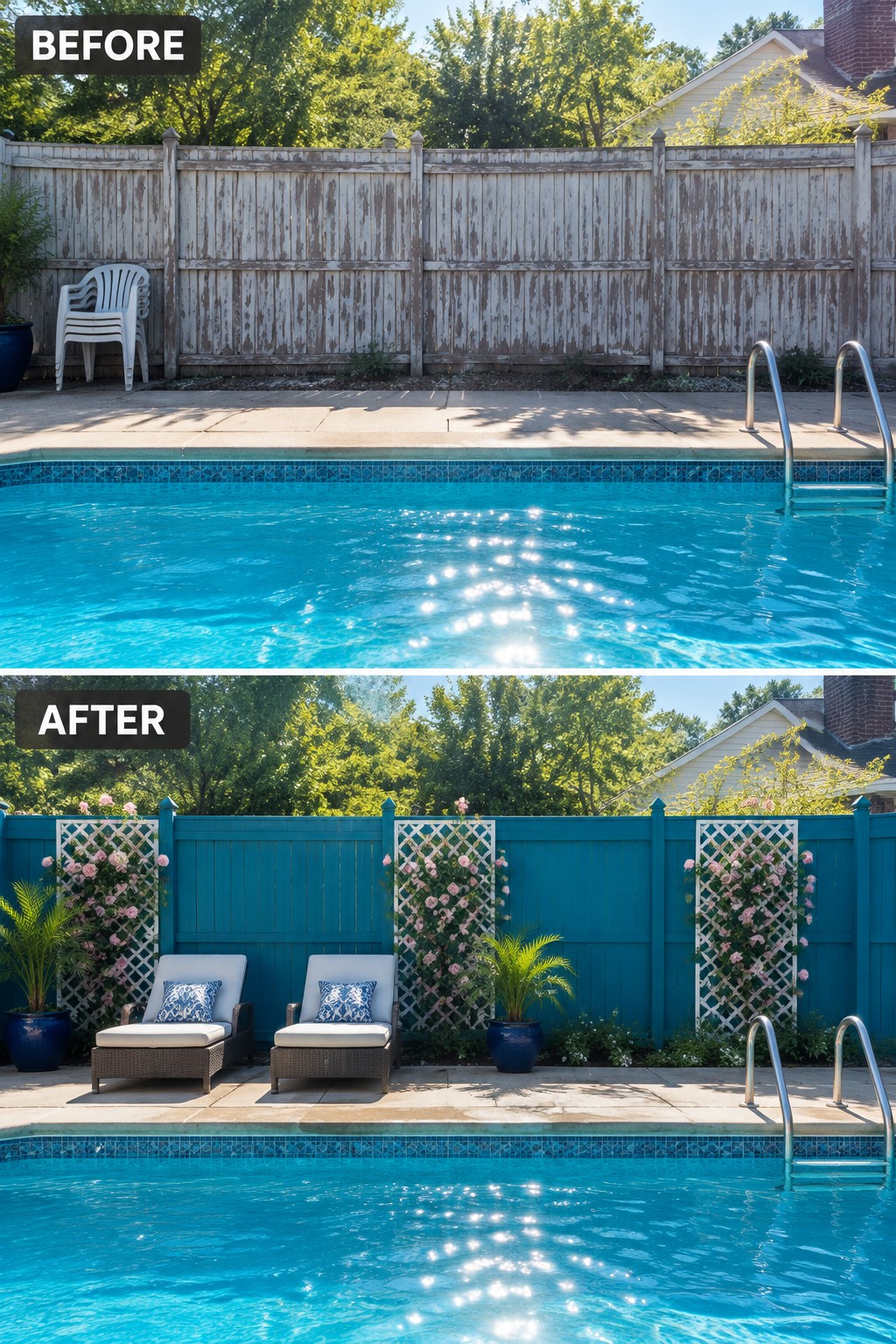
A tired fence can make a pool area feel unfinished, even when the water and patio are in good shape. Painting the fence a deep teal and adding climbing roses to trellis panels gives the yard a more finished backdrop without changing the pool itself.
For a similar update, use trellis sections to break up a long fence and give roses room to climb. Make sure the plants suit your local conditions, and leave enough space around the pool for clear paths and comfortable seating.
Frequently Asked Questions
Q: How do I train a climbing rose to cover a fence instead of growing straight up?
A: Tie the main canes loosely along the fence, guiding them sideways or in a gentle fan shape. Roses tend to send out more flowering shoots along horizontal canes, so you’ll get fuller coverage.
Q: Will climbing roses damage a wooden fence?
A: Roses don’t cling to surfaces on their own, so tie them to wires or sturdy supports attached to the fence. Keep the canes from rubbing against the boards, and leave a little room for air to move through.
Q: When should I prune a climbing rose on a fence?
A: Most climbing roses benefit from a light tidy after their main flowering flush. Remove dead or crowded growth, but keep the long healthy canes that form the framework.
Q: Can I grow a climbing rose on a shady fence?
A: A spot with some direct sun is usually better for flowering, though a few varieties can manage light shade. If the fence gets little sun, choose a shade-tolerant rose and expect fewer blooms.
