

A plain or patchy garden fence can make the whole yard feel unfinished, even when the plants are doing well.
I like how reclaimed pallets can add a bit of structure and privacy without making a garden feel too formal.
With some careful cutting, sanding, and a protective finish, the wood can suit different layouts and hold up better outdoors.
The change can be simple, but a tidier boundary often makes the planting and paths feel more considered.
I’d save the ideas that fit your space and adapt the details to your fence line, budget, and skill level.
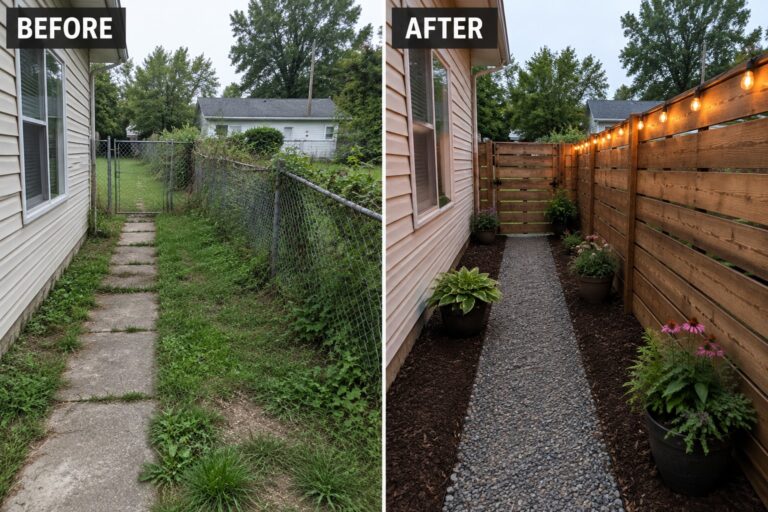
Add Structure To A Narrow Side Yard
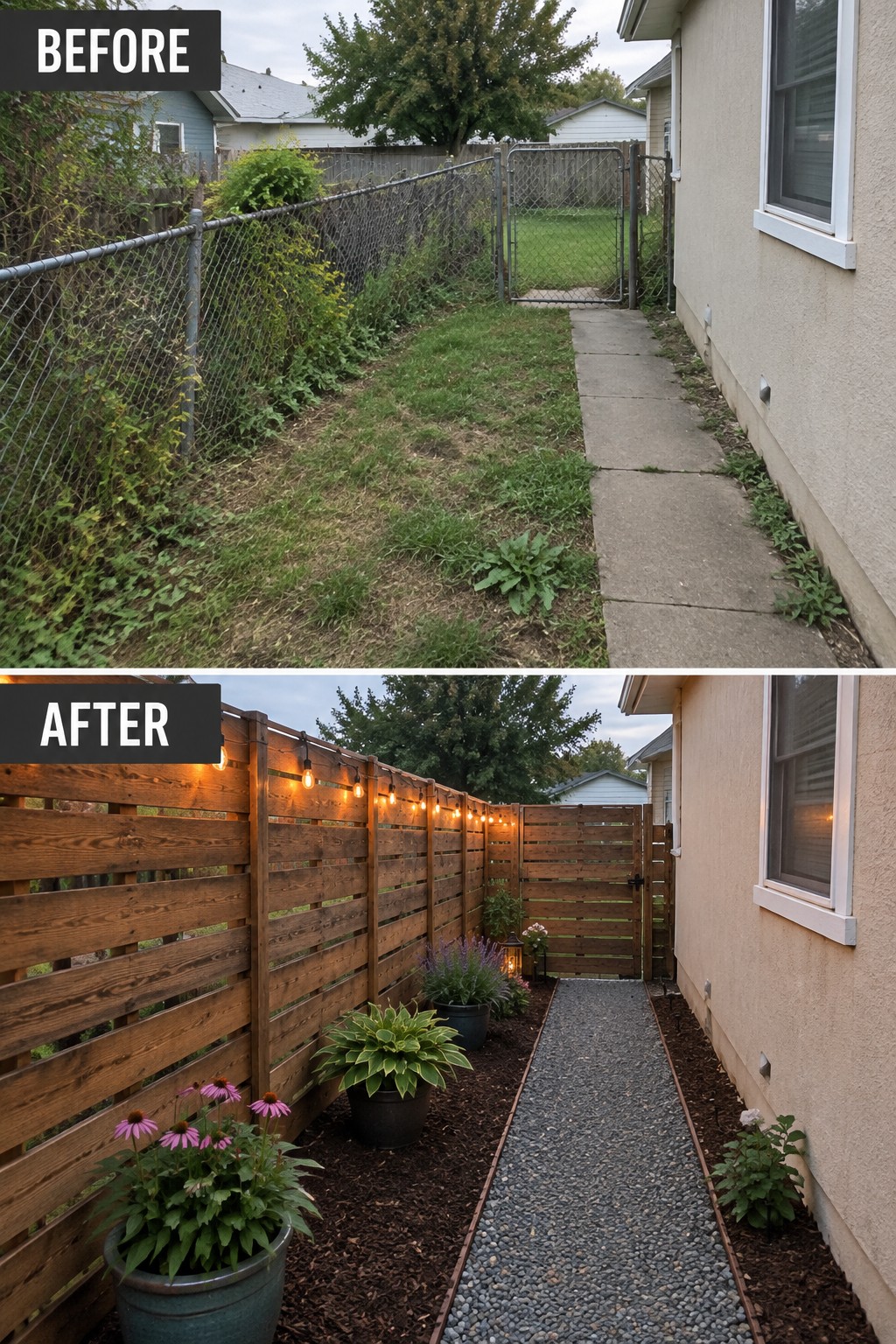
A simple fence can make a neglected side yard feel more planned. Here, the chain-link boundary is replaced with a tall wooden fence, giving the narrow space a clearer edge and a more private feel.
This idea works well beside a house where space is limited. Keep the path open and use a few defined planting areas rather than filling every edge, so it stays easy to walk through and maintain.
Add Structure To A Narrow Garden Bed
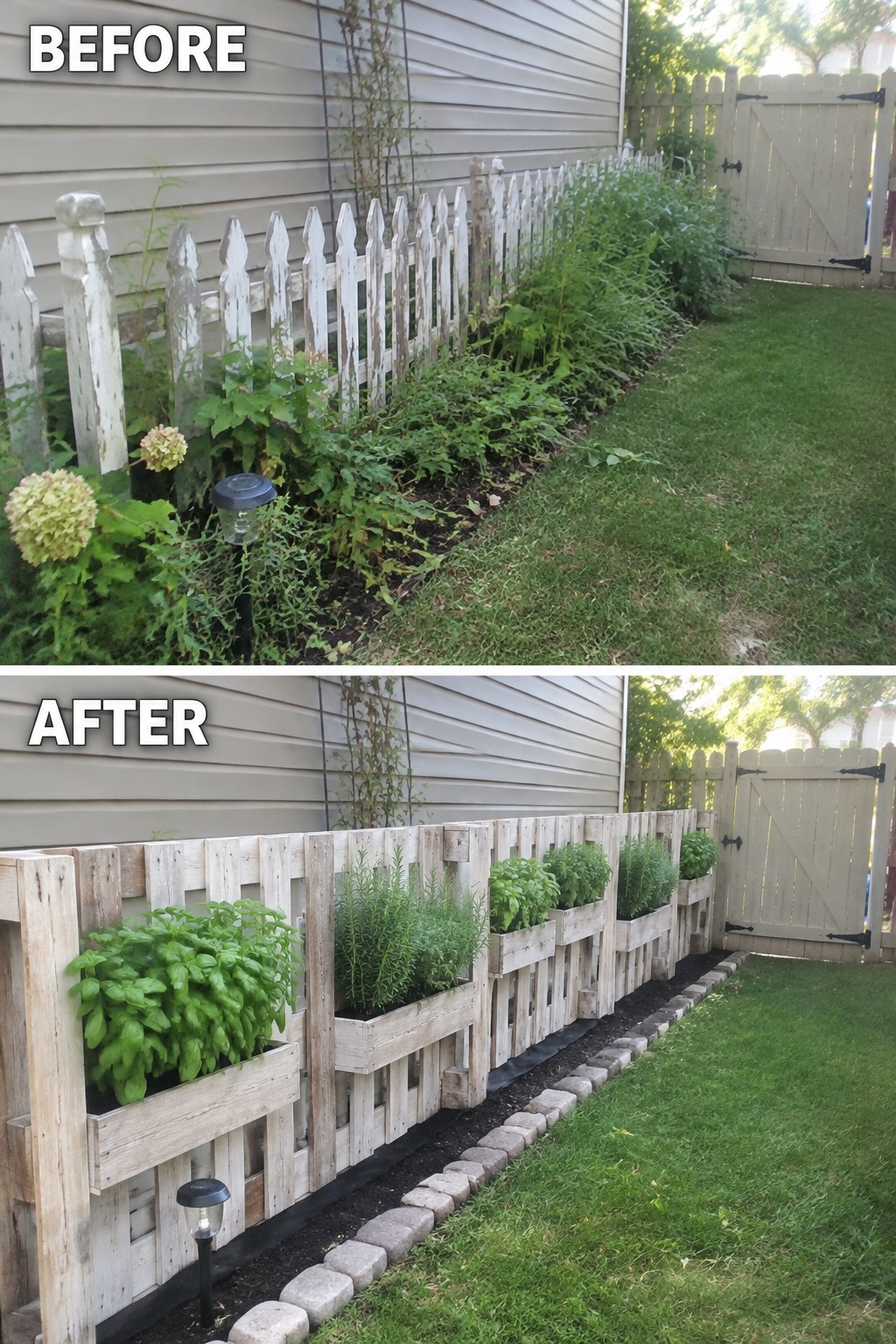
A simple pallet planter turns a messy fence line into a more organized growing space. Here, the overgrown border becomes a row of raised planting pockets, making it easier to keep herbs together and the lawn edge clear.
This idea works well along a fence where garden space is limited. Secure the pallet structure firmly, use untreated wood for edible plants, and leave enough room to reach in and water each section.
Turn An Unused Corner Into A Seating Area
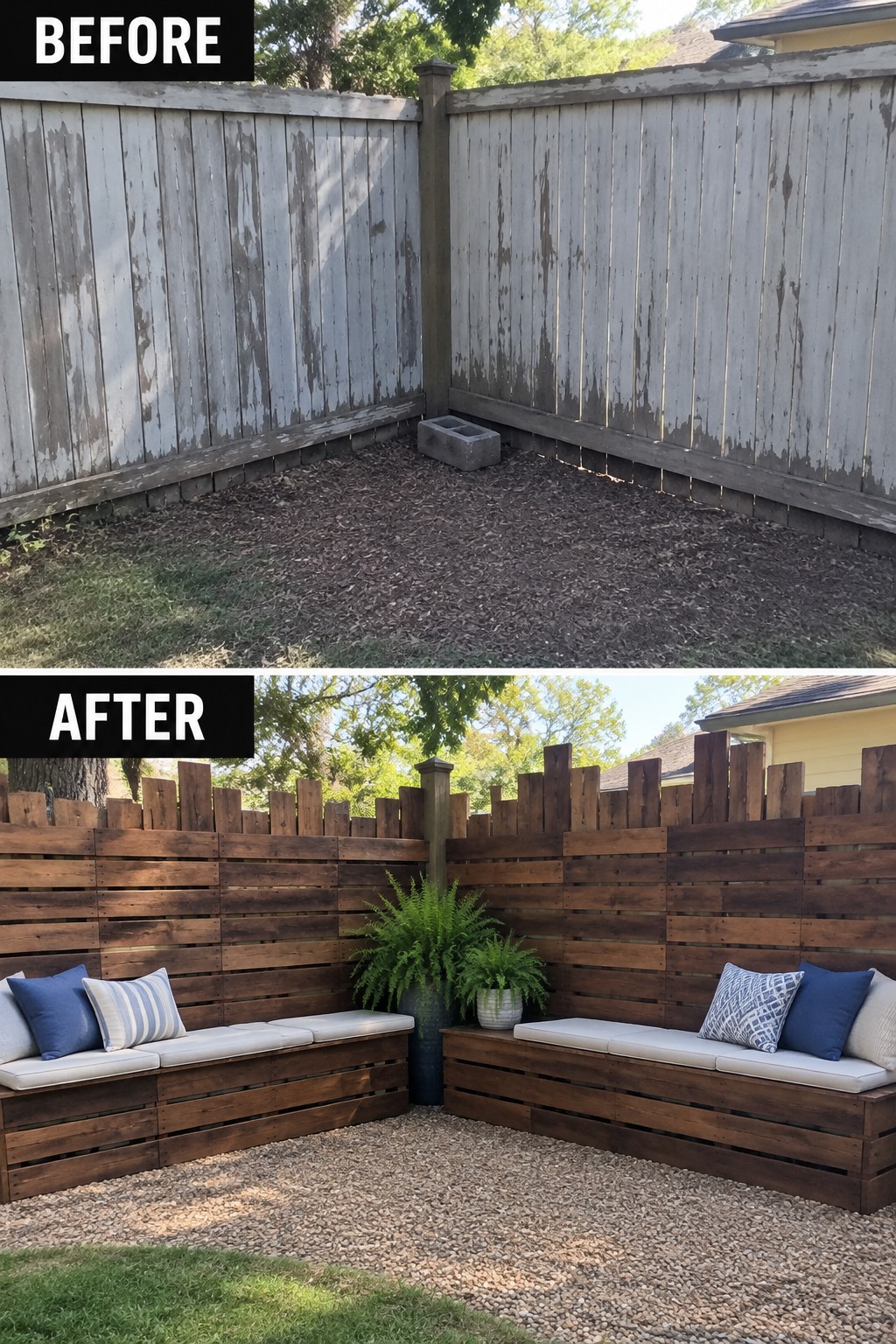
A bare fence corner can become a useful outdoor room when you build seating into the space. Here, the weathered fence was replaced with rustic wood, and benches along both sides make the small area practical for relaxing.
This idea works well in a compact yard where there isn’t room for separate chairs and a table. Keep the bench depth comfortable, leave enough space to walk through, and use wood that can handle outdoor conditions.
Add A Defined Border To Clean Up The Yard

A low picket fence and a neat row of shrubs give this overgrown front yard a clear edge. The yard looks more cared for without needing a major change to the house.
For a similar effect, clear the weeds first, then use a fence or planting to mark the front garden boundary. Keep the path open and choose plants that won’t quickly grow over it.
Grow More Food In A Small Patio Garden
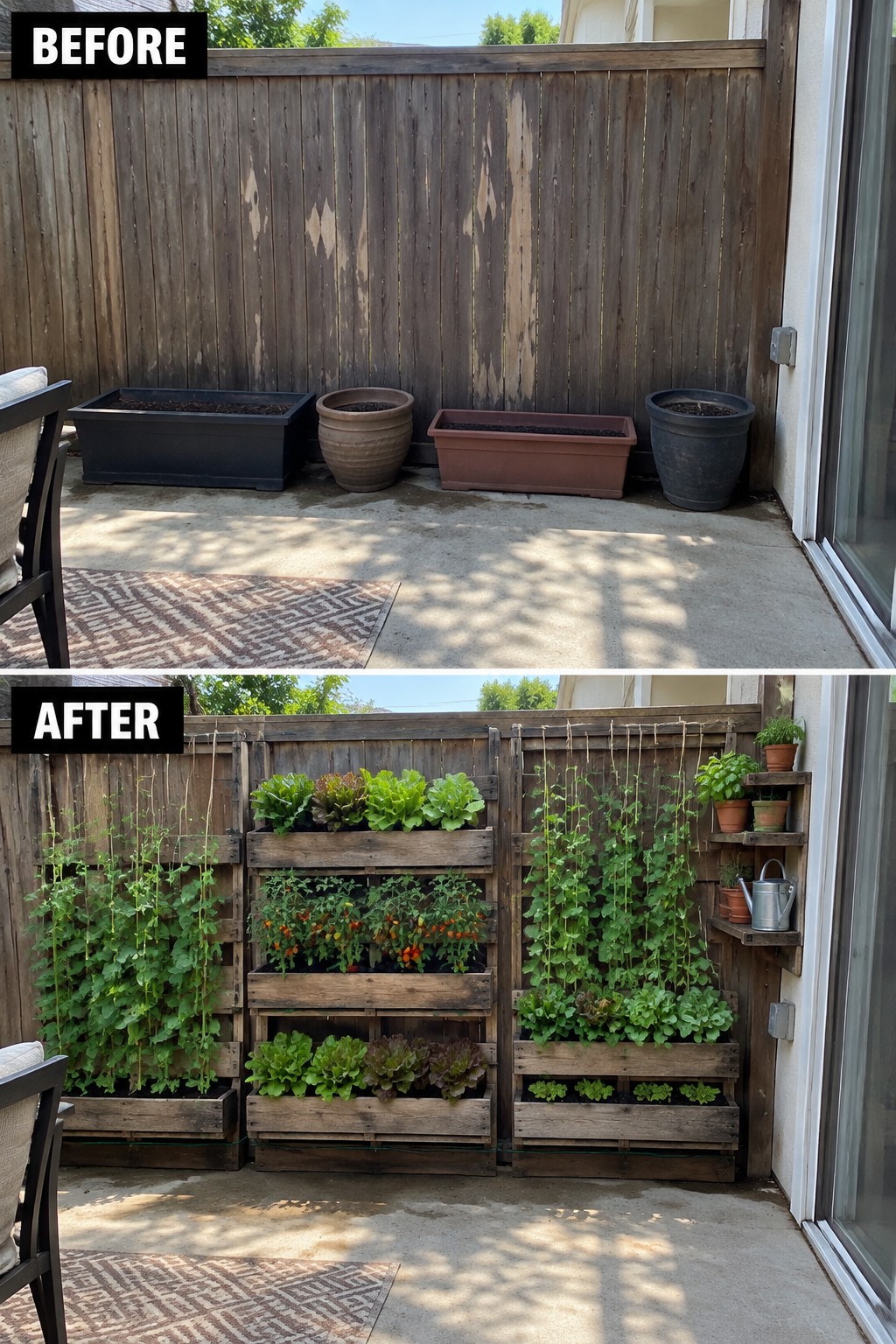
A blank patio fence can become useful growing space with a simple pallet-style planter structure. Here, stacked wooden beds turn a row of pots into a compact vegetable garden, leaving the concrete open for other uses.
This idea suits a small patio where ground space is limited. Secure the planters well, choose crops that fit their depth, and leave enough room to reach and water each level.
Create Privacy Around A Pool Patio
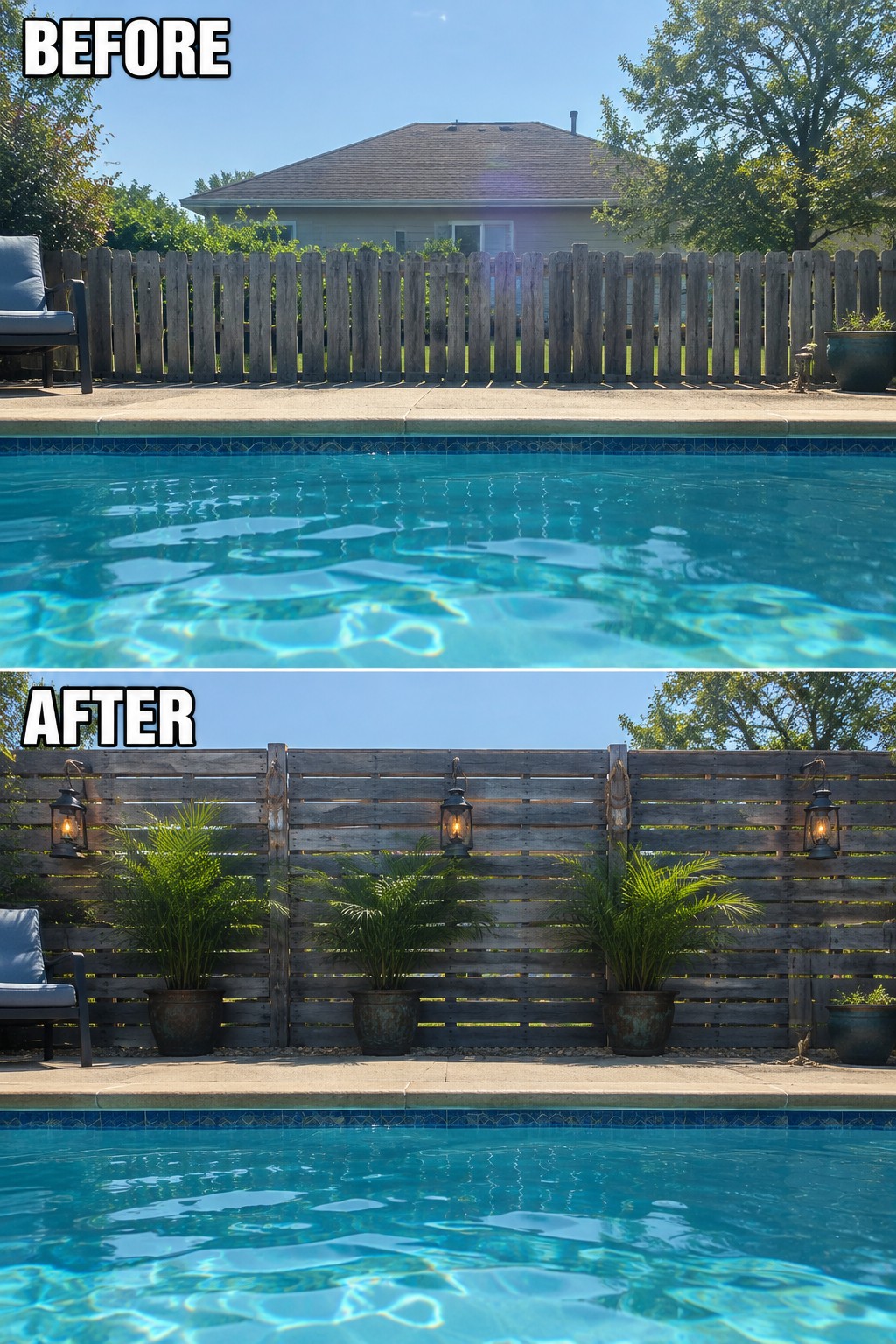
A taller pallet fence turns an exposed poolside patio into a more private place to sit. The horizontal boards block much of the view beyond the yard, while the space still feels open above the fence.
This idea works well when a pool or patio backs onto a neighbor’s yard. Check local rules for fence height, and leave enough room around the pool for safe access and maintenance. A few lanterns can make the fence useful after dark, too.
Refresh A Weathered Fence With Climbing Plants
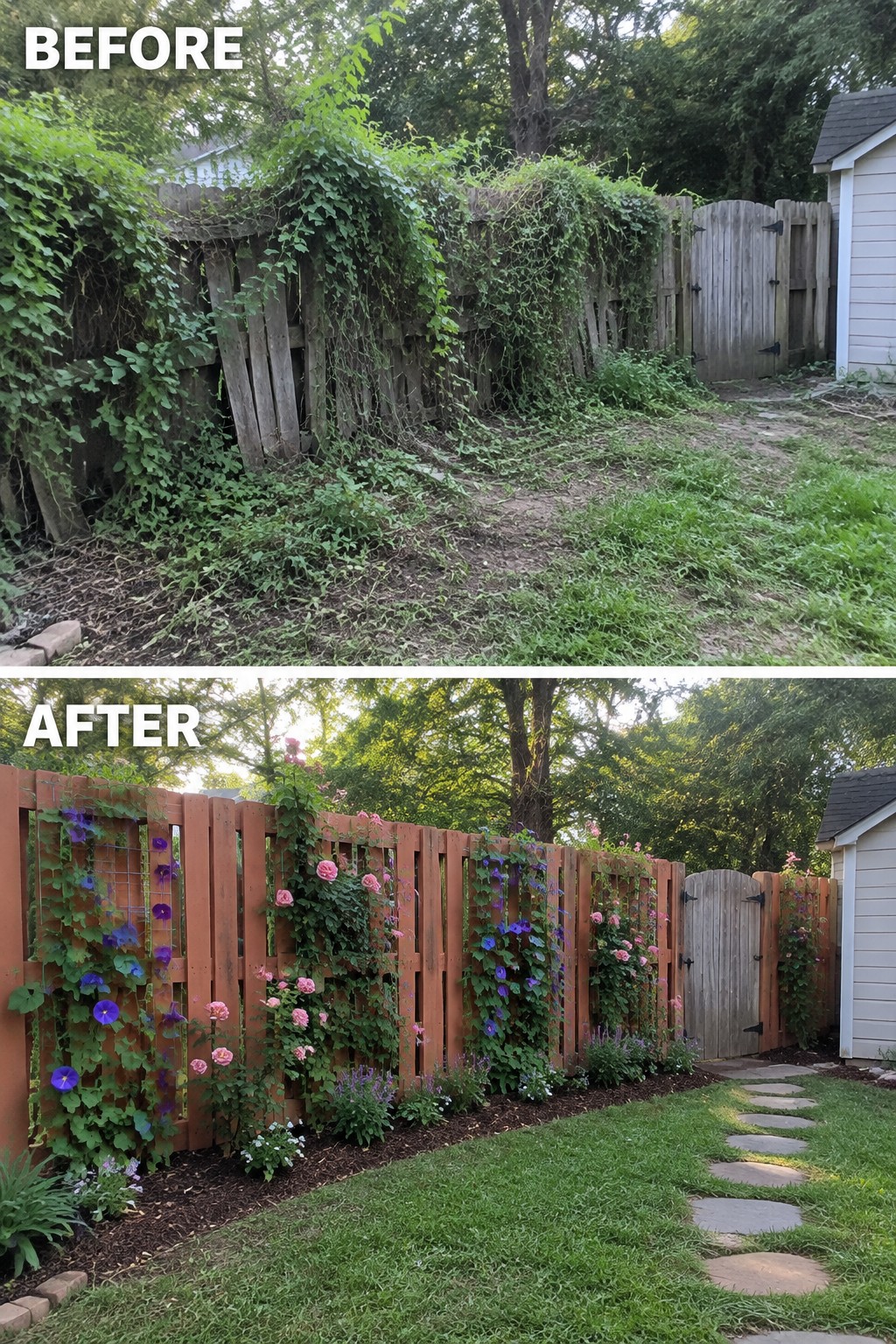
An overgrown fence can make a side yard feel neglected. Cleaning it up and adding a fresh wooden fence gives climbing flowers a tidy place to grow, so the planting feels intentional rather than tangled.
This idea works well along a property line where space is limited. Clear the weeds first, then train vines on sturdy supports and leave enough room to reach the fence for upkeep.
Add Privacy To A Small Patio

A short wooden fence can make a narrow patio feel more private and usable. Here, the open chain-link boundary is replaced with a solid wood barrier, giving the concrete area a clearer edge and making it feel more like an outdoor room.
This idea works well in side yards where neighbors are close by. Keep the fence height suited to local rules, and leave enough clear space to walk through comfortably.
Turn A Plain Fence Into A Garden Feature
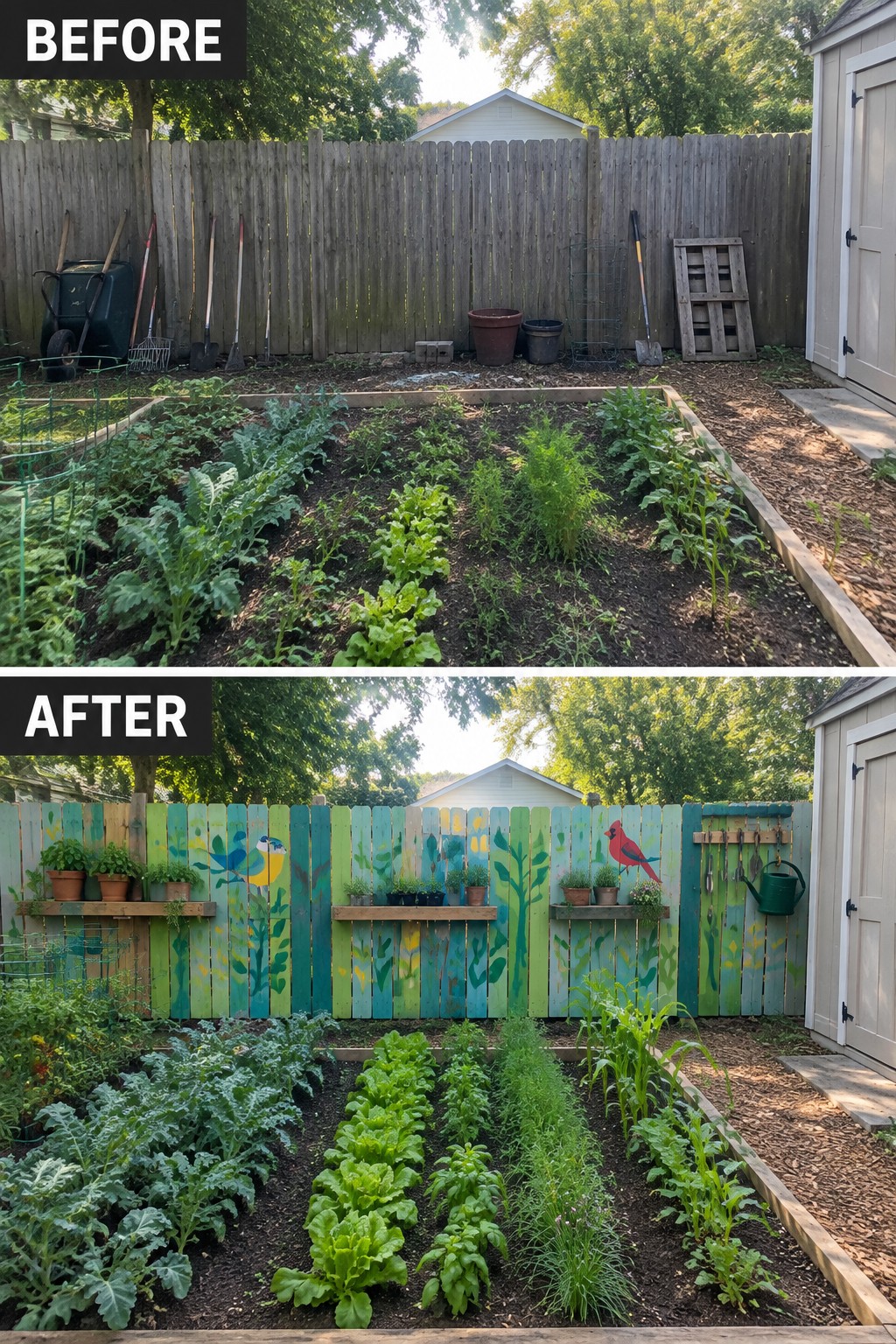
A worn wooden fence can make a garden feel unfinished. Painting the boards in a few garden colors and adding simple plant motifs gives the fence a clear purpose, while the raised shelves provide a handy place for small pots.
This idea works well behind vegetable beds, where a fence can brighten the space without taking up growing room. Use exterior paint and keep the artwork simple enough to touch up later.
Replace A Worn Fence With A Rustic Pallet Fence
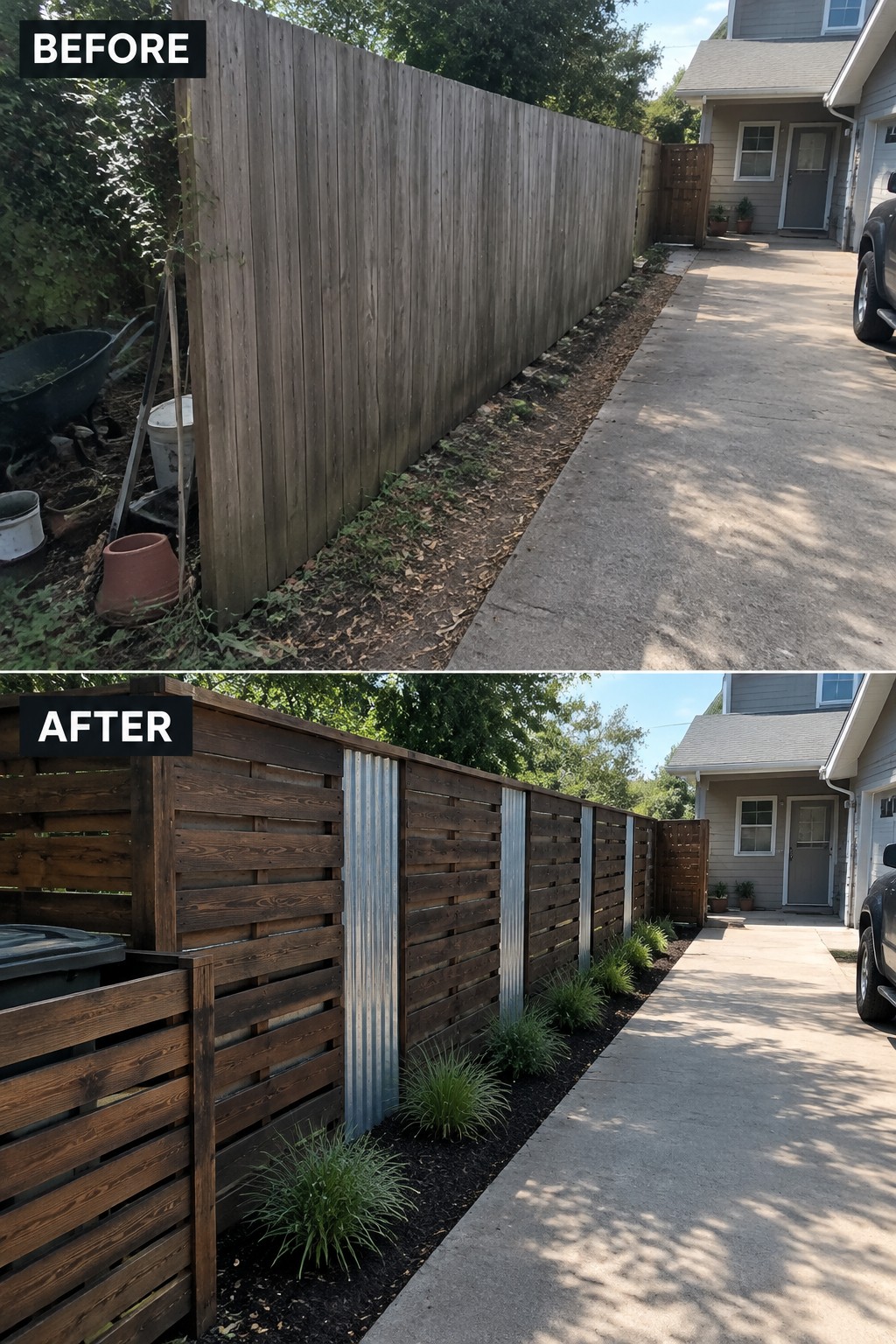
A solid, weathered fence can make a side yard feel neglected. Replacing it with horizontal pallet boards gives the boundary a more finished look while still providing privacy. Metal panels between sections add a simple change in texture.
This idea suits a narrow yard where the fence is the main feature. Use sturdy, weather-treated wood, and leave enough room along the edge for a tidy planting strip without narrowing the path.
Turn A Bare Patio Into An Outdoor Dining Area
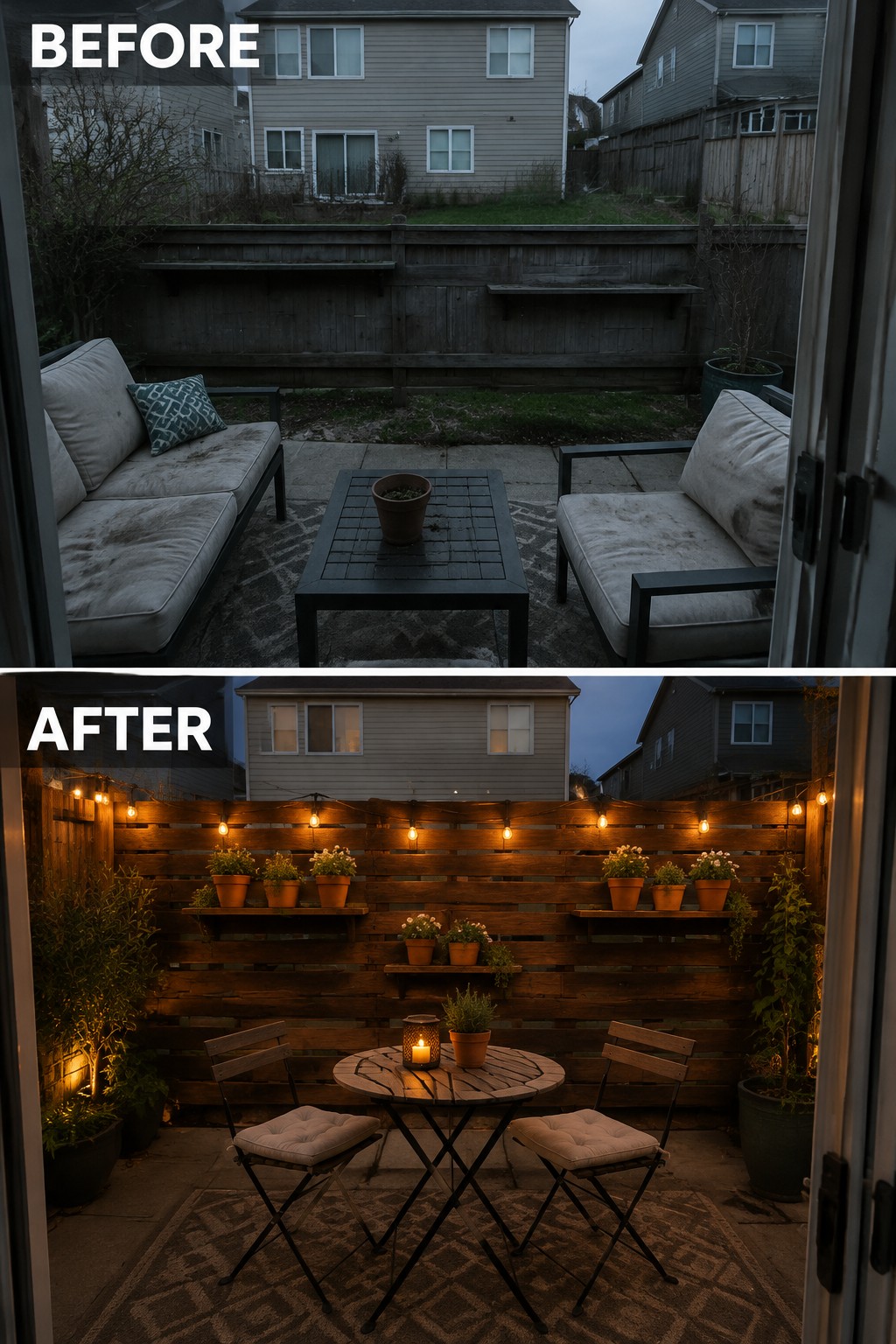
The patio feels more useful once it has a clear place to sit and eat. A rustic pallet fence gives the small yard a defined backdrop, while a compact table makes the space work for meals instead of leaving it as an empty stretch of paving.
This idea suits a small fenced patio where a full-size dining set would be too much. Use weather-treated pallet wood and keep the table and chairs small enough to leave a clear path through the space.
Turn A Bare Fence Into A Vertical Garden

A plain fence can become a useful planting area with pallet-style frames that hold succulents vertically. In this narrow garden bed, the wall-mounted planters bring the greenery up off the ground, leaving the bed below open and easier to maintain.
This idea works well along a fence where there is limited room for wide borders. Choose plants suited to the amount of sun the fence gets, and make sure the frames are secure and easy to water.
Give A Narrow Side Yard A Clear Path
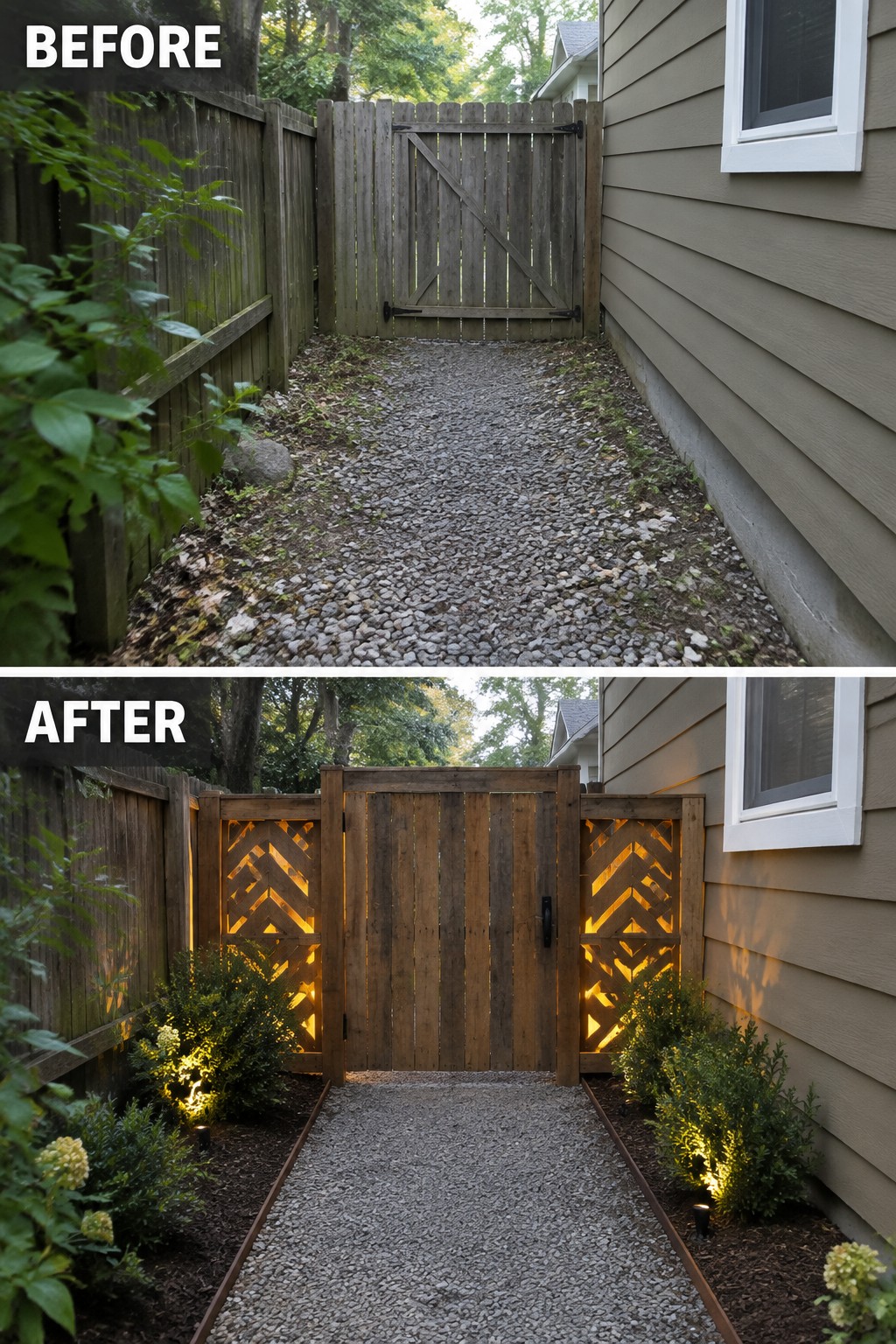
A narrow side yard can feel neglected when the path blends into the surrounding ground. Here, a tidy gravel walkway and a new wooden gate give the space a clear route through the yard.
For a similar area, edge the path so gravel stays in place and leave enough width to walk comfortably. Simple planting along the sides can finish the space without making a tight passage feel crowded.
Turn A Plain Fence Into A Play Space
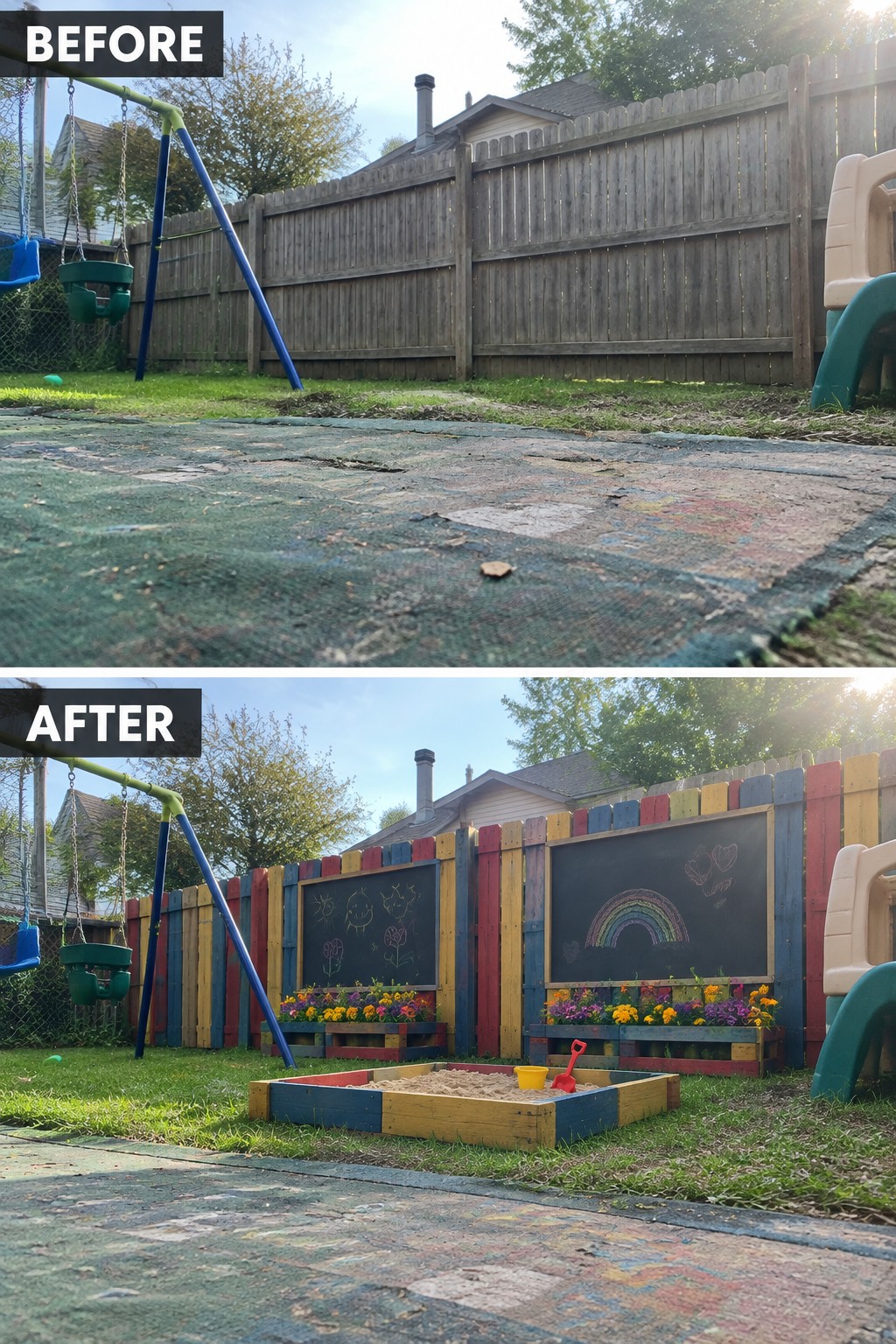
A blank backyard fence can do more than mark the edge of the yard. Here, colorful wooden boards and chalkboards turn it into a simple play area, giving children a place to draw while making the fence more useful.
You can adapt the idea to a small yard by adding a weather-resistant chalkboard panel to a sturdy fence and keeping the rest of the play area open. Check that the boards and panels are securely fixed, especially where children will be playing.
Use A Fresh Fence To Define The Garden
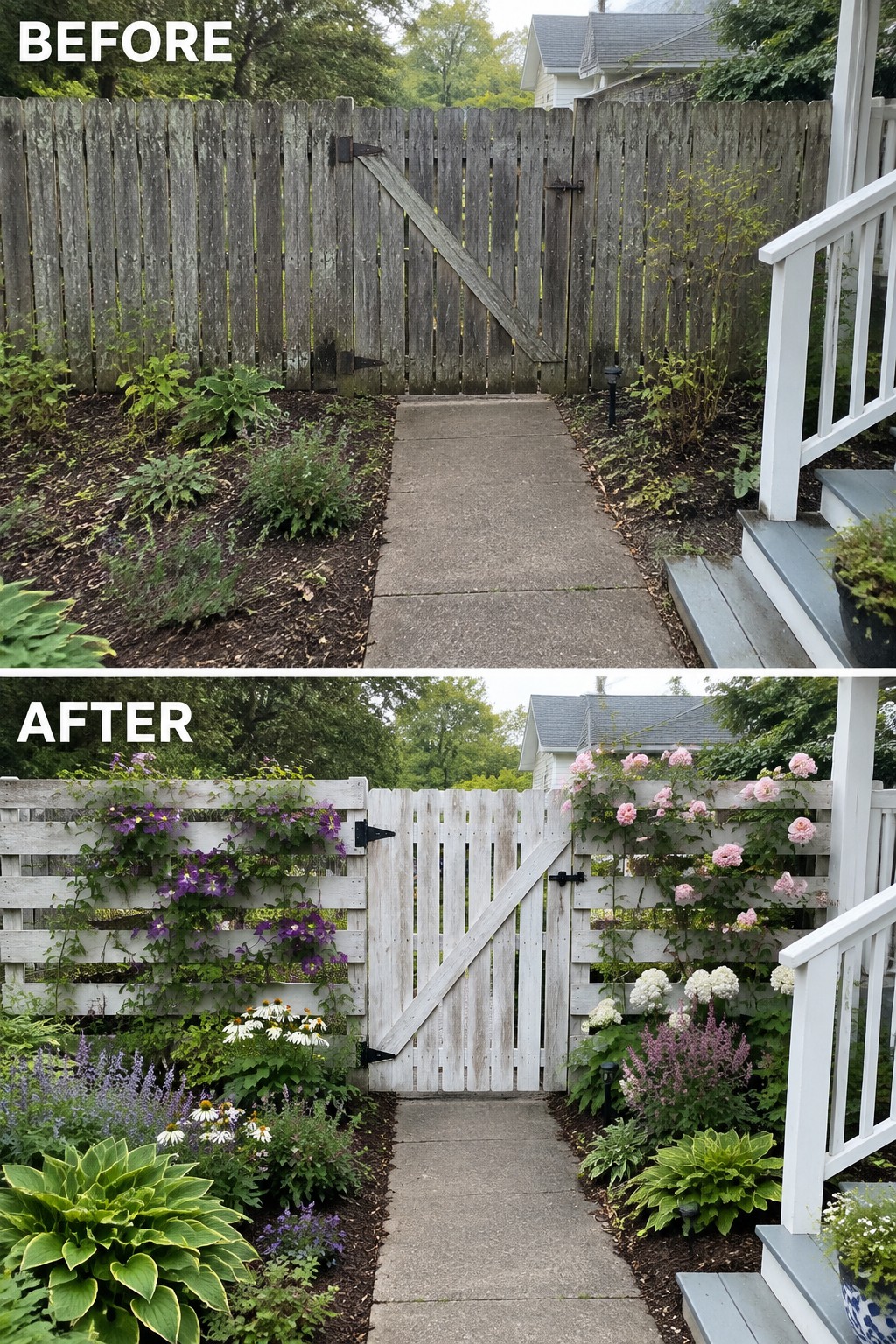
Replacing a weathered fence with a lighter wooden one gives this small garden a clear backdrop and makes the path feel more finished. The fence also supports climbing plants, so flowers can grow upward instead of taking over the walkway.
This idea works well along a narrow path or in a compact yard where planting space is limited. Keep the gate easy to open, and leave enough room beside the path to walk and tend the plants.
Make A Backyard Fence More Useful
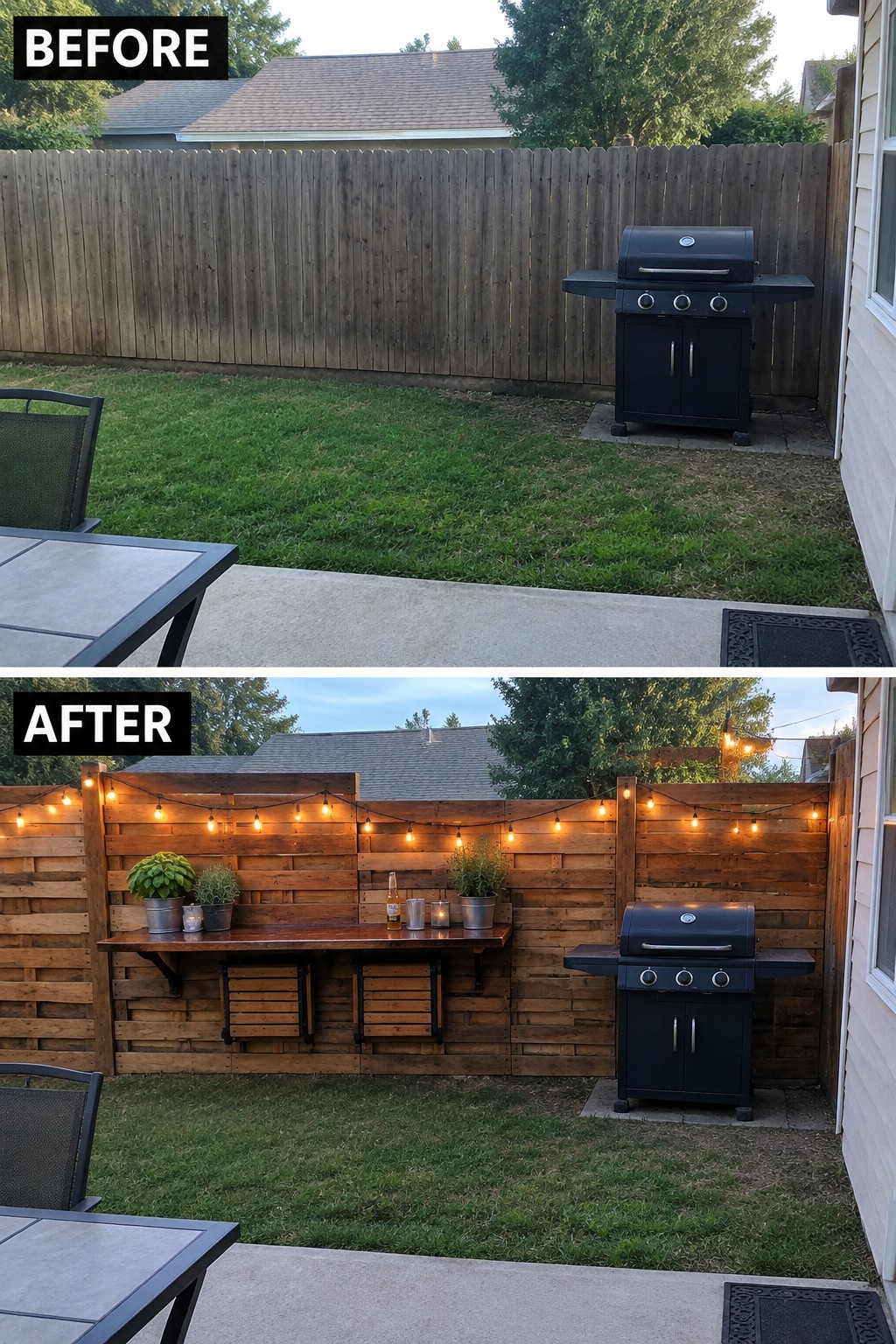
A plain fence can do more than mark the edge of a yard. Here, horizontal pallet boards turn it into a warmer backdrop, while a narrow shelf creates a handy spot for drinks and small pots.
This works well in a compact patio where there isn’t room for a separate serving table. Secure the boards and shelf properly, and leave enough space for people to move around the grill.
Replace A Low Rail With A Flower-Box Fence
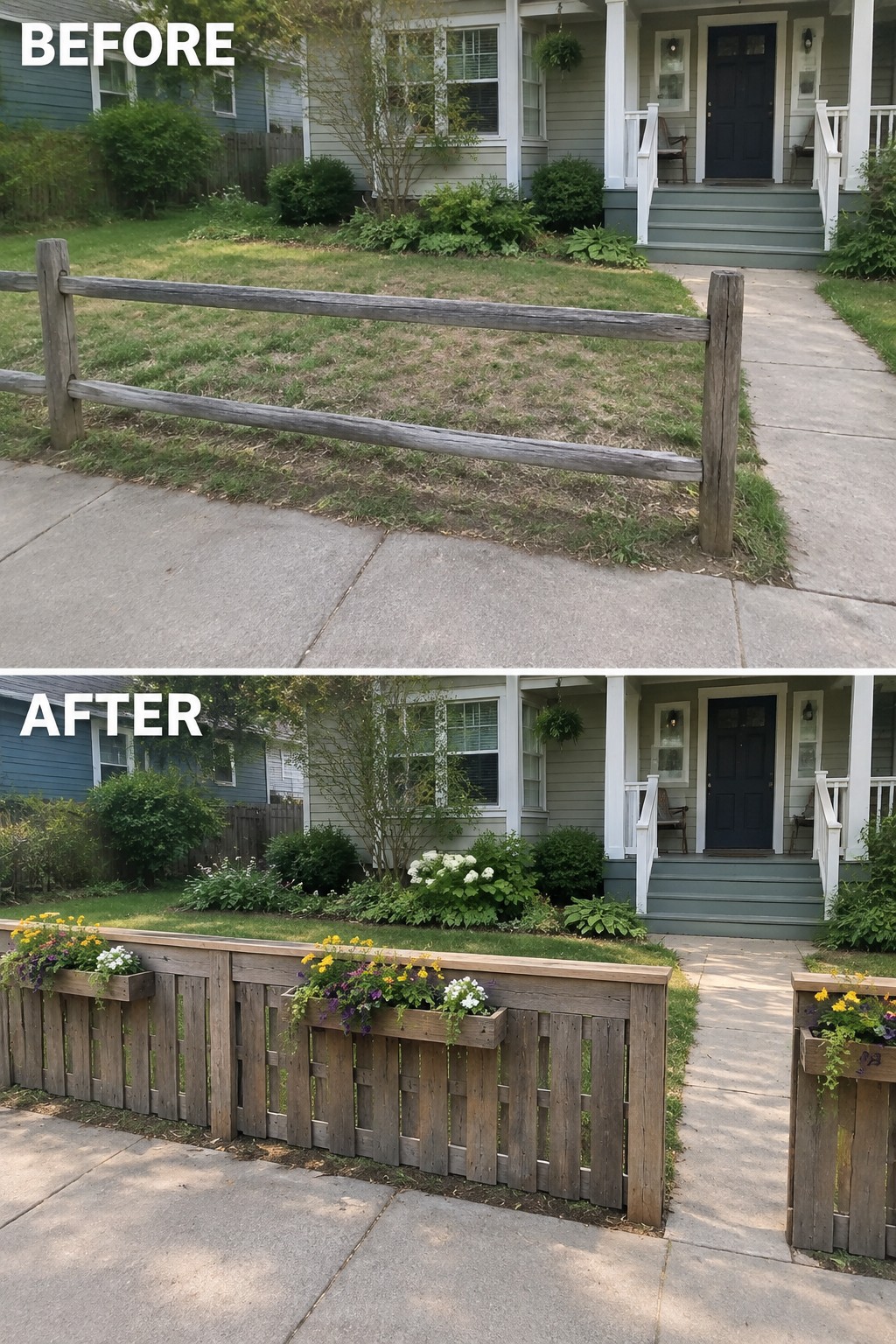
The low rail leaves the front garden feeling open and a little untidy. A taller rustic wooden fence gives the yard a clear edge, while flower boxes add color right where the fence meets the sidewalk.
This idea suits a small front garden where a full privacy fence would feel too closed off. Leave a gap for the walkway, and keep the fence low enough to preserve an open view of the house.
Turn A Plain Fence Into A Potting Station

A narrow side yard can feel like a leftover space when its tall fence is blank and the path is cluttered. Replacing the solid panels with rustic pallet boards opens up the fence and gives it a useful job: a simple shelf turns it into a place to keep pots and start seedlings.
This idea suits a side yard where there isn’t room for a full garden table. Secure the boards and shelf well, and keep the walkway clear so the space stays easy to use. A few containers are enough to get started.
Turn A Bare Backyard Into A Fire Pit Seating Area
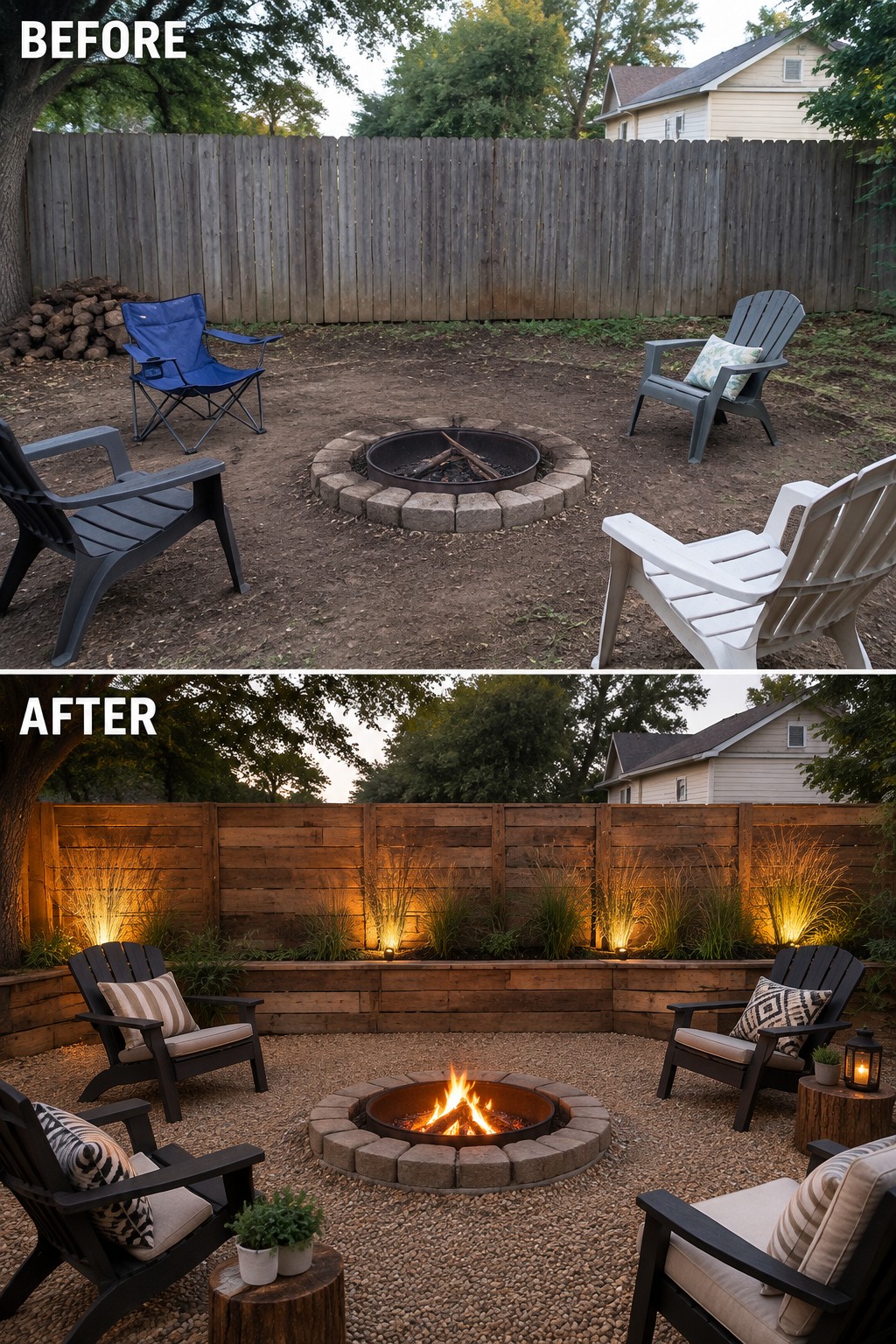
A fire pit gives an unused patch of yard a clear purpose. Here, the plain dirt area becomes a gravel seating space, and the rustic wood fence makes the spot feel more enclosed without changing the basic layout.
This idea works well in a small backyard where there is room for chairs and a safe path around the fire. Lay out the seating first, then choose a fire pit location that follows local safety rules and leaves enough space from the fence.
Build Terraced Garden Beds Into A Slope
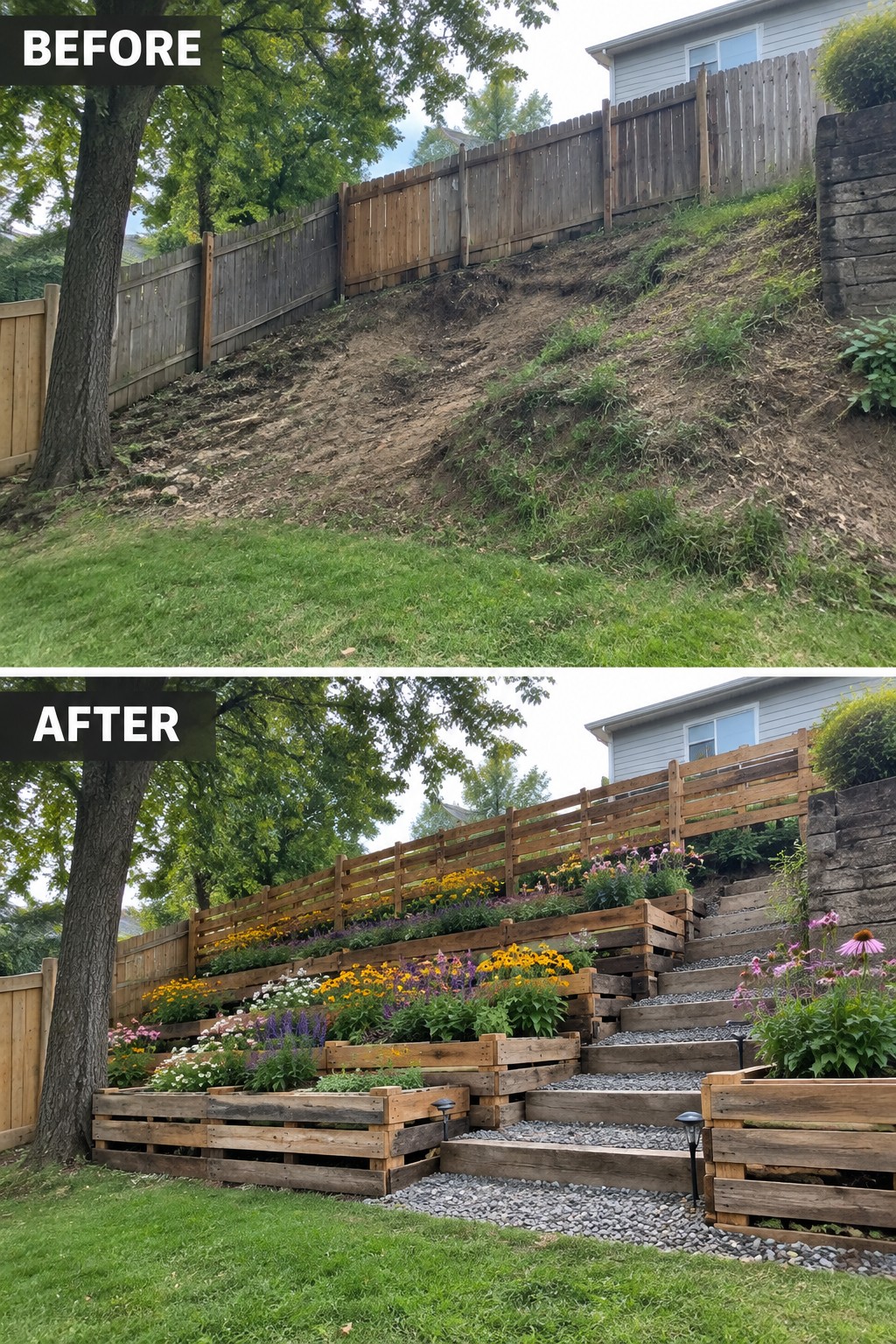
A steep, bare slope can be hard to plant and awkward to maintain. Tiered wooden beds turn it into usable garden space, while the stepped layout helps give the hillside a more defined shape.
This idea works well in sloped yards where a flat lawn or single bed is not practical. Use sturdy materials and plan for drainage and safe access between levels; a gravel path or steps can make tending the plants easier.
Build Raised Beds Along A Fence
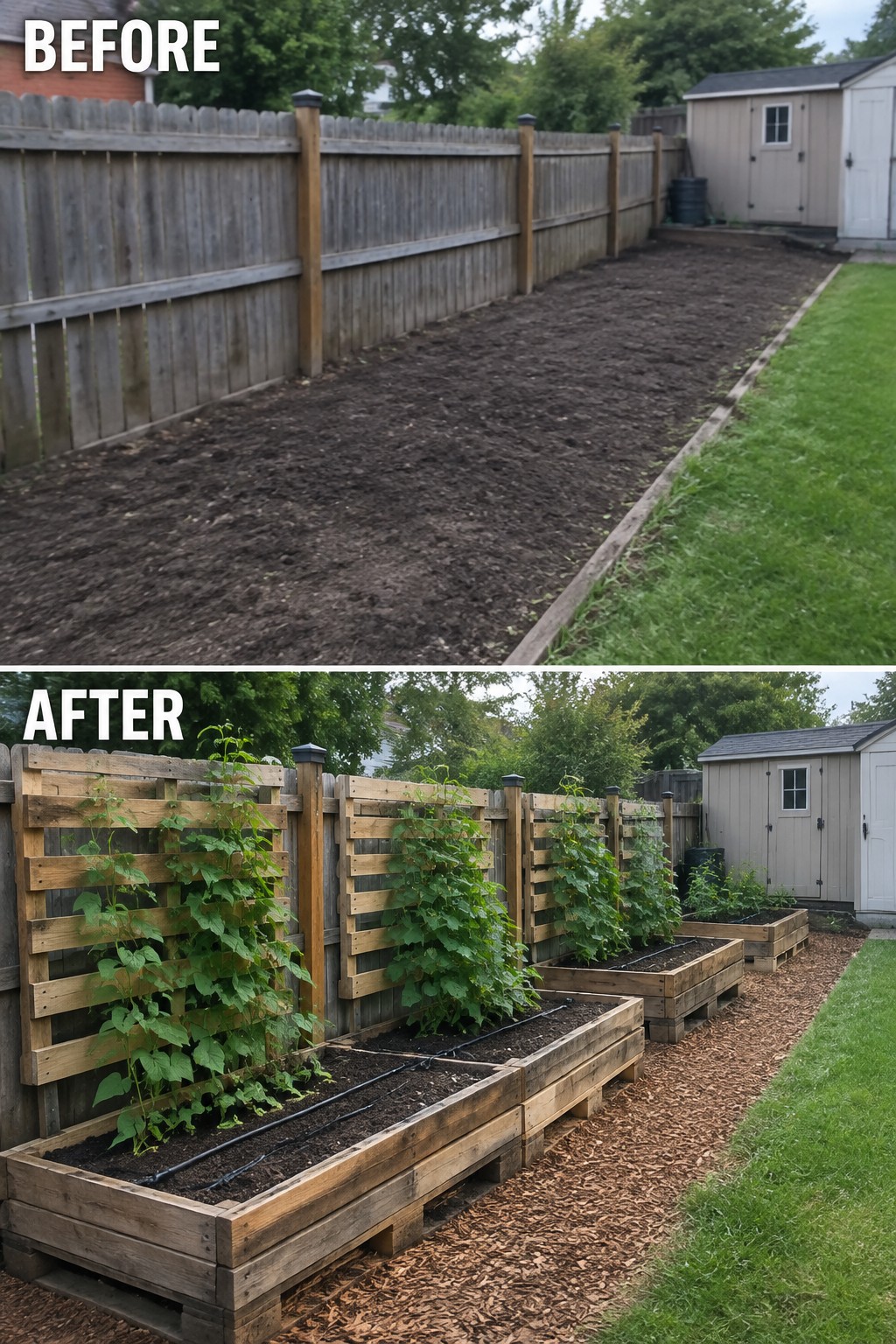
A bare strip of yard can become a productive garden by adding raised beds and using the fence as a place for climbing plants. Here, trellises attached to the fence give the vines room to grow upward, while the beds keep the planting area defined.
This idea works well in a narrow side yard where there isn’t much room to spread out. Leave enough space beside the beds for a comfortable path, and choose sturdy supports for plants that climb.
Use Planting To Define A Pondside Fence
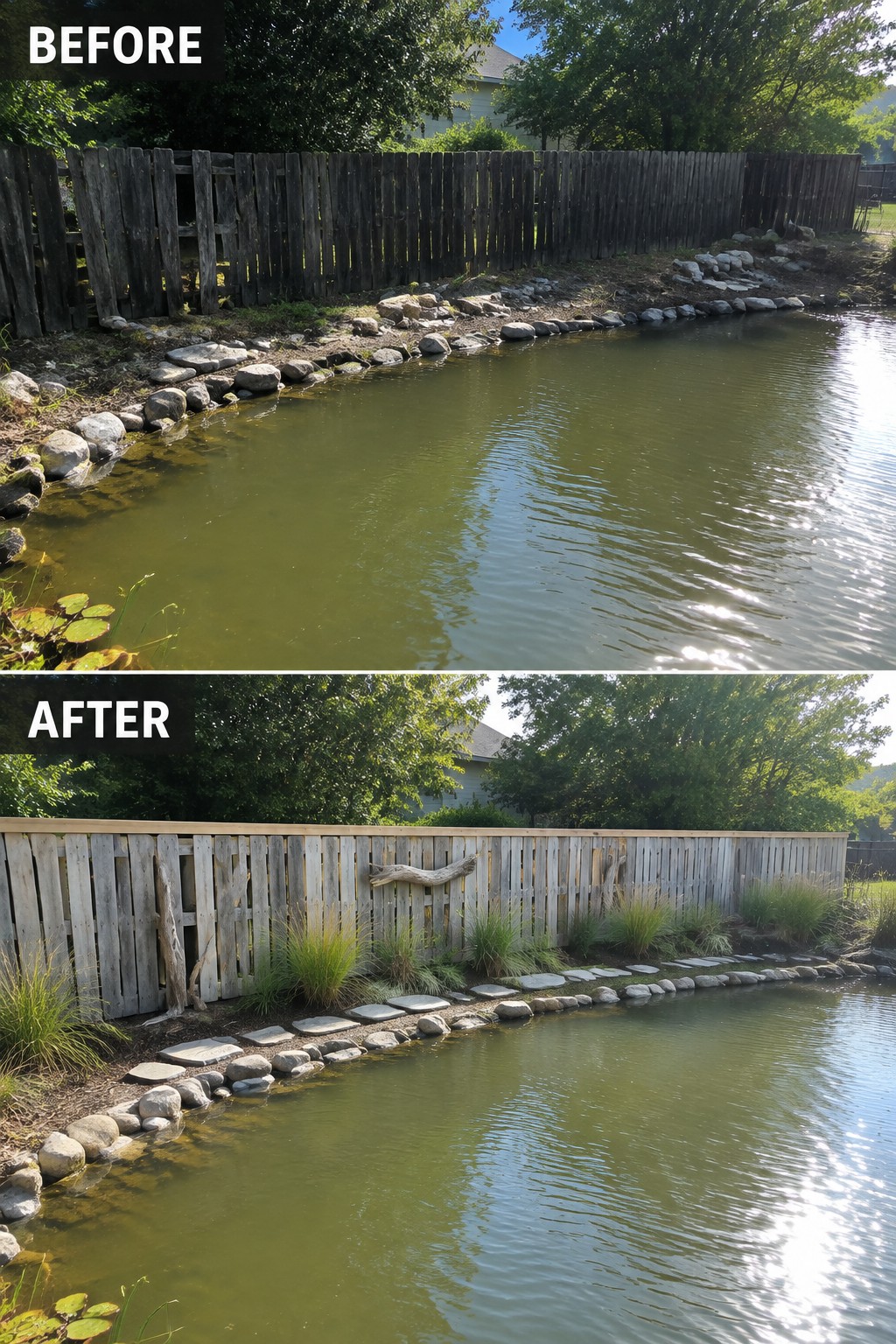
A simple planting border can make the edge of a pond feel planned instead of neglected. Here, grasses beside the fence and a tidier stone edge give the area a clearer shape without changing the pond itself.
For a similar yard, clear weeds and loose debris first, then group a few hardy plants along the fence. Leave room to reach the water and choose plants that suit damp conditions, so the border stays manageable.
Turn A Plain Fence Into An Outdoor Room
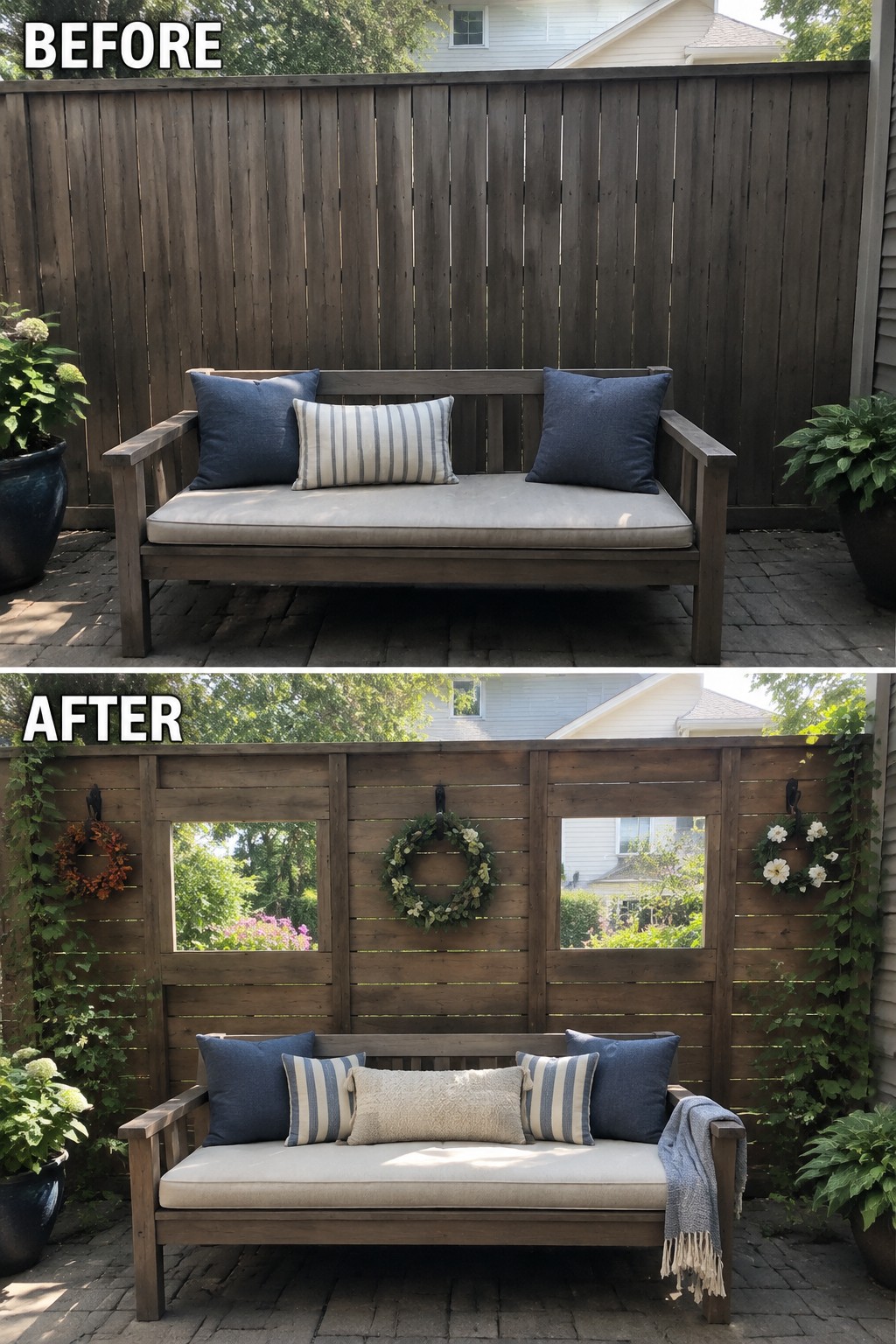
A tall, blank fence can make a patio feel closed in, even when there is room to sit. Adding framed openings and simple garden details gives the fence a purpose and makes the seating area feel more like an outdoor room.
Use this idea behind a bench or small patio seating area, and keep the openings at a height that lets in a view without giving up too much privacy. A few coordinated cushions help finish the spot, but leave enough space around the furniture to move comfortably.
Frequently Asked Questions
Q: How do I know if a pallet is safe to use for a garden fence?
A: Look for a clear “HT” stamp, which means the wood was heat-treated. Skip pallets marked “MB” or ones with oil stains, chemical smells, or lots of splintering.
Q: Do I need to seal pallet wood before putting up the fence?
A: A coat of outdoor wood sealer can help slow down weathering and reduce rot. Let the wood dry fully first, and reapply the sealer when the finish starts to wear.
Q: How can I keep a pallet fence from leaning?
A: Set sturdy posts in the ground and fasten each pallet securely to them. If the fence sits on soft or uneven ground, check that the posts are level before attaching the pallets.
Q: Can I use pallet wood for a fence around a vegetable garden?
A: Yes, but choose clean, untreated-looking pallets and keep the wood from touching the plants themselves. A small gap between the fence and your vegetables also makes watering and harvesting easier.
