


A lawn and flower bed can look a little untidy when their edges blur together, even if both are well cared for.
I find that a simple fence can give the yard clearer structure without making it feel closed off.
The right height and material can keep grass from creeping into planting areas while adding a bit of character along the garden.
Small changes to layout and edging often make an outdoor space feel more considered, and it is satisfying to see the difference take shape.
I’d save a few of these ideas to adapt to the size, style, and needs of your own yard.
Add A Defined Border To A Tired Lawn

A clear garden-bed edge can make a patchy yard look more cared for without changing the whole layout. Here, a curved brick border separates the lawn from a mulched bed, giving the planting area a neat shape.
This works well along a house wall or around a tree where grass and flower beds tend to run together. Keep the border easy to mow around, then use a simple layer of mulch to make the plants stand out.
Add A Fence To Define The Flower Bed
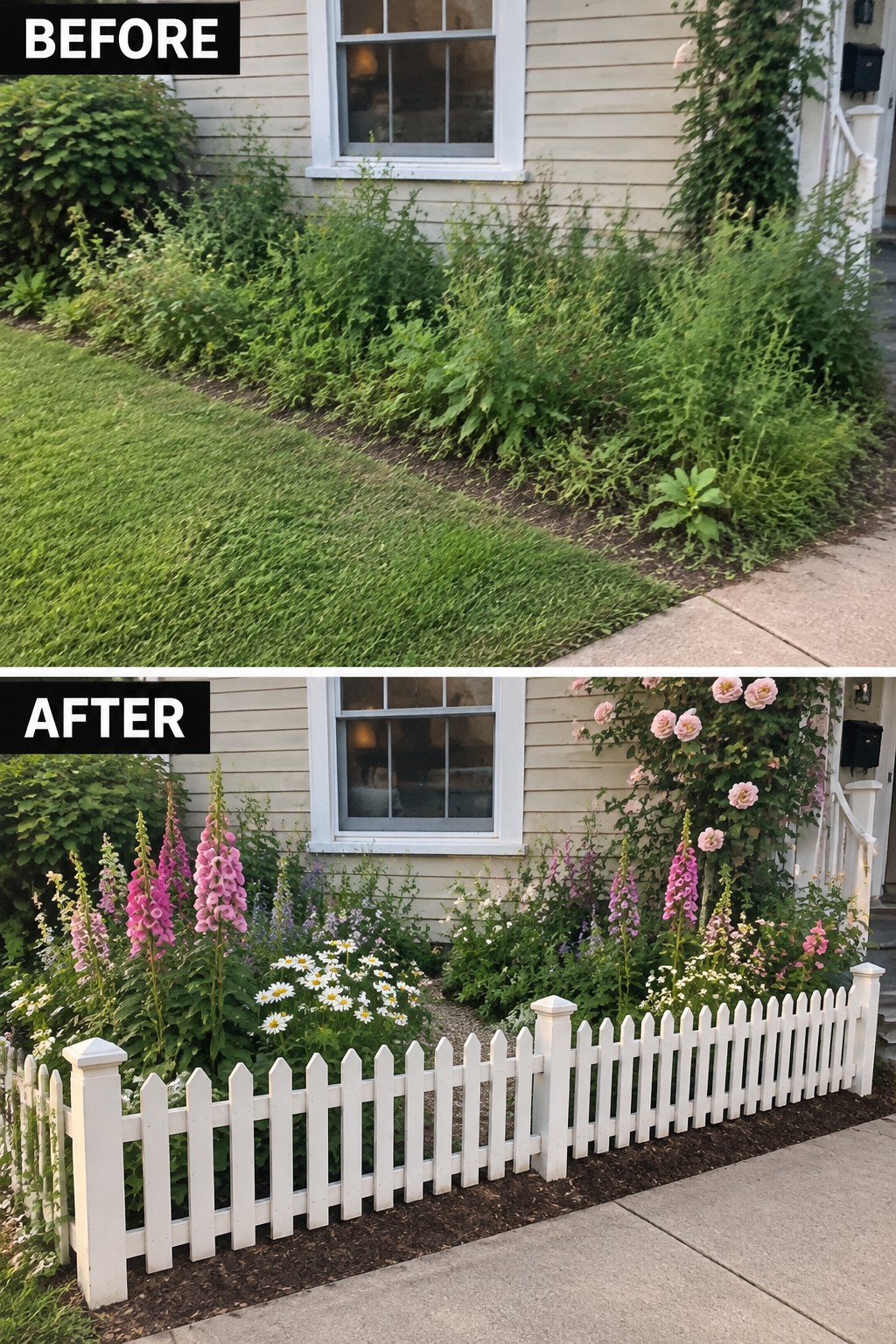
A low picket fence gives an overgrown planting area a clear edge, separating flowers from the lawn and sidewalk. In the updated garden, the fence helps the bed look planned without hiding the plants.
This idea works well when a flower bed borders a walkway or a patch of grass that tends to creep into the planting area. Choose a fence low enough to keep flowers visible, and leave a gate or opening where you need easy access.
Create A Defined Garden Bed Along The Lawn

A narrow strip of bare soil can make the edge of a lawn look unfinished. Here, a raised metal border turns that strip into a clear planting bed, giving the grass a cleaner edge and keeping the garden separate from the driveway.
This idea works well beside a lawn, path, or driveway where plants need a defined space. Keep the bed wide enough for the plants to grow, and leave room to trim the grass along the border.
Add Structure To An Overgrown Garden

A clear garden-bed edge can make an unruly yard feel planned. Here, the tangled growth was replaced with a tidy planted border held in place by a low stone wall, giving the lawn a clean edge and the flowers a defined area.
This idea works well along a fence or anywhere a lawn meets a planting bed. Clear weeds first, then choose a border material that suits the yard and keep the bed wide enough for plants to grow without spilling onto the grass.
Build A Raised Border Along The Lawn

A low stone-filled border gives a loose planting strip a clear edge and helps separate the lawn from the flower bed. In the finished yard, the defined bed looks more intentional without changing the basic layout.
This approach works well along a fence or anywhere grass tends to creep into a garden. Keep the border low enough to suit the yard, and leave enough room behind it for plants to grow without spilling over the edge.
Use A Low Fence To Separate The Lawn From The Garden
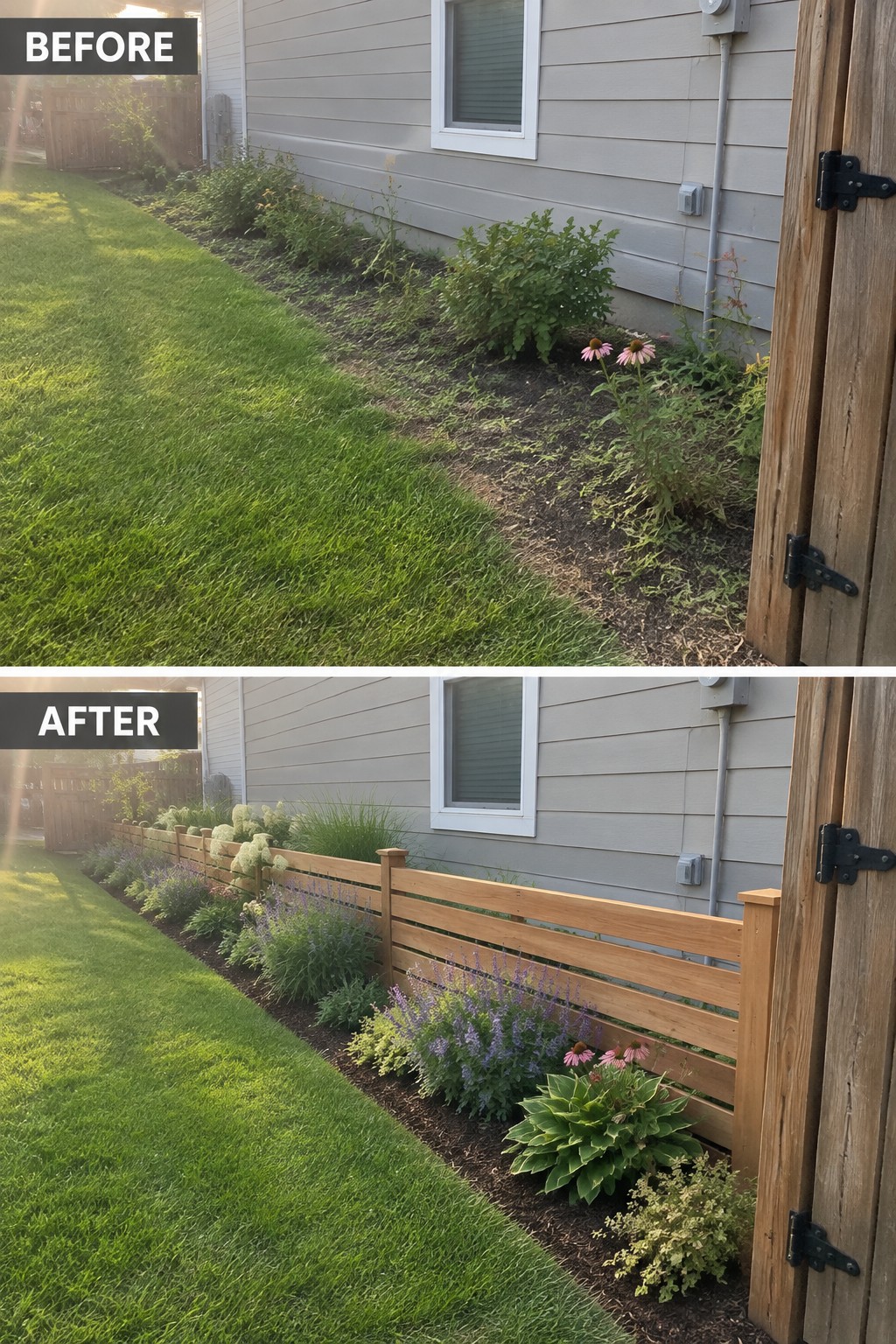
A low wooden fence gives a loose planting strip a clear edge and keeps the lawn visually separate from the flower bed. In the finished garden, the fence makes the border look more intentional without blocking the plants.
This idea works well along a house where the lawn meets a narrow bed. Keep the fence low enough to see the flowers, and leave room for plants to grow without spilling into the grass.
Create A Wildflower Border Along The Fence

The bare strip beside the fence becomes a clear flower bed once it has a defined edge. A row of large stones separates the planting from the lawn, while the flowers make the fence line feel like part of the garden rather than a neglected edge.
For a similar look, clear the ground and set an edging line before planting. This works well along long fence runs, where a border can follow the yard’s shape. Leave enough room for plants to fill in without spilling over the lawn.
Separate The Lawn From A Narrow Garden Bed
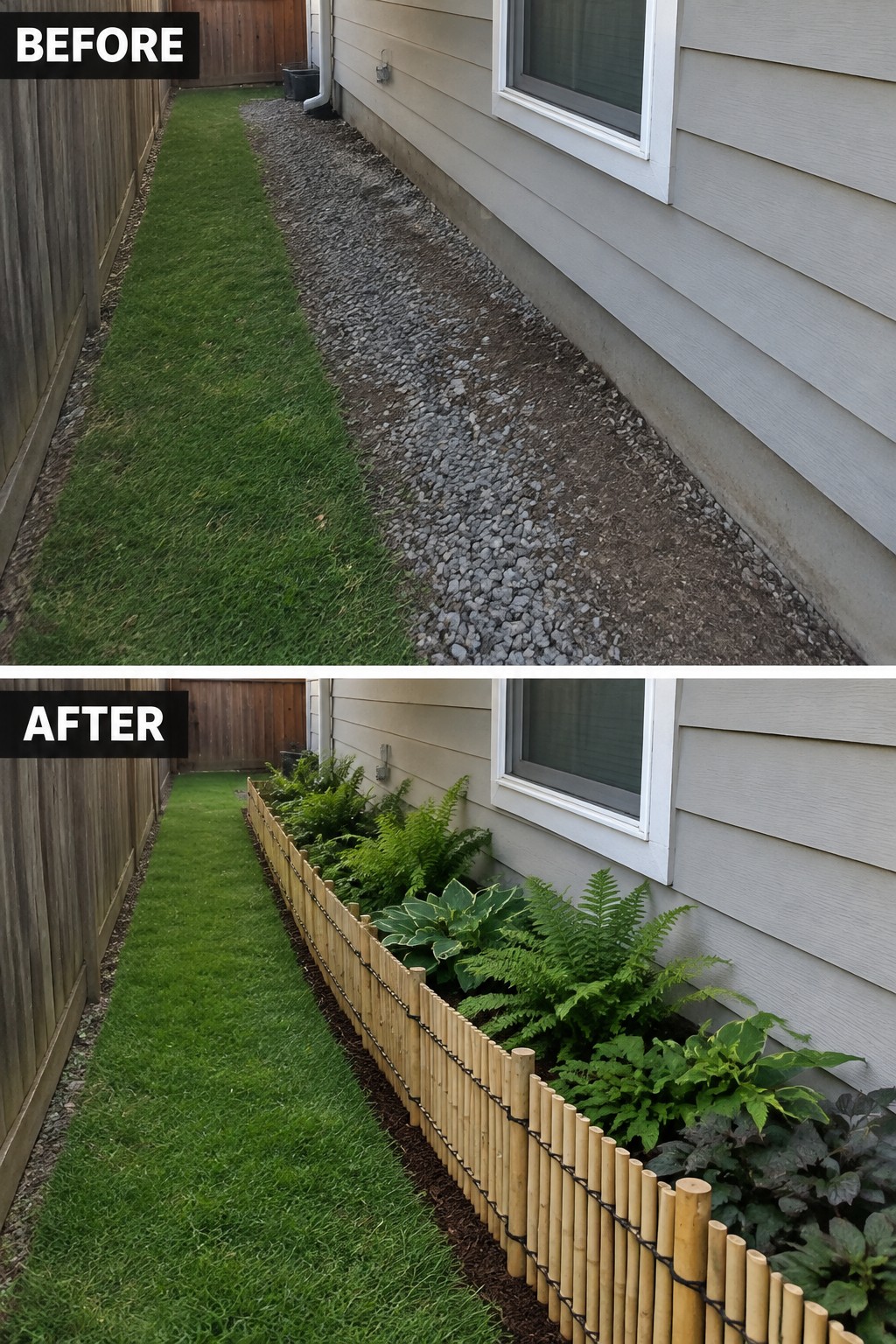
A low border can give a plain strip beside the house a clear purpose. Here, the loose gravel area becomes a planted bed, while a short bamboo fence keeps its edge separate from the lawn.
This idea works well in narrow side yards where there is little room for a larger garden feature. Use a border that fits the space, and leave enough room to walk and maintain the plants without crowding the path.
Use A Low Fence To Separate Lawn And Flower Beds

A low garden fence gives a loose flower bed a clear edge and helps separate it from the lawn. Here, the new black border makes the planting area look more defined without taking attention away from the flowers.
This works well along a lawn that meets an established garden bed. Choose a fence low enough to keep the plants visible, and follow the curve of the bed so the edge looks natural rather than crowded.
Build Terraced Beds Into A Sloped Yard

Timber retaining walls turn a bare, eroding slope into defined planting beds. The tiers make the hillside easier to plant and give the lawn a cleaner edge.
This approach works well on uneven ground where a single flat bed would be difficult to maintain. Keep the wall height suited to the slope, and leave enough room between tiers for plants to grow without spilling onto the lawn.
Add A Low Trellis To Define The Flower Bed

A low trellis makes a clear boundary between the lawn and a narrow planting bed without blocking the existing fence. Here, adding a cream-colored trellis turned a bare strip of soil into a defined garden border, with climbing flowers filling in the space.
This idea works well along a backyard fence when you want the flower bed to feel separate from the grass but still easy to see across. Keep the barrier low enough to suit the yard, and leave room behind it for plants to grow.
Add A Trellis Fence To Support Garden Flowers
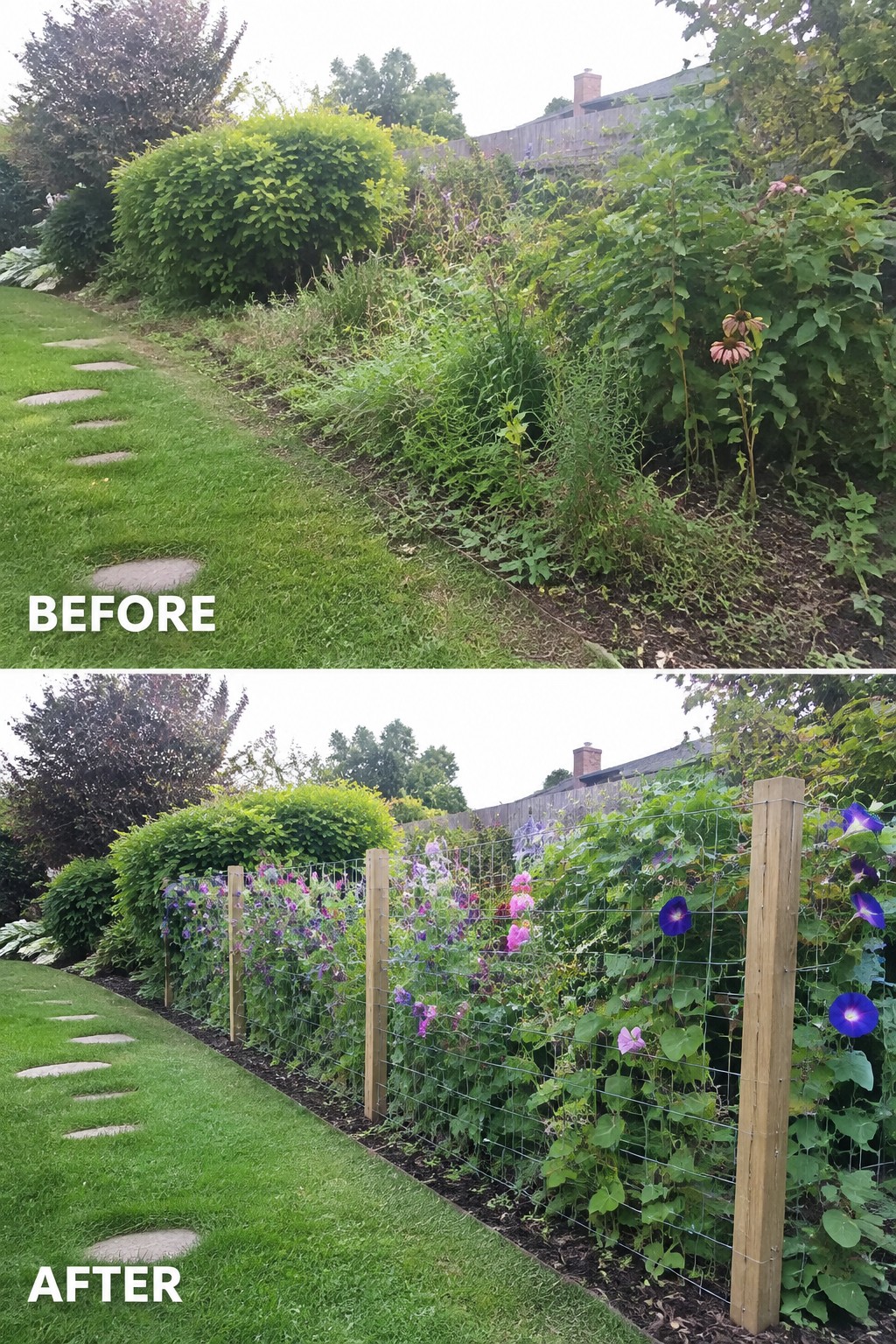
A simple wire fence can give a sprawling flower bed some structure while helping climbing plants grow upright. Here, the open bed becomes a tidier garden border, with colorful flowering vines filling the space behind the fence.
This works well along a lawn where you want a clear edge without hiding the plants. Set sturdy posts along the bed and choose a mesh size that suits the plants you plan to grow. Leave enough room to reach through for pruning and picking flowers.
Use A Low Border To Define The Flower Bed

A low wooden border gives a scruffy lawn edge a clear shape and keeps the flower bed separate from the grass. Here, the open strip becomes a neat planting area with mulch and colorful flowers, while the lawn remains easy to see and maintain.
This works well along a front walk or beside a house where grass tends to creep into the planting area. Keep the border low enough to see the flowers, and leave enough room behind it for plants to grow without spilling onto the path.
Use A Rope Border To Define The Flower Bed

A simple rope fence gives this garden bed a clear edge without blocking the plants or lawn. In the original yard, the bed had no strong boundary; adding a low rope border makes the planting feel more intentional and helps separate it from the grass.
Use sturdy posts and outdoor-rated rope, keeping the barrier low so it marks the edge without getting in the way of mowing or garden care. This works well along a plain fence where you want a little structure but still want the plants to remain the main feature.
Give A Messy Lawn A Clean Garden Edge

A worn lawn can look much tidier when the planting bed has a clear, curved edge. Here, a low paver border separates the grass from the bed, making the yard feel planned without adding a tall fence.
For a similar look, mark out a gentle curve and use edging that sits low enough to keep the garden open. Keep the bed narrow enough to maintain, and leave the path clear so it’s easy to move around.
Edge A Small Garden Bed With A Low Border

A bare, uneven patch beside the lawn can look much tidier once it has a clear edge. Here, a low concrete border gives the planting bed a defined shape and keeps the gravel and plants separate from the grass.
This works well in a narrow side yard where a full fence would take up too much room. Mark out a gentle curve, keep the border low, and leave enough space for the plants to grow without spilling onto the lawn.
Build A Raised Border Along The Fence

A raised gabion border gives a loose, overgrown garden bed a clear edge beside the lawn. Here, wire baskets filled with stone and topped with timber turn the planting strip into a defined feature without taking up much lawn space.
This idea works well along a fence where you want to keep flowers and herbs contained and easier to maintain. Keep the border low enough to reach the plants comfortably, and leave a clear strip of lawn for mowing.
Add A Mulched Border Along The Fence
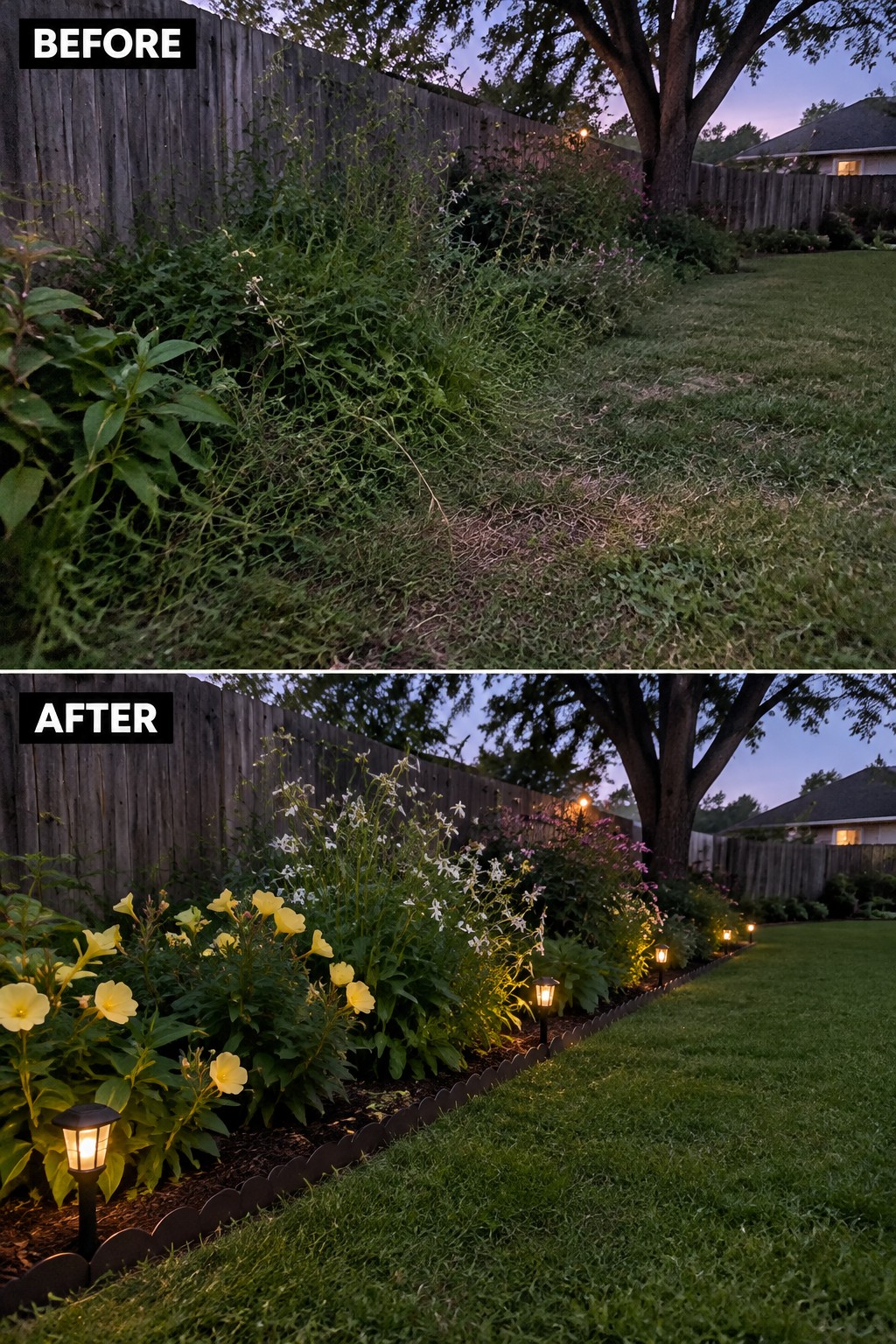
A clear edge can make an overgrown fence line feel like a planned flower bed. Here, the plants are gathered into a mulched strip beside the lawn, replacing the tangled growth that spread into the grass.
For a similar look, clear the area first, then define the bed with a low border and keep the mulch within its edges. Leave enough room for plants to grow without spilling onto the lawn, especially along a narrow fence line.
Build A Low Brick Border Along The Garden Bed

A low brick border gives a planting bed a clear edge and keeps it separate from the lawn. Here, the loose bed was replaced with a defined brick edge, making the garden look more orderly without taking much space from the grass.
This idea works well beside a walkway or along a narrow side yard. Keep the border low so it does not block the view of the plants, and leave enough room for the path and lawn to stay easy to use.
Use A Low Hedge To Define The Flower Bed

A low hedge gives a loose flower bed a clear edge and keeps it visually separate from the lawn. Here, the untidy planting area becomes more organized with a clipped green border and a row of spring flowers.
This idea works well along a front lawn where you want a tidy boundary without putting up a fence. Choose a compact hedge that suits your climate, and leave enough room for it to grow without narrowing the lawn or blocking access to the plants.
Separate The Lawn From A Flower Border

A low picket fence gives this flower bed a clear edge beside the lawn. In the original yard, the grass ran right up to the path with no defined planting area; the new border makes the flowers feel like a planned part of the garden rather than a patch of lawn.
This works well along a path or at the edge of a broad lawn, especially when you want a flower bed to stay distinct without blocking the view. Keep the fence low, and leave enough room for plants to grow without spilling onto the path.
Define The Lawn With Raised Garden Beds

A row of raised metal planters gives this patchy lawn a clear edge and makes the yard look more planned. The defined border also keeps the garden area separate from the grass, so each part is easier to maintain.
This idea works well along a house or fence where you want planting without letting it spread across the lawn. Keep the beds low enough to preserve the view, and leave room to mow along the edge.
Add Raised Planters Along The Fence

A bare strip of lawn can be hard to keep tidy, especially where it meets a fence. Raised wooden planters filled with flowers give that edge a clear shape, while a mulch bed below helps separate the planting from the grass.
This works well in a small backyard where you want flowers without giving up much lawn. Keep the planters low enough to leave the fence visible, and leave room to mow and move along the border.
Frequently Asked Questions
Q: How tall should a fence be between a lawn and a flower bed?
A: For simple edging, a low fence around 6 to 12 inches tall is usually enough to mark the boundary without hiding your flowers. If you’re trying to keep pets or kids out, choose a taller, sturdier barrier that suits the job.
Q: What’s an easy fence option for a curved flower bed?
A: Look for flexible edging or short sections of picket fencing that can follow the curve. Set the pieces close together so the line looks smooth rather than choppy.
Q: How do I stop grass from growing under the fence?
A: Clear a narrow strip along the fence and add a layer of mulch or a neat edging strip to block runners. Leave a little space around wooden posts so soil and mulch don’t stay pressed against the wood.
Q: Can I put a fence around a flower bed without making it feel closed off?
A: Yes. A low, open design, such as wire panels or spaced pickets, defines the bed while keeping the flowers visible. Choose a height that frames the planting instead of competing with it.
