

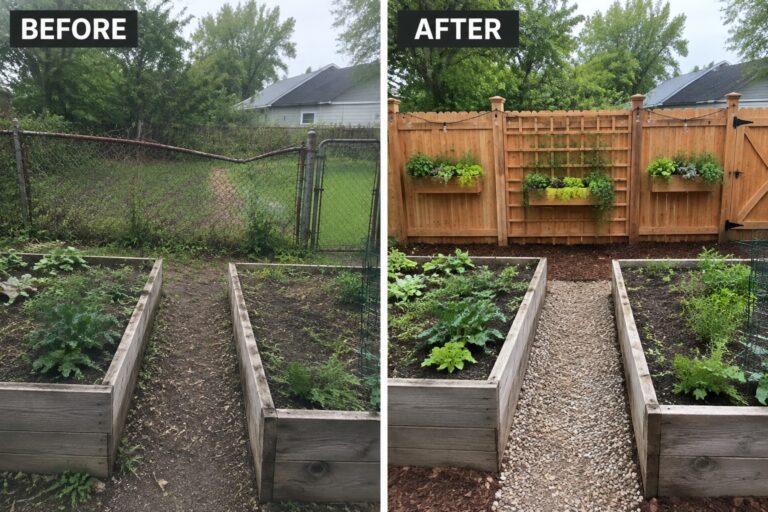
A raised vegetable bed can look unfinished when loose soil, exposed boards, and a lack of clear boundaries make the garden feel messy.
I find that a well-chosen fence can bring order to the plot while helping keep pets, pests, and wandering feet away from the plants.
Simple changes to the height, material, or layout can also make beds easier to reach and give the whole yard a more cared-for look.
The difference can be satisfying without requiring a major project.
I’d save the designs that suit your space and adapt their details to your beds.
Add A Privacy Fence Behind Raised Beds
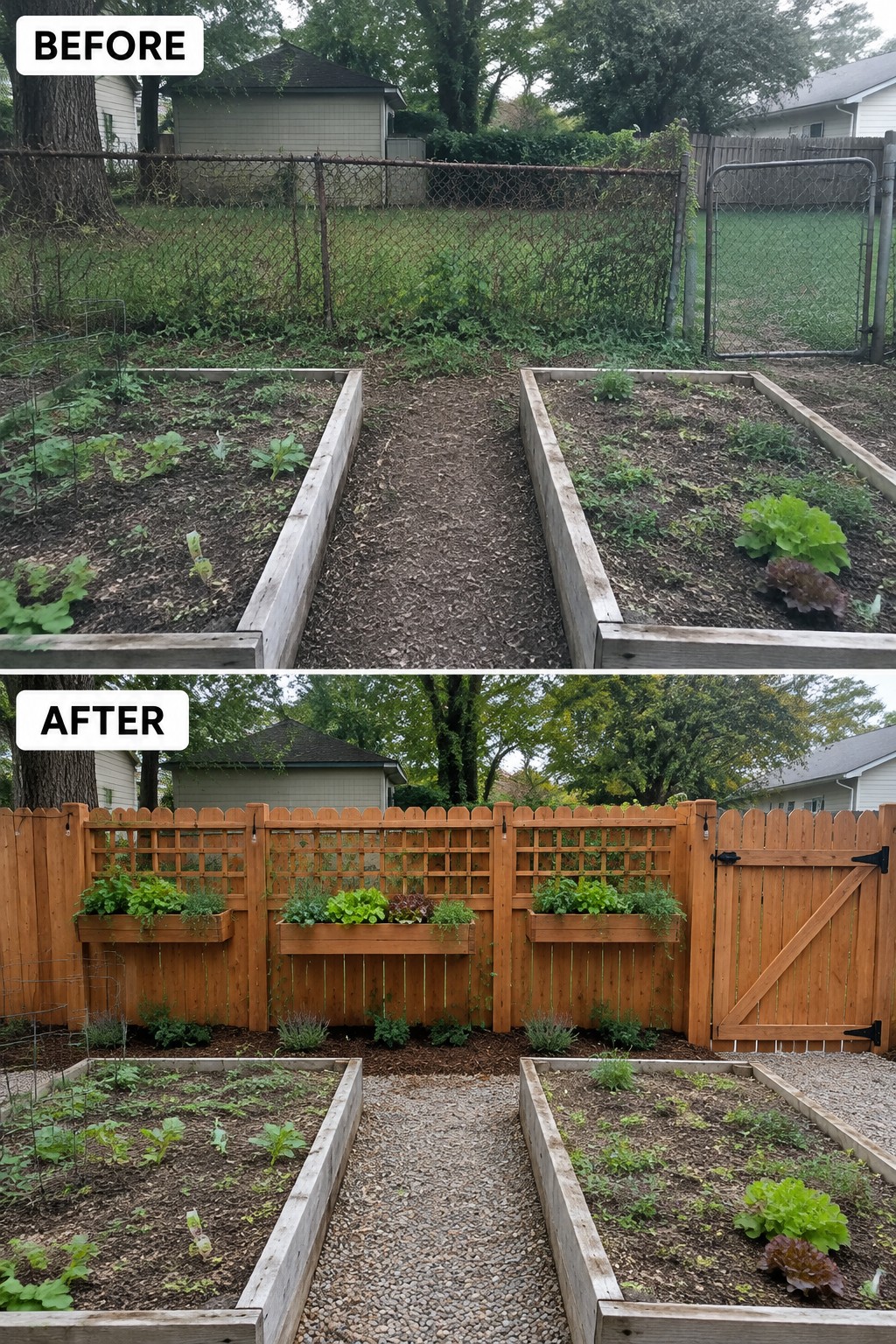
Replacing the chain-link boundary with a wooden fence gives the vegetable plot a clearer, more private edge. The built-in planter boxes make use of that fence without taking space away from the raised beds.
This idea works well in a small backyard where the garden needs a defined backdrop. Choose durable outdoor wood, and leave enough room between the beds and fence to reach plants and move a wheelbarrow through.
Add A Fence To Define Raised Garden Beds

A simple picket fence gives raised vegetable plots a clear boundary and makes the garden feel more organized. Here, it replaces a tall weathered fence, while the beds and paths remain in place.
This idea works well when you want to define a growing area without blocking all the light. Choose a fence height that suits your privacy needs, and leave room for gates or easy access to the beds.
Add Structure To Raised Garden Beds

A simple fence can make a vegetable plot feel more orderly and easier to manage. Here, the loose orange mesh is replaced with sturdier woven edging around the beds, giving the growing area a clearer boundary.
This idea works well in allotments or backyards where beds sit close together. Choose a low, durable material that defines the edges without blocking access to the plants, and leave enough room to walk between beds.
Give Raised Beds A Clear Garden Path

Replacing the overgrown, uneven walkway with gravel and stepping stones makes the vegetable beds easier to reach and gives the garden a more orderly layout. The new gate also makes the garden enclosure feel like a deliberate part of the space.
For a similar setup, keep the path wide enough to carry a basket or wheelbarrow, and leave room to tend the beds without stepping on the soil. Gravel is a practical choice for filling the walkway, but add a firm edge to help keep it in place.
Enclose Raised Beds With A Practical Garden Fence
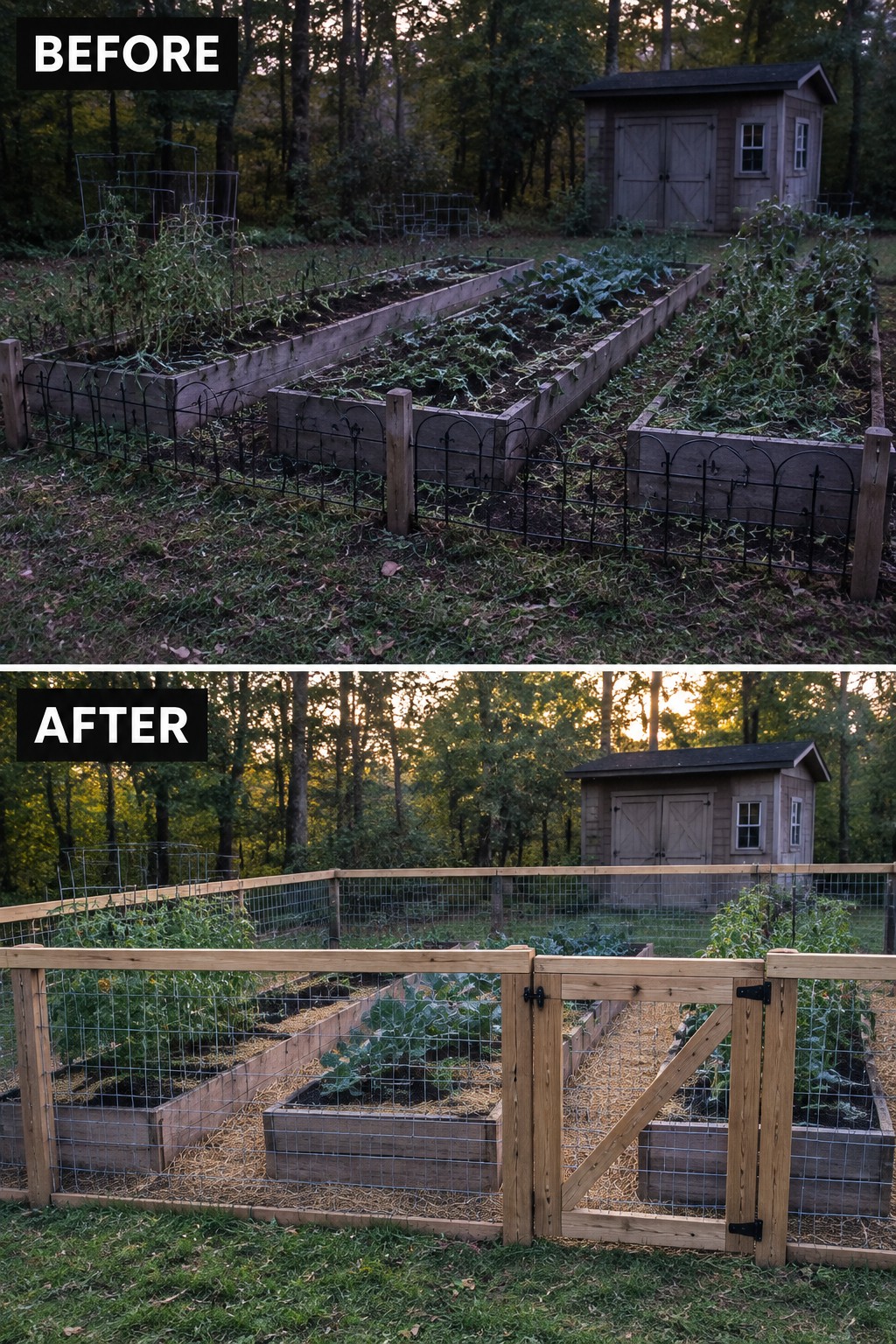
A simple fence can make a vegetable plot feel more organized while helping keep plants protected. Here, a wood frame with wire mesh replaces low decorative edging, enclosing the raised beds without blocking the view.
For a similar setup, keep the mesh sturdy and the gate wide enough to carry tools or a harvest basket through comfortably. It works well around several beds, as long as there is still room to reach the plants and move along the paths.
Turn A Plain Fence Into A Vertical Garden
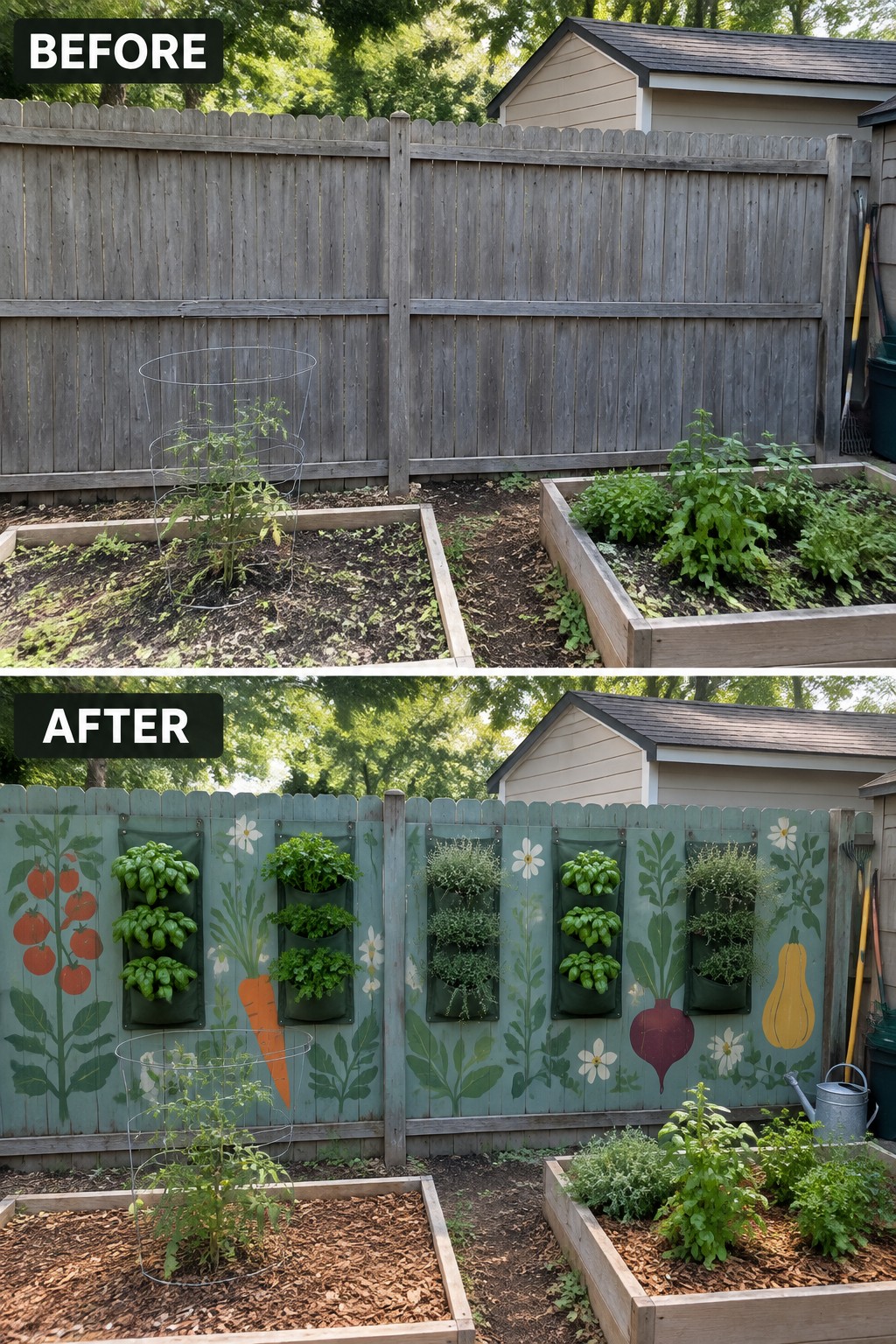
A bare fence can become useful growing space instead of just a backdrop. Here, painted vegetable and flower designs give the fence color, while wall-mounted pockets hold herbs and free up room in the raised beds.
This idea suits a small garden where ground space is limited. Choose plants that fit the pockets and can be watered easily, and leave enough open fence to reach the beds and tend the plants.
Add A Garden Gate To Frame The Path

Replacing the weathered pallet barriers with a taller fence and a simple arbor gives the raised beds a clear entrance. The stepping-stone path now feels like a planned route through the garden, rather than a bare strip between plots.
This idea works well when you want to mark off a vegetable garden without blocking access to the beds. Keep the path wide enough to carry tools or a harvest basket, and make sure the gate opening is easy to use.
Replace Lattice With A Practical Garden Fence
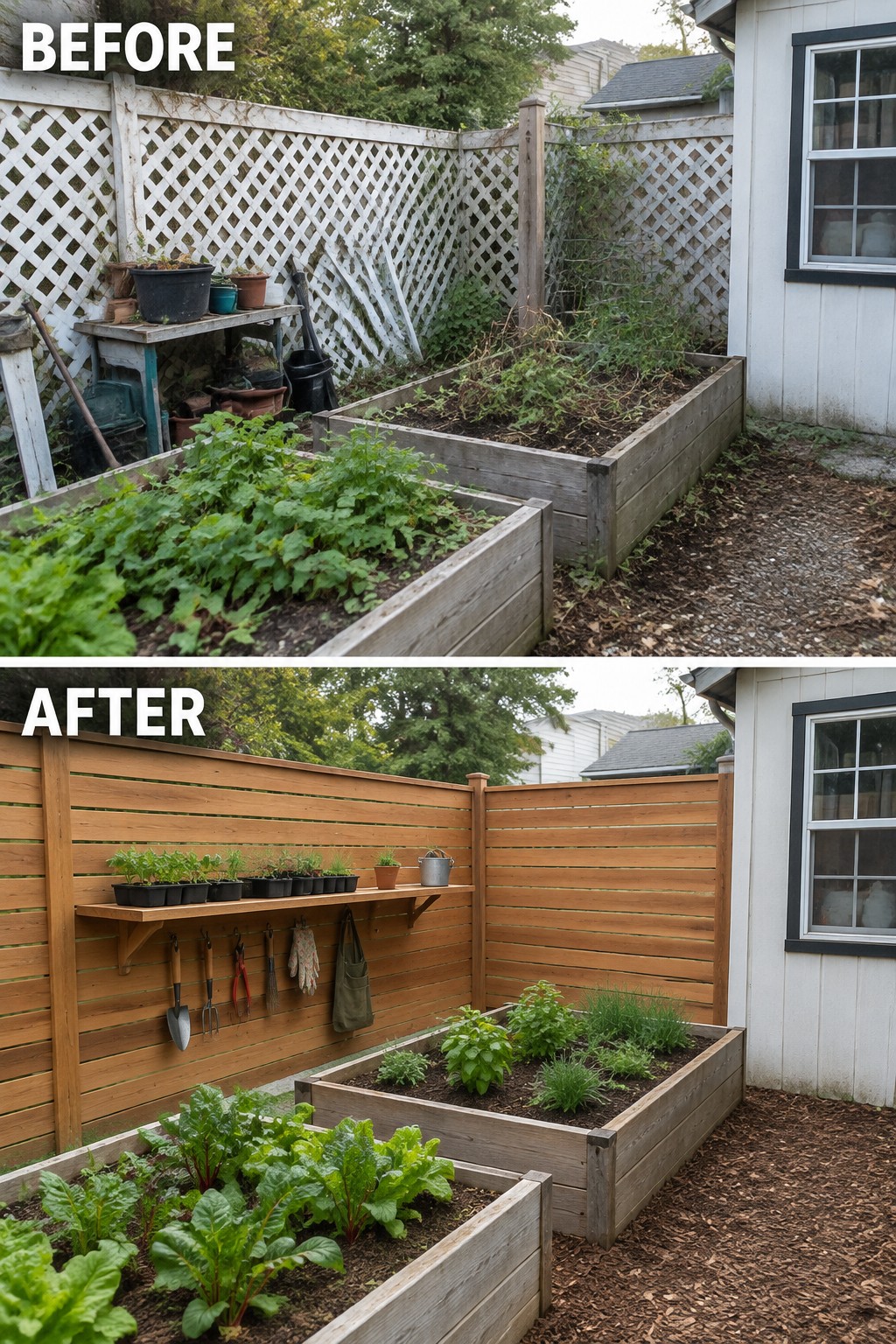
The raised beds were already in place, but the worn lattice left the garden looking cluttered. Replacing it with a solid horizontal fence gives the vegetable area a cleaner backdrop and a more useful setup, with a shelf for seed trays.
This idea works well in a small yard where the fence can do more than mark a boundary. Choose sturdy boards and leave enough space to reach the beds and move along the path. Keep the shelf shallow so it holds pots without getting in the way.
Replace Overgrowth With A Clear Garden Layout
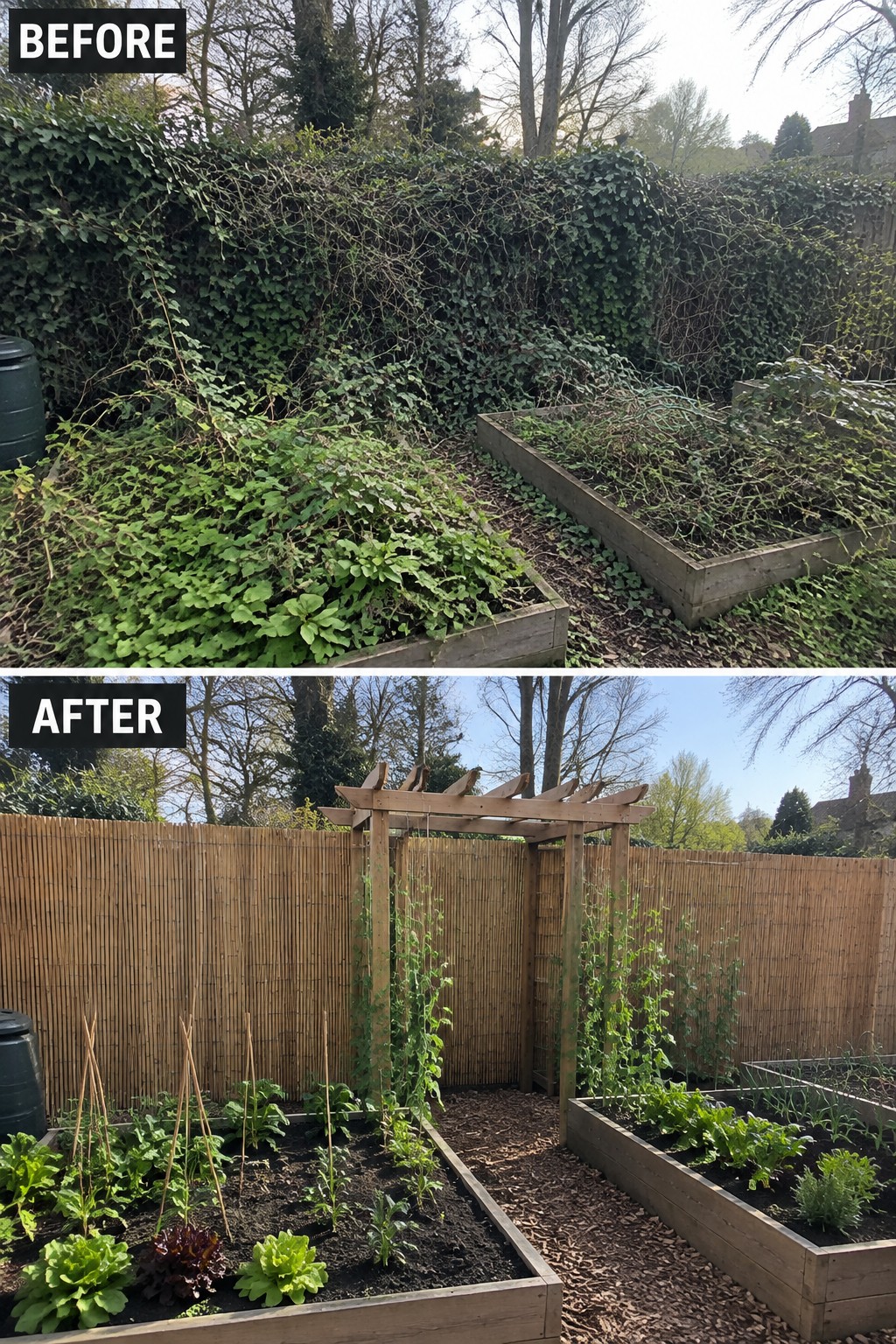
Clearing an overgrown plot makes raised beds easier to use and gives the garden a more settled structure. Here, a tall fence and a wood-chip path help separate the growing areas, so it is easier to reach the vegetables without trampling the soil.
For a similar yard, start by removing unwanted growth, then decide where the beds and walking route should go. A simple path between the beds is especially useful in a narrow garden, where every bit of access matters.
Add Vertical Planters Above Raised Vegetable Beds

The raised beds already provide a place to grow vegetables, and adding wall-mounted planters makes use of the fence above them. In the after image, the bare fence holds rows of leafy greens, giving the garden more growing space without taking up more ground.
This idea works well in a small yard where bed space is limited. Choose sturdy planters and secure them to the fence posts, then make sure the plants can be watered easily and won’t shade the vegetables below.
Replace A Worn Fence With A Raised-Bed Enclosure
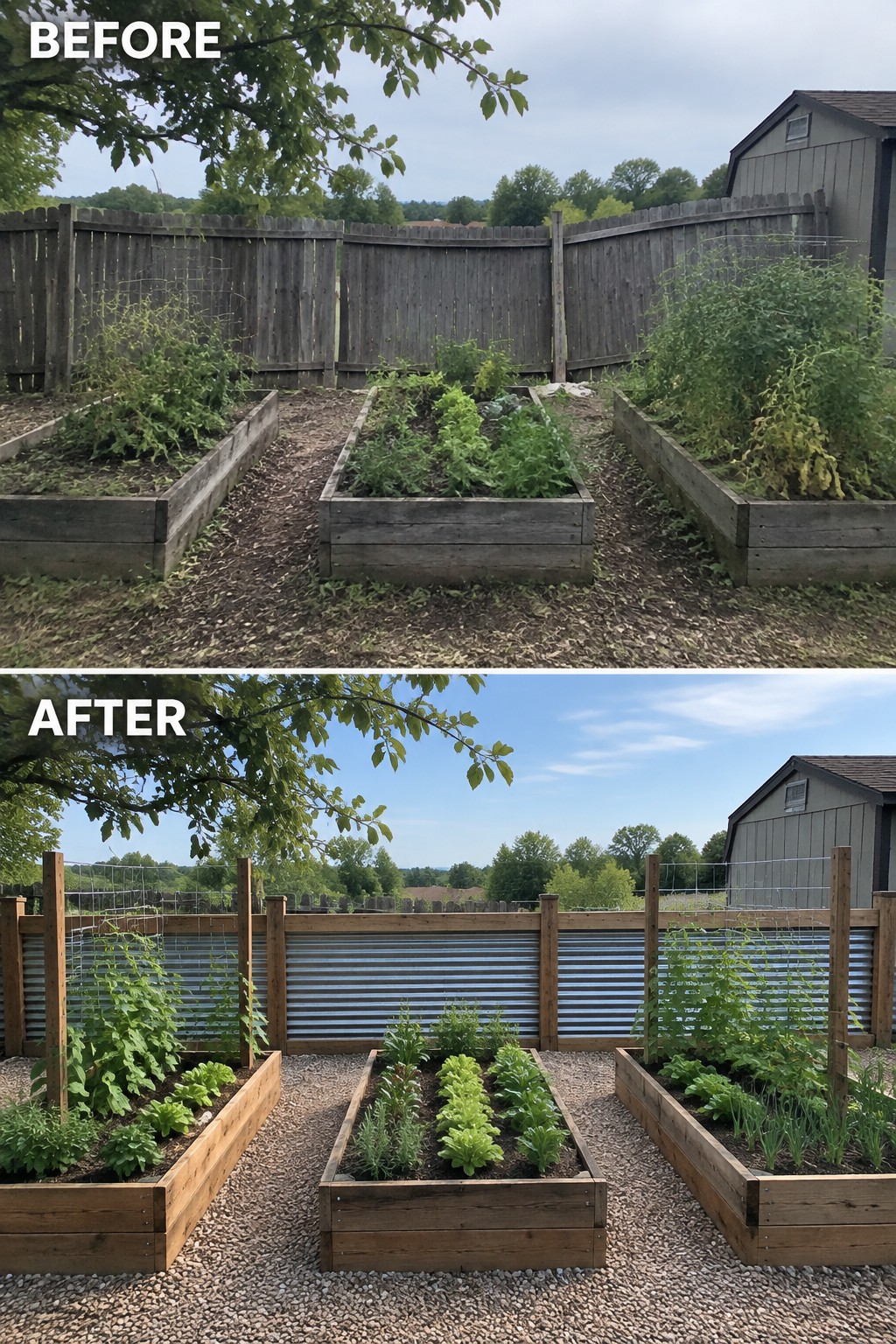
The garden feels much more organized once the old fence is replaced with a sturdy enclosure around the raised beds. The horizontal metal panels provide a clear backdrop, while the wooden posts and wire sections help keep the growing area defined.
This approach works well when a backyard needs a cleaner boundary without blocking all visibility. Choose weather-resistant materials, and leave enough room between beds for easy access and a wheelbarrow.
Turn A Garden Gate Into Tool Storage
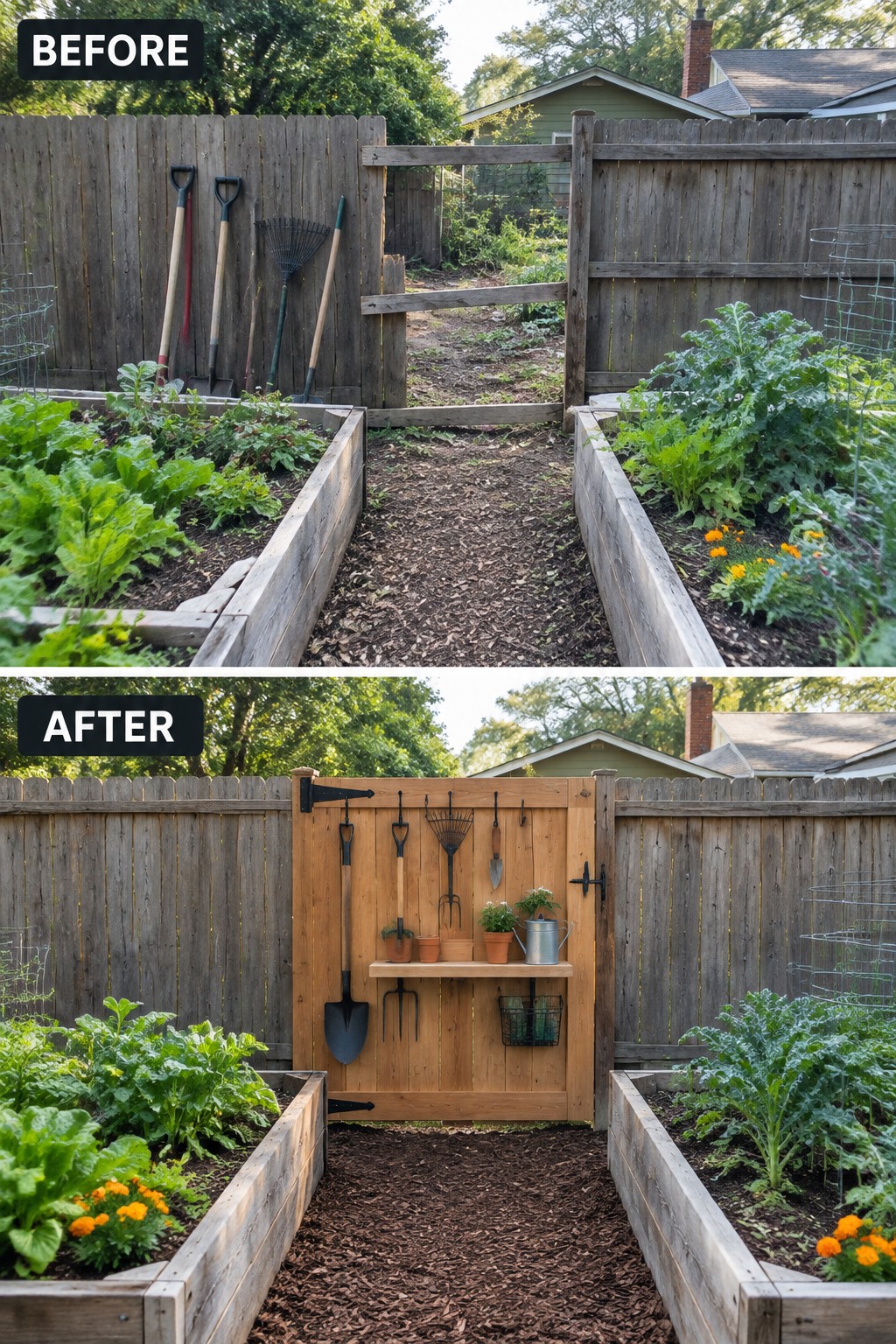
A simple gate can do more than close off a path. Here, a wooden gate adds a useful place to hang garden tools, turning an awkward opening into practical storage while keeping the raised beds easy to reach.
For a small vegetable garden, add a sturdy panel and a few hooks where tools can hang without blocking the path. Check that the gate swings freely and that the panel can handle the weight of the tools you use most.
Train Vegetables Up A Garden Fence
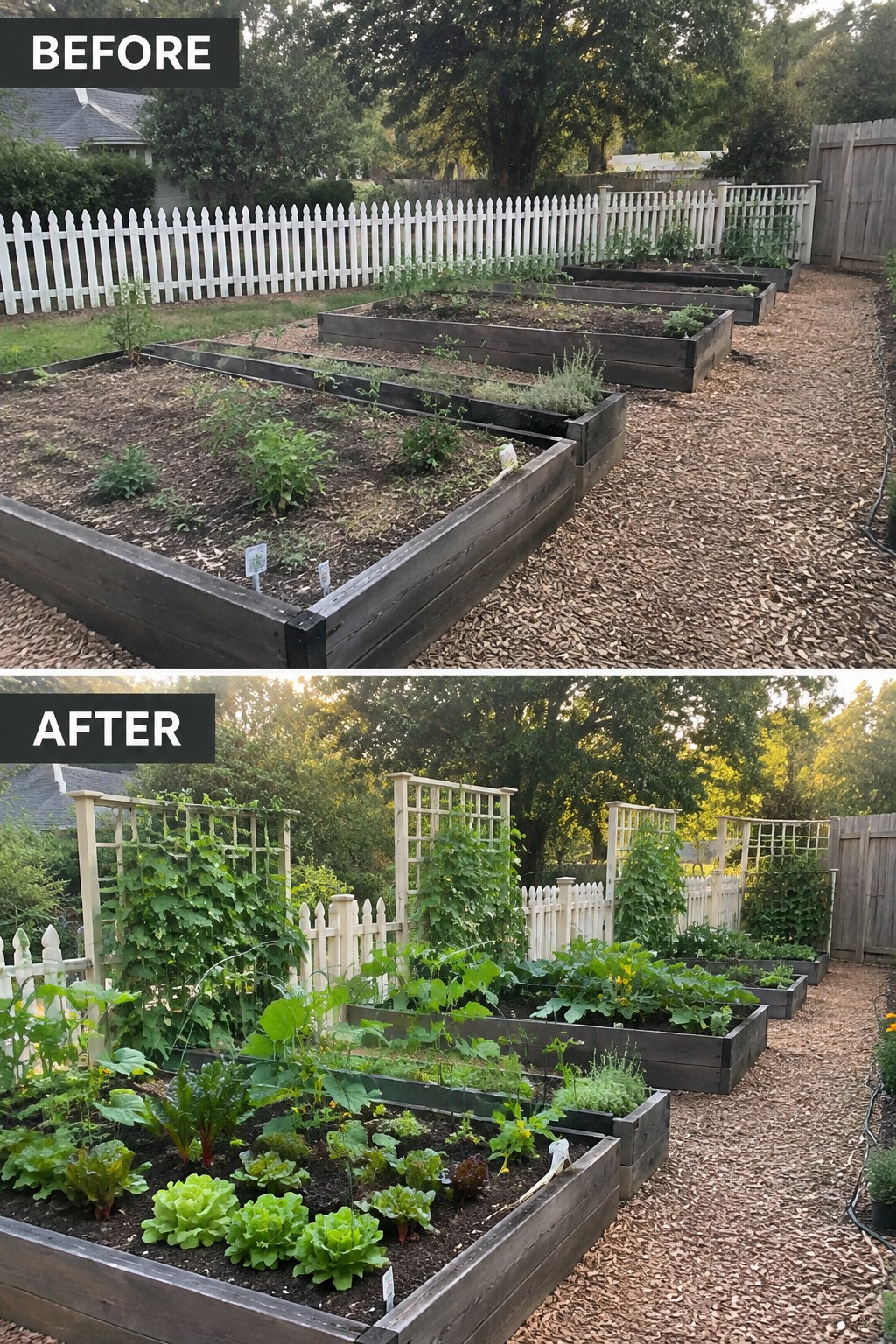
Adding trellises behind raised beds gives climbing vegetables room to grow without taking over the planting space. Here, the simple beds become a more productive garden, with vines trained up vertical supports instead of sprawling across the soil.
This works well in a compact garden where every bit of bed space matters. Set sturdy trellises along the fence line, and leave enough room to reach the plants and move along the path.
Add Lighting To Make Raised Beds Easier To Enjoy
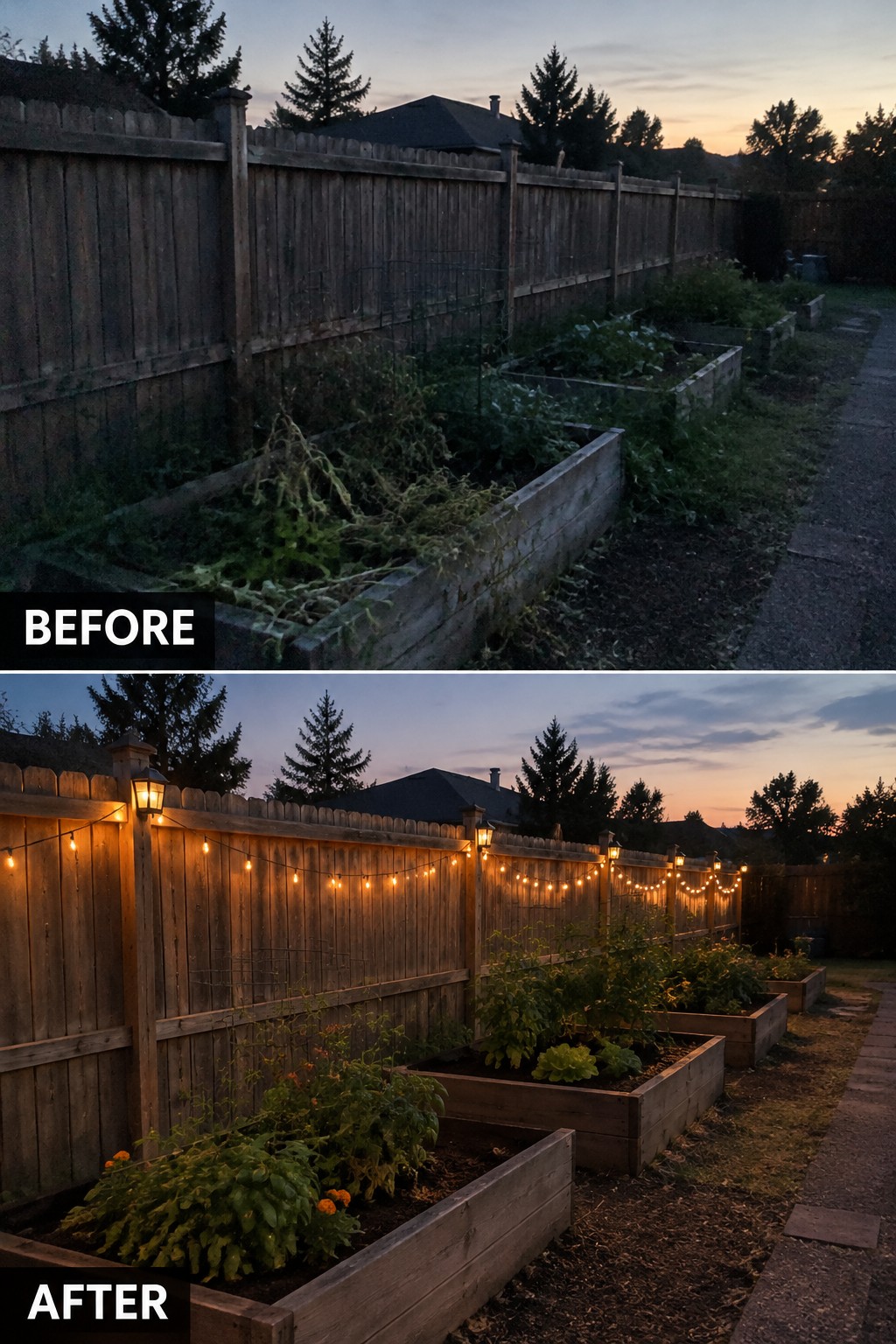
A neglected row of raised beds feels more cared for when the planting is tidied and the fence is lit. In this garden, string lights and lanterns make the fence a useful backdrop for the vegetable plots, while the beds remain the main feature.
For a similar setup, hang outdoor-rated lights along the fence and keep them clear of plants that need regular access. A little cleanup around the beds helps the whole garden look planned, even when the vegetables are still growing.
Replace A Worn Fence With A Sturdy Garden Enclosure
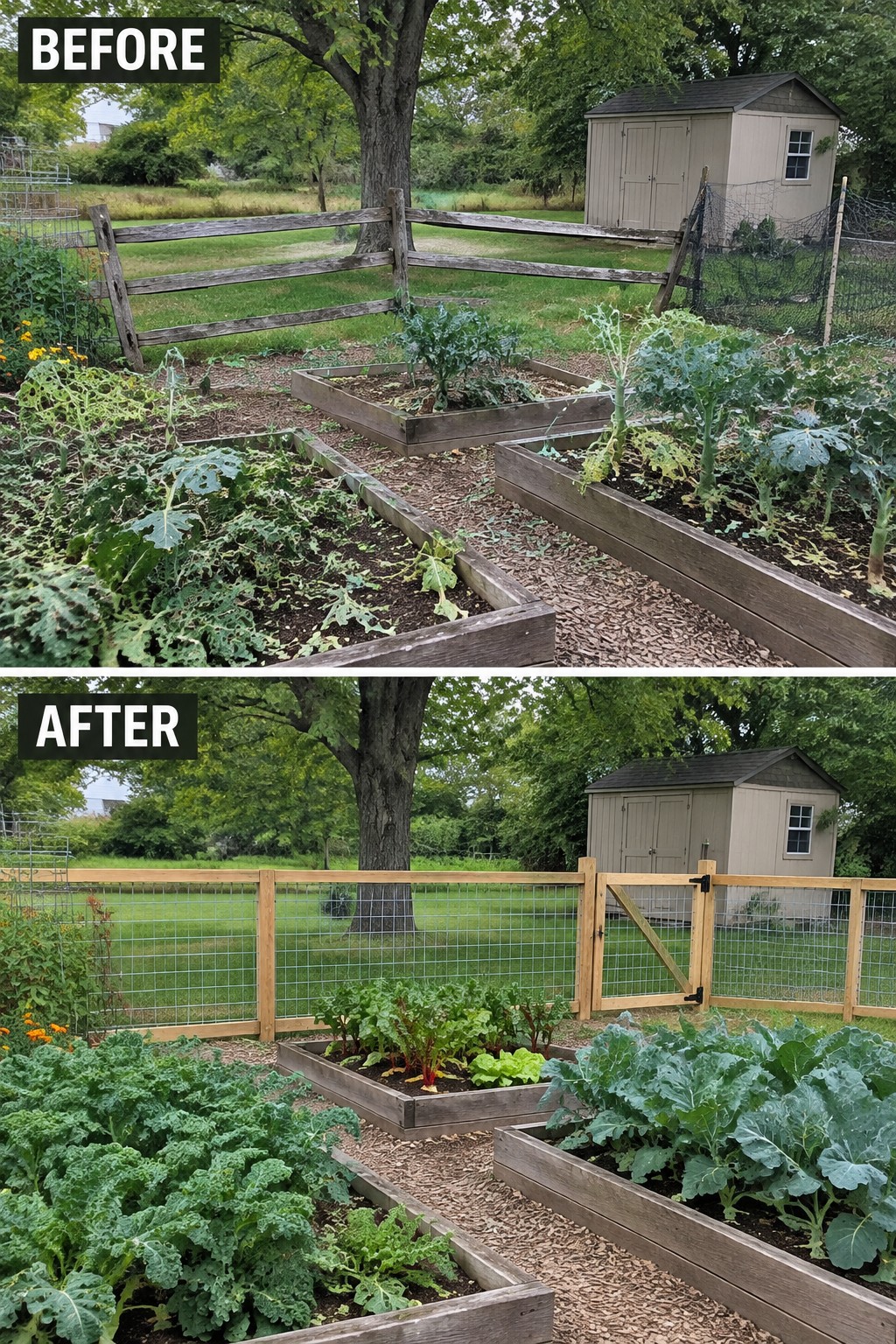
A leaning, broken fence can make raised vegetable beds feel exposed and untidy. Replacing it with a straight wood frame and wire panels gives the garden a clear boundary while keeping the beds visible and easy to reach.
For a similar setup, choose mesh that keeps pets or other garden visitors out without blocking airflow, and add a gate where it makes sense to enter. Leave enough room between the fence and beds to tend plants and move along the paths.
Turn A Plain Fence Into A Vertical Vegetable Garden
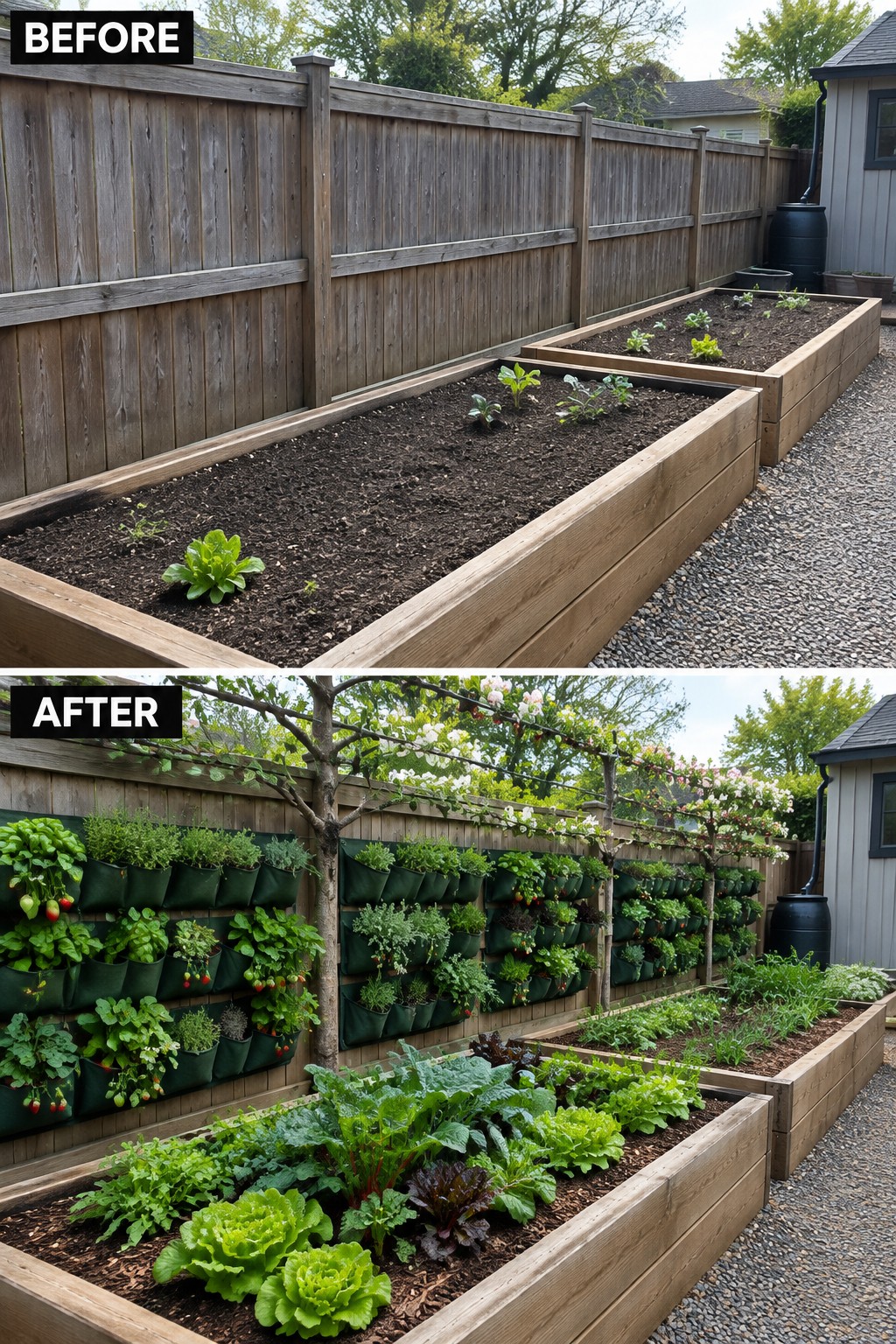
The raised beds provide plenty of growing space, but the bare fence leaves a lot of room unused. Adding fabric planting pockets turns that fence into a vertical garden, making a small yard more productive without taking space away from the beds.
This works well along a sturdy fence with enough sun for the crops you want to grow. Choose compact plants such as leafy greens or strawberries, and leave room to water and tend the beds below.
Replace A Flimsy Fence With Sturdy Garden Panels

The old wire fence did little to support the sprawling tomato plants or give the raised plot a clear edge. Replacing it with solid wooden frames and mesh makes the garden feel more orderly while still letting light and air reach the vegetables.
For a similar setup, choose mesh panels sturdy enough to support climbing plants, and leave a gate or opening wide enough for a wheelbarrow. It works well around long raised beds where a low, wobbly fence is hard to maintain.
Repaint The Fence To Refresh The Raised-Bed Garden

A fresh coat of paint can make a garden feel planned without changing the layout of the beds. Here, the weathered fence becomes a colorful backdrop, while the raised beds are painted to match. The result looks tidier and gives the vegetable plots a clear place in the yard.
Choose a few colors that work together, then use them on the fence and bed frames for a simple, coordinated look. Clean and repair the wood first, and use an outdoor paint suited to the materials. Keep the path clear so the garden stays easy to tend.
Add A Bench Along The Garden Fence

A plain fence can do more than mark the edge of a vegetable garden. Here, a built-in bench turns the unused space behind the raised beds into a place to sit, while a narrow shelf makes room for a few pots.
This idea works well in a small garden where space is tight. Keep the bench shallow enough that the path stays clear, and secure the shelf firmly to the fence so it can support its pots.
Add A Trellis To Grow Vegetables Upward

A trellis makes better use of a small raised-bed garden by giving climbing vegetables room to grow vertically. Here, an overgrown corner becomes a set of productive beds with a wooden support for vines.
Use a sturdy trellis behind a raised bed for crops such as cucumbers or beans, and leave enough space to reach the plants for watering and picking. It’s a practical way to add growing room without spreading beds across the yard.
Frequently Asked Questions
Q: How tall should a fence be around a raised vegetable plot?
A: A short fence can mark the bed and keep pets out, but it won’t stop determined rabbits or deer. For rabbits, aim for about 2 feet and make sure the bottom sits close to the soil. Deer need a much taller barrier, so netting may be more practical than a decorative fence.
Q: What’s a simple way to keep rabbits from squeezing underneath?
A: Attach wire mesh to the fence and extend it a few inches below ground, or bend the bottom outward along the soil. Check the edges after heavy rain, since gaps can open up.
Q: Can I use untreated wood for a vegetable garden fence?
A: Yes, untreated cedar or another naturally rot-resistant wood works well. Keep painted or treated surfaces away from the soil if you’re concerned about materials leaching into the bed.
Q: How can I make a fence feel less closed in?
A: Choose open lattice, wire panels, or widely spaced pickets so sunlight and air still reach the vegetables. You can also leave a clear view through the fence by keeping tall plants from crowding it.
