


A garden fence can feel like an afterthought when it offers little privacy or does not sit well with the rest of the yard.
I like how gabion fencing brings stone, structure, and a clear edge to a garden while still leaving room to shape the planting around it.
The change can make an outdoor space feel more considered, whether the goal is to screen a seating area, define a path, or tidy up an uneven boundary.
The best results often come from balancing the weight of the stone with greenery and practical details.
Some of these approaches are worth saving and adapting to the layout and materials of a real garden.
Add Privacy With a Gabion Stone Fence

The chain-link fence left the yard feeling open and unfinished. Replacing it with a gabion stone fence gives the lawn a clear boundary and more privacy, while the built-in lights make the fence useful after dark.
This idea works well in a small backyard where a fence can serve as the main backdrop. Keep the lawn and path easy to maintain, and use lighting sparingly so the stone wall stays the focus.
Replace A Worn Fence With A Strong Garden Boundary

A tired picket fence can make a garden feel unfinished. Replacing it with horizontal wood panels and gabion stone sections gives the boundary a clearer, more lasting structure, while keeping the planting bed as part of the design.
This idea works well in a backyard where privacy matters but a plain solid fence would feel too stark. Keep the stone supports evenly spaced, and leave enough room along the fence for plants to grow without blocking the path.
Add Structure To An Overgrown Side Yard
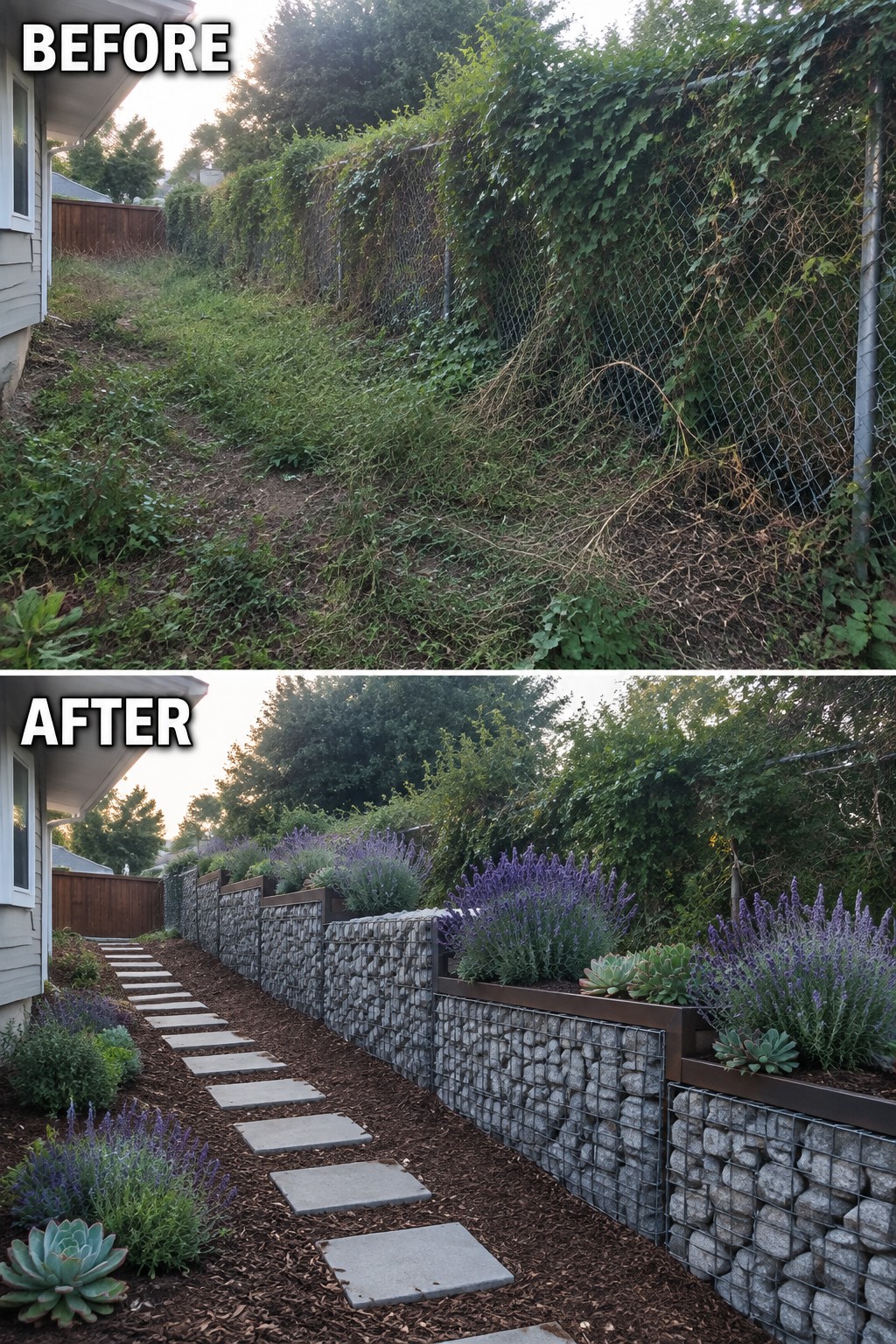
The side yard works better once the overgrowth is cleared and the path has a clear route. Gabion stone walls turn the sloping edge into defined planting space, while stepping stones make it easier to walk through.
This approach can suit a narrow side yard where a fence and weeds leave little room to spare. Keep the path wide enough to use comfortably, and choose gabion sections sized to fit the slope rather than crowding the walkway.
Make The Pool Area Feel More Private

Replacing the chain-link fence with a low stone-and-metal barrier gives the pool area a clearer edge and a more finished look. The stone posts add visual weight while the open rails keep the yard from feeling closed off.
This approach works well around a pool where you want a sturdier boundary without blocking the view. Keep the posts spaced so the fence still feels open, and check local pool-safety rules before choosing the height or design.
Turn A Bare Fence Into A Planted Garden Border

Replacing the tired wood fence with gabion stone bases and wire panels gives this narrow side yard a clearer garden structure. The climbing flowers make use of the vertical space, while the stone-filled base defines a planting strip along the lawn.
This approach works well in a side yard where there isn’t room for wide beds. Keep the planting strip narrow enough to leave the path clear, and choose climbers that suit the amount of sun the fence receives.
Define The Front Garden With Gabion Walls

Replacing the broken picket fence with low gabion walls gives the front garden a clear edge without closing it off. The stone-filled cages make a sturdy boundary, while the open entrance keeps the path to the front door easy to use.
This idea suits a small front yard where a tall fence might feel too imposing. Keep the wall low near the walkway, and leave enough room behind it for simple planting. Check local rules before building, especially near a sidewalk.
Turn A Narrow Side Yard Into A Useful Garden Space

Replacing the chain-link fence with gabion stone panels gives this narrow side yard a more defined boundary and a built-in place for plants. The wooden shelf and bench make better use of the limited space without blocking the path.
This idea suits a side yard that needs privacy but still has to stay easy to walk through. Keep the path clear, and use a few sturdy containers rather than crowding the bench with too many plants.
Create Defined Garden Beds Along the Fence

The overgrown strip becomes a neat planting bed once it has a clear edge and a low gabion stone wall. That simple structure gives flowers a place to grow without letting the garden blend into the lawn.
For a similar look, clear the weeds first, then plan a bed wide enough for mature plants and easy upkeep. A curved stone border can suit a small backyard, but leave enough lawn space to move around and mow.
Replace A Plain Fence With Gabion Panels

The old fence left the side yard looking a bit neglected. Replacing it with dark panels and stone-filled gabion posts gives the boundary a clearer, more finished look without changing the basic layout.
This approach works well in a narrow side yard where a fence takes up much of the view. Keep the planting simple along its base, and leave enough lawn clear for easy access and mowing.
Turn A Plain Patio Into An Outdoor Dining Area
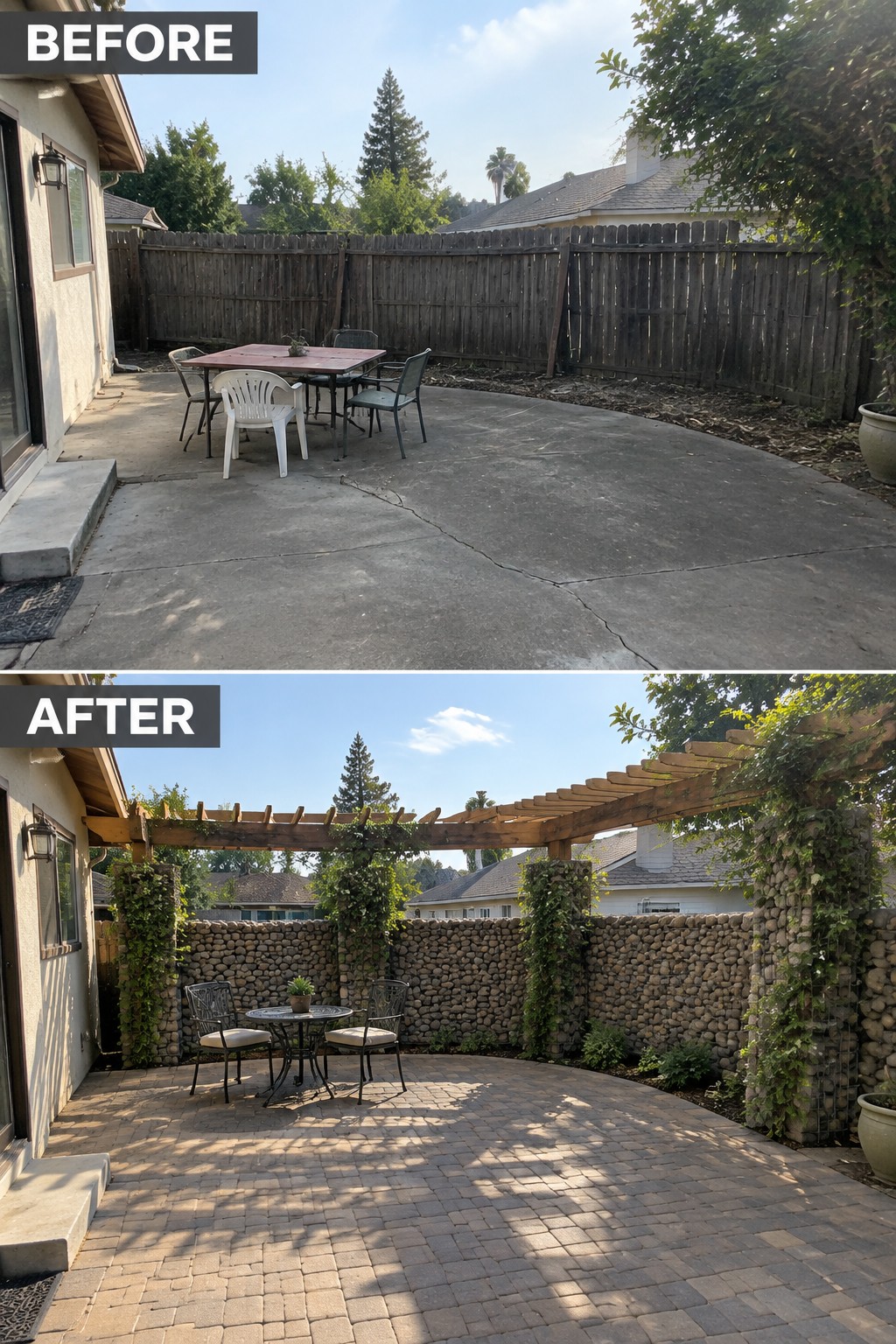
A bare concrete patio can feel like wasted space, even when there is room to sit and eat. Here, the hard surface is replaced with pavers, and a simple dining set gives the area a clear purpose.
For a similar update, start by choosing a spot that leaves an easy path between the house and the yard. If privacy matters, a gabion stone fence can help define the patio without making it feel boxed in. Keep the table and chairs sized for the space so there is still room to move around.
Build A Raised Garden Bed With Gabion Stone

The loose, hard-to-manage garden becomes more organized when the wire fence is filled with stone to form a raised bed edge. It gives the planting area a clear boundary and helps separate it from the path.
This approach works well in a narrow side yard where there isn’t much room for a wide border. Keep the bed deep enough for the plants you want, but leave the path clear so it’s still easy to walk through.
Turn A Bare Backyard Into A Usable Patio
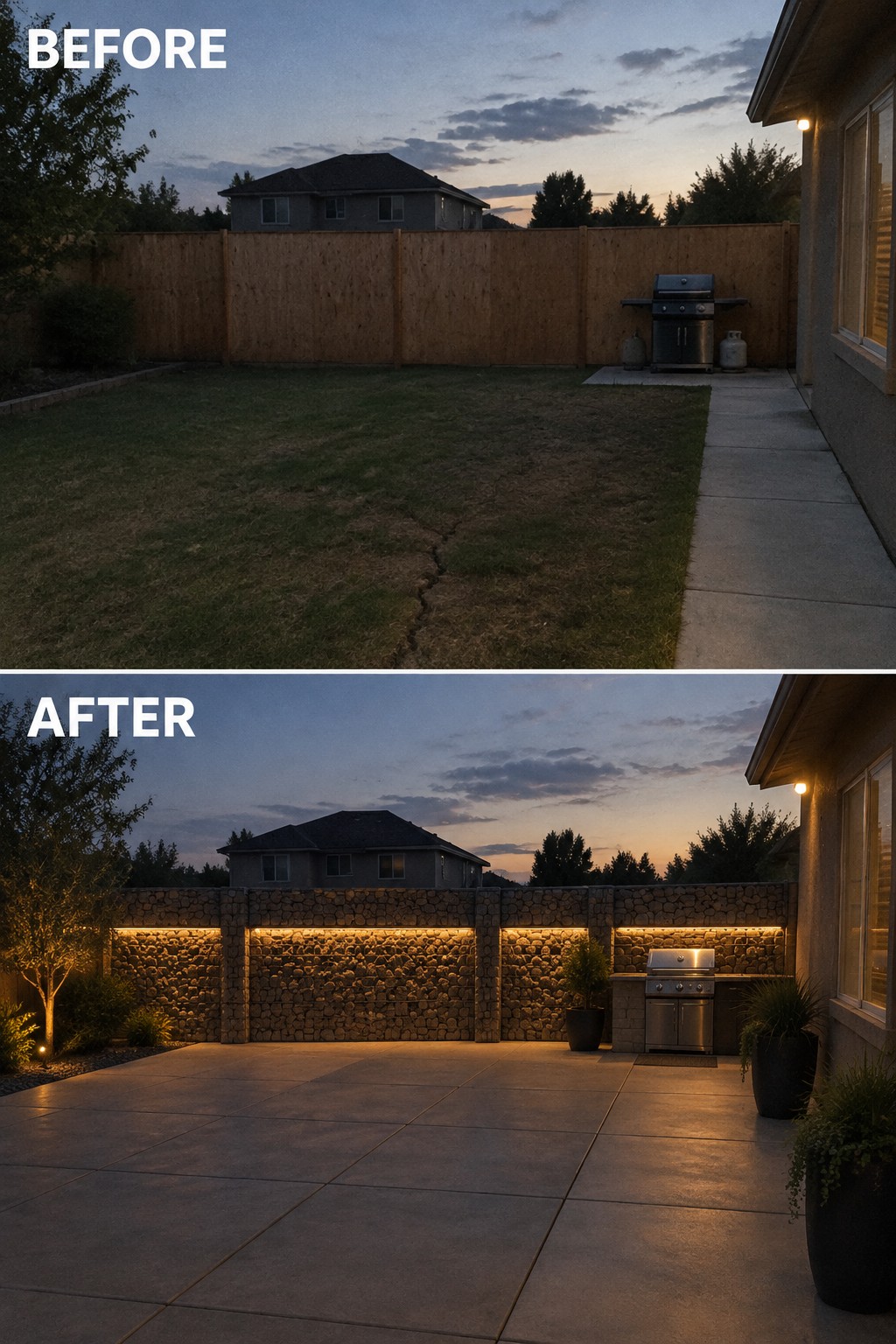
Replacing the patchy lawn with a broad paved area gives this backyard a clear purpose. The gabion stone fence also provides a sturdy boundary, while its built-in lighting makes the patio usable after dark.
This idea works well in a small or average-sized yard where a lawn is not getting much use. Plan the paving around the space you need to move through, and choose warm, low-glare lights to highlight the stone without shining into the house.
Replace An Overgrown Front Fence With Gabion Stone

The front yard feels more planned once the overgrown hedge and worn wooden fence are replaced by a low gabion boundary. Stone-filled columns and dark horizontal panels give the entrance a clear edge while still leaving the house visible.
For a similar look, keep the fence low enough to preserve the view of the home, and use planting along its base to ease the transition into the lawn. Gabion sections can suit a front garden where a standard solid fence would feel too closed off.
Add A Built-In Kitchen To An Unused Patio

A cluttered patio can be hard to use, even when there is plenty of room. Here, the old fence and scattered equipment give way to gabion stone panels with a compact outdoor kitchen built into the center, making the patio feel more organized and useful.
This idea works well in a small backyard where a full renovation is not practical. Keep the work area sized to the space, and leave enough clear patio for people to move around comfortably.
Define The Front Garden With A Gabion Mailbox Wall
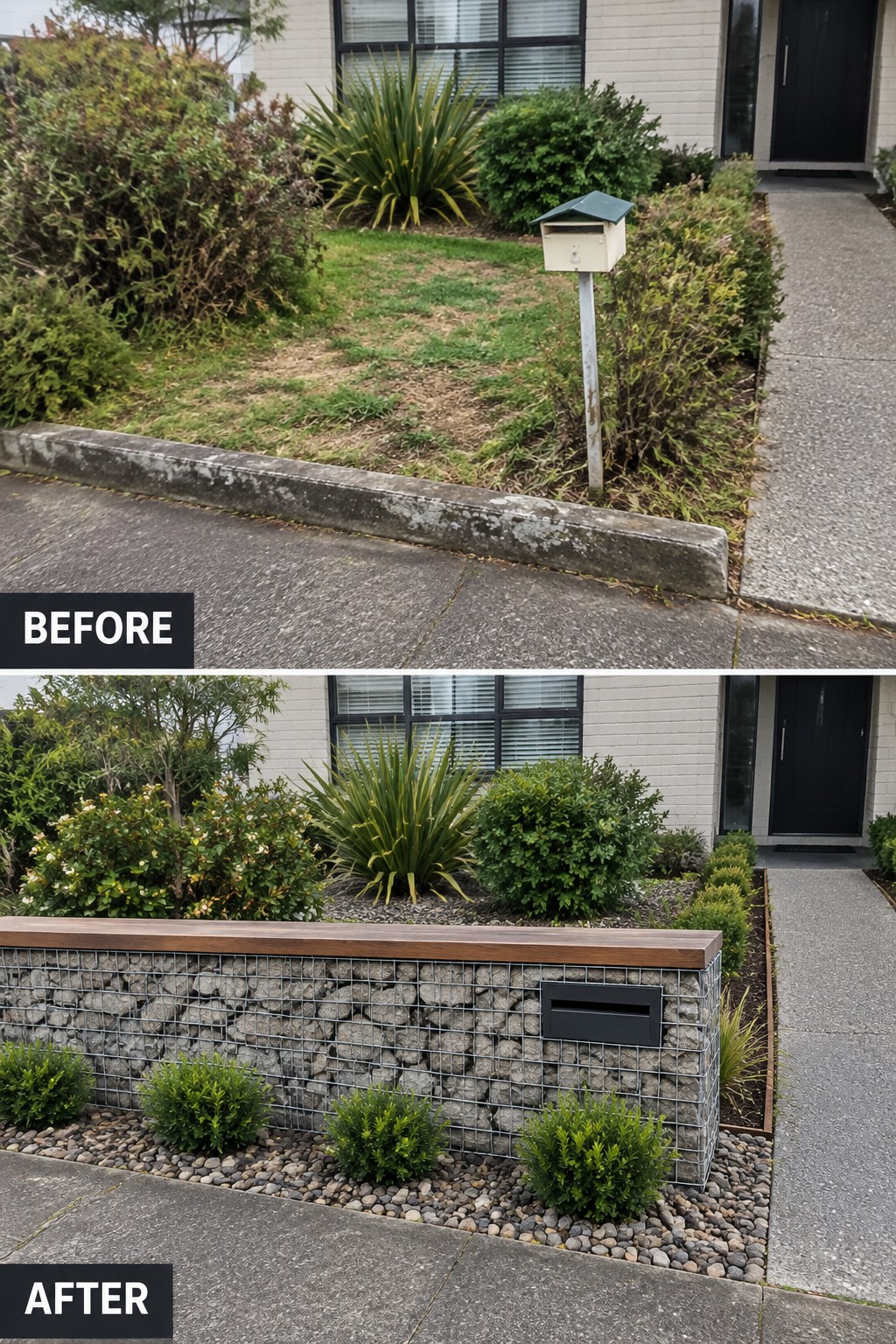
The patchy lawn and overgrown shrubs left the front garden looking untidy. A low gabion wall gives the space a clear edge, and building the mailbox into it makes the garden boundary useful as well as attractive.
This idea suits a small front yard where a full-height fence would feel too closed in. Keep the wall low enough to leave the house visible, and choose stone that fits the home’s exterior.
Turn An Empty Backyard Into A Cozy Fire Pit Area
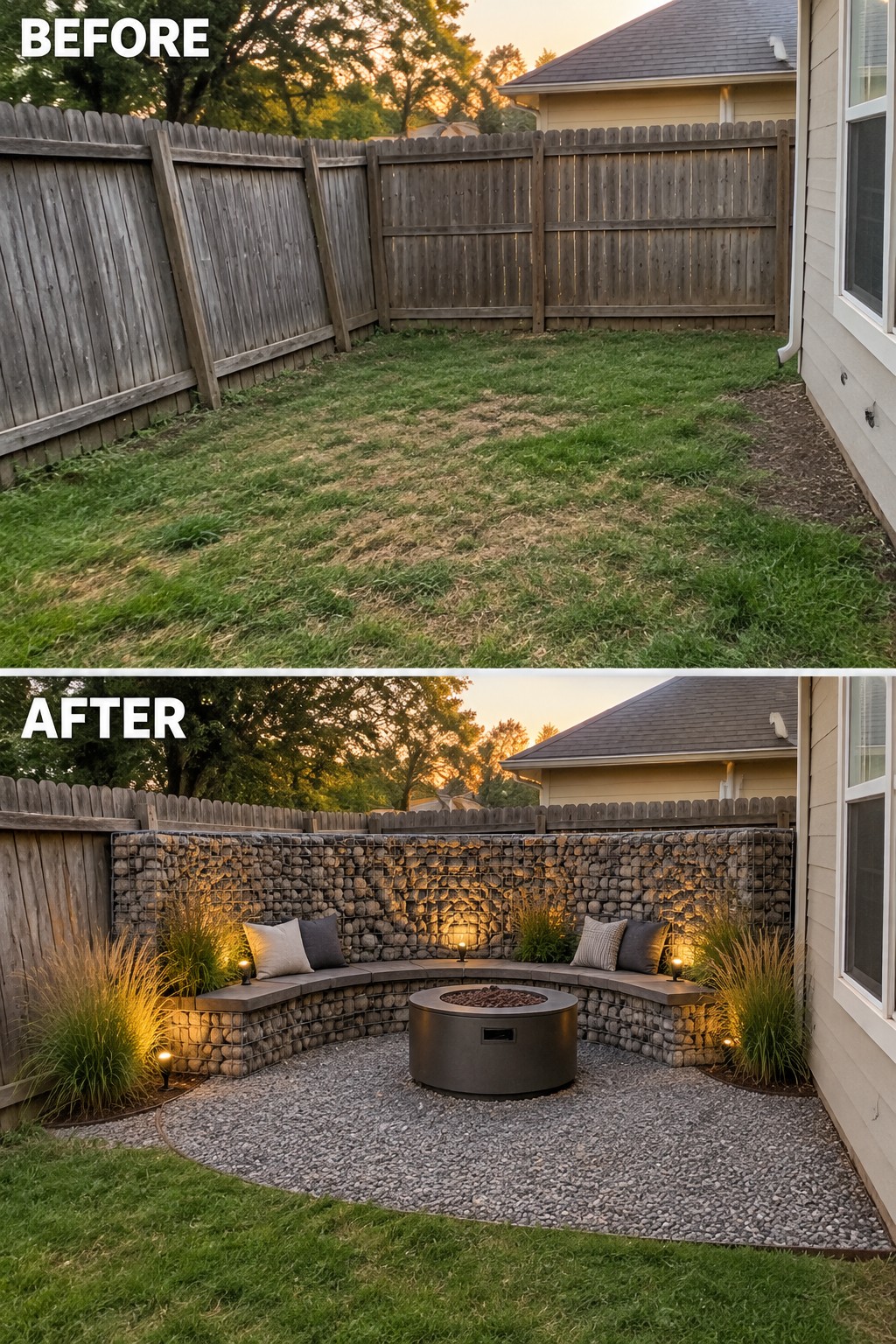
A bare, patchy yard can become a useful outdoor room when you give it a clear seating spot. Here, a curved gabion bench and gravel surface make the fire pit area feel defined, while the stone-filled fence provides a sturdy backdrop.
This idea works well in a small backyard where a full patio would take up too much space. Keep the seating close enough for conversation, but leave a clear route through the yard and choose gravel that drains well.
Turn A Bare Terrace Into An Outdoor Seating Area

An unused terrace can become much more practical when it has a clear place to sit. Here, gabion stone fencing replaces the plain metal barrier, while a built-in bench and deck boards make the narrow space feel like an outdoor room.
For a similar terrace or small patio, start by choosing a compact seating layout, then add privacy with a sturdy boundary such as gabion fencing. Keep a clear path to the door, and avoid filling every corner with furniture.
Replace A Rustic Fence With Gabion Stone

A gabion fence can give a long garden boundary a more finished look while keeping the view across the yard open. Here, the old timber rails are replaced with stone-filled posts and metal panels, with a narrow planted border along the fence.
This idea works well on a sloping lawn or beside a wide field, where a solid wall could feel too heavy. Keep the stone posts spaced along the run and leave enough room for planting and mowing.
Add Raised Beds To Organize A Vegetable Garden

The garden works better once the planting has clear levels and a defined path. Gabion stone walls create sturdy raised beds that bring order to a rough vegetable plot, while keeping the layout practical for growing food.
Use the walls to shape beds around a path, and keep the steps or routes wide enough to carry tools and harvests through. For a smaller yard, build only as many raised sections as you can comfortably tend.
Frequently Asked Questions
Q: Can I build a gabion fence on my own?
A: A short section is manageable if you’re comfortable setting posts and assembling wire baskets. For a long fence or one that needs to hold back soil, get help with the base and structure before filling it with stone.
Q: What should I put under a gabion fence?
A: Start with firm, level, well-drained ground so the baskets don’t sink or lean. A compacted gravel base is often a practical choice, especially where rainwater tends to collect.
Q: Do the stones need to be a certain size?
A: Yes. Choose stones larger than the basket openings so they stay in place, and fill the visible face neatly before adding smaller stones inside. Loose, rounded stones can shift more easily than angular ones.
Q: Will a gabion fence block the view completely?
A: It can, if you use deep baskets and pack them tightly. For a lighter boundary, try a lower wall or leave gaps between sections for planting.
