

A garden can feel unfinished when its boundaries are straight and rigid, especially if the planting beds and paths have softer shapes.
I like how a curved fence can give the yard a clearer flow while making room for shrubs, flowers, and tucked-away seating.
The change can be subtle, but a thoughtful line helps the whole landscape feel more connected.
Some curves also create useful privacy without making a small garden feel boxed in.
These ideas are worth saving if you’re considering a fence that works with your yard’s shape rather than simply marking its edges.
Add A Curved Fence To Define The Garden

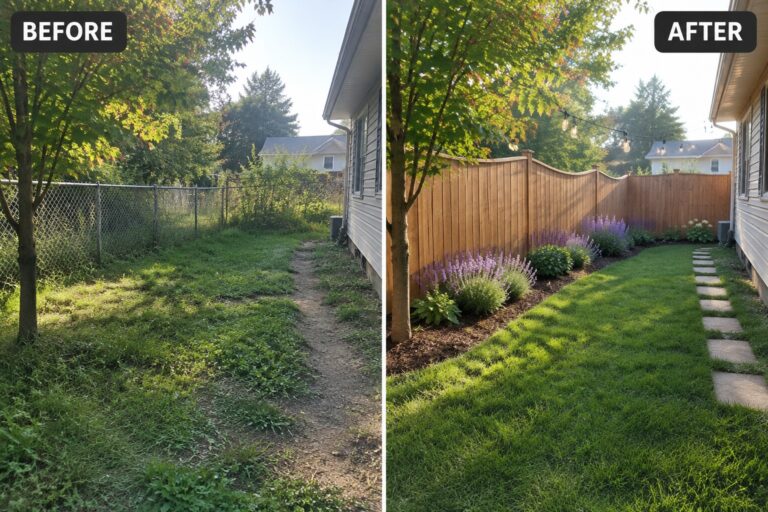
Replacing the chain-link boundary with a curved wood fence gives this narrow yard a clearer shape and more privacy. The gentle arches break up the long fence line without making the space feel boxed in.
This idea works well along a side yard or anywhere a straight fence feels too severe. Keep the curve subtle, and leave enough room for a simple planting bed or path so the yard stays easy to use.
Replace A Worn Fence With A Curved Garden Border

A tired fence can make an otherwise useful garden feel neglected. Here, a clean white picket fence with a gently curved top line gives the yard a clearer shape, while the flowers along it make the edge feel like part of the garden rather than just a boundary.
This idea suits a side yard or narrow path where a straight fence might feel stark. Keep the curve gradual so it looks natural, and leave enough room beside the fence for plants without crowding the path.
Add A Defined Garden Bed Along The Fence

A long, bare fence can make a yard feel unfinished. Here, a raised planter and a row of grasses give the fence a clear garden edge, while the mulch makes the planting area look tidy.
This idea works well along a straight or gently curving fence where lawn meets the boundary. Keep the bed narrow enough to leave room for the yard, and choose plants that suit the light and won’t outgrow the space.
Replace A Tired Fence With A Cleaner Garden Border

A worn fence can make a whole garden edge look neglected. Here, solid rust-colored panels replace the patchy corrugated fence, giving the boundary a neater look and making the planted strip feel intentional.
For a similar update, keep the planting simple and leave enough room beside the path to walk comfortably. A narrow gravel border with a few grasses can suit a small yard, too. If you want curved fence lines, plan the curve before choosing panel sizes so the fence follows the yard naturally.
Create A Clear Path Along A Curved Fence

Replacing an overgrown fence line with a low woven fence and a curving gravel path gives the garden a clear shape. The path makes it easier to reach the gate, while the fence helps separate the planting area from the lawn.
This idea works well in a narrow side yard where a straight path might feel cramped. Let the fence curve gently around the space, and keep the path wide enough to walk comfortably.
Use Gravel And Planting To Finish The Fence Line

Replacing a bare strip of soil with gravel and simple planting makes the fence line feel like part of the garden. Here, rounded shrubs and flower clusters give the long border a clearer shape, while the upgraded fence and wall sit neatly behind them.
This idea works well beside a path or along a curved fence, where a defined edge helps the yard feel more orderly. Clear weeds first, then leave enough space between plants for them to grow without crowding the walkway.
Add A Curved Path Along The Fence

The narrow side yard feels more planned once the bare ground becomes a gravel path with stepping stones and a planted border. The curved edge breaks up the long, straight fence line and gives the walkway a softer shape.
This idea works well in a side yard where a straight path can feel a bit stark. Keep the stones spaced comfortably for walking, and leave enough room for plants without making the path feel tight.
Train Roses Along A Garden Fence

A plain fence can become a useful backdrop for climbing roses, turning a bare strip of soil into a planted garden border. In this makeover, roses grow up the fence, giving the garden bed more height and making the boundary feel like part of the planting.
Choose a climbing rose suited to your climate, and give it sturdy supports so the canes can be tied in as they grow. Leave enough room below for smaller plants, but avoid packing the bed too tightly; the roses need space and air to thrive.
Make A Curved Fence Into A Patio Seating Area
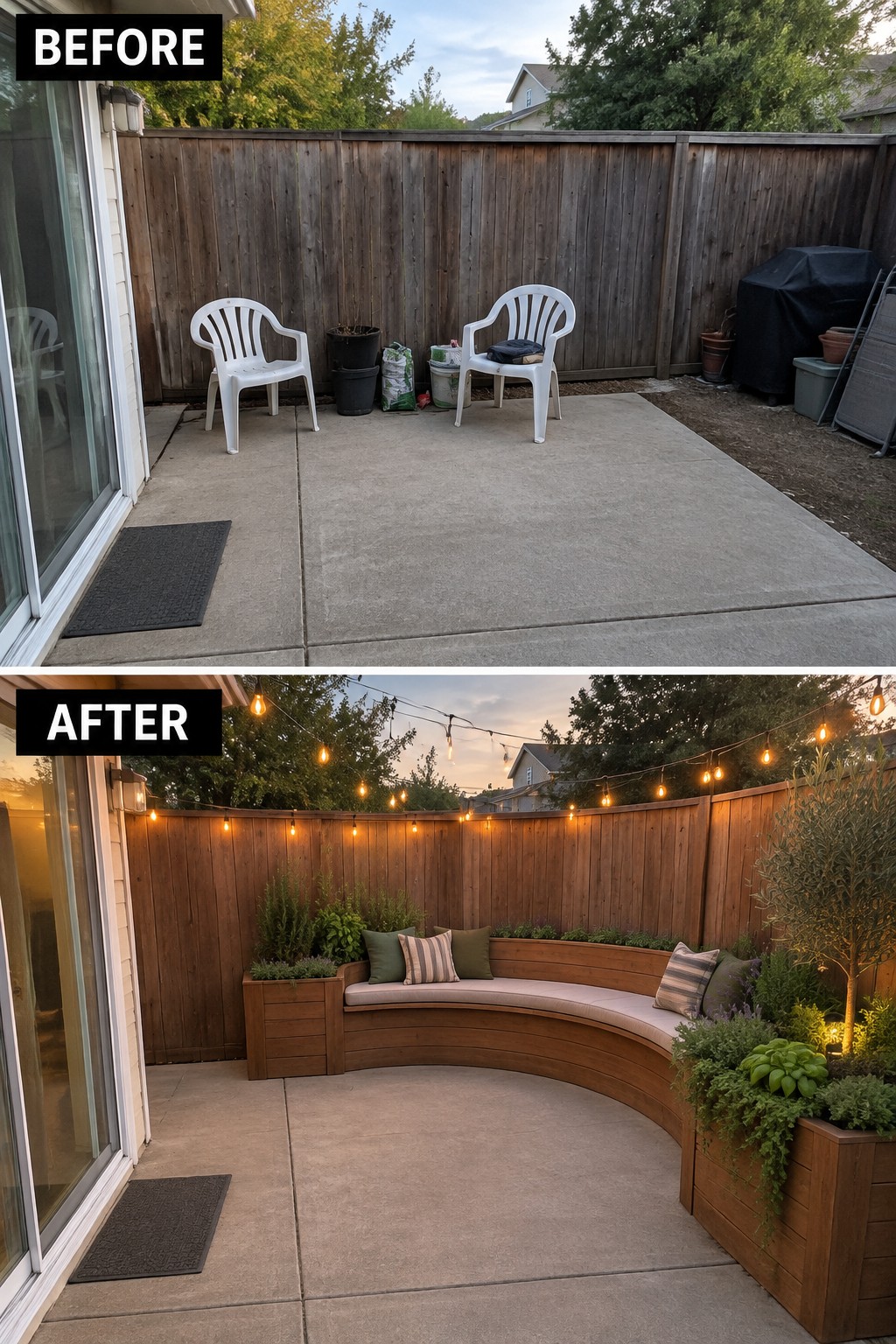
An unused patio can become a comfortable place to sit by building a curved bench along the fence. Here, the bench turns an open stretch of concrete into a defined seating spot, while its curved shape makes the fence line feel less plain.
This idea works well in a small yard where separate chairs take up too much room. Keep the curve shallow enough to leave a clear walkway, and use weather-resistant materials for the bench and cushions.
Add An Arched Gate To A Garden Fence

Replacing a plain, weathered gate with an arched wooden gate and overhead arbor gives this fence line a clear focal point. The curved shape breaks up the straight boards and makes the entrance feel more considered without changing the basic layout.
This idea works well where a side yard or garden path meets a fence. Keep the gate wide enough to use comfortably, and choose an arch that suits the fence height so it feels like part of the design rather than an add-on. Climbing plants can fill in over time, but the gate looks finished on its own, too.
Replace An Old Fence With A Curved Gabion Wall

Replacing a weathered fence with a curved stone-filled wall gives the garden a clear boundary and makes the fence line feel intentional. Here, the changing height of the gabion wall adds shape, while a few planted pockets bring greenery into the structure.
This idea works well along a sidewalk or in a yard that needs a sturdy boundary without a plain, straight fence. Keep the curve gradual, and plan the wall’s height and foundation carefully so it stays stable.
Paint A Plain Fence To Make It A Garden Feature

A weathered fence can make an otherwise useful garden bed feel neglected. Here, a painted bird-and-leaf mural turns the fence into the main feature, so the planting below it feels more purposeful without changing the brick retaining wall.
This idea works well when a fence is sound but looks tired. Clean and repaint the boards first, then choose a simple mural that suits the plants and the garden’s scale. Keep the design clear enough to enjoy from the patio, rather than filling every inch with detail.
Add A Curved Fence To Shape The Front Garden

Replacing a worn, straight fence with a white picket fence that curves gently around the path gives this front yard a clearer shape. The new fence feels like part of the garden rather than a barrier, and the planting beds make the entrance look cared for.
For a similar look, let the fence line follow the path or the edge of a garden bed instead of forcing a straight run. Keep the gate wide enough for easy access, and leave room for plants to grow without crowding the walkway.
Add Curved Screens Along A Fence Line

The narrow strip beside this fence was mostly bare, so the yard felt unfinished. Curved metal screens and low planting give the fence line a more planned look while the gravel keeps the area tidy.
This idea works well in a side yard where there isn’t room for a large garden bed. Use screens sparingly and leave enough space for a clear path and for plants to grow; repeating the curved shape along the fence helps the layout feel connected.
Clear Overgrowth To Make A Fence Line Feel Planned

Clearing weeds along a fence can make a narrow side yard feel cared for and easier to use. Here, the overgrown strip became a neat planting edge with stepping stones, giving the walkway a clearer route.
Start by removing unwanted growth, then lay out a simple path that leaves enough room to walk beside the house. Low ground cover or a tidy border can keep the area looking finished without crowding a small space.
Turn A Small Patio Into An Outdoor Room

A curved fence can make a small patio feel like a room instead of an empty patch of concrete. Here, the fence line becomes part of the seating area, with raised planters adding greenery without taking up the middle of the space.
This idea works well in narrow yards where a straight row of bulky planters would leave little room to move. Keep the seating compact, and attach planters securely so they do not crowd the floor or place too much weight on the fence.
Replace A Broken Fence With A Clear Garden Path

A worn fence and rough, bare ground can make a garden edge feel neglected. Replacing the damaged rails with a clean fence and laying a gravel path beside it gives the space a clear shape and makes the route easier to use.
This idea works along a long boundary where people need a simple way to walk through the yard. Keep the path wide enough to pass comfortably, and let it follow the fence’s curve rather than cutting across the planting area.
Use Curved Fences To Shape A Garden Bed

The bare slope feels more planned once curved retaining walls and low wooden fences define the planting areas. These rounded lines follow the shape of the yard and help turn an awkward incline into garden space.
This idea works well on sloped yards where a straight border would feel out of place. Keep the curves broad enough to plant and maintain, and leave a clear route between the garden and nearby paths.
Add A Curved Railing To Make A Small Patio Feel Usable

Replacing a tall, weathered privacy fence with a lower railing opens up this beachside patio and makes room for a simple seating area. The curved line gives the small space a clear edge without making it feel boxed in.
This idea works well on a compact deck or patio where a solid fence would block the view. Choose railing materials that suit the exposure, and leave enough open space for chairs and an easy path through.
Add A Curved Bench Along A Painted Fence

A plain fence can become a useful garden feature when a curved bench is built right in front of it. Here, the colorful fence gives the seating area a clear backdrop, while the rounded shape makes the long, straight fence line feel less stark.
This idea works well in a narrow side yard or along a boundary where there is room to sit but not enough space for separate patio furniture. Keep the bench shallow enough to leave a comfortable path, and choose outdoor materials that can handle the weather.
Replace An Overgrown Fence Line With A Curved Fence

Replacing a hidden, worn fence with a neat fence that follows a gentle curve gives the garden a clear edge. The clipped hedge along the base keeps the planting tidy, while the curved top adds shape without making the boundary feel plain.
This idea works well in a narrow side garden where the fence is a major part of the view. Clear away overgrowth first, then choose a curve that follows the yard naturally. Keep shrubs trimmed so they don’t hide the fence again.
Add A Curved Fence Line Above A Stone Garden Wall

A curved fence can give a long stone wall a clear garden edge without making the yard feel boxed in. Here, the tangled growth is replaced by a neat mulched bed, and the gently shifting fence line adds shape along the wall.
This idea works well where a wall borders a driveway or sidewalk and the planting strip is narrow. Clear the area first, then choose a few plants suited to the light and leave enough room to keep the path clear.
Frequently Asked Questions
Q: How do I lay out a curved fence line before I start digging?
A: Mark the curve with a garden hose or rope, then step back and check how it looks from the house and garden paths. Adjust the shape before marking post holes, since small changes are much easier at this stage.
Q: Can I make a curved fence with standard fence panels?
A: Standard rigid panels usually work best on straight runs, so they may leave awkward gaps around a curve. Flexible materials like wire, pickets, or individual boards are easier to shape smoothly.
Q: How do I stop a curved fence from looking wobbly?
A: Keep the curve gradual and use enough posts to support it evenly. A gentle arc usually looks more intentional than a series of tight bends.
Q: What plants work well along a curved garden fence?
A: Low flowers or grasses can follow the line without hiding the fence’s shape. Leave a little space between plants and the boards so you can reach in to weed and trim.
